Just over 100 Years ago, on the 25th December, a remarkable Christmas Day Truce took place during World War 1. The two belligerent armies facing one another in the trenches of the western front heard Christmas carol singing in the opposing trenches and simultaneously and spontaneously approached one another for an informal and impromptu truce – a brief peace to extend a hand of goodwill and mutually enjoy Christmas together.
As this informal truce played out, the men from both opposing sides, initially very weary of one another, gradually ventured out from the safety of their defences and gathered in the middle, known as “no mans land” (or otherwise known as the killing zone). A true Christmas miracle was beginning to unfold.
British and German troops meeting in No-Man’s Land during the unofficial Christmas truce. (British troops from the Northumberland Hussars, 7th Division, Bridoux-Rouge Banc Sector).
Here in the middle of what was a place of absolute slaughter they exchanged gifts and played games of football. Items swapped as gifts included things like insignia, wine, food and chocolate, there is no record of who won the football games (not that it mattered at all), just that games all along the front were enjoyed between both sides using impromptu goal posts.
This remarkable photograph survives of the occasion British and German soldiers fraternising at Ploegsteert, Belgium, on Christmas Day 1914, front of 11th Brigade, 4th Division. London Rifle Brigade with troops of the 104th and 106th Saxon Regiments.
They all returned to their respective trenches to continue the wholesale slaughter that was the Western Front in WW1, but for a short Christmas Day, the spirit of Christmas prevailed and shone a light of hope and peace in what was most certainly the deepest hell of war.
Such is the power of the Christmas spirit and quite remarkable that the sentiment of this day – the power of goodwill and humanity to all – still prevails, and that is quite something.
Sadly things reverted to normal the next day and the carnage of World War 1 trench warfare continued, but this day stands testimony of the natural goodwill of man and the goodness of this most special day on the Christian calendar.
This commercial made in conjunction with the Royal British Legion and Sainsbury’s in 2014 captures this most wonderful moment of man’s goodwill and triumph over adversary and destruction.
Merry Christmas from The Observation Post and may we all remember the true spirit of Christmas which shone through so powerfully on this remarkable day.
Written by Peter Dickens. Image copyrights to the Imperial War Museum. Commercial video copyright, Sainsburys.
Recently military institutions and veteran organisations have been marking a landmark in world history, the 75th anniversary of the Battle of El Alamein, as usual there has been much fanfare to celebrate this in the United Kingdom – it’s a definitive battle which for the first time gave the British and Commonwealth a glimmer of hope – this battle was to the British and Commonwealth forces what the Battle of Kursk was to the Russians. It’s a big deal.
South Africa played a key role in the Battle of El Alamein, in fact it was a battle on which much South African life was sacrificed on the crucible of war, after the fall of Tobruk South African honour was at stake and this battle went a long way to redeem it. However, as usual, there was a low-key reaction in South Africa marking this anniversary – it was very much contained to the odd South African Legion of military veterans branch and MOTH shell-hole to remember it.
Original colour photo taken of a South African position in the North African theatre of operations in 1942 – note the bleak and hard landscape
To the older generation in South Africa, terms such as the ‘Knightsbridge Box’, the ‘Desert Fox’, the ‘Cauldron’ and the ‘Gazala Gallop’ were common knowledge, as were these words by General Montgomery “General Pienaar, tell your South African Division they have done well”, in fact these words were a sensation at the time and seen as a national redemption. But they are now lost completely to the new generation of South Africans.
So, lets give a little recognition to South African sacrifice in this tide turning battle, understand why it is so important and understand why this understated signal sent from General Bernard Montgomery to General Dan Pienaar meant so very much to the generation which came before us.
Prelude to The Battle of El Alamein
For the South Africans the 2nd battle of El Alamein needs to be looked in context of these events – The Battle of Sidi Rezegh, the Battle of Gazala, the Surrender of Tobruk and the 1st Battle of El Alamein.
The Battle of Sidi Rezegh; (see Sidi Rezegh – South African blood helps turn the tide in North Africa), in November 1941 saw the 1st South African Division’s 5th Brigade fight themselves down, literally to the last man in an outstanding degree of bravery, their sacrifice – to lessen the impact of Rommel’s drive and help save the day for the British to fight another day.
For the 1st South African Division this outstanding action in the field was added to by The Battle of Gazala; By March 1942 the 1st South African Division was deployed along the Gazala line (they made up the Northern sector). The Gazala line was to the west of Tobruk, the task of defending Tobruk was also left up the South Africans, this time the 2nd South African Infantry Division under General Klopper.
Energised and re-armed General Erwin Rommel – the ‘Desert Fox’, advanced on Egypt (and Tobruk) in May 1942, their mission was to take the Suez Canal and cut Britain from her vast empire (and resources) in the Middle East, India and the Far East.
General Erwin Rommel (centre) with his staff
Rommel’s armoured advance with at least 10,000 vehicles hit the Allied’s ‘Gazala line’ and then headed south, to make a long sweeping right-hook around the southern end of the line. They swept past the British 7th Armoured Division in the south and headed back north behind the Gazala line. The Allied forces reeled and re-deployed catching up with Rommel’s forces in an area known as “The Cauldron” situated between Bir Hakeim and Tobruk. Three days of armoured fighting ensued in the area of ‘the Cauldron’ and Rommel applied pressure in ‘the Cauldron’ ultimately destroying the Allied defenders.
Rommel’s Axis forces then continued to push east to Egypt and forced the British Guards Brigade to withdraw from the Knightsbridge Box on the Gazala Line back to the Tobruk perimeter. Now on the back-foot, on the 14th June, the British command authorised the withdraw of all units from the Gazala line, and thus began the ‘Gazala Gallop,’ a very hasty retreat.
The Gazala Gallop; The 1st South African Division was ordered by British Command to withdraw along the coastal road back towards Tobruk. They withdrew to series of defensive boxes and actions at Williams Post, Best Post, “Point 187,” Commonwealth Keep and then Acroma. The 21st and 15th Panzer attacks forced the 1st SA Division to fight a rearguard action and to withdraw through each of the respective boxes. Chased by Rommel’s tanks and driving east, the 1st South African division was now spread out between the original Gazala defences and Tobruk trying to make their way east.
By 15 June 1942, the British and Commonwealth forces had started the ‘Gazala Gallop’ in earnest (sarcastically referred because of the rapid nature of the retreat) and withdrew to a new defensive line – set up further east on the Egyptian border at an insignificant railway siding called El Alamein. This was to be the ‘Last Stand’ by the British and Commonwealth Forces, behind El Alamein lay Rommel’s prize – Egypt. However this left Tobruk, and the 2nd South African Division defending it isolated and highly vulnerable to Rommel’s advance.
The Fall of Tobruk; It should have come as no surprise that the South African 2nd Division defending Tobruk would eventually be overtaken by Rommel’s rapid advance, the defences were in a poor state when the South Africans were tasked with defending it and they were ‘on their own’ without air support given the rapid withdrawal of British and Commonwealth forces from the Gazala line. But this did not stop searing criticism from the British Command and especially Churchill who would go on to refer as South Africa’s capitulation at Tobruk as a ‘disgrace’ and his ‘lowest moment’ in the war. See “Defeat is one thing; Disgrace is another!” South Africa’s biggest capitulation of arms – Tobruk
General Erwin Rommel inspects South African and British POW after the fall of Tobruk
In a nutshell, Tobruk was the largest loss of arms in South African military history, Rommel ‘bagged’ 32,000 British and South African defenders, using a Axis force half the size of the defenders’ force and he took just one day to do it. The Fall of Tobruk opened Rommel to the Suez and therefore left Britain’s war and her entire empire in the balance. It also left the proud South African military command and fighting reputation in absolute shreds.
It would now be up to South Africa’s remaining division, the 1st SA Division, to recover South Africa’s pride – the opportunity would come in the Battle of El Alamein.
The 1st Battle of El Alamein
Having arrived back from the Gazala Line, the 1st South African division spent two weeks improving their defences at El Alamein in what was known as the “Alamein Box”.
The Battle of El Alamein would be fought over a simple railway siding on the Egyptian border, in the middle of ‘nowhere’. But it was more than a railway siding, it was the gateway to the Axis forces invasion of Egypt and of significant strategic importance, a loss at El Alamein for the British and Commonwealth forces would mean the loss of what Churchill referred to as the ‘second front’ – in effect it would have been the end of the British and commonwealth forces in the war – the outcome and future of the war (with future American involvement) would have looked very different should El Alamein have been lost – a lot depended on winning it.
A rare wartime original colour photo of El Alamein railway station, taken October1942. It looks somewhat dilapidated now.
For Hitler the invasion of Russia, now in full swing was more important, and the action in North Africa for the German ‘Afrika Korps’ had been to appease and assist their key ally – Italy and Mussolini’s African colonial ambitions and conquests. Although of lessor importance the North African campaign drew key resources, equipment – planes, tanks and personnel as well as critical leadership away from the Russian campaign to deal with an ambition to take Egypt and the Suez Canal, knock Britain out the war completely and support Italy’s ambitions. It was to a degree the ‘second front’ Hitler had wanted to avoid.
General Auchenlik – the British Commander of the 8th Army at the time then issued an order instructing all surplus personnel to be sent back to the Egyptian Delta for rest, re-supply and training, a moved which greatly displeased General Dan Pienaar.
General Dan Pienaar
The 1st South African Division, under General Dan Pienaar had been deployed with two brigades of infantry, each accompanied by a battery of artillery to protect the areas west and south of the El Alamein defensive box. Auchinlecks order effectively meant that Pienaar could only hold the box with one under-strength brigade.
It did not take long for Rommel to advance on the El Alamein ‘Box’, At 06:05am on the 30 June 1942 Axis transports were seen advancing to within 2,000 yards of the South African 3rd Brigade positions and they were engaged with machine and anti-tank gun fire by British units.
The South Africans were soon in the fight alongside their British and Commonwealth counter-parts and the Rand Light Infantry drove off German towed artillery, whilst the South African Air Force bombed Rommel’s supply columns. An hour later, by 07:30am the Germans had been halted and were pinned down by the South Africans, determined to avenge Gazala and the surrender of Tobruk.
For three days, 30 June to 3 July Brigadier Bobby Palmer’s 3 SA Brigade Group courageously and successfully halted the Afrika Korps’ continuous attacks on the parts of the El-Alamein Box held by the South Africans. He held a line some 10 km long with only 1 000 infantrymen.
Counter-attacks by the South Africans found them stretched into untenable positions and the British command resolved to remove the South Africans to the rear to rest them citing they had been under too much combat stress and should they capitulate, as had been the case with the 2nd SA Div at Tobruk, it would be a political nightmare. Both South African Divisions in the war would have been captured and it would surely spell the end of South Africa’s war effort and the Smuts government.
The intension was to replace them with an Australian division, however General Pienaar would have none of it, he famously stated to an American war correspondent “Here I stop, I’ve retreated far enough, whether we hold the damn thing or not!”
Mussolini had flown to a nearby enemy held airfield so as not to miss out on a triumphal Roman entry into Cairo. He had not anticipated a very defiant thin line of red-tabbed Springboks and other British and Commonwealth soldiers literally stopping him in his tracks.
The Axis advance had been stopped all along the Allied line of defence at El Alamein by the 27th July and a stalemate ensued giving the British time to make changes and prepare to go on the counter-attack, this was to be the upcoming decisive battle – the 2nd Battle of El Alamein.
A Change in British Command
Outraged by the conduct of the war in the Middle East, especially the loss on the Gazala line, the surrender of the Tobruk and the hasty ‘Gallop’ retreat, Churchill headed off to Egypt in August 1942 to make some sweeping changes to British Command. When adding the surrender of Singapore to the mix just previously to Tobruk, it was clear to Churchill that the British Empire needed to be saved and his direct intervention in command inevitable.
South Africa played a role in advising Churchill on changes to be made to Command and the entire strategy of the war going forward, in August 1942 General Smuts was requested to meet Churchill in Cairo, here they decided on a new war strategy.
Winston Churchill with Jan Smuts at the British Embassy in Cairo, 5 August 1942.
On the 5th August 1942, Winston Churchill even paid a surprise and informal visit to the South African Division. He remarked: ‘It is a long time since I was in South Africa.’ to a group of South Africans and one of the men humorously replied: ‘Yes Sir, you were in the bag then, weren’t you?’ (referring to Winston Churchill’s time spent as a Prisoner of War during the 2nd Anglo Boer War courtesy of the Boers).
General Auchenlik and his Eighth Army staff, were all given the boot (a little unfairly as Auchenlik had stabilised the Allied position after the First Battle of El Alamein). Churchill’s preferred replacement was initially not General Bernard Montgomery, he was Churchill’s second choice, General William Gott was appointed to head up the 8th Army. Unfortunately General Gott was killed in action on 7 August 1942 when his aircraft was shot down.
General Montgomery was duly appointed to lead the 8th Army, and a decisive and very popular decision that proved to be (despite a terse relationship between Montgomery and Churchill – and notwithstanding that the two of them were polar opposite in character).
The 2nd Battle of El Alamein
General ‘Monty’ Montgomery then set about on a massive troop and equipment build-up and extensive training and moral boosting speeches had the British forces ready. He knew the first part of the offensive would require breaching a massive German/Italian mine-field which separated the two forces, he also knew that the headlong offensive was 1st World War in thinking, only with the use of an incredible amount of armour – as such ‘attrition’ (a battle of casualties by numbers) would play a major factor and Monty needed a vast force to overcome it.
South African engineers training with mine detection equipment in North Africa. British and Commonwealth forces trained intensively in minefield clearance in preparation for the Second Battle of El Alamein.
In the interim South African engineers and sappers set themselves up training for the very large and very important mine clearing job to come.
Operation Lightfoot – Break-in
Start Line Deployments for the 2nd Battle of El Alamein
The 1st South African Division played a spearhead role on the opening of the 2nd Battle of El Alamein. It had to breach the German minefield which had been sown with more than half a million mines – with a dab of military humour this part of the 2nd Battle of El Alamein was called ‘Operation Lightfoot’. South African sappers were to play a significant role opening up the minefield to allow the Allied and South African forces to push through.
General Montgomery’s basic idea was that the Australians and Highlanders were to force a northern corridor through the Axis (German/Italian) minefields while the New Zealanders and South Africans were to do the same in the southern sector.
The 1st Infantry Division (South Africa), was tasked to attack on a two-brigade front to secure the southern end of Mieiriya Ridge. The Indian 4th and Northumbrian 50th Divisions were deployed to their south and to the north was the 2nd New Zealand Division.
A 25-pdr gun firing during the British night artillery barrage which opened Second Battle of El Alamein, 23 October 1942.
The South Africans were to attack towards the south-west with 2nd SA Infantry Brigade (under the command of Brig. W.H.E. Poole) on the right and the 3rd SA Infantry Brigade (under the Command of Brig. R. Palmer) on the left. The 1st SA Infantry Brigade was deployed further south and was responsible for creating an anti-tank screen to protect the left flank of the South African attack.
Operation Lightfoot started at 2140 on 23rd October 1942 with a five-hour artillery barrage fire plan, the start of which signified H-Hour for the infantry assault. General Pienaar had deployed each of the lead brigades, with on battalion leading for the first phase to the “red line” – after a pause of an hour and a quarter, the two trailing battalions would pass though to the final objective on Miteiriya Ridge.
Lucas Majozi DCM
The South African 1st and 2nd Field Force Brigades (FFB), as soon after the battle began, became pinned down in the German Axis forces minefield by intense German machine gun and artillery fire. The South African infantrymen suffered very severe casualties.
Throughout the night of 23 October, the stretcher-bearers worked under heavy enemy fire, tending to the wounded and evacuating them from the battlefield. Amongst these Black Native Military Corps (NMC) non-combatant medics rescuing their White combatant counterparts was Lucas Majozi who went on to win a DCM for gallantry. See “With bullets in his body he returned … into a veritable hell of machine gun fire”; Lucas Majozi DCM
By 08:00, the following morning on 24th October the South African objective, Miteiriya Ridge was finally secured, after a very long night of fighting and a very high rate of attrition by way of casualties.
The South African sacrifice in taking Miteiriya Ridge, spurred General Montgomery to send his now famous congratulatory signal on the 24th October 1942 to General Dan Pienaar acknowledging that the 1 SA Division had met all its objectives set for the Battle of Alamein.
Crumbling Operations
By the 25th October the Battle of El Alamein moved into the ‘crumbling actions/operations’ phase. British Command on the 26th October ordered the South African 1st Division to “side-step” north and occupy the area initially held by the New Zealand Division and the 9th Armoured Brigade.
The South Africans were now stretched on a wider front, between the Australians and 51st Division in the north and the Indian 4th Division on Ruweisat Ridge, with 5th SA Brigade on the right, 3rd SA Brigade on its left and 1st SA Brigade being pulled back as the divisional reserve.
El Alamein 1942: British infantry advances through the dust and smoke of the battle.
All in by the evening of 26 October (as from the H-Hour on the 23rd), the South Africans had suffered 600 casualties (the British had 2000 casualties as well as 1,000 Australians and 1000 New Zealanders).
Operation Supercharge – Break Out
By the 2nd November 1942, contrary to Hitler’s instructions – Rommel had started to withdraw. The final plan to destroy the Axis forces, code-named “Supercharge” was put into action. The 1st SA Division played no role in this phase of the operation – but the South African armoured cars attached to XXX Corps were actively involved in the attempted destruction and subsequent pursuit.
On the 4 November, after repeated attempts at breaking through the Axis lines – Lt-Col Reeves-Moore lead the South African armoured cars into the rear of the Axis positions, “….the eager children of any mechanized pursuit… scampered at dawn into the open desert beyond the mines and trenches and guns, to make their exuberant mischief amid the disintegrating enemy”.
They soon started causing the havoc for which they had been intended – A Sqn capturing two German 88 mm guns, two 105 mm guns, two 110mm guns, a Breda portee, six trucks and 130 prisoners; while B Sqn captured five trucks, a staff car, one 105 mm and one 150 mm gun and 100 prisoners within a matter of hours.
A German Panzer III tank crewman surrenders to an advancing Allied soldier during the Battle of El Alamein, 1942
While the South African armoured cars were dashing west, the remaining elements of 1st South African Division had moved further north and over the previous two nights had relieved the 51st Highland Division 51st Highland Division. During the night of 3/4 November, the last unit to move into its new position was the 1st Cape Town Highlanders who moved during a major artillery barrage in support of an attack by the 5th Indian Infantry Brigade. The regiment awoke on the 4th November to silence and the absence of gunfire, save for the sound of Allied vehicles advancing west in pursuit of the retreating enemy.
For the 1st South African Division, the war in North Africa had ended.
The loss of General Dan Pienaar
The Division returned to South Africa and General Pienaar and eleven other officers boarded a South African Air Force (SAAF) Lockheed Lodestar on 17 December to fly the final command structure back to South Africa.
The SAAF aircraft stopped to re-fuel at Kisumu on the shores of Lake Victoria. It was reputed that General Pienaar was in a hurry to get going and this may have pushed the pilot into taking risks, on takeoff on 19 December, the aircraft plunged into the lake, killing all on board.
With that came the sad ending of the very popular General Dan Pienaar, he was described in an obituary in the Chicago Tribune as being acknowledged by all military authorities as “one of the best fighting leaders the British have found in this war”.
The End of the Beginning
After the 1st South African Infantry Division’s job was done in North Africa it was disbanded and the 6th South African Armoured Division was formed to continue with South Africa’s World War 2 contribution. The British Command, still relatively unhappy with the Tobruk incident initially wanted to side-line the 6th South African Armoured Division and allocated it just to go to Palestine – in what was really a side-show – for the rest of the war.
Memorial to South Africans at El Alamein Commonwealth Cemetery
At this point it is actually Churchill who comes around to bat for the South Africans, despite his anger and lambasting of the South Africa military establishment as a ‘disgrace’ over Tobruk, it is Churchill (influenced by Jan Smuts) who insisted that the South African 6th Armoured Division join the main thrust of the war in Italy and not sit it out in Palestine.
The 6th South African Armoured Division then went on to serve in Italy with great gallantry and distinction – taking with it the recovered country pride so hard for by the 1st South African Division at Tobruk, to an even higher accolade.
The Battle of El Alamein plays such a significant in the outcome of World War 2, Winston Churchill once remarked; “before Alamein, we never had a victory – after Alamein we never had a defeat” and more famously that Alamein marked the ‘end of the beginning‘ of World War 2.
In Conclusion
That South Africa played such a critical part in this pivot moment of history is often overlooked, it’s not something most South Africans are even aware of and it really is something which needs to be redressed by the time the centenary of this battle comes around. Hopefully by this time it’s not confined to a couple of South African Legion branches and few MOTH shell-holes dotted around South Africa to remember it.
Lest we forget this Battle and path of sacrifice taken by some of the finest South Africans we have ever known, people to whom we as a nation owe a massive debt of gratitude. Also, it really is not for politicians to remember the war dead, it really isn’t their job and given the nature of politics to ask them to do so is to dishonour both the sacrifice and the dead. Let’s face it, the African National Congress (ANC) government are not up for it nor are they the proper people to do it in the first place (and to be honest nor were the old National Party government the right people either).
It is up to the veterans fraternity and each and every person that has served in a South African military uniform to carry this flame of remembrance on behalf of those who have come before them – as is the generally accepted practice in the UK, USA, Canada, Australia and New Zealand. When we as South Africans veterans snap out of our collective apathy and get that part together, sharing in our most honoured history and stand in a unified cause in our thousands, only then will we get our remembrance occasions aligned and honour these men and women properly.
Written and Researched by Peter Dickens. Extracts and references taken from The Military History Journal, Vol 9 No 2 – December 1992 ‘GENERAL PIENAAR, TELL YOUR SOUTH AFRICAN DIVISION THEY HAVE DONE WELL’ – General Montgomery; 24 October 1942. By A B Theunissen. Other references include The Imperial War Museum (with photo copyrights were shown), Wikipedia and a Biography of Jan Christian Smuts (1870-1950) By Beat Lenel.
“Christmas passes have been issued men and you need to organise a safe ride home. Here’s your reflective ‘Ride Safe’ band “Daar gat julle” (bugger off) … ”
Remember this – the ‘Ride Safe’ campaign? These Ride Safe signboards were posted all over South Africa at one stage so friendly motorists could pick up a “troepie” (troop or ‘troopie’ – English varient) hitching a ride home on ‘pass’ (leave).
The sign boards where distinctive showing the SADF ‘Castle’ emblem with a trooper and his ‘balsak’ (duffel bag) in the centre.
‘Ride Safe’ was a national campaign instituted by The South African Legion of Military Veterans (SA Legion) and co-ordinated across all the various municipalities and the roads authority. It was designed to give a safe pick-up place for members of all the country’s armed services to stand and wait for motorists to stop for them and give them a lift.
It was a campaign which came about in an age when service in the SADF was part of South Africa’s socio-cultural make-up this was a very normative practice.
The campaign included relective orange bands sponsored by Sanlam so motorists could easily spot a servicemen day or night as an added safety measure. Generally not enough of these bands were available and not everyone used them, but it was a great gesture and added safety measure. Motorists also had ‘Ride Safe’ number stickers which showed their support of the program.
To think that at its height this system was the primary shuttle for literally thousands of national servicemen on any given weekend heading to all parts of the Republic of South Africa, near and far, remote rural towns and farms as well as the big cities.
On a point as to the intensity of the ‘struggle’ and threat it posed, on a weekend tens of thousands of troops would be hitching on the highways, the majority where unarmed (you had to leave your weapons safely stored in the base) and here’s the hidden truth – the vast majority of National Servicemen never felt under any sort of threat or in any form of danger by ANC Umkhonto we Sizwe (Mk) forces or any other ‘struggle’ forces for that matter – a softer and easier target than an unarmed and isolated soldier you could not get and it never really posed an issue.
Such was the degree of ‘low key’ resistance in South Africa during the critical Apartheid ‘struggle years’ when it came to confronting the SADF directly (the ‘sharp end of a military confrontation), that thousands of unarmed national servicemen and permanent force members could freely roam the country and stand on the national roads without any real worry, and nor was it a concern of the military establishment.
In fact it was enthusiastically supported by the public at large, literally thousands of motorists and it was assisted by private corporate sponsorship, so much so it even became a media sensation and many will remember the ‘Ride Safe’ song by Matt Hurter (and here it is if you’re in need of a ‘blast from the past’).
Waiting in the middle of nowhere for the next lift was not unusual – and sometimes for troops who lived remotely the entire pass would be spent on the road trying to get home and the idea abandoned. There is a rich tapestry of ‘Ride Safe’ stories told by many a veteran on the quest to get home and the characters they would meet along the way.
Many veterans will immediately understand this image of a signaller, Stuart Robertson on his way home in the middle of absolutely nowhere hitching a ride.
Unfortunately by the late 80’s they became exploited by any hitch-hiker wanting a free lift, so motorists avoided the stop. By 1990 the ANC had been unbanned and the country spiralled into a political dog-fight, so by this time it was also deemed dangerous as it placed troops in a vulnerable position as the unrest intensified between an array of different political factions trying to power grab during the CODESA negotiations. In Afrikaans the campaign was called ” Ry Veilig” (ride safe) and by this stage national servicemen started to sarcastically call it “Ry Verby” (ride past).
By 1994 the ‘Ride Safe’ program and national service conscription was all but gone. Still – the good old days in South Africa when it was safe for national servicemen to hitch rides and safe to pick up a hitch hiker, especially when you did your bit for the country and gave a happy ‘troepie’ a ride home to his much-loved and missed family for Christmas.
Written by Peter Dickens. Copyright and thanks to Stuart Robertson for this great memory, the “Ride Safe’ song copyright Matt Hurter and Gallo Records.
“Decades ago we came barreling around a corner in Onjiva and drove into a T-34 tank. We were just a SAI section in a Buffel. This was a seriously unequal encounter. Like when Bismarck concussed himself bouncing off Eben Etzebeth.
You get two kinds of leopards, Oom Schalk Lourens said, one with more spots and one with fewer spots. But when you come across a leopard in the bush you only do one kind of running. And that’s the fastest kind.
The same applies to a T-34 tank. If you’re in a Ratel I guess it’s different. I hear they knocked out quite a few T-34s. If you’re an NSM BokKop in a Buffel, there’s nothing you learnt in bush-alley shooting that can help you.
You become acutely aware of your shortcomings when facing a Russian tank. A bunch of R4’s, an LMG and a shotgun don’t get you far. I suppose we could’ve used our pikstel knives as well but this wasn’t the time to check inventory.
They said don’t volunteer for anything in the army but in that moment your body commits treason against you. Your anus volunteers to open right there and then in the Buffel.
That’s a secondary and unimportant reaction. Your first response is to scream at the driver to Reverse! All of you, screaming the same thing simultaneously.
At the same time you duck down behind the steel plating. A T-34 cannon is pretty intimidating when you’re facing it from the front. And when it’s job is to erase you from the planet.
Not that ducking down helps much. There’s also that little round bubble on the T-34 with a short barrel poking out. You don’t know if it’s a 7.62 or a 20mm or even a 30mm cannon. Whatever, you suspect it can fire big chunks of Siberian lead right through your Buffel.
Christo, our driver, was now under severe pressure. He had a bunch of screaming, sh*tting maniacs behind him and a Russian tank in front.
Pressure wasn’t Christo’s thing. He was everyone’s buddy but had cracked in Basics. They were chasing us around with bed frames at 1am when Christo gave in. Sat down, lit a cigarette and told the Instructors to f-off. THAT was something to witness. Another story for another day.
Point is, he couldn’t take the punch, they said. Let’s keep him away from contacts. Make him a driver. So much for that theory. But now Christo had the chance to redeem himself. Pretty easy, you might think. Just hit reverse gear and back up around the corner.
Maybe his hesitation was influenced by 10 infantryman and a sergeant yelling at him in 3 languages – English, Afrikaans and NuweVloekerei. The last is when you spontaneously construct sentences consisting only of swear words. Bad ones that make you cry when confessing to the Dominee. He also cries.
Some of the swear words are old, the stock ones in your vocabulary. When they don’t work and Christo is grinding the gears trying to find Reverse, you spontaneously invent new words. These involve a combination of the driver’s, your own and everyone else’s mother, including the T-34’s.
The amazing thing is that this new language works. Christo hammered us into Reverse, popped the clutch and we shot backwards faster than a T-34 projectile goes forwards.
Straight into a line of Buffels behind us that veered left and right to avoid a crash. This caused Onjiva’s biggest traffic snarl-up since Antonio the Porto arrived with fresh veggies from Lubango.
On top of the skidding and sliding Buffels a company of BokKops jumped up shouting What’s Your <NuweVloekerei> Problem!?
Kak vraag sit. Go round the corner and see for yourself.
… So last month I walked around London’s Imperial War Museum looking at nice war things like Spitfires and bent steel girders from the World Trade Centre and suicide bomber vests and stuff. Relics from other people’s wars.
Then you walk around a corner straight into the barrel of a T-34 tank. Deja vu. Instinctively I ducked and shouted out the same NuweVloekerei I’d used many years ago. I didn’t know those words were still in my vocabulary.
A museum guide smiled and helped me off the floor. He told me the tank fought at Stalingrad where they defeated the Nazi Panzers. I told him I know this tank. And asked him to take the picture.
We don’t get many visitors who fought against a T-34, he said. I had to correct him. You don’t get many visitors who ran away from a T-34, I said.”
Written by Steve De Witt and published on The Observation Post with his kind permission.
Editor – Sometimes we get a gem of a story, and this one from the heart of a veteran SADF national serviceman who has “been there, done that and got the T shirt” fighting on the Angola/Namibia (SWA) Border, thank you Steve for this bit of “truth” and sharing your story in such an amusing and interesting way with The Observation Post. Copyright – Steve De Witt.
As Simonstown was a British naval base during the Second World War thousands of naval ratings and officers who volunteered to serve in the South African Navy – known as the South African Navy Forces – landed up serving on British vessels in addition to South African ones. So when a British ship was sunk, as HMS Hollyhock was, inevitably there is a honour roll of South Africans lost with her. Read on for their story.
HMS Hollyhock short history
HMS Hollyhock was commissioned on 19th August, 1940 and finished on November 19 1940. The Hollyhock was a Flower Class Corvette. She originally served as escort protection in the Atlantic as part of EG3 (3rd Escort Group) Western Approaches Command Fleet.
HMS Hollyhock in Cape Town, South Africa
Between 11th & 16th November 1941, HMS Hollyhock escorted convoy ST8 to Takoradi, she then returned to Freetown between 17th & 22nd November. On the 27th, she left Freetown escorting a large troop convoy to Simonstown along with HMS Royal Sovereign. While she was in Simonstown, she had some defects rectified, and had a boiler clean.
It was at this time (7th December 1941) that Japan entered the war with the bombing of Pearl Harbour in the US State of Hawaii. This caused many problems and changes, one of which was the transfer of HMS Hollyhock to the Eastern Fleet (East Indies Fleet) to bolster the fleet against Japanese aggression and expansion.
She took on South African Navy volunteers as additional crew and sailed out of Simonstown on February 4th bound for Durban 3 days later. Later that evening (8th Feb) she set sail to escort convoy SU1, refuelling at Mauritius and finally reached Colombo, Ceylon (Sri Lanka) on 28th Feb 1942.
The Easter Sunday Raid
With Japan’s entry into the war, and especially after the fall of Singapore, Ceylon (now Sri Lanka) became a front-line British base. The Royal Navy’s East Indies Station and Eastern Fleet was moved to Colombo and Trincomalee.
Admiral Sir James Somerville was appointed as the commander of the British Eastern Fleet, and he decided to withdraw main component the fleet to Addu Atoll in the Maldives, leaving a small force to defend Ceylon (Sri Lanka) consisting of an aircraft carrier, the HMS Hermes, two heavy cruisers – the HMS Cornwall and HMS Dorsetshire, one Australian Destroyer the HMSAS Vampire and the flower class corvette, our feature today, the HMS Hollyhock.
The Royal Navy’s own ‘Pearl Harbour’
The Imperial Japanese Navy, in much the same way and with the same objectives that were used at Pearl Harbour against the American fleet planned a decisive attack of the British Eastern Fleet to end their presence in the North Indian and Pacific oceans. Unaware that the main body of the British fleet had moved to the Maldives, they focused their plan on Colombo (the commercial capital of modern-day Sri Lanka).
The planned Japanese attack was to become collectively known as the Easter Sunday Raid and the Japanese fleet comprised five aircraft carriers plus supporting ships under the command of Admiral Chuichi Nagumo.
In an almost exact copy of the raid on the American fleet at Peal Harbour (as if no learnings were made by the Allies), on 4 April 1942, the Japanese fleet was located by a Canadian PBY Calatina aircraft, the Catalina radioed the position of the Japanese Fleet to The British Eastern Fleet which alerted the British to the impending attack before it was shot down by six Japanese Zero fighters from the carrier Hiryu,
However, despite the warning Nagumo’s air strike on Colombo the next day, Easter Sunday 5th April 1942 they did manage to achieved near-complete surprise (Pearl Harbour was also attacked on a weekend). The British Radar installations were not operating, they were shut down for routine maintenance (another parallel with the attack on Peal Harbour).
Captain Mitsuo Fuchida
The first attack wave of Japanese planes took off in pre-dawn darkness (30 minutes before sunrise) from the aircraft carriers Akagi, Hiryu and Soryu, moving about 200 miles south of Sri Lanka. The first attack wave of 36 fighters, 54 dive bombers, and 90 level bombers was led by Captain Mitsuo Fuchida the same officer who led the air attack on Pearl Harbour.
The Heavy Cruisers, HMS Cornwall and HMS Dorsetshire set out in pursuit of the Japanese. On 5 April 1942, the two cruisers were sighted by a spotter plane from the Japanese cruiser Tone about 200 miles (370 km) southwest of Ceylon. A wave of Japanese dive bombers led by Lieutenant Commander Egusa took off from Japanese carriers to attack Cornwall and Dorsetshire, 320 km (170 nmi; 200 mi) southwest of Ceylon, and sank the two ships.
Japanese combat photograph showing the Royal Navy heavy cruisers HMS Dorsetshire and HMS Cornwall on fire and sinking
On 9 April, the Japanese focussed their attack on the harbour at Trincomalee and the British ships off Batticaloa. The HMS Hermes left the Royal Naval Base of Trincomalee, Ceylon escorted by the Australian Destroyer HMAS Vampire (on loan to the Royal Navy), and along with the HMS Hollyhock they were tasked with protecting merchant fleet tankers.
While sailing south off Batticaloa on the East Coast of Ceylon, this British flotilla was also attacked by the Japanese Carrier-Borne dive-bombers from the Imperial Japanese Task Force now in the process of attacking the Naval Base at Trincomalee.
Approximately 70 Japanese aircraft were despatched to bomb the HMS Hermes on the 9 April 1942, and the HMS Hermes sank within ten minutes of being hit by numerous aircraft bombs and became a blazing inferno. To read more detail about the account and South African sacrifice on the Hermes – follow this Observation Post link: “Dante’s Inferno”; Recounting South African sacrifice on the HMS Hermes
HMS Hermes
HMS Hermes ablaze and sinking
After the Japanese aircraft broke off the attack on the HMS Hermes, those aboard the Hermes’ escort, the Australian ship HMSAS Vampire, thought they had been spared. However, the aircraft had returned to the carriers to rearm, and on their return bombed the destroyer heavily. HMAS Vampire shot down at least one aircraft before breaking in half and sinking. Despite the ferocity of the attack, Vampire‘s commanding officer and eight sailors were the only fatalities.
HMAS Vampire
The Sinking of HMS Hollyhock
The HMS Hollyhock was about 7 nautical miles from the HMS Hermes escorting a tanker, the RFA Athelstane when the Hermes came under attack by a formation of about Twenty Japanese D3A-1 ‘VAL’ dive bombers. The Hollyhock came under attack by the same group of Japanese aircraft.
Just past midday, the tanker the Hollyhock was escorting, the RFA Athelstane was dive bombed by 5 Japanese aircraft, each dropping one bomb. The tanker ship was hit several times and disabled and the crew abandoned ship.
At the same time an attack by Japanese dive bombers commenced on HMS Hollyhock, the first bomb exploded on the starboard side about 25 feet from the Hollyhock bursting side fuel tanks and putting the number 2 Boiler out of action.
The second bomb exploded 30-40 yards from starboard side of ship between the bridge and the Hollyhock’s 2 pounder gun. The HMS Hollyhock then started to close on RFA Athelstane to come to its assistance.
15 minutes later, a Japanese dive bomber dropped a third bomb on the Hollyhock which exploded on Engine room casing, disabling the Pom-pom gun, engines and steering gear.
Barely a minute later a fourth bomb dropped on the Hollyhock then burst amidships, and his sealed the fate of the ship as it hit her Magazine and boilers causing a massive explosion. The whole ship blew apart and disintegrated, sinking within just 30-40 seconds.
This attack and sudden massive explosion which sank the Hollyhock is best described by Captain Moore of the RFA Athelstane, who had survived the attack on his own ship and witnessed the attack on the Hollyhock, he simply remarked that attack on both their ships had lasted about 5 minutes and the final bomb to hit the Hollyhock probably hit her magazine and she “immediately blew up, disintegrating, and sank”.
Given the ferocity of the final moments of the Hollyhock it is a sheer miracle that there were any survivors at all, however of the ships compliment a lucky few, 14 men in all survived. The rest of the ships personnel, 49 souls in total were lost, including 5 South African Naval Force volunteers.
Controversy on the sinking of HMS Hollyhock
Noted in the accounts is lack of adequate Anti Aircraft firepower on the HMS Hollyhock to defend herself from an air attack. In fact the ships main complement of Anti-Aircraft guns were removed from Hollyhock and transferred to the Aster prior to her leaving Colombo’s port. This was noted in the Eastern Fleet War Diary, simply put the HMS Hollyhock was at sea without her full armament, and stood virtually no chance at all from a concentrated air attack – which unfortunately proved to be the case.
HMS Hollyhock – South African Navy Personnel Lost, Honour Roll
ANDERSON, Henry G, Able Seaman, 67501 (SANF), MPK (Missing Presumed Killed)
The son of Wallace H. and Susan C. Anderson, of Port Elizabeth, Cape Province, South Africa; husband of Edith Anderson. Remembered with honour PLYMOUTH NAVAL MEMORIAL, Devon, United Kingdom.
The son of Mr. and Mrs. H. W. B. Juby, of Germiston, Transvaal, South Africa. Remembered with honour PLYMOUTH NAVAL MEMORIAL, Devon, United Kingdom.
LEACH, Peter A D H, Stoker 2c, 69225 (SANF), MPK (Missing Presumed Killed)
The son of Harold and Louisa M. A. D. H. Leach. Remembered with honour PLYMOUTH NAVAL MEMORIAL, Devon, United Kingdom.
May their sacrifice never be forgotten.
Take the time to watch this short video on the history and discovery of what is believed to be the wreck of the HMS Hollyhock compiled by ‘Dive Sri Lanka’ at a site 42 meters deep.
Written and Researched by Peter Dickens. Primary Reference: On line website, video and images to commemorate Alfred John Wickett, 24, who died on 9th April, 1942, when the Flower Class Corvette HMS Hollyhock was attacked and sunk by Japanese dive bombers when on active service in the Indian Ocean.
A great thanks to Jonathan Wickett, whose twenty year research into the sinking of the Hollyhock has resulted in the website http://www.hmshollyhock.com from which information and images were sourced for this article.
This is the 10,850 ton Aircraft Carrier HMS Hermes under fire, ablaze and sinking during World War 2. As Simonstown in South Africa was a British Naval base thousands of South Africans in WW2 served in the Royal Navy as well as in the South African Naval Forces (SANF). The loss of an aircraft carrier the size of the HMS Hermes is bound to include a South African honour roll and unfortunately this one does. Read on for their story.
HMS Hermes’ short history
The HMS Hermes was the first purpose-built aircraft carrier in the world. The design was based on that of a cruiser and the ship was intended for a similar scouting role. She was built by Armstrong Whitworth and launched 11 September 1919.
After a distinguished wartime career she was lost 9 April 1942. HMS Hermes had a small aircraft complement, light protection and anti-aircraft armament. She had a limited high-speed endurance and stability problems caused by the large starboard island, with fuel having to be carefully distributed to balance the ship.
HMS Hermes was deemed unsuitable for operations in European waters, and was consequently employed in trade protection in the South Atlantic and Indian Oceans until March 1942.
HMS Hermes in South Africa
In June 1941, the HMS Hermes took passage to South Africa, where she undertook repairs from July to October in HM Dockyard Simonstown. By November she was ready to re-rejoin the action as part of convoy defence in Indian Ocean. She took on a large contingent of South African Naval Forces personnel seconded to The Royal Navy’s requirements as part of her crew. The HMS Hermes then sailed from Cape Town accompanied by the Battleship HMS Prince of Wales on passage up the Indian Ocean.
In December 1941 she undergoes more refitting, again in South Africa, this time in Durban. By February 1942, she leaves Durban (with more South African personnel) and resumes convoy defence duties in the Indian Ocean.
By March she joins the Eastern Fleet searching for Japanese warships in Indian Ocean to engage.
Japanese attack on Ceylon (Sri Lanka)
With Japan’s entry into the war, and especially after the fall of Singapore, Ceylon (now Sri Lanka) became a front-line British base. The Royal Navy’s East Indies Station and Eastern Fleet was moved to Colombo and Trincomalee.
HMS Hermes on patrol with HMS Dorsetshire – 1942
Admiral Sir James Somerville was appointed as the commander of the British Eastern Fleet, and he decided to withdraw main component the fleet to Addu Atoll in the Maldives, leaving a small force to defend Ceylon (Sri Lanka) consisting of an aircraft carrier, the HMS Hermes, two heavy cruisers – the HMS Cornwall and HMS Dorsetshire, one Australian Destroyer the HMSAS Vampire and the flower class corvette HMS Hollyhock.
The Royal Navy’s own ‘Pearl Harbour’
The Imperial Japanese Navy, in much the same way and with the same objectives that were used at Pearl Harbour against the American fleet planned a decisive attack of the British Eastern Fleet to end their presence in the North Indian and Pacific oceans. Unaware that the main body of the British fleet had moved to the Maldives, they focused their plan on Colombo.
The planned Japanese attack was to become collectively known as the Easter Sunday Raid and the Japanese fleet comprised five aircraft carriers plus supporting ships under the command of Admiral Chuichi Nagumo.
In an almost exact copy of the raid on the American fleet at Peal Harbour (as if no learnings were made by the Allies), on 4 April 1942, the Japanese fleet was located by a Canadian PBY Calatina aircraft, the Catalina radioed the position of the Japanese Fleet to The British Eastern Fleet which alerted the British to the impending attack before it was shot down by six Japanese Zero fighters from the carrier Hiryu, However, despite the warning Nagumo’s air strike on Colombo the next day, Easter Sunday 5th April achieved near-complete surprise (Pearl Harbour was also attacked on a weekend). The British Radar installations were not operating, they were shut down for routine maintenance.
Japanese Carrier Hiryu
The first attack wave of Japanese planes took off in pre-dawn darkness (30 minutes before sunrise) from the aircraft carriers Akagi, Hiryu and Soryu, moving about 200 miles south of Sri Lanka. The first attack wave of 36 fighters, 54 dive bombers, and 90 level bombers was led by Captain Mitsuo Fuchida the same officer who led the air attack on Pearl Harbour.
The Heavy Cruisers, HMS Cornwall and HMS Dorsetshire set out in pursuit of the Japanese. On 5 April 1942, the two cruisers were sighted by a spotter plane from the Japanese cruiser Tone about 200 miles (370 km) southwest of Ceylon. A wave of Japanese dive bombers led by Lieutenant Commander Egusa took off from Japanese carriers to attack Cornwall and Dorsetshire, 320 km (170 nmi; 200 mi) southwest of Ceylon, and sank the two ships.
On 9 April, the Japanese focussed their attack on the harbour at Trincomalee and the British ships off Batticaloa. The HMS Hermes left the Royal Naval Base of Trincomalee, Ceylon escorted by the Australian Destroyer HMAS Vampire and HMS Hollyhock looking to engage the Imperial Japanese fleet which had attacked Colombo.
While sailing south off Batticaloa on the East Coast of Ceylon, this British flotilla was also attacked by the Japanese Carrier-Borne dive-bombers from the Imperial Japanese Task Force now in the process of attacking the Naval Base at Trincomalee.
Admiral Nagumo’s fleet unleashed the Mitsubishi A6M Zero fighters and bombers on the attack on Colombo on 5 April 1942.
Approximately 70 Japanese aircraft were despatched to bomb the HMS Hermes which sank within ten minutes of being hit by numerous aircraft bombs. HMAS Vampire was also sunk by bombs a short while later.
The HMS Hollyhock was about 7 nautical miles from the HMS Hermes escorting a tanker, the RFA Athelstane when the Hermes came under attack. The Hollyhock came under attack by the same Japanese aircraft and it too was bombed and sunk. For an in-depth appraisal on the South Africans lost on the Hollyhock follow this Observation Post link: “She immediately blew up”; Recounting South African sacrifice on the HMS Hollyhock
“Dante’s Inferno”
An eyewitness account of the sinking by Stan Curtiss says everything about the trauma and personal drama experienced by the sailors and officers:
“The AA guns crews did a magnificent job and to assist them because the planes at the end of their dive flew along the flight deck to drop their bombs and because the guns could not be fired at that low angle, all the 5.5.`s, mine included had orders to elevate to the maximum so that as the ship slewed from side to side to fire at will hoping that the shrapnel from the shells would cause some damage to the never ending stream of bombers that were hurtling down out of the sun to tear the guts out of my ship that had been my home for the past 3 years.
Suddenly there was an almighty explosion that seemed to lift us out of the water, the after magazine had gone up, then another, this time above us on the starboard side, from that moment onwards we had no further communication with the bridge which had received a direct hit, as a result of that our Captain and all bridge personnel were killed.
Only about fifteen minutes had passed since the start of the action and the ship was already listing to port, fires were raging in the hanger, she was on fire from stem to stern, just aft of my gun position was the galley, that received a direct hit also, minutes later we had a near miss alongside our gun, talk about a tidal wave coming aboard, our crew were flung yards, tossed like corks on a pond. Picking myself up and finding no bones broken, I called out to each number of our crew and got an answer from all of them (no-one washed overboard), we were lucky; our gun was the only one that did not get hit.
At this stage Hermes had a very heavy list to port and it was obvious that she was about to sink. As the sea was now only feet below our gun deck I gave the order “over the side lads, every man for himself, good luck to you all”.
Abandon ship had previously been given by word of mouth, the lads went over the side and I followed, hitting the water at 11.00 hours, this is the time my wristwatch stopped (I didn’t have a waterproof one).
As she was sinking the Japs were still dropping bombs on her and machine gunning the lads in the water. In the water I swam away from the ship as fast as I could, the ship still had way on and I wanted to get clear of the screws and also because bombs were still exploding close to the ship, the force of the explosions would rupture your stomach, quite a few of the lads were lost in this way after surviving Dante’s Inferno aboard, so it was head down and away”.
The aftermath
In all, 19 officers and 283 ratings (including 1 South African Officer and 17 South African Ratings) were Reported Missing in Action when HMS Hermes went down. 9 Ratings on HMAS Vampire were lost. 53 of the ship’s company of HMS Hollyhock were lost, of which 5 were members of the South African Naval Forces.
The hospital ship Vita rescued approximately 600 survivors and transferred them back to Colombo and later to Kandy for recuperation.
The air attack on the Royal Naval Base at Trincomalee killed 85 civilians in addition to the military losses while 36 Japanese aircraft were shot down during the attack.
The wreck of the HMS Hermes was re-discovered in 2006 approximately five nautical miles from shore, lying at a depth of fifty-seven meters. Divers attached the White Ensign to the rusting hull.
South African casualties aboard HMS Hermes
BRIGGS, Anthony Herbert Lindsay Sub-Lieutenant (Engineer) Royal Navy (South African national), MPK
BRYSON, Neil W, Ordinary Telegraphist, 69147 (SANF), MPK
BURNIE, Ian A, Able Seaman, 67786 (SANF), MPK
CLAYTON, Frederick H, Act/Engine Room Artificer 4c, 68102 (SANF), MPK
DE CASTRO, Alfred T, Stoker 1c, 67914 (SANF), MPK
KEENEY, Frederick W, Able Seaman, 67748 (SANF), MPK
KEYTEL, Roy, Able Seaman, 67296 (SANF), MPK
KIMBLE, Dennis C, Act/Engine Room Artificer 4c, 67600 (SANF), MPK
KRAUSE, Frederick E, Able Seaman, 68321 (SANF), MPK
RAPHAEL, Philip R, Able Seaman, 67841 (SANF), MPK
RICHARDSON, Ronald P, Able Seaman, 67494 (SANF), MPK
RILEY. Harry Air Mechanic 2nd Class, Fleet Air Arm, Royal Navy (South African national), MPK
TOMS, Ivanhoe S, Able Seaman, 67709 (SANF), MPK
VICKERS, Colin P, Able Seaman, 68296 (SANF), MPK
VORSTER, Jack P, Able Seaman, 67755 (SANF), MPK
WHITE, Edward G, Stoker, 68026 (SANF), MPK
WIBLIN, Eric R, Able Seaman, 67717 (SANF), MPK
YATES, Philip R, Supply Assistant, 67570 (SANF), MPK
Their names have not been forgotten.
Written and Researched by Peter Dickens. Reference thanks to Graham Du Toit, other references and extracts taken from Wikipedia, Service Histories of Royal Navy Ships in World War 2 by Cdr Geoffrey B Mason RN (Retired). Image copyright Imperial War Museum and the Australian War Memorial.
John Ruskin, the great Victorian social thinker once said: “I believe the first test of a truly great man is in his humility” and it’s a truism or a trait found in all great leaders, and it is also found in Jan Smuts.
A visit today to the Smuts House Museum in Irene as a guest of Philip Weyers (Jan Smuts’ great grandson) revealed a small personal insight into Jan Smuts, and it reinforces the frugal and humble person Smuts was – a God-fearing man of simple needs.
In the modern context, it also reveals the massive divide between the modern African leaders in Southern Africa with their excessive appetite for hedonism and wealthy trappings from those of yesteryear’s leaders in South Africa.
Jan Smuts’ personal room in the museum has been left almost as is from the day he sat on his bed and keeled over from a heart attack aged 80 – the only thing missing are some small paintings of his children which are in the museum’s trust.
Jan Smuts’ bedroom at Smuts House in Irene
To think, a small wooden single bed and a wooden cabinet taken from a SAAF Lodestar transport aeroplane made up his personal private possessions – in a house that is made completely of corrugated iron (walls and roof) and was a transportable officers mess and military headquarters (with no insulation whatsoever).
But that’s not where Smuts’ frugality stopped, he didn’t even like sleeping in his ‘comfy’ bedroom – no, in summer he preferred to sleep on the ‘stoep’ (Porch) just outside his bedroom on an even smaller iron camp bed, with even less trappings.
Jan Smuts’ preferred bed on the ‘stoep’
He enjoyed the smell of the ‘veld,’ an outdoorsman who saw the greater beauty in the natural South African bush and enjoyed being at ‘whole’ with it, it was also here that he was closest with his God – and it was here, that as an Afrikaner he demonstrated what a true African he was.
Now, compare that to the ‘golden handshakes’ in the millions of Dollars to a recently disposed Zimbabwean African despot so he can live in comfort.
Compare it even to the ‘golden handshakes’ given to the outgoing National Party ministers in 1994 as they ran for the hills with ‘immunity’ cards and set up multi million Rand retirement homes on the Garden Route (the National Party was Smuts’ nemesis – and for good reason).
Compare it even to South Africa’s current political elite who have raided the state coffers and commissioned homes with ‘fire-pools’ and multi-million Rand ‘security’ accommodations, or shuffled taxpayers money overseas to buy multi-million dollar mansions in ‘tax free’ Dubai.
It is fantastic to take perspective and history offers us some wonderful hindsight, and the opportunity to praise from our heroes those attributes attributed to great men – like humility. To read more of Jan Smuts an understand just what a truly remarkable man and South African he was – please visit this Observation Post by clicking the link: “The force of his intellect has enriched the wisdom of the whole human race”- the death of Jan Smuts.
General Jan Smuts
Written and researched by Peter Dickens, photo copyright Karen Dickens – with special thanks to Philip Weyers.
To really understand who and what ‘The Torch Commando’ military veterans movement was and its anti-apartheid stance, we need to profile the military veteran organisations in South Africa as they stood in 1950, and how they contributed to The Torch Commando and what the ramifications were for each them in the future.
In the South African Legion’s official history ‘not for ourselves’, there is a period described as the “fateful 50’s”, that is because it is in this period South Africa’s World War 1 and World War 2 veterans and their respective veteran associations were drawn into a headlong confrontation with the then newly elected National Party government and it’s policies of Apartheid.
This period, the early 1950’s saw the first mass protests and the first open resistance against Apartheid – and ironically, it did not come from Black, Indian and Cape Coloured communities – it came from the mainly “White” military veterans community.
In a sense it was the South African veterans who spearheaded the protesting to come, and it made the government sit up and take notice as it came from a sector that the government really feared and wanted reformed – the military and its associated veteran associations.
This part of South Africa’s community in 1950 was strong with tens of thousands of freshly demobilised trained combatants. Men and women, who in the main, where ardent supporters of General Jan Smuts and who had just been victorious in the “war for freedom” (as World War 2 was known) – fighting against the very policies and ideologies the new Nationalist government was now proposing for South Africa.
Their actions in the 1950’s against the National Party win of 1948 still shapes the politics of the veterans associations in South Africa even to this day, as the net result was not only the first radical changes in the make-up of the military, it also resulted in the marginalisation of South Africa’s Veteran Associations and community to a large degree and a strained relationship with the Nationalist government down the years.
The Veterans Community in South Africa post WW2
Central to this story were the three primary War Veterans associations in South Africa at the end of World War 2 – The Memorable Order of Tin Hats (MOTH), The South African Legion of the British Empire Services League BESL (The South African Legion as we know it today) and The Springbok Legion.
Politically speaking the MOTH and South African Legion were “apolitical”, the MOTH taking the position of a “order” (along masonic styled rituals) outlining a ‘brotherhood’ for veterans who had seen combat only. The South African Legion was the “primo” (first) veterans association of South Africa which worked very closely with government as a charity – The South African Legion was open to all veterans whether they had seen combat or not and was by far the largest veterans association in South Africa with 52000 veterans and 224 branches.
The South African Legion, Springbok Legion and General van der Spuy
The South African Legion (BESL), founded by Jan Smuts in 1921 as part of the Royal Commonwealth Ex-Services League (RCEL) was the ‘official’ national body for all South African veterans, and it took a formal approach when dealing with the now ‘new’ Nationalist government and its policies as they impacted Black, Indian and Cape Coloured veterans – choosing to try and negotiate with the government via the formal and non-confrontational channels made available to it as the national body for veterans.
Gen. van der Spuy
However it was the smallest veterans association of the three – The “Springbok Legion” which took a direct “political” role against the Nationalists – this body was founded in part by a very senior South African Legion national executive member – General van der Spuy (a pioneer of the SAAF), and he used The Springbok Legion to go where the South African Legion could not – into direct confrontational politics.
General van der Spuy, a South African Legion national executive member, became increasingly frustrated with The South African Legion position of ‘quietly’ supporting the anti-apartheid causes in the veterans community simply by opening their branches up to them, and of trying to ‘negotiate’ with the Nationalists as to South Africa’s Black, Indian and Cape Coloured veterans rights via formal channels.
So, in addition to his position in The South African Legion he also took over The Springbok Legion. He then took the Springbok Legion from what he referred to as the South African Legion’s “painfully correct whisper of polite protest” to become a “shout” of protest instead.
The Springbok Legion
The history of the Springbok Legion as a political entity is fascinating – initially formed in 1941 by members of the 9th Recce Battalion of the South African Tank Corps, along with the Soldiers Interests Committee formed by members of the First South African Brigade in Addis Ababa, and the Union of Soldiers formed by the same brigade in Egypt.
The aims and objectives of the Springbok Legion were enunciated in its ‘Soldiers Manifesto’. The Springbok Legion was open to all servicemen regardless of race or gender and was avowedly anti-fascist and anti-racist.
The Springbok Legion was mainly led by a group of both white and black war veterans, many of whom embraced Communism and it was already very actively campaigning against Apartheid legislation and highly politically motivated.
The Springbok Legion decided to very vocally take the fight against Apartheid legislation into the mainstream media and then into the streets in mass protests, and it became the main driving force behind a new and more strident organisation called “The Torch Commando”, headed up by the famous war hero “Sailor” Malan.
Sailor Malan addressing a Springbok Legion Rally
The Torch Commando
In reality, the Torch Commando constituted the first real mass “anti-Apartheid” protests and Adolph ‘Sailor’ Malan can be counted as one of the very first anti-apartheid ‘struggle’ heroes. Sailor Malan, a Battle of Britain hero and flying ace (one of the best pilots the Royal Air Force had during the war) returned to his homeland – South Africa in 1946.
Sailor Malan was surprised by the unexpected win of the National Party over Smuts’ United Party in the General Election of 1948 on their proposal of ‘Apartheid’ as this was in direct opposition to the freedom values he and nearly all the South African veterans in World War 2 had been fighting for. This new political disposition in South Africa was also rammed full of Afrikaner Nationalists who had declared themselves as either in support of Nazi Germany during the war or even having joined robust pro-Nazi organisations during the war years and declaring themselves as full-blown Nazi styled National Socialists. This was simply unacceptable to just about every returning war veteran.
To get a full sense of Sailor Malan and his motivations behind the Torch please follow this link to a previous Observation. Post Article Sailor Malan; Fighter Ace & Freedom Fighter!
The Torch Commando can best be described as a ‘pro-democracy’ movement and in its manifesto it called for Liberty, Freedom of Speech, Liberty from Tyranny and Freedom of Religion. Sailor Malan’s personal politics (which he brought into the Torch) revolved around universal franchise and addressing poverty in the black community and economic empowerment as a priority to political reform. Ironically, Sailor Malan was years ahead of time in this regard, as it is only now that politics in South Africa is focusing on economic emancipation ahead of political emancipation.
The Torch Commando strategy was to bring the considerable mass of “moderate’ South African war veterans from apolitical organisations such as the Memorable Order of Tin Hats (MOTH) and South African Legion (BESL) into allegiance with the more ‘leftist’ politicised veterans of The Springbok Legion.
The Torch Commando held out that it was NOT a radical leftist organisation but rather a centre line ‘Pro Democracy” movement. This moderate ‘democratic’ centre had high appeal across the entire veteran’s community, as a result the members of the MOTH, The South African Legion (BESL) and the Springbok Legion joined them in their tens of thousands.
Nearly one in four South African white males took up Smuts’ call to volunteer to fight for Britain and her Commonwealth in World War 2 against Nazi German ideology and aggression. As a result after the war this veterans community made up 200,000 votes of the white voting community in a voting base of about 1,000,000 white voters.
This portion of voters could significantly impact the next General Elections if spurred into stronger political representation, and the Torch Commando targeted it with a pledge to remove the nationalists by demanding an early election due to unconstitutional and illegal breaches by the National Party of South Africa’s constitution.
To further position itself as ‘pro-democracy’ movement and appeal to the ‘ex-service’ vote The Torch Commando aligned itself with the United Party (Smuts’ party which was now in opposition) which in 1948 had still commanded a majority support (the Nationalist win had been a constitutional one and not a popular one) and after Smuts’ death the United Party was headed up by Koos Strauss (who was eventually replaced by the more popular war veteran – Sir David Pieter de Villiers Graaf). The United Party was hoping that the Torch would be the catalyst for them to take back the narrow margins that brought the National Party into power earlier in 1948.
Kmdt. de la Rey at the Cape Town Torch
The Torch Commando, armed with broader appeal to the majority of moderate veterans and under the leadership of very dynamic duo consisting of both Sailor Malan and Kmdt. Dolf de la Rey, now reached out to the wider veteran diaspora.
Kmdt. de la Rey is also interesting – he was himself an Anglo-Boer War Burger Commando veteran and he famously captured Winston Churchill during the Boer War – another one of the rich tapestry of Afrikaner war heroes in conflict with National Party politics and philosophy.
The Torch Commando almost immediately drew massive support – and it saw anti-Apartheid and anti-government protests on a scale previously unseen in South Africa (with all due respect to the African Miners Strike in 1946) . It all began with torchlight protest marches at night. In all The Torch Commando boasted 250,000 members. Its torch-light rallies and protests in Durban and Cape Town attracted tens of thousands of veterans – mainly white, and mainly from the middle class and professional strata of white South African society.
In a speech at a massive Torch Commando rally outside City Hall in Johannesburg – to 75,000 people on protest, “Sailor” Malan made reference to the ideals for which the Second World War was fought:
“The strength of this gathering is evidence that the men and women who fought in the war for freedom still cherish what they fought for. We are determined not to be denied the fruits of that victory.”
During the Cape Town “Torch” 50,000 civilians joined the 10,000 veterans when the protest moved to hand over a petition at the Parliament buildings in Cape Town. The police barred the way and a scuffle broke out. 160 Protesters where injured along with 15 Policemen. At this Torch demonstration Sailor Malan famously accused the national party government of:
“depriving us of our freedom, with a fascist arrogance that we have not experienced since Hitler and Mussolini met their fate”.
As tensions grew over the protest the National Party MP Johannes Streydom finally warned The Torch Commando that he would use the South African security forces against “those who are playing with fire and speaking of civil war and rebellion”.
The Decline of The Torch Commando
DF Malan’s government was so alarmed by the number of judges, public servants and military officers joining The Torch Commando that those within the public service or military were prohibited from enlisting, lest they lose their jobs – this pressure quickly led to the erosion of the organisation’s “moderate” members, many of whom still had association to the armed forces, with reputations and livelihoods to keep.
The newly governing National Party at that time also could not afford to have the white voter base split over its narrow hold on power and the idea that the country’s armed forces community was standing in direct opposition to their policies of Apartheid posed a real and significant problem – not only as a significant ‘block’ of ‘white’ voters, but also because many of these anti-government veterans were battle hardened with extensive military training, and as such posed a real threat should they decide to overthrow the government by force of arms.
Also the National Party government was extremely concerned about the influence this movement might generate over Afrikaner youth, especially under the leadership of the war heroes, and they acted ‘decisively’ (as was its usual modus operandi) and went about discrediting the Torch Commando and its leaders through means of constant negative propaganda.
For the rest of his life, Sailor Malan would be completely ridiculed by the Nationalist government. The National Party press caricatured him ‘a flying poodle’, dressed in his leathers and flying goggles, in the service of Jan Smuts and the Jewish mine-bosses, who were referred to as the “Hochenheimers”. The National Party openly branded him as an Afrikaner of a ‘different’ and ‘unpatriotic’ kind, a traitor to his country and ‘Volk’ (people).
In addition to the National Party’s efforts, the Torch Commando also ultimately failed because it could not distance itself as a political arm of the United Party and establish itself as independent mass action movement. It found itself severely curtailed by mainstream party politics of the United Party (especially on issues such as Natal’s possible cessation from the Union, manifesto freedoms, positions on franchise and addressing Black poverty, actions of the ‘steel commando’ (which was a more militant sect within the Torch Commando) etc. One political cartoon of the time lampoons The Torch Commando as a hindrance to the United Party.
There was also the issue of the Torch Commando’s “Achilles Heel” – The Springbok Legion and its firebrand, highly political and militant anti-apartheid veterans. The National government took to destroying this veterans association completely and here’s how that happened.
The Springbok Legion’s Rise and Decline
The Springbok Legion, buoyed by the political actions of The Torch Commando gradually became a fully blown political entity in its own right, and the inevitable happened, as with any political party, The Springbok Legion gradually became politically radicalised. This was spearheaded by veterans who were also members of the Communist Party of South Africa (CPSA) and who joined The Springbok Legion and served in its upper and lower structures.
The targeting of the Springbok Legion by the Communist Party was the result of the South African Communist Party believing that it could use the veterans to re-order “white” political thinking in South Africa along communist lines.
This eventually resulted in the fracturing of the Springbok Legion as a whole as moderate “white” members, who made up the majority of its supporters became disenchanted with its increasingly militant leftist rhetoric.
Notable South African Communist Party (SACP) veterans to join the Springbok Legion in a leading capacity where none other than ex-servicemen such as Joe Slovo, Lionel Bernstein, Wolfie Kodesh, Jock Isacowitz, Jack Hodgson and Fred Carneso.
Joe Slovo (right of picture) in WW2
Aside from the Communists, Key members included future political and anti-apartheid leaders, such as Peter Kaya Selepe, an organiser of the African National Congress (ANC) in Orlando (he also served in WW2). Harry Heinz Schwarz, also a WW2 veteran eventually became a statesman and long-time political opposition leader against apartheid in South Africa and served as the South African ambassador to the United States during South Africa’s “transition” in the 90’s.
The National Party – which even as part of it’s pre-war make up had a fierce anti-communist stance was becoming increasingly alarmed by the rise of veterans against their policies and began seeking was of suppressing it. One of the mechanisms was to pass the Suppression of Communism Act.
The combined effect of the ‘Suppression of Communism Act’, and the broadening and deepening of the Communist rhetoric and politics was alienating the majority of Springbok Legion members rang a death knell for the Springbok Legion and the inevitable happened, the organisation folded as thousands of its “moderate” members left, returning to the either the apolitical MOTH movement or the South African Legion (or both).
Rica and Jack Hodgson wearing Springbok Legion badges in the 1940s
The Communist Party members of The Springbok Legion who had played a pivot in its rise and its demise i.e. Joe Slovo, Lionel Bernstein, Wolfie Kodesh, Jack Hodgson and Fred Carneso all then joined the African National Congress and, given their experience as combat veterans, they also all joined its military wing Umkhonto we Sizwe under the command of Nelson Mandela.
Once clear that Springbok Legion was at an end as an organisation – part of its branch infrastructure and a great many of their “moderate” members where then absorbed into the South African Legion (BESL).
It was however very clear that the veterans community had shown their colours – and the relationship between the Nationalist government and the ‘apolitical’ national body i.e. South African Legion was to remain strained for some time come.
Sailor Malan returns to his ‘shell-hole’
Sailor Malan’s political career was effectively ended and the “Torch” effectively suppressed by the National Party, so he returned to his hometown of Kimberley. Sailor then joined his local Memorable Order of Tin Hats (MOTH) shell-hole (branch) in Kimberley and withdrew from politics, choosing instead the social and camaraderie of his like-minded colleagues in his ‘shell-hole’ and the ‘good life’ (he had a reputation as the ‘life of a party’).
Sadly, Sailor Malan succumbed on 17 September 1963 aged 53 to Parkinson’s Disease about which little was known at the time. Some research now supports the notion that Post Traumatic Stress Disorder (PTSD) can bring on an early onset of Parkinson’s Disease, and it is now thought that Sailor Malan’s high exposure to combat stress may have played a part in his death at such a relatively young age.
It is to the embarrassment now as to his treatment as a South African WW2 military hero that all enlisted South African military personnel who attended his funeral where instructed not to wear their uniforms by the newly formatted SADF. The government did not want a Afrikaner, as Malan was, idealised as a military hero in death in the fear that he would become a role model to future Afrikaner youth.
The “official” obituary issued for Sailor Malan published in all national newspapers made no mention of his role as National President of The Torch Commando or referenced his political career. The idea was that The Torch Commando would die with Sailor Malan.
All requests to give him a full military funeral were turned down and even the South African Air Force were instructed not to give him any tribute. Ironically this action now stands as testimony to just how fearful the government had become of him as a political fighter.
The campaign to purge the national consciousness of The Torch Commando, The Springbok Legion and Sailor Malan was highly effective as by the 1970’s and 1980’s the emergent generation of South Africans have little to no knowledge of The Torch or The Springbok Legion, it is highly unlikely that anyone today remembers Sailor Malan’s speech to 75,000 Torch Commando protesters in the centre of Johannesburg. The veterans community today, albeit very small, have kept his memory alive, Sailor’s MOTH shell-hole in Kimberley still remember this outstanding war hero very fondly to this day,
The marginalising of The South African Legion
Many older people will remember a time in the 50’s, 60’s and early 70’s, when on “Poppy Day” thousands of South African Legion members with their supporters would ‘sell’ paper red poppies raising funds for veterans in need in just about every major shopping centre all over South Africa. Some may even remember the South African Legion visiting their schools and explaining the meaning of the Poppy.
However, by the 1980’s the South African Legion and its Poppy legacy was all but gone from the national consciousness – so what happened?
Simply put, even though the South African Legion (BESL) had taken an apolitical stance and chosen a cordial approach in dealing with the Nationalists, it still found itself coming into headlong confrontation with the National Party government, both in terms of its individual members’ politics but also in terms of the mandate given to it as the national body to look after Cape Coloured, Indian and Black South African veterans in need.
To a degree the MOTH were spared this confrontation as their joining criteria in the 1950’s and 1960’s specified the MOTH order for “combat veterans only” – and as ‘combat’ veterans were defined by race politics in South Africa as ‘whites and cape coloureds only’ during World War 2 the MOTH by default did not attract many Black members of The Native Military Corps who were deemed ‘non-combative’ by the definitions of the time. The South African Legion on the other hand was a viable veterans association for Black veterans during these years – and to this very day The South African Legion still has many of these old veterans on its books.
From the beginning of 1948 the South African Legion’s relations with the Nationalists were starting to strain via the actions of The Torch Commando and South African Legion (BESL) members joining it, but a major clash was to come when the South African Legion reacted strongly in 1956 to the Government’s move to ban Black and Coloured veterans from Remembrance Day Services.
Another confrontation occurred when the South African Legion requested the Nationalist government to waive pass laws for Black military veterans who had served South Africa (not some ‘Bantustan’) and therefore should be treated differently, however this request unfortunately worked for a limited time and the juggernaut of Apartheid law and policy implementation eventually simply over-ran it.
The South African Legion was again at loggerheads with the National Party government over the lack of parity with regard to pensions paid out to Black and Coloured veterans. The fight to obtain parity of pensions for all – white, coloured and black veterans was finally won in 1986/87. It had been a very long battle for the South African Legion.
The old World War 2 veterans sitting in their MOTH Shell-Holes and South African Legion branches (and even those still serving) were again at serious loggerheads with the newly formatted SADF and the Nationalists – when in a very sinister move the government decreed that all their highest bravery decorations (military cross, DSO etc) along with campaign medals and Stars – all won in the Second World War were for a ‘foreign’ country in their estimation (Britain – and not South Africa) and therefore these decorations and medals had to take the junior position after even the most lowly SADF service medal on their medal racks.
WW2 South African veterans rack – note the very senior WW2 campaign stars and campaign medals in secondary position (left to right) to more junior SADF Service medals
To add insult to injury, amongst many other changes to remove ‘British’ and ‘English’ heritage, they also went about introducing German styled NCO rank insignia and reformatting many of their infantry and regiment formations which resulted in new insignia and hard-earned Battle honours laid up and new colours initiated instead.
The net result of all of this was a ‘them and us’ mentality, where the old veterans in the South African Legion branches and MOTH shell-holes looked at the SADF in disdain – some refusing to alter their medal orders and The Nationalists (and many Afrikaners in the SADF officer class) also began to brand The South African Legion (BESL) and The Memorable Order of Tin Hats (MOTH), as ‘British’ and ‘unpatriotic ‘ whilst they maintained their ‘British’ links, insignia and heritage.
The government also started to gradually turn off the taps of the supply of veterans to the South African Legion and the MOTH from the newly formatted ‘South African Defence Force’ (SADF), when SADF personnel completed their service. Whereas under the old South African Union’ Defence Force (UDF) such a transition when demobilising was the norm.
Certificate granting Life Membership of the SA Legion given to Union Defence Force members demobilising after WW2
By the mid 1980’s the SADF simply would not actively promote the South African Legion (or the MOTH) to the thousands of SADF permanent force members and conscripts as a veterans association option and ‘home’ available to them post service.
The National Party also took South Africa out of the British Commonwealth of Nations in 1961, and along with sanctions and International isolation, the South African Legion – as a Commonwealth inspired and linked association, found itself floundering in a country whose government had no time for the British and the Commonwealth and its affiliations at all.
Faced with an ageing membership, a divergent view to that of the Apartheid government of the day, and no ‘new blood’ from the Alma Mater – the South African Defence Force (SADF) – for nearly four decades on end, the South African Legion (and the MOTH) gradually started to slip into long-term decline.
A major casualty of all of this was the gradual removal of the ‘Poppy’ as an icon of Remembrance from the general population’s mass consciousness. Embroiled in race politics where black servicemen were marginalised and events as to Apartheid took greater national precedence, the Poppy took a back seat to the seismic events of the day – and where the movement flourished in other countries, it declined in South Africa.
1994
1994 was a significant year in many respects, South Africa re-joined the Commonwealth of Nations and was invited back into the International world. Almost instantly Queen Elizabeth II visited South Africa to re-kindle the links and in a landmark move, The Royal Commonwealth Ex-Service League (RCEL) decreed that its 75th international convention would again take place in Cape Town (the city where it was founded). Nelson Mandela even opened the RCEL’s Cape Town convention on the 26th February 1996 with an upbeat message to re-kindle the purpose of South Africa’s primo veterans association – The South African Legion (a founding member of the RCEL) and re-establish South Africa’s place in the international veterans community (for more of this history see Observation Post Legions and Poppies … and their South African root).
Nelson Mandela opening the 75th Convention of The Royal Commonwealth Ex-Services League in Cape Town – 1996
Not so fast!
So, in the mid 90’s – the surviving veteran’s bodies reconciling and extending olive branches, the SADF now reformatted into the SANDF and the legacy of the Torch Commando and its political influence to split the surviving veterans associations (The South African Legion and MOTH) away from their ‘Alma Mater‘ – the South African Defence Force, long-buried and a thing of past … right?
Wrong! Typical to a South Africa personality – put two of us in the same the room and we’ll come up with three political parties.
Where are we now?
The fracturing nature of South African politics which played such a significant role in forming The Torch Commando in the first place, still plays out in South Africa. Still not unified in a singular mission the veterans community remains as fractious as ever. Race politics, party politics and political one-upmanship has dictated that the ‘non statutory forces’ veterans associations (APLA, MK etc) have a separate umbrella association to the ‘statutory forces’ veterans associations.
The ‘statutory’ associations i.e. the Infantry Association, Armour Association, Naval Officers Association, Gunners Association, Caledonian Regiments Association etc. etc. are combined and lumped with more newly sprung ‘broader’ veterans associations – the SADF Veterans Association, the South African Military Veterans Organisation ‘International’ (a spin-off from a Australia based SA veterans association) and more, each targeting the same veteran – all of whom exist under their own umbrella organisation – The Council of Military Veterans Organisations (CMVO).
If you’re confused now – there’s more! They all fall under another reformatted umbrella body – The South African National Military Veterans Association (SANMVA), which is designed to bring about reconciliation and common value.
This all in turn falls under the ‘Department of Military Veterans’ (DMV) a government department under the Minister of Defence which toes a very African National Congress (ANC) party political line in its media either shaming or ignoring the statutory veterans (especially the old ‘SADF’ members who make up the majority of the Department’s mandate and membership) and highlighting the deeds of the non statutory political party veterans, primarily ANC Umkhonto we Sizwe (MK) veterans as noble ones instead (and these veterans are contentious at best).
So, there are no surprises here then – the government of the day, behaving exactly like the old Apartheid nationalists, now dictate who they regard as military heroes whilst ignoring or vanquishing others for political expediency – same, same approach, new epoch – the nobility of Nelson Mandela’s reconciliations, honour, respect, remembrance and understanding of all of South Africa’s veterans from all the ethnic groupings of South Africa … now a long lost and conveniently ignored memory.
Add to this the advent of social media which has seen a raft of pseudo South African veteran organisations, clubs, orders, charities etc spring up on various on-line social media platforms (Facebook, Whats-app etc.) over the past ten years. All purposefully not aligned to any official veterans body or department (citing the political climate and separation from having to deal with ‘ex-terrorists’).
These digital groupings and their spin-offs are not recognised by the law of the land or their peers in the properly constituted veterans associations – but they are promising the world to some disillusioned South African military veterans, and in many instances these veterans are preyed upon by opportunists trying to make a fast buck and false Messiah’s promising things that can never be delivered on, as they are simply not ‘recognised’ as legitimate associations. They cannot draw benefits for their members and have no formal representation of their members needs or ‘voice’ when dealing with government, non-government organisations, the public at large and international veterans federations – like the Royal Commonwealth Ex-Services League (RCEL) and UN’s World Veterans Federation (WVF).
What this shows up is the continued divisiveness of South African race politics and instead of consolidating as veterans many of these digital gatherings have headed off to ‘do their own thing’ (usually by way of their political convictions) and create more division (more often than not). Generally they are ignored by the DMV and the CMVO and without official recognition they really are on a highway to nowhere. What they do manage to do however is divert much-needed Human Resources from South Africa’s long-standing veterans bodies like The South African Legion and MOTH, and that’s not helpful to anyone.
So where do surviving organisations like The Memorable Order of Tin Hats (MOTH) and especially – The South African Legion – as the country’s primo veterans organisation sit now?
Safe to say they are just cracking on and hoping everyone will come round to their senses, stop re-imaging themselves after this or that dying political epoch, stop politicising what is essentially a charitable cause and join their infrastructures – which for decades have been in place to serve South African veterans only (In the case of the South African Legion – for nearly 100 years), not only in terms of physical buildings but also in terms of Camaraderie and Remembrance – and infrastructures which are now badly in need of new blood (and money) to see them into the future.
In some respects they wait until the usual political course becomes its calamitous self and the inevitable implosions start to happen (as they have been doing in South Africa for decades now, starting with veterans groups like the Springbok Legion and the Torch Commando politicising themselves) – and they just bide their time and focus on the real life issues at hand and championing the one relevant person in all of this – the person who signed up to serve his or her country in uniform – the veteran!
Written and Researched by Peter Dickens.
References Lazerson, Whites in the Struggle Against Apartheid. Neil Roos. Ordinary Springboks: White Servicemen and Social Justice in South Africa, 1939-1961. Wikipedia and “Not for ourselves” – a history of the South African Legion by Arthur Blake. South African History On-Line – a History of the Springbok Legion. Image copyrights – Imperial War Museum and Associated Press.
Come November, just about every BBC or Sky broadcast shows presenters diligently wearing a Poppy on his or her lapel. Just about every International English-speaking Celebrity is openly sporting the Poppy. In the United Kingdom the ‘Poppy Season’ (first two weeks of November) finds the Islands sinking under a weight of paper and plastic poppies. Similarly in Canada, any South African living in or visiting Canada finds themselves knee-deep in poppies.
The two big driving organisations behind this poppy craze in the United Kingdom and Canada respectively is the Royal British Legion and the Royal Canadian Legion. Simply put, the ‘Poppy’ is the ‘intellectual property’ of the ‘Legion’ (and its even copyrighted) – and is the major vehicle used to raise funds for war veteran support. Patriotic Brits and Canadians get behind their armed forces and the armed forces community and support them to the hilt by buying a poppy – millions of Pounds and Dollars are raised. But what of South Africa, where do they fit in?
Step in The South African Legion. Yes, believe it or not, we have our own “Legion” and it is related to The Royal British Legion and the Royal Canadian Legion as part of an international Legion brotherhood. It too has the ‘Poppy’ as its ‘Intellectual property’ and it shares a mutual history – so where’s the link?
The Root
Simply put it was South Africa which was the epicentre that brought all these organisations under a singular umbrella. Cape Town was the original ‘glue’ that bound the Legions together, we as South Africans can stand proud that it is our country which created this unique world-wide link.
This historic photo was taken in Cape Town when the Royal Commonwealth Ex Services League RCEL was formed (then known as the British Empire Services League BESL) in 1921. The three founders – Field Marshal Haig (left) went on from this meeting to start what is now known as the Royal British Legion and Field Marshal Smuts (centre) and General Lukin (right) went on to start what is now known as the South African Legion.
After suffering the horrors of war in France and Flanders thousands of men who fought on the British side in World War One underwent incredible hardship once they had been discharged from the armed services and returned to civilian life. Realising the serious plight in which men found themselves, these three prominent soldiers : Field Marshall Earl Haig, General the Rt. Hon. J C Smuts and General Sir H T Lukin founded the British Empire Service League (BESL) The inaugural meeting was held in the City Hall, Cape Town on 21 February 1921.
On the 15 May 1921 Field Marshal Haig returned from the South African BESL conference and founded The British Legion by bringing together four existing organisations – the Comrades of the Great War, the National Association of Discharged Sailors and Soldiers, the National Federation of Discharged and Demobilized Sailors and Soldiers and the Officers’ Association. It was granted a Royal Charter on 29 May 1971 to mark its fiftieth anniversary which gives the Legion the privilege of the prefix ‘Royal’. Earl Haig remained the President of The British Legion until his death.
Silk Haig Fund Poppy
The ‘Red Poppy’ has an American root. In 1918 an American lady from the state of Georgia, Mrs. Moina Michael, read John McCrae’s “In Flander’s Field” and was so moved by it that she came up with an idea of making and wearing red poppies on Memorial Day in the United States of America (last Monday in May) to honour those who died serving in the US military during the First World War. She then began selling her silk poppies to raise money for distressed servicemen and their families (The American Legion still continues this legacy to this day).
Madam Guérin from France had been in the United States during the war, raising money and raising American consciousness about the war. She became aware of Mrs. Michael’s red poppies. On her return to France, she emulated Mrs. Michael and made red poppies to raise money for women, children and families affected by the war.
The Poppy entered into The Royal British Legion’s history in the same year as the RCEL was formed in Cape Town – 1921, when Madame Guérin promoted what she termed the ‘Inter-Allied Poppy Day’ to the British Legion, a day in which all Britain and her empire who took part in Would War One would remember the fallen with the token of the Flanders red poppy.
After taking her idea to Field Marshal Douglas Haig and the British Legion, Madame Guérin’s poppies (made out of silk by the widows and orphans of the devastated areas of France) were distributed on British streets on 11 November 1921 – on the country’s first Poppy Day.
By the next year – 1922, “Haig’s Fund” was initiated as the central charity to collect and distribute the raised funds and paper poppies started to make their appearance to raise funds for war victims on a national level.
The South African Branch was titled ‘British Empire Service League (South Africa) and it was also formed by joining the ‘Returned Soldiers and Sailors Association’ and the ‘Comrades of the Great War’ (after which the Comrades Marathon is also named see Observation Post. A ‘Living’ War Memorial, The Comrades Marathon ) .
On 8 April 1941 in deference to the pro world war two and anti-war factions in the country the name was changed to the ‘South African Legion of the BESL in order to emphasise its South African identity.
Originally in Bloemfontein, the Headquarters moved to Johannesburg in 1942 and is now housed at the Dan Pienaar House in Sandton Johannesburg. The BESL has since changed its name to the Royal Commonwealth Ex-Services League (RCEL). In line with this in 1958 the name of the South African Legion was again altered its name, this time to the South African Legion of the British Commonwealth Ex-Service League (RCEL).
The South African Legion is an active and founding member organisation of the RCEL and HRH Prince Philip, Duke of Edinburgh, remained the High Patron of the Legion for many years and this mantle was taken over by his son Prince Andrew, Duke of York took in February 2015. Queen Elizabeth II remains the Chief Patron of The Royal Commonwealth Ex Services League.
The aims of the RCEL is to provide care, employment and housing to veterans who have served ‘crown’. In South Africa the Legion was equal to the challenge. It built on the foundation and continued this good work after World War Two. Thousands of men and women have been assisted in all manner of means and this work carries on to-day. Former National Servicemen and those who were part of the Armed Struggle are assisted with advice and direction.
Towards the end of World War Two the Legion launched several housing schemes in various parts of the country, including housing projects for coloured and black soldiers. A large social centre and chapel in Soweto is a good example. When the Government lifted the ban on Black people owning property, veterans living in over 200 homes built by the Legion in the Dube and Moroka districts of Soweto found themselves entitled to acquire their homes on a 99 year leasehold.
The marginalizing of The South African Legion
Many older people will remember a time, when on “Poppy Day” in South Africa (usually the Saturday before Remembrance Sunday) when thousands of South African Legion members with their supporters would ‘sell’ plastic poppies raising funds for veterans in need in just about every major shopping centre all over South Africa. Some may even remember the Legion visiting their schools and explaining the meaning of the Poppy. So where is this mass movement now? It’s a mass movement in the United Kingdom and Canada and has gown from strength to strength, yet this phenomenon in South Africa has waned somewhat – so what happened?
The Legion’s role as South Africa’s official veteran’s body started to erode from 1948 when the National Party came to power in South Africa on its proposals of Apartheid. At the time the South African Legion boasted the majority of World War 1 and World War 2 as members under its wing. At the end of World War 2, nearly 40% of the standing South African military was made up of ‘Black’, ‘coloured’ and ‘Indian’ South Africans and many also belonged to the Legion alongside their ‘white’ counterparts.
Many of these veterans took umbrage to the National Party and its new ‘Apartheid’ policy, and especially resisted the National Party’s anti-British stance and its race politics. In a call by The Torch Commando (a veterans anti-apartheid movement started by ‘Sailor Malan’ which brought veterans from all veterans associations in South Africa under its umbrella), tens of thousands of veterans rose up in protest against the government – including the majority of The South African Legion’s members at the time.
The National Party acted decisively and moved to ban and erode this veterans movement (see Observation Post The Torch Commando led South Africa’s first mass anti-apartheid protests, NOT the ANC!), and after the demise of The Torch Commando the veterans returned to their origin associations – however the Nationalist government was forever to remain wary of the World War 2 war veterans, and the war veterans themselves remained forever wary of the National Party government.
The Nationalists (and many Afrikaners in the SADF officer class) also began to brand South Africa’s remaining war veterans associations, mainly the South African Legion and The Memorable Order of Tin Hats (MOTH), as ‘British’ and ‘Unpatriotic ‘ whilst they maintained their ‘British’ links, insignia and heritage.
From the beginning of 1948 the Legion relations with the Nationalists were strained in the extreme. A major clash took place when the Legion reacted strongly in 1956 to the Government’s move to ban Black and Coloured veterans from Remembrance Day Services.
The Legion was again at loggerheads with the National Party government over the lack of parity with regard to pensions paid out to Black and Coloured veterans. The fight to obtain parity of pensions for all – white, coloured and black veterans was finally won in 1986/87. It had been a very long battle.
The government also started to gradually turn off the taps of the supply of veterans to these associations from the newly formatted ‘South African Defence Force’ (SADF) when they completed their service. Whereas under the old South African Union’ Defence Force (UDF) such a transition when demobilizing was the norm. If you served in South Africa’s armed forces you were given an automatic membership of the Legion, and many veterans keepsakes from the war often include their ‘Life-time’ membership certificates to the South African Legion, here’s an example of one.
By the mid 1980’s this link of almost automatically joining demobilised statutory force members to the South African Legion was all but gone. It was highly unlikely that the old SADF would invite the Legion to a demobilisation briefing to explain the benefits of these new ‘veterans’ joining the Legion, nor would it actively promote the Legion (or the MOTH) to thousands of SADF permanent force members and conscripts as an option for them to ‘find a home’ post service.
The National Party also took South Africa out of the British Commonwealth of Nations in 1961, and along with sanctions and International isolation, the South African Legion – as a Commonwealth inspired and linked association, found itself floundering in a country whose government had no time for the British and the Commonwealth and its affiliations at all.
Faced with an ageing membership, a divergent view to that of the Apartheid government of the day, a disconnect with the Commonwealth ideals and no ‘new blood’ from the SADF for nearly four decades on end, the Legion (and to a degree the MOTH) gradually started to slip into long-term decline.
A major casualty of all of this was the gradual removal of the ‘Poppy’ as an icon of Remembrance from the general population’s mass consciousness. Embroiled in race politics where black servicemen were marginalised and events as to Apartheid took greater national precedence, the Poppy took a back seat to the seismic events of the day – and where the movement flourished in other countries, it declined in South Africa.
1994 – Resurgence
1994 was a significant year in many respects, South Africa re-joined the Commonwealth of Nations and was invited back into the International world. Almost instantly Queen Elizabeth II visited South Africa to re-kindle the links and in a landmark move, The Royal Commonwealth Ex-Service League (RCEL) decreed that its 75th international convention would again take place in Cape Town.
Nelson Mandela opened the RCEL’s Cape Town convention in 1996 on the 26th February and his speech says everything about the hope held by the world’s veterans associations for South Africa when he said:
“Today we meet on this very same spot where the League was founded as equal citizens of our respective countries, committed to freedom for all without qualification. Although the danger of a world war has not been completely eliminated, we now live in a friendlier world, thanks to the tireless efforts of men and women some of whom are present in this hall.
We are confident that your deliberations will help shape our ongoing efforts to re-build the lives of veterans and dependents of our fallen heroes. As a nation that has just emerged from a war situation, we look towards the South African Legion to locate and assist the affected people. With your help and guidance, we will certainly succeed”.
President Nelson Mandela
RCEL 75th Convention – Cape Town 1996
The South African Legion resurged and has since been working very hard to re-establish the Poppy heritage in South Africa and promote itself to the South African veterans community as a ‘non political’ (and non government) veteran association option – both with international links and a proud and very long heritage.
One of the Legion’s major undertakings today is securing pensions for South African post-war disabled servicemen, It also undertakes investigations on behalf of the RCEL in respect of assistance requested by other Commonwealth ex-service personnel who reside in South Africa.
Its been an amazing journey, the South African Legion is part of a worldwide brotherhood of veterans organisations – including the other RCEL founders, from the United Kingdom – The Royal British Legion the Royal Legion Scotland, from Australasia, the Australian Returned Services League (RSL) and the New Zealand Returned Services Association (RSA) and in Canada, the Royal Canadian Legion – and the South African Legion still stands proud in its conjoint history with all these prestigious veterans organisations.
The Legion has a legacy that is nearly 100 years old, its still the “Primo” (the first) veterans association in South Africa and it has outlived all the political epochs in South Africa. To date it still holds steady in its mission – beaten down during the Apartheid years but now growing, re-energised and focussed on the future. With any luck the ‘Remembrance Poppy’ will again find its well-earned place in South African society.
The ‘Centenary’ of the Royal Commonwealth Ex-Services League, the 100 year anniversary of its founding in 2021, will again take place in Cape Town – South Africa, and what an honour that will be.
Written by Peter Dickens. Photo reference South African Military History Society. Content Reference – South African Legion webpage
In the photo caption: Gen. J.C. Smuts (centre) with Field Marshal Earl Douglas Haig, Commander-in-Chief of the British Expeditionary Force (left) and Maj Gen Sir H.T. Lukin, Commander of 1 South African Infantry Brigade and subsequently Commander of 9 (Scottish) Division (right). Photograph was taken at 1st Conference of the South African Legion of the British Empire Service League, Cape Town (28 February – 4 March 1921). The ranks referred to are those held at the time the photograph was taken.
References ‘Not for Ourselves’ a history of The South African Legion.Leg
Did you know that the two minutes silence and its association to Armistice Day (11/11/11) or Remembrance Sunday has a uniquely South African origin? The featured image, taken in 1918 captures this South African gift to the modern-day Act of Remembrance. It shows the mid day pause in Cape Town – the entire town at standstill to remember the tremendous sacrifice of South Africans (and British) servicemen and women in World War 1.
At the request of Sir Percy Fitzpatrick (the author of Jock of the Bushveld), this mid day Cape Town ritual was adopted by King George V a year later in 1919 when he decreed it as the international bench by which Britain and all her Commonwealth were to remember the fallen and sacrifices of war. This amazing story is covered in a previous Observation Post (for an in-depth read see this link The ‘2 minutes silence’ is a South African gift to the Act of Remembrance).
Accompanying this image is an amazing eye-witness account of this very South African event which now shapes how the Western World and many other modern states now remember the fallen.
Read on for a fascinating and riveting first hand account that should make every South African very proud of our heritage and our contribution to remembering human kind’s sacrifices in the quest for universal peace and individual freedom.
THE MID-DAY PAUSE – CAPE TOWN 1918 – WORLD WAR 1.
One of the most memorable institutions of the 1st World War period in Cape Town was the Mid-day Pause, when, every day on the stroke of noon, all the traffic of the city was suspended for two minutes, whilst the crowds in the streets bent their heads in silent prayer and communication with our soldiers who were fighting and dying in France.
Written by A.D. Donovan in 1918.
“I was walking along Adderley Street, talking to a friend, when a street clock overhead began to utter its twelve strokes. Before it had done striking- at its fourth or fifth stroke – the boom of the Signal Hill gun came and a bugle from Cartwright’s balcony began to sound the “Last Post.” And immediately everybody and everything in the street and all around, and in the side streets, stood still – quite still.
Stood absolutely still! If you have not seen it, you can hardly imagine it. For, believe me, it makes some demand on the imagination. No written or printed words can describe the suddenness of it. The boom of a cannon, the note of a bugle, and then every man’s head bared, as if by one single gesture – and after that no more sound, no more movement. Just complete silence, complete stillness, like that of a quiet gathering in the churchyard at the terrible moment when a body is being let down with silent ropes into the earth. And this in the crowded street of a big city!
In the first few seconds of the pause your ear detected the last traces of sound and movement – the angry oath of a wagoner as he pulled his team to a stand-still; the final jingle of a set of hansom-cab bells, the last throb of a motor car, the brief echo of a tramway gong, the last interrupted shrieks of a group of coloured boys who were dragging down from Longmarket Street a box on wheels, loaded with vegetables. In two or three seconds – quicker than you could say the words – these faint remnants of human sound and movement had died away. Then it was all silence: all stillness.
Think of it! The whole life, movement and action of this busy little world of Adderley Street suspended, stopped, stricken dumb, petrified. As if by some sudden act of the supernatural, every moving body and every moving thing had been turned into stone or iron. A sea-bird in the distance, circling over the stunted turret of the pier, a stirring of the folds of a drooping flag on its mast above a tall building as it catches the breeze. Besides these, no movement – not a sound, not a tremor, but the quiet breathing of those that are near you in the crowd.
The sudden and solemn unanimity of this pause in the very midst of the city’s day gets a queer grip on your emotions, gets somehow down deep inside you. From an almost indistinguishable group, high up at the corner of the upper balcony of Mansion House Chambers building, there comes the strains of “The Last Post,” trumpeted over the heads of a silent and motionless city. The proud melancholy, the gallant, triumphant sadness of those last, wailing, silvery notes seemed to find an echo in the very depths of your heart. You felt the curious lump in your throat, and you had an idea that in the intense stillness and silence everybody around you was aware of it. Your hand fidgeted with the hat you held in it. . . . But then you perceived that nobody was paying any attention to you – that everybody was absorbed in his own emotions of those silent minutes. . . . You saw here and there a woman in black fumbling secretly for a handkerchief, and you pictured her having some special interest, some special sorrow, in one of the rows and rows of bare crosses in Delville Wood, in Gauche Wood. . . . “The Last Post”!
Bugler playing The Last Post from the Cartwright’s balcony
The sound of the bugle dies away on the last sad, heroic note. The motionless detachment of the crowds is emphasised by a succession of sounds that emerge out of the background of silence – the distant shriek of a railway engine, the impatient neighing of a horse somewhere down the street, the near-by throbbing of a motor-lorry that is in a hurry to be on its way again. But I think that what to me most emphasised the solemn stillness of the occasion was that while I stood in the roadway, midway in the “pause” there came from some shop or office behind, the ringing of a telephone bell. This telephone bell was plainly audible to the motionless crowds in the centre of Adderley Street. It rand and rang and rang with a faint, distant tinkle, but there was no one to answer it ; for even in the shops and offices the clerks, the attendants and the customers were standing rigid in communion with the heroic and distant dead. It tinkled on and on, and then died away altogether ; and there was nothing left but silence and the bared heads of men and the bowed heads of women ; and dear thoughts and sad memories and – here and there – tears in the eyes of brave women, as the big clock overhead shifted its longer hand to one minute past twelve, two minutes past. . . . .
And then, at a quick signal, the silenced and the stillness were broken. The two minutes’ pause had expired. The motor cars, the trams, the taxis, the cabs, the wagons, all began to move again (just as if someone had begun to turn the handle of a moving picture machine), and the human beings resumed their ways up and down and across the street. The fez of a Malay cabdriver that I had been observing over the heads of the motionless crowd – a scarlet spot against the yellowish and windowed wall of the Post Office – now moved along, with a whip lashing the air overhead. The confused and animal-like bleats and groans and moans of taxis and motor cars filled the street again. The gongs of the tramcars made a background of discordant, riotous brass. The carts and the heavy wagons began to creak and rumble again : their drivers waved their long whips and shouted. The effect was just as if a cinematograph operator, finding his film “stuck,” had got control of it again.
It was all over until tomorrow. Tomorrow, again, at twelve o’clock, there would be the communion of the strong and living with the dead and dying and the wounded, of the people comfortably at home in Cape Town with the souls and thoughts of their beloved brave who were offering their young lives in France. . . . .
And these are my feeble impressions of the mid-day pause – feeble, because written or printed words can convey no real sense of the beautiful simplicity and brevity of the ceremony, its unrehearsed, spontaneous order and decorum, its complete and most reverent silence – a sharp, clear-cut interruption in the day’s traffic of the city.”
CAPE TOWN 1918 BY: A.D. DONOVAN
The Last Post followed by 2 minutes silence, this official video of The National Memorial Arboretum in the United Kingdom captures sentiment and legacy of the pause as would have been experienced in Cape Town in 1918 after the Last Post was played. Play it to the end and reflect the event in your ‘minds eye’, imagine the sacrifice – it’s very poignant and moving.
Researched by Peter Dickens. Extract and featured image taken from a condensed article; “The Celebration of Peace” Booklet, issued in 1919 by the Cape Town Peace Celebrations committee for distribution throughout the Schools of the Cape Peninsula.

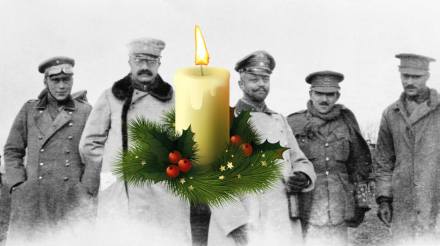
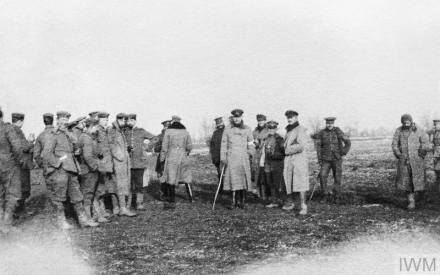
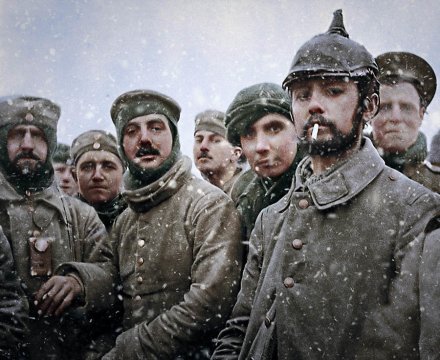
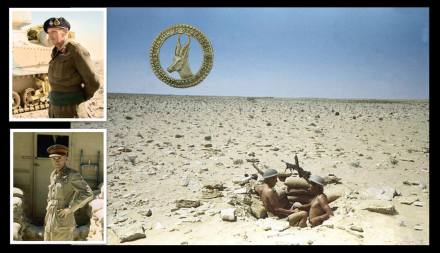
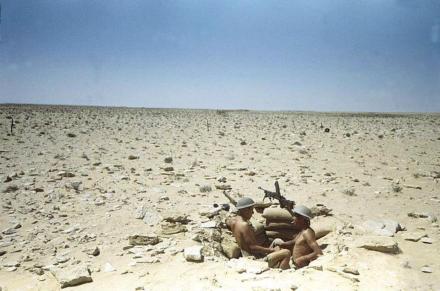


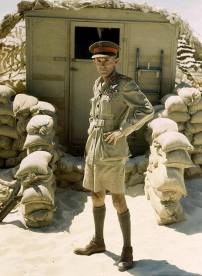

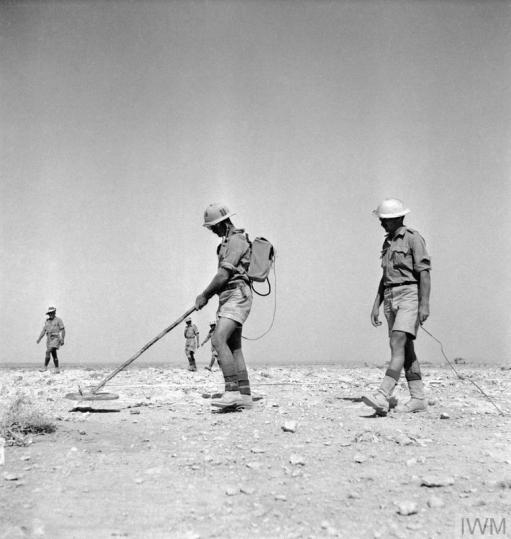
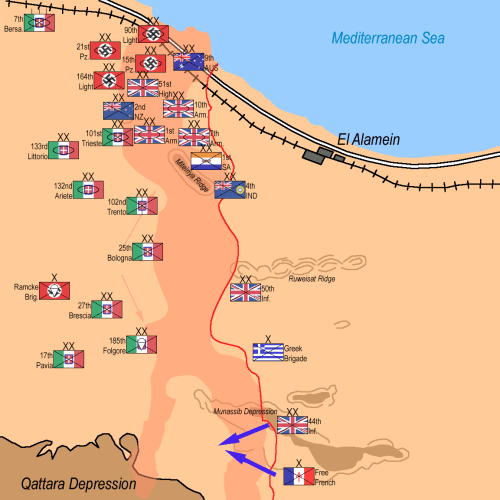
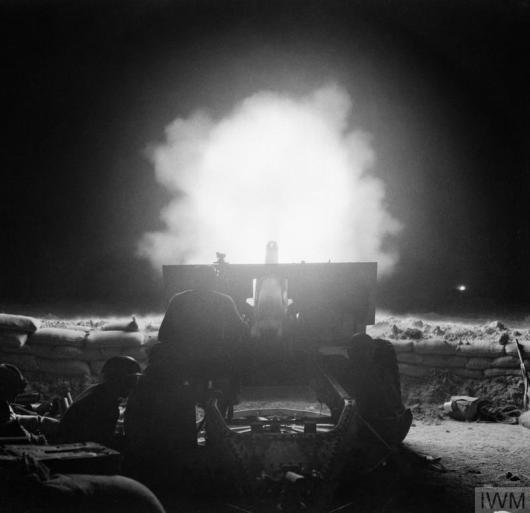

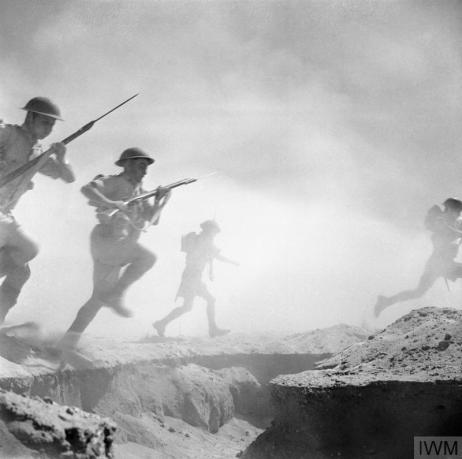

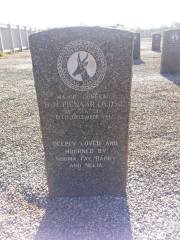 The Division returned to South Africa and General Pienaar and eleven other officers boarded a South African Air Force (SAAF) Lockheed Lodestar on 17 December to fly the final command structure back to South Africa.
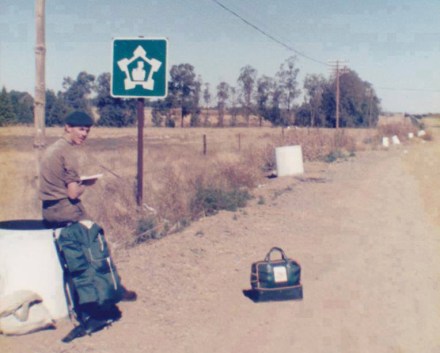
 “Christmas passes have been issued men and you need to organise a safe ride home. Here’s your reflective ‘Ride Safe’ band “Daar gat julle” (bugger off) … ”
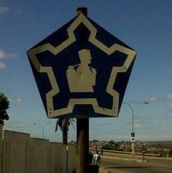 ‘Ride Safe’ was a national campaign instituted by The South African Legion of Military Veterans (SA Legion) and co-ordinated across all the various municipalities and the roads authority. It was designed to give a safe pick-up place for members of all the country’s armed services to stand and wait for motorists to stop for them and give them a lift.

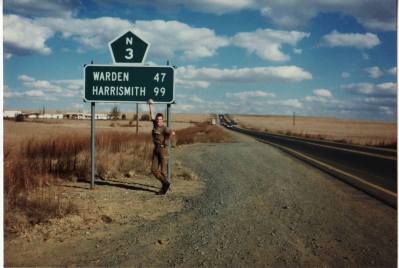
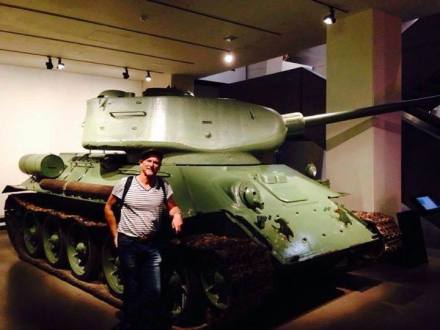
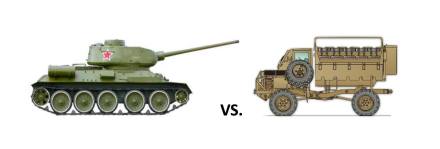
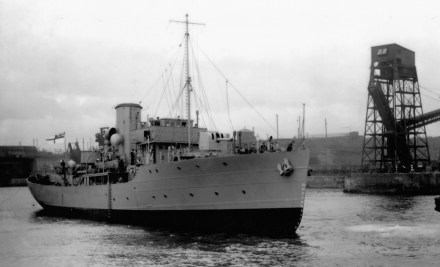
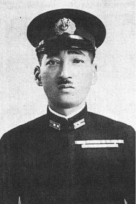
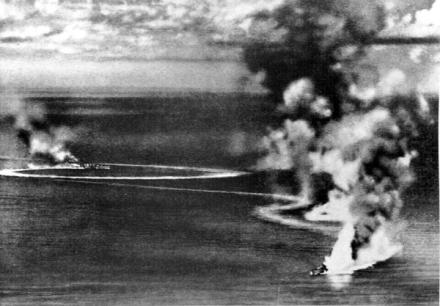


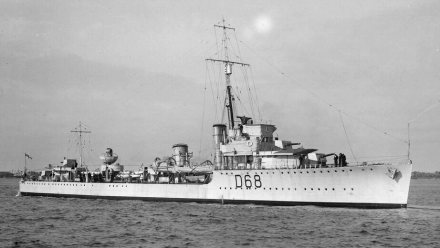
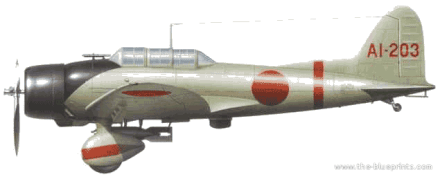
 ANDERSON, Henry G, Able Seaman, 67501 (SANF), MPK (Missing Presumed Killed)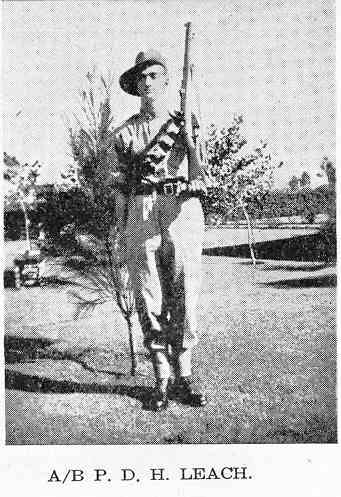
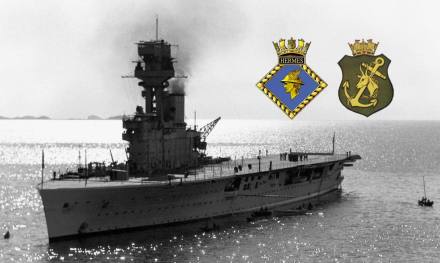
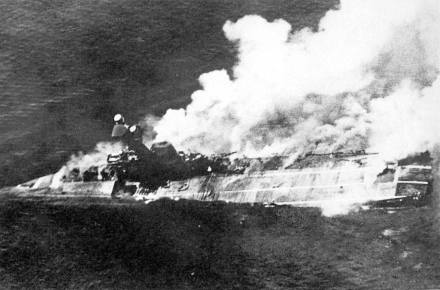
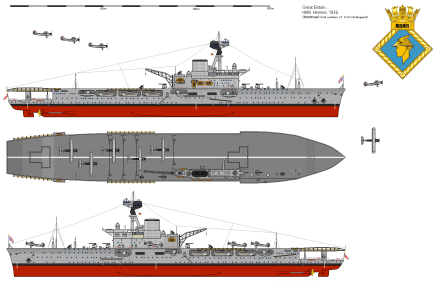
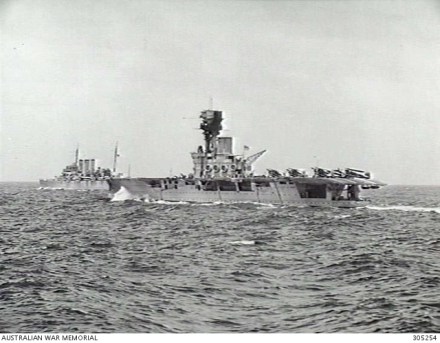
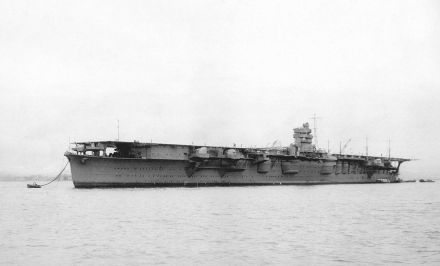
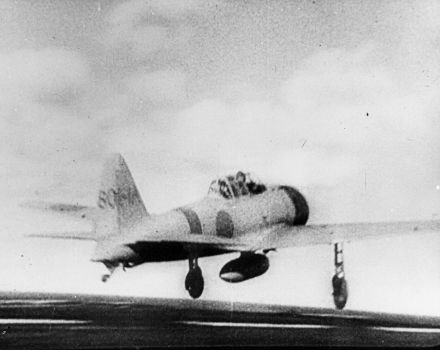
 Suddenly there was an almighty explosion that seemed to lift us out of the water, the after magazine had gone up, then another, this time above us on the starboard side, from that moment onwards we had no further communication with the bridge which had received a direct hit, as a result of that our Captain and all bridge personnel were killed.
 South African casualties aboard HMS Hermes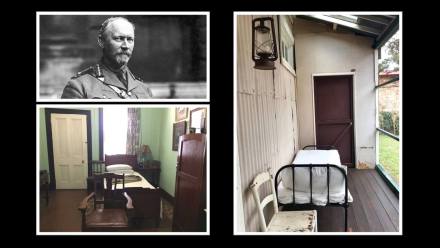
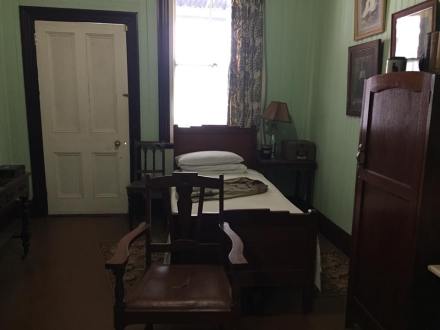
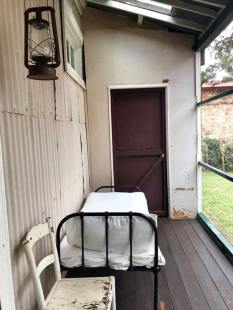
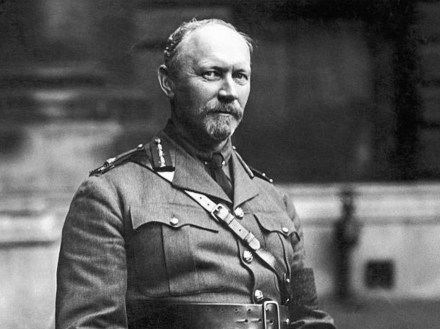
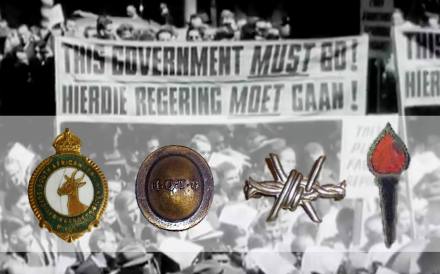


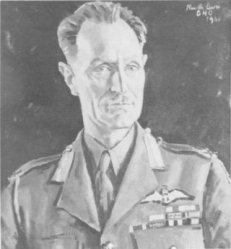
 The history of the Springbok Legion as a political entity is fascinating – initially formed in 1941 by members of the 9th Recce Battalion of the South African Tank Corps, along with the Soldiers Interests Committee formed by members of the First South African Brigade in Addis Ababa, and the Union of Soldiers formed by the same brigade in Egypt.

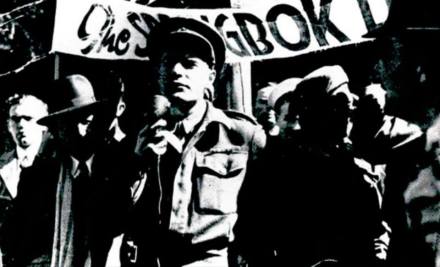
 In reality, the Torch Commando constituted the first real mass “anti-Apartheid” protests and Adolph ‘Sailor’ Malan can be counted as one of the very first anti-apartheid ‘struggle’ heroes. Sailor Malan, a Battle of Britain hero and flying ace (one of the best pilots the Royal Air Force had during the war) returned to his homeland – South Africa in 1946.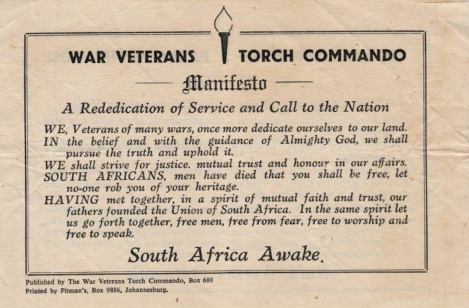


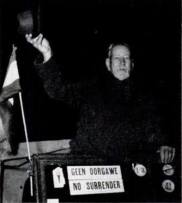


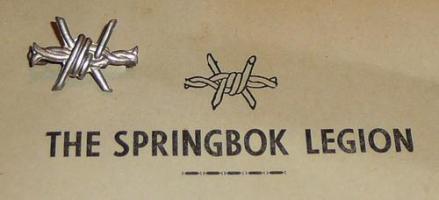
 This eventually resulted in the fracturing of the Springbok Legion as a whole as moderate “white” members, who made up the majority of its supporters became disenchanted with its increasingly militant leftist rhetoric.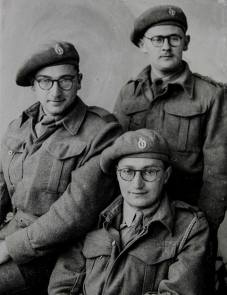
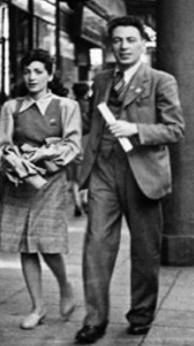
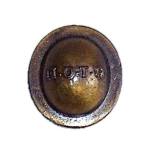 Sailor Malan’s political career was effectively ended and the “Torch” effectively suppressed by the National Party, so he returned to his hometown of Kimberley. Sailor then joined his local Memorable Order of Tin Hats (MOTH) shell-hole (branch) in Kimberley and withdrew from politics, choosing instead the social and camaraderie of his like-minded colleagues in his ‘shell-hole’ and the ‘good life’ (he had a reputation as the ‘life of a party’).

 The campaign to purge the national consciousness of The Torch Commando, The Springbok Legion and Sailor Malan was highly effective as by the 1970’s and 1980’s the emergent generation of South Africans have little to no knowledge of The Torch or The Springbok Legion, it is highly unlikely that anyone today remembers Sailor Malan’s speech to 75,000 Torch Commando protesters in the centre of Johannesburg. The veterans community today, albeit very small, have kept his memory alive, Sailor’s MOTH shell-hole in Kimberley still remember this outstanding war hero very fondly to this day,
 Many older people will remember a time in the 50’s, 60’s and early 70’s, when on “Poppy Day” thousands of South African Legion members with their supporters would ‘sell’ paper red poppies raising funds for veterans in need in just about every major shopping centre all over South Africa. Some may even remember the South African Legion visiting their schools and explaining the meaning of the Poppy.
 Simply put, even though the South African Legion (BESL) had taken an apolitical stance and chosen a cordial approach in dealing with the Nationalists, it still found itself coming into headlong confrontation with the National Party government, both in terms of its individual members’ politics but also in terms of the mandate given to it as the national body to look after Cape Coloured, Indian and Black South African veterans in need.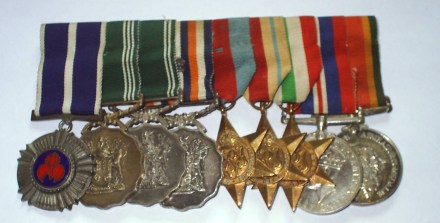
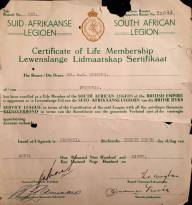
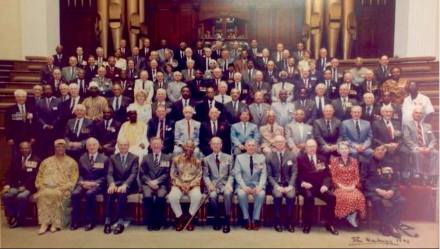
 The ‘statutory’ associations i.e. the Infantry Association, Armour Association, Naval Officers Association, Gunners Association, Caledonian Regiments Association etc. etc. are combined and lumped with more newly sprung ‘broader’ veterans associations – the SADF Veterans Association, the South African Military Veterans Organisation ‘International’ (a spin-off from a Australia based SA veterans association) and more, each targeting the same veteran – all of whom exist under their own umbrella organisation – The Council of Military Veterans Organisations (CMVO).
 This all in turn falls under the ‘Department of Military Veterans’ (DMV) a government department under the Minister of Defence which toes a very African National Congress (ANC) party political line in its media either shaming or ignoring the statutory veterans (especially the old ‘SADF’ members who make up the majority of the Department’s mandate and membership) and highlighting the deeds of the non statutory political party veterans, primarily ANC Umkhonto we Sizwe (MK) veterans as noble ones instead (and these veterans are contentious at best).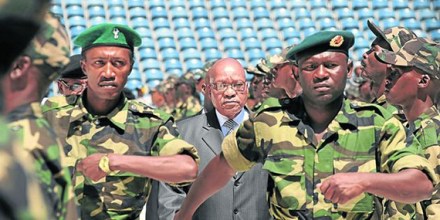
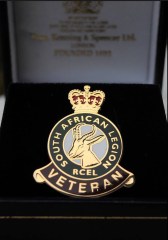
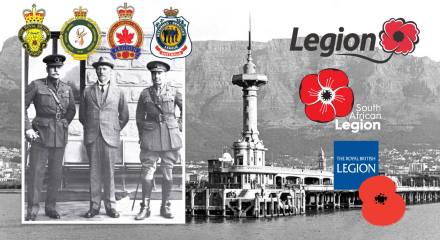
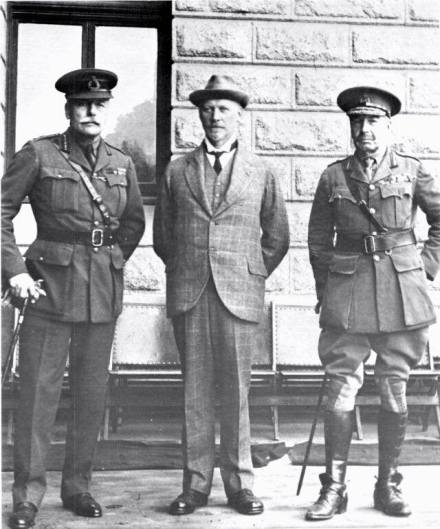
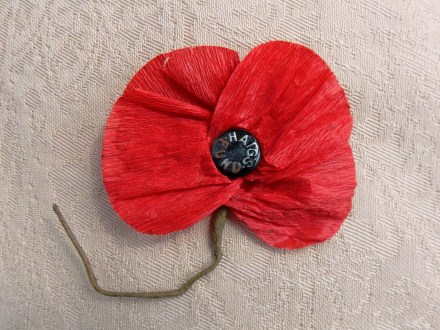
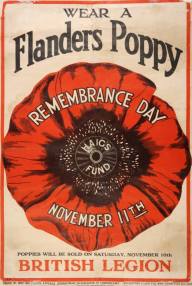 The Poppy entered into The Royal British Legion’s history in the same year as the RCEL was formed in Cape Town – 1921, when Madame Guérin promoted what she termed the ‘Inter-Allied Poppy Day’ to the British Legion, a day in which all Britain and her empire who took part in Would War One would remember the fallen with the token of the Flanders red poppy.


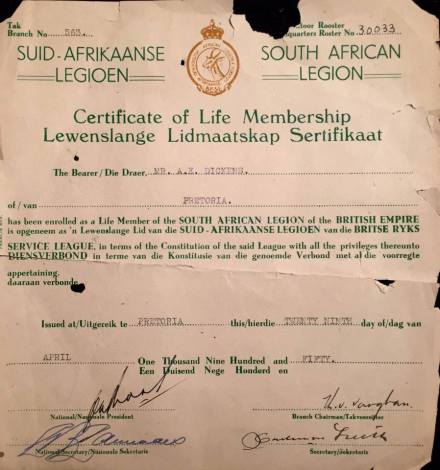
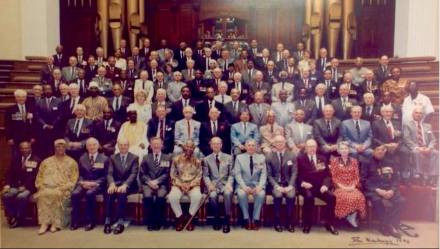
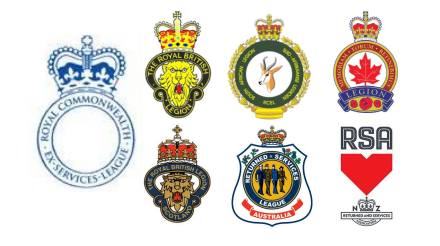
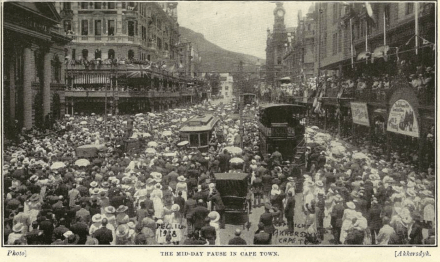
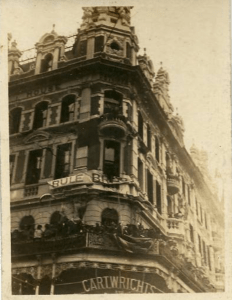
 The Observation Post