Centenary of the ‘Smuts Report’, the instrument which gave birth to the Royal Air Force

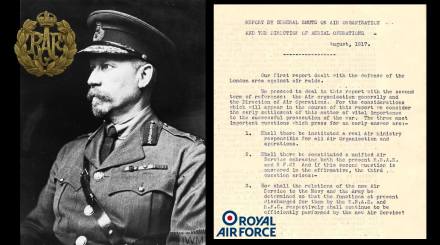
August 2017 marks the centenary of the report to form the Royal Air Force (RAF), the idea of an independent Air Force from Navy or Army control is now officially 100 years old, and one key South African statesman, General Jan Smuts, gave birth to it.
smuts ww1

Smuts in WW1

Today, if you walk into the Royal Air Force Private Club in Mayfair, London you are greeted by a bust of Jan Smuts in the foyer, it stands there as an acknowledgement to the man who founded what is now one of the most prestigious and powerful air forces in the world – The RAF.

So how did it come to be that a South African started The Royal Air Force and why the need to have a separate and independent arm of service?

Simply put, during World War 1, the British Army and the Navy developed their own air-forces in support of their own respective ground and naval operations. The Royal Flying Corps had been born out of the Air Battalion of the Royal Engineers and was under the control of the British Army. The Royal Naval Air Service was its naval equivalent and was controlled by the Admiralty.

However, the use of air power in World War 1 was developing beyond the immediate tactical use of aircraft by the Navy and the Army. In Great Britain the civilian population had been on the receiving end of extensive German bombing raids dropped from flying Zeppelin airships, the public outrage and the psychological effects of this bombing was having a significant impact on British politicians.

In reaction to this, the politicians proposed the creation of a long-range bombing force both as a retaliation and also as a means of disrupting enemy war production. There were also continuing concerns about aircraft supply and priorities between the services.

The British Prime Minister, Lloyd George asked General Jan Smuts to join his War Cabinet (the supreme authority governing Great Britain and her Empire’s forces in World War 1). Lloyd George then commissioned General Jan Smuts to report on two issues:

Firstly to look into arrangements for Home Defence against bombing and secondly, air organisation generally and the direction of aerial operations.  Smuts is generally accredited with improving British air defence and answering the first priority.
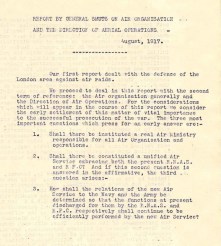
7960001505000118_fillHowever it was ‘Smuts report’ of August 1917 in response to the second of these questions that led to the recommendation to establish a separate Air Service. In making his recommendations Smuts commented that

“the day may not be far off when aerial operations with their devastation of enemy lands and destruction of industrial and populous centres on a vast scale may become the principal operations of war, to which the older forms of military and naval operations may become secondary and subordinate”.

Given this new dimension he commented that it was important that the design of aircraft and engines for such operations should be settled in accordance with the policy which would direct their future strategic employment. On these grounds he argued there was an urgent need to create an Air Ministry and that this Ministry should sort out the amalgamation of the two air services.

The War Cabinet accepted this recommendation to amalgamate the two separate air forces under one single and independent Air Force.  Smuts was then asked to lead an Air Organisation Committee to put it into effect. The Air Force Bill received Royal assent from the King on the 29 November 1917, which gave the newly formatted Air Force the prefix of ‘Royal’ (up to that point the idea was to call it the ‘Imperial Air Force’).
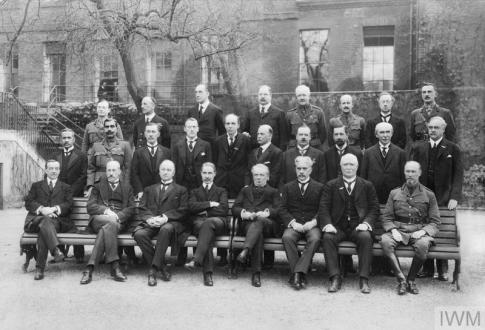
Imp Cabinet WW1

The War Cabinet during WW1, Smuts seated bottom, far right

The RAF was officially formed on the 1 April 1918 with the amalgamation of the Royal Naval Air Service and  the Royal Flying Corps. Following which Lord Rothermere was appointed on 3 January 1918 as the first Secretary of State for Air and an Air Council established.

To emphasise the merger of both army and naval aviation in the new service, to appease the ‘senior service’ i.e. the Navy, many of the titles of officers were deliberately chosen to be of a naval character, such as Flight Lieutenant, Wing Commodore, Group Captain and Air Commodore.
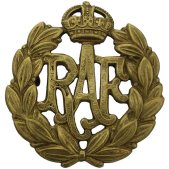
Royal Air Force WW1

Royal Air Force

The newly created Royal Air Force was the most powerful air force in the world on its creation, with over 20,000 aircraft and over 300,000 personnel (including the Women’s Royal Air Force). It now qualifies as the oldest independent Air Force in the World.

General Smuts was to take his recommendations and findings across to form an independent South African Air Force (SAAF).  Smuts appointed Colonel Pierre van Ryneveld as the Director Air Services (DAS) with effect from 1 February 1920 with instructions to establish an air force for the South African Union. This date is acknowledged as marking the official birth of the SAAF.  The SAAF now qualifies as the second oldest independent Air Force in the world.
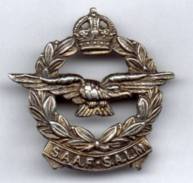
20934838_2008825072679814_8165602951617956277_o

South African Air Force

In a nutshell, both the RAF and SAAF as we know them today, were given to us by Jan Smuts as a founding father.  Funnily, Smuts was often criticised domestically as ‘Slim’ Jannie (clever little Jan), a term Smuts hated as it was coined by the Hertzog Nationalists to mean that Jan Smuts was too clever for his ‘volk’ (peoples) and therefore out of touch, it was done for political expediency at Smuts’ personal expense.  Smuts disliked the term as it as it ironically belittled the Afrikaner and positioned his people as ‘simpletons’, something Smuts fundamentally disagreed with, and something they most certainly are not.

That said, domestically Smuts’ political adversaries in the opposition National Party carried on with this belittling ‘Slim Jannie’ nickname to further criticise his ability to command at a strategic level, stating that his approach was too ‘intellectual’ for effective command.

All modern military strategy is formulated on joint arms of service with an independent air arm. You only have to look to any modern military construct of any military superpower today to see just what a visionary and strategist Jan Smuts was. The proof of his ability to command strategically is in the pudding.  Smuts’ ground-breaking report in August 1917 now guides all modern strategic military planning by simple way of how the arms of service are now constructed (Army, Navy, Air Force i.e. ground, sea, air), how they co-ordinate with one another and how they are commanded.


Written and researched by Peter Dickens.  References – Birth of the Royal Air Force (Royal Air Force Museum), Imperial War Museum and Wikipedia.  Images copyright, Imperial War Museum.
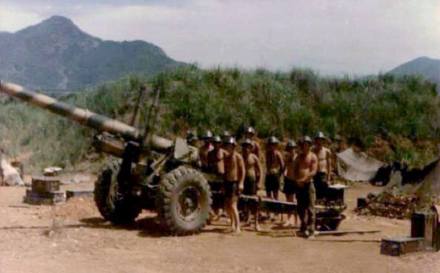
Ops Savannah fashion statement; East German Helmets

One distinctive thing about the Angola/South West Africa Border war was the vast array of ‘Soviet’ and Communist ‘East Bloc’ military equipment, materials and canned food.  Much of which became ‘war booty’ and prized by South African Defence Force personnel fighting in the conflict as a memento. To them, it all represented the very distinctive difference between ‘Western’ styled materials and those produced in Communist bloc countries at the time, in a sense it very much brought home just what the war in Angola was to them – part of the ‘Cold’ War of the ‘West’ against Communism.

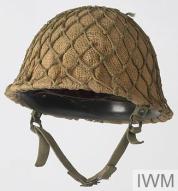
SADF Helmet

During Ops Savannah in 1975, whilst in Angola some South African Defence Force (SADF) personnel came across a huge stash of East German Steel Helmets.  For some reason the SADF Artillery Gunners took an instant liking to these helmets and it became an instant ‘bush’ fashion. A prized possession, many Gunners sought out this helmet and whilst on Operation Savannah replaced their SADF issue ‘Staaldak’ M1963 helmets with it – it’s was a ‘gunners thing’ to look a little different and develop a distinctive combat zone ‘esprit de cour’. The feature image shows a SADF 140mm Medium Gun Crew somewhere in Central

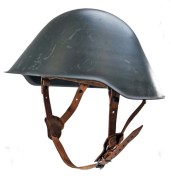
The East German M-56 helmet was originally designed in 1942 as a replacement for the M1935/M1940 model WW2 German ‘Stahlhelm’.  The helmet had seen trials since 1943, but was not adopted during World War II.

East German Helmet

The design was never progressed and was unused until the requirement for a distinct German helmet for the Volkspolizie (East German Police) and the National People’s Army (East German Army) arose after Germany was split down the middle into the ‘Democratic’ West Germany and ‘Soviet Communist’ East Germany after WW2 ended.

The East German leadership adopted the M-56 helmet so as not to cause offence to their new Soviet masters by using their iconic WW2 German ‘Stahlhelm’ so they switched to this new design as it also closely resembled another iconic WW2 helmet – the Soviet SSh-40.

The M-56 helmet came in three basic versions, Mod 1 or I/56, Mod 2 or I/57 and Mod 3 or I/71, and was widely sold, or in most cases given free of charge, to Third World armies.  As Angola was deemed a 3rd World conflict by the East Germans it proved a fruitful country to off-load stocks of this helmet to the MPLA’s FAPLA and other Communist aligned military support groups in Angola.

Although there is not much on East German involvement in the Angolan/South West African Border War. Most military advisors and support troops to the Angolan MPLA Forces were either Russian or Cuban. East Germany as it was a Soviet ‘ally’ did play a role in support, and these helmets would point to this fact.


Image and reflection thanks to Colonel Graham Du Toit.  Source Wikipedia – Researched by Peter Dickens

The ‘Fog of War’

The term ‘Fog of War’ is defined as ‘uncertainty in situational awareness experienced by participants in a military operation’.  It can manifest itself at the time or even many years after the action has taken place.  This deeply tragic account of the loss of a SADF Ratel Infantry Fighting Vehicle, containing two members of the same family’ illustrates this ‘fog’.

The incident

14 Feb 1988: Four Members from B Company, 1 SAI including two Cousins who acted as the MAG Machine Gunner team, were Killed in Action in South Eastern Angola during a contact with elements of the 59th FAPLA Brigade during Operation Hooper. The B Company, 1 SAI troops had not klaared out (demobilised) prior to deployment for Ops Hooper so they became 61 Mech Battalion Bravo Company Element. These troops swopped over with B Company 4 SAI and were operating as part of 4 SAI during this attack as part of 61 Mechanised Battalion.

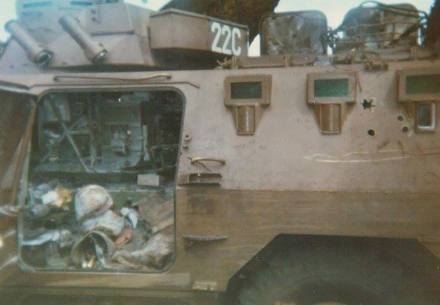
Their Ratel (Honeybadger) Infantry Fighting Vehicle (IFV), Callsign 22C was hit on the left hand side and knocked out by a ZU-23-2 Soviet 23mm Anti-aircraft gun deployed in the ground role. On the right hand side where the Groenewald Cousins had been sitting, a large hole was ripped out of the vehicle. It appeared that the Ratel had also been struck at some point by a South African 105mm discarding sabot anti-tank round, thought to be fired from an SADF Olifant tank.

The 105mm discarding sabot round’s entry can be seen on the top below the second rifle port with the distinctive “star” penetration.

The ‘blue on blue’ debate

There is much debate which surrounds this image and the ballistics in the veteran community, some thoughts are that the 105mm discarding Sabot round made the big hole on top left (the fins made the star pattern) and the three discarding pieces from the Sabot could have made the other three holes to the below right. Others maintain the additional holes came from the enemy 23mm AA gun. Whilst others have proposed that it was all enemy fire and possibly the distinctive ‘fin’ penetration came from a Soviet 100mm T55 6 wing sabot based on the ballistics.

SADF 105mm Discarding  Sabot (left) and ZU-23-2 Soviet 23mm Anti-aircraft Gun in a ground role (right)

At the time the SADF published this as enemy fire and did not make reference to a  “blue on blue” incident – a blue on blue is a term used for ‘friendly fire’ when forces mistakenly shoot, target or bomb their own forces (this may possibly have been in the interests of moral of both Olifant tank and Ratel IFV crews) and reported it as enemy 23mm fire only. Accounts from the 22C Ratel driver and members on site after the incident point to a SADF “blue on blue” from a SADF Olifant (Elephant) Tank involved in the formation attack on enemy armour and positions, a ‘V” formation in which Ratel 22C took part.

Such is the “Fog of War” and incidents like this leave a very big lump in veterans throats. In any event, whether enemy fire, friendly fire – or both, the brave men who fell in this  Ratel are honoured on the roll:

In Remembrance 

84269315BG Corporal Jan Hendrik Kleynhans. He was 19
85263262BG Rifleman Andre Schalk Groenewald. He was 18.
84358266BG Rifleman Pieter Henrich Groenewald. He was 19.
84477751BG Rifleman Vincent Vernon Nieuwenhuizen. He was 19.

May they rest in peace and never be forgotten.


Researched by Peter Dickens with references from a number of Border war forums and Graham Du Toit.

South African Battle of Britain Heroine -Jackie Moggridge

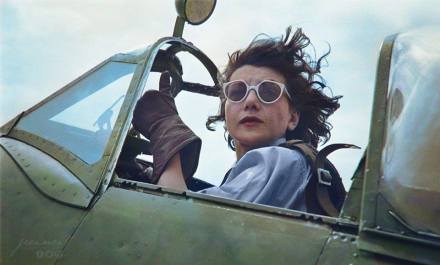
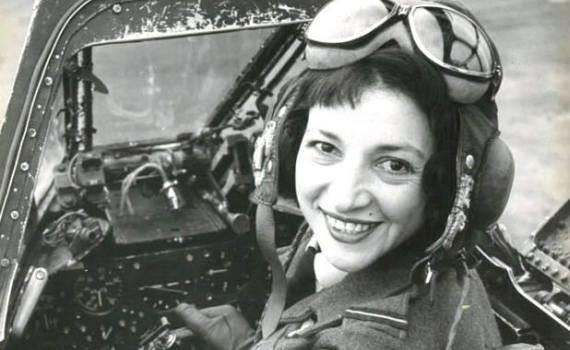
This is a very special South African military heroine. Jackie Moggridge (born Dolores Theresa “Jackie” Sorour), during the Second World War she left South Africa for England and joined the ATA Hatfield Ferry Pool on 29 July 1940, being the youngest of the female pilots to take part in the Battle of Britain, aged just 18.

16864178_732808936888841_6672653319992353975_n

The ATA “The Air Transport Auxiliary” was charged with delivering new and repaired aircraft to front-line Royal Air Force squadrons and were flown by civilian commercial pilots and female pilots excluded from flying roles deemed as “combative” service at the time.

The initial plan was that the ATA would carry personnel, mail and medical supplies, but the pilots were immediately needed to work with the Royal Air Force (RAF) ferry pools transporting aircraft. By 1 May 1940 the ATA had taken over transporting all military aircraft from factories to Maintenance Units to have guns and accessories installed. On 1 August 1941 the ATA took over all ferrying jobs. This freed the much-needed combat pilots for combat duty. At one time there were 14 ATA ferry pools as far apart as Hamble,  Southampton, Portsmouth, and Lossiemouth near Inverness in Scotland.

The ATA recruited pilots who were considered to be unsuitable for either the Royal Air Force or the Royal Navy Fleet Air Arm by reason of age, fitness or gender. A unique feature of the ATA was that physical handicaps were ignored if the pilot could do the job, thus there were one-armed, one-legged, short-sighted and one-eyed pilots, humorously referred to as “Ancient and Tattered Airmen”. However, most notably, the ATA allowed women.

Initially, to comply with the Geneva Convention, as many of the ferry pilots were nominally civilians and/or women, aircraft were ferried with guns or other armament unloaded, however I due course after encounters with German aircraft in which the ferried aircraft were unable to fight back, RAF aircraft were ferried with guns fully armed.

As part of unique and very brave bunch of pilots, mainly women, Our South African hero, Jackie safely handed over 1,500 aircraft during the war, 83 different types and 200 more than any other ATA pilot.

She had a very lucky escape on 5 January 1941 when ferrying an Oxford Mk I to RAF Kidlington, Oxfordshire, with no R/T to meet up with 1st O Amy Johnson who was bringing one in from Blackpool. Both went off course in adverse weather conditions, with Johnson following the rules, bailing out and drowning in the Thames Estuary. Sorour went down to a few hundred feet and found herself over the Bristol channel with 20 minutes fuel remaining. She claimed that she did not want to take to the chute because she had broken her leg during a parachute jump in 1938.

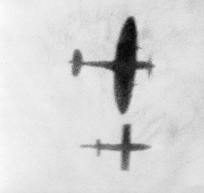
16195937_1899005106995145_1188220574573390828_nJackie also encountered a V-1 flying bomb in the air over Surrey while flying a Tempest. She altered course, fully intending to attempt to topple it with her wing tip but failed to catch up to it.  The standard practice in dealing with a ‘doodlebug’ (as the V1 was nicknamed) was a wingtip topple, it threw the flying bomb’s gyro off its intended target and sent it into open countryside instead of a city.  However the trick was to fly faster than the rocket to do it.  The picture featured shows this remarkable manoeuvre between a Spitfire and an unmanned V1 flying bomb.
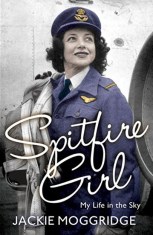
Jackie was also the first woman in South Africa to make a parachute jump. (4,000 feet). She was South Africa’s youngest pilot of her time age 17 years. November 1959 was awarded Jean Bird trophy as Woman of the Year . She flew Lancasters, Spitfires and a variety of other planes as a RAF pilot during World War 2. She logged over 4,000 hours flying over Europe, North Africa and the Middle East.

She is best described by her Daughters “Jackie was like two women in one: artistic, romantic, forgetful and disorganised, but when she climbed into an aeroplane she became focused, calm and very capable – not our mother at all! She loved many things: singing, dancing, sewing and painting, but her main passion in life was flying. Up in the sky is where she belonged.”

“She really was two women in one. She was a real battler for women to get on in life and just could not imagine that there was anything she could not try to achieve. But she knew, and said, that as a woman she had to have the best results to be taken seriously.”

21265949._UY630_SR1200,630_She was a member of one very elite group and one of only five women to be awarded full RAF wings during the war, Jackie even campaigned to become the first woman to break the sound barrier but was prevented from doing so by the powers that be.
The actions of the ATA are best summed by Lord Beaverbrook in 1945 who said;

“Without the ATA the days and nights of the Battle of Britain would have been conducted under conditions quite different from the actual events. They carried out the delivery of aircraft from the factories to the RAF, thus relieving countless numbers of RAF pilots for duty in the battle. Just as the Battle of Britain is the accomplishment and achievement of the RAF, likewise it can be declared that the ATA sustained and supported them in the battle. They were soldiers fighting in the struggle just as completely as if they had been engaged on the battlefront.”

After she died, aged 81, in 2004, Jackie took to the skies one last time, for her ashes were scattered from the ‘Grace’ Spitfire ML407.

She is now proudly acclaimed as one of ‘The Female Few’ whose actions in The Battle of Britain and for the duration of the war brought us the freedoms we know today.


Reference Jackie Moggridge’s obituary and Wikipedia.   Researched by Peter Dickens. The stunning colouried photograph of Jackie Moggridge by Paul Kerestes

“If we don’t end war, war will end us” H.G. Wells

On this day, at 17h00 the guns fell silent in Southern Angola, when on the 8 August 1988 a ceasefire came into effect effectively ending hostilities between South African statute forces and Angolan/Cuban Forces.

The Tripartite Accord was to follow, an agreement between the People’s Republic of Angola, the Republic of Cuba and the Republic of South Africa.  It in essence granted independence to Namibia on the proviso that Cuban forces left Angola and South African Forces would leave Namibia.  

The offer made by Pik Botha, who convinced Jorge Riquet, to quote Botha “…We can both be losers and we can both be winners…”. Cuban Forces could return to Cuba victorious with the idea that they had ended South African rule in Namibia and South African Forces could return victorious with the idea that they had turned back the greatest Communist threat of arms in Southern Africa and stabilised the region for democracy by the ballot and not the gun.

There is some truth to H.G. Wells’ quote “If we don’t end war, war will end us” and without this accord South Africa (Africa’s Super-power) and Cuba would have been set for a protracted war between two foreign powers in a foreign country, and it would most certainly have left a devastating impact on all humanity in the region for many more years to come.

Let us remove our headgear, bow our heads, and observe a minute of silence to remember all those that paid the supreme sacrifice in this war.


Photo copyright Stephan Bothma, from 101 Battalion Romeo Mikes.  Written by Peter Dickens

A failed SADF Operation; Ops Firewood – truths & myths!

In any military campaign there are always setbacks, and Ops Firewood qualifies one of the very few real setbacks that the SADF experienced during the Border War.  To view it as a resounding  victory of PLAN (SWAPO) over the SADF would however be an overstatement.

Currently in Namibia and South Africa there are overqualified claims that this operation points to PLAN superiority over the SADF, but that would also be a myth, these claims coming mainly from modern Namibians being fed a long stream of political propaganda.

However, to face up to a ‘truth’, Ops Firewood was a tactical ‘loss’ for the SADF, it was not widely circulated, and thus relatively unknown to many SADF servicemen (now veterans).  So let’s look at it and face the truths and debunk the myths.

On the 31 Oct 1987, a 101 Battalion Battle Group, supported by members of 5 Reconnaissance Regiment together with D Company, 1 Parachute Battalion, 2 Reconnaissance Regiment and other SADF support elements, attacked SWAPO/PLAN positions at Nindango in Southern Angola,  They used Infantry Fighting Vehicles and Armoured Personnel Carriers (Ratels, Casspirs and Buffels).

The Operation was known as Ops Firewood. The key objective was to destroy the Northern Front PLAN Head Quarter (HQ) base.

This PLAN base was set in a densely wooded area, and was attacked from the west by the Reconnaissance Regiment (recce) and Paratroopers (parabats) of the SADF (South African Forces), while 101 Battalion of the SWATF (South West African Forces) covered the base from north, east and south, the direction PLAN forces were expected to flee.

From the on-set of the Operation it became clear from the start that SWAPO/PLAN had been expecting such an attack as they were in well prepared defensive positions and supported by a Cuban Tank and Artillery element with a FAPLA Motorised Infantry Unit in support.

During the extremely heavy fighting that continued throughout the day, about 7 hours in total, a 101 Battalion Casspir was knocked out by a RPG-7 anti-tank rocket and burnt out. The Battle Group suffered 15 casualties with approximately 67 wounded before contact was finally broken off at nightfall.

The base was not successfully taken by the SADF forces, who withdrew when PLAN reinforcements were understood to be on their way.

The South African forces are said to have incurred 12 killed and 47 wounded (while other sources say it was as high as 19 killed and 64 wounded, but this is yet to be substantiated). On the SWAPO side, the casualties were said to be very high, with at least 150 PLAN soldiers killed (however, again there is controversy here as a source within PLAN command maintains that this figure posted on Wikipedia is inflated somewhat, however an actual figure from PLAN is still not forthcoming).

All the SADF dead and wounded were casevaced to AFB Ondangwa during the night of October 31/1 Nov 1987. The last Puma helicopter departed at about 03h30 the following morning and ferried the remaining dead and lightly wounded. The 101 Battalion casualties were taken directly to their Unit and not to AFB Ondangwa.

The featured image is a SADF Buffel Armoured Personnel Carrier (APC) captured by SWAPO/PLAN combatants during Ops Firewood.  To put this ‘capture’ into perspective only four Buffel APC’s were captured fully intact in different battles during the entire period of the Border War.   Before we stand up and claim a great military prize, lets take perspective, the Buffel was a personnel carrier, nothing more, there were over a thousand of them deployed during the entire period of the war.

The picture was taken between September 1987 and March 1988 by Col K.A. Satenov, the Soviet military advisor to the 1st and 20th PLAN Brigade commanders (seen in the picture on the left). The Buffel APC captured belonged to 2 Reconnaissance, it was lost fully intact in that battle, three 101 Battalion Casspirs were also lost.

In the aftermath, Honoris Crux (South Africa’s highest bravery decoration) decorations were awarded to five 101 Battalion members for gallantry in action.

So, was it a demonstration of superior PLAN fighting prowess over that of the SADF?  Judging by the death toll to PLAN versus that of the SADF/SWATF the simple answer is – no.  Was it a PLAN victory, the answer is yes (by many accounts one of only a handful). Was it a ‘tactical’ defeat for the SADF in not meeting its objective? The answer is – ‘yes’.  Did it affect the overall military dominance of the SADF on the South West African (Namibian) Border and change any thinking or modus operandi behind the large scale (and small scale) operations into Angola? The answer is ‘no’ – not really, learnings were however taken on over-confidence in using special and elite forces for full front armour assaults, a role not specific to their brand of battle order.  Was it a ‘great decisive battle’ on African soil?  The answer is ‘no’. It was part of a broader campaign, to the SADF commanders it qualified a tactical set-back, nothing more – part and parcel of waging war.

As such the SADF sought no reason to highlight it as a ‘devastating loss’, it remains relatively unknown to many ex-SADF personnel (especially those not involved in Operations into Angola and those not in elite forces circles) as it would have affected morale, and for the wrong reasons entirely.

It is however remembered by veterans of the SADF special forces and elite forces, so too the PLAN combatants, and if you asked either of them for the ‘truth’ of the battle, they would both agree that the real ‘truth’ is to be found in their dead, for only they who have seen the end of war.

The Battle Group casualties who we remember as South Africans were:

“D” COMPANY, 1 PARACHUTE BATTALION

82513110BG Rifleman Hughes Norbert De Rose. He was 21.
82437369BG Rifleman Wayne Valentine Ewels. He was 21.
81033292BG Lance Corporal Raymond Mark Light. He was 21.
83219139BG Corporal Nico Smith Olivier. He was 19.
83247502BG Rifleman Dirk Willem van Rooyen. He was 20.
83271031BG Rifleman Jean Marc Schuurman. Critically wounded and evacuated from the battlefield to AFB Ondangwa where he underwent emergency surgery. He was evacuated back to the RSA the following day on 1 November 1987 but he succumbed to his wounds before the aircraft landed in Pretoria. He was 20.

5 RECONNAISSANCE REGIMENT

83561928BG 2/Lieutenant Dylan Chevalier Cobbold He was 20.

101 BATTALION ROMEO MIKE

76330893PE Captain Andries Hercules Du Bruyn Rademeyer. He was 27.
83587345BG 2/Lieutenant Deon Botes. He was 20.
84533793BG Sapper Erasmus Albertus Steyn. He was 19.
Rifleman W. Abraham
Rifleman P. Epafu
Rifleman V.Petrus
Rifleman T. Sheepo
Rifleman M. Uusshona

NOTE from the custodians recording SADF losses during the Border War.  “The Roll of Honour for this engagement has been debated at length. To date, not one individual has supplied any official proof to substantiate their claims or come forward with the names of the four individuals that are supposedly missing from this Roll. Until such time as this happens, we continue to pay homage to these 15 Brothers and accept this list as the official Ops Firewood Roll of Honour”. Their names and Sacrifice have not been forgotten.

Sources that point to the ’19’ dead maintain that 4 members of 101 Battalion are unaccounted for.

Colonel Satenov wrote a book called “Army is my Destiny” and currently lives in Kazakhstan (the former Soviet Republic) – this picture is also in his book.

Written and Researched by Peter Dickens


Photo, thanks and caption courtesy and copyright to Igor Ignatovich who was also a Soviet military advisor to SWAPO.  Reference wikipedia, Igor Igantovich, Maj. Du Toit’s daily honour roll, SADF veteran on-line forums.

The truth behind the bombing of Witwatersrand Command

Not many people today are aware that Umkhonto we Sizwe (MK) insurgents actually attacked some bone-fide South African Defence Force (SADF) military installations, but only a handful of occasions and this story covers one of them – the bombing of the Witwatersrand Command’s building – the Drill Hall (known as Wit Command).

Other than the very effective bombing of Wit Command and the Nedbank Plaza in Church Street, Pretoria (which also housed the target – a SAAF command office), the only other standout ANC MK attacks on actual SADF installations were low key and completely ineffectual.

These included the rocketing of the Personnel Services army base in Voortrekker Hoogte (with minor injuries to one civilian and no substantive building damage). The faulted attempt at bombing a Wits Command medic centre in Hillbrow (no injuries). The speculative bombing of some cars in the car-park of the Kaffarian Rifles (no injuries, and no information either), the bombing of a dustbin outside Natal Command (no injuries or building damage). Finally, the bombing of two SADF recruitment offices and an SADF radio installation – some building damage and no injuries or deaths.

Information on the bombing at Wit Command itself is really difficult to come by, at best it is presented as a resounding victory by MK claiming 58 injuries and 1 death of SADF personnel and at worst there is little to almost no information, video or photographs in both the military and media records of showing any deaths.  There is certainly no death of a SADF serviceman recorded on the honour roll. So where does the truth lie?

There are two key reasons why ‘in-depth’ knowledge of this incident remains obscured.  Firstly, although a bomb had gone off in down-town Johannesburg (no hiding that), the grip of the National Party over South African media limited it and ensured the incident would be carefully managed (attacks on SADF military installations would affect morale) and, more importantly, it was very carefully managed because of the profile of the Umkhonto we Sizwe (MK) attacker who committed it.  The outcry, profile and ‘hunt’ for him was somewhat muted, angry announcements identifying him for the purposes of the ‘hunt’ were made, yes – but in-depth media analysis on the attack or investigative journalists seeking an exposé on the attacker’s profile and motivation – no – there’s nothing of this sort.  

Simply put, this ‘managed’ outcry was because this particular MK operative was from an upper class, ‘white’ Afrikaner, well to do and influential family.  He grew up in an up market ‘white’s only’ conservative suburb in Johannesburg and attended a prestigious Afrikaans High School  – he didn’t fit the National Party’s ‘swart-gevaar’ (Black danger)/’rooi-gevaar’ (Communist danger) terrorist narrative of the time, he was in fact embarrassing enough ‘one of their own’.

So, lets get to the ‘truth’ of matter in all of this, what was the actual damage caused, what actually happened?

Background 

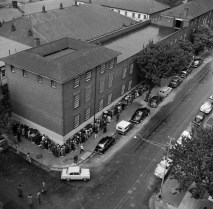
The treason trials started off like an action-packed cowboy filmOn 30 July 1987, a bomb exploded at the Witwatersrand Command’s Drill Hall injuring 26 people (no deaths), the injured were made up of a mix of both military personnel and by-standing civilians. The Drill Hall was targeted because not only was it a military installation, it was also the same historic Hall in which the 1956 Treason Trial took place and significant to ‘struggle’ politics.
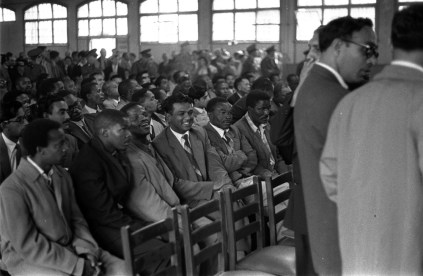
The ‘Treason Trial’ had lasted from 1956 to 1961 (not to be confused with the ‘Rivonia Trial in 1964) and revolved around 156 people arrested on charges of treason – it was overseen by Oswald Pirow and it included a mix racial bag of South African political party leaders from across the spectrum, notably Nelson Mandela, Ahmed Kathrada, Walter Sisulu, Stanely Lollan, Helen Joseph, Joe and Ruth Slovo and Leon Levy to name a few.  They were all found ‘not guilty’ but the trial did force Oliver Tambo into exile.

Treason trialists inside the Drill

Treason Trial in the Drill Hall

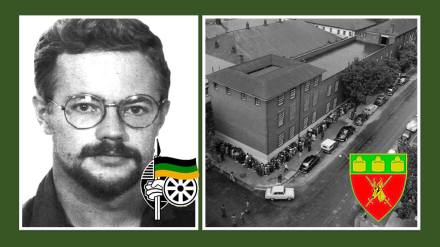
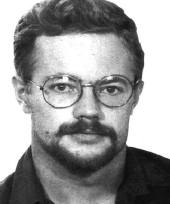
So, like the mixed racial bag of the Treason Trial itself, the actual attack on the Drill Hall (by then a SADF command centre and military building) did not come from an angry disenfranchised ‘Black’ ANC MK operative, rather, this attack came from very “blue blooded” ‘White’ Afrikaner – Heinrick (Hein) Grosskopf.

The Bombing

As part of the Amnesty Truth and Reconciliation Commission hearings Hein Grosskopf, by that stage a former MK operative, revealed how he detonated a car bomb at the Witwatersrand Command military base.

Grosskopf, a graduate of Linden Hoërskool (High School) and the son of Johannes Grosskopf, a former editor of the Beeld newspaper, said he joined the African National Congress in exile in 1986 after concluding that apartheid was reprehensible.

14199181_632802120222857_9099825329936225113_n

Johannes Grosskopf

He linked up with the ANC in Lusaka, where he volunteered for MK military service and after undergoing training in Angola, he returned to Lusaka at the end of 1986.

Six months of planning then went into the attack, which was to be a “one-man” operation. An attack on the Braamfontein gas works in Johannesburg had also been considered, but it was rejected as too dangerous for civilians in the area. Witwatersrand (“Wit”) Command was chosen after much deliberation and according to Grosskopf;

“Because the state had so clearly politicised the role of the SA Defence Force by deploying troops in townships, SADF personnel and installations were by definition justifiable targets.”

The explosion was planned to go off by 9.45am, when the morning rush-hour was over, children would be in school and restaurants around the site were still closed. A car with an automatic gearbox would be used and by lashing the steering wheel in a fixed position, the car could be made to move without a driver towards the target.

In June 1987, Grosskopf entered South Africa on a motorcycle from Botswana, along the way he bought an old Valiant pickup ‘bakkie’ in De Deur and travelled to Johannesburg with the motorcycle in the back of the ‘bakkie’.

After booking in at the Holiday Inn in Pretoria, under the name if JR Evans, Grosskopf rented a small flat in Linden, Johannesburg (a suburb he was highly familiar with and near his old High School).

Between the 5th and 10th of July 1987, Grosskolf carried out reconnaissance at Wits Command and found it would be possible to park in Quartz Street, opposite the target. He also measured the height of the pavement the attack vehicle would have to mount before reaching the wall of Wit Command.

After concluding that the operation was feasible, Grosskopf returned to Botswana and requested 120kg of explosives from his support group. The load was hidden behind the seats of the bakkie, and steel plate was welded over it.

On July 17, Grosskopf rented a house in Ventersdorp, intending to use it as an operational base, believing that a single Afrikaner would be under less scrutiny in a small town than in Johannesburg’s suburbs, but as he was moving in, two policemen arrived and asked why his bakkie was registered in a name different from the one he used when renting the house. Thinking his cover might be blown Grosskopf spent only one night in the house before returning to Johannesburg.

Early on the day of the attack, he rode into Johannesburg on his motorbike and left it two street blocks from the target. He returned to the Linden flat by taxi. Around 9am he left for Johannesburg after loading the explosives into the bakkie. The vehicle was parked in Quartz Street. With the car idling, he lashed the steering wheel in the required position and threw three switches to arm the vehicle and bomb, got out the vehicle, locked it and walked towards Sterland (a cinema complex) next to Wit Command.

Just before reaching the inside of the Sterland complex proper, the Valiant’s engine revved very fast and loudly, with the explosion that followed. He jumped on the motorcycle and rode back to Linden, collected some belongings and then headed for Botswana on the motorcycle.

Aletta Klaasen was 17 years old when she lost her left eye in the explosion. Minutes before the blast she had been talking to two SADF soldiers in front of the building, Cpl. Paul Duncan and his army chum Stoffel, when Grosskopf parked his vehicle close by to where they where standing.

She noted Grosskopf looking in her direction and called out to him “What are you looking at – I’m not for sale” (the area around Wit Command was a notorious ‘red light’ district known for prostitution). He turned around and walked off and shortly after that the bomb went off.

When she recovered from the blast she noted that one of the SADF troops, Cpl. Paul Duncan, who she was chatting to, was blown off his feet and found in the guardhouse, bleeding from the head and unconscious – he later fully recovered from his injuries.

An unassuming, quiet and reserved person, Grosskopf built up his resentment of the status quo whilst a student at Linden Hoērskool, were he had been bullied and teased by the vastly conservative white Afrikaans students for his “liberal” views. On matriculating from Linden Hoërskool, Hein Grosskolf, although openly stating he would never join the South African Defence Force (SADF), did in fact attend to his national service military call up and was discharged from his SADF conscription commitment on medical grounds. Highly politicised, he then went on to join the ANC and its military wing MK.

Aftermath

The Drill Hall after the bombing was deemed by the SADF to be an ‘unsafe’ building due to structural damage caused it and the Command moved into a high-rise building adjacent to the Drill Hall. On occasion the Drill Hall would be used by Citizen Force units and Regiments for mustering (in the very famous hall in which the Treason Trial took place) but more often than not it remained empty but guarded during the early 1990’s.

Once the command relocated from the high-rise building to Doornkop military base in the mid 1990’s, the drill hall building was taken over by vagrants and became an informal settlement – it eventually became derelict, caught fire and burned down. Today, the façade and some perimeter buildings is all that remains of the complex.  The façade has been restored as a monument to Johannesburg’s history and the significant historical events which took place in the building – including it’s bombing.

Truth and Reconciliation

Aletta Klaasen and Hein Grosskopf were both at the TRC Hearing in November 2000, Grosskopf apologised to Aletta in person and regretted the injuries caused to civilians. Grosskopf concluded the meeting by saying that he was proud of the small role he had played in the struggle for freedom.  He said,

“Taking a life is never easy. I believe all life, even that of my enemies is sacrosanct. Violence can never be good; it can only be necessary. I am truly sorry for the injuries and suffering I caused”

14225369_632870203549382_188786347975450644_nAt her request Klaasen and Grosskopf met for a few minutes in private after the hearing and then they both posed briefly and rather awkwardly for this photograph (note the body language). Neither of them elaborated on their meeting, Klaasen was only prepared to say that it had been good.
Heinrich Grosskopf, was granted amnesty by the Truth and Reconciliation Commission on 13th December 2000 whilst he was resident in the United Kingdom, it is thought he may still be there, and there is an irony here.  One of the SADF victims of the bombing – Paul Duncan, also lives in the United Kingdom now.  Paul was kind enough to recount his eye-witness account (both as a casualty and the fact that he was very near the epicentre of the blast). ‘Reconciliation’ and ‘apologies’ aside, I have it on good authority that it’s very unlikely Hein will be attending one of Paul’s famous ‘braai’s’ (a South African barbecue) in England anytime soon.

Written and researched by Peter Dickens

Related works and links:

Koeberg Bombing: The incidental ‘terrorist’

PD School Rocketing: The not so ‘spectacular’ MK attack on Voortrekkerhoogte

The ‘white’ struggle: The ‘White’ armed struggle against Apartheid


Reference: News 24 Archives.  Interview with Paul Duncan.  South African History On-line. Wikipedia.

The Torch Commando led South Africa’s first mass anti-apartheid protests, NOT the ANC!

The ‘Torch’, an inconvenient truth!

Now, this rare short movie clip exposes an inconvenient truth to the current political narrative of the “struggle”, the first mass anti-Apartheid protests were led by this highly decorated Afrikaner war hero – Adolph “Sailor” Malan – and the mass protesters were not led by the ANC and its supporters, this very first mass mobilisation was made up of returning WW2 veterans – this rare video footage captures some of this fascinating and largely ‘hidden’ South African history.

Many people may know of the South African “Battle of Britain” Ace – Adolph ‘Sailor’ Malan DSO & Bar, DFC & Bar – he is one of the most highly regarded fighter pilots of the war, one of the best fighter pilots South Africa has ever produced and he stands as one of the “few” which turned back Nazi Germany from complete European dominance in the Battle of Britain – his rules of aerial combat helped keep Britain in the war, and as a result he, and a handful of others, changed the course of history. But not many people are aware of Sailor Malan as a political fighter, anti-apartheid campaigner and champion for racial equality.

‘Sailor’ Malan can be counted as one of the very first anti-apartheid ‘struggle’ heroes. The organisation he formed “The Torch Commando” was the first real anti-apartheid mass protest movement – and it was made up of South African ex-servicemen, not disenfranchised civilians. Yet today that is conveniently forgotten in South Africa as it does not fit the current political rhetoric or agenda.

After the Second World War, Sailor Malan left the Royal Air Force and returned to South Africa in 1946. He was surprised by the unexpected win of the National Party over the United Party in the General Election of 1948 on their proposal of ‘Apartheid’ as this was in direct opposition to the freedom values he and all the South African veterans in World War 2 had been fighting for.

What he and other returning World War 2 servicemen saw instead was far right pro Nazi Germany South African reactionaries elected into office. By the early 1950’s the South African National Party government was littered with men, who, prior to the war where strongly sympathetic to the Nazi cause and had actually declared themselves as full-blown National Socialists during the war as members of organisations like the Ossewabrandwag, the SANP Greyshirts and the Nazi expansionist “New Order”: Oswald Pirow, B.J. Vorster, Hendrik van den Bergh, Johannes von Moltke, P.O. Sauer, F. Erasmus , C.R. Swart, P.W. Botha and Louis Weichardt to name a few, and there is no doubt that their brand of politics was influencing government policy.

This was the very philosophy the returning South African servicemen and women had been fighting against, the “war for freedom” against the anti-Judea/Christian “crooked cross” (swastika) philosophy and its false messiah as Smuts had called Germany’s National Socialism doctrine and Adolph Hitler.

In the 1951 in reaction to this paradigm shift in South African politics to the very men and political philosophy the servicemen went to war against, a mass mobilisation protest movement was formed by  group of ex-servicemen.  They called it the “ Torch Commando” (The Torch), as their protests were held at night with each member carrying a ‘fire’ torch – a symbol of light, freedom and hope. In effect it became an anti-apartheid mass movement and Sailor Malan took the position of National President.

The Torch’s first activity was to fight the National Party’s plans to remove ‘Cape Coloured’ voters from the common roll which were been rolled out by the National Party two years into office in 1950.

The ‘Cape Coloured’ franchise was protected in the Union Act of 1910 by an entrenched clause stating there could be no change without a two-thirds majority of both houses of Parliament sitting together. The Nationalist government, with unparalleled cynicism, passed the High Court of Parliament Act, effectively removing the autonomy of the judiciary, packing the Senate with National Party sympathisers and thus disenfranchising the ‘coloured’ voters. This was the first move by the National Party to secure a “whites only” voting franchise for South Africa (reinforcing and in fact embedding them in power for years to come).

The plight of the Cape Coloured community was close to most White ex-servicemen as during WW1 and WW2, the Cape Coloureds had fought alongside their White counterparts as fully armed combatants. In effect forging that strong bond of brothers in arms which so often transcends racial barriers.

The Torch Commando strategy was to bring the considerable mass of “moderate’ South African war veterans from apolitical organisations such as the Memorable Order of Tin Hats (MOTH) and South African Legion (BESL) into allegiance with more ‘leftist’ veterans from an organisation called the Springbok Legion – of which Joe Slovo, who himself was also a South African Army World War 2 veteran and was a key leader, his organisation – The Springbok Legion, led by a group of white war veterans who embraced Communism was already very actively campaigning against Apartheid legislation and highly politically motivated.

The commando’s main activities were the torchlight marches. The largest march attracted 75 000 protesters. This ground swell of mass support attracted the United Party to form a loose allegiance with The Torch Commando in the hope of attracting voters to its campaign to oust the National Party in the 1953 General Election (The United Party was now run by J.G.N. Strauss after Jan Smut’s death and was seeking to take back the narrow margins that brought the National Party into power in 1948).

In a speech at a massive Torch Commando rally outside City Hall in Johannesburg – 75000 people on protest, “Sailor” Malan made reference to the ideals for which the Second World War was fought:

“The strength of this gathering is evidence that the men and women who fought in the war for freedom still cherish what they fought for. We are determined not to be denied the fruits of that victory.”

During the Torch Commando anti-apartheid rally in Cape Town (The movie clip shows the leader of the Torch heading to this exact rally) – 10 000 South African WW2 veterans went on protest. Sailor Malan famously accused the national party government at this rally of;

“Depriving us of our freedom, with a fascist arrogance that we have not experienced since Hitler and Mussolini met their fate”.

Wartime singing icon Perla Gibson also attended the Torch Commando anti apartheid rally in Cape Town and sang to the protesters in support. Perla was known as the ‘Lady in white” and sang to incoming and outgoing troops in Durban harbour during WW2 to beef up morale.

Also of extreme interest was co-leader of the Torch Commando rally in Cape Town – Kmdt. Dolf de la Rey (seen here in the video) – he famously captured Winston Churchill during the Boer War fighting for the Boers and became a Torch Commando activist, another one of the rich tapestry of Afrikaner war heroes in conflict with National Party politics and philosophy.

During the Cape Town “Torch” 50 000 civilians joined the 10 000 veterans when the protest moved to hand over a petition at the Parliament buildings in Cape Town. The police barred the way and a scuffle broke out. 160 Protesters where injured along with 15 Policemen. As tensions grew over the protest the National Party MP Johannes Streydom finally warned them that he would use the South African security forces against “those who are playing with fire and speaking of civil war and rebellion”.

DF Malan’s government was so alarmed by the number of judges, public servants and military officers joining The Torch that those within the public service or military were prohibited from enlisting, lest they lose their jobs – this pressure quickly led to the erosion of the organisation’s “moderate” members, many of whom still had association to the armed forces, with reputations and livelihoods to keep.

The “leftist” members of The Torch where eroded by anti-communist legislation implemented by the National Party, which effectively ended the Springbok Legion forcing its members underground (many of it’s firebrand communist leaders, including Joe Slovo, went on to join the ANC’s MK armed wing and lend it their military expertise instead).

In essence, the newly governing National Party at that time could not afford to have the white voter base split over its narrow hold on power and the idea that the country’s armed forces community was standing in direct opposition to their policies of Apartheid posed a real and significant threat – bearing in mind one in four white males in South Africa (English and Afrikaans) had volunteered to go to war and support Smuts – this made up a very significant portion of the voting public, notwithstanding the fact that there all now very battle hardened with extensive military training, should they decide to overthrow the government by force of arms.

Also the National Party government, being extremely concerned about the influence this movement might have, especially under the leadership of the war hero, acted ‘decisively’ (as was its usual modus operandi) and went about discrediting the Torch Commando and its leaders through means of negative propaganda.

For the rest of his life, Sailor would be completely ridiculed by the Nationalist government. The National Party press caricatured him  ‘a flying poodle’, dressed in his leathers and flying goggles, in the service of Jan Smuts and the Jewish mine-bosses, who were referred to as the “Hochenheimers”.  The National Party openly branded him as an Afrikaner of a ‘different’ and ‘unpatriotic’ kind, a traitor to his country and ‘Volk’ (people).

In addition to the National Party’s efforts, the Torch Commando also ultimately failed because it could not un-couple itself as a political arm of the United Party and establish itself as independent mass action movement, it found itself curtailed by moderate party politics. One political cartoon of the time lampoons The Torch Commando as a hindrance to the United Party.

Sailor Malan’s political career was effectively ended and the “Torch” effectively suppressed by the National Party, so he returned to his hometown of Kimberly. Sadly, Sailor Malan succumbed on 17th September 1963 aged 53 to Parkinson’s Disease about which little was known at the time. Some research now supports the notion that Post Traumatic Stress Disorder (PTSD) can bring on an early onset of Parkinson’s Disease, and it is now thought that Sailor Malan’s high exposure to combat stress may have played a part in his death at such a relatively young age.

Although he fought in the blue sky over England in the most epic aerial battle to change the course of history, one of the “few” to which Churchill recorded that the free world owes a massive debt of gratitude to, he lies today under an African sun in Kimberley – a true hero and son of South Africa.

It is to the embarrassment now as to his treatment as a South African WW2 military hero that all enlisted South African military personnel who attended his funeral where instructed not to wear their uniforms by the newly formatted SADF. The government did not want a Afrikaner, as Malan was, idealised as a military hero in death in the fear that he would become a role model to future Afrikaner youth.

The “official” obituary issued for Sailor Malan published in all national newspapers made no mention of his role as National President of The Torch Commando or referenced his political career. The idea was that The Torch Commando would die with Sailor Malan.

All requests to give him a full military funeral were turned down and even the South African Air Force were instructed not to give him any tribute. Ironically this action now stands as testimony to just how fearful the government had become of him as a political fighter.

A lot can be said of Sailor Malan as a brilliant fighter pilot, even more can be said of political affiliation to what was right and what was wrong. He had no problem taking on the German Luftwaffe in the greatest air battle in history, and he certainly had no problem taking on the entire Nationalist regime of Apartheid South Africa – he was a man who, more than any other, could quote the motto of the Royal Air Force’s 74 Squadron which he eventually commanded, and say in all truth:

“I fear no man”

The campaign to purge the national consciousness of The Torch Commando, The Springbok Legion and Sailor Malan was highly effective as by the 1970’s and 1980’s the emergent generation of South Africans have little to no knowledge of The Torch, it is highly unlikely that anyone today remembers Sailor Malan’s speech to 75000 Torch Commando protesters in the centre of Johannesburg.

This “scrubbing” of history by the National Party in aid of their political narrative strangely also aids the ANC’s current political narrative that it is the organisation which started mass protests against Apartheid with the onset of the “Defiance Campaign” on the 6th of April 1952, led mainly by ‘black’ South Africans.  The truth of that matter is that the first formalised mass protests in their tens of thousands against Apartheid where in fact mainly led by ‘white’ South African military veterans, starting a year earlier in 1951.

Another inconvenient truth – luckily history has a way of re-emerging with some facts, and the historical record (like this rare footage) shows in plain day an overlooked mass movement against Apartheid, a movement no longer referenced or even properly documented in South Africa today.

Indeed, Sailor Malan is also not publicly accredited as a significant ‘struggle hero’ in countless current-day dedications, let alone his value as a Battle of Britain hero, and here he is widely praised in Britain, but not in his homeland.  It is also currently unlikely that any streets, institutions or buildings will be named after him or any of the other leaders of The Torch Commando for that matter (other than Joe Slovo).  The ‘race politics’ that Sailor Malan fought against, which sadly still exist in South Africa today, dictate that – so he and his organisation remain anonymous but to a few.

Written and researched by Peter Dickens

Editors Note: Since publishing this, more footage of the Torch Commando has been released by AP and it’s a new wealth of insight, please refer to this new Observation Post for this amazing footage and answers to some of the received comments and criticisms stemming this article. ‘New’ rare footage of The Torch Commando in action, the first mass protests against Apartheid by WW2 veterans.


References: South African History On-Line (SAHO), South African History Association, Wikipedia ,Neil Roos: Ordinary Springboks: White Servicemen and Social Justice in South Africa, 1939-1961. Life Magazine, 25 June 1951.  Video footage, Associated Press – source Youtube.

Britain never ‘stood alone’!

It’s widely reported now that Britain “stood alone” at the beginning World War 2, especially after the Battle at Dunkirk. However this is not strictly true (for a short while after the fall of Dunkirk, it may have felt like it, but it was not the case) very quickly coming to aid Britain “in her hour of need” and reinforce her troops, airman and seamen were the armed forces of the British Commonwealth – and not only the armed forces but also the raw materials and industry of the likes of Australia, India, South Africa and Canada – an all in effort to aid the United Kingdom, push back the advances of Fascist and Nazi thinking and change the course of European history.

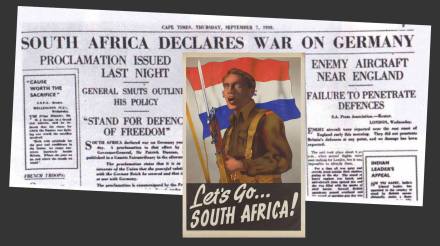
It’s generally misunderstood – but within a day of the United Kingdom and France declaring war on Germany on 3 September 1939, New Zealand, Rhodesia and Australia had declared war on Germany as well. It was just 3 short days later that an independent parliament in South Africa declared war on Germany on the 6th September 1939 (very early on if you think about it – the sixth country to declare war on Nazism). Quickly followed by Canada’s independent parliament who just four days after South Africa’s declaration also declared war on Germany – 10th September 1939.

ec870169d927bce4a8e213eb015ec886On the eve of World War II the Union of South Africa found itself in a unique political and military quandary. Though closely allied with Great Britain as a co-equal Dominion under the 1931 Statute of Westminster with the British king as its head of state, South Africa had as its Prime Minister on 1 September 1939 Barry Hertzog, the leader of the pro-Afrikaner anti-British National party that had joined in a unity government as the United Party.
Herzog faced a problem: South Africa had a constitutional obligation to support Great Britain against Nazi Germany. The Polish-British Common Defence Pact obligated Britain, and in turn its dominions, to help Poland if attacked by the Nazis.

After Hitler’s forces attacked Poland on the night of 31 August 1939, Britain declared war on Germany (3 September). A short but furious debate unfolded in South Africa, especially in the halls of power in the Parliament of South Africa, that pitted those who sought to enter the war on Britain’s side led by the pro-Allied, Afrikaner, ex-Boer War General, and former Prime Minister Jan Smuts, against then-current Prime Minister Barry Hertzog, who wished to keep South Africa “neutral”, if not even pro Nazi Germany in the hopes Germany would win (as Germany had sided with the Boer Republics during the Boer war there was a groundswell in the Afrikaner right politics in support of Nazi Germany).

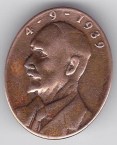
On 4 September 1939, Hertzog’s motion to remain out of the war was defeated in Parliament by a vote of 80 to 67, he resigned, and Smuts became Prime Minister of South Africa and declared South Africa officially at war with Nazi Germany and the Axis.

12509723_536128123223591_2929433976375636116_nTo celebrate Smut’s victory in Parliament that day a special button/lapel badge was made inscribed with 4-9-1939 for the party faithful.
Smuts immediately set about fortifying South Africa against any possible German sea invasion because of South Africa’s global strategic importance controlling the long sea route around the Cape of Good Hope.

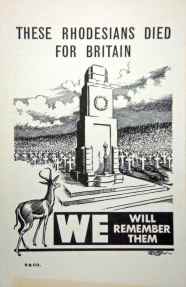
RhodesianPostcard001A very interesting part of the sequences of declarations of war against Germany, was that of Southern Rhodesia (now Zimbabwe), and it stands out as a unique one.  The Southern Rhodesian government almost immediately followed the British declaration of war with their own.  They can even be said to hold the mantle as the very first of the British Dominions and Colonies to stand by Britain in their hour of need.  Steadfast and swift in support of their ‘motherland’ – The United Kingdom, no quibble about it either, as there was no long parliamentary debate over the issue – it came without even a second thought on the matter. In all 26 000 Rhodesians volunteered to fight during World War 2.
The irony is that when Rhodesia ‘stood alone’ in an armed onslaught in the 60’s the country to abandon them was in fact the United Kingdom, forcing them to declare unilateral independence of Britain.  A fact not missed on the rather cynical ‘old Rhodesians’ today who remember their WW2 sacrifices with a very real sense of treachery, and it’s a fact missed on the British public today.

Today, some South Africans often point to Britain ‘abandoning’ South Africa when its armed insurrection started in the mid 1960’s as well.  However they are quick to forget that the very ‘anti-British’ National Party took South Africa out of the British Commonwealth of Nations in 1961 and strained all ties.  South Africa ‘stood alone’ on the Nationalists policy of Apartheid and there was nothing the British could really do about it. However to the Rhodesians there is deep cause for unhappiness as they never wanted to abandon any of their British ties whatsoever.

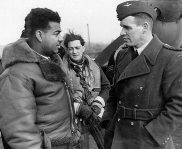
1551745_243308472505559_1055161002_nIn terms of the semantics of the ‘term ‘standing alone’ after Dunkirk, in many cases the Commonwealth countries did not have immediate operational readiness to come alongside the UK in the summer of 1940.  However we must remember that the Battle of Britain (when Britain really ‘stood alone’) was an air battle, where a ‘few’ pilots held off the German assault – and alongside the 2353 British pilots stood 574 pilots from other countries – 24%, – a quarter of the combat force.  Most of them came from the Commonwealth countries (342 pilots in total including Rhodesians and South Africans). So Britain never really ‘stood alone’ in that context either.
So, in conclusion, the idea that following Dunkirk, Britain stood alone against a tidal Nazi onslaught is quite incorrect.  However due to changing geo-politics, what is dissapointing now is that memory of the sacrifice of men and women from countries like India, Kenya, South Africa and Rhodesia are fading fast in the general populations – in their own countries and in the United Kingdom.

Written and researched by Peter Dickens


Source – wikipedia and Encyclopaedia Britannica

Zeppelins, Marlene Dietrich and South Africa’s favourite biscuit – Romany Creams!

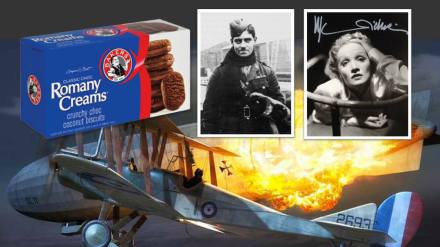
Grab your packet of Romany Creams from the pantry, bite into South Africa’s top-selling chocolate biscuit then settle down and to read some very rich South African World War 1 history.  History is often connected by remarkable ‘golden threads’ and this one takes you on a wonderful journey – all the way from shooting down Zeppelin’s bombing England to your favourite tea time ‘choccy biccy’.

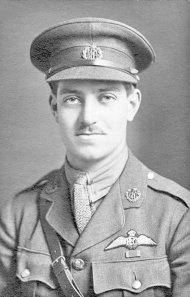
Our story starts with a young South African, Ian Vernon Pyott.  Ian was the son of a Scotsman named John Pyott. John, was born in Dundee, Scotland and was a baker’s apprentice at aged 10.  Due to ill-health, John was advised to move to a better climate – so he packed off to Cape Town, South Africa and in 1880 he moved to Port Elizabeth where he manufactured sweets, cakes and jams before later moving into bread and biscuits. On 1 December 1900, Pyott converted his business into a limited liability company and named it “Pyott Limited”.  Highly successful, between 1898 and 1924, the Company was to receive no fewer than 70 medals at various exhibitions across the country

Captain Ian Vernon Pyott DSO

488658_4192222cfe2a4287814345df55de244a~mv2

Capt. Ian Pyott DSO

Ian Pyott was born in Port Elizabeth, South Africa, on August 31, 1895. He grew up in Port Elizabeth. He was educated at Grey High School, South Africa and Watson’s College in Edinburgh, Scotland, returning to South Africa after completing his education here he trained as a miller in the family owned ‘Pyott Limited’ business.

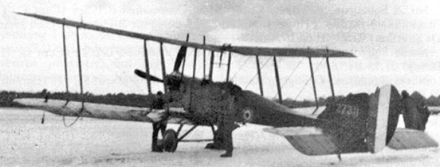
At the outbreak of hostilities which was to become World War 1, Ian Pyott returned to England in February 1916, enlisting in the Machine Gun Corps ‘MGC (Tanks)’. He transferred into the Royal Flying Corps (RFC) three months later in June, after attending flying school, he was posted to 36 Squadron’s ‘A’ Flight, based at Seaton Carew and assigned to fly a two-seater Royal Aircraft Factory BE 2c, No 2738 biplane.

Little did he know that in a couple of months he was about to become one of the heroes of the war.  He was about to meet a German Zeppelin airship on a high altitude night bombing raid, November 27, 1916, designated number L-34.

Two groups of Zeppelin airships set out from Germany to bomb England that fateful night, with the first group of five ships crossed into England near Scarborough while the second group of four flew toward the Tyne River mouth.

Zeppelin L-34 was massive, 148 metres long and a diameter of about 15 meters (on average).

Lt. Ian Pyott was flying out of Seaton Carew aerodrome, he was on his second patrol of the night. Tasked with looking for Zeppelin airships and destroying them, he took off at 10.30pm and although his BE 2C normally carried an observer he flew solo this time, this  weight saving allowed him more fuel and therefore more flying time.

Zeppelin-1

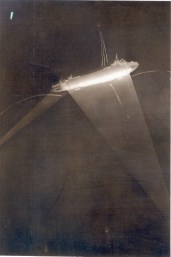
L34 Caught in Search-Lights

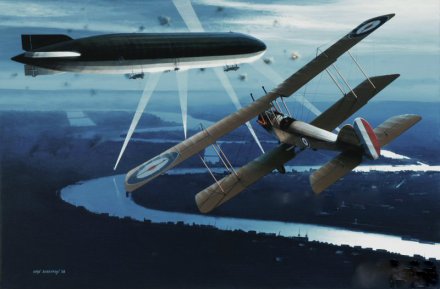
L-34 crossed the coastline into England in the neighbourhood of Blackhalls, a handful of miles north of Hartlepool.  Turning Southwards towards Tees it was spotted and searchlights brought to bear on it.  Once spotted L-34 immediately started dropping bombs in an attempt to neutralise the search-lights.   In all it dropped 13 bombs near Elwick – a little village just west from West Hartlepool.  The bombing proved ineffectual with minimum damage on the ground (two cows were injured).

Now under attack from anti-aircraft fire L-34 turned seawards ​passing over the thickly populated area of West Hartlepool. At this stage Lt. Pyott had been in the air for 1 hour when he saw the Zeppelin heading in his direction.

He reported that he was at 9800 feet and the Zeppelin was a couple of hundred feet below him, he attacked the Zeppelin at right angles to the middle of the airship, firing all the way and then flying underneath it. The airship turned east and Pyott and the Zepplin’s machine gunners dueled for about 5 more miles.  Eventually Pyott got some tracer rounds into left side of the Zepplin’s envelope and the Zepplin was rapidly engulfed in frames.  On fire, it continued east over Hartlepool, broke in half and plunged nose first into the Trees river mouth.

The virtually instantaneous combustion of 45,000 cubic metres of hydrogen on board used to inflate the airship ensured there were no survivors, only two bodies were found, the rest sadly incinerated or lost.

4c9b20a9de43dd9d160aea51539618bc

Death of L 34

Shooting down a Zeppelin was a very big deal in World War 1, they were heavily armed, flew at incredibly high altitudes for the day and very formidable.  When Pyott landed, all the members of his base ran out to cheer him, he promptly collapsed, not due to injury, but because he was frozen stiff from fighting at such a high altitude.  They took him from the cockpit and carried him aloft on their shoulders in victory, taking him off to warm up no doubt.

Following the victory Ian Pyott was to become a national hero, wined and dined by the British elite.

488658_b665d40a137b4b5caff9eaee91427d80~mv2

Lt. Ian Pyott besides the BE 2c he was piloting when he shot down Zeppelin L34

Just over a week later, 15th December 1916, it was announced in the press that Pyott had been awarded a ‘Companion of the Distinguished Service Order’ (DSO), in part his citation read “in recognition of conspicuous gallantry and devotion to duty connection with the destruction of an Enemy Airship”.

Pyott was also promptly promoted to Captain. His proud father, the Bakery owner of Pyotts Limited in Port Elizabeth, sailed from South Africa to be present when King George V presented Capt. I.V. Pyott his DSO at Buckingham Palace.

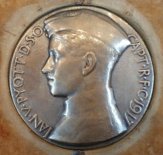
488658_c201ce2a008c406ca35dc5c7993f99d3~mv2Such a big deal was made of this victory, that a special commemorative coin was even stamped to celebrate Capt. Pyott’s actions and resultant DSO.  Zeppelins were so feared by the British public they were branded ‘Baby Killers’ as the bombing of civilians carried with it such a public outrage. The commemorative medal carried Capt Ian Pyott’s profile, the year and the letters DSO, it was presented to him at Hendon Aerodrome in England by none other than General Jan Smuts.
But there was more to come from this very brave South African. He was again Mentioned in Despatches (London Gazette 25 January 1917), whilst subsequently serving with No 55 Squadron on the Western Front. He also claimed another air victory on 23 April 1917 while returning from a bombing raid, a formation from No 55 Squadron was attacked by nine hostile aircraft that dived upon them. Pyott and his observer, 2nd Lt A D Taylor, in DH4 A2147, claimed an German Albatros scout plane over Boue.

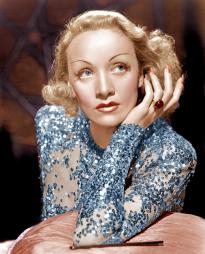
Marlene Dietrich

dietrichmarlene01

Marlene Dietrich

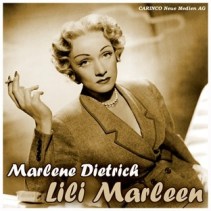
So where does the Hollywood Superstar actress and singer, Marlene Dietrich, fit into all of this?  Simply put the Commander of Zeppelin L-34 on that fateful night in September 1916, was Marlene’s uncle.

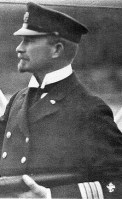
Kapitanleutnant Max Dietrich commanded Zeppelins in his short career, and was regarded as a particularly experienced commander, in all he had a total of 41 sorties in Zeppelins.  Because only two bodies were recovered from L-34, Marlene and her family lived for a little time in the hope that Max Dietrich could somehow have survived.

She said of the incident,

“We knew the Zeppelins had gone out on an errand of war, but we did not know their destination. My uncle never came back. My aunt was broken-hearted, but she would not believe her husband had really gone. She insisted that he would come back. But the years passed, and there was no news. At last she lost hope and bowed to the hand of fate. It is very sad but of course, in Ger­many my Uncle Max was mourned as a hero. He gave his life for his country”.

488658_e7b4338c17514355a982867b68dcf23d~mv2.jpg_srz_431_364_85_22_0.50_1.20_0.00_jpg_srz

Max Dietrich

Marlene Dietrich, was born in Berlin and came from a strong military family. She was a Hollywood superstar actress and singer who held both German and American citizenship.  Her performance as Lola-Lola in The Blue Angel (1930) brought her international fame. Marlene Dietrich starred in many Hollywood films, significantly Morocco (1930), Shanghai Express (1932), and Desire (1936).

During World War 2, she became the ‘darling’ for both British and German troops, whilst holding this rather unique position she recorded a popular German love song by Lale Andersen called ‘Lili Marleen’ in English, it was done as a morale boost for American, British and Commonwealth troops and it became an instant hit.

marlylyEspecially for the South Africans, The song was published in South Africa in a wartime leaflet, with an anonymous English translation, as ‘Lili Marleen: The Theme Song of the Eighth Army and the South African 6th Armoured Division’ (quite ironically).
In a wonderful turn of fate, it was not unusual in the Second World War for British, American and South African troops to be heard singing along to the English version of Lili Marleen on a record player and for German troops to be singing along to her German version on the opposite lines within hearing distance of one another.

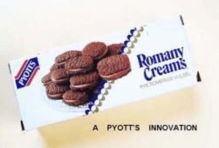
Romany Creams

So how do Romany creams fit into this story?  Well, after the war our hero Capt. Ian Pyott returned to South Africa and took up a position in his Dad’s bakery business.

John Pyott died in 1947. His other son, Robert, became Chairman and held this position until his death in 1964. During this period, the decision was made to concentrate solely on biscuits and from October 1949, Pyott Limited thus specialised, enabling it to increase its biscuit range even further. Following Robert Pyott’s death, his brother, our Zeppelin shooting hero, Ian Pyott, was appointed to the position of Chairman and Managing Director.

The early 50s saw the beginning of the fight for market share between the three major competitors in the biscuit industry – Bakers, Baumanns and Pyotts.

Under Ian Pyott, in mid 1965, Pyott Limited collaborated with Cadbury’s Chocolates in Port Elizabeth to produce a chocolate variation of a traditional English treat known as “Gypsy creams”, which consisted of two round-topped biscuits sandwiched together with a creamy white filling. Gypsy Creams were not a very big seller for any of the British manufacturers.

Screen Shot 2017-07-22 at 18.20.47Innovative as ever, the biscuit part was shaped the same as for “Gypsy Creams”, but the biscuit part (referred to as the shell) was improved and it was sandwiched with a chocolate filling instead, no doubt provided by Cadbury’s Chocolates.

The line immediately proved a winner.  They chose the name “Romany” to carry the ‘Gypsy’ connotation across from Gypsy Creams (named after the Romany travelling community).

Bakers Ltd then made a competitive product and called it Tuscany Creams, but it was Pyott’s Romany Creams that really held the market.

In 1969, Ian Pyott, was now getting old and he resigned from the position of Managing Director of Pyott Limited. He died shortly afterward in 1972 whilst the company was been sold to Nabisco Inc.  Many buy-outs and takeovers later, what was Pyott Limited found itself part of the Anglovaal Industries Group.

In 1994 Bakers, Pyotts and Baumanns were regrouped under the collective title of “Associated Biscuits”. In 1996, the member companies of National Brands Ltd. (NBL) were combined into a single company. This transformation included combining Willards with Associated Biscuits to form the Biscuit and Snack Division of National Brands.

Romany_Creams_Classic_Choc

Today, the familiar Pyott’s logo on Romany Creams has been replaced with their old competitor’s logo – the Baker’s logo. The range of flavours has expanded and the packaging design has changed, but the ‘original’ flavour chocolate Romany Creams developed by one dapper, Zeppelin shooting South African fighter pilot and war hero, Capt. Ian Pyott DSO, are still the best seller.

In Conclusion

I’ll bet the modern Marketing Managers at National Brands have little to no idea of the heritage this product has. Wouldn’t it be nice, if in the centenary of the end of WW1, that a special commemorative packaging be designed to Capt. Ian Pyott DSO and his legacy re-presented to a South African public largely unaware of the WW1 heroes this country has, and what they have given to the country.

I hope you have munched your way through the entire packet of Romany Creams by now and richer in chocolate and sugar no doubt, but you also are much richer in the knowledge now that you bitten into the type of fantastic journey South African military history has to offer. History that often lies so hidden away because seismic political events in South Africa have over-taken it.  Think of it as a ‘secret filling’ that will make for an interesting titbit to impress your friends with, next time the Romany Creams appear on a coffee table.

Written and researched by Peter Dickens

Enjoyed this, have a look at another famous South African military history treat, the Hertzoggie vs. the Smutsie.

‘Bake-off’ South African style!


My sincere thanks to Sandy Evan Hanes for pointing out this interesting golden thread to me.  References: Wikipedia, Shooting Down of Zeppelin L-34 by Ivor Markman.   On-line discussion forums.  South African Legion Facebook group forum.