“We fought as one, black and white”; the South African Native Military Corps ‘at arms’

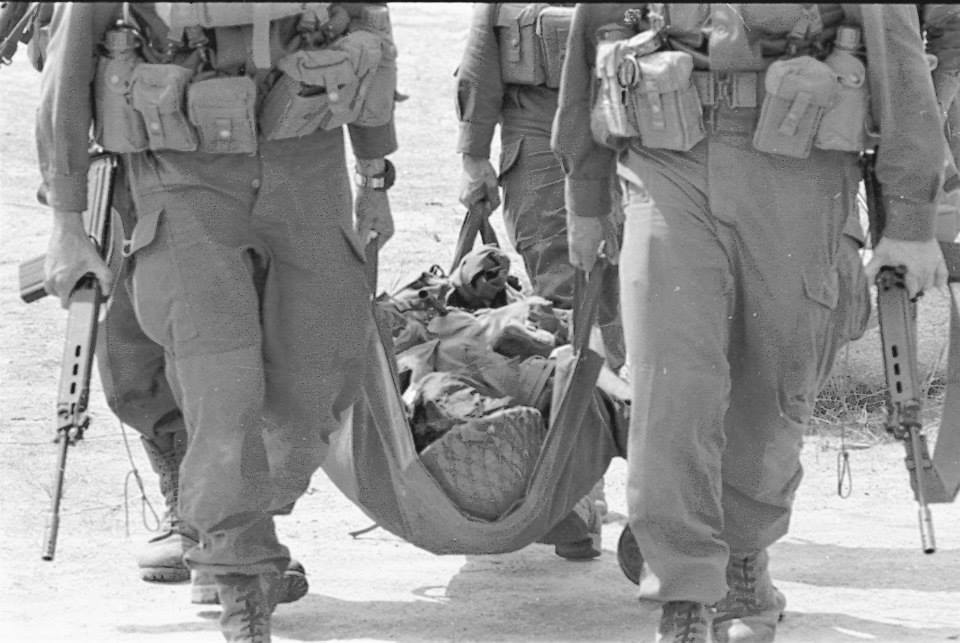
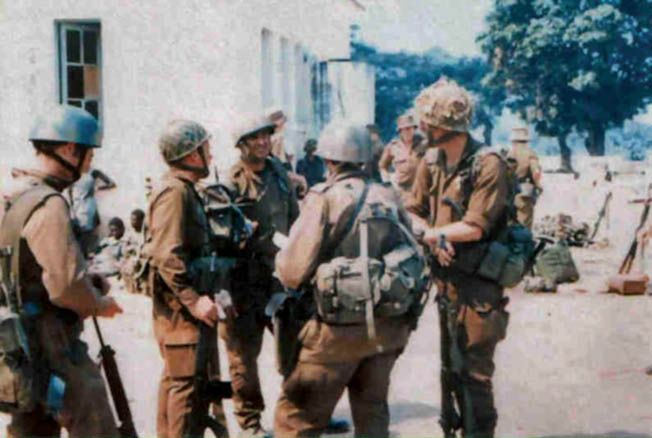
Now what is truly remarkable about this photograph?  Well it shows a bunch of armed South African soldiers during World War 2 who by all accounts never carried a firearm and by directive were not allowed to either.  These are members of the South African Native Military Corps (NMC), and it’s proof positive that there is no such thing as skin colour or ‘Segregation’ legislation when under fire.

sanmmc

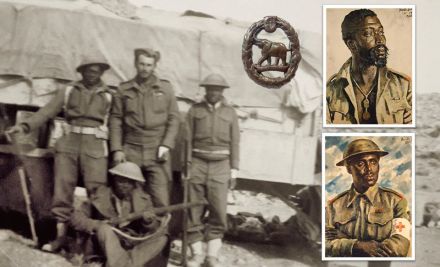
This photograph was taken by Warren Loader’s Grandfather Noel Edgar Fuller while serving with The Royal Durban Light Infantry (DLI) B Coy in North Africa during WW2. What makes this photo remarkable is the DLI L/Cpl is standing next to three armed members of the South African Native Military Corps (NMC).

So, visual proof that .303 Lee Enfields were issued to some members of the NMC, but what is the validity of this rare photograph?

Official Policy
163497_146794905490250_702739084_nDuring the Second World War the South African government of the day held out that members of the NMC could only function in non-combatant roles, and were not allowed to carry firearms whereas funnily members of the Cape Corps (Cape Coloured members) where fully armed and enrolled in combatant roles.  In terms of the race politics of the day, on the arming of Black soldiers at the beginning of war, Smuts’ government had to bow to the pressures of his opposition, the Nationalists, led by DF Malan.

The Nationalists were vociferously opposed to black South Africans in the army at all, even unarmed. As Dr D.F. Malan was to be quoted in Parliament: “To every Afrikaner, the use of black troops against Europeans is abhorrent.”

Faced with all this opposition in Parliament from the official opposition bench Smuts had little choice, he needed men to fight, and had to tap South Africa’s black population for resources.  So he found a way by striking compromise, they could carry traditional weapons in the form of spears and knobkerries.

The president of the ANC in the war years, Dr AB Xuma, responded: “They are expected to fight aeroplanes, tanks and enemy artillery with knobkerries and assegais. What mockery.”

Arming the Native Military Corps with Spears 

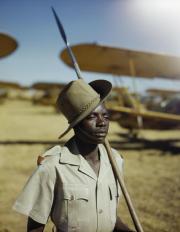
So, in a counter-intuitive move to the National Party’s objections and statements to the Smuts government, the Native Military Corps were trained in traditional weapons (other than firearms) which they were allowed to carry.  This was a long spear, and bear in mind spears are very deadly (as the British fighting at the Battle of Isaldwana found out) – but lets face it, spears were very out of date in the context of modern war, but they pressed on and in training the South African Native military corps even trained to charge with the spear, even through tear-gas screens.
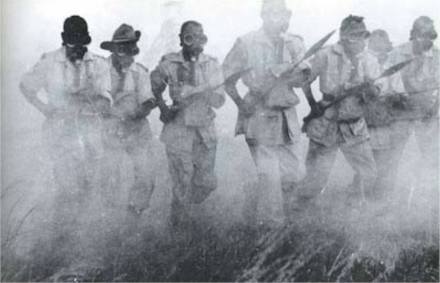
24955656_2059510197611301_4990790189144305175_o

South African Native Military Corps members charging with traditional spears into a teargas screen

Secretly arming the some Native Military Corps members with Firearms 

All this political segregation and racial discrimination became quite irrelevant when serving in combat areas and in many instances serving Regiments, Units and Sections of the South African Army quite quickly issued firearms to their NMC ‘support’ members – and this photo of DLI members stands testament of such practice.

Thier lives – Black or White, depended on it, and logic prevailed.  As is often the case in combat, the man who joins you in the fight is your brother – irrespective of the colour of his skin – in combat there is no such thing as racial segregation in a foxhole.

The caption written on Noel Edgar Fuller’s photo is “our Lance Corporal and his two native pals”. Quite a lot can be seen and said to this remarkable snapshot into the attitude of the time versus the attitude of soldiers.

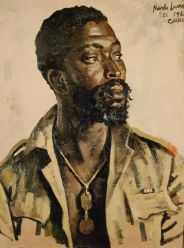
Job Maseko MM
Job-Maseko

Job Maseko MM

In addition to snapshots like Noel’s one, there are actual accounts of South African Native Military Corps getting into the fight at the Fall of Tobruk, and it produced one highly decorated South African from the SA NMC.

During the Fall of Tobruk, over 1200 NMC members found themselves in a frontal attack by Rommel and his Axis forces.  Many of them were quickly issued rifles and ammunition and got into the fight alongside their white compatriots. Job Maseko was one and he ferried ammunition to the other NMC members who had been issued rifles and were in the thick of the fighting.

After the Fall of Tobruk (South Africa’s greatest capitulation of arms, Job found himself and other NMC members taken prisoner of war.  Made of stern stuff, whilst been put to work by the Germans on the Tobruk dock loading and off-loading Axis suppliers, Job secretly created a bomb using a condensed milk tin, cordite taken from bullets and an extremely long fuse.  His intention, sink a ship!

Job placed his home-made bomb deep inside the bowels of a German freight ship (and “F” Boat) that was docked in the harbour at Tobruk.   He skilfully placed it next to fuel barrels for maximum effect, lit the fuse and made good his escape.  Had he been caught, as a Black POW,  he would have certainly been put to death if not tortured first.

Job waited and later the ship shuddered from a huge internal explosion and sank almost immediately into the harbour.

He later escaped from Tobruk and walked, for three long weeks though the desert and through enemy lines, all the way to El Alamein, he intended joining the battle there as he had fixed an old German radio he had found which informed him about General Montgomery’s epic and tide turning battle at El Alamein.  We still await the full historical account of this remarkable man as very little is known to this day, rest assured historians are now writing it.

Sergeant Petrus Dlamini

Now consider this remarkable first hand account of armed Native Military Corps soldiers in the thick of the fight at El-Alamein

The Germans ran away. Now we were having short magazine guns, we pushed them. They said we went 300 miles … (we were in the) 8th Army led by (British Field-Marshal Bernard). Montgomery. Those Germans never came back. We fought as one; black and white soldiers.” — Sergeant Petrus Dlamini speaking about the battle of El Alamein to filmmaker Vincent Moloi

After 1948 this history was held back from the ‘White’ population and to a very large degree from the ‘Black’ population for political expediency ,it is only been recounted now with the very few remaining NMC members.  In effect South Africans were denied the opportunity to know their own history.

All that is starting to change now. From their recollections we know that, although black soldiers left South Africa armed only with spears, when they got “Up North” (to the North and East African campaigns) many were armed with rifles.  We also know now some even fought alongside white soldiers in the thick of battle.

Sergeant Petrus Dlamini spoke of being at Sidi Rezegh, Mersa Matru, Tripoli, Garowe in then Abyssinia and El Alamein before he went by boat to Italy with the South African 1st Division. He remembered doing guard duty in North Africa.

He says: “There, at Garowe, we were guarding as a sentry. We were guarding with assegai.” But just a few months later, Dlamini adds: “It was said — I heard a rumour — that the superiors [commanding officers] of South Africa, England and Australia said we must be given guns. Those guns were taken from the Italians in Kenya. They gave them to us and we were taught how to put ammunition and we were training with guns”.
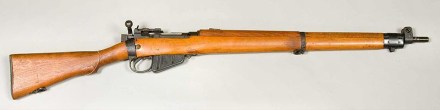
Lee enfield

Short Magazine .303 Lee Enfield No. 4 Mk 1, standard issue

“Then we went to El Alamein and they took these [Italian] guns that were not right and they gave us short magazine Lee-Enfield .303. We got them at El Alamein.”  The Lee-Enfield .303 short magazine was the standard rifle issued to all British and Commonwealth troops.

This has been verified in an article in the South African Historical Journal by historian LWF Grundling, who says: “Recruits received rifle musketry training, which was seriously handicapped by the defective Italian rifles with which they were issued.”
30806253_2129588687270118_9148612884307489711_o

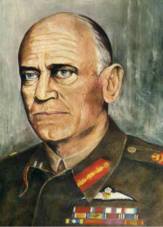
General Sir Pierre van Ryneveld

According to this research it was General Sir Pierre van Ryneveld himself who instructed the commanding officers in North Africa to arm black soldiers with Lee-Enfield rifles before El Alamein.  No small player, General Sir Pierre van Ryneveld was the Chief of General Staff (which today is known as Chief of the South African National Defence Force) and led the South African war effort in the Second World War.

But this does not seem to have been mentioned in despatches (possibly because of the petty race political ramifications back in South Africa of the Nationalists).

Sergeant Dlamini said: “In the front line we were accompanied by whites. When we go to fight the Germans we were mixed.”

He spoke vividly of the battles he was in. Moloi recorded his description of the battle of El Alamein.

“It was like bees, those German planes together with our planes, the Royal Air Force and the South African Air Force. Many died there. Shots were like falling rain. They would hit here and here where you are sitting. When you are sleeping in your trench you would hear sounds of bombs all the time, when you wake up you would see those injured and those who are dead.”

Dlamini says they were with the 8th Army. as they pushed the Afrika Korps and Axis forces out of Africa, he goes on “It [the 8th Army] pushed. Ai! Man! It was terrible, soldiers were lying dead, black and white, but the Germans were retreating and we kept following them. The Germans ran away. Now we were having short magazine guns. We pushed them. They said we went 300 miles … 8th Army led by Montgomery. Those Germans never came back. They went down together with the Italians you see.”
998120_170186736484400_630113539_n

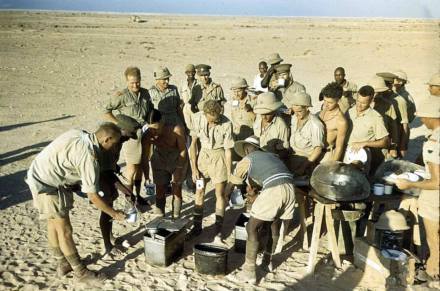
Rare original colour photograph of a NMC Field Kitchen in North Africa campaign, note the high degree of integration of the South African soldiers represented.

Dlamini added: “We were one. We fought as one; black and white soldiers. Here in South Africa (before we went up north) we were treated differently. Blacks were sleeping this side, whites on the other side. When we arrived in Egypt we mixed. If we made a queue, in front would be a white person, behind would be a black person then a white person. We were one.”

And, perhaps explaining why he had not spoken of his experiences before, he added: “You know the heart of a soldier. Your feelings die. You are always angry.”

Besides Moloi’s interviews with Dlamini, and with several other black World War II veterans, almost no records of the wartime experiences of black soldiers exist. And as it’s probably too late now to collect more, Moloi’s transcribed and translated interviews are a national treasure.

Lucas Majozi DCM
581520_199581196878287_2116978767_n

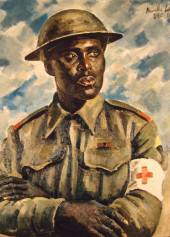
Lucas Majozi DCM

Adding to Job Maseko’s gallantry, another NMC man was to attain hero status during the Second World War was Lucas Majozi, a man who performed a feat very similar to Pvt. Desmond Doss (who has a movie ‘Hacksaw Ridge’ made over his gallantry and US ‘medal of honour’), and like Doss, as an unarmed medic Lucas time and again exposed himself and walked into the hell of machine gun fire as an unarmed medic to rescue a large number of critically injured ‘white’ South African soldiers on the battlefield during the Battle of El Alamein, so much so he became riddled with bullets himself and eventually collapsed.

This is South Africa’s own ‘hacksaw ridge’ and movies should be made of it, Lucas Majozi should be elevated to the highest accolades of gallantry we have to offer today.  He remains the NMC with the highest decoration to this day – the Distinguished Conduct Medal.

Politically inconvenient ‘Sacrifice’
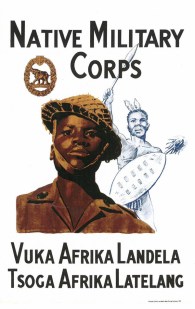
600x951It’s an often ignored fact and statistic – one which most certainly the National government after 1948 did not want widely published, lest national heroes be made of these ‘Black’ men.  Simply put the ‘Black’ contributions to World War 1 and World War 2 were quite literally erased from the narrative of the war after 1948 and dismissed by the incoming Apartheid government as ‘traitors’ (a tag also suffered by their ‘White’ counterparts) for serving the ‘British’.

Bear in mind when reviewing what this actually means to the prevailing opinions by many South Africans of the war (White and Black)  – approximately 40% of the standing South African servicemen in WW2 where persons of “colour”.  In all more than 146,000 whites, 83,000 blacks, and 2,500 people of mixed race served in the standing forces of the Union of South Africa at this time.  Mull that over for a minute.

The sacrifice of the men of the Native Military Corps no less significant – if you think that as ‘non combatants’ this corps came through unscathed by war, also think again – this is the honour role of those NMC members who laid down their lives during the war, their sacrifice is literally quite eye-opening:

In total approximately 1655 Native Military Corps members died during World War 2, read that again – One Thousand Six Hundred and Fifty Five ‘Black’ South African soldiers died during World War 2.  That’s almost three times the number who died on the SS Mendi during World War 1, and that’s only from one ‘Corps’.

Put into context, nearly as many South Africans died during the entire 23 years of fighting during the Border War in the 70’s and 80’s when approximately 2013 South African service personnel died – from all arms of the military …. yet, here we are talking about only ‘one’ single Corps of Black South Africans and only five years of conflict.  Consider that the book shelves on South African history are stuffed full of books on the Border War and not one single book is dedicated to the history of the South African Native Military Corps in World War 2.  There is also almost nothing by way of definitive work on the unit history on the internet.

In Conclusion

It must be noted that this policy of arming NMC was not a universal one and only seemed to have been actioned with certain members in front line units or when combat situations demanded it, in reality reason finally prevailed.

It also seems that once high intensity combat operations abated these rifles were handed back. For the most part many NMC members went through the war in non-combatant roles and unarmed in roles like supply truck drivers, medics, chefs, bomb loaders, engineering labour (rail and bridge-building) etc.

It is unfortunate that after the war, and when the Nationalists ascended to power in 1948, that the NMC was disbanded and history scrubbed.  They were excluded from national parades and would sit under a tree and tell their stories to anyone prepared to listen.  Their stories really becoming fable in the Black community only, any record of NMC using weapons was generally written out the state’s historical narrative, interviews with them disregarded and these priceless historical nuggets are only starting to re-surface now in a post Apartheid epoch.
269A86C0B4724B0689CF66931FBE0163

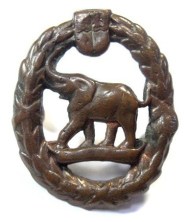
NMC Insignia

The history of the South African Native Military Corps needs to resurface – it’s screaming out for more definitive works and information access – this featured photograph alone calls for it.  We need to fundamentally rethink who and what has been sacrificed to military conflict by South Africans of all ethnic origins, we need to completely re-dress how we honour them and we need to take some serious perspective.

Related Work and Links:

Native Military Corps Dress and Bearing: Dress and Bearing of the South African Native Military Corps

Job Maseko; Job Maseko; one very remarkable South African war hero.

Lucas Majozi; “With bullets in his body he returned … into a veritable hell of machine gun fire”; Lucas Majozi DCM

Skin colour in combat;  Skin colour is irrelevant in a foxhole!

Native Military Corps honour roll;  NMC Honour Roll, Delville Wood official website


Written by Peter Dickens.  Image copyright of NMC members holding weapons to Warren Loader, used with his kind permission.  Paintings of Job Maseko and Lucas Majozi by Neville Lewis copyright.  Quotes obtained from ‘Memories of black South African soldiers who bore arms and fought in War II’ by Marilyn Honikman
Navy teaches disadvantaged children to ‘Roll with the Punches’

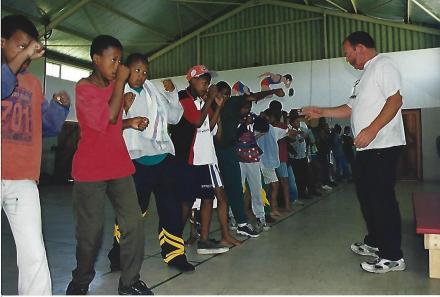
Did you know that the South African Navy in the 90’s spearheaded community outreach using the “sweet science”?  In 1998 the SANDF initiated the first boxing clinic on the West Coast to showcase local talent and generate role models for children who might otherwise gravitate to gangsterism.  Seen in the featured image are these children Shadow boxing with Jan Louwrens.

Boxing has always been a key sport in the South African military, with many of our great boxing heroes serving at one time or another in the armed forces, and nothing showcases this remarkable talent than a boxing outreach program to the community.

Equally, boxing has a long history of thriving in deprived areas. What better was to marry the two together by way of an outreach programme?

The first boxing outreach programme for children from previously disadvantaged backgrounds ever to be held on the West Coast took place at the Navy base SAS Saldanha in 9 December 1998, with the positive after effects continuing to this day…

Like all outreach programs the purpose of the clinic was to motivate children, making them aware of the benefits of sport as a conduit to physical and mental wellbeing, to make them healthy, confident and self-assured; providing role models and thereby turning them away from negative adult behaviour – alcoholism, drugs and warn them against the evils of gangsterism.

This community outreach programme was organised by the then Chairman of the Military Academy Boxing Club, S/Lieutenant Claudio Chistè a combat officer in the South African Navy, with the support from the University of Stellenbosch and the Military Academy, South African National Defence Force (SANDF). More than 70 children attended the training and instruction session which featured boxing stars such as the former world Boxing Champion, Gary Murray, former South African light-middleweight champion, Coenie Bekker, top SANDF trainer and referee, Jan Louwrens. The aim of the project was not only to teach children how to box, but to teach life skills and to facilitate the community building process.
South African military’s proud boxing legacy

1_Gary Murray winning the word championship title

Gary Murray after winning the World Championship

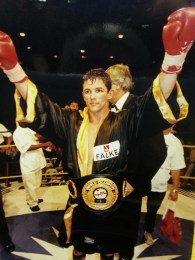
The South African military has a very proud legacy of boxing.  Former World Welterweight Boxing Champion Gary “The Heat” Murray is a leading example of this.  Gary was just 12 years old when he started sparring, but after he knocked out the local champion, he was hooked.  Gary’s family moved from Scotland to South Africa and he boxed for both Scotland and South Africa as a youngster, winning the South African National Title in Cape Town.  He joined the South African military for two years of his national service and won the prestigious “Super Trooper” title for the fittest soldier in the defence force, as well as the crown of Best Boxer two years in a row. After Gary left the army, he turned pro sharing the ring with greats such as all time knock-out king, Buck Smith (120 knockouts to his name), Dingaan “Rose of Soweto” Thobela and tough as teak Rusty Derouen (the fight was billed “War on the Foreshore” and won the “Fight of the Year” award).

2_Coenie Bekker in his army days pre winning SA Light-middleweight title

Coenie Bekker before winning the SA Light Middleweight title

Former South African Light-Middleweight Champion Coenie Bekker had a similar story to Gary Murray.  His family moved to the rough suburbs of Cape Town and after getting into a street fight with a local gang member Coenie resolved to get formally trained as a boxer.  In a long and impressive amateur career Coenie had 87 bouts suffering only 6 defeats, he won many titles in this time which included the Western Province Title as a Junior and Senior and also the South African Coastal Title at Junior level and Senior. Coenie also boxed in the South African army during national service and won many fights while serving as well as representing the then OFS Province, (Orange Free State, prior to 1994). After completing his military service Coenie decided to turn professional, with career highlights being his famous duel with Charlie “the Silver Assassin” Weir (who also served in the SADF) and winning the national championship to be crowned South African champion.

Inspiration leading to first Community Outreach

One particular moment in the early part of Claudio’s life would prove to be rather poignant in demonstrating the power of the sweet science to bring a community together. Back in 1991 when he visited the then Ciskei with his grandmother, Selma, at the invitation of her close friend, the late Chief Lent Maqoma, Chief of the amaJingqi (for a period served as Acting Paramount Chief of the amaRharhabe Royal house after the death of Inkosi Enkhulu Mxolisi). During this visit,  they were invited by a local to a boxing match in nearby Mdantsane (where over 23 world champions and 50 national champions hail from, amongst them Nkosana “Happy Boy” Mgxagi, Vuyani “The Beast” Vungu, Welcome “The Hawk” Ncita, Nkosinathi “Mabhere” Joyi).  The atmosphere was electric, with the community in full spirit behind the two sportsmen in the ring. The power of the sweet science was clear. Claudio’s dad, Diego, being a former Italian welterweight title contender, reinforced the affinity with the sport.

Claudio joined the South African Navy immediately after school, taking up boxing as a sport, going  on to have 10 bouts ranging from development tournaments in townships to representing the SANDF at provincial level. Being trained by top defence force coaches John Jantjies (former SA Kickboxing Champion & SA boxing contender, who had taken over from Steve Kalakoda as coach of the SA Navy team)  and Jan Louwrens,  with SA Kickboxing Middleweight Champion, Chad Alexander, as his sparring partner. Subsequently Claudio went on to win the Western Cape & Western Province championship.

3_Claudio being congratulated by world champion Gary Murray after beating provincial champion Heindrich Pienaar

Claudio Chistè being congratulated by world champion Gary Murray after beating provincial champion Heindrich Pienaar.

Legacy of Community Outreach makes social impact

It was these experiences which led Claudio to hold training camps for military personnel assisting in training aspiring paratroopers in preparation for their gruelling parabat selection, and to organise this community outreach programme which has since gone on to be an inspirational training ground for aspiring Olympic boxers and South African national champions. This project received praise from the University of Stellenbosch and the Military Academy, SANDF for community service in social upliftment, consequently promoting the perception of the defence force amongst the local community.

At the time, organiser Chiste stated with what now seems a prescient understatement, “I think it was very successful. There were about fifteen kids who really showed talent and if we got them interested, we’ve achieved our goal”, adding: “The idea was to let them have fun while learning a skill to exercise their bodies and develop their minds”. This laid the seeds for follow on outreach programmes, which indeed provided a learning environment for the acquisition of these skills. A case in point being  Gregory “The Hitman” Gans, where at the age of only 13 he attended one of the follow-on outreach programmes, showing tremendous talent. With extremely hard work and dedication he obtained his National Colours (Protea) for Kickboxing within the first year of starting with the sport. He won the SA Kickboxing Championships and was selected for the National Team where after he represented South Africa in an international bilateral competition against Mauritius and won his fight with a spectacular knock-out. He went on to represent South Africa in numerous international events, including two World Kickboxing Championships in 2012 and 2014 whereby he brilliantly achieved second place during both World Championships (1).

The link in South Africa with the military and boxing are deep rooted.

Fist-fighting as a sport came to South Africa only during the first British occupation of the Cape in 1795 (preceding even soccer and rugby 1862), with boxing as a sport being one of the legacies of colonialism. Bouts were conducted under the London Prize Ring rules for close on a century but illegal bare-knuckle fights-to-a-finish were common in military camps in Cape Town and the Eastern Cape. In fact, one of the earliest references to boxing in South Africa is a report about the arrest of two characters, Japie and Mahmoud, after a fight in Cape Town in the early 1860s (2).

Perhaps the overall impact of this sport was best summed up by Professor Njabulo Ndebele who researched extensively the effect on the community when he said at a recent seminar, “What is also fascinating is to reflect on the contribution of boxing to one’s moral compass and character. The values espoused in the ring. The restraint of power. The demonstration of discipline and self-control. A code of conduct. These men have huge potential to injure but instead there is an instinct to protect – to win through technical skills, thought and the following of the rules”.


Sources:
Sunday Times, Die Weslander, Boxing World, Military Academy Yearbook, Department of Defence, Supersport.
(1) Source: http://www.dod.mil.za/defence_people/PteGans.htm
(2) Source: https://www.supersport.com/boxing/blogs/ronjackson/SA_boxings_Happy_Anniversary

A simple thank you would be nice!

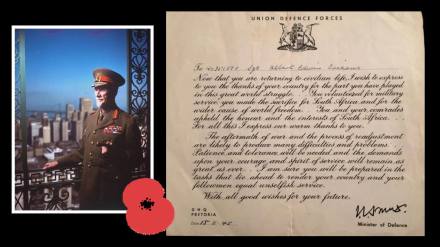
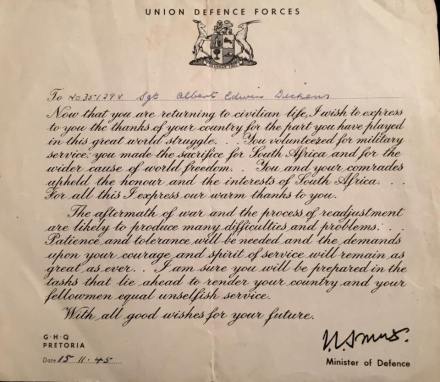
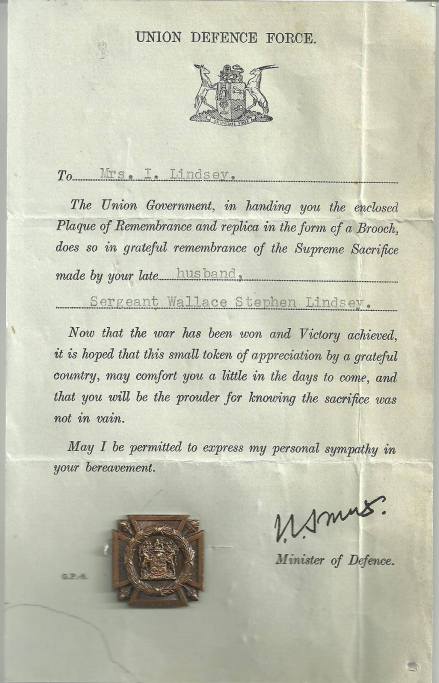
This is a letter of thanks from Field Marshal Jan Smuts sent to every single South African who served in the armed forces during World War 2.  It formed part of his demobilisation debrief . This particular one belongs to my Grandfather – Sgt. Albert Edwin Dickens – and he cherished it so much that it survives to this day.

13221753_10154020914611480_5346472831885527386_n

A simple thank you goes a very long way, decades later I was to serve in the South African Defence Force as a conscript and no such thank you letter was ever given to me – not even so much as a verbal thanks let alone in writing.  Not just me, generally thousands of South Africans called into service of country as conscripts (and even permanent force) received nothing for it by way of a thank you, or even a simple demobilisation debrief in many cases.

Some units in the ‘old’ SADF were a little better than others and some have received thanks from Unit, Regiment, Corps, Squadron, Ship or Battalion commanders, some even received a formalised demobilisation debrief, but many did not (in fact most).  As a result many South African military veterans are now left with deep-seated disgruntled attitude of “what was it all for”.  My Grandfather and his generation of military veterans had no such dilemma.

This simple letter of thanks from the Prime Minister goes a long way to demonstrate the vast difference in attitude between South African forces which operated under Smuts as opposed to those who operated in the statute forces under the National Party. Herein lies a key difference between the United Party under Jan Smuts and the National Party under P.W. Botha. When it came to serving the country, the one displayed gratitude the other often displayed arrogance.

Jan Smuts even went further, at the end of the war he sent a thank you letter to all the South African families who had lost loved ones during the war along with a special commemoration plaque, here’s an example of it.

44840021_10217757323621831_5955157771505631232_o

In addition to these letters and brooches, Jan Smuts also issued commemorative plaques to families who lost members in the war bearing the person’s name.

As to arrogance, it is also not only the Afrikaner Nationalists, in 1994, I volunteered to remain with the newly formatted SANDF as a Reservist and to date have not received anything from an African National Congress State appointed State President of South Africa by way of a simple thanks.  As to a signed letter from the State President sent to other SANDF members demobilising – I’ve not yet seen one issued to anyone.

We, as South Africans generally treat our veterans very badly.  The National Party threw the South African Union Defence Force (UDF) members and their military reputation, colours and victories under the bus in 1960, they again threw their reformatted South African Defence Force (SADF) members and thier honours under the bus in 1994, the ANC is now doing a good job throwing the current South African National Defence Force (SANDF) under the bus by under financing it and tainting it with corruption.  In all of this, South Africans in general have no special regard for anyone who has worn the country’s military uniform.

Perhaps there is a lesson to the current SANDF to invest in a simple personalised pro-forma letter.   It will go a very long way to install pride and purpose in someone who has risked their life to serve in a South African uniform.


As is very much the custom in the USA, the UK, Australia, Canada and New Zealand, when next you see a UDF, SADF or SANDF military veteran on parade or veteran members of the South African Legion of Military Veterans and MOTH collecting funds for poppies of remembrance or participating in charitable contribution – be sure to walk up to them, shake their hands and give them a simple thank you, it will mean the world to them – because to date there is a very good chance nobody else has.

Capt. Peter Albert Dickens (retired)

P.S. A sincere thank you to Maureen Lindsey Paine for allowing me to share her Mother’s letter and brooch which she now wears with pride every Remembrance Day. 

supporting-poppy-appeal

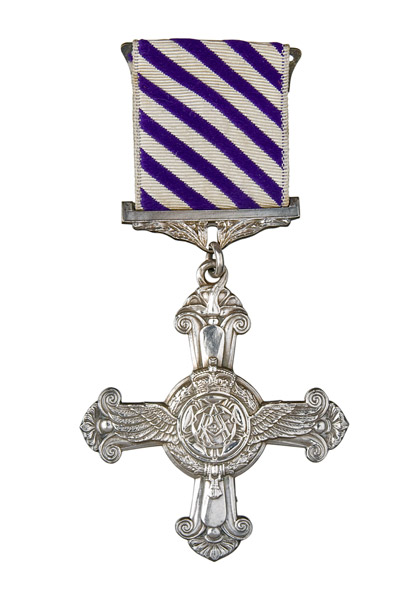
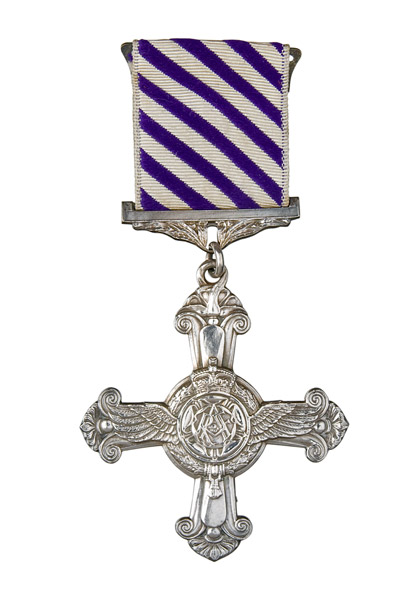
Three times winner of the Distinguished Flying Cross – Johannes Jacobus Le Roux

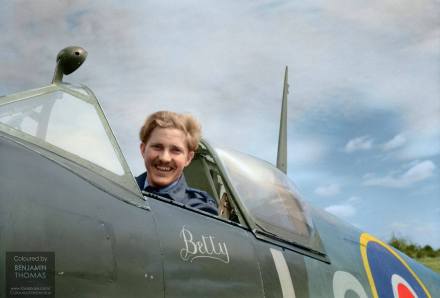
Squadron Leader Johannes Jacobus Le Roux – DFC & Two Bars, Commanding Officer of No 602 Squadron RAF in the cockpit of his Supermarine Spitfire Mark IXb “Betty” MJ584 LO-A, at B11/Longues, Normandy. 10-12 July 1944

Le Roux, a South African, joined No. 73 Squadron RAF in France in 1940. He was shot down twelve times, but enjoyed better luck with No. 91 Squadron in 1941 and 1942, shooting down eight enemy aircraft before joining No. 111 Squadron RAF in North Africa. He ended his second tour in command of the Squadron. Following a rest from operations he was given command of No. 602 Squadron in July 1944. Le Roux is generally credited as the pilot who attacked and badly wounded Generalfeldmarschall Erwin Rommel in his staff car on the road between Livarot and Vimoutiers on 17 July 1944, the day on which he also destroyed two Messerschmitt Bf 109s and damaged two more to bring his victory score to 23.5.

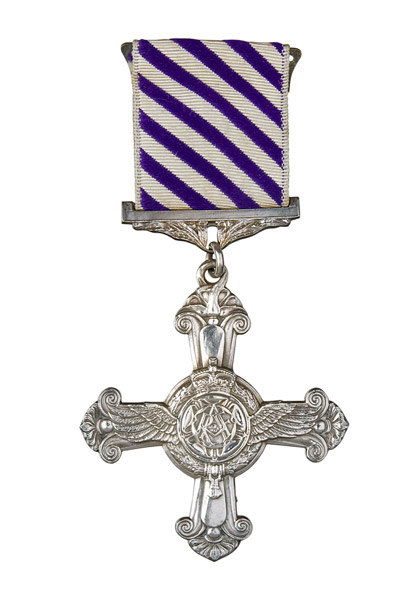
He won the Distinguished Flying Cross (DFC) not once, but three times, here are the citations:

Distinguished Flying Cross
Awarded 17th October 1941

Citation:

“This officer has carried out over 200 operational sorties which have included shipping reconnaissances, during which much valuable information has been obtained, and numerous attacks on shipping and enemy aerodromes in the face of heavy enemy fire. Flight Lieutenant Le Roux has destroyed 3 hostile aircraft in combat and at least 1 on the ground.”

Distinguished Flying Cross – First Bar
Awarded 11th December 1942

Citation:

“Since being awarded the Distinguished Flying Cross this officer has destroyed a further five enemy aircraft. In addition to his air victories he has attacked shipping and targets on the ground with considerable success. At all times Flight Lieutenant Le Roux has displayed a fine fighting spirit.”

Distinguished Flying Cross – Second Bar

Awarded 9th July 1943

Citation: 

“Sqn. Ldr. Le Roux’s magnificent leadership has played a large part in the many successes attained by his squadron. He has personally destroyed 14 enemy aircraft and damaged many others, and has also inflicted much damage on enemy shipping.”

His cheerful personality and good looks had made him one of South Africa’s most popular fighter pilots, and he was mourned by all who had known him. The No.111 Squadron Operations Record Book contains a magnificent “line” which remains as a fitting memory of one as young, as gallant and as gay (happy) as Chris le Roux. It quotes him as relating the story of his having made a good landing in very dirty weather and the mud described earlier, and finishes up: “I didn’t realise I was down until I heard the ground crew clapping!” He was a very worthy member of “the gayest (happiest) company who ever fired their guns in anger.”

Le Roux is also associated with allegedly ending Field Marshal Erwin Rommel’s war – for more on this please follow this link: The South African fighter ace who allegedly ended Rommel’s war

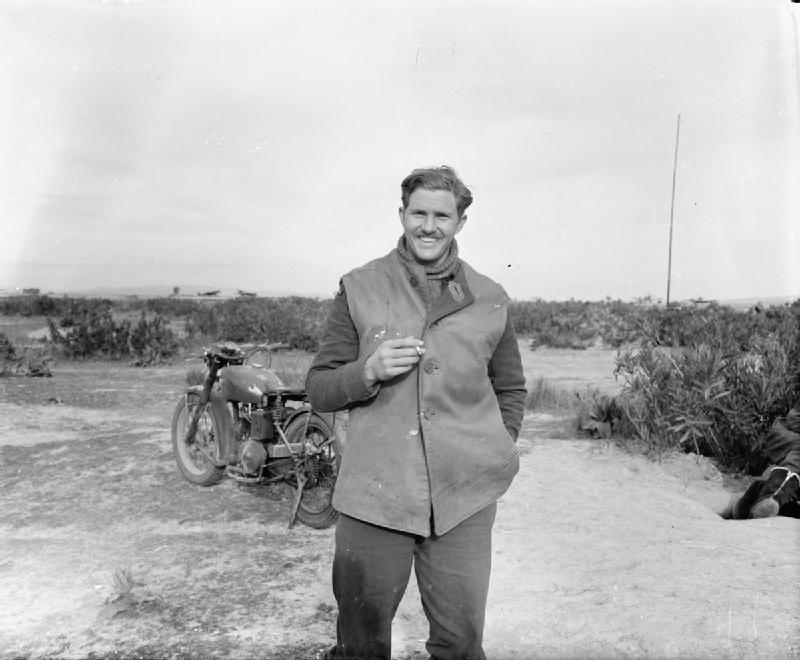
Squadron_Leader_J_J_le_Roux,_No._111_Squadron_RAF,_standing_in_front_of_his_motorcycle_at_Souk_el_Khemis_._CNA159

Le Roux was to leave behind an English wife and two children, the family resident at the time in Shropshire.


Researched by Peter Dickens

(Image courtesy of the IWM, CL 784) Royal Air Force official photographer F/O A. Goodchild

(Colourised by Benjamin Thomas from Australia), caption courtesy WW2 Colourised photos

‘Bake-off’ South African style!

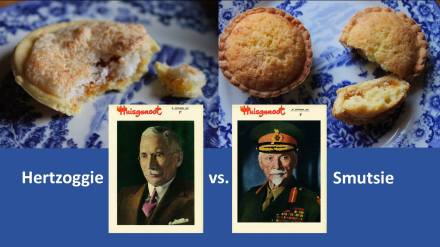
The politics of the jam tart. At one stage the politics of division between Jan Smuts’  politics of reconciliation’ and Barry Hertzog’s ‘politics of separation’ even entered into the kitchen, and this is one very hot political cup cake.

In 1924 during the General Election women showed their political support from the kitchen. During this time the little jam tart in honour of JBM Hertzog or the ‘Hertzoggie’ started to grace the tea tables of staunch  National Party supporting women.

Going head to head in the bake off with a jam tart of their own, women supporting Jan Smuts’ South African Party came up with the ‘Smutsie’ or the Jan Smuts Cookie (also known as a General Smuts cookie).

The irony is that they are baked in nearly the same way with an apricot jam filling, the difference is in the topping. The Smutsie cookie has a creamed butter and sugar topping (similar to a penuche frosting) whereas a Hertzoggie has a much paler macaroon-style of topping made of egg white and coconut.

It is said that those supporting the one style of cookie refused to bake or eat the opponents offering.  Such was the intense political rivalry and deep division between the two.

The recipe of the Smutsie seems to have varied over time and from what I can see the Sugar Butter topping has been lost from more recent recipes, whereas the Hertzoggie has been quite popular and commonly found. So, here’s a challenge to the bake-off enthusiasts out there – rejuvenate the Smutsie with its original topping!

This is one for the ‘The Great South African Bake-off  2018’ challenge I would love to see, one half doing a take on the Hertzoggie using ‘ouma se resepte’ and the other half sprinting around the kitchen frantically stealing each others recipes trying to figure out a Smutsie.  All the while both groups shout ‘veraaier’ at one another.  How South African is that!

A Smutsie with a penuche frosting as a topping, now that’s the Smutsie for me …. although I am told that a Hertzoggie made on a braai (yup, a braai – believe it) is to die for. As a ‘Soutie’ married to a ‘Boertjie’ to keep peace in the house I might just find the safe political middle ground and go with her excellent Springbok rugby player inspired  … Jan Ellis Pudding.


Written by Peter Dickens

A Kibbutz called Jan Smuts

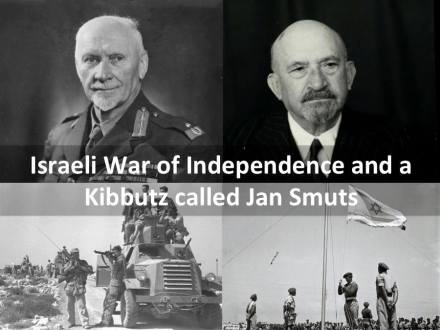
Did you know that Jan Smuts has a kibbutz named after him because of his support in founding the state of Israel, and that this kibbutz was at the centre of the 1948 Arab Israeli War (or sometimes known as the Israeli War of Independence)?

1917-Balfour-declaration_original

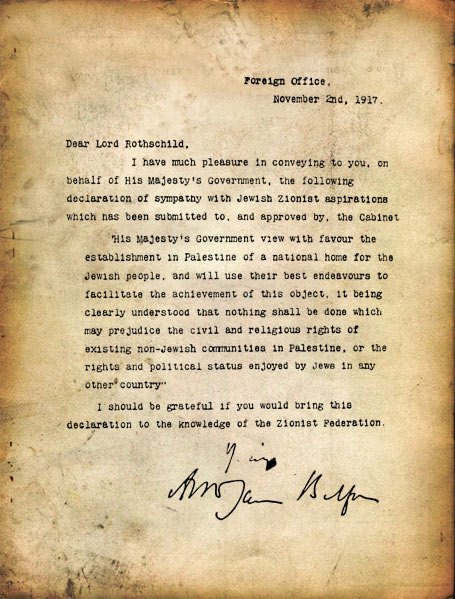
The Balfour Declaration

Jan Smuts was a supporter of the Balfour Declaration, first adopted in November of 1917 and then again reaffirmed in 1922 in the League of Nations British Mandate for Palestine which set forth British policy towards the establishment of a Jewish national homeland in Palestine.

Smuts became personal friends with Chaim Weitzman, who would go on to become the first President of Israel and Smuts and he saw to it that his government voted in the United Nations in support of the creation of the State of Israel. As a consequence of this a Kibbutz near Haifa is named after him, Ramat Yohanan.

Smuts’ relationship with the idea of a Jewish state started when South African supporters of Theodor Herzl contacted Smuts in 1916. It was in London that met and became friends with Chaim Weizmann, the President of the Zionist Organization. Weizmann went on to become the first President of Israel. He was elected on 16 February 1949, and served until his death in 1952.

In 1943 Weizmann wrote to Smuts, detailing a plan to develop Britain’s African colonies to compete with the United States – essentially a United States of Southern Africa – something which appealed to Jan Smut’s ideology of “Union” of former colonies and states in Africa for the greater good of all (his philosophy of Holism at work).

When South Africa became a “union” in 1910 it was originally envisaged that Bechuanaland (modern-day Botswana) and Southern Rhodesia (modern day Zimbabwe) would also form part of the newly created South Africa.

Political manoeuvring (mainly by the British) meant it was not to be and South Africa forged ahead as a union of the British Colonies of the Cape and Natal and the two Boer Republics – the Orange Free State and Transvaal (South African Republic) only. The idea of a regional superpower union was never really lost though and only fully put to bed when the National Party came to power in 1948 effectively ending any further union ideas with commonwealth countries in Southern Africa.

During his service as Premier, Smuts also personally fundraised for multiple Zionist organisations.

Now to Ramat Yohanan (Hebrew: רָמַת יוֹחָנָן, meaning Yohanan Heights), a kibbutz in northern Israel, named after the then South African Prime Minister and wartime leader – Jan Smuts.

It was the location of the Battle of Ramat Yohanan during the 1948 Israeli War of Independence. In April 1948, The Druze Regiment of the Arab Liberation Army was engaged by Jewish Haganah soldiers in a hard fought battle at the kibbutz.

The Druze attacked Ramat Yohanan and other neighbouring kibbutzim in order to try to take the roads leading to Haifa. The attack was unsuccessful and the Druze withdrew to their base in Shefa-‘Amr with a high number of casualties, this action led to a non-aggression treaty which was signed by the Haganah with the Druze. Throughout the kibbutz, there are still scattered defence towers used by the kibbutz to defend itself.

The Haganah was a Jewish paramilitary organization operating in the then British Mandate of Palestine, which went on to become the core of the Israel Defence Force (IDF).

As an interesting fact, in 1941, Yitzhak Rabin joined the Palmach section of the Haganah during his stay at Jan Smuts’ kibbutz – Ramat Yohanan. He was the fifth Prime Minister of Israel, serving two terms in office, 1974–77 and 1992 until his assassination in 1995.

Today, the kibbutz grows produce including mainly avocado, lychee and citrus fruits, raises both meat and dairy cattle, and is the home of a Palram plastics factory. They also produce a small quantity of olive oil and dairy products, much of which is used and sold on the kibbutz. For several years, Ramat Yochanan has run an ulpan program that serves primarily American and Russian students.

Modern day Shavout festival at Ramat Yohanan

The last official act Jan Smuts carried out before leaving office in 1948 was to recognise the independent State of Israel, fulfilling his long standing commitment to Chaim Weitzmann.

Most of Jan Smuts’ history has been downplayed significantly in the years since his death, his politics and endeavours largely glossed over by a Nationalist government and overshadowed by the implementation by the Nationalists of Apartheid in 1948.

This history lies largely forgotten to most South Africans today, but the fact remains, that other than Nelson Mandela, not too many South African leaders since Smuts have had such a presence and role in shaping world politics as we know it today,

The featured image today shows Jan Smuts and Chaim Weitzmann and early IDF soldiers using adapted South African designed and manufactured Marmon-Herrington Armoured Cars – as well the flag raising of the Israeli flag once independence was fully established.

A lost SAAF legacy

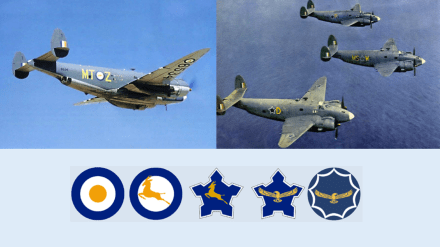
Rare colour image of South African Air Force 22 Squadron Venturas on the right in a formation flight over Table Bay in 1959.  Of interest, if you look closely is that their markings have just been changed, compare it to the SAAF Ventura on the left.

These three on the right are seen flying in the revised SADF livery which had just been introduced at the time i.e the Springbok inside an image of the Castle of Good Hope – introduced a year earlier in 1958 – which replaced the traditional Commonwealth aircraft identifier roundel – which had an orange Springbok in the centre of it.

commonwealthrounds

Commonwealth aircraft rondel markings, left to right – Australia, New Zealand, Rhodesia and South Africa.  Note, Australia and New Zealand still use this rondel marking to this day as a nod to maintaining their Commonwealth heritage.

These Ventura are Ventura PV-1 an American aircraft made by lockheed and were extensively used during World War 2 by the Allies. The SAAF also operated the aircraft during the war and continued to do so after the war for many years.

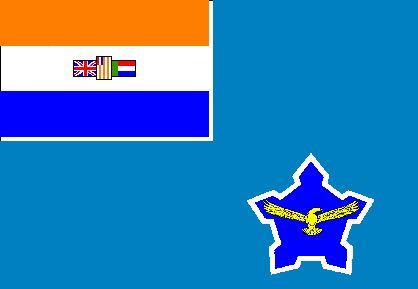
The changes formed part of the Nationalist government’s wish to break the SADF’s military identity and association from its British Commonwealth historical legacy. The changes where far reaching and included insignia, rank terminology, uniform changes, disbandment and reformulation of infantry regiments, renaming of institutions and bases, military hardware deals, new medal orders etc. etc.

Note: these changes to the defence force livery occurred before South Africa ‘resigned’ from the Commonwealth of Nations, so the plans to make this change were entirely domestically driven by the government of the day.

Note, the Springbok in the centre was further changed again to an eagle in line with the new SADF composite mark.

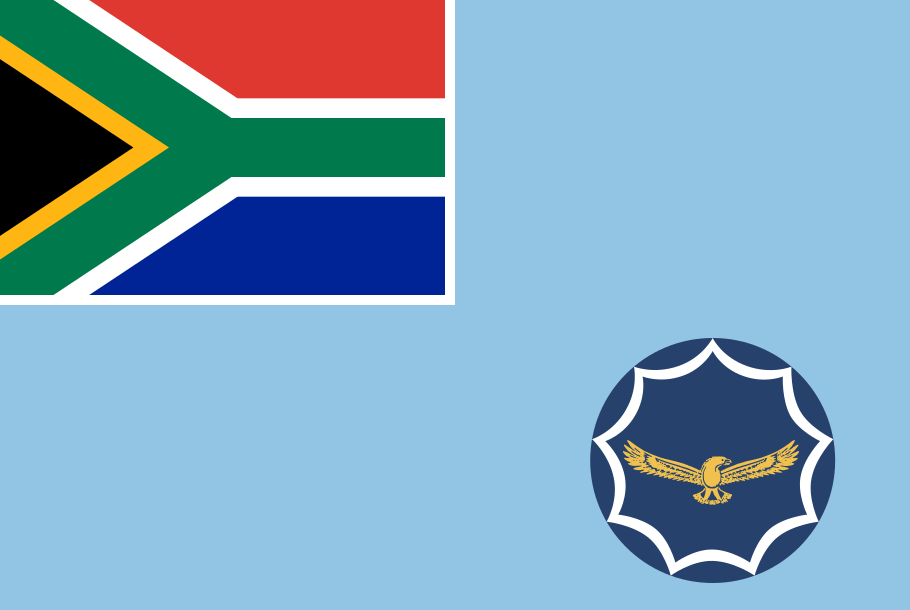
Funnily, and rather tragically to many parts of our military heritage and legacy – this is a process which seems to repeat itself historically whenever South Africa changes political dynasties.  The SAAF livery was changed again in response to the new SANDF re-branding the armed forces – literally everything connecting the past has to go (rank, uniform, medals etc), the military structures changes again (the Commandos went), the ruling edict is to break its connection and legacy with National Party’s “Apartheid” South Africa.  These changes were initiated in 2003.

I can’t but think that military tradition is been lost through the political epochs and this initial fundamental re-vamp of the SAAF emblems by the National Party and their resignation from the Commonwealth means that the new revamp, done when South Africa had re-joined the Commonwealth, has lost sight with its very rich military tradition and legacy.

When the emblems came under review in 2003 no consideration to the proud legacy of South African involvement in WW2 (and especially our Air Force) was given at all, so far had it receded from collective consciousness by this stage.  Again, I can’t but think that the loss of general public awareness and the military of this very proud moment in South African history is nothing short of tragic – especially considering the sacrifice of Black and White South Africans alike to it.

‘Tradition’ and maintaining ‘memory’ of those who have served is a fundamental cornerstone of soldiering, but unfortunately this was not a political priority – to either National Party or to the African National Congress.

Researched by Peter Dickens

Cassinga! … truths and myths

The Battle of Cassinga was the very first South African airborne attack, it was also the first full-scale airborne attack in Southern Africa.  The target was a South West African People’s Organisation (SWAPO) military base at the former town of Cassinga in Angola on 4 May 1978.   As it was a ‘first’ in many respects it would also carry with it many learnings and many controversies.

Upfront let’s dispel with the untruths and challenge the prevailing myths and truths.  The Battle of Cassinga is today mourned in Namibia as a public holiday, politically it is referenced as an Apartheid “massacre” of ‘innocents’ – the deliberate targeting of refugees and civilians in a refugee camp.  However, this is a political narrative to gain political currency and simply put this is a myth, it is an untruth.

That civilians were killed in the cross fire during the battle, unfortunately that is truth, that a large number of civilians died at Cassinga, that is also a truth.  That civilians are very often the casualties of war, any war the world over, this is also unfortunately a prevailing truth.

Also, a truth is that there are extensive records and photographs covering the SADF’s planning and actions around the operation (declassified since the change of government in 1994), no SWAPO records exist at all.  The only other things that exist is the photographic evidence of a mass grave, which was re-opened after the battle for journalists to take photos, photos of the camp taken by journalists prior to the attack showing a military recruitment base with a large component of civilians in support of it and photos taken by the SADF Commanding Officer on the ground – Colonel Lewis Gerber, from the Camp Commander’s desk which show a SWAPO recruitment operation at Cassinga.

That Cassinga was a military base housing PLAN (SWAPO military personnel) there is absolutely no doubt, and therefore it was a legitimate SADF military target, that is also a truth.  That there were misjudgments in planning and execution, like any military operation anywhere, this is also a truth. That the definition of what type of military base it was i.e. a recruitment depot, that definition was unclear to the SADF at the time of striking it and that is also an unfortunate truth.

So let’s have a look at how this Operation, Operation Reindeer, stacks up as a military battle, and lets examine how civilians came into the cross-fire.

A Military base or Refugee Camp?

Aside from the overwhelming volume of Intelligence gathered by the SADF prior to the attack pointing to the fact it was a legitimate military base and target, the case was taken to The Truth and Reconciliation Commission (TRC) in the 1990’s.  The TRC themselves challenged all sides of the story, and it’s the TRC records which found Cassinga base to be the following:

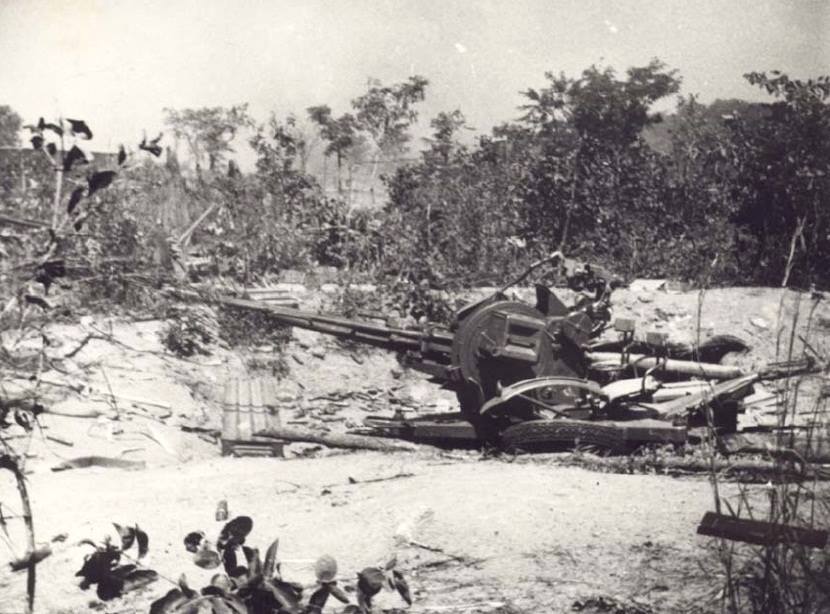
A SWAPO (PLAN) unit posted at Cassinga consisted of approximately 300 male and female PLAN cadres.  The military section of Cassinga was easily partitioned from the non-military sections. The overall commander of PLAN in town was Dimo Amaambo, who responsible for the co-ordination of all PLAN actions in Southern Angola, including incursions into South West Africa/Namibia. A headquarters such as Cassinga was second in importance only to Lubango, which was the overall SWAPO military headquarters in Angola. Aside from the system of trenches and bunkers, defensive equipment included two ZPU 14.5 mm anti-aircraft guns, one ZU-23-2 23 mm gun, and around one or two ZSU 12.7 mm guns. These were all capable of being used in a ground attack role.

The simple fact is that the SADF encountered trained and armed SWAPO (PLAN) combatants, large AA guns, defensive structures, SWAPO military commanders and depots full of weapons and ammunition of all sizes.  This was a military base, but what sort of base?

So where does this argument of ‘refugee’ and ‘refugee transit camp’ come from?

According to one source, in the weeks preceding the attack, civilian numbers were growing rapidly inside Cassinga.  This build up consisted of a number Namibians going into ‘exile’ to join SWAPO in the months preceding the attack and the intake in this camp of these civilian ‘exiles’ joining SWAPO was particularly high. It was normative at the time that a civilian recruit joining SWAPO/PLAN as a combatant often went into ‘exile’ with his or her family (in whole or in part) in support.

A truck usually picked up these SWAPO/PLAN recruits and their civilian entourage at Cassinga and took them onward to their training bases in Jamba and Lubango.  Cassinga operated as a Recruiting Depot and a Holding Depot to verify recruits. This truck to take them to their training bases did not arrive in the preceding weeks before the attack . The result was a bottleneck at Cassinga of people (Recruits, Civilians and Armed Soldiers) who under normal circumstances would have left the camp within days.

Another source agues that the civilians in the camp were made up of both soldier’s family members and dependents and some 200 civilians ‘abducted’  by SWAPO in northern South West Africa a few months earlier, and brought to Cassinga in a bid to convince UN aid agencies that they needed food and funding, which they duly received.

The ‘abduction’ of civilians for ‘re-training’, especially children, was a tactic to build numbers and used extensively by ‘liberation movements’ all over the Southern Africa in the late 70’s.  The ‘liberation movements’ on the other hand argue that these were willing exiles fighting the cause or that it was necessary to deconstruct tribal people of their colonial indoctrination.

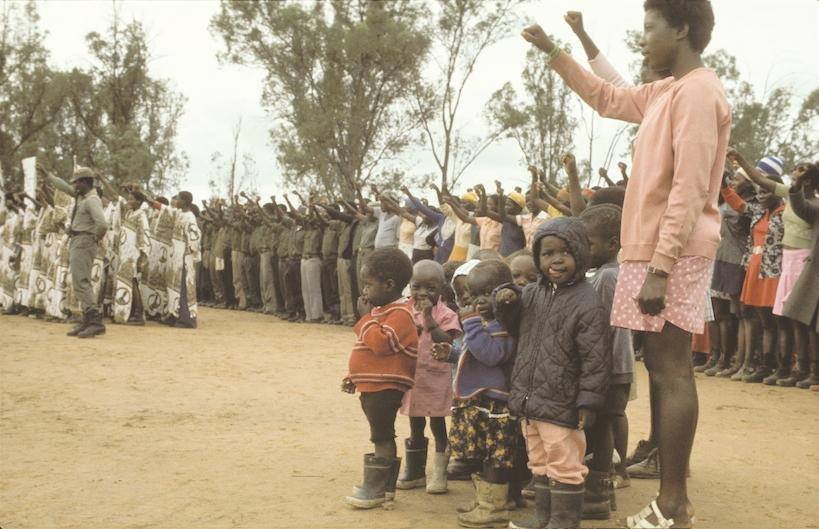
What is also telling as to the military nature of the camp and the indoctrination into the military of incoming ‘exiles’ comes from SWAPO photographic and witness evidence of how they conducted the daily parade and roll call.   It was held on a parade ground near the SWAPO (PLAN) offices. This source recalls that all would assemble in the groups in which they had arrived at Cassinga, each of which was organised according to ‘sections’ and ‘platoons’ with the earliest arrivals in Cassinga queuing first and the most recent queuing last.  They would march on, the SWAPO Commanders would march on last, after liberation songs were sung a roll call would be taken, the commanders then handed out the daily tasks and finally dismissed the parade. It is reasonable to assume from this account that ‘exiles’ entering the camp where in fact ‘military recruits’ and treated as such.

10154131_751205604928759_3034744154539421665_n
Photo clearly showing the daily military parade at Cassinga with the mix of combatants and non combatants as well as dependents and children

So, whichever way it’s looked at, there was a large military camp and there was a large contingent of newly arrived Namibian civilians at Cassinga (how many were SWAPO ‘exiles’ or PLAN ‘new recruits’ will never be known) and a very large number of family members and dependents of the PLAN combatants at the base. That the military planners in the SADF had accounted for the unusual ramp up in civilians numbers of ‘exiles’ just prior to the attack, the sad truth and answer is no, they were not really aware of it. In fact ‘Intel’ for the SADF pointed to a PLAN combatant base, when it should really have been pointing to a PLAN military recruitment depot complete with a civilian and untrained recruit ensemble.

Errors in Planning

In the truth that errors occurred, some started in the planning phase.  Reconnaissance air-photo interpreters of the Cassinga military base put the wrong scale on some of the maps that were used in the planning, despite the altimeter readings being clearly visible in the original reconnaissance photographs.

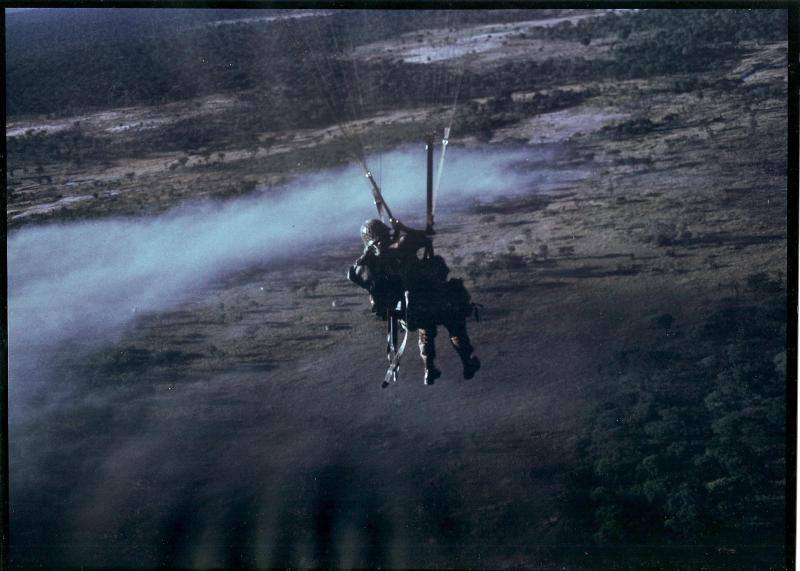
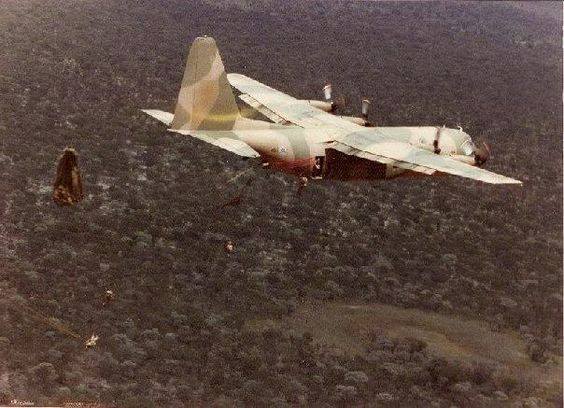
Consequently, the Air-Force planners overestimated the size of the Drop Zone (DZ) believing it was long and wide enough to drop the paratroopers, when in fact it wasn’t. This ‘scale error’ also mis-positioned the ‘Warning’ and ‘Drop’ points on the run-in to the drop. Compounding this error, the pilot of the lead aircraft was momentarily distracted by the effects of the bombing, and issued the ‘jump’ signal a few seconds late. The net effect was that many SADF paratroopers overshot their intended Drop Zones, many landing beyond the river – and some in it.

The SADF also underestimated the Cuban military presence in the area, In briefing the strike aircrew, the SAAF Chief of Staff Intelligence was specific that there was no known large Cuban military formation within 130 km of the Cassinga base.  They had intelligence that pointed to Cuban armour and that some 144 personnel was present at the village Techamutete 15 km south of Cassinga.  To this end they planned communication jamming (which proved a wise decision in the end as it resulted in a delay) and a detachment was earmarked to ambush any Cuban armour on the road from Techamutete.

However unknown to the SADF planners was that this force was somewhat bigger than anticipated, in fact there was a well sized Cuban mechanised battalion at Techamutete consisting of at least 4 T-34 tanks, 17 BTR-152  armoured personnel carriers, 7 trucks and 4 anti-aircraft guns, accompanied by around 400 Cuban troops.

The Devastating Opening Bombing Run

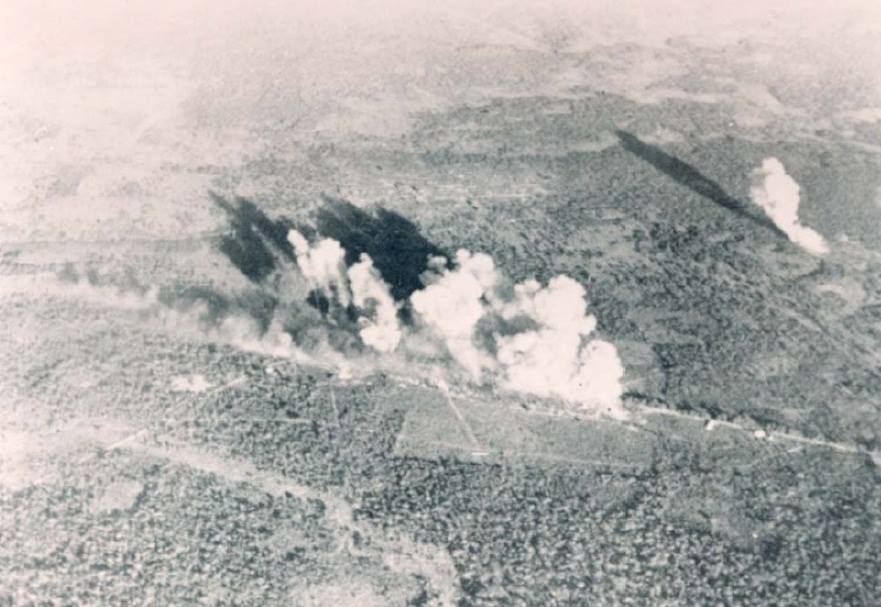
The attack opened with a SAAF Canberra bombers and SAAF Buccaneer bombers hitting the target. Timed for 08:00 to coincide with SWAPO’s daily roll-call  on the parade ground, most of the people in the camp were assembled in the open when the Canberras initiated their low-level bomb run. This was followed by the Buccaneers and then SAAF Mirage IIIs.  Fragmentation and conventional 1000lb bombs hit a zone of some 800 metres by 500 metres, causing most of SWAPO’s and civilian casualties and ‘hard target’ building destruction on the day.

cass strike
SAAF Canberra bomb run on Cassinga

The bombing run, according to the SADF Paratroop Commanders when they go to the base, did almost all of the damage. Colonel Gerber was to report on a disturbing sight of what he thought were many old-school brown ‘cardboard’ school suitcases littering the drop zone, on closer inspection these turned out to be bodies whose limbs and heads had been severed by the intensity of the cluster bomb shrapnel and sonic blasts, the lone torsos looking like those old suitcases.

The Shambolic Drop

At 08:04, 367 SADF ‘Parabats’ (Paratroopers) were dropped from 6 aircraft.  Due to the reconnaissance photo scaling error, and obscured pilot visibility of the tracking and distance markers (caused by smoke from the bombing) the drop was a shambles.  Nearly all paratroopers did not land on the intended target zone, many been scattered into positions that put them into serious danger. Some dropped right on top of the enemy, some landed kilometres away from their intended positions, some in trees, some into tall maize fields, others into the river and some on the wrong bank of the river.

The resultant confusion caused numerous delays, ruining the schedule of the ‘drop-to-contact’ plan, and much of the advantage of surprise. As a result a number of top PLAN commanders, including Dimo Amaambo and Greenwell Matongo (two principal targets of the attack) escaped (Amaambo later  became the first head of the Namibian Defence Force in 1990).

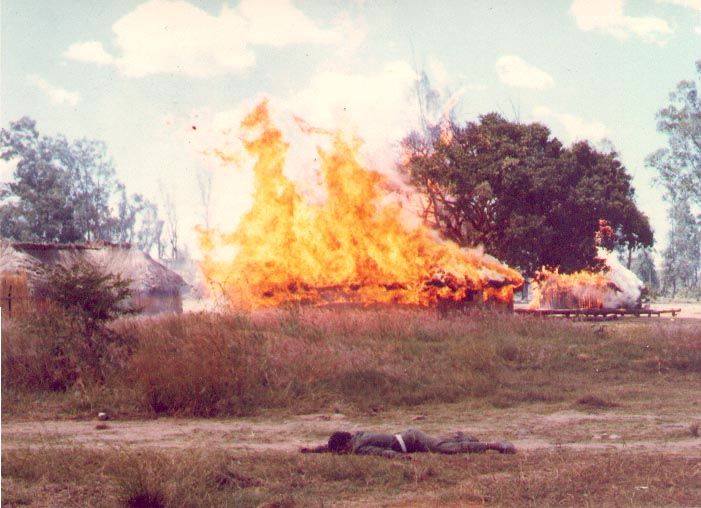
The loss of the element of surprise,  also allowed the surviving SWAPO (PLAN) soldiers from the bombing ample time to set themselves up in the extensive trench and bunker system that surrounded the camp. Instead of the short, sharp skirmish planned, the attack was now going to be an extended affair. The camp defenders brought their anti-aircraft guns to bear on the SADF ‘Parabats’ and onto the aircraft, these powerful guns were not all silenced for some hours to come.

Regrouping and on the Attack

After regrouping the ‘Parabat’ companies commenced the assault, training and professionalism of officers and men on the ground played a key role in consolidating and adapting their initial tasks to the changed circumstances. Instead of attacking eastwards as initially planned, the two companies attacked the base in a northerly direction.

Initially, they encountered very little resistance, though this changed dramatically once sections of paratroopers neared the centre of the base. Heavy sniper fire was directed at the paratroopers from a number of trees inside the base, they were subjected to B-10 Recoilless Rifle fire, and some PLAN soldiers had regrouped, using houses as cover from which to fire at the SADF paratroopers, critically wounding two paratroopers.

cassinga dead
The attack on Cassinga from the ground, note the dead SWAPO combatant in Cuban/Soviet issue green uniform in the foreground

However, the paratroopers faced their greatest challenge when they were fired upon by a number of multi-barrel anti-aircraft guns now been used in the ground role.  This brought both assault companies to a complete halt. A SAAF Buccaneer tasked with Close Air Support could not conduct a strike on the guns for fear of hitting the paratroopers close by.

Colonel Breytenbach then ordered the commander of D-Company to take some men and work up towards the guns by attacking the trenches to the west of Cassinga. He also ordered the mortar platoon to begin attacking the guns. In reality according to Colonel Gerber, these particular guns pinned down Colonel Breytenbach and his men for some time, literally preventing them from taking any significant role until this gun was ultimately silenced toward the end of the battle. Colonel Gerber’s section, having reset their assault, advanced from the south and met little resistance until in the town itself and here they were able to quickly over-power the defenders.

cassinga gun
Silenced Soviet 23mm ZU-23-2 Anti-Aircraft Gun at Cassinga

Civilians in the Trenches

Situated all around Cassinga was a network of trenches, these had been identified in the air photography intelligence before the battle, this network was complex, expertly laid out and very extensive and its one of the reasons why SADF planners believed the Cassinga to be a well defended and significant military base.

Colonel Gerber in his sections advance on Cassinga did not encounter any significant resistance from the trench network facing him, although he did notice some civilian dead in the trenches which he concluded were people trying to take cover in the tenches during the bombing run or mortally wounded people in the bomb run who had may their way to the trenches.

Different story for D-Company’s assault on the trench system facing them, as these had been occupied by PLAN combatants opening fire on them. Upon entering the trenches, the Paratroopers from D-Company were surprised to find a number of civilians in them in and amongst the combatant SWAPO (PLAN) fighters.

At the TRC hearings, the witness accounts from the paratroopers involved maintain that these civilians were being used as human shields by the SWAPO combatants taking cover inside the trenches.  Accounts from  SWAPO maintain that the civilians of Cassinga had taken cover in the trenches to protect themselves from the bombing and shooting.

In either event, the fact remains that civilians had found themselves in the trench network and were mixed in with SWAPO fighters who immediately opened fire on the paratroopers, leading the paratroopers to enter what they described later as a mode of “kill or be killed”, in which preventing the deaths of the civilians in the trenches became impossible.

The paratroopers moved successfully through all the trenches and strong points up to the guns and after the fall of the guns, all major resistance in Cassinga ended.

Mopping up and extraction 

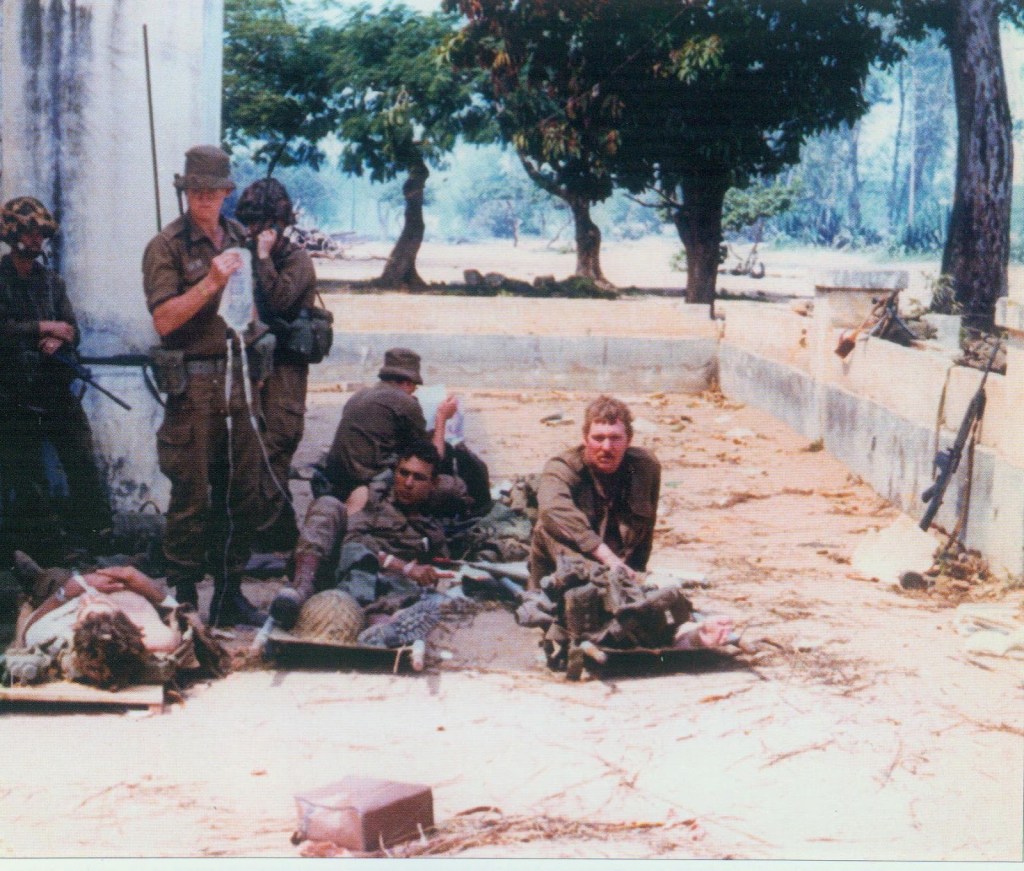
With hostilities over in Cassinga, the paratroopers immediately set up a HQ and Aid-Post next to the SWAPO hospital, and began treating the worst of the injured.

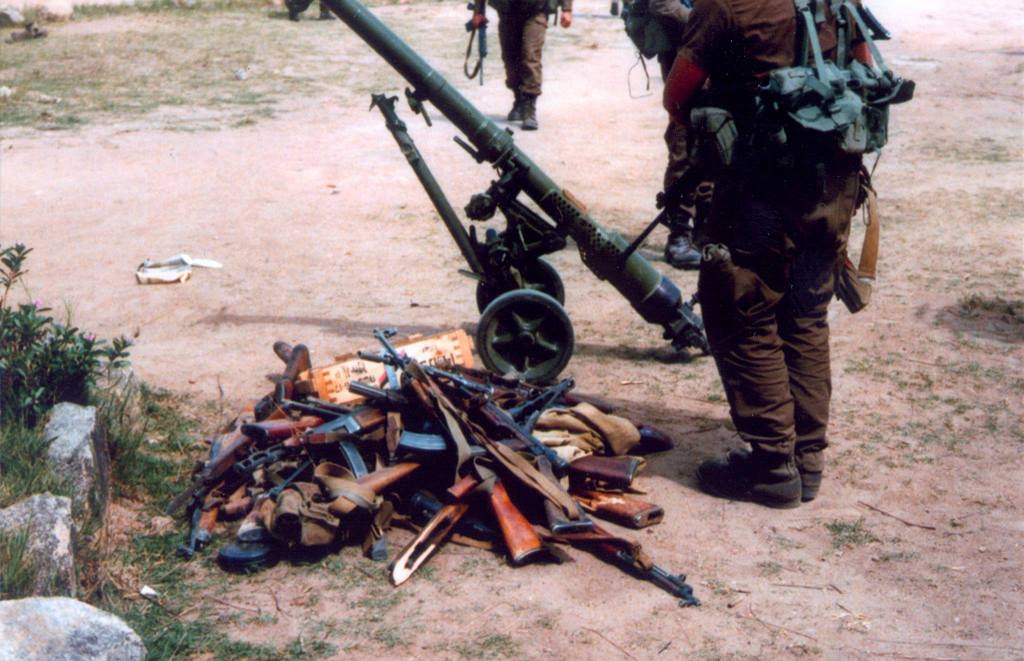
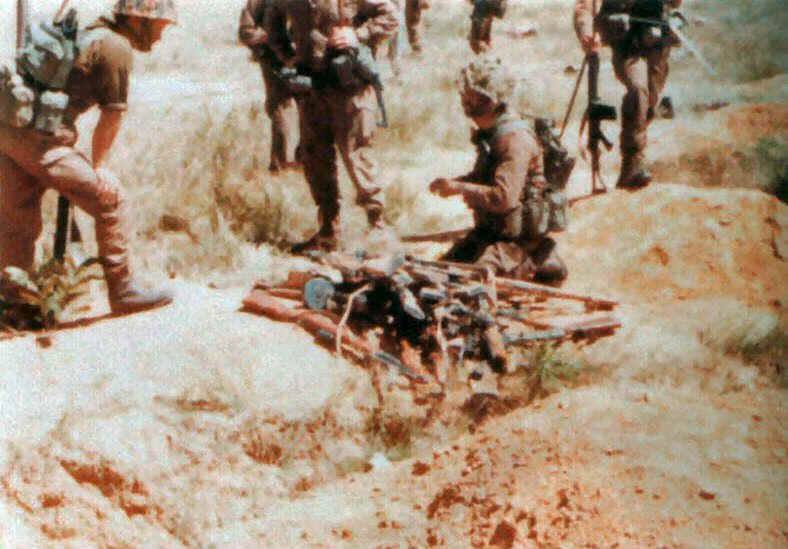
In ‘mopping up’ in Cassinga the paratroopers recovered a relatively small number of mainly Soviet weapons, these included a B-10 Recoilless Rifle, AK-47, AKM and SKS Assault rifles and carbines, boxes of RGD-5, RG-42 and F1 Hand Grenades, some TM-57 Anti-Tank Mines, RPG-7 Anti-Tank Rockets and 82mm B-10 recoilless Rockets still in their tin transit canisters. Uniforms (Soviet and East Bloc supplied) and combat boots, AK-47 and AKM Bayonets and some crates of AK-47 Ammunition were also recovered. However, as can be seen in these photos of the PLAN arms recovered, the quantity was small.

Of extreme interest in the mopping up operations, on approaching the head quarters building, they found some children hiding and were able to get them to safety. It was a small facility, a room really, and once secured the desk of the Cassinga camp commandant was searched and documents and photos of camp life extracted.

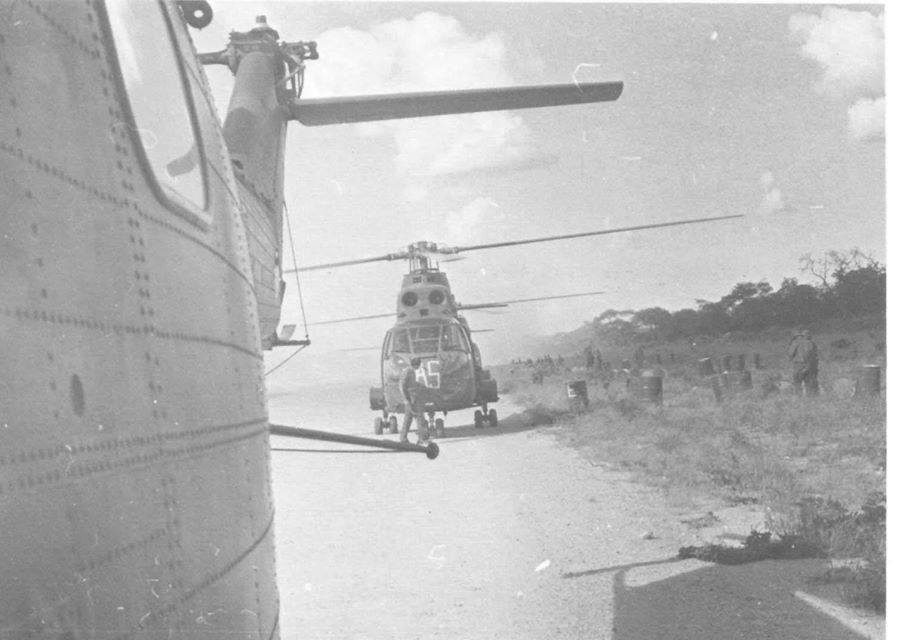
The first wave of SAAF Puma helicopters extracted half the ‘Parabats’, leaving the remainder to continue to mop up while waiting to be evacuated themselves. Now at half their strength, the Parabats were warned by a circling SAAF Buccaneer in Close Air Support (CAS) that a column of twenty armored vehicles was approaching the base . The Cuban mechanised battalion from nearby Techamutete was now on the counter attack.

The Cuban Counter Attack

During the air drop attack phase, D-Company had already dispatched the anti-tank platoon to lay a tank ambush on the road to Techamutete. The lead Cuban Soviet era T-34  tank was destroyed by one of the anti-tank mines, while the paratroopers destroyed four of the BTR-152s using their RPG-7s. They also killed approximately 40 of the Cuban troops before making their ‘fighting retreat’ back along the road towards the Helicopter Landing Zone.

cassinga Mirage
Mirage III destroying a vehicle in the Cuban column

This was a grave threat to the few remaining Parabats. Their LZ’s came under tank fire and APCs full of Cubans threatened to swamp the remaining Parabats. Support was called in to rescue the beleaguered paratroopers, a Buccaneer and two Mirage III’s appeared, the Mirage III’s destroying a further 10 BTR 152s before running low on fuel and returning to base.

The sole Buccaneer remained and destroyed at least two tanks, an anti-aircraft gun (which as firing at it) and a number of other vehicles.

The Buccaneer ran out of ammunition at this point, and this coincided with the arrival of the 17 helicopters to extract the remaining paratroopers in the second wave.  The Cuban armoured column then advanced on the helicopter’s landing zone.  In a desperate attempt to prevent the Cuban tanks from firing at the vulnerable helicopters and the assembling South African troops waiting to be picked up, the Buccaneer pilot dived his aircraft dangerously low, nearly hitting trees as he flew close over the top of the tanks in mock attacks.   This brave and dangerous action by the pilot disorientated the Cuban tank crews and forced them to break off their developing attack on the paratrooper’s’ positions.

The destruction of the Cuban column 

Ten minutes after the last of the SAAF helicopters took off, two of the Puma helicopters were directed to return to Cassinga, as it was feared that some of the paratroopers might have been left behind. They spotted a group of people huddled together, but closer inspection revealed that they were the 40 prisoners of war who had been mistakenly left behind.  No more paratroopers were found.

In the mid afternoon SAAF Mirage IIIs returned to Cassinga, and once again strafed the Cuban vehicles that were still on the road. About a kilometre south of Cassinga, another Buccaneer attacked another column of vehicles, coming under heavy anti-aircraft fire in the process.

In the late afternoon SAAF Buccaneers and Mirages surprised the Cubans moving through the ruins and destroyed more Cuban T-34 tanks and anti-aircraft guns.

The result was that by nightfall nearly the entire Cuban battalion had been destroyed, accounting for Cuba’s biggest single-day casualty rate during its military involvement in Angola up to that point.

A complete Angolan tank brigade relief force, arriving at dusk, was too late to have any impact and found only scenes of destruction at what had once been Cassinga.

Aftermath

According to an Angolan government white paper, the official toll of the Cassinga Raid was a total of 624 dead and 611 injured comprising civilians as well as combatants. Among the dead were 167 women and 298 teenagers and children. Since many of the combatants were female or teenagers and many combatants did not wear uniforms, the exact number of civilians among the dead could not be established.

The South Africans declared the attack on Cassinga to be a military success, and it set the SADF strategy for dealing with SWAPO bases in Angola for the next 10 years (although in future, the larger strikes were primarily armoured based not airbourne). A SWAPO propaganda campaign on the other hand labelled the attack on Cassinga as a civilian massacre.

The position of SWAPO and all the organizations and governments that were supporting it by 1978 benefited from the moral outrage incited by a ‘surprise attack’ on a ‘refugee camp.’ In the aftermath of the raid, SWAPO received unprecedented support in the form of humanitarian aid sent to it from sympathetic governments.

It was however clear to the South Africans that Cassinga was a military facility rather than essentially a refugee camp or refugee transit facility, as SWAPO claimed.  They had the proof.

The Mass Grave Propaganda Campaign  

Although a military success, politically it was a disaster for the National Party government of South Africa.   SWAPO and Angola press statements described the base as a refugee camp and claimed the SADF had slaughtered 600 defenceless refugees.

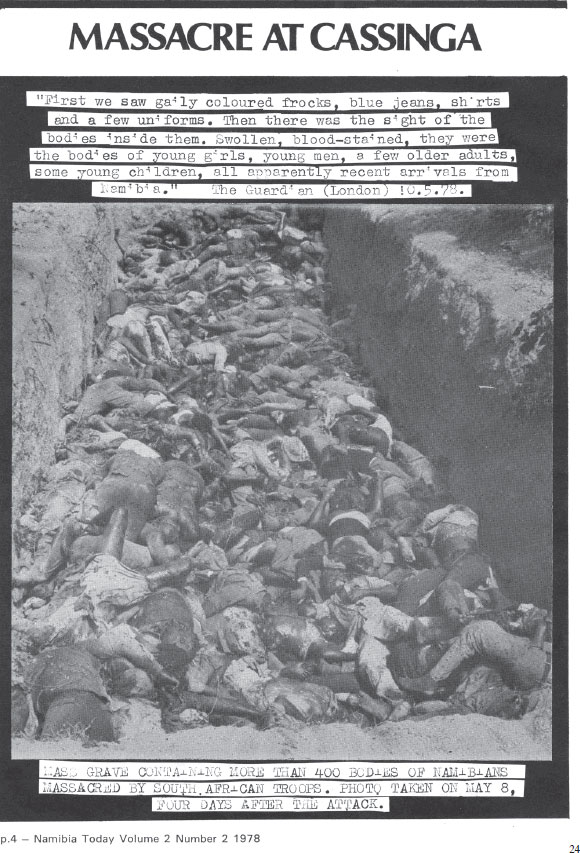
The bodies were buried in two mass graves.  Pictures of one of the mass graves (the larger one) was used extensively for propaganda purposes, and for many people these pictures became the imagery and symbology associated with Cassinga.

Taken from the grave’s edge, the mass grave photos are close enough to the corpses for individual bodies, and in some cases the clothing, wounds and flies covering them, to be discernible. The photos demand an emotional reaction, the photographs are set in such a way as to look like a WW2 styled premeditated massacre, appearing as if the SADF had dug a grave and piled in the ‘civilian’ bodies.

cassinga poster

SWAPO propaganda in the weeks following the attack used “text” on posters to draw attention to the ‘civilian’ qualities of the bodies, the suffering of Namibians under colonialism, and the violence committed against oppressed people in other settings. In so doing, they associated the mass grave at Cassinga with the history of the ‘refugee’ camp.

In truth the SADF paratroopers did not dig a mass grave, nor did they have the heavy equipment to dig such a grave, the urgency of the extraction meant they left most of the dead where they lay.

The holes used for the mass graves were originally built by SWAPO as food storage spaces. Following the attack, the survivors at Cassinga, together with Namibian, Cuban and Angolan soldiers, collected the dead scattered in and around the camp and laid them to rest in the two holes and interned them in with sand and soil closing the holes.

Some days later, survivors and others were instructed to re-open the larger of the two graves to show international journalists who would be arriving at the camp on 8th May. People took turns digging up the sand and brushing it away from the bodies so that it would not obscure the journalists’ view.

The attending journalists noted that they assumed that the larger grave had not yet been covered and made no mention of how the grave was prepared for them.

A detailed examination of the mass grave photographs indicates that the bodies are those of adults more than teenagers, though some of them are certainly young adults. The overwhelming majority of them are men, with only a few women. Most of the men are wearing uniforms and there is little evidence of the ‘brightly coloured frocks’ although several of the photographs are in colour.

In conclusion

The truth and reconciliation commission special report on Cassinga could not attribute any ‘war crimes’ to any specific SADF personnel and officers taking part in attack on Cassinga.

In the end the Operation can be regarded as a military success, it was a classic daring paratrooper styled assault with the usual high risk associated with it, if it had gone wrong it would have gone very wrong.  In total the SADF casualties where very light for an assault of this nature.

There were however some fundamental failures.  Primarily this was the failure of the SADF Intelligence Services to account for the high number of civilians in the camp in the lead up to the attack, and failure of SADF Planners to envisage the high probability of these civilians entering into the cross fire or been subjected to the bombing run’s killing zone.

No modern statutory military force bound by the Geneva Conventions intends to purposefully kill civilians, and the South African Defence Force was no different.   However the simple truth is that using fragmentation bombs at the beginning of the assault accounted for most of the civilian casualties.  ‘Dumb’ ordinance like this is indiscriminate (‘smart’ bombing had not been invented in the late 70’s) and in this sense such bombing is no different to WW2 ordinance and like the Allied WW2 bombings it is a sad truth that many civilians are killed when using it.   The sheltering of civilians in the trenches from the bombing added to the tragedy which was to come.

To put aside the obvious tragedy of civilians in the cross-fire, we also need to be truthful when reviewing Cassinga, there is still the very awkward question of what qualifies a ‘civilian’ and what qualifies a ‘civilian in support of combat operations’?  It’s one that modern reviews of Cassinga tend to skirt well around, but the stated SWAPO survivor testimony points to a Cassinga as a ‘exile’ clearing camp of people making their way into Angola to be trained and join the war effort, in this sense they qualify as ‘military recruits’ and therefore a wartime target by any definitions of it.

Then there is also the thorny question of civilians supporting armies by way of preparing food and other resources which would otherwise be considered as an auxiliary military role.  This argument was used to justify the ANC MK bombing of the Southern Cross Fund offices (a civilian support group of the SADF providing care parcels) to qualify it as a ‘military target’.  It’s was also an argument used by the British to inter Boer families supporting commandos in the field during the 2nd Anglo Boer War – with devastating civilian casualties.

That said no doubt amoungst the dead were actual ‘innocents’ too, especially children and family dependents, which by any account of war is always regrettable, to both sides. This ‘fog of war’ is a shared trauma that haunts the survivors of Cassinga and SADF Paratroopers alike.

In the end, although Cassinga was a military success, it was a political failure.  The South African government sought a highly aggressive settlement to Namibia with the agreement to hit the base at Cassinga and not a passive or negotiated one.  The backlash of world-wide condemnation was something many of the National Party politicians did not really foresee.

Today

After independence, the new government of  Namibia  declared 4 May as  “Cassinga Day” a public holiday to commemorate the loss of life.  In 2007, the names of the Cuban soldiers who were killed were carved into the wall of Freedom Park in South Africa.

Official celebration of this event by the SANDF ended in 1996.  Veterans of the various South African parachute battalions still privately commemorate Cassinga Day, and many stand in remembrance of all who died that day and all those traumatised by it – from both sides of the conflict.

SADF Honour Roll

71384234BT Rifleman Edward James Backhouse from 3 Parachute Battalion. He was 22.
68546134BT Rifleman Martin Kaplan from 2 Parachute Battalion. He was 25.
70510813BT Rifleman Jacob Conrad De Waal from 2 Parachute Battalion. He was 23.
65383390BT Rifleman Andries Petrus Human from 3 Parachute Battalion. Reported Missing in Action after jumping from the aircraft at Cassinga.. For administrative purposes, he was officially declared dead on 22 January 1980. He was 29.  Recent discovery points to a grave dug by a village headman to bury him and funds are been raised to examine this and bring him home.

May all the people lost in this attack rest in peace, and if you had to ask any of these veterans of this attack and who have really ‘seen’ war, they mourn the destruction and loss caused in all war, civilian and combatant alike.

1002896_284525141717225_5264576703568808801_n
Rifleman Edward James Backhouse as he came home

Written and Researched by Peter Dickens. Colour SADF photographs of the battle, and photo of Edward Backhouse  –  credit and copyright to Mike McWilliams, with his kind permission.  Other images of the battle including Mike under his canopy copyright Des Steenkamp.

Collaborated input on this article by Colonel Lewis Gerber, OC 3 Para Bn, SO1 Ops at 44 Para Bde and SSO Airborne at CArmy (Retired)

Images for the Camp Commandant’s desk courtesy and thanks for Colonel Lewis Gerber, so too some of his maps and photos.

Source Wikipedia, South African History on-line,  On-Line veterans SADF forums and witness accounts.  Truth and Reconciliation commission reports.  Remember Cassinga by Christian A Williams.

General Mark Clark’s praise of the South Africans

WW2 – In December 1944 an American General – General Mark Clark – took overall command of Allied ground troops in Italy (15th Army Group). This included taking overall command of the South African 6th Armoured Division, and he said this in praise of the South Africans:

“It was a battle-wise outfit, bold and aggressive against the enemy, and willing to do whatever job was necessary. In fact, after a period of severe day and night fighting, the 6th had in an emergency gone into the line as infantrymen. When the snow stalled their armour they dug in their tanks and used them as artillery to make up for our shortage in heavy guns. Whenever I saw them, I was impressed by the large number of decorations and honours they had earned the hard way. Their attacks against strongly organised German positions were made with great élan and without regard for casualties. Despite their comparatively small numbers, they never complained about losses. Neither did Smuts, who made it clear that the Union of South Africa intended to do its part in the War – and it most certainly did”.

General Mark C. Clark, Calculated Risk. p. 391

The featured image shows General Clarke inspecting South African troops at the end of the war during a parade in Monza,  Italy (held on the famous Monza race track).

G10154203_282011528635253_3582423716020249574_neneral Mark Clarke was ultimately made the Supreme Commander of the AFHQ in the Mediterranean, replacing Field Marshal Sir Maitland Wilson, He was promoted to the four-star rank of General on March 10, 1945, aged 48, the youngest in the United States Army. Clark led the 15th Army Group in the Spring 1945 offensive in Italy codenamed Operation Grapeshot, which brought the war in Italy to an end, and afterwards he accepted the German surrender in Italy in May and became Commander of the Allied Forces in Italy at the end of World War 2 in Europe.
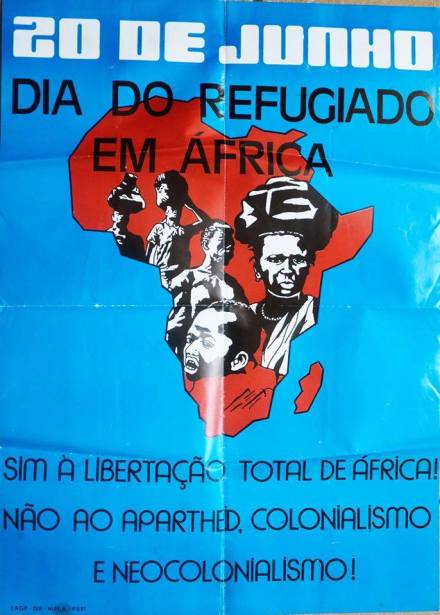
Captured MPLA Propaganda

Bush War in Angola – this is an example of a MPLA propaganda poster which was retrieved by the SADF (by the hundred) from SWAPO bases in Angola in the aftermath of Ops Protea in 1981.

It calls for the Liberation of ALL of Africa, saying NO to Apartheid, Colonisation and Neo-Colonisation.  These posters were gathered primarily by SADF Intelligence personnel investigating the over-run SWAPO bases.

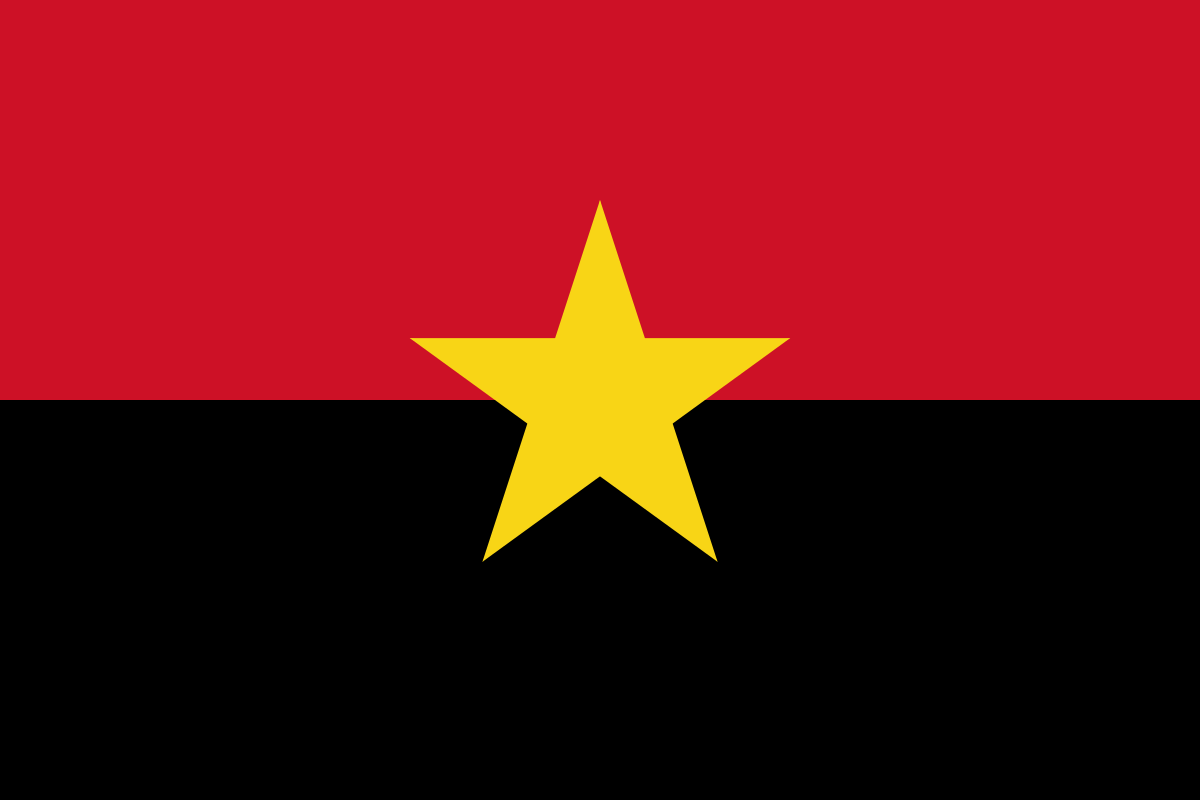
1200px-Movimento_Popular_de_Libertação_de_Angola_(bandeira)The MPLA i.e. The People’s Movement for the Liberation of Angola, ruled Angola since the country’s independence from Portugal in 1975 on the simple premise that it “held” Luanda, the capital city, after the Portuguese left it.  This put it in immediate conflict with fellow anti-colonial movements in other parts of the country which disputed the MPLA’s claim, primarily the National Union for the Total Independence of Angola (UNITA).  It however supported SWAPO, the South West Africa People’s Organisation and allowed its military arm (PLAN) to operate armed insurgencies (terror attacks in reality)  into South West Africa (Namibia) from territories it controlled.  The armed wing of the MPLA was FAPLA, the People’s Armed Forces of Liberation of Angola.
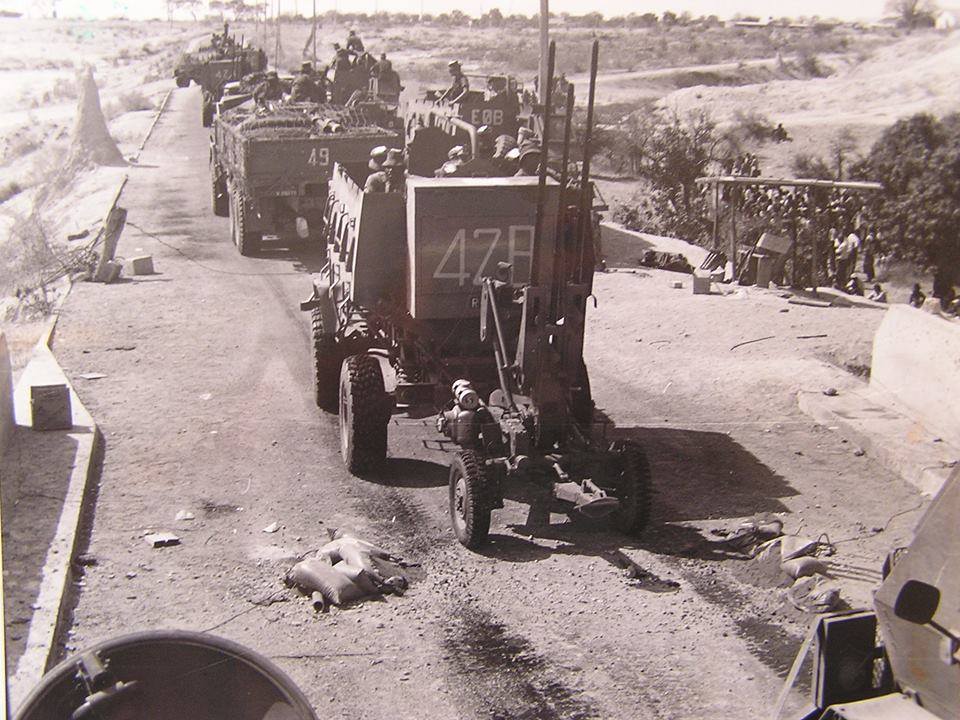
Allowing SWAPO bases to operate brought the SADF into conflict with the MPLA and FAPLA.  Operation Protea was launched by The South African Defence Force on 23 August 1981. Its objectives were to destroy the SWAPO command and training centres at Xangongo and its logistic bases at Xangongo and Ongiva.

The Operation was a planned strike into Angola and regarded as a SADF success. Notably for not only capturing loads of intelligence, like these posters, but also all the captured Soviet equipment which South African units in Battle Group 10 (61 Mech) brought back to their bases in South West Africa (Nambia), somewhere around 3,500 tonnes of it.

10363535_10152829369041480_1856651575173305059_n
Ops Protea, SADF Crossing at Xangongo with Captured Enemy 23mm AA Guns.

In the aftermath, the SWAPO bases were destroyed, Soviet casualties stood at thirteen: nine officers and four civilians, while one soldier was captured. South African casualties included 10 dead and 64 wounded. PLAN and FAPLA casualties were high with 831 dead and 25 captured.

Such is the course of history and changing times, that the MPLA are still the party in charge of Angola and most of this military hardware is still in South Africa, some in museums but also at military depots and displayed at army bases.

The MPLA has sofened somewhat now from the fire-brand anti-colonisation messages and propaganda slogans of the 70’s and 80’s, it is regarded as “centre-left” politically now and uses the slogan “Peace, Work and Liberty”.

Image and background courtesy Andrew Bergman