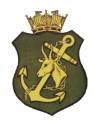
The RAF ‘South Africa’ title worn during The Battle of Britain

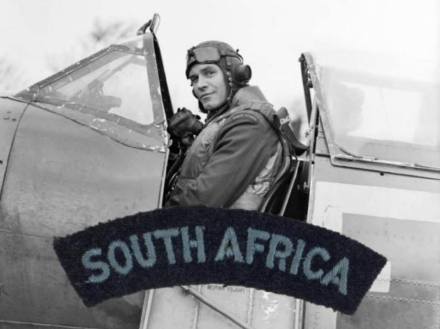
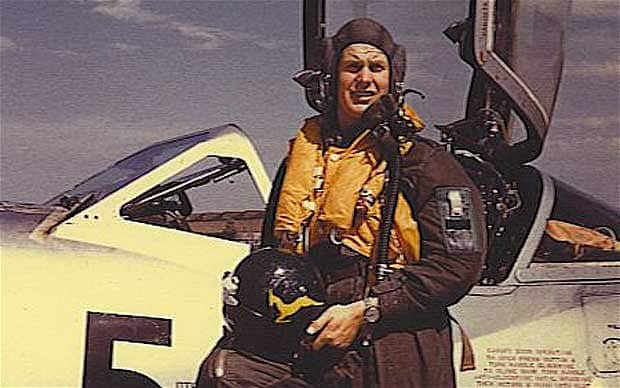
This is a famous ‘Battle of Britian” photograph of Squadron Leader Adolph “Sailor” Malan from South Africa sitting in a Royal Air Force Spitfire,  have a close look at his shoulder tab.

It’s a shoulder title issued to Royal Air Force (RAF) officers from South Africa, being ‘SOUTH AFRICA’ embroidered in light blue onto a RAF blue/grey arc of fabric.

During the Second World War many from Empire and Dominion countries joined the Royal Air Force, as did men from occupied countries such as Poland

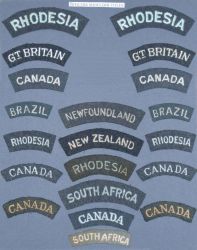
Shoulder titles were worn to signify the wearer’s country of origin. The titles were usually embroidered in pale blue capitals on a black background, or red on khaki drill for tropical kit.

raf_nat_18mTitles for officers were usually curved, and rectangular for other ranks. Excluding those worn by personnel from occupied countries, there were 42 titles issued officially, plus a number of unofficial ones.

The wearing of such titles was abolished in the RAF April 1948. A title for South Africa was authorised in March 1941.


Researched by Peter Dickens. Images – Imperial War Museum copyright, collection of titles as shown in the collection shown courtesy Alex Bateman

The feisty South African minesweeper that went down fighting – HMSAS Parktown

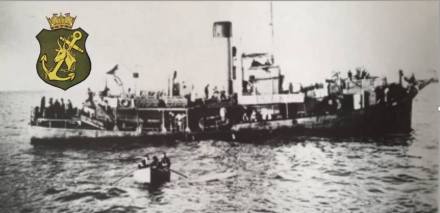
22308811_10155537271456480_3745202244434378650_nSouth Africa lost four ships during WW2, all of them minesweepers.  The second one to be lost was the HMSAS Parktown and it has a truly extraordinary fighting legacy.

A small whaler converted to a minesweeper, the “tiny boat” HMSAS Parktown sailed into action in April 1942 in company of another “tiny boat” – the HMSAS Langlaagte, sailing  from Cape Town to the Mediterranean and joining the 167th Minesweeping Group working from Alexandria, Egypt.

Service in the Mediterranean

Parktown had arrived in the Mediterranean from South Africa during May and had sailed from Alexandria on 9 June as part of the escort for a convoy bound for Tobruk. During the passage the convoy is attacked and Parktown is involved in the gallant rescue of 28 survivors from a ship that had been sunk, many of whom are badly burnt. After their arrival in Tobruk on 12 June Parktown and her consort, a fellow South African ship the HMSAS Bever under the command of Lt P A North, are tasked to keep the approaches to Tobruk clear of mines.
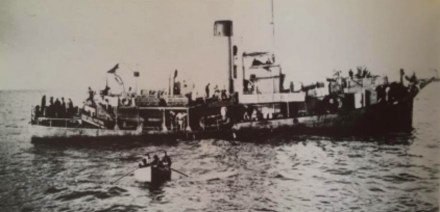
parktown

HMSAS Parktown

Fall of Tobruk 

At that time Tobruk was under siege and by 20 June it is clear that a crisis of some kind is imminent. Late that same afternoon Parktown and Bever are ordered to enter harbour to embark evacuation parties. At 20:00 that evening they watch the Axis forces entering the western end of town and then reach the harbour shortly afterwards.

These two South African minesweepers were to distinguish themselves during the Allied evacuation from Tobruk fighting their way out of the harbour.  The Bever and Parktown fought side by side as they were loading up with as many Allied and South African troops and equipment as they could take, all the time whilst Rommel’s German forces closed in around them. The rapidity of the attack caused great confusion, however, the ships still manage to embark most of the men allocated to them before they sail.

On 20 June 1942 General Rommel’s “Deutsch-Italienische Panzerarmee” (German and Italian Tank Army) attacked the Tobruk garrison from the south and south east. By 18:00, the German and Italian forces had overrun the main defence lines and were closing on the harbour and all Allied ships were ordered to embark personnel for evacuation.

The escape 

By 19:00 German tanks and armoured cars were within the town and started shelling the ships in the harbour. HMSAS Bever received a direct hit as she cast off.  Next is The Parktown and her escape is also quite remarkable.

Using her machine guns she checks the advance of the enemy land forces whilst embarking a further 60 men, even though hit by shell fire. As she is casting off, more men keep arriving and several try to swim to the ship. A few are hauled on board, some assisted by one of the ship’s company, Able Seaman P J Smithers, who swims to their assistance. However in the confusion of sailing A/B Smithers is left behind to be captured and placed in an Italian POW camp.

As the last Allied ship to leave Tobruk, Parktown attracts a tremendous concentration of fire as she steams out at full speed. Although she is hit several times, no hit causes fatal damage to the ship and only one man, an army NCO, is killed.
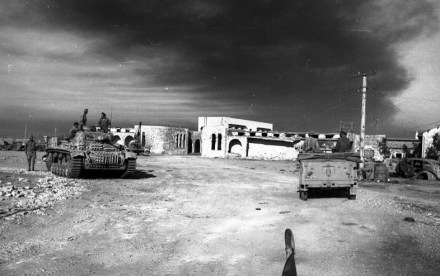
Tobruk, Rommel, Bayerlein, Panzer III

Rommel and his Panzers enter Tobruk

The Fall of Tobruk

Under cover of a smoke screen laid by a motor torpedo boat, but still receiving shell-fire from the town, the two ships left the harbour for the open sea. During the night off Tobruk port the Parktown and Bever became separated and the Parktown goes to the assistance of a disabled tug, also crowded with men.

The sinking of the HMSAS Parktown

After taking it in tow Parktown is only able to make five knots (9.3 Km/h) and thus gets left behind by the rest of the fleet. At daybreak on the 21 June they are still only 50 miles from Tobruk and can see the coast 14 miles away with a heavy fog bank to seaward.  At 06:45 Parktown’s crew sighted what they described as an Italian “MAS” torpedo boat (E-Boat), which had been directed to the slow moving vessel by a German reconnaissance aircraft.  The Parktown then turns north towards the fog bank, only to be confronted by four more E-boats at close range. Fire is immediately opened by both sides.

The E-boats using their higher speed and longer range guns open the range and attack from different directions. Even though Parktown, having only one 20mm Oerlikon, was heavily out matched, one or two of the E-boats appear to be hit by her fire and end up temporarily out of control.

However, within 30 minutes, completely outnumbered and outgunned the Parktown suffers sufficient damage to put her completely out of action.  The Captain, Lieutenant Leslie James Jagger and the coxswain are killed by a direct hit to the Bridge as well as a Royal Navy officer on passage.  Within 15 minutes Parktown was stationary with a hole in the boiler, half of the crew and evacuated soldiers as casualties, out of ammunition and with the upper deck on fire. The only surviving officer, Sub-Lieutenant E R Francis, although himself severely wounded, takes charge and orders the ship to be abandoned as a fire is spreading rapidly and no guns remain in action.

In the aftermath it is noticed that the E-boats appear to be firing at the men in the water, however a plane, which was thought to be German, appears and heads towards the E-boats where it then circles over them and opens fire on them, after which they make off at high speed.

The remaining crew and soldiers abandoned ship and clung to carley floats. At this time, an aircraft drove off the hostile ships. The tug which had been in tow had not been engaged by the E-boats and managed to rescue some of the survivors and some of the remaining survivors were rescued by an Allied Motor Torpedo Boat (MTB) which found them close to the burning minesweeper. The Allied MTB then sank the burning wreck of the Parktown with depth charges before returning to Mersa Matruh that evening.

Accounts on the final hour of the Parktown differ:

Orpen states that the Italian ships were driven off by a South African aircraft. He also records there being four Italian torpedo boats involved in the action.

Du Toit states that there were six Italian torpedo boats involved and that the aircraft was in fact a German aircraft which erroneously attacked the Italian ships.

Harris supports the fact that there were four torpedo boats and states that the German aircraft deliberately attacked the Italian vessels as they were firing on survivors in the water.
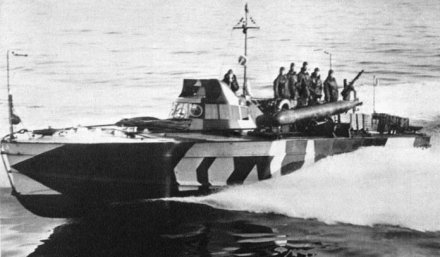
MAScamo

Camouflaged Italian World War II MAS that sunk the HMSAS Parktown (Motoscafo Armato Silurante – Italian: “Torpedo Armed Motorboat”)

Out of her complement of 21, Parktown suffered 13 casualties; five killed and eight seriously wounded.

Decorations and awards won

In this action alone the HMSAS Parktown’s crew would amass the following decorations and awards (we will leave the account of the HMSAS Bever to another post on her and her loss in November 1944 specifically):

Distinguished Service Order, D.S.O 
Sub-Lieutenant Ernest Rowland Frances (H.M.S.A.S. Parktown).
Comes from Krugersdorp. Age 34. Was in Training Ship General
Botha, 1923-23. Badly wounded during Tobruk withdrawal.

Distinguished Service Medal, D.S.M.
No 66921. Leading-Stoker John Charles Rohlandt (H.M.S.A.S. Parktown).
Home. address, 12, Hillyard-street. Woodstock.
No 71431. Leading-Stoker Leslie Ronald Mitchell (H.M.S.A.S. Parktown).
Home address. 16, Wesley-street. Observatory. Before war was
employed by Customs Department, Cape Town
No. 71048. Able-Seaman George Kirkwood (H.M.SA.S. Parktown).
Comes from Maraisburg. Transvaal. Was a miner in peace time.

Mentioned in Dispatches (Posthumous)
Lieutenant Leslie James Jagger (H.M.S.A.S. Parktown) Came from Johannesburg, was killed during this operation.

No. 71464. Stoker Andrew Henry Jooste (H.M.S.A.S. Parktown). Comes from Vrededorp Johannesburg. Age 21. A gold miner before joining Seaward Defence.

The honour roll  – HMSAS Parktown (SANF),

The following South African men were lost with the sinking of the Parktown (MPK means “missing presumed killed”)

BROCKLEHURST, Peter S, Able Seaman, 70457 (SANF), MPK
COOK, John A, Stoker 1c, 70256 (SANF), MPK
JAGGER, Leslie J, Lieutenant SANF, 70016 (SANF), MPK
MCEWAN, William A, Steward, 69686 (SANF), MPK
TREAMER, Arthur P, Petty Officer, 71109 (SANF), MPK

May these brave South Africans Rest in Peace, their duty done.
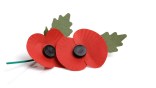
supporting-poppy-appeal

For more Observation Post stories on South African minesweepers lost in World War 2, please visit the following links:

HMSAS Southern Floe: The HMSAS Southern Floe was the SA Navy’s first ship loss & it carries with it a remarkable tale of survival.

The HMSAS Bever: “Under a hail of shells”; Recounting the bravery and loss of HMSAS Bever

The HMSAS Treern: The last South African Navy ship to be lost in action; HMSAS Treern


Researched by Peter Dickens. References: Article essence copied from Wikipedia, Military History Journal Vol 9 No 1 – June 1992. THE STORY OF A WARSHIP’S CREST by F V Demartinis and Day-to-Day in the SA Navy by Chris Bennett (social media). SOUTH AFRICAN NAVAL FORCE
Ship Histories, Convoy Escort Movements, Casualty Lists 1939-1947


Why the Comrades Marathon is called the ‘Comrades’

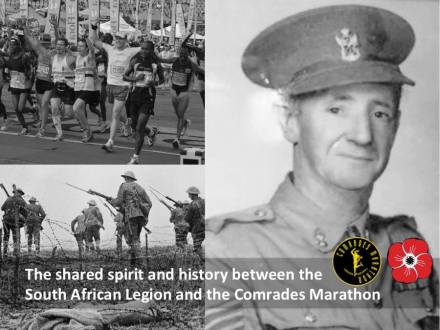
Did you know that “The Comrades Marathon” has a shared spirit and a shared history with The South African Legion of Military Veterans?

As the oldest military veterans organisation in South Africa, the South African Legion was formed at the 1921 Empire Conference (28 February to March 4) in Cape Town as the British Empire Services League (BESL, South Africa) by joining two organisations together – the “Returned Soldiers and Sailors Association” and the “Comrades of the Great War”, which co-incidentally is the organisation after which the term “Comrades” in Comrades Marathon is given.  In the course of history the “BESL South Africa” came to be called “The South African Legion of Military Veterans”.

bokclear3

In the same year – 1921 – Vic Clapham, a World War 1 veteran himself approached the “Comrades of the Great War” with a vision that would result in the worlds greatest ultra marathon nearly one hundred years later.

His idea was that if infantrymen, drafted into the armed forces from sedentary jobs, could endure forced marches over great distances, trained athletes could cover the distance between the two cities of Pietermaritzburg and Durban without great difficulty. Clapham, like the Legion, also wanted to remember those who had fallen in the war, and he felt the best way to honour this was by the ultimate testing of body and mind, and triumphing.

The Natal athletics body was not interested in the idea of a ultra marathon, and thought Clapham was quite mad, so undaunted by the set-back Clapham approached the British Empire Services League of South Africa (now known as the South African Legion), and asked permission to stage the race under their auspices. They ultimately agreed and financially underwrote the first race.

The first 1921 Comrades Marathon was run by Vic Clapham and included a field of 34  runners, of them Sixteen runners completed the 87, 9km (55 mile) downhill race from Pietermaritzburg to Durban. The race was won by Bill Rowan who finished in a time of 8:59:00 and his name is now given to the sub 9 hour medal in today’s race.

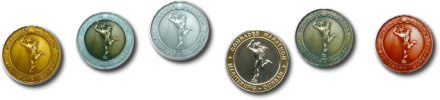
comradesmedals

Left to Right “Modern” Comrades medals

A gold medal for the top 10 finishers
A Wally Hayward for a sub-6 hour time
A Silver for a sub-7:30 time
A Bill Rowan for sub-9
A Bronze for sub-11 and finally
A Vic Clapham for sub-12

SALegion_FinalLogoLayout_GreenPrintTextAlthough The Comrades Marathon is an independent commercial concern now, The South African Legion has continued its association to the Comrades Marathon over the  years and encourages all participants to wear a Remembrance Poppy in recognition of this history and the sacrifice of the fallen.  In this respect the Comrades Marathon is still in fact a “living memorial” to the Great War (World War 1).
Related Work and Links

Living War Memorial: Comrades Marathon A ‘Living’ War Memorial, The Comrades Marathon

Living War Memorial: Red Cross Children’s Hospital A war memorial in Cape Town which saves children’s lives

Comrades Marathon; Bill Payn Comrades legend, Springbok and war veteran – the remarkable Bill Payn


Written and Researched by Peter Dickens

Two fellow members of The South African Legion – Churchill and Smuts

SALegion_FinalLogoLayout_GreenPrintTextThe interesting part of digging up all the “hidden” history of the South African veteran movements after World War 2, is that occasionally you come across some hidden history about the military veterans organisation which you belong to. Did you know that both Jan Smuts AND Winston Churchill are both members of the South African Legion of Military Veterans?
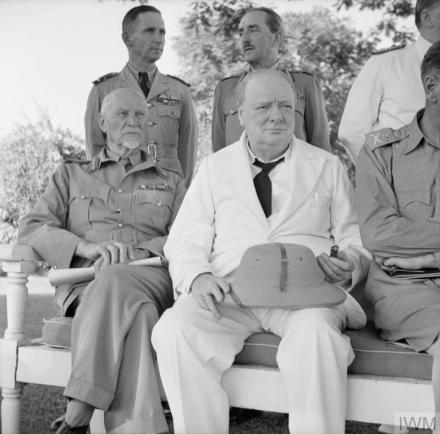
Well – they are. Field Marshal Jan Smuts was awarded the “Gold Life Membership Badge of the South African Legion of the BESL” in November 1945, and Sir Winston Churchill received the same Gold Life Membership Badge to the South African Legion in July 1948.

Smuts02

And here they are – two fellow Legionnaires, the two great prime ministers of Great Britain and South Africa, Prime Ministers, Winston Churchill and Field Marshal Jan Smuts, at the British Embassy in Cairo, 5 August 1942.

Did you also know that Jan Smuts played a pivot role in not only formulating the South African Legion, but also in bringing all the primary war veterans organisations from Britain and around the British Commonwealth under one oversight body? It was formed in 1921 in Cape Town and called The British Empire Service League (BESL) under patronage of the King.  This organisation still exists to this day as the Royal Commonwealth Ex-Services League (RCESL) with Queen Elizabeth II as the head Patron, located at The Royal British Legion’s head office at Haig House in London – and South Africa is still a founding member (represented by the South African Legion).

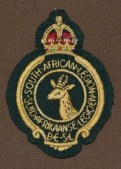
413928_141126095245_DSC_0380This is a standard South African Legion blazer Badge with “Kings crown” from the 2nd World War period.  Note the BESL at the bottom – which stands for the “British Empire Services League” – the South African Legion along with the Royal British Legion, Royal Canadian Legion, Royal Scottish Legion, New Zealand Returned Services Association and the Australian Returned Services League are all founder members of it.
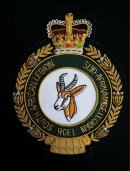
embroidered_nModern South African Legion blazer badge – note the use of modern BESL the RCEL “Royal Commonwealth Ex-Services League” and Queen’s Crown” for Queen Elizabeth II who is the current Patron.
The RCEL mission and objective is to provide aid and support to any members of the British Commonwealth who have served under ‘crown’ in British Armed Forces or Commonwealth Armed Forces whilst under British Patronage.  These include South Africa’s old World War 2 veterans and newer veterans who have served under the Commonwealth agreement in Her Majesty’s Armed Forces in recent conflicts like Iraq and Afghanistan.

Related Work and Links 

Legions and Poppies: Legions and Poppies … and their South African root

Churchills Desk: Churchill’s Desk

Jan Smuts, Churchill and D-Day: Jan Smuts, Winston Churchill and D-Day


Researched and written by Peter Dickens

Image copyright – The Imperial War Museum. Reference “Not For Ourselves” – a history of the South African Legion by Arthur Blake.


So young and yet so old

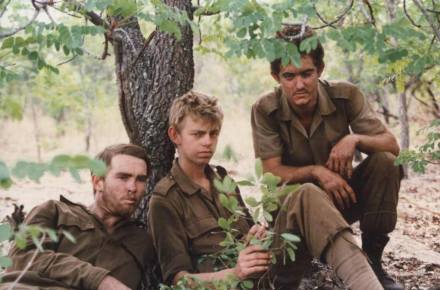
Three members of the SADF’s 61 Mechanised Battalion Group take a rest during the fighting on the Lomba river in Angola in 1987.

These young SADF national servicemen – most of them having just written a High School matric a year or two before and barely 18 or 19 years old – have just shattered the Angolan/Cuban coalition’s mechanised offensive, turning the tide at the height of this “cold war” in what was arguably one of the fiercest and most decisive mechanised battles fought on African soil since the Second World War.

These men – fighting in Ratel Infantry fighting vehicles against Russian T 55 Tanks knew that victory would boil down to strategy, innovation, decisiveness, leadership, teamwork, discipline and training – and not superior equipment or numbers.

Notice the presence of the “thousand yard stare” brought about from fatigue and extensive exposure to combat, ageing them well beyond their years.

Thank you to the 61 Mechanised Battalion veteran fraternity for the image.

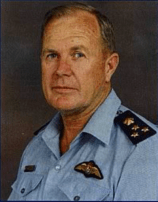
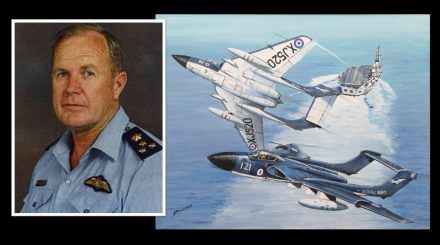
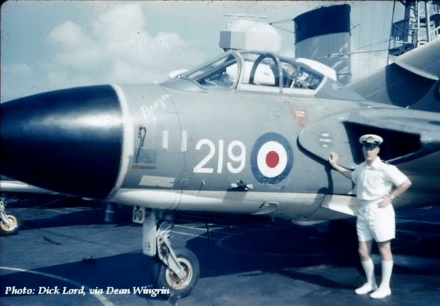
Dick Lord – the combat legend who took learnings from the Royal Navy’s Fleet Air Arm to the SAAF

Richard Stanley Lord (nickname “Dick”) was born on June 20 1936 in Johannesburg, and educated at Parktown Boys’ High School.  His fascination with flying took hold playing “Biggles” high up in Johannesburg’s famous jacaranda trees.

In the late 1950’s Dick Lord wanted to join the South African Air Force.  However at the time the governing National Party had targeted South Africa’s defence forces for “transformation”, effectively ridding the defence arms of all their “British” heritage and socially engineering the forces using job reservation, political appointment and nepotism to progress white Afrikaners.

In this changing political environment Dick Lord was despaired of a career in the SAAF, his Afrikaans was limited and his strong “English” heritage was against him in the now Afrikaner-dominated South African Services.

So instead he, joined the Royal Navy. His initial naval training was at the Royal Naval Engineering College, Manadon, and he gained his wings in the Fleet Air Arm in June 1959, flying Sea Venom and Sea Vixen fighters from the aircraft carriers HMS Centaur, HMS Victorious, HMS Hermes and HMS Ark Royal.

Screen Shot 2017-04-01 at 13.24.23

A very eventful FAA Legacy

In 1966 Dick Lord found himself in the Royal Navy’s Fleet Air Arm flying from Ark Royal off Beira, Mozambique, to enforce the oil blockade of Rhodesia following its Unilateral Declaration of Independence. After one mission to intercept a suspected blockade-runner, he returned to find that the carrier had been overtaken by a tropical storm and that her flight deck was pitching through 65ft: his aircraft caught the third arrester wire and damaged its undercarriage – reckoned a near perfect landing in the conditions.

An American “Top Gun”

Dick Lord was instrumental in the development of America’s Top Gun fighter pilot academy, made famous by the film of the same name. He established his unusual role in 1968, when he was the foremost British instructor sent on exchange at Miramar, California, to train American pilots then suffering significant losses at the hands of MiG-21s flown by the North Vietnamese.

While some criticised the performance of America’s multi-million dollar Phantom jet, Lord concentrated on sharpening his pupils’ Air Combat Manoeuvring (ACM) skills to improve their odds in a dogfight.

He and a handful of other Fleet Air Arm graduates of the Royal Navy’s gruelling Air Warfare Instructors (AWI) school in Lossiemouth, Scotland, introduced rigorous new methods for recording and scrutinising the performance of trainees during exercises.

Lord, for example, scribbled notes on a pad on the knee of his flight suit during mock dogfights, which he then exhaustively analysed on a blackboard at post-flight debriefs.
Such was the trust placed in Lord that he was granted access to classified American military documents comparing the performance of US aircraft against that of enemy fighters. This access allowed him to write, with others, the US Navy’s Air Combat Manoeuvring manual.

A year after Lord’s arrival, the tuition and methods introduced by British pilots, all graduates of the AWI school at Lossiemouth, made their way into the US Navy Fighter Weapons School, which was set up in 1969. Better known as Top Gun, it remains the most famous programme in the history of naval aviation. Soon after it was established a Phantom flown by one of its first students shot down a MiG-21, the first time a US Navy aircraft had succeeded in aerial combat in two years.

Lord enjoyed the film Top Gun, but mused that it was “remarkable that any history book studiously avoids mention of any British involvement” and added that the film had not “given us due justice”. He remained proud of his involvement, however, and during his time at Miramar had insisted on using the call sign “Brit 1”. This meant that his wingman, though American, was forced to use the call sign “Brit 2”.

Dick Lord’s wife June Beckett, a BOAC air-hostess said of the movie “Top Gun” that while Dick complained about it, she contended that the film’s portrayal of big-talking fighter pilots was extremely true-to-life, and she should know.

lord_2047777b

On his return to the Royal Navy he was senior instructor with 764 Naval Air Squadron where he passed on the skills and confidence that had made such an impact in America.

Back to South Africa

Dick yearned to return to South Africa, he resigned from the Royal Navy and in 1970 returned to South Africa where he converted to commercial flying and became a civil aviation instructor pilot.

However the Royal Navy would intervene in his life again, this time after a visit to Cape Town by HMS Ark Royal where a “deep chord” was struck in Dick’s heart, rekindling his love of more adventurous military flying.

Joining the SAAF

Although Dick Lord was still unable to pass the Afrikaans language test, he was able to join the South African Air Force this time due to capability gaps in SAAF caused by all their social engineering and transformation policies, it was also now at war and in need of very skilled and experienced military pilots.  Conscription in the SADF had also been implemented by this time, and it involved both English and Afrikaans speaking white South Africans, so policies had to be softened somewhat.

During South Africa’s involvement in the South West Africa (Namibia)/Angola Border War and whilst in the SAAF Dick Lord flew Impalas, Sabres and Mirage Ills.

Dick Lord’s leadership skills were quickly apparent and he ultimately commanded No 1 Squadron SAAF from 1981 to 1983, later directing SAAF operations during the Border War from Oshakati and Windhoek as well as flying SAAF Mirage F1AZs.

He ended his career in charge of the Air Force Command Post in Pretoria, where he was given high accolade for his role in helping to organise the rescue operations that saved all 581 passengers and crew of the Greek cruise-liner Oceanos, which sank off South Africa’s eastern coast on August 4 1991.

Another highlight of his career was to organise, in 1994, the fly-past at the inauguration of Nelson Mandela as President of South Africa. Lord then retired as a Brigadier General and began writing about his life as an aviator.

He also wrote a number of books including

9781920143367-us-300

Fire, Flood and Ice (1998) about SAAF Search and Rescue missions
From Tailhooker to Mudmover (2000) – a biography
Vlamgat (2000) – a history of the Mirage fighter jet in South Africa
From Fledgling to Eagle: the South African Air Force during the Border War (2008)

Apart from flying, his passion was military music, his favourite piece being Sarie Marais, the march of the Royal Marines, which is based on an Afrikaner folk song.

Brigadier General Dick Lord died on the 26th October 2011 after a long illness.  He is still sorely missed to this day.

Screen Shot 2017-04-01 at 15.11.13


Researched by Peter Dickens.  References:  The Daily Telegraph, Article on Dick Lord by Rostislav Belyakov. Military History Journal Vol 15 No 4 – December 2011.  Feature photo via Dean Wingrin.  Painting of Royal Navy Fleet Air Arm Sea Vixens in the masthead by Derrick Dickens, copyright Peter Dickens.

Winner of the Honoris Crux Gold – TWICE! One of a kind … Remembering Maj. Arthur Walker HCG & Bar SM

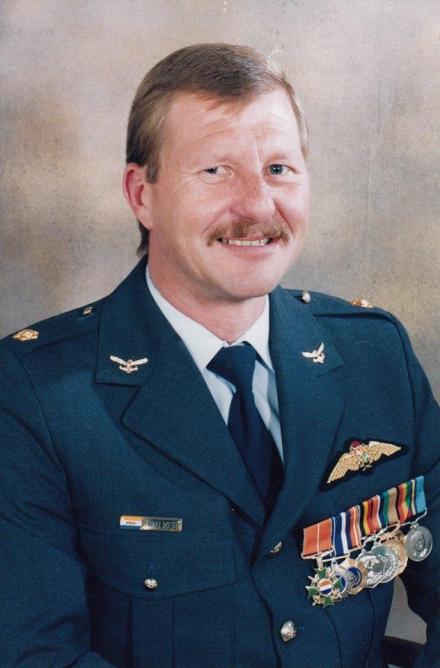
Remembering a true South African military hero – the highest decorated South African Defence Force member and the legend that was Major Arthur Walker HCG and bar SM. Sadly Arthur passed away in March 2016 after a long fight against cancer.

Major Arthur Walker HC and Bar SM was a South African military hero of which there will never be an equal, he was South African Air Force helicopter pilot who was awarded the, not once – but twice, during the South African Border War.

The Honoris Crux Gold was the highest military award for bravery awarded to members of the South African Defence Force at that time – so his feat of obtaining two of them can never be repeated again.

Born 10 February 1953 in Johannesburg he matriculated from King Edward VII School in Johannesburg and went to the Army in 1971.

He obtained his pilot’s wings in 1977 and flew for 7 Squadron, Rhodesian Air Force, before re-joining the South African Air Force in 1980.

While flying Alouette III helicopters based at AFB Ondangwa in 1981 he was awarded the Honoris Crux Gold for risking his life during a night operation in Angola, by turning on the lights of his helicopter to draw enemy fire away from another helicopter.

The citation for the Honoris Crux Gold reads:

“During January 1981, two Alouettes, with Lieutenant Walker as flight leader, carried out close air support operations resulting in the Alouettes coming under intense enemy artillery and anti-aircraft fire. He only withdrew when ordered to do so. Later Lieutenant Walker returned to the contact area to provide top cover for a Puma helicopter assigned to casualty evacuation. Again he was subject to heavy enemy anti-aircraft fire. During the withdrawal the second helicopter developed difficulties and called for assistance. Yet again Captain Walker returned to provide top cover, drawing virtually all the anti-aircraft fire to his Alouette. His courageous act prevented the loss of an Alouette and crew.

Lieutenant Walker’s actions were not only an outstanding display of professionalism, devotion to duty and courage, but also constitutes exceptional deeds of bravery under enemy fire and makes him a worthy recipient of the Honoris Crux Gold”

In December 1981 he was cited for landing in enemy territory to search for and rescue the crew of a helicopter that had been shot down.
An Alouette III of the SAAF

The citation for the Bar to his Honoris Crux Gold reads:

“During December 1981 Captain Walker was again requested to provide top cover for the evacuation of a seriously wounded soldier. On take-off with the evacuee his number two helicopter was hit and crash-landed. Without hesitation and with total disregard for his personal safety, Captain Walker landed near the wrecked helicopter and immediately searched for the crew. Eventually the situation became suicidal, compelling Captain Walker and his crew to withdraw. When he was airborne he spotted the missing crew and yet again, without hesitation and despite the fact that virtually all enemy fire was now [aimed] in his direction, he landed and lifted the crew to safety.

Through this courageous deed he prevented the loss of two men. His distinguished actions, devotion to duty and courage make him a credit to the South African Defence Force in general, the South African Air Force in particular and makes him a worthy recipient of the Bar to the Honoris Crux Gold”

With sincere thanks to Arthur for sending us a full colour image of himself in uniform – Rest in Peace Arthur.  At the going down of the sun …we will remember you.

One Major accomplishment!

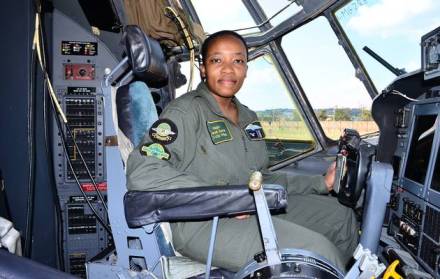
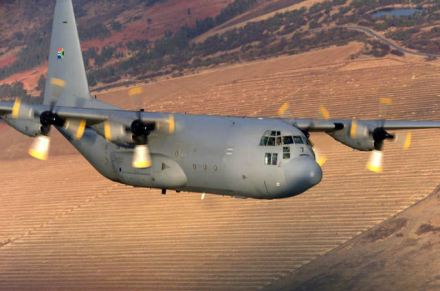
On Friday 23rd March 2017, this 31 year old Major not only touched down flying a C-130  military cargo plane at Waterkloof Air Force base‚ as part of her evaluation, she also went in the record books as the first black woman to qualify to fly this particular aircraft in the South African Air Force.

Her task was to fly the C-130 and be responsible for the safe arrival of both the aircraft and crew members on board from the Democratic Republic of Congo.

Congratulations Major Nandi Zama on breaking new ground for black female pilots and female pilots the world over.  You exemplify the fine values and traditions of your Squadron – 28 Squadron SAAF.

04

South African Air Force Lockheed Hercules C-130BZ from 28 Squadron with grey paint scheme

Related Link

Suzanne Dempsey; Another Major Accomplishment


Posted by Peter Dickens. Article and image reference Times Live

Proper South African Gladiators

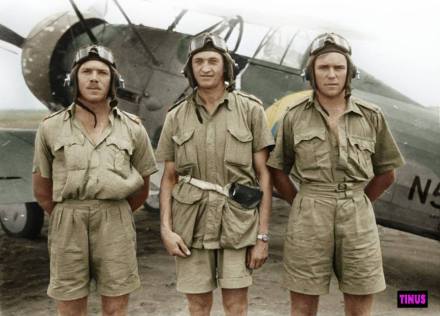
Wonderful colourised image by Tinus Le Roux of South African Air Force pilots during the East Africa campaign in WW2.

Here are No. 2 Squadron pilots in East Africa 1940-’41 (Gladiator aircraft in the background). From left to right: Lt. Pieter Fritz, Lt. Adrian “Coley” Colenbrander, Lt. Basil Guest. Only Lt. Guest will survive the war.

Lt. Colenbrander was a popular member of the squadron and was shot down and killed in 1942 just after the El Alamein break-through as 2 squadron’s Officer Commanding.

The Gloster Gladiator’s combat record  in East Africa

In Eastern Africa, it was determined that Italian forces based on Ethiopia posed a threat to the British Aden Protectorate, thus it was decided that an offensive would be necessary, under which the Gladiator would face off against the Italian biplane fighters: Fiat CR.32s and CR.42s. On 6 November 1940, in the first hour of the British offensive against Ethiopia, the Fiat CR.42 fighters of the 412a Squadriglia led by Capt. Antonio Raffi shot down five Gloster Gladiators of 1 SAAF Sqn; among the Italian pilots was the ace Mario Visintini. Tactically, the SAAF aircraft erred by engaging the CR.42’s in a piecemeal fashion and not en masse, and were anyway heavily outnumbered.

Early on in the action, Gladiators of No. 94 Squadron performed various offensive actions against the Italian forces; typical targets included airfields, supply depots, and aircraft. They were also assigned the mission of defending Aden airspace at day and night, as well as to protect Allied shipping operating in the vicinity. It was in the latter role that saw a single No. 94 Gladiator, piloted by Gordon Haywood, be responsible for the surrender and capture of the Italian Archimede-class submarine Galilei Galileo

On 6 June 1941, the Regia Aeronautica had only two serviceable aircraft remaining: a CR.32 and a CR.42, therefore air superiority was finally achieved by Gladiators and the Hurricanes. The Gladiator’s last air combat with an Italian fighter was on 24 October 1941, with the CR.42 of Tenente Malavolti (or, according to historian Håkan Gustavsson, sottotenente Malavolta). The Italian pilot took off to strafe British airfields at Dabat and Adi Arcai. According to the Italian historian Nico Sgarlato, the CR.42 was intercepted by three Gladiators and managed to shoot down two of them, but was then itself shot down and the pilot killed.  Other authors state that Malavolti managed to fire only on the two Gladiators before being shot down.

According to Gustavsson, SAAF pilot (no. 47484V) Lieutenant Lancelot Charles Henry “Paddy” Hope, at Dabat airfield, scrambled to intercept the CR.42 (MM7117). Diving on it, he opened fire at 300 yards. Although the CR.42 pilot took violent evasive action, Hope pursued, closing to 20 yards and firing as it tried to dive away. There was a brief flicker of flame and the last Italian aircraft to be shot down over East Africa spun into the ground and burst into flames near Ambazzo. The next day the wreckage was found, the dead pilot still in the cockpit. Hope dropped a message on Italian positions at Ambazzo:

“Tribute to the pilot of the Fiat. He was a brave man. South African Air Force.”

But operational record books of the Commonwealth units in the area state that they did not suffer any losses on this date. The dedication of the posthumous Medaglia d’oro al valor militare states that Malavolti shot down a Gladiator and forced another to crash land, but was himself shot down by a third Gladiator. This was the last air-to-air victory in the East African campaign.

Original black and white Photograph from the SAAF museum Colourised photo copyright and courtesy of Tinus Le Roux, and my thanks to Tinus for the caption reference.  Reference – wikipedia

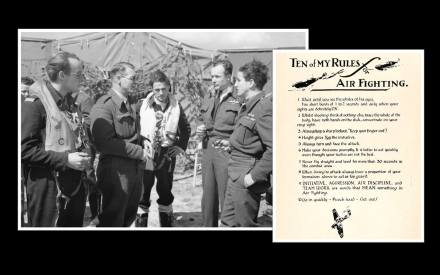
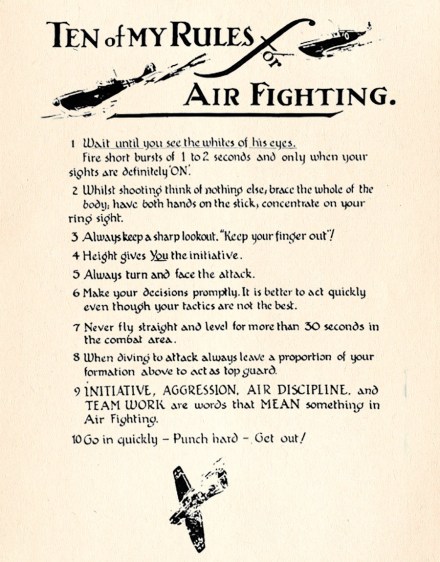
‘Ten of my rules for air fighting’ – Sailor Malan

malan1Arguably one of the best South African pilots of the Second World War and certainly one of the best Royal Air Force pilots during the Battle of Britain – now one of the much idolised ‘few’ who turned the tide of the war – South African flying ace Group Captain A G ‘Sailor’ Malan DSO & Bar DFC & Bar, and he did it based on a set of rules he drew up, now famously known as “Ten of my rules for air fighting”.
In the featured image is Sailor Malan as the Station Commander at Biggin Hill, Kent seen second from the left, talking to Squadron Leader E J Charles, Officer Commanding No. 611 Squadron RAF (middle), and Wing Commander A C Deere, leader of the Biggin Hill Wing (right) during the Battle of Britain.  No doubt his ten rules would have been a point of discussion between these men at some point.

Sailor Malan’s rules of air combat were readily adopted by pilots in the Royal Air Force during the Battle of Britain, these rules saved many a pilot and brought down many enemy aircraft, they are directly attributed to the success of the Battle of Britain and in so keeping Britain in the war.  They are still considered valuable to this day as part of the RAF’s teaching curriculum – they are:

“TEN OF MY RULES FOR AIR FIGHTING” – Sailor Malan

1. Wait until you see the whites of his eyes. Fire short bursts of 1 to 2 seconds and only when your sights are definitely ‘ON’.
2. Whilst shooting think of nothing else, brace the whole of the body, have both hands on the stick, concentrate on your ring sight.
3. Always keep a sharp lookout. “Keep your finger out!”
4. Height gives You the initiative.
5. Always turn and face the attack.
6. Make your decisions promptly. It is better to act quickly even though your tactics are not the best.
7. Never fly straight and level for more than 30 seconds in the combat area.
8. When diving to attack always leave a proportion of your formation above to act as top guard.
9. INITIATIVE, AGGRESSION, AIR DISCIPLINE, and TEAM WORK are the words that MEAN something in Air Fighting.
10. Go in quickly – Punch hard – Get out!

TenRules-05

Image copyright: Imperial War Museum