War is Cruelty

Not unusually, whenever there is a post of a Boer farm burning on a Boer War social media site there is an inevitable indignation and disgust targeted at the British and usually accompanied by a torrent of abuse from a community still fractured by this conflict.
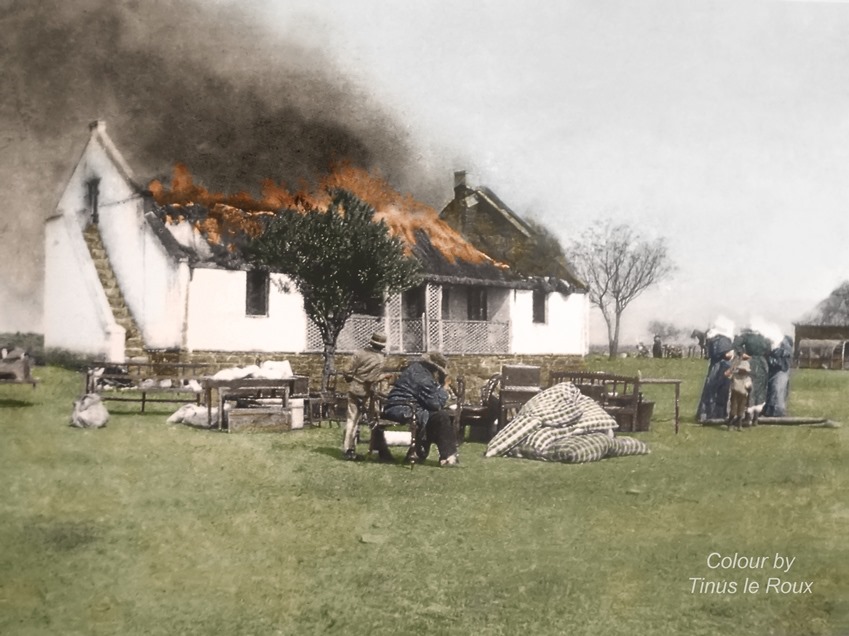
Harsh reality of ‘total war’: a Boer families’ farm burning. Colourised by Tinus le Roux.

On my blog, The Observation Post, I even had a person write to me personally and state how dare I allude to Boer aggression as a Casus Belli of the war when “the British brought innocent Boer women and children into the war in the first place” – the indignation at the ‘destruction of innocents’ and rather misdirected raw hate at me highly apparent, a quoted figure of Boer women and children sacrificed almost immediately referenced (usually inflated) – and it’s a common theme and a common retort – I see it all the time on all sorts of forums. It’s the kind of retort that is the result of decades of indoctrination and propaganda – and it’s simply completely disconnected with any semblance of full truths or balance.

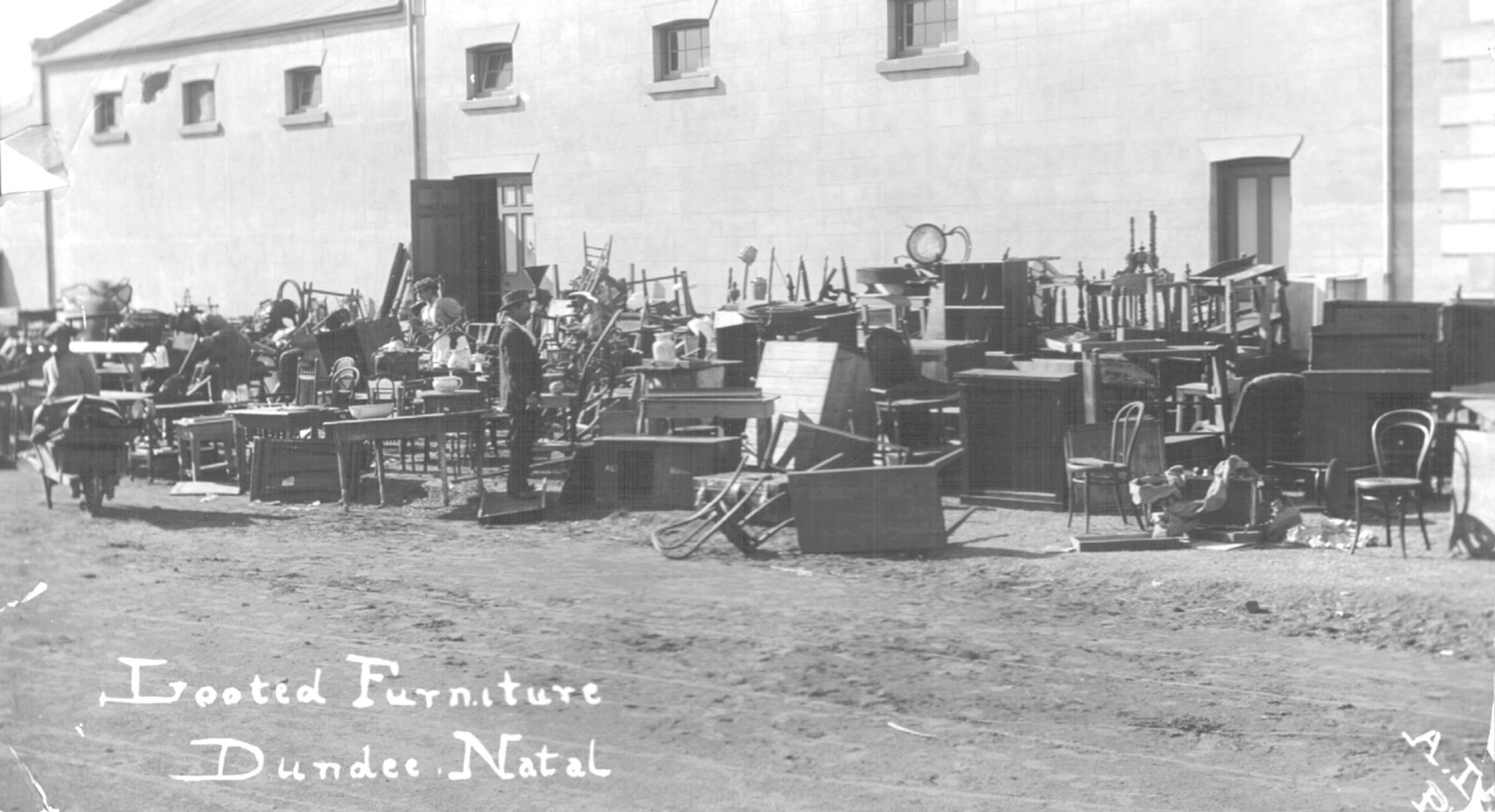
So, here’s a little balance and understanding of a ‘full-truth’. At the beginning of the South African War (1899-1902), it was the Boers who commenced with creating a civilian refugee crisis, not the British, and the Boers subsequently invaded, besieged and ransacked entire British towns and territories – not only Johannesburg, but on sovereign British territory in addition, the ransacking of Dundee a case in point – burning farms and looting – leaving civilians with no shelter or refugee camps and simply chasing them into the hinterland without food or assistance.

So, let’s account who started what, and let’s account the carnage and scale of civilian casualties and who the really affected parties are – and I think you’ll be a little surprised to learn something that is not part of the old nationalist narrative of this war. Let’s begin at the beginning.

The Johannesburg Exodus

Starting in September 1899 and into October 1899 is a civilian refugee crisis on a significant scale, the Zuid-Afrikaansche Republiek (ZAR) issue a directive which sees the largest city in the republic empty out of nearly all its inhabitants.

What follows are first hand account of the initial “stampede” of ‘foreign’ (Uitlander) residents fleeing Johannesburg – many to be disposed of their property at the beginning of the war. In the end some 50,000 ‘foreign’ residents of the Transvaal were shipped out in cattle trucks and coal carts creating a refugee crisis of note (6,000 left in cattle trucks over just two days alone). Many were afforded no food or water and there are documented cases of deaths and even births in these cattle trucks and open top coal carts – the dead were buried next to the railway lines. Many of these refugees arrived in places like Durban, Cape Town, East London or Port Elizabeth and those who could not find rented, friendly or temporary accommodation were found to be loitering in parks and on the streets with no place to go, sleeping in the open and subject to the elements. The Boers idea being to chase them out of their homes in the ZAR and empty Johannesburg of its “uitlander” problem … and the British should somehow deal with the crisis.
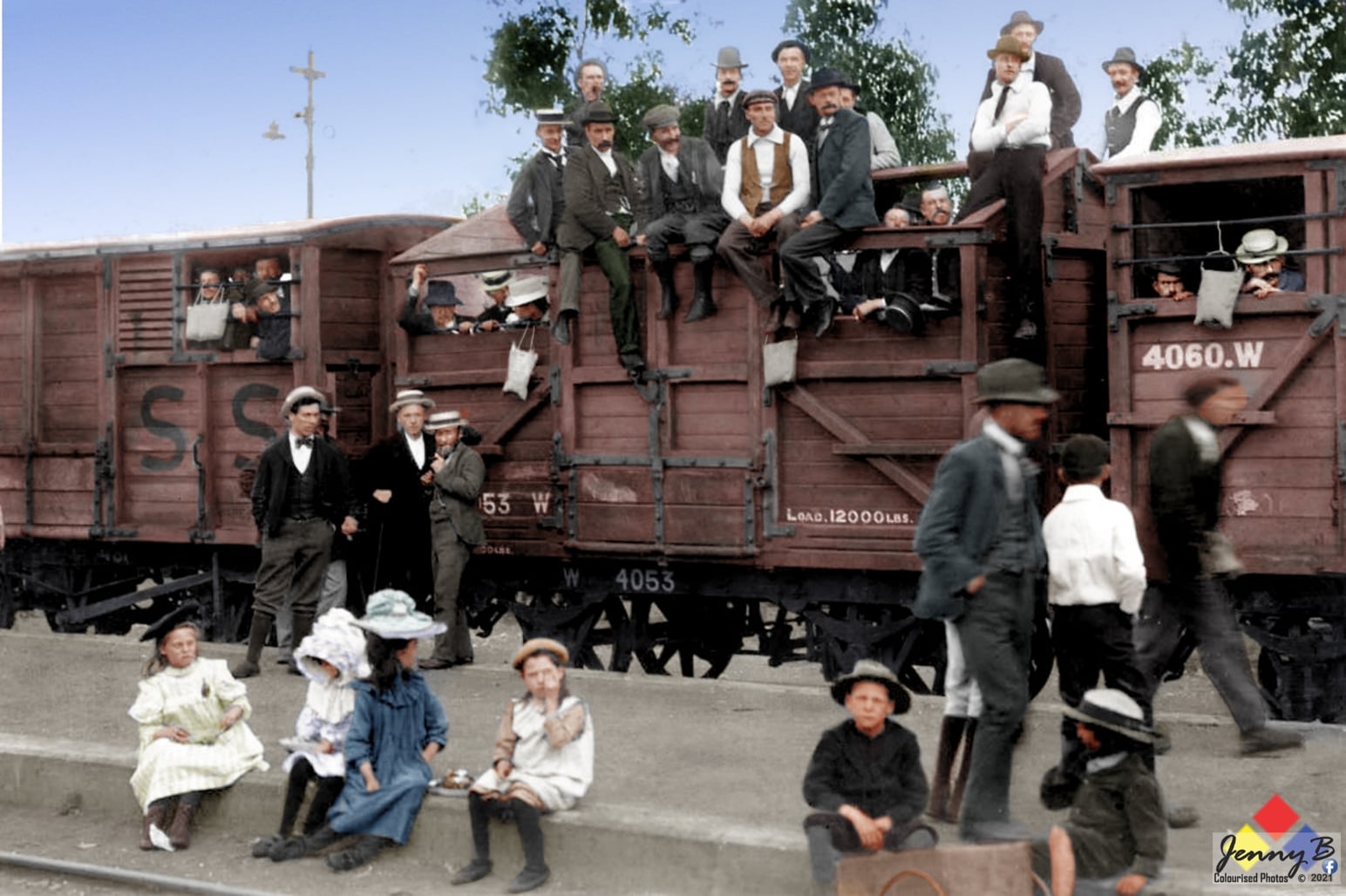
Uitlanders leaving Johannesburg on cattle trucks – October 1899, colourised by Jenny B

In addition to the 50,000 odd whites departing Johannesburg – it is estimated that some 78,000 Black mine labour and workers fled Johannesburg between September and October 1899, many on foot arriving home in their villages penniless (their money, the last month of their wages, was confiscated by the ZAR government), and they are destitute, malnourished and exhausted (see Black People and the South African War 1899-1902. By Peter Warwick).

Notwithstanding the scale of this forced displacement of civilians – these unarmed ‘foreigners’ and their labour made up the majority of residents in the republican state – the “minority” chasing them out at gun-point.

Here’s the account by a white “British” Bradford man, writing to his parents, from Port Elizabeth, and he gave a vivid picture of the flight (bear in mind this is just the opening of what became a mass exodus).

“When I wrote you a short note on September 29th, 1899, from Johannesburg, I did not expect to have to clear out so soon afterwards, but there was very little time given us to consider. The Boers were commandeering all the Outlanders’ property as a war tax; they claimed all the horses on the mines, and behaved most insultingly to any Englishman they could come across. The way the Boers were treating us was simply outrageous. They are worse than Kaffirs, so I cleared out as quickly as I could.

There were 1500 people left Johannesburg by the same train, and nearly as many left on the platform. I had an awful journey down. We saw all the women and children in the closed carriages, whilst we men had to go in open coal trucks. About two hours after we started there was thunder, lightning, and heavy rain, which continued until we reached Kronstadt next day. Of course, we were all drenched to the skin. There we had some “scoff,” for which we had to pay 3s. 6d. each. At ordinary times the charge is not more than 2s. per meal.

The Orange Free State officials provided us with cattle trucks, which, being covered, were a little better than open coal trucks, and shielded us from the rain. We travelled right through the Free State in this kind of conveyance, and after crossing the border into the colony at Newport we were put into civilised carriages for the rest of our journey. Altogether the journey took us three days and three nights. It was difficult to get quarters, for the place is crowded. Anyhow, we managed to get a room —I and another fellow—for which we had to pay a pound for one week.

There are about 5000 refugees from the Transvaal down here, and I hear that at Cape Town and Durban people are sleeping in churches, warehouses, and, in fact, anywhere they can get a covering for their heads. People who came down here two or three months ago are at their wits’ end, their money being finished, and they having to rely on charity for a bite to eat. Whole families are starving.

The British Government ought to help these subjects, as they are forced to leave their livelihood, and all because the English Government will not hurry up and settle things one way or the other. Johannesburg is very nearly empty. Nearly all the mines have been closed down. All the storekeepers have barricaded their places up and discharged their workpeople, and the principals have cleared out, leaving their goods and property to look after themselves. Thousands of people who a few months ago were doing a nice business are now ruined, and their labours for years past are all wasted. The Boers will not allow them to remove their stock, produce, or anything else.”

Of the exodus from Johannesburg a nurse named Miss Colina Macleay records the ordeal:

“I caught the first train, crowded beyond anything you can imagine, and had to go into a coal truck with fifty white and black people, all mixed, including coolies, samies, Kaffirs, Cornish miners, and other whites. On our way out of the Transvaal we were detained at lots of stations, and insulted everywhere. The heat was intense, with a broiling sun and nothing to protect us from it. And we also suffered from thirst. When we saw a water pump we would try to get out, but guns were pointed at us and we were threatened if we dared to move. All the time the fellows at the stations were drinking and laughing and wasting the water to tempt us all the more … one poor child died in our truck, and our train stopped for a few minutes to bury the body at the railway side on the veldt.  I think I shall never forget the cries of the poor children for meat and drink … At length we arrived at Delagoa Bay at one o’clock in the morning, only to find the place crowded, with people lying in the station, parks, and other available corners. A Committee of kind ladies and gentlemen and the Governor met all the refugee trains, and did the best they could for the poorer ones. As I was a nurse and in uniform I was taken to the Salvation Army Hall, and I had there to lie on the floor with hundreds of others (women and children) …”

To quote Steven’s ‘Complete History of the War’:

“The expulsion of aliens was the order of the (Republican) States, and protection was withdrawn from the mines, which of course came to a stand still. With the opening of October (1899) South Africa became astir with warlike preparations, Burghers and British troops hurrying to the- front, and with martial law (in the Boer Republics) came plunder. Bullion worth a million being conveyed from the Rand to Cape town was seized (by the Boers) and sent to Pretoria —with a ‘receipt’ for the same. It was minted into coin”.

The ransacking of Natal

The Boer Republics declared war on Great Britain on the 11th October 1899. This was achieved by two actions, both of which involved invading two sovereign British territories by way of declaration of hostilities. The first was the cutting of the railway line near Kimberley in the Cape Colony and the second was the invasion of the Natal Colony.

The invasion of Natal is marred by wholesale looting and the ransacking of British towns and farms in northern Natal. Despite Boer proclamations from their war council prohibiting both looting and even annexations. The Republican forces on the ground behave with impunity and ignore their directives, they re-name towns, declare sections of Natal as annexed to the ZAR, appoint Landrosts, hoist the Vierkleur over public buildings and embark on a looting and destructive spree of note (Newcastle is re-named Viljoensdorp and Dundee is re-named Meyersdorp).
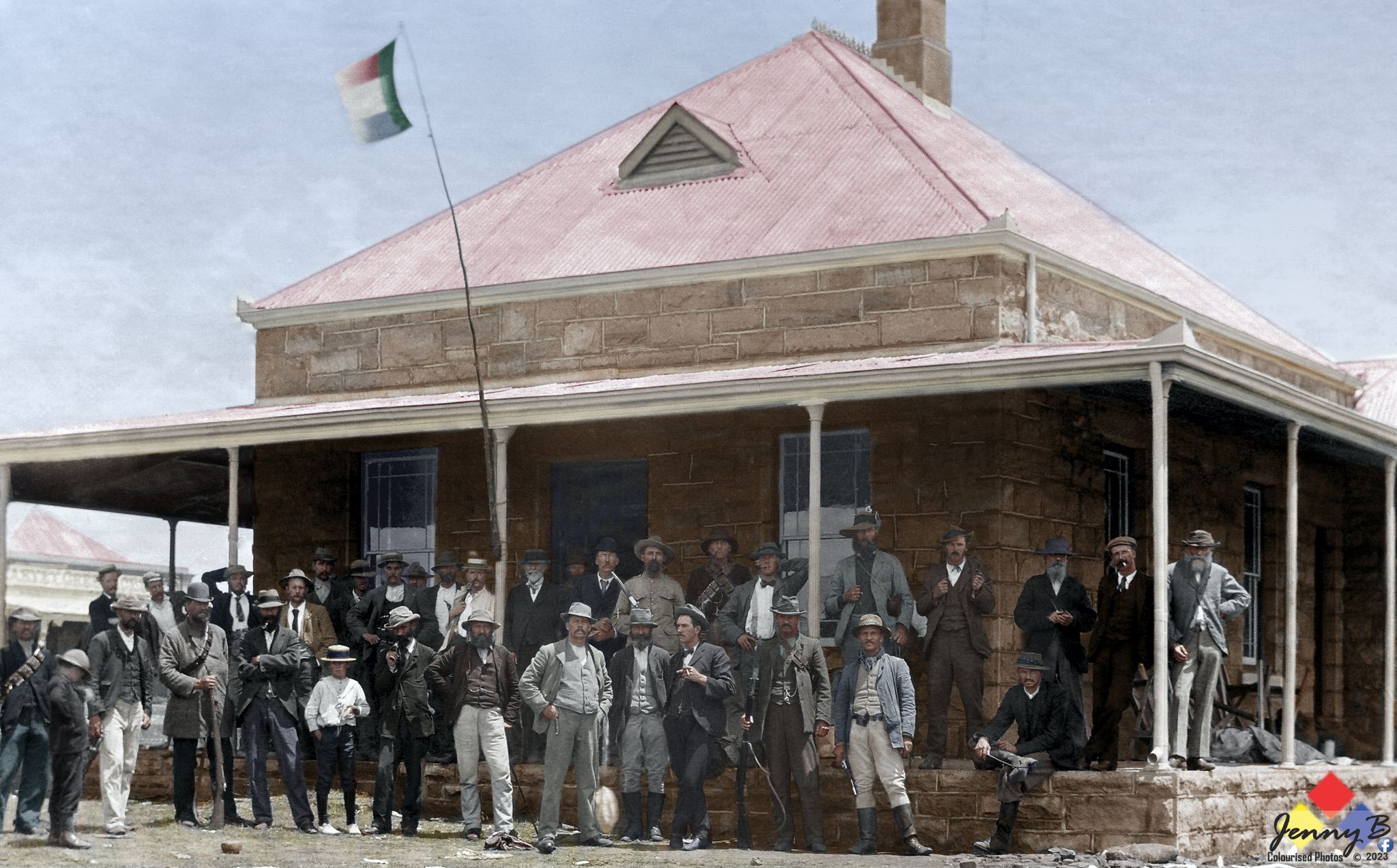
Boer forces in front of the Dundee Town Offices – note the ZAR ‘Vierkleur’. Photo Credit – Talana Museum – colourised by Jenny B.

Both Newcastle and Dundee are looted extensively, Republican Burghers also pillage surrounding villages, towns and farms – loading wagons with stolen goods. British farmers and their families are disposed of their property and stock and many are pushed as refugees into the veldt to fend for themselves – no shelter or food given as aid.

The looting spree is so intense the Boers even sacrifice their military objectives of speed and manoeuvrability to cut the British forces off from linking up at Ladysmith and taking Port Natal – the slow-down to loot and pillage takes precedence and it allows the British to re-group and dig-in, this is a fundamental military blunder which ultimately costs the Boers the war. The extent of some of the damage and destruction can be found in this eye-witness account, when the British consolidate and counter-attack:

“General Hildyard at Estcourt lost no-time in following up the retreating Boers. On Sunday morning tents were struck and the order was given for a forward march to Frere. At 8 a.m. the long column streamed out, and after a tiring march arrived at Frere at two o’clock in the afternoon.

All along the line of march were evidences of wanton destruction by the Boer commando. At each railway station the safes had been blown to pieces with dynamite; the lamps and furniture had been smashed to atoms; the papers, tickets, and books had been torn to pieces and lay strewn over the floors. The farmhouses had also suffered in like manner, valued trinkets and ornaments lying smashed among the debris of furniture, etc. The doors and windows had been burst open and broken to pieces with crowbars. But it is impossible to adequately describe the heartrending scenes which were enacted. To understand fully the wanton devastation which had been made in many a happy country home, it would be necessary to witness the scene of desolation.

The disloyal Natal Dutch appear to have been among the principal perpetrators of these acts of despoliation, for in many of their houses were afterwards found articles of furniture which had been taken from the homes of neighbouring English farmers. In one house were found five pianos, which had belonged to English homes in the district. But the enemy had not restricted these wicked acts of destruction to ‘ the interiors of the farmhouses only, for- in some cases orchards of young fruit trees had been chopped down and utterly destroyed, and iron rain-water tanks had been pierced through the sides, rendering them useless. Many a heart was bowed down with grief on beholding the home, which had meant years of work, thus destroyed in a few moments by a ruthless foe.

Much of the live-stock, that had not been driven away, had also been destroyed. Dead poultry were lying about in heaps at one farmstead, among them being fifty young turkeys. Cattle and sheep lay rotting in the paddocks. On another farm three hundred head of cattle and sheep had been destroyed with arsenical poison.

Truly it was a terrible scene ; and yet this destruction had been wrought by the offspring of a civilised European nation. The Law of Environment had here proved itself true in the evolution of this people dwelling among the savage and barbarous tribes of South Africa.”

Stott p. 122. The Boer invasion of Natal.
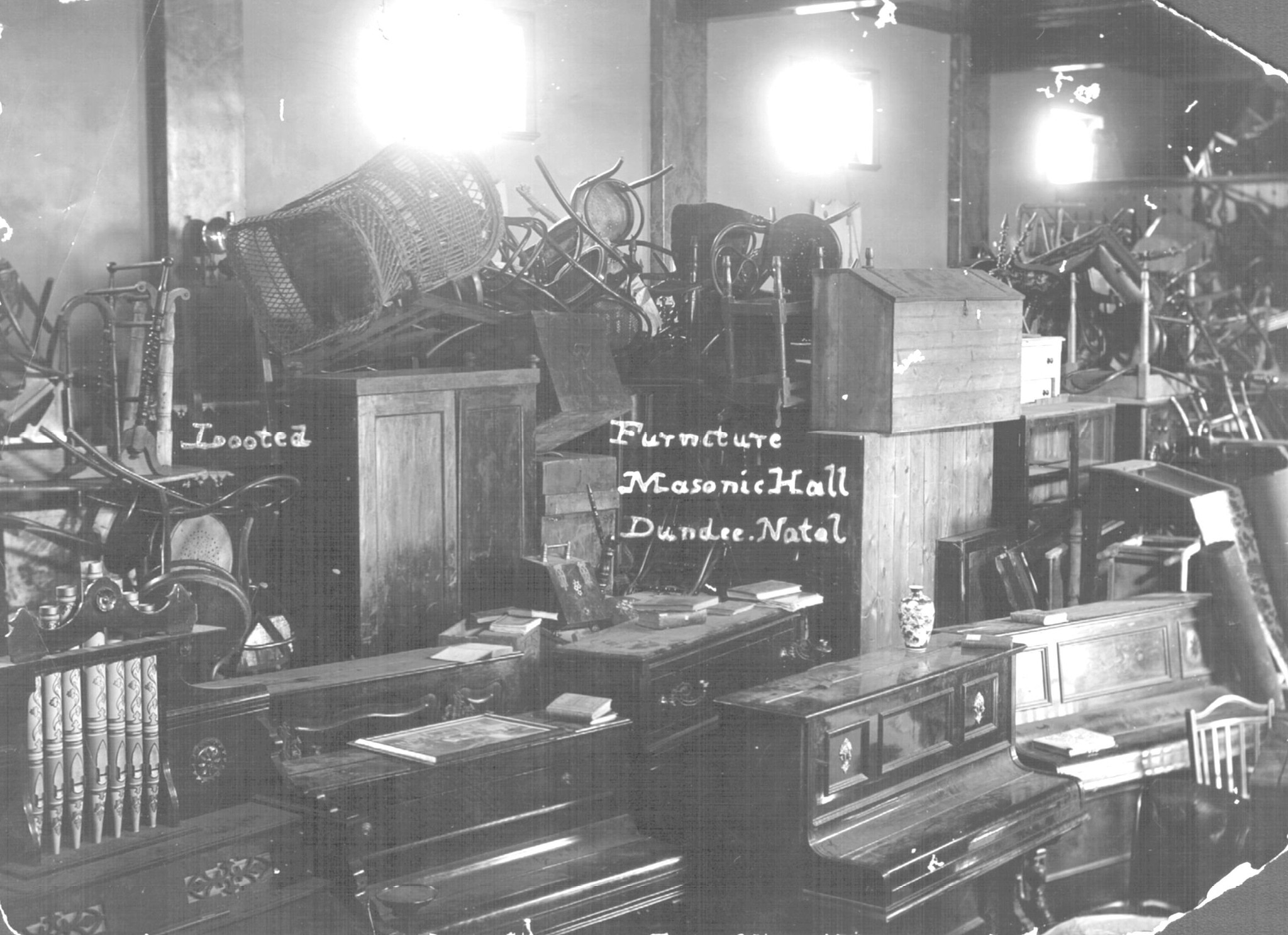
Images: Looted furniture – Dundee Natal, Talana Museum.

So, in reality – the country “stealing the gold” from private businesses and minting it was the ZAR (not Britain) and the country bringing women and children into the conflict first was the ZAR followed by the OFS and not the British, the countries in initial neglect of duty of care when dealing with civilian refugees are the ZAR and the OFS, the initial illegal looting and stealing of private property is attributed to the Boers and the peoples responsible for the first civilian deaths were the Boer Republics.

The Siege crisis

There are always “two sides to the story” and each side has merit in their argument, but let’s do try and stick to some of these basic facts. The Boers initiated the Johannesburg civilian ‘refugee’ crisis in Sep 1899 and northern natal civilian refugee crisis in Oct 1899 and then they started another civilian refugee crisis when they put British cities like Ladysmith, Mafeking and Kimberley under siege during the first phase of the war from Oct 1899 to March 1900. The siege tactics – cutting water and food supplies, shelling townships, workers compounds and residence suburbs with artillery and the subsequent diseases, starvation and malnutrition killing thousands of civilians – black, white and coloured – over 3,000 in Kimberley alone (see The Battle of Magersfontein. By Dr. Garth Benneyworth).

Kimberley: “The Moir family at their siege shelter” – Colourised by Tinus le Roux

Figures of civilian casualties during the sieges are well documented in the case of white civilians – recorded deaths include women and children killed by shellfire and well-known townspeople, what’s not recorded adequately is the death of civilians by disease, and the death of Black, Coloured and Indian citizens also caught up in the sieges. An example is Kimberley – a pavement plaque marks the first civilian casualty and it simply reads that here the first civilian was killed by Boer shellfire – an unknown black women. In Ladysmith the civilian burials at the provisional hospital amount some 600 casualties, mainly disease – and these are just the whites, no record is made of the Black and Indian Ladysmith civilians.

The Empire Strikes Back!

This is all a pre-curser to the refugee crisis the British created by engaging scorched earth policies issued mid 1900 to deal with insurgency and guerrilla warfare – and the subsequent burning down and destruction of the bittereinder’s farms’ as part of this policy and strategy.

The British counter-attack to the Boer invasions in Oct 1899 is relentless and highly efficient. The British are able to consolidate from the setbacks of ‘Black-week’ in December 1899 whilst they are numerically disadvantaged and they manage to hold their major towns under siege. By the time their hastily assembled ‘Army Force’ begins to land from January 1900 and they are numerically matched – other than the set-back at Spionkop at the end of January 1900, they lose no other other major conventional battle and in a matter of just 6 months, relieve all the sieges of all their cities, dispatch the Republican forces from their colonies, take both the Boer capitals, take the economic hub that is Johannesburg, remove Boer Forces from all their invested defences, break the Boer’s fighting capability with the mass surrenders at Paadeberg and Brandwater Basin (9,000 Republican men in total) and cut the Boers from supply and foreign assistance from the sea. By July 1900, a mere 10 months in, the conflict is un-winnable for the Boers – the British attitude is the war is ‘done and dusted’ – the Boer capitals are in British hands and its back home before Christmas for tea and medals.

With extended and unprotected supply lines stretching all the way from Cape Town to Pretoria the British position in Pretoria is vulnerable. The Boers target these lines and start blowing up rail-line and shooting up trains as the main thrust of their newly devised guerrilla or insurgency campaign. Sick and tired of trains arriving in Pretoria full of holes or not at all, and highly annoyed with the chief protagonist of these tactical hit and runs – General Christiaan de Wet – Lord Roberts writes to Lord Kitchener on the 14th June 1900 and says:

“We must put a stop to these raids on our railway and telegraph lines, and the best way will be to let the inhabitants understand that they cannot be continued with impunity. Troops are now available and a commencement should be made tomorrow by burning De Wet’s farm… He like all Free Staters now fighting against us is a rebel and must be treated as such. Let it be known all over the country that in the event of any damage being done to the railway or telegraph the nearest farm will be burnt to the ground.”
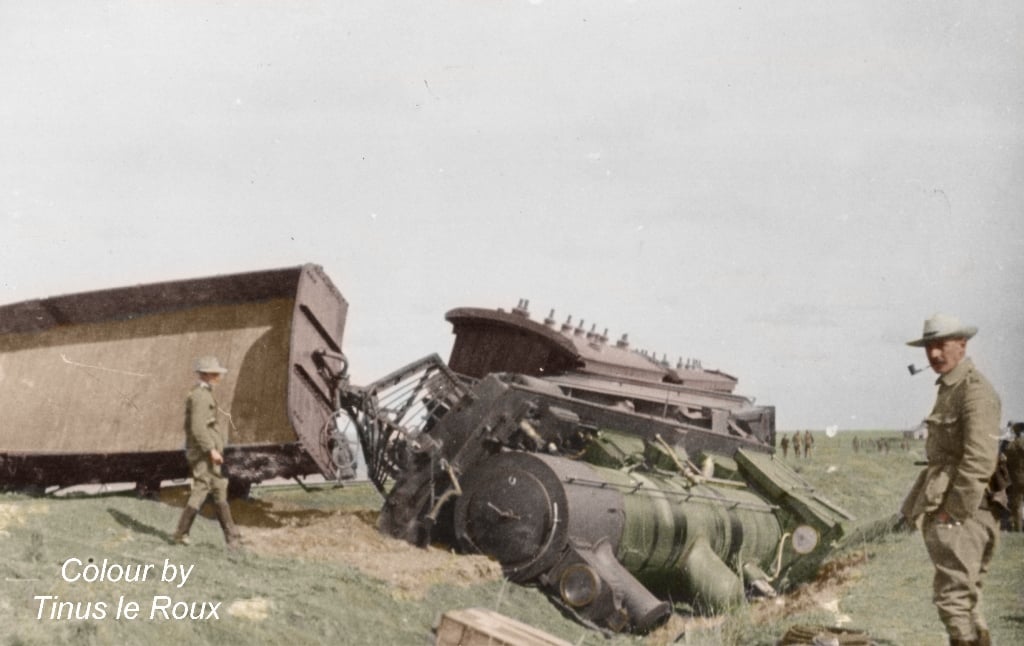
Boer guerrillas derailing a train. British soldiers on the scene. Photo colourised by Tinus le Roux.

The Boer decision to embark on guerrilla warfare and force all the Burghers who have taken up the offer and oaths of neutrality – to take up arms again and rejoin their Commando’s on threat of their farmsteads being destroyed – marks the point where the British military attitudes in South Africa turn from ‘Relentless’ to ‘Ruthless’.

On 16 June 1900, Roberts issues the proclamation on ‘scorched earth’ stating that, for every attack on a railway line the closest homestead would be burnt down. When that does not work, some months later another proclamation is issued in September stating that all homesteads would be burnt in a radius of 16 km of any attack, and that all livestock would be killed or taken away and all crops destroyed.

“Government Laagers”

This is followed by two separate Boer civilian refugee problems – one refugee crisis created by the Boer Republican Forces, burning down and destroying Hensopper, British and Joiner farms after the mid 1900 armistice proclamations – leaving these families in the veldt to fend for themselves – the Boers spurring the British to initiate the first concentration camps on the 22nd September 1900 specifically to deal with these ‘Hensopper’ refugees and give them a bell tent shelter, food and water … Maj. General J.G. Maxwell signals: 

“… camps for burghers who voluntarily surrender are being formed at Pretoria and Bloemfontein.” 

A proclamation was even issued by Lord Kitchener by 20th December 1900 which states that all burghers surrendering voluntarily, will be allowed to live with their families in these “Government Laagers” (concentration camps) until the end of the war and their stock and property will be respected and paid for.

And there is a second refugee crisis, this one initiated by the British forces and their scorched earth policy. The ‘concentration camps’ termed ‘refugee camps’ by the British (or ‘Government Laagers) start to fill up with a mix of Boers who have voluntarily surrendered (Hensoppers) or joined British forces (Joiners) and whose farms have been burned down by the Boers, they are also joined by some British families whose farms suffered the same fate (all these families comprise, men, women and children). They are then joined by ‘Bittereiner’ families directed to the concentration camps by the British who are busy burning down or dynamiting their farmsteads under the Scorched Earth policy – these families comprise a handful of men, but mainly women and children (their husbands still on Commando). Over time and given the sheer scale of destruction of the rural sector, the Bittereinder families start to outnumber the Hensopper families.

By 21st December 1900 Lord Kitchener outlined the advantages of interning all women, children and men unfit for military services, also Blacks living on Boer farms, as this will be;

“the most effective method of limiting the endurance of the guerrillas … The women and children brought in should be divided in two categories, viz.: 1st. Refugees, and the families of Neutrals, non-combatants, and surrendered Burghers. 2nd. Those whose husbands, fathers and sons are on Commando. The preference in accommodation, etc. should of course be given to the first class. With regard to Natives, it is not intended to clear (Native) locations, but only such and their stock as are on Boer farms.”

What gets created now are two separate camp systems, one for ‘whites’ and one for ‘natives’ (Blacks) and they are both fundamentally different in the way they are managed. The ‘white’ camps are structured using bell tents along military camp lines, shelter is provided by way a tent and food and water is provided – the camps are somewhat porous, there are no fences or armed guards and people can come and go with ‘refugee passes’ – isolation and lack of places go for alternate shelter keep the Boers in the camps. Medical facilities are also at hand, some camps better equipped than others.

Winburg Concentration Camp – Photo Credit: Boer War Museum, Bloemfontein. Colourised by Jenny B.

However, and this is key, upfront these camps are very poorly managed, the military have other problems to deal with and are prioritised to do what they know best and fight – there are major problems with sanitation, some camps being better than others. The supply lines to these camps – medicine, food, tents etc. all situated along railway lines for this purpose, are also severely disrupted by the Boer insurgents blowing up railway line. Overcrowding, lack of tents, disrupted food, poor sanitation, poor water and limited medicines all become major issues.

Many people don’t fully understand the concentration camps systems or the phases of their administration, in a nutshell there are two distinctive phases:
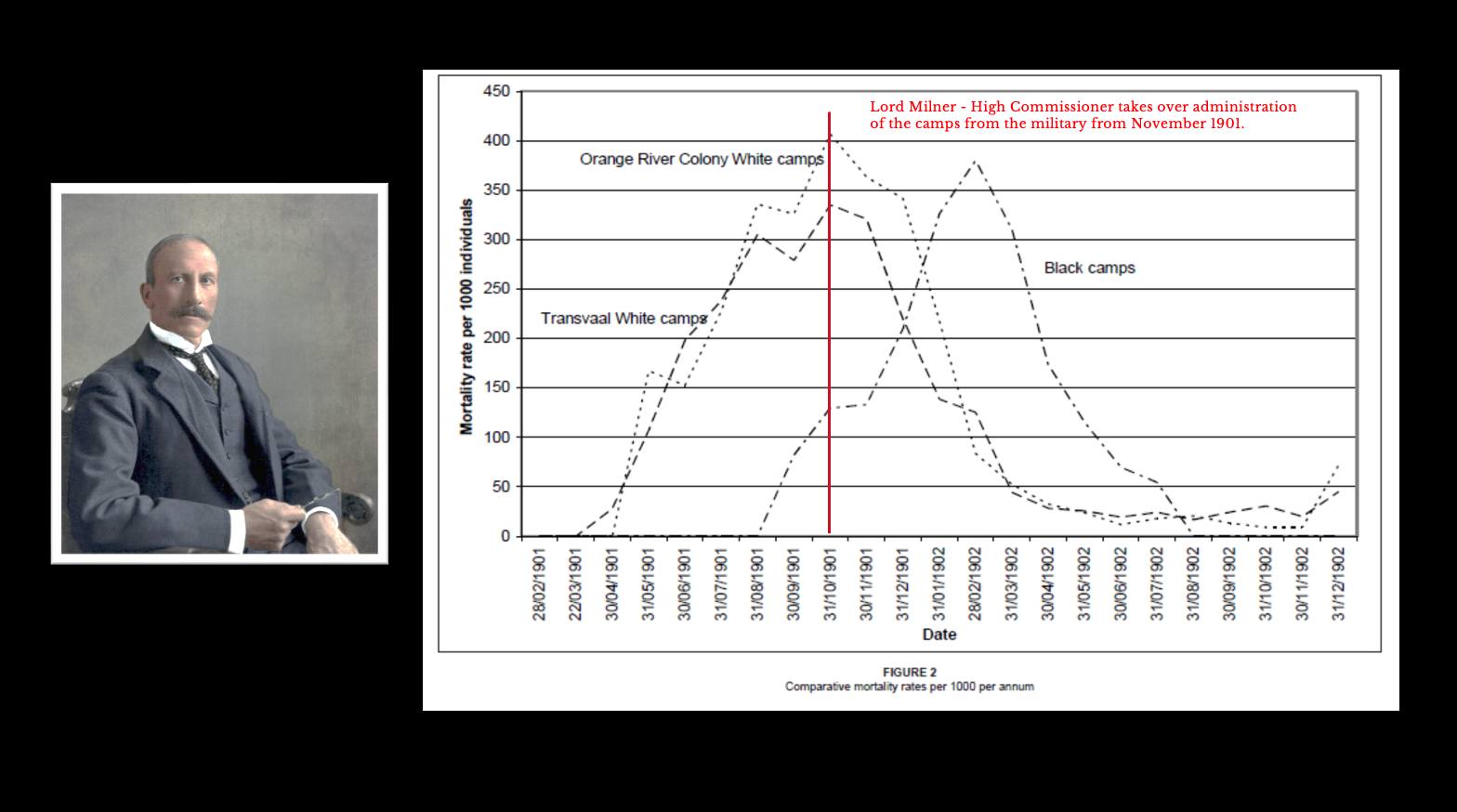
Concentration Camps – diseases bell curve – Black and white camps and time-line.

Phase 1: Started in September 1900 – they are set up under British military administration. In the ‘white’ camps – from March 1901 the mortality rates in the starts to climb to unprecedented and alarming levels, and at their peak the mortality rate is driven primarily by a measles epidemic which sweeps the camps and accounts 30% the overall deaths – as a child’s disease, along with the high infancy mortality rate and child death ratio in the Victorian period, coupled with the difficulty of wartime conditions and camp sanitary standards, by the beginning of 1902 children account for nearly 2/3 of all deaths.

The period March 1901 to November 1901 is 9 months of abject misery and suffering in the white Boer camps. However, contrary to modern propaganda, although there are many in white Boer camps who are malnourished and conditions are extremely harsh, they are not purposefully starved to death – ‘Starvation and Scurvy’ accounts for only 2.9% of recorded deaths. There are also no recoded cases of premeditated murder or executions, all deaths are attributed to disease or medically related conditions.

The conditions and plight of the women and children in the camps, against the context of respiratory and waterborne disease, coupled with inadequate medical countermeasures and failures in administration is highlighted by the likes of Emily Hobhouse and later in 1901 by the Fawcett Commission. 

Phase 2: From November 1901 as a result of the Fawcett Commission’s and parliamentary recommendations, Lord Alfred Milner, the Cape Colony High Commissioner is tasked with taking over the white Boer camps from the military and bringing them under civilian authority instead. 

As a result of Milner’s direct intervention, from November 1901 the mortality rates in the ‘white’ camps start to drop off dramatically as his civilian administrators and medical staff start to get on top of the epidemics, food supply and sanitary issues. They also do away with the putative and preferential treatment of ‘hensopper’ versus ‘bittereinder’ families initiated by the military. 

Children fetching water, Bloemfontein concentration camp – colourised by Tinus le Roux – inserted chart is the full account of white Boer concentration camp deaths.

Milner’s actions and policies are extremely effective, in just 4 months the mortality rates in the white camps drop to acceptable mortality rates for the Victorian era, made even more remarkable considering that these mortality rates are declining and have plateaued-out when the Guerrilla Phase and Scorched Earth policy is at its height and at its most destructive. 

These “acceptable” i.e. normal mortality rates continue up to the end of the war on 31 May 1902 and then remain acceptable long after the end of the war as the camps are then used as ‘resettlement’ centres for displaced Boer families until the end of 1902.

As to Milner, it’s also an inconvenient truth, that a man so often vilified by modern white Afrikaners as the devil reincarnate, is the same man responsible for saving tens of thousands of Boer women and children’s lives. However in all, there are exactly 29,491 deaths recorded in the ‘white’ concentration camps, the result of which would deeply harm the white Afrikaner collective psyche and does so even to this day.

The ‘Black’ concentration camps are a different matter, on a point to note here, the ‘Black’ camps are very big, this population of displaced civilians throughout the war, be they from the farms or from the cities far outnumbers the whites. In the Black concentration camps, no food or shelter is afforded, Black internees are instructed to grow their own food, and provided seed for this purpose. The food is both for their own consumption and for the British war effort. Wages are paid for labour provided to the British war machine, and these wages are then used by the Africans in the camps to purchase shelters, provisions and food. Medical assistance is minimal. In terms of structure some of these camps start to reflect a modern day poor shack township – corrugated metal, mud, wood and canvass shacks. In a nut-shell these camps can best be described as ‘forced’ labour camps.
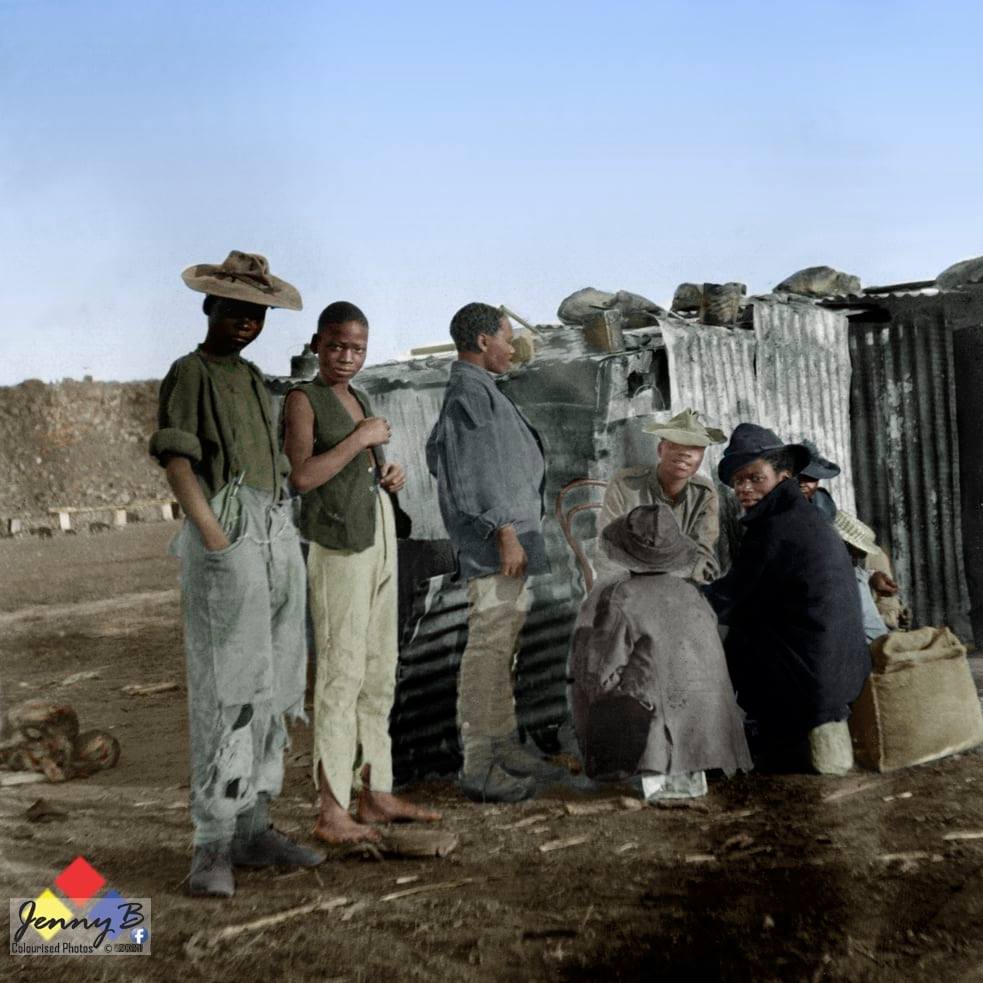
Boer War Black Concentration Camp near Bronkerspruit, c.1901 – Colourised by Jenny B.

These ‘Black’ camps are hit by the same cocktail of viruses and bacteria that hit the ‘White’ camps, mainly typhoid and to a large degree measles. Their disease bell curve follows a similar trajectory as the white camps, however it starts a little later in August 1901. That’s were the similarity ends, in the Black camps there are also cases of starvation as the black populations do not receive enough food from the government to maintain human survivability (unlike the white camps). The mortality rates are also not clearly understood as they were not meticulously recorded (unlike the white camps). Only as late as 2024 do we even have an inkling of an idea of the mortality in these camps. They are now been carefully analysed using archaeological record (primary data, excavating and forensics) and oral history – it is now estimated that over 30,000 Black Africans died in these forced labour camps (refer Dr. Garth Benneyworth ‘Work or Starve’ published 2024).

Seeing the bigger picture

In reality, we now need to start accepting that as many Blacks died in their concentration camps (30,000 plus) as Whites died in their concentration camps (29,461). The key difference given racial prejudices (Boer and Brit) of the time, and more so the racial prejudices of the Afrikaner Nationalist governments after 1910.

So, before “Boer War” Afrikaner enthusiasts start jumping up and using this as yet another stick to vilify and beat the British with, we must note that whilst hundreds of plinths, monuments, museums and thousands of grave markers have focused on the “Boer Women and Children” at every single camp and in every single affected town – erected over the course of nearly 10 decades at massive state expense … and not one grave marker, monument, museum or even a simple single plinth was erected to the Black concentration camps.

As to prejudice and misunderstanding of the Boer War – there remains to this very day no such acknowledgement and remembrance – still, and some still want to call it “The Anglo-Boer War” as if these are the only two groups in it and not by its official designated name “The South African War (1899-1902)” and they still exclude by way of simple acknowledgement the mass of other ethnicities who either took part in the war directly as belligerents – taking service directly in the British Army’s colonial regiments and units, over 30,000 as ‘Black African’ British combatants alone – and were not getting to the thousands of South African based ‘Coloureds’ and ‘Indians’ joining British forces.

Then there are the thousands of ‘armed’ black Agteryers’, labour and servants in the Boer Republican Armies – not to mention the Blacks affected by the war in their concentration camps as forced labour for the British by their tens of thousands.
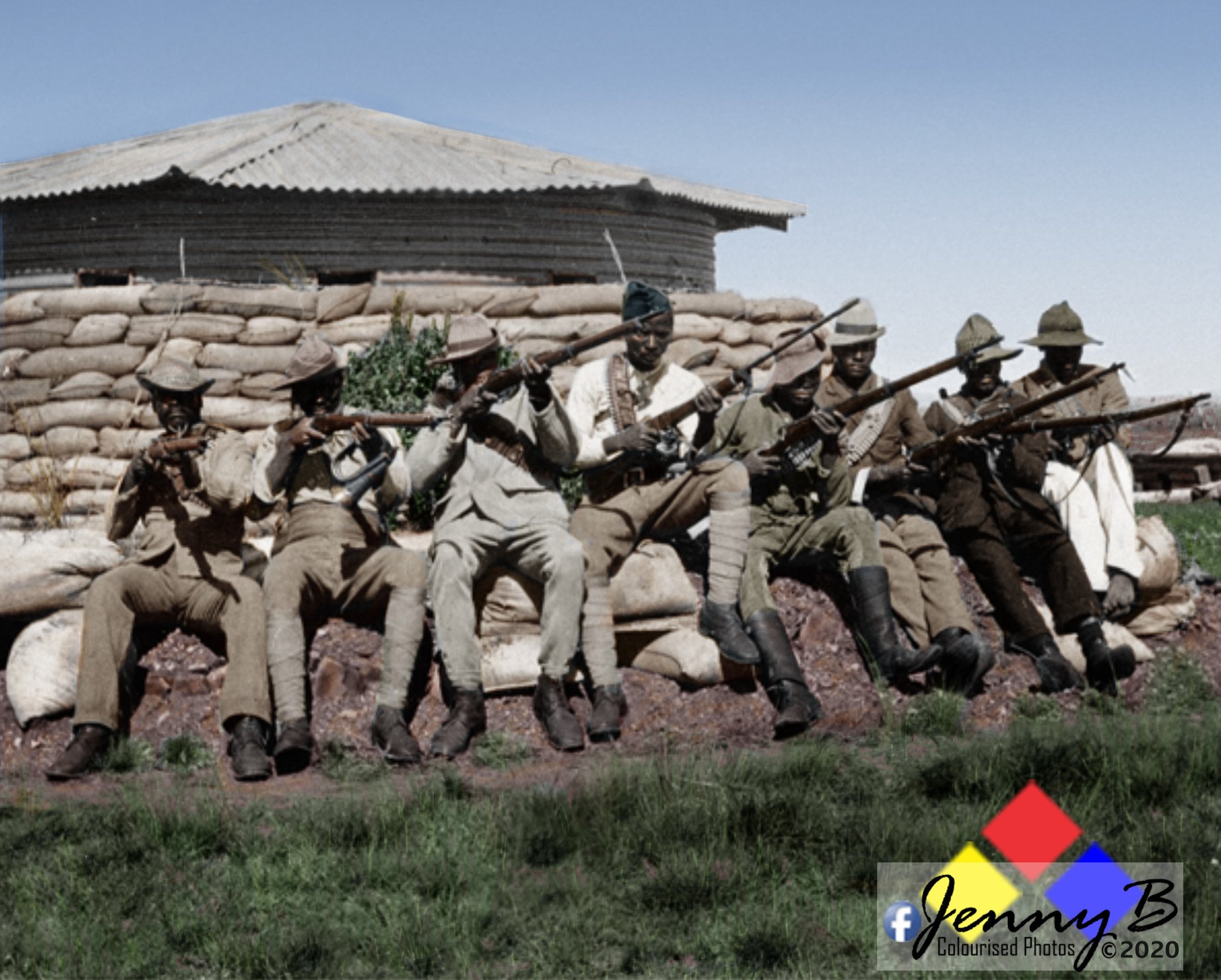
Black African ‘British’ soldiers defending a rice patten blockhouse, British Army Museum – Colourised by Jenny B.

Remember also that both the Tswana in Botswana and the Swazi enter the war as belligerent nations in their own right – on the side of the British, and both defeat Boer Commandos. There are literally hundreds of thousands of refugees having lost their jobs and been displaced from places like Johannesburg and Kimberley by the Boers or displaced from the Boer farms by the British – so here’s the kicker – there are more “Blacks’ affected by the war than either the Anglos or Boers combined and their death toll is as significant! 

Heck, entire books and academic papers have been written by ‘British’ and then ‘Afrikaner’ historians – but this aspect of the war only started to appear with any degree of sincerity around 2015 – post 1994, and it’s still not fully researched.

War is Cruelty

The Boer’s Guerrilla campaign is not a romantic ‘scarlet pimpernel’ chase of Christian de Wet and his chums, all whilst they cleverly outsmart the British. It’s a brutal, harsh and very cruel campaign – aimed at public networks – trains and rail in addition to the military ones. It is marred by maundering – the destruction of public buildings, mission stations and farms in the British territories – and even the murder of British citizens. Here is just a flavour of it – mission stations and Black and Coloured British citizens and soldiers are especially targeted.

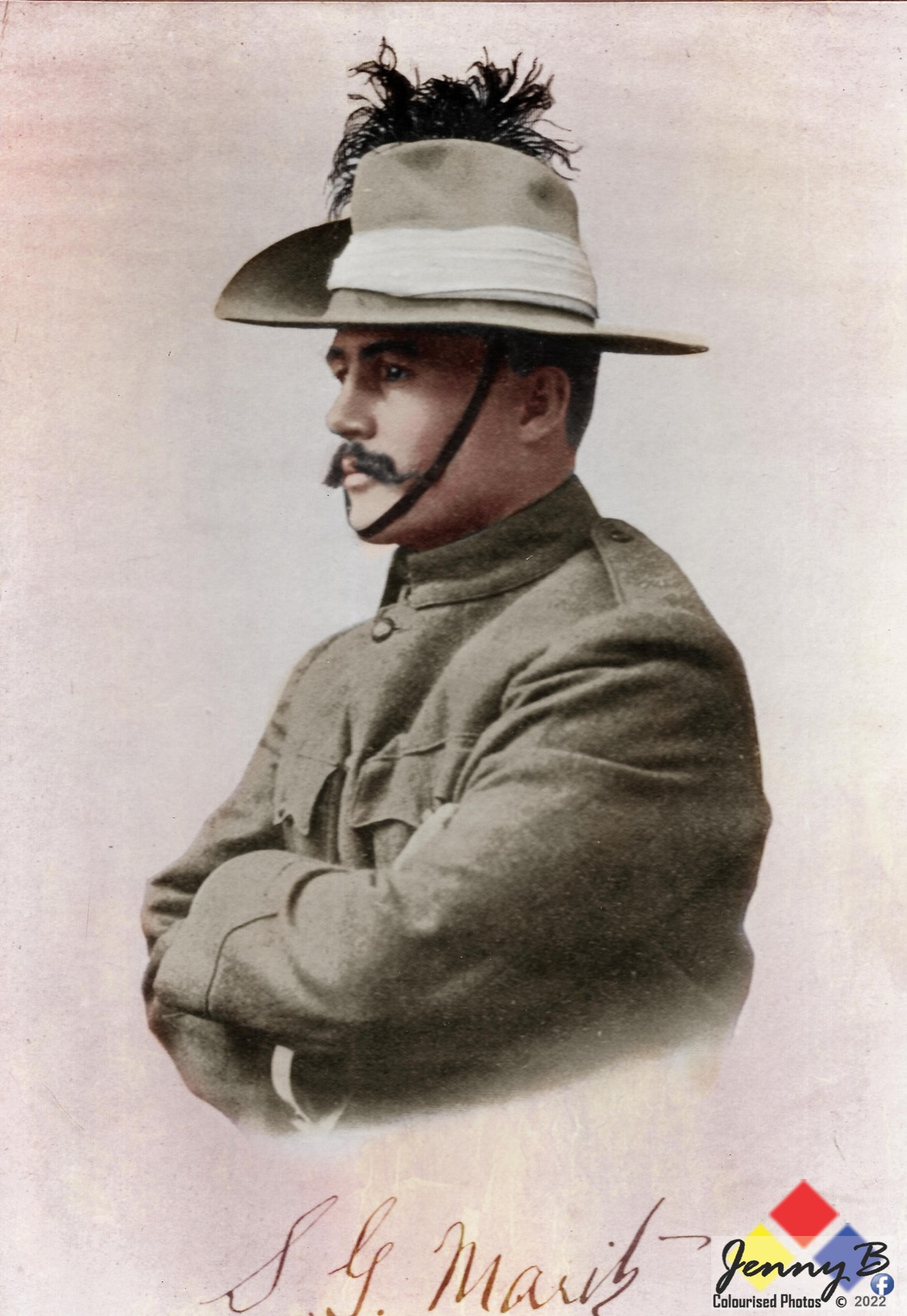
When the Reverend C. Schröder returned to his Gordonia congregation after the war, he was horrified to find that most of his flock had been killed by Boer raiders. A attack by an unhinged Manie Maritz on the Methodist mission station at Leliefontein in Namaqualand was especially savage. The mission station razed and plundered, the civilians hunted down in an act of revenge, in all 27 Leliefonteiners are killed (some accounts say a total of 43) and approximately 100 are injured. So brutal it even shocked Deneys Reitz who recorded it in his diary:

“We found the place sacked and gutted and among the rocks beyond the buried houses lay 20 or 30 dead Hottentots, still clutching their antiquated muzzleloaders. This was Maritz’s handiwork. He had ridden into the station with a few men to interview the European missionaries, when he was set upon by armed Hottentots, he and his escorts narrowly escaping with their lives. To avenge the insult, he returned the next morning with a stronger force and wiped out the settlement, which seemed to many of us a ruthless and unjustifiable act. General Smuts said nothing but I saw him walk past the boulders where the dead lay, and on his return he was moody and curt… we lived in an atmosphere of rotting corpses for some days.”

Deneys Reitz

Bill Nasson, the renowned Boer War historian would note:

“The wretched refugees of this massacre were pitilessly hunted down by parties of Boers. Those unfortunate enough to be captured were brought back to work as slave labourers. Indeed, they were even shackled in irons forged at the mission station’s smithy”.

Manie Maritz is so unhinged that later in the war, he ignores clear instructions from Smuts and attempts to dynamite the town of Okiep – its garrison and civilians included. Using the commandeered Namaqua United Copper Company locomotive ‘Pioneer’ to propel a mobile bomb in the form of a wagonload of dynamite into the besieged town. Luckily the attack failed when the train derailed.

Maritz is not the only unhinged Boer Kommandant in the Guerrilla phase – both Kmdt. Gideon Scheepers and Kmdt. Hans Lötter, amongst other charges – were charged on marauding, property destruction, murdering “native spies” and mistreatment of black civilians (in the case of Scheepers also murdering unarmed but uniformed black British POW) – both were executed by the British once caught.

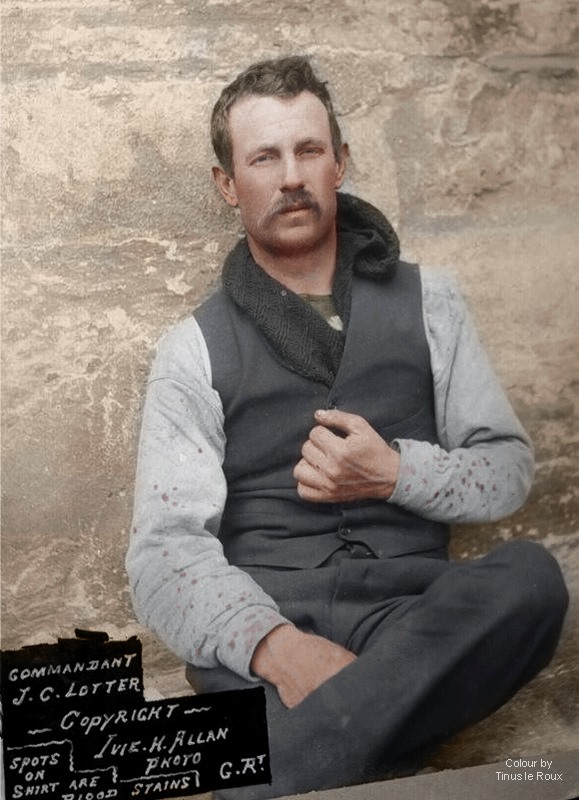
Images: Kommandant’s Scheepers and Lötter after their capture and ‘Fighting General’ Manie Maritz.

General Christian De Wet even writes to Lord Kitchener requesting clemency for Boer Kommandant’s executing Black soldiers out of hand as he had given “general instructions to have all armed natives and native spies shot.” Kitchener rejected the appeal, replying to General De Wet that Boer officers were personally responsible for their actions, and he wrote:

“[I am] astonished at the barbarous instructions you have given as regards the murder of natives who have behaved in my opinion, in an exemplary manner during the war.”

Ironically, as the modern Nationalist narrative went, Gideon Scheepers, Hans Lötter, Manie Maritz and Christiaan de Wet are all heralded as “volks-heroes” for their deeds, and this involves the outright murdering of black civilians, whereas Lord Kitchener, who would move on to become the face for British recruitment in World War 1, would ultimately be painted as the murderer incarnate.

The cruelty does not stop in the Cape, even General De la Rey’s victory over Lord Methuen’s column at Tweebosch on the 7th of March 1902 in the Transvaal at the end of the war is marred by war crimes. Tweebosch is famous because of General De la Rey’s compassionate and kind treatment of the wounded Lord Methuen and saving his life. What is not recorded at the Battle of Tweebosch in the narrative is the killing spree De la Rey’s commando members go on, as they execute about 30 unarmed Black wagon drivers and servants in service of the British column as well as black and Indian soldiers having surrendered. The testimony of the executions by survivors recently found in WO 108-117 in the UK’s National Archives give a unique and harrowing insight:

Here are some quotes on the killings of that day:

“…the whole Indian and Kaffir establishment of the F.V.H. (Field Veterinary Hospital … One Farrier Sergeant of the Indian Native Cavalry and two Indian Veterinary Assistants (men carrying no arms) were ruthlessly shot dead after the surrender, and nine Hospital Kaffirs were either killed in action or murdered later.

(British Cavalry – Regimental History).

The Boers whom I met on the 8th instantly admitted that their men had deliberately shot down the transport Natives with a view, they asserted, of deterring others from enlisting in our services”.

Captain W.A. Tilney.

“I saw four Cape boys, unarmed and dismounted, come towards the Boers with their hands up. They were shot dead”.

Trooper C.J.J. Van Rensberg

“I saw a young Native boy riding a horse and leading another. He was unarmed. A Boer road up to him and told him to dismount. No sooner had he done so than the Boers shot him in the back of the head and killed him”.

Corporal H. Christopher

These testimony’s go on, there are loads – but its enough to get the point.

Even one of the most biased Republican Historians – Thomas Pakenham, has to acknowledge the slaughter of Blacks in the Transvaal by Republicans under the Command of Jan Smuts when he notes:

“When Jan Smuts’ commando fell on the native village at Modderfontein, for example, they butchered the 200 or so black inhabitants  and left their bodies strewn around, unburied.”

The American General, William Tecumseh Sherman said something very relevant to war generally and the Boer War specifically – he said:

“War is cruelty. There is no use trying to reform it. The crueller it is, the sooner it will be over”.

General Sherman

One can easily see where the origins of the “you reap what you sow” ethos which enters into latter British mindsets when dealing with the Boer Republican refugees and their properties – a “hardening of attitudes” as it is often termed in modern military speak. Not even 40 years later, a ‘Rhodesian’ Marshal of the Royal Air Force Sir Arthur “Bomber” Harris would really crystallise this type of military sentiment to justify his carpet bombing of German civilians in World War 2 when he quoted Horsea 8:7 and said:

“They sowed the wind and now they are going to reap the whirlwind.”

Also, to General Sherman’s point, the British fight the Boer’s guerrilla phase of the war with such intensity, the commitment of massive resources (8,000 blockhouses alone) and tens of thousands combatants – that the Guerrilla Phase of the Boer War is the shortest fought guerrilla war in the history of modern guerrilla warfare – it’s over in short time – less than 2 years (modern guerrilla warfare of this nature war lasts an average of 9 years), and here’s an uncomfortable fact, it’s over with the least trauma to the general population such warfare has traditionally invokes (then and now) – believe it or not.

The simple truth is the scale of destruction to property, lives and livelihoods is massive on both sides of the fence, so much so its almost impossible to separate the destruction initiated by the Boers and that initiated by the British given its scale – whole sections of the country in Boer territories destroyed and whole sections in British territories were also destroyed – thousands of Boer farms and entire British cities, farms, towns and mission stations … all destroyed.

To give an idea of the scale facing Milner at the end of the war, in trying to recover South Africa economically and deal with repatriations. There is the re-settlement of some 150,000 white civilians involved (mainly Boers) and about 50,000 impecunious white “foreigners” (mainly British) who had been employed on the Witwatersrand, and then there is approximately one million displaced and unemployed “Bantu” (read that again – 1,000,000 Black refugees).
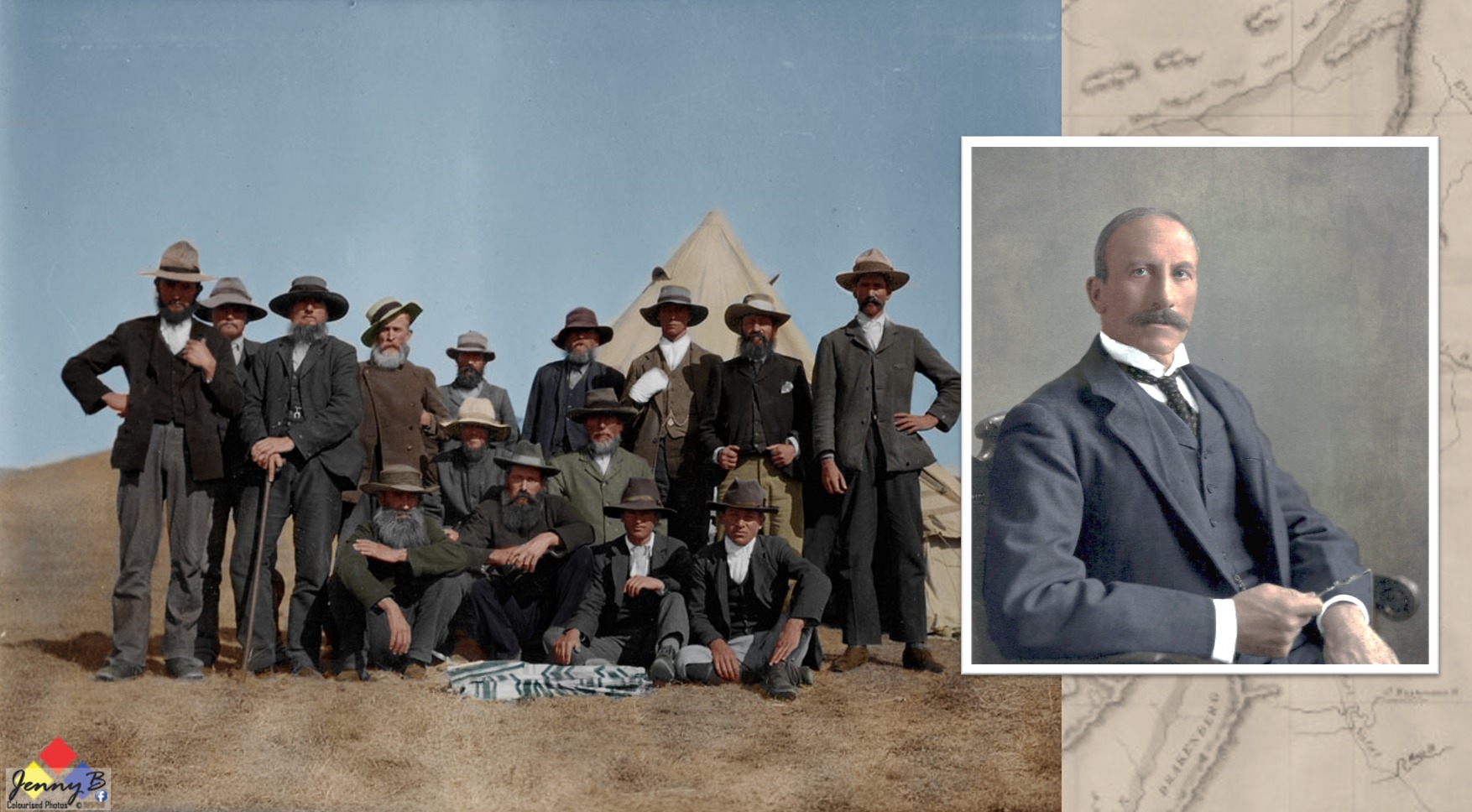
Post war, Boers outside a compensation and repatriation tent. Colourised by Jenny B (insert Lord Milner).

Milner’s repatriation, economic reforms and compensations were naturally decried by latter day Afrikaner nationalists as insufficient – and that’s because they only focused on the Boers’ compensation and nobody else in the bigger picture. Milner, as a studious and rather bull-headed administrator, felt he did a decent enough job given the challenges he faced – and even some latter day economic historians would agree with him. But let’s face it – the community that come off worse, by a miracle mile, were the “Bantu”.

In Conclusion

This is not to say “tit for tat” – the Boers started it first bla … bla … bla! That would be disingenuous and disrespectful to their memory and that’s not the point of this missive – the point is to remind people who are hidebound by a rather poor Christian Nationalist education and blinkered by identity politics – that in war there are no saints, war is nasty, it’s cruel, there are never really any ‘winners’ in war, nothing happens in a vacuum – and in war the truth is always the first victim.

The idea that the white Boer civilians were the unwitting victims in this entire saga, that they are the only real community to really have suffered the ravages of this war at the hands of the British is completely unhinged, baseless and untrue. This sentiment rings more true to politicking and identity politics initiated by the Nationalists than it does to any historical fact.

In truth, both the Boers and the British are equally responsible for waging war, both can be held to account for the resultant civilian crisis that war inevitably produces and all the carnage that follows that, and very importantly they are both equally cruel … and citizens from all communities were traumatised, there is no clear ‘murderous villain’ … there never is in war.


Written and researched by Peter Dickens

References:

Complete history of the South African War: in 1899-1902 By F. T. Stevens. Published 1903.

The Boer Invasion of Natal : Clement Horner Stott. Published 1900.

Leopold Charles Maurice Stennett Amery “The Second Boer War – The Times History of the War in South Africa 1899-1902” – Volumes 1 to 7.

History of the war in South Africa 1899-1902. By Maj. General Sir Frederick Maurice and staff. Volumes 1 to 4, published 1906

The Boer War: By Thomas Pakenham – re-published version, 1st October 1991.

Black People and the South African War 1899-1902. By Peter Warwick. Published 1983.

The Battle of Magersfontein – Victory and Defeat on the South African Veld, 10-12 December 1899. Published 2023. By Dr. Garth Benneyworth.

Kruger’s War – the truth behind the myths of the Boer War: By Chris Ash, BSc FRGS FRHistS, published 2014.

A History of the British Cavalry, 1816-1919, Vol.4, p.270

Commando – By Deneys Reitz, published 1929

Work or Starve - Black concentration camps and forced labour camps in South Africa: 1901 – 1902, By Dr. Garth Benneyworth. Published 2024 by The War Museum of the Boer Republics.

Correspondence and fact checking with Dr. Garth Benneyworth, Boer War historian – Sol Plaatjies University, Kimberley – February 2024.

A tool for modernisation? The Boer concentration camps of the South African War, 1900-1902. By Dr Elizabeth van Heyningen – Department of Historical Studies, University of Cape Town, 2010 South African Journal of Science. 

Correspondence and fact checking with Chris Ash, BSc FRGS FRHistS, Boer War historian, Fellow of the Royal Historical Society and Fellow of the Royal Geographical Society for The Boer War Atlas – February 2024.

Correspondence to The Observation Post on Boer War Repatriation and Compensation – Jan 2024. By Gordon Mackinlay.

Correspondence and fact checking with Boer War historian – Robin Smith, Feb 2024.

With thanks to:

Colorised images on the mast-head thanks to Allan Wood (Kitchener) and Jenny B (de Wet)

Colourised images used with great thanks to both Jennifer Bosch and Tinus le Roux.
The 500,000 British vs. 20,000 Boers myth

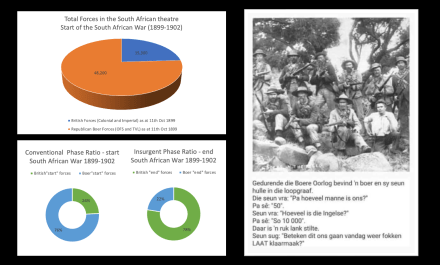
Often on Boer war social media appreciation sites, and even on simple things like wikipedia we see this statement “it took 500,000 British to defeat 20,000 Boers” – the much-touted ratio in this type of media is that the Boers were outnumbered 25 to 1, at a staggering disadvantage during The South African War 1899-1902 a.k.a Boer War 2.

The story goes that these plucky Boers held the mighty British empire at bay. Now that’s a figure designed to paint the Boer fighter as some sort of super-man and the British military as bumbling, monolithic and ineffective. But the truth is far from this and this figure is completely erroneous designed to drive Afrikaner nationalist political rhetoric – it has nothing to do with actual numbers on the ground. 

This is why I love economic history and not political history – economic history speaks the raw numbers, the statistics – the unassailable mathematical facts, and it tends to drive great holes into the ‘political’ history and its inherit political rhetoric – its the point when the facts talk and the bull walks.

Let the numbers speak!

Now, here’s the truth – at no point in Boer war 2 were there ever 500,000 British troops in South Africa as boots on the ground at any one point in time – in total, over the course of the war the British called up 550,000 men – that bit is true, yes. HOWEVER the British rotated their Regiments in and out of South Africa on ‘tours of duty’ – never really sending a full regiment into the operational theatre at once, retaining many at home and in their other colonies around the world. The “high water mark” i.e., the maximum number of British Troops in South Africa at any one point in time is 230,000 men. Even pro-Boer chronologies like that of Pieter Cloete’s Boer War facts and figures reluctantly has to admit this fact. 

This high-water mark of 230,000 (including African Auxiliaries) is only peaked briefly during the late Guerrilla Phase of the war – and at least 50,000 of these troops are being used to man the rather extensive blockhouse defence system stretching from the top to bottom and side to side across the whole of South Africa (as referenced by Simon C. Green in his Blockhouses of the Boer War) – over thousands of kilometres both ways. On average during the Guerrilla Phase of the war – September 1900 to April 1902, the British enjoy 190,000 troops on the ground.

But let’s stick to the high-water marks for a proper account – the high water for the Boer forces, total Republican forces strength is 87,365 men – including 21,043 burghers who add onto the original ZAR and OFS Commando call-up later (initial call-up is 48,216), the statutory Boer forces (2,686), foreign volunteers (2,120) and Cape Rebels (13,300).

The Boer figure is possibly higher if we add African auxiliaries and rear echelon support – the “tooth to tail” non-combatant ratio – which is accounted in the British numbers in terms of administrators, doctors, pharmacists and medics, batmen, chefs, farriers, holsters, labourers, wagon drivers etc. but NOT in the Boer numbers as this would start to add women, agteryers, servants and farm hands as people acting in Boer combat supporting roles in a non-combatant capacity.

That means a conservative ratio between Brit and Boer at the high-water marks = 230,000 Brits and 87,300 Boers – a ratio of 3:1 – total Imperial forces versus total republican forces (sans the tooth to tail ratio in the Boer number). It’s a far cry from the emotionally charged and erroneously touted figure of 25:1.

Consider the size of the Republican Forces at the beginning of Boer War 2, versus that of the British. At the Boer declaration of war on the 11th October 1899 when the Boers invade sovereign British territories: The total British Forces in the field = 15,300 men. Total Boer forces assembled to attack = 48,216 men.
The ratio is heavily in favour of the Boers – Boer Forces outnumber the British 3 to 1.


“On the high seas” as at the 11th October 1899 are an additional 7,418 British Troops on their way to South Africa from India and Australia – called up to bolster an inadequate British force strength in the event of war. Even with their arrival at the end of October 1899 (after the war has been declared and the Boer invasions commence) bringing the British number up to 22,708 – British Forces are still woefully inadequate, and the invading Boer Forces still outnumber them 2 to 1.

If we want to account Boer War 2 properly and view it with balance, it would be correct and very true to say at the beginning of the war the Boers outnumber the Brits 3:1 – as the war progresses there is a juxtaposing of numbers (they start to match capability in numbers from February 1900) … and by the end of war the Brits account 190,000 troops in country, Boers account 24,300 left in the field and 47,300 POW in the bag (factoring out the ‘Hensoppers’ and ‘joiners’ and factoring in the Cape Rebel POW) = 71,600 or a 3:1 ratio – Brits outnumber Boers, a reversal of the advantageous 3:1 ratio the Boers enjoyed at the start of the war.

Let the doctrine speak!

In terms of military doctrine, the above estimation on a 3:1 ratio is about right given Boer War 2 is fought in two distinctive phases, the Conventional warfare Phase (Oct 1899 to August 1900) and the Guerrilla warfare phase (September 1900 to May 1902) – to invade the British territory in Oct 1899 the Boers need a 3 to 1 advantage to be successful … and to counter attack and hold the Boer territory the British need to be at a 3 to 1 advantage – and even by Guerrilla Warfare standards and the doctrine used to fight one, this number is very low. Consider the following:

American Brigadier-General Nelson Miles was put in charge of hunting down Geronimo and his followers in April 1886. Miles commanded 5,600 troops deemed necessary to find and destroy Geronimo and his 24 warriors. In Malaya in 1950 it took 200,000 British, Australian and allied troops to defeat 5,000 Communist guerrillas. In Ireland over the 30-year course of ‘the troubles’ a total of 300,000 British troops were used to contain 10,000 IRA guerrillas. Closer to home, so the arm chair Boer war generals get this – over the course of the Angolan Border War (1966-1988) and the ‘Struggle’ (1960-1994) the SADF would call up 650,000 conscripts and then hold them in reserve – MK and other non-statutory force ‘guerrillas’ at their high water mark in 1990 only have 40,000. 

The modern-day theoretical ratio of counter-insurgency forces to guerrillas needed to defeat an insurgent/guerrilla campaign is 10:1. In 2007, the US Department of Defence produced a document entitled Handbook on Counter Insurgency which quotes this as the rule-of-thumb ratio for all such operations – and that is even with the advent of modern technology in warfare fighting mere insurgents or guerrillas. Little wonder that General David Petraeus needed 180,000 coalition force troops (the same size as the full invasion force) on the ground in 2007 just to deal with the Iraqi guerrilla “surge” spearheaded by an insignificant but determined bunch of suicide bombers.

Just kidding!

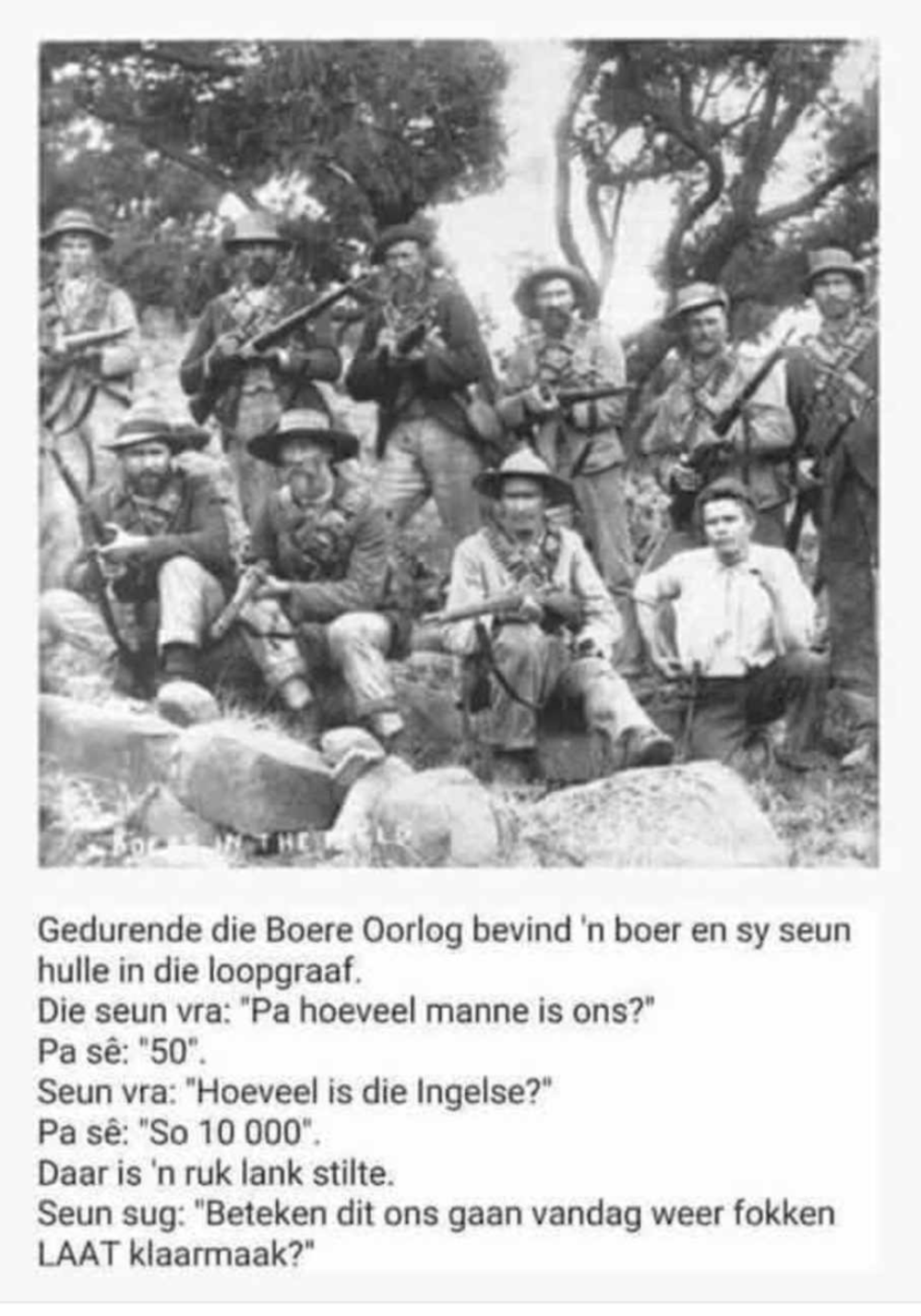
The idea that it took half a million British troops to subdue a couple of thousand boers is very erroneous .. the old ‘super’ Afrikaner joke – on witnessing an advancing British ‘rooineck’ column a Boer kid asks his Dad “how many Boers are we Dad? – Answer “50 son”, and “how many British Dad?” – Answer “10,000 son”. Punchline … “Dad, does this mean we’re going to finish late again?” A joke that re-appears in different formats in countless forums, and it’s as funny as it’s statistically false and fantastical.


Written and Researched by Peter Dickens

References – all quoted statistics

Leopold Charles Maurice Stennett Amery “The Second Boer War – The Times History of the War in South Africa 1899-1902” – Volumes 1 to 7.

History of the war in South Africa 1899-1902. By Maj. General Sir Frederick Maurice and staff. Volumes 1 to 4, published 1906 

The Anglo-Boer war: A chronology. By Cloete, Pieter G

Anglo-Boer War Blockhouses – a Field Guide by Simon C. Green, fact checking and correspondence – 2023.

The Boer War: By Thomas Pakenham – re-published version, 1st October 1991.

Correspondence and interviews with Dr. Garth Bennyworth, Boer War historian – Sol Plaatjies University, Kimberley – 2023.

Correspondence on fact checking British doctrine with Chris Ash, BSc FRGS FRHistS, 2023 – Boer War historian, Fellow of the Royal Historical Society and Fellow of the Royal Geographical Society.

Kruger’s War – the truth behind the myths of the Boer War: By Chris Ash, published 2014.

Related work:

Boer War by the numbers: Boer War by the numbers!

South Africa’s ‘missing’ Victoria Cross

The story of Alexander Young VC.

A lot has been written on the extreme sacrifice at the Battle of Delville Wood during the Somme offensive of 1916, and lets also remember the extreme courage of these South Africans, a young country, the Union of South Africa formed just 6 years prior in 1910 after the devastation of the South African War (1899-1902) i.e. Boer War 2 … and here Afrikaner and English heritage South Africans were fighting shoulder to shoulder in one of the most most desperate engagements in the history of World War 1, and the most heroic and desperate battle in South African’s entire military history – then and even now, and that’s saying something as there have been quite a few notable actions in between.

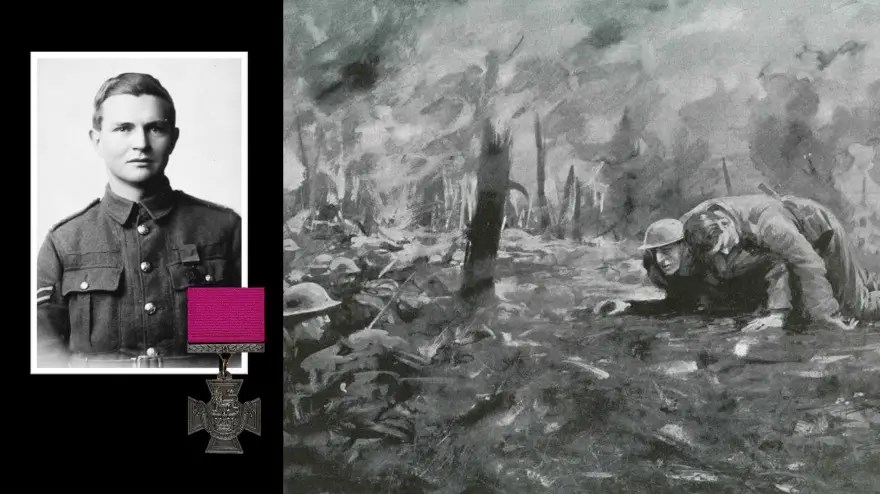
If there was courage to be rewarded from this desperate South African action on the Somme, the Battle of Delville Wood saw one South African individual rise above to an unprecedented level of gallantry and was awarded The Victoria Cross (VC) – the highest award for valour in the British and Imperial Forces (later Commonwealth) – that was Cpl William Faulds serving in the 1st South African Infantry Brigade. For his full story follow the link to this Observation Post Delville Wood’s Victoria Cross – William Faulds

Cpl William Faulds and an artists impression of his heroic deed at Delville Wood 18th July 1916

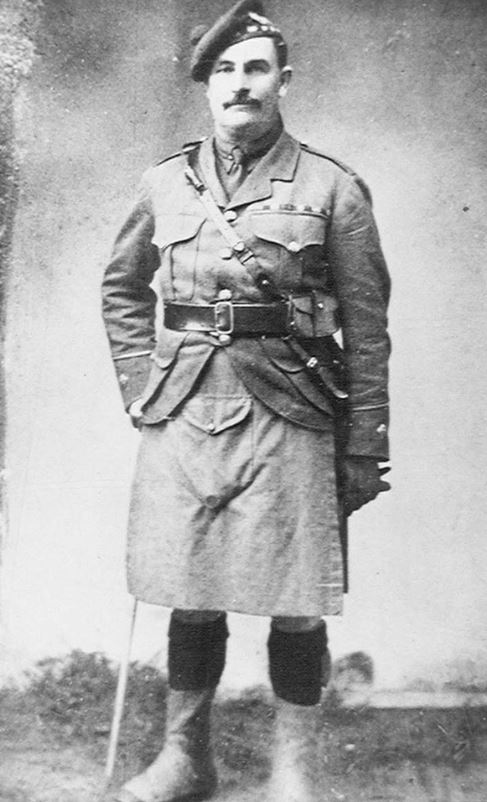
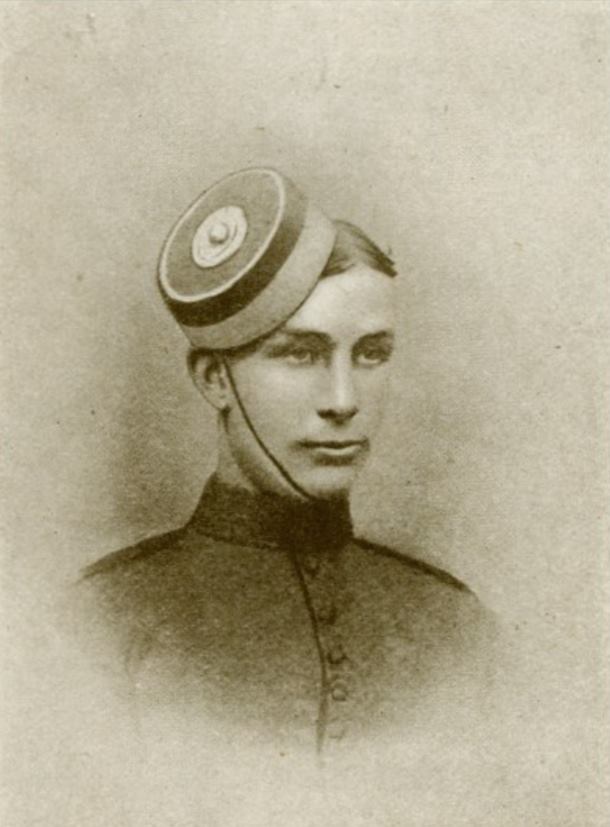
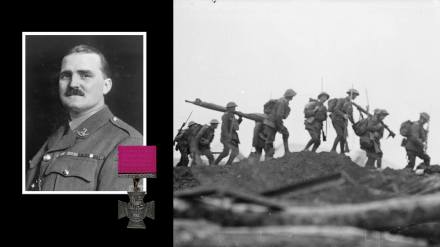
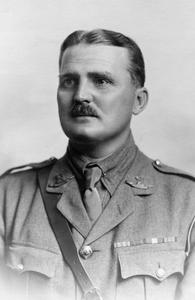
However, there is a missing South African Victoria Cross from the Somme Offensive and Battle of Delville Wood, one not usually recognised or known about in South Africa, and one that is not often referenced in the narrative of Delville Wood, his name is Lt. Alexander Young VC of the 4th South African Infantry Brigade (South African Scottish).

The ‘missing’ story of Lt. Alexander Young VC – 4th South African Infantry 

Lieutenant Alexander Young VC is ‘missing’ in more ways than one, not only from our general conciseness as South Africans, but he is also literally missing too – his body has never been found.

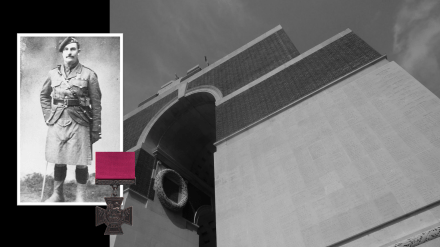
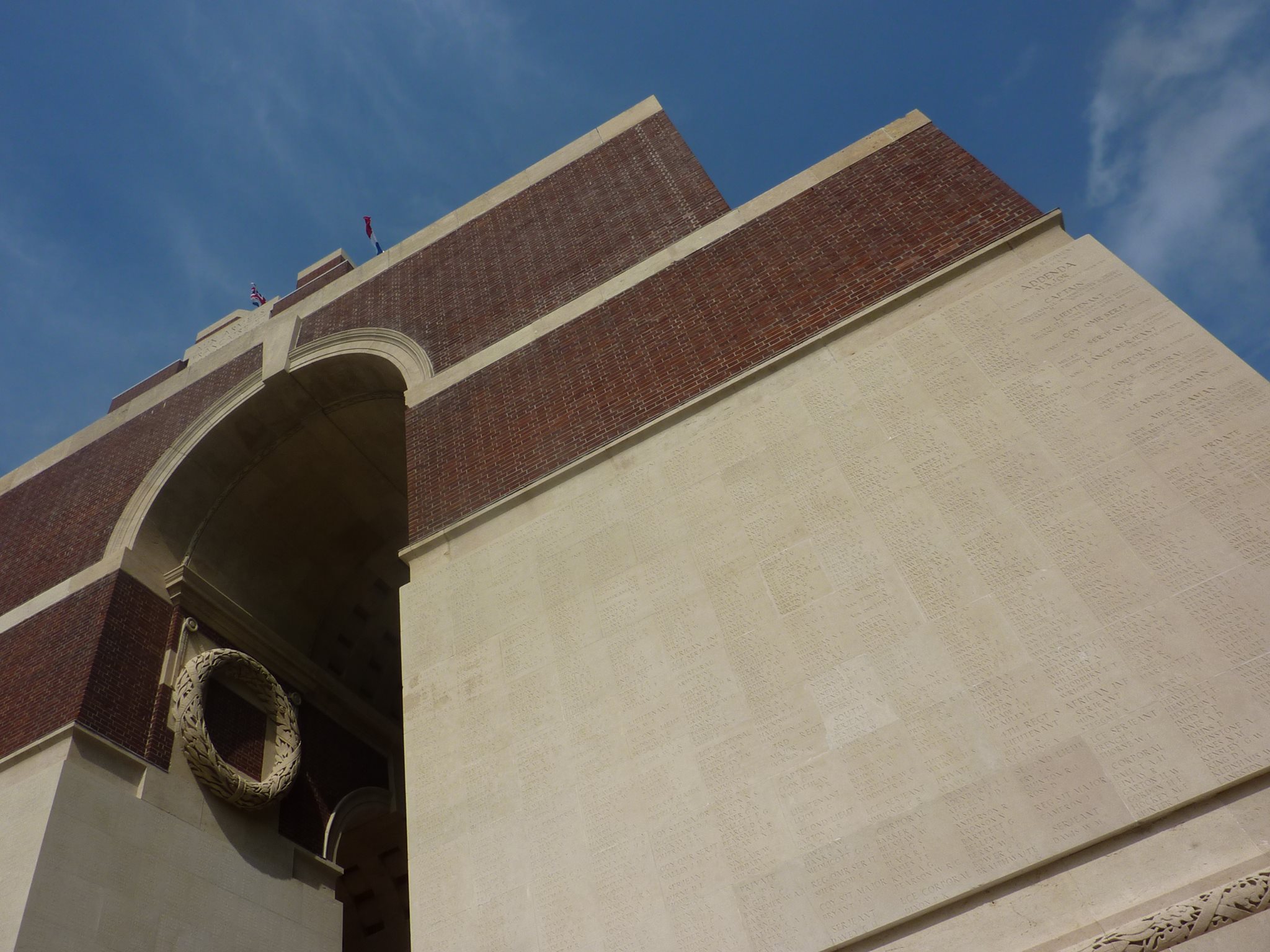
You can however find him today on the ‘Thiepval Memorial to the Missing in the Somme’ in France – his name is on Pier 4, Face C, alongside all the other missing South Africans from the Somme Offensive and Battle of Delville Wood who have no known grave.

Thiepval Memorial – Pier 4, Face C – South African section names – my photo, Peter Dickens copyright

So, why don’t we as South Africans know much about this missing South African Victoria Cross? Well, the first reason is that the Irish regard it as their Victoria Cross as Alexander Young was born in Ireland, the second reason is his Victoria Cross was awarded to him for actions, as a Cape Colony colonialist serving in the Cape Colony Police, during The South African War (1899-1902) i.e. Boer War 2 – and not World War 1 (1914-1918) which took place after the Union of South Africa was formed in 1910.

All that aside, Alexander Young VC was a South African to his bones and an incredibly brave one at that – not only fighting for the British Army, but also fighting as Cape Colony Mounted Policeman as their Regimental Sergeant Major and then ultimately fighting as a Commissioned Officer in the Union of South Africa’s forces during World War 1. He saw action and served in India, Egypt, Sudan, Zululand, South Africa, German South West Africa, East Africa and France – his impressive array of decorations and medals include: The Victoria Cross, The Queen’s South Africa medal, The King’s South Africa medal, The Zulu Rebellion medal and then his three WW1 medals – The 1914-1915 Star, British War Medal, and the Victory Medal.

That he was a very remarkable South African is beyond doubt, and this is his story and the story of his Victoria Cross (large extracts courtesy The South African War Graves Project):

Ireland and British Army (early years)

Alexander Young was the son of William and Annie Young, of Ballinamana, Co. Galway. He was born in Ballinona, Galway, Ireland on the 27th January 1873. Educated at the Model School in Galway, Young showed great prowess as a horse rider in his youth and when he was only seventeen, he joined the Queen’s Bays at Renmore. He soon gained the attention of his superiors, was sent to India as a riding instructor, and then served as a sergeant major with Lord Kitchener during the 2nd Sudan War (1896-1898).

South African War (1899-1902)

Sgt Maj Alexander Young became recognised as one of the best horseman in the British Army and as a rough rider was unexcelled. It was after he had been injured by a horse that he retired from the British Army and came to the Cape Colony in August 1899 when The South African War (1899-1902) i.e. Boer War 2 broke out, here he joined colonial forces, attesting in the Cape Mounted Police, and as a skilled horseman he was soon picked to form one of a mounted bodyguard for Lord Milner on an official visit to the Transkei. 

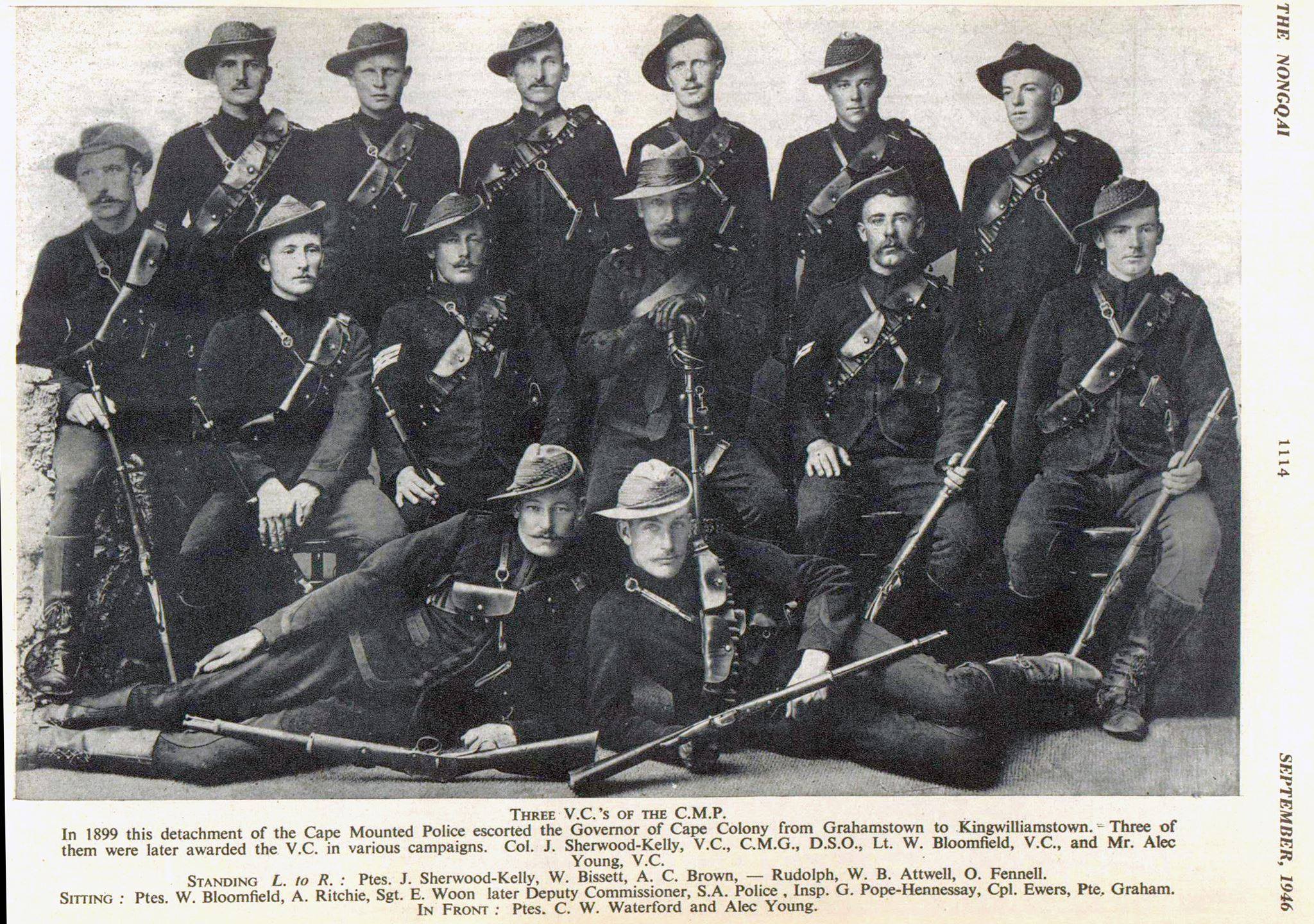
Now this is an interesting photograph of these Cape Mounted Policeman escorting Lord Milner from Grahamstown to King Williamstown in 1899 – in just this single tiny detachment of Policemen there are three future recipients of the Victoria Cross. It says a lot for the calibre of soldier South Africa has bred (The three men are: Colonel J. Sherwood-Kelly VC, CMG DSO, received his VC during the First World War, Lieutenant W. Bloomfield VC, also First World War and finally our man, Sergeant Major Alexander Young VC, who received his during the South African War).

Now stationed at King William’s Town, Sgt Maj. Young saw action whilst serving with General W. F. Gatacre at Stormberg Junction (December 1899) which was routed by Boers, he escaped and was mentioned in dispatches for his coolness in saving Bethulie bridge in March 1900. 

Alexander Young’s day in the military history annuals for the highest valour would come on the 31st August 1901 when he took part in the engagement at Ruiterskraal and led a small body of men against a hill held by Republican forces under Commandant J.L.P. Erasmus. 

When the Boers tried to escape, he closed in on them, succeeded in taking prisoner Erasmus (who had fired at him point-blank three times) and was awarded the Victoria Cross for his heroic deed. His Citation in the London Gazette on 8thNovember 1901 reads:

“Towards the close of the action at Ruiter’s Kraal on the 13th August, 1901, Sergeant-Major Young, with a handful of men, rushed some kopjes which were being; held by Commandant Erasmus and about 20 Boers. On reaching these kopjes the enemy were seen galloping back to another kopje held by the Boers. Sergeant-Major Young then galloped on some 50 yards ahead of his party and closing with the enemy shot one of them and captured Commandant Erasmus, the latter firing at him three times at point blank range before being taken prisoner.”

German South West Africa and Bambatha Rebellion

Young remained with the Cape Mounted Police until 1906, when he joined the German forces in German South-West Africa and saw service during the Herero uprising (January 1904 to March 1907). For this he was decorated by Kaiser Wilhelm II. During the last phase of the Bambatha Rebellion (February-June 1906) he served in Natal and Zululand, after which he turned to farming. 

1st World War

When the First World War (1914-1918) broke out he took up his old position of Regimental Sergeant-Major in the Cape Mounted Police, and served under General Louis Botha in German South-West Africa campaign, thereafter he was promoted to the rank of Lieutenant and was subsequently active again during the East Africa campaign under General Jan Smuts, joining the Natal Light Horse.

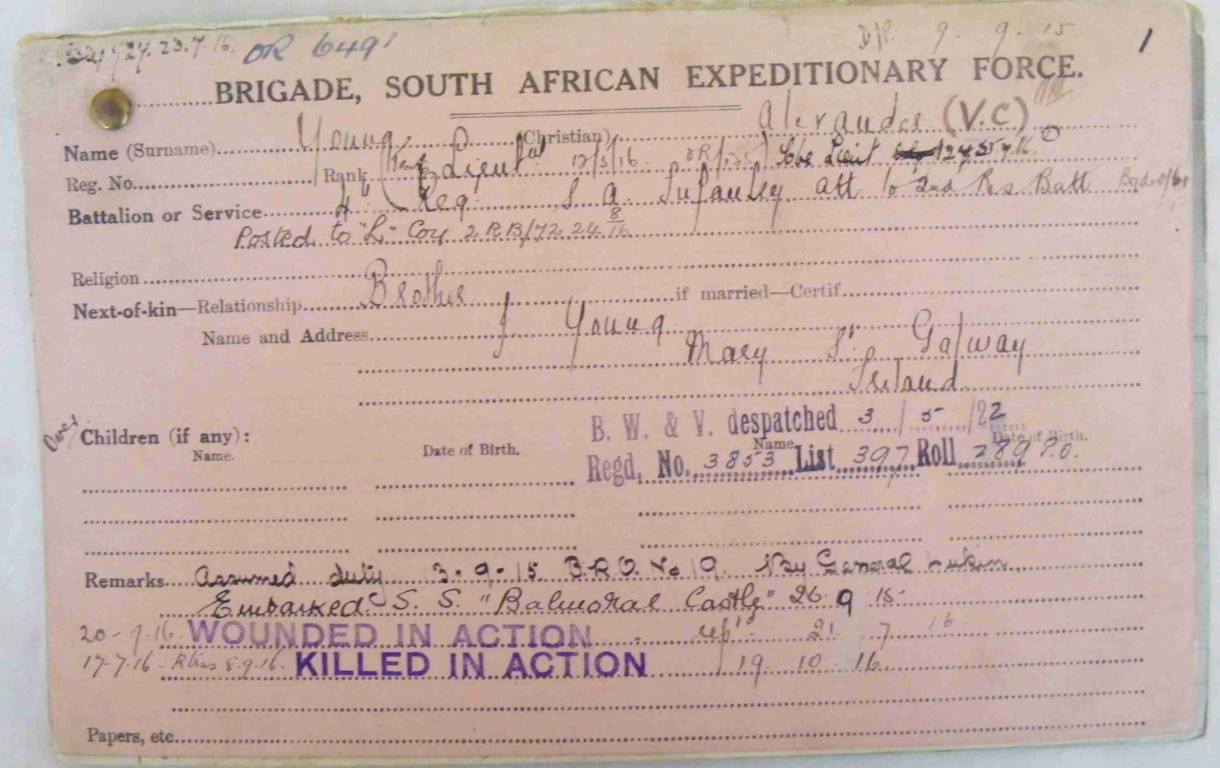
He was amongst the first to respond to the call for South African troops to head to Europe and he transferred his commission to the 4th South African Infantry (the South African Scottish), he would however first see action against the Senussi in Egypt, he was again in the thick of it with the 4th South African Infantry in France during the Somme Offensive of 1916 and was later wounded in the crucible which was the Battle of Deville Wood in July 1916.

On recovering, he returned to take part in the later stages of the Somme Offensive under Captain T. H. Ross, he was tragically Killed in Action just before the battle of Warlencourt by German bombs and flame-throwers during an attack on his ‘Snag Trench’ on the 19th October 1916. 

His body has never been identified and his mortal remains are known only to his God. Thiepval Memorial is unique in that it is both a British and South African monument, recorded on its walls are all the ‘missing’ during all the battles of the Somme offensive – a staggering: United Kingdom 71,341, South Africa 832. Total 72,173. 

The Thiepval Memorial is one of the most visited Commonwealth War Graves Commission sites in the world. On the first day of the Battle of the Somme (1 July 1916) almost 20,000 men under British command died. By the time the battle was over, 141 days later, more than a million people on all sides were killed, wounded, or went missing. 

For the British and South Africans with no known grave, the Thiepval Memorial stands in their honour.

In Conclusion

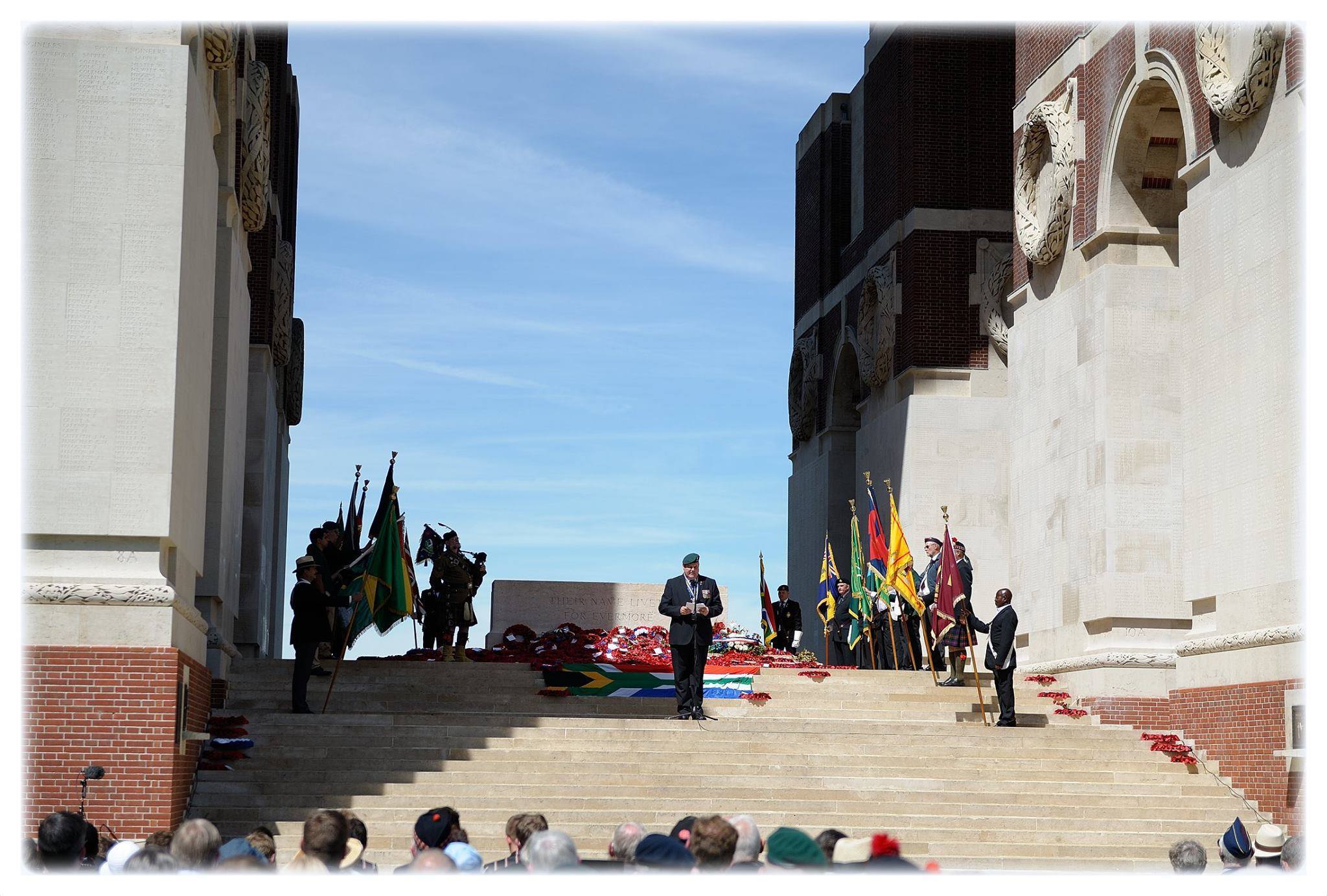
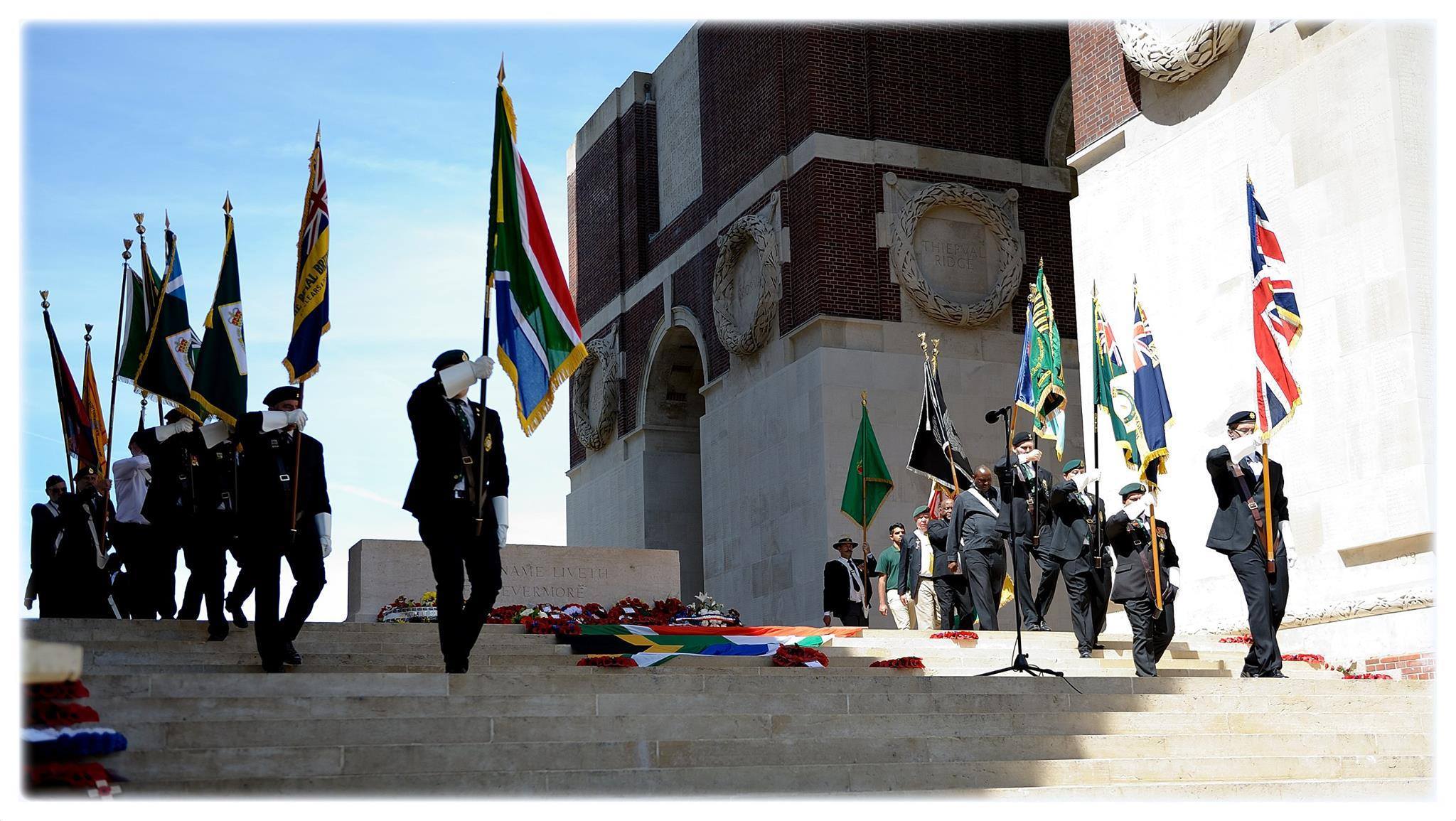
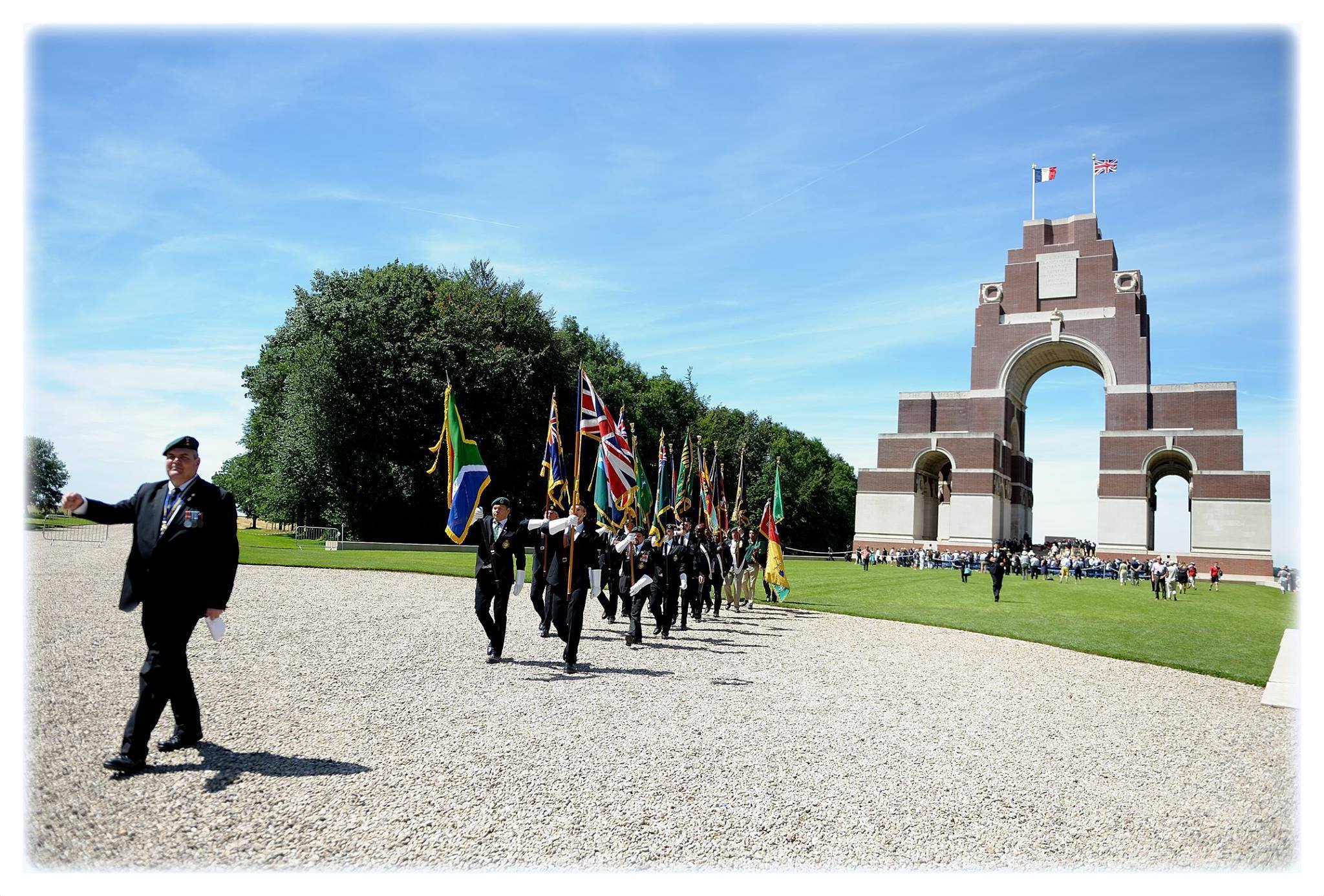
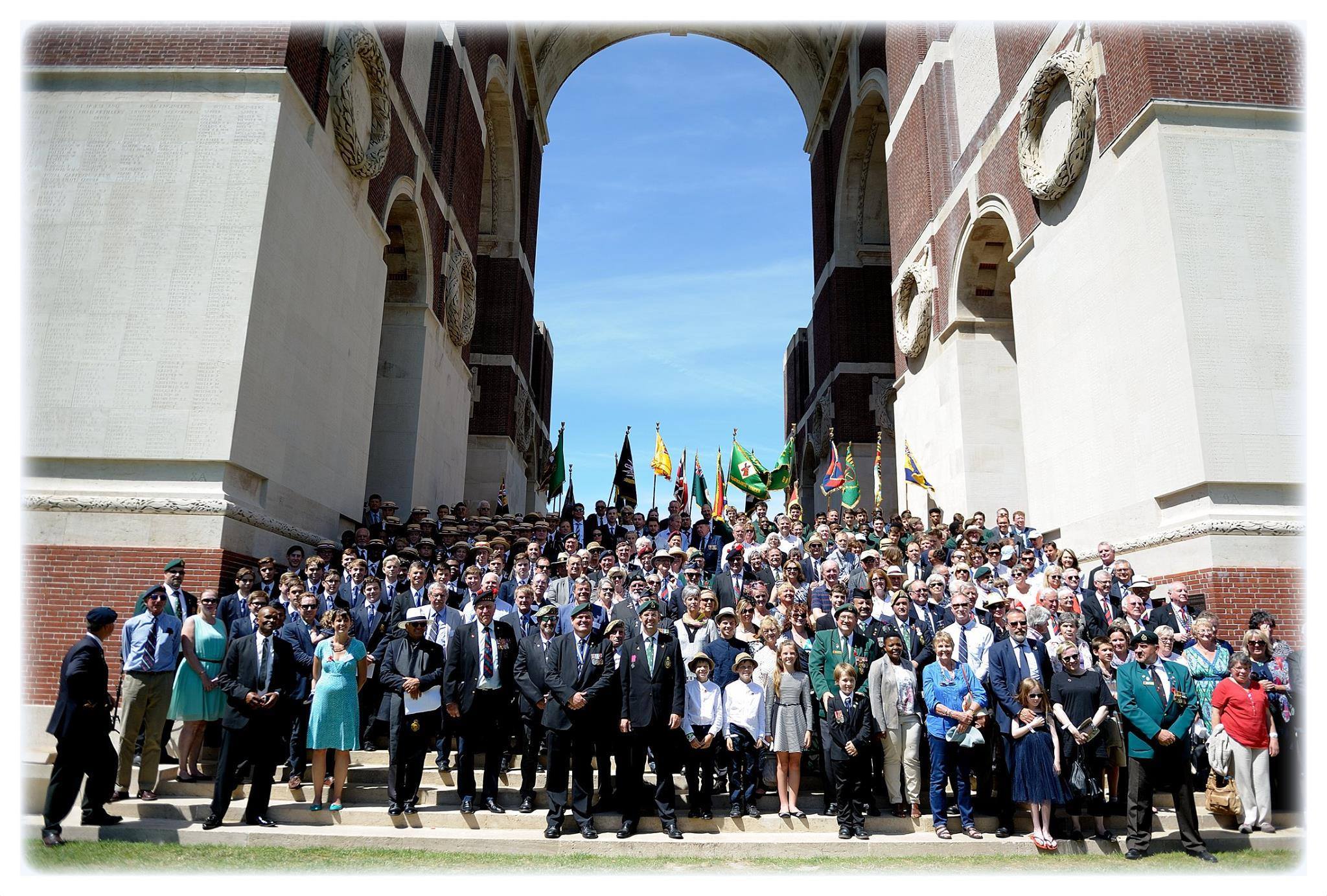
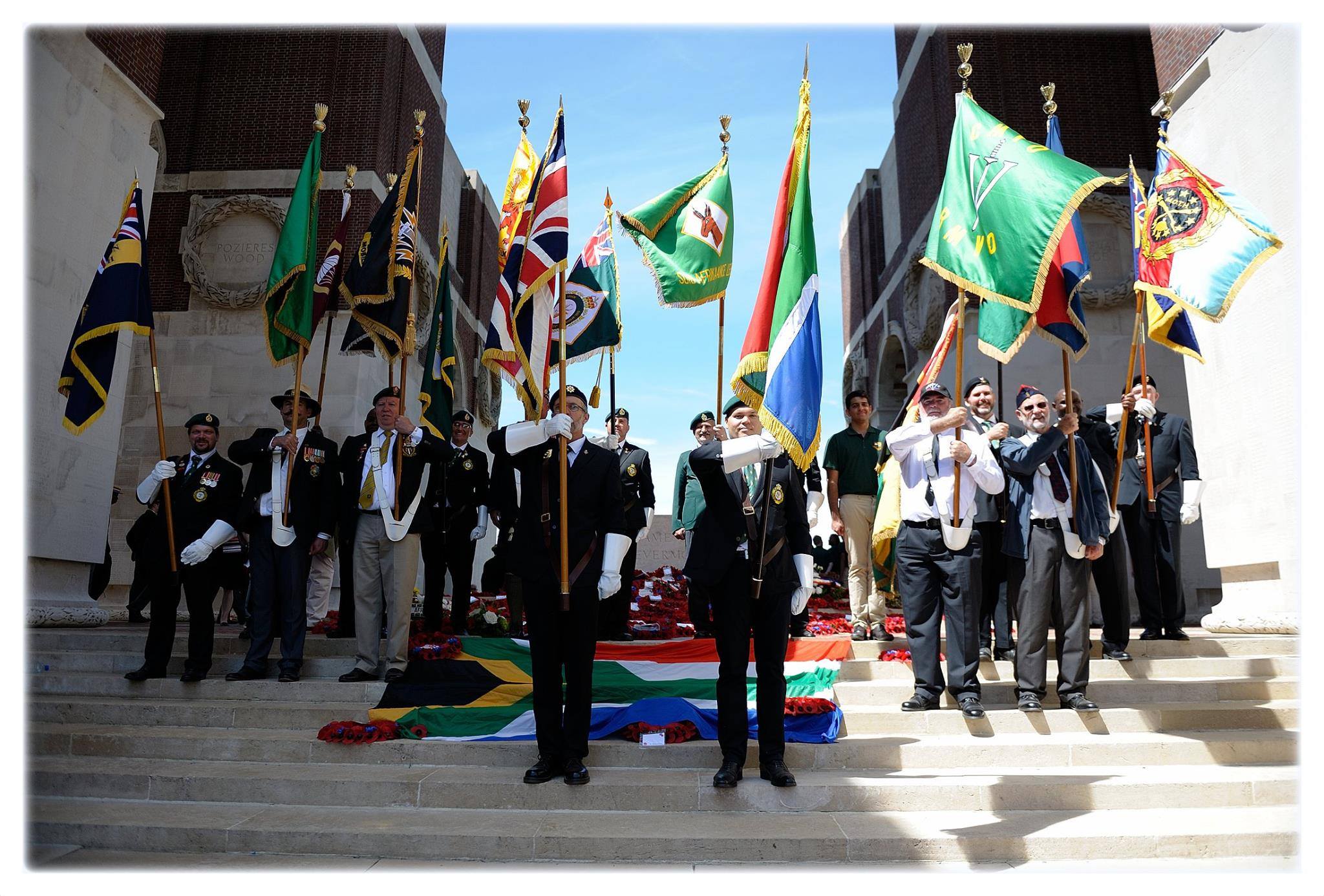
I had the privilege of officiating and commanding the remembrance parade at Thiepval Memorial to mark the centenary of the Battle of Delville Wood. During my speech I referenced Lt. Alexander Young VC and pointed out the panel on which his name is recorded. 

It is with deep appreciation and honour, that on the 10th July 2016, South African military veterans of The South African Legion, Memorable Order of Tin Hats, The Royal British Legion – South African Branch and just about every single CMVO Registered South African Veterans Association, with Rhodesian veterans in addition could ‘stand-to’ on top of Thiepval Memorial 100 years later – with banners flying and heads bowed – whilst we remembered the sheer sacrifice and the many brave South African men, men like Alexander Young VC.

To see the full Thiepval 100th Centenary South African service, video, speeches and photographs, follow this Observation Post link: ‘Springbok Valour’… Somme 100 & the Delville Wood Centenary


Researched and Written by Peter Dickens

References and extracts from The South African War Graves Project

Commonwealth War Graves Commission

Thank you to Brigadier Hennie Heymans for this remarkable photograph artefact of the Cape Mounted Police. 

The artist`s impression of the action at Deville Wood for which William Faulds was awarded the Victoria Cross. From the book “Deeds that thrill the Empire” Vol 5

Thiepval 2016 photos thanks to Theo Fernandes

Related Work:

William Faulds VC: Delville Wood’s Victoria Cross – William Faulds

Sherwood-Kelly VC: “…. a Herculean of Irish-South African origin with a quite remarkable disregard for danger”.

Thiepval Memorial: ‘Springbok Valour’… Somme 100 & the Delville Wood Centenary

Delville Wood: Delville Wood’s ‘Weeping Cross’

Delville Wood: The Black Watch and the Delville Wood Lament

Deville Wood: A South African soldier’s diary captures the horror of Delville Wood

Beer, Bawd and Boers

The Great Beer Flood and the Boer War

So what does the Great London Beer Flood of 1814 have to do with the Boer War of 1899 decades later? A lot really, and it involves a banjo-playing prostitute (a ‘bawd’ in case you’re wondering about the old Middle English used in the headline), so – here’s the tale of how an artillery battery was financed during the South African War (1899-1902) a.k.a The Boer War by a very eccentric and colourful Lady.

The Beer

Let’s start at the beginning with the London Beer Flood of 1814, basically the flood was caused when a 6.7m heigh wooden fermentation vessel containing ‘Porter’ beer at Meux&Co’s Horse Shoe Brewery in London burst open. It dislodged and burst open another fermenter and storage barrels releasing around a million litres of beer. The resultant wave of beer swept into a slum, tragically killing 8 people as it flooded basements and knocked over walls. Although one person died of alcohol poisoning a couple of days later after hundreds of people collected the beer and mass drunkenness ensued.

Images: The Meux & Co’s Horse Shoe Brewery and Sir Henry Meux, 1st Baronet

The brewery was nearly bankrupted as a result, but was saved by the government after a rebate was given on the excise of the lost beer. Gradually the Meux&Co Brewery found it way back on its feet and became highly profitable. The Meux family (Meux is pronounced ‘Mews’) had a long association with beer and breweries, the owner of the Horse Shoe Brewery was Sir Henry Meux, 1st Baronet (1770-1841), the son of a brewer named Richard Meux (1734 – 1813). Sir Henry Meux would bequeath the brewing empire to his son, also named Henry, Sir Henry Meux, the 2nd Baronet (1817-1883), he headed up Meux&Co Brewery and also became a Member of Parliament. He in turn bequeathed the brewery and family fortune to his son, also Henry, Sir Henry Bruce Meux, the 3rd Baronet, who started managing the brewery from 1878.

Now, it is in Sir Henry Bruce Meux, the 3nd Baronet that we find a most remarkable figure. His wife. Lady Valerie Susan Meux.

The Bawd

Born in Devon in 1847, Valerie Langdon married Sir Henry Bruce Meux in 1878 and moved to his Hertfordshire estate. Langdon claimed to have been an actress, but was apparently on the stage for only a single season. By all accounts, she worked as a banjo-playing prostitute and barmaid under the name of Val Reece (or Val Langdon – her stage name) at the Casino de Venise in Holborn, central London, and it is here that she is believed to have met Sir Henry Bruce Meux.

Images; Sir Henry Meux with Lady Meux playing the Banjo and their Zebra drawn carriage in London.

She certainly struck the big time. Meux had a considerable estate, including 9,200 acres on the Marlborough Downs. He even commissioned James Whistler to paint three portraits of his wife, Valerie, Lady Meux. At Lady Meux’s request, Henry purchased from the City of London the Temple Bar Gate, which they preserved at their Theobalds Park estate. They re-opened and greatly extended the house, including installing a roller-skating rink (roller-skating is older than you think, invented in 1863 – it was initially dubbed ‘rinkomania’ in the 1870s).

Lady Meux took up the mantle of a London socialite, and a very eccentric one at that, she reportedly travelled around London in a carriage drawn by zebras.

Images: Portraits by James Whistler of Lady Meux

The Boers

During the South African War (1899-1902), early British reverses to the Boer invasions of the British Colonies and sieges of their towns leading to ‘Black Week’ in December 1899 made headline news and the defence of Ladysmith made a particular impression on Lady Meux.

When the Boers declared war against the British on 11th October 1899, Captain Hedworth Lambton was in command of HMS Powerful, which was posted in the China seas, HMS Powerful was a state-of-the-art Cruiser for its time and at the onset of hostilities it was immediately ordered to Durban. Knowing that the British forces at Ladysmith urgently needed more powerful guns, Captain Percy Scott from HMS Powerful’s sister ship, HMS Terrible, devised carriages to transport naval cannon, and Lambton led a Naval brigade to the rescue at Ladysmith with four twelve-pounders and two 4.7″ guns. The enthusiastic response in Britain to these Naval “heroes of Ladysmith” was enormous and made Captain Hedworth Lambton a well-known public figure. Queen Victoria even sent a telegram to him saying, “Pray express to the Naval Brigade my deep appreciation of the valuable services they have rendered with their guns.”

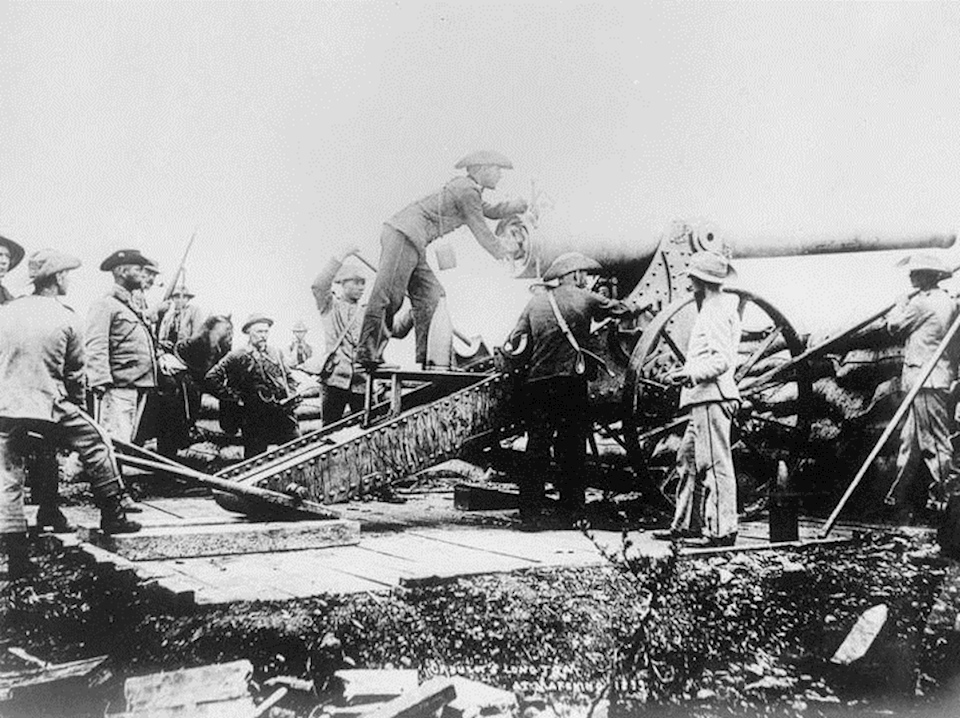
So impressed by their actions around the Ladysmith siege, Lady Meux, in her own patriotic way decided to do her bit for England and sprang into action. She ordered, six naval 12-pounders on special field carriages made by Armstrong of Elswick. The guns were sent directly to Lord Roberts in South Africa, because they had been refused by the War Office. The unit which manned these guns were known as the “Elswick Battery”. The battery was in action several times, including the Second Battle of Silkaatsnek near Rustenberg on the 2nd August 1900.

Images: The Elswick Battery Naval Guns donated by Lady Meux in South Africa during the Boer War.

Sir Henry Bruce Meux died on the 11th September 1900 at his Theobalds estate, the couple were childless and he was still a very wealthy man, thus leaving Lady Valerie Meux, now aged 48, one of the richest women in Britain with no heirs to the family fortune. She owned a string of race horses, entering them under the assumed name of ‘Mr Theobalds’, and won the Derby in 1901. She also collected a vast array ancient Egyptian artefacts.

When Captain Hedworth Lambton, the commander of the Naval Brigade at Ladysmith, returned to England, he called on Lady Meux at Theobalds to recount his adventures in South Africa and to praise the patriotic spirit of her gift. Lady Meux was “touched by this tribute” and wrote out a new will and testament making Lambton the chief heir to the large fortune left by her husband, including her house at Theobalds Park in Hertfordshire and a substantial interest in the Meux&Co Brewery. The only condition was that Lambton should change his name to Meux.

So, when Lady Meux died on 20 December 1910, Captain Hedworth Lambton without hesitation, promptly changed his name by royal licence to Meux, thereby enabling him to inherit her substantial fortune. By the end of the 1st World War, Sir Hedworth Meux GCB, KCVO (née Lambton) was a Full Admiral in the Royal Navy and the Naval aide-de-camp to King Edward VII.

Images: A Tea Cloth in the Ladysmith Siege museum celebrating the ‘Heroes of Ladysmith’ – Captain Hedworth Lambton top right and Admiral Sir Hedworth Meux (née Lambton) during WW1.

Back to the Beer

So what became of Meux&Co Brewery – can we still buy the beer? Well, sort of, you’re possibly drinking it now. When the Admiral of the Fleet, the Honourable Sir Hedworth Meux retired from the Royal Navy in 1921, in the same year Meux&Co Brewery was directed to move their production to the ‘Nine Elms’ brewery in Wandsworth which the Company had already purchased in 1914. The original ‘Horse Shoe’ brewery was demolished and today is the site of the Dominion Theatre, a Grade II listed art deco theatre in the heart of London.

In 1961 Meux&Co Brewery was sold to Friary, Holroyd and Healy’s Brewery of Guildford in Surrey. The company was renamed Friary Meux but only existed as an independent brewery until 1964, when it became part of the new national group, Allied Breweries. Through a series of more brewery mergers, the breweries ultimately merge with Carlsberg in 1992 and become Carlsberg-Tetley, which it is now part of the Carlsberg Group.

One for the road

In addition to my love of military history, I am also the owner of a Craft Beer Brewery in South Africa, and I love a good historic yarn like this, so I can only hoist one of our ice cold ‘Old Tin Hat’ beers to a Carlsberg Pilsner and say thank you once again to my good friend, Dennis Morton, who researched and directed me to this fantastic bit of history. Another toast to The Anglo Boer War and Related History Group (Facebook) and Iain Hayter.

Cheers!


Written and Researched by Peter Dickens with thanks to Dennis Morton.

Finding Smuts’ essence!

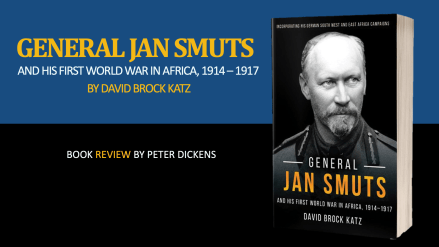
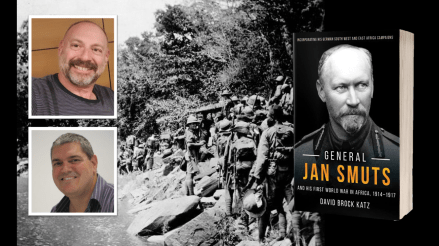
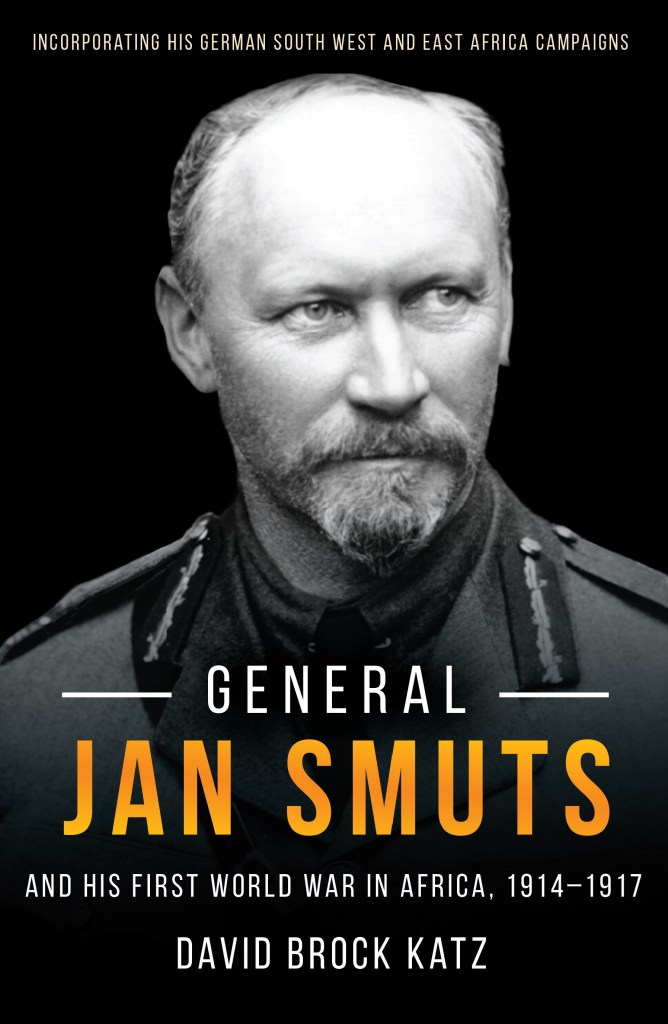
Book Review: Jan Smuts and his First World War (1914-1917) by David Brock Katz

Finally, a refreshing new look at Jan Smuts, and not a popularist novel, a proper historical treatise, so well researched it stands up to strong academic scrutiny and it will stand for some time to come.

Jan Smuts and his First World War 1914-1917 by Dr David Bock Katz is a revelation, it seeks out and finds Smuts’ essence in his military campaigning, not previously achieved by earlier historians.

It can often be said of Jan Smuts, that a Canadian student will have a better understanding of the man than a South African one. That is because Smuts has been vilified in his own country by an endless tirade of politically driven one-upmanship whether it be from far right or the far left of the political spectrum, an unabated tirade, especially from a very small but very vocal white Afrikaner right fuelled with propaganda and unhinged over the Apartheid epoch. Whereas internationally he is seen as a champion of global peace post both World Wars and a founder of the United Nations, he still stands on Parliament Square in London and in Canada even a mountain is named after him. 

The political quagmire surrounding Smuts makes a new study of Smuts very difficult, the historian must ‘peel the onion’ and discard all the politically inspirated bias. Bill Nasson, one of South Africa’s most respected historians said the only way for us to understand Jan Smuts is to understand what he amounted to and to define Smuts’ essence, i.e., get to what he is all about, what made him tick and identify what he was always striving toward. Happy to report that Dr David Katz in his new book on Jan Smuts and his First World War 1914–1917 does exactly that.

Smuts was born and lived in an era of colonial expansionism, an era where Imperialism was normative and in fact a value for which European’s fought over in great life and death struggles, in Europe and across the Globe. David Katz examines Smuts in his context and removes the urge to suddenly apply a modern critical race theory bias. In doing this Katz gets to the essence of the man. He does this by drawing attention to Smuts’ plans for a ‘Greater South Africa’ one in which South Africa’s borders are drawn as high as the equator including south Angola, bits of modern day Central African Republic and the entire states of Namibia, Botswana, Zambia, Zimbabwe, Malawi, Lesotho, Swaziland and Mozambique. This idea of ‘sphere of influence’ whether under the control of an Afrikaner or a British ideal on the back of conquest and expansion, is central to ‘white’ politics of Southern Africa, pre and post The South African War (1899-1902).  

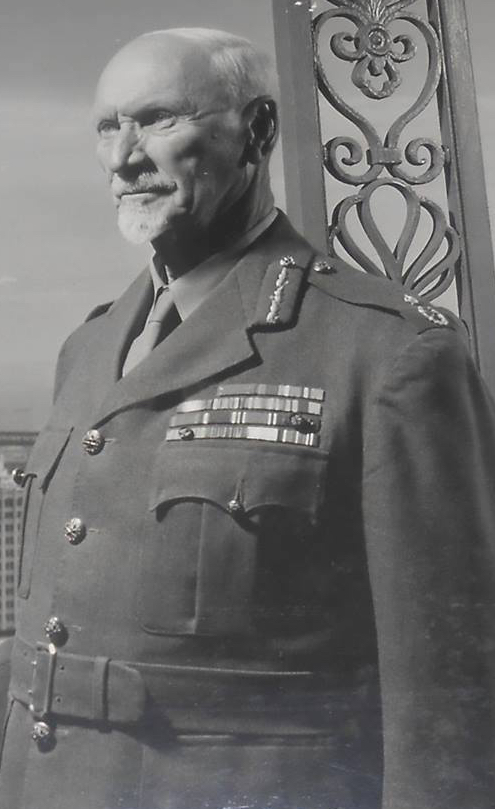
A ‘man of his time’, Smuts’ philosophy of holism, basically the sum (union) of parts is greater than the whole, drives Smuts’ ideal for the union of nation states, not only South Africa as we know it, but also Southern Africa with his plans of a ‘Greater South Africa’, his concept of ‘union’ eventually extends globally with the establishment of the British Commonwealth, the League of Nations and its modern-day manifestation, the United Nations. Here, as David Katz shows extensively and rather refreshingly in his work, we see the true ‘essence’ of Field Marshal Jan Christiaan Smuts, South Africa’s most decorated General.

It also gives us the context for the Union of South Africa’s eagerness to move its borders northwards, the First World War provided both Louis Botha and Jan Smuts with the ideal vehicle, starting with the German South West African campaign (GSWA) and then the German East Africa campaign (GEA).

In these campaigns David Katz starts to shake up some preconceived beliefs about Smuts’ abilities as a General, detailing and outlining his abilities to strategise outcomes and also his ability to tactically apply them. Many commentators and historians chose to highly criticise Smuts, but usually in the context of political expediency, both in the United Kingdom and in South Africa, but here Katz exposes their ‘bias’ and even at times exposes some blatant mistruths previously held up as fact, he does this by examining the ‘primary documentation’, the boring, dusty, daunting, and rather vital extensive archives – here in South Africa and in the United Kingdom. In this primary documentation, without a political agenda, he finds the real Smuts, a true reflection of the military strategist and field commander. David’s work in this respect is extensive, it was the backbone of his Doctorate in Military History (cum laude), and it shows. 

It is almost impossible to write a ‘complete’ history on Smuts in a single book, he was a man who dominated South African politics from 1890 to 1950, seven decades which see a man and his outlook change over time along with changing world orders and philosophies of governance and even warfare. This can make the subject of Smuts extremely daunting, and even impossible – where do you start, Smuts the academic, the philosopher, the botanist, the lawyer, the author, the politician, the stateman, the peacemaker, the privy councillor and finally Smuts the miliary General? 

It is with some relief that David Katz hones in on only one aspect, Smuts’ First World War, it gives him the opportunity to really challenge Smuts in one sector of his life, the outcome of which is a detailed account of this one facet which reaches completely new conclusions and views.

Rightly in establishing a view on Smuts’ Generalship in World War 1, Katz also looks at the root of Smuts’ abilities as a General, forged in the South African War (1899-1902) under General Koos de la Rey and General Louis Botha.  Katz then examines the complexities and challenges facing Smuts in amalgamating Colonial British and Boer Forces into a unified fighting entity and the development of a distinctively South African ‘style’ of combat fighting, a manoeuvrability ‘style’ which even our modern-day defence force still holds as a central doctrine. 

Katz also reviews the Maritz Rebellion of 1914 in its correct context, as an opening act of internal aggression in South Africa’s First World War and how it strategically and even morally affected the GSWA campaign. Also, refreshingly he focusses on the cause and effect of the revolt militarily speaking and is not guided by the political fallout and resultant bias in examining Smuts’ ability as a wartime General.

Smuts’ GEA campaign often comes in for a lot of criticism, and here Katz again applies a military mind and scours the primary source material in evaluating Smuts’ effectiveness as a General, reasoning that Smuts effectively attained his objectives, reduced casualties and delivered an Allied victory and didn’t chase General Paul von Lettow-Vorbeck around aimlessly as has been suggested by past historians.

It’s a very long overdue re-assessment of Jan Smuts and his ability as a General. David Katz also wrote a book called ‘South Africans versus Rommel’ which covers Smuts in World War 2 to a degree, but we look forward to the next historical account which looks at Smuts and his Second World War 1939-1945 in its complete entity, as the next ‘bite sized’ chunk of this most extraordinary man. 

In the end, the Afrikaner National Party and their opposition rhetoric aside, we may find that when it is all added together, Smuts’ 2nd Anglo-Boer War command, his First World War command, his Second World War Command, and Smuts’ net success in all three of these wars, his structure of South Africa’s defence force and doctrine, his pioneering work on structuring air-arms, air combat and air defences, his contribution as part of the British War Cabinet and the Imperial War Cabinet during World War 1 and then again in the King’s Privy Council and as Winston Churchill’s confidant and councillor during World War 2, and even his extensive role in Operation Overlord, all concluding with his role in the establishment of the United Nations, we may very well be looking at a Afrikaner farm boy with one of the greatest military minds of the 20th Century and beyond. 

No small statement, you’ll find Jan Smuts’ fingerprints in just about every theatre of operations in the South African War (1899-1902), in the GSWA, GEA and Western Front theatres of World War 1 (1914-1918), and again in the East African, North African, Italy, Atlantic and European campaigns to conclude World War 2 (1939-1945) and in just about every major modern military development in between. Dr David Brock Katz’ book on Jan Smuts First World War (1914-1918) goes a long way to establishing a solid foundation on which to begin to challenge this conclusion or at the very least he gives Smuts a well-earned balanced perspective and insight.

By: Peter Dickens

Jan Smuts .. .. a talk with Dr. David Katz and Peter Dickens

Join me for the launch of Dr. David Brock Katz’s new book, ‘General Jan Smuts and his First World War in Africa 1914 -1917′. David will be spending a little time in my hometown, Hermanus to launch this new look at Jan Smuts’ military campaign and leadership during WW1.

We will do the launch at Romantiques in Hermanus, in their cosy little theatre. David and I have agreed to do a joint talk on Jan Smuts, David will focus on Smuts in the context of his book and I will focus on Smuts – the man and his flawed genius. In all it should be a great evening for anyone who is either a student of history or has a fascination for one of Africa’s greatest sons.

We will follow up the talk with a book signing ceremony with complimentary Beer, Wine and Canapés. As a brewery owner my Company ‘The Spirit of Hermanus’ and our beer brand ‘Old Tin Hat’ will be sponsoring, along with Jonathan Ball Publishes and the venue – Romantiques. Book Mark, the appointed retailer of the book in Hermnaus will also be on hand.

For a small fee of R40 you can also stay on for a screening of Peter Jackson’s world renowned documentary on World War 1, ‘They Shall Not Grow Old’.

For those in area who wish to attend here are the details:

Date: Friday 16th September 2022

Timings:

Arrive from 17:00 for 17:30

Talk and  Q&A from 17:30 to 18:30

Book Signing,  Beer and Wine Evening  from 18:30 to 19:30

Movie Screening ‘They Shall Not Grow Old’ from 19:30 to 21:00

Venue:

Romantiques, 18A Aberdeen Street, Hermanus, South Africa

RSVP

Please call Karen Dickens, South African mobile: 067 360 9020. Alternatively e-mail: karen@thespiritofhermanus.com

Please note spaces are very limited, so be sure to book early.

Outline of the book

As to this new book and exciting look at Smuts’ Generalship during WW1 it has been described a ‘an engaging, well-written and meticulously researched military biography …’ – Tim Stapleton, Professor, Department of History, University of Calgary.

Jan Smuts grabbed the opportunity to realise his ambition of a Greater South Africa when the First World War ushered in a final scramble for Africa. He set his sights firmly northward upon the German colonies of South West Africa and East Africa. Smuts’s abilities as a general have been much denigrated by his contemporaries and later historians, but he was no armchair soldier. He first learned his soldier’s craft under General Koos de la Rey and General Louis Botha during the South African War (1899−1902). He emerged from that conflict immersed in Boer manoeuvre doctrine.

Jan Smuts grabbed the opportunity to realise his ambition of a Greater South Africa when the First World War ushered in a final scramble for Africa. He set his sights firmly northward upon the German colonies of South West Africa and East Africa. Smuts’s abilities as a general have been much denigrated by his contemporaries and later historians, but he was no armchair soldier. He first learned his soldier’s craft under General Koos de la Rey and General Louis Botha during the South African War (1899−1902). He emerged from that conflict immersed in Boer manoeuvre doctrine.

After forming the Union Defence Force in 1912, Smuts played an integral part in the German South West African campaign in 1915. Placed in command of the Allied forces in East Africa in 1916, he led a mixed bag of South Africans and imperial troops against the legendary Paul von Lettow-Vorbeck and his Schutztruppen. His penchant for manoeuvre warfare and mounted infantry freed most of the vast German territory from Lettow-Vorbeck’s grip.

General Jan Smuts and his First World War in Africa provides a long-overdue reassessment of Smuts’s generalship and his role in furthering the strategic aims of South Africa and the British Empire during this era.

A little on the Author

DAVID BROCK KATZ is an author and historian, who lectures at the Army and Defence Colleges of the South African National Defence Force.

He completed his MMil in Military History (cum laude) and a PhD in Military Science in the Department of Military History at the Faculty of Military Science of Stellenbosch University. He is also research fellow at the Faculty of Military Science and an active member of the Andrew Mlangeni Regiment (formerly the South African Irish Regiment). Katz is the author of South Africans vs Rommel (2019).

On-Line Orders

If you are unable to attend the launch and want this book you can obtain it on-line from amazon, takealot, Loot to Exclusive Books and more. Shop and just click on the appropriate book seller than can provide it to you.

To order Old Tin Hat beer or Spirit of Hermanus product follow this link: www.thespiritofhermanus.com

Looking forward to seeing some of you at the event and the chat with David and the audience on Jan Smuts:

Peter Dickens

A Rebellious Family Streak

A friend of mine, Dennis Morton is a prolific researcher and he brought up this rather interesting history which highlights the rebellious nature and political dichotomy in white South African families perfectly. So, here’s how a Boer war rebel’s history massively impacted South Africa’s liberal political landscape.

The Irish Brigade

During the South African War 1899-1902 (the Boer War), a number of British, especially Irish found themselves in alignment with the Boer Republic cause. Many of them were working on mines in the Transvaal or had otherwise settled and repatriated in the two Boer Republics prior to hostilities. Not just Irish, these ‘burgers’ also constituted many other Britons – Scots and even the odd Englishman. At the onset of the war they volunteered to join a Boer ‘Kommando’, and this one was special, it was created by John MacBride and initially commanded by an American West Point officer – Colonel John Blake. The Commando was called ‘The Irish Brigade’ mainly because of its very Irish/Irish American slant. After Colonel Blake was wounded in action at the Battle of Modderspruit, shot in the arm, command of the Irish Brigade was handed to John MacBride. The Brigade then saw action in the siege of Ladysmith, however this was not a happy time for Irish Brigade as its members were not enthusiastic about siege tactics. After the Boer forces were beaten back from the Ladysmith by the British the Irish Brigade began to fall apart. It was resurrected again as a second Commando in Johannesburg under an Australian named Arthur Lynch and disbanded after the Battle of Bergendal.

To say the Irish Brigade was controversial is an understatement, the whole of Ireland was still part of the United Kingdom in 1899 (the Irish Republic split came much later) and members of this Brigade ran the risk of high treason if caught, especially if their ‘citizenships’ to the Boer Republics were not in order when the war began, or if they joined and swore allegiance to the Boers during the war itself.

So, at the end of the war there are a couple of Irish Brigade Prisoners of War who were captured and sent to St. Helena (which was the main camp for Boer POW) and they needed to be repatriated, in their case – the United Kingdom. The issue of treason hangs heavily on both of them.

Firstly, Prisoner 3783, Thomas Enright, an Irishman, who at one time was in the British army during the Matabele War and had changed allegiance to the Boer Republics, joining the Irish Brigade. The issue been the date of his burger citizenship which exceeded the amnesty for who was and who was not considered a ‘Burger’. The cut off for amnesty on oaths of allegiance by ‘foreigners’ to the Boer Republics was given as 29th September 1899.

The second is Prisoner 15910, John Hodgson, a Scotsman born at Paisley in the United Kingdom, he emigrated to Southern Africa in 1891. He lived in Rhodesia and moved to the Orange River Colony until 1896. He took the oath of allegiance to the South African Republic – ZAR (Transvaal) on the 28th or 29th December 1899, which was after the amnesty date. He served in the Irish Brigade under Blake and was captured by the British on 19th November 1900.

Luckily for both these men, they are not prosecuted for treason (which carried the death sentence) and repatriated to the United Kingdom after some heady politicking. Here’s where we stop with Thomas Enright and follow the Scotsman, John Hodgson.

On John Hodgson’s repatriation he is immediately ostracised by the British community because of his role on the side of the Boer Republics and six months after his return to the United Kingdom, he illegally boarded a ship bound for Port Elizabeth, South Africa. Here he set up shop working as a book-keeper and by 1904 John Hodgson’s family reunited with him in the Cape. Now, here’s the interesting bit that so often plagues ‘white’ South African families, although John Hodgson joined the Boer forces as a rebel, he, like many other Boer veterans, also harboured liberal political beliefs. He supported legal equality and the extension of a non-racial franchise (vote to all – Black emancipation) in Southern Africa.

Liberalism in South Africa

John Hodgson’s daughter, did not fall far from the tree, John’s rebellious and highly liberal nature rubbed off on her, she was Violet Margaret Livingstone Hodgson, who later married another liberal, William Ballinger. Margarat Ballinger would go down as a powerhouse in liberal politics in South Africa.

Margarat Ballinger would become the first President of The South African Liberal Party when it formed in 1953 and she would serve from 1937 as a Member of Parliament alongside Jan Smuts and his heir apparent Jan Hofmeyr. Highly vocal, she represented the Eastern Cape on the ‘Native Representatives Council’.

By 1947 her plans included new training and municipal representation for South African blacks and improved consultation with the Native Representatives Council. Time Magazine called her the ‘Queen of the Blacks’. Time Magazine went on to say Ballinger was the “white hope” leading 24,000,000 blacks as part of an expanded British influence in Southern Africa. Her Parliamentary career would take a dramatic turn when the National Party came to power in 1948.

By 1953, the ‘liberal’ side of the United Party lay in tatters, both Jan Smuts and Jan Hofmeyr had passed away in the short years of the ‘Pure’ National Party’s first tenure in power between 1948 and 1953. The Progressive Party and Liberal Party of South Africa would take shape to fill the void left by Smuts and Hofmeyr. The Liberal Party of South Africa was founded by Alan Paton and other ‘liberal’ United Party dissidents. Alan Paton came in as a Vice President and Margarat Ballinger the party’s first President. Unlike the United Party, the Liberal Party did not mince its position on the ‘black question’ and stood for full ‘Black, Coloured and Indian’ political emancipation and opened its doors to all races, they stood on the complete opposite extreme to the National Government and Apartheid and to the ‘left’ of the United Party.

Margarat Ballinger strongly voiced her anti-Apartheid views, opened up three ‘Black’ schools in Soweto without ‘permission’ and was one of a vocal few white voices openly defying H.F. Verwoerd. In 1960 she left Parliament when the South African government abolished the Parliamentary seats representing Black South Africans.

The Apartheid government’s heavy clampdown on ‘white liberals’ after the Sharpeville Massacre in 1960 forced many Liberal Party members into exile and many others were subject to various ‘banning’ actions locally. By 1968 the Apartheid government made it illegal for members of different races to join a singular political party, and instead of abiding the legislation (which the Progressive Party and others did), the Liberal Party stood it’s ground and chose to disband rather than reject its black members.

Not without a passing shot, in 1960 Margarat Ballinger published a scathing critique of Apartheid in a book she wrote called “From Union to Apartheid – A Trek to Isolation”. Ironic considering her family’s journey as a supporter of the ‘Boer’ cause. Regarded today as a ‘must read’ for anyone studying this period of South African history and Liberalism. She also wrote a trilogy on Britain in South Africa, Bechuanaland and Basutoland. Margarat passed away in 1980, before she could see the end of Apartheid.

In Conclusion

So, there you have it, an unusual and very South African family story, a strong minded Brit turned Boer rebel and his equally strong minded daughter, one who would become a pioneer of woman and liberalism in South Africa. It also reminds us as to the complexities and paradoxes of The South African War 1899-1902 and the different political sentiments at play within the Boer Forces, some of which can still surprise many today.


Written by Peter Dickens with great thanks to Dennis Morton for his research and writings.

Vive la rue du Transvaal, vive la France!

My wife and I headed into a quaint neighbourhood of Paris to enjoy some traditional French Chanson music. When in Paris eh!. Our venue sported just about everything ‘French’, right down to the menu, wine list and sing along to Jacques Brel and Édith Piaf favourites.

30073135_2127175497511437_787967327737655482_oI glanced up at an art mural of the quarter depicting its early 20th Century heyday, and noticed its old landmark hotel was called the ‘Transvaal Hotel’, nipping outside I realised I was in the famous old ‘working class quarter’ of Paris, the epicentre of French equality and multiculturalism … Belleville … the birthplace and childhood home of Édith Piaf, with its panoramic view of the Paris at the Parc de Belleville, and I was standing in one its most well-known streets, leading to the Parc de Belleville, the ‘Rue du Transvaal’.

So what’s with all the references to the old Transvaal in middle of ‘working class’ Paris?  Put simply, the French during The South African War (1899 to 1902) had been fully in support of the Zuid-Afrikaansche Republiek (the Transvaal), in fact there are a number of ‘Rue du Transvaal’ in France and Belgium named after the old South African Republic.

In Belgium a Transvaal Streets are found at Anderlecht, Binche and Quiévrain and in France, Transvaal Streets are found at Berck, Boulogne-Billancourt, Bourgoin-Jallieu, Cateau-Cambrésis, Chalon-sur-Saône, Chambéry, Colombes, Dijon, Divion, La Garenne-Colombes, Guilvinec, Le Creusot, Limoges, Lyon, Marseilles, Nantes, Pessac, Rousies, Saint-Amand-les-Eaux, Saint-Avold and Thiers Wasquehal.

There is even a Rue du Botha which joins up with Rue du Transvaal in Belleville, named in honour of Louis Botha, the famous Boer General and then Commander-in-Chief of the Transvaal Forces, who went on to become the first Prime Minister of the Union of South Africa.

30073260_2127175847511402_1828333056881797150_o

But why such a strong support?  Simply put there is an aged old ‘hatred’ between the French and the English, and it’s because they are diametrically opposed to one another on one key thing, Republicanism versus Monarchism (not to mention a very long history of going to war against one another).

Deep in the French psyche and value system and inbred in every French citizen are their ‘Republican’ values Liberté, égalité, fraternité ou La Mort. The literal translation of this means ‘freedom’, ‘equality’, ‘brotherhood’ or we die. Values which are in sharp contrast to the English who idolise their monarchy and class based heritage even to this day (the French guillotined their monarchy and upper-class in favour of Republicanism and this motto).

31172198_2127175647511422_3871489692275261358_nIn their Republicanism and concepts of Liberty, Equality and Brotherhood they found kindred “Brothers’ in the form of the Boers of The Transvaal Republic and the Orange Free State Republic, a hard ‘working class’ and determined people (like themselves) seeking ‘freedom’ and ‘equality’ from the oppressive yoke of British Class Elitism and Monarchism. The French fully supported the Boer cause for Republic autonomy and found Britain to be unduly pressuring them, and lets not forget – the Boers were up against their old enemy; “les rosbifs” (the roast beefs) – the English.

Unlike South Africa where the legacy of the South African War (1899 to 1902) and the two Boer Republics is gradually been erased from street names, place names and places of interest for the sake of this or that changing political convenience, the French will have none it.  In France they understand the need to preserve history, no matter how inconvenient, it is what has forged their identity, especially the nasty part of their past pre-revolution, and the equally nasty past of recent German occupation – all preserved.

In fact they surrendered their country in just six weeks of fighting when Nazi Germany invaded in 1940, simply because they understood the value of Paris, this landmark of European and historical heritage and did not want it bombed flat, as was the fate of so many other European capitals.  It is why Paris remains such a unique and beautiful bastion to historical heritage to this very day.

So, when next the ‘Springbok’ rugby team are in France about to give  ‘Les Bleus’ (The Blues) French national squad a pounding, take the time to extend a hand and say thank you to the French for preserving a very valuable South African historical legacy so quickly forgotten about in South Africa today and say in all honesty;

“Vive la rue du Transvaal, vive Paris, vive la France”.

Related articles and links

The 2nd Anglo Boer War – Churchill; Churchill’s epic ‘Boy’s Own’ Adventure in South Africa

The 2nd Anglo-Boer War – Concentration Camps; To fully reconcile The Boer War is to fully understand the ‘BLACK’ Concentration Camps

The 2nd Anglo-Boer War – Emily Hobhouse; I’m not pro Boer, I’m British, this isn’t OUR way!

The 2nd Anglo-Boer War – Kruger; Kruger “blunders” and declares war on the world’s Superpower!


Written by Peter Dickens

“The force of his intellect has enriched the wisdom of the whole human race”- the death of Jan Smuts.

smutsThere are still a handful of conservative ‘Afrikaner nationalist’ white people in South Africa who would still toe the old Nationalist line on Smuts, that he was a ‘verraaier’ – a traitor to his people, his death welcomed.  However, little do they know that many of the old Nationalist architects of Apartheid held Smuts in very high regard.
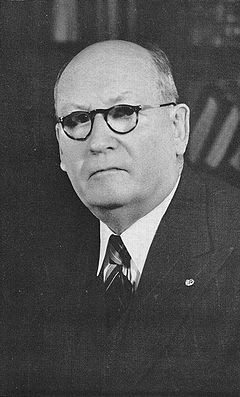
DF Malan, on the day of Smuts’ death, 11th September 1950, was the Prime Minister of South Africa, his Nationalist party had defeated Smuts’ United party two years earlier in 1948 whilst pushing the Nationalist proposals to further entrench racial segregation with a concept they called Apartheid.  Smuts on the other hand, foresaw the need to extend the ideas of ‘Union’ which had brought Afrikaner and Briton together to include Black South Africans. On voting rights, he had made his views clear to Hertzog as early as 1920 when in a private meeting he proposed a Qualification Franchise (not a Universal one though) for black South Africans (Hertzog was an ardent Nationalist and rejected the idea outright).

Smuts was born into a system of ‘Empire’ and that was the socio-political sphere everyone understood, including Smuts.  Over time Smuts’ views on racial segregation gradually evolved from the generally understood divided evolution edicts of his day (based on where nations stood on the ‘civilisation’ continuum).  On the international stage by the mid 1940’s, when Smuts was outside of the pressures of South Africa’s race politics (even from inside of his own political party) and not toeing his party’s line, here his views started to really shape up.

By the middle of World War 2 he had taken on a deep sense of individual liberty for all mankind, emancipation and freedom from any sort of oppression (including State).  These views, based on what he termed man’s universal “spirit” for freedom forged by two world wars, they were consolidated in his work on the United Nations and exposed on an international stage in a number of speeches.

Back in South Africa after the war, as a precursor to these views on universal liberty, Smuts had already changed from his old positions on segregation and proposed ‘integration’ instead of ‘separation’ and he had also already promised black community leaders greater political representation if they supported his war effort, voting rights under Smuts were already secure for South Africans of Indian origin and the Cape Coloured community.  On the Nationalists proposals of Apartheid he once said:

“The idea that the Natives must all be removed and confined in their own Kraals is in my opinion the greatest nonsense I have ever heard”.

The nationalists touted a fear of ‘black danger’ under this more democratically minded Smuts if he won, and it struck a cautionary chord with many white voters and the Nationalists won the day, surprisingly and against the odds, and not by a majority mind – but on a constitutional seat basis.

On losing the election Smuts made one of his greatest speeches in 1949 at the inauguration of the Voortrekker Monument to a largely Afrikaner crowd, it says everything of where he stood on integration and the future of South Africa, he said:

“Only on the basis of taking from the past what was beautiful could ‘fruitful co-operation and brotherhood’ between the two white communities be built. And only on this basis could a solution be found for the greatest problem which we have inherited from our ancestors, the problem of our native relations”. He went on to say, that this was “the most difficult and the final test of our civilization.’

Simply put, the country’s white community at Smuts’ death was very split down the middle on the issue of ‘Apartheid’ and what it would bring, the majority of South Africans did not favour it and they had heeded Smuts’ warnings of what entrenched race politics would bring to South Africa’s future.

The death of Jan Smuts

240px-DFMalanPortret

DF Malan

DF Malan was attending a National Party political rally to the party faithful and whipping up support for the edicts of Apartheid when Smuts’ died.   An aide walked up to him and handed him a note with the news of Smuts’ death, what he does next would surprise even the hardest right-wing Afrikaner Nationalist.

Instead of gleeful celebration of the demise of this most hated enemy of the Apartheid cause, the man repeatedly called a ‘traitor’ by the Nationalists, a man who had the ‘blood’ of Jopie Fourie on his hands, the ‘hansopper’ and ‘joiner’ turncoat who favoured the union of the Afrikaner with the hated British to heal South Africa over and above separationist Afrikaner rule, the King’s ‘hanskakie’ puppet, old ‘slim Jannie’ who put global interests and governance ahead of his ‘volk’ (white Afrikaner peoples) – no Dr. Malan’s reaction to the news was somewhat different to what most people now would even think.

DF Malan immediately turned pale, he slowly sat down, slumped over and cupped his hands to his face. He had lost a lifelong and very close friend.  Their political positions aside, Malan had a deep sense of admiration for his old friend.

He had to be helped up to stand at the microphone, where he announced that “a great figure of our time” has just died, he called the Nationalists to silence and then cancelled the rally.  His colleagues reporting that they had never seen Malan so distressed.

DF Malan’s reaction says a lot about Smuts, the importance he had in the formation of South Africa, he was the original ‘reconciler’ of the warring nations in South Africa, his idea of union based his philosophy of holism – all parts of the sphere make the whole, made the state of South Africa as we know it, he was quite literally the ‘father’ of the South African nation, and now he was lost.


The universal appreciation of Smuts at the time, both by his supporters and his detractors, would see a nationwide and even worldwide outpouring of grief, Smuts’ funeral was something else, a funeral not seen since in South Africa and only seen again when Nelson Mandela died.

To even begin to contemplate Smuts’ importance to not only South Africa, but to the free world consider what Winston Churchill wrote to Isie (Ouma Smuts), his wife, expressing his condolences, and what he wrote sums up the loss perfectly.

“There must be comfort in the proofs of admiration and gratitude that have been evoked all over the world for a warrior-statesman and philosopher who was probably more fitted to guide struggling and blundering humanity through its suffering and perils than anyone who ever lived in any country during his epoch.”

In his lifetime, Smuts had advanced to a level of greatness that is more substantive and more far-reaching to the modern human race than any South African before and even after him (with all respect to Nelson Mandela and his legacy).

Add to this what King George VI wrote Ouma Smuts and you start to see a pattern.  He wrote:

“the force of his intellect has enriched the wisdom of the whole human race”.

To understand his impact to humankind by way of an obituary to his milestone accolades, consider the following:

The birth of South Africa

The establishment of the state of South Africa in 1910. His proposal of ‘Union’ with the British colonies of the Cape and Natal brought South Africa out of the devastation of the Boer War and the resultant decimation of the Boer nation. Despite winning the war, in just four years of Colonising everything, Britain had handed all control of her colonies in South Africa to an independent parliament to Westminster, able to make its own laws to forge its own destiny, headed up by two Boer Generals of which Smuts was one.

The Boers had lost their two small Republics to war and now, thanks to Smuts’ skill and British confidence in his vision and him, the Boer commanders were very quickly back in governance of both their ‘old’ Republics and in addition, both the British Colonies as well – without a shot been fired.  To quote Smuts ‘they gave our country back’.  He reflected that at no time in Britain’s long history had such a ‘miracle of trust and magnanimity’ ever happened.

British ‘meddling’ and ‘warmongering’ in South Africa would never happen on the same scale again, and in fact they were making reparations for the damage they had caused by way of economic support.

The League of Nations and United Nations

He played a key role in the establishment of the League of Nations, the exact design and implementation of which relied upon Smuts, he even drafted the outlines for the The Treaty of Versailles. His outline was not fully followed and he warned the League of a future calamity with Germany – how prophetic he was.

With the demise of the League of Nations (the USA left it), Smuts still held the view that a more robust world peace body was required involving all nations holding each other to account.  He later urged the formation of a new international organisation for peace: The United Nations (UN).

Smuts wrote the first draft of the preamble to the United Nations Charter, and was the only person in history to sign the charters of both the League of Nations and the United Nations (see earlier Observation Post link Jan Smuts drafted the Preamble to the United Nations Charter).

21731730_2020994458129542_6028296406653483655_o

Smuts signing the United Nations Charter

The British Commonwealth of Nations

He sought to redefine the relationship between the United Kingdom and her colonies, he helped establish the concept of a ‘British Commonwealth of Nations’ based on devolved British authority instead of a ‘British Empire’ and by doing so he served to end Britain’s ‘Empire. He in fact came up with the term ‘Commonwealth’ and it was to his recommendations that the King listened.

The birth of Israel

In 1932, the kibbutz Ramat Yohanan in Israel was named after him. Smuts was a vocal proponent of the creation of a Jewish state, and spoke out against the rising anti-Semitism of the 1930s.  His relationship with the Jews and Israel did not stop there, he was one of the driving forces behind the Balfour Declaration which established the state of Israel (see earlier Observation Post A Kibbutz called Jan Smuts.)

World Wars and Military Milestones

He became South Africa’s only Field Marshal, having taken South Africa to both World Wars on the side of democracy and freedom.  The Second World War alone launched the manufacturing might of South Africa largely due to the support of the war effort.  By the end of WW2, South Africa, a muddle of small colonies and republics just 40 years earlier, now stood as a key contributing world player.

He was the only person with in-depth military experience to join The British War Cabinet, at the insistence of the King, during World War 1 (the rest were Politicians) and in so played a key role in guiding the outcome of World War 1.

He gave birth to the idea of an independent Air Force free from Navy or Army control in 1917, that saw the formation of the Royal Air Force (RAF), the oldest independent air arm in the world and in addition carried this over to form The South African Air Force, the second oldest. Modern military construct now still follows The Smuts Report on the use of air power (see earlier Observation Post links Centenary of the ‘Smuts Report’, the instrument which gave birth to the Royal Air Force,).

Smuts had a long string of successful military command, notwithstanding his Command of a Boer Commando during the Anglo-Boer war, evading defeat for the entire duration of the war.  He founded the South African Defence Force after Union, commanded UDF forces alongside Botha in taking German South West Africa during WW1, the first ‘Allied’ victory of the war.  He went on to command all the British and Commonwealth Forces in the East African campaign during WW1, chasing General Paul Von Lettow-Vorbeck’s forces all over East Africa, and in so doing he captured Dar-es-Salaam, the German East Africa capital. However, to really put Smuts in perspective, when he heard that his old enemy, General Paul von Lettow-Vorbeck had fallen into destitution after WW2, it was Smuts who personally extended aid and food to him (to Smuts war was not a personal thing amongst soldiers).

During the Second World War he was appointed to the British King’s Privy Council.   The King was even warm to an idea proposed by Jock Colville (Churchill’s Private Secretary) that should Prime Minister Winston Churchill die during the war, Smuts would replace him, however this idea was never tested as Smuts would have need to have been made a peer and constitutional issues would have prevented it.  Whether possible or not it does give an idea of just how close Smuts was to Churchill and how indispensable he had become (see related Observation Post: Churchill’s idols; Napoleon, Nelson &…Smuts!).

Again, as a member of the British War Council, he played a key role in the outcome of World War 2 and the Allied Victory.  He even accompanied Winston Churchill shoulder to shoulder to oversee Operation Overlord (D Day) and the liberation of France and subsequently Western Europe.

smuts2

Smuts and Churchill in France overseeing Operation Overlord (D Day)


Many historians would now even point to the notion that Churchill regarded Smuts’ advice above anyone else’s advice on his war effort and strategy (see related Observation Posts Jan Smuts, Winston Churchill and D-Day and Smuts’ keen sense of smell detects Germans hiding nearby).

Domestic acclaim

hobhouse

Emily Hobhouse

The deep-seated pain of the Boer War concentration camps and how it affected Afrikaner identity was also something that Smuts actively addressed (Ouma Smuts was herself interned in a concentration camp, and Smuts had also tragically lost family to the system).  He became a friend and confidant of Emily Hobhouse in addressing the issue with the British over many years. The Magnolia seeds she gave him in friendship now stand as a full botanical statement to this outside his house in Irene.

He brought the government to take measures to bring the treatment of Indians in South Africa into line with the provisions of the United Nations, putting them to the same equality and status of the ‘Cape Colourds’ who already enjoyed an equal universal franchise in South Africa at the time.  In doing so he became a life-long admirer of Mahatma Ghandi, who in turn also regarded Smuts as one of the greatest statesmen of his time.

To illustrate this admiration, Before Gandhi returned to India in 1914, he presented General Smuts with a pair of sandals made by Gandhi himself. In 1939, on Gandhi’s 70th birthday, Smuts returned the sandals with the following message:

“I have worn these sandals for many a summer, even though I may feel that I am not worthy to stand in the shoes of so great a man.”

(see earlier Observation Post story “… I am not worthy to stand in the shoes of so great a man”).

In domestic policy, Smuts instituted a number of social security reforms. Old-age pensions and disability grants were extended to ‘Indians’ and ‘Africans’ respectively (although there were still differences in the level of grants paid out). He also instituted the Workmen’s Compensation Act of 1941 and the Unemployment Insurance Act of 1946.

International acclaim

55bfc5b0ef884389cd7a9bddf3645bd8Smuts was honoured by many countries and on many occasions, as a standout Smuts was the first Prime Minister of a Commonwealth country (any country for that matter) to address both sitting Houses of the British Parliament – the Commons and the Lords during World War 2.  To which he received a standing ovation from both houses.
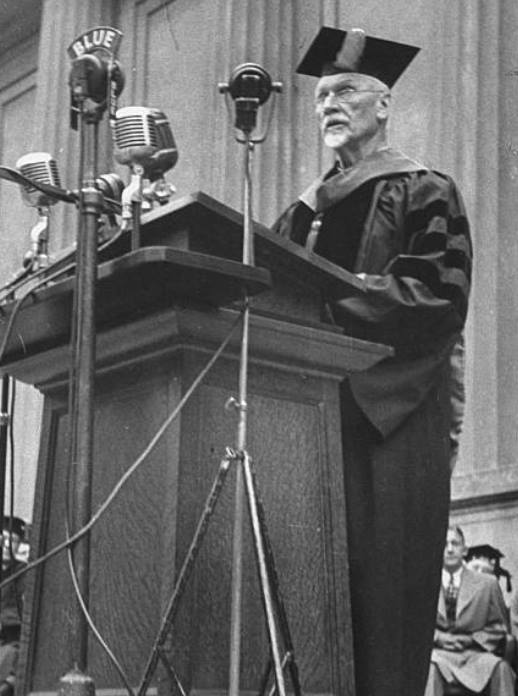
Such was the admiration of Smuts that his statue stands outside Westminster on Parliament Square in London for his contribution to world politics and as a great reformer.

Now he stands alongside the likes of Ghandi, Mandela and Abraham Lincoln as the only other ‘foreign’ statesmen honoured in the square.  Whilst, ironically, in South Africa his legacy has taken an absolute battering and his statues removed.

Take the time to listen to Smuts’ speech to both houses of Parliament, note his views on all mankind’s basic freedoms and what he envisions as the future by way of fundamental reforms.  Also note the short praise by Winston Churchill when Smuts concludes his speech and the reaction of the British Parliament, a reaction that has not been seen in British politics since, it is very unique.


Charity

In 1921 Smuts, along with Field Marshal Haig, established The Royal Commonwealth Ex-Services League (RCEL) in Cape Town.  The RCEL sought to consolidate war veteran’s charities all over the world to care for the returning military service personnel in the Commonwealth.  It saw the establishment or re-purposed institutions which now play a significant role in care for servicemen worldwide, The Royal British Legion, The Royal Canadian Legion, The Returned Services League Australia and The South African Legion to name a few.

He also made South Africa available to Jewish orphans escaping the Pogroms of Eastern Europe (despite resistance from South African nationalists).  For a full story on this remarkable chapter, see an earlier Observation Post 200 Jewish orphans saved, the story of Jan Smuts and Issac Ochberg

He again made South Africa available to Polish orphan children escaping the Nazi German and Soviet invasion of Poland in 1939, establishing a grateful and thriving small Polish community in South Africa (see earlier Observation Post South Africa provides sanctuary for Polish refugee children during WW2 ).

Academia

Smuts was also an accredited philosopher, his work on Holism brought him high acclaim from his Philosopher peers.  Holism can be defined as “the fundamental factor operative towards the creation of wholes in the universe” and was published in 1926.  For Smuts it formed the grounding behind his concepts of the League of Nations and United Nations.

Smuts was also an accredited Botanist, his books and illustrations on South African grasses (veld) are still regarded as the definitive work.

21731360_2020995841462737_816238144166127637_nWhilst studying law at Christ’s College at Cambridge University, he was rated as one of the top three students they have ever had (Christ’s College is nearly 600-year-old).  The other two were John Milton and Charles Darwin.

His intellect was unsurpassed, to pass an exam at Cambridge he learnt Greek (fluently) in just 6 days. His wife was no intellectual slouch either, later in life Jan Smuts and Ouma Smuts used to tease one another when one would recite a Bible verse and the other would be expected to recite the following one, from memory, in Greek!

In 1948, Smuts was elected Chancellor of the University of Cambridge, the first real non-Briton outside of British Royalty to be elected to the position in the 800 year-old history of Cambridge University.

Vision

Smuts’ idea of ‘Union’ and vision for South Africa was that of a ‘United States of South Africa’ including countries like Namibia, Botswana and Zimbabwe in the Union.  It was to be a significant player on the world stage drawing on Africa’s vast resources to see it as a leading political and economic power block (much like the USA is now).  Can you imagine if Botswana and Rhodesia voted to join the Union (they chose not to at the time), what a different history we would have seen in Southern Africa – ‘Apartheid’ may never have happened just for starters.

A humble man

Personally, Smuts was a God-fearing, frugal and humble man. He chose as his house an old rickety, uninsulated, fully corrugated iron, transportable military head office.  He preferred to sleep outside on the ‘stoup’ (veranda) on a small single hard wood bed, his garden was the natural veld. There were no stately mansions or ‘Nkandla’ with ‘fire pools’ for Smuts and he would not have had it anyway.

Legacy

The National Party in a sinister move, gradually and over the long period of Apartheid insidiously smeared Smuts and his legacy, erasing from the general consciousness of just what a great South African Smuts had become. Modern South Africans grew up with almost no regard for Smuts, and if you had to ask a young Black South African today who Smuts was he’ll probably say he was one of the white Apartheid monsters, the white English children will have no idea and the White Afrikaans ones may remember something about him been traitor to Afrikaners.  A student in Canada studying world politics would have a better grip on Smuts than a South African student.

Luckily this is beginning to change, and landmark Biographies are being written now which start to fully explore who and what Jan Smuts was, and it is both fascinating and eye-opening.  It is very hard to sum up all the greatness Smuts was to attain, and certainly for his time his deeds set him well apart from any of the other Statesmen South Africa has produced, certainly if you consider all the subsequent South African Premiers other than Mandela. We have a wonderful story in Smuts, and what we have a character of force – a polyglot, philosopher, botanist, intellectual, lawyer, politician, statesmen, reformer and warrior –  a story and a man who is best summed up by Alan Paton who said:

“Even the great thought he was great.”


Written and Researched by Peter Dickens.  References: Jan Smuts reconsidered Hermann Giliomee 26 January 2016, Richard Steyn’s Smuts: Unafraid of Greatness 2015.  Video footage copyright Associated Press.  My deep thanks to Philip Weyers for the Smuts family insight and access.

This article serves to highlights Smuts’ achievements by way of an Obituary.  There are other issues any national leader faces that highlight decisive but ‘unpopular’ action depending on the affected party’s point of view.  For more related articles in The Observation Post on  Jan Smuts please have a look at this link:

South Africa’s very own Communist Revolution – The Rand Revolt of 1922


“…. a Herculean of Irish-South African origin with a quite remarkable disregard for danger”.

This is arguably one of the most highest decorated and bravest South African characters you’ll ever meet, a man with a true warrior’s heart.

John_Sherwood-Kelly_VC

Lt. Col John Sherwood Kelly VC, CMG, DSO.

Lieutenant Colonel John “Jack” Sherwood Kelly VC CMG DSO joined the Kings Own Scottish Borderers in July 1915 when he was a Major.  The entry into the Regimental history reflects an extraordinary character and neatly sums him up:

“A new Major has joined us. The new Major was a Herculean of Irish-South African origin with a quite remarkable disregard for danger”.

The four-times-wounded Kelly was not a Regular officer but a formidable and experienced commander with a combat record going back to the 1896 Matabele Revolt. During his military career he achieved fame and notoriety for his mixture of heroic exploits and explosive temperament.

His Story, the early years.

The twin sons John Sherwood Kelly and Hubert Henry Kelly were born on 13 January 1880 in Lady Frere in the Cape Colony in South Africa as the son of James Kelly of Irish decent. James Kelly was at one time mayor of Lady Frere and believed in justice for all and was himself a hero. On 08 December 1876 James Kelly saved the lives of 25 people when the Italian ship, SS Nova Bella, ran into trouble at the St John’s river mouth.

John (also called “Jack”) attended the Queenstown Grammar School, Dale College in King William’s Town and St Andrew’s College in Grahamstown. At school John was keener on the outdoor activities such as horse riding and boxing, in which he excelled, than school work. During this period John first lost his mother, with whom he had a very close relationship, when he was only 12 and a year later in 1893 he lost his twin brother Hubert in a riding accident.

The 2nd Anglo-Boer War and the Matabele Revolt

In 1896, age 16, John enlisted in the British South Africa Police (BSAP) and saw action in the Matabele revolt in Rhodesia (now Zimbabwe). With the outbreak of the 2nd Anglo Boer War (1899 – 1902) he enlisted in the Southern Rhodesia Volunteers and saw action as a Trooper in the Relief of Mafeking as a Private in Colonel Plumer’s Column.

the_boer_war-_1899_-_1902_q82962

Boer Forces with a 94 Pounder ‘Long Tom’ besieging Mafeking

On 08 January 1901 John was commissioned as a Second Lieutenant in the Imperial Light Horse (ILH) and later joined Kitchener’s Fighting Scouts as a Lieutenant and saw action in Rhodesia, Orange Free State and Transvaal. He was twice mentioned in despatches during this time.

After the Anglo Boer War (1899 – 1902) John returned to civilian life were he worked in his father’s store, but this was not what John had in mind, he was a warrior at heart  – and what he does next is an extraordinary journey which sees him take part in battles all over the world.

Somaliland 

21370948_10155459206776480_6433792642172571671_n

The ‘Mad’ Mullah

Having resigned his commission he volunteered to serve with the British forces again in Somaliland for the 3rd Expedition against Haji Muhammad Abdullah Hassan (known to the British as Mad Mullah) over the period November 1902 to July 1903.

South Africa sent a British Mounted Infantry Company (141 men) from the 4th Bn The King’s Royal Rifle Corps, commanded by Captain G.C. Shakerley, and a Boer Mounted Infantry Company, known as the Somaliland Burgher Corps (100 men) commanded by Captain W. Bonham DSO.   The men brought their own horses and 50% spares for remounts.  In a strange twist, John Sherwood-Kelly joined the Boer Corps. During the period he was promoted to the rank of Sergeant.

In 1904 he was reduced to a Trooper again and returned to South Africa where he worked at first as a trader and later as a recruiter of native labour in the Transkei. In 1905/6 he again saw action during the Zululand Bambatha Rebellion.

Over the period 1906 to 1912 John was involved in the family business in Butterworth which was involved in the recruiting labour for the mines.

The Irish ‘Home Rule’ Crisis 

Finding a lasting solution for the Irish crisis remained a challenge for the British and in 1910 another attempt failed. The situation deteriorated and by 1912/13 the call went out for “all unionists” to return to Ireland. Being from Irish descent John and another brother of his, Edward answered the call and travelled to Ireland where they both joined the Ulster Volunteer Force.

image

Ulster Unionists gather during the Home Rule Crisis in 1910

With war clouds gathering over Europe late 1913 and early 1914 the Irish crisis dropped on the list of priorities and by July 1914 John and Edward travelled to London. John being a man that liked adventure saw the gathering of war clouds as an opportunity for him to become involved.

John soon joined the 2nd Battalion King Edward’s Horse as a Private. With a chest full of medals it was not long before John was promoted to 2nd Lieutenant. During this time John met Nellie Green and soon John and Nellie were active in the London social life.

Gallipoli Campaign and his DSO

During the Gallipoli campaign a Jack Sherwood-Kelly, would command the King’s Own Scottish Borderers and would be decorated with a Distinguished Service Order (DSO) for his actions.

21414688_10155459245061480_8786904573958492543_o

Kings Own Scottish Borderers on the offensive during the Gallipoli Campaign

On 21 October 1915 John’s lungs got badly burned by gas from the Turks and he was evacuated to the hospital, but returned to the frontline on 28 October. After his return John led his men to in a frontal attack to capture a Turkish trench that was threatening his own forces. Only 6 men returned and John was wounded three times. For this John was awarded the Distinguish Service Order (DSO). The first South African to be awarded the DSO during World War One.

During his leave to recover his wounds, John married Nellie on 22 April 1916. Early May 1916 saw John recalled to the front once again in command of a battalion, this time the 1st Battalion Royal Inniskilling Fusiliers as part of the 29th Division preparing for the upcoming Battle of the Somme.

The Somme Offensive

In France, leading his Battalion from the front during the fighting in the Beaumont Hamel sector John was shot through the lung and he was saved by Jack Johnson until he could be evacuated back to London.

somme

Officers of the Royal Inniskilling Fusiliers take a tea break during the Somme Offensive

During July 1916 John and his wife Nellie embarked on a recruiting tour to South Africa where John was received as hero. On his return to England in September 1916 John immediately reported for duty. John remained in England and on 29 November 1916 received his Distinguish Service Order (DSO) from King George V.

During November 1916 John was posted to the 3rd Battalion Kings Own Scottish Borderers as a Major. Very soon after arrival requested to be transferred to the 10th Norfolk Reserve Battalion

On 01 January 1917 John Sherwood Kelly was awarded the Distinguished Order of St Micheal and St George, Third Class or Companion, post nominal CMG. It is awarded for service to the Empire, partly for his recruiting drive in South Africa.

Ypres and Passchendaele

In February 1917 John was again posted to the Royal Inniskilling Fusiliers as Officer Commanding. Early part of 1917 saw a new British offensive in Vimmy and Arras which was followed by offensives in Ypres and Passchendaele. A smaller offensive was planned for November 1917 in the Cambrai sector, using the new weapon “the Mark 1 Tank”.

On 20 November 1917, the opening day of the first Battle of Cambrai, 87th Brigade advanced on Marcoing, three miles south-west of Cambrai. 1st Battalion, The Royal Inniskilling Fusiliers, crossed the Canal de St Quentin by the lock east of Marcoing copse.

cambri

Men of the Royal Inniskilling Fusiliers advancing in the Cambrai sector 20th November 1917

For his gallantry during the crossing of the canal and in leading the attack against the enemy defences on the far side, Acting Lieutenant Colonel John Sherwood-Kelly was awarded the highest accolade for bravery – the Victoria Cross. (VC)

Two companies of 1st Battalion, The Border Regiment, crossed the canal by the railway bridge at Marcoing and one at the lock by the railway station at the north-eastern outskirts of the town. During the action Sergeant C. E .Spackman was awarded the VC for attacking a machine-gun which threatened this advance.

In the same action John was also awarded the Victoria Cross (VC). His citation reads as follows:

“For most conspicuous bravery and fearless leading when a party of men of another unit detailed to cover the passage of the canal by his battalion were held up on the near side of the canal by heavy rifle fire directed on the bridge. Lieutenant Colonel Sherwood-Kelly at once ordered covering fire, personally led the leading company of his battalion across the canal and, after crossing, reconnoitred under heavy rifle fire and machine gun fire the high ground held by the enemy.

The left flank of his battalion advancing to the assault of this objective was held up by a thick belt of wire, where upon he crossed to that flank, and with a Lewis gun team, forced his way under heavy fire through obstacles, got the gun into position on the far side, and covered the advance of his battalion through the wire, thereby enabling them to capture the position.

Later, he personally led a charge against some pits from which a heavy fire was being directed on his men, captured the pits, together with five machine guns and forty six prisoners, and killed a large number of the enemy.

The great gallantry displayed by this officer throughout the day inspired the greatest confidence in his men, and it was mainly due to his example and devotion to duty that his battalion was enabled to capture and hold their objective”.

The Germans launched a counter attack which was successfully repelled by the 29th Division during which time Acting Captain A. M. Lascelles, another South African hero, of the 14th Durham Light Infantry who was also awarded a Victoria Cross (VC). John returned to a hospital in London having been gassed again.

On 11 January 1918 the London Gazette reported that John had been awarded the Victoria Cross which he received from King George on 23 January 1918 at Buckingham Palace.

North Russia

After the end of World War 1, John Sherwood-Kelly took command of the second Battalion of the Hampsire Regiment in the North Russian Campaign in July 1919.  Here he came under criticism from the British Command in Russia, firstly for withdrawing his troops from an attack against the Bolsheviks at Trotsia, he cited improper terrain to attack (it was a mash), no communication and stiff resistance from the Bolsheviks.

But the criticism did not stop there, in 1919 the British developed a new and more effective gas, they chose to trial it on the Bolsheviks. John Sherwood-Kelly was now in command of a very mixed outfit on the railway front as part of the Vologda Force, and he was ordered to carry out the attack on the Bolsheviks under the cover of a large ground discharge of this new poisonous gas.  John objected, possibly because of his experience of gas and wounds he had sustained from it, but also because he felt the objects of the raid could be achieved by other means which did not put his men to overt risk.

russia

Troops of the Hampshire Regiment in Vladivostok 1919

The gas attack did not take place, and John was relieved of his command and returned to Britain.  On arrival, he promptly went to the press and publicly criticised the British campaign in North Russia in the Daily Express and Sunday Express.

Incensed that such a highly decorated officer should be so critical, Churchill wanted an example made, and against all advise not to , John Sherwood Kelly was court marshalled on the 6th October 1919 on the grounds of contravening The Kings Regulations (which restricted officers from dealing with the media on military matters).

John pleaded guilty, but also entered a plea in mitigation, which read:

“I plead with you to believe that the action I took was to protect my men’s lives against needless sacrifice and to save the country from squandering wealth it could ill afford.”

He was found guilty and severely reprimanded. A man of very strong principle he resigned from the Army with the rank of Lieutenant Colonel just two weeks later and entered politics.

Politics

John Kelly-Sherwood stood for the Conservative Party and took part in two General Elections for the constituency of Clay Cross in Derbyshire. His controversial and outspoken style even struck a chord among hardened socialist supporters in this largely mining seat. He was defeated in the 1923 elections and again in 1924. However, true to his character, during the election rallies, Kelly again hit the national headlines having thrashed some hecklers at Langwith.

In later years, Kelly worked for Bolivia Concessions Limited building roads and railways across Bolivia and went big game hunting in Africa where he contracted malaria and died on the 18th August 1931.  He was granted a full military funeral and is buried at Brookwood Military cemetery in Surrey, England.

An incredibly brave man who stood head and shoulders above his peers, his military career and military exploits are nothing short of impressive, a proper leader of men and a pure South African warrior of the highest order. His Victoria Cross is displayed at the National Museum of Military History in Johannesburg for anyone who wants to learn more about South Africa’s finest.


Researched by Peter Dickens with extract from The VC and the GC, The Complete History, published by Methuen, The VC and GC Association in 2013, Wikipedia and Charles Ross’ article for The South African Legion with grateful thanks. Image copyrights – Imperial War Museum.