In his obituary Mr. J Elsegood refers to the late Colonel, a distinguished soldier, as:
“one of only two men to win the Van Riebeeck Decoration (DVR) – for distinguished service in the field against the enemy – and also the Southern Cross Decoration (SD)”.
Without any other qualifying awards stated and attributed to late Colonel to justify his statement, Mr Elsegood is patently incorrect. Three examples of historical fact demonstrate Mr Elsegood’s inaccurate missive and can be found on a simple source such as Wikipedia:
• Major Arthur Walker HCG and Bar, SM (February 1953 – 28 March 2016) was a South African Air Force helicopter pilot who was twice awarded the Honoris Crux Gold decoration during the South African Border War. The Honoris Crux Gold was the highest military award for bravery awarded to members of the South African Defence Force. https://en.wikipedia.org/wiki/Arthur_Walker_(Pilot)
• Andrew Frederick Weatherby (Anthony) Beauchamp- roctor, VC, DSO, MC & Bar, DFC (4 September 1894 – 21 June 1921) was a South African airman and a recipient of the Victoria Cross, the highest award for gallantry in the face of the enemy that can be awarded to British and Commonwealth forces. He was South Africa’s leading ace of the First World War, being credited with 54 aerial victories.
• Adolph Gysbert Malan, DSO & Bar, DFC & Bar (3 October 1910 – 17 September 1963), better known as Sailor Malan, was a South African fighter pilot and flying ace in the Royal Air Force (RAF) who led No. 74 Squadron RAF during the Battle of Britain.[1] He finished his fighter career in 1941 with twenty-seven destroyed, seven shared destroyed and two unconfirmed, three probables and sixteen damaged. At the time he was the RAF’s leading ace, and one of the highest scoring pilots to have served wholly with RAF Fighter Command during the Second World War.
All three were air war recipients.
So, to the publication by Mr. J. Elsegood – anyone can write what they like, yet if opining on historical fact, it may be prudent for a Wikipedia search, something that even a year one undergraduate student is advised not to use. Or he could just reference this site and an accurate source article on the highest and most decorated South Africans written by Peter Dickens – link as follows; South Africa’s top military medalists
No shortage of information out there!
Written for the Observation Post by Dr. Garth Benneyworth
Sir Winston Churchill the drunk? Nazi propaganda did a very good job painting Churchill as a drunk and glutton, in the Nazi Propaganda Ministry’s block buster of about the Boer War “Uncle Kruger” Ohm Krüger (1941), Churchill is depicted as a Concentration Camp Commandant, complete with bulldog, which whilst feasting himself he also feeds prime cuts to his bulldog, all the time whilst his Boer women and children in the camp are being starved to death.1
Churchill as depicted in Ohm Krüger (1941)
In another propaganda poster – this one from Serbia during World War 2, called ‘Churchill behind the mask’. After taking off his mask shown to the public, halo and all, a Jewish star now above his head and showing a drunken, haggard face and whiskey bottle in his pocket.
The poster falls part of an anti-Semitic campaign called ‘The Grand Anti-Masonic Exhibition’, which opened in Belgrade, in occupied Serbia on 22 October 1941. Financed by Nazi Germans and opened with the support of collaborationist leader Milan Nedić. Although being anti-Masonic in its title, the primary purpose was to promote antisemitic ideology and intensify hatred of Jews – ironically Churchill was a Freemason for a short time, but that is coincidental.
A famous quote has also entered the lexicon of Winston Churchill as proof positive he was a ‘drunk’ (bear in mind its the only quote) – Churchill was accompanied Ronald Golding his bodyguard and whilst exiting the Parliament building and he was confronted by Bessie Braddock, a fellow MP, who said:
Bessie Braddock: “Winston, you are drunk, and what’s more you are disgustingly drunk.”
Churchill replied: “Bessie, my dear, you are ugly, and what’s more, you are disgustingly ugly. But tomorrow I shall be sober and you will still be disgustingly ugly.”
A lush surely this Churchill fellow must be, he said so – right? Turns out Ronald Golding later admitted Churchill was not drunk that night, merely exhausted and unsteady. Being tired he gave Braddock both barrels, and what he quoted was from his rather photographic memory, and it was a W.C Fields character in the movie “its a gift” who when told he is drunk, responds, “Yeah, and you’re crazy. But I’ll be sober tomorrow and you’ll be crazy the rest of your life.” So, the Bessie Braddock encounter was really Churchill editing and reciting W. C. Fields.2
Was Churchill known for drinking? In fact no member of his family ever saw Churchill the worse for drink, they saw him drink yes, but never ‘drunk’. Richard M. Langworth spent 40 years researching Churchill and only found one reference of him been drunk … it came from a military staffer who helped Churchill and Eden on a wobbly walk back to the British Embassy in Teheran, this after a late-night of mutual toasts with the Russians.3
Whilst it is true that at the on-set of the South African War (1899-1902) – Churchill, the son of a Baron and part of British well-to-do society, aged 25 and acting as a correspondent on the Morning Post took with him 36 bottles of wine, 18 bottles of ten-year old scotch, and 6 bottles of vintage brandy. Such was the arrogance of aristocracy in addition to this booze cabinet he also took a valet with him to South Africa. However, if you step back from this and see that Churchill took with him a full year’s supply, then that ‘booze’ cabinet hardly makes a mark.4
With this Churchill became synonymous with two things according to modern writers – alcohol and war.
In one famous wartime episode during World War 2, when George VI set a personal example to the troops by giving up alcohol, Churchill declared the whole idea absurd and announced he would not be giving up drink just because the King had.5
He also became synonymous with excess when it came to food, cigars and alcohol, he was known to consume high degrees of relatively low ABV Champagne and watered down brandy. On the food front he detested the idea of the ‘French’ manner of serving seven courses starting with an aperitif and ending with a small dessert. On the ‘formal 7 course’ menu he would start with the meal he enjoyed the most and end on the one he enjoyed least.6
He started the day (every-day) with a small whiskey and water, his daughter would recall it as the “Papa Cocktail” – a smidgen of Johnnie Walker covering the bottom of a tumbler, which was then filled with water and sipped throughout the morning. This practice Winston Churchill learned as a Victorian habit – as a young man in India and South Africa (see My Early Life) he writes that the water was unfit to drink, and one had to add whisky and, “by dint of careful application I learned to like it.”7 Jock Colville, his private secretary would say of the ‘papa cocktail’ that it was so watered down it was akin to mouthwash.8
He however was renowned, not for drinking whiskey, but for drinking brandy and champagne both at lunchtime and dinner, and he was renowned for putting away copious amounts of it. He averaged on 500ml of 12.5% ABV Pol Roger Champagne for lunch and 500ml of Pol Roger Champagne for dinner along with a couple of diluted brandy glasses per day – in all this is estimated about 150ml AA per day. It certainly is ‘heavy drinking’ by any standard but in context of his time Russian delegations meeting him, thought of him as a ‘lightweight’ on this front. Having also said that, large amounts of adult population in South Africa still consume a bottle of wine and a couple of spirit chasers a day – 150ml AA. Only on reaching 76 years of age did Churchill decide to ‘cut down’ a little and said:
“I am trying to cut down on alcohol. I have knocked off brandy and take Cointreau instead. I disliked whiskey at first. It was only when I was a subaltern in India, and there was a choice between dirty water and dirty water with some whiskey in it, that I got to like it. I have always, since that time, made a point of keeping in practice.”9
Churchill would also not “nurse” a bottle of alcohol the way a alcoholic would, and seldom drank ‘neat’ spirits (preferring not to), unlike alcoholics he also did not drink randomly during the day, sticking to mealtimes instead, and even then none of his colleagues ever reported seeing Churchill the worse for drink. Thus Churchill’s famous quip:
“I have taken more out of alcohol than alcohol has taken out of me.”10
Very famously, Churchill was knocked down by a car New York in 1931 during the American Prohibition 1920 – 1933 on alcohol (he was looking the wrong way), Dr. Otto C. Pickhardt attended to him, actually issued a medical note that Churchill’s medical condition “necessitates the use of alcoholic spirits especially at mealtimes,” specifying 250cc per day as the minimum. A little cheeky to overcome the rigours of Prohibition perhaps, but this is not a sign of dependency – 5 years after this incident in 1936 he took a bet with Rothermere that he could abstain from hard spirits for a year – which apparently he did.11
Churchill’s famous ‘Doctor’s note’
After World War 2, he developed a reputation for really enjoying food and drink, One visitor from the period noted: “There is always some alcohol in his blood, and it reaches its peak late in the evening after he has had two or three scotches, several glasses of champagne, at least two brandies, and a highball… but his family never sees him the worst for drink.”
That is the point with Churchill, he drank copious amounts of alcohol – no doubt, but he ‘held his booze’ remarkably well, he was never really totally inebriated or ‘drunk’ in fact he detested drunks and could not stand been out of control of his faculties and senses. He was raised as an aristocrat, he believed drunkenness to be contemptible and disgusting, and a fault in which no gentleman indulged.
He also had a very healthy mental appreciation for alcohol and remarked, “my father taught me to have the utmost contempt for people who get drunk.” adding to this he said that a glass of Champagne lifts the spirits, sharpens the wits, but “a bottle produces the opposite effect.”12 Here we also note that Churchill throughout his life kept his wits about him and kept them as sharp as ever.
Churchill with his favourite tipple – Pol Roger champagne
The image of excess is often even associated with Churchill’s disposition to smoking cigars. However very few people know that he seldom smoked more than a third of a cigar, allowing the cigar to burn itself out instead and if anything he took to chewing the end, using it more as image prop than anything else.13
On the physical health front, Churchill did have a heart attack during World War 2, how much of that was excess and how much of it stress is anyone’s guess, however he did recover remarkably well, Dr. Mather, his Doctor reported that Churchill’s blood pressure was a very healthy and very consistent 140/80 well into his eighties.14 In fact most of Churchill’s accompanying younger male military personnel and politicians complained that they could hardly keep up with him, his energy and pace, the speed at which he did everything was legendary. He lived to 90 years old, and died of a stroke – a very long and fruitful innings and not one marred by any alcohol related sickness like liver failure/disease.16
Was he an alcoholic? The general opinion amongst some medical practitioners and historians is that he was not. He demonstrated no real medical signs of a person associated with alcoholism. Did he ‘abuse’ alcohol in our 21st century understanding of excessive drinking and functional alcoholism – yes, no doubt in this context you would place him as someone who abused alcohol for his own edification and enjoyment (of course he would have no idea what you were talking about, as a Victorian born in 1874 faced with a 2024 definition of alcoholism – the modern-day idea simply would not compute).
As to the propaganda, the relentless drive by Hitler and his Nazi Propaganda Ministry to paint Churchill as a glutton and a drunk – rather surprisingly that is the legacy which carries to this day. As an example I once posted Churchill’s medals on a Boer War social media group, it was met with a particular nasty Anglophobic Afrikaner who warned users that Churchill was a rabid alcoholic and his alcohol addled, warmongering mind was responsible for the deaths of hundreds of thousands of people – the devil reincarnate – and I should be ‘very weary’ of who I regard as ‘my hero’ or he would have a few more things to say about him.
Now, I’m a South African – the simple fact he thinks of Churchill as ‘mine’ denotes a massive bias on his behalf and ironically I fear alcohol in the form of far too much ‘branders’ has fuelled his outlook – however, it is interesting to note that in this grouping Churchill’s legacy is still viewed by some in the light of propaganda and not the actual historiography of the man.
Written and Researched by Peter Dickens
Footnotes
H Steinhoff, Ohm Krüger (1941, Tobis Film, Screenshot from YouTube) ↩︎
R Langworth, Drunk and Ugly: The Rumour Mill, International Churchill Society 10 January 2011 [accessed 12 August 2024] ↩︎
I noticed a blog post today from a fellow historian who took a swipe at a Boer War photograph colourising Facebook page for allowing a user to compare a black armband being worn by Lord Kitchener and his staff at the Veereniging Peace Conference to end the South African War (1899-1902) aka Boer War 2, to that of the Nazi armband worn by Adolf Hitler and his cabal during World War 2 (1939- 1945). The armband in question was a common funeral black band, in this case it marked the death of Queen Victoria on 22 Jan 1901.
Whilst all highly amusing and clearly all either ignorant and (more likely) a blatant and very cheap attempt to brand Lord Kitchener a Nazi, it does bring up a real comparison – which is the armband used by the Commandant General of the Ossewabrandwag and that of the armband used by the National Socialists (Nazi) – Adolf Hitler and his cabal.
The Ossewabrandwag (Ox Wagon Sentinel) was the largest and most successful Afrikaner Nationalist organisation with pro-Nazi sympathies prior and during World War 2. The Ossewabrangwag was formed on the back of the 1938 Great Trek Centennial celebration – the centennial under the directive of the Afrikaner Broederbond (Afrikaner Brotherhood) and its Chairman, Henning Klopper, sought to use the centenary anniversary of the Great Trek to unite the ‘Cape Afrikaners’ and the ‘Boere Afrikaners’ who were deemed by Klopper as been separated by Boer War 2. He strove to unite “the two separate hearts” of white Afrikanerdom into a singular ‘Boer’ archetype under the pioneering symbology of the Great trek and to literally map a ‘path to a South African Republic’ under a white Afrikaner hegemony. The trek re-enactment was very successful, and Henning managed to realign white Afrikaner identity under the Broederbond’s Christian Nationalist ideology and its archetypal outline calling it a “sacred happening”.1
The Ossewabrandwag (OB) was tasked with spreading the Broederbond’s (and the Purified National Party) ideology of Christian Nationalism like ‘wildfire’ across the country (hence the name). The OB’s national socialist leanings can be seen in correlation with other world ideologies of the time, and specifically to that of Nazi Germany.2
Christian Nationalism, although grounded in ‘Krugerism’ as a ideology, can be regarded as a derivative of German National Socialism and Italian Fascism and was identified as such by OB leaders like Balthazar Johannes “B. J.” Vorster (a future National Party Prime Minister/President) who in 1942 said:
“We stand for Christian Nationalism which is an ally of National Socialism. You can call this anti-democratic principle dictatorship if you wish. In Italy it is called Fascism, in Germany National Socialism (Nazism) and in South Africa, Christian Nationalism.”3
The leader of the Ossewabrandwag (OB), Dr. Johannes Van Rensburg as a Union Defence Force officer had met with Adolf Hitler and became an admirer, he then infused the OB with National Socialist ideology and the organisation took on distinctive fascist and Nazi ritual, insignia, structure, oaths and salutes.
Merely ‘anti-British’ they were not. Ideologically speaking the Ossewabrandwag (OB) took on anti-communism, antisemitism, the Nazi creed of ‘Blut und Boden’ (Blood and Soil) in terms of both racial purity and historic bond and rights to the land, the ‘Führer Principle‘, a derivative of the Nazi creed of ‘Kinder, Küche, Kirche‘ (Children, Kitchen, Church) as to the role of women and the role of the church in relation to state. In term of economic policy the OB adopted a derivative of the Nazi economic policy of expropriation of Jewish monopoly capital without compensation by adding “British monopoly capital’ to the mix .4
This image shows the militarisation and fascist leanings of the Ossewabrandwag – here’s a rare image not often seen – a Ossewabrandwag “Kommandant” in full para-military uniform with lapel badges, ‘crested eagle’ epaulettes and ‘lightning bolt’ cap badge insignia. In addition he is wearing a sam-browne belt and lanyard. His ‘green’ arm band signifies his rank – using the ‘crested eagle’ again and horizontal lines for scale of seniority.5
In adopting distinctive national socialist ideology and concepts as well as iconography and culture, Chief Commandant Hans van Rensburg went about ‘nazifying’ this ‘Cultural Front’ of Afrikaner Nationalism. The Broederbond had arbitrated a meeting between the National Party and the Ossewabrandwag agreeing to two clear lines of delineation between the two organisations – the National Party would look after the ‘political’ front of Afrikanerdom and the Ossewabrandwag the ‘cultural’ front – known as the Cradock Agreement it was ratified on 29 October 1940.6
Here is Hans van Rensburg complete with his high command Ossewabrandwag armband … note the Eagle iconography – the Ossewabrandwag adopted the Nazi Reichsadler – “Reich Eagle” – which replaced the German “Imperial Eagle” the Reichswappen.
As to Nazi German eagles, the Eagle and holder are the same, however symbology is given to the direction in which the eagle looks – the Reichsadler (Reich Eagle) looks left and the Parteiadler (Party Eagle) looks right.
Also, note the jodhpurs (horse riding pants), a firm militaristic and often fascist fashion statement – you can easily see his admiration for Hitler’s dress sense and iconography. However for all the Nazi iconography and ideology adopted by van Rensburg, after Nazi Germany lost the war, van Rensburg would quickly try and cover his tracks and the genocide committed by his heroes and say of them.
“It was the greatest disaster in my spiritual life to realise suddenly that the people I had thought to be the heroes of a new era in western civilisation should in fact turn out to be just a band of murderers and nothing else.”
In addition to the Ossewabrandwag other leading and influential Afrikaner Nationalists were forming German National Socialist movements with distinctive antisemitic and anti-communist leanings in South Africa. As a committed antisemite Louis Weichardt broke with the National Party on the 26 October 1933 and founded South Africa’s Nazi party equivalent – The South African Christian National Socialist Movement with a paramilitary ‘security’ or ‘body-guard’ section (modelled on Nazi Germany’s brown-shirted Sturmabteilung) called the ‘Gryshemde’ or Grey-shirts. In May 1934, the ‘Grey-shirts’ merged with the South African Christian National Socialist Movement and form a new enterprise called ‘The South African National Party’ (SANP). The SANP would all keep with the ‘grey-shirts’ as their dress and keep this identification and other Nazi iconography including extensive use of the swastika.7 Overall, Weichardt saw democracy as an outdated system and an invention of British imperialism and Jews.8
The SANP Grey-shirts loved armbands too, and their took two forms, one using the Hitler Youth Red and Black band and swastika and one which used the South African Flag’s colours at the time – Orange, White and Blue, and here they are:
Left to Right – standing outside the courthouse in Grahamstown in full SANP dress is Johannes von Strauss Moltke, Harry Inch and David Olivier. The alternate (OBB) Orange, White and Blue SANP armband is to the right.
Talking Boer War, not shy of nailing their colours to the mast and also linking their ideology to Boer War 2, ‘Die Waarheid/The truth’ – the SANP’s own newspaper, would claim a Jewish conspiracy as the cause of the war and Louis Weichardt would write:
“the disastrous Anglo-Boer War 1899-1902 was deliberately brought about by the Jewish mine magnets who circumvented Rhodes and Kruger alike”.9
Luckily for the Afrikaner Nationals and the likes of Hans van Rensburg and Louis Weichardt, the National Party came into power in 1948 and in the same year issued a general amnesty to all Afrikaner Nationalists who had flirted with Nazism, joined the Nazi Party or directed supported Nazi Germany, either through local political organs like the Ossewabrandwag, the New Order and the SANP Grey-shirts (and many other splinter groups) or even directly collaborating with the Nazi Propaganda Ministry (Radio Zeesen), or the Nazi German Wehrmacht (military), or the Nazi Schutzstaffel (SS and Waffen SS) or the Nazi German Abwehr (intelligence) service. 10
Written and Researched by Peter Dickens
Footnotes
Harrison, David. 1981. The White Tribe of Africa – South Africa in Perspective. University of California Press. Pages 103 – 106. ↩︎
D.P. Olivier, May 2021, “A special kind of colonist” : An analytical and historical study of the Ossewa-Brandwag as an anti-colonial resistance movement, thesis University of the North West ↩︎
Bunting, Brian. 1964. The Rise of the Afrikaner Reich. Penguin Books. Page 88 ↩︎
Bunting, Brian. 1964. The Rise of the Afrikaner Reich. Penguin Books, Nelson Mandela Foundation O’Malley Web Digital Library, Chapter 6 ↩︎
Ditsong Museum of Military History. Saxonwald, Johannesburg – Ossewabrandwag Display ↩︎
Fokkens, A. M. Afrikaner unrest within South Africa during the Second World War and the measures taken to suppress it. Journal for Contemporary History. 2012. Page 130 ↩︎
A Perfect Storm – Antisemitism in South Africa 1930-1948 By Milton Shain pages 55 – 58 ↩︎
Werner Bouwer, National Socialism and Nazism in South Africa: The case of L.T. Weichardt and his Greyshirt movements, 1933-1946. Page 18 ↩︎
A Perfect Storm – Antisemitism in South Africa 1930-1940 By Milton Shain page 58 ↩︎
Kleynhans, Evert. Hitler’s Spies: Secret Agents and the Intelligence War in South Africa 1939-1945. Jonathan Ball Publishers 2021 ↩︎
So, here’s an interesting “first” for South Africa, we are the first nation who can hold up the very first aircraft hijacker as our own. Now, it’s not what you think, he’s not your deranged Islamic extremist or strait forward nut-job hijacking some or other commercial airliner … he’s a South African Air Force pilot and the aircraft he hijacked was a military aircraft belonging to the Axis forces during World War 2. His name was Lt. Colonel Edward Theodore Strever, South African Air Force (SAAF) No. 217 Squadron, or just plain “Ted” and both he, and his deeds are the stuff of legend, here’s his hijack story:
The Attack
During the war, Ted Strever, then a SAAF Lieutenant, found himself seconded to the Royal Air Force (RAF) flying a RAF 217 Squadron Bristol Beaufort twin-engined torpedo bomber L9820 and based at Luqa airfield in the isle of Malta. On 28th July 1942, 217 Squadron was engaged in attacking Italian Merchant shipping off Southern Greece. On that day Lt. Edward “Ted” Strever (SAAF) is captaining his Bristol Beaufort with a motley crew, his navigator is Pilot Officer William Dunsmore, Royal Air Force (RAF), from Liverpool. Sergeant John Wilkinson is his wireless operator, Royal New Zealand Air Force (RNZAF) from Auckland and Sergeant Alexander Brown is his Air gunner, also Royal New Zealand Air Force (RNZAF) from Timaru.
RAF 217 Squadron Bristol Beauforts
They spot a 12,000 ton Italian cargo ship escorted by two destroyers, targeting the cargo ship they go into a torpedo run, intense enemy defensive fire sees Ted Strever’s wingman go down, but Strever is able to get his torpedo away. His torpedo slams into the side of the target in a direct hit, eventually sinking the vessel. However in passing over the target Ted’s Bristol Beaufort is shot up, taking damage to both engines. The stricken bomber is forced into a water crash-landing, the crew all survive and in the 90 seconds it takes the Bristol Beaufort takes to sink, they all manage to scramble into an inflatable dingy.
Taken Prisoner
Not long after scrambling into their dingy after the crash Ted and his crew were picked up by an Axis sea plane – an Italian CANT Z506B ‘Airone’ (Heron), a maritime reconnaissance plane and bomber, it has 3 engines, a crew of 4 and floats – it puts down near the dingy and Ted and his crew are hauled aboard. The Italian crew make the Allied crew Prisoners of War – and kindly give them some brandy and cigarettes to smooth their ordeal of the attack and crash. They are then flown to a small harbour on the island of Corfu. Taken to a nearly camp, the Italians continue to treat them well and they are fed a meal of steak, tomatoes and wine – more cigarettes and given comfortable beds.
The next day after having eggs for breakfast the Italian’s informed the captured Allied crewmen they will be taken to Taranto in Italy, here they would spend the rest of the war as prisoners – they immediately begin to conspire as to escaping. A few hours later they are back at the small harbour, and back in the same aircraft that had rescued them the day before – the CANT Z506B ‘Airone’ – with the same 4 Italian aircrew, only this time there is an extra armed guard – a corporal.
CANT Z506B ‘Airone’
The seaplane took off and set a westwards course, after a short time, the Allied crew talking softly amongst themselves, hatched a hasty escape plan. They are about to make history with the very first “skyjacking”.
The Escape
Sergeant Wilkinson (RNZAF) leans forward and punches the Arione’s wireless operator hard in the face, he leaps over the failing body and over-powers the armed guard, taking his pistol and passing it to Lt. Ted Strever (SAAF). Pilot Officer Dunsmore (RAF) and Sergeant Brown (RNAF), tackle the aircraft’s engineer. The commotion alerts the two pilots, one draws his pistol and the other fumbles with a sub machine gun, however in trying to recover control of the aircraft the pistol is knocked from the pilot’s hand by his colleague. Ted Strever advances on the pilots using the corporal as a human shield and then disarms the pilots – the Italians are then tied up using their own belts. The aircraft is now in the hands of Ted and his crew and Ted takes over the controls – it’s all a little too much for the Italian corporal, not used to flying and in all the excitement he becomes violently air-sick.
More problems rear their heads, Ted Strever is unfamiliar with this aircraft type, cannot understand the fuel situation and had no maps. So, they untie the Italian co-pilot, put him in the pilot’s seat and at gun-point instruct him to fly the aircraft to Malta.
Next was the problem of flying an enemy Italian aircraft into Allied controlled airspace around Malta. On approaching Malta they are intercepted by 3 RAF Spitfires from No. 603 Squadron, the Spitfires immediately pounce on the Arione and start shooting it up. P/O Dunsmore frantically tries to wave the deadly attack off by leaning out and waving his white vest out a window – but to no avail. The Arione, now full of holes and badly shot up, makes an immediate sea landing. The Allied crew climb on top of the wings and start frantically waving the Spitfires off – the target neutralised the Spitfires break the attack. The British then dispatch a RAF ‘crash-boat’, a high speed Air Sea Rescue Launch HSL 107, from Kalafrana to pick the aircrew and tow the sea-plane in.
Astonished to see four Allied aircrew in the enemy plane a member of the RAF crash boat team tasked with towing them to St Paul’s Bay is reported to have said
“We thought it was old Mussolini coming to give himself up!”
RAF ‘Crash Boat’
Feeling a little guilty that the Italian’s had treated them so nicely when they were their POW’s, the Allied crew offered their apologies for not having any wine or brandy on them – but they promised them they would re-pay the compliment. One of the Italian crew, in rather good spirits realising that the war was finally over for him then produced a bottle of wine from his suitcase, which was promptly and very happily shared amongst both the air-crews.
Recognition
William Dunsmore was awarded the Distinguished Flying Cross (DFC), John Wilkinson and Alexander Brown as NCO’s eared the Distinguished Flying Medal (DFM). All survived the war.
Ted Strever also received a Distinguished Flying Cross (DFC) for this action. He died in Haenertsburg, South Africa in 1997 at the age of 77. This was only one instant in what was a very highly colourful and brave career in the Air Force. His daughter Gail Strever-Morkel published a book on his life, called ‘On Laughter-Silvered Wings: The Story of Lt. Col. E.T (Ted) Strever D.F.C’ and it well worth a read should anyone get their hands on a copy or order an electronic copy.
A short documentary was recently made by Mark Felton Productions and is on YouTube, here’s the link:
One thing is certain, they sure don’t make airmen like this anymore. A unique, brave and distinctively South African legacy.
Written and Researched by Peter Dickens
References
On Laughter-Silvered Wings: The Story of Lt. Col. E.T (Ted) Strever D.F.C By Gail Strever-Morkel. Published 2013.
PB Lucas (editor): Wings of War – Published 1983
The Reader’s Digest Illustrated Story of World War 2, vol.I.
The London Gazette dated Friday 4th September, 1942, regarding the award of the DFC.
So, if you like me and love your beer, and as a brewery owner I can’t help myself – Munich (or München in German) is THE place to go. Bavaria’s capital and it’s the venue of the Octoberfest and there is much ‘Ein Prosit der Gemütlichkeit’ (cheers to the sociability), Zigge, Zagge, Hoi, Hoi, Hoi and clunking of large vessels of beer called Steinzeugkrug full of cold, hoppy, golden nectar. It’s a fun place, I certainly love it, it’s a beer lover’s Mecca – no doubt.
But as a purveyor of fine history snippets too, my love of history also kicks in, and in Munich, there is a very sinister and dark past, and there’s tonnes of, literally tonnes of inconvenient history. You would not notice it today as an average tourist “in it for the beer,” Munich has been ‘scrubbed clean’. There is almost no evidence of its history as the epicentre and cultural pilgrimage of Nazism. In fact they go a long way in Munich not to celebrate World War 2 historic tourism, but that has not stopped a couple of freelance ‘independent and opportunist’ tour guides pulling an informal crowd for the unofficial Nazi tour of beer-houses and locations attended by the likes of Hitler and his cronies.
The sterility of Munich got me thinking, at what point is the removal of statues and memorials deemed ‘offensive’ perfectly acceptable and what point is it not? At what point do we, like the city of Munich .. ‘scrub’ out our past completely, disregard the idea of preserving it for the purposes of a history teaching (even a lesson on the evilness it incurred) and hide it for fear of offending victims of it.
So what’s the big deal of this totally bland corner of the Feldherrnhalle monument (Field Marshal’s Hall – built in 1841 by King Ludwig I to celebrate the Bavarian Army), located on the Odeonsplatz – Munich’s town square. Here I am with my usual ironic grin celebrating the complete nothingness of what was a ‘holy’ site to Nazism – that exact nondescript corner – the site of huge pilgrimages and parades. The only evidence left, some plug holes in the original monument that held up the gigantic Nazi add-ons. Heck, this corner was so important that as an average Munich citizen you saluted the corner of this building – ‘Nazi style’ – whenever you walked passed it. Now there is nothing, not even an information plaque.
The importance of beer halls in establishing Nazism
Well, apart from being a historic monument to Bavaria, the Feldherrnhalle is also central to all the traditional beer halls and beer gardens located around is, and it’s in two of these nearby beer halls that this story begins. The famous Bürgerbräukeller beer hall – completely demolished now and replaced with a modern culture, music and arts centre, and the Löwenbräukeller beer hall. You can still visit the Löwenbräukeller (I have) and give a complimentary Ein Prosit and Zigge Zagga to the resident Oompa band, and again – nothing, zilch, nada on its Nazi history – not even on their website.
So, in the Bürgerbräukeller beer hall, Nazism as an ideology was effectively born and took hold. Central to the beer hall was a rectangular grand hall which could accommodate up to 3,000 people and a large cellar, ideal for political meetings and rallies. From 1920 to 1923, the Bürgerbräukeller was one of the main gathering places of the Nazi Party, it was effectively established there, and it was from there that Adolf Hitler launched the infamous Beer Hall Putsch (revolt) on the 8th November 1923. Also known as the Munich Putsch, in essence Hitler and his fellow Nazi cronies attempted to pull off a military coup and overthrow the Weimar Republic.
Images: Bürgerbräukeller’s Great Hall left as it was then, Löwenbräu keller, as it is now.
Throughout 1923, the economic and political crisis struck. The Nazi Party and other nationalists believed that an armed takeover of Bavaria was possible and could even overthrow the Republic in Berlin. Hitler and the Nazi Party collaborated with others such as General Erich Ludendorff and Gustav von Kahr (a founding right wing Nationalist leader) to put a plan together to attempt a military coup. By August 1923, the plan was set and weapons and transport were gathered. However by November 1923, some of the Nazi conspirators got cold feet as news came in that the German Army in Berlin would support the government and not the conspirators.
Hitler, realising that von Kahr sought only to control him and did not have it in him to initiate a coup, utterly frustrated by it all Hitler was determined that the plan would go ahead. On the 8 November 1923, he and a contingent of the party’s SA (Storm Detachment/Troopers) marched into the Bürgerbräukeller beer hall whilst von Kahr was giving a speech to 3,000 people there. The SA surrounded the hall and set up a machine gun. Hitler, surrounded by his associates including Hermann Goring, Rudolf Hess, Alfred Rosenberg, Adolf Lenk, Max Erwin von Scheubner-Richter, Wilhelm Adam, Robert Wagner and others (20 in total) then jumped up a chair, fired a gun-shot and shouted “The national revolution has broken out! The hall is surrounded by six hundred men. Nobody is allowed to leave.”
He went on to state that the Bavarian government was deposed and declared the formation of a new government with General Ludendorff as the head. At gun-point Von Kahr gave his support to Hitler. Dispatches were sent to trigger Ernst Röhm and his paramilitary group the Bund Reichskriegsflagge (Imperial War Flag Society) waiting at the Löwenbräukeller Beer Hall and Gerhard Rossbach who had a detachment right wing students at a nearby infantry officers school.
The Putsch was on. After his speeches Hitler received resounding applause from the crowd at the Bürgerbräukeller beer hall and Von Kahr and other members of the Bavarian government were taken into custody, Hitler departed the hall later in the evening to deal with another crisis, and mistakenly Von Kahr and his associates were released (they later took the opportunity to denounce the Nazi Party as illegal and join the government).
The night was marked by confusion and unrest among government officials, armed forces, police units, and individuals deciding where their loyalties lay. Early in the morning on the 9th November 1923 (around 3am), the first shots fired in the Putsch occurred when a local Reichswehr Army detachment loyal to the government spotted Röhm’s men coming out of the Löwenbräukeller Beer Hall. Encountering heavy fire Röhm and his men were forced to fall back. In the meantime, the Reichswehr officers put the garrison on alert and called for reinforcements.
Later that morning on 9 November, Hitler realised the Putsch had stalled, about to give up, and not sure what to do, the Putschists were rallied again by General Ludendorff who shouted “We will March” and with that Röhm’s force together with Hitler’s force (approximately 2000 men) marched out – but with no specific destination in mind. On the spur of the moment, General Ludendorff decided to lead them to the Bavarian Defence Ministry – which would take them past the ….. Feldherrnhalle and the Odeonsplatz … and here is where the corner of the Feldherrnhalle becomes important, because as they rounded this unremarkable corner of the monument they were met with 130 government soldiers and police blocking their way – and they found themselves in what is a fairly narrow road aside the monument in a sort of ‘Mexican Stand-off.’
Image: Nazi Putsch members – 9 November 1923
The two groups exchanged fire with one another, in all 4 were killed in the government’s forces and 16 Nazi Putschists were killed. In the firefight a couple of key things happened – most importantly the equivalent of a rather crooked ‘Sacred Cross’ legend was born .. the ‘Blutfahne’ (‘blood flag’). The Flag Bearer of the Nazi Flag was a SA member, Heinrich Trambauer, and he was badly wounded dropping the flag splattered with his blood, a second SA man, Andreas Bauriedl, was shot dead and fell dead onto the fallen flag, covering it in more blood. Secondly. Hermann Göring was badly wounded – and this wound would haunt him his entire life, leading to his violent morphine drug addiction which resulted in irrational decision making during the Second World War. The game was up, the Nazis scattered or were arrested. Göring escaped and was smuggled to Innsbruck. Finally, Hitler now on the run was arrested two days later on the 11th November 1923.
Hitler was sent to Landsberg Prison and put on trial for treason. Hitler’s trial took place from the 26 February to the 1 April 1924, he was ultimately found guilty of treason, but, with a sympathetic judge, he was sentenced to just five years in prison. Of this five years, Hitler only served nine months. But most importantly for the Nazi movement and to the detriment of the rest of world, Hitler was imprisoned alongside Rudolf Hess, Hess was a Hitler groupie – and held a fanatical admiration of him. He was also very articulate and ‘balanced’ Hitler enough to assist in writing Mein Kampf by Adolf Hitler (My Struggle) which honed Nazi ideology and philosophy.
Back to the beer halls of Munich, not long after been released, Hitler was back in his old haunt – the Bürgerbräukeller Beer Hall, where he promptly officially ‘re-established’ the Nazi party on 27 February 1925. Not to be left out, during the war, Adolf Hitler delivered his infamous 8 Nov 1942, Stalingrad speech from Löwenbräukeller Beer Hall.
Images: Left – the notice to reestablish the Nazi Party at a ceremony at the Bürgerbräukeller and the Bürgerbräukeller Great Hall hosting a Nazi rally.
The Nazification of the Feldherrnhalle
After the Nazis took power in 1933, Hitler turned the Feldherrnhalle into a memorial to the Nazis killed during the failed putsch. A memorial to the fallen SA men was put up on its east side, opposite the location of the shootings – crowning it with a Swastika. A Nazi add-on monument was mounted, the Mahnmal der Bewegung (Memorial to the Movement), basically a rectangular structure listing the names of the Nazi martyrs faced anyone standing at the corner of Feldherrnhalle monument. The back of the memorial read Und ihr habt doch gesiegt! (‘And you triumphed nevertheless!’). Around it flowers and wreaths were laid.
This memorial was under perpetual ceremonial guard by the SS. The Odeonsplatz square in front of the Feldherrnhalle was used for both SS parades and commemorative rallies. During some of these events the 16 Nazi dead were each commemorated by a temporary pillar placed in the Feldherrnhalle topped by a flame. Many new SS recruits took their oath of loyalty to Hitler in front of the memorial.
Passers-by were expected to hail the site with the Nazi salute. Those not wishing to salute, used a detour lane to by-pass the memorial and honour guard, sarcastically earning its nickname “Drückebergergasse” (meaning the ‘shirker’s lane’).
On 9 November 1935, the 16 Beer Hall Putsch Nazi dead were taken from their graves and to the Feldherrnhalle. The SA and SS carried them down to the Königsplatz, where two Ehrentempel (‘honour temples’) had been constructed. In each of the structures eight of the dead Nazis were interred in a sarcophagus bearing their name.
The 16 Beer Hall Putsch Nazi dead were regarded as the first ‘blood martyrs’ of the Nazi Party, and here’s where the Blutfahne – the ‘Blood Flag’ would make its appearance. It was brought out for the swearing-in of new recruits in front of the Feldherrnhalle and the taking of their oath of allegiance to Adolf Hitler specifically. It was also brought out for Der neunte Elfte – 9 November, literally ‘the ninth of the eleventh’ or 9/11 (not to be confused with the current 9/11 Twin Towers commemoration) and it became one of the most important dates on the Nazi calendar.
Notably, the chosen day to celebrate the Putsch is not the 9th November, when the 16 Nazi martyrs were killed, it was the 11th November – the day Hitler was arrested – so to his megalomaniac mind the more important date as his personal arrest signalled the end of the Putsch (never-mind Göring and others who were still at large).
Every year the Putsch would be commemorated nationwide, with the major wreath laying event taking place at the Feldherrnhalle. On the night of 8 November, Hitler would open the ceremonies and address the Alte Kämpfer (‘Old Fighters’ – veterans of the Putsch) in the Bürgerbräukeller Beer Hall.
The Blutfahne – the ‘Blood Flag’ was treated as a sacred object by the Nazi Party and carried by SS-Sturmbannführer Jakob Grimminger at various other Nazi Party ceremonies. One of the most visible uses of the flag was when Hitler, at the Party’s annual Nuremberg rallies, touched other Nazi banners with the Blutfahne, thereby “sanctifying” them. This was done in a special ceremony called the “flag consecration” (Fahnenweihe).
Image: Hitler behind the ‘Blood Flag’ performs a ‘flag consecration’ on a SS Banner.
Rather mysteriously, and its akin to any good ‘who done it’ mystery – the Blutfahne was last seen in public at the Volksstrum induction ceremony on 18 October 1944, thereafter it vanished, which for such a significant artefact and ‘national treasure’ remains a puzzle. Its current whereabouts are still unknown.
Throughout the Second World War, the 9/11 anniversary ceremony continued, propagandists pitched the 16 fallen as the first losses and the ceremony was an occasion to commemorate everyone who had died for Nazi Germany – the ceremony now akin in Nazi Germany to what is 11/11 today and the Whitehall Cenotaph parade. As the war went on, residents of Munich came increasingly to dread the approach of the anniversary, concerned that the presence of the top Nazi leaders in their city would act as a magnet for Allied bombers.
Images: Original colour images of the German 9/11 anniversary parade in front of the Feldherrnhalle monument on the Odeonsplatz town-square.
The End
Understandably the memorial was going to cause considerable controversy at the end of the war, and it did. Local Munich residents angrily and spontaneously smashed the Mahnmal der Bewegung to pieces on the 3rd June 1945. It was also famously defaced when a guilt ridden German painted graffiti on the memorial with the words “Concentration camps Dachau – Velden – Buchenwald, I am ashamed that I am a German.”
However it remains a site for Nazi pilgrimage, and even as late as April 1995, a World War 2 Veteran named Reinhold Elstner, took the opportunity to commit self-immolation suicide in front of Feldhernhalle to protest against “the ongoing official slander and demonization of the German people and German soldiers”. Each year neo-Fascist/neo-Nazi groups from various European countries and Germany itself try to hold a commemorative ceremony for him, which Bavarian authorities constantly try to prevent through state and federal courts.
So, very understandable the need to sanitise this memorial and discourage neo-Nazi and neo-Fascist groupings from using it to honour an ideology that provided such significant misery to millions of people. But I can’t but think there is no point sanitising it completely as has been done, use it to educate rather – at least an information board or story board which explains the tyranny the site once fostered, a lesson to humanity not to do it again, maybe even Holocaust Memorial sanctioned tour guides to balance and educate and do away with the freelance cowboys (maybe they’ve done it, but that was not the case when I was last in Munich) – lest we completely forget, lest the ‘blood flag’ suddenly re-appear from its secret stash and we open up more ‘clean’ space in which Neo-nazism and holocaust denial/conspiracy theory can thrive (there’s no ‘proof’ to see now, moving on – its been removed, so prove it).
The same can be said of South Africa, at what point do we decide to allow WOKE thinking to remove all ‘white’ history and scrub that culture on the basis of the evils of Apartheid and Colonialism – too offensive to the majority. Take down ALL the statues, another … “where have all the statues gone”.. rather initiate the Communist and Revolutionist zeal for the ‘Year One’ calendar, and let’s all start our history from 1994 shall we comrades. No, history is history, warts and all, we need to ‘have the conversation’ at least, it’s the lesson to mankind to know where it comes from and therefore to know where it’s going to, it gives us our moral north .. sanitising it moves the compass south.
We are usually up in arms when things get re-named in South Africa, as more often than not it’s usually a political motivation that underpins it ahead of actually honouring South Africans highly deserving of it. But now and again we get it right, and the renaming of the SAS Oswald Pirow in 1997, a South African Navy fighting strike craft, to her new name the SAS René Sethren is a case in point.
So why was Oswald Pirow singled out to get his name taken down from an honour bestowed on him and who the heck is René Sethren? It’s almost guaranteed that most modern South Africans would have no clue who Sethren was, most would properly just assume he was this or that ‘struggle hero’.
Far from it, Rene Sethren is a hero all South Africans can stand very proud of, but more of him later, what’s the issue with Oswald Pirow?
Oswald Pirow
In a nutshell Oswald Pirow was an Afrikaner Nationalist who served as a Minister of Parliament and Minister of Defence under the nationalist Hertzog coalition. He was pivotal in creating South African Airways and famously prosecuted Nelson Mandela in the Treason Trial.
But he had a very dark side, he was also an ardent full-blown Nazi, prior to World War 2 he launched the Nazi New Order ideology in South Africa, he adored and met both Hitler and Mussolini, and his disposition to Nazism as an ideology did not end with the end of the war, in fact with the election of the National Party in 1948 he felt more empowered in his beliefs and it ramped up somewhat.
Oswald Pirow (in civilian dress) inspecting Nazi German forces
After the war Pirow went into collaboration with the infamous British Fascist Party leader Oswald Mosley to write a joint paper on the separate development of white and black races in all of Africa along the lines of white supremacy and black subjugation – the idea to feed ‘white’ African southern states from ‘black’ North African states with exploited migrant labour.
So, naming a South African strike vessel after him was going to be very controversial, it applauded all the old South African Navy veterans and serving personnel who went to war against the very ideology Oswald Pirow followed. They had watched thousands of South Africans make massive sacrifices including the ultimate one, fighting on British and South African vessels against Nazism, and now they watched an insular nationalist government name a fighting vessel after an ardent flag waving Nazi.
Oswald Pirow and Oswald Mosley
Not a military man either, Pirow had never served in the military other than to be a Minister of Defence, he had no military credentials and he was hated by the South African jewish community, the war veteran community and South African black community – in fact ‘hated’ would be an understatement.
Hardly a ‘hero’, the naming of his SAN Strike Craft vessels after Ministers of Defence called ‘Minister Class’ would be controversial from the get-go, a simple case of political one-upmanship and the case of Oswald Pirow the nationalists would be seen as rubbing the South African navy veterans noses in it for supporting Britain in World War 2.
So, no surprise really as to why the ‘Minister Class’ of defining strike craft and Oswald Pirow’s name had to go. But thankfully, this time in a breath of fresh air, the South African Navy decided on a simple hero, and not political one-upmanship, when it came to re-naming the SAS Oswald Pirow. They chose CPO (Stoker) René Sethren, but who the heck is he and what did he do?
René Sethren
Chief Petty Officer (Stoker) René Sethren CGM has a story which is simply jaw dropping to say the least. René Sethren left school after Std 7, a keen boxer and highly astute he joined South Africa’s fledgling navy as a stoker in 1940, rising in rank eventually to Chief Petty Officer (Stoker).
On the 30th June 1941, a small flotilla of ships including South African mine-sweepers is on convoy from Mersa Matruh approaching Tobruk in the midst of the fighting around Tobruk between Rommel’s German and Italian Axis forces and the British and Commonwealth Forces, with South Africans right at the centre of it defending Tobruk and El Alamein.
As they close in on the coast the convoy comes under fire from German shore batteries and is also attacked by a number of German Stuka dive bombers, JU87’s and Messerschmidt 109’s.
Enter one small South African ship, HMSAS Southern Isles, a converted whaler, performing anti submarine, patrol and general support duties in the Mediterranean during the Second World War, and its stoker René Sethren.
HMSAS Southern Isles
Five German JU-88’s attacked the HMSAS Southern Isles, luckily with no real damage, then came a little lull in the fighting, during which a single JU-87 which had been attacking a convoy merchant called the ‘Cricket’ nearby made a close pass to the HMSAS Southern Isles and was shot down by the Southern Isles’ rear gun.
But that was not the end of it, a bigger and more fierce attack was to come. The convoy came under attack from 50 enemy aircraft, 8 of which were concentrated on any one ship in the convoy. The commander of the HMSAS Southern Isles described it as “The sky appeared to rain bombs”.
As a result of this action there are by then a number of casualties on the upper deck. In order to assist those fighting off the attacking Stuka aircraft Chief Petty Officer (Stoker) René Sethren is sent up from his normal station shovelling coal in the engine room, he had been at this task for a 12 full hours. René is also a qualified reserve machine gunner and he was urgently needed, his best friend who had been manning the ships’ twin Lewis anti-aircraft machine gun was dead lying next to gun. René immediately took over the gun, standing on ammunition boxes to train his gun he starts a non stop volley of fire against the attacking German aircraft.
At this stage a German JU88 aircraft joined the Stuka attack and strafed the ship’s upper deck with its machine guns. Sethren is seen to fall after he was hit by machine gun bullets from the JU88 (he had 8 separate bullet wounds – read that again – shot 8 times).
Junkers JU-88
Notwithstanding his wounds he muscles up some superhuman strength and stands up, and unbelievably he again engages the attacking aircraft with the Lewis gun. At the conclusion of the battle Rene Sethren is found to have more than just the eight bullet wounds, in fact medics count a total of 27 wounds in one arm, both legs and his side.
For his actions he is awarded the Conspicuous Gallantry Medal – the highest award won by a South African rating in World War 2, the only South African to be awarded this medal and one of only 243 men who had been awarded the medal prior to that day since its introduction in 1855.
Rene Sethren received his gallantry decoration from King George V. His wounds are so extensive he spends 18 months recovering in hospital, his boxing career over and because of his injuries he is unable to ever go to sea again.
In conclusion
Wow, now that is a man we can stand around of, that is the sort of person we can name a fighting ship after. No politics, just pure gallantry from a simple rating, an engine stoker – an inspiration to any person serving in the navy. In every respect the right person to re-name the SAS Oswald Pirow strike craft after.
The Warrior Class South African Ship René Sethren started on her final voyage in October 2001 leaving Durban harbour for the South African Navy’s fleet headquarters in Simonstown to be finally decommissioned after 22 years of service, with a fitting name to a proud fighting legacy.
Written and researched by Peter Dickens. References, Day by Day SA Naval History by Chris Bennett. Allan du Toit’s ‘South African Fighting Ships Past and Present’.
Today we look at a small miracle in South Africa which even has the attention of the Princes William and Harry, and it’s a miracle that really captures the imagination. This miracle is a very special type of war memorial.
Over the years there has been many debates on how to commemorate those who have paid the supreme sacrifice for the country in war. Should a concrete or granite memorial be erected, a wall of remembrance be constructed, maybe a sport pavilion or a ‘living memorial’ that will continue to serve a community.
In South Africa we have two ‘living memorials’, one for the First World War, the annual running of the Comrades Marathon between Durban and Pietermaritzburg, and another for the Second World War, the Red Cross War Memorial Children’s Hospital in Cape Town. Sadly commonly referred to as the Red Cross Children’s Hospital, so not many people know of its wartime origin and its true intention.
The story of this iconic Cape Town landmark originates from the final days of World War 2, when South African ex-servicemen were waiting to return home from Italy. They had been so moved by the plight of war-torn children, that they contemplated what could best serve as a living memorial to their fallen compatriots.
The idea of a children’s hospital – a place of healing – captured people’s imaginations and gained popularity. Many of the servicemen donated two days of their pay towards this ideal and these funds were held in trust by the South African Red Cross Society who began to champion its establishment.
Since the Hospital first opened its doors, thousands of desperately sick children have been given back their childhood. Just as the returning World War 2 heroes fought for a better world, brave children at this incredible Hospital fight their own battles every day, to return home to their families and live the lives they were destined for.
The hospital is a beacon of hope and excellence in Cape Town, it is the largest, stand-alone tertiary hospital in sub-Saharan Africa dedicated entirely to the care of sick children. Children are referred from all over the African continent for medical intervention from the dedicated specialists who work tirelessly to heal and cure.
Diana – a three-year old toddler, who pulled over boiling hot water on herself in 2010 and was hospitalised at the Red Cross Children’s Hospital in Cape Town.
So how exactly did this miracle unfold?
The South African Red Cross Society started planning the building at a cost of £700 000. The building committee’s chairman, Vyvyan Watson, was the driving force behind its construction and fundraising. The first public appeal outside the war veterans contributions was launched and a generous response from the Cape Town public resulted in a contribution of £207,000. The rest of the funding was provided by the Cape Provincial Administration.
Building began late in 1953 and the Hospital officially opened its doors in June 1956 with a 90-bed capacity. By 1957 rapidly increasing patient loads necessitated the opening of all the remaining beds, bringing the total to 176 beds, with inpatient admissions at just over 1000 and 36 000 outpatients treated. This expansion continued with the kind support of private initiative well through the 1980’s and 1990’s to the fine institution and beacon it has become today.
The hospital even has the attention of the Royal family in the United Kingdom, and hosted a visit by both Princes William and Harry on a visit to the hospital in June 2010.
The hospital’s purpose is best summed up in a memorial plaque at the entrance, it states;
The Red Cross War Memorial Children’s Hospital has been established by the Cape Region of the South African people in World War II 1939-1945. It is hoped that future generations, in their thankfulness for the benefits of this hospital, may be mindful of those in whose memory it has been erected.
In the forecourt of the Red Cross War Memorial Children’s Hospital stands a bronze statue of Peter Pan, and it is the location where war veterans annually lay wreaths in memory and appreciation. The Peter Pan statue was commissioned by the parents of Peter Watson, a four year old who died of diphtheria at a time when there was no specialist children’s hospital in Cape Town.
South Africa lost four ships during WW2, all of them minesweepers. The second one to be lost was the HMSAS Parktown and it has a truly extraordinary fighting legacy.
A small whaler converted to a minesweeper, the “tiny boat” HMSAS Parktown sailed into action in April 1942 in company of another “tiny boat” – the HMSAS Langlaagte, sailing from Cape Town to the Mediterranean and joining the 167th Minesweeping Group working from Alexandria, Egypt.
Service in the Mediterranean
Parktown had arrived in the Mediterranean from South Africa during May and had sailed from Alexandria on 9 June as part of the escort for a convoy bound for Tobruk. During the passage the convoy is attacked and Parktown is involved in the gallant rescue of 28 survivors from a ship that had been sunk, many of whom are badly burnt. After their arrival in Tobruk on 12 June Parktown and her consort, a fellow South African ship the HMSAS Bever under the command of Lt P A North, are tasked to keep the approaches to Tobruk clear of mines.
HMSAS Parktown
Fall of Tobruk
At that time Tobruk was under siege and by 20 June it is clear that a crisis of some kind is imminent. Late that same afternoon Parktown and Bever are ordered to enter harbour to embark evacuation parties. At 20:00 that evening they watch the Axis forces entering the western end of town and then reach the harbour shortly afterwards.
These two South African minesweepers were to distinguish themselves during the Allied evacuation from Tobruk fighting their way out of the harbour. The Bever and Parktown fought side by side as they were loading up with as many Allied and South African troops and equipment as they could take, all the time whilst Rommel’s German forces closed in around them. The rapidity of the attack caused great confusion, however, the ships still manage to embark most of the men allocated to them before they sail.
On 20 June 1942 General Rommel’s “Deutsch-Italienische Panzerarmee” (German and Italian Tank Army) attacked the Tobruk garrison from the south and south east. By 18:00, the German and Italian forces had overrun the main defence lines and were closing on the harbour and all Allied ships were ordered to embark personnel for evacuation.
The escape
By 19:00 German tanks and armoured cars were within the town and started shelling the ships in the harbour. HMSAS Bever received a direct hit as she cast off. Next is The Parktown and her escape is also quite remarkable.
Using her machine guns she checks the advance of the enemy land forces whilst embarking a further 60 men, even though hit by shell fire. As she is casting off, more men keep arriving and several try to swim to the ship. A few are hauled on board, some assisted by one of the ship’s company, Able Seaman P J Smithers, who swims to their assistance. However in the confusion of sailing A/B Smithers is left behind to be captured and placed in an Italian POW camp.
As the last Allied ship to leave Tobruk, Parktown attracts a tremendous concentration of fire as she steams out at full speed. Although she is hit several times, no hit causes fatal damage to the ship and only one man, an army NCO, is killed.
Rommel and his Panzers enter Tobruk
The Fall of Tobruk
Under cover of a smoke screen laid by a motor torpedo boat, but still receiving shell-fire from the town, the two ships left the harbour for the open sea. During the night off Tobruk port the Parktown and Bever became separated and the Parktown goes to the assistance of a disabled tug, also crowded with men.
The sinking of the HMSAS Parktown
After taking it in tow Parktown is only able to make five knots (9.3 Km/h) and thus gets left behind by the rest of the fleet. At daybreak on the 21 June they are still only 50 miles from Tobruk and can see the coast 14 miles away with a heavy fog bank to seaward. At 06:45 Parktown’s crew sighted what they described as an Italian “MAS” torpedo boat (E-Boat), which had been directed to the slow moving vessel by a German reconnaissance aircraft. The Parktown then turns north towards the fog bank, only to be confronted by four more E-boats at close range. Fire is immediately opened by both sides.
The E-boats using their higher speed and longer range guns open the range and attack from different directions. Even though Parktown, having only one 20mm Oerlikon, was heavily out matched, one or two of the E-boats appear to be hit by her fire and end up temporarily out of control.
However, within 30 minutes, completely outnumbered and outgunned the Parktown suffers sufficient damage to put her completely out of action. The Captain, Lieutenant Leslie James Jagger and the coxswain are killed by a direct hit to the Bridge as well as a Royal Navy officer on passage. Within 15 minutes Parktown was stationary with a hole in the boiler, half of the crew and evacuated soldiers as casualties, out of ammunition and with the upper deck on fire. The only surviving officer, Sub-Lieutenant E R Francis, although himself severely wounded, takes charge and orders the ship to be abandoned as a fire is spreading rapidly and no guns remain in action.
In the aftermath it is noticed that the E-boats appear to be firing at the men in the water, however a plane, which was thought to be German, appears and heads towards the E-boats where it then circles over them and opens fire on them, after which they make off at high speed.
The remaining crew and soldiers abandoned ship and clung to carley floats. At this time, an aircraft drove off the hostile ships. The tug which had been in tow had not been engaged by the E-boats and managed to rescue some of the survivors and some of the remaining survivors were rescued by an Allied Motor Torpedo Boat (MTB) which found them close to the burning minesweeper. The Allied MTB then sank the burning wreck of the Parktown with depth charges before returning to Mersa Matruh that evening.
Accounts on the final hour of the Parktown differ:
Orpen states that the Italian ships were driven off by a South African aircraft. He also records there being four Italian torpedo boats involved in the action.
Du Toit states that there were six Italian torpedo boats involved and that the aircraft was in fact a German aircraft which erroneously attacked the Italian ships.
Harris supports the fact that there were four torpedo boats and states that the German aircraft deliberately attacked the Italian vessels as they were firing on survivors in the water.
Camouflaged Italian World War II MAS that sunk the HMSAS Parktown (Motoscafo Armato Silurante – Italian: “Torpedo Armed Motorboat”)
Out of her complement of 21, Parktown suffered 13 casualties; five killed and eight seriously wounded.
Decorations and awards won
In this action alone the HMSAS Parktown’s crew would amass the following decorations and awards (we will leave the account of the HMSAS Bever to another post on her and her loss in November 1944 specifically):
Distinguished Service Order, D.S.O
Sub-Lieutenant Ernest Rowland Frances (H.M.S.A.S. Parktown).
Comes from Krugersdorp. Age 34. Was in Training Ship General
Botha, 1923-23. Badly wounded during Tobruk withdrawal.
Distinguished Service Medal, D.S.M.
No 66921. Leading-Stoker John Charles Rohlandt (H.M.S.A.S. Parktown).
Home. address, 12, Hillyard-street. Woodstock.
No 71431. Leading-Stoker Leslie Ronald Mitchell (H.M.S.A.S. Parktown).
Home address. 16, Wesley-street. Observatory. Before war was
employed by Customs Department, Cape Town
No. 71048. Able-Seaman George Kirkwood (H.M.SA.S. Parktown).
Comes from Maraisburg. Transvaal. Was a miner in peace time.
Mentioned in Dispatches (Posthumous)
Lieutenant Leslie James Jagger (H.M.S.A.S. Parktown) Came from Johannesburg, was killed during this operation.
No. 71464. Stoker Andrew Henry Jooste (H.M.S.A.S. Parktown). Comes from Vrededorp Johannesburg. Age 21. A gold miner before joining Seaward Defence.
The honour roll – HMSAS Parktown (SANF),
The following South African men were lost with the sinking of the Parktown (MPK means “missing presumed killed”)
BROCKLEHURST, Peter S, Able Seaman, 70457 (SANF), MPK
COOK, John A, Stoker 1c, 70256 (SANF), MPK
JAGGER, Leslie J, Lieutenant SANF, 70016 (SANF), MPK
MCEWAN, William A, Steward, 69686 (SANF), MPK
TREAMER, Arthur P, Petty Officer, 71109 (SANF), MPK
May these brave South Africans Rest in Peace, their duty done.
For more Observation Post stories on South African minesweepers lost in World War 2, please visit the following links:
Researched by Peter Dickens. References: Article essence copied from Wikipedia, Military History Journal Vol 9 No 1 – June 1992. THE STORY OF A WARSHIP’S CREST by F V Demartinis and Day-to-Day in the SA Navy by Chris Bennett (social media). SOUTH AFRICAN NAVAL FORCE
Ship Histories, Convoy Escort Movements, Casualty Lists 1939-1947
Many people do not know that the two minutes silence and its association to Armistice Day (11/11/11) or Remembrance Sunday has a South African origin. It is one of our greatest gifts to humankind, yet most South Africans are completely oblivious of it.
The featured image taken in 1918 is a rare and unique one, it shows South African civilians stopping what they are doing in the middle of Cape Town and standing to attention for two minutes silence, signalled when the noon day gun was fired. Not common today in Cape Town but a daily occurrence during war years. So how did this unique practice become a worldwide standard for remembrance?
Read on and learn a little why South Africans should stand proud of what they have given the world; when on Remembrance Sunday and on Armistice day in November, the western world stands silent in remembrance for two minutes … and take heart that this entire ceremony has South African roots.
The end of Word War 1 – Armistice Day 11/11/11
At 05.30 in the morning of 11 November 1918 the Germans signed the Armistice Agreement in a remote railway siding in the heart of the forest of Compiègne. Soon wires were humming with the message : ‘Hostilities will cease at 11.00 today November 11th. Troops will stand fast on the line reached at that hour…’.Thus, at 11.00 on 11 November 1918 the guns on the Western Front in France and Flanders fell silent after more than four years of continuous warfare, warfare that had witnessed the most horrific casualties.World War One (then known as the Great War) had ended.
South African troops in a support trench on the Western Front, Fresenberg Ridge, 22 September 1917
The time and date attained an important significance in the post war years and the moment that hostilities ceased became universally associated with the remembrance of those that died in that and subsequent wars and conflicts. The Two Minutes silence to remember all who paid the supreme sacrifice was a result of this expression… and it all began in Cape Town, South Africa.
Cape Town’s unique remembrance during WW1
When the first casualty lists recording the horrific loss of life in the Battles of the Somme were announced in Cape Town, Mr JA Eagar, a Cape Town businessman, suggested that the congregation of the church he attended observe a special silent pause to remember those in the South African casualty list. It was the church also attended by Sir Percy Fitzpatrick the famous South African author of “Jock of the Bushveld”.
In May 1918, the Mayor of Cape Town, Councillor H. Hands (later Sir Harry Hands) at the suggestion made by Mr. RR Brydon, a Cape Town City Councillor, in a letter to the Cape Times initiated a period of silence to remember the events unfolding on the battlefields of Europe and the sacrifices being made there. Mr Brydon’s son, Maj Walter Brydon, three times wounded and once gassed, was killed on 12 April 1918.
Cape Town’s noon day gun
The pause would follow the firing of the Noon Gun (a tradition instituted in 1902 and fired everyday at 12:00 from Signal Hill), simply put the gun was the most audible signal with which to co-ordinate the event across the city of Cape Town.
The boom of the gun signalling the midday pause of three minutes was heard for the first time on 14 May 1918. It became the signal for all activity in the Mother City to come to a halt. Everything came to a dead stop while everyone bowed their heads in silent prayer for those in the trenches in Flanders.
As soon as the city fell silent, a trumpeter on the balcony of the Fletcher and Cartwright’s Building on the corner of Adderley and Darling Streets sounded the Last Post, the melancholy strains of which reverberated through the city. Reveille was played at the end of the midday pause.
Rare photo of the midday pause in Cape Town – 1918
Articles in the newspapers described how trams, taxis and private vehicles stopped, pedestrians came to a halt and most men bared their heads. People stopped what they were doing at their places of work and sat or stood silently. The result of the Mayor’s appeal exceeded all expectations.
One journalist witnessing the midday pause described a young woman dressed in black, who came to a halt on the pavement and furtively dabbed at her eyes with a handkerchief. “One could not but wonder what personal interest she had in the act of remembrance”, he wrote.
A few days later Sir Harry, whose son, Capt Richard Hands, a member of ‘Brydon’s Battery’, had been mortally wounded in the same battle in which Maj Brydon had been killed, decided to shorten the duration of the pause to two minutes, “in order to better retain its hold on the people”.
In terms of the meaning of “two minutes” it was also argued that the first minute is for thanksgiving for those that survived war and the second minute is to remember the fallen.
The midday pause continued daily in Cape Town and was last observed on 17 January 1919, but was revived in Cape Town during the Second World War. This is another rare photo of soldiers and civilians paused and standing at attention for two minutes of silence on Cape Town’s streets in 1942.
Rare photo of the midday pause of Remembrance in Cape Town during World War 2 – 1942
Today, the tradition of the midday gun has continued, as any Capetonian can attest – regular as clockwork it goes off at 12:00, and although the pause is no longer part of the ritual in Cape Town, the idea of the ‘pause’ for two minutes remembrance has survived.
That this ritual survived is by no means in a small way either, but in such a way that it now concludes how we as modern human beings in the western world remember the war dead and sacrifice. It started when it became the official two minute ‘pause’ throughout Britain and the British Commonwealth from 11 November 1919, and here is how that came about, and once again – surprise – we have a South African from Cape Town right at the centre of it.
Step in Sir Percy Fitzpatrick
Now, back to Sir Percy Fitzpatrick. He had been impressed by the period of silence kept in his local church after the horrific loss of life at Delville Wood became known and the casualty lists had been read out. He had a personal interest in the daily remembrance as his son, Maj Nugent Fitzpatrick, battery commander of 71st Siege Battery, was killed on 14 December 1917 by a chance shell fired at long range.
Sir Percy was understandably deeply affected by the loss of his favourite son and was also so moved by the dignity and effectiveness of the two minute pause in Cape Town that the date and time of the Armistice inspired him to an annual commemoration on an Imperial basis.
The King Decrees
Sir Percy then wrote to Lord Milner and described the silence that fell on the city during this daily ritual. Taking into consideration that the guns of war finally fell silent at 11:00 on the 11th day of the 11th month (November), Sir Percy felt that the idea of observing the two-minute silence at that time and on that date, would give the Act of Homage great impact, and proposed that this became an official part of the annual service on Armistice Day.
The meaning behind Sir Percy’s proposal was stated as:
It is due to the women, who have lost and suffered and borne so much, with whom the thought is ever present. It is due to the children that they know to whom they owe their dear fought freedom. It is due to the men, and from them, as men. But far and away, above all else, it is due to those who gave their all, sought no recompense, and with whom we can never re-pay – our Glorious and Immortal Dead.
Sir Percy’s letter was received by Lord Milner on November 4, 1919, reviewed and accepted by the War Cabinet on November 5, and was immediately approved by King George V.
George V, then King of the United Kingdom, shortly afterwards on the 7th November 1919, proclaimed by decree.
“Tuesday next, November 11, is the first anniversary of the Armistice, which stayed the worldwide carnage of the four preceding years and the victory of Right and Freedom. I believe that my people in every part of the Empire fervently wish to perpetuate the meaning of the Great Deliverance, and of those who laid down their lives to achieve it.
To afford an opportunity for the universal expression of their feeling, it is my desire and hope that at the hour when the Armistice comes into force, the eleventh hour of the eleventh day of the eleventh month, there may be for a brief space of two minutes, a complete suspension of all our normal activitiy that at the hour when the Armistice came into force, the 11th hour of the 11th day of the 11th month, there may be for the brief space of two minutes a complete suspension of all our normal activities … so that in perfect stillness, the thoughts of everyone may be concentrated on reverent remembrance of the glorious dead.”
Sir Percy when he heard the news that his suggestion had reached the King stated: “I was so stunned by the news that I could not leave the hotel. An hour or two afterwards I received a cable from Lord Long of Wexhall: ‘Thank you. Walter Long.’ Only then did I know that my proposal had reached the King and had been accepted and that the Cabinet knew the source.”
Later, Sir Percy was thanked for his suggestion of the two minute silence by Lord Stamfordham, the King’s Private Secretary who wrote:
Dear Sir Percy, The King, who learns that you are shortly to leave for South Africa, desires me to assure you that he ever gratefully remembers that the idea of the Two Minute Pause on Armistice Day was due to your initiation, a suggestion readily adopted and carried out with heartfelt sympathy throughout the Empire. Signed – Stamfordham
And so the tradition of 2 minutes of silence during remembrance occasions was born, a unique South African gift to world, a simple peaceful gesture that in deep solitude remembers the end of all war – not the beginning.
Story and images researched by Peter Dickens.
Image copyrights include The Imperial War Museum and “The Celebration of Peace” Booklet, issued in 1919 by the Cape Town Peace Celebrations committee for distribution throughout the Schools of the Cape Peninsula.
Pride in “Rooi Lussies”(red tabs), worn by most, branded “Rooi Luisies” (Red Lice) by some.
At the start of World War 2, the South African armed forces were woefully understrength having only 3,500 permanent force members and 14,000 volunteers in citizen force regiments and rifle associations (Active Citizen Force). General Jan Smuts needed to increase these numbers dramatically, and he did not want to institute conscription to do so, the call to fight would be based on volunteerism. The idea was to initiate a Oath declaring the free willing and voluntary nature South Africans felt in going to war against Nazi Germany, Fascist Italy and eventually Imperial Japan. The success of this call for volunteerism is staggering – in the end a total of 342,792 South Africans volunteered to participate in World War 2.
Also of that statistic nearly one quarter of the total ‘white’ adult population at the time volunteered for service, consider what Smuts had achieved, the Nationalists were unable to raise anywhere near these numbers in 1966 to their cause and had to implement forced conscription for the SADF.
The ‘Red Oath’ or ‘Service Oath’ was taken by all these volunteers when joining the South African Union Defence Force (UDF) from 1939, it was a Service Oath to legally enable the Union to send soldiers outside the borders of South Africa (soldiers in the UDF were only legally obliged to protect South Africa itself if it were invaded). The oath read:
“That I will be faithful and bear true allegiance to His Majesty King George VI and his heirs and successors according to law … That I will perform to the best of my ability the duties assigned to me as a volunteer member of the Union Defence Forces … That I will serve anywhere for the duration of the present war and for a period of six months thereafter unless otherwise legally discharged.”
This manifested itself in ‘red epaulettes’ issued to all service-personal who ‘volunteered’ to serve in the armed forces during the war and took the ‘Red Oath’. Sensitive to sympathetic political feelings many Afrikaners had towards Germany, by implementing the oath the Smuts government gave the opportunity for permanent force members sympathetic to Germany to remain in the Union’s forces, and not go to war against them – they just didn’t get to wear the red tabs.
The original ‘red’ oath specified service anywhere in “Africa” and was called the ‘Africa Service Oath’ (ASO), it was changed to the ‘General Service Oath’ (GSO) once the Axis Forces in North Africa were defeated so that volunteers could be used in the European theatre and the word “Africa” was changed to “anywhere”. Those who did not want to fight in Europe and who had taken the ‘Africa’ oath only were returned to the Union.
A handful of permanent force UDF members did not take either red oath, some felt inevitably ‘singled out’ by not wearing the tabs (and in some cases resigned), whilst others took pride in their political convictions and wore their ‘clean’ epaulettes, sans the red strip with pride.
Images: Pride in the Red tabs and Let’s Go South Africa, showing proudly the tabs propaganda posters.
This WW2 South African propaganda poster, promoting the ‘Red Oath’ and the special volunteer epaulette flash worn by all who took the oath and volunteered for service during World War 2 was designed to swing opinion in the Afrikaans community where the wearing of the red flash was seen as an oath to the British and viewed by some as betrayal. In these sections of the Afrikaans community they where called ‘Rooi Luisies’ (Red Lice) instead of ‘Rooi Lussies” (Red Tabs), as a means of degrading those who volunteered.
Image: British (left) and South African (right) uniforms from the Italy Campaign during WW2, note the red tabs on the epaulettes.
Of interest is the ‘Africa Service Medal’ awarded to all who served in South African Forces during the Second World War, the ‘red tab’ in this medal’s ribbon is symbolic of the The Red Oath taken and the tabs worn.
The ‘Erasmus Reforms’ to the defence force was implemented by FC Erasmus after the Afrikaner Nationalists came to power in 1948. Deemed more necessary when the Nationalists converted the South African Union’s Defence Force to that of the Republic’s Defence Force in 1961 and these reforms would see the idea of the ‘red’ oaths to the British royal family as the symbolic head of South Africa and red tabs removed. Some citizen force regiments however carried on with the tradition as a historical nod to their participation in the Second World War on their step out uniforms, the Cape Town Highlanders a case in point.
Written and Researched by Peter Dickens
References:
The Smuts Government Justification of Emergency Regulations and the impact thereof on The Ossewabrandwag (1939-1945) by Anna La Grange
The Springbok Record – published by the South African Legion

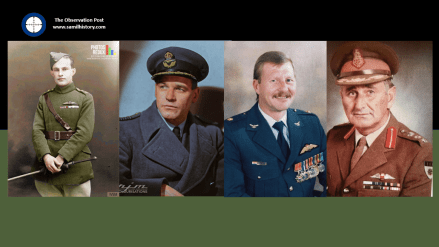
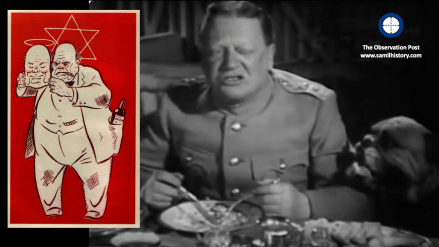
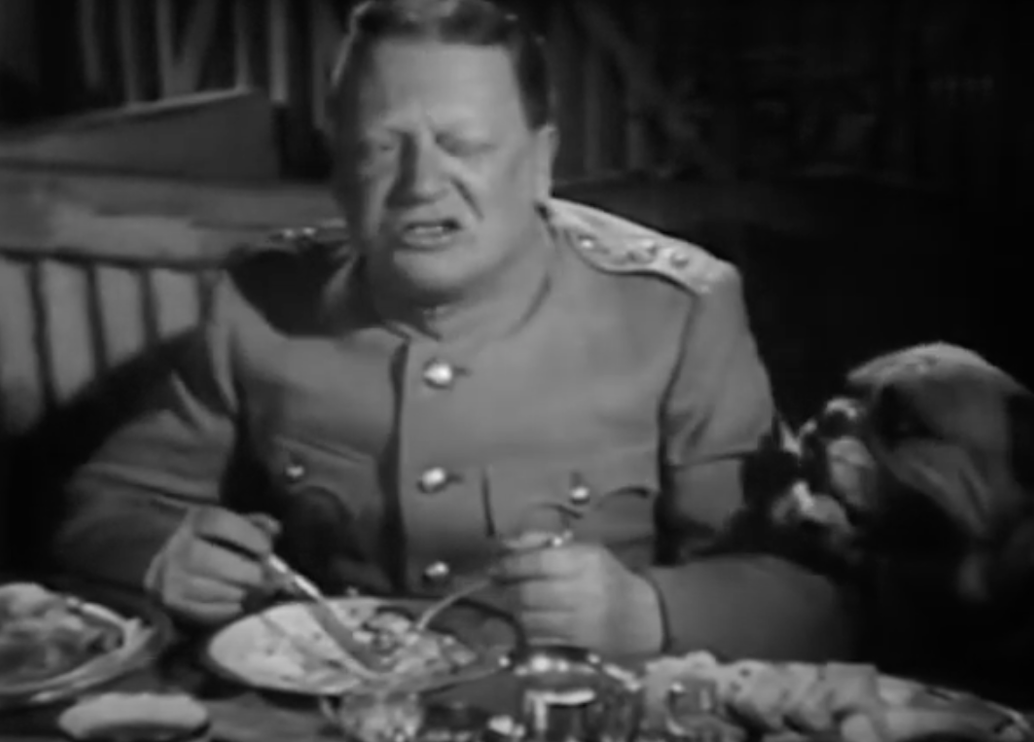
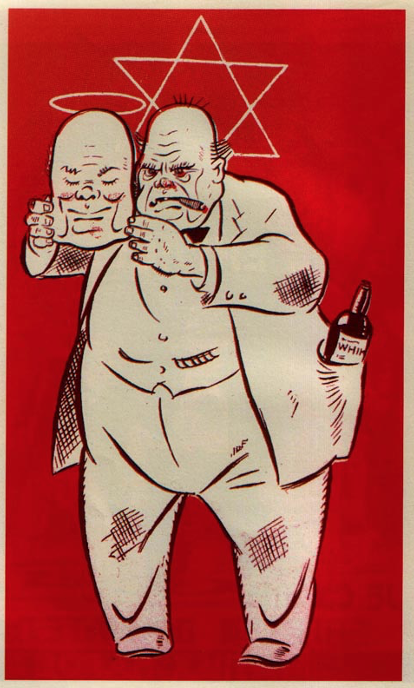
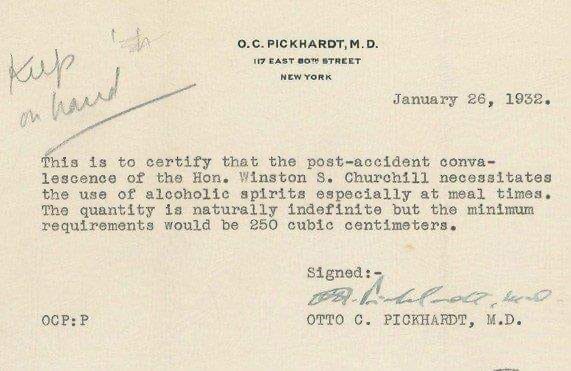
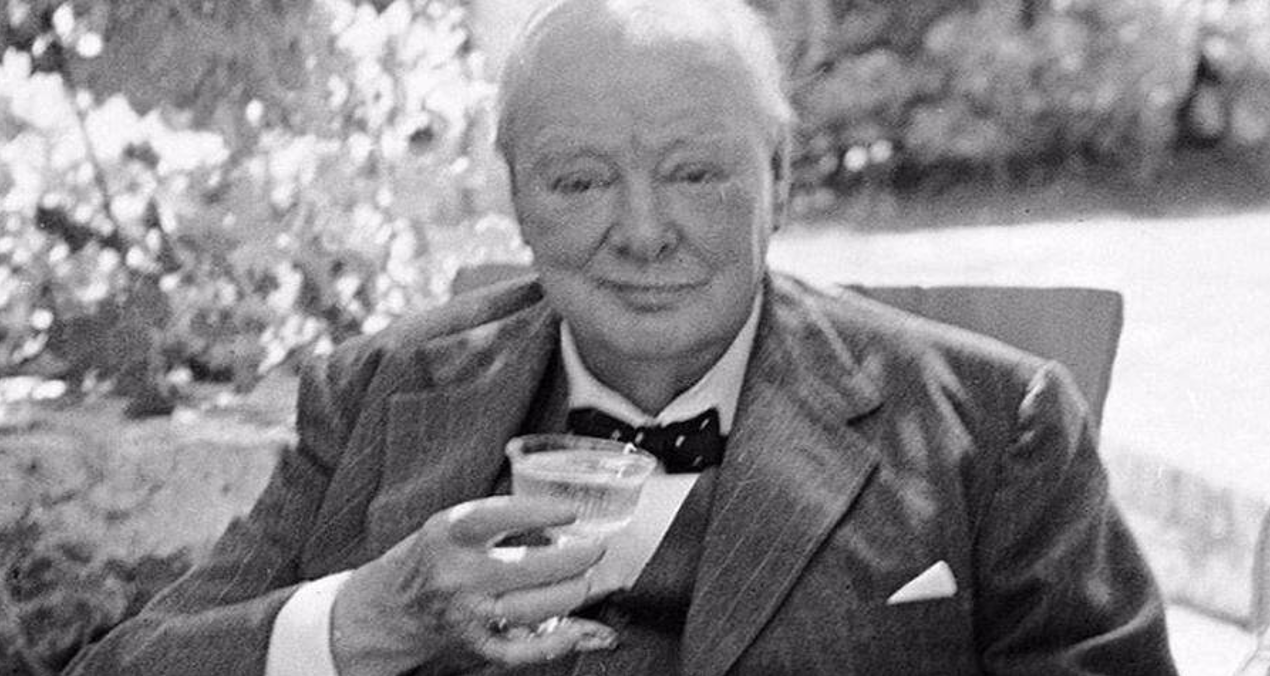

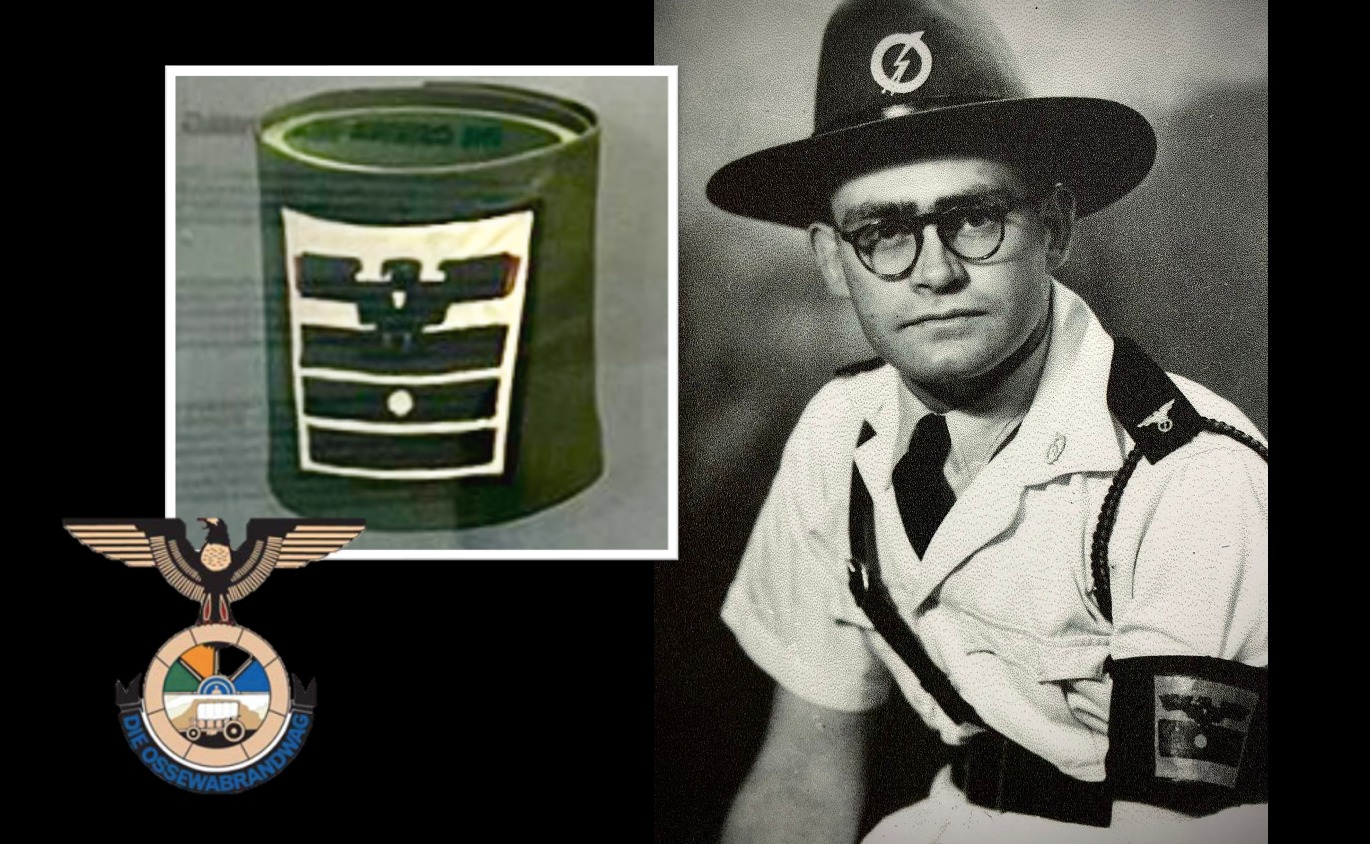
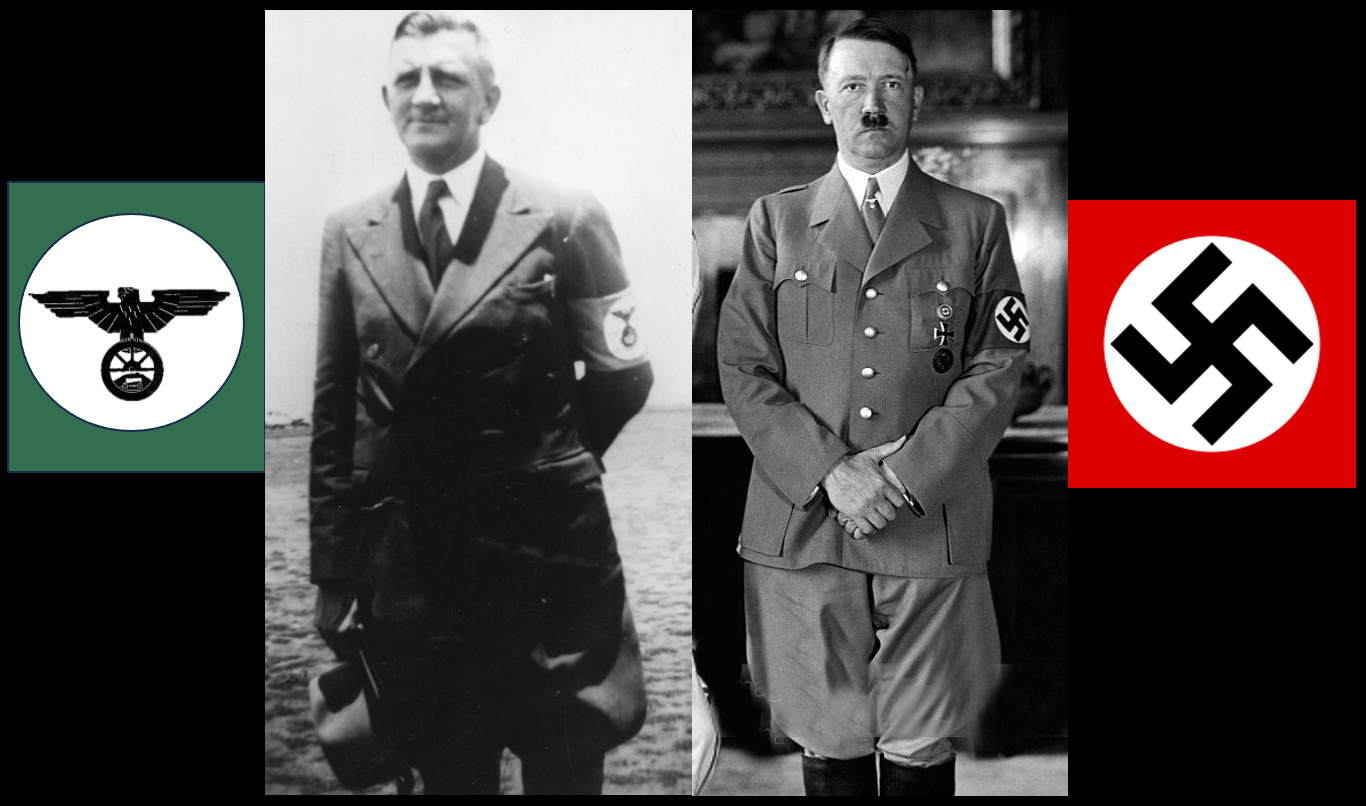

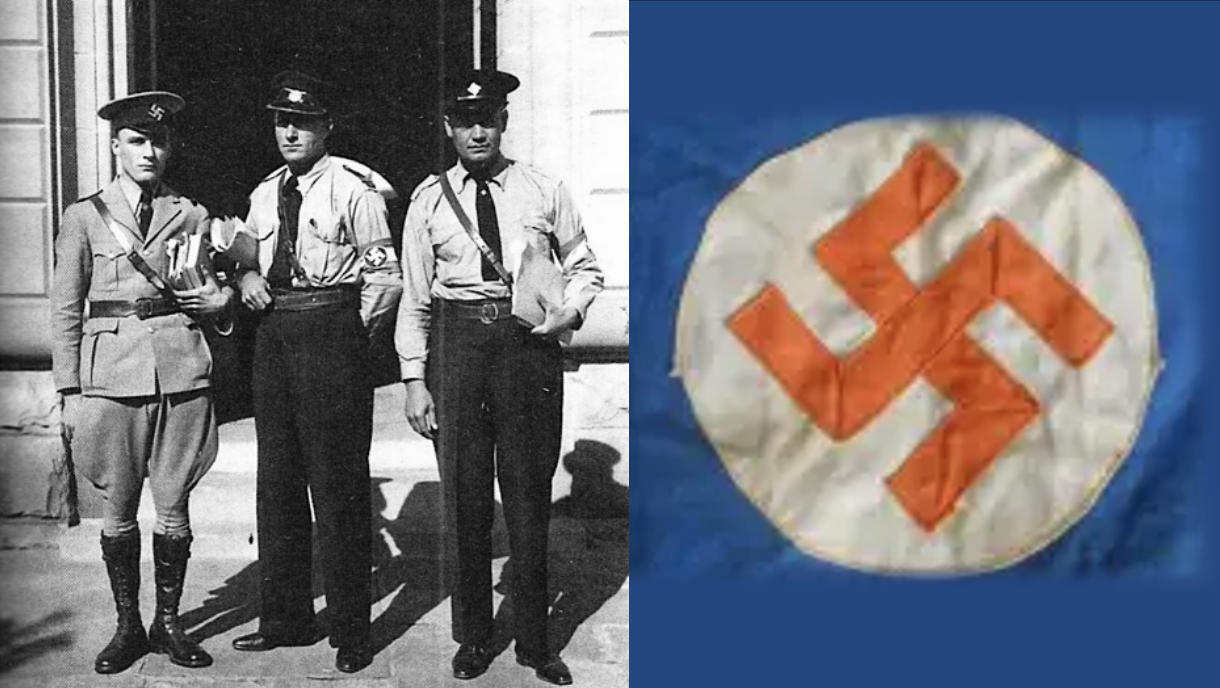

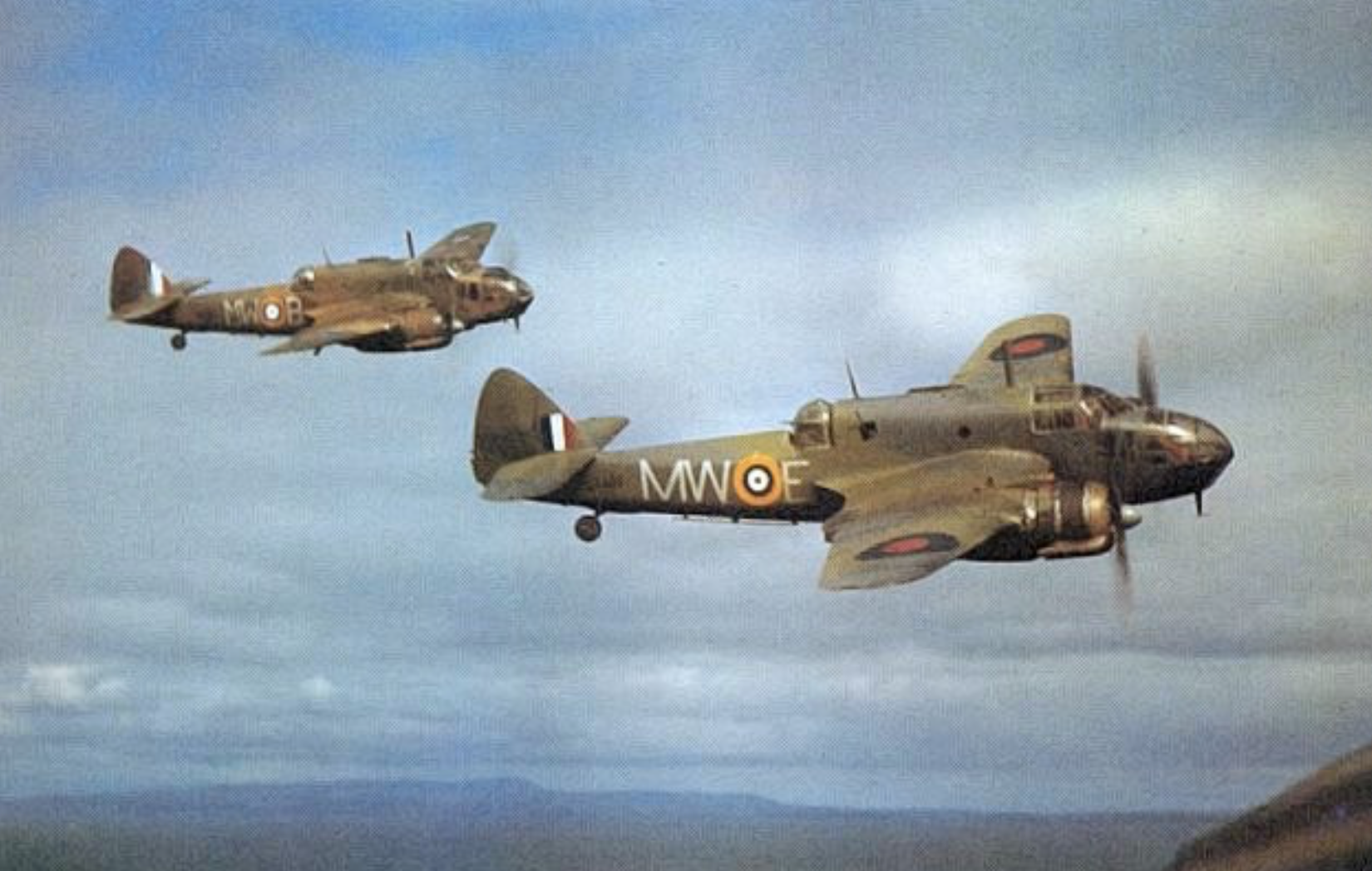
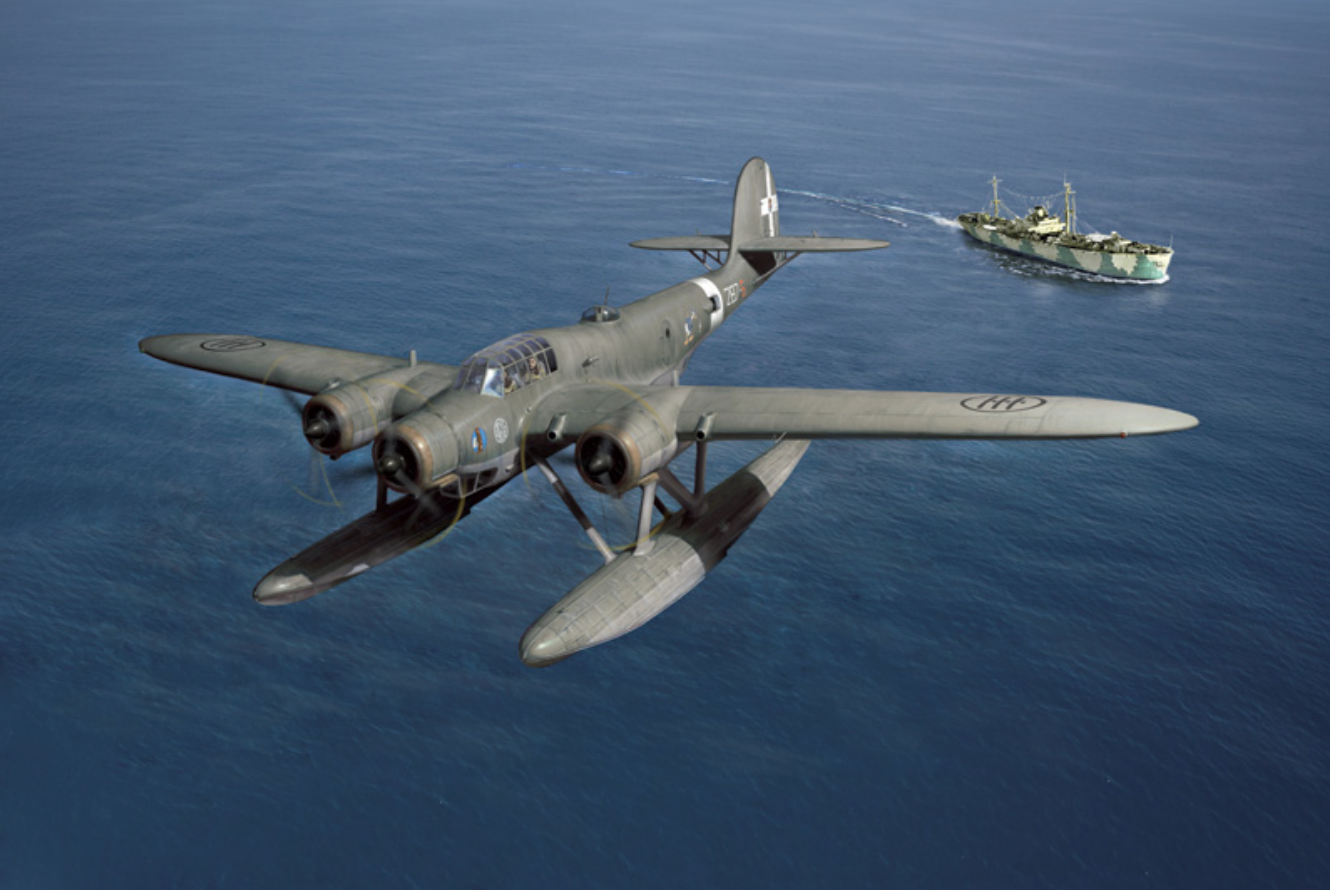

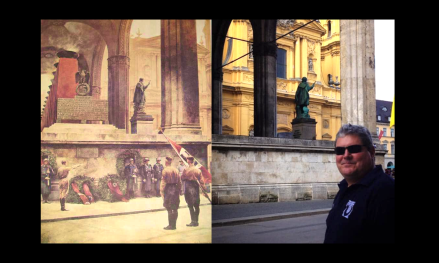
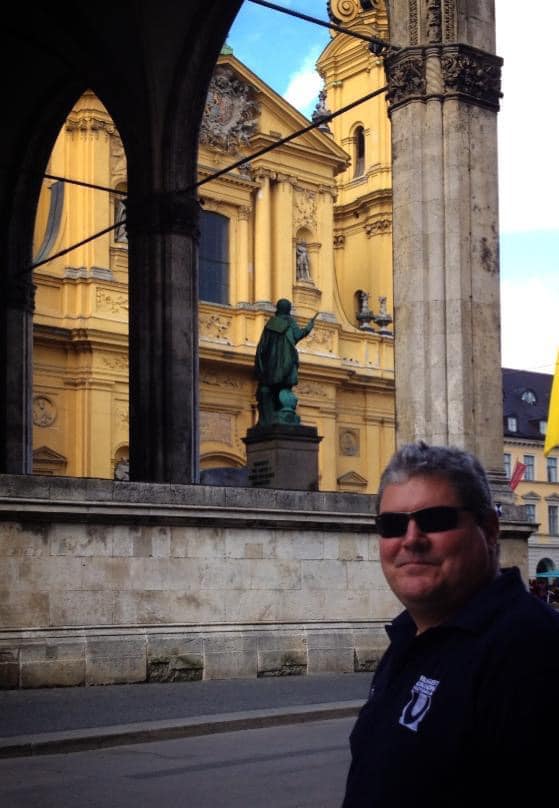
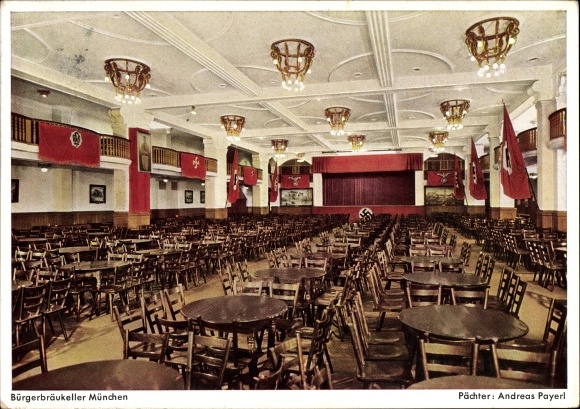
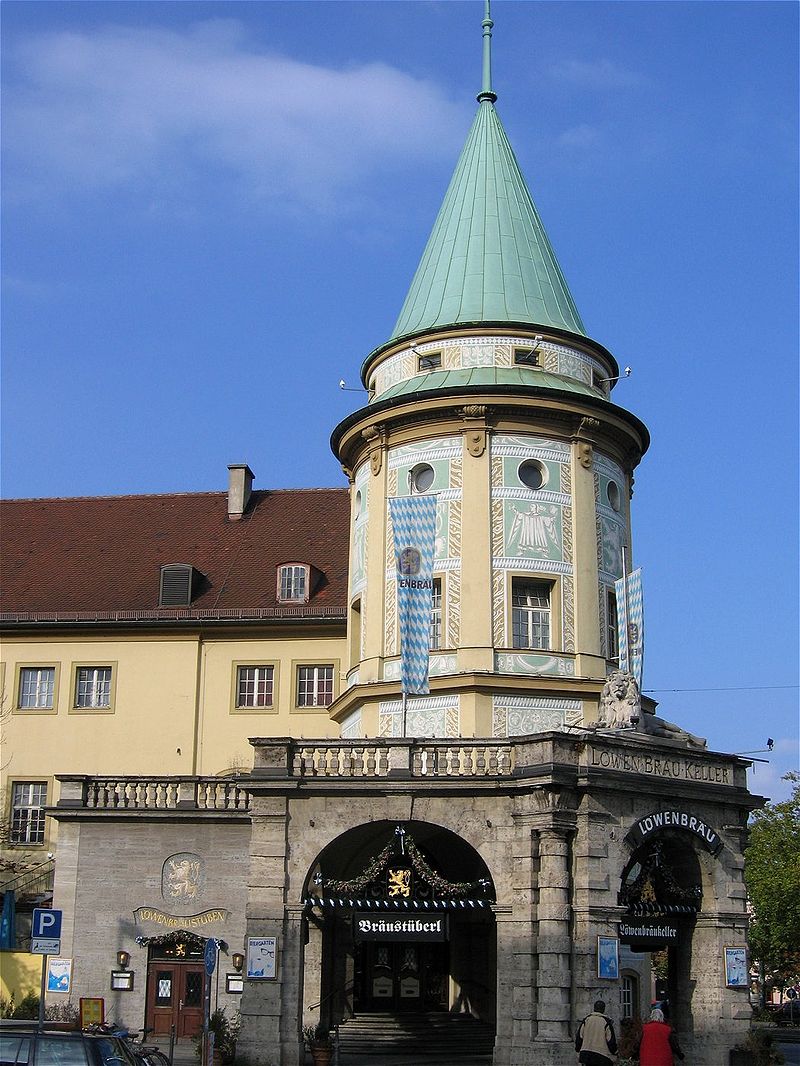
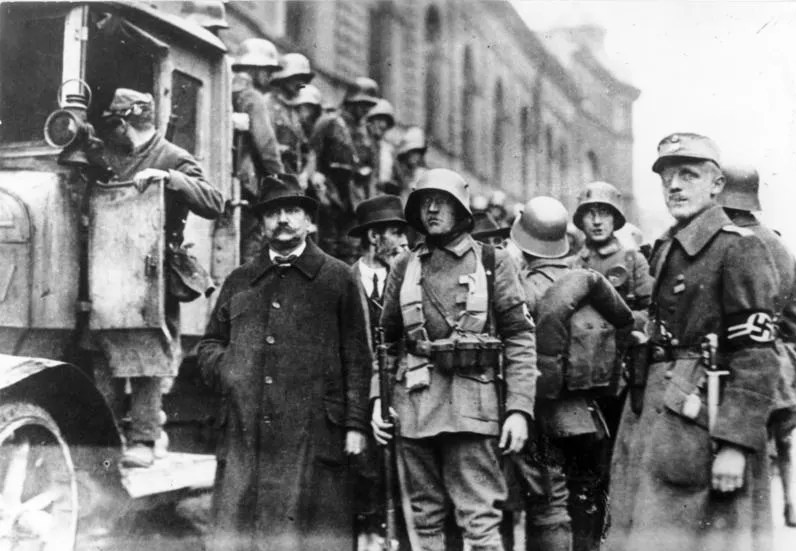
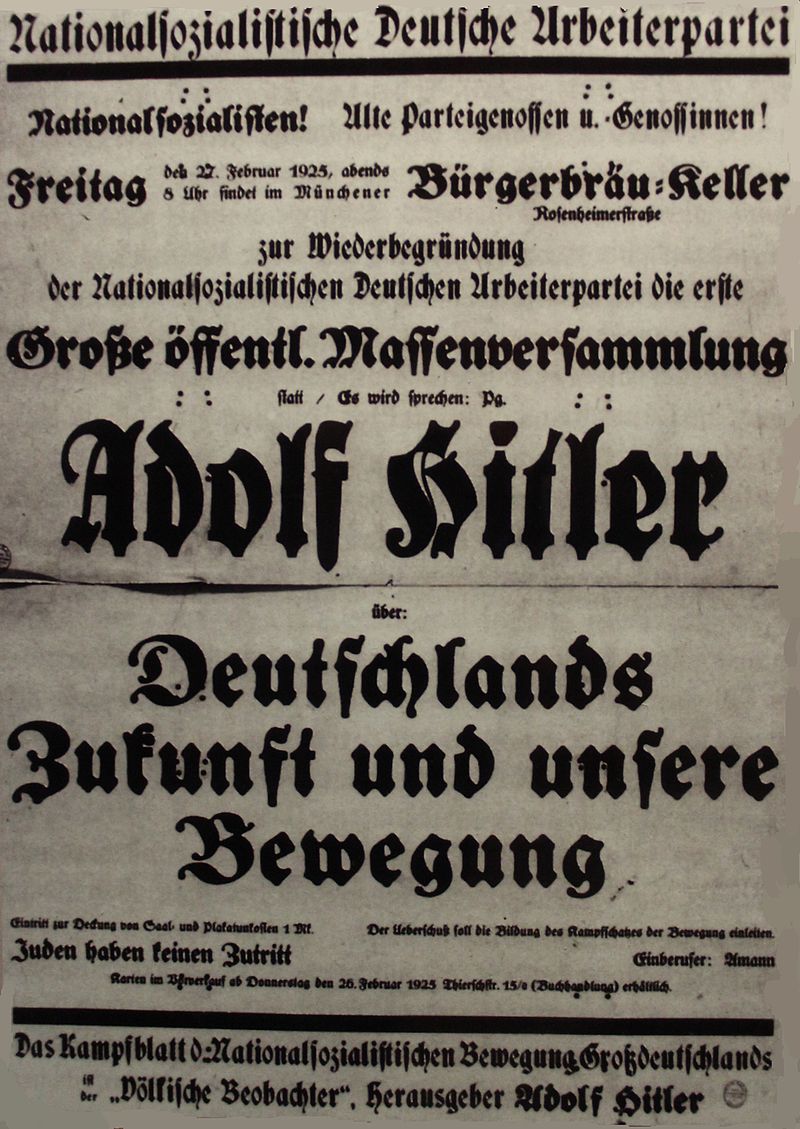
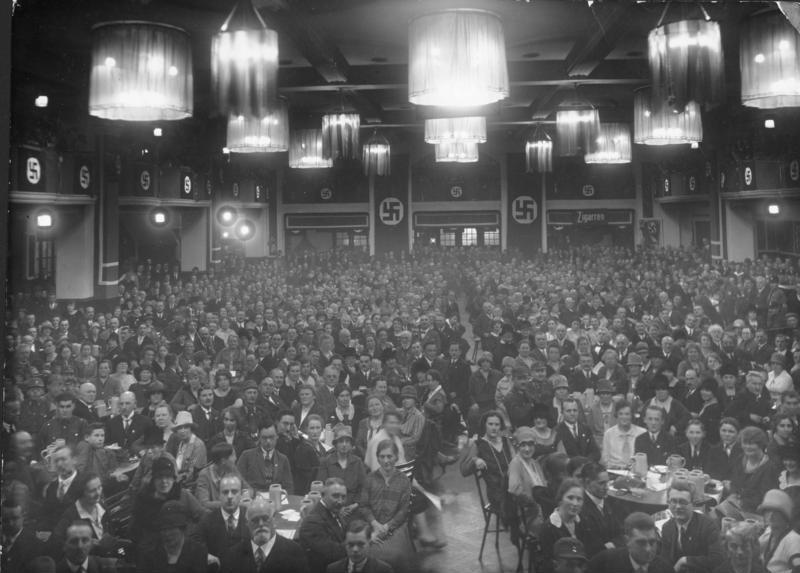
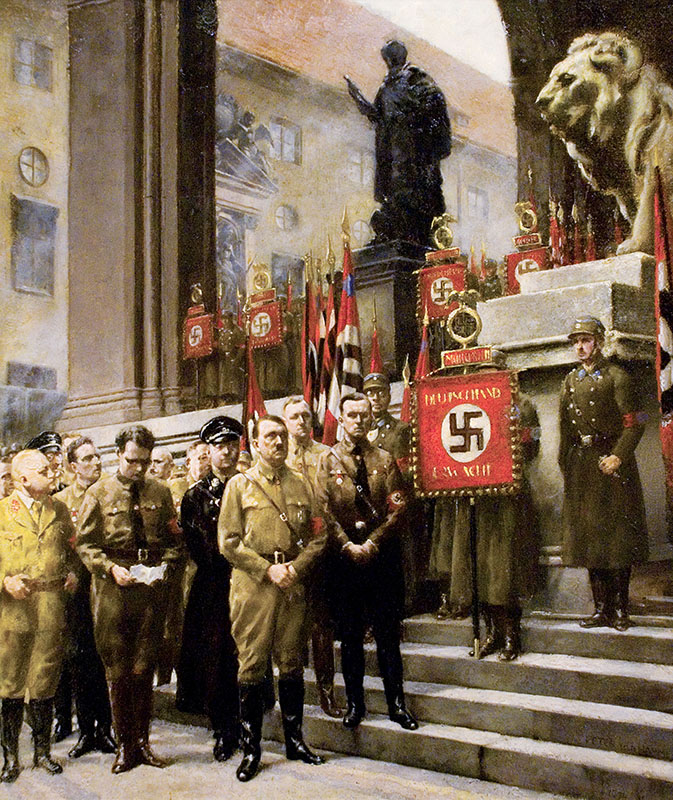
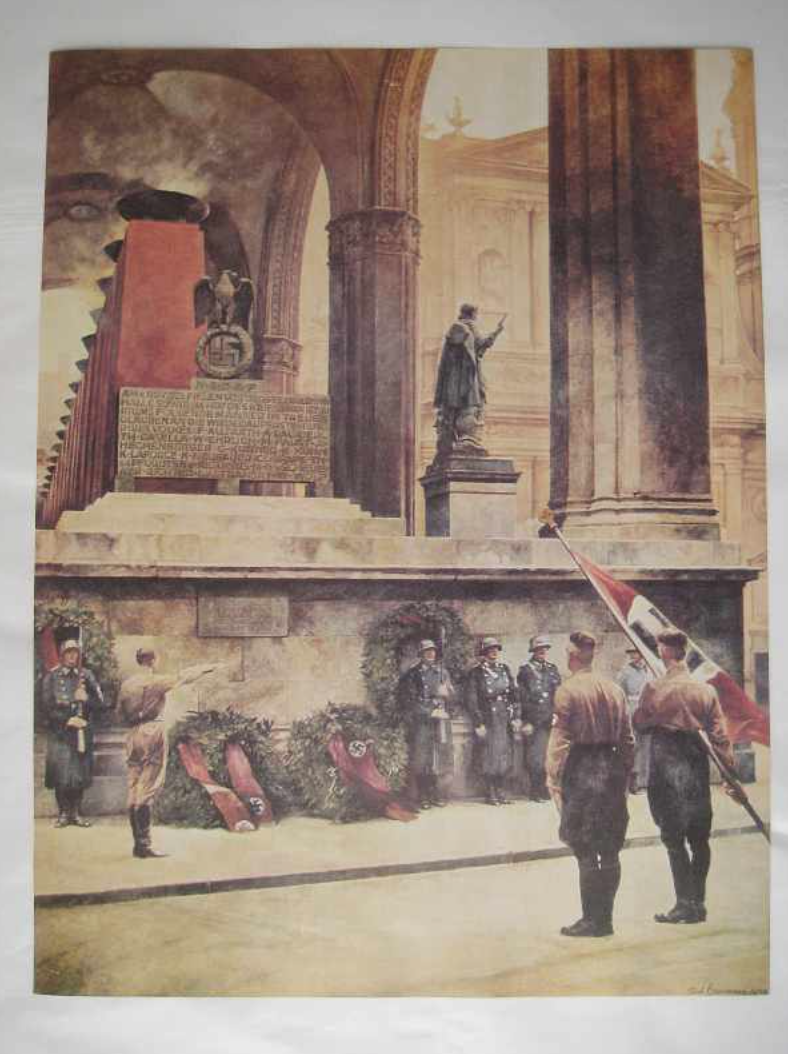
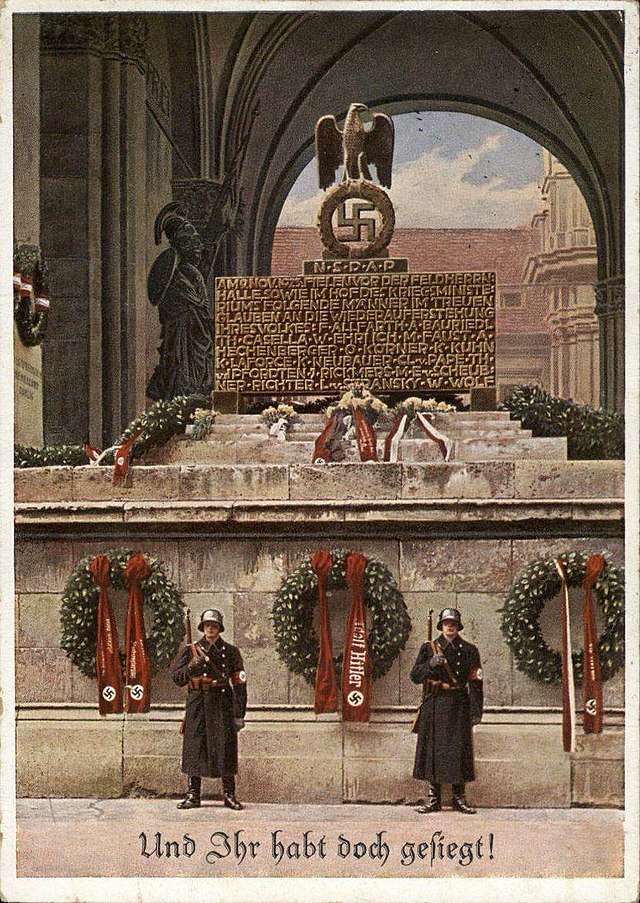
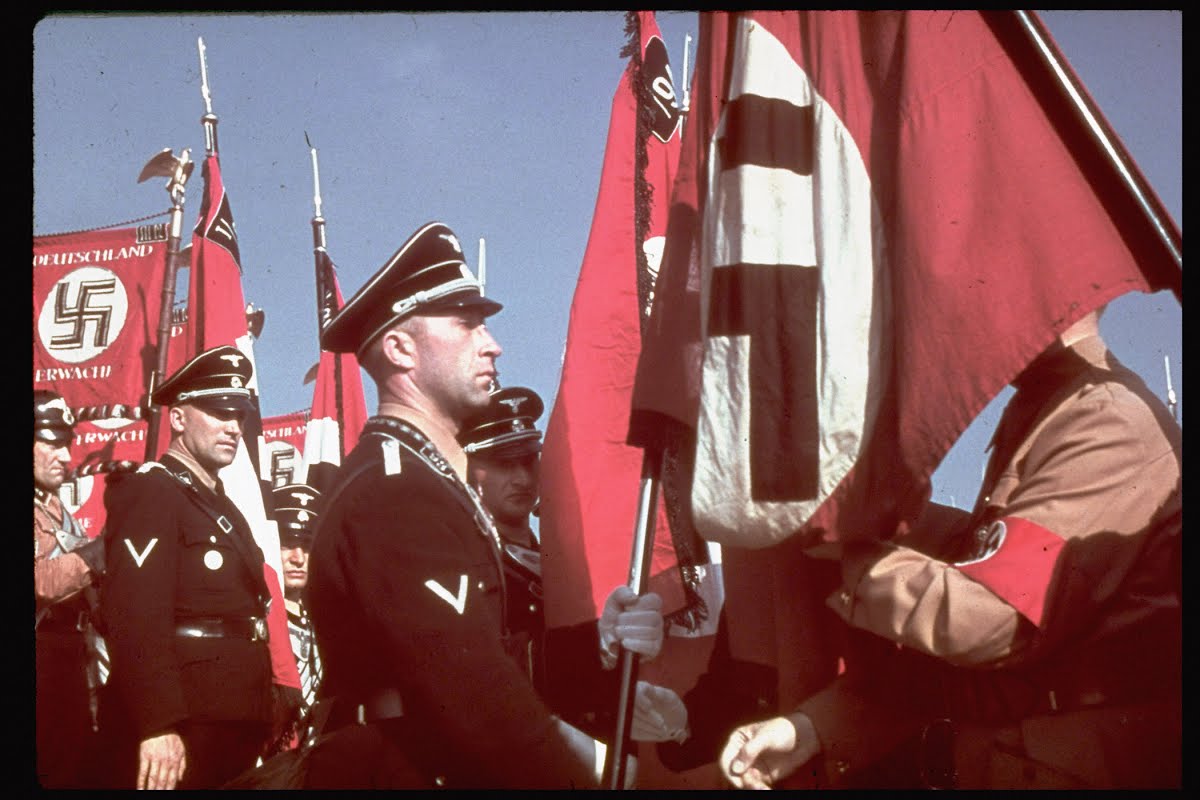
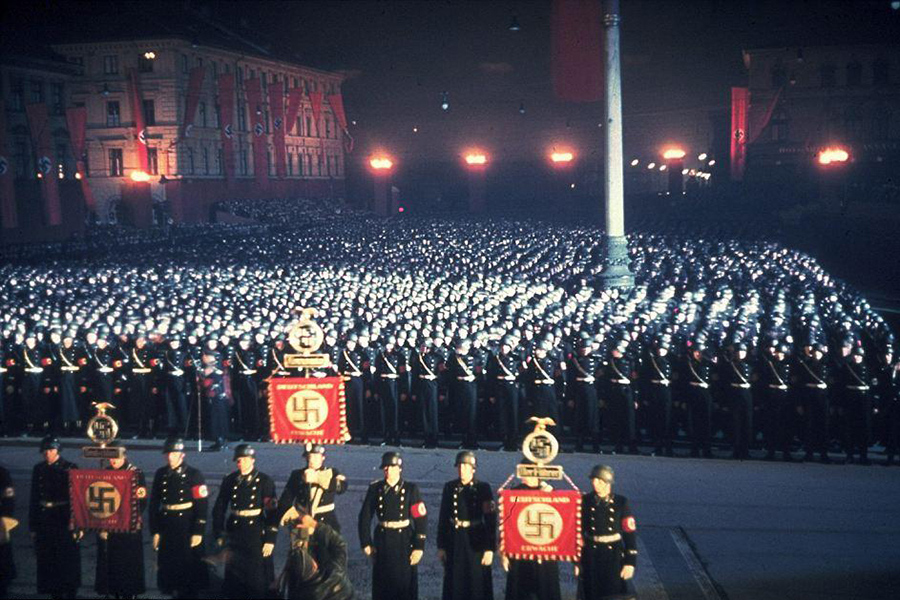
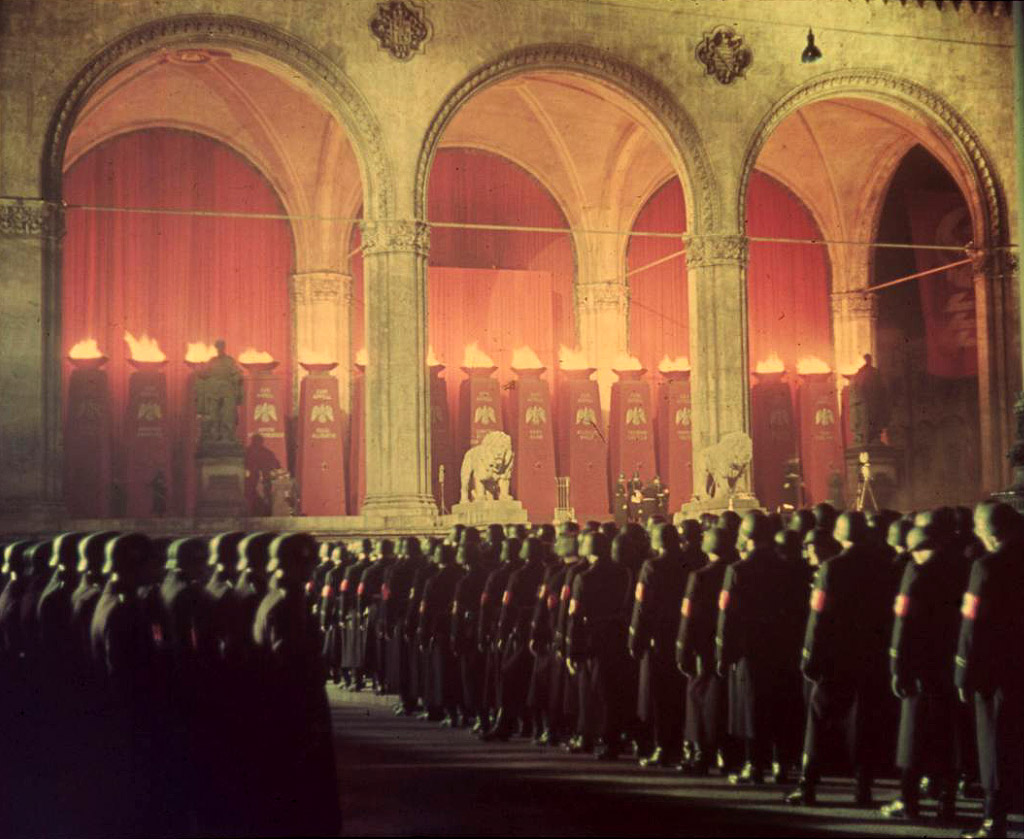
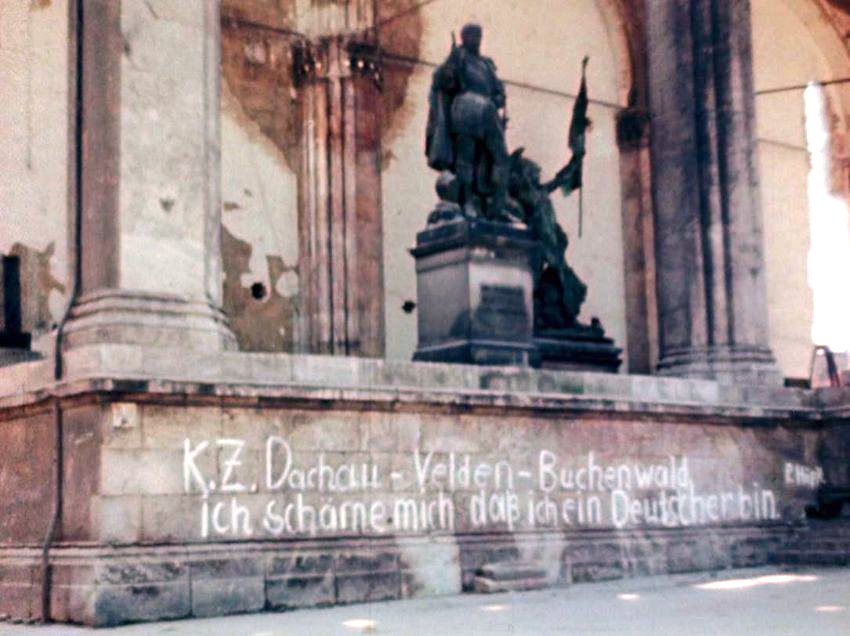
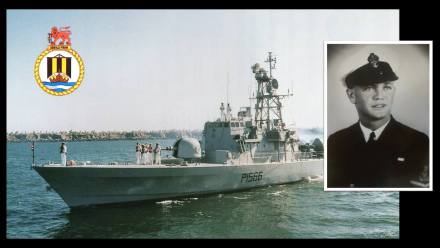


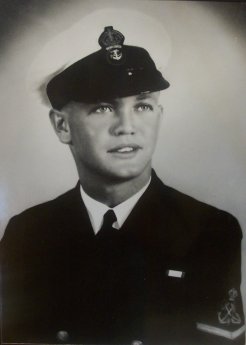 Chief Petty Officer (Stoker) René Sethren CGM has a story which is simply jaw dropping to say the least. René Sethren left school after Std 7, a keen boxer and highly astute he joined South Africa’s fledgling navy as a stoker in 1940, rising in rank eventually to Chief Petty Officer (Stoker).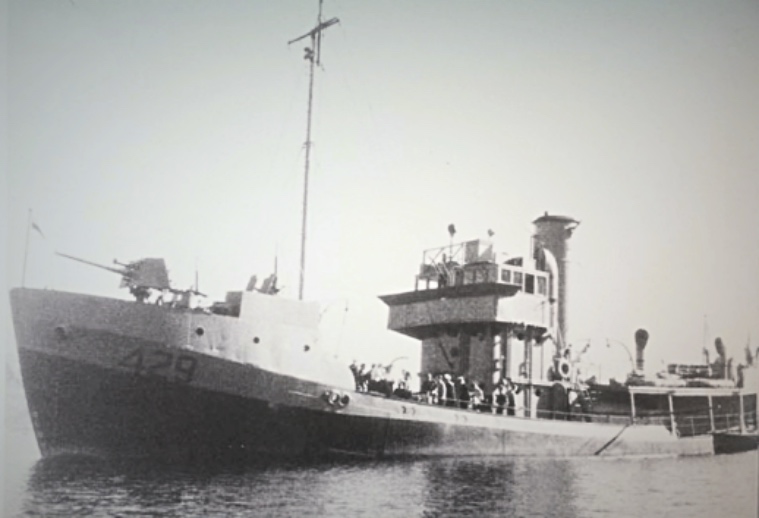
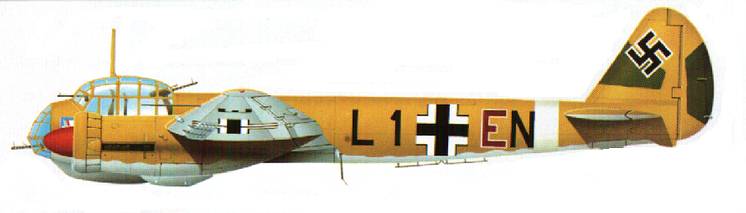
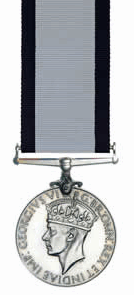 For his actions he is awarded the Conspicuous Gallantry Medal – the highest award won by a South African rating in World War 2, the only South African to be awarded this medal and one of only 243 men who had been awarded the medal prior to that day since its introduction in 1855.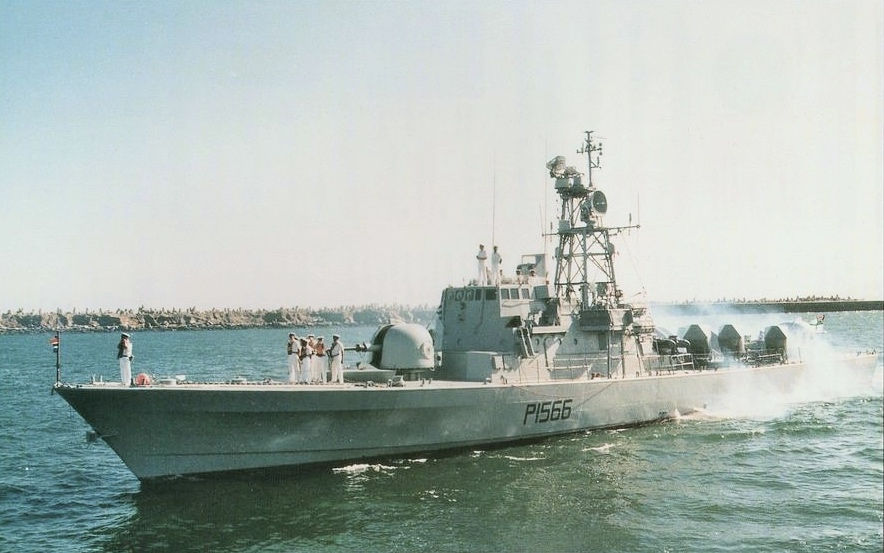

 In South Africa we have two ‘living memorials’, one for the First World War, the annual running of the Comrades Marathon between Durban and Pietermaritzburg, and another for the Second World War, the Red Cross War Memorial Children’s Hospital in Cape Town. Sadly commonly referred to as the Red Cross Children’s Hospital, so not many people know of its wartime origin and its true intention.


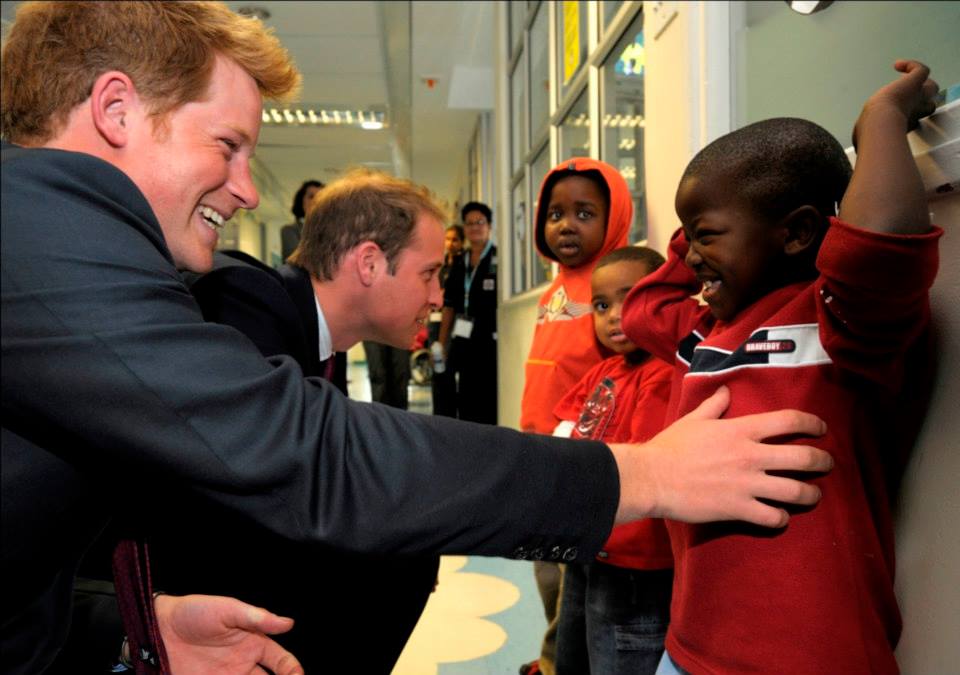


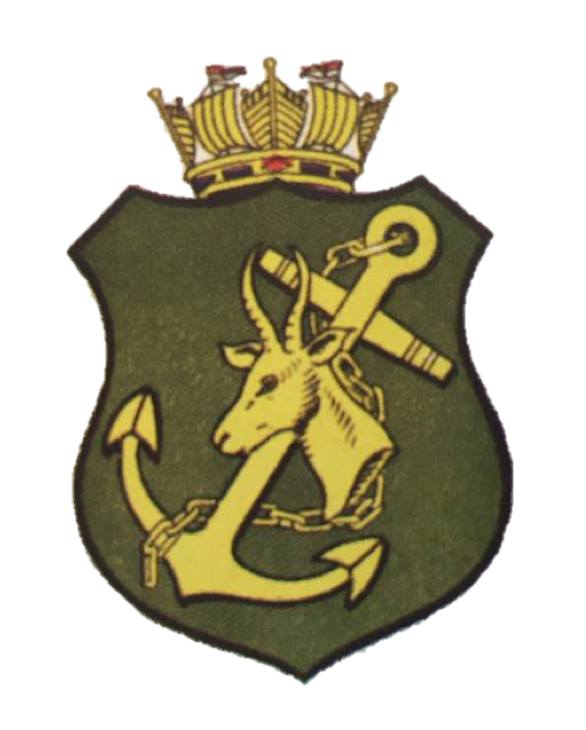 South Africa lost four ships during WW2, all of them minesweepers. The second one to be lost was the HMSAS Parktown and it has a truly extraordinary fighting legacy.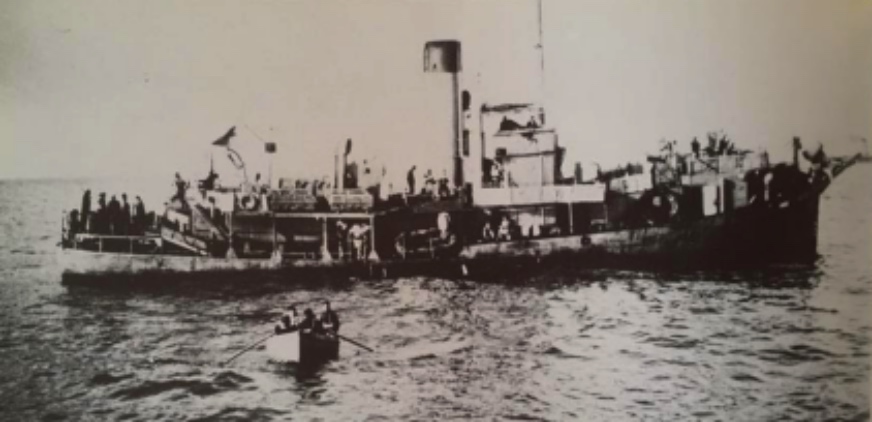

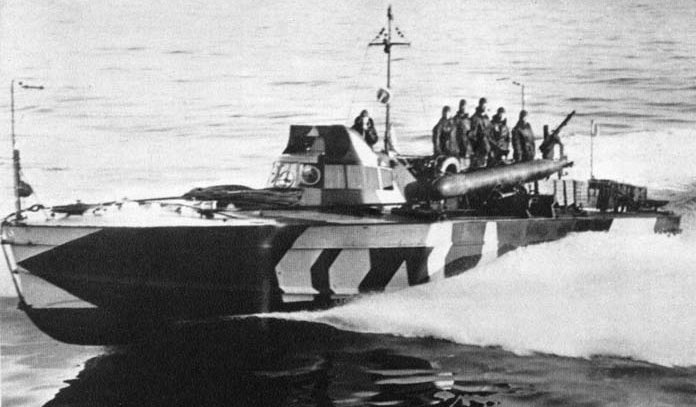
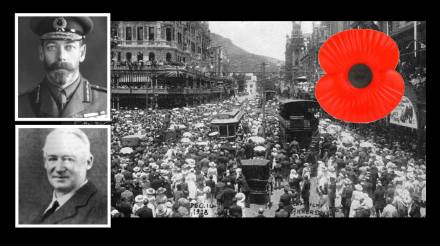
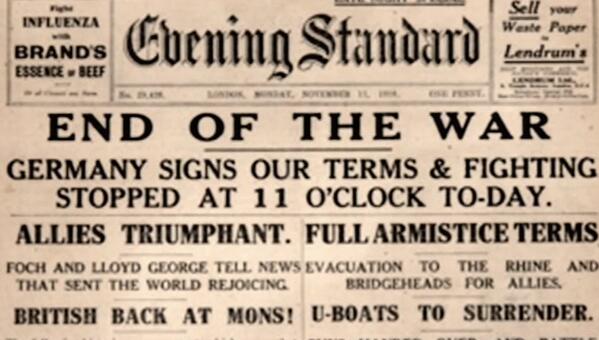 At 05.30 in the morning of 11 November 1918 the Germans signed the Armistice Agreement in a remote railway siding in the heart of the forest of Compiègne. Soon wires were humming with the message : ‘Hostilities will cease at 11.00 today November 11th. Troops will stand fast on the line reached at that hour…’.Thus, at 11.00 on 11 November 1918 the guns on the Western Front in France and Flanders fell silent after more than four years of continuous warfare, warfare that had witnessed the most horrific casualties.World War One (then known as the Great War) had ended.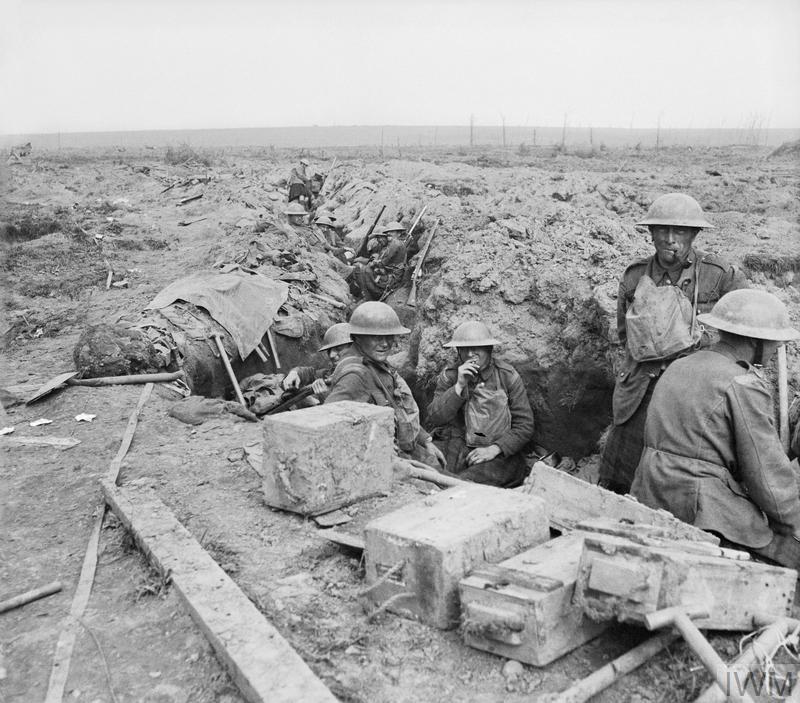
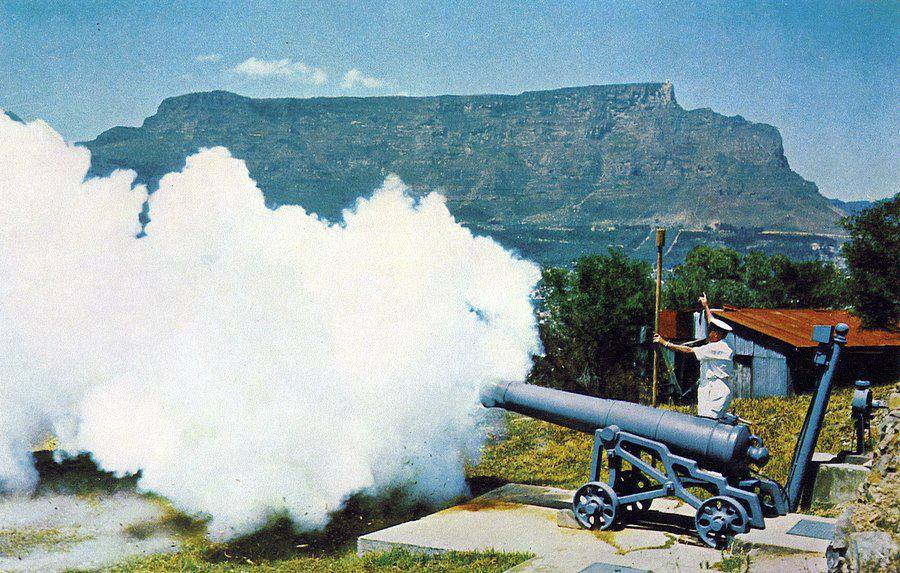
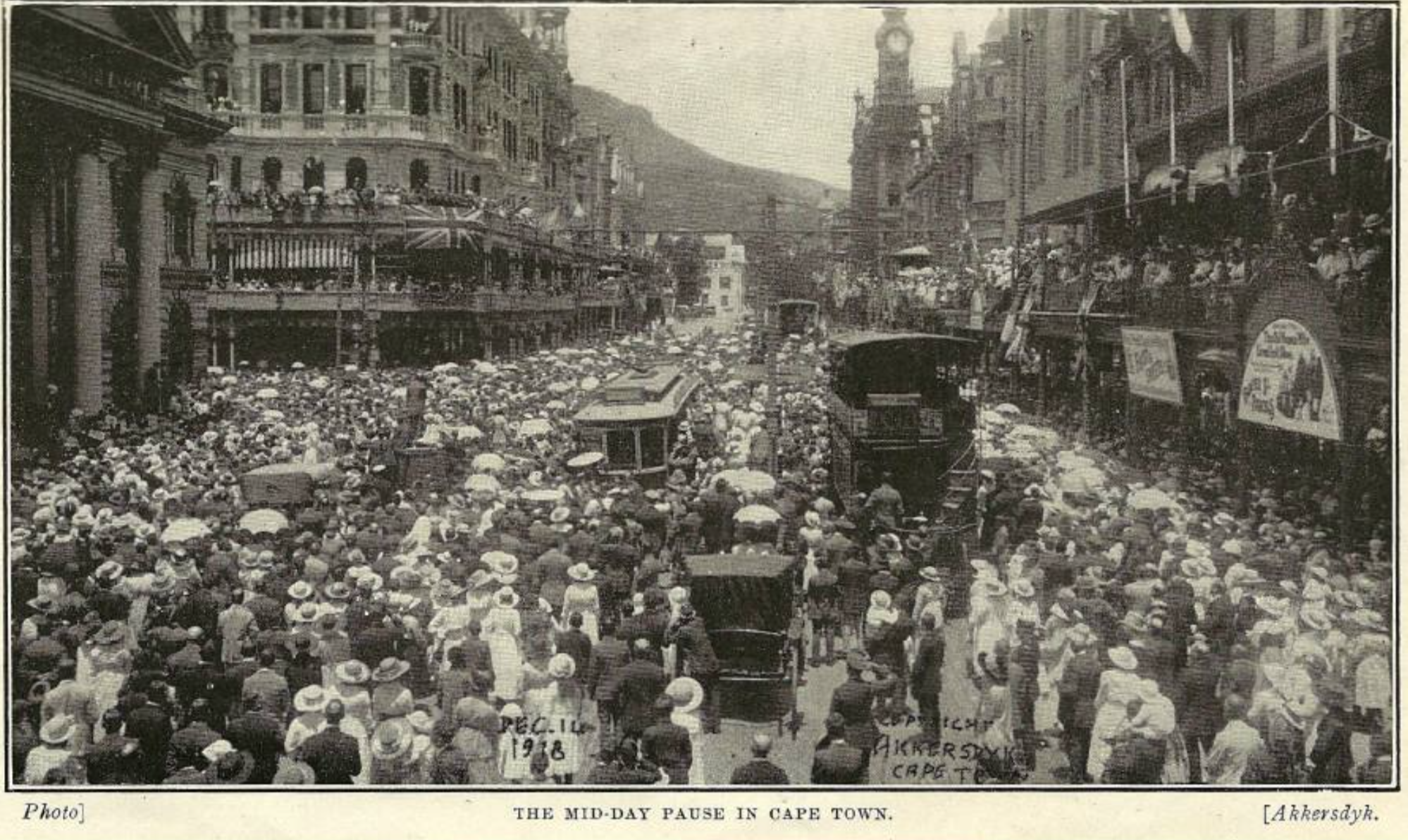
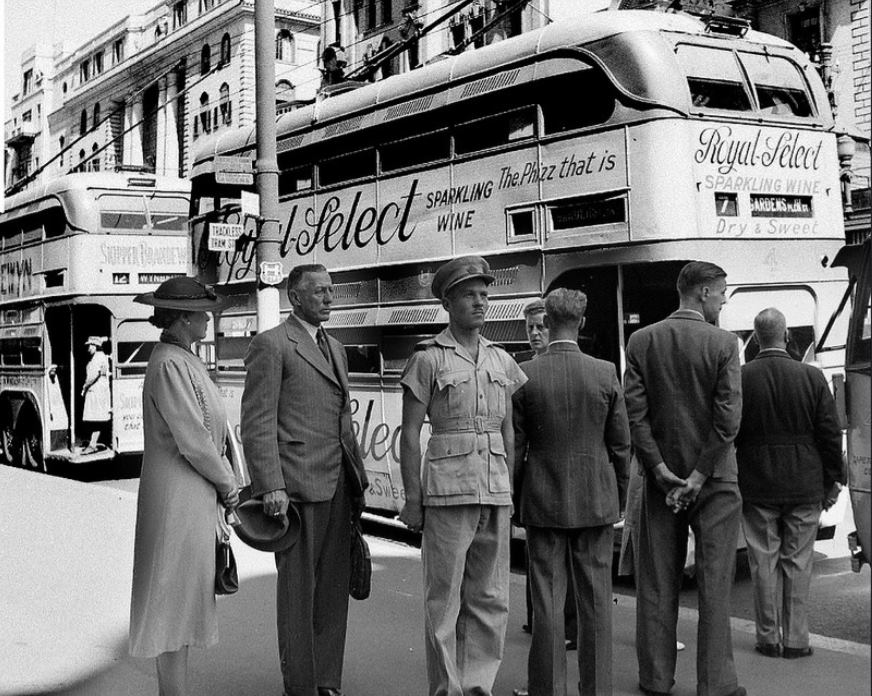


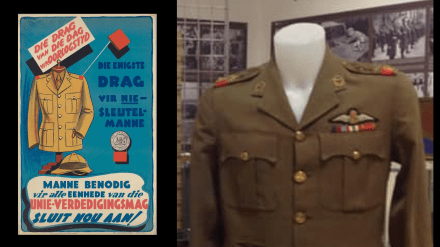

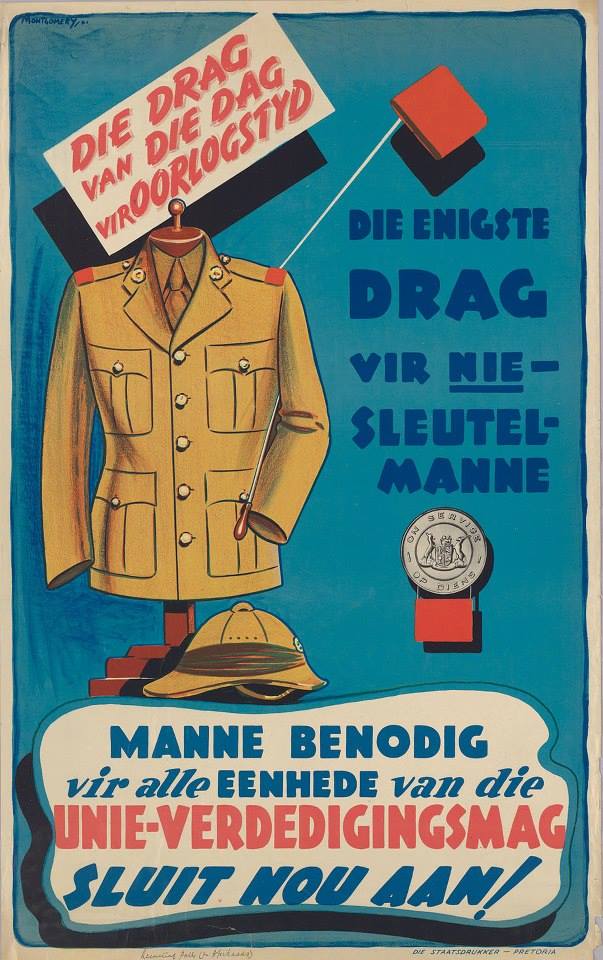
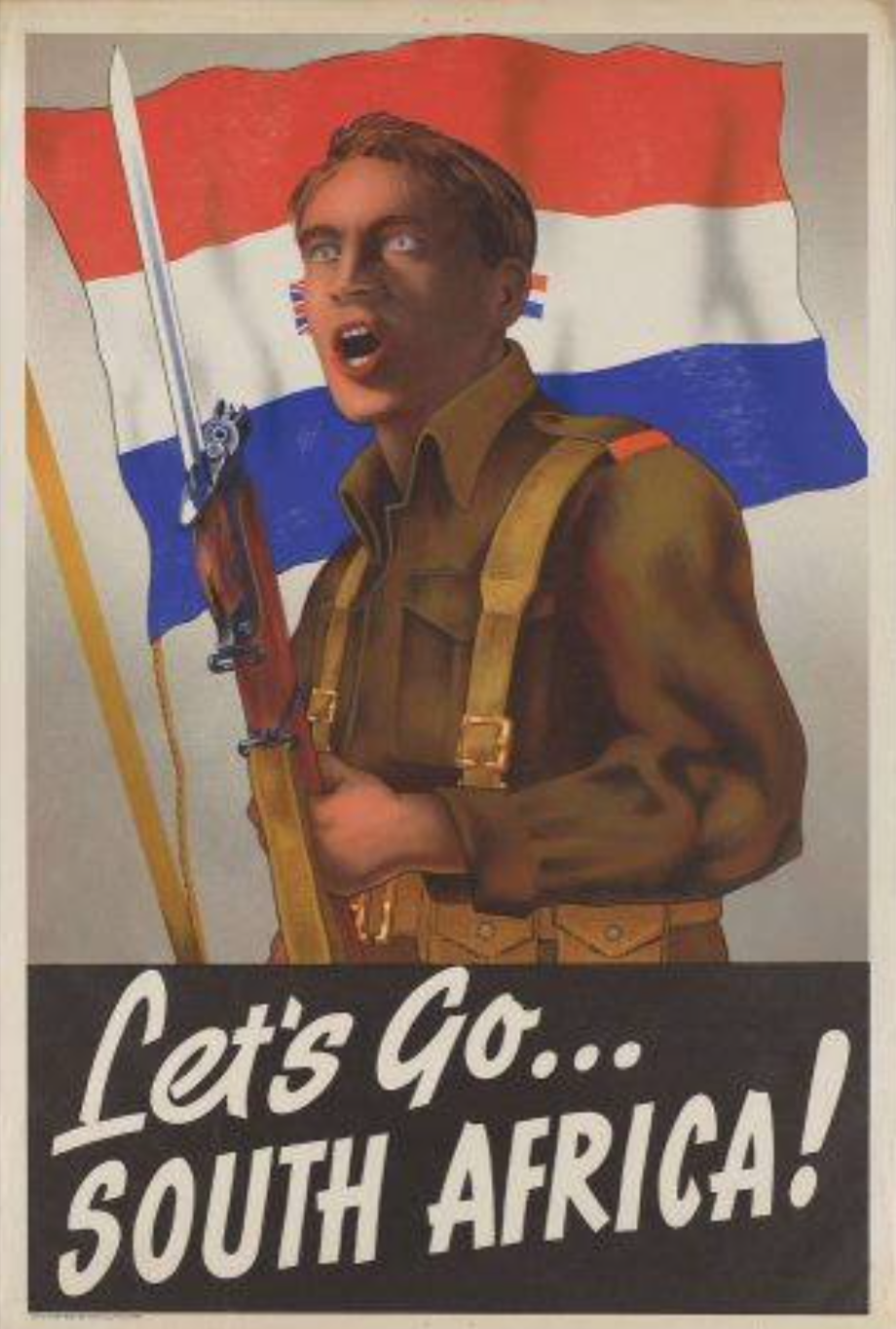
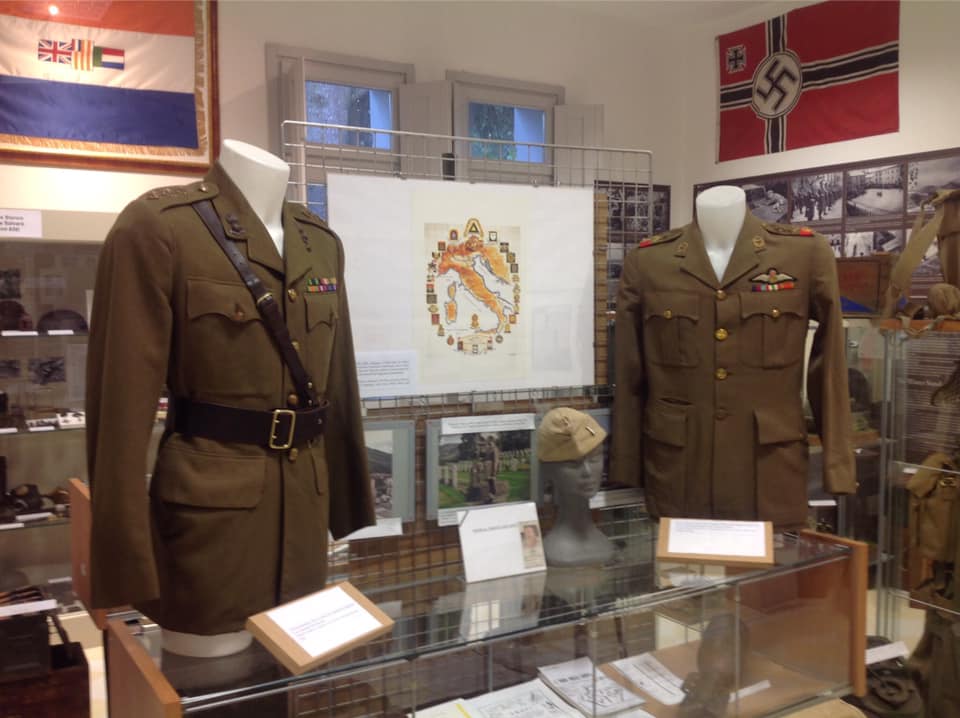
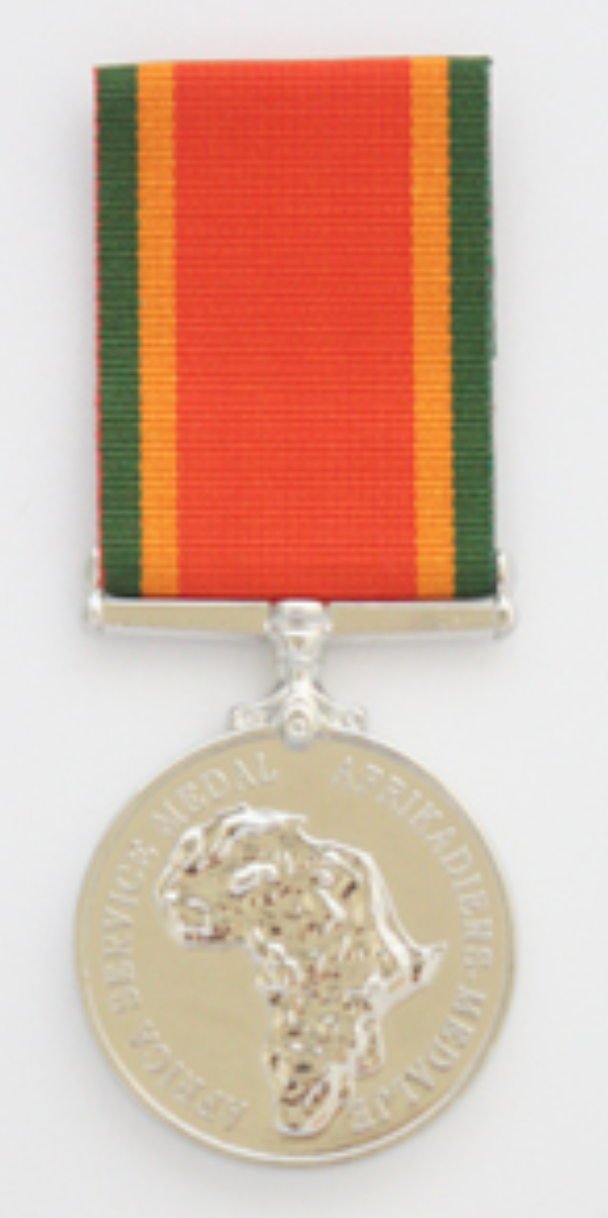
 The Observation Post