Springboks and Diggers … part of the Anzac ‘mateship’ legacy

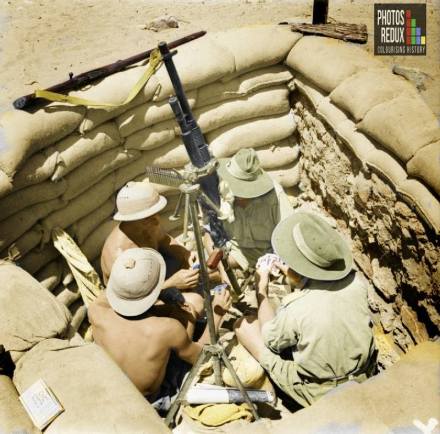
Iconic image (now colourised) of Commonwealth forces in North Africa during World War 2. Easily identified by their distinctive headgear, South African and Australian soldiers enjoy a game of cards in a gun pit. The South Africans where know as ‘Springboks’ and the Australians known as ‘Diggers’ – a nickname they both inherited during World War One.

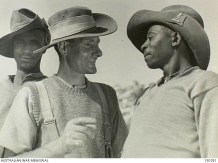
The distinctive headgear as shown is quite interesting, so too the unique military bond and history of that exists between South Africa and the Anzac alliance, Australia and New Zealand.

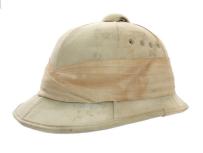
SA PithSouth African.  The South Army (and Air Force) was issued with a “Polo” style “Pith” helmet.  Made from cork it was not intended to protect the head from flying bullets and shrapnel, that was the purpose of the British Mk 2 Brodie helmet (also issued to South Africans). The pith helmet was worn mainly as sun protection when not in combat.

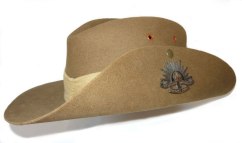
slouch-hat-ww2Australia.  The Australian army wore the “slouch hat”, also intended for sun protection when not in combat, like the South Africans they where issued with the British “Brodie” Mk2 steel helmet when in combat.

The “slouch” hat also has a little South African history to it.  The word ‘slouch’ refers to the sloping brim. The brim is made from rabbit-fur felt or wool felt and is always worn with a puggaree.

History has it that the origins of the Slouch Hat began with the Victorian Mounted Rifles; a hat of similar design had been worn in South Africa by the Cape Mounted Rifles for many years before 1885. The design of the Victorian Mounted Rifle hat originated from headgear of native police in Burma where Lieutenant-Colonel Tom Price had recognised its value.

The Victorian hat was an ordinary bush felt hat turned up on the right side. The intention of turning up the right side of the hat was to ensure it would not be caught during the drill movement of “shoulder arms” from “order arms”.

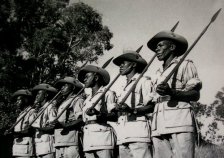
sagaieIn addition to Australians, believe it or not some South African units also wore the “slouch hat”.  Most notable was the South African Native Military Corps members, who made up about 48% of the South African standing army albeit in non frontline combat roles during both WW1 and WW2.  The legacy of the “slouch” in the modern South African National Defence Force is however now on the decline and little remains now of its use, a pity as it would be a gracious nod to the very large “black” community contribution to both WW1 and WW2.

150281In an iconic Australian War Memorial photograph to demonstrate this unique association,  a Australian soldier working on the Beirut-Tripoli railway link is seen here chatting with two members of a South African Pioneer Unit (SA Native Military Corps) also working on the railway. The photo is designed to show off their similarities of dress and bearing and promote mutual purpose.

Of interest – The Gun in the pit

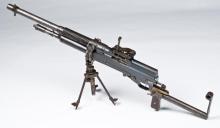
8493892_2Interestingly the gun in the pit is not South African standard issue.  Instead it is a British made Hotchkiss Portative MK 1, which was used by the Australians, dating back to World War 1, so it is probably their gun pit.  Of French design the MK I was a .303 caliber machine gun, used in ‘cavalry/infantry’ configuration, with removable steel buttstock and a light tripod. This gun is normally fed from either flexible “belts” or strips like you see in the featured image. Normal Hotchkiss Portative strips hold 30 rounds each.

Camaraderie 

Because of mutual historic, military, language, British Dominion and cultural ties here was certainly was plenty of camaraderie between the South Africans and the Anzac Australians and New Zealanders during the war. Lots of informal rugby and cricket matches were played at any good opportunity, games of cards (seen here), exchanging of “souvenirs” (especially badges, sun helmets and slouch hats), occasional punch ups in Cairo pubs fuelled by beer which were soon forgotten and forgiven.  Generally good old good old fashioned soldierly fun and “band of brothers” stuff.

Tobruk

Because the South Africans were responsible for the “fall of Tobruk” in World War 2, a city the Australians fought to hold with such tenacity before handing it over to the South Africans to defend, as a South African you might also come into some light-hearted but pointed “sledging” from an Australian military veteran, even to this day.

ANZAC Remembrance

Modern South Africa does not extensively praise, idolise and remember her statutory armed forces and the origins of their fighting legacy anything near the Australians and New Zealanders do to their forces now.   This has manifested with the inclusion of hundreds of South African veterans residing in Australia in National Anzac Day parades held around Australia and New Zealand, and it is because of this unique bond forged by our forefathers in WW1 and WW2 that they are welcomed with open arms.


Researched and written by Peter Dickens, with deep gratitude for the colorised photo of the Diggers and Springboks by Photos Redux – Imperial War Museum copyright.

Related work and links

Tobruk; “Defeat is one thing; Disgrace is another!” South Africa’s biggest capitulation of arms – Tobruk

Diggers and Springboks WW1; Springboks and Diggers … part of the Anzac ‘mateship’ legacy

Gallipoli; One Lucky Charm wins the Victoria Cross, DSO and MC


A true statesman, Jan Smuts addressing the British Parliament – 1942

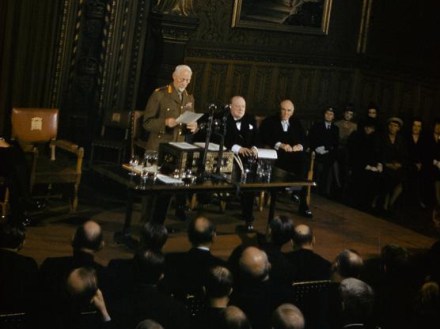
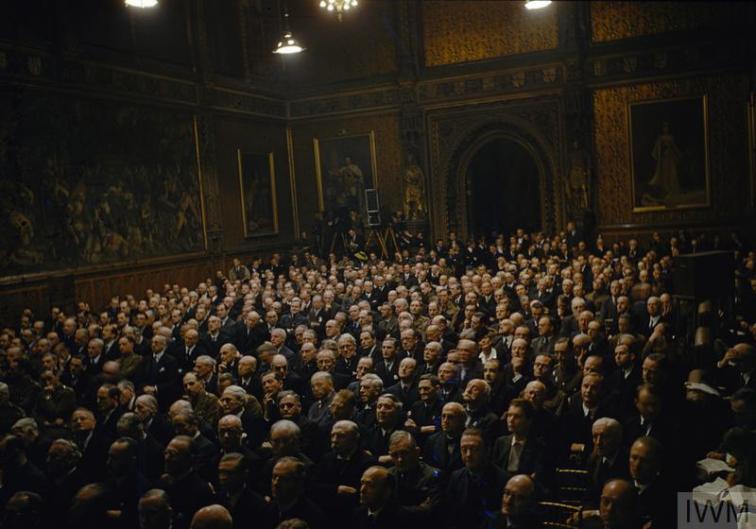
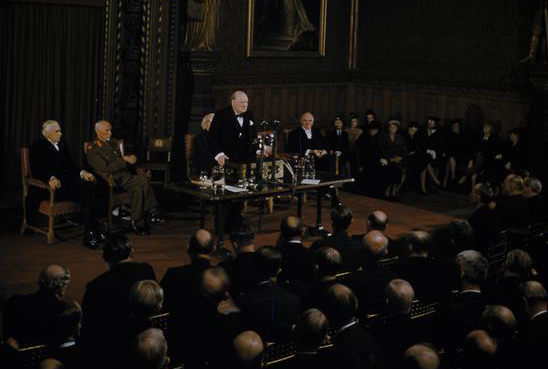
Field Marshal Jan Smuts, at the invitation of Winston Churchill addressing both houses of the British Parliament on the 21st October1942. This speech is historic, never before was any Commonwealth Statesman given the privilege of addressing both houses of Parliament (the Commons and the Lords), and the results are astounding – not only was Smuts publicly praised by Winston Churchill at the end of his speech, the entire Parliament breaks into hoorays and sings “he’s a jolly good fellow” in praise of the man and his life’s work.  This speech is well worth viewing and here it is, in full.

Two great South Africans have the privilege of statues outside the British Houses of Parliament in London, both having addressed this house at Westminster, and they stand in Westminster square for good reason. This was a period when Jan Smuts took his broken country from the Boer War, unified it and built it into an international powerhouse – at this occasion Smuts receives the praise due a visionary world leader.

The vast majority of both English and Afrikaans speaking South Africans backed Smuts at the time, however his legacy – like any great man’s legacy – is tainted by his opposition – The National Party, who, when they came into power served to demonise him over decades – so much so that he remains an enigma to many South Africans today. Except when you find gems like this film clip – which can bring him back into living memory.

Look out for Smut’s comments on the necessity to rid the world of Nazism, his insightful summary of Hitler’s policy in Europe and for his views on he formation of the United Nations – to which he is founding signatory.

smuts 5

To think that Smuts was a South African War Boer General, and both he and General Louis Botha understood that the salvation and re-building of their shattered people lay with their former enemy. Their vision of unity built South Africa from a fractious grouping of colonies and tiny states into a significant and unified nation – a regional economic power-house. The fact that his former enemy stood up in praise of this man and his achievement speaks volumes.

Jan Smuts is literally the “father of the nation” that is South Africa today and it’s a great pity he is so misunderstood. As anyone who watches this video will see, thanks to this remarkable man, South Africans by the end of World War 2 stood with heads held high, chests swollen with pride, praised by the free world and revered by great men.

winston:smuts

Visit of Field Marshal Jan Smuts, to the House of Commons 21 Oct 1942. The Prime Minister, Mr Winston Churchill, calls on the assembly in the House of Commons to acclaim Field Marshal Smuts, after his address. IWM Copyright.

History unfortunately would dramatically change course for South Africa a couple of years later, when in 1948 the National Party narrowly edged its way into power in the general elections with a proposal called Apartheid.  South Africa has swung from ‘Pariah State’ far right racial politics to ‘Junk Status’ economic leftist politics in response to the secular race politics – with very little regard for Smuts’ centralist or “centre ground” reconciliatory politics since.


To read more about Smuts and some of his lifetime achievements and body of work, click on this link “The force of his intellect has enriched the wisdom of the whole human race”- the death of Jan Smuts.

Written  by Peter Dickens.  Footage copyright – British Pathé. Image/s copyright – The Imperial War Museum

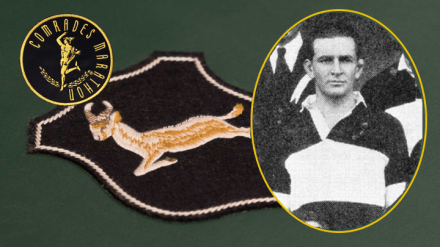
Comrades legend, Springbok and war veteran – the remarkable Bill Payn

So, which Springbok rugby player and war veteran also has a top ten Comrades finish running in his rugby boots and then went on to play a game of rugby the next day?  This is one very remarkable man and he comes from a time when men were cut from a different cloth, read on for the story of the legendary Cecil “Bill” Payn.

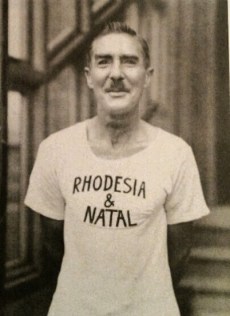
Bill Payn was born on 9 Aug 1893 in Harding, South Africa, he was christened Cecil, the son of James Herbert Payn. He was a very well known personality, a much loved teacher, and a sportsman. He taught at Durban High School for boys for 40 years or more, only having a break during his army service in the First and Second World Wars. He was particularly well known in Natal and Rhodesia and was described as big hearted and kindly “Big Bill” and stood 6 ft 3 in in his socks. He was a battle-field hero and an ex PoW.

His life was dedicated to helping others, whether his fellow prisoners of war, team mates, school pupils or every day friends and acquaintances. He was a Springbok rugby player and at cricket bowled with distinction. He was a boxer, an athlete and shone at baseball. He was truly a great and kindly man, he died suddenly at age 66 on the 31st Oct 1959.  Ever generous he even left money for his friends to have a drink after his funeral.

Top 10 Comrades finisher in his rugby boots

In summary of his Comrades achievement, Bill came 8th in the 1922 Comrades Marathon. A Springbok rugby player, he ran one of the most famous races in the history of the Comrades.  Bill Payn hosted Arthur Newton the evening before the race, and after a number of stiff drinks, was persuaded by Arthur to enter (Arthur went on to win the race).

Bill arrived on time for the start, wearing his rugby boots. At Hillcrest he stopped for the first time to take in a breakfast of bacon and eggs. Not much further a fellow runner, “Zulu” Wade, invited Payn for a chicken curry. This they consumed and then continued on to Drummond, where they celebrated reaching the halfway mark by drinking a beer at the hotel. Wade didn’t continue, but Payn did. A lady spectator en route helped him keep his energy levels up by providing him with oranges, peach-brandy, water and tea. He finished eighth. On the next day Payn took part in a club rugby match, but because his feet were blistered from the long run in rugby boots, he elected to play the match in his running shoes.

The first Comrades Marathon race was a down run from Pietermaritzburg whilst the first up run from Durban to the provincial capital took place in 1922 and consisted of a field of just over 100 athletes.  In those days the Comrades took place on mainly sand and gravel roads (which in part was more conducive to wearing studded rugby boots).

World War 1

Bill Payn played provincial rugby over a period of eighteen seasons losing four years whilst serving overseas in the First World War. He did have the opportunity then of representing South Africa in the Imperial Services Tournament held in Britain before returning home. In all, he represented Natal in fifty nine matches.

An “all rounder”

Bill had a natural affinity for all sports, a true “all-rounder,” attaining provincial colours in five sports, he represented Natal at cricket, boxing, baseball and athletics in addition to his main sport of rugby. However sport was but one of his interests, he was an outstanding English scholar and a leading South African expert in the science of Etymology.

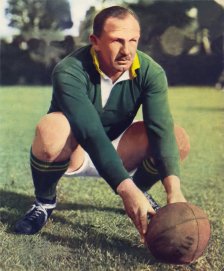
Bill Payn also received Springbok colours and played in two tests on the flank in the 1924 series but later after his own playing days were over he was to have an important role in the development of a post World War Two Springbok rugby legend.

The 1922 Comrades Marathon in Bill’s own words

Bill Payn’s own words on the 1922 Comrades Marathon are now legendary and well worth the read, an abridged version of that day by Bill goes as follows:

`On a bleak May morning I toe’d the line at the start when some civic dignitary fired a pistol and then very sensibly buggared off back to his warm bed. When the shot rent the air, off we sped – like a crowd of Armenian refugees fleeing from the wrath of the Turkish army. Shall I ever forget that infernal run. It was not very long before I realised that I was prey to an all consuming thirst, so clamant indeed, that I could not refuse any man who offered me a drink. At Hillcrest my feet were giving me so much pain that I took off my rugby boots and found a mass of blisters had formed on the soles of both feet, some kind follower provided me with brilliantine with which I anointed my feet and then repaired to the hotel for a huge plate of bacon and eggs. This done and much refreshed I ran up Botha’s Hill where at the top I found a friend who was also taking part, but he was in a very bad state so we sat down next to the road and exchanged notes and took stock of ourselves and the situation we were in. I fear that we did not move with the freedom of young athletes but rather resembled two old ducks, suffering from some distressing gynaecological disorder.

Fortunately at that stage my friend’s supporter arrived on the scene with a wicker basket which contained a delicious curried chicken set on a huge bed of rice. This we shared equally and then set off together in happy companionship for Drummond and here we bent our steps to a pleasant oasis – the pub – where I lined a dozen beers up on the counter determined not so much to celebrate a victory but rather to drown our sorrows. Whilst we were busy at this, one of the camp followers arrived on the scene and urged us both to continue as there were only five runners in front of us. My friend could not continue so I set off alone for Pietermaritzburg.

Somewhere along Harrison Flats I noticed a frail little woman with pink cheeks standing at the side of the road. She held up in one hand a bottle and in the other a glass. I stopped, and with old world courtesy bowed low saying `Madame your servant to command’. `Tis peach brandy’, she volunteered, `and I made it myself’. I gulped down a full tumbler of this home-made brew and in a second realised that I had swallowed a near-lethal dose of the rawest liquid I had ever tasted. I am still convinced that to this charming little woman must go full credit for inventing the first liquid fuel for jet engines. Fortunately I was facing Maritzburg and I was propelled along the way. I was too far gone in my cups even to ponder on whether this assistance did not breach the prescribed laws of amateur marathon running.

On the outskirts of Pietermaritzburg I was hailed by my wife’s family who were taking tea on the veranda. I went off the road and joined them in their tea and cakes. While we were thus happily engaged, two of my ‘hated’ rivals went past and so it was that I ended the course number eight. In the changing rooms I discovered that the soles of my feet were now two huge pads of blood blisters. My brother-in-law then arrived and he had the uncanny insight to my most immediate needs, for he gave me a bottle of champagne, for which I was most grateful. Shortly thereafter a rugby friend arrived and chided me as to whether I had forgotten that I was due to play a first league rugby match the next day and that our team needed me. Cadging a lift on the back of his motorbike we went back down to Durban and on the following day I played full back in a pair of old `tackies’.

This account by Bill Payn does not appear possible but it has been vouched for in every detail by Arthur Newton, the friend who persuaded Bill to enter the race in the first place and who was himself destined to become a legend in the world of marathon running.
newton-6

Arthur F. H. Newton, winner of the first “up” version of the Comrades in 1922 in a time of 8:40:00.

Bill Payn’s description of the race is filled with humour which so characterised his outlook on life. To illustrate this aspect there is a classic story told of Bill when he was captaining his club’s first cricket side in the premier league and they were not having a very good season with the bat. He placed an advertisement in the local Natal newspaper which read,

“Join Stanford Hill and bat twice on a Saturday afternoon”

His Passion for Rugby

Of all his sporting interests, rugby was his greatest love and he devoted many years of his life to the administration of the sport and coaching young players in the enjoyment of the game. He was the founder of Natal schools rugby and became a father figure to organisation serving on its executive from 1933 – with a gap for the war years – right through until he passed away in 1959. It is interesting to note his thoughts on the game of rugby and why people are keen to play the game.

Quoting him again `Why do men love to play rugby, is I feel sure, that it is the simulacrum – in simple terms it means an image of – of war as waged in the medieval days when battles were marked by the two cardinal virtues of courtesy and courage’.

His very close friend and fellow schoolmaster, Isak Van Heerden, who was to become the Springbok coach in the 1960’s, when commenting on Bills outlook on the game said

“He looked upon the game as a friendly and controlled war, feeling that man still has his primitive instincts and one of the strongest is the love of a good fight, which no amount of civilisation has been able to eradicate. Bill saw the game merely as a natural desire of a healthy man to pit his strength and skill against that of another and that rugby was the best possible outlet. He worshipped the game for the companionship amongst friends and for the opportunities that it allowed for comaradieship with opponents after the match was over”.

Cecil “Bill” Payn’s Test summary: Tests: 2 Tries: 0
First Test: 16 Aug 1924 Age:31 Flank against Britain at Kingsmead, Durban
Last Test: 23 Aug 1924 Age:31 Flank against Britain at Wanderers, Johannesburg

World War 2

Bill Payn was very much a man of Natal being educated at Maritzburg College and after qualifying as a teacher spent much of his working career teaching at Durban High School for Boys, but in 1939 ,at the age of forty six he once again set off for war serving as a gunner in North Africa.

Whilst in action in the Western Desert he was awarded the Military Medal, receiving a personally signed letter of commendation from the Commander-in- Chief of the Allied Forces, General Alexander.

General Harold Alexander (right), pictured here in 1942 as Commander-in-Chief, Middle East, surveys the battlefront from an open car and the Military Medal warded Payne (left).

Taken as a Prisoner of War (POW)

Later in the campaign the Allied troops were forced to retreat from Gazala back towards El Alamein. With the German Army closing in around them Bill made two desperate efforts to escape but was captured on each occasion, imprisoned first at Benghazi in Libya, he was struck down with acute dysentery and lost substantial weight, he eventually recovered and was transferred to a POW camp near Rome.

Bill’s strength of character was such that he looked on prison life as a challenge refusing to be restricted and to quote him again

“Life is always life if one can laugh and that captivity is what your heart makes of it.”

He accepted the conditions of imprisonment refusing to acknowledge their limitations, preferring to see in them an opportunity for fulfilment, the enrichment of character and to be of service to his fellow prisoners.

Using his ability in developing mental pursuits he kept many of his fellow inmates highly amused and was in great demand as a speaker with a range of subjects stretching from discussing the complete works of Shakespeare, a set of which he had with him in camp, to his talk on whales and their habits which was also a great favourite. He continued to teach, and was again in demand, conducting classes for those Prisoner’s of War who were taking correspondence courses.

A fellow prisoner wrote of him that his most outstanding characteristic was his unquestionable spirit which knew no bounds. Although he was no longer a young man, when the Italian war effort collapsed, Bill and two companions managed to escape into the mountains of Italy and were on the run for over two weeks, diverting enemy troops from the front, to search for them. Eventually they were recaptured by German troops and sent to prison camps first in Austria, then Poland and eventually to Germany itself.

Whilst he was busy keeping the spirits of his fellow prisoners up intellectually, his love of sport also played an important role in their well being with Bill forever arranging rugby and cricket matches, even teaching the prisoners from the other Allied nations the art of jukskei!.

Informal “Tests” between “Springbok” and “All Blacks” POW

It was while they were in Stalag XX-A near Thorn (Toruń) in occupied Poland which contained an equal number of young New Zealanders and South Africans crazy about their rugby that Bill Payn’s organisational ability was shown off at its very best.

A rugby ball was received through the Red Cross and Bill proposed a series of `test’ matches between the rugby worlds greatest rugby rivals. He roped in two able assistants, Peter Pienaar, the son of the 1921 Springbok captain to New Zealand and Billy Millar Jnr, whose father led the 1912/13 Springboks to the United Kingdom.

With Bill Payn as the driving force, they arranged practices and made up the jerseys, and served on the `Springbok’ selection panel. The making Springbok jerseys is a story in itself, with Red Cross vests being boiled together with the olive green Russian battle dress which were freely available, to obtain the green. The gold was more problematical but an ingenious solution was found, the S.A. Medical staff boiled up a solution of anti-malaria tablets to achieve the right result. It was important to look the part. The rugby field was marked off with yellow clay lines on the vast sandy parade ground and with army boots considered too lethal, the players played with bare feet in the middle of the Polish winter.

Aaron “Okey” Geffin

It was during this period that Bill came across another young South African who had been playing for the Pirates Rugby Football Club in Johannesburg before the war, and he had been captured at Tobruk. He was a strong, talented prop forward who also had a useful boot on him.

Bill encouraged him to work hard at this aspect of his game whilst stuck in the POW camp and to concentrate on his accuracy with his place kicking. The young soldier was none other than `Okey Geffin’ who five years later was to become a legend in the annals of South African rugby as well as an immense thorn in the flesh of the 1949 All Black side under Fred Allen.
Ockey Geffin 49

Aaron “Okey” Geffin (28 May 1921 – 16 October 2004), considered the greatest Jewish rugby player of all time,nd he was inducted into the International Jewish Sports Hall of Fame in 1998.

While in Stalag XX-A Okey Greffin said of Bill Payn,

“We used to scrum for hours on end, and he coached me. Payn arranged rugby games in camp: South Africa against the New Zealanders. Our gear was dyed underpants and vests, but no boots. We played barefoot. Payn encouraged my development and told me I would be a Springbok if I continued to play after the war.”

He spent three years in POW camps in Italy and Germany, as well as Poland, where he practised his kicking barefoot near a mass grave of Polish victims of the Nazis.

Geffin was one of the few prop forwards in the game to kick for goal. The Springboks won ten matches in a row, including a 4–0 whitewash of New Zealand on their 1949 tour to South Africa. Prop Okey Geffin helped kick the Springboks to victory—they won all four Tests despite the All Blacks scoring more tries in three of them.

Back to Bill Payn’s story, and his personal account of the Comrades Marathon which reflected both his humour and his tenacity. It was his friend, Izak van Heerden who perhaps summed Bill up best of all when he said, `

He was always seeing a humorous situation and playing upon it. He was a merry companion, a real friend and a great champion of the game of rugby‘.

Related work and links

Comrades Marathon; A ‘Living’ War Memorial, The Comrades Marathon

Comrades Marathon; Why the Comrades Marathon is called the ‘Comrades’

Living War Memorials; A war memorial in Cape Town which saves children’s lives


Written and Researched by Peter Dickens. References:  Maritzburg College Old Boys Association, wikipedia.  Main reference article – author unknown.

WW2 SAAF Pilot drives for show and putts for dough – Lt. Bobby Locke

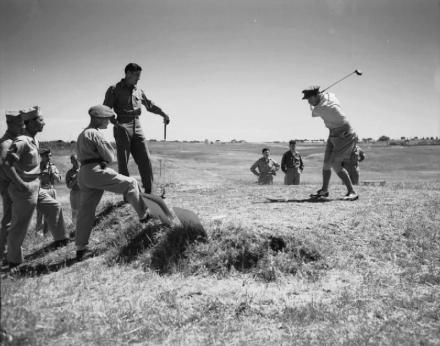
With a very special Masters finishing this weekend and Sergio Garcia achieving what has become one of golf’s truly special wins (especially on fellow Spaniard Seve Ballesteros’  birthday)  .. I am now reminded of a very famous South African golfer and war veteran – Bobby Locke, seen here taking some time off at a Services Golf Tournament held in Rome.

When World War 2 interrupted Locke’s burgeoning career as a golfer, he joined the South African Air Force as a bomber pilot, serving in both the Mediterranean and the Western Desert theatres of combat.

At the end of the war Locke returned to golf, famously playing in a series of matches in the USA against Sam Snead.  Bobby Locke’s legacy is remarkable, triumphant and tragic. He was a four-time Open Champion Champion and winner of 72 professional tournaments, but a car accident in 1960 damaged him physically and mentally and had an ultimately devastating affect on his wife and daughter.

In terms of the game of golf Locke quickly realised: “No matter how well I might play the long shots, if I couldn’t putt, I would never win”.  He therefore became a magnificent putter, in many people’s opinion (including Gary Player’s) the best there has ever been.

His unorthodox playing style translated to his putting, trapping the ball and imparting a hooking, top spin to it.  He later coined the often used golfing maxim: “You drive for show but putt for dough”.

It was on the greens that this remarkable South African truly excelled. He used an old rusty putter with a hickory shaft and employed his unorthodox technique, echoing his wider approach to life. He was an extrovert who sported baggy plus fours with shirt and tie on course. He liked singing music-hall numbers and played the ukulele.

Bobby – or “old muffin face” as he was known (because he never changed expression) was inducted into the World Golf Hall of Fame in 1977.  He was only the second non-USA or United Kingdom entrant after his fellow South African Gary Player (1974) to be inducted.

Featured photograph above shows: Lieutenant Bobby Locke whilst serving in the South African Air Force, playing a shot while Private Tommy Bolt, the American golfer looks on – note: on this occasion as he is in the Air Force he is not playing in his legendary baggy plus fours.

Feature image – Imperial War Museum Collection copyright.  Reference Bobby Locke: From Triumph to Tragedy by Fergus Bisset.

Article researched by Peter Dickens

The feisty South African minesweeper that went down fighting – HMSAS Parktown

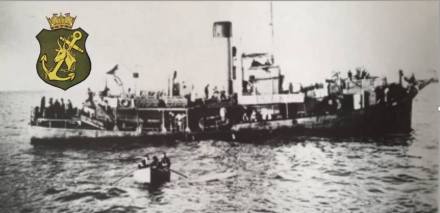
22308811_10155537271456480_3745202244434378650_nSouth Africa lost four ships during WW2, all of them minesweepers.  The second one to be lost was the HMSAS Parktown and it has a truly extraordinary fighting legacy.
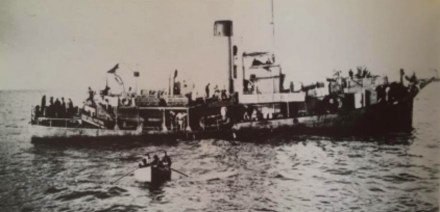
A small whaler converted to a minesweeper, the “tiny boat” HMSAS Parktown sailed into action in April 1942 in company of another “tiny boat” – the HMSAS Langlaagte, sailing  from Cape Town to the Mediterranean and joining the 167th Minesweeping Group working from Alexandria, Egypt.

Service in the Mediterranean

Parktown had arrived in the Mediterranean from South Africa during May and had sailed from Alexandria on 9 June as part of the escort for a convoy bound for Tobruk. During the passage the convoy is attacked and Parktown is involved in the gallant rescue of 28 survivors from a ship that had been sunk, many of whom are badly burnt. After their arrival in Tobruk on 12 June Parktown and her consort, a fellow South African ship the HMSAS Bever under the command of Lt P A North, are tasked to keep the approaches to Tobruk clear of mines.

parktown

HMSAS Parktown

Fall of Tobruk 

At that time Tobruk was under siege and by 20 June it is clear that a crisis of some kind is imminent. Late that same afternoon Parktown and Bever are ordered to enter harbour to embark evacuation parties. At 20:00 that evening they watch the Axis forces entering the western end of town and then reach the harbour shortly afterwards.

These two South African minesweepers were to distinguish themselves during the Allied evacuation from Tobruk fighting their way out of the harbour.  The Bever and Parktown fought side by side as they were loading up with as many Allied and South African troops and equipment as they could take, all the time whilst Rommel’s German forces closed in around them. The rapidity of the attack caused great confusion, however, the ships still manage to embark most of the men allocated to them before they sail.

On 20 June 1942 General Rommel’s “Deutsch-Italienische Panzerarmee” (German and Italian Tank Army) attacked the Tobruk garrison from the south and south east. By 18:00, the German and Italian forces had overrun the main defence lines and were closing on the harbour and all Allied ships were ordered to embark personnel for evacuation.

The escape 

By 19:00 German tanks and armoured cars were within the town and started shelling the ships in the harbour. HMSAS Bever received a direct hit as she cast off.  Next is The Parktown and her escape is also quite remarkable.

Using her machine guns she checks the advance of the enemy land forces whilst embarking a further 60 men, even though hit by shell fire. As she is casting off, more men keep arriving and several try to swim to the ship. A few are hauled on board, some assisted by one of the ship’s company, Able Seaman P J Smithers, who swims to their assistance. However in the confusion of sailing A/B Smithers is left behind to be captured and placed in an Italian POW camp.

As the last Allied ship to leave Tobruk, Parktown attracts a tremendous concentration of fire as she steams out at full speed. Although she is hit several times, no hit causes fatal damage to the ship and only one man, an army NCO, is killed.

Tobruk, Rommel, Bayerlein, Panzer III

Rommel and his Panzers enter Tobruk

The Fall of Tobruk

Under cover of a smoke screen laid by a motor torpedo boat, but still receiving shell-fire from the town, the two ships left the harbour for the open sea. During the night off Tobruk port the Parktown and Bever became separated and the Parktown goes to the assistance of a disabled tug, also crowded with men.

The sinking of the HMSAS Parktown

After taking it in tow Parktown is only able to make five knots (9.3 Km/h) and thus gets left behind by the rest of the fleet. At daybreak on the 21 June they are still only 50 miles from Tobruk and can see the coast 14 miles away with a heavy fog bank to seaward.  At 06:45 Parktown’s crew sighted what they described as an Italian “MAS” torpedo boat (E-Boat), which had been directed to the slow moving vessel by a German reconnaissance aircraft.  The Parktown then turns north towards the fog bank, only to be confronted by four more E-boats at close range. Fire is immediately opened by both sides.

The E-boats using their higher speed and longer range guns open the range and attack from different directions. Even though Parktown, having only one 20mm Oerlikon, was heavily out matched, one or two of the E-boats appear to be hit by her fire and end up temporarily out of control.

However, within 30 minutes, completely outnumbered and outgunned the Parktown suffers sufficient damage to put her completely out of action.  The Captain, Lieutenant Leslie James Jagger and the coxswain are killed by a direct hit to the Bridge as well as a Royal Navy officer on passage.  Within 15 minutes Parktown was stationary with a hole in the boiler, half of the crew and evacuated soldiers as casualties, out of ammunition and with the upper deck on fire. The only surviving officer, Sub-Lieutenant E R Francis, although himself severely wounded, takes charge and orders the ship to be abandoned as a fire is spreading rapidly and no guns remain in action.

In the aftermath it is noticed that the E-boats appear to be firing at the men in the water, however a plane, which was thought to be German, appears and heads towards the E-boats where it then circles over them and opens fire on them, after which they make off at high speed.

The remaining crew and soldiers abandoned ship and clung to carley floats. At this time, an aircraft drove off the hostile ships. The tug which had been in tow had not been engaged by the E-boats and managed to rescue some of the survivors and some of the remaining survivors were rescued by an Allied Motor Torpedo Boat (MTB) which found them close to the burning minesweeper. The Allied MTB then sank the burning wreck of the Parktown with depth charges before returning to Mersa Matruh that evening.

Accounts on the final hour of the Parktown differ:

Orpen states that the Italian ships were driven off by a South African aircraft. He also records there being four Italian torpedo boats involved in the action.

Du Toit states that there were six Italian torpedo boats involved and that the aircraft was in fact a German aircraft which erroneously attacked the Italian ships.

Harris supports the fact that there were four torpedo boats and states that the German aircraft deliberately attacked the Italian vessels as they were firing on survivors in the water.

MAScamo

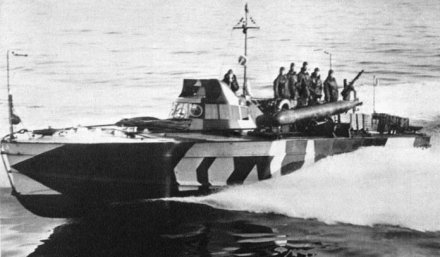
Camouflaged Italian World War II MAS that sunk the HMSAS Parktown (Motoscafo Armato Silurante – Italian: “Torpedo Armed Motorboat”)

Out of her complement of 21, Parktown suffered 13 casualties; five killed and eight seriously wounded.

Decorations and awards won

In this action alone the HMSAS Parktown’s crew would amass the following decorations and awards (we will leave the account of the HMSAS Bever to another post on her and her loss in November 1944 specifically):

Distinguished Service Order, D.S.O 
Sub-Lieutenant Ernest Rowland Frances (H.M.S.A.S. Parktown).
Comes from Krugersdorp. Age 34. Was in Training Ship General
Botha, 1923-23. Badly wounded during Tobruk withdrawal.

Distinguished Service Medal, D.S.M.
No 66921. Leading-Stoker John Charles Rohlandt (H.M.S.A.S. Parktown).
Home. address, 12, Hillyard-street. Woodstock.
No 71431. Leading-Stoker Leslie Ronald Mitchell (H.M.S.A.S. Parktown).
Home address. 16, Wesley-street. Observatory. Before war was
employed by Customs Department, Cape Town
No. 71048. Able-Seaman George Kirkwood (H.M.SA.S. Parktown).
Comes from Maraisburg. Transvaal. Was a miner in peace time.

Mentioned in Dispatches (Posthumous)
Lieutenant Leslie James Jagger (H.M.S.A.S. Parktown) Came from Johannesburg, was killed during this operation.

No. 71464. Stoker Andrew Henry Jooste (H.M.S.A.S. Parktown). Comes from Vrededorp Johannesburg. Age 21. A gold miner before joining Seaward Defence.

The honour roll  – HMSAS Parktown (SANF),

The following South African men were lost with the sinking of the Parktown (MPK means “missing presumed killed”)

BROCKLEHURST, Peter S, Able Seaman, 70457 (SANF), MPK
COOK, John A, Stoker 1c, 70256 (SANF), MPK
JAGGER, Leslie J, Lieutenant SANF, 70016 (SANF), MPK
MCEWAN, William A, Steward, 69686 (SANF), MPK
TREAMER, Arthur P, Petty Officer, 71109 (SANF), MPK

May these brave South Africans Rest in Peace, their duty done.

supporting-poppy-appeal

For more Observation Post stories on South African minesweepers lost in World War 2, please visit the following links:

HMSAS Southern Floe: The HMSAS Southern Floe was the SA Navy’s first ship loss & it carries with it a remarkable tale of survival.

The HMSAS Bever: “Under a hail of shells”; Recounting the bravery and loss of HMSAS Bever

The HMSAS Treern: The last South African Navy ship to be lost in action; HMSAS Treern


Researched by Peter Dickens. References: Article essence copied from Wikipedia, Military History Journal Vol 9 No 1 – June 1992. THE STORY OF A WARSHIP’S CREST by F V Demartinis and Day-to-Day in the SA Navy by Chris Bennett (social media). SOUTH AFRICAN NAVAL FORCE
Ship Histories, Convoy Escort Movements, Casualty Lists 1939-1947


Proper South African Gladiators

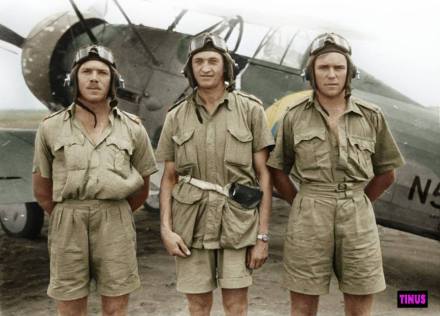
Wonderful colourised image by Tinus Le Roux of South African Air Force pilots during the East Africa campaign in WW2.

Here are No. 2 Squadron pilots in East Africa 1940-’41 (Gladiator aircraft in the background). From left to right: Lt. Pieter Fritz, Lt. Adrian “Coley” Colenbrander, Lt. Basil Guest. Only Lt. Guest will survive the war.

Lt. Colenbrander was a popular member of the squadron and was shot down and killed in 1942 just after the El Alamein break-through as 2 squadron’s Officer Commanding.

The Gloster Gladiator’s combat record  in East Africa

In Eastern Africa, it was determined that Italian forces based on Ethiopia posed a threat to the British Aden Protectorate, thus it was decided that an offensive would be necessary, under which the Gladiator would face off against the Italian biplane fighters: Fiat CR.32s and CR.42s. On 6 November 1940, in the first hour of the British offensive against Ethiopia, the Fiat CR.42 fighters of the 412a Squadriglia led by Capt. Antonio Raffi shot down five Gloster Gladiators of 1 SAAF Sqn; among the Italian pilots was the ace Mario Visintini. Tactically, the SAAF aircraft erred by engaging the CR.42’s in a piecemeal fashion and not en masse, and were anyway heavily outnumbered.

Early on in the action, Gladiators of No. 94 Squadron performed various offensive actions against the Italian forces; typical targets included airfields, supply depots, and aircraft. They were also assigned the mission of defending Aden airspace at day and night, as well as to protect Allied shipping operating in the vicinity. It was in the latter role that saw a single No. 94 Gladiator, piloted by Gordon Haywood, be responsible for the surrender and capture of the Italian Archimede-class submarine Galilei Galileo

On 6 June 1941, the Regia Aeronautica had only two serviceable aircraft remaining: a CR.32 and a CR.42, therefore air superiority was finally achieved by Gladiators and the Hurricanes. The Gladiator’s last air combat with an Italian fighter was on 24 October 1941, with the CR.42 of Tenente Malavolti (or, according to historian Håkan Gustavsson, sottotenente Malavolta). The Italian pilot took off to strafe British airfields at Dabat and Adi Arcai. According to the Italian historian Nico Sgarlato, the CR.42 was intercepted by three Gladiators and managed to shoot down two of them, but was then itself shot down and the pilot killed.  Other authors state that Malavolti managed to fire only on the two Gladiators before being shot down.

According to Gustavsson, SAAF pilot (no. 47484V) Lieutenant Lancelot Charles Henry “Paddy” Hope, at Dabat airfield, scrambled to intercept the CR.42 (MM7117). Diving on it, he opened fire at 300 yards. Although the CR.42 pilot took violent evasive action, Hope pursued, closing to 20 yards and firing as it tried to dive away. There was a brief flicker of flame and the last Italian aircraft to be shot down over East Africa spun into the ground and burst into flames near Ambazzo. The next day the wreckage was found, the dead pilot still in the cockpit. Hope dropped a message on Italian positions at Ambazzo:

“Tribute to the pilot of the Fiat. He was a brave man. South African Air Force.”

But operational record books of the Commonwealth units in the area state that they did not suffer any losses on this date. The dedication of the posthumous Medaglia d’oro al valor militare states that Malavolti shot down a Gladiator and forced another to crash land, but was himself shot down by a third Gladiator. This was the last air-to-air victory in the East African campaign.

Original black and white Photograph from the SAAF museum Colourised photo copyright and courtesy of Tinus Le Roux, and my thanks to Tinus for the caption reference.  Reference – wikipedia

The Forces Sweetheart & The Lady in White, two iconic women of WW2

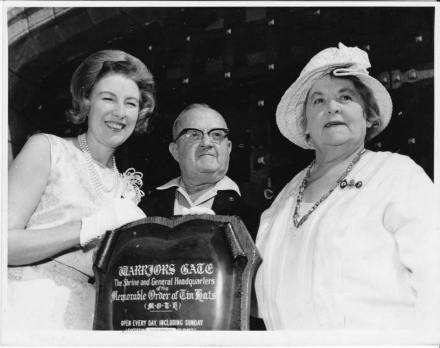
Dame Vera Lynn recently turned 100 years old and we look at two iconic women from the Second World War, one British and one South African. Both friends and both famed for singing to troops on quaysides. Here is Dame Vera Lynn (known to the troops as “The Forces Sweetheart”) on the left and Perla Siedle Gibson (Known to the troops as “The Lady In White”) on the right whilst Vera Lynn was on tour in South Africa in the 1950’s.

This photo was taken at the M.O.T.H. Headquarters in Durban (Warrior’s Gate), in the centre between these two iconic women is South African military veteran Harold William (Nobby) Clarke who was a Custodian of Warrior’s Gate.

Dame Vera Lynn, DBE (born Vera Margaret Welch on 20 March 1917), widely known as “The Forces’ Sweetheart”, she is an English singer, songwriter and actress whose musical recordings and performances were enormously popular during the Second World War. During the war she toured Egypt, India and Burma, giving outdoor concerts for the troops. The songs most associated with her are “We’ll Meet Again”, “The White Cliffs of Dover”, “A Nightingale Sang in Berkeley Square” and “There’ll Always Be an England”.

She remained popular after the war, appearing on radio and television in the UK and the US and recording such hits as “Auf Wiederseh’n Sweetheart” and her UK Number one single “My Son, My Son”. Her last single, “I Love This Land”, was released to mark the end of the Falklands War. In 2009, at age 92, she became the oldest living artist to top the UK Albums Chart.

She has devoted much time and energy to charity work connected with ex-servicemen, disabled children, and breast cancer. She is held in great affection by veterans of the Second World War to this day and in 2000 was named the Briton who best exemplified the spirit of the 20th century.

On 20th March 2017, Dame Vera celebrated her 100th birthday.


Perla Siedle Gibson was a South African soprano and artist who became internationally celebrated during the Second World War as the Lady in White, when she sang troopships in and out of Durban harbour.

Gibson was born in Durban in 1888. In the early twentieth century she studied music and art in Europe and the US and gave recitals in London and New York. Her youngest brother was Jack Siedle, the South African Test cricketer.

During World War 2 Durban was an extremely busy way station for convoys of ships en route to the fronts in North Africa and the Far East. Gibson became famous among thousands of Allied troops when she serenaded them as their ships passed in and out.

She went on to sing to more than 5,000 ships and a total of about a quarter of a million Allied servicemen. Clad in white with a red hat, she would stand at a spot at the mouth of Durban Bay where ships entering and leaving the harbour pass quite close, and sing patriotic and sentimental songs through a megaphone from a torpedoed ship, which grateful British soldiers had given her.

She died in 1971, shortly before her 83rd birthday. The year later a bronze plaque donated by men of the Royal Navy was erected to her memory on Durban’s North Pier on the spot where she used to sing. In 1995 Queen Elizabeth II unveiled a statue of Perla Gibson near the Ocean Terminal in Durban harbour.


The debt of gratitude owed by a collective world free of Nazi Germany, Imperial Japan and Fascist Italy to both these women is massive – it cannot be accounted such is the value.


Related link

Perla Gibson – The lady in White: An ‘unsung’ icon of Liberty … the ‘Lady in White’

Researched and written by Peter Dickens. Travers Barret Photographer copyright and grateful thanks to Kevin Lamprecht for sharing his Grandfather’s photograph and memories.  Vera Lynn video clipped from Youtube.  ‘We’ll meet again’ sung by Vera Lynn.

The inconvenient and unknown history of South Africa’s national flags

Here’s another interesting back of the chappie gum wrapper fact – Guess which is the correct South African flag South Africans fought under during World War 1?  Bet most people will think of the old “Orange White and Blue” South African flag, but that would be wrong.

As a serving officer in the South African Army I had to be familiar with flag protocol and etiquette, it’s a key part of soldiering when national flags go on parade. However the funny thing in South Africa is just how poor our collective knowledge is of our own national flags.

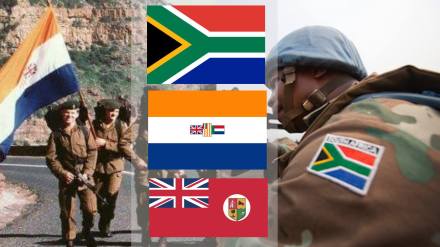
These are in fact all of South Africa’s national flags:17309179_1539170599434728_8929150928988660165_nMany times in military veteran circles there is steaming debate on when to use the “old” national flag and in what context – however few people in South Africa know what flag to use, what they really mean and even less know what the first South African flag actually looked like.

Here is a classic case of the misunderstandings surrounding South African national flags – This is the painting the “Birth of the Union” James E McConnell.  The painting was so poorly researched he used the wrong flag.

Birth of the Union of South Africa

This is a modern day photo-shop version of McConnell’s painting and it shows his original on the left and a more correct South African Union flag at union on the right.

one

The flag he used for his painting was the oranje-blanje-blou (known more commonly as the “OBB”) which all South Africans will recognise. However the flag of South Africa at the time of Union in 1910 was the South African “ensign flag” (British Union Jack top left and the South African National Coat of Arms inserted bottom right). Known as a “Red Duster” – now not too many South Africans today have ever seen that flag.

To show what the first South African national flag, the “Red Duster,” actually looked like here it is:

threeIt is very doubtful that there would have been huge public elation of Boers and Brits embracing one another under this National Flag as depicted in the painting, although this was the National Flag that South Africa fought under during the First World War (there where two versions of this ensign flag which they used – one Red and one Blue).
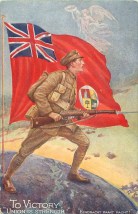
13686500_616785705157832_3286773017917395641_nIronically, the Boer Commandos that joined the South African Union’s Defence Force at Union in 1910, used and fought under this “South African Ensign” in the South West African and the East African campaigns of World War 1 from 1914 to 1918.

As noted, there was another variant of the “Red Duster” which is an ensign with the respective nation’s emblem against a Blue Background and a British Union flag in the left hand corner (you’ll still see this variant used in New Zealand and Australia for their National flag).

Both South Africa’s “Ensign” flags – Red and Blue qualify as the de facto South African national flags from 1910 to 1928, however the Red one was more common.

The Red Duster variant was the primary flag adopted by South Africa and Canada (Canada used their ensign version during WW1 and WW2 – it was only changed to the Maple Leaf in 1965)

Slide4Given the Ensigns were the flags usually adopted for British “Colonies” and “Dominions”, the South African Union government (which was in fact an independent Parliament to Westminster and made its own laws) felt differently. To the South African Union the national flag of 1910 was “still born” and not reflective of the history of the Boer Republics which made up the other half of the “Union” nor did it adequately reflect on South Africa’s Dutch colony origins.

The oranje-blanje-blou (“OBB”) was adopted by the South African Union Parliament as the “new” national flag in 1928. It was proudly flown as the flag of “Union” representing the old British Colonies of the Cape and Natal and the old Boer Republics of the Transvaal (South African Republic) and the Orange Free State. The use of the British Union flag inserted in the OBB, placed closest to the flag mast/pole (the most honoured and senior position for any “inserted” national flag on any flag format) ahead of the two Boer Republic flags, which take a lessor position, calmed down and appeased the “English” detractors who objected to such a dramatic flag change away from the standard Dominion Red Duster.

Slide5

However, confusion as to South Africa’s national flag to use even reigned at this time.  Here Jan Smuts makes the front cover of a late 1940’s edition of “Time” magazine with the National Flag in the background and this time they are incorrectly using the “old” blue ensign flag and should have been using the”new” OBB.

Slide3

So here’s another fun fact, the OBB is not the “Apartheid” flag, the National party when they came to power in 1948 put forward a proposal to have it amended and remove what they called the “Bloed Vlek” (Blood Stain) which was the British Union Flag inserted in the OBB. This was a National party pet hate as it reminded many Afrikaner nationalists of British decimation of Boer families and farms during the Boer war – the campaign to change the OBB flag was stepped up by the National Party under Hendrik Verwoerd when South Africa became a Republic and when he withdrew South Africa from the British Commonwealth of Nations in 1961.

However broader public pressure at the time prevented the initial National Party proposals for a flag change from been passed by the South African Republic’s Parliament and the idea was eventually shelved. In effect the initial campaign to change the OBB died with Verwoerd in 1966, but the National Party attempts to change the OBB to a “new” Republic flag did not stop there.  In 1968, the National Party Prime Minister, John Vorster, again proposed the adoption of a new flag to replace the OBB from 1971, the rational was to commemorate the tenth anniversary of the declaration of South Africa as a Republic.  Even though a National newspaper campaign was run asking the public for suggested flag designs, Vorster’s proposal did not get momentum in Parliament and the flag change never materialised.

Historically speaking, although the hardline National Party members hated the “OBB” and its inserted British “Union Jack”, but they disliked the original South African ensign “Red Duster” national flag with its massive “Union Jack” even more, they hated this flag so much it was literally erased from the South African collective consciousness and very few examples of it survive to this day. It certainly was not top of mind when McConnell painted his “Birth of the Union” painting in 1976.

That the flag of South African Union was kept during the implementation of Apartheid by the National Party from 1948 to 1994 is unfortunate as it detracts from it’s rich heritage as the flag of the South African “Union” and as such it is not the flag of the South African “Republic” nor was it ever intended to be a Republic’s flag – it especially detracts from all the kudos that South Africa received during World War 2 fighting alongside British and American forces under the South African Union’s OBB.

Slide6

The “new” (new) South African flag adopted in 1994 was actually  intended as a “five year interim” flag, however, it proved so highly popular it became the national flag almost instantly and was officially adopted by the government of South Africa on the election day, 27th April 1994.

According to its designer Fred Bromnell – It is actually a combination of the two “Colonial era” flags – The national flag of the Netherlands (Dutch flag) – Red, White, Blue and the the British Union flag – Blue, White, Red.  Then the two former Boer Republic flags – the South African Republic (Transvaal) “Vier Kleur” – Green, Red, White and Blue and the Orange Free State Republic Flag (using the Dutch insert flag and the white) and then finally the African National Congress (ANC) Flag – Black, Green and Gold (colours also present in the Inkatha Freedom Party and Pan African Congress flags).

The V symbolises inclusion and unification. In essence it is another flag of “Union” (unity) only this time acknowledging the county’s Black population and its historical heritage.  Symbols considered in the design of the “new” flag included Catholic and Anglican Priest’s Classic Chasubles, the universal symbol of Peace and the married Zulu female traditional head-dress.

There are some claims that the “New” South African flag is just a “design” with no meaning or symbolism – but that’s not the opinion of the man who actually designed it – Frederick Gordon Brownell.  Also, I find that whenever that when this argument is used  it’s usually to deny meaning to the new South Africa flag and to degrade the country, describing it as “jockey Y front underpants,” when in fact the truth is the opposite and the flag is stuffed full of meaning and symbolism.

In fact the “New” South African flag reflects all the old flags of South Africa, these exist right there for all to see, plain as day to the trained eye (and even the untrained eye) – symbolically placed in the new flag – and that’s an inconvenient truth to both the “new” flag’s detractors and the detractors of the “old” OBB.

Slide2

The funny thing is the “New” (new) flag was only meant to be an interim one, hence the mash of historical South African flags.  The irony kills me whenever I see the “new” South African youth and current South African political class with the flag they are now saluting, flying and even wearing – and it consists of their much despised “Colonial” Dutch, British and Boer Republic flags, and most of the “Apartheid” flag – irony lost on them but not on me.

Here’s the another irony – the “old” South African flag i.e. the “OBB” Union flag was born out of the ideals of Union led by Jan Smuts and Louis Botha. Not under the Apartheid ideals of  DF Malan and HF Verwoed. I personally see a lot of irony when hard-line right wing Afrikaners slam Jan Smuts and brand his values of consolidation and union with the British as an act of treason to the Afrikaner people – when at the same time they fully support, and at times even fly, the very flag created in honour of his very Unionist ideal – with its British “Blood Stain” symbolising Smuts’ reconciliation in full and proud senior position.

Furthermore it is ironic that after many years of trying to change the National flag after South Africa was declared a Republic in 1961, it was the National Party that finally achieved its goal in February 1994 when they, as the National Party government, briefed Frederick Gordon Brownell at the government’s own heraldry department to design a new flag (funnily in some sort of déjà vu – they had to involve the country’s National Herald this time after another newspaper campaign for designs from the public had failed, albeit 20 years later).  The result is the current flag we see today.  It was designed literally in a week and the only change in the decades long National Party narrative on changing the OBB this time was that both FW de Klerk and Nelson Mandela had to approve the new design.

So, lump it or leave it – there is nothing in “Union” flags that appeal to “all” people and everything in “Union” flags that appeal to “all” people.

All I can say is that the “new” South African flag has been the most cross cultural flag ever composed in South African history and it has been the least controversial i.e. it has been the most universally accepted by all South Africans (the very vast majority) with the least amount of disgruntled political posturing to change it.

In summary, to the “old” South Africa OBB supporters I would say:

  1.  The OBB was not the only South African national flag both Afrikaner and English South Africans fought under prior to 1994.
  2. The OBB pays a very high homage to The British Union National Flag in terms of the Vexillology of Flags and Flag Etiquette, especially in terms of the superior/senior position it takes relative to the two Boer Republic flags.
  3. The OBB symbolises the union of Afrikaner and English races – a central philosophy of Jan Christiaan Smuts and that of  “Union” Political Coalition partners and Governments.  Not those ideals of nationalist Afrikaners like Malan, Verwoed and Vorster, whose central political premise was that of an independent “Republic” and “Apartheid”.
  4. The OBB, although a flag of Union with the British, is now very dated.  Times and history changed since South Africa declared itself a Republic, so too the demographic and even social landscape of South Arica.  It cannot work as a current national flag in modern South Africa, change was inevitable – even Smuts would have seen that, and knowing his way of governance he would have welcomed a new flag to reflect it had he been around (in his time he served and lived under four different national flags).
  5. Many key Commonwealth countries have traded in their “Colonial” ensigns and Union flags – Canada, Jamaica, Kenya, Singapore, Hong Kong to name a few, and those still holding onto theirs – Australia and New Zealand, are under strong popular pressure to change them ahead of changing times.

To the “new” South Africa, current National flag supporters I say:

  1. The OBB is the flag of “Union” and it is one of the two Union flags used to bring   South Africa into existence as a country on the central principles of “reconciliation” and “tolerance” between two previously warring races (Boers and Brits), it is not the flag of “Apartheid”- in fact it was developed long before Apartheid was instituted as an ideology (in 1948) and symbolically it’s the complete opposite of Apartheid.
  2. Even the hard-line Apartheid Nationalists hated the old South African OBB, so much they wanted to change it – and eventually they did, and ironically it is the flag you now support, salute, fly and even wear – it was designed by a brief from the outgoing Apartheid Nationalist government in its final throws of office.
  3. The “new” flag very strongly and powerfully associates the flags of South Africa’s “Colonisers” and “Boers” in its design and in fact it celebrates this history – in addition to celebrating the history of the Black peoples of South Africa.
  4. The “new” South African flag does an excellent job balancing South Africa’s history and is very relevant to the current time.  I can’t possibly think of a better solution, and if the ANC and EFF one day decide to change it because of all its “colonial” and “white” legacy, I would hate to see what some Gupta owned design agency in India comes up with, because that really would round off a ‘state capture’.

This is why I allow myself a wry ironic smirk every-time South African flags are so hotly debated.

16905042_239550126507219_5077322311342536422_o


Researched and written by Peter Dickens.

Featured image by James E McConnell, Watercolour on Board 1973, photo-shopped version and background information courtesy Nicholas Pnematicatos.

Wartime beach defences and legendary hospitality

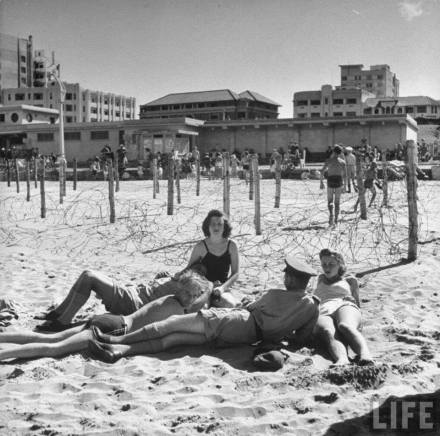
During the Second World War South Africa became a central destination for British, South African as well as other Commonwealth nurses, soldiers, sailors and airmen for a little ‘R&R” (Rest and Recuperation) – especially Durban and Cape Town. Seen here in this famous LIFE magazine image are servicemen on South Africa’s beaches enjoying some of the prettier sights and sun that South Africa has to offer.

In fact many veterans fondly remember South Africa’s hospitality during the war years as the country really opened their arms and welcomed them.

Note during wartime even both the strategic ports of Cape Town and Durban’s beaches were heavily guarded against invasion with barbed wire beach obstacles.

Image copyright – LIFE Magazine


Sidi Rezegh – “The South African sacrifice resulted in the turning point of the battle”

The Battle of Sidi Rezegh was part of Operation Crusader during World War 2, and one in which there was substantial South African sacrifice and bravery.

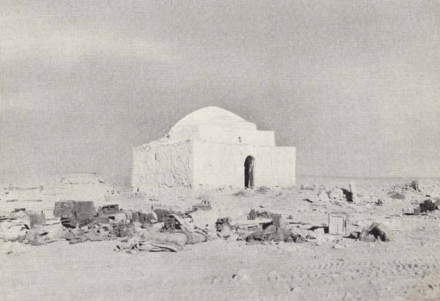
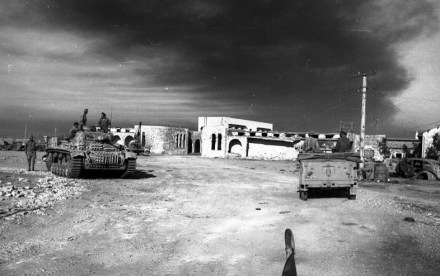
The battle was primarily a clash of armour between Allied (British and Commonwealth) and Axis (German and Italian) forces to try to relive the German Afrika Korp’s siege of Tobruk and took place around a strategic airfield.  A feature in the battle was the white tomb of Sidi Rezegh shown here with battle debris around it.

screen-shot-2016-11-23-at-12-35-47

The South Africans fought valiantly in this battle but the losses were incredibly high, the 5th South African Infantry Brigade had gone into this action with a brigade strength of 5,800 and had come out with a strength of under 2,000. The balance had been killed, wounded or taken prisoner.

The German General, Rommel attacked with 15th and 21st Panzer Divisions (battle tank and armoured divisions) and captured the airfield located there. Fighting was desperate and gallant, The fighting at Sidi Rezegh continued through 22 November 1941, with South African Division’s 5th Infantry Brigade by that time engaged to the south of the airfield. An attempt to recapture it failed and the Axis counter-offensive began to gain momentum.
.
The most memorable action during the North African campaign of the 3rd Field Regiment, (Transvaal Horse Artillery) was during the battle of Sidi Rezegh on 23 November 1941. The South Africans were surrounded on all sides by German armour and artillery, subjected to a continuous barrage. They tried to take cover in shallow slit trenches. In many places the South African soldiers could only dig down to around 9 inches [23 cm] deep due to the solid limestone underneath their positions.

The Transvaal Horse Artillery engaged German tanks from the 15th and 21st Panzer divisions, the gunners firing over open sights as they were overrun. This continued until many of the officers were dead and the gunners had run out of ammunition.

Many of the gun crews were captured. As darkness fell, those that could escaped back to Allied lines under cover of darkness. The artillerymen of the 3rd Field Regiment managed to save 5 of their 24 guns from the battlefield. They later recovered a further 7 guns.

Although initially a German success, this battle ultimately proved disastrous for the German Afrika Korps as they lost 72 of their tanks to the hard fought attrition and resistance of the Allies and especially the South African forces and this would ultimately turn the tide of the North African theatre of operations to the Allies.

This is summed up best after the battle of Sidi Rezegh by  Acting Lieutenant General Sir Charles Willoughby Moke Norrie stated that the South African’s “sacrifice resulted in the turning point of the battle, giving the Allies the upper hand in North Africa at that time”.

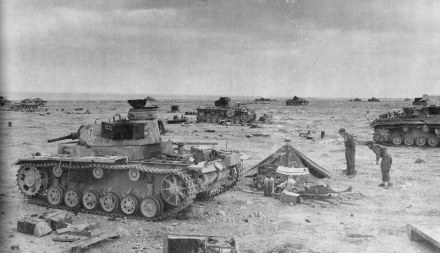
The image below shows a Afrika Korps tanks and armoured vehicles burning in the assault by the  15th Panzer Division (8th Panzer Regiment) in November 1941.

screen-shot-2016-11-23-at-12-49-16

The images below show some of the South African involved – left to right Lt Col Ian Buchan ‘Tiger’ Whyte, DC, and a captain of the 3rd Field Regiment (THA) pose in front of some of the 32 German tanks knocked out by their guns at Sidi Rezegh on 23 November 1941, secondly Some South African survivors of Sidi Rezegh, members of what remained of the 3rd Field Regiment (THA) being returned to Mersa Matruh in Egypt to be re-formed as a fighting unit  and finally a South African Machine Gun Platoon 27 Battalion At Sidi Rezegh

The featured image shows a Afrika Korps work shop which was overrun at Sidi Rezegh: South African War Museum as published in: Klein, Harry Lt-Col (1946). Springbok Record.


Researched by Peter Dickens. References – Wikipedia and the Military History Journal  Vol 14 No 5 – June 2009 Sidi Rezegh : Reminiscences of the late Gunner Cyril Herbert Glass, 143458, 3rd Field Regiment (Transvaal Horse Artillery)