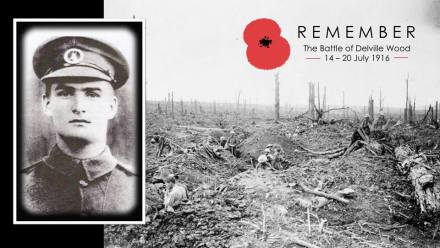
A South African soldier’s diary captures the horror of Delville Wood

The Diary of Walter Giddy

World War 1, Battle of Delville Wood, what better way to understand the carnage witnessed than by reading the writings of the young South Africans tasked to “hold the wood at all costs”.
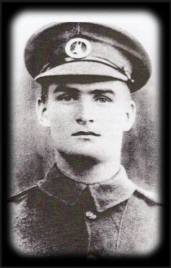
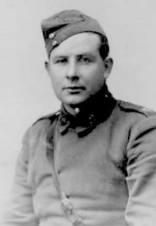
11659454_467187503450987_8539553676263314124_nWalter Giddy was born at Barkly East, Cape Province, South Africa, in 1895. He was the third son of Henry Richard Giddy and Catherine Octavia Dicks/Giddy. Walter was schooled at Dale College in King Williamstown. He voluntereed, together with friends, for overseas military service in 1915. He served in the 2nd S.A. Infantry Regiment. Having survived the battle of Delville Wood, he was killed by shrapnel on the 12th April 1917 near Fampoux. Walter Giddy is commemorated by a Special Memorial in Point du Jour Military Cemetery, Athies.

His diary was copied by his younger sister Kate Muriel Giddy/Morris.

Extracts from Walter’s Diary

4th July 1916
Still lying low in Suzanne Valley. The artillery are quietly moving up. We shifted up behind our old firing line, where the advance started 2 or 3 days ago. The dead are lying about. Germans and our men as well, haven’t had time to bury them. The trenches were nailed to the ground, and dead-mans-land looked like a ploughed field, heaps must be buried underneath…

5th July 1916
… it rained last night and we only have overcoats and waterproof sheets, but I cuddled up to old Fatty Roe, and slept quite warmly. There are no dug-outs where we are at present, and the shells are exploding uncomfortably near.
Had a man wounded last night for a kick off. The Huns are lying in heaps, one I noticed in particular had both legs blown off, and his head bashed in. Some have turned quite black from exposure. They are burying them as fast as possible. Brought an old fashioned power horn, Hun bullets, nose-caps of shells, etc., back with me, but I suppose they’ll be thrown away.

6th July 1916
Told to hold ourselves in readiness, expecting an attack. Received draft (£5) from Father.

7th July 1916
Made to sleep in the trench on account of the Hun shells flying a bit too near, had a cold rough night, but things have quietened a bit this morning, so we are back in our little shack made out of waterproofs. Bloody Fritz, he had started shelling the road, about 400 yards away and directly in line of us. A Frenchie was standing on the parapet and was excitedly beckoning to us. He’d put up his hands and point to a communication trench ahead. Couln’t make out what the beggar was driving at, so we ran up to him, and ahead were dozens of Hun prisoners filling out of the trench. It rained so hard our shack was just a mud-pool, busy drying our kit.

8th July 1916
3rd S.A.’s were relieved by the Yorks who went over this morning 400 strong and returned 150 strong. Then our S.A. Scottish went over with a couple of the Regiments and took the wood, and I believe lost heavily, but are still holding the wood.

Seaforth, Black Watch, Cameron, P.A., G.P.S. are going over in the morning, so there will be some bloodshed, if they get at close quarters with cold steel. Hun sent over some Tear Shells, which made our eyes smart, but were too far to cause much trouble. Two of our companies were up to the firing line, and T. Blake, of our platoon, acting as guide, had his jaw bone shattered, and another man had his head blown off. Three guns of the 9th R.F.A. were put out of action, they say the Huns have “smelt a rat”, and brought 12″ and 9.2 guns up, so I guess we shall have a lively time. I’d love to see the four “Jock” Regiments go over in the morning. The Huns hate them like poison, yet I do no think their hate exceeds their fear. For them, 100 and more prisoners have been brought in, past us. The Huns were sending shells over our heads, all day, one dropped in the valley, below, killing two and wounding five of the R.F.A.

9th July 1916
Shall never forget it, as long as I live. Coming up the trench we were shelled the whole time, and to see a string a wounded making their way to a dressing station, those who can walk or hobble along ; another chap had half of his head taken off, and was sitting in a huddled up position, on the side of the trench, blood streaming on to his boots, and Jock lay not 5 yards further with his stomach all burst open, in the middle of the trench. Those are only a few instances of the gruesome sights we see daily. A I am writing here, a big shell plonked into the soft earth, covering me with dust, one by one they are bursting around us. I am just wondering if the next will catch us (no it was just over). Oh ! I thought one wound get us, it plonked slick in our trench and killed old Fatty Roe, and wounded Keefe, Sammy who was next to me, and Sid Phillips, poor beggar, he is still lying next to me, the stretcher bearers are too busy to fetch him away.
10405542_874163019269673_4645022932964781731_n

The Manchesters had to evacuate the wood below us, and we the one along here. I’m wondering if we will be able to hold this wood, in case of an attack, as our number is so diminished. I’ve seen so cruel sights today. I was all covered in my little dug out, when old Sammy was wounded, had a miraculous escape.

10th July 1916
Still hanging on, and the shells flying round, three more of our fellows wounded, out of our platoon. Took Fatty Roe’s valuables off him and handed them over to Sergeant Restall… We have no dug-outs, just in an open trench. Of course we’ve dug in a bit, but its no protection against those big German shells… Harold Alger has been badly knocked about. I’m afraid he won’t pull through, arm and leg shattered by shrapnel. I had a lucky escape while talking to Lieutenant Davis, a piece of shrapnel hit on my steel helmet, and glanced past his head. He ramarked “That saved you from a nasty wound”, (referring to the helmet). The S.A. lads in our platoon have stuck it splendily, it has been a tough trial this.
combat
We heard cries from the wood further down, and Geoghan and Edkins went to investigate, finding three wounded men lying down in the open. They had been lying there three days among their own dead, and had been buried a couple of times by their own shells, and the one brought in had been wounded again. They asked for four volunteers to bring in the other two, so off we went. It was an awful half hour, but we were well repaid by the grateful looks on their haggard faces. Poor old Geoghan was hit, his head was split off by shrapnel. Four of us buried him this morning.

11th July 1916
We were relieved by our own Scottish, and are back at our former camping ground, but I do feel so lonely, out of our mess of 5, only 2 of us left and my half section gone as well. We were right through the Egyptian Campaign tog, as half sections.

A Yorkshire man brought a prisoner over this morning, while we were still in the trenches, and he halted to have a chat. Our Corporal could speak German, so he gave the prisoner a cig. and he told us all we wanted to know. He was a Saxon and was heartily sick of the war, and our artillery was playing up havoc with their infantry, since the beginning of the Battle of the Somme. I didn’t say anything, but their artillery had given our men as much as they could bear.

12th July 1916
About 2 miles back and still the Huns had the neck tu put a shell into us, killing one man and wounding another. The Rev. Cook was killed while helping to carry in wounded. I have just been watching the Huns shelling the wood we came out of yesterday. It looks as though the wood is on fire, the smoke rising from the bursting shells. The Scottish (ours) relieved us too, and we lost 16 out of our platoon in it. It was a cruel three days, espacially when Manchester were driven out of the woods, 700 yards, in front of us, we were expecting the Huns over any minute, but the Huns would have got a warm reception. Then the Bedfords retook the wood, the full morning, which strengthened our position.

13th July 1916
Allyman found us again bending. I thought we were so safe for a bit. A shell planked out into the next dug-out to mine, killing Smithy and wounding Edkins, Lonsdale, Redwood and Bob Thompson, 3 of them belonging to our section. Only 3 of us left in Sammy’s old section. It’s a cruel war this. Just going up to dig graves to bury our dead. We buried Private Redwood, Smith and Colonel Jones, of The Scottish. General Lukin was at the funeral, he did look so worried and old.

14th July 1916
News very good this morning. our troops driving the Huns back, and the cavalry have just passed, they look so fine. The Bengal Lancers were among them, so I was told. We’re under orders to shift at a moment notice. It rained heavily this morning. I hope it does not hamper the movements of the cavalry. If this move ends as successfully as it has begun, it will mean such a lot to the bringing of the war to an end. Our chaps are getting so tired of the mud and damp. There’s such a change in the sunburnt faces of Egypt, and this inactivity makes one as weak as a rat. The cavalry have done excellent work, now it remains to us infantry to consolidate the positions. We’re just ready to move forward…

15th/16th July 1916
We (South African Brigade) went into Delville Wood and drove the Huns out of it, and entrenched ourselves on the edge, losing many men, but we drove them off, as they wound come back and counter attack. Then snipers were knocking our fellows over wholesale, while we were digging trenches, but our chaps kept them off. I got behind a tree, just with my right eye and shoulder showing, and blazed away.

We held the trench, and on the night of the 16th July they made a hot attack on out left, 16 of them breaking through, and a bombing party was called to go and bomb them out (I was one of the men picked). We got four and the rest of them cleared out. It rained all night, and we were ankle deep in mud, rifles covered with mud, try as we would, to keep them clean.

17th-20th July 1916
The Huns started shelling us, and it was just murder from then until 2 o’clock of the afternoon of the 18th, when we got the order to get out as best you can. I came out with Corporal Farrow, but how we managed it, goodness knows, men lying all over shattered to pieces, by shell fire, and the wood was raked by machine guns and rifle fire. Major McLeod of the Scottish was splendid. I have never seen a pluckier man, he tried his level best to get as many out as possible. We fall back to the valley below, and formed up again. I came on to camp and was ordered by the Doctor to remain here, having a slight attack of shell shock. I believe the 9th took the wood again, and were immediately relieved, but the lads are turning up again in camp, the few lucky ones. If it was not for a hole in my steel helmet, and a bruise on the tip, I would think it was an awful nightmare…The lads stuck it well, but the wood was absolutely flattened, no human being could live in it.

Major McLeod was wounded, and I gave him a hand to get out, but he would have I was to push on, as I would be killed. Many a silent prayer did I sent up, for strength to bring me through safely. I found a Sergeant of the 1st all of a shake, suffering from shell shock, so I took his arm and managed to get him to the dressing station. Just shaken hands with my old pal John Forbes. He is wounded in the arm and is off to Blighty. I quite envy him.

A sad day of S.A… They say we made a name for ourselves but at what a cost. All the 9th are resting on a hillside. Small parties of 25 to 40 men form the companies, which were 200 strong a short two weeks ago. We have taken back several miles…
19983702_10155267786011480_4967119870372002441_o
21st July 1916
Had a bathe in the Somme, and a change of underwear, now lying on the green hillside listening to our Division band, a happy day for the lads that were lucky enough to come through.

22nd July 1916
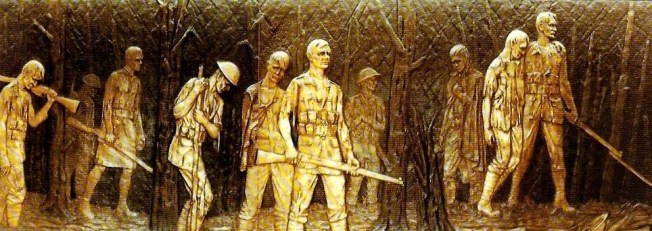
… General Lukin had us gathered round him, and thanked us for the splendid way in which we fought in Delville and Bernafay Woods. He said we got orders to take and hold the woods, at all costs, and we did for four days and four nights, and when told to fall back on the trench, we did it in a soldier like way. He knew his boys would, and he was prouder of us now, than even before, if he possibly could be, as he always was proud of South Africans. All he regretted was the great loss of gallant comrades, and thanked us from the bottom of his heart for what we had done.
supporting-poppy-appeal

Related Links and Work

Springbok Valour – Battle of Delville Wood Centenary ‘Springbok Valour’… Somme 100 & the Delville Wood Centenary

In Flanders Fields (Afrikaans) ‘In Flanders Fields’ translated into Afrikaans for the Somme 100 commemoration, July 2016

William Faulds VC Taking gallantry at Delville Wood to a whole new level; William Faulds VC MC

The Battle of Delville Wood 500 shells/min fell on the Springboks … “the bloodiest battle hell of 1916”

Mascots at Delville Wood: Nancy the Springbok Nancy the Springbok

Mascots at Delville Wood: Jackie the Baboon Jackie; The South African Baboon soldier of World War One


Posted by Peter Dickens

With the courtesy of the nephew of Walter Giddy, John Morris of Knysna, South Africa, and his daughters Kathy Morris/Ansermino of Vancouver, Canada, and Wendy Morris/Delbeke of Deerlijk, Belgium

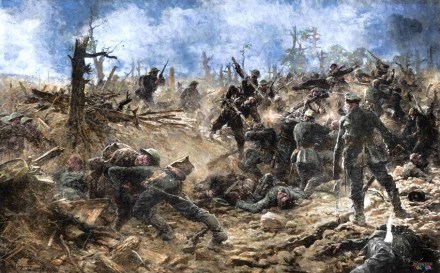
Feature image: Illustrated London News Lithograph by the Spanish artist – José Simont Guillén (1875-1968)

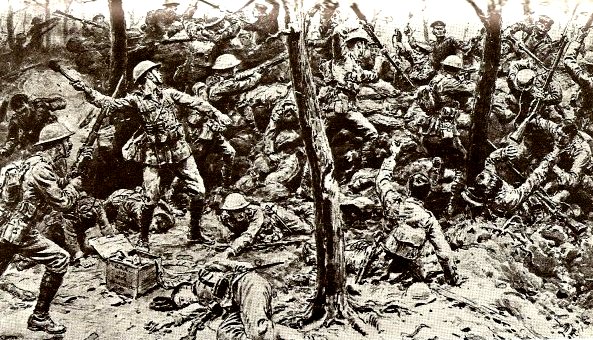
Insert illustration: Frank Dadd from a description of the Battle of Delville Wood by a British Officer. The Graphic Aug 19, 1916

Insert Image:  Brass relief depicting a group of South Africans leaving Delville Wood after the battle, located at the Delville Wood Museum in France.  Brass by sculpter Danie de Jager.

Walter Giddy image and post content courtesy The Delville Wood memorial – website www.delvillewood.com 
A rose for a South African war hero, honoured every week in Italy, forgotten in South Africa!

This is the story of Lt. Samuel Schneider, a South African SAAF hero who evaded captivity in Italy only to join the Italian Resistance as a Partisan and fight the war on the ground.  He is honoured every year in Italy as a national hero where a red rose is regularly laid at his headstone by a grateful nation.  Whereas in South Africa, his homeland, there is now scarce recognition of him.

Lieutenant Samuel Schneider, was born in Springs in South Africa, he was a 1 Squadron South African Air Force pilot of Jewish heritage, and is buried at Faenza’s Allied War Cemetery. On his headstone it reads “He lived and died nobly” on the base, under a Star of David on the top, and his is a very interesting story.

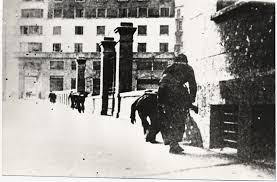
His story is intertwined in Bologna where he fought and died in a famous battle between rebel Italian Partisans and Nazi-fascist forces on November 7, 1944 – called the Battle of Porta Lame.  However because he used a pseudonym name to fight with the Partisans ‘ John Klemlen’ and kept his identity secret – so some confusion on his identity and burial-place arose.

An anniversary is annually dedicated to the fallen of the Battle of Porta Lame and for the Italians commemorating it the true identity of their hero Partisan ‘John Klemlen’ and his burial-place became quite important.  They approached the Commonwealth War Graves Commission (CWGC) to find him.  The CWGC and the South African military archive where able to trace John Klemlen to Lt. Samuel Schneider and how his joining of the Partisans came about.

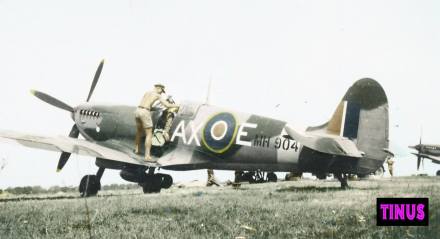
During the afternoon of August 22, 1944,  Lt. Schneider was part of a patrol of four SAAF 1 Squadron Mk IX Spitfires.  Their mission was to search out enemy communication structures and destroy them. Flying north of Bologna, and flying very low looking for targets, Lt. Schneider’s Spitfire was struck by anti-aircraft fire which damaged the cooling system and he had to abandon his aircraft.

1465859_258197500996383_931143799_o

SAAF 1 Squadron MK IX Spitfire in Italy, bombed up with 500lb bomb

In enemy territory and thanks to some local farmers in the area he received civilian clothes to disguise himself to get back to his squadron, he was saved by the local Partisan Resistance who had managed to hide him, staying with farm families in the Calderara area. To avoid detection and keep those helping him safe he used the false identity of John Klemlen. 

The Partisans, known as Gruppi d’azione (abbreviated to GAP) or “Patriotic Action Group” in English,  were small teams of resistance fighters trained in the use of revolvers and explosives. They approached enemy forces with a quick strike and moved away equally as quickly – almost always on bicycles.

The Partisans gave Lt. Schneider an offer, to be escorted over enemy lines and possibly be caught or to stay,  They pleaded for him to help them and fight with them.  He gave in and chose to join the Bolognese Partisans, who then gave him an Italian ‘battlefield’ name – Gianni.  

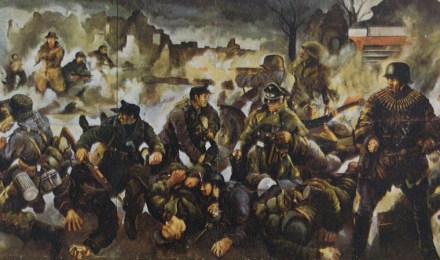
The Battle of Porta Lame is an episode of Italian resistance during World War II. It was fought on November 7, 1944 near Porta Lame in Bologna and saw detachments of the 7th GAP (Gruppi d’azione) Partisans engage German Nazi forces and Italian Fascist forces. Despite the superiority of the German and Italian forces, the partisans managed to escape the progressive encirclement of their positions.

Unknown

William Michelini, a Partisan, remembered John Klemlen (Samuel Schneider) well, riding a bicycle and the pistol in his pocket for some or other mission on the streets of Bologna.  He recalled a very brave South African officer, who at the height of the Battle of Porta Lame in the afternoon, was surrounded by enemy fire, remaining behind giving cover fire for retreating Partisans.  He was wearing a leather jacket and a fur collar – an aviators jacket.  He was killed in action later that day – November 7, 1944.

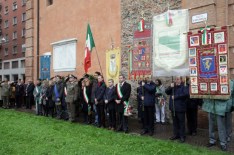
His name is recalled every 7th of November during the ceremonies dedicated to the anniversary of the battle and a beautiful garden inside the ‘Parco del Cavaticcio’ park is named in his honour.

Other South African pilots, like Lt Cecil William Emil Blake who escaped from a POW camp, also fought with Italian Partisans and he got the Army Military Cross for his ground action.  It’s well about time we honoured these men in South Africa and if this article goes some way to raising awareness so much the better.

Every Sunday, for many years now, the local Italians who either remember Lt. Samuel Schneider and those who honour his memory in the liberation of Italy from Fascism and Nazism, bring him a flower and place it on his headstone.  

The honour role of Italian Partisans who fell at the Battle of Porta Lame

084018836-269df416-536b-4317-9e69-a21bcb2003a6Oddone Baiesi 21
Oliano Bosi 23
In Casali 17
Enzo Cesari 18

Ercole Dalla Valle 17
Guido Guernelli 38
Lt. Samuel Schneider (aka John Klemlen) SAAF
Ettore Magli 19
Rodolfo Mori 19
Alfonso Ricchi 19
Alfonso Tosarelli 41
Antonio Zucchi 19

Grave Reference: VII. B. 3.Cemetery: Faenza war cemetery. Son of Abraham and Celia Schneider, of Springs, Transvaal, South Africa.

Written and Researched by Peter Dickens


Master image featured ‘The Battle of Porta Lame’ by Tullio Ravenda (copyright).  References – Wikipedia, Commonwealth War Graves Commission. Resistenzamappe.  Corriere Di Bologna, La Vera Storia Di Schneider, Aviatore Eroe A Porta Lame. Photo of SAAF 1 sqdn Spitfire IX copyright Johnny Seccombe, colourised by Tinus Le Roux

Authors note: My most sincere thanks to Fabio Liverani, a subscriber to The Observation Post Facebook Page for highlighting this most brave and honoured South African and bringing this history to our attention.

Kimberley’s local baker was also a WW1 Flying Ace

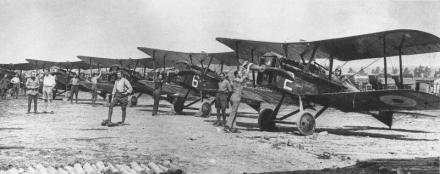
19424342_1982409011988087_4980834163001230819_nIn addition to the famous Capt. Andrew Beauchamp-Proctor VC, DSO, MC & bar, DFC, there were also other significant South African World War 1 flying aces, and this man, who came from Kimberley, Capt. Andrew Cameron Kiddie DFC is one of them, he was a World War I flying ace and before and after the war he was the local Kimberley baker.

Andrew Cameron “Dixie” Kiddie was born in Kimberley on 7 November 1889, his father being Andrew Cameron Kiddie (Senior), a baker from Dundee, Scotland who came to South Africa in 1885. Kiddie Senior bought the bakery in Kimberley from a Mr Roy in 1895 after having worked there for some 9 years and changed the name to ‘Andrew Kiddie and Sons’.

Having served with the 18th South African Mounted Rifles in 1914/15, Andrew Kiddie went to England to join the Royal Flying Corps. as a 2nd Lieutenant, Kiddie received Royal Aero Club Aviator’s Certificate 3719 on a Maurice Farman biplane at military school, Brooklands on 17 October 1916. Posted to 32 Squadron in 1917, he scored his first victory flying a DH5. Later that year, he served as an instructor with the Home Establishment. Among his students was future ace Ira Jones.

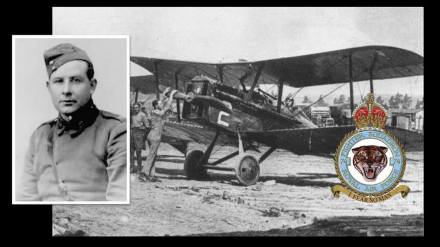
In the spring of 1918, Kiddie was back in France flying the SE5a with 74 Squadron, the famed “Tigers”. On the morning of 8 May 1918, just days after scoring his second victory, Kiddie’s flight of six SE5As was pounced on by ten Fokker Tri-Planes. With a badly damaged aircraft, Kiddie was the only pilot to make it back to the aerodrome.

19442146_1982409701988018_1273489368050288074_o
74 Squadron SE5A flown by Maj Edward Mannock VC, DSO & Two Bar, MC & Bar

He went on to become a flight commander in the summer of 1918 and scored thirteen more victories by the end of the war. He was awarded the Distinguished Flying Cross, the citation reading:

A gallant officer, who has proved himself resolute and courageous in aerial combats. He has to his credit six enemy machines and one balloon shot down in flames.

He was also awarded the Belgian Croix de Guerre.  After the war and his father’s death in 1920, Andrew Cameron “Dixie” Kiddie took over the local bakery in Kimberley.

He died in Kimberley on 27 June 1964 and is buried in the West End cemetery.

Although his parents and everyone in Kimberley knew him as “Cam”, in the RFC and the RAF he was known as “Dixie”.

Pictured is AC “Dixie” Kiddie, the 74 Squadron RAF badge, and senior pilots of 74 Squadron March-June 1918. Seated are: Edward “Mick” Mannock, Keith Caldwell, Everard (adj.), and Wilfred Young, while standing are Ben Roxburgh-Smith and Andrew Kiddie.

Another South African flying ace was to follow Kiddie as a ‘Flying Tiger’ and lead the “Tiger” (74) Squadron during World War 2, that was the famous ‘Sailor Malan’, but that’s another story and ironically he also rests today under a Kimberley sky (see link Sailor Malan – Fighter Ace & Freedom Fighter!).  Not only was Sailor Malan the Tiger Squadron’s Squadron Leader, another South African was also destined to lead the 74 Squadron when it entered the jet age – Air Vice-Marshal John Howe (see link Forget Tigers, The Royal Air Force’s 74 Squadron has a legacy of South African Lions! )

As South Africans we have also produced another famous Baker who went on to become a World War 1 aviation hero, he was the originator of Romany Creams, a very well known South African baked treat. His too is another fascinating story, for more on Capt. Pyott follow this link Connecting Zeppelins, Marlene Dietrich and South Africa’s favourite biscuit – Romany Creams!

74

No 74 Squadron, Clairmarais, France, summer 1918


Researched by Peter Dickens.  Sources include Wikipedia, The Aerodrome, and the Diamond Fields Advertiser.  Kimberley Calls and Recalls.

The Nat’s Nazi German orphan adoption program .. some good results, some very bad!

Please note, this article has been re-pressed and updated, please follow the link below for its revision:

‘Herrenvolk blood for a Afrikaner Volk’ Herrenvolk blood for an Afrikaner volk

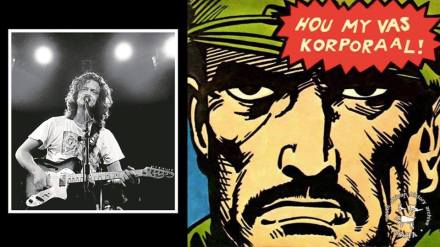
Hou my vas Korporaal!

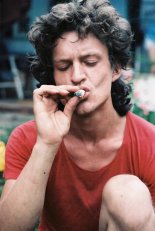
0002692479_10“Hou my vas korporaal’ (hold me tight Corporal) by James Phillips’s alter ego ‘Bernaldus Niemand’ released in 1986. Most military veterans will remember this song with a wry smile.
James grew up in Springs and this song of his ‘Hou my vas Korporaal’ was a poke at South African military conscription, and was quickly taken up and enjoyed by SADF National Servicemen at the time who enjoyed its satirical military humour (James did complete his two year ‘national service’ military call-up obligation and was a ‘veteran’ in his own right).

Equally ironic, this song now is heralded as part of the Afrikaans rock revolution in the late 80’s which shook the foundations of the Nationalist culture as the Afrikaner youth started to demand political change via this music movement.  ‘Hou my vas Korporaal’ is, and remains, more of an ‘Anti-Apartheid’ statement than a nostalgic look at conscripted ‘whites only’ military service.

A man of many musical incarnations, from early Springs band Corporal Punishment and short-lived summer holiday band Illegal Gathering, through his turn as satirical Afrikaans alter-ego Bernoldus Niemand, to his time as a Lurcher.

In 1994 Phillips stood in South Africa’s first fully democratic election in 1994 as a candidate for the very eccentric “Soccer Party”.  The Party had some odd concepts, like a policy which said that it could not criticise another party, and one of its chief causes was the legalisation of Marijuana.

His life ended early when he died of injuries sustained in a motorcar accident, just outside of Grahamstown, where he’d been doing a series of solo concerts at the National Arts Festival.

He died never having gained the recognition from the public over an important body of work. In his memorial concert a few weeks after his death, Vusi Mahlasela, Johnny Clegg, David Kramer, Lesego Rampolokeng with the Kalahari Surfers, Johannes Kerkorrel and others gathered to pay tribute to James’ influence as an artist. And yet to the majority of South Africans he remains completely unknown.

Here is the full song, pinned by a veteran having a nostalgic look back at conscription in the SADF on YouTube, copyright Shifty Records.  This video carries in it images which tell the story with the same irony and sarcasm that James Philips intended in his song.


Image of the singles album cover courtesy SAHA – the South African History Association. Mast image photo of James Phillips by John Hogg.

Cruel history, Italian tankers in inferior tanks were actually very courageous!

You may have heard the joke the old South African World War 2 North African campaign veterans used to often tell about ‘Italian Bravery’ – how many gears does an Italian tank have?  Answer; one forward and four in reverse!

History is very cruel to these very brave Italian tankers fighting alongside Nazi German forces and the likes of Rommel against the South Africans, British and Allied forces.

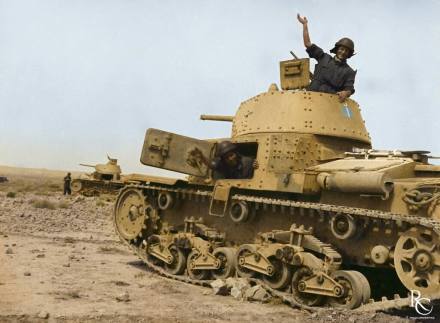
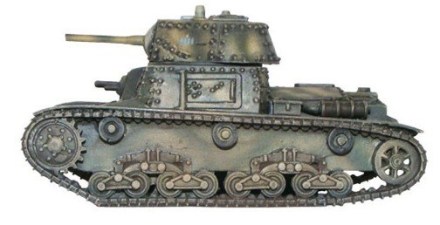
Weighting only 14 tons, by Allied standards the Italian M13/40 tank was seen as a light tank. For the unfortunate crews who manned it, it was nothing short of a death-trap.

Its semi-automatic 47 mm Ansaldo 47/32 gun could penetrate 1.7 inches (43mm) of armour at 550 yards (503 m), making it more than adequate to deal with most allied tanks -saved for the cumbersome Matildas- and its diesel engine had a low probability of catching fire when hit, but it lacked power which made the M13/40 a slow moving target, specially off-road.

WGB-IT-102-5
Although it had armour deemed adequate by 1940 standards, this was made of low quality steel which lacked tensile strength, resulting in a higher probability to shatter when hit, spraying the crew inside with deadly pieces of metal from their own armour.

To these men in dark blue overalls, destined to fight on unequal terms, history has often been cruel. Nevertheless, time and again, they charged gallantly against a superior adversary, often paying the ultimate price for their courage.

Note on the main featured image: The number 3 on the turret and the rectangle with a white stripe identifies this tank as the 3rd tank of first Platoon. The rectangle background colour identified the Company, the number of stripes the Platoon.

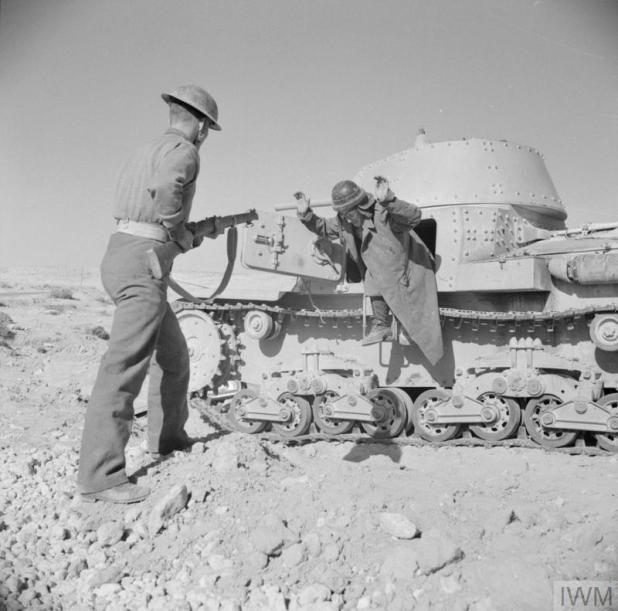
These Italian tanks were easy prey to the British, South African and other Commonwealth and Allied forces, here a member of the crew of an Italian M13/40 tank giving himself up near Gazala. His captor might be a soldier of the Polish Independent Carpathian Rifles Brigade (part of the British and ‘Allied’ forces in North Africa).

iti

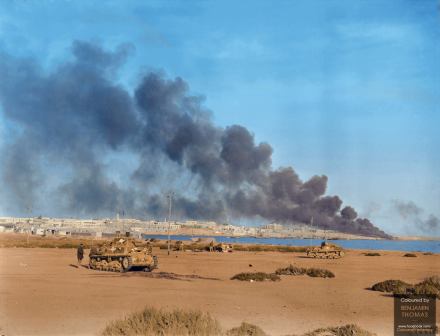
As courageous the Italian tankers in these tanks were, so too were the Australian ones, as captured kit, including tanks were always handy as they afforded more protection than not having the convenience of armour at all.  Here’s an interesting colourised photograph of the re-taking of Tobruk by the Allied forces.

Note the port installations as they burn again over the harbour on 24 January 1941. Of interest to this article, note in the foreground, here later version M11/40 (on the left) and M11/39 (on the right) Italian tanks can be seen, under new ‘ownership’. White kangaroo symbols can be seen on the tanks, now the possessions of the 6th Australian Division.

30729702_836630043176023_1104169962190143488_o

Related Work and Links

Tobruk; “Defeat is one thing; Disgrace is another!” South Africa’s biggest capitulation of arms – Tobruk

Tobruk; The feisty South African minesweeper that went down fighting – HMSAS Parktown

Tobruk; Job Maseko; one very remarkable South African war hero


Researched and Written by Peter Dickens.  Original’s source of feature photograph unknown, feature image, colourising and caption by “In colour veritas”.  Insert image – Imperial War Museum copyright. Colourised Australian M11 tanks by Benjamin Thomas, Photographer: Lieutenant L.B. Davis, No. 1 Army Film & Photographic Unit – Imperial War Museum.

‘Don’t forget I’m up here TODAY for your tomorrow’

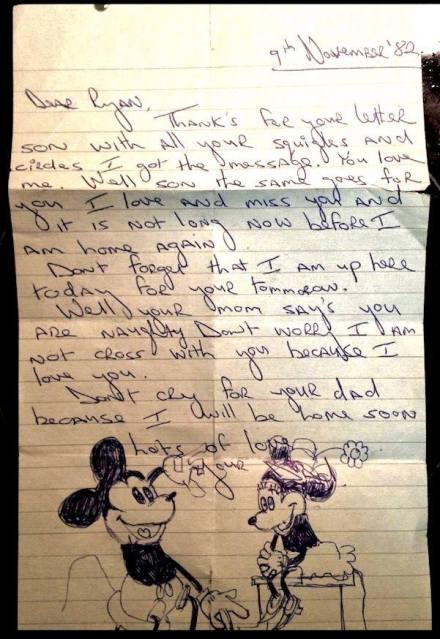
Sometimes someone sends you something priceless. This is a letter written in the Area of Operations in 1982, during the SWA/Angola Border War. It is written by Angelo Angelides to his son, Ryan who was just 3 years old at the time.

In it he expresses his reasons for fighting in a manner only a small 3 year old can try to understand. It also shows the deep sense of anguish and fore longing caused by conscripts called up to duty away from their families.

9 Nov 1982

Dear Ryan

Thanks for your letter son with all squighs and circles I got the message.  You love me. Well son the same goes for you I love and miss you and it is not long now before I am home again.

Don’t forget that I am up here today for your tomorrow. 

Well your Mom say’s you are naughty.  Don’t worry I am not cross with you because I love you.  Don’t cry for your Dad because I am home soon.

Lots of Love

Angelo wrote it whilst he was a member of the Transvaal Scottish and off fighting in Angola at the time.

16143099_707189436117458_1606064822562141241_n

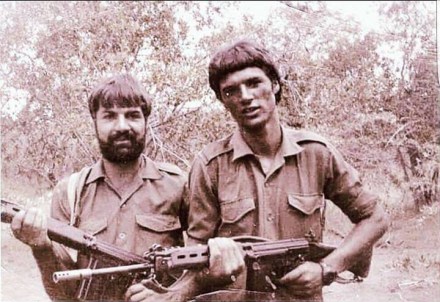
Angelo Angelides (left with beard) and his brother Basil, serving with him at the same time – pictured 1978

My deepest thanks to Ryan Angelides for sharing this priceless memory.


South Africans destroy 101 Enemy Aircraft in East Africa

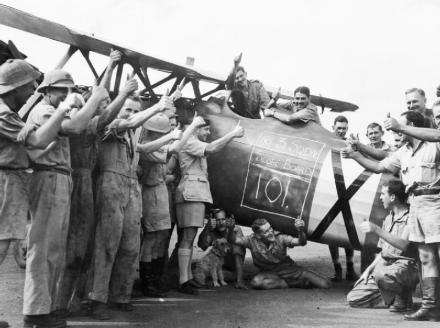
This is an interesting photograph of South African Airforce personnel celebrating a significant milestone.

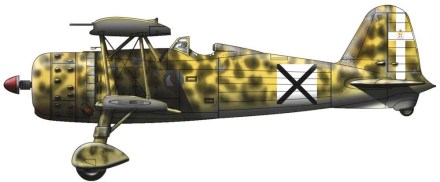
The photo was taken during the East Africa campaign in 1941. Pilots and ground crew of No 3 Squadron, South African Air Force, chalk up their 101st enemy aircraft destroyed on the fuselage of a captured Italian CR 42 fighter.

p3

It must however be noted that this milestone was not 101 aircraft destroyed in air combat, and would be inclusive of aircraft destroyed whilst on the ground.  Nonetheless it provided for good propaganda and moral.  “Tiny” South Africa and a bunch of very brave airmen, in conjunction with The Royal Air Force and other Commonwealth Air Forces, decimated a European ‘superpower’s’ Air Force.

The East African Campaign – also known as the Abyssinian Campaign, started on 13 June 1940, with an Italian air raid on the base of 1 Squadron Southern Rhodesian Air Force (237 (Rhodesia) Squadron RAF) at Wajir in Kenya.

The campaign  continued until Italian forces had been pushed back from Kenya and Sudan, through Somaliland, Eritrea and Ethiopia in 1940 and early-1941.

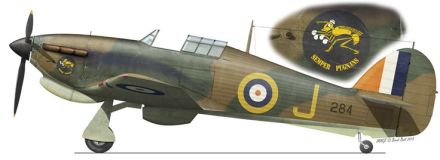
The SAAF No.3 Squadron campaign began on 14 January 1941 the squadron was equipped with the Hawker Hurricane. It was used to support the invasion of Italian Somaliland, then after the fall of Mogadishu (25 February) took part in the advance into Ethiopa, moving to Jigigga on 24 March.In late October 1941.

6343f1123f89bedbd7e7d9c0a9936a3e

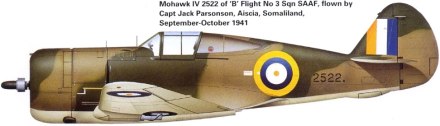
SAAF No.3 Squadron gained a second flight. This formation had originally been formed as No.41 Squadron Fighter Detachment, and was equipped with the Curtis Mohawk. This detachment was moved from Nairobi to the border town of Aiscia, where on 5 October 1941 it achieved the only Mohawk victory in Africa, shooting down a supply plane attempting to reach the isolated Italian garrison of Djibouti. Only after this did the detachment become ‘B’ Flight, No.3 Squadron.

216_1

At the end of 1941 the squadron returned to South Africa before been redeployed to North Africa.


Feature image copyright IWM Collection. Reference, Wikipedia and the historyofwar.org.

As they like to say in the military “Karma is a Bitch!”

There’s a sarcastic saying in the military – “Karma is a bitch!” It’s a flippent manner of saying they had it coming, what goes around comes around – and this is an example of it.

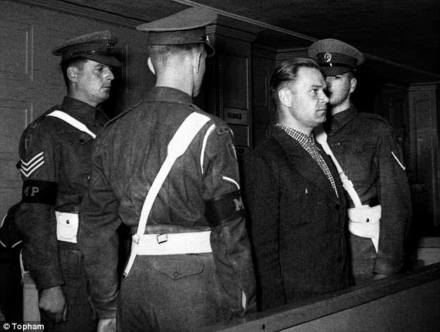
The featured image is that of Gestapo member Johannes Post, executioner of Sqn Leader Rodger Bushell (known as ‘Big X’ as he masterminded “The Great Escape”), the moment the death sentence was announced at Post’s post war trial. He was hanged.

Roger Bushell’s story is nicely summed up by Buskriut Burger in his dedication to him;

Roger Bushell was born in Springs, South Africa in 1910. Paul Brickhill, who met Roger in Germany (POW) and later wrote THE GREAT ESCAPE, stated that “at the age of six, he (Roger) could swear fluently in English, Afrikaans and Xhosa and spit an incredible distance.”

19055080_1973988702830118_2542614467972979361_o

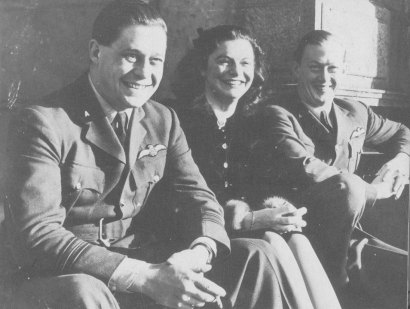
Roger Bushell (left), Janet Montagu and Paddy Green

Roger was educated in England, became a barrister and spoke fluent French and German. As a pilot in the RAF, he rose to the rank of Squadron Leader (equivalent to a Major in the South African Air Force). On 23 May 1940 he was leading 601 Squadron (12 Spitfires) over Dunkirk, when they were attacked by 40 German (Messerschmitt) aircraft.

Before being shot down, he destroyed two of the attackers. He bailed out and was taken prisoner of war (POW). During the next four years, he was a thorn in the flesh of his captors. Only his experience as a barrister saved him from being shot for habitually escaping, insubordination, resisting arrest and alleged spying and sabotage charges.

Sandy Hanes adds to this;

Roger Bushell is also oddly connected to Reinhard Heydrich’s assisination, he was recaptured due to it and worked over by the Gestapo as they believed he was involved in it (which he was not). The people sheltering him were executed for doing so.  It is suspected that this is when he began to hate the Nazi Germans with a passion.

In his final escape Roger masterminded, organized and orchestrated the “Great Escape” from Stalag Luft III POW camp in 1944. He was one of the 76 prisoners who escaped through the tunnel, and also one of the 73 recaptured. Squadron Leader Roger Bushell (RAF) and three South African Air Force airmen were among the 50, whose execution was ordered by Hitler.  Lt Johan (Boetie) Gouws, Lt Rupert Stevens and 2/Lt F.C. McGarr. Their names appear in the the South African Air Force Roll of Honour.  

For an in-depth story in Roger Bushell, please feel free to read up on him in a previous Observation Post The Great Escape … led by a South African!

Roger Bushell’s ‘Great Escape’ was fictionalised to a degree in the movie “The Great Escape”. The character played by Richard Attenborough, Roger Bartlett, is modelled on Roger Bushell.

Karma is indeed a bitch – certainly for Johannes Post.  Roger Bushell is remembered on three war memorials, notably the one in Hermanus, South Africa.  Johannes Post has no such memorial and instead occupies a black stain in the annuals of history.


Insert picture of Roger Bushell thanks to Tinus Le Roux.  Composition article by Buskruit Burger, Sandy Evan Hanes and Peter Dickens

“Tomorrow I am going to die”

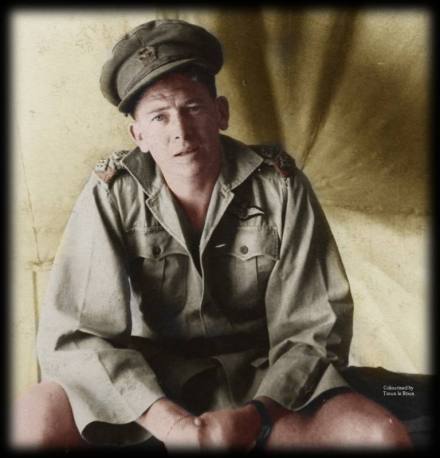
This is what Captain Walter ‘Jack’ Webb told his fellow 40 Squadron pilot, Lt. Michael Welchman, on the day that Mike snapped this photograph.

“Tomorrow I am going to die”

The very next day, 4/11/1942, Jack was shot down over the Alamein front whilst doing a tactical recce sortie on enemy positions. He forced landed on friendly territory but unfortunately landed in a mine field with tragic consequence that ended his short life.

19105707_10154760075403269_1391824141783588154_nJack was a survivor of three times being shot down but returned to the squadron unscathed every time . When he did not return after this particular sortie no one in the squadron were too much worried as they were confident he will pitch up on foot soon, but it never happened.

Jack was promoted to the rank of captain just days before his death and was recommended for an immediate DFC (Distinguished Flying Cross) award.

What a poignant and sad image of someone clearly philosophical of his fate, and resigned to it.

May South African heroes like Capt. Walter John Stanley Alexander Jack’ Webb forever Rest in Peace. In the full knowledge that they are not forgotten and their sacrifice is a direct reason for all our modern-day liberties and freedoms.

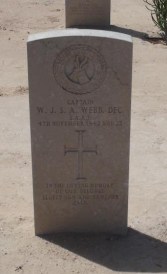
He is buried in Egypt at the El Alamein War Cemetery. Grave Reference: Plot XXIII. Row A. Grave 8


Image colourised and caption researched by Tinus Le Roux – with kind thanks

Photo credit to Michael Welchman (left) who is still around and lives in Hermanus, this is the original shot he took (right) of Captain Jack Webb.  Headstone image courtesy Brett Fennell.