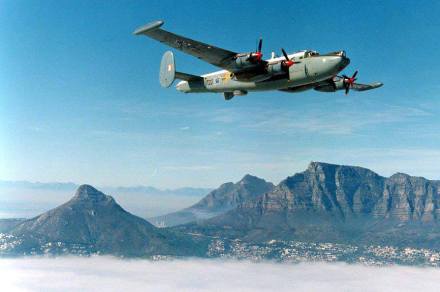
Stunning image of a South African Air Force Avro Shackleton flying over table mountain. The Avro Shackleton MR 3 was operated by 35 Squadron SAAF. Missions were mostly patrols of the sea lanes around the Cape of Good Hope, but some occasionally ranged as far as Antarctica.
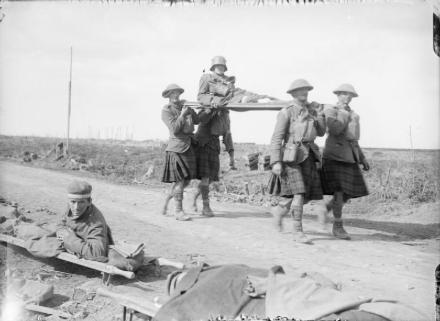
Rare photo of frontline South Africans in World War 1, and also one which shows compassion. This photo was taken from the Battle of Menin Road Ridge on the 21st September 1917. Here four South African “Scottish” from the 4th South African Infantry Regiment are carrying a wounded German on a stretcher to a medical station. Other wounded German prisoners are seen in the foreground.
The Battle of the Menin Road Ridge 20th to 25th September 1917 was an offensive operation, part of the Third Battle of Ypres on the Western Front, it was undertaken by the British 2nd and 5th Armies in an attempt to take sections of the curving ridge, east of Ypres, which the Menin Road crossed. This action saw the involvement of the South African Brigade – along with British, Newfoundland and Australian formations.
The attack was successful along its entire front, though the advancing troops had to overcome formidable entrenched German defensive positions which included mutually supporting concrete pill-box strongpoints and also resist fierce German counter-attacks. A feature of this battle was the intensity of the opening British artillery support and “leap frog” tactic used by the British to consolidate taken ground.
The South African Brigade saw most of its action at Borry Farm, easily overrunning the German strong points, except for four pill-boxes around Potsdam House, which were eventually attacked on three sides and captured, after inflicting heavy casualties on the attackers. The South African Brigade was also badly hit by German machine-gun fire from Hill 37, however in the end the South Africans managed to capture Bremen Redoubt and Waterend House in the Zonnebeek valley and extend a defensive flank.
Do note that the South Africans are wearing the “Murray of Atholl” (modern) kilts which was the dominant tartan worn by the South African Scottish in the 4th South African Infantry Regiment – Company A was made up of Cape Town Highlanders, Company B Transvaal Scottish and Company C was also Tvl Scottish in the main whereas Company D was made up of various caledonian regiments from the Orange Free State and Natal.
The tradition of the Murray of Atholl was carried over to The Transvaal Scottish Regiment and is still worn to this day, hopefully the SANDF will see its way clear to keeping the traditions of its fighting men and their sacrifice.
Image copyright and reference: Imperial War Museum
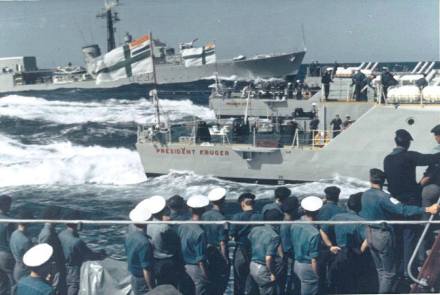
Stunning image of the South African Navy Frigates in their heyday. Here are the three President Class Frigates together, the SAS President Kruger, the SAS President Steyn and the SAS President Pretorius – neck to neck with the SAS Simon van der Stel – an old World War 2 era W Class Destroyer in the background, she was the oldest and the fastest of all these ships. Look at the bit between her teeth as she races forward.
Interestingly, the SAS Simon van der Stel started her illustrious life as HMS Whelp, saw WW2 service in the Far East and was even present at the formal Japanese surrender in Tokyo Bay.
Photo courtesy of the SAS President Steyn Old Boys and thanks to Norman Sander for the caption.
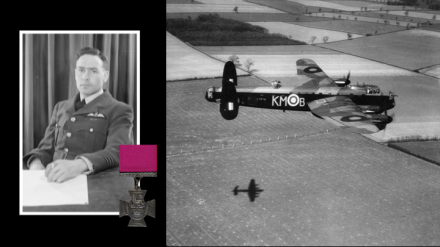
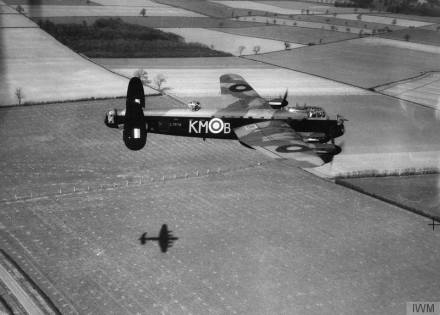
Rare that we see an image of a South African Victoria Cross recipient in action, but this is one such image. Flying this exact Avro Lancaster bomber is a Natal lad – Squadron Leader John Dering Nettleton VC. Now, not many South Africans have heard of him – and why is that?
Lancaster B Mark I, L7578 KM-B, of No.97 Squadron RAF, piloted by Squadron Leader J D Nettleton of No. 44 Squadron RAF, flying at low-level over the Lincolnshire countryside during a Squadron practice for the low-level attack on the M.A.N. diesel engineering works at Augsburg. 97 Squadron lent L7578 temporarily to 44 Squadron, who repainted the aircraft with Nettleton’s unit code-letters. Nettleton actually flew R5508 on the operation.
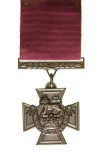
Nettleton is another true South African hero and recipient of the Victoria Cross (VC), the highest and most prestigious award for gallantry in the face of the enemy that can be awarded to British and Commonwealth forces. His VC was one of five awarded to South Africans in World War 2 – however very little is known of their stories in South Africa.
Of South Africa’s VC winners during World War 2 only two are commonly referred to, they are Quentin Smythe VC – see Profiling a true South African Hero – Sgt. Quentin Smythe VC and Edwin Swales VC – see Edwin Swales VC DFC, a South African Hero whose legacy has been eroded! The reason these two are more commonly known is largely because Quentin Smythe VC served in The South African Army and Edwin Swales VC – although a SAAF member attached to the Royal Air Force, had strong ties to his Alma Mater – Durban High School (DHS) who have largely driven his legacy in Durban. But what of the other three; George Gristock VC, Gerard Norton VC and our hero today, John Nettleton VC?
Simply put, after the war, the National Party came to power in 1948 they almost immediately dismissed all South Africans who had served in the war as ‘traitors’ to the country for supporting what they saw as ‘Britain’s war’. During the war the Nationalists had vocally supported Nazi Germany (as Germany had supported the Boer cause during the 2nd Anglo Boer War and Afrikaner nationalism was grounded on punitive British measures taken out on the Boers during this war), many Nationalists had even adopted national socialism and embarked on sedition during the war (see “Mein Kampf shows the way to greatness for South Africa” – The Ossewabrandwag).
For the Nationalists, on the top of the list of ‘traitors’ were the South Africans who distinguished themselves winning Victoria Crosses whilst serving in ‘British’ Regiments or Arms of Service. These were men, who in the eyes of the Nationalists, served the hated British and were not to heralded as heroes, lest their deeds specifically influence young South Africans. For this reason very little in South Africa is named or honoured in the names of Gristock, Norton or Nettleton.
So lets pull away this veil and reveal some true South African heroes whose very noble exploits and deeds in ridding the world of Nazism all of us as can stand very proud of. What better way to start with John Nettleton VC – this is his story.
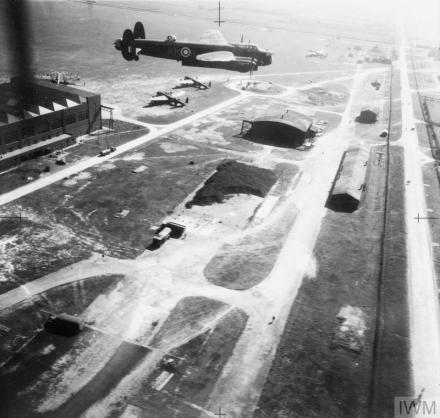
Avro Lancaster flown by Squadron Leader J D Nettleton, about to cross the western perimeter of RAF Waddington, Lincolnshire with bomb doors open during a practice run.
John Dering Nettleton was born on 28 June 1917 in Nongoma, Natal Province, South Africa, the grandson of Admiral A T D. Nettleton, he was educated at Western Province Preparatory School (WPPS) in Cape Town from 1928-30, Nettleton served as a Naval cadet on the General Botha training ship and then for 18 months in the South African Merchant Marine. He took up civil engineering, working in various parts of South Africa.
Commissioned in the Royal Air Force in December 1938, he then served with Nos. 207, 98 and 185 Squadrons before joining 44 (Rhodesia) Squadron flying the Handley Page Hampden. He took part in a daylight attack on Brest on 24 July 1941 and in a series of other bombing raids and was mentioned in dispatches in September 1940.
John Dering Nettleton VC
Nettleton was promoted Flying Officer in July 1940, Flight Lieutenant in February 1941 and was a Squadron Leader by July 1941. No. 44 Squadron was based at RAF Waddington, Lincolnshire at this time and had taken delivery of Lancasters in late 1941
.In 1942 a daylight bombing mission was planned by RAF Bomber Command against the MAN diesel engine factory at Augsburg in Bavaria, responsible for the production of half of Germany’s U‑boat engines. It was to be the longest low‑level penetration so far made during World War II, and it was the first daylight mission flown by the Command’s new Avro Lancaster.
Nettleton’s citation for his Victoria Cross is quite explanatory of the attack and the rest of the story picks up from here:
Citation:
Squadron Leader Nettleton was the leader of one of two formations of six Lancaster heavy bombers detailed to deliver a low-level attack in daylight on the diesel engine factory at Augsburg in Southern Germany on April 17th, 1942. The enterprise was daring, the target of high military importance. To reach it and get back, some 1,000 miles had to be flown over hostile territory.
Soon after crossing into enemy territory his formation was engaged by 25 to 30 fighters. A running fight ensued. His rear guns went out of action. One by one the aircraft of his formation were shot down until in the end only his and one other remained. The fighters were shaken off but the target was still far distant. There was formidable resistance to be faced.
With great spirit and almost defenceless, he held his two remaining aircraft on their perilous course and after a long and arduous flight, mostly at only 50 feet above the ground, he brought them to Augsburg.
Here anti-aircraft fire of great intensity and accuracy was encountered. The two aircraft came low over the roof tops. Though fired at from point blank range, they stayed the course to drop their bombs true on the target. The second aircraft, hit by flak, burst into flames and crash-landed. The leading aircraft, though riddled with holes, flew safely back to base, the only one of the six to return.
Squadron Leader Nettleton, who has successfully undertaken many other hazardous operations, displayed unflinching determination as well as leadership and valour of the highest order
Citation ends.
Nettleton survived the incident, his damaged Lancaster limping back to the UK, finally landing near Blackpool. His VC was gazetted on 24 April 1942.
Squadron Leader J D Nettleton VC signing his autograph for a factory worker on a visit to open a munitions factory, North Wales.
Nettleton died on 13 July 1943, returning from a raid on Turin in Italy by 295 Lancasters. His Lancaster took off from Dunholme Lodge and was believed to have been shot down by a fighter off the Brest peninsular. FW 190s of 1./SAGr.128 and 8./JG 2 scrambled from bases near Brest in the early hours of 13 July, and at 06:30am intercepted the bomber stream.
A total of eight bombers were claimed, and at least three Lancasters were almost certainly shot down by the German fighters, one of whom was Nettleton. His body and those of his crew were never recovered. All are commemorated on the Runnymede Memorial.
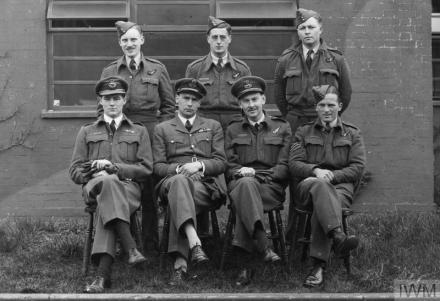
Group photograph of Squadron Leader J D Nettleton (sitting, second from left) and his crew, photographed on their return to Waddington, Lincolnshire, after leading the low-level daylight attack on the M.A.N. diesel engineering works. 17 April 1942.
The truly unfortunate thing about these heroes is that due to political prejudice – starting with the National Party from their election to power in 1948 (post WW2) and now the current political dispensation in South Africa, the African National Congress (ANC) – these VC recipients are almost unclaimed and unknown. The result is that very little is commemorated to their memories in South Africa today.
With no known grave there are very few memorials to John Nettleton VC in South Africa, no roads or state institutions are named after him, nothing really significant in his own country acknowledges him (other than the General Botha training ship which have a acknowledgement to this one of the two ‘sailor’ airmen to serve in the RAF). Like his fellow General Botha training ship compatriot ‘Sailor Malan’, this ‘sailor’ – John Nettleton was also proud to wear the ‘South Africa’ shoulder title on his Royal Airforce uniform (as with all the South African pilots who served in the RAF – see The RAF ‘South Africa’ title worn during The Battle of Britain) and by that simple gesture there is no doubt to where his heart and loyalty lay.
His link to South Africa is so lost to memory that it has even been lost to the British, his name was not even included in the South Africans listed on the Victoria Cross Winners dome at the Commonwealth Gates memorial in central London. It’s not just John Nettleton’s name that is missing from this memorial, there is a very long list of other South African VC recipients unaccounted for on this memorial, such has been the complete disregard.
As South Africans (in South Africa and in the United Kingdom) this has to be addressed, we should hang our collective heads in shame in the way we have treated our national heroes, and if this website goes a way to helping increase awareness of these unsung South African heroes then so much the better.
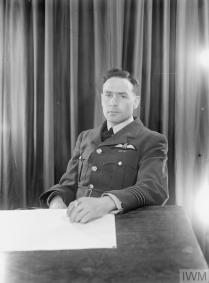
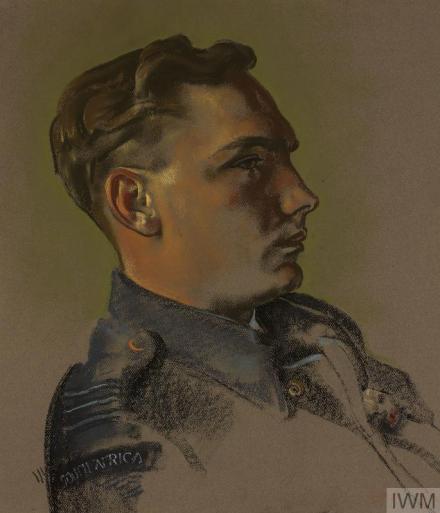
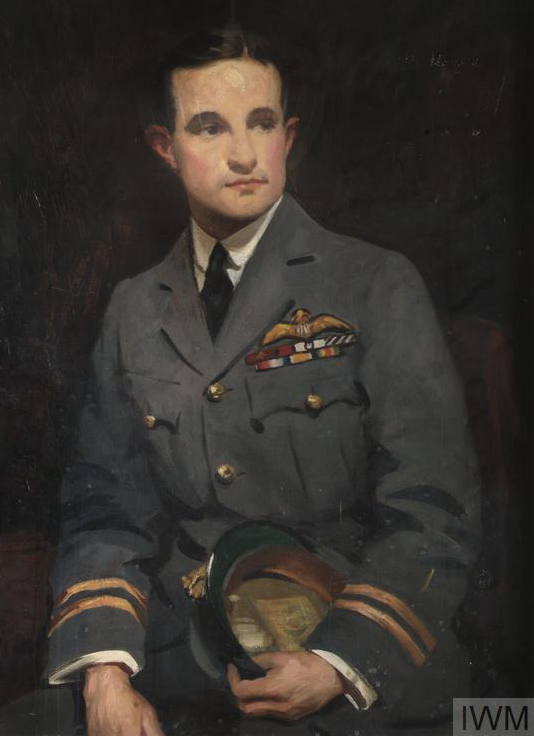
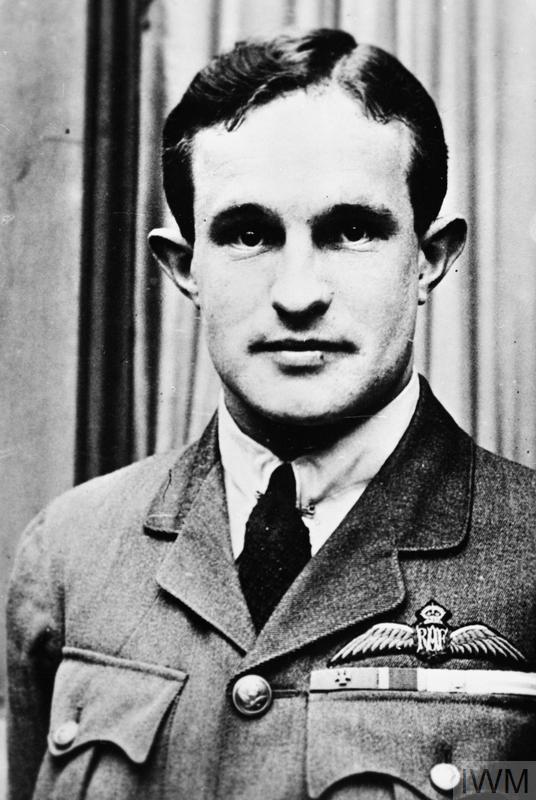
Head and shoulders War Commission portrait of Squadron Leader John Nettleton. He wears his RAF tunic, bearing the medal ribbon of his Victoria Cross, as well as his South Africa shoulder badge. At this time Nettleton commanded 44 Rhodesia Squadron.
Researched and written by Peter Dickens, references and extracts wikipedia and Imperial War Museum.
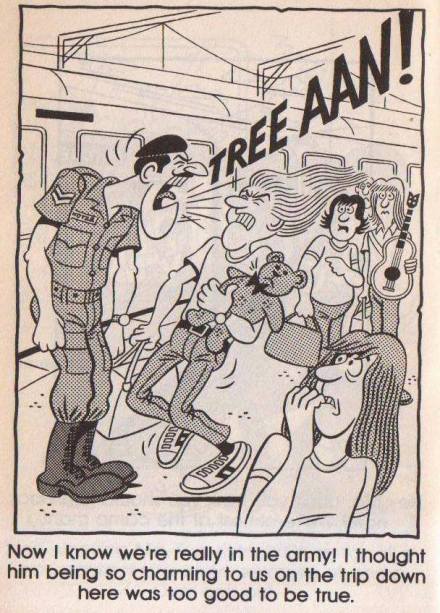
The beginning of the new year in the 1960’s, 1970’s and 1980’s (even the early 1990’s) meant the dreaded “January Intake” and thousands of white South African men would be starting the new year in uniform. This cartoon by Keith and Lorna Stevens in ‘Bytvas’ perfectly captures the surprise awaiting the new national servicemen at their respective intake mustering points.
In reality the yelling Army corporals at the mustering points were usually “campers” (civilian force members who had completed the initial national service period) from Reception Depot units (RCD/OVD) attached to the various regional commands – the RCD/OVD units were responsible for the two annual “intakes” and the security of the convoys of recruits to all the respective training units, the largest such unit was 15 RCD/OVD which was attached to Witwatersrand Command (the largest catchment area).
Such was the radical changeover from “civvie street” that to every person who ever served as a conscript in the SADF – the first day in the SADF is emblazoned in their memories forever.
“Tree Aan” is the Afrikaans command to “form up” on parade.
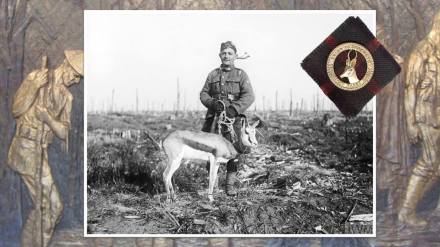
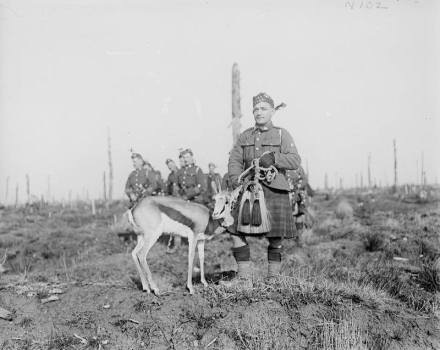
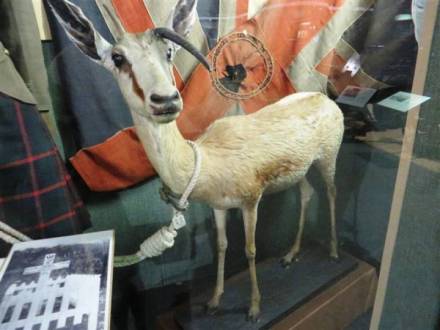
The feature image shows ‘Nancy’ the 4th Regiment mascot of the South African Forces, seen here at a drum head service at Delville Wood on the 17th February 1918 Delville Wood was the site of such huge South African sacrifice and carnage. The story of Nancy is quite extraordinary.
Nancy is the only animal in South African military history to be accorded full funeral honours and to be buried in an Allied war cemetery. This is the story of famous Springbok mascot of the 4th South African Infantry Regiment who died of pneumonia at Hermeton in Belgium during the severe winter of 1918 during World War I.
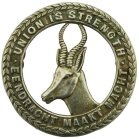
No more appropriate mascot could have been found. The SA Brigade badge was a Springbok head, surrounded by a circle with the motto: “Union is Strength – Eendracht Maakt Macht”.
At her funeral, the firing party fired their volley. As the echoes died slowly away on this quiet afternoon, the regimental bugler, Private A E Petersen, stepped forward; a few seconds later the familiar notes of the Last Post sounded. Once or twice the bugler faltered but nobody seemed to notice. Bugler Petersen sounded the last note and there were tears in his eyes as the officers saluted, then trudged back to their cold and muddy trenches around the village.
Nancy began her army career in March 1915, when her owner, Mrs McLaren Kennedy of the farm Vierfontein in the Orange Free State, took her to Potchefstroom. Nancy was the family pet and was just over a year old when Mrs Kennedy volunteered her for war service.
“I feel,” she wrote to General Tim Lukin, “that if Nancy were adopted by a South African regiment as a mascot, she would keep the memories of South Africa alive.” A few days later she had a reply. It was a telegram from General Lukin: “Delighted with your offer,” it said. “Please bring her.”
And so began Nancy’s army training. She was put in the charge of Private Petersen and during the following six months was taught to respond to all the regimental calls, as well as conduct herself with dignity on the parade ground and on ceremonial occasions.
Photo taken of Nancy as the Transvaal Scottish arrived in France disembarking in Marseille.
At the beginning of September, the regiment was ordered to entrain for Cape Town prior to sailing in HMT Balmoral Castle for service overseas. Mrs Kennedy was invited to Potchefstroom to say farewell to Nancy.
On their arrival in England, the regiment continued its training, and set sail for Egypt early the following year. The heat and rolling sand dunes were more to Nancy’s liking than the English winter. At Mex Camp in Alexandria, where her unit was completing its training, Nancy was always the centre of admiring crowds.
And then one morning she failed to turn up for parade. She had parted her rope leash and was absent without leave. By midday, her disappearance was regarded as serious, she was posted up in regimental orders as AWOL, and the news of her absence had spread to all the camps in the area. That afternoon, Bugler Petersen was given a special pass to proceed to Alexandria, in case Nancy had made for the city. At sundown a despondent Bugler Petersen returned to camp, but he would not give up the search.
With Nancy still AWOL the following morning, the matter became serious – both from a sentimental and a morale point of view. All parades were cancelled and a house-to-house search was started. There had been a suspicion that Nancy may have met her end as dinner to some Egyptian family. The search ended at sundown when the men returned dejectedly to their camp. It was on the third day, as the men were parading for their midday meal, that the sound of cheering broke out in the lines. Earlier a `patrol` of skirling pipers was sent out; each piper went in a different direction into the desert in the hope that the music of the bagpipes would succeed where all else had failed. As all regimental calls in the camp had been sounded on the pipes and Nancy had already learnt how to step it out in an orderly fashion in front of the pipe band when on parade. The pipe music worked like magic.
The next moment Nancy appeared, prancing as if nothing was amiss. Where she had been remained a mystery, despite the fact that thousands of troops had kept a look out for her.
After the Egyptian campaign, Nancy accompanied the regiment to France and disembarked with them at Marseilles in April 1916. Owing to a contagious sickness which broke out on the Oriana, the regiment was put into quarantine until May, when they left for Steenwerck, the Brigade Headquarters. A month later, the regiment was moved to the village of Sailly-le-Sac, about two miles behind the front lines. It was here that Nancy, who had been under heavy fire on scores of occasions, became a casualty when the Germans began the heavy bombardments during the Battle of the Somme.
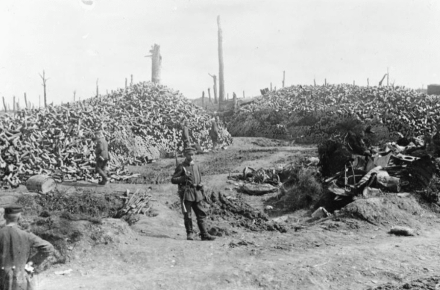
German soldier is overseeing the shell case dump opposite Delville Wood, gives an indication on just how heavily the South Africans were bombarded .Woerner Eugen Collection
While the SA Brigade had been near Armentieres, a shell had exploded in the transport lines where Nancy had been tethered close to the Quarter Master`s store. In fright she had bolted and broken her left horn against a wall. This horn was permanently out of alignment and started to grow downwards at an angle. However, there was no sick leave for Nancy, just “light duty”. They could not give her kitchen fatigues so she was allowed to roam about the headquarters.
The highlight of Nancy’s distinguished military career and war record happened on 17 February 1918 when she attended her last ceremonial parade. She proudly led four battalions of the South African Brigade to the first Delville Wood service, prancing on her thin little legs. It’s as if she knew that she was the darling of every soldier on parade and of those they were coming to honour.
The parade was not only the last for Nancy but it was also the last for General Lukin in France.
Nancy caught pneumonia during the severe winter of that year and, although devotedly cared for by Bugler Petersen and all the medical personnel of the headquarters, died on November 26. Her death was announced in General Orders – probably the only occasion in military history that this was done. All parades were cancelled. There were only a few of the original members of the regiment still on active service and they were detailed to form the firing party.
Nancy’s head and skin were sent to London to be treated, and then dispatched to Sir William Dalrymple who had it mounted and presented to the regiment. From the wall of the Officers’ Mess at the Transvaal Scottish Regimental Headquarters, she kept a critical eye over the officers. She has since been promoted and is now a member of the War Museum in Johannesburg.
Nothing drives home the peril of serving on a fighting ship harder than this British Pathe newsreel footage of the sinking of the HMS Barham, it is simply jaw dropping.
Made even more poignant for us as South Africans if you consider we are witnessing the loss of the following South African naval personnel in this tragedy.
BAKER, Dennis E W, Ordinary Seaman, 68617 (SANF)
GLENN, Paul V, Ordinary Seaman, 68906 (SANF)
HAYES, Richard T, Ordinary Seaman, 68499 (SANF)
MORRIS, Cyril D, Ordinary Seaman, 68932 (SANF)
UNSWORTH, Owen P (also known as R K Jevon), Ordinary Seaman, 69089 (SANF)
WHYMARK, Vivian G, Ordinary Seaman, 69024 (SANF)
During the Second World War, South African Navy personnel – known at the time as the “South African Naval Forces” (SANF) were seconded to serve on ships in the Royal Navy.
It is our duty as South African veterans never to let selective history and the mist of time obscure the brave contributions of our countrymen during this war, and it is our duty as South African military veterans to continually educate and keep this memory alive.
HMS Barham was a Queen Elizabeth-class battleship of the Royal Navy She was sunk during the Second World War on 25 November 1941 by the German submarine U-331north of and off the coast of Sidi Barrani, Egypt.
Prior to this HMS Barham visited Durban, South Africa, in June 1941 for extensive repairs at the Victoria Graving Dock. The repairs where due to damage sustained in the Crete bombing. She sailed from Durban on the 31st July 1941.
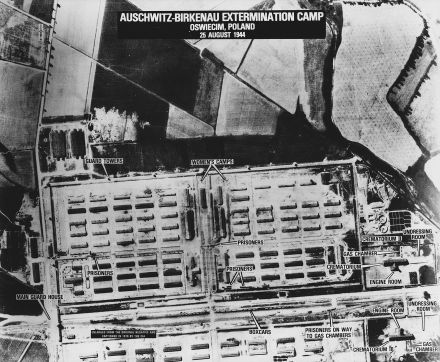
Little known historic fact but it was a South African Air Force reconnaissance aircraft which first discovered and then photographed the Auschwitz-Birkenau extermination camp. This is one of the aerial photos.
Painting by Derrick Dickens of two SAAF Mosquito PR Mk XVI s of 60 Squadron.
Mosquito XVI aircraft of No. 60 Squadron South African Air Force operating from Foggia Airfield Complex, Southern Italy in 1944, carried out detailed large-scale photographic surveys of German held areas, eventually ranging over the Alps and deep into Germany and German occupied territory.
During one of these missions in Spring 1944, a SAAF 60 Squadron plane piloted by Lt. C.H.H Barry and his navigator Lt. I McIntyre photographed Auschwitz when they went to photograph the rubber refinery plant next to the camp. They were reconnoitring the plant which was earmarked for bombing by the USAAF (USA Air Force).
When the photos of the complex next to the plant were analyzed, they found rows of people lining up in the camp. The photos also showed chimneys and all the other characteristics of a camp for prisoners. This, with other intelligence, brought them to the conclusions that extermination camps existed.
This image is an enlargement of part of a photo of Auschwitz-Birkenau taken by the SAAF on Sortie no. 60PR/694.
Clearly seen on this image is the selection process of a recently arrived transport visible on the ramp has been completed, and those selected to die are being to taken to Crematorium II. Also visible is a cultivated garden in the courtyard of Crematorium II, the open gate into it, and Crematorium III. The basement undressing rooms and gas chambers of both complexes can also be seen.
When these photo’s were taken by 60 Squadron SAAF, the Squadron was working for the USAAF heavy bomber Squadrons in Italy, so the South Africans handed the film to the Americans to analyse and strategise. Kept secret for a long time, these annotated images of the film were only finally released by the Central Intelligence Agency in 1979.
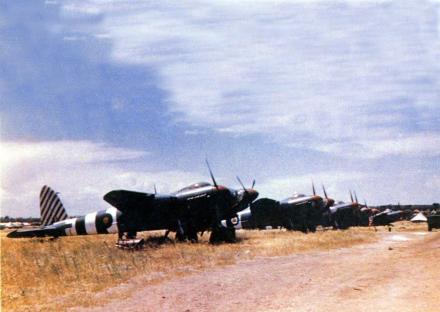
Mosquitos mark XVI of No 60 Squadron South African Air Force, at San Severo Airfield, part of the Foggia Airfield Complex, Southern Italy, 1944. The red and white stripes on the tail fin (known as Barber Shop stripes) served as identification to Allied fighter pilots (especially American pilots) who mistook them for enemy aircraft, incorrectly thinking they where German Me 410’s.
Auschwitz was operational as an extermination camp from May 1940 to January 1945, it held mainly Jews as well as Poles, Romani and Soviet Prisoners of War. In all it is estimated that 1.1 million people were murdered there.
Extermination of human beings deemed undesirable to Nazi German doctrine began on an industrial level at Birkenau in March 1942 when the first gas chamber was established called the “red house” (called Bunker 1 by SS staff). A second brick cottage, the “white house” or Bunker 2, was converted some weeks later. These structures were in use for mass killings until early 1943. Himmler visited the camp in person on 17 and 18 July 1942. He was given a demonstration of a mass killing using the gas chamber in Bunker 2.
In early 1943, the Nazis decided to increase the gassing capacity of Birkenau to an elevated industrial level. Crematorium II, which had been designed as a mortuary with morgues in the basement and ground-level incinerators, was converted into a killing factory by installing gas-tight doors, vents for the Zyklon B (a highly lethal cyanide based pesticide) to be dropped into the chamber, and ventilation equipment to remove the gas thereafter. It went into operation in March. Crematorium III was built using the same design. Crematoria IV and V, designed from the start as gassing centers, were also constructed that spring. By June 1943, all four crematoria were operational. Most of the victims were killed using these four structures.
Towards the end of the war, Himmler, fearing the discovery of this most dark Nazi program of extermination and in need of labour for the German war machine ahead of the Soviet and Allied advances, ordered the evacuation of all concentration camps, charging camp commanders with making sure that “not a single prisoner from the concentration camps falls alive into the hands of the enemy.”
On 17 January 1945, 56,000–58,000 Auschwitz detainees, of whom two-thirds were Jews, were evacuated under guard, most on foot, in severe winter conditions. Thousands of them died in the subsequent death march west.
Auschwitz was eventually liberated on 26 and 27 January by the Red Army (Soviet Russian), the soldiers found 7,500 prisoners alive and over 600 corpses. Among items found by the Soviet soldiers were 370,000 men’s suits, 837,000 women’s garments, and 7.7 tonnes (8.5 short tons) of human hair.
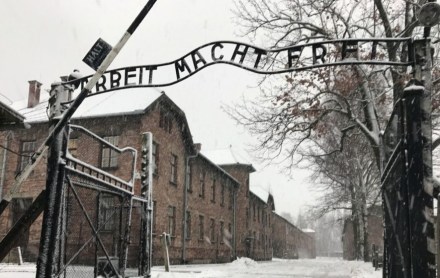
The Auschwitz complex with its false Nazi message “arbeit macht frei” (work sets you free) stands today as a sinister reminder of the cruelty of man, it is a very dark stain on the human race.
Written by Peter Dickens, additional research from Sandy Evan Hanes. Painting by the late Derrick Dickens of SAAF Mosquito copyright Peter Dickens. Photo references and sources include Wikipedia.
Honouring South African heroes and this is one of South Africa’s greatest – in fact he is the highest decorated South African in our military history. Many people don’t know that South Africa has its own World War 1 flying ace and Victoria Cross winner, and this ‘small’ hero comes with some very ‘big’ credentials, he is regarded as the all time highest decorated South African in terms of sheer seniority of the bravery decorations he won (there is a distinction between ‘most’ decorated i.e. number of decorations and medals – and the ‘highest’ decorated).
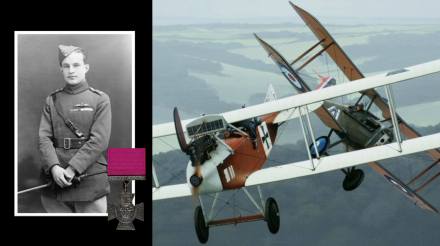
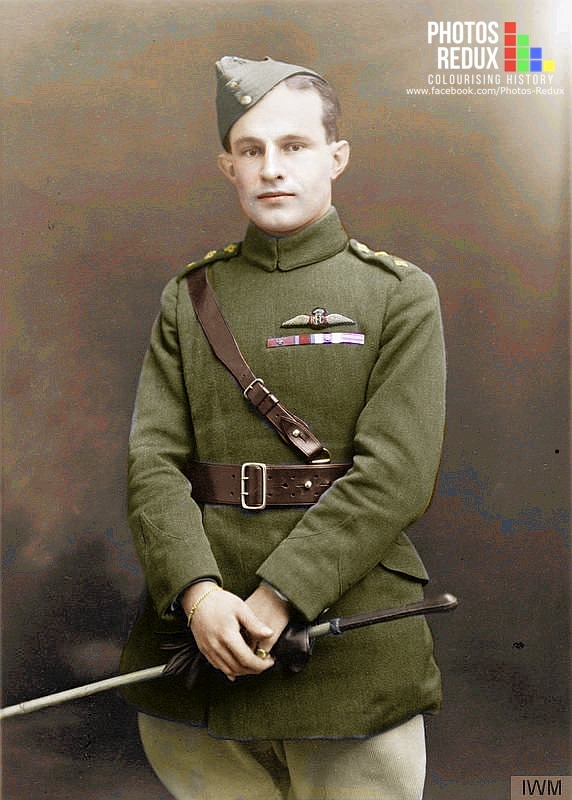
Andrew Beauchamp-Proctor, known to his colleagues and friends simply as ‘Proccy’, was South Africa’s leading First World War flying ace, claiming a staggering 54 aerial victories to his name.
He was born on 4 September 1894 in Mossel Bay, South Africa, and was studying engineering at the University of Cape Town when war broke out. He joined the Union of South Africa Army – the Duke of Edinburgh’s Own Rifles and took part in the German South West Africa campaign, before being demobilised in August 1915 with an honorable discharge. He promptly went to work with the South African Field Telegraph and re-enrolled in university. He managed to complete his third year of college before re-enlisting again, this time with the Royal Flying Corps (he was one of “The Thousand” – the first South Africans to go to England for combat service on the Western Front).
Royal Flying Corps
Andrew Beauchamp-Proctor joined the Royal Flying Corps in March 1917, he was commissioned upon his arrival in England and underwent pilot training. Despite being only 5′ 2″ tall, so short that he had to use two leather cushions in order to see out of a standard cockpit, he proved an excellent pilot and on completion of training was posted to 84 Squadron in late July 1917. The squadron, commanded by Major William Sholto Douglas (who would later become OC Fighter Command during the Second World War) was equipping with the then-new S.E.5a.
On 23 September 1917, the 84 Squadron went to France and became one of the most effective scout squadrons in the RFC/RAF (Royal Air Force) during 1918. The squadron would be credited with a victory total of 323 aerial victories, and would produce 25 aces. However, Beauchamp-Proctor would be pre-eminent, with almost triple the number of successes of the second leading ace. He was not particularly esteemed as a flier, but was a deadly shot.
Beauchamp-Proctor’s piloting skills can be judged by the fact he had three landing accidents before he ever shot down an enemy plane. He continued to fly the SE5 with modifications to the aircraft’s seat and controls, something his Philadelphia-born American squadron mate, Joseph “Child Yank” Boudwin, who stood only two inches taller also had to use. The alterations to relatively primitive controls could have contributed to Beauchamp-Proctor’s poor airmanship.
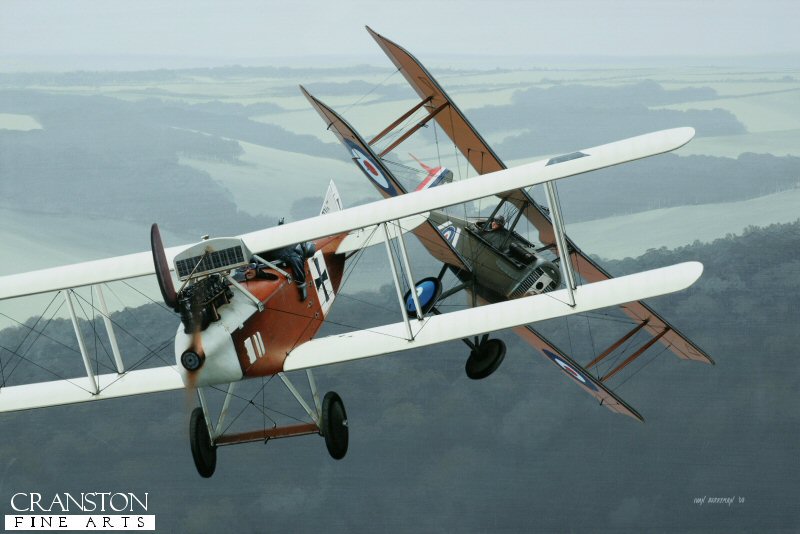
Captain Andrew Beauchamp-Proctor by Ivan Berryman
His initial confirmed victory did not come until the turn of the year. On 3 January 1918, he sent a German two-seater ‘down out of control’. He then claimed four more victories in February, becoming an ace on the final day of the month. Only one of his five victories resulted in the destruction of an enemy; the others were planes sent down as ‘out of control’.
March brought four more victories; three of them were scored within five minutes on 17 March. He tallied one kill in April.
Among his 11 victories for the month of May were 5 on 19 May. On that morning, he knocked an enemy observation plane out of the battle; fifteen minutes later, he destroyed a German Albatros D.V. scout. That evening, at about 6:35 PM, he downed three more Albatros D.Vs. By 31 May, his roll had climbed to 21 victims—16 fighters and five observation aircraft. By this point, he had destroyed six enemy planes single-handed, and shared the destruction of two others. He drove ten down out of control, and shared in another ‘out of control’ victory. Two of his victims were captured. Certainly a creditable record, and like many other aces, with no conquests over balloons.
The next day marked a change of focus for him; he shot down an observation balloon. Balloons, guarded by anti-aircraft artillery and patrolling fighter airplanes, were very dangerous targets. Commonly they were hunted by coordinated packs of fighters. For the remainder of his career, he would choose to try to blind the enemy by concentrating on shooting down kite balloons and observation aircraft. Also notable is the drop in his “out of control” victories; from here on out, the record shows destruction after destruction of the enemy. His June string would only run to 13 June, but in that time, he would destroy four balloons, an observation two-seater and a fighter. Only one fighter went down out of control. On 22 June, he was awarded the Military Cross (MC).
July would pass without incident. On 3 August, he was granted one of the first ever Distinguished Flying Crosses (DFC).
The break in his victory string lasted almost a month, as he went on home leave and helped a recruitment drive for the RAF. On 8 August, he returned and resumed with tally number 29, another balloon.
On 9 August, Beauchamp-Proctor was leading No. 84 Squadron on a patrol over their base at Bertangles, with the diminutive American Joseph “Child Yank” Boudwin and a ‘Giant’ – the six-foot-four tall fellow South African from Germiston – Hugh ‘Dingbat’ Saunders as his wingmen (‘Dingbat’ Saunders would go to become another South African ace, Air Marshal and Knight of the realm – but that is a different story for another day).
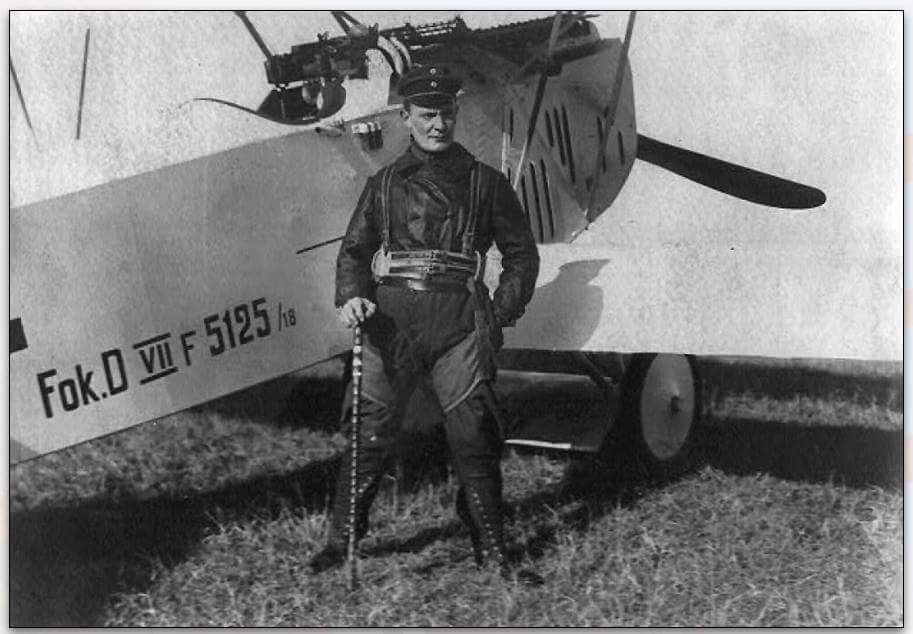
This unusual threesome of two very short chaps ‘Proccy’ and ‘Child Yank’ ‘and one very tall chap ‘Dingbat’ got involved in a heated engagement at 2:00 pm, that involved them in combat against Fokker D.VII fighters of JG I , led that day by the future Nazi Reichsmarschall Hermann Göring.
Hermann Göring in his Fokker D.VII fighter during WW1
After World War 1, Hermann Göring was to become Adolf Hitler’s right hand man and one of the most powerful figures in the Nazi party that ruled Germany from 1933 to 1945 and took Germany to its darkest place in history. But that was well in the future, over the western front battlefields of World War 1 Göring was a veteran fighter pilot, and fighter ace, he was even a recipient of the The Blue Max (the highest German bravery award). He was also eventually the last commander of the famous ‘flying circus’ Jasta 1, the fighter wing once led by ‘The Red Baron’ Manfred von Richthofen.
Unfortunately for both our two South Africans ‘Proccy’ and ‘Dingbat’ and the American ‘Child Yank’ – and the entire world really, none was unsuccessful at bagging Herman Göering and adding him to their kill totals.
‘Proccy’ would eventually claim an additional 14 aircraft, and by the end of the month of August with his claims list extended to 43. One memorable day was 22 August; he attacked a line of six enemy balloon over the British 3rd Corps front. He set the first one afire with his machine guns and forced the other five to the ground, the observers taking to their parachutes. His 15 kills for August would include 5 balloons, all destroyed, and two more two-seater planes. He was now up to 43 victories.
His September claims would be all balloons – four of them.
In the first few days of October, he would destroy three more balloons and three Fokker D.VII fighters, one of which burned. Another D.VII spun down out of control.
On 8 October, he was hit by ground fire and wounded in the arm, ending his front line service. In all ‘Proccy’ Beauchamp-Proctor’s victory total was 54; two (and one shared) captured enemy aircraft, 13 (and three shared) balloons destroyed, 15 (and one shared) aircraft destroyed, and 15 (and one shared) aircraft ‘out of control’ His 16 balloons downed made him the leading British Empire balloon buster.
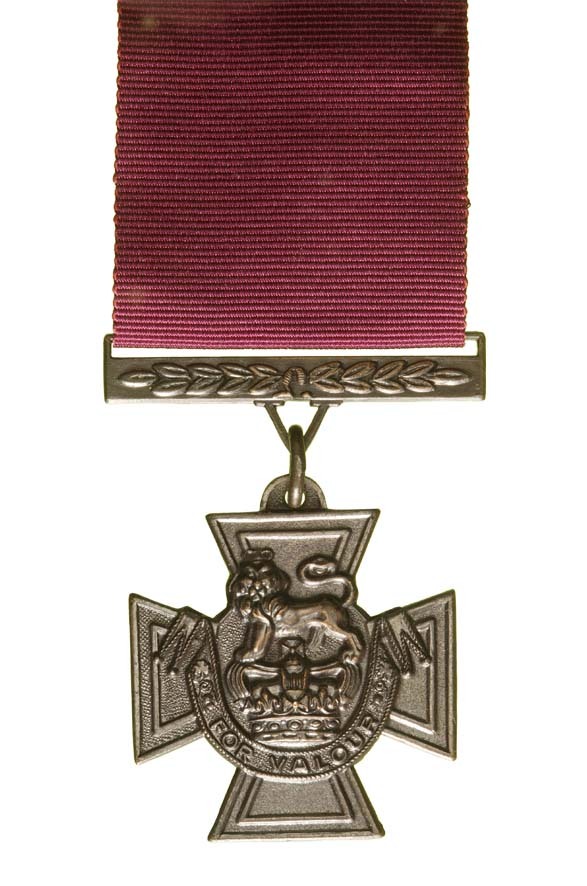
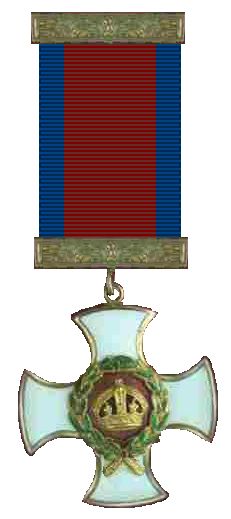
On 2 November, he was awarded the Distinguished Service Order, followed by the Victoria Cross on 30 November. His Victoria Cross citation explains in detail:
Victoria Cross (VC)
Between 8 August 1918, and 8 October 1918, this officer proved himself victor in 26 decisive combats, destroying 12 enemy kite balloons, 10 enemy aircraft, and driving down 4 other enemy aircraft completely out of control. Between 1 October 1918, and 5 October 1918, he destroyed 2 enemy scouts, burnt 3 enemy kite balloons, and drove down one enemy scout completely out of control.
On 1 October 1918, in a general engagement with about 28 machines, he crashed one Fokker biplane near Fontaine and a second near Ramicourt; on 2 October he burnt a hostile balloon near Selvjgny; on 3 October he drove down, completely out of control, an enemy scout near Mont d’Origny, and burnt a hostile balloon; on 5 October, the third hostile balloon near Bohain. On 8 October 1918, while flying home at a low altitude, after destroying an enemy 2-seater near Maretz, he was painfully wounded in the arm by machine-gun fire, but, continuing, he landed safely at his-aerodrome, and after making his report was admitted to hospital.
In all he has proved himself conqueror over 54 foes, destroying 22 enemy machines, 16 enemy kite balloons, and driving down 16 enemy aircraft completely out of control. Captain Beauchamp-Proctor’s work in attacking enemy troops on the ground and in reconnaissance during the withdrawal following on the Battle of St. Quentin from 21 March 1918, and during the victorious advance of our Armies commencing on 8 August, has been almost unsurpassed in its brilliancy, and as such has made an impression on those serving in his squadron and those around him that will not be easily forgotten.
Capt. Beauchamp-Proctor was awarded Military Cross on 22 June 1918; D.F. Cross on 2 July 1918; Bar to M.C. on 16 September 1918; and Distinguished Service Order on 2 November 1918
The bravest of the brave
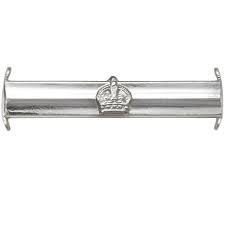
To make him the ‘highest’ decorated South African in history, as there is already a small group of South Africans who won the ‘highest decoration’ i.e. Victoria Cross in World War 1 (14 officially in total) and World War 2 (5 in total), Beauchamp-Proctor would also need to have another ‘next’ most senior decoration, he did this with obtaining a Distinguished Service Order (DSO) and a Military Cross (MC). This puts him on the same level as Percy Hansen, who also won a VC, DSO and MC, the difference, the one which places Beauchamp-Proctor at the top, is that he won the Military Cross twice (with bar) in addition to another decoration – the Distinguished Flying Cross (DFC).
The citations for these decorations are impressive enough on their own, there are as follows:
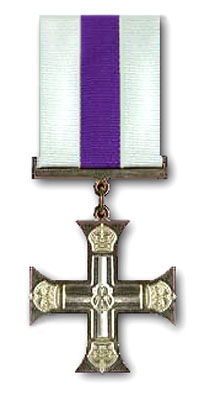
Military Cross (MC)
For conspicuous gallantry and devotion to duty. While on offensive patrol he observed an enemy two-seater plane attempting to cross our lines. He engaged it and opened fire, with the result that it fell over on its side and crashed to earth. On a later occasion, when on patrol, he observed three enemy scouts attacking one of our bombing machines. He attacked one of these, and after firing 100 rounds in it, it fell over on its back and was seen to descend in that position from 5,000 feet. He then attacked another group of hostile scouts, one of which he shot down completely out of control, and another crumpled up and crashed to earth. In addition to these, he has destroyed another hostile machine, and shot down three completely out of control. He has at all times displayed the utmost dash and initiative, and is a patrol leader of great merit and resource.
MC citation, Supplement to the London Gazette, 22 June 1918
Military Cross (MC) Bar
For the award of a Bar to the Military Cross ( MC ) i.e. winning a second Military Cross in addition to Andrew Beauchamp-Proctor’s first MC.
For conspicuous gallantry and devotion to duty while leading offensive patrols. He has lately destroyed three enemy machines, driven down one other completely out of control, and carried out valuable work in attacking enemy troops and transport on the ground from low altitudes. He has done splendid service.
London Gazette, 18 September 1918
Distinguished Flying Cross (DFC)
Lt. (T./Capt.) Andrew Weatherby Beauchamp-Proctor, M.C. A brilliant and fearless leader of our offensive patrols. His formation has destroyed thirteen enemy machines and brought down thirteen more out of control in a period of a few months. On a recent morning his patrol of five aeroplanes attacked an enemy formation of thirty machines and was successful in destroying two of them. In the evening he again attacked an enemy formation with great dash, destroying one machine and forcing two others to collide, resulting in their destruction.
DFC citation, Supplement to the London Gazette, 3 August 1918
Distinguished Service Order (DSO)
A fighting pilot of great skill, and a splendid leader. He rendered brilliant service on 22 August, when his Flight was detailed to neutralise hostile balloons. Having shot down one balloon in flames, he attacked the occupants of five others in succession with machine-gun fire, compelling the occupants in each case to take to parachutes. He then drove down another balloon to within fifty feet of the ground, when it burst into flames. In all he has accounted for thirty-three enemy machines and seven balloons.
DSO citation, Supplement to the London Gazette, 2 November 1918
That’s a lot of hefty decorations for gallantry and bravery and it makes Beauchamp-Proctor ‘the bravest of the brave’ when it comes the very bravest men South Africa has ever produced.
Post War
He was discharged from hospital in March 1919 and embarked on a four-month-long lecture tour of the USA, before returning to England and qualifying as a seaplane pilot with a permanent commission as a Flight Lieutenant in the RAF.
After his VC investiture at Buckingham Palace in November 1919 he was awarded a year’s leave, and this enabled him finish his BSc degree in Engineering.
Beauchamp-Proctor died during a training accident at RAF Hendon in England, on the 21st June 1921 whilst preparing for an air-show. His aircraft went into a vicious spin after performing a slow loop, and he was killed in the ensuing crash. At least one observer remarked that the loss of control and subsequent crash of the aircraft could have been linked to Proctor’s diminutive size, as noted earlier because of his size, Beauchamp-Proctor had to sit on a cushion to operate his aircraft and the cushion fell out during the loop, rendering him in a difficult position to adequately operate his aircraft and recover the manoeuvre. He was buried in Mafeking (his home town) in South Africa, following a state funeral.
In Conclusion
There still exists a little confusion over Beauchamp-Proctor’s given name. For decades he was listed as “Anthony” but more recent scholarship indicates “Andrew”, which is the name on his tombstone. Whether ‘Proccy’ was an Andrew or Anthony, it matters not a jot, this man epitomised ‘dynamite in a small package’ – ‘Proccy’ was and still remains the bravest of all South Africans to have been awarded gallantry decorations – without any doubt – the ‘Bravest of the Brave’.
Links to other South African World War 1 Victoria Cross recipients
Image copyright Imperial War Museum Collection. Portrait by Cowen Donson, Imperial War Museum collection copyright. Painting Captain Andrew Beauchamp-Proctor by Ivan Berryman – Granston Fine Art. Colourised IWM portrait, thanks to Photos Redux
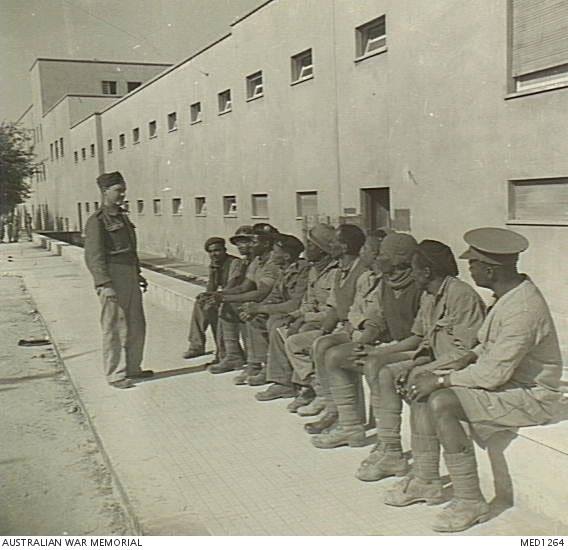
Job Maseko is a very notable South African hero of the Second World War. He was a member of the South African Native Military Corps (NMC) and was decorated with the Military Medal for gallantry. So how is it that a NMC member, a corps not allowed to officially carry firearms, gets to into the fight and wins this decoration. Simply put he single-handedly blew up an enemy ship. Read on for the story of a very remarkable man.
Job Maseko was employed as a delivery man in Springs before he volunteered for service in the Second World War and joined the South African Native Military Corps (NMC). After completion of basic training, he was sent to North Africa, attached to the 2nd South African Infantry Division. Members of the NMC took up any support role in the Division which did not require the handling of a firearm. They were given a vast range of different roles – anything from drivers, military cooks, engineers, stretcher bearers to bomb loaders. South African race laws at the time provided that serving ‘black’ men could not carry firearms, they were however issued spears as a ‘traditional weapon’ for guard and ceremonial duty, but that was about it (see related Observation Post Dress and Bearing of the South African Native Military Corps).
128 000 ‘Black’ South African soldiers volunteered to take part in World War 2 (nearly 40% of the standing army) and members of the NMC often found themselves in perilous circumstances and were exposed to the rigours and dangers of war as much as any another soldier. Some of these restrictions on the use of weapons quickly went out the window when in a combat zone, and somewhere along the line Job Maseko also learned a bomb making skill (see related Observation Post ‘Armed’ SA Native Military Corps in WW2 – this Corps screams out for a definitive work!).
The fall of Tobruk
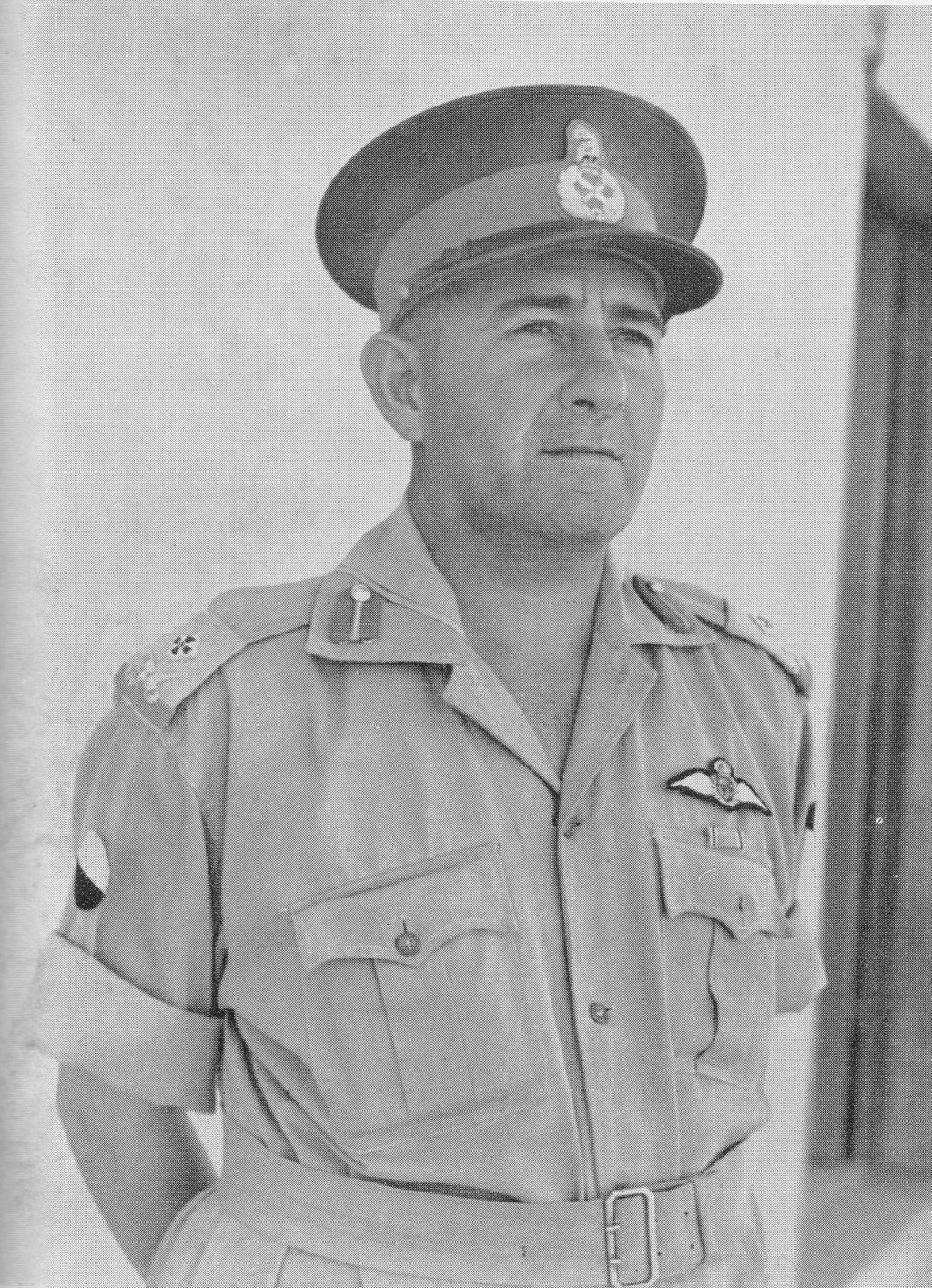
General Klopper
In 1941 the Australians had held Tobruk for 9 months, until Rommel’s withdrawal of his Axis forces to the west. Tobruk secured, by 1942 the Allied Middle East Command decided to leave a smaller ‘temporary’ force to hold Tobruk while a new strike force was built up near the frontier. The task of defending Tobruk was left to the South Africans. The new garrison was to be formed by the 2nd South African Infantry Division with General Klopper, a farmer from the Orange Free State before the war, and a major general of only one month’s standing, given command of Tobruk. In addition, units of British and Indian detachments fell under South African command defending Tobruk. Into this deployment also fell our hero – Job Maseko.
It is generally understood that by this stage Tobruk’s defences were in a poor shape with much of the armour and artillery taken away to the new frontier, the Western and Southern sides of the port were well defended by the South Africans, but the East side was weak, and it proved to be fatal.
As usual, Rommel had devised a ruse for capturing Tobruk. Only his infantry approached the western perimeter, while his mobile forces swept on past, to give the impression that the German and Italian armour was heading straight for the Egyptian border (sending radio messages to that effect to complete the ruse). He then swung his mobile armoured forces around and attacked Tobruk from its weak point – the eastern perimeter.
Rommel’s zero hour was 05h20 on 20 June 1942. As dawn broke long black lines of tanks, trucks and infantry slowly started to move forward. As it grew louder and closer to Tobruk waves of German Stukas and Ju 88’s aircraft appeared overhead (Rommel pressed every single Axis airplane in service in North Africa into taking Tobruk).
As the heavy artillery began to fire, the planes released their bombs and quickly got out of the way for the next wave, operating a shuttle service between the defence perimeter and El Adem airfield, 10 miles away. They pounded a gap open 600 yards wide. Behind them, under cover of artillery barrage and half-hidden by smoke and dust, German and Italian sappers raced forward to lift mines and bridge the tank traps with tanks and infantry racing through the gaps. As they move forward, they lit green, red and purple flares and the Stukas dropped their bombs just ahead of the advancing, multi-coloured smoke screen while the other planes and artillery blasted the South African rear (the seaward side of the port) with shells and bombs.
Rommel and German armour entering Tobruk
Into this desperate fight for survival went everyone, including members of The Native Military Corps. Job Maseko worked as a stretcher bearer, doing profoundly dangerous work, rescuing wounded men, as the defence of Tobruk became more desperate, Job and other black colleagues were given rifles and expected to fight on the front line with everyone else.
Inside Tobruk the situation was chaotic. General Klopper – his HQ’s bombed out, his radio and telephone wrecked and his code booked destroyed, lost the last vestige of control. Tobruk fell by the evening. Job Maseko became a prisoner of war (POW) on 21 June 1942 when Major-General KIopper, surrendered to Rommel at Tobruk with 32000 men, including 10,722 South Africans of the 2nd Infantry Division, of whom 1,200 were members of the Native Military Corps. It was the single biggest capitulation of South African forces in the country’s history – before or since.
Erwin Rommel inspecting South African POW after Tobruk falls
Job and many others were forced to march across the desert to an Italian POW camp. The Italian treatment of South African prisoners of war was nothing short of diabolical, however an even worse treatment was reserved for Black members of the South African Native Military Corps in captivity. German and Italian forces displayed a complete disregard for the rights of coloured or black POWs as they did not view them as regular troops.
One account recalls how black soldiers were shot by drunk German guards while been marched to the POW camp, and the account goes further to say that in Tobruk camp, black South African POWs were forced “under threat of death” to do war work, which was contrary to the Geneva Convention.
Another report claims Indian and Black prisoners at Tobruk were not allowed to take cover whenever the Allied bombers later bombed the port, furthermore their food was totally inadequate – they were only given one packet of biscuits per day and water rations were kept to a minimum.
Allied POW at Tobruk
There were also examples of Black South African POW escaping from the camp perimeter with their white counterparts to scrounge for food in the town, and Job Maseko was one. The Black POWs, as they were put to war work in the harbour (something most their white counterparts were excluded from) – mainly offloading ships. Desperate for food they would sometimes return to the camp with ‘acquired’ sacks of corn meal (mieliemeal), one account from De Lisle recalls that the unfortunate consequence was that hungry English and South Africans white POW would lay siege to their tents (the Black POW) at night to beg for their food.
The diabolical treatment of Black POW forced Job Maseko to taken action against his captors, to quote him “because of our ill-treatment by the enemy, especially the Italians, and because I felt it a duty in this way to assist my own people”.
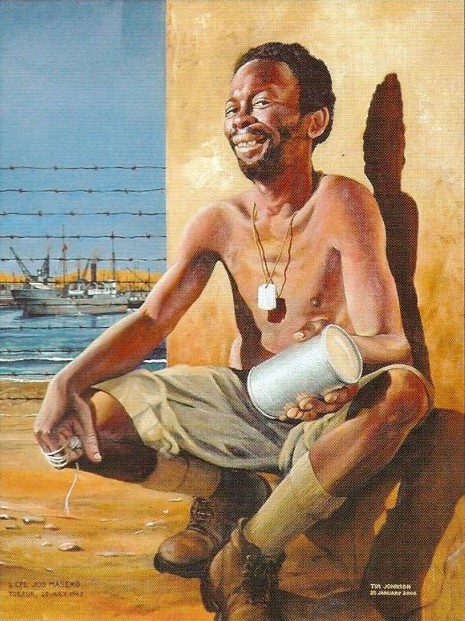
As with his Biblical namesake, Job was made of tough stuff and with the help of some comrades whilst on mundane prisoner duties to go down to the docks, Job created a bomb using a condensed milk tin, cordite taken from bullets and an extremely long fuse.
Job placed his home-made bomb deep inside the bowels of a German freight ship (and “F” Boat) that was docked in the harbour at Tobruk. He skilfully placed it next to fuel barrels for maximum effect, lit the fuse and made good his escape. Had he been caught, as a Black POW, he would have certainly been put to death if not tortured first.
Job waited and later the ship shuddered from a huge internal explosion and sank almost immediately into the harbour. After the war Job Maseko was able to point out the exact place where the ship was berthed and sure enough divers found it on the sea bed.
He later escaped from Tobruk and walked, for three long weeks though the desert and through enemy lines, all the way to El Alamein, he intended joining the battle there as he had fixed an old German radio he had found which informed him about General Montgomery’s epic and tide turning battle at El Alamein. We still await the full historical account of this remarkable man as very little is known to this day, rest assured historians are now writing it.
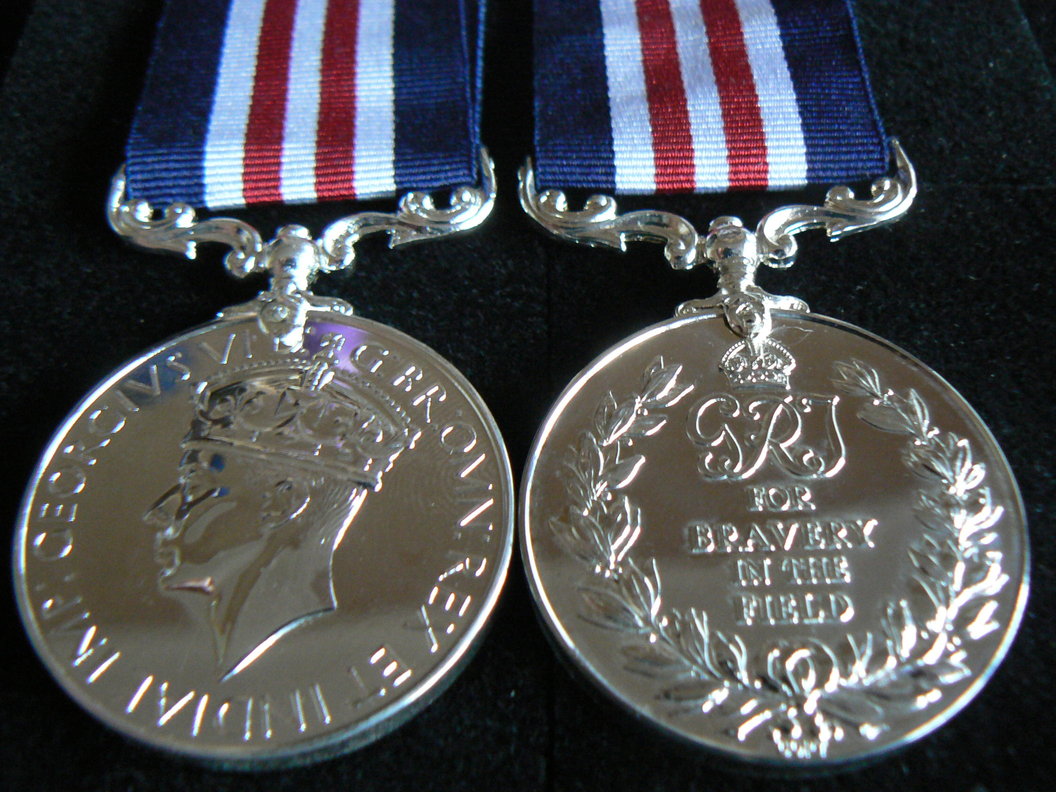
For his actions, Job Maseko was later presented with the Military Medal (MM) by Major-General F H Theron. The following extract enshrines his heroism, bear in mind when reading this, it is made even more remarkable in that Job Maseko as a ‘black’ African could only be deployed in a non combat role:
The King has been graciously pleased to approve the following award in recognition of gallant and distinguished service in the Middle East:-
Military Medal No N 4448 L/Cpl Job Masego [sic) – Native Military Corps
Citation For meritorious and courageous action in that on or about the 21st July, while a Prisoner of War, he, Job Masego, sank a fully laden enemy steamer – probably an “F” boat – while moored in Tobruk Harbour.
This he did by placing a small tin filled with gunpowder in among drums of petrol in the hold, leading a fuse therefrom to the hatch and lighting the fuse upon closing the hatch.
In carrying out this deliberately planned action, Job Masego displayed ingenuity, determination and complete disregard of personal safety from punishment by the enemy or from the ensuing explosion which set the vessel alight.’
The Victoria Cross Controversy
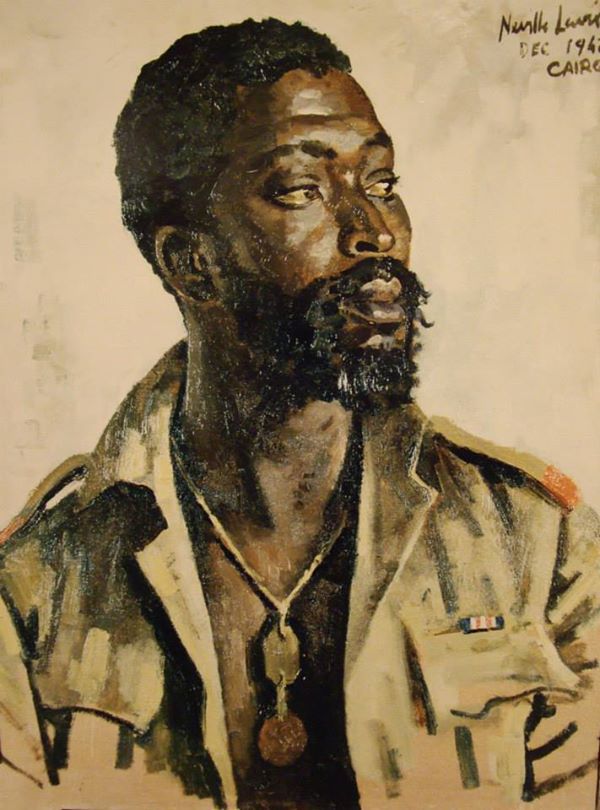
For his actions Job Maseko was initially recommended for a Victoria Cross but according to Neville Lewis, the first official war artist for South Africa during the Second World War, Job Maseko was awarded the Military Medal instead as he was ‘only an African’. It is hoped that actions currently been taken by the SANDF Military Attache in the United Kingdom to redress this issue with British government and re-open his case so it will be met with a correct interpretation of Job Maseko’s actions without the ‘race’ factor as part of the deliberation, and his actions considered as one worthy of the Victoria Cross or not (as may be the case).
Later in Life
Black ex-South African POW in Tripoli awaiting repatriation after the war
After been released Lance Corporal Job Maseko returned to South Africa. “Apartheid” was to be implemented a few short years after the war ended in 1948 when the Nationalists came to power beating Smuts. Job Maseko’s legacy slipped away from the general consciousness – along with many deeds of South African servicemen in World War 2, black and white. He became a poor man and died in 1952 when he was accidentally hit by a train. He was so broke at the time he was buried with borrowed money in the Payneville Township Cemetery in Springs. A very sad way to see the end of a national hero.
Today, to honour this unassuming hero, the community of KwaThema near Springs has a primary school in the township named after him. The main road linking the town of Springs to KwaThema Township has also been named after him. He is honoured at both the Delville Wood museum in France and the South African Museum of Military History in Johannesburg, A South African fighting ship the SAS Kobie Coetzee has also now been renamed the SAS Job Maseko in recognition of this very brave South African.
He can truly take the mantle of a proper South African warrior and stands shoulder to shoulder with all the other great South Africans who have earned the highest accolades of gallantry.
Written and Researched by Peter Dickens, References wikipedia, The incredible true tale of Job Maseko – the man who sunk a ship whilst a prisoner by Stephen Liddell. Narratives from North Africa: South African Prisoner of War experience following the fall of Tobruk, June 1942 by Karen Horn. Artwork credits: . Job Maskeko official portrait by Neville Lewis. Job Maseko holding explosive by Tim Johnson, copyright Tim Johnson website: http://www.timjohn.co.za

 Squadron Leader Nettleton was the leader of one of two formations of six Lancaster heavy bombers detailed to deliver a low-level attack in daylight on the diesel engine factory at Augsburg in Southern Germany on April 17th, 1942. The enterprise was daring, the target of high military importance. To reach it and get back, some 1,000 miles had to be flown over hostile territory.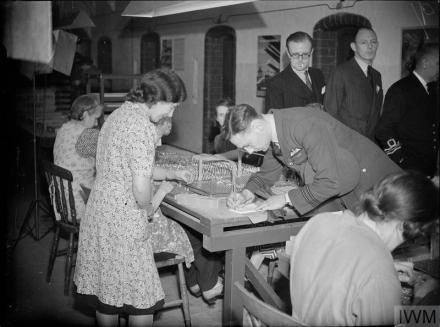
 No more appropriate mascot could have been found. The SA Brigade badge was a Springbok head, surrounded by a circle with the motto: “Union is Strength – Eendracht Maakt Macht”.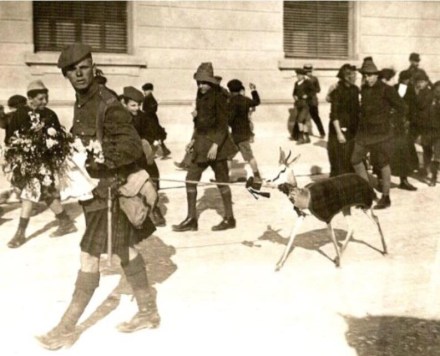










 The Observation Post