Not many South African’s know this, but during the Second World War – Jan Smuts opened South Africa to care for Polish orphans and children traumatised and displaced by the war. Ouma Smuts also played a leading role in ensuring they were correctly tutored and continued to have high appreciation of their rich Polish cultural heritage.
Many in the Polish community in South Africa to this day can trace their roots to event and this very orphanage. It is part of South Africa’s history on which we can all stand very proud.
This remarkable British Pathé newsreel film accounts the children’s home in Oudtshoorn and the “new life” afforded to these Polish children, it brings to light the character of South Africa at the time – especially the care and benevolence shown by South Africa and the “Oubaas and Ouma” to displaced war refugees in Europe at the time of their greatest need.
Take the time to watch the film and know why, as South Africans, we can stand with pride in our country and the great deeds it has done.
Military assistance to Poland was not the only contribution, the government of Jan Smuts also provided a home in Oudtshoorn to 500 Polish children who had been deported to Siberia in the early 1940s by the Soviets when their country was divided between Germany and the Union of Soviet Socialist Republics (USSR).
On 17 September 1939, two weeks after the German invasion of Poland, Soviet troops swiftly occupied the eastern half of Poland and, after a plebiscite, annexed the area to Ukraine and Belorussia. Beginning in the winter of 1939-40 Soviet authorities deported over a million Poles, many of them children, to the various provinces in the Soviet Union. Almost one-third of the deportees were Jewish.
In the summer of 1941 the Polish government in exile in London received permission from the Soviet Union to release several hundred thousand former Polish citizens from labor camps, prisons and forcible resettlement in the Soviet Union, to organize military units among the Polish deportees, and later to transfer Polish civilians to camps in the British-controlled Middle East and Africa. There the Polish children were able to attend Polish schools.
In 1942, the London government, acting through their Consul General Dr. Mi. Stanislaw Lepkowski, secured permission from General Jan Smuts to transport 500 children to the Union of South Africa In 1943, After they had been evacuated through the southern Soviet republics to Iran, the children were then brought to South Africa.
The Polish Children’s Home (Dom Polskich Dzieci) was organized in Oudtshoorn for their temporary accommodation, care and education (located on what is now South Africa’s ‘Infantry School’ Army base(. It was run under the supervision of the South African Department of Social Welfare, as well as Polish consular and ministry representatives, it remained in operation until 1947.
This story can be seen at Ditsong Museum of Military History in an exhibit. The story is outlined in this document Kindly provided by Stefan Szewczuk who is the President of the Polish Association of Siberian Deportees in South Africa. Follow this link Oudtshoorn Polish Children poster 17 September 2012
The Polish connection and story displayed at the Ditsong Museum of Military History in Johannesburg
There are still a handful of conservative ‘Afrikaner nationalist’ white people in South Africa who would still toe the old Nationalist line on Smuts, that he was a ‘verraaier’ – a traitor to his people, his death welcomed. However, little do they know that many of the old Nationalist architects of Apartheid held Smuts in very high regard.
DF Malan, on the day of Smuts’ death, 11th September 1950, was the Prime Minister of South Africa, his Nationalist party had defeated Smuts’ United party two years earlier in 1948 whilst pushing the Nationalist proposals to further entrench racial segregation with a concept they called Apartheid. Smuts on the other hand, foresaw the need to extend the ideas of ‘Union’ which had brought Afrikaner and Briton together to include Black South Africans. On voting rights, he had made his views clear to Hertzog as early as 1920 when in a private meeting he proposed a Qualification Franchise (not a Universal one though) for black South Africans (Hertzog was an ardent Nationalist and rejected the idea outright).
Smuts was born into a system of ‘Empire’ and that was the socio-political sphere everyone understood, including Smuts. Over time Smuts’ views on racial segregation gradually evolved from the generally understood divided evolution edicts of his day (based on where nations stood on the ‘civilisation’ continuum). On the international stage by the mid 1940’s, when Smuts was outside of the pressures of South Africa’s race politics (even from inside of his own political party) and not toeing his party’s line, here his views started to really shape up.
By the middle of World War 2 he had taken on a deep sense of individual liberty for all mankind, emancipation and freedom from any sort of oppression (including State). These views, based on what he termed man’s universal “spirit” for freedom forged by two world wars, they were consolidated in his work on the United Nations and exposed on an international stage in a number of speeches.
Back in South Africa after the war, as a precursor to these views on universal liberty, Smuts had already changed from his old positions on segregation and proposed ‘integration’ instead of ‘separation’ and he had also already promised black community leaders greater political representation if they supported his war effort, voting rights under Smuts were already secure for South Africans of Indian origin and the Cape Coloured community. On the Nationalists proposals of Apartheid he once said:
“The idea that the Natives must all be removed and confined in their own Kraals is in my opinion the greatest nonsense I have ever heard”.
The nationalists touted a fear of ‘black danger’ under this more democratically minded Smuts if he won, and it struck a cautionary chord with many white voters and the Nationalists won the day, surprisingly and against the odds, and not by a majority mind – but on a constitutional seat basis.
On losing the election Smuts made one of his greatest speeches in 1949 at the inauguration of the Voortrekker Monument to a largely Afrikaner crowd, it says everything of where he stood on integration and the future of South Africa, he said:
“Only on the basis of taking from the past what was beautiful could ‘fruitful co-operation and brotherhood’ between the two white communities be built. And only on this basis could a solution be found for the greatest problem which we have inherited from our ancestors, the problem of our native relations”. He went on to say, that this was “the most difficult and the final test of our civilization.’
Simply put, the country’s white community at Smuts’ death was very split down the middle on the issue of ‘Apartheid’ and what it would bring, the majority of South Africans did not favour it and they had heeded Smuts’ warnings of what entrenched race politics would bring to South Africa’s future.
The death of Jan Smuts
DF Malan
DF Malan was attending a National Party political rally to the party faithful and whipping up support for the edicts of Apartheid when Smuts’ died. An aide walked up to him and handed him a note with the news of Smuts’ death, what he does next would surprise even the hardest right-wing Afrikaner Nationalist.
Instead of gleeful celebration of the demise of this most hated enemy of the Apartheid cause, the man repeatedly called a ‘traitor’ by the Nationalists, a man who had the ‘blood’ of Jopie Fourie on his hands, the ‘hansopper’ and ‘joiner’ turncoat who favoured the union of the Afrikaner with the hated British to heal South Africa over and above separationist Afrikaner rule, the King’s ‘hanskakie’ puppet, old ‘slim Jannie’ who put global interests and governance ahead of his ‘volk’ (white Afrikaner peoples) – no Dr. Malan’s reaction to the news was somewhat different to what most people now would even think.
DF Malan immediately turned pale, he slowly sat down, slumped over and cupped his hands to his face. He had lost a lifelong and very close friend. Their political positions aside, Malan had a deep sense of admiration for his old friend.
He had to be helped up to stand at the microphone, where he announced that “a great figure of our time” has just died, he called the Nationalists to silence and then cancelled the rally. His colleagues reporting that they had never seen Malan so distressed.
DF Malan’s reaction says a lot about Smuts, the importance he had in the formation of South Africa, he was the original ‘reconciler’ of the warring nations in South Africa, his idea of union based his philosophy of holism – all parts of the sphere make the whole, made the state of South Africa as we know it, he was quite literally the ‘father’ of the South African nation, and now he was lost.
The universal appreciation of Smuts at the time, both by his supporters and his detractors, would see a nationwide and even worldwide outpouring of grief, Smuts’ funeral was something else, a funeral not seen since in South Africa and only seen again when Nelson Mandela died.
To even begin to contemplate Smuts’ importance to not only South Africa, but to the free world consider what Winston Churchill wrote to Isie (Ouma Smuts), his wife, expressing his condolences, and what he wrote sums up the loss perfectly.
“There must be comfort in the proofs of admiration and gratitude that have been evoked all over the world for a warrior-statesman and philosopher who was probably more fitted to guide struggling and blundering humanity through its suffering and perils than anyone who ever lived in any country during his epoch.”
In his lifetime, Smuts had advanced to a level of greatness that is more substantive and more far-reaching to the modern human race than any South African before and even after him (with all respect to Nelson Mandela and his legacy).
Add to this what King George VI wrote Ouma Smuts and you start to see a pattern. He wrote:
“the force of his intellect has enriched the wisdom of the whole human race”.
To understand his impact to humankind by way of an obituary to his milestone accolades, consider the following:
The birth of South Africa
The establishment of the state of South Africa in 1910. His proposal of ‘Union’ with the British colonies of the Cape and Natal brought South Africa out of the devastation of the Boer War and the resultant decimation of the Boer nation. Despite winning the war, in just four years of Colonising everything, Britain had handed all control of her colonies in South Africa to an independent parliament to Westminster, able to make its own laws to forge its own destiny, headed up by two Boer Generals of which Smuts was one.
The Boers had lost their two small Republics to war and now, thanks to Smuts’ skill and British confidence in his vision and him, the Boer commanders were very quickly back in governance of both their ‘old’ Republics and in addition, both the British Colonies as well – without a shot been fired. To quote Smuts ‘they gave our country back’. He reflected that at no time in Britain’s long history had such a ‘miracle of trust and magnanimity’ ever happened.
British ‘meddling’ and ‘warmongering’ in South Africa would never happen on the same scale again, and in fact they were making reparations for the damage they had caused by way of economic support.
The League of Nations and United Nations
He played a key role in the establishment of the League of Nations, the exact design and implementation of which relied upon Smuts, he even drafted the outlines for the The Treaty of Versailles. His outline was not fully followed and he warned the League of a future calamity with Germany – how prophetic he was.
With the demise of the League of Nations (the USA left it), Smuts still held the view that a more robust world peace body was required involving all nations holding each other to account. He later urged the formation of a new international organisation for peace: The United Nations (UN).
Smuts wrote the first draft of the preamble to the United Nations Charter, and was the only person in history to sign the charters of both the League of Nations and the United Nations (see earlier Observation Post link Jan Smuts drafted the Preamble to the United Nations Charter).
Smuts signing the United Nations Charter
The British Commonwealth of Nations
He sought to redefine the relationship between the United Kingdom and her colonies, he helped establish the concept of a ‘British Commonwealth of Nations’ based on devolved British authority instead of a ‘British Empire’ and by doing so he served to end Britain’s ‘Empire. He in fact came up with the term ‘Commonwealth’ and it was to his recommendations that the King listened.
The birth of Israel
In 1932, the kibbutz Ramat Yohanan in Israel was named after him. Smuts was a vocal proponent of the creation of a Jewish state, and spoke out against the rising anti-Semitism of the 1930s. His relationship with the Jews and Israel did not stop there, he was one of the driving forces behind the Balfour Declaration which established the state of Israel (see earlier Observation Post A Kibbutz called Jan Smuts.)
World Wars and Military Milestones
He became South Africa’s only Field Marshal, having taken South Africa to both World Wars on the side of democracy and freedom. The Second World War alone launched the manufacturing might of South Africa largely due to the support of the war effort. By the end of WW2, South Africa, a muddle of small colonies and republics just 40 years earlier, now stood as a key contributing world player.
He was the only person with in-depth military experience to join The British War Cabinet, at the insistence of the King, during World War 1 (the rest were Politicians) and in so played a key role in guiding the outcome of World War 1.
He gave birth to the idea of an independent Air Force free from Navy or Army control in 1917, that saw the formation of the Royal Air Force (RAF), the oldest independent air arm in the world and in addition carried this over to form The South African Air Force, the second oldest. Modern military construct now still follows The Smuts Report on the use of air power (see earlier Observation Post links Centenary of the ‘Smuts Report’, the instrument which gave birth to the Royal Air Force,).
Smuts had a long string of successful military command, notwithstanding his Command of a Boer Commando during the Anglo-Boer war, evading defeat for the entire duration of the war. He founded the South African Defence Force after Union, commanded UDF forces alongside Botha in taking German South West Africa during WW1, the first ‘Allied’ victory of the war. He went on to command all the British and Commonwealth Forces in the East African campaign during WW1, chasing General Paul Von Lettow-Vorbeck’s forces all over East Africa, and in so doing he captured Dar-es-Salaam, the German East Africa capital. However, to really put Smuts in perspective, when he heard that his old enemy, General Paul von Lettow-Vorbeck had fallen into destitution after WW2, it was Smuts who personally extended aid and food to him (to Smuts war was not a personal thing amongst soldiers).
During the Second World War he was appointed to the British King’s Privy Council. The King was even warm to an idea proposed by Jock Colville (Churchill’s Private Secretary) that should Prime Minister Winston Churchill die during the war, Smuts would replace him, however this idea was never tested as Smuts would have need to have been made a peer and constitutional issues would have prevented it. Whether possible or not it does give an idea of just how close Smuts was to Churchill and how indispensable he had become (see related Observation Post: Churchill’s idols; Napoleon, Nelson &…Smuts!).
Again, as a member of the British War Council, he played a key role in the outcome of World War 2 and the Allied Victory. He even accompanied Winston Churchill shoulder to shoulder to oversee Operation Overlord (D Day) and the liberation of France and subsequently Western Europe.
Smuts and Churchill in France overseeing Operation Overlord (D Day)
The deep-seated pain of the Boer War concentration camps and how it affected Afrikaner identity was also something that Smuts actively addressed (Ouma Smuts was herself interned in a concentration camp, and Smuts had also tragically lost family to the system). He became a friend and confidant of Emily Hobhouse in addressing the issue with the British over many years. The Magnolia seeds she gave him in friendship now stand as a full botanical statement to this outside his house in Irene.
He brought the government to take measures to bring the treatment of Indians in South Africa into line with the provisions of the United Nations, putting them to the same equality and status of the ‘Cape Colourds’ who already enjoyed an equal universal franchise in South Africa at the time. In doing so he became a life-long admirer of Mahatma Ghandi, who in turn also regarded Smuts as one of the greatest statesmen of his time.
To illustrate this admiration, Before Gandhi returned to India in 1914, he presented General Smuts with a pair of sandals made by Gandhi himself. In 1939, on Gandhi’s 70th birthday, Smuts returned the sandals with the following message:
“I have worn these sandals for many a summer, even though I may feel that I am not worthy to stand in the shoes of so great a man.”
In domestic policy, Smuts instituted a number of social security reforms. Old-age pensions and disability grants were extended to ‘Indians’ and ‘Africans’ respectively (although there were still differences in the level of grants paid out). He also instituted the Workmen’s Compensation Act of 1941 and the Unemployment Insurance Act of 1946.
International acclaim
Smuts was honoured by many countries and on many occasions, as a standout Smuts was the first Prime Minister of a Commonwealth country (any country for that matter) to address both sitting Houses of the British Parliament – the Commons and the Lords during World War 2. To which he received a standing ovation from both houses.
Such was the admiration of Smuts that his statue stands outside Westminster on Parliament Square in London for his contribution to world politics and as a great reformer.
Now he stands alongside the likes of Ghandi, Mandela and Abraham Lincoln as the only other ‘foreign’ statesmen honoured in the square. Whilst, ironically, in South Africa his legacy has taken an absolute battering and his statues removed.
Take the time to listen to Smuts’ speech to both houses of Parliament, note his views on all mankind’s basic freedoms and what he envisions as the future by way of fundamental reforms. Also note the short praise by Winston Churchill when Smuts concludes his speech and the reaction of the British Parliament, a reaction that has not been seen in British politics since, it is very unique.
Charity
In 1921 Smuts, along with Field Marshal Haig, established The Royal Commonwealth Ex-Services League (RCEL) in Cape Town. The RCEL sought to consolidate war veteran’s charities all over the world to care for the returning military service personnel in the Commonwealth. It saw the establishment or re-purposed institutions which now play a significant role in care for servicemen worldwide, The Royal British Legion, The Royal Canadian Legion, The Returned Services League Australia and The South African Legion to name a few.
He also made South Africa available to Jewish orphans escaping the Pogroms of Eastern Europe (despite resistance from South African nationalists). For a full story on this remarkable chapter, see an earlier Observation Post 200 Jewish orphans saved, the story of Jan Smuts and Issac Ochberg
He again made South Africa available to Polish orphan children escaping the Nazi German and Soviet invasion of Poland in 1939, establishing a grateful and thriving small Polish community in South Africa (see earlier Observation Post South Africa provides sanctuary for Polish refugee children during WW2 ).
Academia
Smuts was also an accredited philosopher, his work on Holism brought him high acclaim from his Philosopher peers. Holism can be defined as “the fundamental factor operative towards the creation of wholes in the universe” and was published in 1926. For Smuts it formed the grounding behind his concepts of the League of Nations and United Nations.
Smuts was also an accredited Botanist, his books and illustrations on South African grasses (veld) are still regarded as the definitive work.
Whilst studying law at Christ’s College at Cambridge University, he was rated as one of the top three students they have ever had (Christ’s College is nearly 600-year-old). The other two were John Milton and Charles Darwin.
His intellect was unsurpassed, to pass an exam at Cambridge he learnt Greek (fluently) in just 6 days. His wife was no intellectual slouch either, later in life Jan Smuts and Ouma Smuts used to tease one another when one would recite a Bible verse and the other would be expected to recite the following one, from memory, in Greek!
In 1948, Smuts was elected Chancellor of the University of Cambridge, the first real non-Briton outside of British Royalty to be elected to the position in the 800 year-old history of Cambridge University.
Vision
Smuts’ idea of ‘Union’ and vision for South Africa was that of a ‘United States of South Africa’ including countries like Namibia, Botswana and Zimbabwe in the Union. It was to be a significant player on the world stage drawing on Africa’s vast resources to see it as a leading political and economic power block (much like the USA is now). Can you imagine if Botswana and Rhodesia voted to join the Union (they chose not to at the time), what a different history we would have seen in Southern Africa – ‘Apartheid’ may never have happened just for starters.
A humble man
Personally, Smuts was a God-fearing, frugal and humble man. He chose as his house an old rickety, uninsulated, fully corrugated iron, transportable military head office. He preferred to sleep outside on the ‘stoup’ (veranda) on a small single hard wood bed, his garden was the natural veld. There were no stately mansions or ‘Nkandla’ with ‘fire pools’ for Smuts and he would not have had it anyway.
Legacy
The National Party in a sinister move, gradually and over the long period of Apartheid insidiously smeared Smuts and his legacy, erasing from the general consciousness of just what a great South African Smuts had become. Modern South Africans grew up with almost no regard for Smuts, and if you had to ask a young Black South African today who Smuts was he’ll probably say he was one of the white Apartheid monsters, the white English children will have no idea and the White Afrikaans ones may remember something about him been traitor to Afrikaners. A student in Canada studying world politics would have a better grip on Smuts than a South African student.
Luckily this is beginning to change, and landmark Biographies are being written now which start to fully explore who and what Jan Smuts was, and it is both fascinating and eye-opening. It is very hard to sum up all the greatness Smuts was to attain, and certainly for his time his deeds set him well apart from any of the other Statesmen South Africa has produced, certainly if you consider all the subsequent South African Premiers other than Mandela. We have a wonderful story in Smuts, and what we have a character of force – a polyglot, philosopher, botanist, intellectual, lawyer, politician, statesmen, reformer and warrior – a story and a man who is best summed up by Alan Paton who said:
“Even the great thought he was great.”
Written and Researched by Peter Dickens. References: Jan Smuts reconsidered Hermann Giliomee 26 January 2016, Richard Steyn’s Smuts: Unafraid of Greatness 2015. Video footage copyright Associated Press. My deep thanks to Philip Weyers for the Smuts family insight and access.
This article serves to highlights Smuts’ achievements by way of an Obituary. There are other issues any national leader faces that highlight decisive but ‘unpopular’ action depending on the affected party’s point of view. For more related articles in The Observation Post on Jan Smuts please have a look at this link:
August 2017 marks the centenary of the report to form the Royal Air Force (RAF), the idea of an independent Air Force from Navy or Army control is now officially 100 years old, and one key South African statesman, General Jan Smuts, gave birth to it.
Smuts in WW1
Today, if you walk into the Royal Air Force Private Club in Mayfair, London you are greeted by a bust of Jan Smuts in the foyer, it stands there as an acknowledgement to the man who founded what is now one of the most prestigious and powerful air forces in the world – The RAF.
So how did it come to be that a South African started The Royal Air Force and why the need to have a separate and independent arm of service?
Simply put, during World War 1, the British Army and the Navy developed their own air-forces in support of their own respective ground and naval operations. The Royal Flying Corps had been born out of the Air Battalion of the Royal Engineers and was under the control of the British Army. The Royal Naval Air Service was its naval equivalent and was controlled by the Admiralty.
Royal Naval Air Services
Royal Flying Corps
However, the use of air power in World War 1 was developing beyond the immediate tactical use of aircraft by the Navy and the Army. In Great Britain the civilian population had been on the receiving end of extensive German bombing raids dropped from flying Zeppelin airships, the public outrage and the psychological effects of this bombing was having a significant impact on British politicians.
In reaction to this, the politicians proposed the creation of a long-range bombing force both as a retaliation and also as a means of disrupting enemy war production. There were also continuing concerns about aircraft supply and priorities between the services.
The British Prime Minister, Lloyd George asked General Jan Smuts to join his War Cabinet (the supreme authority governing Great Britain and her Empire’s forces in World War 1). Lloyd George then commissioned General Jan Smuts to report on two issues:
Firstly to look into arrangements for Home Defence against bombing and secondly, air organisation generally and the direction of aerial operations. Smuts is generally accredited with improving British air defence and answering the first priority.
However it was ‘Smuts report’ of August 1917 in response to the second of these questions that led to the recommendation to establish a separate Air Service. In making his recommendations Smuts commented that
“the day may not be far off when aerial operations with their devastation of enemy lands and destruction of industrial and populous centres on a vast scale may become the principal operations of war, to which the older forms of military and naval operations may become secondary and subordinate”.
Given this new dimension he commented that it was important that the design of aircraft and engines for such operations should be settled in accordance with the policy which would direct their future strategic employment. On these grounds he argued there was an urgent need to create an Air Ministry and that this Ministry should sort out the amalgamation of the two air services.
The War Cabinet accepted this recommendation to amalgamate the two separate air forces under one single and independent Air Force. Smuts was then asked to lead an Air Organisation Committee to put it into effect. The Air Force Bill received Royal assent from the King on the 29 November 1917, which gave the newly formatted Air Force the prefix of ‘Royal’ (up to that point the idea was to call it the ‘Imperial Air Force’).
The War Cabinet during WW1, Smuts seated bottom, far right
The RAF was officially formed on the 1 April 1918 with the amalgamation of the Royal Naval Air Service and the Royal Flying Corps. Following which Lord Rothermere was appointed on 3 January 1918 as the first Secretary of State for Air and an Air Council established.
To emphasise the merger of both army and naval aviation in the new service, to appease the ‘senior service’ i.e. the Navy, many of the titles of officers were deliberately chosen to be of a naval character, such as Flight Lieutenant, Wing Commodore, Group Captain and Air Commodore.
Royal Air Force
The newly created Royal Air Force was the most powerful air force in the world on its creation, with over 20,000 aircraft and over 300,000 personnel (including the Women’s Royal Air Force). It now qualifies as the oldest independent Air Force in the World.
General Smuts was to take his recommendations and findings across to form an independent South African Air Force (SAAF). Smuts appointed Colonel Pierre van Ryneveld as the Director Air Services (DAS) with effect from 1 February 1920 with instructions to establish an air force for the South African Union. This date is acknowledged as marking the official birth of the SAAF. The SAAF now qualifies as the second oldest independent Air Force in the world.
South African Air Force
In a nutshell, both the RAF and SAAF as we know them today, were given to us by Jan Smuts as a founding father. Funnily, Smuts was often criticised domestically as ‘Slim’ Jannie (clever little Jan), a term Smuts hated as it was coined by the Hertzog Nationalists to mean that Jan Smuts was too clever for his ‘volk’ (peoples) and therefore out of touch, it was done for political expediency at Smuts’ personal expense. Smuts disliked the term as it as it ironically belittled the Afrikaner and positioned his people as ‘simpletons’, something Smuts fundamentally disagreed with, and something they most certainly are not.
That said, domestically Smuts’ political adversaries in the opposition National Party carried on with this belittling ‘Slim Jannie’ nickname to further criticise his ability to command at a strategic level, stating that his approach was too ‘intellectual’ for effective command.
All modern military strategy is formulated on joint arms of service with an independent air arm. You only have to look to any modern military construct of any military superpower today to see just what a visionary and strategist Jan Smuts was. The proof of his ability to command strategically is in the pudding. Smuts’ ground-breaking report in August 1917 now guides all modern strategic military planning by simple way of how the arms of service are now constructed (Army, Navy, Air Force i.e. ground, sea, air), how they co-ordinate with one another and how they are commanded.
Written and researched by Peter Dickens. References – Birth of the Royal Air Force (Royal Air Force Museum), Imperial War Museum and Wikipedia. Images copyright, Imperial War Museum.
It’s widely reported now that Britain “stood alone” at the beginning World War 2, especially after the Battle at Dunkirk. However this is not strictly true (for a short while after the fall of Dunkirk, it may have felt like it, but it was not the case) very quickly coming to aid Britain “in her hour of need” and reinforce her troops, airman and seamen were the armed forces of the British Commonwealth – and not only the armed forces but also the raw materials and industry of the likes of Australia, India, South Africa and Canada – an all in effort to aid the United Kingdom, push back the advances of Fascist and Nazi thinking and change the course of European history.
It’s generally misunderstood – but within a day of the United Kingdom and France declaring war on Germany on 3 September 1939, New Zealand, Rhodesia and Australia had declared war on Germany as well. It was just 3 short days later that an independent parliament in South Africa declared war on Germany on the 6th September 1939 (very early on if you think about it – the sixth country to declare war on Nazism). Quickly followed by Canada’s independent parliament who just four days after South Africa’s declaration also declared war on Germany – 10th September 1939.
On the eve of World War II the Union of South Africa found itself in a unique political and military quandary. Though closely allied with Great Britain as a co-equal Dominion under the 1931 Statute of Westminster with the British king as its head of state, South Africa had as its Prime Minister on 1 September 1939 Barry Hertzog, the leader of the pro-Afrikaner anti-British National party that had joined in a unity government as the United Party.
Herzog faced a problem: South Africa had a constitutional obligation to support Great Britain against Nazi Germany. The Polish-British Common Defence Pact obligated Britain, and in turn its dominions, to help Poland if attacked by the Nazis.
After Hitler’s forces attacked Poland on the night of 31 August 1939, Britain declared war on Germany (3 September). A short but furious debate unfolded in South Africa, especially in the halls of power in the Parliament of South Africa, that pitted those who sought to enter the war on Britain’s side led by the pro-Allied, Afrikaner, ex-Boer War General, and former Prime Minister Jan Smuts, against then-current Prime Minister Barry Hertzog, who wished to keep South Africa “neutral”, if not even pro Nazi Germany in the hopes Germany would win (as Germany had sided with the Boer Republics during the Boer war there was a groundswell in the Afrikaner right politics in support of Nazi Germany).
On 4 September 1939, Hertzog’s motion to remain out of the war was defeated in Parliament by a vote of 80 to 67, he resigned, and Smuts became Prime Minister of South Africa and declared South Africa officially at war with Nazi Germany and the Axis.
To celebrate Smut’s victory in Parliament that day a special button/lapel badge was made inscribed with 4-9-1939 for the party faithful.
Smuts immediately set about fortifying South Africa against any possible German sea invasion because of South Africa’s global strategic importance controlling the long sea route around the Cape of Good Hope.
A very interesting part of the sequences of declarations of war against Germany, was that of Southern Rhodesia (now Zimbabwe), and it stands out as a unique one. The Southern Rhodesian government almost immediately followed the British declaration of war with their own. They can even be said to hold the mantle as the very first of the British Dominions and Colonies to stand by Britain in their hour of need. Steadfast and swift in support of their ‘motherland’ – The United Kingdom, no quibble about it either, as there was no long parliamentary debate over the issue – it came without even a second thought on the matter. In all 26 000 Rhodesians volunteered to fight during World War 2.
The irony is that when Rhodesia ‘stood alone’ in an armed onslaught in the 60’s the country to abandon them was in fact the United Kingdom, forcing them to declare unilateral independence of Britain. A fact not missed on the rather cynical ‘old Rhodesians’ today who remember their WW2 sacrifices with a very real sense of treachery, and it’s a fact missed on the British public today.
Today, some South Africans often point to Britain ‘abandoning’ South Africa when its armed insurrection started in the mid 1960’s as well. However they are quick to forget that the very ‘anti-British’ National Party took South Africa out of the British Commonwealth of Nations in 1961 and strained all ties. South Africa ‘stood alone’ on the Nationalists policy of Apartheid and there was nothing the British could really do about it. However to the Rhodesians there is deep cause for unhappiness as they never wanted to abandon any of their British ties whatsoever.
In terms of the semantics of the ‘term ‘standing alone’ after Dunkirk, in many cases the Commonwealth countries did not have immediate operational readiness to come alongside the UK in the summer of 1940. However we must remember that the Battle of Britain (when Britain really ‘stood alone’) was an air battle, where a ‘few’ pilots held off the German assault – and alongside the 2353 British pilots stood 574 pilots from other countries – 24%, – a quarter of the combat force. Most of them came from the Commonwealth countries (342 pilots in total including Rhodesians and South Africans). So Britain never really ‘stood alone’ in that context either.
So, in conclusion, the idea that following Dunkirk, Britain stood alone against a tidal Nazi onslaught is quite incorrect. However due to changing geo-politics, what is dissapointing now is that memory of the sacrifice of men and women from countries like India, Kenya, South Africa and Rhodesia are fading fast in the general populations – in their own countries and in the United Kingdom.
Grab your packet of Romany Creams from the pantry, bite into South Africa’s top-selling chocolate biscuit then settle down and to read some very rich South African World War 1 history. History is often connected by remarkable ‘golden threads’ and this one takes you on a wonderful journey – all the way from shooting down Zeppelin’s bombing England to your favourite tea time ‘choccy biccy’.
Our story starts with a young South African, Ian Vernon Pyott. Ian was the son of a Scotsman named John Pyott. John, was born in Dundee, Scotland and was a baker’s apprentice at aged 10. Due to ill-health, John was advised to move to a better climate – so he packed off to Cape Town, South Africa and in 1880 he moved to Port Elizabeth where he manufactured sweets, cakes and jams before later moving into bread and biscuits. On 1 December 1900, Pyott converted his business into a limited liability company and named it “Pyott Limited”. Highly successful, between 1898 and 1924, the Company was to receive no fewer than 70 medals at various exhibitions across the country
Captain Ian Vernon Pyott DSO
Capt. Ian Pyott DSO
Ian Pyott was born in Port Elizabeth, South Africa, on August 31, 1895. He grew up in Port Elizabeth. He was educated at Grey High School, South Africa and Watson’s College in Edinburgh, Scotland, returning to South Africa after completing his education here he trained as a miller in the family owned ‘Pyott Limited’ business.
At the outbreak of hostilities which was to become World War 1, Ian Pyott returned to England in February 1916, enlisting in the Machine Gun Corps ‘MGC (Tanks)’. He transferred into the Royal Flying Corps (RFC) three months later in June, after attending flying school, he was posted to 36 Squadron’s ‘A’ Flight, based at Seaton Carew and assigned to fly a two-seater Royal Aircraft Factory BE 2c, No 2738 biplane.
Little did he know that in a couple of months he was about to become one of the heroes of the war. He was about to meet a German Zeppelin airship on a high altitude night bombing raid, November 27, 1916, designated number L-34.
Two groups of Zeppelin airships set out from Germany to bomb England that fateful night, with the first group of five ships crossed into England near Scarborough while the second group of four flew toward the Tyne River mouth.
Zeppelin L-34 was massive, 148 metres long and a diameter of about 15 meters (on average).
Lt. Ian Pyott was flying out of Seaton Carew aerodrome, he was on his second patrol of the night. Tasked with looking for Zeppelin airships and destroying them, he took off at 10.30pm and although his BE 2C normally carried an observer he flew solo this time, this weight saving allowed him more fuel and therefore more flying time.
L34 Caught in Search-Lights
L-34 crossed the coastline into England in the neighbourhood of Blackhalls, a handful of miles north of Hartlepool. Turning Southwards towards Tees it was spotted and searchlights brought to bear on it. Once spotted L-34 immediately started dropping bombs in an attempt to neutralise the search-lights. In all it dropped 13 bombs near Elwick – a little village just west from West Hartlepool. The bombing proved ineffectual with minimum damage on the ground (two cows were injured).
Now under attack from anti-aircraft fire L-34 turned seawards passing over the thickly populated area of West Hartlepool. At this stage Lt. Pyott had been in the air for 1 hour when he saw the Zeppelin heading in his direction.
He reported that he was at 9800 feet and the Zeppelin was a couple of hundred feet below him, he attacked the Zeppelin at right angles to the middle of the airship, firing all the way and then flying underneath it. The airship turned east and Pyott and the Zepplin’s machine gunners dueled for about 5 more miles. Eventually Pyott got some tracer rounds into left side of the Zepplin’s envelope and the Zepplin was rapidly engulfed in frames. On fire, it continued east over Hartlepool, broke in half and plunged nose first into the Trees river mouth.
The virtually instantaneous combustion of 45,000 cubic metres of hydrogen on board used to inflate the airship ensured there were no survivors, only two bodies were found, the rest sadly incinerated or lost.
Death of L 34
Shooting down a Zeppelin was a very big deal in World War 1, they were heavily armed, flew at incredibly high altitudes for the day and very formidable. When Pyott landed, all the members of his base ran out to cheer him, he promptly collapsed, not due to injury, but because he was frozen stiff from fighting at such a high altitude. They took him from the cockpit and carried him aloft on their shoulders in victory, taking him off to warm up no doubt.
Following the victory Ian Pyott was to become a national hero, wined and dined by the British elite.
Lt. Ian Pyott besides the BE 2c he was piloting when he shot down Zeppelin L34
Just over a week later, 15th December 1916, it was announced in the press that Pyott had been awarded a ‘Companion of the Distinguished Service Order’ (DSO), in part his citation read “in recognition of conspicuous gallantry and devotion to duty connection with the destruction of an Enemy Airship”.
Pyott was also promptly promoted to Captain. His proud father, the Bakery owner of Pyotts Limited in Port Elizabeth, sailed from South Africa to be present when King George V presented Capt. I.V. Pyott his DSO at Buckingham Palace.
Such a big deal was made of this victory, that a special commemorative coin was even stamped to celebrate Capt. Pyott’s actions and resultant DSO. Zeppelins were so feared by the British public they were branded ‘Baby Killers’ as the bombing of civilians carried with it such a public outrage. The commemorative medal carried Capt Ian Pyott’s profile, the year and the letters DSO, it was presented to him at Hendon Aerodrome in England by none other than General Jan Smuts.
But there was more to come from this very brave South African. He was again Mentioned in Despatches (London Gazette 25 January 1917), whilst subsequently serving with No 55 Squadron on the Western Front. He also claimed another air victory on 23 April 1917 while returning from a bombing raid, a formation from No 55 Squadron was attacked by nine hostile aircraft that dived upon them. Pyott and his observer, 2nd Lt A D Taylor, in DH4 A2147, claimed an German Albatros scout plane over Boue.
Marlene Dietrich
Marlene Dietrich
So where does the Hollywood Superstar actress and singer, Marlene Dietrich, fit into all of this? Simply put the Commander of Zeppelin L-34 on that fateful night in September 1916, was Marlene’s uncle.
Kapitanleutnant Max Dietrich commanded Zeppelins in his short career, and was regarded as a particularly experienced commander, in all he had a total of 41 sorties in Zeppelins. Because only two bodies were recovered from L-34, Marlene and her family lived for a little time in the hope that Max Dietrich could somehow have survived.
She said of the incident,
“We knew the Zeppelins had gone out on an errand of war, but we did not know their destination. My uncle never came back. My aunt was broken-hearted, but she would not believe her husband had really gone. She insisted that he would come back. But the years passed, and there was no news. At last she lost hope and bowed to the hand of fate. It is very sad but of course, in Germany my Uncle Max was mourned as a hero. He gave his life for his country”.
Max Dietrich
Marlene Dietrich, was born in Berlin and came from a strong military family. She was a Hollywood superstar actress and singer who held both German and American citizenship. Her performance as Lola-Lola in The Blue Angel (1930) brought her international fame. Marlene Dietrich starred in many Hollywood films, significantly Morocco (1930), Shanghai Express (1932), and Desire (1936).
During World War 2, she became the ‘darling’ for both British and German troops, whilst holding this rather unique position she recorded a popular German love song by Lale Andersen called ‘Lili Marleen’ in English, it was done as a morale boost for American, British and Commonwealth troops and it became an instant hit.
Especially for the South Africans, The song was published in South Africa in a wartime leaflet, with an anonymous English translation, as ‘Lili Marleen: The Theme Song of the Eighth Army and the South African 6th Armoured Division’ (quite ironically).
In a wonderful turn of fate, it was not unusual in the Second World War for British, American and South African troops to be heard singing along to the English version of Lili Marleen on a record player and for German troops to be singing along to her German version on the opposite lines within hearing distance of one another.
Romany Creams
So how do Romany creams fit into this story? Well, after the war our hero Capt. Ian Pyott returned to South Africa and took up a position in his Dad’s bakery business.
John Pyott died in 1947. His other son, Robert, became Chairman and held this position until his death in 1964. During this period, the decision was made to concentrate solely on biscuits and from October 1949, Pyott Limited thus specialised, enabling it to increase its biscuit range even further. Following Robert Pyott’s death, his brother, our Zeppelin shooting hero, Ian Pyott, was appointed to the position of Chairman and Managing Director.
The early 50s saw the beginning of the fight for market share between the three major competitors in the biscuit industry – Bakers, Baumanns and Pyotts.
Under Ian Pyott, in mid 1965, Pyott Limited collaborated with Cadbury’s Chocolates in Port Elizabeth to produce a chocolate variation of a traditional English treat known as “Gypsy creams”, which consisted of two round-topped biscuits sandwiched together with a creamy white filling. Gypsy Creams were not a very big seller for any of the British manufacturers.
Innovative as ever, the biscuit part was shaped the same as for “Gypsy Creams”, but the biscuit part (referred to as the shell) was improved and it was sandwiched with a chocolate filling instead, no doubt provided by Cadbury’s Chocolates.
The line immediately proved a winner. They chose the name “Romany” to carry the ‘Gypsy’ connotation across from Gypsy Creams (named after the Romany travelling community).
Bakers Ltd then made a competitive product and called it Tuscany Creams, but it was Pyott’s Romany Creams that really held the market.
In 1969, Ian Pyott, was now getting old and he resigned from the position of Managing Director of Pyott Limited. He died shortly afterward in 1972 whilst the company was been sold to Nabisco Inc. Many buy-outs and takeovers later, what was Pyott Limited found itself part of the Anglovaal Industries Group.
In 1994 Bakers, Pyotts and Baumanns were regrouped under the collective title of “Associated Biscuits”. In 1996, the member companies of National Brands Ltd. (NBL) were combined into a single company. This transformation included combining Willards with Associated Biscuits to form the Biscuit and Snack Division of National Brands.
Today, the familiar Pyott’s logo on Romany Creams has been replaced with their old competitor’s logo – the Baker’s logo. The range of flavours has expanded and the packaging design has changed, but the ‘original’ flavour chocolate Romany Creams developed by one dapper, Zeppelin shooting South African fighter pilot and war hero, Capt. Ian Pyott DSO, are still the best seller.
In Conclusion
I’ll bet the modern Marketing Managers at National Brands have little to no idea of the heritage this product has. Wouldn’t it be nice, if in the centenary of the end of WW1, that a special commemorative packaging be designed to Capt. Ian Pyott DSO and his legacy re-presented to a South African public largely unaware of the WW1 heroes this country has, and what they have given to the country.
I hope you have munched your way through the entire packet of Romany Creams by now and richer in chocolate and sugar no doubt, but you also are much richer in the knowledge now that you bitten into the type of fantastic journey South African military history has to offer. History that often lies so hidden away because seismic political events in South Africa have over-taken it. Think of it as a ‘secret filling’ that will make for an interesting titbit to impress your friends with, next time the Romany Creams appear on a coffee table.
Written and researched by Peter Dickens
Enjoyed this, have a look at another famous South African military history treat, the Hertzoggie vs. the Smutsie.
My sincere thanks to Sandy Evan Hanes for pointing out this interesting golden thread to me. References: Wikipedia, Shooting Down of Zeppelin L-34 by Ivor Markman. On-line discussion forums. South African Legion Facebook group forum.
History is always a three-way prism. As with South African statute forces fighting communism on two fronts – the Angolan Border ‘Bush’ War and the internal ‘struggle’ movements in the 70’s and 80’s – so it was during the Second World War as well, this time the ‘struggle’ movement was a little different and South African statute forces were fighting Fascism and Nazism (National Socialism) on two fronts, both on the international stage and on the domestic front at home.
Little is known of the domestic conflict during World War 2 as it was effectively shielded and even erased from the state’s educational history curriculum – to the point that little is known about it by subsequent generations of South Africans even to this day. By far the biggest of all the domestic pro Nazi organizations in South Africa at this time was a movement called the “Ossewabrandwag” (abbreviated to OB).
The feature image shows a Ossewabrandwag rally and its leadership along with an inserted emblem of the organization. Read on for a fascinating and relatively unknown part of South African military history.
Background and formation
The Ossewabrandwag (OB), meaning in English Ox-wagon Sentinel was an anti-British and pro-Nazi German organization in South Africa during World War II. It was officially formed in Bloemfontein on 4 February 1939.
As a background to it, in the South African War (1899–1902), Britain conquered the Boer Republics. Germany supported the Boer cause. After the war, there was a general reconciliation between Afrikaners and Britain, culminating in the formation of the Union of South Africa in 1910, under the leadership of former Boer fighters, Louis Botha and Jan Smuts. South African troops, including tens of thousands of Afrikaners, served in the British and South African Union forces during World War 1 and again in World War 2.
Nonetheless, many Boers from the ex Transvaal and Orange Free State Republics remembered the extremely brutal tactics used by Britain in the Boer War and remained resentful of British rule. They were especially resentful of the concentration camp and scorched earth policies engaged by the British to bring to bring an end to the guerilla tactics used by ‘Bitter einders’ at the close of the war.
In the 1930’s the chief vehicle of Afrikaner nationalism was the ‘Purified National Party’ of D. F. Malan, which later became the ‘National Party’. As in 1914, the Second World War appeared to a relatively small group of far right-wing Afrikaner nationalists as a golden opportunity to establish Afrikaner nationalist rule and move to make South Africa a republic independent of Britain.
‘We are now ceaselessly on the road to our goal: the Republic of South Africa – the only status under which we can truly exercise the right to self-determination as a country,’ said D.F. Malan on 6 September 1939 at the on-set of the Second World War.
Prior to this, 1938 was also the centennial anniversary of the Great Trek (the migration of Boers to the interior). The Ossewabrandwag was established in commemoration of this Great Trek. Most of the migrants traveled in ox-drawn wagons, hence the group’s name. The group’s leader was Dr Johannes Van Rensburg, a lawyer who had served previously as Secretary of Justice, in 1933 he had been to Germany in his capacity as Secretary and met both Hitler and Goering as well as other Nazi officials, he was deeply impressed with both the leadership and discipline offered by Nazism and became an admirer. The OB at the on-set of the centennial was loosely associated to Malan’s National Party.
The relationship with the National Party
There were however sharp differences between Dr van Rensburg and Dr D.F. Malan over the right course of action to be followed when South Africa declared war on Germany in 1939. Both believed that everything depended on the outcome of the war, both believed that Germany would win it, however Malan relied on negotiation with Germany to achieve his objectives, van Rensburg on the other hand believed that at some stage freedom would have to be fought for and began to formulate a militant opposition to the South African government to undermine South Africa’s war effort.
At first, relations between the National Party and the Ossewabrandwag were cordial, with most members of the Ossewabrandwag belonging to the party as well. At the higher levels, National Party leaders like P.O. Sauer and F. Erasmus (later to be made Cabinet Ministers when Malan came to power) were members of the OB.
CR SwartBJ VorsterPW Botha
Three future National Party South African Prime Ministers/State Presidents held key leadership positions in the Ossewabrandwag. ‘Generals’ like C.R. Swart (later South Africa’s first State President) was a member of the Groot Raad (Chief Council) of the Ossewabrandwag, B.J. Vorster (later to become Prime Minister of South Africa) was a keynote OB leader and formed the OB’s Cape Branch and even PW Botha (future South African State President) joined the Ossewabrandwag and worked with Vorster to establish the OB’s Cape branch.
Other National Party stalwarts where also prominent in the Ossewabrandwag organisation, Eric Louw, for example – who later to become the National Party’s Foreign Minister. That to say the National Party and the Ossewabrandwag were, to coin a phrase, “two peas in the same pod” is an absolute truism.
Combining the impact of the war and the very dynamic personality of Dr van Rensburg, the Ossewabrandwag soon grew into a significant force, a mass movement whose membership at its peak was estimated to be between 200,000 and 400,000 members.
The relationship between the Ossewabrandwag and National Party at first was very well-defined and D.F. Malan even met with OB leaders in Bloemfontein which resulted in declaration known as the ‘Cradock Agreement’. It specified the two operating spheres of the two respective organizations. They undertook not to meddle in each others affairs and the National Party endeavoured to focus on Afrikanerdom in the party political sphere, while the Ossewabrandwag was to operate on the other fronts of the ‘volk’ (white Afrikaans people’s).
‘Nazification’ of the far right
In 1940 the Ossewabrandwag created within in structures an elite organization known as the Stormjaers – the storm troopers of Afrikanerdom. The formation of the Stormjaers (English meaning: Assault troops) was in essence a paramilitary wing of the OB. The nature of the Stormjaers was drawn upon the lines of Nazi Germany’s army ‘Storm troopers’, as were the Nazi and fascist rituals and salutes, this is evidenced by the oath sworn in a by new recruits (in some instances a firearm was levelled at them whilst they read the oath): “If I retreat, kill me. If I die, avenge me. If I advance, follow me” (Afrikaans: As ek omdraai, skiet my. As ek val, wreek my. As ek storm, volg my).
Johannes van Rensburg been sworn into the Ossewabrandwag
The Stormjaers were deployed in variety of military operations ranging from the defence of Nationalist political platforms to pure sabotage, they dynamited post offices and railway lines and cut telephone wires. Van Rensburg even wrote “The Ossewabrandwag regards itself as the soldiery of the (South African) Republic . . . the Ossewabrandwag is the political action front of Afrikanerdom.”
The ideologies of the Nazis were penetrating deep into right-wing Afrikaner political identity. In 1940, directly after Nazi German decisive victories in Europe, Otto du Plessis (later to become Administrator of the Cape under the National Party) published a pamphlet – The Revolution of the Twentieth Century – in which he openly espoused the Ossewabrandwag’s policy of totalitarianism.
B.J. Vorster’s brother, Rev. Koot Vorster, who was a Dutch Reformed Church minister, was also a predominant Ossewabrandwag leader. He summed up the pro-Hitler and Pro-Nazi standpoint of the OB during an address to a student group on September 15, 1940:
“Hitler’s ‘Mein Kampf’ shows the way to greatness – the path of South Africa. Hitler gave the Germans a calling. He gave them a fanaticism which causes them to stand back for no one. We must follow this example because only by such holy fanaticism can the Afrikaner nation achieve its calling.”
Kowie Marais, an OB member, years later recalled in an interview the admiration he and his friends held for Hitler: “We thought he (Hitler) might rejuvenate western civilization…against the communist-socialist trends that were creeping in from the east. We thought it was the dawn of a new era.”
Oswald Pirow also publicly identified himself with National-Socialist doctrines and Nazi Germany and established the Nazi expansionist ‘New Order’ movement inside the ranks of the former Hertzogites.
There even existed South Africa’s own Nazi party called the SANP and it’s militant wing the ‘Greyshirts’ led by Louis Theodor Weichardt (who later became the National Party Senator for Natal). This pure Nazi movement had 5000 odd loyal followers.
Dr Van Rensburg from the OB had always professed been a National Socialist, as an open admirer of Nazi Germany and Adolph Hitler, and the ideas and rituals of membership put forward by his organization had a distinctive Nazi leaning as a result.
According to OB political thinking, Afrikaans would be the only official language in a free, independent, Christian-National Republic. The English-speaking South Africans, regarded as an “un-national” element, would be condemned to an inferior status. Anti-Communism was an important backbone of OB policy in line with Nazi hatred of communism.
The emphasis of the OB was also on race and racial purity. Members were exhorted to ‘think with your blood’, and the Nazi creed of ‘Blut und Boden’ (Blood and Soil) was promoted as an OB value. ‘Family, blood, and native soil – that is, next to our religion and our love of freedom, our greatest and our most sacred national heritage’ (Die O.B. 28 October 1942).
The OB always displayed an exaggerated interest in physical culture and the need for dictatorial discipline. “Give us a master ! Give us bonds which tie us to a stable way of life” wrote van Rensburg.
On issues of family value, the leaders of the OB proclaimed that the duty of the man was to work and fight and the duty of the woman to create and tend the home and family.
In essence the Ossewabrandwag was based on the Führer principle, fighting against the British Empire, anti-capitalist in nature – they called for the removal and expropriation of “British-Jewish” controlled capital, the communists, the Jews and the system of parliamentarism. All based on the principles national socialism.
An irony is not lost here, in modern South Africa the African National Congress (ANC) now call this ‘British-Jewish controlled capital’ a new name – ‘white monopoly capital’ and call for the same capture of this elusive capital as a justification for their cause too.
Johannes van Rensburg at a Ossewabrandwag torch rally
Insurrection
From the outset of the war a series of violent incidents took place between statutory force South African soldiers and the Ossewabrandwag. This was to cumulate on Friday 31 January 1941, when van Rensburg was due to hold a meeting at the Johannesburg City Hall when a riot broke out between OB Stormjaers and South African Union Defence Force soldiers who were determined not to allow van Rensburg to have a platform for his support of Nazi Germany – with whom they were now at war with.
The Stormjaers were armed with sticks,pipes, batons, knives, sjamboks and even bicycle chains, while the soldiers were for the most part unarmed and the battle raged in downtown Johannesburg for two days. Armoured cars were brought in while enraged UDF soldiers set fire to Nationalist newspaper offices and set police vans alight. Tear-gas canisters were hurled in every direction between the two antagonists and the Police.
Before a commission of inquiry on the Johannesburg riot, Dr van Rensburg declared that it was only OB discipline and restraint which had prevented reinforcements in outlying areas from being brought into town and broadening the scope of the battle.
In support of OB activities the National Party even came out in direct support of the OB against Smuts’ government resolution to detain and ban members of the OB. Dr D.F. Malan defended the OB in a speech on 5 March 1941, saying:
“The Ossewabrandwag has been accused of lending itself to subversive activities and also of encouraging them. Now I say: Carry out your threat. Ban it. Prevent it and prevent its meetings. If the Ossewabrandwag decides to be passively disobedient and refuses to be dissolved . . . I shall share the consequences with the Ossewabrandwag. At this stage I am prepared to say to you that if the government decides upon that act and the Ossewabrandwag decides not to submit, I shall keep my pledge”.
It was a clear sign to Smuts’ government that unity in the ranks of the Afrikanerdom movements was as unified as ever since the outbreak of the Second World War.
To give an idea of sabotage and violent attacks, at the height of the Second World War – 1942, Ossewabrandwag Stormjaer activities included:
Explosions over a large area of mines at Klerksdorp, Vereeniging, Delmas and in Potchefstroom the OB blew up power lines – 29 January 1942. All telegraph and telephone communication between Bloemfontein and the rest of South Africa were dislocated in one attack in February 1942.
Railway, telegraph and telephone lines in various parts of the Free State were destroyed in February 1942. Fifty-eight Stormjaers were eventually charged with high treason, and a quantity of hand grenades were found. Stormjaers also blew up two telephone poles behind the Pretoria Central Jail, but were never captured.
Two other Stormjaers, Visser and van Blerk were convicted of a bombing at the Benoni Post Office, as a result of which an innocent bystander was killed, they were both sentenced to death. The sentence was commuted to life imprisonment.
A few members of the OB were shot while trying to escape from internment camps or jails, the most known was the dramatic pursuit OB General, Johannes van der Walt, who was shot while on the run near Krugersdorp.
A number of arms cache’ and hiding places for the Stormjaers can still be found, the inserted picture shows Ossewabrandwag graffiti in a cave in the Excelsior area.
B.J. Vorster
One very predominant leader of the Ossewabrandwag was Balthazar Johannes (B.J.) Vorster, South Africa’s future Prime Minister. Along with like-minded OB colleagues he regarded the war as an opportunity to get rid of the hated domination of the United Kingdom of South Africa and welcomed the Nazis as allies in their fight.
The firebrand nature of the Ossewabrandwag appealed to Vorster more than the National Party, so while South African troops were helping to make the world safe from Hitler’s National Socialism, Vorster was appointed as a ‘General’ in the Ossewabrandwag for the Port Elizabeth district to promote the National Socialism doctrine back home. On his politics he famously announced the Ossewabrandwag’s position on Nazism and said in 1942:
‘We stand for Christian Nationalism which is an ally of National Socialism. You can call this anti-democratic principle dictatorship if you wish. In Italy it is called Fascism, in Germany National Socialism and in South Africa, Christian Nationalism”.
BJ Vorster addressing a OB meeting
Vorster was eventually arrested under the emergency regulations in September 1942, he immediately went on hunger strike and after two months was transferred to Koffiefontein internment camp as prisoner No. 2229/42 in Hut 48, Camp 1. B.J. Vorster was eventually released on parole in January 1944 and placed under house arrest.
Interned alongside BJ Vorster was another Ossewabrandwag member Hendrik Johan van den Bergh who eventually went on to found the Bureau of State Security (B.O.S.S.), an intelligence agency created under the National Party on 16 May 1969 to coordinate military and domestic intelligence. Van den Bergh was to become known as the “tall assassin” given his physical height.
Direct German intervention
The German Nazis themselves saw the activities of the Ossewabrandwag as very positive to their fight. Van Rensburg was even played up over Zeesen radio as the real leader of the Afrikaner people.
In June 1941 Robey Leibbrandt was landed from a German yacht on the Namaqualand coast with 10,000 dollars, a radio transmitter, and instructions to make contact with van Rensburg and investigate the possibilities of joint action with the Ossewabrandwag. His mission, overseen by German Admiral Wilhelm Canaris was Operation Weissdorn, a plan for a coup d’état to overthrow the government of General Jan Smuts.
Leibbrandt was a South African Olympic boxer who later came a fervent Nazi follower. He joined the German Army, where he became the first South African to be trained as a Fallschirmjäger (paratrooper) and glider pilot. Leibbrandt was trained with comrades of the Brandenburgers at a sabotage training course of Abwehr II (Abwehrschool “Quenzgut”) near Brandenburg an der Havel, west of Berlin.
Once in South Africa he soon made contact with the Stormjaers and was brought to Pretoria to see van Rensburg.
Nothing, however, came of the negotiations. Leibbrandt’s megalomania was enough to deter anyone from cooperating with him, and van Rensburg refused to be drawn. At the same time Leibbrandt’s fanaticism attracted a number of members of the Ossewabrandwag over to his side, and within a short while Leibbrandt was leading his own group, calling themselves ‘The National Socialist Rebels’ whose members were bound to one another by a blood oath which partly read:
“All my fight and striving is for the freedom and independence of the Afrikaner people of South Africa and for the building up of a National Socialist State in accordance with the ideas of Adolf Hitler.”
The quite truce between Leibbrandt and van Rensburg quickly developed into open hostility. Leibbrandt, disappointed that the OB did not officially support his mission and its resultant failure began to openly attack van Rensburg as an ‘agent’ of Smuts. This sealed his fate. After a few months in South Africa he was ‘sold out’ by OB insiders, his location now known to the Smuts government, he was arrested, together with a number of leading Stormjaers.
Placed on trial Leibbrandt was sentenced to death for treason, but the sentence was commuted to life imprisonment after much lobbying from Afrikaner Nationalist organisations. Mindful of the deep-seated split in his own Afrikaans community, to quote Jan Smuts at the time his sentence was commuted to life “I did not want the blood of another Jopie Fourie on my hands”.
The Stormjaers sabotage activities were getting too violent for DF Malan’s National Party policy of negotiated settlement with Germany when (and if) they won the war. Many of these acts of violence were going too far for the majority of moderate Afrikaners, and Malan ordered the National Party to break all ties with the OB later in 1942.
The South African Union government then cracked down heavily on the OB and the Stormjaers, placing thousands of them in internment camps for the duration of the war.
Summing up the achievements of the Ossewabrandwag’s campaign of sabotage, van Rensburg wrote this in his autobiography which was published after the war:
“I fought (Smuts’) war effort and I fought it bitterly with all the means at my disposal – which were considerable…. There is no doubt that they (the Ossewabrandwag) seriously hampered the government’s war effort. Hampered it because the government was forced to draw off considerable manpower to guard many strategic points and essential services. A not inconsiderable military element also had to be retained in South Africa as a strategic reserve for possible emergency.”
At the end of the war, the Ossewabrandwag was absorbed back into the National Party and ceased to exist as a separate body, many of its members achieving political notoriety as members of the National Party government on their accent to power with the National Party electoral win over Smut’s United Party in 1948.
Returning war veterans react
Imagine the sheer frustration felt by the veterans after “The War for Freedom” (as WW2 was known) had been fought with the massive cost in South African lives (literally tens of thousands), to rid the world of Nazism and Fascism in the ‘good fight’ – only to come home in 1945 and within three short years find the ‘home grown’ pro Nazi Germany and pro Nazi philosophy politicians swept into government. The very men and their philosophy they had gone to war against in the first place.
By the early 1950’s the South African nationalist government was littered with men, who, prior to the war where strongly sympathetic to the Nazi cause and had actually declared themselves as full-blown National Socialists: Oswald Pirow, B.J. Vorster, Hendrik van den Bergh, Johannes von Moltke, P.O. Sauer, F. Erasmus , C.R. Swart and Louis Weichardt to name a few, and there is no doubt that their brand of politics was influencing government policy.
Louis WeichardtOswald Pirow
Louis Weichardt was the South African Nazi ‘grey-shirts’ founder (he later became a National Party MP) in the left image and Oswald Pirow (Nazi ‘New Order’ founder in South Africa) inspecting German Luftwaffe troops on a ‘unofficial’ visit to Nazi Germany on behalf of the ‘old’ National Party – later he became a key Public Prosecutor under the ‘new’ National Party.
Also by the early 1950’s, this state of affairs in the make up and philosophy underpinning South Africa’s ‘new’ ruling party, led to open Anti-Apartheid protests from the South African military veterans community – in their tens of thousands, led by Adolph ‘Sailor’ Malan and other returning war heroes in Torch Commando rallies (The Torch) and it ultimately led to the marginalization of South African war veterans, their veteran associations and the ultimate suppression of anti-Apartheid movements like the Torch by the National Party.
Images of Sailor Malan at an anti-apartheid Torch Commando rally in Cape Town attended by over 10 000 returning South African World War 2 veterans.
Sailor Malan famously accused the national party government at this rally of “depriving us of our freedom, with a fascist arrogance that we have not experienced since Hitler and Mussolini met their fate”.
Covering Tracks
In the interests of consolidating themselves in power and in the interests of securing the ‘white’ vote from both English and Afrikaans voters (especially English-speaking white South Africans of British extraction) much of this legacy was a political hot potato for the National Party. Nazism, Fascism and National Socialism was purged from Europe with the loss of millions of lives, and exposed for what it is – a crime against humanity.
Political careers – especially those of future National Party State Presidents and Prime Ministers would not be helped if their associations to Nazi Germany, Nazi political philosophy and even anti-British ideals where openly promoted. Especially when National Service was instituted and the National Party called on Jewish and English-speaking white South Africans of British heritage and even moderate or leftist Afrikaners to rally behind their cause to ‘fight communism’ and serve in the statutory armed forces as conscripts.
So it was shielded – in formal secondary education it was not formally taught at all and it was never really widely reported on by the state media apparatus when referring the political legacies of the likes of B.J. Vorster or P.W. Botha. In 1948, two months after taking office the National Party even went so far as removing two truck loads of intelligence on the Broederbond and Ossewabrandwag accrued by the Smuts government from their archive, and it especially included Broederbond plans on how South Africans would be educated along Christian Nationalism lines, this intelligence was never to be seen again. This would give B.J. Vorster his favourite fall-back line of “prove it” whenever someone challenged him on his Nazi sympathising past. Except ‘banned’ overseas anti-apartheid movements, they went to town on the link of Apartheid to Nazism and broadly promoted it to anyone who would listen. This was of course gagged in South Africa under emergency regulations and banned organisation listings. The result is that little is left of it in the modern historical narrative on South Africa in the country itself.
At best, in South Africa, it was re-branded as a ‘fight against the British’ because of the atrocities committed by the British during the Boer War, a sort of retribution, cleverly phasing moral correctiveness to justify it. What this narrative also aimed to do was unbundle all the underlying Nazi ideology, philosophy, ritual and politics which had been coupled so openly during the war to the Ossewabrandwag’s ideals of Christian Nationalism by future National Party leaders. Covering it up with ‘moral outrage’ instead. Whilst retribution for the Boer War was a primary driver of the Ossewabrandwag, and there is good reason behind this objective, it was not the only driver, and ignoring the entire underpinning ideology of the group is only to look at half of the whole.
Many historians have asked if Nazism played a role in the creation of Apartheid as philosophy, and frankly the answer is yes it did, both directly and indirectly by the architects of Apartheid who so readily adopted Nazi ideals, rituals and philosophy during the war, in open and on the public record. It is this for this reason that National Party did not want any open or constant linkages made to this, their darker past, because when in power the ideals behind Nazism were so abhorrent to the majority of white South Africans that it would have certainly lost them their authority.
In Conclusion
In the end it all disappeared into a politically generated one-sided nationalist narrative of South Africa’s history, and was lost or ‘re-presented’ as retribution for the Boer War to future generations. It even remains a very dark and relatively unknown topic even to this day, however, so strong is this legacy that it has continued to lurk in the Afrikaner far right for many years and resurfaced openly again in the ‘Afrikaner Weerstandsbeweging’ – Afrikaner Resistance Movement (abbreviated to ‘AWB’) in the early 1990’s. When German Nazi swastika flags made a regular appearance next to the AWB flags – which were also styled after the swastika. In addition to German National Socialism finding itself back into the AWB ideology itself, it also wound its way into AWB identity – including insignia and uniform.
AWB Rally in Pretoria
This legacy is far-reaching, and it also remains an irony that the Ossewabrandwag (and later the AWB) embarked on acts of armed insurrection which by any modern definition would be considered a ‘terrorist’ act, and the same people involved in them would readily brand the ANC for ‘terrorism’ with no hindsight to their own time spent as a ‘terrorist’, fighting to destabilise the government of the day with bullets and bombs in very much the same way.
Ironic that the future ‘struggle’ of South Africa’s Black people (and many White people too) against the political philosophy of these men would emulate the same ‘struggle’ these men initiated against ‘British rule’ – and in both instances it carried with it armed insurrection, detention of ‘heroes’, imprisonment of a future President and the promotion of a political “ism”, albeit that ‘Communism’ and ‘African Socialism’ were diametrically opposite to ‘Fascism’, ‘Nazism’ and ‘Christian Nationalism’ – far left and far right of the political sphere respectively.
The net result, the importance and legacy that the Ossewabrandwag has left us with, is that ‘race politics’ continues to haunt us and ‘centre’ balanced moderate politics in South Africa has been completely elusive since 1948.
Evolution of Symbology (L-R) Nazism, Ossewabrandwag, Afrikaner Weerstandsbeweging
References from South African History On-Line, Wikipedia and “The Rise of the South African Reich” 1964 written by Brian Bunting, “Echoes of David Irving – The Greyshirt Trial of 1934” by David M. Scher. “Not for ourselves” – a history of the SA Legion” by Arthur Blake. Lazerson, “Whites in the Struggle Against Apartheid”. Neil Roos. “Ordinary Springboks: White Servicemen and Social Justice in South Africa, 1939-1961″. David Harrison “The White Tribe of Africa, South Africa in Perspective” 1981.
This is a letter of thanks from Field Marshal Jan Smuts sent to every single South African who served in the armed forces during World War 2. It formed part of his demobilisation debrief . This particular one belongs to my Grandfather – Sgt. Albert Edwin Dickens – and he cherished it so much that it survives to this day.
A simple thank you goes a very long way, decades later I was to serve in the South African Defence Force as a conscript and no such thank you letter was ever given to me – not even so much as a verbal thanks let alone in writing. Not just me, generally thousands of South Africans called into service of country as conscripts (and even permanent force) received nothing for it by way of a thank you, or even a simple demobilisation debrief in many cases.
Some units in the ‘old’ SADF were a little better than others and some have received thanks from Unit, Regiment, Corps, Squadron, Ship or Battalion commanders, some even received a formalised demobilisation debrief, but many did not (in fact most). As a result many South African military veterans are now left with deep-seated disgruntled attitude of “what was it all for”. My Grandfather and his generation of military veterans had no such dilemma.
This simple letter of thanks from the Prime Minister goes a long way to demonstrate the vast difference in attitude between South African forces which operated under Smuts as opposed to those who operated in the statute forces under the National Party. Herein lies a key difference between the United Party under Jan Smuts and the National Party under P.W. Botha. When it came to serving the country, the one displayed gratitude the other often displayed arrogance.
Jan Smuts even went further, at the end of the war he sent a thank you letter to all the South African families who had lost loved ones during the war along with a special commemoration plaque, here’s an example of it.
In addition to these letters and brooches, Jan Smuts also issued commemorative plaques to families who lost members in the war bearing the person’s name.
As to arrogance, it is also not only the Afrikaner Nationalists, in 1994, I volunteered to remain with the newly formatted SANDF as a Reservist and to date have not received anything from an African National Congress State appointed State President of South Africa by way of a simple thanks. As to a signed letter from the State President sent to other SANDF members demobilising – I’ve not yet seen one issued to anyone.
We, as South Africans generally treat our veterans very badly. The National Party threw the South African Union Defence Force (UDF) members and their military reputation, colours and victories under the bus in 1960, they again threw their reformatted South African Defence Force (SADF) members and thier honours under the bus in 1994, the ANC is now doing a good job throwing the current South African National Defence Force (SANDF) under the bus by under financing it and tainting it with corruption. In all of this, South Africans in general have no special regard for anyone who has worn the country’s military uniform.
Perhaps there is a lesson to the current SANDF to invest in a simple personalised pro-forma letter. It will go a very long way to install pride and purpose in someone who has risked their life to serve in a South African uniform.
As is very much the custom in the USA, the UK, Australia, Canada and New Zealand, when next you see a UDF, SADF or SANDF military veteran on parade or veteran members of the South African Legion of Military Veterans and MOTH collecting funds for poppies of remembrance or participating in charitable contribution – be sure to walk up to them, shake their hands and give them a simple thank you, it will mean the world to them – because to date there is a very good chance nobody else has.
Capt. Peter Albert Dickens (retired)
P.S. A sincere thank you to Maureen Lindsey Paine for allowing me to share her Mother’s letter and brooch which she now wears with pride every Remembrance Day.
The politics of the jam tart. At one stage the politics of division between Jan Smuts’ politics of reconciliation’ and Barry Hertzog’s ‘politics of separation’ even entered into the kitchen, and this is one very hot political cup cake.
In 1924 during the General Election women showed their political support from the kitchen. During this time the little jam tart in honour of JBM Hertzog or the ‘Hertzoggie’ started to grace the tea tables of staunch National Party supporting women.
Going head to head in the bake off with a jam tart of their own, women supporting Jan Smuts’ South African Party came up with the ‘Smutsie’ or the Jan Smuts Cookie (also known as a General Smuts cookie).
The irony is that they are baked in nearly the same way with an apricot jam filling, the difference is in the topping. The Smutsie cookie has a creamed butter and sugar topping (similar to a penuche frosting) whereas a Hertzoggie has a much paler macaroon-style of topping made of egg white and coconut.
It is said that those supporting the one style of cookie refused to bake or eat the opponents offering. Such was the intense political rivalry and deep division between the two.
The recipe of the Smutsie seems to have varied over time and from what I can see the Sugar Butter topping has been lost from more recent recipes, whereas the Hertzoggie has been quite popular and commonly found. So, here’s a challenge to the bake-off enthusiasts out there – rejuvenate the Smutsie with its original topping!
This is one for the ‘The Great South African Bake-off 2018’ challenge I would love to see, one half doing a take on the Hertzoggie using ‘ouma se resepte’ and the other half sprinting around the kitchen frantically stealing each others recipes trying to figure out a Smutsie. All the while both groups shout ‘veraaier’ at one another. How South African is that!
A Smutsie with a penuche frosting as a topping, now that’s the Smutsie for me …. although I am told that a Hertzoggie made on a braai (yup, a braai – believe it) is to die for. As a ‘Soutie’ married to a ‘Boertjie’ to keep peace in the house I might just find the safe political middle ground and go with her excellent Springbok rugby player inspired … Jan Ellis Pudding.
Did you know that Jan Smuts has a kibbutz named after him because of his support in founding the state of Israel, and that this kibbutz was at the centre of the 1948 Arab Israeli War (or sometimes known as the Israeli War of Independence)?
The Balfour Declaration
Jan Smuts was a supporter of the Balfour Declaration, first adopted in November of 1917 and then again reaffirmed in 1922 in the League of Nations British Mandate for Palestine which set forth British policy towards the establishment of a Jewish national homeland in Palestine.
Smuts became personal friends with Chaim Weitzman, who would go on to become the first President of Israel and Smuts and he saw to it that his government voted in the United Nations in support of the creation of the State of Israel. As a consequence of this a Kibbutz near Haifa is named after him, Ramat Yohanan.
Smuts’ relationship with the idea of a Jewish state started when South African supporters of Theodor Herzl contacted Smuts in 1916. It was in London that met and became friends with Chaim Weizmann, the President of the Zionist Organization. Weizmann went on to become the first President of Israel. He was elected on 16 February 1949, and served until his death in 1952.
In 1943 Weizmann wrote to Smuts, detailing a plan to develop Britain’s African colonies to compete with the United States – essentially a United States of Southern Africa – something which appealed to Jan Smut’s ideology of “Union” of former colonies and states in Africa for the greater good of all (his philosophy of Holism at work).
When South Africa became a “union” in 1910 it was originally envisaged that Bechuanaland (modern-day Botswana) and Southern Rhodesia (modern day Zimbabwe) would also form part of the newly created South Africa.
Political manoeuvring (mainly by the British) meant it was not to be and South Africa forged ahead as a union of the British Colonies of the Cape and Natal and the two Boer Republics – the Orange Free State and Transvaal (South African Republic) only. The idea of a regional superpower union was never really lost though and only fully put to bed when the National Party came to power in 1948 effectively ending any further union ideas with commonwealth countries in Southern Africa.
During his service as Premier, Smuts also personally fundraised for multiple Zionist organisations.
Now to Ramat Yohanan (Hebrew: רָמַת יוֹחָנָן, meaning Yohanan Heights), a kibbutz in northern Israel, named after the then South African Prime Minister and wartime leader – Jan Smuts.
It was the location of the Battle of Ramat Yohanan during the 1948 Israeli War of Independence. In April 1948, The Druze Regiment of the Arab Liberation Army was engaged by Jewish Haganah soldiers in a hard fought battle at the kibbutz.
The Druze attacked Ramat Yohanan and other neighbouring kibbutzim in order to try to take the roads leading to Haifa. The attack was unsuccessful and the Druze withdrew to their base in Shefa-‘Amr with a high number of casualties, this action led to a non-aggression treaty which was signed by the Haganah with the Druze. Throughout the kibbutz, there are still scattered defence towers used by the kibbutz to defend itself.
The Haganah was a Jewish paramilitary organization operating in the then British Mandate of Palestine, which went on to become the core of the Israel Defence Force (IDF).
The Haganah guard post near the Kastel
As an interesting fact, in 1941, Yitzhak Rabin joined the Palmach section of the Haganah during his stay at Jan Smuts’ kibbutz – Ramat Yohanan. He was the fifth Prime Minister of Israel, serving two terms in office, 1974–77 and 1992 until his assassination in 1995.
Today, the kibbutz grows produce including mainly avocado, lychee and citrus fruits, raises both meat and dairy cattle, and is the home of a Palram plastics factory. They also produce a small quantity of olive oil and dairy products, much of which is used and sold on the kibbutz. For several years, Ramat Yochanan has run an ulpan program that serves primarily American and Russian students.
Modern day Shavout festival at Ramat Yohanan
The last official act Jan Smuts carried out before leaving office in 1948 was to recognise the independent State of Israel, fulfilling his long standing commitment to Chaim Weitzmann.
Most of Jan Smuts’ history has been downplayed significantly in the years since his death, his politics and endeavours largely glossed over by a Nationalist government and overshadowed by the implementation by the Nationalists of Apartheid in 1948.
This history lies largely forgotten to most South Africans today, but the fact remains, that other than Nelson Mandela, not too many South African leaders since Smuts have had such a presence and role in shaping world politics as we know it today,
The featured image today shows Jan Smuts and Chaim Weitzmann and early IDF soldiers using adapted South African designed and manufactured Marmon-Herrington Armoured Cars – as well the flag raising of the Israeli flag once independence was fully established.

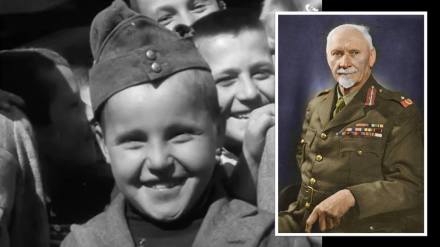
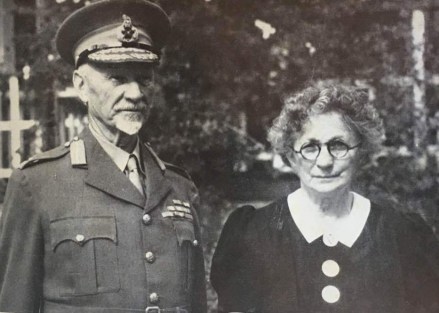
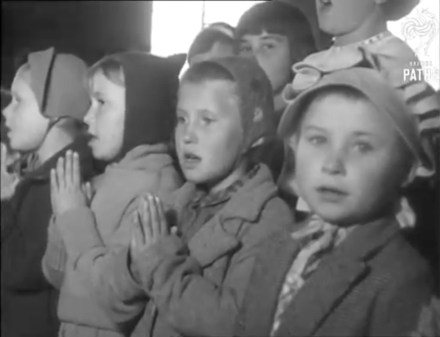
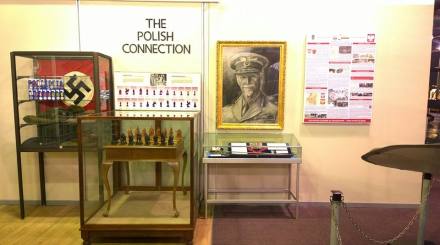
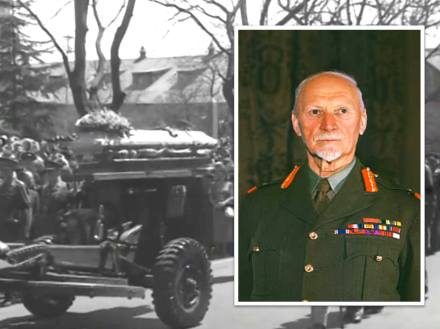
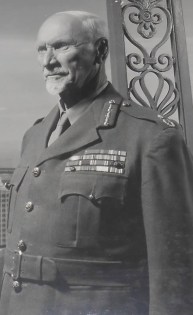 There are still a handful of conservative ‘Afrikaner nationalist’ white people in South Africa who would still toe the old Nationalist line on Smuts, that he was a ‘verraaier’ – a traitor to his people, his death welcomed. However, little do they know that many of the old Nationalist architects of Apartheid held Smuts in very high regard.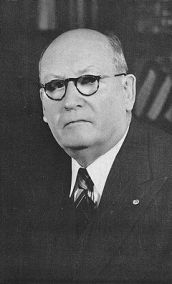
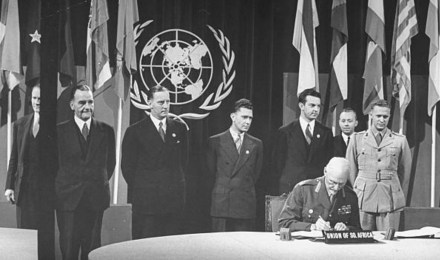
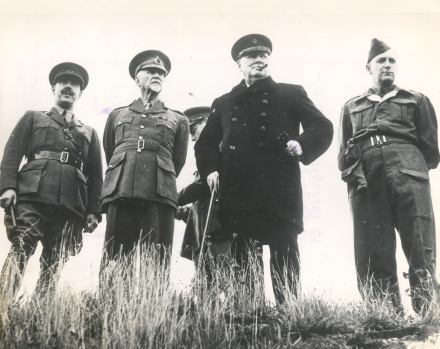
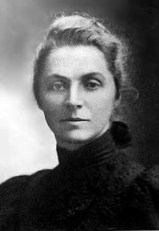
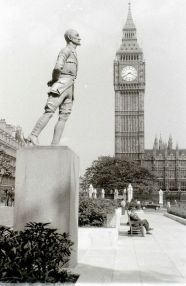 Smuts was honoured by many countries and on many occasions, as a standout Smuts was the first Prime Minister of a Commonwealth country (any country for that matter) to address both sitting Houses of the British Parliament – the Commons and the Lords during World War 2. To which he received a standing ovation from both houses.
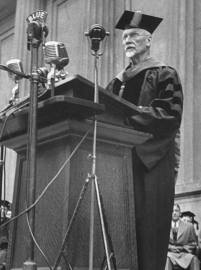 Whilst studying law at Christ’s College at Cambridge University, he was rated as one of the top three students they have ever had (Christ’s College is nearly 600-year-old). The other two were John Milton and Charles Darwin.

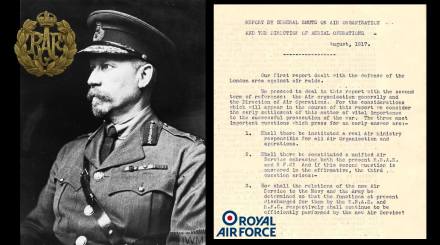
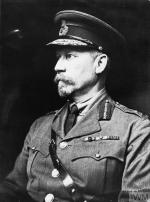


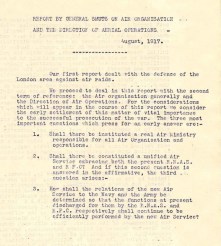 However it was ‘Smuts report’ of August 1917 in response to the second of these questions that led to the recommendation to establish a separate Air Service. In making his recommendations Smuts commented that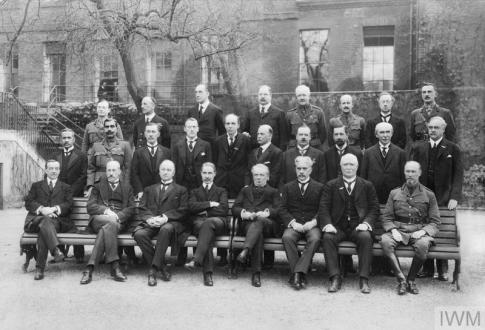
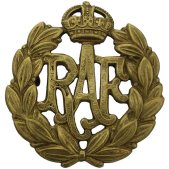
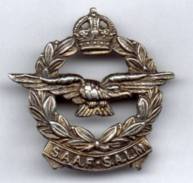
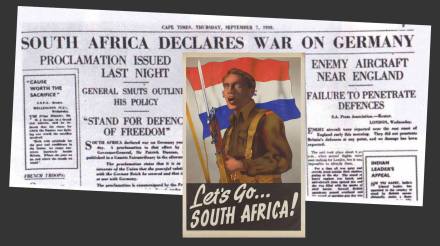


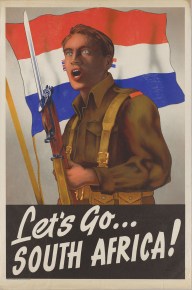 On the eve of World War II the Union of South Africa found itself in a unique political and military quandary. Though closely allied with Great Britain as a co-equal Dominion under the 1931 Statute of Westminster with the British king as its head of state, South Africa had as its Prime Minister on 1 September 1939 Barry Hertzog, the leader of the pro-Afrikaner anti-British National party that had joined in a unity government as the United Party.
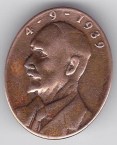 To celebrate Smut’s victory in Parliament that day a special button/lapel badge was made inscribed with 4-9-1939 for the party faithful.
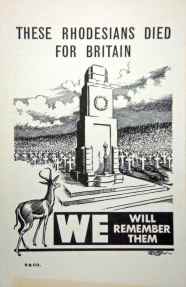 A very interesting part of the sequences of declarations of war against Germany, was that of Southern Rhodesia (now Zimbabwe), and it stands out as a unique one. The Southern Rhodesian government almost immediately followed the British declaration of war with their own. They can even be said to hold the mantle as the very first of the British Dominions and Colonies to stand by Britain in their hour of need. Steadfast and swift in support of their ‘motherland’ – The United Kingdom, no quibble about it either, as there was no long parliamentary debate over the issue – it came without even a second thought on the matter. In all 26 000 Rhodesians volunteered to fight during World War 2.
 In terms of the semantics of the ‘term ‘standing alone’ after Dunkirk, in many cases the Commonwealth countries did not have immediate operational readiness to come alongside the UK in the summer of 1940. However we must remember that the Battle of Britain (when Britain really ‘stood alone’) was an air battle, where a ‘few’ pilots held off the German assault – and alongside the 2353 British pilots stood 574 pilots from other countries – 24%, – a quarter of the combat force. Most of them came from the Commonwealth countries (342 pilots in total including Rhodesians and South Africans). So Britain never really ‘stood alone’ in that context either.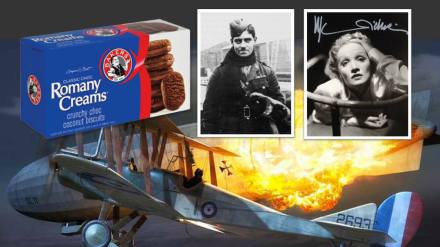
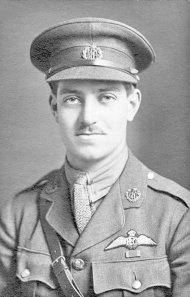
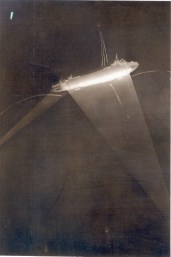
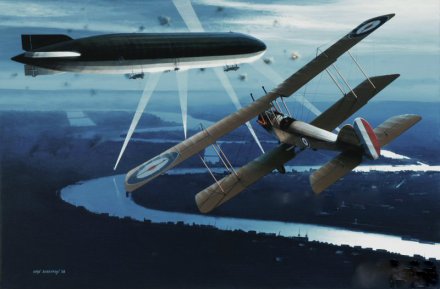
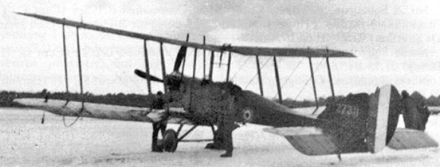
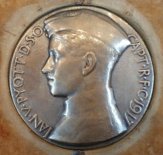 Such a big deal was made of this victory, that a special commemorative coin was even stamped to celebrate Capt. Pyott’s actions and resultant DSO. Zeppelins were so feared by the British public they were branded ‘Baby Killers’ as the bombing of civilians carried with it such a public outrage. The commemorative medal carried Capt Ian Pyott’s profile, the year and the letters DSO, it was presented to him at Hendon Aerodrome in England by none other than General Jan Smuts.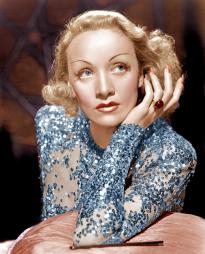
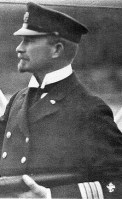
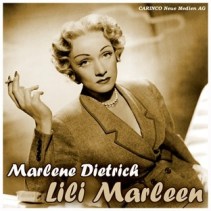 Especially for the South Africans, The song was published in South Africa in a wartime leaflet, with an anonymous English translation, as ‘Lili Marleen: The Theme Song of the Eighth Army and the South African 6th Armoured Division’ (quite ironically).
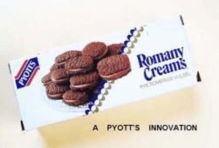 Innovative as ever, the biscuit part was shaped the same as for “Gypsy Creams”, but the biscuit part (referred to as the shell) was improved and it was sandwiched with a chocolate filling instead, no doubt provided by Cadbury’s Chocolates.
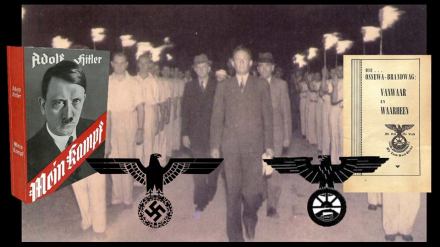
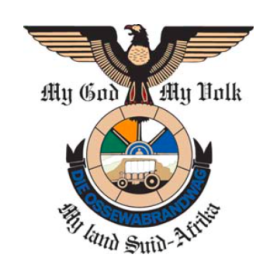
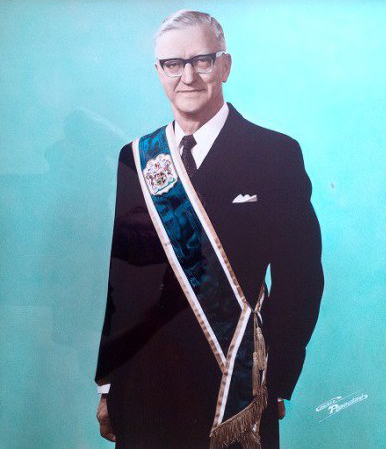
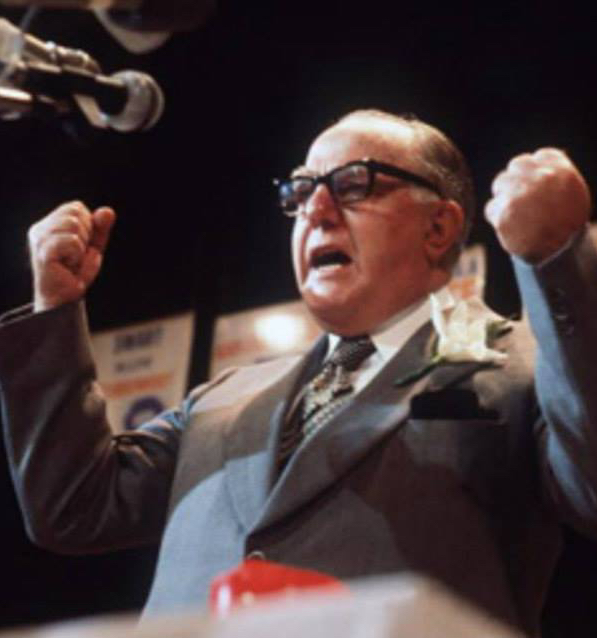


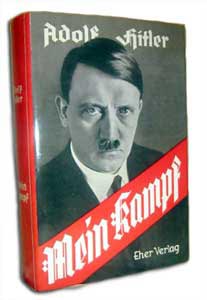
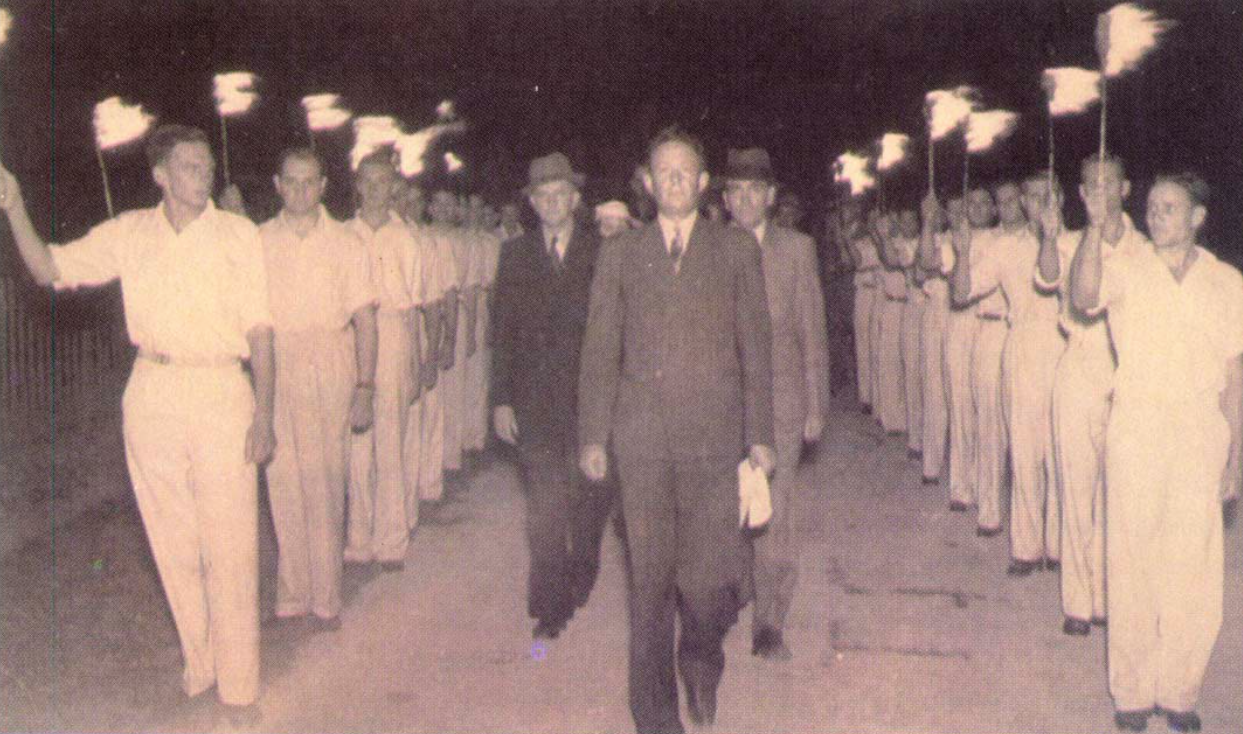
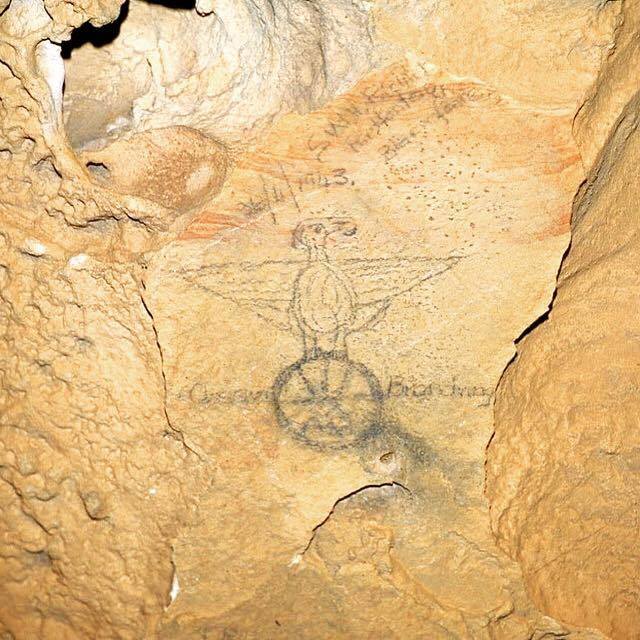

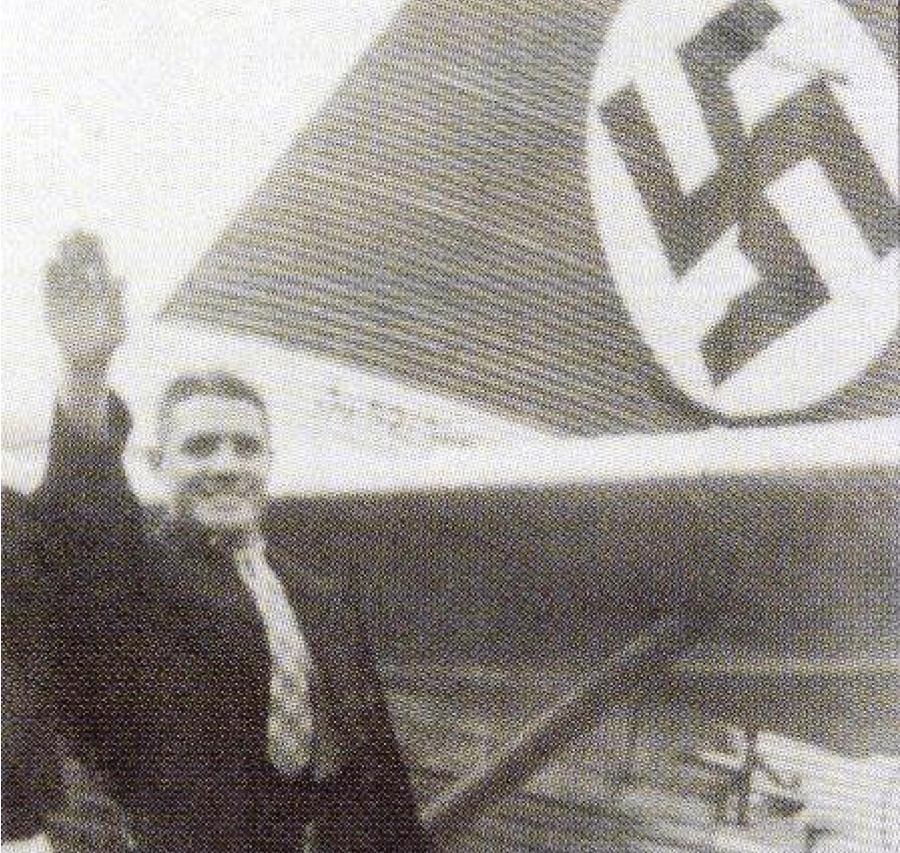
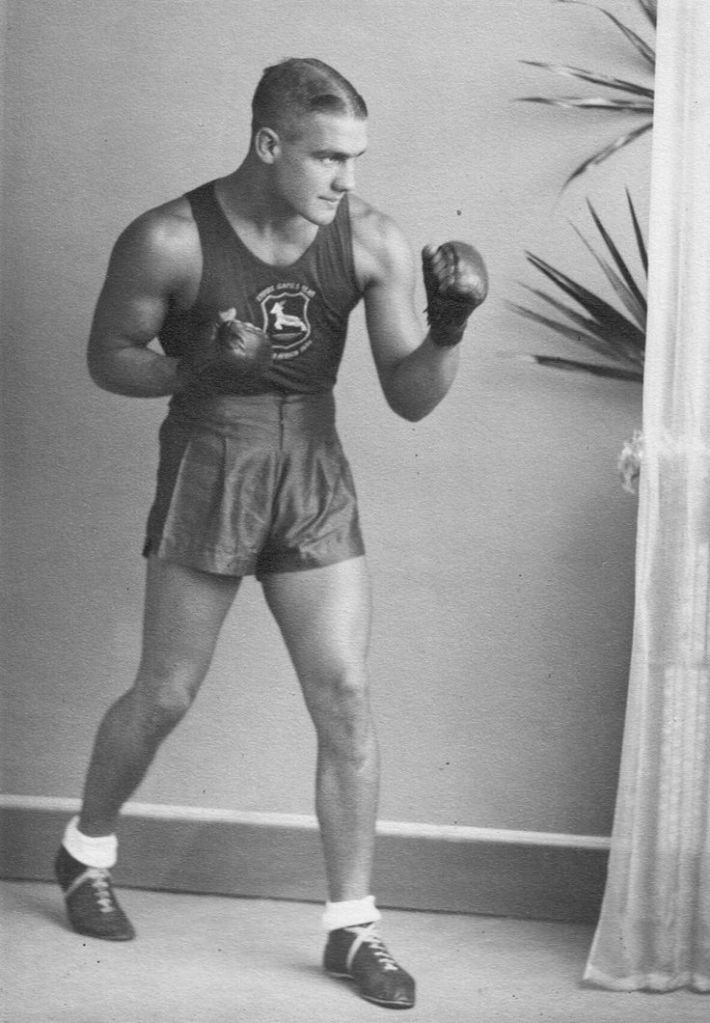

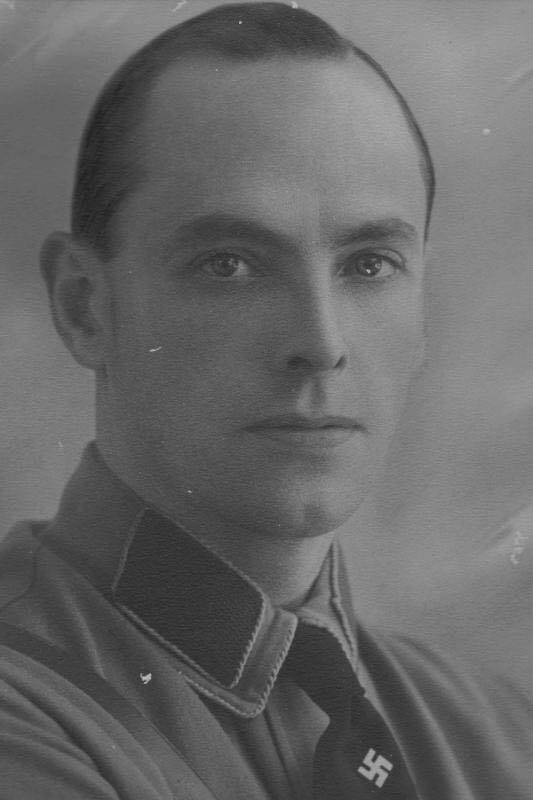


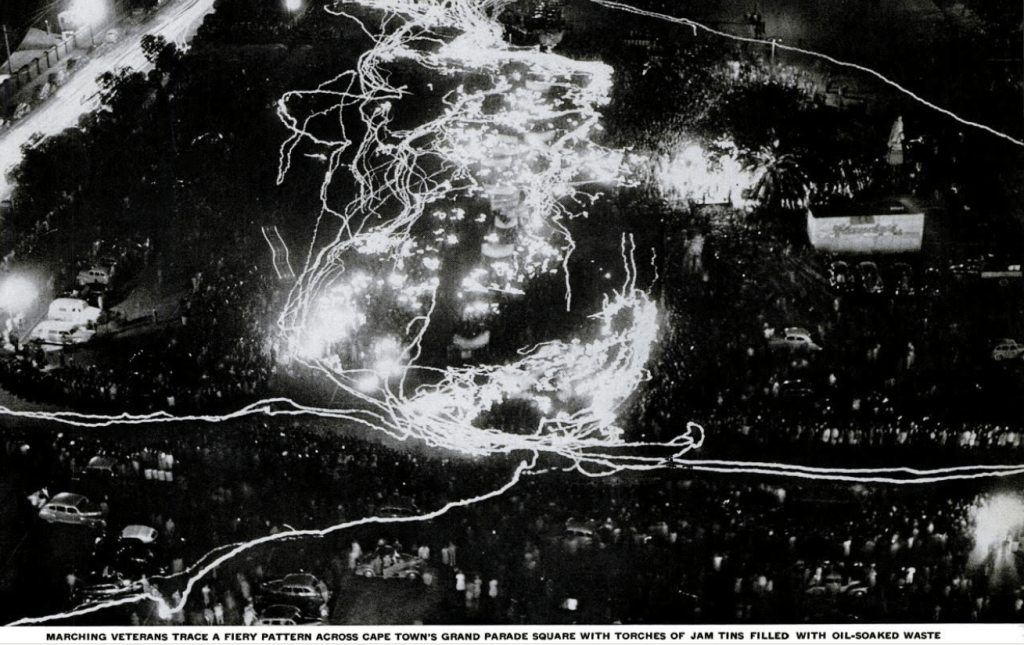
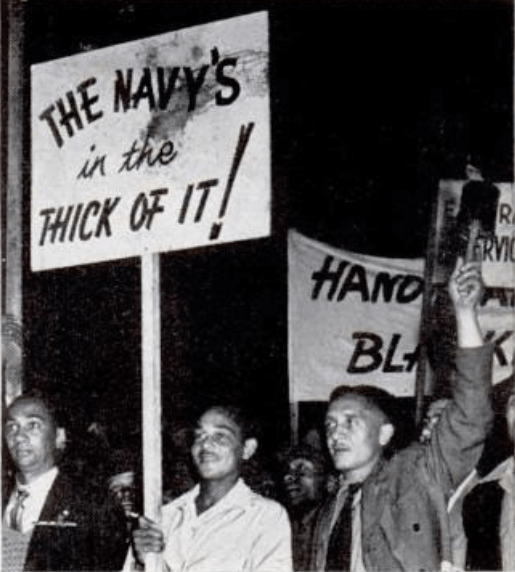


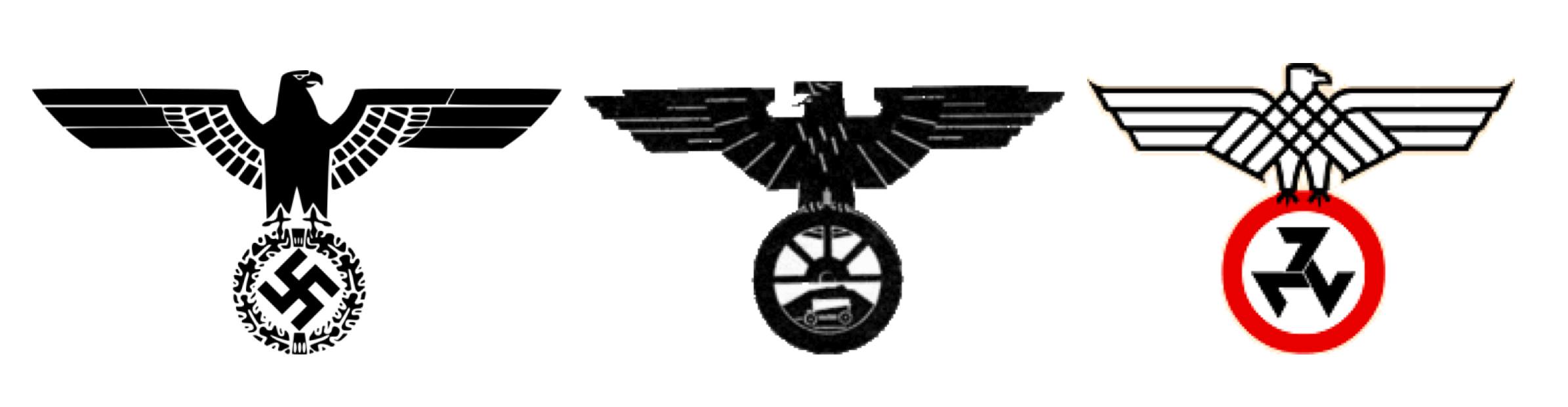
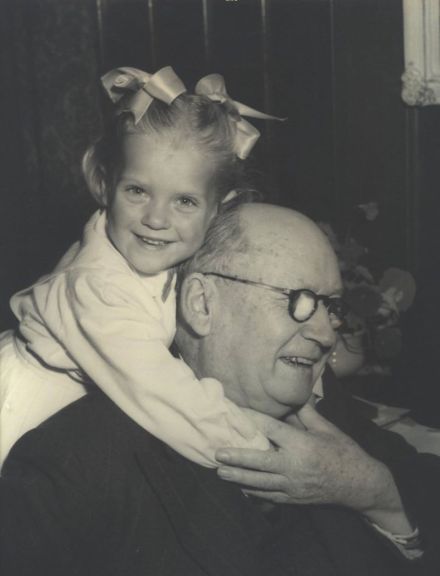
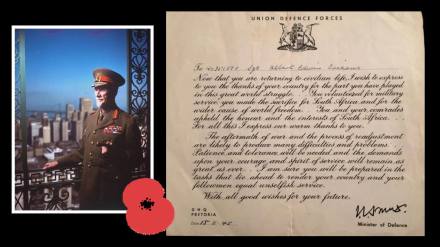
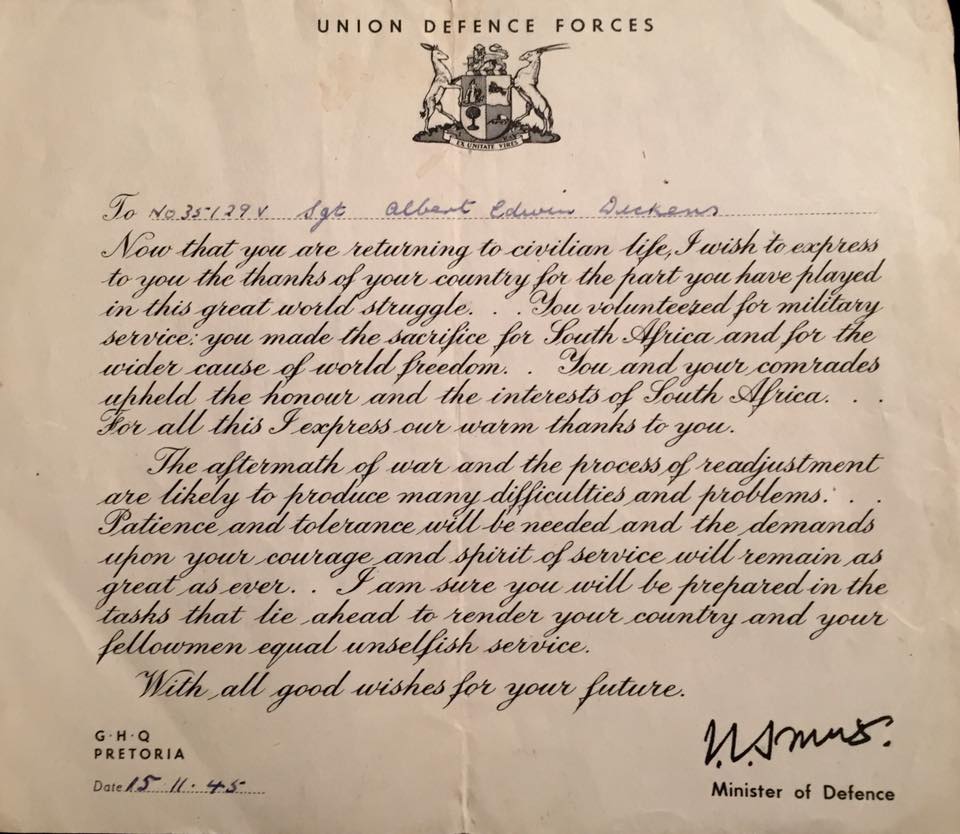
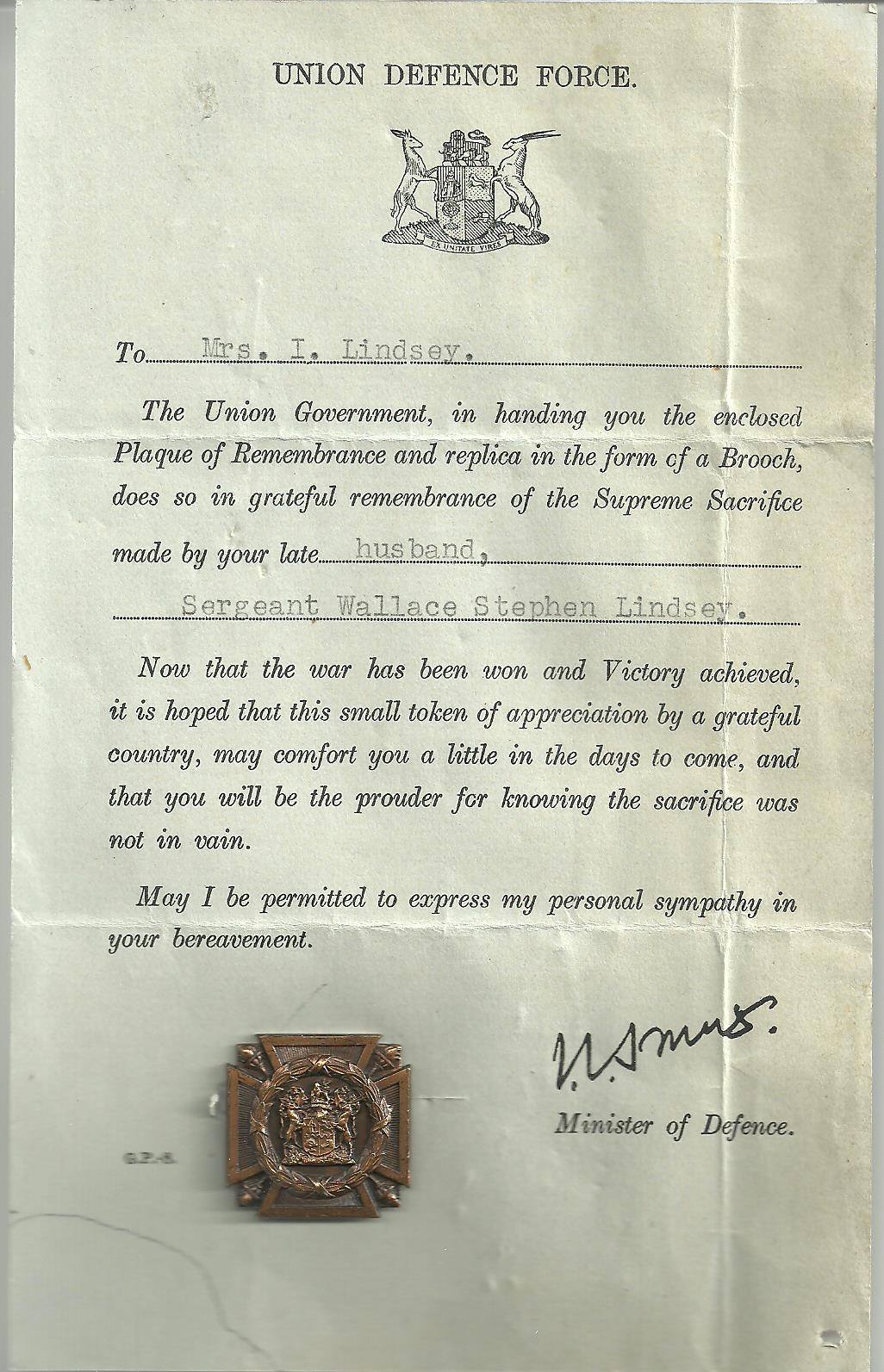


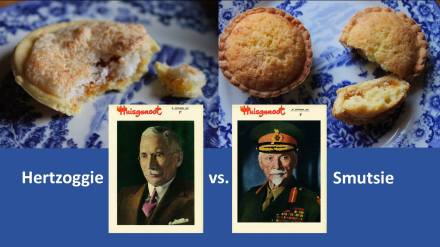
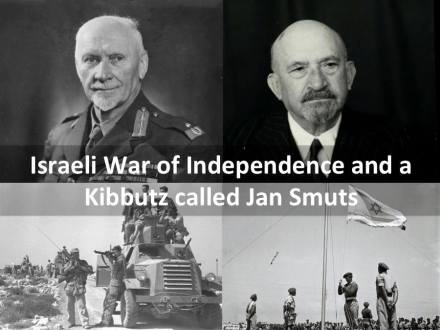
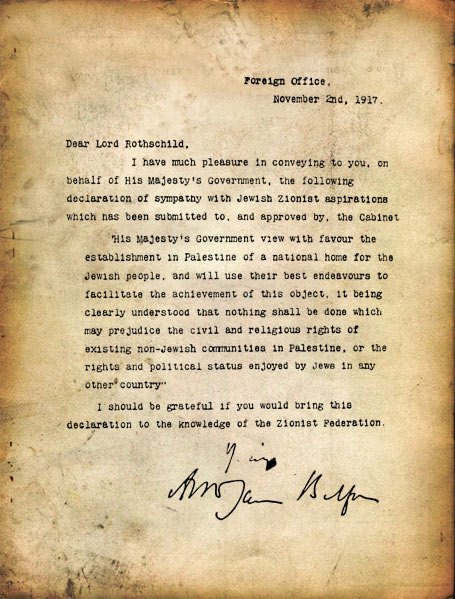


 The Observation Post