The Battle of Sidi Rezegh was part of Operation Crusader during World War 2, and one in which there was substantial South African sacrifice and bravery.
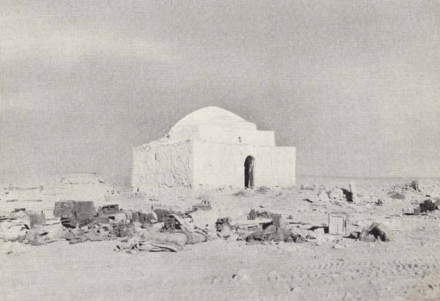
The battle was primarily a clash of armour between Allied (British and Commonwealth) and Axis (German and Italian) forces to try to relive the German Afrika Korp’s siege of Tobruk and took place around a strategic airfield. A feature in the battle was the white tomb of Sidi Rezegh shown here with battle debris around it.
The South Africans fought valiantly in this battle but the losses were incredibly high, the 5th South African Infantry Brigade had gone into this action with a brigade strength of 5,800 and had come out with a strength of under 2,000. The balance had been killed, wounded or taken prisoner.
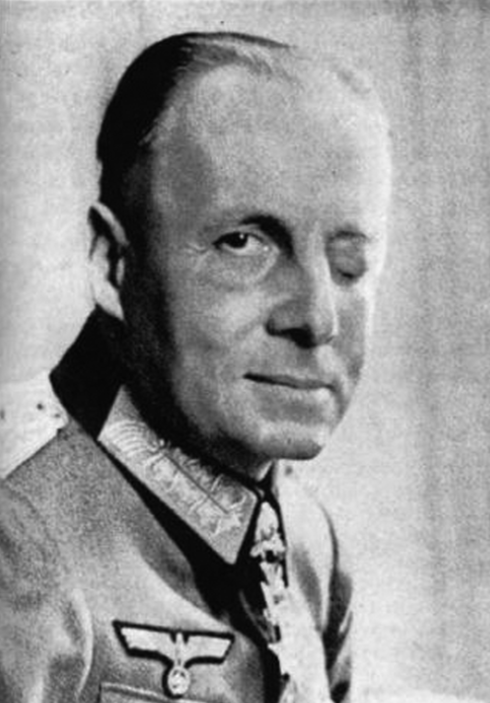
The German General, Rommel attacked with 15th and 21st Panzer Divisions (battle tank and armoured divisions) and captured the airfield located there. Fighting was desperate and gallant, The fighting at Sidi Rezegh continued through 22 November 1941, with South African Division’s 5th Infantry Brigade by that time engaged to the south of the airfield. An attempt to recapture it failed and the Axis counter-offensive began to gain momentum.
.
The most memorable action during the North African campaign of the 3rd Field Regiment, (Transvaal Horse Artillery) was during the battle of Sidi Rezegh on 23 November 1941. The South Africans were surrounded on all sides by German armour and artillery, subjected to a continuous barrage. They tried to take cover in shallow slit trenches. In many places the South African soldiers could only dig down to around 9 inches [23 cm] deep due to the solid limestone underneath their positions.
The Transvaal Horse Artillery engaged German tanks from the 15th and 21st Panzer divisions, the gunners firing over open sights as they were overrun. This continued until many of the officers were dead and the gunners had run out of ammunition.
Many of the gun crews were captured. As darkness fell, those that could escaped back to Allied lines under cover of darkness. The artillerymen of the 3rd Field Regiment managed to save 5 of their 24 guns from the battlefield. They later recovered a further 7 guns.
Although initially a German success, this battle ultimately proved disastrous for the German Afrika Korps as they lost 72 of their tanks to the hard fought attrition and resistance of the Allies and especially the South African forces and this would ultimately turn the tide of the North African theatre of operations to the Allies.
This is summed up best after the battle of Sidi Rezegh by Acting Lieutenant General Sir Charles Willoughby Moke Norrie stated that the South African’s “sacrifice resulted in the turning point of the battle, giving the Allies the upper hand in North Africa at that time”.
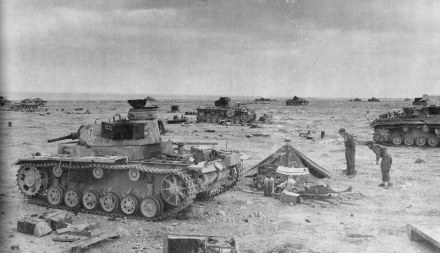
The image below shows a Afrika Korps tanks and armoured vehicles burning in the assault by the 15th Panzer Division (8th Panzer Regiment) in November 1941.
The images below show some of the South African involved – left to right Lt Col Ian Buchan ‘Tiger’ Whyte, DC, and a captain of the 3rd Field Regiment (THA) pose in front of some of the 32 German tanks knocked out by their guns at Sidi Rezegh on 23 November 1941, secondly Some South African survivors of Sidi Rezegh, members of what remained of the 3rd Field Regiment (THA) being returned to Mersa Matruh in Egypt to be re-formed as a fighting unit and finally a South African Machine Gun Platoon 27 Battalion At Sidi Rezegh
The featured image shows a Afrika Korps work shop which was overrun at Sidi Rezegh: South African War Museum as published in: Klein, Harry Lt-Col (1946). Springbok Record.
Researched by Peter Dickens. References – Wikipedia and the Military History Journal Vol 14 No 5 – June 2009 Sidi Rezegh : Reminiscences of the late Gunner Cyril Herbert Glass, 143458, 3rd Field Regiment (Transvaal Horse Artillery)
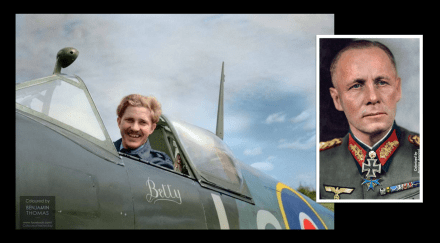
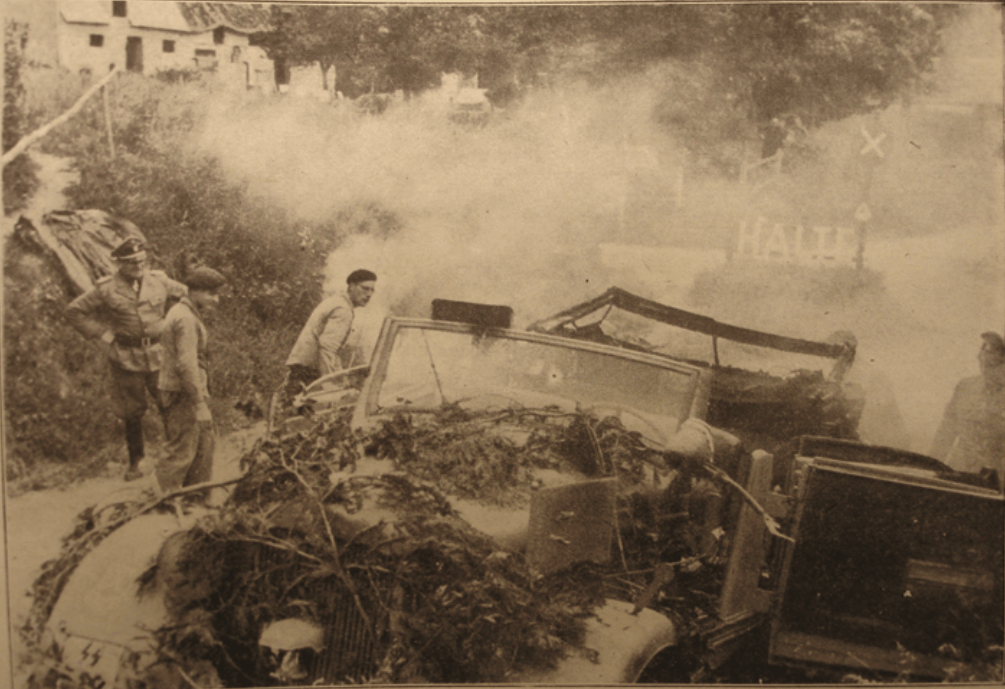
This South African fighter pilot ace shot up the famous General Erwin Rommel’s staff car in France in 1944. Rommel was thrown out of the car, suffered a severe skull fracture and it was effectively game over for Rommel’s participation in World War 2.
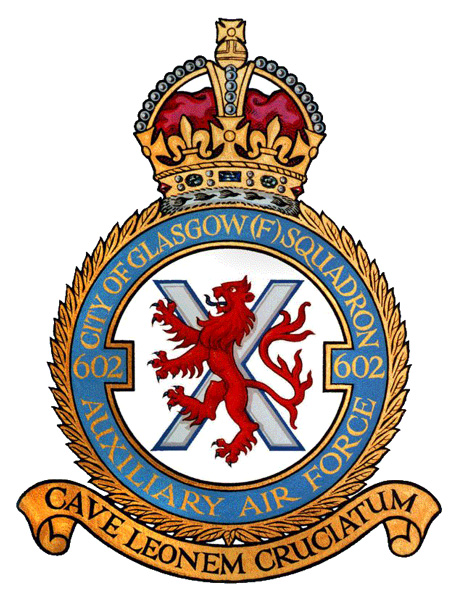
Here is our hero, and there is more to this ace than shooting up Rommel. Squadron Leader J J Le Roux, Commanding Officer of No 602 Squadron Royal Air Force seen in the cockpit of his Supermarine Spitfire Mark IX, “Betty”, at B11/Longues, Normandy.
Johannes Jacobus “Chris” Le Roux was born in Heidelberg, in the Transvaal, South Africa, in 1920, and received part of his education at Durban High School. He subsequently joined the Royal Air Force, and served with No 73 Squadron in France as part of the Advanced Air Striking Force (AASF), where he too part in the latter stages of the debacle that was “The Battle of France”, the squadron withdrawing from France on the 17 June 1940.
Le Roux was then took part in the Battle of Britain, both opening his account on arial victories and having to bale out of a blazing Hurricane. Le Roux is said to have been shot down on no-less than 12 occasions during 1940, which is incredibly remarkable, and if so, it’s a wonder he survived as long as he did.
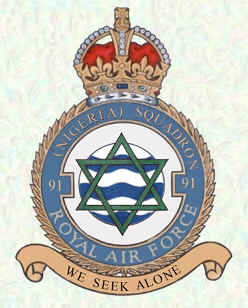
Le Roux enjoyed better luck with No. 91 “Nigeria” Squadron in 1941 and 1942, shooting down eight enemy aircraft before joining No. 111 Squadron RAF in North Africa. He ended his second tour in command of the Squadron.
Following a rest from operations he was given command of No. 602 Squadron in July 1944. He carried out an incredible number of sorties – 200 in total. He won the Distinguished Flying Cross – not once but three times, here are the citations:
DFC, London Gazette, 4 October 1941, Issue 35312, page 6034:
“Acting Flight Lieutenant Jacobus Johannes Le Roux (42240), No. 91 Squadron.
This officer has carried out over 200 operational sorties which have included shipping reconnaissances, during which much valuable information has been obtained, and numerous attacks on shipping and enemy aerodromes in the face of heavy enemy fire. Flight Lieutenant Le Roux has destroyed 3 hostile aircraft in combat and at least 1 on the ground.”
First Bar to DFC, London Gazette, 8 December 1942 (Issue 35819, page 5391):
“Flight Lieutenant Jacobus Johannes LE Roux, D.F.C. (42240), No. 91 Squadron.
Since being awarded the Distinguished Flying Cross this officer has destroyed a further five enemy aircraft. In addition to his air victories he has attacked shipping and targets on the ground with considerable success. At all times Flight Lieutenant Le Roux has displayed a fine fighting spirit.”
Awarded 9th July 1943 Citation:
“Sqn. Ldr. Le Roux’s magnificent leadership has played a large part in the many successes attained by his squadron. He has personally destroyed 14 enemy aircraft and damaged many others, and has also inflicted much damage on enemy shipping.”
On one occasion Le Roux’s aircraft was “so badly damaged by flak after he had strafed a convoy of vehicles that it looked impossible for anyone to have flown it, but he made base successfully”. To the airmen of 602 Squadron he was known simply as the “Boss” , “in the air a cool, calculating tactician and disciplinarian, on the ground his personality shone out in the social life of a very happy team”, and his “keen vision frequently enabled him to shoot down aircraft which other members of the squadron flying with him had not even seen” (an attribute he shared with fellow South African RAF air-aces “Sailor” Malan and “Pat” Pattle).
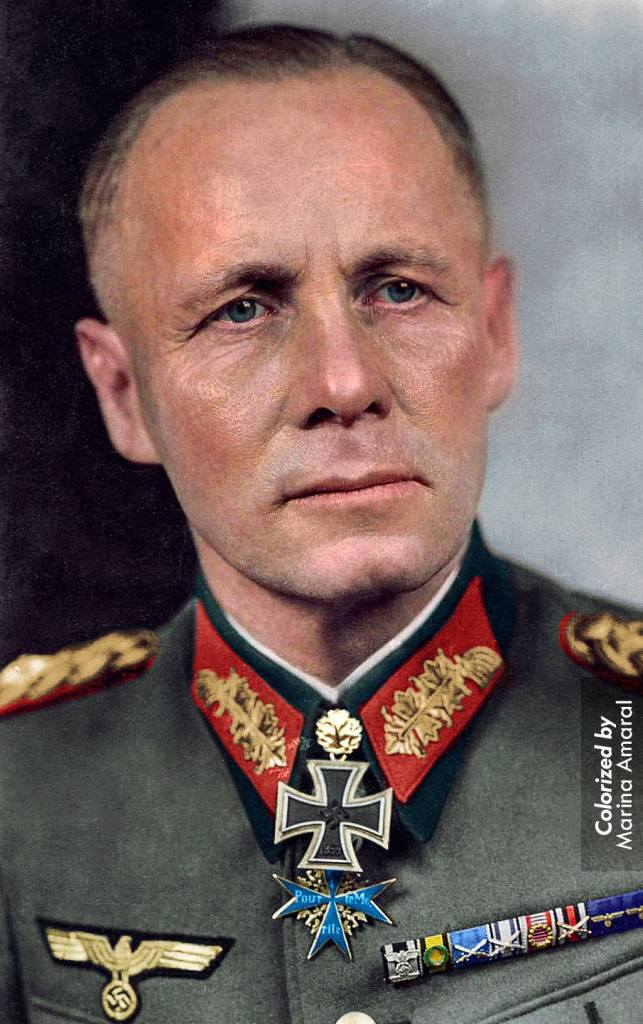
Le Roux is generally credited as the pilot who attacked and badly wounded Generalfeldmarschall Erwin Rommel in his staff car on the road between Livarot and Vimoutiers on 17 July 1944, the day on which he also destroyed two Messerschmitt Bf 109s and damaged two more to bring his victory score to 23.5.
In the early morning of July 17, 1944, a staff car left Rommel’s headquarters at La Roche Guyon. The passengers included Rommel, his aide Captain Helmuth Lang, Major Neuhaus, Sergeant Holke, and their driver, Sergeant Karl Daniel. The journey was one of Rommel’s routine inspections of the front line. By January 1944, Hitler had forbidden Rommel from traveling via aircraft, as several high-ranking officers had been killed in air crashes.
It was unfortunately an air accident that would end the young life of J.J. Le Roux, during a fateful cross-channel flight on 29 August 1944, whilst doing a ‘booze run’ – taking alcohol back to his squadron at Tangmere – that he crashed into the channel in bad weather. According to Paddy Barthropp, ‘Chris’ Le Roux was without a dinghy and was sitting on numerous bottles of champagne, which do not float. It was indeed a tragic end to one of South Africa’s most popular and gallant fighter pilots.
His cheerful and very happy disposition made him one of South Africa’s most popular fighter pilots, and this is seen in No.111 Squadron Operations Record Book which contains the following reference to him, it relating the story of his having made a good landing in very dirty weather and the mud described earlier, and finishes up: “I didn’t realise I was down until I heard the ground crew clapping!” He was a very worthy member of “the gayest (happiest) company who ever fired their guns in anger.”
Le Roux left behind an English wife and two children, at the time resident in Shropshire.
—————————————-
Photo and caption reference copyright: Imperial War Museum, Wikipedia and The Southern African History Musings of Ross Dix-Peek and Field Marshal Erwin Rommel: the head injury that may have prolonged the Second World War – Heather A. Fuhrman, BS,1 Jeffrey P. Mullin, MD, MBA,2 and Chris A. Sloffer, MD, MBA.
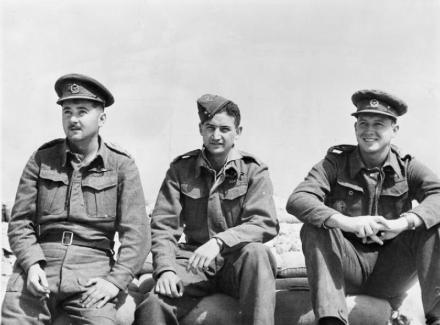
Now this is a unique and rather sad photograph. Three of South Africa’s most legendary fighter pilots in the North African theatre of operations during WW2, all of which were ultimately killed in action. Major J E “Jack” Frost, Commanding Officer of No. 5 Squadron SAAF sits between two of his most experienced pilots, Lieutenant Robin Pare (left) and Captain Andrew Duncan, at LG 121, Egypt.
“Jack” Frost joined No. 3 Squadron SAAF as a flight commander in 1940, having been a member of the South African Permanent Force for five years. He saw considerable action in Somaliland and Ethiopia, scoring a number of victories over Italian aircraft, before he was evacuated in May 1941 with acute appendicitis.
On his recovery he was appointed to command 5 Squadron, leading them to Egypt in early 1942 and through the heavy air fighting during the Battle of Gazala in May and June. Although Frost was posted to the staff of No. 233 Wing on 31 May, he resumed command the Squadron when his successor, Captain (now Major) Andrew Duncan, was killed that same day. Jack Frost in turn was shot down and killed over El Adem by German fighters on 16 June.
He was an outstanding pilot and leader, and remains the SAAF’s top scorer with 16 aerial victories.
Robin Pare, also a member of the South African Permanent Force, was commissioned in the SAAF in April 1940 and posted to No. 1 Squadron SAAF, seeing action over East Africa until April 1941. After a period as an instructor in the Union, he joined 5 Squadron in December 1941. He was promoted commander of ‘B’ Flight on 31 May 1942, but was shot down and killed by Oberleutnant Hans-Joachim Marseille of I/JG27 near Bir Hacheim on 3 June, just after scoring his sixth victory.
Andrew Duncan was the son of the Governor-General of South Africa, Sir Patrick Duncan. After qualifying as a pilot with the Active Citizen Force in December 1939, he was posted to No. 1 Squadron SAAF and fought in East Africa. He returned to the Union in April 1941 as a Captain, and joined 5 Squadron in June as commander of ‘A’ Flight. Duncan succeeded “Jack” Frost as the Squadron Commander on 31 May, only to be shot down and killed that evening, south of Acroma, after shooting down his sixth victim earlier.
Image copyright – Imperial War Museum Collection Copyright.
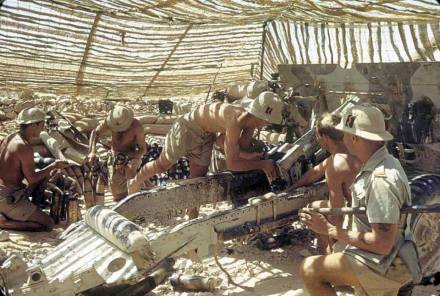
Extremely rare colour image of a South African artillery crew in North Africa during World War 2. Here South African gunners are seen in action with their 25 pounder in the desert.
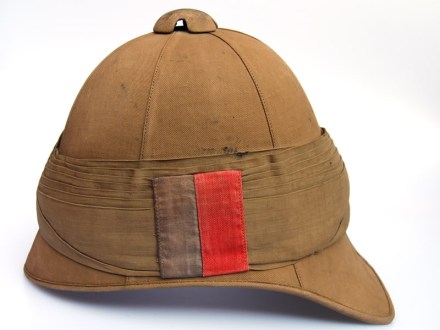
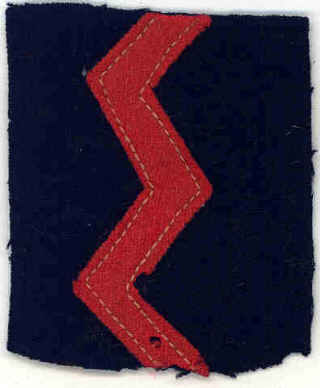
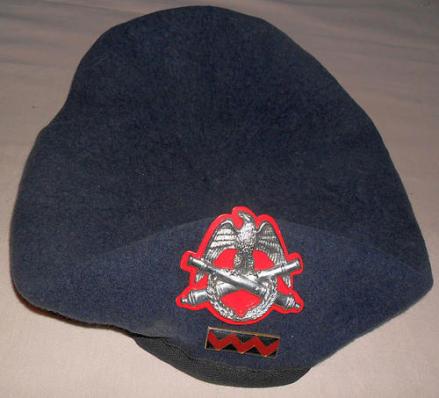
In full colour it is easy to note the Artillery ‘flash’ on the side of their pith helmets – this practice later continued with the use of the beret ‘balkie’ (bar) worn on the beret by the Army to signify corps. The origin of these pith helmet flashes goes back to the Boer War.
Left – Royal Artillery Pith helmet – British Army – Boer War era
Middle – Artillery Pith helmet cloth “flash” of South African Forces in WW2
Right – SADF Artillery School beret during the 1980’s – note the “balkie” or the Beret bar which carries on with the tradition of corps identification on head gear.
Unfortunately the tradition of “beret bars” (balkies) has been discontinued in The South African National Defence Force (across all Corps and not just Artillery) – which is a little sad as a fine and uniquely South African military tradition is no longer followed
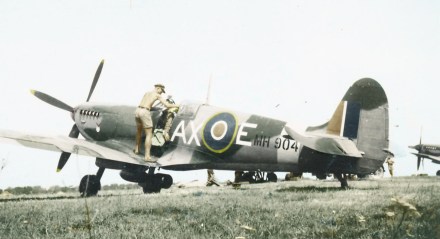
Spitfire Mk IX of South African Air Force’s 1 Squadron preparing for take-off from a Sicilian airfield, perhaps Pachino on 1943, these are the famous “Billy Boys”. How they got their nickname is actually quite interesting and distinctively South African.
This squadron had an incredible success rate and whenever one of it’s pilots had an aerial victory shooting down an enemy aircraft his fellow South African pilots would all shout “Jou BIELIE” down their radios.
The term “bielie” is an Afrikaans term for a prime example e.g. ‘n bielie van ‘n bul, meaning a prime example of a bull. Calling someone “‘n bielie” is a term of recognition of something special. Calling a pilot that after a successful aerial shoot down would have been equal to saying that he is a prime example of a fighter pilot. “Jou bielie van ‘n skut” meaning “you cracking shot”.
The British Royal Air Force pilots who where on the same frequency as the South Africans where slightly perplexed by the term thinking they where calling out “Billy” instead of “Bielie”, so they quickly started to refer to the SAAF 1 Squadron pilots as “Billy Boys”. The nickname stuck.
To give an idea of the success rate 1 SAAF Squadron total for the war was 165.5 kills, the highest scoring SAAF squadron.
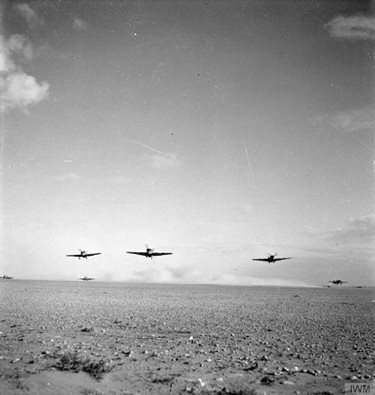
Here are South African Air Force 1 Squadron Hurricanes taking off from Msus, Libya. Image copyright Imperial War Museum.
Feature image of SAAF 1 Squadron Spitfire Mk IX colourised and copyright to Tinus Le Roux
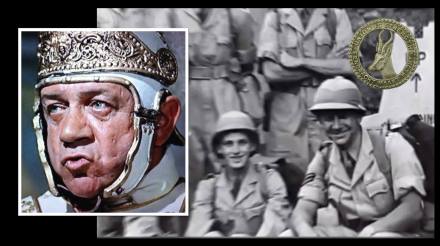
Sid James – was the famous ‘cockney’ Jack the Lad star of the “Carry On” movie series with his legendary trademark ‘naughty’ laugh. He epitomised a London ‘wide-boy’ and exists in British comedy as Super-Star.
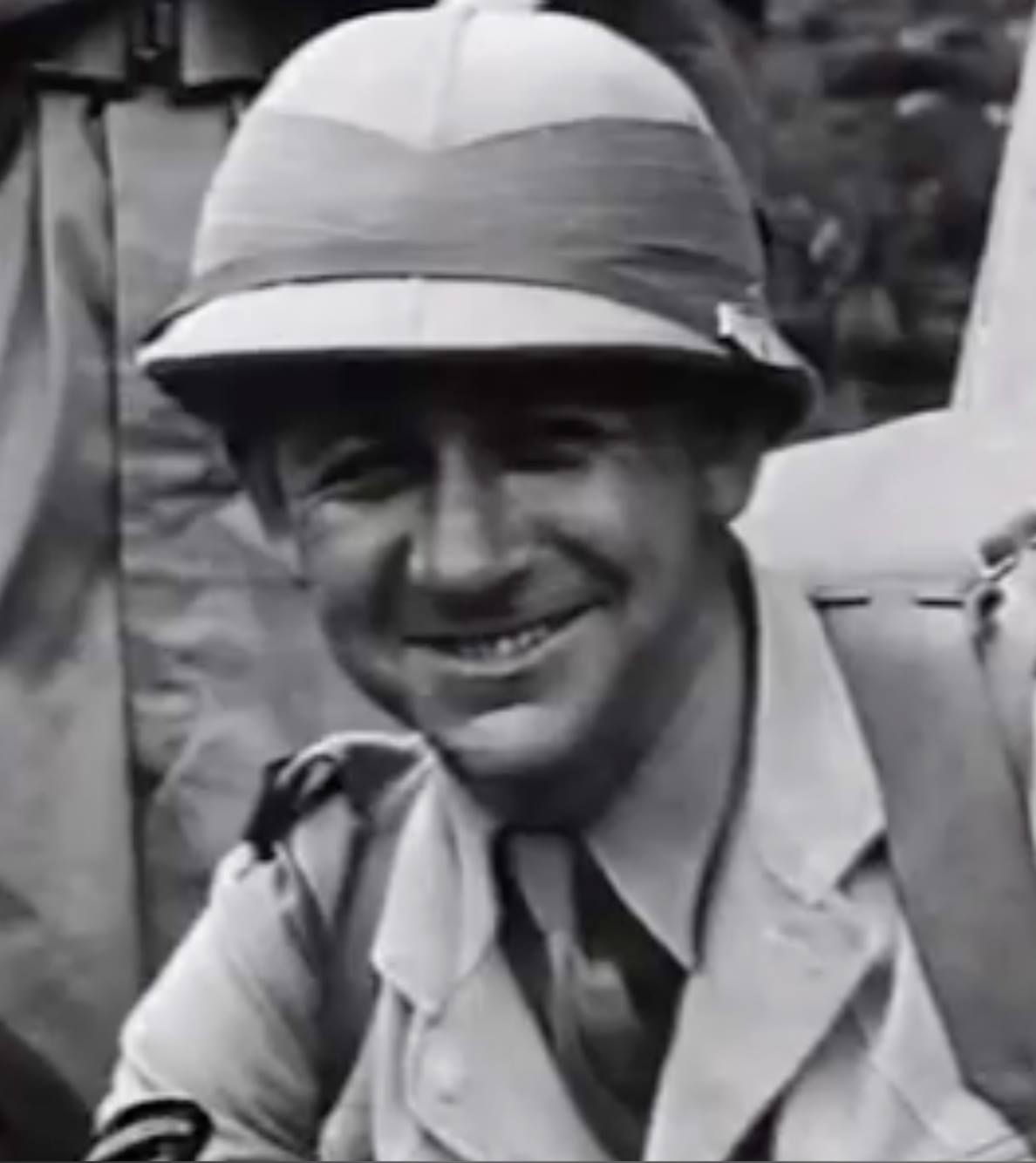
But did you know Sid James was in fact a South African and served in the South African Armed Forces during World War Two?
Not many know this as off-screen Sid was a very private man, and when not in his ‘cockney wide-boy’ character, his South African accent would find its voice.
Sid James was born Solomon Joel Cohen, on 8 May 1913, to Jewish parents, in South Africa, later changing his name to Sidney Joel Cohen, and then Sidney James.
His family lived on Hancock Street in Hillbrow, Johannesburg. Upon moving to Britain later in life, he claimed various previous occupations, including diamond cutter, dance tutor and boxer; in reality he had trained and worked as a hairdresser.
It was at a hairdressing salon in Kroonstad, Orange Free State that he met his first wife. He married Berthe Sadie Delmont, known as Toots, on 12 August 1936 and they had a daughter, Elizabeth, born in 1937. His father-in-law, Joseph Delmont, a Johannesburg businessman, bought a hairdressing salon for James, but within a year he announced that he wanted to become an actor and joined the Johannesburg Repertory Players. Through this group he gained work with the South African Broadcasting Corporation.
Sid’s abandonment of his hairdressing career and then his young bride and child was the last straw for her wealthy father (who apparently ‘put a price’ on our man’s head), so Sid decided to cut his losses and join the army. Sid was never to look back, as when he volunteered to join the South African Army World War 2 had just broken out, and funnily the war aided that aided his emerging career in the performing arts.
After a stationing with the South African Tank Corps in Abysinnia, Sid felt his talents were better used in troop morale, so he joined the Entertainment Unit of The South African Army, he was initially made a corporal and proceeded to put on shows for his fellow troops.
During this time, he was also caught under heavy fire at the notorious ‘Fall of Tobruk’, South Africa’s largest capitulation of arms, he managed to escape Tobruk ahead of Rommel’s forces and was eventually promoted to the rank of Staff Sergeant. Sid was eventually given a commission as a lieutenant in the entertainment unit, and subsequently took up acting as a career.
Around this time he acquired for himself a second wife, another South African – dancer Meg Sergei, and come the war’s end and his demobilisation, the couple’s showbiz ambitions saw them leave their homeland for the glamour of London.
Sid and Meg arrived in the UK on Christmas Day 1946 and, amazingly enough, within days he’d landed himself not just an agent but a small role, the rest is movie and show-biz history.
Ironically Sid died in complete character with his trademark ‘dirty laugh’ at the Empire Theatre on Monday, April 26, 1976. He was appearing in a suitably smutty comedy called ‘The Mating Game’. Sitting next to Sid on the stage was actress Olga Lowe, an old friend from his early days in his native South Africa, and he died of a heart attack staring at her breasts … a “Jack the Lad” to the end.
Written and Researched by Peter Dickens. Reference Wikipedia and The ghost of comic legend Sid James by Ian Robson. Video Clip – YouTube, master image of South African troops in North Africa during World War 2, Imperial War Museum copyright.
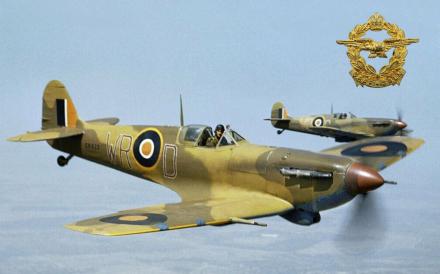
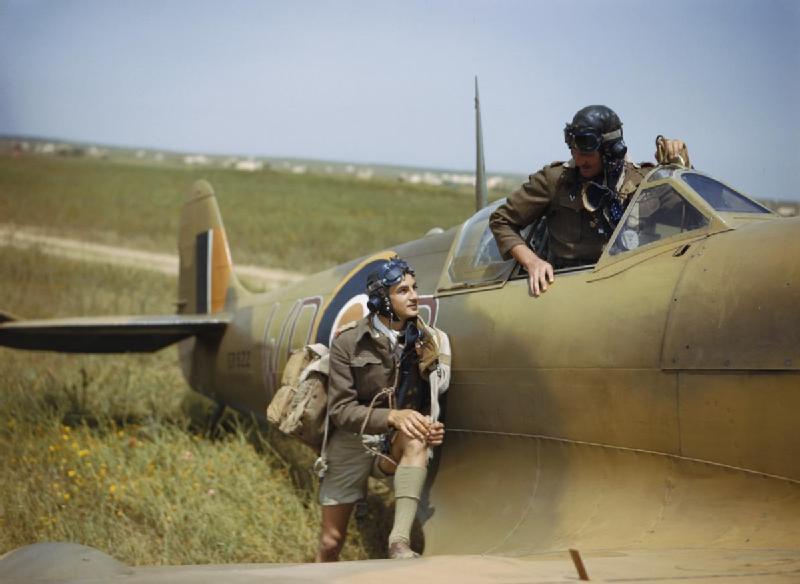
Original colour images of South African Air Force (SAAF) in Gabes in Tunisia April 1943. Here we see a SAAF Supermarine Spitfire pilot of ER622, No 40 Squadron, SAAF as he confers with his ‘No 2’ after landing at Gabes. This original colour image shows off a key identifier that only the South African Air Force squadrons used in the Allied theatre of combat …. ‘Orange’.
Note the distinctive ‘orange’ dot in the rondel identifier of the South African Spitfires, of all the commonwealth and British aircraft used in the north African campaign, the South Africans where the only ones to have the rondel in the colours of the ‘old’ national flag i.e. Orange, White and Blue on all their aircraft.
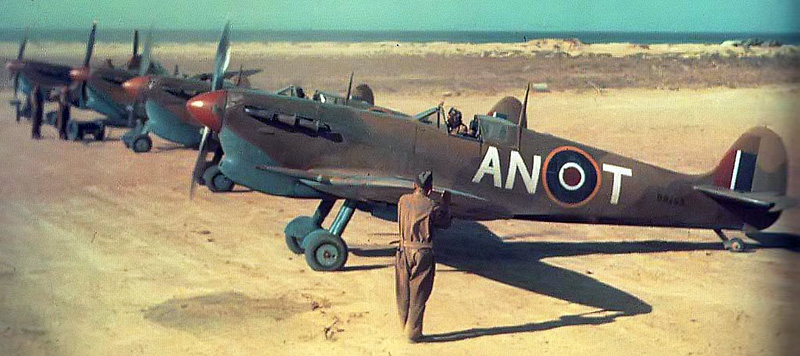
All others, British, Australian, New Zealand and Canadian air forces used a red centre in their roundel identifiers to signify the Union Jack (Flag) of Great Britain i.e Red, White and Blue, as seen in this original colour image below.
Allied Spitfires in Royal Air Force colour scheme, note the Red, White and Blue identifiers
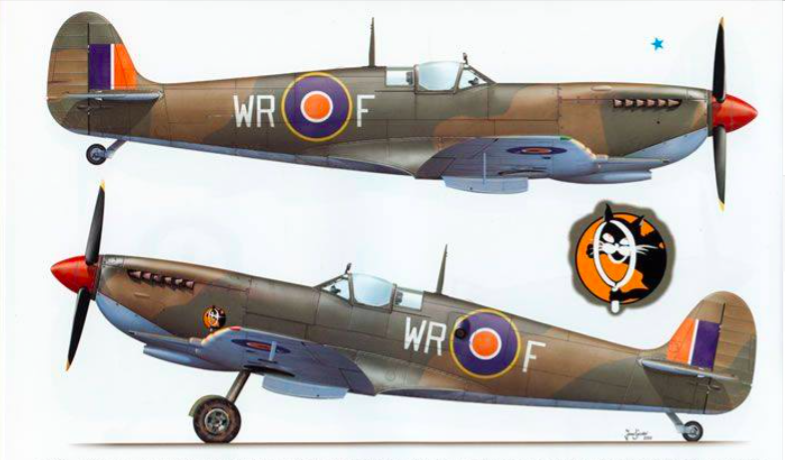
Also note the officers in first photograph are wearing army rank insignia (not air force), another distinctive attribute specific to South Africa at the time. To compare the difference in aircraft identifiers, here is the SAAF scheme, as shown by these SAAF 40 Squadron Spitfires in desert scheme.
This distinctive difference in SAAF identifiers to RAF and other commonwealth county’s identifiers was given the SAAF because of Jan Smuts’ influence in forming both the Royal Air Force as the first independent air force and the South African Air Force as the second oldest independent air force. Also, the SAAF had identified a separate scheme as they were not a ‘Royal’ Air Force – as the RAAF (Royal Australian AF), RNZAF (Royal New Zealand AF) and RCAF (Royal Canadian AF) were.
Squadrons made up of pilots from Allied countries under occupation also flew in the British markings, the difference was a small national identifier usually found on their cowlings, the Dutch 322 Squadron for example used a small Orange triangle and the Poles used a small Red and White square.
A little history of the SAAF Spitfires featured
As the 8th Army advanced through Libya into Tunisia, SAAF No. 40 squadron flew Tactical Reconnaissance (Tac.R) and Photo Reconnaissance sorties in support of ground operations.
SAAF 40 Squadron converted to the Supermarine Spitfire Vb at the end of February 1943. This variant had clipped wingtips to enhance its low-altitude performance, most notably its roll-speed. Sorties now included vertical and oblique photography, battle area Tac.R, target marking for fighter bombers, searches for night bomber targets, and identification of landmarks for day bomber navigation.
In early 1943 the squadron received Artillery Reconnaissance training, however, unreliable radios meant that artillery shoots were not as successful as had been hoped. Nevertheless, the squadron continued to report the activities of enemy artillery.
The month of February is also remembered as the “three ships” month in some small South African military veteran circles. That’s because three of South Africa’s worst military disasters at sea – the SS Mendi (WW1), the SAS President Kruger, and this one the HMSAS Southern Floe (WW2) – all occurred in February.
Much effort by various associations in South Africa is put to remembering the Mendi and the President Kruger, however little regard is given to the SA Navy’s losses in World War 2. Odd considering that during WW2 the most significant number of South Africans were lost at sea, yet scant regard is put to this epoch of the South African Naval sacrifice by way of remembrance and parades.
In all South Africa lost four ships in World War 2, all of them minesweepers, so lets look at the flotilla of South African Navy minesweepers (converted whalers) during World War 2, and the loss of the HMSAS Southern Floe, the first of these four minesweepers to be lost.
A number of whalers were converted to anti submarine roles and commissioned into the South African Navy for service, they were part of the South African Seaward Defence Force anti-submarine flotilla.
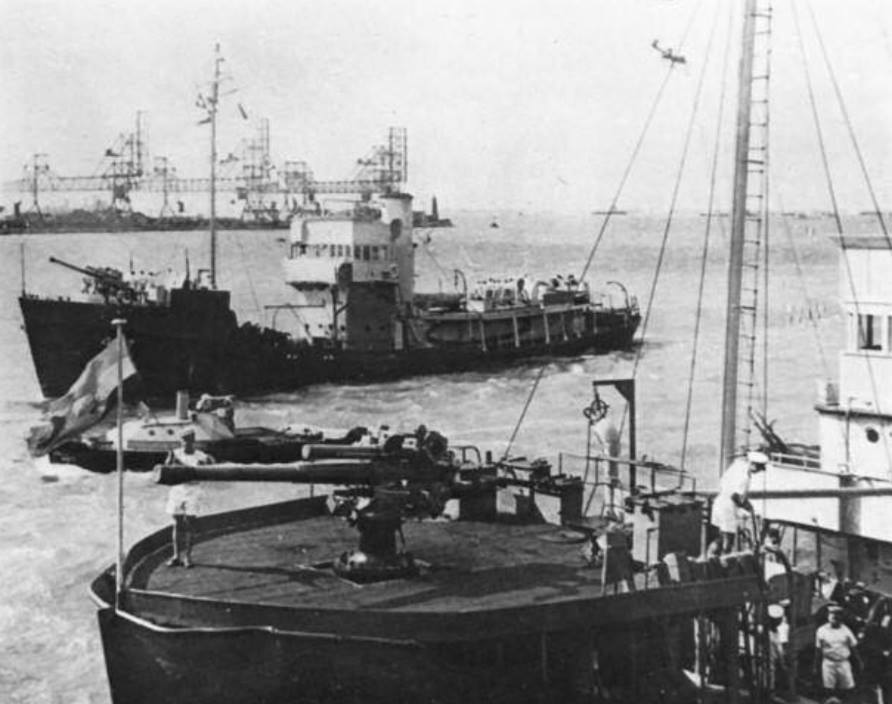
Some of them were sent to the Mediterranean and based at Alexandria, Egypt – the HMSAS Southern Floe, the HMSAS Southern Sea and their sister ship the HMSAS Southern Maid – which is seen in this rare featured photograph in Alexandria Harbour in Egypt (In the foreground is the South African Navy’s HMSAS Protea, a Flower-class corvette).
In 1941 – the HMSAS Southern Floe (Lt J E Lewis) and HMSAS Southern Sea arrived at Tobruk on 31 January 1941 to take over patrol duties from two of their two sister ships.
Although submarines were not a threat in the first six months of the Western Desert campaign, numerous floating mines pointed to the existence of extensive moored mine fields. Except for the sweeping of the narrow coastal traffic route and harbour entrances at this stage there had not yet been time to locate these fields with any accuracy, much less to clear them. The main duty of the two Southerns was alternately to patrol the nearest section of the swept channel and to escort shipping along it. The port at that time was subject to air raids, littered with sunken wrecks and possibly active ground-mines. On patrol, the duties were complicated by sandstorms that strong off-shore winds extended for many miles out to sea, resulting in low visibility, heavy cross-seas, and much discomfort to personnel. To these conditions were added the menace of the mine fields on one side and an ill-defined and unlighted coast on the other.
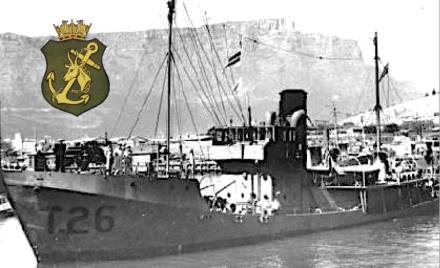
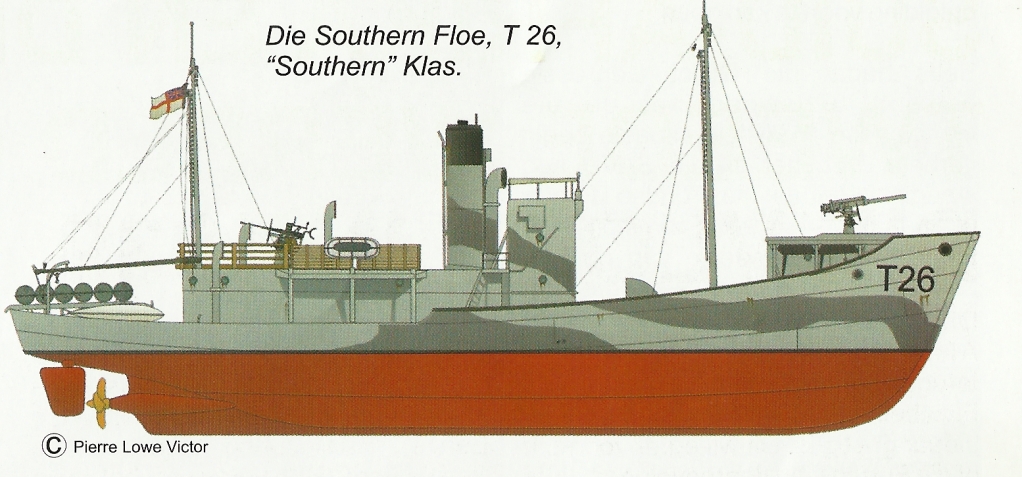
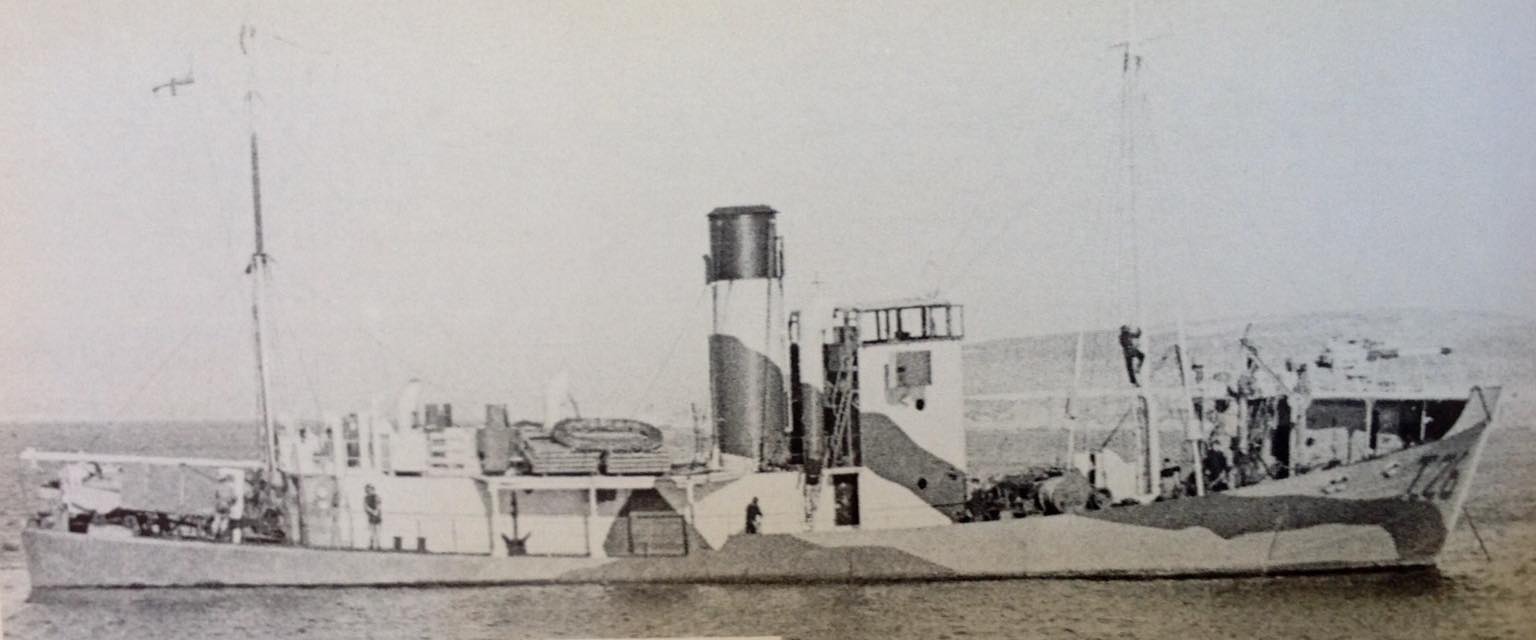
HMSAS Southern Floe T26
On the morning of 11 February Southern Sea arrived at the patrol rendezvous, two miles east of Tobruk, but found no sign of Southern Floe. This was reported but caused no concern at first; it had blown hard enough all night for the ship to find herself far from her station at dawn. However that evening, a passing destroyer picked up one man clinging to some wreckage – all that remained of Southern Floe and her company.
This sole survivor was Leading Stoker C J Jones, RNVR (SA), lent from HMS Gloucester to fill a vacancy just before Southern Floe sailed from Alexandria. The HMS Gloucester had a large contingent of South African Naval Force on it and was to be lost later in the war (see Observation Post A “grievous error”; Recounting South African Sacrifice on the HMS Gloucester).
Jones was almost insensible after 14 hours in the water, but afterwards stated that he had been in the stokehold when, at about 04:00 there had been a heavy explosion and the ship had filled rapidly. In the darkness, he had found his way into the flooded engine-room and struggled out through the skylight as the ship sank. He had seen a few other persons in the water at that time and later had done his best to support a wounded man. In the absence of other evidence there is little doubt that a mine, either floating or moored, was the cause.
The loss of the ship, although but a trivial incident in a world war, came as a sudden and grievous blow to the flotilla and to the SDF. The ships had spent a barely one month on the station and at home few were aware that they had arrived and had been in action. The casualties were the first naval losses suffered by the South African Seaward Defence Force and the sense of loss in the service was profound.
A relic of Southern Floe was brought to South Africa long after, in the form of a small brass ship’s badge, found amidst the other debris of battle 70 miles inland from Benghazi. Supposedly it had floated ashore, attached to a wooden fragment of the ship’s bridge, and been carried thence by an Italian souvenir-hunter.
After the war Stoker Jones, the sole survivor placed a memorial notice in the Cape Town newspapers. He continued to do this for many years until he also passed away.
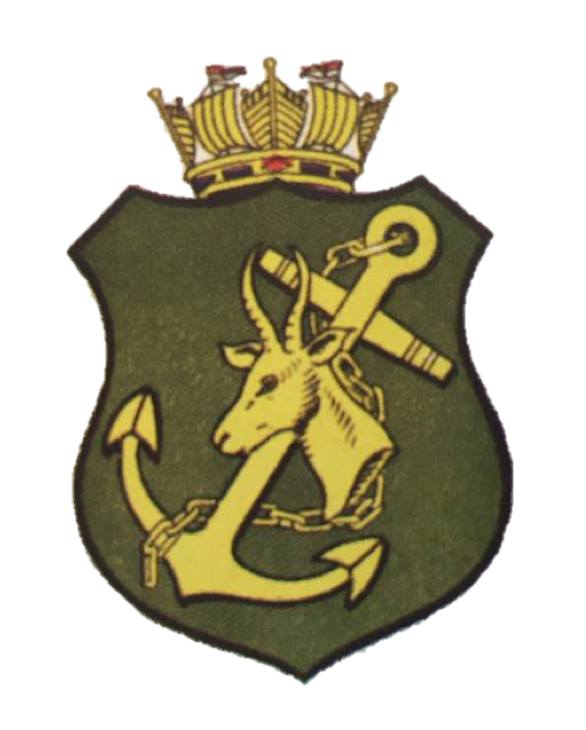
We salute these brave South Africans – here is the honour roll for the HMSAS Southern Floe (MPK means “Missing Presumed Killed”).
ANDERS, John, Steward, 69637 (SANF), MPK
BOWER, Robert, Stoker 1c, 69935 (SANF), MPK
BRAND, Leslie A, Able Seaman, 69828 (SANF), MPK
CAULFIELD, Patrick, Steward, 69802 (SANF), MPK
CHANDLER, Charles R D, Cook (S), 69613 (SANF), MPK
CHENOWETH, Richard, Stoker 1c, 67420 (SANF), MPK
FAIRLEY, Alexander E, Sub Lieutenant SANF, MPK
FRIEDLANDER, Cecil A, Able Seaman, 114703 (SANF), MPK
GARDINER, Elliott, Able Seaman, 67260 (SANF), MPK
GREENACRE, John H, Leading Seaman, 69677 (SANF), MPK
HEASMAN, Gratwicke E E, Engine Room Artificer 4c, 69784 (SANF), MPK
HOGG, Roy S, Sub Lieutenant, SANF, MPK
INNES, Ian Mck, Sub Lieutenant, SANF, MPK
LEWIS, John Edward Joseph, :Lieutenant, 70019 (SANF), MPK
MARSH, Reginald H Y, Able Seaman, 69911 (SANF), MPK
MITCHELL, William N, Able Seaman, 69787 (SANF), MPK
NEL, Eloff R, Able Seaman, 69635 (SANF), MPK
NICHOLSON, Douglas O, Able Seaman, 66833 (SANF), MPK
PUGH, John R, Able Seaman, 66877 (SANF), MPK
RYALL, David R, Able Seaman, 69999 (SANF), MPK
SHIMMIN, William, Leading Stoker, 69661 (SANF), MPK
SIENI, Joseph F, Able Seaman, 69788 (SANF), MPK
SNELL, Harold W, Leading Telegraphist, 69827 (SANF), MPK
STANLEY, Gordon J, Able Seaman, 66963 (SANF), MPK
WALTON, Dudley N, Sub Lieutenant, SANF, MPK
HMSAS Southern Floe in Cape Town
For more stories on other South African minesweepers lost during World War 2, please follow these Observation Post Links:
Written and Researched by Peter Dickens. Many thanks to Glen Knox from the South African Naval Museum for the story content and his tireless work keeping this history alive. Casualty Lists of the Royal Navy and Dominion Navies, World War 2 by Don Kindell. Images of South African vessels courtesy Allan du Toit and reference from his book ‘South African Fighting Ships’.
Nugget of South African military history, the very first German General to formally surrender his forces to the Allies during the Second World War – surrendered to the South African forces in the North African theatre of operations.
Generalleutenant Artur Schmidt was the first German General to formally surrender to a Allied General which was General De Villiers (Commissioner of the South African Police) and Commander of the South African 2nd Infantry Division.
As part of General Rommel’s skillful retreat in December 1941 to the El Aghelia – Marda strongpoint in Libya, key defensive actions where set up at Sollum, Halfaya Pass and Bardia. On 30 December 1941, South African troops supported by a heavy air, sea and land bombardment began their attack on Bardia. A counterattack on the city’s perimeter slowed the advance, but supported by tanks the South Africans launched their final assault on 02 January 1942 to take the city. Seen here on that day is General Schmidt formally surrendering himself and the Italian and German forces under his command to the South Africans.
Ironically the South African 2nd Infantry Division would themselves all become captured at the Fall of Tobruk by Rommel’s German Afrika Korps and other Axis forces on 21 June 1942.
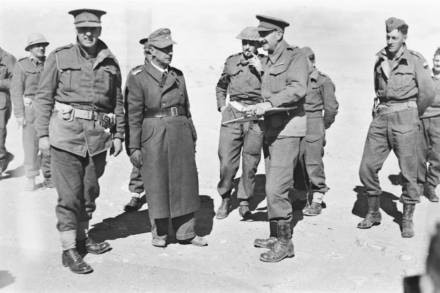
Note the identification patch of the South African 2nd Infantry Division on the person standing on the far right of the image.
Not to be confused with the “capture” of Generalleutnant Johann von Ravenstein a couple of months earlier by New Zealand soldiers. There is a big difference between a formal surrender of forces to an opposing force, than simply been randomly ‘captured’ driving around in a staff car and taking a wrong turn as General von Ravenstein was. General von Ravenstein did not “surrender” himself nor did he surrender any German forces.
Ironically General von Ravesnstien served the first part of his POW life in South Africa before been shipped of to Canada.
Written and researched by Peter Dickens. Thank you to Sandy Evan Haynes for the background information and to Marc Norman for the image.
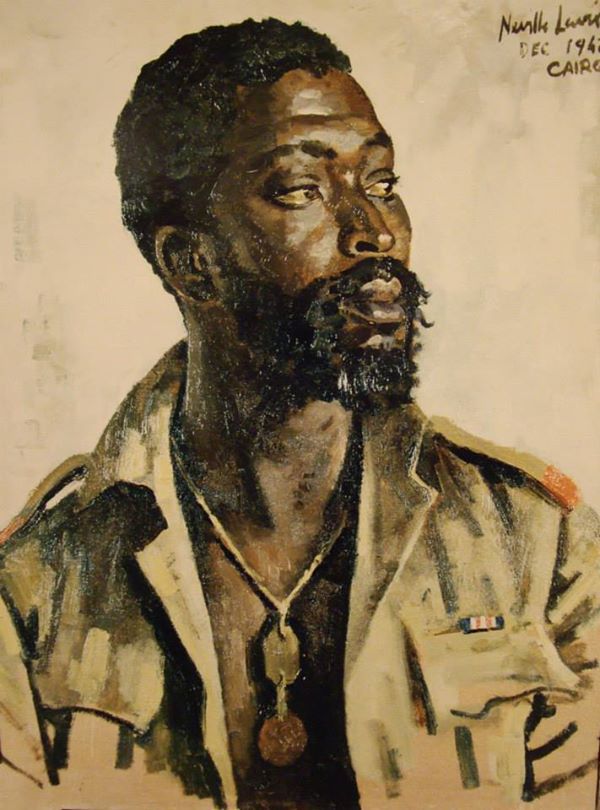
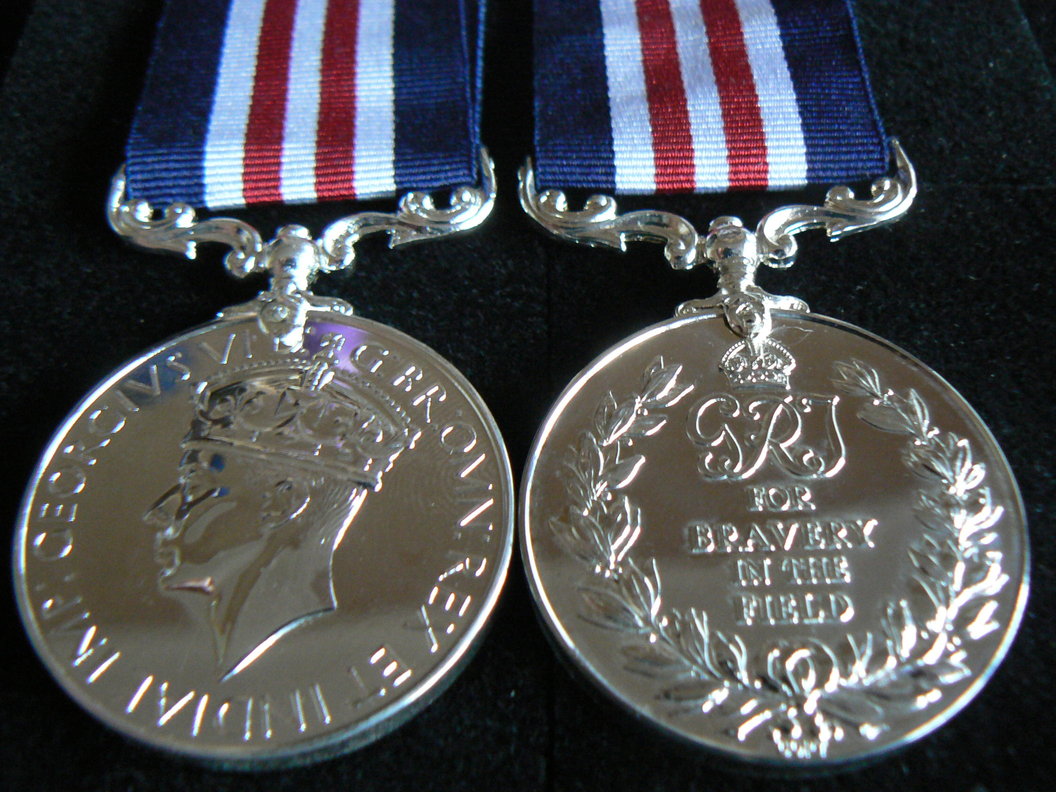
Job Maseko is a very notable South African hero of the Second World War. He was a member of the South African Native Military Corps (NMC) and was decorated with the Military Medal for gallantry. So how is it that a NMC member, a corps not allowed to officially carry firearms, gets to into the fight and wins this decoration. Simply put he single-handedly blew up an enemy ship. Read on for the story of a very remarkable man.
Job Maseko was employed as a delivery man in Springs before he volunteered for service in the Second World War and joined the South African Native Military Corps (NMC). After completion of basic training, he was sent to North Africa, attached to the 2nd South African Infantry Division. Members of the NMC took up any support role in the Division which did not require the handling of a firearm. They were given a vast range of different roles – anything from drivers, military cooks, engineers, stretcher bearers to bomb loaders. South African race laws at the time provided that serving ‘black’ men could not carry firearms, they were however issued spears as a ‘traditional weapon’ for guard and ceremonial duty, but that was about it (see related Observation Post Dress and Bearing of the South African Native Military Corps).
128 000 ‘Black’ South African soldiers volunteered to take part in World War 2 (nearly 40% of the standing army) and members of the NMC often found themselves in perilous circumstances and were exposed to the rigours and dangers of war as much as any another soldier. Some of these restrictions on the use of weapons quickly went out the window when in a combat zone, and somewhere along the line Job Maseko also learned a bomb making skill (see related Observation Post ‘Armed’ SA Native Military Corps in WW2 – this Corps screams out for a definitive work!).
The fall of Tobruk
General Klopper
In 1941 the Australians had held Tobruk for 9 months, until Rommel’s withdrawal of his Axis forces to the west. Tobruk secured, by 1942 the Allied Middle East Command decided to leave a smaller ‘temporary’ force to hold Tobruk while a new strike force was built up near the frontier. The task of defending Tobruk was left to the South Africans. The new garrison was to be formed by the 2nd South African Infantry Division with General Klopper, a farmer from the Orange Free State before the war, and a major general of only one month’s standing, given command of Tobruk. In addition, units of British and Indian detachments fell under South African command defending Tobruk. Into this deployment also fell our hero – Job Maseko.
It is generally understood that by this stage Tobruk’s defences were in a poor shape with much of the armour and artillery taken away to the new frontier, the Western and Southern sides of the port were well defended by the South Africans, but the East side was weak, and it proved to be fatal.
As usual, Rommel had devised a ruse for capturing Tobruk. Only his infantry approached the western perimeter, while his mobile forces swept on past, to give the impression that the German and Italian armour was heading straight for the Egyptian border (sending radio messages to that effect to complete the ruse). He then swung his mobile armoured forces around and attacked Tobruk from its weak point – the eastern perimeter.
Rommel’s zero hour was 05h20 on 20 June 1942. As dawn broke long black lines of tanks, trucks and infantry slowly started to move forward. As it grew louder and closer to Tobruk waves of German Stukas and Ju 88’s aircraft appeared overhead (Rommel pressed every single Axis airplane in service in North Africa into taking Tobruk).
As the heavy artillery began to fire, the planes released their bombs and quickly got out of the way for the next wave, operating a shuttle service between the defence perimeter and El Adem airfield, 10 miles away. They pounded a gap open 600 yards wide. Behind them, under cover of artillery barrage and half-hidden by smoke and dust, German and Italian sappers raced forward to lift mines and bridge the tank traps with tanks and infantry racing through the gaps. As they move forward, they lit green, red and purple flares and the Stukas dropped their bombs just ahead of the advancing, multi-coloured smoke screen while the other planes and artillery blasted the South African rear (the seaward side of the port) with shells and bombs.
Rommel and German armour entering Tobruk
Into this desperate fight for survival went everyone, including members of The Native Military Corps. Job Maseko worked as a stretcher bearer, doing profoundly dangerous work, rescuing wounded men, as the defence of Tobruk became more desperate, Job and other black colleagues were given rifles and expected to fight on the front line with everyone else.
Inside Tobruk the situation was chaotic. General Klopper – his HQ’s bombed out, his radio and telephone wrecked and his code booked destroyed, lost the last vestige of control. Tobruk fell by the evening. Job Maseko became a prisoner of war (POW) on 21 June 1942 when Major-General KIopper, surrendered to Rommel at Tobruk with 32000 men, including 10,722 South Africans of the 2nd Infantry Division, of whom 1,200 were members of the Native Military Corps. It was the single biggest capitulation of South African forces in the country’s history – before or since.
Erwin Rommel inspecting South African POW after Tobruk falls
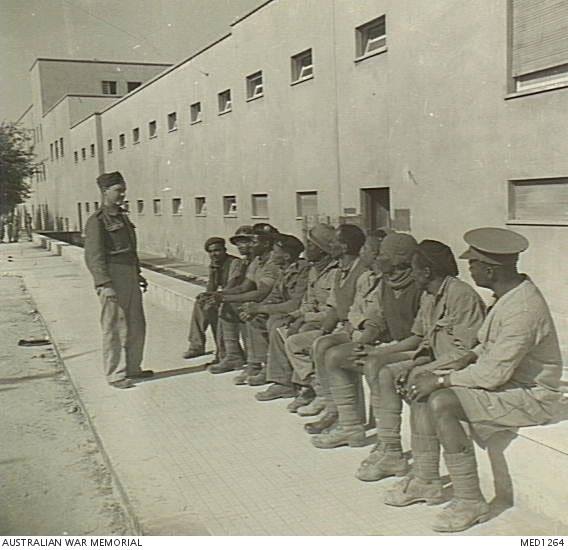
Job and many others were forced to march across the desert to an Italian POW camp. The Italian treatment of South African prisoners of war was nothing short of diabolical, however an even worse treatment was reserved for Black members of the South African Native Military Corps in captivity. German and Italian forces displayed a complete disregard for the rights of coloured or black POWs as they did not view them as regular troops.
One account recalls how black soldiers were shot by drunk German guards while been marched to the POW camp, and the account goes further to say that in Tobruk camp, black South African POWs were forced “under threat of death” to do war work, which was contrary to the Geneva Convention.
Another report claims Indian and Black prisoners at Tobruk were not allowed to take cover whenever the Allied bombers later bombed the port, furthermore their food was totally inadequate – they were only given one packet of biscuits per day and water rations were kept to a minimum.
Allied POW at Tobruk
There were also examples of Black South African POW escaping from the camp perimeter with their white counterparts to scrounge for food in the town, and Job Maseko was one. The Black POWs, as they were put to war work in the harbour (something most their white counterparts were excluded from) – mainly offloading ships. Desperate for food they would sometimes return to the camp with ‘acquired’ sacks of corn meal (mieliemeal), one account from De Lisle recalls that the unfortunate consequence was that hungry English and South Africans white POW would lay siege to their tents (the Black POW) at night to beg for their food.
The diabolical treatment of Black POW forced Job Maseko to taken action against his captors, to quote him “because of our ill-treatment by the enemy, especially the Italians, and because I felt it a duty in this way to assist my own people”.
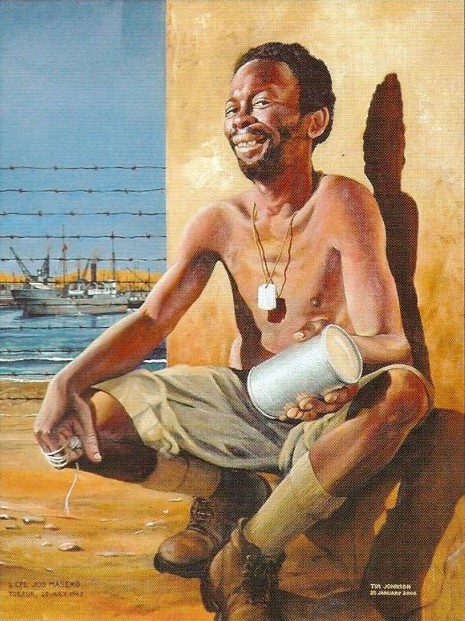
As with his Biblical namesake, Job was made of tough stuff and with the help of some comrades whilst on mundane prisoner duties to go down to the docks, Job created a bomb using a condensed milk tin, cordite taken from bullets and an extremely long fuse.
Job placed his home-made bomb deep inside the bowels of a German freight ship (and “F” Boat) that was docked in the harbour at Tobruk. He skilfully placed it next to fuel barrels for maximum effect, lit the fuse and made good his escape. Had he been caught, as a Black POW, he would have certainly been put to death if not tortured first.
Job waited and later the ship shuddered from a huge internal explosion and sank almost immediately into the harbour. After the war Job Maseko was able to point out the exact place where the ship was berthed and sure enough divers found it on the sea bed.
He later escaped from Tobruk and walked, for three long weeks though the desert and through enemy lines, all the way to El Alamein, he intended joining the battle there as he had fixed an old German radio he had found which informed him about General Montgomery’s epic and tide turning battle at El Alamein. We still await the full historical account of this remarkable man as very little is known to this day, rest assured historians are now writing it.
For his actions, Job Maseko was later presented with the Military Medal (MM) by Major-General F H Theron. The following extract enshrines his heroism, bear in mind when reading this, it is made even more remarkable in that Job Maseko as a ‘black’ African could only be deployed in a non combat role:
The King has been graciously pleased to approve the following award in recognition of gallant and distinguished service in the Middle East:-
Military Medal No N 4448 L/Cpl Job Masego [sic) – Native Military Corps
Citation For meritorious and courageous action in that on or about the 21st July, while a Prisoner of War, he, Job Masego, sank a fully laden enemy steamer – probably an “F” boat – while moored in Tobruk Harbour.
This he did by placing a small tin filled with gunpowder in among drums of petrol in the hold, leading a fuse therefrom to the hatch and lighting the fuse upon closing the hatch.
In carrying out this deliberately planned action, Job Masego displayed ingenuity, determination and complete disregard of personal safety from punishment by the enemy or from the ensuing explosion which set the vessel alight.’
The Victoria Cross Controversy
For his actions Job Maseko was initially recommended for a Victoria Cross but according to Neville Lewis, the first official war artist for South Africa during the Second World War, Job Maseko was awarded the Military Medal instead as he was ‘only an African’. It is hoped that actions currently been taken by the SANDF Military Attache in the United Kingdom to redress this issue with British government and re-open his case so it will be met with a correct interpretation of Job Maseko’s actions without the ‘race’ factor as part of the deliberation, and his actions considered as one worthy of the Victoria Cross or not (as may be the case).
Later in Life
Black ex-South African POW in Tripoli awaiting repatriation after the war
After been released Lance Corporal Job Maseko returned to South Africa. “Apartheid” was to be implemented a few short years after the war ended in 1948 when the Nationalists came to power beating Smuts. Job Maseko’s legacy slipped away from the general consciousness – along with many deeds of South African servicemen in World War 2, black and white. He became a poor man and died in 1952 when he was accidentally hit by a train. He was so broke at the time he was buried with borrowed money in the Payneville Township Cemetery in Springs. A very sad way to see the end of a national hero.
Today, to honour this unassuming hero, the community of KwaThema near Springs has a primary school in the township named after him. The main road linking the town of Springs to KwaThema Township has also been named after him. He is honoured at both the Delville Wood museum in France and the South African Museum of Military History in Johannesburg, A South African fighting ship the SAS Kobie Coetzee has also now been renamed the SAS Job Maseko in recognition of this very brave South African.
He can truly take the mantle of a proper South African warrior and stands shoulder to shoulder with all the other great South Africans who have earned the highest accolades of gallantry.
Written and Researched by Peter Dickens, References wikipedia, The incredible true tale of Job Maseko – the man who sunk a ship whilst a prisoner by Stephen Liddell. Narratives from North Africa: South African Prisoner of War experience following the fall of Tobruk, June 1942 by Karen Horn. Artwork credits: . Job Maskeko official portrait by Neville Lewis. Job Maseko holding explosive by Tim Johnson, copyright Tim Johnson website: http://www.timjohn.co.za








 We salute these brave South Africans – here is the honour roll for the HMSAS Southern Floe (MPK means “Missing Presumed Killed”).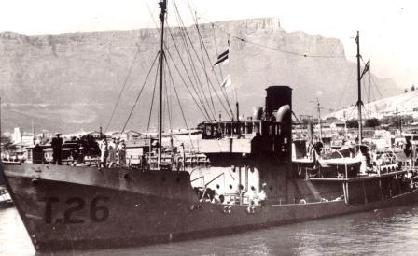
 Note the identification patch of the South African 2nd Infantry Division on the person standing on the far right of the image.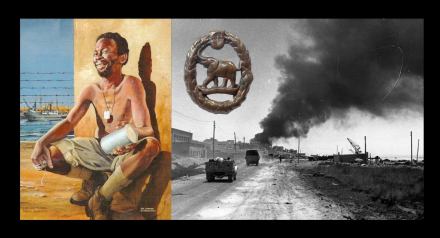



 The Observation Post