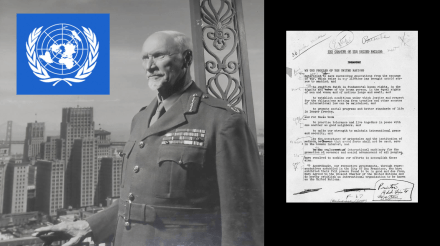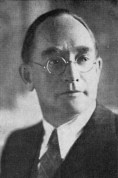
Jan Smuts drafted the Preamble to the United Nations Charter

Imposing photograph of Jan Smuts at the San Francisco Conference in 1945 – the historic conference which founded the United Nations (UN).

One of Jan Smuts’ last acts as the Prime Minister for South Africa was the establishment of the United Nations. In fact he wrote the original opening lines of the Preamble to the United Nations Charter as …

“The High Contracting Parties, determined to prevent a recurrence of the fratricidal strife which twice in our generation has brought untold sorrow and loss upon mankind..”

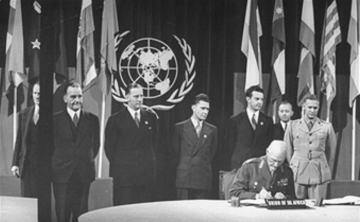
Not only did Smuts do the first draft of the Preamble to the United Nations Charter, he also played a key role in putting together the United Nations Charter itself. Smuts even presided over the first meeting of Commission II, General Assembly of the United Nations on 30 May 1945, held at the San Francisco Opera House.

Jan Smuts was also present at the historic signing ceremony of the United Nations Charter on the 26th June 1945 and signed the Charter on behalf of South Africa.


Screen Shot 2017-04-28 at 09.23.10

Subsequent to these historic meetings and ceremonies in San Francisco the Charter and United Nations as we know it came into full existence on the 24 October 1945.

Now, this was truly one of South Arica’s most philanthropic leaders, a man years ahead of his time, only to have his legacy tarnished by successive political posturing after his death five years later in 1950, which continues even to this day.

By the time of Smuts’ death in 1950, even the United Nations, which South Africa had played such a pivot role in establishing in 1945, was at loggerheads with the “new” South African Nationalist government which came to power over Smuts’ party in 1948.   From that date onward the United Nations started to pass resolution after resolution in damnation of the then newly elected National Party’s policy of Apartheid.

During the next 46 years in the United Nations, South Africa went from the heady heights of a founding signatory of The United Nations to the lows of a pariah state – and this forever diminished and damaged South Africa’s influence in the United Nations and as a leader in future global politics. Something Jan Smuts even foresaw in 1948 and warned the country against, but to no avail.

However, history is the ultimate decider and Jan Smut’s track record of achievements cements the simple fact that he remains one of the greatest men the country has ever produced.

J_Smuts_sign

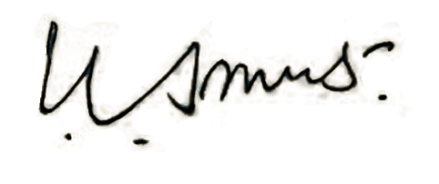
Jan Smuts’ signature 

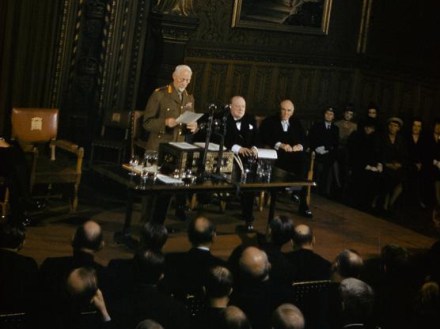
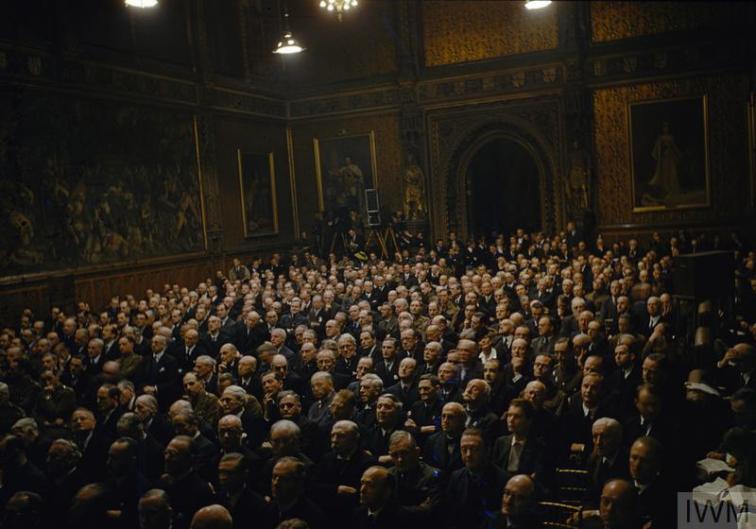
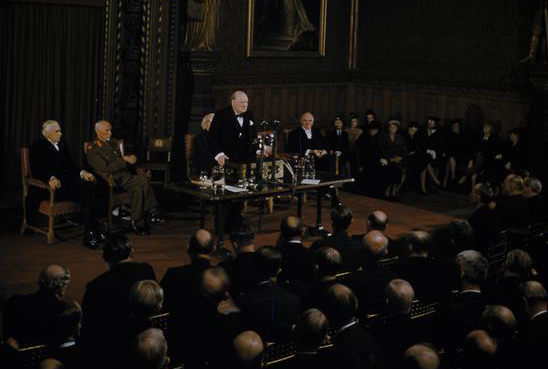
A true statesman, Jan Smuts addressing the British Parliament – 1942

Field Marshal Jan Smuts, at the invitation of Winston Churchill addressing both houses of the British Parliament on the 21st October1942. This speech is historic, never before was any Commonwealth Statesman given the privilege of addressing both houses of Parliament (the Commons and the Lords), and the results are astounding – not only was Smuts publicly praised by Winston Churchill at the end of his speech, the entire Parliament breaks into hoorays and sings “he’s a jolly good fellow” in praise of the man and his life’s work.  This speech is well worth viewing and here it is, in full.

Two great South Africans have the privilege of statues outside the British Houses of Parliament in London, both having addressed this house at Westminster, and they stand in Westminster square for good reason. This was a period when Jan Smuts took his broken country from the Boer War, unified it and built it into an international powerhouse – at this occasion Smuts receives the praise due a visionary world leader.

The vast majority of both English and Afrikaans speaking South Africans backed Smuts at the time, however his legacy – like any great man’s legacy – is tainted by his opposition – The National Party, who, when they came into power served to demonise him over decades – so much so that he remains an enigma to many South Africans today. Except when you find gems like this film clip – which can bring him back into living memory.

Look out for Smut’s comments on the necessity to rid the world of Nazism, his insightful summary of Hitler’s policy in Europe and for his views on he formation of the United Nations – to which he is founding signatory.

smuts 5

To think that Smuts was a South African War Boer General, and both he and General Louis Botha understood that the salvation and re-building of their shattered people lay with their former enemy. Their vision of unity built South Africa from a fractious grouping of colonies and tiny states into a significant and unified nation – a regional economic power-house. The fact that his former enemy stood up in praise of this man and his achievement speaks volumes.

Jan Smuts is literally the “father of the nation” that is South Africa today and it’s a great pity he is so misunderstood. As anyone who watches this video will see, thanks to this remarkable man, South Africans by the end of World War 2 stood with heads held high, chests swollen with pride, praised by the free world and revered by great men.

winston:smuts

Visit of Field Marshal Jan Smuts, to the House of Commons 21 Oct 1942. The Prime Minister, Mr Winston Churchill, calls on the assembly in the House of Commons to acclaim Field Marshal Smuts, after his address. IWM Copyright.

History unfortunately would dramatically change course for South Africa a couple of years later, when in 1948 the National Party narrowly edged its way into power in the general elections with a proposal called Apartheid.  South Africa has swung from ‘Pariah State’ far right racial politics to ‘Junk Status’ economic leftist politics in response to the secular race politics – with very little regard for Smuts’ centralist or “centre ground” reconciliatory politics since.


To read more about Smuts and some of his lifetime achievements and body of work, click on this link “The force of his intellect has enriched the wisdom of the whole human race”- the death of Jan Smuts.

Written  by Peter Dickens.  Footage copyright – British Pathé. Image/s copyright – The Imperial War Museum

“… I am not worthy to stand in the shoes of so great a man”

Jan Smuts’ history is well documented but let me share something that is less known about the man himself.

It’s a common misconception that Jan Smuts and Mahatma Gandhi’s relationship was one of animosity. It is a little known fact that both men actually respected each other, remaining life long admirers of one another.

Gandhi tried, at all times, to look for the positive in Smuts and said of him that he had a “high place among the politicians of the British Empire and even of the world”.

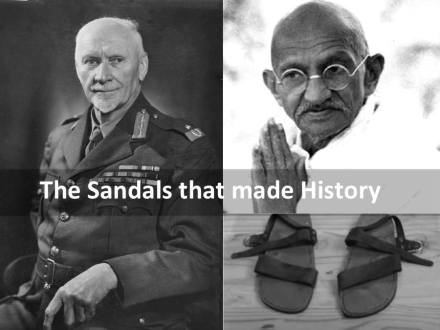
Rather famously, when Gandhi finished his work in South Africa and left with his wife in July 1914, just before he departed, he sent General Smuts a gift of a pair of sandals he made himself.

Gandhi had learnt to make sandals at Tolstoy Farm, a cooperative colony he set up near Johannesburg, from which he ran his campaign of satyagraha (non-violence).

Jan Smuts wore the sandals every summer at his farm, next to the town of Irene, and then returned the sandals to Gandhi on Gandhi’s seventieth birthday, remarking:

“I have worn these sandals for many a summer, even though I may feel that I am not worthy to stand in the shoes of so great a man”.

Smuts went on to say:

“It was my fate to be the antagonist of a man for whom, even then, I had the highest respect”.

A replica of the sandals can be found at the Constitution Hill Museum in Johannesburg.  Appropriately and oddly enough a statue of Jan Smuts stands just opposite a statue of Mahatma Gandhi on Parliament Square in London, in recognition of two world visionaries and their impact in the development of the modern political sphere.

Two fellow members of The South African Legion – Churchill and Smuts

SALegion_FinalLogoLayout_GreenPrintTextThe interesting part of digging up all the “hidden” history of the South African veteran movements after World War 2, is that occasionally you come across some hidden history about the military veterans organisation which you belong to. Did you know that both Jan Smuts AND Winston Churchill are both members of the South African Legion of Military Veterans?

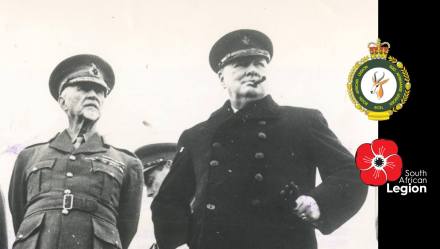
Well – they are. Field Marshal Jan Smuts was awarded the “Gold Life Membership Badge of the South African Legion of the BESL” in November 1945, and Sir Winston Churchill received the same Gold Life Membership Badge to the South African Legion in July 1948.

Smuts02

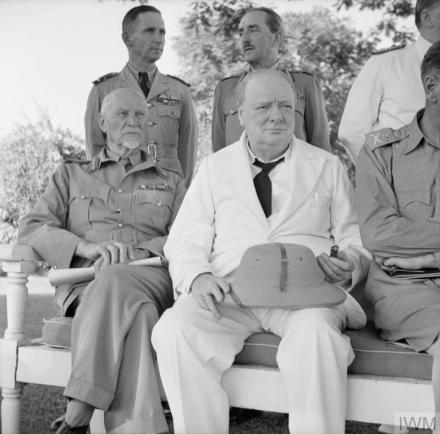
And here they are – two fellow Legionnaires, the two great prime ministers of Great Britain and South Africa, Prime Ministers, Winston Churchill and Field Marshal Jan Smuts, at the British Embassy in Cairo, 5 August 1942.

Did you also know that Jan Smuts played a pivot role in not only formulating the South African Legion, but also in bringing all the primary war veterans organisations from Britain and around the British Commonwealth under one oversight body? It was formed in 1921 in Cape Town and called The British Empire Service League (BESL) under patronage of the King.  This organisation still exists to this day as the Royal Commonwealth Ex-Services League (RCESL) with Queen Elizabeth II as the head Patron, located at The Royal British Legion’s head office at Haig House in London – and South Africa is still a founding member (represented by the South African Legion).

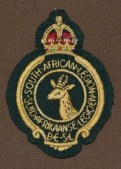
413928_141126095245_DSC_0380This is a standard South African Legion blazer Badge with “Kings crown” from the 2nd World War period.  Note the BESL at the bottom – which stands for the “British Empire Services League” – the South African Legion along with the Royal British Legion, Royal Canadian Legion, Royal Scottish Legion, New Zealand Returned Services Association and the Australian Returned Services League are all founder members of it.

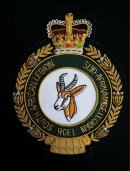
embroidered_nModern South African Legion blazer badge – note the use of modern BESL the RCEL “Royal Commonwealth Ex-Services League” and Queen’s Crown” for Queen Elizabeth II who is the current Patron.

The RCEL mission and objective is to provide aid and support to any members of the British Commonwealth who have served under ‘crown’ in British Armed Forces or Commonwealth Armed Forces whilst under British Patronage.  These include South Africa’s old World War 2 veterans and newer veterans who have served under the Commonwealth agreement in Her Majesty’s Armed Forces in recent conflicts like Iraq and Afghanistan.

Related Work and Links 

Legions and Poppies: Legions and Poppies … and their South African root

Churchills Desk: Churchill’s Desk

Jan Smuts, Churchill and D-Day: Jan Smuts, Winston Churchill and D-Day


Researched and written by Peter Dickens

Image copyright – The Imperial War Museum. Reference “Not For Ourselves” – a history of the South African Legion by Arthur Blake.


The inconvenient and unknown history of South Africa’s national flags

Here’s another interesting back of the chappie gum wrapper fact – Guess which is the correct South African flag South Africans fought under during World War 1?  Bet most people will think of the old “Orange White and Blue” South African flag, but that would be wrong.

As a serving officer in the South African Army I had to be familiar with flag protocol and etiquette, it’s a key part of soldiering when national flags go on parade. However the funny thing in South Africa is just how poor our collective knowledge is of our own national flags.

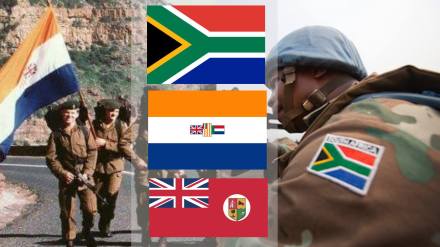
These are in fact all of South Africa’s national flags:17309179_1539170599434728_8929150928988660165_nMany times in military veteran circles there is steaming debate on when to use the “old” national flag and in what context – however few people in South Africa know what flag to use, what they really mean and even less know what the first South African flag actually looked like.

Here is a classic case of the misunderstandings surrounding South African national flags – This is the painting the “Birth of the Union” James E McConnell.  The painting was so poorly researched he used the wrong flag.

Birth of the Union of South Africa

This is a modern day photo-shop version of McConnell’s painting and it shows his original on the left and a more correct South African Union flag at union on the right.

one

The flag he used for his painting was the oranje-blanje-blou (known more commonly as the “OBB”) which all South Africans will recognise. However the flag of South Africa at the time of Union in 1910 was the South African “ensign flag” (British Union Jack top left and the South African National Coat of Arms inserted bottom right). Known as a “Red Duster” – now not too many South Africans today have ever seen that flag.

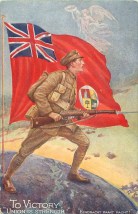
To show what the first South African national flag, the “Red Duster,” actually looked like here it is:

threeIt is very doubtful that there would have been huge public elation of Boers and Brits embracing one another under this National Flag as depicted in the painting, although this was the National Flag that South Africa fought under during the First World War (there where two versions of this ensign flag which they used – one Red and one Blue).

13686500_616785705157832_3286773017917395641_nIronically, the Boer Commandos that joined the South African Union’s Defence Force at Union in 1910, used and fought under this “South African Ensign” in the South West African and the East African campaigns of World War 1 from 1914 to 1918.

As noted, there was another variant of the “Red Duster” which is an ensign with the respective nation’s emblem against a Blue Background and a British Union flag in the left hand corner (you’ll still see this variant used in New Zealand and Australia for their National flag).

Both South Africa’s “Ensign” flags – Red and Blue qualify as the de facto South African national flags from 1910 to 1928, however the Red one was more common.

The Red Duster variant was the primary flag adopted by South Africa and Canada (Canada used their ensign version during WW1 and WW2 – it was only changed to the Maple Leaf in 1965)

Slide4Given the Ensigns were the flags usually adopted for British “Colonies” and “Dominions”, the South African Union government (which was in fact an independent Parliament to Westminster and made its own laws) felt differently. To the South African Union the national flag of 1910 was “still born” and not reflective of the history of the Boer Republics which made up the other half of the “Union” nor did it adequately reflect on South Africa’s Dutch colony origins.

The oranje-blanje-blou (“OBB”) was adopted by the South African Union Parliament as the “new” national flag in 1928. It was proudly flown as the flag of “Union” representing the old British Colonies of the Cape and Natal and the old Boer Republics of the Transvaal (South African Republic) and the Orange Free State. The use of the British Union flag inserted in the OBB, placed closest to the flag mast/pole (the most honoured and senior position for any “inserted” national flag on any flag format) ahead of the two Boer Republic flags, which take a lessor position, calmed down and appeased the “English” detractors who objected to such a dramatic flag change away from the standard Dominion Red Duster.

Slide5

However, confusion as to South Africa’s national flag to use even reigned at this time.  Here Jan Smuts makes the front cover of a late 1940’s edition of “Time” magazine with the National Flag in the background and this time they are incorrectly using the “old” blue ensign flag and should have been using the”new” OBB.

Slide3

So here’s another fun fact, the OBB is not the “Apartheid” flag, the National party when they came to power in 1948 put forward a proposal to have it amended and remove what they called the “Bloed Vlek” (Blood Stain) which was the British Union Flag inserted in the OBB. This was a National party pet hate as it reminded many Afrikaner nationalists of British decimation of Boer families and farms during the Boer war – the campaign to change the OBB flag was stepped up by the National Party under Hendrik Verwoerd when South Africa became a Republic and when he withdrew South Africa from the British Commonwealth of Nations in 1961.

However broader public pressure at the time prevented the initial National Party proposals for a flag change from been passed by the South African Republic’s Parliament and the idea was eventually shelved. In effect the initial campaign to change the OBB died with Verwoerd in 1966, but the National Party attempts to change the OBB to a “new” Republic flag did not stop there.  In 1968, the National Party Prime Minister, John Vorster, again proposed the adoption of a new flag to replace the OBB from 1971, the rational was to commemorate the tenth anniversary of the declaration of South Africa as a Republic.  Even though a National newspaper campaign was run asking the public for suggested flag designs, Vorster’s proposal did not get momentum in Parliament and the flag change never materialised.

Historically speaking, although the hardline National Party members hated the “OBB” and its inserted British “Union Jack”, but they disliked the original South African ensign “Red Duster” national flag with its massive “Union Jack” even more, they hated this flag so much it was literally erased from the South African collective consciousness and very few examples of it survive to this day. It certainly was not top of mind when McConnell painted his “Birth of the Union” painting in 1976.

That the flag of South African Union was kept during the implementation of Apartheid by the National Party from 1948 to 1994 is unfortunate as it detracts from it’s rich heritage as the flag of the South African “Union” and as such it is not the flag of the South African “Republic” nor was it ever intended to be a Republic’s flag – it especially detracts from all the kudos that South Africa received during World War 2 fighting alongside British and American forces under the South African Union’s OBB.

Slide6

The “new” (new) South African flag adopted in 1994 was actually  intended as a “five year interim” flag, however, it proved so highly popular it became the national flag almost instantly and was officially adopted by the government of South Africa on the election day, 27th April 1994.

According to its designer Fred Bromnell – It is actually a combination of the two “Colonial era” flags – The national flag of the Netherlands (Dutch flag) – Red, White, Blue and the the British Union flag – Blue, White, Red.  Then the two former Boer Republic flags – the South African Republic (Transvaal) “Vier Kleur” – Green, Red, White and Blue and the Orange Free State Republic Flag (using the Dutch insert flag and the white) and then finally the African National Congress (ANC) Flag – Black, Green and Gold (colours also present in the Inkatha Freedom Party and Pan African Congress flags).

The V symbolises inclusion and unification. In essence it is another flag of “Union” (unity) only this time acknowledging the county’s Black population and its historical heritage.  Symbols considered in the design of the “new” flag included Catholic and Anglican Priest’s Classic Chasubles, the universal symbol of Peace and the married Zulu female traditional head-dress.

There are some claims that the “New” South African flag is just a “design” with no meaning or symbolism – but that’s not the opinion of the man who actually designed it – Frederick Gordon Brownell.  Also, I find that whenever that when this argument is used  it’s usually to deny meaning to the new South Africa flag and to degrade the country, describing it as “jockey Y front underpants,” when in fact the truth is the opposite and the flag is stuffed full of meaning and symbolism.

In fact the “New” South African flag reflects all the old flags of South Africa, these exist right there for all to see, plain as day to the trained eye (and even the untrained eye) – symbolically placed in the new flag – and that’s an inconvenient truth to both the “new” flag’s detractors and the detractors of the “old” OBB.

Slide2

The funny thing is the “New” (new) flag was only meant to be an interim one, hence the mash of historical South African flags.  The irony kills me whenever I see the “new” South African youth and current South African political class with the flag they are now saluting, flying and even wearing – and it consists of their much despised “Colonial” Dutch, British and Boer Republic flags, and most of the “Apartheid” flag – irony lost on them but not on me.

Here’s the another irony – the “old” South African flag i.e. the “OBB” Union flag was born out of the ideals of Union led by Jan Smuts and Louis Botha. Not under the Apartheid ideals of  DF Malan and HF Verwoed. I personally see a lot of irony when hard-line right wing Afrikaners slam Jan Smuts and brand his values of consolidation and union with the British as an act of treason to the Afrikaner people – when at the same time they fully support, and at times even fly, the very flag created in honour of his very Unionist ideal – with its British “Blood Stain” symbolising Smuts’ reconciliation in full and proud senior position.

Furthermore it is ironic that after many years of trying to change the National flag after South Africa was declared a Republic in 1961, it was the National Party that finally achieved its goal in February 1994 when they, as the National Party government, briefed Frederick Gordon Brownell at the government’s own heraldry department to design a new flag (funnily in some sort of déjà vu – they had to involve the country’s National Herald this time after another newspaper campaign for designs from the public had failed, albeit 20 years later).  The result is the current flag we see today.  It was designed literally in a week and the only change in the decades long National Party narrative on changing the OBB this time was that both FW de Klerk and Nelson Mandela had to approve the new design.

So, lump it or leave it – there is nothing in “Union” flags that appeal to “all” people and everything in “Union” flags that appeal to “all” people.

All I can say is that the “new” South African flag has been the most cross cultural flag ever composed in South African history and it has been the least controversial i.e. it has been the most universally accepted by all South Africans (the very vast majority) with the least amount of disgruntled political posturing to change it.

In summary, to the “old” South Africa OBB supporters I would say:

  1.  The OBB was not the only South African national flag both Afrikaner and English South Africans fought under prior to 1994.
  2. The OBB pays a very high homage to The British Union National Flag in terms of the Vexillology of Flags and Flag Etiquette, especially in terms of the superior/senior position it takes relative to the two Boer Republic flags.
  3. The OBB symbolises the union of Afrikaner and English races – a central philosophy of Jan Christiaan Smuts and that of  “Union” Political Coalition partners and Governments.  Not those ideals of nationalist Afrikaners like Malan, Verwoed and Vorster, whose central political premise was that of an independent “Republic” and “Apartheid”.
  4. The OBB, although a flag of Union with the British, is now very dated.  Times and history changed since South Africa declared itself a Republic, so too the demographic and even social landscape of South Arica.  It cannot work as a current national flag in modern South Africa, change was inevitable – even Smuts would have seen that, and knowing his way of governance he would have welcomed a new flag to reflect it had he been around (in his time he served and lived under four different national flags).
  5. Many key Commonwealth countries have traded in their “Colonial” ensigns and Union flags – Canada, Jamaica, Kenya, Singapore, Hong Kong to name a few, and those still holding onto theirs – Australia and New Zealand, are under strong popular pressure to change them ahead of changing times.

To the “new” South Africa, current National flag supporters I say:

  1. The OBB is the flag of “Union” and it is one of the two Union flags used to bring   South Africa into existence as a country on the central principles of “reconciliation” and “tolerance” between two previously warring races (Boers and Brits), it is not the flag of “Apartheid”- in fact it was developed long before Apartheid was instituted as an ideology (in 1948) and symbolically it’s the complete opposite of Apartheid.
  2. Even the hard-line Apartheid Nationalists hated the old South African OBB, so much they wanted to change it – and eventually they did, and ironically it is the flag you now support, salute, fly and even wear – it was designed by a brief from the outgoing Apartheid Nationalist government in its final throws of office.
  3. The “new” flag very strongly and powerfully associates the flags of South Africa’s “Colonisers” and “Boers” in its design and in fact it celebrates this history – in addition to celebrating the history of the Black peoples of South Africa.
  4. The “new” South African flag does an excellent job balancing South Africa’s history and is very relevant to the current time.  I can’t possibly think of a better solution, and if the ANC and EFF one day decide to change it because of all its “colonial” and “white” legacy, I would hate to see what some Gupta owned design agency in India comes up with, because that really would round off a ‘state capture’.

This is why I allow myself a wry ironic smirk every-time South African flags are so hotly debated.

16905042_239550126507219_5077322311342536422_o


Researched and written by Peter Dickens.

Featured image by James E McConnell, Watercolour on Board 1973, photo-shopped version and background information courtesy Nicholas Pnematicatos.

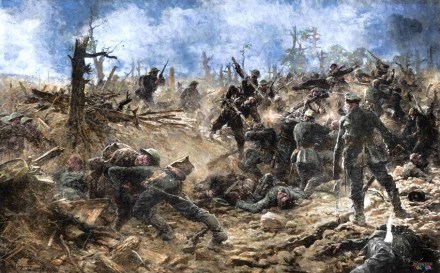
400 shells/min fell on the Springboks … “the bloodiest battle hell of 1916”

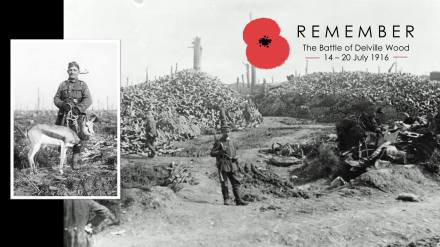
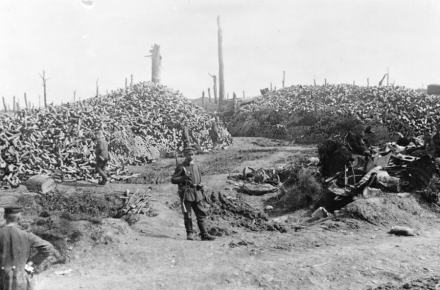
With the commemorations of the Battle of the Somme offensive and the Battle of Delville Wood coming around every year, we remind ourselves once again of the hell endured by the South Africans fighting in the wood, known at the time as “Springboks” – and nothing says it more than seeing the mountainous piles of artillery shells fired at them.  In all during the battle 400 shells per minute were being fired into the South African positions no more than a square mile in size – and that went on day after day, hour after hour, minute after minute 400 explosions at a time – now imagine that sort of ‘hellfire’ and ‘sheer terror’ for a moment, and you’ll be in the mind of a Springbok soldier at Delville Wood witnessing it in 1916.

This World War 1 feature photo from the Herr Woerner Eugen Collection, shows the German side opposite the South African offensive at Delville Wood, this German soldier is overseeing the shell case dump nearby the wood.  That’s just the spent ammunition, so let’s have a look at the South Africans who took the brunt of this intense barrage and how they came to be there.

10426660_302525313250541_1405609637130134780_n

“Hold it at all costs”

As part of the initial Somme offensive, the British under Major-General Furse of the 9th Division, had to secure the advance on Longueval, but to do this, Delville Wood (a small wood directly next to Longuval) had to be taken first.  Major General Furse had no option but to commit his last reserve—the 1st South African Brigade to do it.

The 1st South African Brigade under Brigadier General Henry Lukin was ordered to advance and to capture Delville Wood on the 14th July 1916 and “hold it at all costs”.

The first attack progressed smoothly and by 07:00 the South Africans had secured the southern half of the wood,  by 14:40 the whole wood had been secured, with the exception of a strong German position in the north west adjoining Longueval.  The South African troops where now spread along the entire perimeter in groups forming strong–points supported by machine–guns.

But, rather than having “secured” the wood, the brigade was now in a trap, occupying a salient with only the south-western base being in contact with the 26th Brigade in Longueval. All troops were equipped with spades but digging within the perimeter of the wood was made difficult by roots and remnants of tree trunks from the previous day’s artillery fire, making the preparation of proper trenches impossible, with the South Africans having to make do with shallow shell-holes and burrows. With unprepared trenches, a narrow base to their salient and facing over 7,000 German troops, holding the wood was going to be extremely difficult!

The Germans launched one of the heaviest artillery bombardments of the war in an effort to dislodge the South Africans in the wood. It has been estimated that at its peak the rate of firing exceeded 500 shells per minute – even at one stage some references say 600 shells per minute were fired at the South African positions. To think this relentless volley of shelling was into a wood no bigger than a square kilometre in size.

The South Africans began to dig in beating off counter attacks as they did so. The roots and remnants of tree trunks made the preparation of proper trenches impossible and the South Africans had to make do with shallow ones.

The bloodiest battle hell of 1916

Of the 121 officers and 3,032 men of the South African Brigade who launched the initial attack in the wood, only 29 officers and 751 men eventually walked out. These men held their objective at a massive cost, even reverting to hand to hand combat to hold the wood  – the depth of bravery required to do this under this fire power is simply staggering to contemplate. The losses sustained by the South Africans were one of the greatest sacrifices of the war.

“…Delville Wood had disintegrated into a shattered wasteland of shattered trees, charred and burning stumps, craters thick with mud and blood, and corpses, corpses everywhere. In places they were piled four deep. Worst of all was the lowing of the wounded. It sounded like a cattle ring at the spring fair….”

10405542_874163019269673_4645022932964781731_n

The battle is of particular importance to South Africa, as it was the first major engagement entered into by the South African 1st Infantry Brigade on the Western Front. The casualties sustained by this Brigade were of catastrophic proportions, comparable to those encountered by Allied battalions on the first day of the Somme. On the Western Front, units were normally considered to be incapable of combat if their casualties had reached 30% and they were withdrawn once this level had been attained. The South African Brigade suffered losses of 80%, yet they managed to hold the Wood as ordered. This feat has been described as “…the bloodiest battle hell of 1916.”

It was this horrific baptism of fire, of South Africans from across ethnic and cultural divides – fighting as one in union and strength, that the newly formed Union of South Africa’s national identity was forged for the years come.

Related links and work

Springbok Valour – Battle of Delville Wood Centenary ‘Springbok Valour’… Somme 100 & the Delville Wood Centenary

In Flanders Fields (Afrikaans) ‘In Flanders Fields’ translated into Afrikaans for the Somme 100 commemoration, July 2016

William Faulds VC Taking gallantry at Delville Wood to a whole new level; William Faulds VC MC

A Diary from Delville Wood A South African soldier’s diary captures the horror of Delville Wood

Mascots at Delville Wood: Nancy the Springbok Nancy the Springbok

Mascots at Delville Wood: Jackie the Baboon Jackie; The South African Baboon soldier of World War One


Researched by Peter Dickens.

Image copyright: Herr Woerner Eugen Collection – Imperial War Museum, Images of the wood copyright to the Imperial War Museum. Feature Illustration – The Battle of Delville Wood Illustrated London News Lithograph by the Spanish artist – José Simont Guillén (1875-1968).  Block images copyright Imperial War Museum.


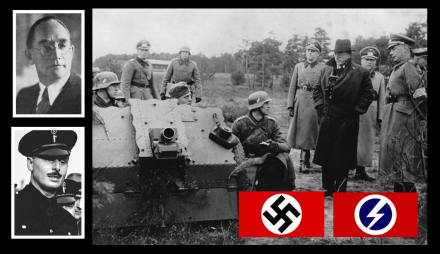
South Africa’s Nazi ‘Neuordnung’ and Oswald Pirow

Oswald_Pirow

Oswald Pirow

So when is it right to re-name a national landmark road?  We’re all up in arms that Edwin Swales VC Drive, named after our famous Victoria Cross winner for gallantry in World War 2 was re-named as Solomon Kalushi Mahlangu Drive after a controversial Umkhonto we Sizwe operative.  But what of Oswald Pirow Street in Cape Town, is there a case to justify this street name change?

Read on for a little more on who Oswald Pirow really was, learn some more on South African “hidden” military history; the Pro Nazi paramilitary organisations who sought to destabilise South Africa and the Union during the Second World War and bring South Africa into a one party ‘Fuhrer’ state run along ‘national socialism’ lines.

In all there were three movements which supported Nazi Germany and embraced its ideology in South Africa, the Ossewabrandwag, the shirts including the ‘Blackshirts’ and the SANP Greyshirts (see Pro Nazi movements in wartime South Africa – the SANP “Greyshirts”) and the ‘global’ Nazi movement – The ‘New Order’ – led by our subject for the day, the well-known South African Nationalist Politician and Public Prosecutor – Oswald Pirow.
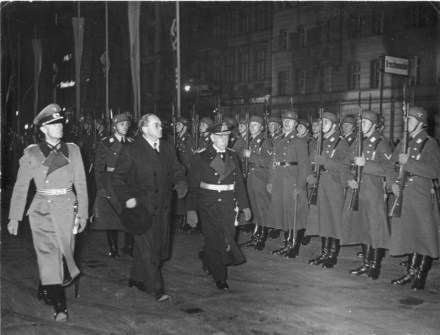
10460708_459305080905896_5196244094119877880_n

Oswald Pirow in Nazi Germany, November 1938  in Berlin inspecting a honour guard from the German Luftwaffe (Air Force), to his left is Wilhelm Canaris, to his right Ernst Seifert.

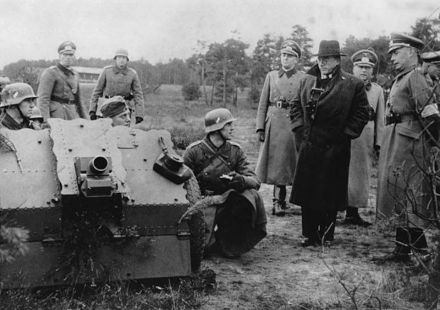
In a relatively little known part of South African history, Oswald Pirow was sent on ‘quasi-official’ visits on behalf of the Hertzog government to Nazi Germany and Fascist Italy.  His mission was one of appeasement, to meet with Hitler, Ribbentrop and Goering and try to establish Anglo-German rapprochement as well as assure them of South Africa’s neutrality under the Hertzog government.

Pirow’s solution to easing British and German tension prior to the war, which he proposed to Hitler, was for the British to agree with the Nazi policy of “Drang nach Osten” (meaning yearning or ‘thrust’ towards the East for ‘living space’ as Hitler put it in his book ‘Mein Kamph’) and in return Hitler should allow all the Jewish people living in Germany to leave.  In reality this offer would never have happened as it would have required Britain, by way of a parliamentary agreement, to renege on its commitment to Poland as an ally.  However, Pirow also had another mission, that of building a South African partnership for a post war Nazi world.

So how is it that these lessor known South African missions and special envoy on ‘quasi official’ visits come about, what was he doing and what made Oswald Pirow tick?

Background

Oswald Pirow was born in Aberdeen (Cape Province, South Africa) on 14th August 1890, and was the grandson of a German missionary and son of a Doctor. Pirow studied law in Potchefstroom, Germany and London, and then practised as an advocate in Pretoria.  Oswald spoke perfect German and was insistent that only German was spoken by his family at home in South Africa (it was said by those who knew them that the Pirow family was more German in identity than South African).

He came to fame as a lawyer defending the Communist ring-leaders and instigators of The Rand Revolt in 1922 (see South Africa’s very own Communist Revolution – The Rand Revolt of 1922), an odd start for him as he became an ardent hater of anything Communist and would later come up with plans to ‘eradicate’ communism from the planet in its entirety (not just South Africa).

He made several unsuccessful attempts to enter parliament and finally in 1924 he was elected for Zoutpansberg. Smuts defeated him in 1929 in Standerton but he returned to Parliament and in the same year and he was appointed Minister of Justice in General Hertzog’s cabinet. The Hertzog government was in coalition, so it could not fully unleash Nationalist proposals for a Republic (of which Pirow was a keen supporter).

As Justice Minister, typical to form as a fierce anti-communist he passed the first anti-communist legislation in South Africa. In 1933 he was appointed Minister of Railways and Harbours, and from 1933 to 1939 he was Minister of Defence.
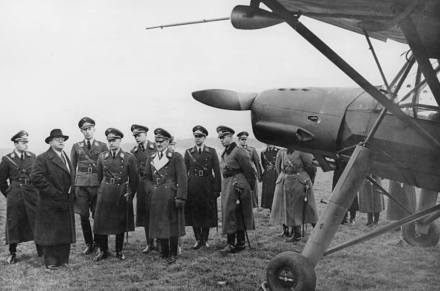
25074984_2060834677478853_5650117780720895916_o

Oswald Pirow (in civilian dress) on tour inspecting German military capability in 1938

Unofficial Envoy 

In 1936 Pirow attended the Olympic Games in National Socialist (Nazi) Germany and in 1938 again visited Europe, including Spain, Portugal and Germany. These visits confirmed his admiration for this new style of government in Europe and, in particular, for National Socialism (Nazism). A vehement anti-communist – Pirow vowed to legislate communism out of existence, he also became an admirer of Adolf Hitler – especially after meeting him in 1933.
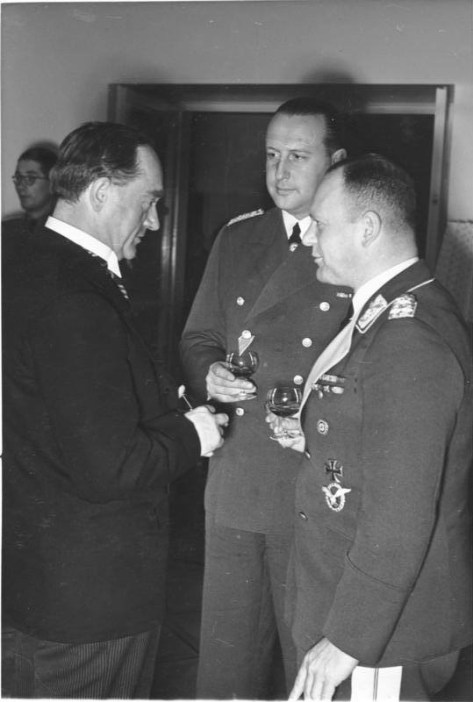
11425451_459347364235001_7335473098897133162_n

Oswald Pirow ( left) at a reception of the Nazi Foreign Minister Joachim von Ribbentrop in conversation with Erhard Milch (right) and Walter Hevel on November 19, 1938

During this tours he also met Benito Mussolini, António de Oliveira Salazar and Francisco Franco and became convinced that a European war was imminent, with a resounding Nazi victory assured.  The future Pirow predicted was one of global nazism and it was a future he liked.

The Nationalists were strongly in favour of Nazi Germany, primarily as the antagonists for war in their eyes were the British, and they simply hated the British.  This hatred stemmed from the punitive deportation and containment measures used by The British against Boer families along with the destruction of their farmsteads during The 2nd Anglo-Boer War.

Publicly the Nationalists declared neutrality as to Nazi Germany and to the impending war with Germany, whilst covertly their members (and even leaders) in the tens of thousands joined pro Nazi organisations like the Ossawabrandwag and the SANP Grey Shirts, which very publicly nailed their colours to mast strongly in support of Nazi Germany.

When General Jan Smuts committed South Africa to war against Nazi Germany, Pirow found his position in government as a Minister of Parliament and especially as Minister of Defence untenable. He had given his support in 1939 to Hertzog’s neutrality policy and had been on appeasement missions to Nazi Germany in support of them.  He then resigned along with Hertzog and took no part in Smuts’ reformatted war-time government.

South Africa’s ‘New Order’ 

By September 1940, with Nazi Germany on the ascendancy having invaded most of Western Europe, Pirow launched the South African version of the “New Order” within the breakaway National Party – the Herenigde Nasionale Party (HNP), backing a Nazi style dictatorship.

His new political grouping took its name from his 1940 ‘New Order in South Africa’ pamphlet in which Pirow embraced the ideology of Nazi globalisation.

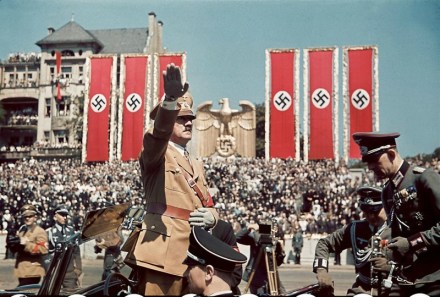
To understand what the concept of the “New Order” was – the New Order (German: Neuordnung) was the political order which Nazi Germany wanted to impose on the conquered areas under its dominion.

The establishment of the New Order was publicly proclaimed by Adolf Hitler and entailed the creation of a pan-German racial state structured according to Nazi ideology to ensure the supremacy of an Aryan-Nordic master race, massive territorial expansion into Eastern Europe through its colonization with German settlers, the physical annihilation of the Jews and others considered to be “unworthy of life”, and the extermination, expulsion, or enslavement of most of the Slavic peoples and others regarded as “racially inferior”.
third-reich-2

Hitler’s New Order for Africa

Hitler’s ‘New Order’ plan involved global expansion, it focussed primarily on Eastern Europe (‘living space’) however it also extend to Asia, India, South America and North America in ‘post war’ fascist dominated world. Like any plan for globalisation, Africa also played a role in the New Order.

Hitler’s overall intentions for the future organisation of Africa was based on a plan which divided the continent into three big parts. The northern third of Africa was to be assigned to Germany’s Axis partner – Italy. The central part of Africa would fall under German rule. The remaining southern sector would be controlled by a pro-Nazi Afrikaner state built along racial grounds.

Foreign Minister Ribbentrop had communicated this plan with South African leaders sympathetic to Nazism, and a key channel for this communication were his meetings with Oswald Pirow whilst he was on his ‘quasi official’ South African State visits to Nazi Germany on behalf of the Hertzog government.
25188738_2060834724145515_6204150310272340344_o

Oswald Pirow as a special South African envoy inspecting German Infantry and military capability in 1938

Ribbentrop informed the Afrikaner Nationalist leaders that once Germany had won the war, Germany was to reclaim its former colony of German South-West Africa (now Namibia), then a mandate would be given to an Afrikaner Nationalist led South Africa as a sort of ‘war compensation’ which would include the territorial acquisitions of the British protectorates of  Swaziland, Basutoland (Lesotho), Bechuanaland (Botswana) and the colony of Southern Rhodesia (Zimbabwe).

On the division of French African colonies between the Spanish and Italian governments Hitler refused to provide any official promises during the war, fearful of losing the support of Vichy France

Decline of Pirow’s New Order 
240px-DFMalanPortret

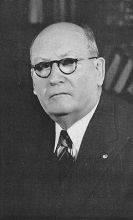
Dr. DF Malan

Dr D.F. Malan, leader of the National Party initially tolerated the actions of Oswald Pirow’s South African adaption of the 3rd Reich’s ‘New Order’ however very soon Malan came to realise what the extreme ideology of  The New Order was about and he immediately saw it as a divisive influence on the Afrikaner nationalist movement.

Fearful of a split in Afrikaner nationalism over support for extreme Nazism and for Hitler’s plans for the African ‘new order’, at the Nationalists Transvaal party congress of August 1941, Malan forced through a motion ending the New Order’s propaganda activities, particularly their insistence on a one-party state on a ‘Führer’ principle.

To understand more about the National Party and its associations to pro Nazi movements do follow this link “Mein Kampf shows the way to greatness for South Africa” – The Ossewabrandwag

Although restricted by DF Malan, the New Order continued to exist and Pirow and 17 of his New Order supporters continued to be associated with the HNP and continued to attend their caucus meetings.

The New Order  finally broke from the HNP altogether in 1942 after both D.F. Malan and J.G. Strijdom publicly rejected the Nazis.

Partnership with Sir Oswald Mosley 
537202579

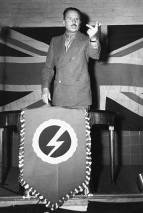
Oswald Mosley

With the outcome of the war firmly against Nazi Germany, Oswald Pirow’s political career within the Afrikaner Nationalists was effectively over, he returned to legal practice, and during this time became a friend of Sir Oswald Mosley.

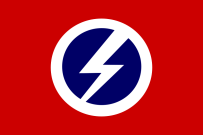
Mosley was ex-British MP and an infamous British Nazi, he led the British Union of Fascists (BUF), a Neo-nazi British organisation following the edicts of the ‘New Order’ in the United Kingdom.

Mosley was imprisoned at the outbreak of World War 2 in 1940 for his extreme views in support of the enemy (Nazi Germany) and the BUF was outlawed. He was released in 1943.

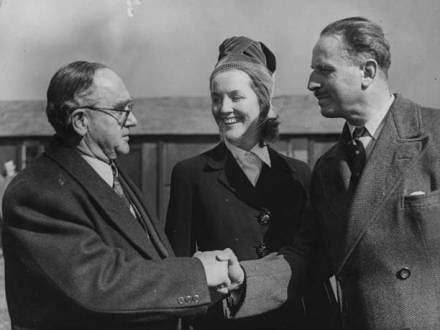
Oswald Pirow and Mosley, having similar political views decided to collaborate together and they developed an idea for the division of Africa into exclusively black and white areas.
505808586

Oswald Pirow and Oswald Mosley

The two met after Pirow read a copy of Mosley’s book ‘The Alternative’ and by 1947 they were in discussion over founding an anti-communist group to be known as the “enemies of the Soviet Union” (although this plan never reached fruition).
buf_flag

Mosley’s British Union of Fascists (BUF) Flag

The two Oswalds co-operation started in earnest when Pirow visited Mosley in London in April 1948 and spent the weekend at his house.  In collaboration with Mosley, Oswald Pirow started writing articles for the Union Movement journals and The European, some of which were reprinted in German magazine Nation Europa.

In addition to writing for far right wing publications, the two Oswalds came up with what were known as the Mosley-Pirow Proposals, which advocated the extension of the South African National Party’s Apartheid ideology and concept to include the entire continent of Africa.  The idea they came up with was that two-thirds of sub saharan Africa would be advocated for ‘Black States’ and one-third would be for ‘White states’.  Where the two of them differed on their concept of ‘Eurafrica’ (which they coined) is that Pirow felt that ‘sweated labour’ would need to be forced whereas Mosley felt that unskilled Labour, needed in the ‘white states,’ was to be traded for from the ‘black states’ in return for technical assistance at some ‘later stage’.

The relationship with Pirow and Mosley started to break down after their ‘Eurafrica proposals’ were launched. Pirow came to realise that virtually nobody took Mosley seriously, people generally dismissed both him and his economic and political treatise out of hand as an extreme oddity.

The Treason Trial
Nelson Mandela, treason trial, Pretoria, 1958

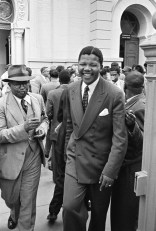
Nelson Mandela at The Treason Trial 1956

Very famously Pirow, now back in South Africa and back in his legal guise, acted as the public prosecutor on behalf of the Nationalist State during the Treason Trial of 1956. The Treason Trial was a trial in which 156 people, including Nelson Mandela, were arrested in a raid and accused of treason in South Africa in 1956. The main trial lasted until 1961, when all of the defendants were found not guilty. During the trials, Oliver Tambo left the country and was exiled. Some of the defendants, including Nelson Mandela were later convicted in the Rivonia Trial in 1964.

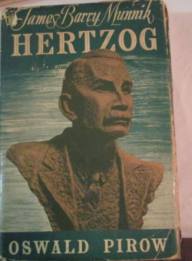
Following the Treason Trial Pirow largely lived in retirement, publishing several books, especially on JB Hertzog of who he was an admirer, he also wrote books on wildlife and adventure books for boys. He died of heart failure. He was cremated and his ashes are kept at his Valhalla Farm residence near Pilgrim’s Rest.
11401548_459339007569170_7553625890068332822_n

Influence on Apartheid 

Oswald Pirow’s influence in South African politics and Apartheid is far-reaching. The Tomlinson Commission – which investigated the validity of the idea Apartheid was not a new creation, and its findings were based in part on findings made by the Native Economic Commission in 1932 and on preparatory work done by Oswald Pirow.

Very little is known in South Africa today of the frustration and disillusionment returning South African combatants from World War 2 felt and the motivation behind their eventual mass protests against Apartheid policies in the 1950’s (known as the ‘Torch’ Commando rallies – attracting  tens of thousands of war veterans – see The Torch Commando led South Africa’s first mass anti-apartheid protests, NOT the ANC!).

Effectively the returning South African statute force veterans had gone to war to rid the world of Nazism, only to come home and in a few short years find significant “home grown” Nazi’s in government or playing a key role in public prosecution (as was the case with Pirow) when the National Party narrowly beat Smuts’ United Party into power in 1948.

The likes of famous World War 2 heroes like Adolph “Sailor” Malan would have none of it and they took to the streets in the first mass protests against Apartheid and the Nationalist government who had only come into power a couple of years before hand and where already removing the cape coloured vote from the register – see Sailor Malan; Fighter Ace & Freedom Fighter!.

The Torch Commando and veteran protests where ultimately suppressed by The National Party (including Sailor Malan) and the Nationalists where free to promote their heroes – Oswald Pirow had the foreshore road in Cape Town named after him  as well as a South African navy strike craft – the SAS Oswald Pirow – much to the disillusionment of many of South Africa’s war veterans, the disenfranchised voters and the South African Jewish community.

Re-naming 

Since 1994, proposals were to put forward to re-name the strike craft and Cape Town’s foreshore road.

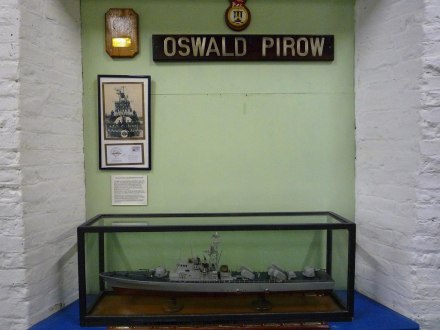
The SAS Oswald Pirow was re-named the SAS Rene Sethren after a famous Navy stocker Rene Sethren who was on board a South African minesweeper in World War 2. In June 1941 his ship was escorting a convoy to Tobruk when they came under heavy attack from enemy planes. He took over an anti-aircraft gun and did not stop firing until the attack was over. He was wounded 27 times during the attack and fortunately survived, he received his gallantry decoration from King George V.

It was also discovered that although Dr Christiaan Barnard had performed the world’s first heart transplant nothing in the way of Cape Town’s streets honoured this, since 2011 most Captonians now know this landmark road which was ‘Oswald Pirow Street’ as ‘Christiaan Barnard Street’.
Oswald Pirow

There is an argument that says we should not be re-naming things in the interests of preserving history, with all its spots, however world over institutions named after Nazis have been re-named and/or scrubbed of anything glorifying this history.  Munich – the birthplace of Nazism is virtually clean of any old references, such is its blight to the entire human race caused by this ideology, and in this respect South Africa has acted no differently.

What is surprising is that even during the 70’s and the 80’s, the National Party were unapologetic in the glorification of individuals so closely associated to National Socialist ideology and Nazism, no matter how hurtful to the vast majority of South Africans, well after the horrors of this ideology had been exposed and universally condemned (even in South Africa).

Pirow was allowed to continue as the State Prosecutor and advise Apartheid policy, his controversial plans for the Nazification of Southern Africa were just glazed over and conveniently swept under the rug – the modern South African generation would grow up fairly oblivious of Oswald Pirow’s really dark past.
11406645_459696484200089_3957396089513991556_o

Display of the SAS Oswald Pirow at the SA Naval Museum, it was renamed the renamed SAS Rene Sethren on April 1, 1997


Written and Researched by Peter Dickens.

Feature photo copyright the German Federal Archives copyright. ‘Very Deeply Dyed in Black’ Sir Oswald Mosley  and the Resurrection of British Fascism After 1945 by Graham Macklin. NSDAP Office of Colonial Policy  Brian Bunting’s 1964 book, The Rise of the South African Reich.  Ribbontrop’s proposals to South Africa, The Rise and Fall of the Third Reich,  by William Shirer, 1974 edition.

Published by New York: Crest, 1962, New York (1962

The Red Oath

Pride in “Rooi Lussies”(red tabs), worn by most, branded “Rooi Luisies” (Red Lice) by some.

At the start of World War 2, the South African armed forces were woefully understrength having only 3,500 permanent force members and 14,000 volunteers in citizen force regiments and rifle associations (Active Citizen Force). General Jan Smuts needed to increase these numbers dramatically, and he did not want to institute conscription to do so, the call to fight would be based on volunteerism. The idea was to initiate a Oath declaring the free willing and voluntary nature South Africans felt in going to war against Nazi Germany, Fascist Italy and eventually Imperial Japan. The success of this call for volunteerism is staggering – in the end a total of 342,792 South Africans volunteered to participate in World War 2.

Also of that statistic nearly one quarter of the total ‘white’ adult population at the time volunteered for service, consider what Smuts had achieved, the Nationalists were unable to raise anywhere near these numbers in 1966 to their cause and had to implement forced conscription for the SADF.

The ‘Red Oath’ or ‘Service Oath’ was taken by all these volunteers when joining the South African Union Defence Force (UDF) from 1939, it was a Service Oath to legally enable the Union to send soldiers outside the borders of South Africa (soldiers in the UDF were only legally obliged to protect South Africa itself if it were invaded). The oath read:

“That I will be faithful and bear true allegiance to His Majesty King George VI and his heirs and successors according to law … That I will perform to the best of my ability the duties assigned to me as a volunteer member of the Union Defence Forces … That I will serve anywhere for the duration of the present war and for a period of six months thereafter unless otherwise legally discharged.”

This manifested itself in ‘red epaulettes’ issued to all service-personal who ‘volunteered’ to serve in the armed forces during the war and took the ‘Red Oath’. Sensitive to sympathetic political feelings many Afrikaners had towards Germany, by implementing the oath the Smuts government gave the opportunity for permanent force members sympathetic to Germany to remain in the Union’s forces, and not go to war against them – they just didn’t get to wear the red tabs.

The original ‘red’ oath specified service anywhere in “Africa” and was called the ‘Africa Service Oath’ (ASO), it was changed to the ‘General Service Oath’ (GSO) once the Axis Forces in North Africa were defeated so that volunteers could be used in the European theatre and the word “Africa” was changed to “anywhere”. Those who did not want to fight in Europe and who had taken the ‘Africa’ oath only were returned to the Union.

A handful of permanent force UDF members did not take either red oath, some felt inevitably ‘singled out’ by not wearing the tabs (and in some cases resigned), whilst others took pride in their political convictions and wore their ‘clean’ epaulettes, sans the red strip with pride.

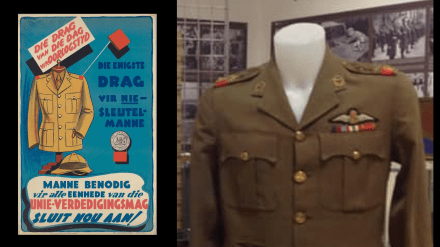
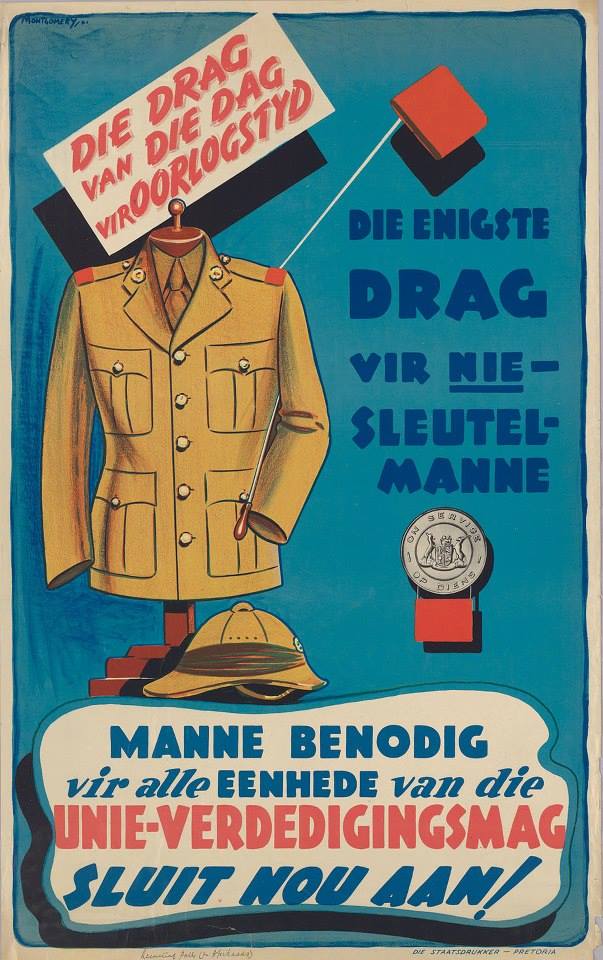
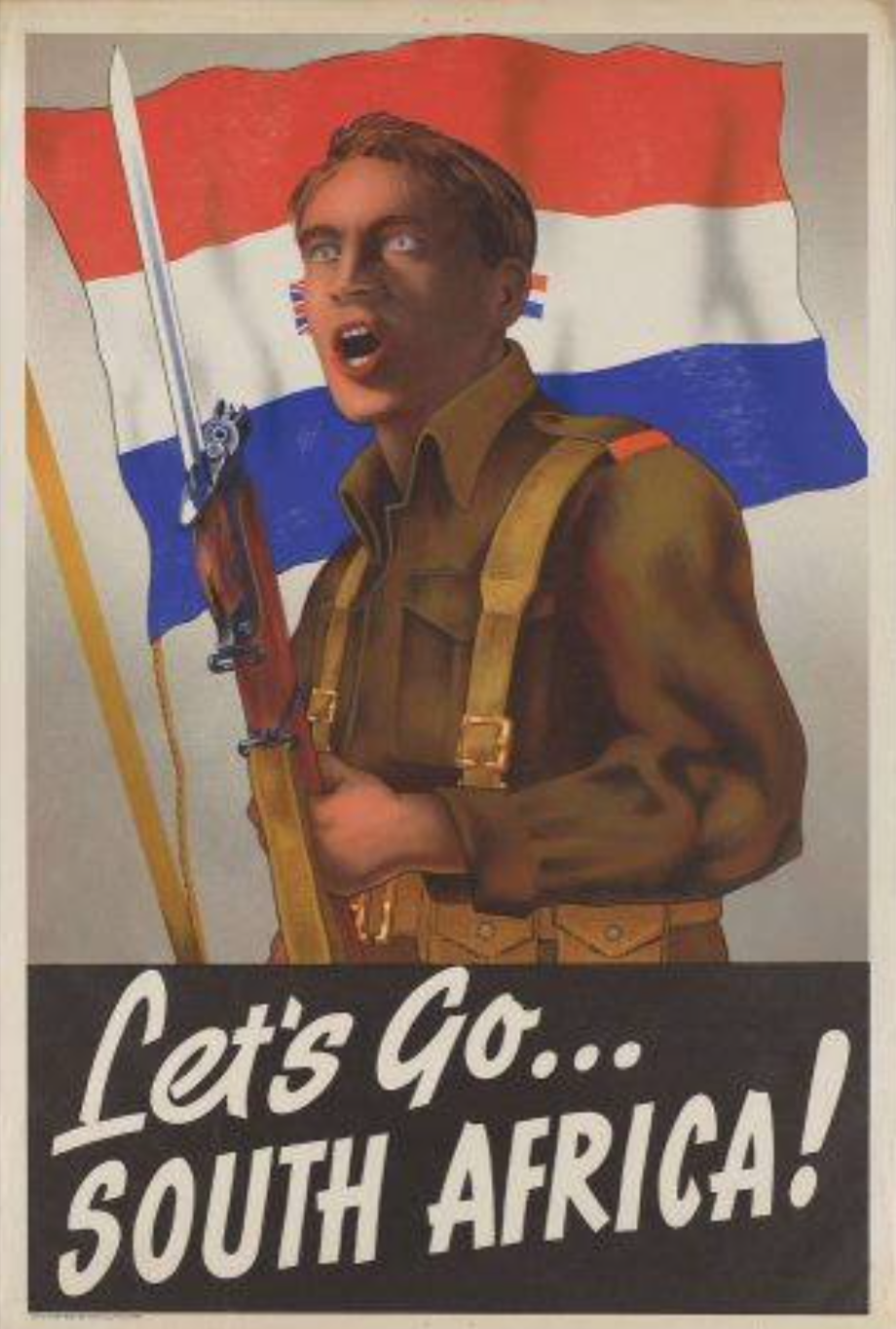
Images: Pride in the Red tabs and Let’s Go South Africa, showing proudly the tabs propaganda posters.

This WW2 South African propaganda poster, promoting the ‘Red Oath’ and the special volunteer epaulette flash worn by all who took the oath and volunteered for service during World War 2 was designed to swing opinion in the Afrikaans community where the wearing of the red flash was seen as an oath to the British and viewed by some as betrayal. In these sections of the Afrikaans community they where called ‘Rooi Luisies’ (Red Lice) instead of ‘Rooi Lussies” (Red Tabs), as a means of degrading those who volunteered.

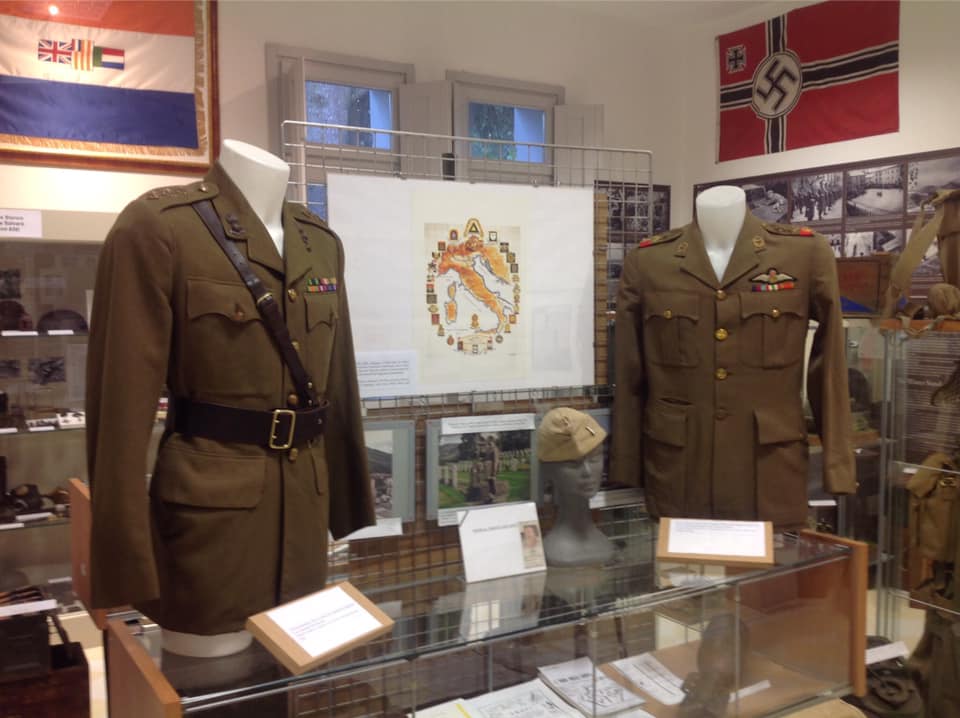
Image: British (left) and South African (right) uniforms from the Italy Campaign during WW2, note the red tabs on the epaulettes.

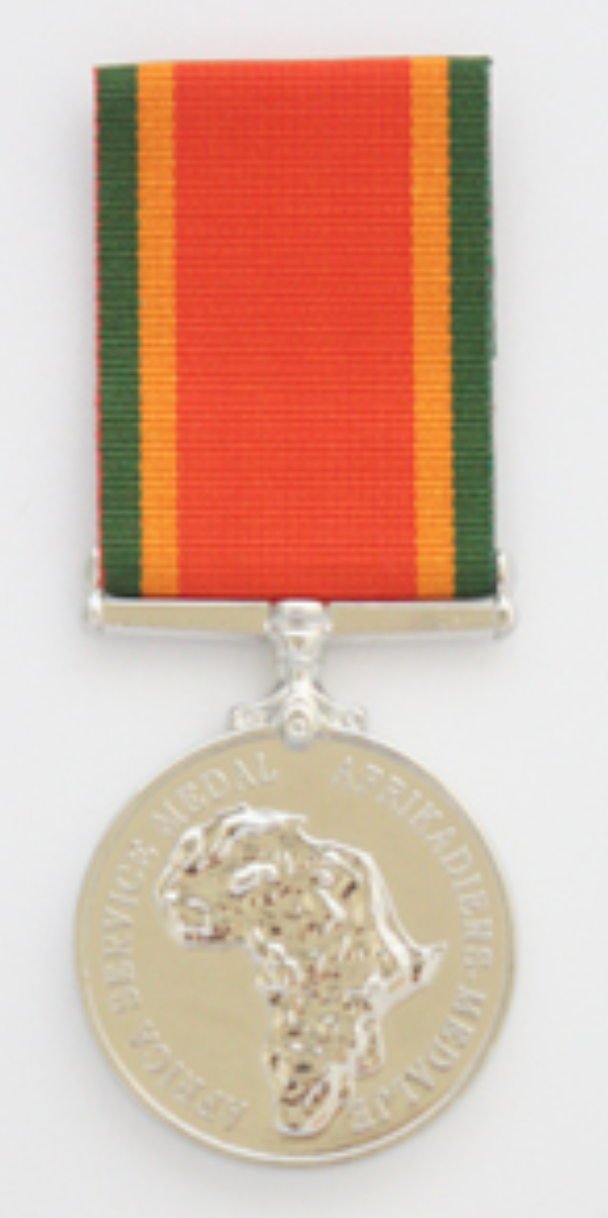
Of interest is the ‘Africa Service Medal’ awarded to all who served in South African Forces during the Second World War, the ‘red tab’ in this medal’s ribbon is symbolic of the The Red Oath taken and the tabs worn.

The ‘Erasmus Reforms’ to the defence force was implemented by FC Erasmus after the Afrikaner Nationalists came to power in 1948. Deemed more necessary when the Nationalists converted the South African Union’s Defence Force to that of the Republic’s Defence Force in 1961 and these reforms would see the idea of the ‘red’ oaths to the British royal family as the symbolic head of South Africa and red tabs removed. Some citizen force regiments however carried on with the tradition as a historical nod to their participation in the Second World War on their step out uniforms, the Cape Town Highlanders a case in point.


Written and Researched by Peter Dickens

References:

The Smuts Government Justification of Emergency Regulations and the impact thereof on The Ossewabrandwag (1939-1945) by Anna La Grange

The Springbok Record – published by the South African Legion

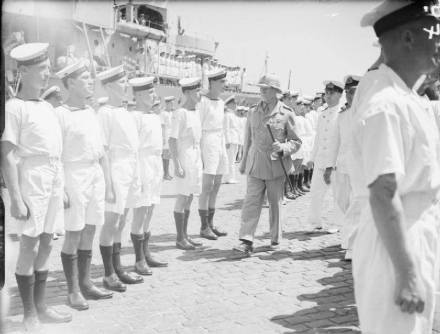
Smuts inspects the South African Navy in Egypt

Field Marshal Smuts Visits South African Naval Forces in the Middle East, 16 May 1942
Field Marshal Smuts, in khaki army uniform, inspects massed ranks of South African sailors on the quay side in Alexandria, Egypt, 16 May 1942.

Imperial War Museum

‘Orange’ is the new ‘Red’

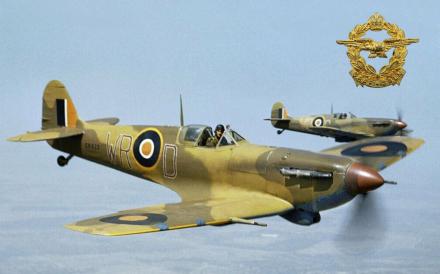
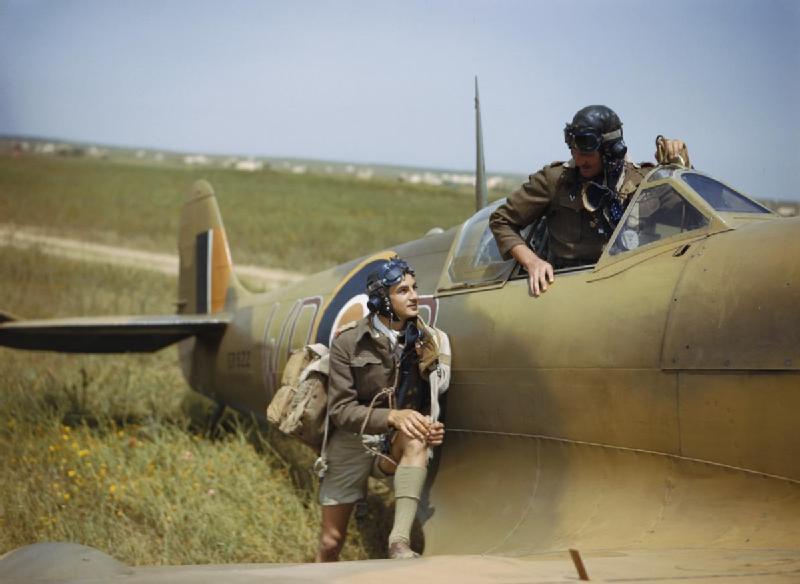
Original colour images of South African Air Force (SAAF) in Gabes in Tunisia April 1943.  Here we see a SAAF Supermarine Spitfire pilot of ER622, No 40 Squadron, SAAF as he confers with his ‘No 2’ after landing at Gabes.  This original colour image  shows off a key identifier that only the South African Air Force squadrons used in the Allied theatre of combat …. ‘Orange’.

208982_144336619069412_266276853_n

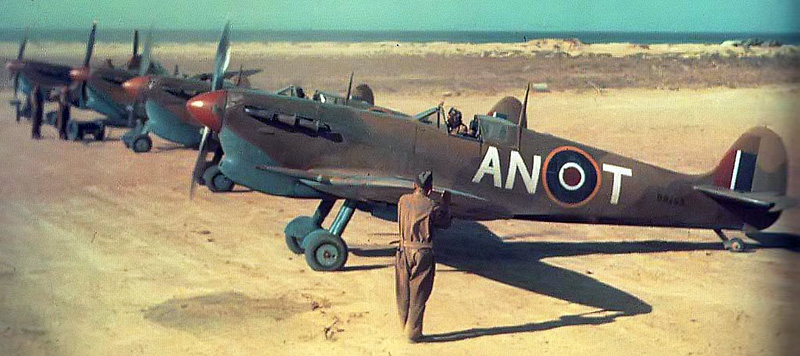
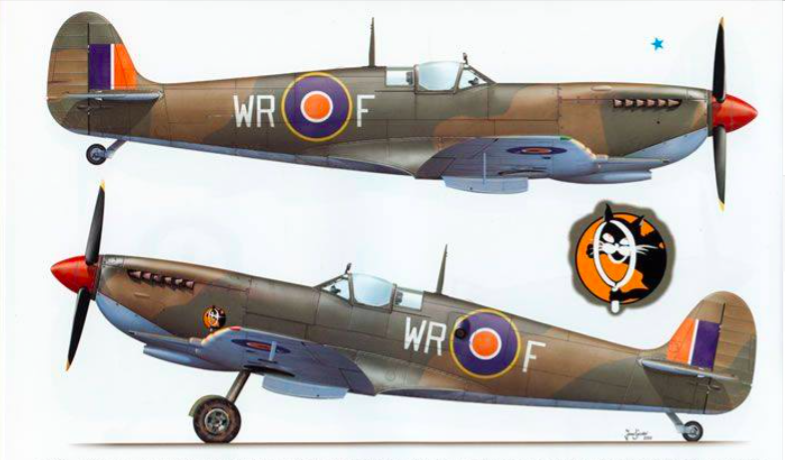
Note the distinctive ‘orange’ dot in the rondel identifier of the South African Spitfires, of all the commonwealth and British aircraft used in the north African campaign, the South Africans where the only ones to have the rondel in the colours of the ‘old’ national flag i.e. Orange, White and Blue on all their aircraft.

All others, British, Australian, New Zealand and Canadian air forces used a red centre in their roundel identifiers to signify the Union Jack (Flag) of Great Britain i.e Red, White and Blue, as seen in this original colour image below.

Spitfires

Allied Spitfires in Royal Air Force colour scheme, note the Red, White and Blue identifiers

Also note the officers in first photograph are wearing army rank insignia (not air force), another distinctive attribute specific to South Africa at the time.  To compare the difference in aircraft identifiers, here is the SAAF scheme, as shown by these SAAF 40 Squadron Spitfires in desert scheme.

Screen Shot 2016-03-10 at 11.38.51

This distinctive difference in SAAF identifiers to RAF and other commonwealth county’s identifiers was given the SAAF because of Jan Smuts’ influence in forming both the Royal Air Force as the first independent air force and the South African Air Force as the second oldest independent air force.  Also, the SAAF had identified a separate scheme as they were not a ‘Royal’ Air Force – as the RAAF (Royal Australian AF), RNZAF (Royal New Zealand AF) and RCAF (Royal Canadian AF) were.

Squadrons made up of pilots from Allied countries under occupation also flew in the British markings, the difference was a small national identifier usually found on their cowlings, the Dutch 322 Squadron for example used a small Orange triangle and the Poles used a small Red and White square.

A little history of the SAAF Spitfires featured 

As the 8th Army advanced through Libya into Tunisia, SAAF No. 40 squadron flew Tactical Reconnaissance (Tac.R) and Photo Reconnaissance sorties in support of ground operations.

SAAF 40 Squadron converted to the Supermarine Spitfire Vb at the end of February 1943. This variant had clipped wingtips to enhance its low-altitude performance, most notably its roll-speed. Sorties now included vertical and oblique photography, battle area Tac.R, target marking for fighter bombers, searches for night bomber targets, and identification of landmarks for day bomber navigation.

In early 1943 the squadron received Artillery Reconnaissance  training, however, unreliable radios meant that artillery shoots were not as successful as had been hoped. Nevertheless, the squadron continued to report the activities of enemy artillery.

Related work and links

Smuts and the Royal Air Force; The Royal Air Force’s 100th Birthday and its founder – Jan Smuts

Smuts and the Royal Air Force; Centenary of the ‘Smuts Report’, the instrument which gave birth to the Royal Air Force


Researched by Peter Dickens. Image copyright IWM Collection.  Reference Wikipedia