In the company of extremely brave men of the 1st South African Infantry Brigade, tasked with holding a wood against all odds, in what was the ‘fire hell battle on the Somme’ – the Battle of Delville Wood, it is quite something to stand out as the “bravest of the brave”.
William Faulds, a young man who won a Victoria Cross, the highest award for gallantry, at Delville Wood is quite literally a case of a normal young South African placed in an extraordinary circumstance, only to emerge with that “X” factor which sets him apart, and that’s quite something considering everyone around him can in their own right can take the mantle of the ‘bravest of the brave’, such was the nature of the battle.
To put his action into context, the South Africans holding Delville Wood on the Somme in 1916 were shelled by the Germans at a rate of 500 rounds per minute, into their positions which occupied a small wood only a square kilometer in size. In inadequate trenches (the wood’s roots prevented digging them deeply enough), when shelling stopped long enough they were faced with German Imperial troop attacks of such ferocity that the bayonet and hand to hand fighting became the only means to survive.
When the South Africans were relieved on 20th July 1916, just 5 days after entering the wood, of the 1,500 South African infantry men initially sent in, there were only 142 survivors still holding the wood.
So what does this young man do, a man who had worked at Midland Motor Garage in Craddock and who had only just turned 21, what makes him react differently and stand out in the midst of all the universal gallantry and carnage on an epic level? Here is his story:
Young William ‘Mannie” Faulds from Craddock, together with his brother, Paisley and some school chums joined up with the South African forces to fight during World War One. Arthur Schooling (his best friend), and William both enlisted together and went everywhere together. Together they even fought under the command of General Louis Botha during the South West African Campaign and then again in Egypt, before the two of them shipped out to fight in the Battle of the Somme in France.
During the Battle of Delville Wood (part of the Somme Campaign), on 16th July 1916, Arthur Schooling was shot dead in no-man’s land (the ‘killing zone’ between the South African and German lines), leaving a very distraught and shocked William Faulds feeling utterly helpless. On the same day, 16th July, Lt. Arthur Craig (1st Battalion Bravo Company) was also shot and lay wounded close to the body of Arthur Schooling in the killing zone (no-man’s land).
Pte. William Faulds dug deep to find the bravery for this, and along with Pte. Clifford Baker and Pte. Alexander Estment, all three took matters into their own hands to rescue their officer. In broad daylight at 10:30am, they climbed out from behind the relative safety of the defences and crawled to their severely wounded Lieutenant, then they ‘piggy-backed’ him back to safety. Pte. Baker was badly wounded in the attempt. Lt. Craig survived thanks to these three brave ‘Springboks’ and recovered his wounds later in the Richmond Hospital, London.
William Faulds and Alexander Estment returned to their positions in the wood and continued fighting in what can only be described as combat in the extreme. The initial act of gallantry alone was quite something, but there was still more in young Faulds, and it’s here that we start to see ‘X’ factor that makes a Victoria Cross recipient different from the rest.
Because just two short days later, he was faced with exactly the same situation again – a critically wounded comrade in no-man’s land, but this time William Faulds was alone, and once again he put his life on the line, exposed himself by leaving the relative safety of the trenches (such as it was) and entered no-man’s land (the ‘killing zone’) under intense incoming artillery fire, to rescue another yet another of his comrades and alone carried him from certain death, for nearly half a mile, to a medical station.
Victoria Cross
His citation for his Victoria Cross says everything:
“For most conspicuous bravery and devotion to duty. A bombing party under Lieut. Craig attempted to rush across 40 yards of ground which lay between the British and enemy trenches. Coming under very heavy rifle and machine gun fire the officer and the majority of the party were killed or wounded. Unable to move, Lieut. Craig lay midway between the two lines of trench, the ground being quite open. In full daylight Pte. Faulds, accompanied by two other men, climbed over the parapet, ran out, and picked up the officer, and carried him back, one man being severely wounded in so doing.
Two days later, Private Faulds again showed most conspicuous bravery in going out alone to bring in a wounded man, and carrying him nearly half a mile to a dressing station, subsequently rejoining his platoon. The artillery fire was at the time so intense that stretcher-bearers and others considered that any attempt to bring in the wounded man meant certain death. This risk Private Faulds faced unflinchingly, and his bravery was crowned with success (London Gazette 9 September 1916)”.
With that, William Faulds became the first South African born recipient of the Victoria Cross (VC) during World War 1. It was this extra rescue, the repetition of bravery in the extreme which set him apart from his two comrades involved in the first rescue of Lt. Craig, no doubt equally extraordinary – both Clifford Baker and Alexander Estment were awarded the Military Medal (MM) for bravery.
William Faulds continued to fight, and again showed bravery and leadership in the extreme, and was later awarded the Military Cross (MC), a lessor award to the Victoria Cross, but no less important. He received it for leading men during German attacks at Heudecourt, enabling rest of Battalion to withdraw with only slight losses.
Military Cross
His second citation for the Military Cross says everything and reads:
“In the retirement from the line east of Hendicourt, 22 March 1918, he was commanding one of the platoons which formed the rear-guard. He handled his men most ably, and exposed himself freely. Though the enemy pressed hard, he, by his fearless and able leadership, checked them, and enabled the remainder of the battalion to withdraw with slight loss”.
He was eventually wounded and captured by the German Forces on 24th March 1918 at the Battle of Marrieres Wood. He was released as a prisoner-of-war after the Armistice on 11 November 1918 and returned to South Africa.
Post War
On his return he was promoted to a Lieutenant and took up a civilian job as a mechanic with De Beers Diamond Mine. In 1922 he re-enlisted with the Kimberley Regiment and was made a Captain. Later he moved to Rhodesia (now Zimbabwe) and in 1937 he was member of Southern Rhodesia contingent at the King’s Coronation.
Not without a sense of humour, when his daughter was born he expressed the wish of having her named Victoria Faulds (falls). His wife objected strongly to what would have stacked up to become potential ridicule for the young girl and she was christened “Joy” instead.
William Faulds died on the 16th August 1950 in Salisbury (now Harare) and is buried in the Salisbury Pioneer Cemetery. His Victoria Cross was held by the Museum of Military History in Saxonwold, South Africa, and such is the nature of our disregard for national heroes and treasures, it was stolen from the museum in October 1994.
Researched by Peter Dickens
References: The VC and the GC, The Complete History, published by Methuen and The VC and GC Association in 2013. Three of South Africa’s WW1 Delville Wood heroes – by Miss Joan Abrahams.
The painting is an artist`s impression of the action at Deville Wood for which William Faulds was awarded the Victoria Cross. From the book “Deeds that thrill the Empire” Vol 5. Insert Artwork: Men in the Trenches, near Hendicourt by Adrian Hill, Imperial War Museum copyright
World War 1, Battle of Delville Wood, what better way to understand the carnage witnessed than by reading the writings of the young South Africans tasked to “hold the wood at all costs”.
Walter Giddy was born at Barkly East, Cape Province, South Africa, in 1895. He was the third son of Henry Richard Giddy and Catherine Octavia Dicks/Giddy. Walter was schooled at Dale College in King Williamstown. He voluntereed, together with friends, for overseas military service in 1915. He served in the 2nd S.A. Infantry Regiment. Having survived the battle of Delville Wood, he was killed by shrapnel on the 12th April 1917 near Fampoux. Walter Giddy is commemorated by a Special Memorial in Point du Jour Military Cemetery, Athies.
His diary was copied by his younger sister Kate Muriel Giddy/Morris.
Extracts from Walter’s Diary
4th July 1916
Still lying low in Suzanne Valley. The artillery are quietly moving up. We shifted up behind our old firing line, where the advance started 2 or 3 days ago. The dead are lying about. Germans and our men as well, haven’t had time to bury them. The trenches were nailed to the ground, and dead-mans-land looked like a ploughed field, heaps must be buried underneath…
5th July 1916
… it rained last night and we only have overcoats and waterproof sheets, but I cuddled up to old Fatty Roe, and slept quite warmly. There are no dug-outs where we are at present, and the shells are exploding uncomfortably near.
Had a man wounded last night for a kick off. The Huns are lying in heaps, one I noticed in particular had both legs blown off, and his head bashed in. Some have turned quite black from exposure. They are burying them as fast as possible. Brought an old fashioned power horn, Hun bullets, nose-caps of shells, etc., back with me, but I suppose they’ll be thrown away.
6th July 1916
Told to hold ourselves in readiness, expecting an attack. Received draft (£5) from Father.
7th July 1916
Made to sleep in the trench on account of the Hun shells flying a bit too near, had a cold rough night, but things have quietened a bit this morning, so we are back in our little shack made out of waterproofs. Bloody Fritz, he had started shelling the road, about 400 yards away and directly in line of us. A Frenchie was standing on the parapet and was excitedly beckoning to us. He’d put up his hands and point to a communication trench ahead. Couln’t make out what the beggar was driving at, so we ran up to him, and ahead were dozens of Hun prisoners filling out of the trench. It rained so hard our shack was just a mud-pool, busy drying our kit.
8th July 1916
3rd S.A.’s were relieved by the Yorks who went over this morning 400 strong and returned 150 strong. Then our S.A. Scottish went over with a couple of the Regiments and took the wood, and I believe lost heavily, but are still holding the wood.
Seaforth, Black Watch, Cameron, P.A., G.P.S. are going over in the morning, so there will be some bloodshed, if they get at close quarters with cold steel. Hun sent over some Tear Shells, which made our eyes smart, but were too far to cause much trouble. Two of our companies were up to the firing line, and T. Blake, of our platoon, acting as guide, had his jaw bone shattered, and another man had his head blown off. Three guns of the 9th R.F.A. were put out of action, they say the Huns have “smelt a rat”, and brought 12″ and 9.2 guns up, so I guess we shall have a lively time. I’d love to see the four “Jock” Regiments go over in the morning. The Huns hate them like poison, yet I do no think their hate exceeds their fear. For them, 100 and more prisoners have been brought in, past us. The Huns were sending shells over our heads, all day, one dropped in the valley, below, killing two and wounding five of the R.F.A.
9th July 1916
Shall never forget it, as long as I live. Coming up the trench we were shelled the whole time, and to see a string a wounded making their way to a dressing station, those who can walk or hobble along ; another chap had half of his head taken off, and was sitting in a huddled up position, on the side of the trench, blood streaming on to his boots, and Jock lay not 5 yards further with his stomach all burst open, in the middle of the trench. Those are only a few instances of the gruesome sights we see daily. A I am writing here, a big shell plonked into the soft earth, covering me with dust, one by one they are bursting around us. I am just wondering if the next will catch us (no it was just over). Oh ! I thought one wound get us, it plonked slick in our trench and killed old Fatty Roe, and wounded Keefe, Sammy who was next to me, and Sid Phillips, poor beggar, he is still lying next to me, the stretcher bearers are too busy to fetch him away.
The Manchesters had to evacuate the wood below us, and we the one along here. I’m wondering if we will be able to hold this wood, in case of an attack, as our number is so diminished. I’ve seen so cruel sights today. I was all covered in my little dug out, when old Sammy was wounded, had a miraculous escape.
10th July 1916
Still hanging on, and the shells flying round, three more of our fellows wounded, out of our platoon. Took Fatty Roe’s valuables off him and handed them over to Sergeant Restall… We have no dug-outs, just in an open trench. Of course we’ve dug in a bit, but its no protection against those big German shells… Harold Alger has been badly knocked about. I’m afraid he won’t pull through, arm and leg shattered by shrapnel. I had a lucky escape while talking to Lieutenant Davis, a piece of shrapnel hit on my steel helmet, and glanced past his head. He ramarked “That saved you from a nasty wound”, (referring to the helmet). The S.A. lads in our platoon have stuck it splendily, it has been a tough trial this.
We heard cries from the wood further down, and Geoghan and Edkins went to investigate, finding three wounded men lying down in the open. They had been lying there three days among their own dead, and had been buried a couple of times by their own shells, and the one brought in had been wounded again. They asked for four volunteers to bring in the other two, so off we went. It was an awful half hour, but we were well repaid by the grateful looks on their haggard faces. Poor old Geoghan was hit, his head was split off by shrapnel. Four of us buried him this morning.
11th July 1916
We were relieved by our own Scottish, and are back at our former camping ground, but I do feel so lonely, out of our mess of 5, only 2 of us left and my half section gone as well. We were right through the Egyptian Campaign tog, as half sections.
A Yorkshire man brought a prisoner over this morning, while we were still in the trenches, and he halted to have a chat. Our Corporal could speak German, so he gave the prisoner a cig. and he told us all we wanted to know. He was a Saxon and was heartily sick of the war, and our artillery was playing up havoc with their infantry, since the beginning of the Battle of the Somme. I didn’t say anything, but their artillery had given our men as much as they could bear.
12th July 1916
About 2 miles back and still the Huns had the neck tu put a shell into us, killing one man and wounding another. The Rev. Cook was killed while helping to carry in wounded. I have just been watching the Huns shelling the wood we came out of yesterday. It looks as though the wood is on fire, the smoke rising from the bursting shells. The Scottish (ours) relieved us too, and we lost 16 out of our platoon in it. It was a cruel three days, espacially when Manchester were driven out of the woods, 700 yards, in front of us, we were expecting the Huns over any minute, but the Huns would have got a warm reception. Then the Bedfords retook the wood, the full morning, which strengthened our position.
13th July 1916
Allyman found us again bending. I thought we were so safe for a bit. A shell planked out into the next dug-out to mine, killing Smithy and wounding Edkins, Lonsdale, Redwood and Bob Thompson, 3 of them belonging to our section. Only 3 of us left in Sammy’s old section. It’s a cruel war this. Just going up to dig graves to bury our dead. We buried Private Redwood, Smith and Colonel Jones, of The Scottish. General Lukin was at the funeral, he did look so worried and old.
14th July 1916
News very good this morning. our troops driving the Huns back, and the cavalry have just passed, they look so fine. The Bengal Lancers were among them, so I was told. We’re under orders to shift at a moment notice. It rained heavily this morning. I hope it does not hamper the movements of the cavalry. If this move ends as successfully as it has begun, it will mean such a lot to the bringing of the war to an end. Our chaps are getting so tired of the mud and damp. There’s such a change in the sunburnt faces of Egypt, and this inactivity makes one as weak as a rat. The cavalry have done excellent work, now it remains to us infantry to consolidate the positions. We’re just ready to move forward…
15th/16th July 1916
We (South African Brigade) went into Delville Wood and drove the Huns out of it, and entrenched ourselves on the edge, losing many men, but we drove them off, as they wound come back and counter attack. Then snipers were knocking our fellows over wholesale, while we were digging trenches, but our chaps kept them off. I got behind a tree, just with my right eye and shoulder showing, and blazed away.
We held the trench, and on the night of the 16th July they made a hot attack on out left, 16 of them breaking through, and a bombing party was called to go and bomb them out (I was one of the men picked). We got four and the rest of them cleared out. It rained all night, and we were ankle deep in mud, rifles covered with mud, try as we would, to keep them clean.
17th-20th July 1916
The Huns started shelling us, and it was just murder from then until 2 o’clock of the afternoon of the 18th, when we got the order to get out as best you can. I came out with Corporal Farrow, but how we managed it, goodness knows, men lying all over shattered to pieces, by shell fire, and the wood was raked by machine guns and rifle fire. Major McLeod of the Scottish was splendid. I have never seen a pluckier man, he tried his level best to get as many out as possible. We fall back to the valley below, and formed up again. I came on to camp and was ordered by the Doctor to remain here, having a slight attack of shell shock. I believe the 9th took the wood again, and were immediately relieved, but the lads are turning up again in camp, the few lucky ones. If it was not for a hole in my steel helmet, and a bruise on the tip, I would think it was an awful nightmare…The lads stuck it well, but the wood was absolutely flattened, no human being could live in it.
Major McLeod was wounded, and I gave him a hand to get out, but he would have I was to push on, as I would be killed. Many a silent prayer did I sent up, for strength to bring me through safely. I found a Sergeant of the 1st all of a shake, suffering from shell shock, so I took his arm and managed to get him to the dressing station. Just shaken hands with my old pal John Forbes. He is wounded in the arm and is off to Blighty. I quite envy him.
A sad day of S.A… They say we made a name for ourselves but at what a cost. All the 9th are resting on a hillside. Small parties of 25 to 40 men form the companies, which were 200 strong a short two weeks ago. We have taken back several miles…
21st July 1916
Had a bathe in the Somme, and a change of underwear, now lying on the green hillside listening to our Division band, a happy day for the lads that were lucky enough to come through.
22nd July 1916
… General Lukin had us gathered round him, and thanked us for the splendid way in which we fought in Delville and Bernafay Woods. He said we got orders to take and hold the woods, at all costs, and we did for four days and four nights, and when told to fall back on the trench, we did it in a soldier like way. He knew his boys would, and he was prouder of us now, than even before, if he possibly could be, as he always was proud of South Africans. All he regretted was the great loss of gallant comrades, and thanked us from the bottom of his heart for what we had done.
With the courtesy of the nephew of Walter Giddy, John Morris of Knysna, South Africa, and his daughters Kathy Morris/Ansermino of Vancouver, Canada, and Wendy Morris/Delbeke of Deerlijk, Belgium
Feature image: Illustrated London News Lithograph by the Spanish artist – José Simont Guillén (1875-1968)
Insert illustration: Frank Dadd from a description of the Battle of Delville Wood by a British Officer. The Graphic Aug 19, 1916
Insert Image: Brass relief depicting a group of South Africans leaving Delville Wood after the battle, located at the Delville Wood Museum in France. Brass by sculpter Danie de Jager.
Walter Giddy image and post content courtesy The Delville Wood memorial – website www.delvillewood.com
You may have heard the joke the old South African World War 2 North African campaign veterans used to often tell about ‘Italian Bravery’ – how many gears does an Italian tank have? Answer; one forward and four in reverse!
History is very cruel to these very brave Italian tankers fighting alongside Nazi German forces and the likes of Rommel against the South Africans, British and Allied forces.
Weighting only 14 tons, by Allied standards the Italian M13/40 tank was seen as a light tank. For the unfortunate crews who manned it, it was nothing short of a death-trap.
Its semi-automatic 47 mm Ansaldo 47/32 gun could penetrate 1.7 inches (43mm) of armour at 550 yards (503 m), making it more than adequate to deal with most allied tanks -saved for the cumbersome Matildas- and its diesel engine had a low probability of catching fire when hit, but it lacked power which made the M13/40 a slow moving target, specially off-road.
Although it had armour deemed adequate by 1940 standards, this was made of low quality steel which lacked tensile strength, resulting in a higher probability to shatter when hit, spraying the crew inside with deadly pieces of metal from their own armour.
To these men in dark blue overalls, destined to fight on unequal terms, history has often been cruel. Nevertheless, time and again, they charged gallantly against a superior adversary, often paying the ultimate price for their courage.
Note on the main featured image: The number 3 on the turret and the rectangle with a white stripe identifies this tank as the 3rd tank of first Platoon. The rectangle background colour identified the Company, the number of stripes the Platoon.
These Italian tanks were easy prey to the British, South African and other Commonwealth and Allied forces, here a member of the crew of an Italian M13/40 tank giving himself up near Gazala. His captor might be a soldier of the Polish Independent Carpathian Rifles Brigade (part of the British and ‘Allied’ forces in North Africa).
As courageous the Italian tankers in these tanks were, so too were the Australian ones, as captured kit, including tanks were always handy as they afforded more protection than not having the convenience of armour at all. Here’s an interesting colourised photograph of the re-taking of Tobruk by the Allied forces.
Note the port installations as they burn again over the harbour on 24 January 1941. Of interest to this article, note in the foreground, here later version M11/40 (on the left) and M11/39 (on the right) Italian tanks can be seen, under new ‘ownership’. White kangaroo symbols can be seen on the tanks, now the possessions of the 6th Australian Division.
Researched and Written by Peter Dickens. Original’s source of feature photograph unknown, feature image, colourising and caption by “In colour veritas”. Insert image – Imperial War Museum copyright. Colourised Australian M11 tanks by Benjamin Thomas, Photographer: Lieutenant L.B. Davis, No. 1 Army Film & Photographic Unit – Imperial War Museum.
Sometimes someone sends you something priceless. This is a letter written in the Area of Operations in 1982, during the SWA/Angola Border War. It is written by Angelo Angelides to his son, Ryan who was just 3 years old at the time.
In it he expresses his reasons for fighting in a manner only a small 3 year old can try to understand. It also shows the deep sense of anguish and fore longing caused by conscripts called up to duty away from their families.
9 Nov 1982
Dear Ryan
Thanks for your letter son with all squighs and circles I got the message. You love me. Well son the same goes for you I love and miss you and it is not long now before I am home again.
Don’t forget that I am up here today for your tomorrow.
Well your Mom say’s you are naughty. Don’t worry I am not cross with you because I love you. Don’t cry for your Dad because I am home soon.
Lots of Love
Angelo wrote it whilst he was a member of the Transvaal Scottish and off fighting in Angola at the time.
Angelo Angelides (left with beard) and his brother Basil, serving with him at the same time – pictured 1978
My deepest thanks to Ryan Angelides for sharing this priceless memory.
Amazing image taken at Fort Capuzzo in Libya during WW2 – December 1941. Two German Afrika Corps soldiers – now Prisoners of War (POW) – hitch a ride into captivity on the front of a 2nd South African Division Marmon-Herrington Armoured Car.
The Marmon-Herrington Armoured Car was a series of armoured vehicles produced in South Africa and adopted by the British Army, other Commonwealth Forces (India used them) and South African army during World War II. Highly popular as they could be adapted into all sorts of roles and configurations, some captured examples even made their way into the German army and other Axis forces during the war.
Now what is truly remarkable about this photograph? Well it shows a bunch of armed South African soldiers during World War 2 who by all accounts never carried a firearm and by directive were not allowed to either. These are members of the South African Native Military Corps (NMC), and it’s proof positive that there is no such thing as skin colour or ‘Segregation’ legislation when under fire.
This photograph was taken by Warren Loader’s Grandfather Noel Edgar Fuller while serving with The Royal Durban Light Infantry (DLI) B Coy in North Africa during WW2. What makes this photo remarkable is the DLI L/Cpl is standing next to three armed members of the South African Native Military Corps (NMC).
So, visual proof that .303 Lee Enfields were issued to some members of the NMC, but what is the validity of this rare photograph?
Official Policy
During the Second World War the South African government of the day held out that members of the NMC could only function in non-combatant roles, and were not allowed to carry firearms whereas funnily members of the Cape Corps (Cape Coloured members) where fully armed and enrolled in combatant roles. In terms of the race politics of the day, on the arming of Black soldiers at the beginning of war, Smuts’ government had to bow to the pressures of his opposition, the Nationalists, led by DF Malan.
The Nationalists were vociferously opposed to black South Africans in the army at all, even unarmed. As Dr D.F. Malan was to be quoted in Parliament: “To every Afrikaner, the use of black troops against Europeans is abhorrent.”
Faced with all this opposition in Parliament from the official opposition bench Smuts had little choice, he needed men to fight, and had to tap South Africa’s black population for resources. So he found a way by striking compromise, they could carry traditional weapons in the form of spears and knobkerries.
The president of the ANC in the war years, Dr AB Xuma, responded: “They are expected to fight aeroplanes, tanks and enemy artillery with knobkerries and assegais. What mockery.”
Arming the Native Military Corps with Spears
So, in a counter-intuitive move to the National Party’s objections and statements to the Smuts government, the Native Military Corps were trained in traditional weapons (other than firearms) which they were allowed to carry. This was a long spear, and bear in mind spears are very deadly (as the British fighting at the Battle of Isaldwana found out) – but lets face it, spears were very out of date in the context of modern war, but they pressed on and in training the South African Native military corps even trained to charge with the spear, even through tear-gas screens.
South African Native Military Corps members charging with traditional spears into a teargas screen
Secretly arming the some Native Military Corps members with Firearms
All this political segregation and racial discrimination became quite irrelevant when serving in combat areas and in many instances serving Regiments, Units and Sections of the South African Army quite quickly issued firearms to their NMC ‘support’ members – and this photo of DLI members stands testament of such practice.
Thier lives – Black or White, depended on it, and logic prevailed. As is often the case in combat, the man who joins you in the fight is your brother – irrespective of the colour of his skin – in combat there is no such thing as racial segregation in a foxhole.
The caption written on Noel Edgar Fuller’s photo is “our Lance Corporal and his two native pals”. Quite a lot can be seen and said to this remarkable snapshot into the attitude of the time versus the attitude of soldiers.
Job Maseko MM
Job Maseko MM
In addition to snapshots like Noel’s one, there are actual accounts of South African Native Military Corps getting into the fight at the Fall of Tobruk, and it produced one highly decorated South African from the SA NMC.
During the Fall of Tobruk, over 1200 NMC members found themselves in a frontal attack by Rommel and his Axis forces. Many of them were quickly issued rifles and ammunition and got into the fight alongside their white compatriots. Job Maseko was one and he ferried ammunition to the other NMC members who had been issued rifles and were in the thick of the fighting.
After the Fall of Tobruk (South Africa’s greatest capitulation of arms, Job found himself and other NMC members taken prisoner of war. Made of stern stuff, whilst been put to work by the Germans on the Tobruk dock loading and off-loading Axis suppliers, Job secretly created a bomb using a condensed milk tin, cordite taken from bullets and an extremely long fuse. His intention, sink a ship!
Job placed his home-made bomb deep inside the bowels of a German freight ship (and “F” Boat) that was docked in the harbour at Tobruk. He skilfully placed it next to fuel barrels for maximum effect, lit the fuse and made good his escape. Had he been caught, as a Black POW, he would have certainly been put to death if not tortured first.
Job waited and later the ship shuddered from a huge internal explosion and sank almost immediately into the harbour.
He later escaped from Tobruk and walked, for three long weeks though the desert and through enemy lines, all the way to El Alamein, he intended joining the battle there as he had fixed an old German radio he had found which informed him about General Montgomery’s epic and tide turning battle at El Alamein. We still await the full historical account of this remarkable man as very little is known to this day, rest assured historians are now writing it.
Sergeant Petrus Dlamini
Now consider this remarkable first hand account of armed Native Military Corps soldiers in the thick of the fight at El-Alamein
The Germans ran away. Now we were having short magazine guns, we pushed them. They said we went 300 miles … (we were in the) 8th Army led by (British Field-Marshal Bernard). Montgomery. Those Germans never came back. We fought as one; black and white soldiers.” — Sergeant Petrus Dlamini speaking about the battle of El Alamein to filmmaker Vincent Moloi
After 1948 this history was held back from the ‘White’ population and to a very large degree from the ‘Black’ population for political expediency ,it is only been recounted now with the very few remaining NMC members. In effect South Africans were denied the opportunity to know their own history.
All that is starting to change now. From their recollections we know that, although black soldiers left South Africa armed only with spears, when they got “Up North” (to the North and East African campaigns) many were armed with rifles. We also know now some even fought alongside white soldiers in the thick of battle.
Sergeant Petrus Dlamini spoke of being at Sidi Rezegh, Mersa Matru, Tripoli, Garowe in then Abyssinia and El Alamein before he went by boat to Italy with the South African 1st Division. He remembered doing guard duty in North Africa.
He says: “There, at Garowe, we were guarding as a sentry. We were guarding with assegai.” But just a few months later, Dlamini adds: “It was said — I heard a rumour — that the superiors [commanding officers] of South Africa, England and Australia said we must be given guns. Those guns were taken from the Italians in Kenya. They gave them to us and we were taught how to put ammunition and we were training with guns”.
Short Magazine .303 Lee Enfield No. 4 Mk 1, standard issue
“Then we went to El Alamein and they took these [Italian] guns that were not right and they gave us short magazine Lee-Enfield .303. We got them at El Alamein.” The Lee-Enfield .303 short magazine was the standard rifle issued to all British and Commonwealth troops.
This has been verified in an article in the South African Historical Journal by historian LWF Grundling, who says: “Recruits received rifle musketry training, which was seriously handicapped by the defective Italian rifles with which they were issued.”
General Sir Pierre van Ryneveld
According to this research it was General Sir Pierre van Ryneveld himself who instructed the commanding officers in North Africa to arm black soldiers with Lee-Enfield rifles before El Alamein. No small player, General Sir Pierre van Ryneveld was the Chief of General Staff (which today is known as Chief of the South African National Defence Force) and led the South African war effort in the Second World War.
But this does not seem to have been mentioned in despatches (possibly because of the petty race political ramifications back in South Africa of the Nationalists).
Sergeant Dlamini said: “In the front line we were accompanied by whites. When we go to fight the Germans we were mixed.”
He spoke vividly of the battles he was in. Moloi recorded his description of the battle of El Alamein.
“It was like bees, those German planes together with our planes, the Royal Air Force and the South African Air Force. Many died there. Shots were like falling rain. They would hit here and here where you are sitting. When you are sleeping in your trench you would hear sounds of bombs all the time, when you wake up you would see those injured and those who are dead.”
Dlamini says they were with the 8th Army. as they pushed the Afrika Korps and Axis forces out of Africa, he goes on “It [the 8th Army] pushed. Ai! Man! It was terrible, soldiers were lying dead, black and white, but the Germans were retreating and we kept following them. The Germans ran away. Now we were having short magazine guns. We pushed them. They said we went 300 miles … 8th Army led by Montgomery. Those Germans never came back. They went down together with the Italians you see.”
Rare original colour photograph of a NMC Field Kitchen in North Africa campaign, note the high degree of integration of the South African soldiers represented.
Dlamini added: “We were one. We fought as one; black and white soldiers. Here in South Africa (before we went up north) we were treated differently. Blacks were sleeping this side, whites on the other side. When we arrived in Egypt we mixed. If we made a queue, in front would be a white person, behind would be a black person then a white person. We were one.”
And, perhaps explaining why he had not spoken of his experiences before, he added: “You know the heart of a soldier. Your feelings die. You are always angry.”
Besides Moloi’s interviews with Dlamini, and with several other black World War II veterans, almost no records of the wartime experiences of black soldiers exist. And as it’s probably too late now to collect more, Moloi’s transcribed and translated interviews are a national treasure.
Lucas Majozi DCM
Lucas Majozi DCM
Adding to Job Maseko’s gallantry, another NMC man was to attain hero status during the Second World War was Lucas Majozi, a man who performed a feat very similar to Pvt. Desmond Doss (who has a movie ‘Hacksaw Ridge’ made over his gallantry and US ‘medal of honour’), and like Doss, as an unarmed medic Lucas time and again exposed himself and walked into the hell of machine gun fire as an unarmed medic to rescue a large number of critically injured ‘white’ South African soldiers on the battlefield during the Battle of El Alamein, so much so he became riddled with bullets himself and eventually collapsed.
This is South Africa’s own ‘hacksaw ridge’ and movies should be made of it, Lucas Majozi should be elevated to the highest accolades of gallantry we have to offer today. He remains the NMC with the highest decoration to this day – the Distinguished Conduct Medal.
Politically inconvenient ‘Sacrifice’
It’s an often ignored fact and statistic – one which most certainly the National government after 1948 did not want widely published, lest national heroes be made of these ‘Black’ men. Simply put the ‘Black’ contributions to World War 1 and World War 2 were quite literally erased from the narrative of the war after 1948 and dismissed by the incoming Apartheid government as ‘traitors’ (a tag also suffered by their ‘White’ counterparts) for serving the ‘British’.
Bear in mind when reviewing what this actually means to the prevailing opinions by many South Africans of the war (White and Black) – approximately 40% of the standing South African servicemen in WW2 where persons of “colour”. In all more than 146,000 whites, 83,000 blacks, and 2,500 people of mixed race served in the standing forces of the Union of South Africa at this time. Mull that over for a minute.
The sacrifice of the men of the Native Military Corps no less significant – if you think that as ‘non combatants’ this corps came through unscathed by war, also think again – this is the honour role of those NMC members who laid down their lives during the war, their sacrifice is literally quite eye-opening:
In total approximately 1655 Native Military Corps members died during World War 2, read that again – One Thousand Six Hundred and Fifty Five ‘Black’ South African soldiers died during World War 2. That’s almost three times the number who died on the SS Mendi during World War 1, and that’s only from one ‘Corps’.
Put into context, nearly as many South Africans died during the entire 23 years of fighting during the Border War in the 70’s and 80’s when approximately 2013 South African service personnel died – from all arms of the military …. yet, here we are talking about only ‘one’ single Corps of Black South Africans and only five years of conflict. Consider that the book shelves on South African history are stuffed full of books on the Border War and not one single book is dedicated to the history of the South African Native Military Corps in World War 2. There is also almost nothing by way of definitive work on the unit history on the internet.
In Conclusion
It must be noted that this policy of arming NMC was not a universal one and only seemed to have been actioned with certain members in front line units or when combat situations demanded it, in reality reason finally prevailed.
It also seems that once high intensity combat operations abated these rifles were handed back. For the most part many NMC members went through the war in non-combatant roles and unarmed in roles like supply truck drivers, medics, chefs, bomb loaders, engineering labour (rail and bridge-building) etc.
It is unfortunate that after the war, and when the Nationalists ascended to power in 1948, that the NMC was disbanded and history scrubbed. They were excluded from national parades and would sit under a tree and tell their stories to anyone prepared to listen. Their stories really becoming fable in the Black community only, any record of NMC using weapons was generally written out the state’s historical narrative, interviews with them disregarded and these priceless historical nuggets are only starting to re-surface now in a post Apartheid epoch.
NMC Insignia
The history of the South African Native Military Corps needs to resurface – it’s screaming out for more definitive works and information access – this featured photograph alone calls for it. We need to fundamentally rethink who and what has been sacrificed to military conflict by South Africans of all ethnic origins, we need to completely re-dress how we honour them and we need to take some serious perspective.
Written by Peter Dickens. Image copyright of NMC members holding weapons to Warren Loader, used with his kind permission. Paintings of Job Maseko and Lucas Majozi by Neville Lewis copyright. Quotes obtained from ‘Memories of black South African soldiers who bore arms and fought in War II’ by Marilyn Honikman
The Battle of Cassinga was the very first South African airborne attack, it was also the first full-scale airborne attack in Southern Africa. The target was a South West African People’s Organisation (SWAPO) military base at the former town of Cassinga in Angola on 4 May 1978. As it was a ‘first’ in many respects it would also carry with it many learnings and many controversies.
Upfront let’s dispel with the untruths and challenge the prevailing myths and truths. The Battle of Cassinga is today mourned in Namibia as a public holiday, politically it is referenced as an Apartheid “massacre” of ‘innocents’ – the deliberate targeting of refugees and civilians in a refugee camp. However, this is a political narrative to gain political currency and simply put this is a myth, it is an untruth.
That civilians were killed in the cross fire during the battle, unfortunately that is truth, that a large number of civilians died at Cassinga, that is also a truth. That civilians are very often the casualties of war, any war the world over, this is also unfortunately a prevailing truth.
Also, a truth is that there are extensive records and photographs covering the SADF’s planning and actions around the operation (declassified since the change of government in 1994), no SWAPO records exist at all. The only other things that exist is the photographic evidence of a mass grave, which was re-opened after the battle for journalists to take photos, photos of the camp taken by journalists prior to the attack showing a military recruitment base with a large component of civilians in support of it and photos taken by the SADF Commanding Officer on the ground – Colonel Lewis Gerber, from the Camp Commander’s desk which show a SWAPO recruitment operation at Cassinga.
That Cassinga was a military base housing PLAN (SWAPO military personnel) there is absolutely no doubt, and therefore it was a legitimate SADF military target, that is also a truth. That there were misjudgments in planning and execution, like any military operation anywhere, this is also a truth. That the definition of what type of military base it was i.e. a recruitment depot, that definition was unclear to the SADF at the time of striking it and that is also an unfortunate truth.
So let’s have a look at how this Operation, Operation Reindeer, stacks up as a military battle, and lets examine how civilians came into the cross-fire.
A Military base or Refugee Camp?
Aside from the overwhelming volume of Intelligence gathered by the SADF prior to the attack pointing to the fact it was a legitimate military base and target, the case was taken to The Truth and Reconciliation Commission (TRC) in the 1990’s. The TRC themselves challenged all sides of the story, and it’s the TRC records which found Cassinga base to be the following:
A SWAPO (PLAN) unit posted at Cassinga consisted of approximately 300 male and female PLAN cadres. The military section of Cassinga was easily partitioned from the non-military sections. The overall commander of PLAN in town was Dimo Amaambo, who responsible for the co-ordination of all PLAN actions in Southern Angola, including incursions into South West Africa/Namibia. A headquarters such as Cassinga was second in importance only to Lubango, which was the overall SWAPO military headquarters in Angola. Aside from the system of trenches and bunkers, defensive equipment included two ZPU 14.5 mm anti-aircraft guns, one ZU-23-2 23 mm gun, and around one or two ZSU 12.7 mm guns. These were all capable of being used in a ground attack role.
The simple fact is that the SADF encountered trained and armed SWAPO (PLAN) combatants, large AA guns, defensive structures, SWAPO military commanders and depots full of weapons and ammunition of all sizes. This was a military base, but what sort of base?
So where does this argument of ‘refugee’ and ‘refugee transit camp’ come from?
According to one source, in the weeks preceding the attack, civilian numbers were growing rapidly inside Cassinga. This build up consisted of a number Namibians going into ‘exile’ to join SWAPO in the months preceding the attack and the intake in this camp of these civilian ‘exiles’ joining SWAPO was particularly high. It was normative at the time that a civilian recruit joining SWAPO/PLAN as a combatant often went into ‘exile’ with his or her family (in whole or in part) in support.
A truck usually picked up these SWAPO/PLAN recruits and their civilian entourage at Cassinga and took them onward to their training bases in Jamba and Lubango. Cassinga operated as a Recruiting Depot and a Holding Depot to verify recruits. This truck to take them to their training bases did not arrive in the preceding weeks before the attack . The result was a bottleneck at Cassinga of people (Recruits, Civilians and Armed Soldiers) who under normal circumstances would have left the camp within days.
Another source agues that the civilians in the camp were made up of both soldier’s family members and dependents and some 200 civilians ‘abducted’ by SWAPO in northern South West Africa a few months earlier, and brought to Cassinga in a bid to convince UN aid agencies that they needed food and funding, which they duly received.
The ‘abduction’ of civilians for ‘re-training’, especially children, was a tactic to build numbers and used extensively by ‘liberation movements’ all over the Southern Africa in the late 70’s. The ‘liberation movements’ on the other hand argue that these were willing exiles fighting the cause or that it was necessary to deconstruct tribal people of their colonial indoctrination.
What is also telling as to the military nature of the camp and the indoctrination into the military of incoming ‘exiles’ comes from SWAPO photographic and witness evidence of how they conducted the daily parade and roll call. It was held on a parade ground near the SWAPO (PLAN) offices. This source recalls that all would assemble in the groups in which they had arrived at Cassinga, each of which was organised according to ‘sections’ and ‘platoons’ with the earliest arrivals in Cassinga queuing first and the most recent queuing last. They would march on, the SWAPO Commanders would march on last, after liberation songs were sung a roll call would be taken, the commanders then handed out the daily tasks and finally dismissed the parade. It is reasonable to assume from this account that ‘exiles’ entering the camp where in fact ‘military recruits’ and treated as such.
Photo clearly showing the daily military parade at Cassinga with the mix of combatants and non combatants as well as dependents and children
So, whichever way it’s looked at, there was a large military camp and there was a large contingent of newly arrived Namibian civilians at Cassinga (how many were SWAPO ‘exiles’ or PLAN ‘new recruits’ will never be known) and a very large number of family members and dependents of the PLAN combatants at the base. That the military planners in the SADF had accounted for the unusual ramp up in civilians numbers of ‘exiles’ just prior to the attack, the sad truth and answer is no, they were not really aware of it. In fact ‘Intel’ for the SADF pointed to a PLAN combatant base, when it should really have been pointing to a PLAN military recruitment depot complete with a civilian and untrained recruit ensemble.
Errors in Planning
In the truth that errors occurred, some started in the planning phase. Reconnaissance air-photo interpreters of the Cassinga military base put the wrong scale on some of the maps that were used in the planning, despite the altimeter readings being clearly visible in the original reconnaissance photographs.
Consequently, the Air-Force planners overestimated the size of the Drop Zone (DZ) believing it was long and wide enough to drop the paratroopers, when in fact it wasn’t. This ‘scale error’ also mis-positioned the ‘Warning’ and ‘Drop’ points on the run-in to the drop. Compounding this error, the pilot of the lead aircraft was momentarily distracted by the effects of the bombing, and issued the ‘jump’ signal a few seconds late. The net effect was that many SADF paratroopers overshot their intended Drop Zones, many landing beyond the river – and some in it.
The SADF also underestimated the Cuban military presence in the area, In briefing the strike aircrew, the SAAF Chief of Staff Intelligence was specific that there was no known large Cuban military formation within 130 km of the Cassinga base. They had intelligence that pointed to Cuban armour and that some 144 personnel was present at the village Techamutete 15 km south of Cassinga. To this end they planned communication jamming (which proved a wise decision in the end as it resulted in a delay) and a detachment was earmarked to ambush any Cuban armour on the road from Techamutete.
However unknown to the SADF planners was that this force was somewhat bigger than anticipated, in fact there was a well sized Cuban mechanised battalion at Techamutete consisting of at least 4 T-34 tanks, 17 BTR-152 armoured personnel carriers, 7 trucks and 4 anti-aircraft guns, accompanied by around 400 Cuban troops.
The Devastating Opening Bombing Run
The attack opened with a SAAF Canberra bombers and SAAF Buccaneer bombers hitting the target. Timed for 08:00 to coincide with SWAPO’s daily roll-call on the parade ground, most of the people in the camp were assembled in the open when the Canberras initiated their low-level bomb run. This was followed by the Buccaneers and then SAAF Mirage IIIs. Fragmentation and conventional 1000lb bombs hit a zone of some 800 metres by 500 metres, causing most of SWAPO’s and civilian casualties and ‘hard target’ building destruction on the day.
SAAF Canberra bomb run on Cassinga
The bombing run, according to the SADF Paratroop Commanders when they go to the base, did almost all of the damage. Colonel Gerber was to report on a disturbing sight of what he thought were many old-school brown ‘cardboard’ school suitcases littering the drop zone, on closer inspection these turned out to be bodies whose limbs and heads had been severed by the intensity of the cluster bomb shrapnel and sonic blasts, the lone torsos looking like those old suitcases.
The Shambolic Drop
At 08:04, 367 SADF ‘Parabats’ (Paratroopers) were dropped from 6 aircraft. Due to the reconnaissance photo scaling error, and obscured pilot visibility of the tracking and distance markers (caused by smoke from the bombing) the drop was a shambles. Nearly all paratroopers did not land on the intended target zone, many been scattered into positions that put them into serious danger. Some dropped right on top of the enemy, some landed kilometres away from their intended positions, some in trees, some into tall maize fields, others into the river and some on the wrong bank of the river.
The resultant confusion caused numerous delays, ruining the schedule of the ‘drop-to-contact’ plan, and much of the advantage of surprise. As a result a number of top PLAN commanders, including Dimo Amaambo and Greenwell Matongo (two principal targets of the attack) escaped (Amaambo later became the first head of the Namibian Defence Force in 1990).
The loss of the element of surprise, also allowed the surviving SWAPO (PLAN) soldiers from the bombing ample time to set themselves up in the extensive trench and bunker system that surrounded the camp. Instead of the short, sharp skirmish planned, the attack was now going to be an extended affair. The camp defenders brought their anti-aircraft guns to bear on the SADF ‘Parabats’ and onto the aircraft, these powerful guns were not all silenced for some hours to come.
Regrouping and on the Attack
After regrouping the ‘Parabat’ companies commenced the assault, training and professionalism of officers and men on the ground played a key role in consolidating and adapting their initial tasks to the changed circumstances. Instead of attacking eastwards as initially planned, the two companies attacked the base in a northerly direction.
Initially, they encountered very little resistance, though this changed dramatically once sections of paratroopers neared the centre of the base. Heavy sniper fire was directed at the paratroopers from a number of trees inside the base, they were subjected to B-10 Recoilless Rifle fire, and some PLAN soldiers had regrouped, using houses as cover from which to fire at the SADF paratroopers, critically wounding two paratroopers.
The attack on Cassinga from the ground, note the dead SWAPO combatant in Cuban/Soviet issue green uniform in the foreground
However, the paratroopers faced their greatest challenge when they were fired upon by a number of multi-barrel anti-aircraft guns now been used in the ground role. This brought both assault companies to a complete halt. A SAAF Buccaneer tasked with Close Air Support could not conduct a strike on the guns for fear of hitting the paratroopers close by.
Colonel Breytenbach then ordered the commander of D-Company to take some men and work up towards the guns by attacking the trenches to the west of Cassinga. He also ordered the mortar platoon to begin attacking the guns. In reality according to Colonel Gerber, these particular guns pinned down Colonel Breytenbach and his men for some time, literally preventing them from taking any significant role until this gun was ultimately silenced toward the end of the battle. Colonel Gerber’s section, having reset their assault, advanced from the south and met little resistance until in the town itself and here they were able to quickly over-power the defenders.
Silenced Soviet 23mm ZU-23-2 Anti-Aircraft Gun at Cassinga
Civilians in the Trenches
Situated all around Cassinga was a network of trenches, these had been identified in the air photography intelligence before the battle, this network was complex, expertly laid out and very extensive and its one of the reasons why SADF planners believed the Cassinga to be a well defended and significant military base.
Colonel Gerber in his sections advance on Cassinga did not encounter any significant resistance from the trench network facing him, although he did notice some civilian dead in the trenches which he concluded were people trying to take cover in the tenches during the bombing run or mortally wounded people in the bomb run who had may their way to the trenches.
Different story for D-Company’s assault on the trench system facing them, as these had been occupied by PLAN combatants opening fire on them. Upon entering the trenches, the Paratroopers from D-Company were surprised to find a number of civilians in them in and amongst the combatant SWAPO (PLAN) fighters.
At the TRC hearings, the witness accounts from the paratroopers involved maintain that these civilians were being used as human shields by the SWAPO combatants taking cover inside the trenches. Accounts from SWAPO maintain that the civilians of Cassinga had taken cover in the trenches to protect themselves from the bombing and shooting.
In either event, the fact remains that civilians had found themselves in the trench network and were mixed in with SWAPO fighters who immediately opened fire on the paratroopers, leading the paratroopers to enter what they described later as a mode of “kill or be killed”, in which preventing the deaths of the civilians in the trenches became impossible.
The paratroopers moved successfully through all the trenches and strong points up to the guns and after the fall of the guns, all major resistance in Cassinga ended.
Mopping up and extraction
With hostilities over in Cassinga, the paratroopers immediately set up a HQ and Aid-Post next to the SWAPO hospital, and began treating the worst of the injured.
In ‘mopping up’ in Cassinga the paratroopers recovered a relatively small number of mainly Soviet weapons, these included a B-10 Recoilless Rifle, AK-47, AKM and SKS Assault rifles and carbines, boxes of RGD-5, RG-42 and F1 Hand Grenades, some TM-57 Anti-Tank Mines, RPG-7 Anti-Tank Rockets and 82mm B-10 recoilless Rockets still in their tin transit canisters. Uniforms (Soviet and East Bloc supplied) and combat boots, AK-47 and AKM Bayonets and some crates of AK-47 Ammunition were also recovered. However, as can be seen in these photos of the PLAN arms recovered, the quantity was small.
Of extreme interest in the mopping up operations, on approaching the head quarters building, they found some children hiding and were able to get them to safety. It was a small facility, a room really, and once secured the desk of the Cassinga camp commandant was searched and documents and photos of camp life extracted.
The first wave of SAAF Puma helicopters extracted half the ‘Parabats’, leaving the remainder to continue to mop up while waiting to be evacuated themselves. Now at half their strength, the Parabats were warned by a circling SAAF Buccaneer in Close Air Support (CAS) that a column of twenty armored vehicles was approaching the base . The Cuban mechanised battalion from nearby Techamutete was now on the counter attack.
The Cuban Counter Attack
During the air drop attack phase, D-Company had already dispatched the anti-tank platoon to lay a tank ambush on the road to Techamutete. The lead Cuban Soviet era T-34 tank was destroyed by one of the anti-tank mines, while the paratroopers destroyed four of the BTR-152s using their RPG-7s. They also killed approximately 40 of the Cuban troops before making their ‘fighting retreat’ back along the road towards the Helicopter Landing Zone.
Mirage III destroying a vehicle in the Cuban column
This was a grave threat to the few remaining Parabats. Their LZ’s came under tank fire and APCs full of Cubans threatened to swamp the remaining Parabats. Support was called in to rescue the beleaguered paratroopers, a Buccaneer and two Mirage III’s appeared, the Mirage III’s destroying a further 10 BTR 152s before running low on fuel and returning to base.
The sole Buccaneer remained and destroyed at least two tanks, an anti-aircraft gun (which as firing at it) and a number of other vehicles.
The Buccaneer ran out of ammunition at this point, and this coincided with the arrival of the 17 helicopters to extract the remaining paratroopers in the second wave. The Cuban armoured column then advanced on the helicopter’s landing zone. In a desperate attempt to prevent the Cuban tanks from firing at the vulnerable helicopters and the assembling South African troops waiting to be picked up, the Buccaneer pilot dived his aircraft dangerously low, nearly hitting trees as he flew close over the top of the tanks in mock attacks. This brave and dangerous action by the pilot disorientated the Cuban tank crews and forced them to break off their developing attack on the paratrooper’s’ positions.
The destruction of the Cuban column
Ten minutes after the last of the SAAF helicopters took off, two of the Puma helicopters were directed to return to Cassinga, as it was feared that some of the paratroopers might have been left behind. They spotted a group of people huddled together, but closer inspection revealed that they were the 40 prisoners of war who had been mistakenly left behind. No more paratroopers were found.
In the mid afternoon SAAF Mirage IIIs returned to Cassinga, and once again strafed the Cuban vehicles that were still on the road. About a kilometre south of Cassinga, another Buccaneer attacked another column of vehicles, coming under heavy anti-aircraft fire in the process.
In the late afternoon SAAF Buccaneers and Mirages surprised the Cubans moving through the ruins and destroyed more Cuban T-34 tanks and anti-aircraft guns.
The result was that by nightfall nearly the entire Cuban battalion had been destroyed, accounting for Cuba’s biggest single-day casualty rate during its military involvement in Angola up to that point.
A complete Angolan tank brigade relief force, arriving at dusk, was too late to have any impact and found only scenes of destruction at what had once been Cassinga.
Aftermath
According to an Angolan government white paper, the official toll of the Cassinga Raid was a total of 624 dead and 611 injured comprising civilians as well as combatants. Among the dead were 167 women and 298 teenagers and children. Since many of the combatants were female or teenagers and many combatants did not wear uniforms, the exact number of civilians among the dead could not be established.
The South Africans declared the attack on Cassinga to be a military success, and it set the SADF strategy for dealing with SWAPO bases in Angola for the next 10 years (although in future, the larger strikes were primarily armoured based not airbourne). A SWAPO propaganda campaign on the other hand labelled the attack on Cassinga as a civilian massacre.
The position of SWAPO and all the organizations and governments that were supporting it by 1978 benefited from the moral outrage incited by a ‘surprise attack’ on a ‘refugee camp.’ In the aftermath of the raid, SWAPO received unprecedented support in the form of humanitarian aid sent to it from sympathetic governments.
It was however clear to the South Africans that Cassinga was a military facility rather than essentially a refugee camp or refugee transit facility, as SWAPO claimed. They had the proof.
The Mass Grave Propaganda Campaign
Although a military success, politically it was a disaster for the National Party government of South Africa. SWAPO and Angola press statements described the base as a refugee camp and claimed the SADF had slaughtered 600 defenceless refugees.
The bodies were buried in two mass graves. Pictures of one of the mass graves (the larger one) was used extensively for propaganda purposes, and for many people these pictures became the imagery and symbology associated with Cassinga.
Taken from the grave’s edge, the mass grave photos are close enough to the corpses for individual bodies, and in some cases the clothing, wounds and flies covering them, to be discernible. The photos demand an emotional reaction, the photographs are set in such a way as to look like a WW2 styled premeditated massacre, appearing as if the SADF had dug a grave and piled in the ‘civilian’ bodies.
SWAPO propaganda in the weeks following the attack used “text” on posters to draw attention to the ‘civilian’ qualities of the bodies, the suffering of Namibians under colonialism, and the violence committed against oppressed people in other settings. In so doing, they associated the mass grave at Cassinga with the history of the ‘refugee’ camp.
In truth the SADF paratroopers did not dig a mass grave, nor did they have the heavy equipment to dig such a grave, the urgency of the extraction meant they left most of the dead where they lay.
The holes used for the mass graves were originally built by SWAPO as food storage spaces. Following the attack, the survivors at Cassinga, together with Namibian, Cuban and Angolan soldiers, collected the dead scattered in and around the camp and laid them to rest in the two holes and interned them in with sand and soil closing the holes.
Some days later, survivors and others were instructed to re-open the larger of the two graves to show international journalists who would be arriving at the camp on 8th May. People took turns digging up the sand and brushing it away from the bodies so that it would not obscure the journalists’ view.
The attending journalists noted that they assumed that the larger grave had not yet been covered and made no mention of how the grave was prepared for them.
A detailed examination of the mass grave photographs indicates that the bodies are those of adults more than teenagers, though some of them are certainly young adults. The overwhelming majority of them are men, with only a few women. Most of the men are wearing uniforms and there is little evidence of the ‘brightly coloured frocks’ although several of the photographs are in colour.
In conclusion
The truth and reconciliation commission special report on Cassinga could not attribute any ‘war crimes’ to any specific SADF personnel and officers taking part in attack on Cassinga.
In the end the Operation can be regarded as a military success, it was a classic daring paratrooper styled assault with the usual high risk associated with it, if it had gone wrong it would have gone very wrong. In total the SADF casualties where very light for an assault of this nature.
There were however some fundamental failures. Primarily this was the failure of the SADF Intelligence Services to account for the high number of civilians in the camp in the lead up to the attack, and failure of SADF Planners to envisage the high probability of these civilians entering into the cross fire or been subjected to the bombing run’s killing zone.
No modern statutory military force bound by the Geneva Conventions intends to purposefully kill civilians, and the South African Defence Force was no different. However the simple truth is that using fragmentation bombs at the beginning of the assault accounted for most of the civilian casualties. ‘Dumb’ ordinance like this is indiscriminate (‘smart’ bombing had not been invented in the late 70’s) and in this sense such bombing is no different to WW2 ordinance and like the Allied WW2 bombings it is a sad truth that many civilians are killed when using it. The sheltering of civilians in the trenches from the bombing added to the tragedy which was to come.
To put aside the obvious tragedy of civilians in the cross-fire, we also need to be truthful when reviewing Cassinga, there is still the very awkward question of what qualifies a ‘civilian’ and what qualifies a ‘civilian in support of combat operations’? It’s one that modern reviews of Cassinga tend to skirt well around, but the stated SWAPO survivor testimony points to a Cassinga as a ‘exile’ clearing camp of people making their way into Angola to be trained and join the war effort, in this sense they qualify as ‘military recruits’ and therefore a wartime target by any definitions of it.
Then there is also the thorny question of civilians supporting armies by way of preparing food and other resources which would otherwise be considered as an auxiliary military role. This argument was used to justify the ANC MK bombing of the Southern Cross Fund offices (a civilian support group of the SADF providing care parcels) to qualify it as a ‘military target’. It’s was also an argument used by the British to inter Boer families supporting commandos in the field during the 2nd Anglo Boer War – with devastating civilian casualties.
That said no doubt amoungst the dead were actual ‘innocents’ too, especially children and family dependents, which by any account of war is always regrettable, to both sides. This ‘fog of war’ is a shared trauma that haunts the survivors of Cassinga and SADF Paratroopers alike.
In the end, although Cassinga was a military success, it was a political failure. The South African government sought a highly aggressive settlement to Namibia with the agreement to hit the base at Cassinga and not a passive or negotiated one. The backlash of world-wide condemnation was something many of the National Party politicians did not really foresee.
Today
After independence, the new government of Namibia declared 4 May as “Cassinga Day” a public holiday to commemorate the loss of life. In 2007, the names of the Cuban soldiers who were killed were carved into the wall of Freedom Park in South Africa.
Official celebration of this event by the SANDF ended in 1996. Veterans of the various South African parachute battalions still privately commemorate Cassinga Day, and many stand in remembrance of all who died that day and all those traumatised by it – from both sides of the conflict.
SADF Honour Roll
71384234BT Rifleman Edward James Backhouse from 3 Parachute Battalion. He was 22. 68546134BT Rifleman Martin Kaplan from 2 Parachute Battalion. He was 25. 70510813BT Rifleman Jacob Conrad De Waal from 2 Parachute Battalion. He was 23. 65383390BT Rifleman Andries Petrus Human from 3 Parachute Battalion. Reported Missing in Action after jumping from the aircraft at Cassinga.. For administrative purposes, he was officially declared dead on 22 January 1980. He was 29. Recent discovery points to a grave dug by a village headman to bury him and funds are been raised to examine this and bring him home.
May all the people lost in this attack rest in peace, and if you had to ask any of these veterans of this attack and who have really ‘seen’ war, they mourn the destruction and loss caused in all war, civilian and combatant alike.
Rifleman Edward James Backhouse as he came home
Written and Researched by Peter Dickens. Colour SADF photographs of the battle, and photo of Edward Backhouse – credit and copyright to Mike McWilliams, with his kind permission. Other images of the battle including Mike under his canopy copyright Des Steenkamp.
Collaborated input on this article by Colonel Lewis Gerber, OC 3 Para Bn, SO1 Ops at 44 Para Bde and SSO Airborne at CArmy (Retired)
Images for the Camp Commandant’s desk courtesy and thanks for Colonel Lewis Gerber, so too some of his maps and photos.
Source Wikipedia, South African History on-line, On-Line veterans SADF forums and witness accounts. Truth and Reconciliation commission reports. Remember Cassinga by Christian A Williams.
Bush War in Angola – this is an example of a MPLA propaganda poster which was retrieved by the SADF (by the hundred) from SWAPO bases in Angola in the aftermath of Ops Protea in 1981.
It calls for the Liberation of ALL of Africa, saying NO to Apartheid, Colonisation and Neo-Colonisation. These posters were gathered primarily by SADF Intelligence personnel investigating the over-run SWAPO bases.
The MPLA i.e. The People’s Movement for the Liberation of Angola, ruled Angola since the country’s independence from Portugal in 1975 on the simple premise that it “held” Luanda, the capital city, after the Portuguese left it. This put it in immediate conflict with fellow anti-colonial movements in other parts of the country which disputed the MPLA’s claim, primarily the National Union for the Total Independence of Angola (UNITA). It however supported SWAPO, the South West Africa People’s Organisation and allowed its military arm (PLAN) to operate armed insurgencies (terror attacks in reality) into South West Africa (Namibia) from territories it controlled. The armed wing of the MPLA was FAPLA, the People’s Armed Forces of Liberation of Angola.
Allowing SWAPO bases to operate brought the SADF into conflict with the MPLA and FAPLA. Operation Protea was launched by The South African Defence Force on 23 August 1981. Its objectives were to destroy the SWAPO command and training centres at Xangongo and its logistic bases at Xangongo and Ongiva.
The Operation was a planned strike into Angola and regarded as a SADF success. Notably for not only capturing loads of intelligence, like these posters, but also all the captured Soviet equipment which South African units in Battle Group 10 (61 Mech) brought back to their bases in South West Africa (Nambia), somewhere around 3,500 tonnes of it.
Ops Protea, SADF Crossing at Xangongo with Captured Enemy 23mm AA Guns.
In the aftermath, the SWAPO bases were destroyed, Soviet casualties stood at thirteen: nine officers and four civilians, while one soldier was captured. South African casualties included 10 dead and 64 wounded. PLAN and FAPLA casualties were high with 831 dead and 25 captured.
Such is the course of history and changing times, that the MPLA are still the party in charge of Angola and most of this military hardware is still in South Africa, some in museums but also at military depots and displayed at army bases.
The MPLA has sofened somewhat now from the fire-brand anti-colonisation messages and propaganda slogans of the 70’s and 80’s, it is regarded as “centre-left” politically now and uses the slogan “Peace, Work and Liberty”.
Iconic image (now colourised) of Commonwealth forces in North Africa during World War 2. Easily identified by their distinctive headgear, South African and Australian soldiers enjoy a game of cards in a gun pit. The South Africans where know as ‘Springboks’ and the Australians known as ‘Diggers’ – a nickname they both inherited during World War One.
The distinctive headgear as shown is quite interesting, so too the unique military bond and history of that exists between South Africa and the Anzac alliance, Australia and New Zealand.
South African. The South Army (and Air Force) was issued with a “Polo” style “Pith” helmet. Made from cork it was not intended to protect the head from flying bullets and shrapnel, that was the purpose of the British Mk 2 Brodie helmet (also issued to South Africans). The pith helmet was worn mainly as sun protection when not in combat.
Australia. The Australian army wore the “slouch hat”, also intended for sun protection when not in combat, like the South Africans they where issued with the British “Brodie” Mk2 steel helmet when in combat.
The “slouch” hat also has a little South African history to it. The word ‘slouch’ refers to the sloping brim. The brim is made from rabbit-fur felt or wool felt and is always worn with a puggaree.
History has it that the origins of the Slouch Hat began with the Victorian Mounted Rifles; a hat of similar design had been worn in South Africa by the Cape Mounted Rifles for many years before 1885. The design of the Victorian Mounted Rifle hat originated from headgear of native police in Burma where Lieutenant-Colonel Tom Price had recognised its value.
The Victorian hat was an ordinary bush felt hat turned up on the right side. The intention of turning up the right side of the hat was to ensure it would not be caught during the drill movement of “shoulder arms” from “order arms”.
In addition to Australians, believe it or not some South African units also wore the “slouch hat”. Most notable was the South African Native Military Corps members, who made up about 48% of the South African standing army albeit in non frontline combat roles during both WW1 and WW2. The legacy of the “slouch” in the modern South African National Defence Force is however now on the decline and little remains now of its use, a pity as it would be a gracious nod to the very large “black” community contribution to both WW1 and WW2.
In an iconic Australian War Memorial photograph to demonstrate this unique association, a Australian soldier working on the Beirut-Tripoli railway link is seen here chatting with two members of a South African Pioneer Unit (SA Native Military Corps) also working on the railway. The photo is designed to show off their similarities of dress and bearing and promote mutual purpose.
Of interest – The Gun in the pit
Interestingly the gun in the pit is not South African standard issue. Instead it is a British made Hotchkiss Portative MK 1, which was used by the Australians, dating back to World War 1, so it is probably their gun pit. Of French design the MK I was a .303 caliber machine gun, used in ‘cavalry/infantry’ configuration, with removable steel buttstock and a light tripod. This gun is normally fed from either flexible “belts” or strips like you see in the featured image. Normal Hotchkiss Portative strips hold 30 rounds each.
Camaraderie
Because of mutual historic, military, language, British Dominion and cultural ties here was certainly was plenty of camaraderie between the South Africans and the Anzac Australians and New Zealanders during the war. Lots of informal rugby and cricket matches were played at any good opportunity, games of cards (seen here), exchanging of “souvenirs” (especially badges, sun helmets and slouch hats), occasional punch ups in Cairo pubs fuelled by beer which were soon forgotten and forgiven. Generally good old good old fashioned soldierly fun and “band of brothers” stuff.
Tobruk
Because the South Africans were responsible for the “fall of Tobruk” in World War 2, a city the Australians fought to hold with such tenacity before handing it over to the South Africans to defend, as a South African you might also come into some light-hearted but pointed “sledging” from an Australian military veteran, even to this day.
ANZAC Remembrance
Modern South Africa does not extensively praise, idolise and remember her statutory armed forces and the origins of their fighting legacy anything near the Australians and New Zealanders do to their forces now. This has manifested with the inclusion of hundreds of South African veterans residing in Australia in National Anzac Day parades held around Australia and New Zealand, and it is because of this unique bond forged by our forefathers in WW1 and WW2 that they are welcomed with open arms.
Researched and written by Peter Dickens, with deep gratitude for the colorised photo of the Diggers and Springboks by Photos Redux – Imperial War Museum copyright.
So, which Springbok rugby player and war veteran also has a top ten Comrades finish running in his rugby boots and then went on to play a game of rugby the next day? This is one very remarkable man and he comes from a time when men were cut from a different cloth, read on for the story of the legendary Cecil “Bill” Payn.
Bill Payn was born on 9 Aug 1893 in Harding, South Africa, he was christened Cecil, the son of James Herbert Payn. He was a very well known personality, a much loved teacher, and a sportsman. He taught at Durban High School for boys for 40 years or more, only having a break during his army service in the First and Second World Wars. He was particularly well known in Natal and Rhodesia and was described as big hearted and kindly “Big Bill” and stood 6 ft 3 in in his socks. He was a battle-field hero and an ex PoW.
His life was dedicated to helping others, whether his fellow prisoners of war, team mates, school pupils or every day friends and acquaintances. He was a Springbok rugby player and at cricket bowled with distinction. He was a boxer, an athlete and shone at baseball. He was truly a great and kindly man, he died suddenly at age 66 on the 31st Oct 1959. Ever generous he even left money for his friends to have a drink after his funeral.
Top 10 Comrades finisher in his rugby boots
In summary of his Comrades achievement, Bill came 8th in the 1922 Comrades Marathon. A Springbok rugby player, he ran one of the most famous races in the history of the Comrades. Bill Payn hosted Arthur Newton the evening before the race, and after a number of stiff drinks, was persuaded by Arthur to enter (Arthur went on to win the race).
Bill arrived on time for the start, wearing his rugby boots. At Hillcrest he stopped for the first time to take in a breakfast of bacon and eggs. Not much further a fellow runner, “Zulu” Wade, invited Payn for a chicken curry. This they consumed and then continued on to Drummond, where they celebrated reaching the halfway mark by drinking a beer at the hotel. Wade didn’t continue, but Payn did. A lady spectator en route helped him keep his energy levels up by providing him with oranges, peach-brandy, water and tea. He finished eighth. On the next day Payn took part in a club rugby match, but because his feet were blistered from the long run in rugby boots, he elected to play the match in his running shoes.
The first Comrades Marathon race was a down run from Pietermaritzburg whilst the first up run from Durban to the provincial capital took place in 1922 and consisted of a field of just over 100 athletes. In those days the Comrades took place on mainly sand and gravel roads (which in part was more conducive to wearing studded rugby boots).
World War 1
Bill Payn played provincial rugby over a period of eighteen seasons losing four years whilst serving overseas in the First World War. He did have the opportunity then of representing South Africa in the Imperial Services Tournament held in Britain before returning home. In all, he represented Natal in fifty nine matches.
An “all rounder”
Bill had a natural affinity for all sports, a true “all-rounder,” attaining provincial colours in five sports, he represented Natal at cricket, boxing, baseball and athletics in addition to his main sport of rugby. However sport was but one of his interests, he was an outstanding English scholar and a leading South African expert in the science of Etymology.
Bill Payn also received Springbok colours and played in two tests on the flank in the 1924 series but later after his own playing days were over he was to have an important role in the development of a post World War Two Springbok rugby legend.
The 1922 Comrades Marathon in Bill’s own words
Bill Payn’s own words on the 1922 Comrades Marathon are now legendary and well worth the read, an abridged version of that day by Bill goes as follows:
`On a bleak May morning I toe’d the line at the start when some civic dignitary fired a pistol and then very sensibly buggared off back to his warm bed. When the shot rent the air, off we sped – like a crowd of Armenian refugees fleeing from the wrath of the Turkish army. Shall I ever forget that infernal run. It was not very long before I realised that I was prey to an all consuming thirst, so clamant indeed, that I could not refuse any man who offered me a drink. At Hillcrest my feet were giving me so much pain that I took off my rugby boots and found a mass of blisters had formed on the soles of both feet, some kind follower provided me with brilliantine with which I anointed my feet and then repaired to the hotel for a huge plate of bacon and eggs. This done and much refreshed I ran up Botha’s Hill where at the top I found a friend who was also taking part, but he was in a very bad state so we sat down next to the road and exchanged notes and took stock of ourselves and the situation we were in. I fear that we did not move with the freedom of young athletes but rather resembled two old ducks, suffering from some distressing gynaecological disorder.
Fortunately at that stage my friend’s supporter arrived on the scene with a wicker basket which contained a delicious curried chicken set on a huge bed of rice. This we shared equally and then set off together in happy companionship for Drummond and here we bent our steps to a pleasant oasis – the pub – where I lined a dozen beers up on the counter determined not so much to celebrate a victory but rather to drown our sorrows. Whilst we were busy at this, one of the camp followers arrived on the scene and urged us both to continue as there were only five runners in front of us. My friend could not continue so I set off alone for Pietermaritzburg.
Somewhere along Harrison Flats I noticed a frail little woman with pink cheeks standing at the side of the road. She held up in one hand a bottle and in the other a glass. I stopped, and with old world courtesy bowed low saying `Madame your servant to command’. `Tis peach brandy’, she volunteered, `and I made it myself’. I gulped down a full tumbler of this home-made brew and in a second realised that I had swallowed a near-lethal dose of the rawest liquid I had ever tasted. I am still convinced that to this charming little woman must go full credit for inventing the first liquid fuel for jet engines. Fortunately I was facing Maritzburg and I was propelled along the way. I was too far gone in my cups even to ponder on whether this assistance did not breach the prescribed laws of amateur marathon running.
On the outskirts of Pietermaritzburg I was hailed by my wife’s family who were taking tea on the veranda. I went off the road and joined them in their tea and cakes. While we were thus happily engaged, two of my ‘hated’ rivals went past and so it was that I ended the course number eight. In the changing rooms I discovered that the soles of my feet were now two huge pads of blood blisters. My brother-in-law then arrived and he had the uncanny insight to my most immediate needs, for he gave me a bottle of champagne, for which I was most grateful. Shortly thereafter a rugby friend arrived and chided me as to whether I had forgotten that I was due to play a first league rugby match the next day and that our team needed me. Cadging a lift on the back of his motorbike we went back down to Durban and on the following day I played full back in a pair of old `tackies’.
This account by Bill Payn does not appear possible but it has been vouched for in every detail by Arthur Newton, the friend who persuaded Bill to enter the race in the first place and who was himself destined to become a legend in the world of marathon running.
Arthur F. H. Newton, winner of the first “up” version of the Comrades in 1922 in a time of 8:40:00.
Bill Payn’s description of the race is filled with humour which so characterised his outlook on life. To illustrate this aspect there is a classic story told of Bill when he was captaining his club’s first cricket side in the premier league and they were not having a very good season with the bat. He placed an advertisement in the local Natal newspaper which read,
“Join Stanford Hill and bat twice on a Saturday afternoon”
His Passion for Rugby
Of all his sporting interests, rugby was his greatest love and he devoted many years of his life to the administration of the sport and coaching young players in the enjoyment of the game. He was the founder of Natal schools rugby and became a father figure to organisation serving on its executive from 1933 – with a gap for the war years – right through until he passed away in 1959. It is interesting to note his thoughts on the game of rugby and why people are keen to play the game.
Quoting him again `Why do men love to play rugby, is I feel sure, that it is the simulacrum – in simple terms it means an image of – of war as waged in the medieval days when battles were marked by the two cardinal virtues of courtesy and courage’.
His very close friend and fellow schoolmaster, Isak Van Heerden, who was to become the Springbok coach in the 1960’s, when commenting on Bills outlook on the game said
“He looked upon the game as a friendly and controlled war, feeling that man still has his primitive instincts and one of the strongest is the love of a good fight, which no amount of civilisation has been able to eradicate. Bill saw the game merely as a natural desire of a healthy man to pit his strength and skill against that of another and that rugby was the best possible outlet. He worshipped the game for the companionship amongst friends and for the opportunities that it allowed for comaradieship with opponents after the match was over”.
Cecil “Bill” Payn’s Test summary: Tests: 2 Tries: 0
First Test: 16 Aug 1924 Age:31 Flank against Britain at Kingsmead, Durban
Last Test: 23 Aug 1924 Age:31 Flank against Britain at Wanderers, Johannesburg
World War 2
Bill Payn was very much a man of Natal being educated at Maritzburg College and after qualifying as a teacher spent much of his working career teaching at Durban High School for Boys, but in 1939 ,at the age of forty six he once again set off for war serving as a gunner in North Africa.
Whilst in action in the Western Desert he was awarded the Military Medal, receiving a personally signed letter of commendation from the Commander-in- Chief of the Allied Forces, General Alexander.
General Harold Alexander (right), pictured here in 1942 as Commander-in-Chief, Middle East, surveys the battlefront from an open car and the Military Medal warded Payne (left).
Taken as a Prisoner of War (POW)
Later in the campaign the Allied troops were forced to retreat from Gazala back towards El Alamein. With the German Army closing in around them Bill made two desperate efforts to escape but was captured on each occasion, imprisoned first at Benghazi in Libya, he was struck down with acute dysentery and lost substantial weight, he eventually recovered and was transferred to a POW camp near Rome.
Bill’s strength of character was such that he looked on prison life as a challenge refusing to be restricted and to quote him again
“Life is always life if one can laugh and that captivity is what your heart makes of it.”
He accepted the conditions of imprisonment refusing to acknowledge their limitations, preferring to see in them an opportunity for fulfilment, the enrichment of character and to be of service to his fellow prisoners.
Using his ability in developing mental pursuits he kept many of his fellow inmates highly amused and was in great demand as a speaker with a range of subjects stretching from discussing the complete works of Shakespeare, a set of which he had with him in camp, to his talk on whales and their habits which was also a great favourite. He continued to teach, and was again in demand, conducting classes for those Prisoner’s of War who were taking correspondence courses.
A fellow prisoner wrote of him that his most outstanding characteristic was his unquestionable spirit which knew no bounds. Although he was no longer a young man, when the Italian war effort collapsed, Bill and two companions managed to escape into the mountains of Italy and were on the run for over two weeks, diverting enemy troops from the front, to search for them. Eventually they were recaptured by German troops and sent to prison camps first in Austria, then Poland and eventually to Germany itself.
Whilst he was busy keeping the spirits of his fellow prisoners up intellectually, his love of sport also played an important role in their well being with Bill forever arranging rugby and cricket matches, even teaching the prisoners from the other Allied nations the art of jukskei!.
Informal “Tests” between “Springbok” and “All Blacks” POW
It was while they were in Stalag XX-A near Thorn (Toruń) in occupied Poland which contained an equal number of young New Zealanders and South Africans crazy about their rugby that Bill Payn’s organisational ability was shown off at its very best.
A rugby ball was received through the Red Cross and Bill proposed a series of `test’ matches between the rugby worlds greatest rugby rivals. He roped in two able assistants, Peter Pienaar, the son of the 1921 Springbok captain to New Zealand and Billy Millar Jnr, whose father led the 1912/13 Springboks to the United Kingdom.
With Bill Payn as the driving force, they arranged practices and made up the jerseys, and served on the `Springbok’ selection panel. The making Springbok jerseys is a story in itself, with Red Cross vests being boiled together with the olive green Russian battle dress which were freely available, to obtain the green. The gold was more problematical but an ingenious solution was found, the S.A. Medical staff boiled up a solution of anti-malaria tablets to achieve the right result. It was important to look the part. The rugby field was marked off with yellow clay lines on the vast sandy parade ground and with army boots considered too lethal, the players played with bare feet in the middle of the Polish winter.
Aaron “Okey” Geffin
It was during this period that Bill came across another young South African who had been playing for the Pirates Rugby Football Club in Johannesburg before the war, and he had been captured at Tobruk. He was a strong, talented prop forward who also had a useful boot on him.
Bill encouraged him to work hard at this aspect of his game whilst stuck in the POW camp and to concentrate on his accuracy with his place kicking. The young soldier was none other than `Okey Geffin’ who five years later was to become a legend in the annals of South African rugby as well as an immense thorn in the flesh of the 1949 All Black side under Fred Allen.
Aaron “Okey” Geffin (28 May 1921 – 16 October 2004), considered the greatest Jewish rugby player of all time,nd he was inducted into the International Jewish Sports Hall of Fame in 1998.
While in Stalag XX-A Okey Greffin said of Bill Payn,
“We used to scrum for hours on end, and he coached me. Payn arranged rugby games in camp: South Africa against the New Zealanders. Our gear was dyed underpants and vests, but no boots. We played barefoot. Payn encouraged my development and told me I would be a Springbok if I continued to play after the war.”
He spent three years in POW camps in Italy and Germany, as well as Poland, where he practised his kicking barefoot near a mass grave of Polish victims of the Nazis.
Geffin was one of the few prop forwards in the game to kick for goal. The Springboks won ten matches in a row, including a 4–0 whitewash of New Zealand on their 1949 tour to South Africa. Prop Okey Geffin helped kick the Springboks to victory—they won all four Tests despite the All Blacks scoring more tries in three of them.
Back to Bill Payn’s story, and his personal account of the Comrades Marathon which reflected both his humour and his tenacity. It was his friend, Izak van Heerden who perhaps summed Bill up best of all when he said, `
He was always seeing a humorous situation and playing upon it. He was a merry companion, a real friend and a great champion of the game of rugby‘.

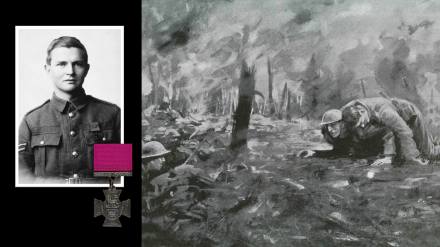
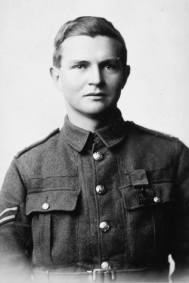 William Faulds, a young man who won a Victoria Cross, the highest award for gallantry, at Delville Wood is quite literally a case of a normal young South African placed in an extraordinary circumstance, only to emerge with that “X” factor which sets him apart, and that’s quite something considering everyone around him can in their own right can take the mantle of the ‘bravest of the brave’, such was the nature of the battle.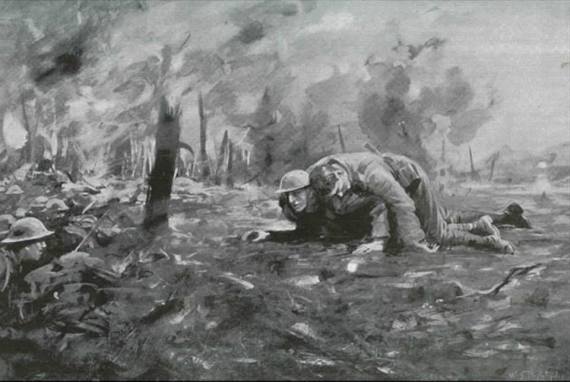
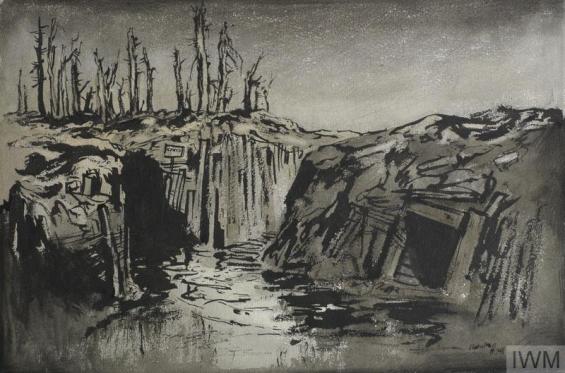


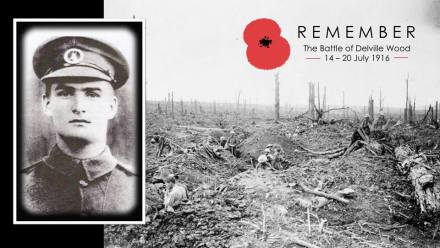
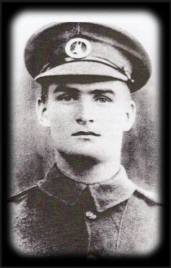 Walter Giddy was born at Barkly East, Cape Province, South Africa, in 1895. He was the third son of Henry Richard Giddy and Catherine Octavia Dicks/Giddy. Walter was scho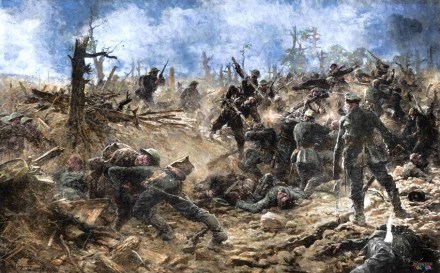
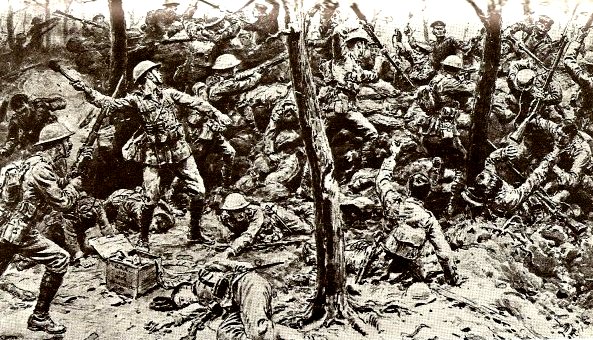
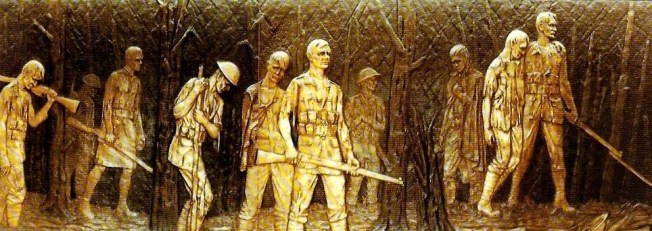
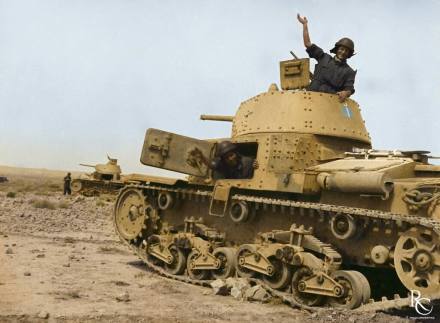
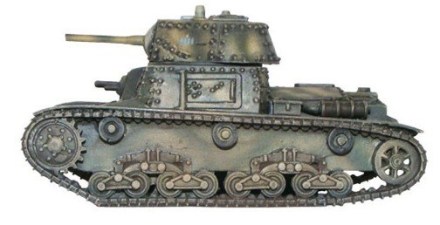
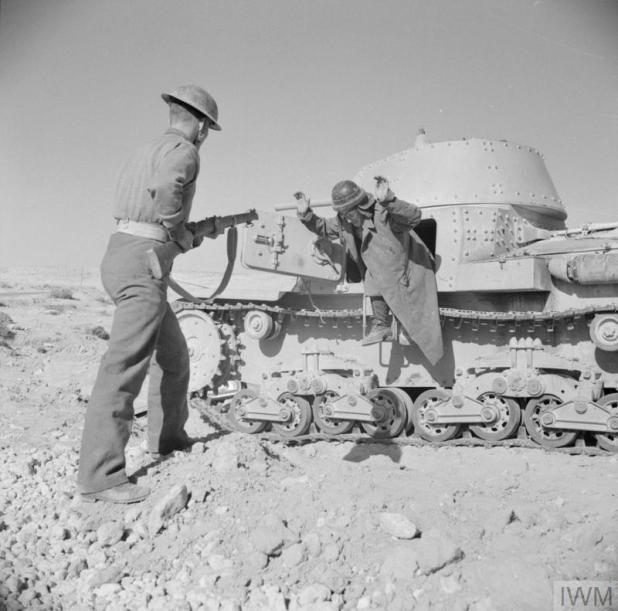
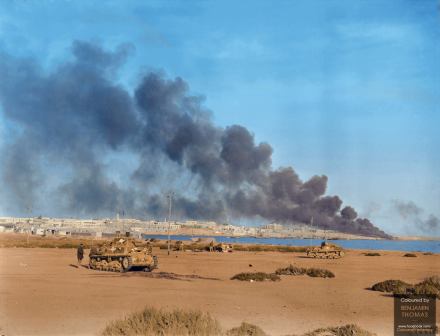
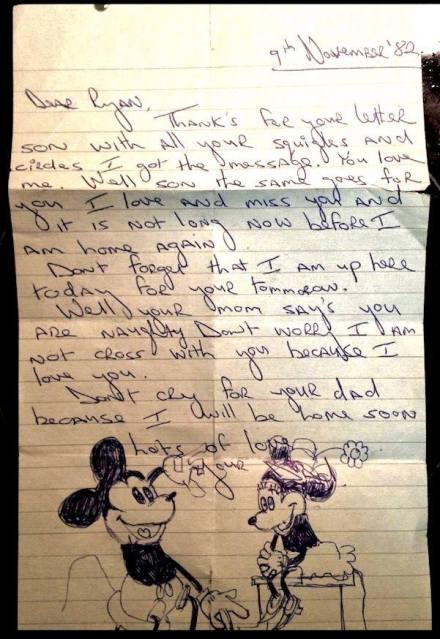
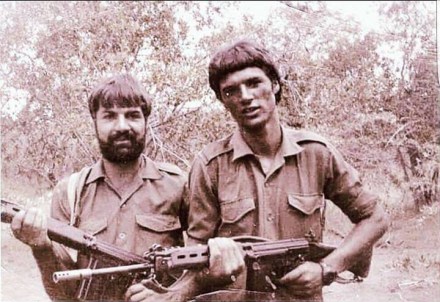
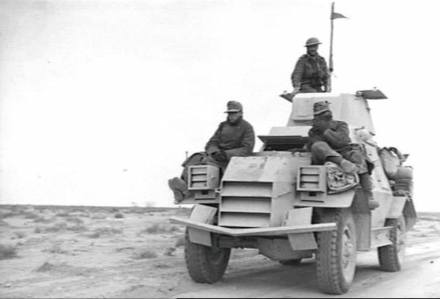
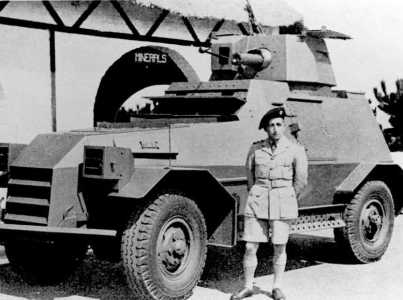
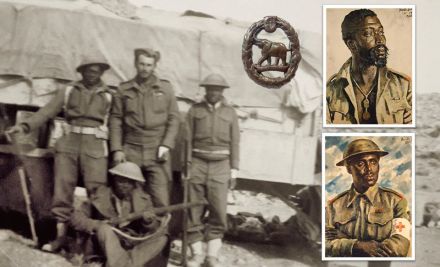

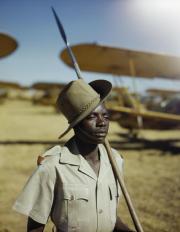 During the Second World War the South African government of the day held out that members of the NMC could only function in non-combatant roles, and were not allowed to carry firearms whereas funnily members of the Cape Corps (Cape Coloured members) where fully armed and enrolled in combatant roles. In terms of the race politics of the day, on the arming of Black soldiers at the beginning of war, Smuts’ government had to bow to the pressures of his opposition, the Nationalists, led by DF Malan.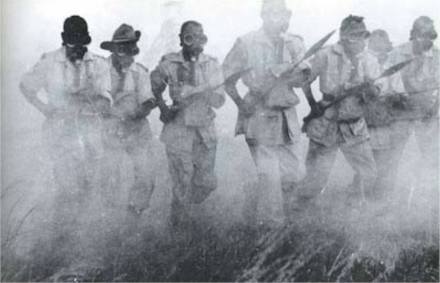
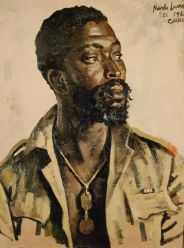
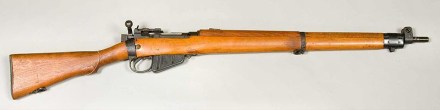
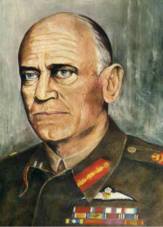
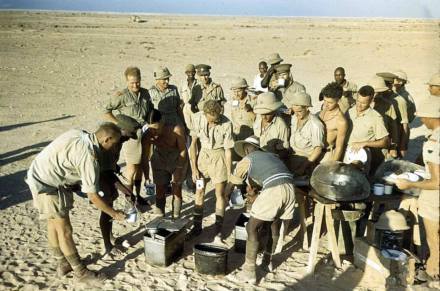
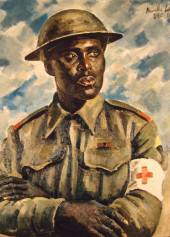
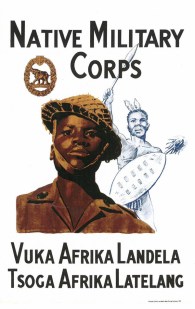 It’s an often ignored fact and statistic – one which most certainly the National government after 1948 did not want widely published, lest national heroes be made of these ‘Black’ men. Simply put the ‘Black’ contributions to World War 1 and World War 2 were quite literally erased from the narrative of the war after 1948 and dismissed by the incoming Apartheid government as ‘traitors’ (a tag also suffered by their ‘White’ counterparts) for serving the ‘British’.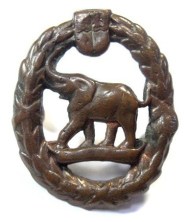
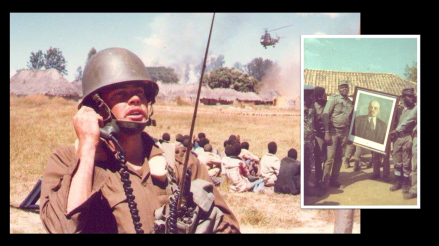
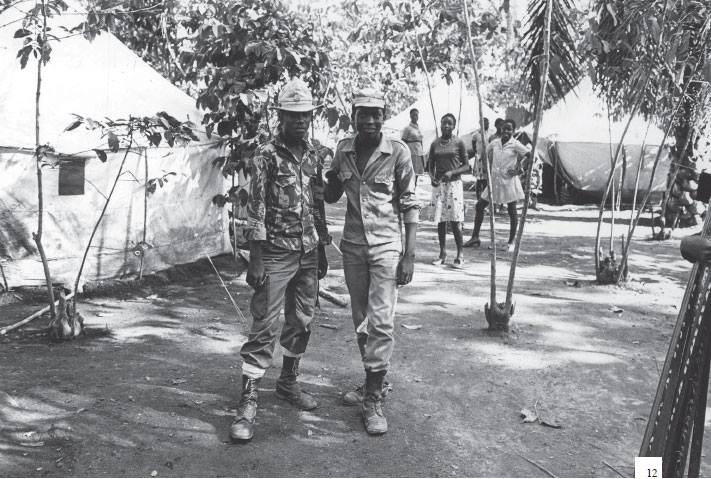
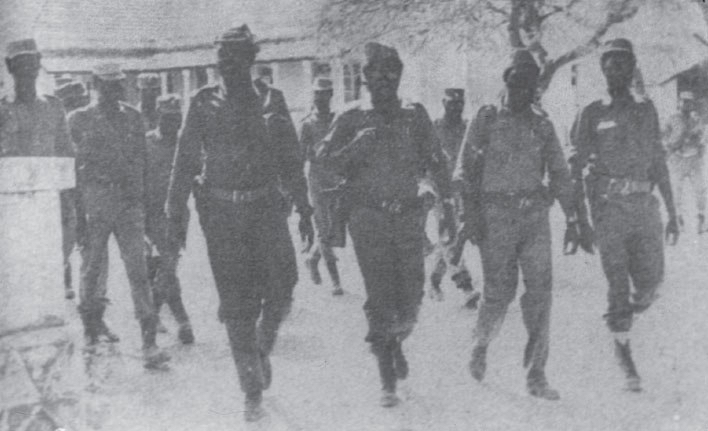
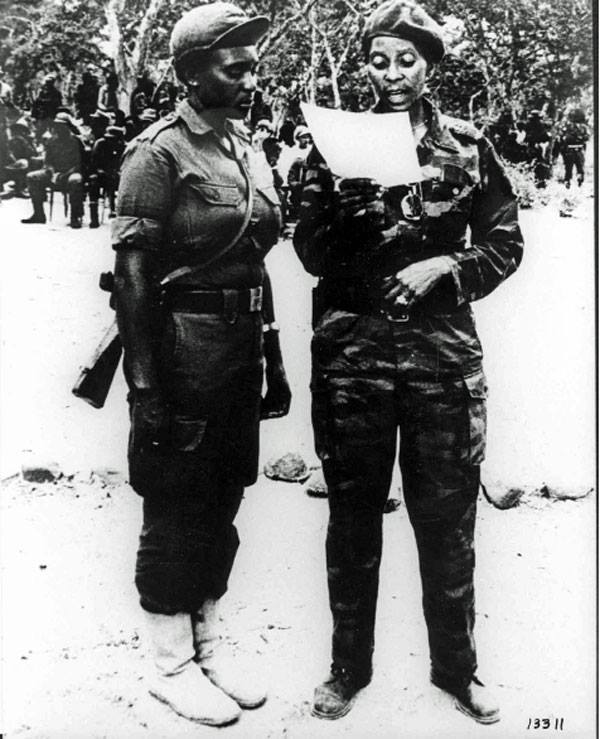
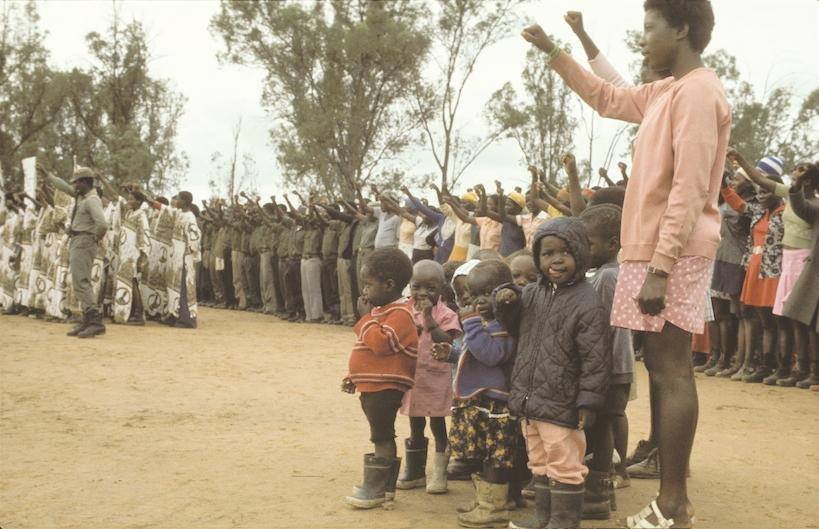
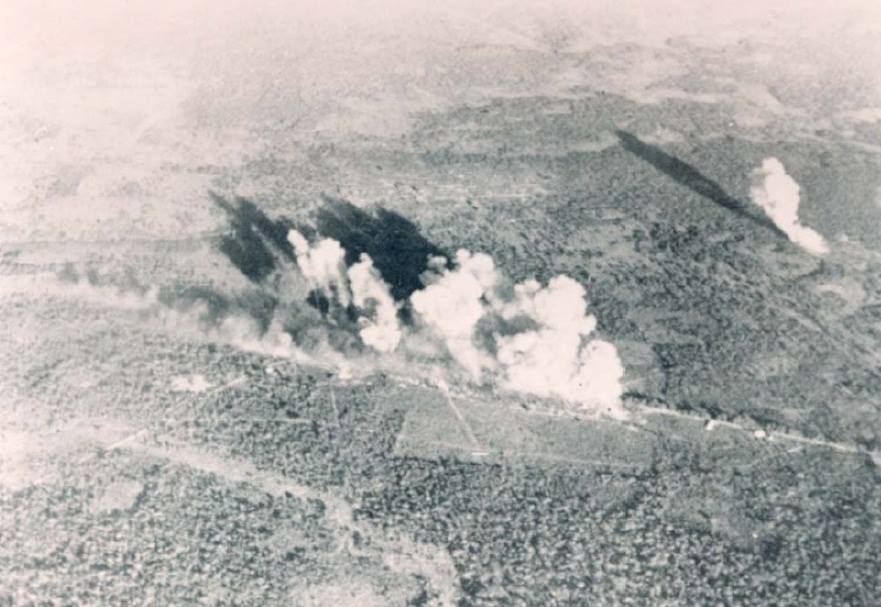
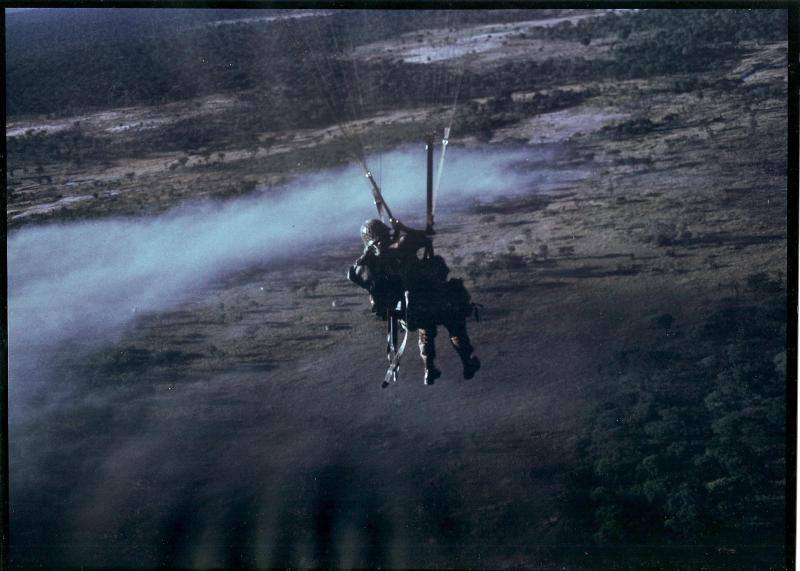
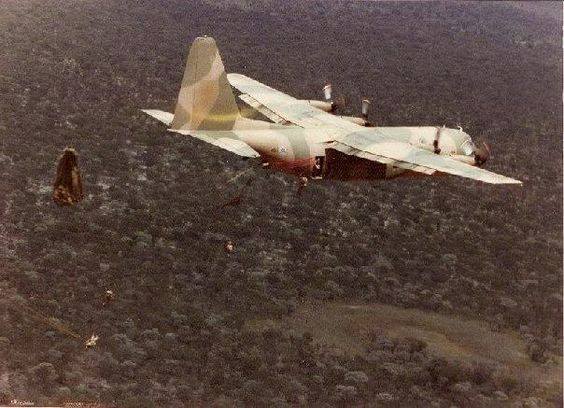
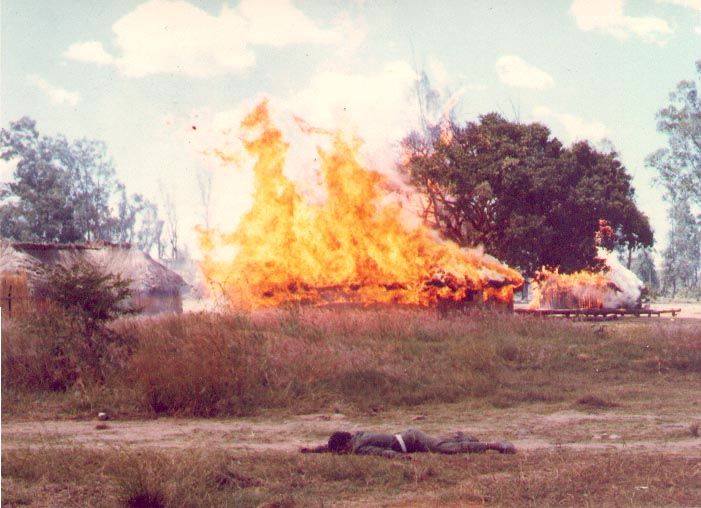
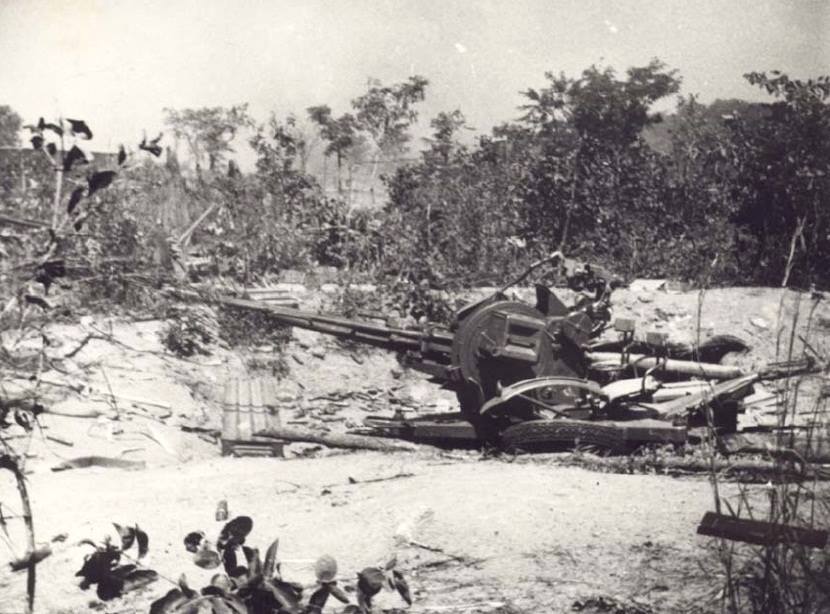
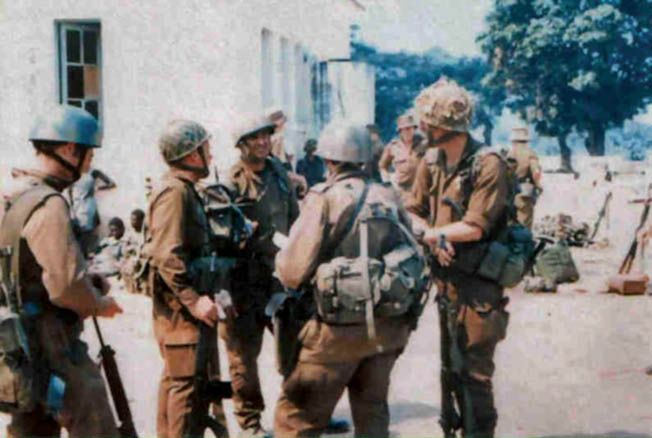
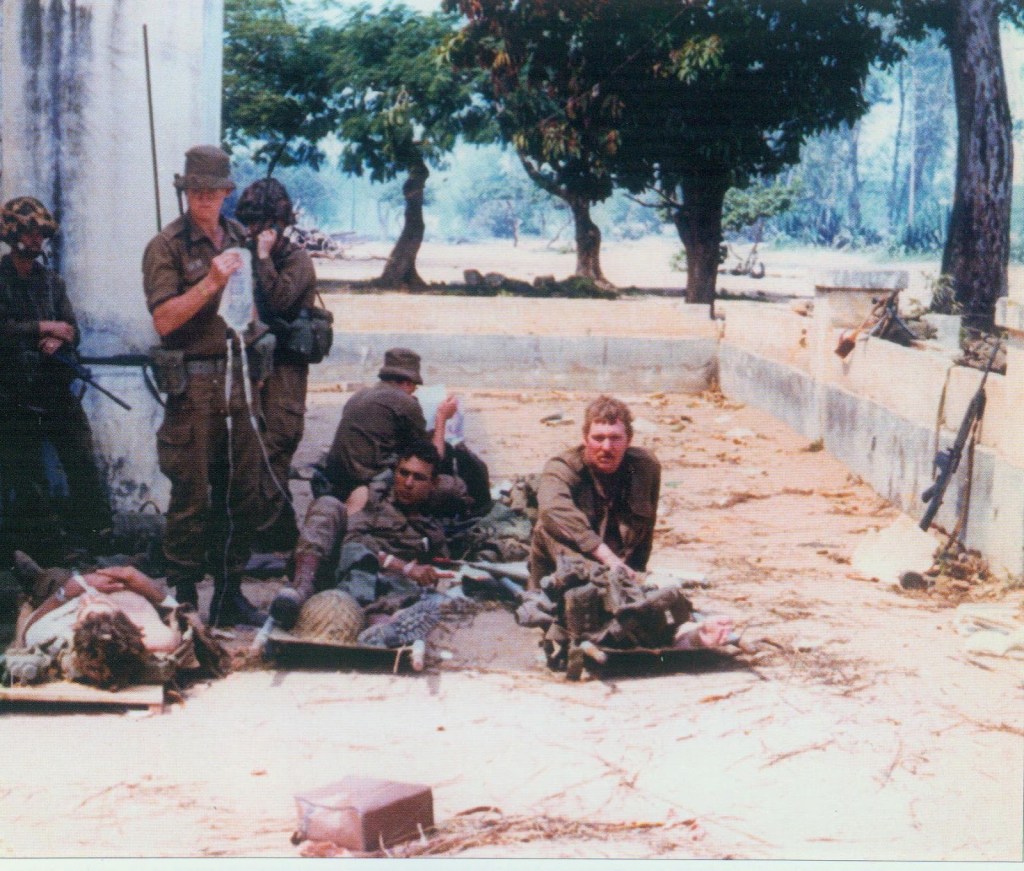
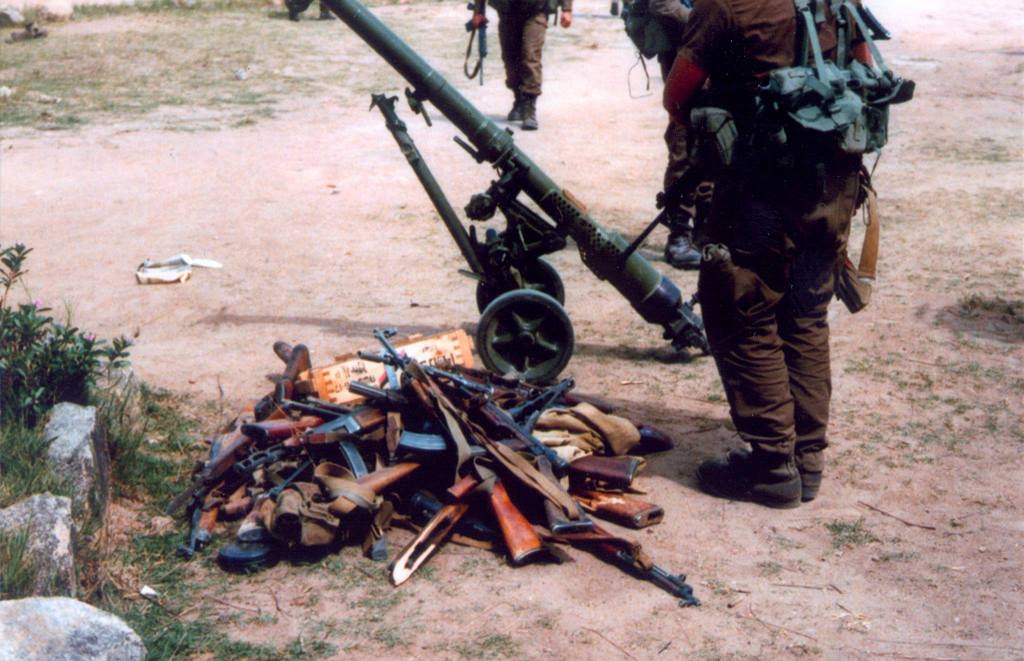
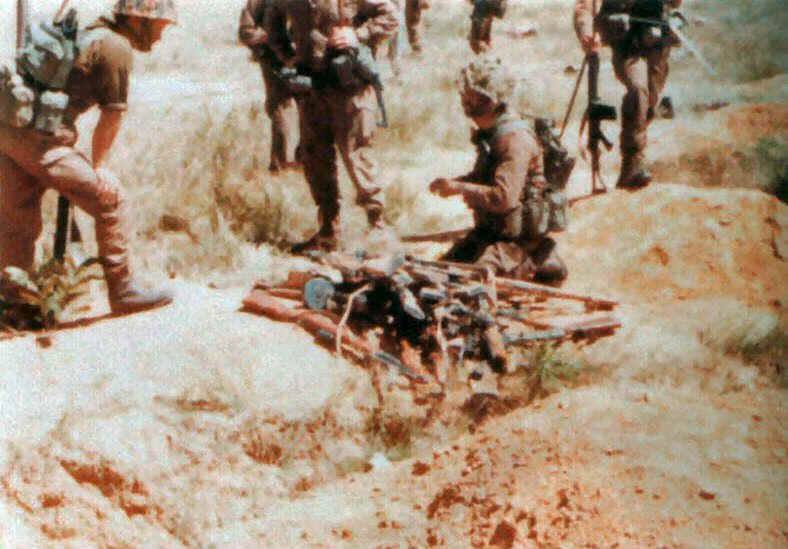

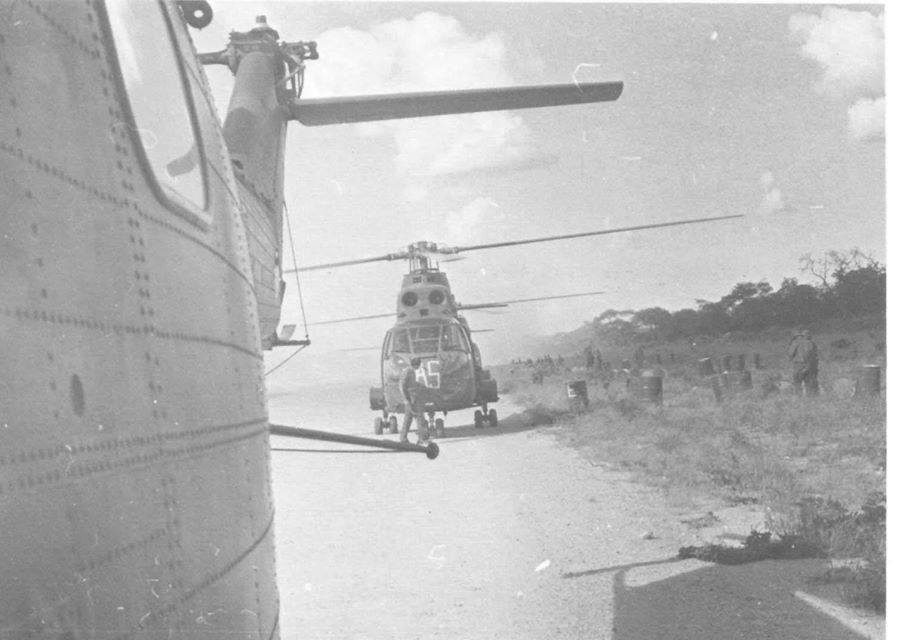

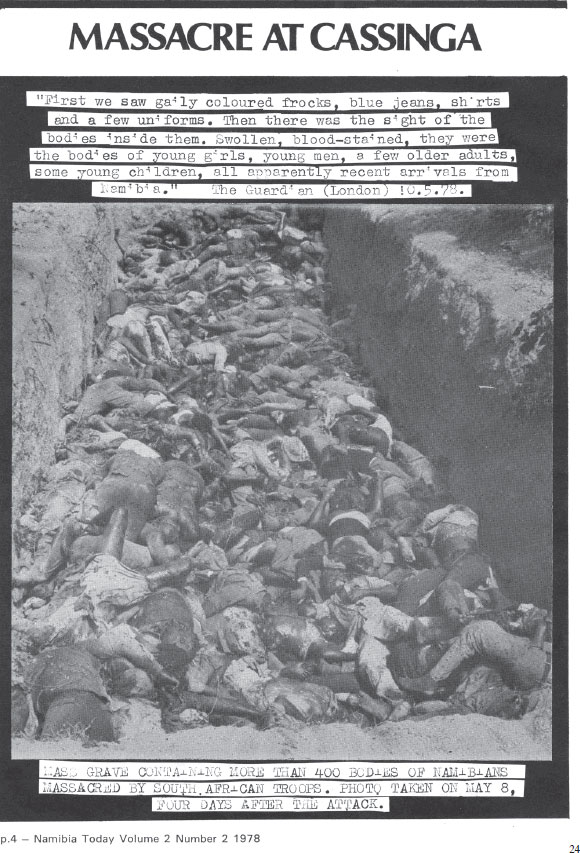
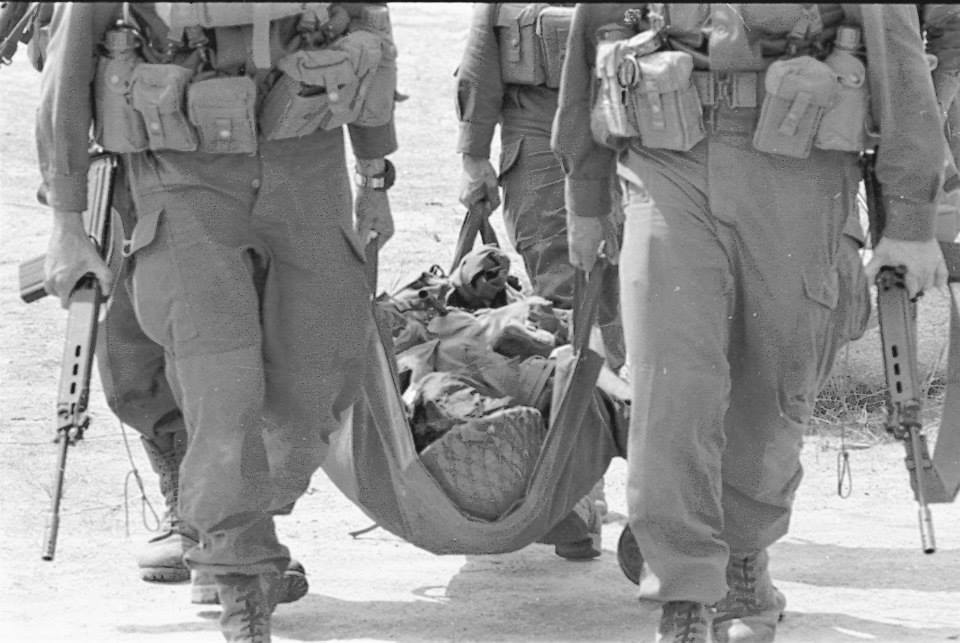
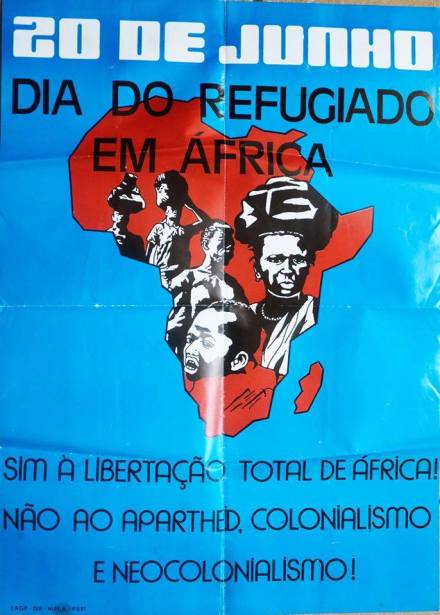
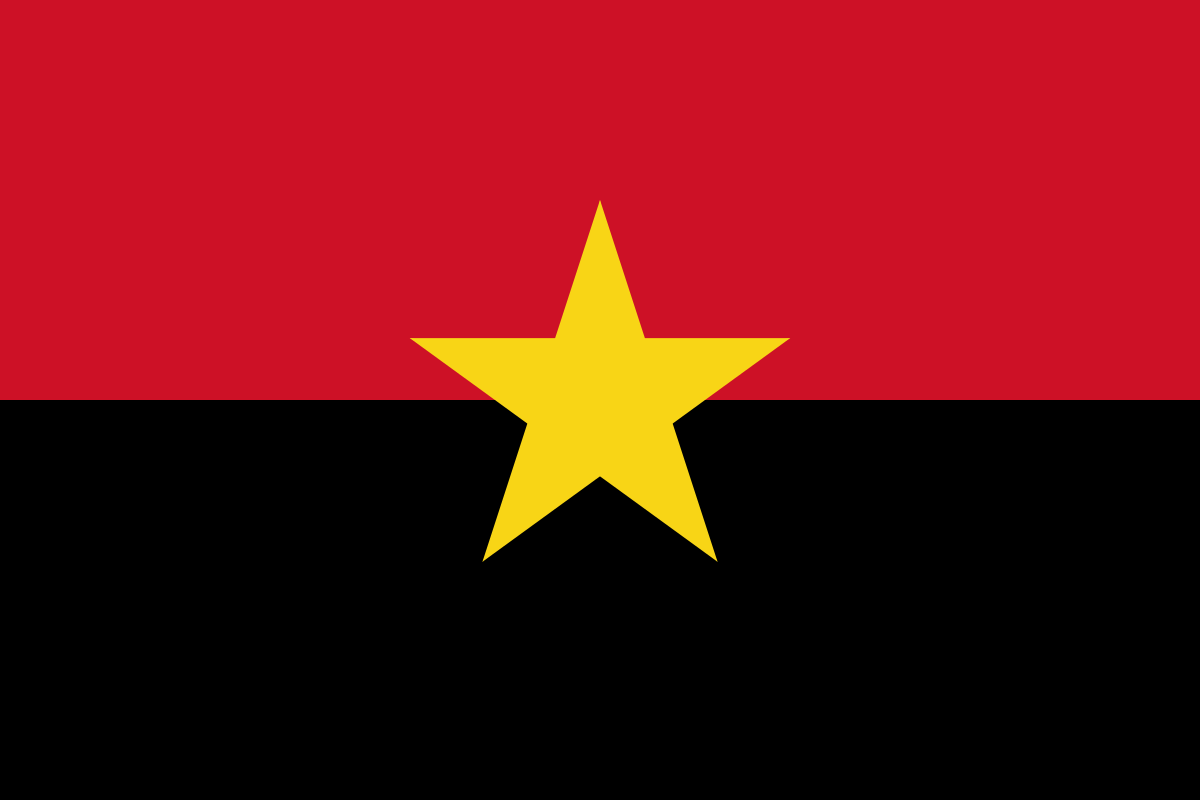 The MPLA i.e. The People’s Movement for the Liberation of Angola, ruled Angola since the country’s independence from Portugal in 1975 on the simple premise that it “held” Luanda, the capital city, after the Portuguese left it. This put it in immediate conflict with fellow anti-colonial movements in other parts of the country which disputed the MPLA’s claim, primarily the National Union for the Total Independence of Angola (UNITA). It however supported SWAPO, the South West Africa People’s Organisation and allowed its military arm (PLAN) to operate armed insurgencies (terror attacks in reality) into South West Africa (Namibia) from territories it controlled. The armed wing of the MPLA was FAPLA, the People’s Armed Forces of Liberation of Angola.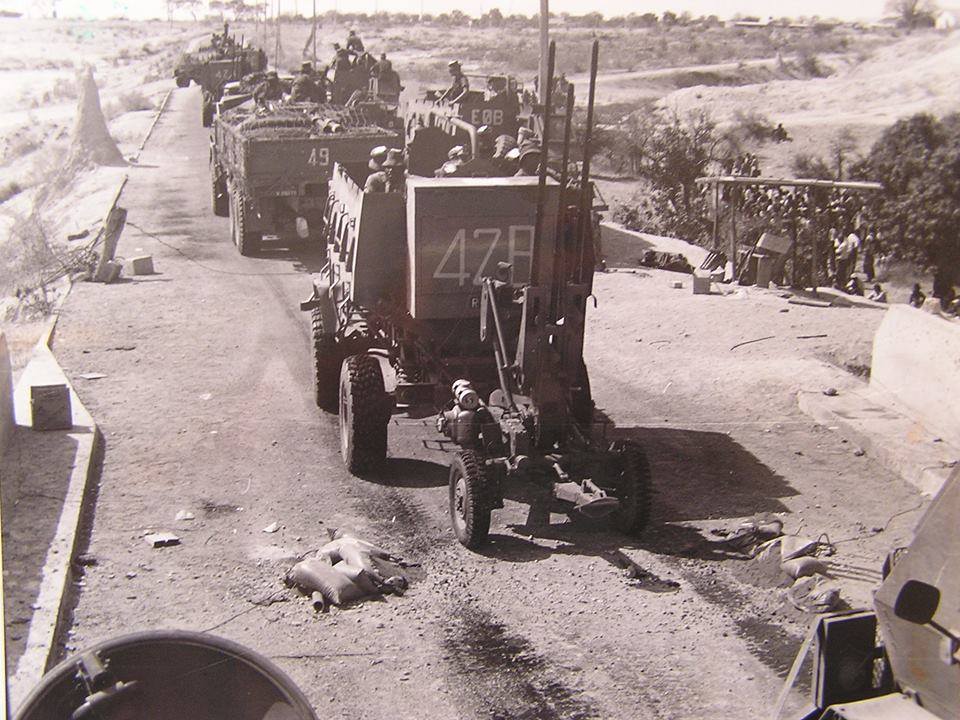
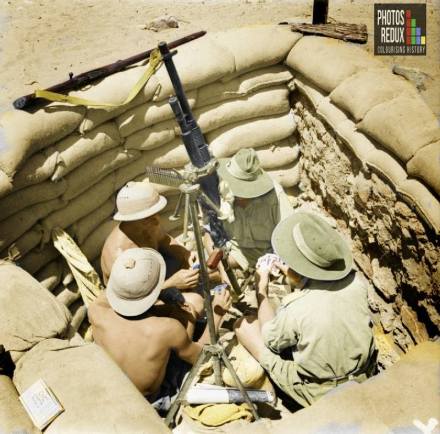
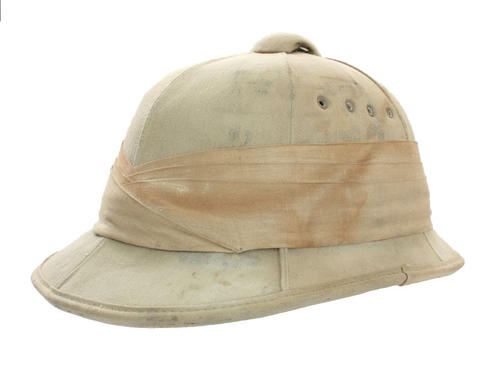 South African. The South Army (and Air Force) was issued with a “Polo” style “Pith” helmet. Made from cork it was not intended to protect the head from flying bullets and shrapnel, that was the purpose of the British Mk 2 Brodie helmet (also issued to South Africans). The pith helmet was worn mainly as sun protection when not in combat.
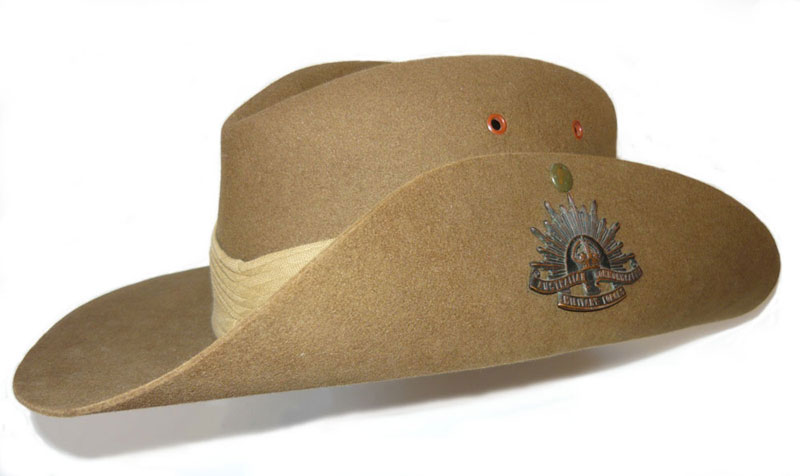 Australia. The Australian army wore the “slouch hat”, also intended for sun protection when not in combat, like the South Africans they where issued with the British “Brodie” Mk2 steel helmet when in combat.
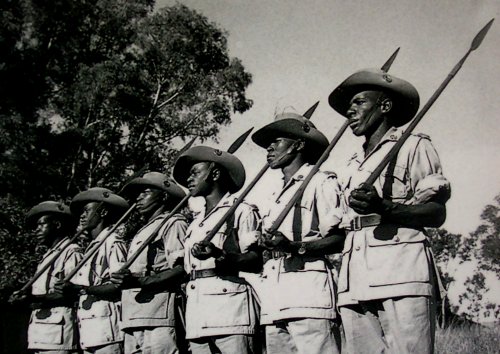 In addition to Australians, believe it or not some South African units also wore the “slouch hat”. Most notable was the South African Native Military Corps members, who made up about 48% of the South African standing army albeit in non frontline combat roles during both WW1 and WW2. The legacy of the “slouch” in the modern South African National Defence Force is however now on the decline and little remains now of its use, a pity as it would be a gracious nod to the very large “black” community contribution to both WW1 and WW2.
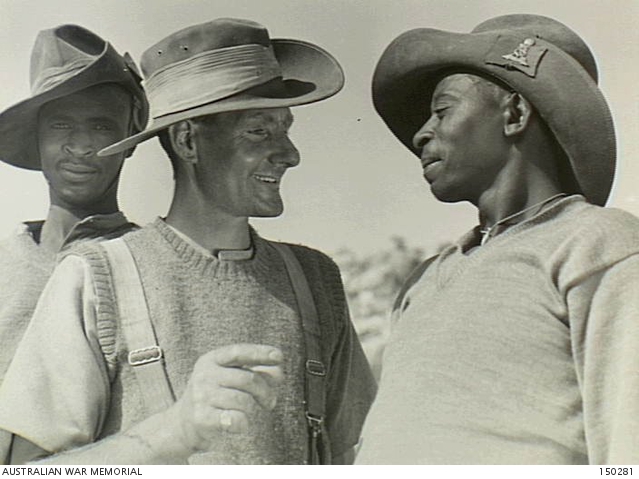 In an iconic Australian War Memorial photograph to demonstrate this unique association, a Australian soldier working on the Beirut-Tripoli railway link is seen here chatting with two members of a South African Pioneer Unit (SA Native Military Corps) also working on the railway. The photo is designed to show off their similarities of dress and bearing and promote mutual purpose.
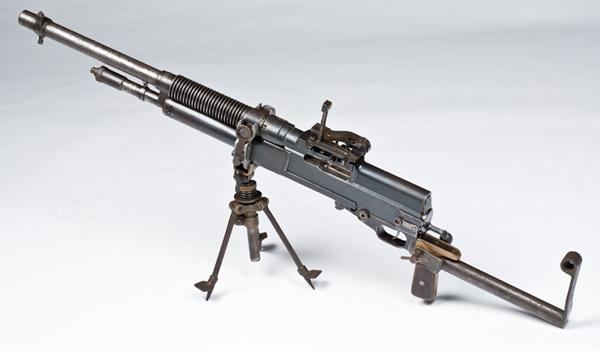 Interestingly the gun in the pit is not South African standard issue. Instead it is a British made Hotchkiss Portative MK 1, which was used by the Australians, dating back to World War 1, so it is probably their gun pit. Of French design the MK I was a .303 caliber machine gun, used in ‘cavalry/infantry’ configuration, with removable steel buttstock and a light tripod. This gun is normally fed from either flexible “belts” or strips like you see in the featured image. Normal Hotchkiss Portative strips hold 30 rounds each.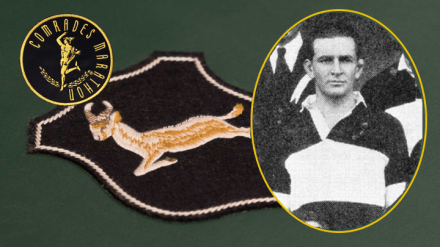
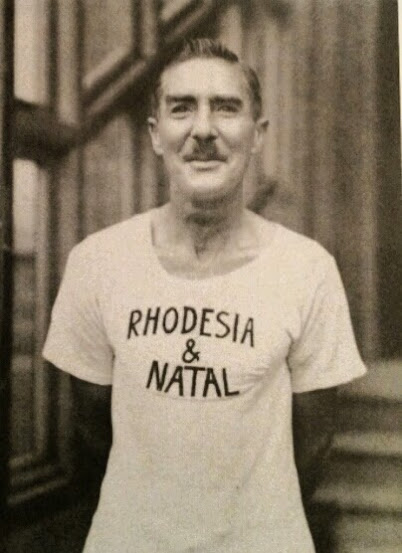


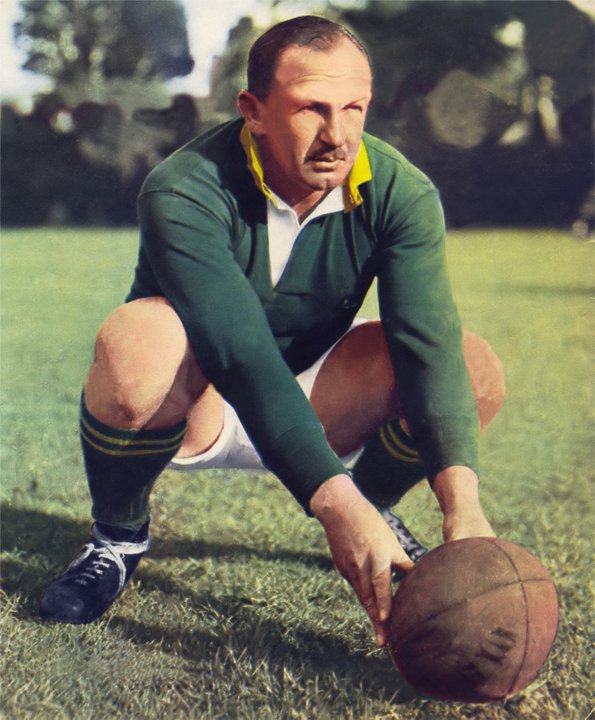


 The Observation Post