Propaganda was a means of Psychological Warfare was employed by all sides in the SWA/Angolan ‘Bush War’ Conflict – blunt and strait-forward in communication and tone so the message was clear.
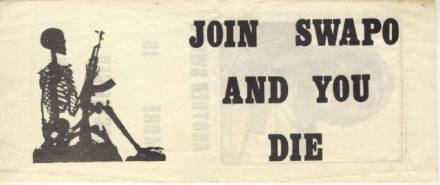
Usually symbols of death (or images of death) accompanied this type of printed propaganda and they served to underpin the threat and drive fear – this is an example of a SADF leaflet distributed to warn the local population in South West Africa/Namibia and neighbouring states not to join SWAPO (the South West African People’s Organisation) against whose armed wing – PLAN the SADF and SWATF forces were in combat with.
The message is crude and strait forward, the image used is easily assimilated and understood, it’s a “brutal” communication designed to get the point across to the lowest common denominator, no need for frills, pretty fonts and logos.
Propaganda is a “weapon”
Please note, this is of historic importance as to the propaganda used in the Bush War. It is not intended to glorify either the SADF or SWAPO – the intention is to capture and keep alive a little of South Africa’s military history so often forgotten.
Propaganda by its very nature preys on emotions – its intension and its goal is an emotive response – in military terms it’s classified as a weapon, as that response can influence the fight, either by spurring it on motivating the combatants or by stopping it and demotivating the combatants. In many ways Propaganda can influence the outcome of a battle or war as much, if not more that the actual use of bullets. Believe it or not – all this power – and it can simply be boiled down to a crude message like the one shown here.
When reviewing propaganda from a historical perspective (or even military perspective) it must be dealt with objectively without emotion. If it triggers an emotional response then it has simply done it job and wins, that’s how this particular weapon works…
The Battle of Sidi Rezegh was part of Operation Crusader during World War 2, and one in which there was substantial South African sacrifice and bravery.
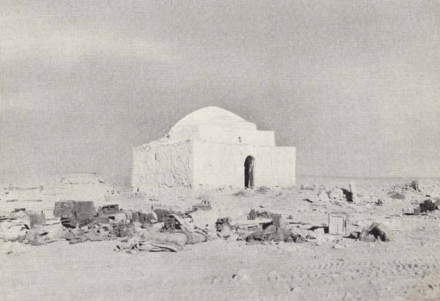
The battle was primarily a clash of armour between Allied (British and Commonwealth) and Axis (German and Italian) forces to try to relive the German Afrika Korp’s siege of Tobruk and took place around a strategic airfield. A feature in the battle was the white tomb of Sidi Rezegh shown here with battle debris around it.
The South Africans fought valiantly in this battle but the losses were incredibly high, the 5th South African Infantry Brigade had gone into this action with a brigade strength of 5,800 and had come out with a strength of under 2,000. The balance had been killed, wounded or taken prisoner.
The German General, Rommel attacked with 15th and 21st Panzer Divisions (battle tank and armoured divisions) and captured the airfield located there. Fighting was desperate and gallant, The fighting at Sidi Rezegh continued through 22 November 1941, with South African Division’s 5th Infantry Brigade by that time engaged to the south of the airfield. An attempt to recapture it failed and the Axis counter-offensive began to gain momentum.
.
The most memorable action during the North African campaign of the 3rd Field Regiment, (Transvaal Horse Artillery) was during the battle of Sidi Rezegh on 23 November 1941. The South Africans were surrounded on all sides by German armour and artillery, subjected to a continuous barrage. They tried to take cover in shallow slit trenches. In many places the South African soldiers could only dig down to around 9 inches [23 cm] deep due to the solid limestone underneath their positions.
The Transvaal Horse Artillery engaged German tanks from the 15th and 21st Panzer divisions, the gunners firing over open sights as they were overrun. This continued until many of the officers were dead and the gunners had run out of ammunition.
Many of the gun crews were captured. As darkness fell, those that could escaped back to Allied lines under cover of darkness. The artillerymen of the 3rd Field Regiment managed to save 5 of their 24 guns from the battlefield. They later recovered a further 7 guns.
Although initially a German success, this battle ultimately proved disastrous for the German Afrika Korps as they lost 72 of their tanks to the hard fought attrition and resistance of the Allies and especially the South African forces and this would ultimately turn the tide of the North African theatre of operations to the Allies.
This is summed up best after the battle of Sidi Rezegh by Acting Lieutenant General Sir Charles Willoughby Moke Norrie stated that the South African’s “sacrifice resulted in the turning point of the battle, giving the Allies the upper hand in North Africa at that time”.
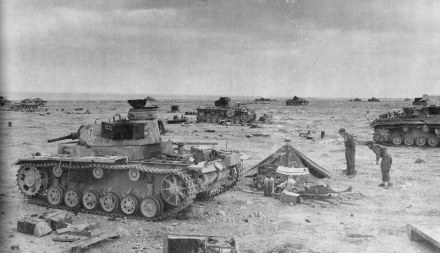
The image below shows a Afrika Korps tanks and armoured vehicles burning in the assault by the 15th Panzer Division (8th Panzer Regiment) in November 1941.
The images below show some of the South African involved – left to right Lt Col Ian Buchan ‘Tiger’ Whyte, DC, and a captain of the 3rd Field Regiment (THA) pose in front of some of the 32 German tanks knocked out by their guns at Sidi Rezegh on 23 November 1941, secondly Some South African survivors of Sidi Rezegh, members of what remained of the 3rd Field Regiment (THA) being returned to Mersa Matruh in Egypt to be re-formed as a fighting unit and finally a South African Machine Gun Platoon 27 Battalion At Sidi Rezegh
The featured image shows a Afrika Korps work shop which was overrun at Sidi Rezegh: South African War Museum as published in: Klein, Harry Lt-Col (1946). Springbok Record.
Researched by Peter Dickens. References – Wikipedia and the Military History Journal Vol 14 No 5 – June 2009 Sidi Rezegh : Reminiscences of the late Gunner Cyril Herbert Glass, 143458, 3rd Field Regiment (Transvaal Horse Artillery)
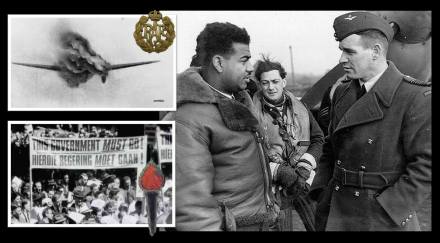
The featured image shows Group Captain Adolph Gysbert “Sailor” Malan DSO & Bar, DFC & Bar (24 March 1910 – 17 September 1963), the South African World War 2 flying ace in conversation here with Flight Sergeant Vincent Bunting at Biggin Hill in 1943 on the left, and it says a lot about Sailor Malan.
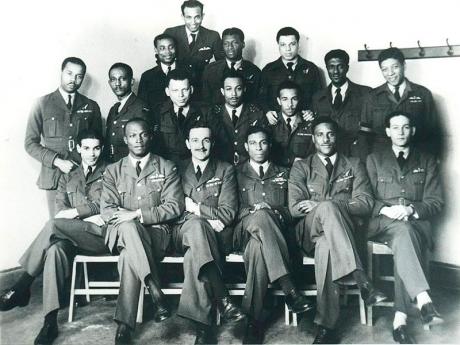
Vincent Bunting was one of a small group of ‘black’ British and Commonwealth pilots in full combat roles during the Second World War – he was born in Panama in June 1918 and raised in Kingston, Jamaica. He joined the RAF at No 1 Recruitment Centre, Uxbridge, on 26 July 1940. Selected for flying training he went on to become a fighter pilot mainly with RAF 611 Squadron.
An integrated Air Force
During the Battle of Britain, the British relied on pilots from the Commonwealth to make up a critical pilot shortage, Sailor Malan was one of these pilots and with him came pilots from all over the world, of all colours and of all cultures (there was no such thing as a ‘colour bar’ in the Royal Air Force) – from commonwealth countries like India, Burma, Rhodesia, Jamaica, Australia, New Zealand, South Africa and Canada, as well as pilots from Poland, France, Czechoslovakia and the USA. They made up almost one-third of the RAF pilots involved in the Battle of Britain (to believe the image so often created of these men as a bunch of tea drinking ‘tally-ho’ young white English gentlemen is to completely misunderstand the Battle of Britain).
Jamaican Pilots during the Battle of Britain
The featured image of early racial recognition is testament to Sailor Malan as not only one of the most highly regarded fighter pilots of the war, but the future signs of Sailor Malan as a political fighter and champion for racial equality.
Fighter Ace
Much has been written on Sailor Malan as a Fighter Ace, his rules for combat and his command of 74 Squadron during the Battle of Britain which played such a pivot role in winning the Battle (see ‘Ten of my rules for air fighting’ – Sailor Malan) . His combat record, promotions and decorations alone are simply astonishing.
He first took part in evacuation of Dunkirk. During this battle he first exhibited his fearless and implacable fighting spirit. To demonstrate his nature, in one incident he was able to coolly change the light bulb in his gunsight while in combat and then quickly return to the fray.
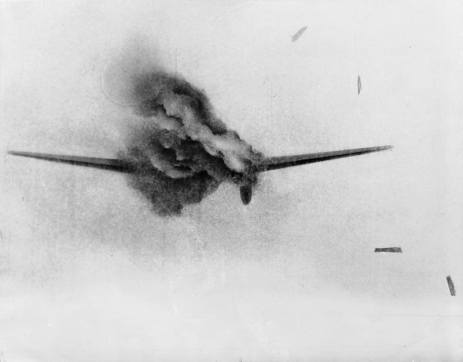
Sailor Malan’s gun camera showing the destruction of German Heinkel He 111 over Dunkirk
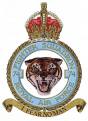
When the Battle of Britain begun, 74 Squadron (known as ‘The Tigers’) was to take the full heat of the battle in what was known as ‘hell’s corner’ over Kent, the squadron was eventually based at the now famous ‘Biggin Hill’ aerodrome in the thick of the battle.
Sailor Malan was given command of 74 Squadron, with the rank of Acting Squadron Leader at the height of the Battle of Britain on 8th August, 1940. Three days later the Squadron was in battle. The day became, for ever, “Sailor’s August the Eleventh”. The order was received at twenty minutes past seven to intercept a hostile raid approaching Dover. Little did the squadron know that they would participate in four seperate air battles that day. When the Squadron, weary, sweaty and oily, finally returned to base after the fourth sortie, they had downed an astounding 38 enemy aircraft.
Sailor Malan said later, in one of his masterly understatements: “Thus ended a very successful morning of combat”. For the first day of action under his command it was successful even by 74 Squadron standards.
Sailor Malan also worked on public relations to keep the British morale high. Here is a rare radio interview (follow Observation post link Sailor Malan – “in his own words”)
By D Day (i.e. Operation Overlord, the liberation of France and subsequently Western Europe), Sailor Malan was in command of 145 (Free French) Fighter Wing and was himself leading a section of the wing over the beaches during the landings in Normandy.
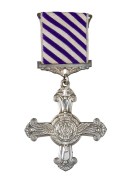
In all Sailor Malan scored 27 enemy aircraft kills, seven shared destroyed, three probably destroyed and 16 damaged. He was to receive the Distinguished Service Order decoration – not once, but twice and well as the Distinguished Flying Cross decoration, again not once – but twice. The Citations for the DSO’s and DFC’s say everything about his combat prowess:
The London Gazette of the 11th June, 1940, read:
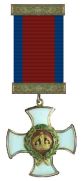
DISTINGUISHED FLYING CROSS
Flight Lieutenant Adolph Gysbert Malan. (37604), Royal Air Force.
“During May 1940, this officer has led his flight, and on certain occasions his squadron, on ten offensive patrols in Northern France. He has personally shot down two enemy aircraft and, probably, three others. Flight Lieutenant Malan has displayed great skill, courage and relentless determination in his attacks upon the enemy.”
On Christmas Eve, 1940, the London Gazette had recorded:
DISTINGUISHED SERVICE ORDER
Acting Squadron Leader Adolph Gysbert Malan, DFC (37604), Royal Air Force, No.74 Squadron.
“This officer has commanded his squadron with outstanding success over an intensive period of air operations and, by his brilliant leadership, skill and determination has contributed to the success obtained. Since early in August 1940, the squadron has destroyed at least 84 enemy aircraft and damaged many more. Squadron Leader Malan has himself destroyed at least eighteen hostile aircraft and possibly another six.”
And on 22nd July, 1941:
BAR TO DISTINGUISHED SERVICE ORDER
Acting Wing Commander Adolph Gysbert Malan, DSO, DFC (37604) Royal Air Force.
“This officer has displayed the greatest courage and disdain of the enemy whilst leading his Wing on numerous recent operations over Northern France. His cool judgement, exceptional determination and ability have enabled him to increase his confirmed victories over enemy aircraft from 19 to 28, in addition to a further 20 damaged and probably destroyed. His record and behaviour have earned for him the greatest admiration and devotion of his comrades in the Wing. During the past fortnight the Wing has scored heavily against the enemy with 42 hostile aircraft destroyed, a further 15 probably destroyed and 11 damaged.”
Also awarded a Bar to the Distinguished Flying Cross.
In addition, “Sailor” was awarded the following decorations by Allied Governments:
The Belgian Croix de Guerre with bronze Palm, The Czecho-Slovakian Military Cross, The French Legion of Honour, in the degree of Officer and The French Croix de Guerre.
Bill Skinner DFC, with whom Sailor often flew, summed up Sailor Malan very well as to his leadership:
“He was a born leader and natural pilot of the first order. Complete absence of balderdash. As far as he was concerned, you either did your job properly, or you were on your way. He inspired his air crews by his dynamic and forceful personality, and by the fact that he set such a high standard in his flying.”
Sailor Malan (centre) with pilots of 72 Squadron
He was the outstanding British Fighter Command fighter pilot of the 1939-45 war, and by the end of 1941 was the top scorer – a record which he held for three years. But he was much more than an individual performer. He had assimilated the fierce and fanatical “tiger spirit”, and this spirit he inspired in others so that he carried the Squadron to great deeds with him.
Freedom Fighter
The Battle of Britain and D Day moulded Sailor Malan as a champion for freedom, he simply held the view that shooting down Nazi aircraft was good for humanity, and this translated into his personal politics. Not much is known of Sailor’s political career post war, and it’s an equally fascinating to see him in the context of a ‘Freedom Fighter’ in addition to his fighter ace accolade.
Sailor Malan left the Royal Air Force and returned to South Africa in 1946. In the 1950’s he formed a mass protest group of ex-servicemen called the ” Torch Commando” to fight the National Party’s plans to implement Apartheid and call for an early election to remove what they regarded as ‘fascist’ government from power.
In Sailor Malan’s own words, The Torch Commando was: “established to oppose the police state, abuse of state power, censorship, racism, the removal of the coloured vote and other oppressive manifestations of the creeping fascism of the National Party regime”.
To understand why the returning war veterans felt this way about the National Party, consider that during the war the National Party had aligned itself with pro Nazi movements inside South Africa as well as taking a neutral stance on the Smuts’ declaration of war. To understand the men now in power and the prevailing political mood of war veterans in 1950 follow these links to related Observation Posts:
The Torch Commando can best be described as a ‘pro-democracy’ movement and in its manifesto it called for Liberty, Freedom of Speech, Liberty from Tyranny and Freedom of Religion. Sailor Malan’s personal politics (which he brought into the Torch) revolved around universal franchise and addressing poverty in the black community and economic empowerment as a priority to political reform. Ironically, Sailor Malan was years ahead of his time in this regard, as it is only now that politics in South Africa is focusing on economic emancipation ahead of political emancipation.
The key objective underpinning the Torch was to remove the National Party from power by calling for an early election, the 1948 ‘win’ by The National Party was not a ‘majority’ win, but a constitutional one, and the Torch wanted a groundswell to swing the ‘service’ vote (200,000 in a voting population of a 1,000,000). The Torch at its core was absolutely against The National Party’s Apartheid ideology and viewed their government as ‘unconstitutional’ when they started implementing policy.
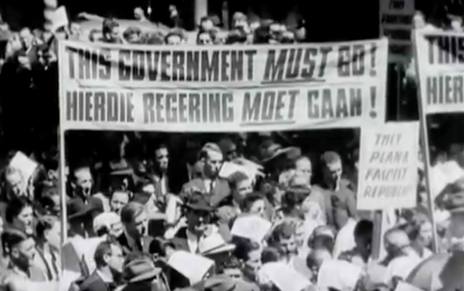
Torch Commando protest – note the slogans ‘this government must go’ and ‘they plan a fascist republic’.
Other issues also sat at the core of the Torch, one issue was the Nationalist’s headstrong policy to make South Africa a Republic, whereas the ‘servicemen’ had fought alongside the British commonwealth and the ‘Allies’ (mainly Britain, United States and Russia) in the Second World War – and they wanted South Africa to retain its Dominion status, remain a ‘Union’ and remain part of the Commonwealth of Nations.
As a pro-democracy’ movement it regarded the National Party’s policies as ‘anti-democratic’. The Cape Coloured franchise removal was the first action of the National Party to implement the edicts of Apartheid, so it stood to reason that this was the first issue to protest against.
The Cape Coloured franchise was protected in the Union Act of 1910 by an entrenched clause stating there could be no change without a two-thirds majority of both houses of Parliament sitting together. The Nationalist government, with unparalleled cynicism, passed the High Court of Parliament Act, effectively removing the autonomy of the judiciary, packing the Senate with NP sympathisers and thus disenfranchising the Cape Coloureds.
Inserted is a picture of a rare manifesto artefact of Torch Commando manifesto (freedom been the central theme) and Sailor Malan at a Torch Commando Rally in Cape Town with 10,000 South African WW2 veterans on protest.
Sailor Malan famously accused the national party government at this rally of:
“depriving us of our freedom, with a fascist arrogance that we have not experienced since Hitler and Mussolini met their fate”.
Wartime singing icon Perla Gibson also attended the Torch Commando anti apartheid rally in Cape Town and sang to the protesters in support. Perla was known as the ‘Lady in white” and sang to incoming and outgoing troops in Durban harbour during WW2 to beef up morale.
Insert – Kmdt Dolf de la Rey (left) and Perla Gibson (right) at the Cape Town Torch Rally
Of extreme interest was co-leader of the Torch Commando rally in Cape Town – Kmdt. Dolf de la Rey – he famously captured Winston Churchill during the Boer War fighting for the Boers and became an anti-apartheid activist after WW2, another one of the rich tapestry of Afrikaner war heroes in conflict with National Party politics and philosophy.
Follow the below two links to view film footage of The Torch Commando in action:
During the Cape Town “Torch” 50,000 civilians joined the 10,000 veterans when the protest moved to hand over a petition at the Parliament buildings in Cape Town. The police barred the way and a scuffle broke out. 160 Protesters where injured along with 15 Policemen.
In a speech at a massive Johannesburg Torch rally involving over 75,000 war veterans and civilians (try and envisage that – 75,000 people on an anti-apartheid protest in downtown Johannesburg – a protest that size had never been seen before), standing outside City Hall in Johannesburg, Sailor Malan made reference to the ideals for which the Second World War was fought:
“The strength of this gathering is evidence that the men and women who fought in the war for freedom still cherish what they fought for. We are determined not to be denied the fruits of that victory.”
The Torch Commando fought the anti-apartheid legislation battle for more than five years. At its height the commando had 250 000 members, making it one of the largest protest movements in South African history.
DF Malan’s nationalist government was so alarmed by the number of judges, public servants and military officers joining the organisation that those within the public service or military were prohibited from enlisting, lest they lose their jobs – in the long-term this pressure led to the gradual erosion of the organisation.
Also the National Party government, being extremely concerned about the influence this movement might have, especially under the leadership of the war hero tried to discredit the Torch Commando and its leaders through means of negative propaganda. For the rest of his life, Sailor would be completely ignored by the government. The National Party press caricatured him as “a flying poodle”, dressed in his leathers and flying goggles, in the service of Jan Smuts and the Jewish mine-bosses, who were referred to as the “Hochenheimers”.
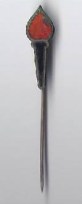
Torch Pin
Despite this, Sailor continued to fight against the violation of human rights in South Africa with the same passion and moral fibre that allowed him to fight so vigorously against fascism and racism during the Battle of Britain. His dream of a better, democratic life for all in South Africa not only urged and carried him forward, but also caused him to be shunned by and isolated from his white National Afrikaner countrymen who were blinded by the short-sighted racial discrimination of their government.
He would become known to them as a traitor and an outsider of “another kind”. DF Malan, during his term as Prime Minister, would refer to him as “an imported British officer” and it was due to his own integrity that he would, towards the end of his life, turn his back on the oppression and immorality of the country he loved so much. His individual brilliance as the Spitfire fighter pilot during the heroic battle in the skies above London and the British Channel were not enough to bring victory in this struggle.
In 1963, Sailor Malan, one of the most famous fighter pilots in the history of the Royal Air Force, lost his fight against Parkinson’s Disease and died at the young age of 52. The funeral service was held at St. Cyprians Cathedral and he was laid to rest in his beloved Kimberley.
An inconvenient truth
It is to the embarrassment now as to his treatment as a South African military hero that all enlisted South African military personnel who attended his funeral were instructed not to wear their uniforms by the newly formatted SADF (the government did not want a Afrikaaner, as Malan was, idealised in death in the fear that he would become a role model to future Afrikaaner youth).
All requests to give him a full military funeral were turned down and even the South African Air Force were instructed not to give him any tribute. Ironically this action now stands as testimony to just how fearful the government had become of him as a political fighter.
In the national obituary issued to all newspapers by the government, no mention was made of his role as President of the Torch Commando and his very strong anti apartheid views.
This systematic removal of Sailor Malan’s legacy by the National Party and the education curriculum is also tragic in that Sailor’s role in the anti-apartheid movement is now lost to the current South African government.
It would be an inconvenient truth to know that the first really large mass action against Apartheid did not come from the ANC and the Black population of South Africa – it came from a ‘white’ Afrikaner and a mainly ‘white’ war veterans movement, which drew it members from the primary veterans organisations in South Africa – The Springbok Legion, the South African Legion and Memorable Order of Tin Hats (for its impact on these veteran organisations to this day see The Torch’s impact on the South African military veteran diaspora!).
The simple truth – the Torch Commando preceded the first ANC “Defiance Campaign” by a couple of years, an inconvenient truth for many now and very conveniently forgotten.
The Spitfire Club sums up Sailor Malan nicely. To those who served with the Royal Air Force’s 74 Squadron anytime between 1936 and 1945 Sailor Malan was the greatest leader of them all. As a small token of their esteem, 28 of those remaining presented a ceremonial sword to the Squadron in July, 1966, at Headquarters Fighter Command, in proud memory of Sailor and in honour of his exceptional service to the Squadron.
It was intended that this Sword should serve as an inspiration to those coming after, so that his high standards of courage, determination and leadership shall live on.
To remember Sailor’s calm and heroic line going into battle “Let’s cut some cake. Let ’em have it!” is to remember a man of remarkable courage. A man who in all honestly lived by his beloved squadrons motto, and can say in all truth;
“I Fear No man”
A motto that holds true to him as one of the greatest ‘fighter pilots’ of the war, but equally so as a ‘freedom fighter’ standing up against a morally corrupt government for human rights.
Concluding video
To conclude Sailor Malan, visuals often better reflect words, and this is a landmark video on Sailor Malan which balances his fighting and political deeds. This time Sailor’s legacy has been carried forward by “Inherit South Africa” in this excellent short biography narrated and produced by Michael Charton as one of his Friday Stories – this one titled FRIDAY STORY #7: Sailor Malan: Fighter Pilot. Defender of human rights. Legend.
Story for The Observation Post, written and researched by Peter Dickens
References Wikipedia. South African History On-Line (SAHO), South African History Association, Wikipedia ,Neil Roos: Ordinary Springboks: White Servicemen and Social Justice in South Africa, 1939-1961. Kimberley Calls and Recalls. Life Magazine, 25 June 1951. Video footage, Associated Press – source Youtube. Images – Imperial War Museum copyright and Associated Press copyright. Friday Story video copyright Inherit South Africa – Michael Charton.
Many people do not know that the two minutes silence and its association to Armistice Day (11/11/11) or Remembrance Sunday has a South African origin. It is one of our greatest gifts to humankind, yet most South Africans are completely oblivious of it.
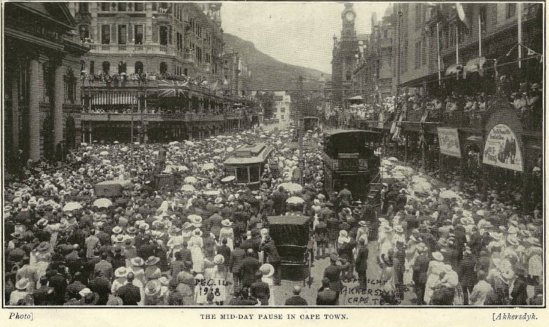
The featured image taken in 1918 is a rare and unique one, it shows South African civilians stopping what they are doing in the middle of Cape Town and standing to attention for two minutes silence, signalled when the noon day gun was fired. Not common today in Cape Town but a daily occurrence during war years. So how did this unique practice become a worldwide standard for remembrance?
Read on and learn a little why South Africans should stand proud of what they have given the world; when on Remembrance Sunday and on Armistice day in November, the western world stands silent in remembrance for two minutes … and take heart that this entire ceremony has South African roots.
The end of Word War 1 – Armistice Day 11/11/11
At 05.30 in the morning of 11 November 1918 the Germans signed the Armistice Agreement in a remote railway siding in the heart of the forest of Compiègne. Soon wires were humming with the message : ‘Hostilities will cease at 11.00 today November 11th. Troops will stand fast on the line reached at that hour…’.Thus, at 11.00 on 11 November 1918 the guns on the Western Front in France and Flanders fell silent after more than four years of continuous warfare, warfare that had witnessed the most horrific casualties.World War One (then known as the Great War) had ended.
South African troops in a support trench on the Western Front, Fresenberg Ridge, 22 September 1917
The time and date attained an important significance in the post war years and the moment that hostilities ceased became universally associated with the remembrance of those that died in that and subsequent wars and conflicts. The Two Minutes silence to remember all who paid the supreme sacrifice was a result of this expression… and it all began in Cape Town, South Africa.
Cape Town’s unique remembrance during WW1
When the first casualty lists recording the horrific loss of life in the Battles of the Somme were announced in Cape Town, Mr JA Eagar, a Cape Town businessman, suggested that the congregation of the church he attended observe a special silent pause to remember those in the South African casualty list. It was the church also attended by Sir Percy Fitzpatrick the famous South African author of “Jock of the Bushveld”.
In May 1918, the Mayor of Cape Town, Councillor H. Hands (later Sir Harry Hands) at the suggestion made by Mr. RR Brydon, a Cape Town City Councillor, in a letter to the Cape Times initiated a period of silence to remember the events unfolding on the battlefields of Europe and the sacrifices being made there. Mr Brydon’s son, Maj Walter Brydon, three times wounded and once gassed, was killed on 12 April 1918.
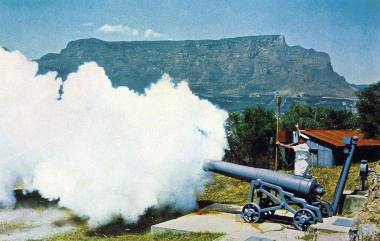
Cape Town’s noon day gun
The pause would follow the firing of the Noon Gun (a tradition instituted in 1902 and fired everyday at 12:00 from Signal Hill), simply put the gun was the most audible signal with which to co-ordinate the event across the city of Cape Town.
The boom of the gun signalling the midday pause of three minutes was heard for the first time on 14 May 1918. It became the signal for all activity in the Mother City to come to a halt. Everything came to a dead stop while everyone bowed their heads in silent prayer for those in the trenches in Flanders.
As soon as the city fell silent, a trumpeter on the balcony of the Fletcher and Cartwright’s Building on the corner of Adderley and Darling Streets sounded the Last Post, the melancholy strains of which reverberated through the city. Reveille was played at the end of the midday pause.
Rare photo of the midday pause in Cape Town – 1918
Articles in the newspapers described how trams, taxis and private vehicles stopped, pedestrians came to a halt and most men bared their heads. People stopped what they were doing at their places of work and sat or stood silently. The result of the Mayor’s appeal exceeded all expectations.
One journalist witnessing the midday pause described a young woman dressed in black, who came to a halt on the pavement and furtively dabbed at her eyes with a handkerchief. “One could not but wonder what personal interest she had in the act of remembrance”, he wrote.
A few days later Sir Harry, whose son, Capt Richard Hands, a member of ‘Brydon’s Battery’, had been mortally wounded in the same battle in which Maj Brydon had been killed, decided to shorten the duration of the pause to two minutes, “in order to better retain its hold on the people”.
In terms of the meaning of “two minutes” it was also argued that the first minute is for thanksgiving for those that survived war and the second minute is to remember the fallen.
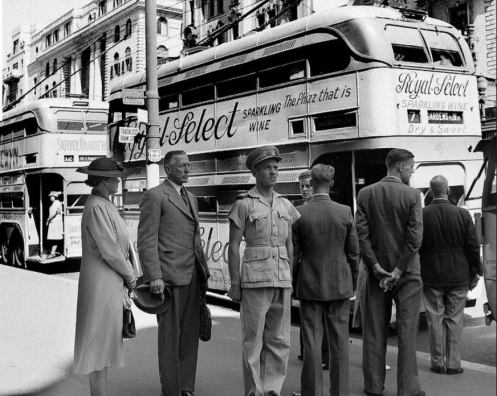
The midday pause continued daily in Cape Town and was last observed on 17 January 1919, but was revived in Cape Town during the Second World War. This is another rare photo of soldiers and civilians paused and standing at attention for two minutes of silence on Cape Town’s streets in 1942.
Rare photo of the midday pause of Remembrance in Cape Town during World War 2 – 1942
Today, the tradition of the midday gun has continued, as any Capetonian can attest – regular as clockwork it goes off at 12:00, and although the pause is no longer part of the ritual in Cape Town, the idea of the ‘pause’ for two minutes remembrance has survived.
That this ritual survived is by no means in a small way either, but in such a way that it now concludes how we as modern human beings in the western world remember the war dead and sacrifice. It started when it became the official two minute ‘pause’ throughout Britain and the British Commonwealth from 11 November 1919, and here is how that came about, and once again – surprise – we have a South African from Cape Town right at the centre of it.
Step in Sir Percy Fitzpatrick
Now, back to Sir Percy Fitzpatrick. He had been impressed by the period of silence kept in his local church after the horrific loss of life at Delville Wood became known and the casualty lists had been read out. He had a personal interest in the daily remembrance as his son, Maj Nugent Fitzpatrick, battery commander of 71st Siege Battery, was killed on 14 December 1917 by a chance shell fired at long range.
Sir Percy was understandably deeply affected by the loss of his favourite son and was also so moved by the dignity and effectiveness of the two minute pause in Cape Town that the date and time of the Armistice inspired him to an annual commemoration on an Imperial basis.
The King Decrees
Sir Percy then wrote to Lord Milner and described the silence that fell on the city during this daily ritual. Taking into consideration that the guns of war finally fell silent at 11:00 on the 11th day of the 11th month (November), Sir Percy felt that the idea of observing the two-minute silence at that time and on that date, would give the Act of Homage great impact, and proposed that this became an official part of the annual service on Armistice Day.
The meaning behind Sir Percy’s proposal was stated as:
It is due to the women, who have lost and suffered and borne so much, with whom the thought is ever present. It is due to the children that they know to whom they owe their dear fought freedom. It is due to the men, and from them, as men. But far and away, above all else, it is due to those who gave their all, sought no recompense, and with whom we can never re-pay – our Glorious and Immortal Dead.
Sir Percy’s letter was received by Lord Milner on November 4, 1919, reviewed and accepted by the War Cabinet on November 5, and was immediately approved by King George V.
George V, then King of the United Kingdom, shortly afterwards on the 7th November 1919, proclaimed by decree.
“Tuesday next, November 11, is the first anniversary of the Armistice, which stayed the worldwide carnage of the four preceding years and the victory of Right and Freedom. I believe that my people in every part of the Empire fervently wish to perpetuate the meaning of the Great Deliverance, and of those who laid down their lives to achieve it.
To afford an opportunity for the universal expression of their feeling, it is my desire and hope that at the hour when the Armistice comes into force, the eleventh hour of the eleventh day of the eleventh month, there may be for a brief space of two minutes, a complete suspension of all our normal activitiy that at the hour when the Armistice came into force, the 11th hour of the 11th day of the 11th month, there may be for the brief space of two minutes a complete suspension of all our normal activities … so that in perfect stillness, the thoughts of everyone may be concentrated on reverent remembrance of the glorious dead.”
Sir Percy when he heard the news that his suggestion had reached the King stated: “I was so stunned by the news that I could not leave the hotel. An hour or two afterwards I received a cable from Lord Long of Wexhall: ‘Thank you. Walter Long.’ Only then did I know that my proposal had reached the King and had been accepted and that the Cabinet knew the source.”
Later, Sir Percy was thanked for his suggestion of the two minute silence by Lord Stamfordham, the King’s Private Secretary who wrote:
Dear Sir Percy, The King, who learns that you are shortly to leave for South Africa, desires me to assure you that he ever gratefully remembers that the idea of the Two Minute Pause on Armistice Day was due to your initiation, a suggestion readily adopted and carried out with heartfelt sympathy throughout the Empire. Signed – Stamfordham
And so the tradition of 2 minutes of silence during remembrance occasions was born, a unique South African gift to world, a simple peaceful gesture that in deep solitude remembers the end of all war – not the beginning.
Story and images researched by Peter Dickens.
Image copyrights include The Imperial War Museum and “The Celebration of Peace” Booklet, issued in 1919 by the Cape Town Peace Celebrations committee for distribution throughout the Schools of the Cape Peninsula.
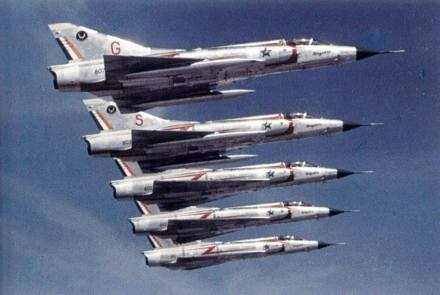
There is a saying in Afrikaans and it applies to this image ‘mooi bly mooi’ (beauty is eternal). Enjoy this stunning image of perfect formation flight by 2 squadron South African Air Force’ in their then ‘new’ Mirage III’s in 1968 – still in their colour scheme of silver metal and red lightning flash, before changing to their bush war camouflage scheme.
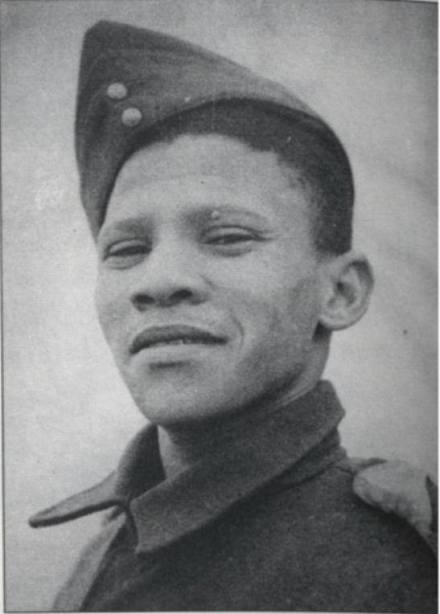
Honouring real South African heroes and here stands an exceptional one. Corporal William Cloete was a Cape Coloured Corps member and the leader of a stretcher bearer team attached to the Cape Town Highlanders regiment in Italy during the Second World War.
During a fierce fight with German troops when his company was pinned down on three sides by mortar and machine gun fire, under persistent enemy firing, Cloete and his team carried ten of their own wounded soldiers to safety; for this he received the Military Medal for bravery.
Nearly a year later, at the age of 24, Cloete was struck by a bullet from a German sniper and permanently blinded in both eyes. After the war Cloete attended the School for the Blind in Bellville. He became an expert basket-maker for the rest of his working life and passed away in 1993.
On the 11th of November, your fellow veterans salute and remember you Cpl Cloete.
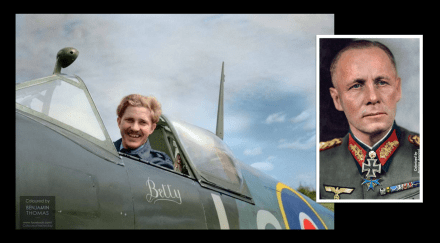
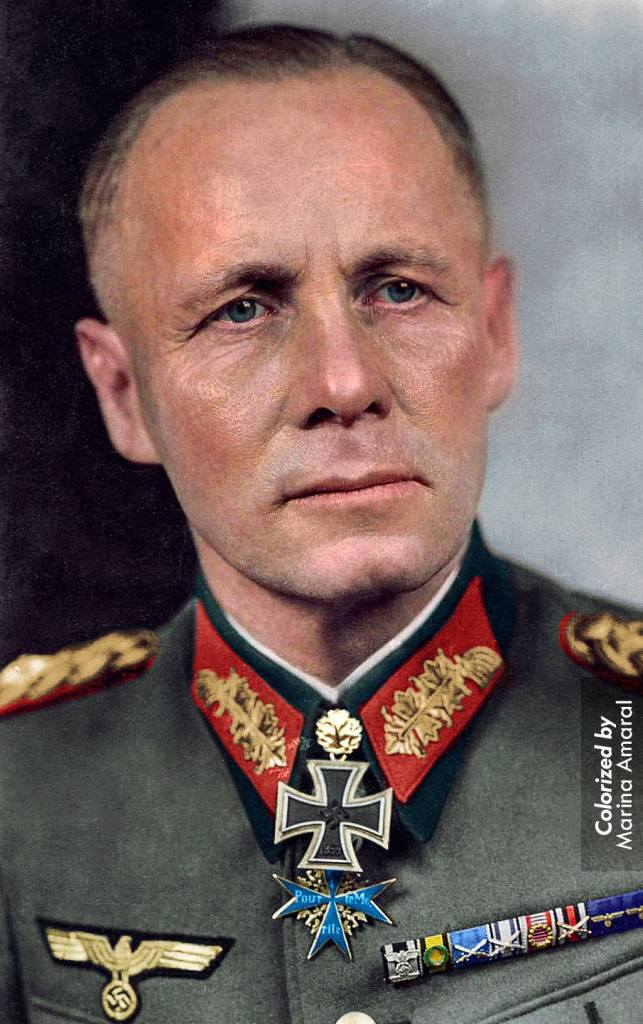
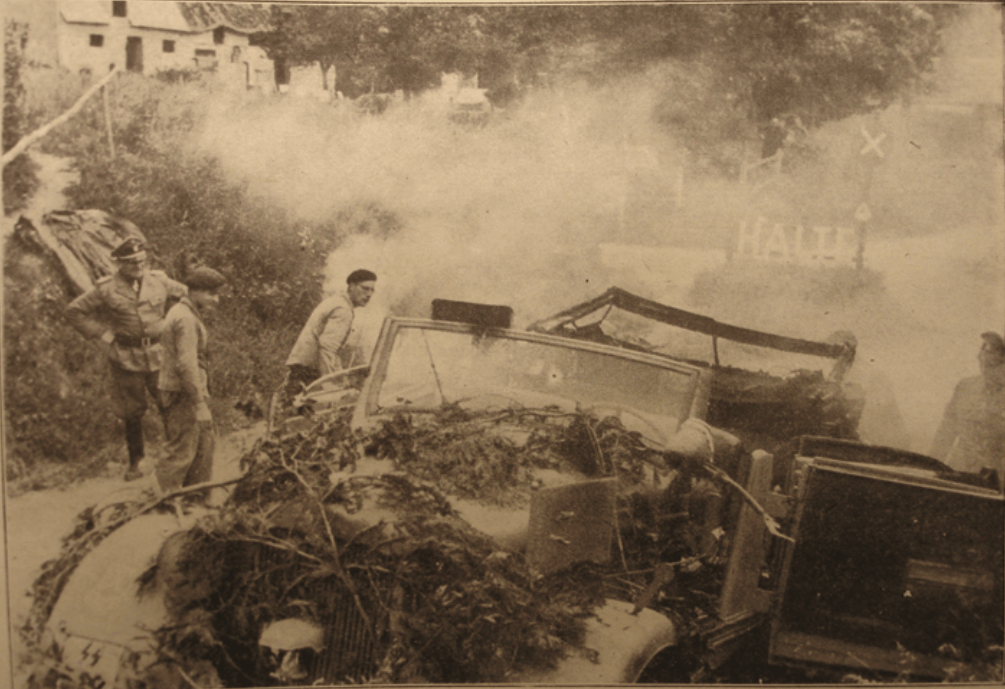
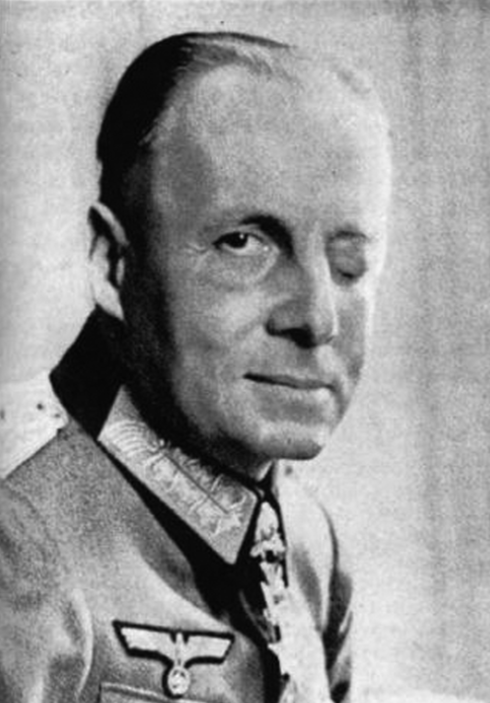
This South African fighter pilot ace shot up the famous General Erwin Rommel’s staff car in France in 1944. Rommel was thrown out of the car, suffered a severe skull fracture and it was effectively game over for Rommel’s participation in World War 2.
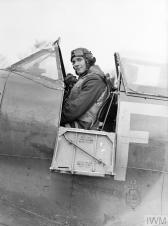
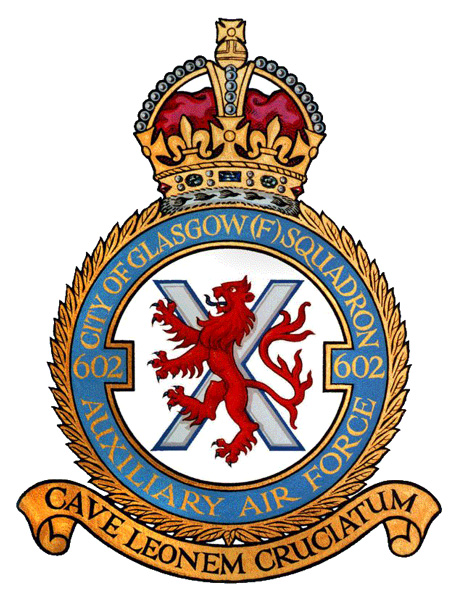
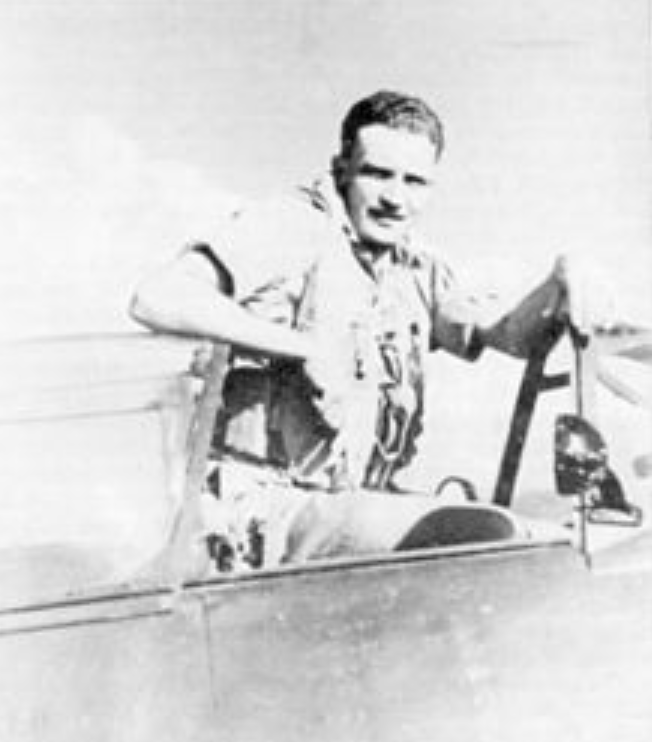
Here is our hero, and there is more to this ace than shooting up Rommel. Squadron Leader J J Le Roux, Commanding Officer of No 602 Squadron Royal Air Force seen in the cockpit of his Supermarine Spitfire Mark IX, “Betty”, at B11/Longues, Normandy.
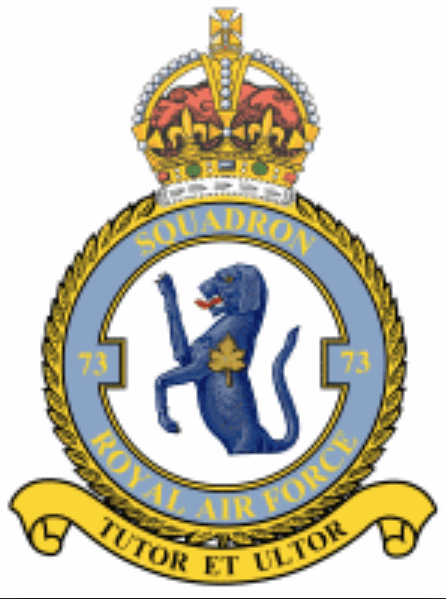
Johannes Jacobus “Chris” Le Roux was born in Heidelberg, in the Transvaal, South Africa, in 1920, and received part of his education at Durban High School. He subsequently joined the Royal Air Force, and served with No 73 Squadron in France as part of the Advanced Air Striking Force (AASF), where he too part in the latter stages of the debacle that was “The Battle of France”, the squadron withdrawing from France on the 17 June 1940.
Le Roux was then took part in the Battle of Britain, both opening his account on arial victories and having to bale out of a blazing Hurricane. Le Roux is said to have been shot down on no-less than 12 occasions during 1940, which is incredibly remarkable, and if so, it’s a wonder he survived as long as he did.
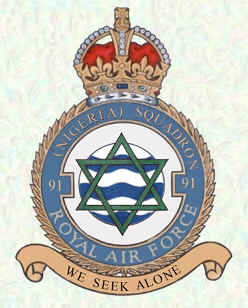
Le Roux enjoyed better luck with No. 91 “Nigeria” Squadron in 1941 and 1942, shooting down eight enemy aircraft before joining No. 111 Squadron RAF in North Africa. He ended his second tour in command of the Squadron.
Following a rest from operations he was given command of No. 602 Squadron in July 1944. He carried out an incredible number of sorties – 200 in total. He won the Distinguished Flying Cross – not once but three times, here are the citations:
DFC, London Gazette, 4 October 1941, Issue 35312, page 6034:
“Acting Flight Lieutenant Jacobus Johannes Le Roux (42240), No. 91 Squadron.
This officer has carried out over 200 operational sorties which have included shipping reconnaissances, during which much valuable information has been obtained, and numerous attacks on shipping and enemy aerodromes in the face of heavy enemy fire. Flight Lieutenant Le Roux has destroyed 3 hostile aircraft in combat and at least 1 on the ground.”
First Bar to DFC, London Gazette, 8 December 1942 (Issue 35819, page 5391):
“Flight Lieutenant Jacobus Johannes LE Roux, D.F.C. (42240), No. 91 Squadron.
Since being awarded the Distinguished Flying Cross this officer has destroyed a further five enemy aircraft. In addition to his air victories he has attacked shipping and targets on the ground with considerable success. At all times Flight Lieutenant Le Roux has displayed a fine fighting spirit.”
Awarded 9th July 1943 Citation:
“Sqn. Ldr. Le Roux’s magnificent leadership has played a large part in the many successes attained by his squadron. He has personally destroyed 14 enemy aircraft and damaged many others, and has also inflicted much damage on enemy shipping.”
On one occasion Le Roux’s aircraft was “so badly damaged by flak after he had strafed a convoy of vehicles that it looked impossible for anyone to have flown it, but he made base successfully”. To the airmen of 602 Squadron he was known simply as the “Boss” , “in the air a cool, calculating tactician and disciplinarian, on the ground his personality shone out in the social life of a very happy team”, and his “keen vision frequently enabled him to shoot down aircraft which other members of the squadron flying with him had not even seen” (an attribute he shared with fellow South African RAF air-aces “Sailor” Malan and “Pat” Pattle).
Le Roux is generally credited as the pilot who attacked and badly wounded Generalfeldmarschall Erwin Rommel in his staff car on the road between Livarot and Vimoutiers on 17 July 1944, the day on which he also destroyed two Messerschmitt Bf 109s and damaged two more to bring his victory score to 23.5.
In the early morning of July 17, 1944, a staff car left Rommel’s headquarters at La Roche Guyon. The passengers included Rommel, his aide Captain Helmuth Lang, Major Neuhaus, Sergeant Holke, and their driver, Sergeant Karl Daniel. The journey was one of Rommel’s routine inspections of the front line. By January 1944, Hitler had forbidden Rommel from traveling via aircraft, as several high-ranking officers had been killed in air crashes.
It was unfortunately an air accident that would end the young life of J.J. Le Roux, during a fateful cross-channel flight on 29 August 1944, whilst doing a ‘booze run’ – taking alcohol back to his squadron at Tangmere – that he crashed into the channel in bad weather. According to Paddy Barthropp, ‘Chris’ Le Roux was without a dinghy and was sitting on numerous bottles of champagne, which do not float. It was indeed a tragic end to one of South Africa’s most popular and gallant fighter pilots.
His cheerful and very happy disposition made him one of South Africa’s most popular fighter pilots, and this is seen in No.111 Squadron Operations Record Book which contains the following reference to him, it relating the story of his having made a good landing in very dirty weather and the mud described earlier, and finishes up: “I didn’t realise I was down until I heard the ground crew clapping!” He was a very worthy member of “the gayest (happiest) company who ever fired their guns in anger.”
Le Roux left behind an English wife and two children, at the time resident in Shropshire.
—————————————-
Photo and caption reference copyright: Imperial War Museum, Wikipedia and The Southern African History Musings of Ross Dix-Peek and Field Marshal Erwin Rommel: the head injury that may have prolonged the Second World War – Heather A. Fuhrman, BS,1 Jeffrey P. Mullin, MD, MBA,2 and Chris A. Sloffer, MD, MBA.
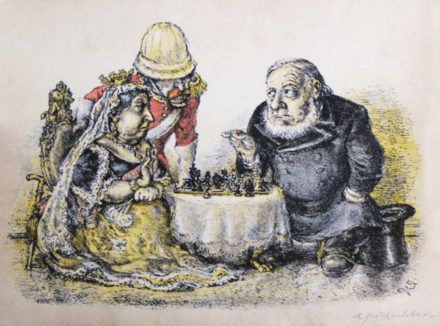
This period cartoon captures that moment when President Paul Kruger, who in a game of political chess with Queen Victoria, is about to make a “blunder” – a disastrous move in chess which is ill considered. The British Army is ominously overseeing the move and Kruger, rightfully so, looks very worried.
The “blunder” move was simply this, after much sabre rattling and posturing by Milner and other British Imperialists in Southern Africa over mineworker representation in the Transvaal, on 11 October 1899 President Paul Kruger of the Transvaal/South African Republic (a day after his 74th birthday) in alliance with another Boer Republic – The Orange Free State, in a rather surprising move to many – declared war on Great Britain.
The move by two relatively small Boer Republics to declare war on what was then the world’s only real superpower came with some astonishment to Queen Victoria and the British Government in the United Kingdom. The British Imperialists in Southern Africa, along with the British Gold and Diamond mining magnets, on the other hand could hardly believe their luck.
Alfred Milner, the Governor of the Cape Colony had taken a belligerent stand with Kruger and pressed very hard for war against the “Transvaal” Boer Republic, it essentially stood in the way of Imperial expansionist plans. However he did not generally have poplar support back in the United Kingdom for a war . Once the declaration of war came from Kruger it was used as a “causes belli” (a legitimate justification to go to war) to the British public.
More alarming to the British at home in the United Kingdom was that night 800 men of the Potchefstroom and Lichtenburg commandos under General Koos de la Rey (one of General Piet Cronjé’s field generals) attacked and captured the British garrison and railway siding at Kraaipan between Vryburg and Mafeking, some 60 kilometres south west of Mafeking and well inside sovereign British territory.
Thus, with the invasion by Boer forces of a British Colony, so began the Second Anglo-Boer War. Under the orders of Cronjé the Mafeking railway and telegraph lines were cut on the same day, and the dice was rolled.
Not to trivialise the matter as a game of chess, the move by Kruger would have horrific consequences for the Boer nation. The war would see the desperation of Guerrilla tactics being employed by the Boer Forces, after the “conventional” phase of the war was lost, as a last ditch effort to maintain their sovereignty “in the field”. The use of this tactic spurred the British to fight the remainder of the war in an utterly ruthless and murderous manner, especially in the treatment of Boer women and children – the British policies of scorched earth and concentration camps would leave a very bitter and tarnished legacy.
The question we ask now, with all the 20/20 hindsight in the world is why? Why on earth would Kruger fall for all the sabre rattling and posturing by The British? Did he not anticipate the massive mobilisation of biggest expeditionary force the British had ever assembled to go “get their Colonies back”? Did he not see the underpinning greed of mining concerns operating in Africa – did the Jameson Raid not warn him of this?
Contrary to less informed opinion, at the onset of the war there no “massive” build up of British arms along the borders of the two Boer Republics to really threaten imminent invasion of them. “Sabre rattling” (limited reinforcements where ordered) and warnings – yes, but a vast build up of arms – no. To coin a phrase – they where playing “chess” using an age old tactic to force the hand.
At the on-set the Boer Republics in fact had the upper hand militarily and quickly put siege to the relatively small and isolated British garrisons on the two British Colony’s borders (notably Ladysmith, Kimberley and Mafeking). At the start of the war, numbers and arms in fact favoured the Boer Republics, it was only after war was declared that a truly massive British Imperial build up of arms and men to be shipped to Southern Africa occurred.
Central to the dispute, for the British at least was the issue of workers rights and political representation of mainly British expatriate population setting up business and working on the Gold mines in the Transvaal. The two sides summited on the 15 May 1899 in Bloemfontein to avoid war and Milner and Kruger immediately clashed over the issue of citizenship – Kruger was only prepared to grant expatriates citizenship to the “Transvaal” i.e. South African Republic after 14 years of residency, Milner insisted the period be 5 years. The issue came to head and negotiations broke down – both protagonists as belligerent to one another as ever.
Both Milner and Kruger knew that the vast number of British expatriates in the Transvaal would unseat the Boer government by simple majority if they became citizens, to Kruger the proposals where an attempt by Britain to take over his country (and its resources) by simple subjection. It is best summed up in his own reply to Milner when he said “Our enfranchised burghers are probably about 30,000, and the newcomers may be from 60,000 to 70,000 and if we give them the franchise tomorrow we may as well give up the Republic.’ Kruger went on to say, “It would be ‘worse than annexation’.
To the British it was a matter of individual rights to political representation in the Republic, which was now at a boiling point on the rand. Given the simple change in the country’s demographic due to the Gold Rush, this change was likely to be permanent and these rights could not be avoided – in essence the Boer Republic would eventually cease to exist through popular vote, it was just a really a matter of when.
To the Boers it was a fight to remain in power and keep their country. It had been contested before, the British military had already taken over the Transvaal some years before as a British Protectorate (over the issue of representation again – this time the African tribes had disputed the territory) and the British had been outed by the Boers in a small and swift war (the 1st Boer War or “Transvaal War” in 1880/81) which re-gained them their sovereignty over the territory. It however remained a disputed territory to many, it had now become even more complex with the massive influx of expatriates and business, and the memory of Britain’s control of the Transvaal was still fresh – for both the Boers and the British.
The answer to why Kruger moved when he did, lay in the hope that the initial successes of the Boer Forces against the smaller British Forces garrisoned in Natal and the Cape Colony at the time would bring about detente. As with the victory of the Transvaal War (the 1st Boer War 1880 to 1881) to out the British from that Republic then, Kruger hoped a swift victory would bring sense to the British position with regard to British expatriates “rights” and “citizenship” on the mines in the Transvaal and put any Imperial British expansionist plans and Milner’s obstinate attitude towards the Boer Republics to bed.
In hindsight, the move was indeed a blunder, Kruger did not get the detente he sought. Change in the Transvaal’s political and demographic make-up was inevitable, and Kruger would not embrace it – a fierce sense of patriotism and sovereignty where central edifices for him and he chose to take up arms to stall the inevitable in a last ditch effort to keep his country under Boer control (a similar parallel can be drawn years later when the “union” of South Africa was taken back politically by the hard line Afrikaner Nationalists in 1948).
No doubt “Gold” played a role, the simple fact that it was discovered is very central to the dispute. However of interest is just how much of a factor it played – The Boer standpoint at the time was Britain’s “Gold-magnets” started the war out of greed (the Jameson raid in their eyes proved that to them). Some modern option is the British wanted to “steal” the Republic’s gold, however the economics of matter is that the Gold was in fact already owned by the British private concerns mining it and they paid a tax to the Transvaal government for the sale of it. This agreement on ownership and tax did not change when the Union of South Africa was established after the war, so there was no real financial gain for Britain in going to war (the fact is they owned the Gold already).
What lies more at the heart of this matter of greed is “Empire” as an ideology central to the world politics at the time – the expansion of territory around the globe by the British – the concept of a “Cape to Cairo” band of control over the whole of Africa and the sun never setting on the British Union flag. British global expansionism was central to Milner and others as Victorian characters and the two Boer Republics stood in the way of it.
To put perspective on the robust, very brave, tenacious and largely suicidal move by Kruger in today’s context – it would be akin to two relatively small prosperous oil/gas neighbouring states like “Qatar” and “The United Arab Emirates” getting into a coalition and then declaring war against the current global Superpower – the United States of America – who has vested interest in their territories (business and large numbers of expats) and in their product (oil/gas). Today’s “Oil” is yesterday’s “Gold” in the context of global monetary exchange and world dominance (the on-going wars in the Middle East involving all the Superpowers is testament to that). There would only be one outcome, and it would be as disastrous in this comparison context now as it was for the Boer Republics in their context then.
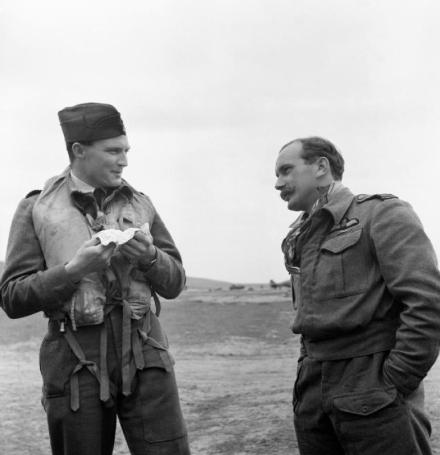
Petrus Hendrik Hugo (left in the headline image), known as “Dutch,” was a South African who joined the Royal Air Force and took part in he Battle of France and the Battle of Britain and went on to become a RAF flight commander.
Along with “Sailor” Malan, another famous fellow Afrikaner to fight in the Battle of Britain, “Dutch” is also widely celebrated as one of the “few” (as coined by Churchill) who kept Britain in the war thereby turning the tide for Nazi Germany and ultimately liberating Europe from a tyrannical ideology. This is one very brave hero and this is his story.
Petrus Hendrik Hugo was born 20 December 1917 on the farm Pampoenpoort in the Victoria West district, Cape Province. He attended the Witwatersrand College of Aeronautical Engineering and in 1938 he went to the United Kingdom to attend the Civil Flying School at Sywell.
Hugo was awarded a Short Service Commission in the RAF in April 1939. His Afrikaans origins and pronounced accent soon earned him the nickname “Dutch”, and he was known by this throughout his RAF careerHe served at No.13 Flying Training School for six months and was assessed “exceptional” at the end of his course. He attended the Fighter School at RAF St. Athan in Wales, and in December 1939, joined No. 615 Squadron RAF at Vitry, in France, equipped with the Gloster Gladiator.
In April 1940, the squadron re-equipped with Hawker Hurricanes. During the Battle of France, Hugo shot down a Heinkel He 111 bomber on 20 May 1940. 615 Squadron returned to the UK and were stationed at RAF Croydon and RAF Kenley.
On 20 July 1940 Hugo shot down two Messerschmitt Bf 109 fighters and shot down yet another Bf 109 on 25 July. He then shared a Heinkel He 59 floatplane with another pilot on 27 July. On 12 August Hugo shot down another Bf 109. On 16 August he claimed a He 111 probably destroyed over Newhaven, but was himself hit by cannon shell splinters from a Messerschmitt Bf 110. Slightly wounded in both legs, Hugo returned to action two days later. He was bounced by Bf 109s of JG 3 and wounded in the left leg, left eye and right cheek and jaw. He managed to crash-land, and was taken to Orpington Hospital. In late August, 1940, the award of the Distinguished Flying Cross (DFC) was announced. By late September he rejoined No. 615, based at Prestwick in Scotland.
In mid 1941 the squadron, now flying the cannon-armed Hurricane IIc, returned to RAF Kenley. On 14 October 1941 Hugo shared a Heinkel He 59 flying boat shot down with three other pilots. He assumed command of 41 Squadron RAF on 20 November, which was flying Supermarine Spitfires, and was awarded a Bar to his DFC on 25 November. On 12 February 1942 during the channel dash of the German battleships Scharnhorst and Gneisenau, he shot down one Bf 109 and damaged a second. On 14 March he shot down another Bf 109 over a German convoy near Fecamp, and on 26th he claimed another escorting Bostons raiding Le Havre. Promoted to wing commander on 12 April 1942, he took over as Tangmere Wing Leader, but on 27 April was wounded again, being shot down in the English Channel. In a running fight with Focke-Wulf Fw 190s of II./JG 26 he claimed a probable Fw 190 and damaged a second but was hit in the left shoulder, and had to bale out, being picked up by Air Sea Rescue. He was awarded the Distinguished Service Order while recuperating at 11 Group HQ.
In late November 1942 he took over No. 322 Wing RAF. On 12 November he half-shared a Dornier Do 217 shot down near Djidjelli. He claimed a probable Junkers Ju 88 and another damaged near Bougie Harbour on 13 November, and on the 15th a probable He 111 and a damaged Ju 88 over Bône Harbour. On 16 November he downed a Ju 88 and two Bf 109s. He got another Ju 88 on 18 November and three more Bf 109s on 21, 26 and 28 November 1942.
On 2 December he shot down two Italian Breda Ba 88 bombers of 30 gruppo near La Galite, one being shared, and on 14 a Savoia-Marchetti SM.79. He led 322 Wing for the next four months until posted to HQ, North-West African Coastal Air Force, and also awarded a second Bar to the DFC.
He returned to command No.322 Wing in June 1943 and on 29 June destroyed a Bf 109. On 2 September Hugo shot down a Fw 190 near Mount Etna and on 18 November he got his last confirmed victory of the war, an Arado Ar 196 Floatplane of Seeaufkl. 126, over the Adriatic coast.
His final tally was 17 destroyed, three shared destroyed, three probably destroyed and seven damaged. Of these, 12 and one shared destroyed were scored in the Spitfire V
In the header image – Group Captain P H “Dutch” Hugo (left) is seen in his role of Commanding Officer of No. 322 Wing RAF, and Wing Commander R “Raz” Berry, who took over leadership of the Wing in January 1943, both conversing at Tingley, Algeria.
Image Copyright IWM Collection. Reference and caption Wikipedia and the Imperial War Museum
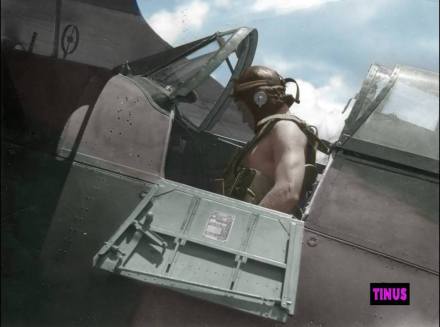
This is a colourised version of a famous original black and white Bureau of Information photograph called “The naked Gladiator pilot” with a caption which reads;
“South African Contingent in East Africa. a SAAF fighter pilot in Kenya preparing to take off to meet enemy raiders. He has removed his shirt because of heat.”
The Gloster Gladiator (or Gloster SS.37) was a British-built biplane fighter. It was used by the Royal Air Force (RAF) , the Royal Navy’s Fleet Air Arm (FAA) (known as the Sea Gladiator variant) and the South African Air Force (SAAF).
It was the RAF’s last biplane fighter aircraft and was rendered obsolete by newer monoplane designs even as it was being introduced. Though often pitted against more formidable foes during the early days of the Second World War, it acquitted itself reasonably well in combat due to high degrees of manoeuvrability.
Photograph obtained from the SAAF museum. The colourised photo copyright belongs to Tinus Le Roux, and my deep thanks to him for sharing it.



 Flight Lieutenant Adolph Gysbert Malan. (37604), Royal Air Force.
 Acting Squadron Leader Adolph Gysbert Malan, DFC (37604), Royal Air Force, No.74 Squadron.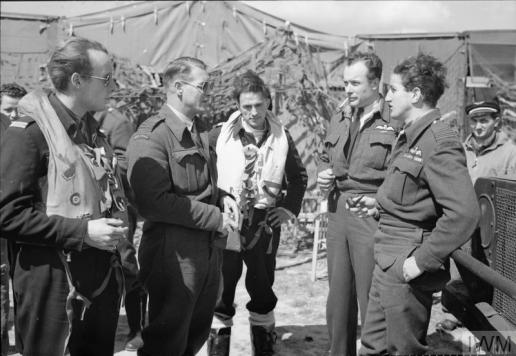






 “I Fear No man”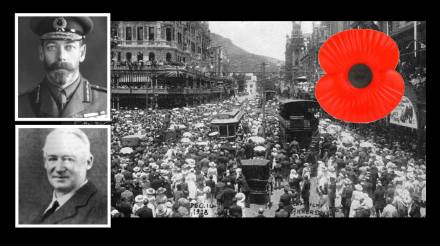
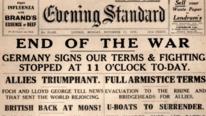 At 05.30 in the morning of 11 November 1918 the Germans signed the Armistice Agreement in a remote railway siding in the heart of the forest of Compiègne. Soon wires were humming with the message : ‘Hostilities will cease at 11.00 today November 11th. Troops will stand fast on the line reached at that hour…’.Thus, at 11.00 on 11 November 1918 the guns on the Western Front in France and Flanders fell silent after more than four years of continuous warfare, warfare that had witnessed the most horrific casualties.World War One (then known as the Great War) had ended.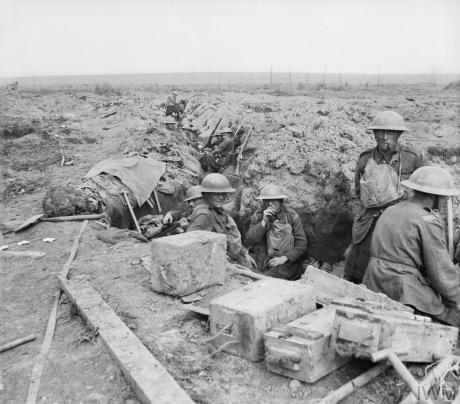



 The Observation Post