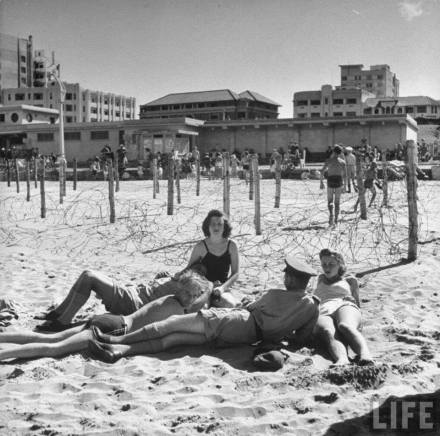
During the Second World War South Africa became a central destination for British, South African as well as other Commonwealth nurses, soldiers, sailors and airmen for a little ‘R&R” (Rest and Recuperation) – especially Durban and Cape Town. Seen here in this famous LIFE magazine image are servicemen on South Africa’s beaches enjoying some of the prettier sights and sun that South Africa has to offer.
In fact many veterans fondly remember South Africa’s hospitality during the war years as the country really opened their arms and welcomed them.
Note during wartime even both the strategic ports of Cape Town and Durban’s beaches were heavily guarded against invasion with barbed wire beach obstacles.
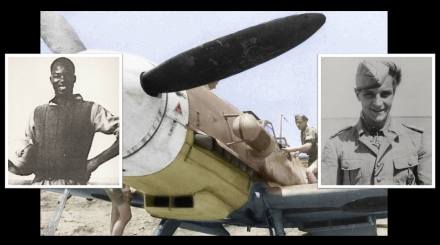
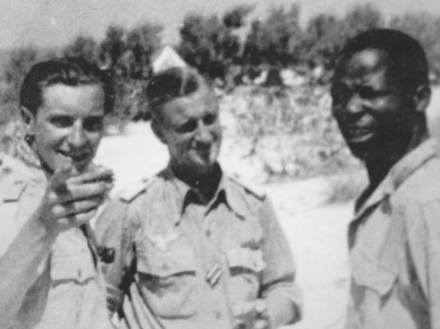
This is an extraordinary featured photograph for a variety of reasons. This is Hauptmann (Captain) Hans-Joachim Marseille, the German WW2 Fighter Ace known to the Axis Forces as “The Star of Africa” on the extreme left and Corporal Mathew ‘Mathias’ Letulu, a South African Prisoner of War who was pressed into becoming his ‘batman’ (personal assistant to an officer) in 1942 but eventually became his close and personal friend, is seen on the extreme right of the photograph.
It’s quite intriguing that Hans-Joachim Marseille had a South African assistant on the one hand when on the other hand he was the most feared of the German Pilots in the North African campaign, arguably one of the best combat pilots the world has ever seen, he clocked up quite a number of South African Air Force “kills” in his enormous tally of destroying well over 100 Allied aircraft – consisting mainly of aircraft from the Royal Air Force (RAF), the Royal Australian Air Force (RAAF) and the South African Air Force (SAAF).
It’s equally a measure of Hans-Joachim Marseille as a man in that he directly baulked against the Nazi policies of racial segregation and openly befriended a Black man, especially amazing considering his role as a senior commissioned officer in the German Air Force (Luftwaffe) and hero of the Reich.
Over time, Marseille and “Mathias” Letulu became inseparable. Marseille was concerned how Letulu would be treated by other units of the Wehrmacht and once remarked
“Where I go, Mathias goes.”
Marseille secured promises from his senior commander, Neumann, that if anything should happen to him (Marseille) Cpl “Mathias” Letulu was to be kept with the unit. Unusual behaviour for a German officer in the Third Reich, but Marsaille was no card carrying member of the Nazi party, in fact he despised them.
No ardent Nazi
In terms of personality Hans-Joachim Marseille was the opposite of highly disciplined German officer, he was “the funny guy” and almost kicked out of Luftwaffe several times for his antics. The only reason he wasn’t was because his father was a high ranking WW I veteran and an army officer and Hans-Joachim Marseille tested how far this protection would go.
If you look “misbehaving scoundrel” in dictionary there should be an image of Hans’ smirking face next to it. On one occasion he actually strafed the ground in front of his superior officer’s tent. He could have been court marshalled for that alone, but by then he was starting to demonstrate his superior pilot skills as an upcoming Fighter Ace.
He hated Nazis and he despised authority in general and always had strained relations with his authoritarian father who was the model of a strict Prussian officer. Hans was truly the opposite of his father.
His American biographers Colin Heaton and Anne-Marie Lewis recall in ‘The Star of Africa’ that he once landed on the autobahn simply to relieve himself. Tired of his undisciplined behaviour, a superior officer had him transferred to North Africa in 1941. Here he thrived, his dazzling record earned him the Knight’s Cross with Oak Leaves, Swords, and Diamonds, and acclaim at home. But the record suggests he was no ardent Nazi.
He listened to banned Jazz music openly, drank a lot and sometimes showed up to service smelling of booze and in hangover, he was a known womanizer, going against Nazi ideology in every possible manner – and getting away with it.
An incident happened which really shows the metal and attitude of the man. It occurred when Hans-Joachim Marseille was summoned to Berlin as Hitler wanted to present him with decorations. As a gifted pianist Marseille was invited to play a piece at the home of Willy Messerschmitt, an industrialist and the designer of the Messerschmitt Bf 109 fighter Marseille had achieved so much success in.
Guests at the party included Adolf Hitler, party chairman Martin Borman, Hitler’s deputy and Commander-in-Chief of the Luftwaffe, Hermann Göring, head of the SS, Heinrich Himmler and Reich Minister of Propaganda Joseph Goebbels. After impressing them with a display of piano play for over an hour, including Ludwig van Beethoven’s Für Elise, Marseille proceeded to play American Jazz, which was considered degenerate in Nazi ideology. Hitler stood, raised his hand, and said “I think we’ve heard enough” and left the room.
Magda Goebbels found the prank amusing and Artur Axmann recalled how his “blood froze” when he heard this “Ragtime” music being played in front of the Führer.
But a more telling incident of his attitude to Nazism was to come. On one occasion when he was summoned to Germany, he noted that Jewish people had been removed from his neighbourhood (including his Jewish family Doctor who delivered him) and grilled his fellow officers as to what happened to them – what he then heard were the plans for the Final Solution – the extermination of the Jews of Europe. This shocked him to the core and he actually went AWOL (Absent without Leave), he became a de facto deserter and went to Italy were he went into hiding ‘underground’.
The Nazi German Gestapo (Secret Police) however managed to track him down and forced him to return to his unit where other pilots noticed that he appeared severely depressed, concerned and wasn’t anything like his normal happy self that they were used to.
Friendship with Corporal Mathew Letulu
Marseille’s friendship with his ‘batman’ (personal helper) is also used to show his anti-Nazi character. In 1942 Marseille befriended a South African Army prisoner of war, Corporal Mathew Letulu. Marseille took him as a personal helper rather than allow him to be sent to a prisoner of war camp in Europe.
“Mathias” was the nickname given Corporal Mathew Letulu by his captors. Cpl Letulu was part of the South African Native Military Corps and was taken as a Prisoner of War (POW) by the Germans on the morning of 21 June 1942 when Tobruk and the defending South Africans under General Klopper were overrun by Field Marshal Erwin Rommel.
‘Black’ POW where treated differently to White ‘POW’ by Nazi Germany, instead of mere confinement under the conventions, Black POW were but to unpaid ‘labour’ assisting the Nazi cause, resistance to which was a grim outcome. Letulu was put to work by the Germans – initially as a driver. The vehicle belonged to 3 Squadron of Jagdgeschwader – or Fighter Wing – 27 (JG 27) based at Gazala, 80km west of Tobruk. Here, Letulu came to the attention of the reckless and romantic Hans-Joachim Marseille.
By this time Letulu had advanced a little in his lot to a helper in 3 Squadrons club casino, where he took a particular liking to Marseille. In need of personal assistants for officers (known in the military as a “batman”) some POW’s where snapped up by German Officers, Hans-Joachim Marseille was no different and Cpl Letulu was taken on initially as his batman, but very quickly became a close friend.
Marseille knew that as his kill score grew, the chance of him being pulled from the front lines increased every day, and if he was to be taken away, Cpl “Mathias” Letulu, who because he was a black man, might be in danger given the Nazi racial philosophy. With utmost seriousness, he had his fellow pilot Ludwig Franzisket promise to become Mathias’ protector should Marseille lose the capability to be in that role.
Corporal Letulu also knew that by sticking with Marseille he stood a better chance of surviving the war and eventually escaping, and because they viewed each other in an extremely positive light, Letulu made Marseille’s life in the combat zone as comfortable as possible.
The following on their unique bond comes from “German Fighter Ace – Hans-Joachim Marseille, The life story of the Star of Africa” by Franz Kurowksi.
“Through few odd twists of fate Hans had Mathew assigned to his personal assistant but he treated him in every way like a friend, having long talks with him and possibly even sharing alcohol and listening to music together, just hanging out like a couple of friends who happened to be in a war and on different sides.
Besides Mathew, Hans would often see other captured Allied pilots and talk to them in English and socialise. Hans would also violate a direct order not to notify the enemy of the fate of their pilots – he would take off solo with a parachute note explaining the names of the captured pilots and that they were alive and well. As he flew over enemy airfields to drop these notes he would be attacked by AA fire, so he was risking his life to let the families of his enemy pilots know that the pilots were alive and well – or dead, removing their MIA (Missing in Action) status. According to various sources he was like that. Person who believed in chivalry who’s country was taken over by Nazis.
Eventually Hans would become even protective of Mathew especially against the Nazis”
The “Star of Africa”
Hans-Joachim Marseille’s record of 151 kills in North Africa where nothing short of staggering – he destroyed Allied (RAF, SAAF and RAAF) squadrons shooting down One Hundred and One (101) Curtiss P-40 Tomahawk/Kittyhawk fighters, 30 Hawker Hurricane fighters, 16 Supermarine Spitfire fighters, Two Martin A-30 Baltimore bombers, One Bristol Blenheim bomber; and One Martin Maryland bomber.
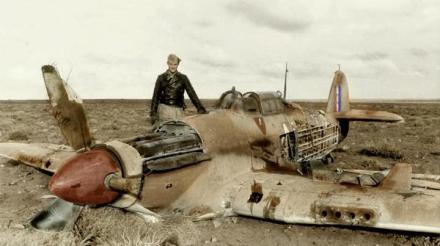
Hans-Joachim Marseille with Hawker Hurricane MkIIB of 274. Squadron RAF, North Afrika – 30 March 1942 (coloured)
As a fighter pilot Marseille always strove to improve his abilities. He worked to strengthen his legs and abdominal muscles, to help him tolerate the extreme ‘G forces’ of air combat. Marseille also drank an abnormal amount of milk and shunned sunglasses, to improve his eyesight.
To counter German fighter attacks, the Allied pilots flew “Lufbery circles” (in which each aircraft’s tail was covered by the friendly aircraft behind). The tactic was effective and dangerous as a pilot attacking this formation could find himself constantly in the sights of the opposing pilots. Marseille often dived at high-speed into the middle of these defensive formations from either above or below, executing a tight turn and firing a two-second deflection shot to destroy an enemy aircraft.
Marseille attacked under conditions many considered unfavourable, but his marksmanship allowed him to make an approach fast enough to escape the return fire of the two aircraft flying on either flank of the target. Marseille’s excellent eyesight made it possible for him to spot the opponent before he was spotted, allowing him to take the appropriate action and manoeuvre into position for an attack.
In combat, Marseille’s unorthodox methods led him to operate in a small leader/wingman unit, which he believed to be the safest and most effective way of fighting in the high-visibility conditions of the North African skies. Marseille “worked” alone in combat keeping his wingman at a safe distance so he would not collide or fire on him in error.
In a dogfight, particularly when attacking Allied aircraft in a Lufbery circle, Marseille would often favour dramatically reducing the throttle and even lowering the flaps to reduce speed and shorten his turn radius, rather than the standard procedure of using full throttle throughout. Emil Clade said that none of the other pilots could do this effectively, preferring instead to dive on single opponents at speed so as to escape if anything went wrong.
Marseille’s South African associations went beyond his bond with Cpl “Mathias” Letulu and was far more lethal in respect to South African pilots. In the weeks before the two met, Marseille is credited with shooting down three SA Air Force pilots west of Bir-el Harmat on May 31, including Bishops’ old boy Major Andrew Duncan (who was killed), and three days later, another six South African Air Force “kills” in just 11 minutes, three of whom were high-scoring aces. One of them, Robin Pare, was killed in the combat.
Death of Hauptmann Hans-Joachim Marseille
On 30 Sep 1942, Marseille’s brilliant total record of 158 career-kills came to an end (151 of them with JG 27 in North Africa).
After the engine of his Bf 109G fighter developed serious trouble, he bailed out of the aircraft close to friendly territory under the watchful eyes of his squadron mates. To their horror, Marseille’s fighter unexpectedly fell at a steep angle as he bailed out, the vertical stabilizer striking him across the chest and hip. He was either killed instantly or was knocked unconscious; in either case, his parachute did not deploy, and he struck the ground about 7 kilometers south of Sidi Abdel Rahman, Egypt.
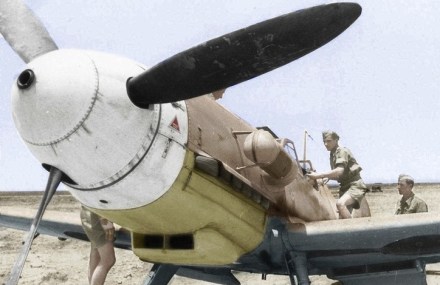
Messerschmitt Bf 109F-4 , Hans Joachim Marseille, colorised picture.
His friend and fellow JG 27 pilot and Knights Cross recipient Hauptmann Ludwig Franzisket along with the squadron surgeon Dr. Winkelmann, were the first two to arrive on the scene, bringing Marseille’s remains back to the base.
Mathias was the first to greet them, and the following is accounted from a memoir by Wilhelm Ratuszynski.
Although the heat didn’t encourage any activity, something told Mathias to wash Hans’ clothes. Hans liked to change into a fresh uniform after the flight. He always liked to look presentable. Mathias opted to use gasoline this time. They wash would dry in just few minutes.
Usually, this was done by scrubbing uniforms with sand to rid it of salt, oil and grime. Everything was in short supply. Being a personal batman for Hans-Joachim Marseille, the most famous Luftwaffe pilot, had its advantages. For instance he was given a little of aircraft fuel for washing. Mathias liked being Jochens servant and he liked Jochen himself.
They were friends. Mathias had barely started his chore, when the sound of approaching aircraft signaled to ground personnel to change torpidness for activness. Mathias put the lid on the soaking uniforms and started to walk towards the landing aircraft. He was looking for familiar plane which supposed to have number 14 painted in visible yellow on fuselage. It was supposed to land last. He noticed that three planes were missing, and last one to touch down had different number on it.
Unalarmed, he turned toward Rudi who had already jumped on the ground from wing of his 109. He saw Mathias coming and cut short his conversation with his mechanic. His face was somber when he looked at Mathias and slowly shook his head. And Mathias understood immediately. He kept looking straight into Rudi’s face for few more seconds, slowly turned and walked away. He noticed a strange sensation. No anger, sorrow, grief, nor resignation. He was calm yet something gripped his throat. Muscles on his neck tightened and he found it hard to swallow. He walked for few minutes without noticing others who were staring at him. He came to Jochen’s colorful Volks (volkswagen car) called “Otto” and sat behind steering wheel. For a moment he looked like he wanted to go somewhere, but climbed out and approached the soaking uniforms.
He looked at the canvas bag with initial H-J.M laying right beside it. He reached into his breast pocket for matches. Slowly but without any hesitation he struck a match and threw it on the laundry. Flames that burst out added to the already scourging heat. At that moment last rotte was flying in. Mathias intuitively lifted his head, following them. The lump in his throat got bigger.
While the entire squadron was devastated at the loss of such a great fighter ace, Mathias, despite having known Marseille only for a short time, was deeply depressed at the loss of a dear friend.
Marseille was initially buried in a German military cemetery in Derna, Libya during a ceremony which was attended by leaders such as Albert Kesselring and Eduard Neumann. He was later re-interned at Tobruk, Libya.
Ludwig Franzisket
After Marseille’s death, as promised to his friend, Hauptmann Ludwig Franzisket took Cpl Letulu in, and in turn he became his personal servant. Cpl Letulu remained with the Squadron even after Franzisket was forced to bail out whereby he too struck the vertical stabilizer, shattering a leg in the process. After been nursed to health, Franzisket returned to his Squadron and Cpl Letulu continued serving him in Tunisia, Sicily, and finally Greece.
By the summer of 1944 the situation there had grown critical with a British invasion of the Greek continent imminent. The chance had come to “smuggle” Cpl. “Mathias” Letulu into one of the hastily established POW camps, where he could then be “liberated” by the British. Franzisket planned this coup together with Hauptmann Buchholz. “Mathias “became “Mathew” again and was a corporal in the South African Division. Everything went off without a hitch. He was set free by British troops in September of 1944 and allowed to return home at the end of hostilities.
Reunion
By coincidence, after the war, former members of JG 27 learned that Cpl “Mathias” Letulu was still alive. They immediately sent him an invitation, paid for the journey and other expenses, and finally, at the tenth reunion of the Deutsches Afrikakorps in the fall of 1984, they were once again reunited with their old South African friend.
The former pilots were elated to see him and invitations rained from all around. The following words, spoken in German as a tribute to Hans-Joachim Marseille by “Mathias” Letulu at the happy conclusion of his odyssey, and it gives some insight into the bond which had united Letulu with his German friend:
“Hauptmann Marseille was a great man and a person always willing to lend a helping hand. He was always full of humor and friendly. And he was very good to me.”
In 1989, a new grave marker and a new plaque was placed at his grave site; Marseille’s surviving Luftwaffe comrades attended the event, including his Allied friend – Mathew “Mathias” Letulu who flew out specifically from South Africa to attend the ceremony.
There is an often asked question. How many South Africans served in Nazi Germany’s Armed Forces?
The answer is not many. Two South Africans who served in the German armed forces in WW2 are well-known, Robey Leibbrandt – the firebrand Afrikaner insurgent tried for treason is possibly the most known and to a lesser extent Leutnant Heinz Werner Schmidt, who was one of Field Marshal Erwin Rommel’s personal aids in the North African conflict. However there where was also a smattering of South Africans – five in total, who served in the Waffen SS, and most joined the infamous “British Free Corps”.
The Waffen-SS was the armed wing of the Nazi Party’s SS organisation. Its formations included men from Nazi Germany, along with volunteers and conscripts from both occupied and un-occupied lands, as well as men drawn from Allied Forces – a small number of British, Canadians, Americans, Australians and South Africans were recruited as Prisoners of War and indoctrinated into Nazi philosophy.
Initially, in keeping with the racial policy of Nazi Germany, membership was only open to people of Germanic origin (so-called Aryan ancestry). The rules were partially relaxed in 1940, and later the formation of units composed largely or solely of foreign volunteers and conscripts was authorised.
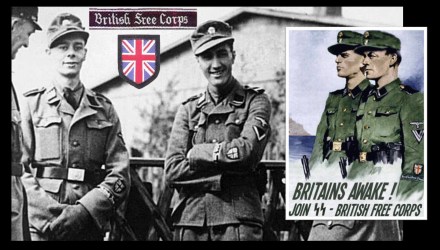
The British Free Corps was a unit of the Waffen SS during World War II consisting of British and Dominion Prisoners of War (POW) who had been recruited by the Nazis. The unit was originally known as the Legion of St George. Only 54 men belonged to The British Free Corps at one time or another, some for only a few days. At no time did it reach more than 27 men in strength. In this respect it was not a very successful corps of the Waffen SS.
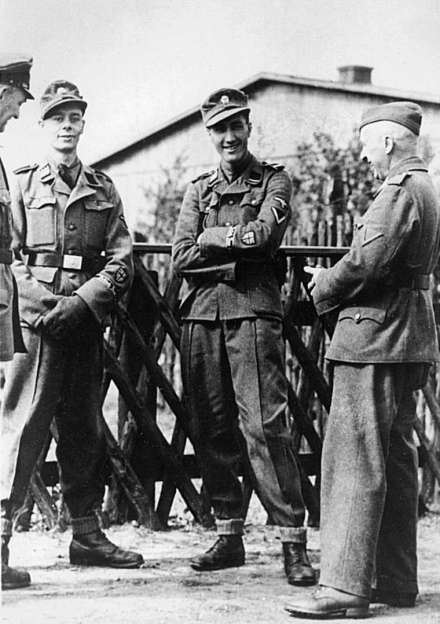
Two early recruits to the Waffen SS British Free Corps. Kenneth Berry and Alfred Minchin, with German officers, April 1944
The idea for the British Free Corps came from John Amery, a British fascist, son of the serving British Secretary of State for India, Leo Amery. John Amery travelled to Berlin in October 1942 and proposed to the Germans the formation of a British volunteer force to help fight the Bolsheviks.
Apart from touting the idea of a British volunteer force, Amery also actively tried to recruit Britons. He made a series of pro-German propaganda radio broadcasts, appealing to his fellow countrymen to join the war on communism.
Recruiting for the Free Corps in German Prisoner of War (POW) camps In 1944, consisted of leaflets distributed to the POWs, and the unit was mentioned in Camp, the official POW newspaper published in Berlin.
The unit was promoted “as a thoroughly volunteer unit, conceived and created by British subjects from all parts of the Empire who have taken up arms and pledged their lives in the common European struggle against Soviet Russia”.
The attempted recruitment of POWs was done amid German fear of the Soviets; the Germans were “victims of their own propaganda” and thought that their enemies were as worried about the Soviets as they were.
So, who the South Africans recruited into the Waffen SS?, Where and what we know about them is limited, however this is what has been researched:
SS-Unterscharführer Douglas Cecil Mardon (South African)
Douglas Cecil Mardon was believed to be a member of 2nd Transvaal Scottish, 2nd Field Company of the SAEC and the 1st Battalion of the Royal Durban Light Infantry. He joined the Waffen SS around Christmas 1944 – the third of the trio of South Africans who joined the Corps at Dresden.
He possessed very rigid views on the threat to the free world of Soviet success on the Eastern Front. As a POW he had seen Russian prisoners and had come to distinctly racist conclusions about them, when he read Waffen SS British Free Corps recruiting literature it convinced him to volunteer with alacrity.
On 8 March 1945 ‘received promotion to Unterscharführer and was given command of a section.
He was undoubtedly sincere in his wish to fight against the advance of Communism’. On 15/3/1945 he removed the tell-tale BFC insignia from his uniform and substituted an SS runes collar patch.
His Allied rank was Corporal. He used the alias Douglas Hodge as a “Jackal of the Reich”. After the war he was fined £375 for high treason.
SS-Mann Pieter Labuschagne (South African)
Pieter Andries Hendrik Labuschagne joined the Waffen SS in the winter of 1944/45, he succumbed to one of Stranders’ German recruiters, Unterscharführer Hans Kauss, whilst working on a road gang. It is believed Labuschagne was originally a member of the South African Union’s Louw Wepener Regiment and Regiment President Steyn.
Deemed to be so useless by Mardon that he refused to take him. Slipped away in the direction of Dresden, to be ‘liberated’ by advancing US forces after the war. He used the alias Private Adriaan Smith as a “Jackal of the Reich”. He was found guilty of treason after the war and fined £50.
Van Heerden (South African)
Van Heerden’s whereabouts are unknown – it was said he left Pankow December 1943 – “Killed in action on 12 February 1945, during bombing of Dresden” also said to have gone from Dronnewitz to Schwerin in May 1945. He is thought to be listed as Jan Pieterson with the alias “Jackal of the Reich”. He was originally a Rifleman in a British or Allied Commonwealth Long Range Desert Patrol.
SS-Mann Lourens Matthys Viljoen (South African)
Lourens Matthys Viljoen was originally believed to be part of the 1st South African Police Battalion, he joined the Waffen SS in Dec 1944/Jan 45 through the offices of a friendly SS NCO in charge of his working party. He was hospitalized with burns during the Dresden raids. His South African rank was Corporal. He was acquitted after the war.
Hiwi (SS foreign volunteer) William Celliers (South African)
He was a South African policeman from Windhoek in South West Africa, he did not join the British Legion of the Waffen SS, instead he went to the 1st SS Panzer Division, Leibstandarte SS Adolf Hitler. He served in the flak detachment of Leibstandarte SS Adolf Hitler in the fall and winter 1943-44 until the LSSAH was sent to the Western Front, he was awarded with the Iron Cross 2nd Class.
The 1st SS Panzer Division Leibstandarte SS Adolf Hitler (often abbreviated as LSSAH) began as Adolf Hitler’s personal bodyguard, responsible for guarding the Führer’s person, offices, and residences. Initially the size of a regiment, the LSSAH eventually grew into a division sized unit.
The LSSAH independently was amalgamated into the Waffen SS. By the end of the war it had been increased in size from a regiment to a Panzer (armored tank) division.
Members of the LSSAH perpetrated numerous atrocities and war crimes, including the Malmendy massacre. They killed at least an estimated 5,000 prisoners of war in the period 1940–1945, mostly on the Eastern Front.
Operations
The British Free Corps of the Waffen SS were allocated to the 3rd Company, under the command of the Swedish Obersturmführer Hans-Gösta Pehrson. The British Free Corps contingent was commanded by the South African – SS-Scharführer (squad leader) Douglas Mardon, and were sent join a Waffen SS Company on the eastern front, a detachment of which that was situated in the small village of Schoenburg near the west bank of the Oder River.
On March 22, as the SS Company was entrenching, it was partially overrun by an advance element of the Red Army which had blundered into its position by accident. Although taken by surprise, the SS troopers, including the British Free Corps volunteers, quickly regained their wits and launched a vigorous counterattack, driving off the Soviets.
On 16 April 1945 the Corps was moved to Templin, where they were to join the transport company of Waffen SS Obergruppenführer Felix Steiner’s HQ staff. On 29 April Steiner decided to break contact with the Russians and order his forces to head west into Anglo-American captivity.
Propaganda
In another South African Twist, the Waffen SS even went as far as using Anglo Boer War anti-British sentiment to recruit the Dutch. For a full story on this visit this link ‘Waffen SS’ uses the Boer War to recruit the Dutch.
Insignia and Recognition
The featured image shows members of the British Free Corps, and is one of the few available – here is Kenneth Berry, an ex British sea-man (second left) with SS- Sturmmann Alfred Minchin (second right), an ex British Merchant sea-man talking to German officers, during a recruitment drive in Milag, April 1944. Note the British Union Flag identifier on their sleeves.
Note the British Free Corps emblem on their sleeves, it consists of a British Union Flag (Union Jack) in a shield, underneath is a sleeve band on which “British Free Corps” is written in English. On the right hand colour tab can be seen the British “Three Lions” from the English Coat of Arms.
Retribution
A few details of the court-martial of several Commonwealth soldiers in the British Free Corps exist, with some claiming they joined the British Free Corps to sabotage it and gather intelligence. John Amery, the founder was however sentenced to death in November 1945 for high treason and hanged. No other member of The British Free Corps was executed – sentences ranged from limited imprisonment, to fines and warnings, some were acquitted.
At the post-war Nuremberg trials the Waffen-SS was judged to be a criminal organisation due to its connection to the Nazi Party and involvement in numerous war crimes and crimes against humanity.
Former Waffen-SS members were denied many of the rights afforded to the military veterans. An exception was made for Waffen-SS conscripts, who were exempted because they were not volunteers. About a third of the total membership were conscripts.
In the end they all fall onto the “wrong” side of history, and can be best summed up by John Amery’s epitaph written by his father:
“At end of wayward days he found a cause – ’Twas not his Country’s – Only time can tell if that defiance of our ancient laws was as treason or foreknowledge. He sleeps well.”
“Time” – unfortunately for John Amery, the Waffen SS and the British Free Corps – has now judged it all to be somewhat wayward.
The culture of owing a debt of gratitude to South Africa’s military veterans is sorely lacking – for all of them, then and now. But especially to these very forgotten South African “Black, Indian and Coloured” WW1 and WW2 heroes of which the current generation really does have little or no understanding. It’s truly a tale of the suppression of history and the fight for recognition.
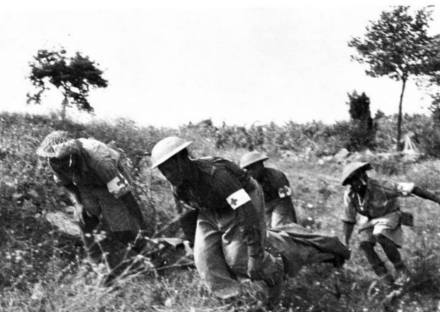
The featured image is a very rare photograph of South African medics in combat in WW2 during the Italian Campaign, dramatically caught running stooped under intense fire to stretcher bear a wounded man out of the combat zone. What is even more interesting is the make-up of these South African 6th Armoured Division medics. Here we have men from the South African Cape Corps, the South African Native Military Corps and the South African Indian Service Corps all involved in this casualty evacuation.
The politics of the day had an odd philosophy underpinning it. During the Second War the South African Union Defence Force still differentiated and segregated Corps according to race. However such was the odd politics of the time that men drawn from the Cape Coloured and Indian communities into their respective corps could function in combatant roles and carry firearms – as well as non combatant roles – such as a medic. However Black men drawn into the Native Military Corps (NMC) could not function in a combatant role and where not allowed to carry firearms – although they could carry a spear when on guard duty. They could however step into harms way in combat and put their lives on the line, as is seen here doing stretcher bearing as a medic.
All this politically driven segregation mattered not a jot when the bullets started flying around. This picture stands in stark testimony to this.
The separation of these men became quite irrelevant when serving in combat areas and in many instances combat units quite quickly also “unofficially” issued firearms to their NMC members
As is often the case in combat, and many veterans will attest to this, the man who joins you in the fight is your brother – irrespective of the colour of his skin – there is no such thing as racial segregation in a foxhole.
There is certainly no such thing as segregation when it comes to your fellow countrymen from across the racial spectrum risking their lives to save one of their own countrymen in a full blown firefight – as is so demonstrably shown here. These are all South African heroes – it’s that simple.
During the Second World War Black, Coloured and Indian South African community and political leaders, agreed to support the South African Union government’s declaration of war against Nazi Germany and send members of their community into the fight. The hope was that it would buy them more political currency and leverage at the negotiation table after the war for extended rights and political representation. Initially it looked like this would pay off as Jan Smuts and his United Party proposed giving qualified franchise votes to Black citizens whose service in the military was also deemed as such a qualification.
Unfortunately this very progressive way of thinking did not sit well with the National Party and their supporters and they used it as a Political “race” card in their campaigning in the 1948 elections. So much s that they rather unexpectedly and very narrowly won the elections and ousted Jan Smuts and the United Party.
The true tragedy was yet to come. Not only was all this sacrifice and valour in vain – the National Party went to great lengths to further marginalise these soldiers – denying them medical aid, reduced pensions and excluding them as veterans from Remembrance and Military Parades, as well as denying them access to veterans facilities and organisations.
It was not unusual to find a small grouping of Native Military Corps veterans sitting under a tree away from the national parade with their medals proudly flickering in the sunlight, telling their war stories to anyone prepared to take the time to listen to them. Excluded, forgotten and vanquished as traitors for serving “Britain” by the reigning Nationalists.
The political philosophy of the time substantially down-played the contribution of “non white” servicemen lest heroes be made of them. History in South Africa would record both the First and Second World War’s as a white man’s one – when nothing can be further from the truth.
It’s an often ignored fact and statistic – one which most certainly the National government after 1948 did not want widely published – which was that 40% of the standing South African servicemen in WW2 where persons of “colour”. In all more than 146,000 whites, 83,000 blacks, and 2,500 people of mixed race served in the standing forces of the Union of South Africa at this time.
This forgotten and “lost” valour is something South Africa’s oldest and most prestigious veterans organisation – The South African Legion of Military Veterans, has been fighting for from day one; at times the Legion went to serious loggerheads with the government of the day over pensions and representation for these men. The South African Legion eventually won the fight on pensions by the late 1980’s, when equal pensions where finally awarded these men.
We as South Africans need to work to address the historic void created by political posturing at the detriment of the country’s forgotten WW1 and WW2 heroes. This is why the recognition of the sinking of the Mendi and other commemorations becomes so important – it’s our duty as South African veterans to uphold honour where honour is well due. Not only to these men, but to anyone who has served in South Africa’s defence forces.
Image – SANDF Archive, Researched by Peter Dickens
The Battle of Sidi Rezegh was part of Operation Crusader during World War 2, and one in which there was substantial South African sacrifice and bravery.
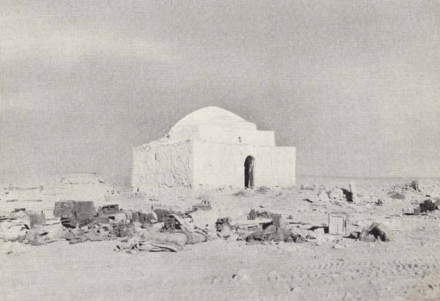
The battle was primarily a clash of armour between Allied (British and Commonwealth) and Axis (German and Italian) forces to try to relive the German Afrika Korp’s siege of Tobruk and took place around a strategic airfield. A feature in the battle was the white tomb of Sidi Rezegh shown here with battle debris around it.
The South Africans fought valiantly in this battle but the losses were incredibly high, the 5th South African Infantry Brigade had gone into this action with a brigade strength of 5,800 and had come out with a strength of under 2,000. The balance had been killed, wounded or taken prisoner.
The German General, Rommel attacked with 15th and 21st Panzer Divisions (battle tank and armoured divisions) and captured the airfield located there. Fighting was desperate and gallant, The fighting at Sidi Rezegh continued through 22 November 1941, with South African Division’s 5th Infantry Brigade by that time engaged to the south of the airfield. An attempt to recapture it failed and the Axis counter-offensive began to gain momentum.
.
The most memorable action during the North African campaign of the 3rd Field Regiment, (Transvaal Horse Artillery) was during the battle of Sidi Rezegh on 23 November 1941. The South Africans were surrounded on all sides by German armour and artillery, subjected to a continuous barrage. They tried to take cover in shallow slit trenches. In many places the South African soldiers could only dig down to around 9 inches [23 cm] deep due to the solid limestone underneath their positions.
The Transvaal Horse Artillery engaged German tanks from the 15th and 21st Panzer divisions, the gunners firing over open sights as they were overrun. This continued until many of the officers were dead and the gunners had run out of ammunition.
Many of the gun crews were captured. As darkness fell, those that could escaped back to Allied lines under cover of darkness. The artillerymen of the 3rd Field Regiment managed to save 5 of their 24 guns from the battlefield. They later recovered a further 7 guns.
Although initially a German success, this battle ultimately proved disastrous for the German Afrika Korps as they lost 72 of their tanks to the hard fought attrition and resistance of the Allies and especially the South African forces and this would ultimately turn the tide of the North African theatre of operations to the Allies.
This is summed up best after the battle of Sidi Rezegh by Acting Lieutenant General Sir Charles Willoughby Moke Norrie stated that the South African’s “sacrifice resulted in the turning point of the battle, giving the Allies the upper hand in North Africa at that time”.
The image below shows a Afrika Korps tanks and armoured vehicles burning in the assault by the 15th Panzer Division (8th Panzer Regiment) in November 1941.
The images below show some of the South African involved – left to right Lt Col Ian Buchan ‘Tiger’ Whyte, DC, and a captain of the 3rd Field Regiment (THA) pose in front of some of the 32 German tanks knocked out by their guns at Sidi Rezegh on 23 November 1941, secondly Some South African survivors of Sidi Rezegh, members of what remained of the 3rd Field Regiment (THA) being returned to Mersa Matruh in Egypt to be re-formed as a fighting unit and finally a South African Machine Gun Platoon 27 Battalion At Sidi Rezegh
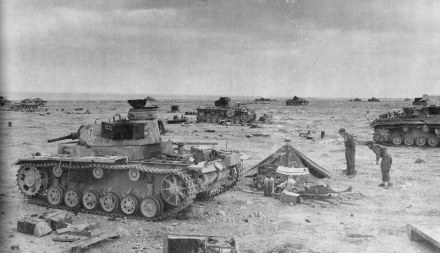
The featured image shows a Afrika Korps work shop which was overrun at Sidi Rezegh: South African War Museum as published in: Klein, Harry Lt-Col (1946). Springbok Record.
Researched by Peter Dickens. References – Wikipedia and the Military History Journal Vol 14 No 5 – June 2009 Sidi Rezegh : Reminiscences of the late Gunner Cyril Herbert Glass, 143458, 3rd Field Regiment (Transvaal Horse Artillery)
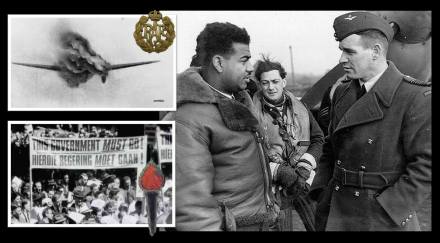
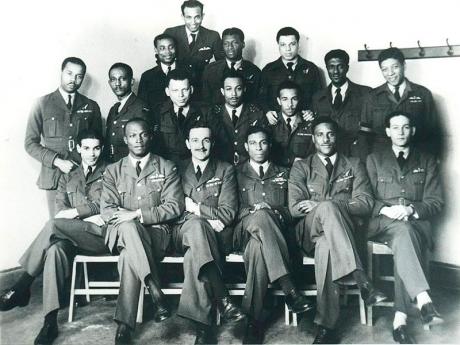
The featured image shows Group Captain Adolph Gysbert “Sailor” Malan DSO & Bar, DFC & Bar (24 March 1910 – 17 September 1963), the South African World War 2 flying ace in conversation here with Flight Sergeant Vincent Bunting at Biggin Hill in 1943 on the left, and it says a lot about Sailor Malan.
Vincent Bunting was one of a small group of ‘black’ British and Commonwealth pilots in full combat roles during the Second World War – he was born in Panama in June 1918 and raised in Kingston, Jamaica. He joined the RAF at No 1 Recruitment Centre, Uxbridge, on 26 July 1940. Selected for flying training he went on to become a fighter pilot mainly with RAF 611 Squadron.
An integrated Air Force
During the Battle of Britain, the British relied on pilots from the Commonwealth to make up a critical pilot shortage, Sailor Malan was one of these pilots and with him came pilots from all over the world, of all colours and of all cultures (there was no such thing as a ‘colour bar’ in the Royal Air Force) – from commonwealth countries like India, Burma, Rhodesia, Jamaica, Australia, New Zealand, South Africa and Canada, as well as pilots from Poland, France, Czechoslovakia and the USA. They made up almost one-third of the RAF pilots involved in the Battle of Britain (to believe the image so often created of these men as a bunch of tea drinking ‘tally-ho’ young white English gentlemen is to completely misunderstand the Battle of Britain).
Jamaican Pilots during the Battle of Britain
The featured image of early racial recognition is testament to Sailor Malan as not only one of the most highly regarded fighter pilots of the war, but the future signs of Sailor Malan as a political fighter and champion for racial equality.
Fighter Ace
Much has been written on Sailor Malan as a Fighter Ace, his rules for combat and his command of 74 Squadron during the Battle of Britain which played such a pivot role in winning the Battle (see ‘Ten of my rules for air fighting’ – Sailor Malan) . His combat record, promotions and decorations alone are simply astonishing.
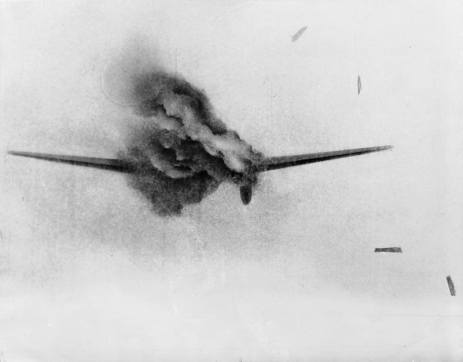
He first took part in evacuation of Dunkirk. During this battle he first exhibited his fearless and implacable fighting spirit. To demonstrate his nature, in one incident he was able to coolly change the light bulb in his gunsight while in combat and then quickly return to the fray.
Sailor Malan’s gun camera showing the destruction of German Heinkel He 111 over Dunkirk
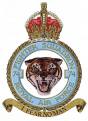
When the Battle of Britain begun, 74 Squadron (known as ‘The Tigers’) was to take the full heat of the battle in what was known as ‘hell’s corner’ over Kent, the squadron was eventually based at the now famous ‘Biggin Hill’ aerodrome in the thick of the battle.
Sailor Malan was given command of 74 Squadron, with the rank of Acting Squadron Leader at the height of the Battle of Britain on 8th August, 1940. Three days later the Squadron was in battle. The day became, for ever, “Sailor’s August the Eleventh”. The order was received at twenty minutes past seven to intercept a hostile raid approaching Dover. Little did the squadron know that they would participate in four seperate air battles that day. When the Squadron, weary, sweaty and oily, finally returned to base after the fourth sortie, they had downed an astounding 38 enemy aircraft.
Sailor Malan said later, in one of his masterly understatements: “Thus ended a very successful morning of combat”. For the first day of action under his command it was successful even by 74 Squadron standards.
Sailor Malan also worked on public relations to keep the British morale high. Here is a rare radio interview (follow Observation post link Sailor Malan – “in his own words”)
By D Day (i.e. Operation Overlord, the liberation of France and subsequently Western Europe), Sailor Malan was in command of 145 (Free French) Fighter Wing and was himself leading a section of the wing over the beaches during the landings in Normandy.
In all Sailor Malan scored 27 enemy aircraft kills, seven shared destroyed, three probably destroyed and 16 damaged. He was to receive the Distinguished Service Order decoration – not once, but twice and well as the Distinguished Flying Cross decoration, again not once – but twice. The Citations for the DSO’s and DFC’s say everything about his combat prowess:
The London Gazette of the 11th June, 1940, read:
DISTINGUISHED FLYING CROSS
Flight Lieutenant Adolph Gysbert Malan. (37604), Royal Air Force.
“During May 1940, this officer has led his flight, and on certain occasions his squadron, on ten offensive patrols in Northern France. He has personally shot down two enemy aircraft and, probably, three others. Flight Lieutenant Malan has displayed great skill, courage and relentless determination in his attacks upon the enemy.”
On Christmas Eve, 1940, the London Gazette had recorded:
DISTINGUISHED SERVICE ORDER
Acting Squadron Leader Adolph Gysbert Malan, DFC (37604), Royal Air Force, No.74 Squadron.
“This officer has commanded his squadron with outstanding success over an intensive period of air operations and, by his brilliant leadership, skill and determination has contributed to the success obtained. Since early in August 1940, the squadron has destroyed at least 84 enemy aircraft and damaged many more. Squadron Leader Malan has himself destroyed at least eighteen hostile aircraft and possibly another six.”
And on 22nd July, 1941:
BAR TO DISTINGUISHED SERVICE ORDER
Acting Wing Commander Adolph Gysbert Malan, DSO, DFC (37604) Royal Air Force.
“This officer has displayed the greatest courage and disdain of the enemy whilst leading his Wing on numerous recent operations over Northern France. His cool judgement, exceptional determination and ability have enabled him to increase his confirmed victories over enemy aircraft from 19 to 28, in addition to a further 20 damaged and probably destroyed. His record and behaviour have earned for him the greatest admiration and devotion of his comrades in the Wing. During the past fortnight the Wing has scored heavily against the enemy with 42 hostile aircraft destroyed, a further 15 probably destroyed and 11 damaged.”
Also awarded a Bar to the Distinguished Flying Cross.
In addition, “Sailor” was awarded the following decorations by Allied Governments:
The Belgian Croix de Guerre with bronze Palm, The Czecho-Slovakian Military Cross, The French Legion of Honour, in the degree of Officer and The French Croix de Guerre.
Bill Skinner DFC, with whom Sailor often flew, summed up Sailor Malan very well as to his leadership:
“He was a born leader and natural pilot of the first order. Complete absence of balderdash. As far as he was concerned, you either did your job properly, or you were on your way. He inspired his air crews by his dynamic and forceful personality, and by the fact that he set such a high standard in his flying.”
Sailor Malan (centre) with pilots of 72 Squadron
He was the outstanding British Fighter Command fighter pilot of the 1939-45 war, and by the end of 1941 was the top scorer – a record which he held for three years. But he was much more than an individual performer. He had assimilated the fierce and fanatical “tiger spirit”, and this spirit he inspired in others so that he carried the Squadron to great deeds with him.
Freedom Fighter
The Battle of Britain and D Day moulded Sailor Malan as a champion for freedom, he simply held the view that shooting down Nazi aircraft was good for humanity, and this translated into his personal politics. Not much is known of Sailor’s political career post war, and it’s an equally fascinating to see him in the context of a ‘Freedom Fighter’ in addition to his fighter ace accolade.
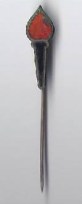
Sailor Malan left the Royal Air Force and returned to South Africa in 1946. In the 1950’s he formed a mass protest group of ex-servicemen called the ” Torch Commando” to fight the National Party’s plans to implement Apartheid and call for an early election to remove what they regarded as ‘fascist’ government from power.
In Sailor Malan’s own words, The Torch Commando was: “established to oppose the police state, abuse of state power, censorship, racism, the removal of the coloured vote and other oppressive manifestations of the creeping fascism of the National Party regime”.
To understand why the returning war veterans felt this way about the National Party, consider that during the war the National Party had aligned itself with pro Nazi movements inside South Africa as well as taking a neutral stance on the Smuts’ declaration of war. To understand the men now in power and the prevailing political mood of war veterans in 1950 follow these links to related Observation Posts:
The Torch Commando can best be described as a ‘pro-democracy’ movement and in its manifesto it called for Liberty, Freedom of Speech, Liberty from Tyranny and Freedom of Religion. Sailor Malan’s personal politics (which he brought into the Torch) revolved around universal franchise and addressing poverty in the black community and economic empowerment as a priority to political reform. Ironically, Sailor Malan was years ahead of his time in this regard, as it is only now that politics in South Africa is focusing on economic emancipation ahead of political emancipation.
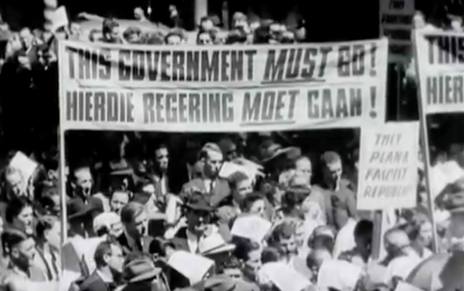
The key objective underpinning the Torch was to remove the National Party from power by calling for an early election, the 1948 ‘win’ by The National Party was not a ‘majority’ win, but a constitutional one, and the Torch wanted a groundswell to swing the ‘service’ vote (200,000 in a voting population of a 1,000,000). The Torch at its core was absolutely against The National Party’s Apartheid ideology and viewed their government as ‘unconstitutional’ when they started implementing policy.
Torch Commando protest – note the slogans ‘this government must go’ and ‘they plan a fascist republic’.
Other issues also sat at the core of the Torch, one issue was the Nationalist’s headstrong policy to make South Africa a Republic, whereas the ‘servicemen’ had fought alongside the British commonwealth and the ‘Allies’ (mainly Britain, United States and Russia) in the Second World War – and they wanted South Africa to retain its Dominion status, remain a ‘Union’ and remain part of the Commonwealth of Nations.
As a pro-democracy’ movement it regarded the National Party’s policies as ‘anti-democratic’. The Cape Coloured franchise removal was the first action of the National Party to implement the edicts of Apartheid, so it stood to reason that this was the first issue to protest against.
The Cape Coloured franchise was protected in the Union Act of 1910 by an entrenched clause stating there could be no change without a two-thirds majority of both houses of Parliament sitting together. The Nationalist government, with unparalleled cynicism, passed the High Court of Parliament Act, effectively removing the autonomy of the judiciary, packing the Senate with NP sympathisers and thus disenfranchising the Cape Coloureds.
Inserted is a picture of a rare manifesto artefact of Torch Commando manifesto (freedom been the central theme) and Sailor Malan at a Torch Commando Rally in Cape Town with 10,000 South African WW2 veterans on protest.
Sailor Malan famously accused the national party government at this rally of:
“depriving us of our freedom, with a fascist arrogance that we have not experienced since Hitler and Mussolini met their fate”.
Wartime singing icon Perla Gibson also attended the Torch Commando anti apartheid rally in Cape Town and sang to the protesters in support. Perla was known as the ‘Lady in white” and sang to incoming and outgoing troops in Durban harbour during WW2 to beef up morale.
Insert – Kmdt Dolf de la Rey (left) and Perla Gibson (right) at the Cape Town Torch Rally
Of extreme interest was co-leader of the Torch Commando rally in Cape Town – Kmdt. Dolf de la Rey – he famously captured Winston Churchill during the Boer War fighting for the Boers and became an anti-apartheid activist after WW2, another one of the rich tapestry of Afrikaner war heroes in conflict with National Party politics and philosophy.
Follow the below two links to view film footage of The Torch Commando in action:
During the Cape Town “Torch” 50,000 civilians joined the 10,000 veterans when the protest moved to hand over a petition at the Parliament buildings in Cape Town. The police barred the way and a scuffle broke out. 160 Protesters where injured along with 15 Policemen.
In a speech at a massive Johannesburg Torch rally involving over 75,000 war veterans and civilians (try and envisage that – 75,000 people on an anti-apartheid protest in downtown Johannesburg – a protest that size had never been seen before), standing outside City Hall in Johannesburg, Sailor Malan made reference to the ideals for which the Second World War was fought:
“The strength of this gathering is evidence that the men and women who fought in the war for freedom still cherish what they fought for. We are determined not to be denied the fruits of that victory.”
The Torch Commando fought the anti-apartheid legislation battle for more than five years. At its height the commando had 250 000 members, making it one of the largest protest movements in South African history.
DF Malan’s nationalist government was so alarmed by the number of judges, public servants and military officers joining the organisation that those within the public service or military were prohibited from enlisting, lest they lose their jobs – in the long-term this pressure led to the gradual erosion of the organisation.
Also the National Party government, being extremely concerned about the influence this movement might have, especially under the leadership of the war hero tried to discredit the Torch Commando and its leaders through means of negative propaganda. For the rest of his life, Sailor would be completely ignored by the government. The National Party press caricatured him as “a flying poodle”, dressed in his leathers and flying goggles, in the service of Jan Smuts and the Jewish mine-bosses, who were referred to as the “Hochenheimers”.
Torch Pin
Despite this, Sailor continued to fight against the violation of human rights in South Africa with the same passion and moral fibre that allowed him to fight so vigorously against fascism and racism during the Battle of Britain. His dream of a better, democratic life for all in South Africa not only urged and carried him forward, but also caused him to be shunned by and isolated from his white National Afrikaner countrymen who were blinded by the short-sighted racial discrimination of their government.
He would become known to them as a traitor and an outsider of “another kind”. DF Malan, during his term as Prime Minister, would refer to him as “an imported British officer” and it was due to his own integrity that he would, towards the end of his life, turn his back on the oppression and immorality of the country he loved so much. His individual brilliance as the Spitfire fighter pilot during the heroic battle in the skies above London and the British Channel were not enough to bring victory in this struggle.
In 1963, Sailor Malan, one of the most famous fighter pilots in the history of the Royal Air Force, lost his fight against Parkinson’s Disease and died at the young age of 52. The funeral service was held at St. Cyprians Cathedral and he was laid to rest in his beloved Kimberley.
An inconvenient truth
It is to the embarrassment now as to his treatment as a South African military hero that all enlisted South African military personnel who attended his funeral were instructed not to wear their uniforms by the newly formatted SADF (the government did not want a Afrikaaner, as Malan was, idealised in death in the fear that he would become a role model to future Afrikaaner youth).
All requests to give him a full military funeral were turned down and even the South African Air Force were instructed not to give him any tribute. Ironically this action now stands as testimony to just how fearful the government had become of him as a political fighter.
In the national obituary issued to all newspapers by the government, no mention was made of his role as President of the Torch Commando and his very strong anti apartheid views.
This systematic removal of Sailor Malan’s legacy by the National Party and the education curriculum is also tragic in that Sailor’s role in the anti-apartheid movement is now lost to the current South African government.
It would be an inconvenient truth to know that the first really large mass action against Apartheid did not come from the ANC and the Black population of South Africa – it came from a ‘white’ Afrikaner and a mainly ‘white’ war veterans movement, which drew it members from the primary veterans organisations in South Africa – The Springbok Legion, the South African Legion and Memorable Order of Tin Hats (for its impact on these veteran organisations to this day see The Torch’s impact on the South African military veteran diaspora!).
The simple truth – the Torch Commando preceded the first ANC “Defiance Campaign” by a couple of years, an inconvenient truth for many now and very conveniently forgotten.
The Spitfire Club sums up Sailor Malan nicely. To those who served with the Royal Air Force’s 74 Squadron anytime between 1936 and 1945 Sailor Malan was the greatest leader of them all. As a small token of their esteem, 28 of those remaining presented a ceremonial sword to the Squadron in July, 1966, at Headquarters Fighter Command, in proud memory of Sailor and in honour of his exceptional service to the Squadron.
It was intended that this Sword should serve as an inspiration to those coming after, so that his high standards of courage, determination and leadership shall live on.
To remember Sailor’s calm and heroic line going into battle “Let’s cut some cake. Let ’em have it!” is to remember a man of remarkable courage. A man who in all honestly lived by his beloved squadrons motto, and can say in all truth;
“I Fear No man”
A motto that holds true to him as one of the greatest ‘fighter pilots’ of the war, but equally so as a ‘freedom fighter’ standing up against a morally corrupt government for human rights.
Concluding video
To conclude Sailor Malan, visuals often better reflect words, and this is a landmark video on Sailor Malan which balances his fighting and political deeds. This time Sailor’s legacy has been carried forward by “Inherit South Africa” in this excellent short biography narrated and produced by Michael Charton as one of his Friday Stories – this one titled FRIDAY STORY #7: Sailor Malan: Fighter Pilot. Defender of human rights. Legend.
Story for The Observation Post, written and researched by Peter Dickens
References Wikipedia. South African History On-Line (SAHO), South African History Association, Wikipedia ,Neil Roos: Ordinary Springboks: White Servicemen and Social Justice in South Africa, 1939-1961. Kimberley Calls and Recalls. Life Magazine, 25 June 1951. Video footage, Associated Press – source Youtube. Images – Imperial War Museum copyright and Associated Press copyright. Friday Story video copyright Inherit South Africa – Michael Charton.
Many people do not know that the two minutes silence and its association to Armistice Day (11/11/11) or Remembrance Sunday has a South African origin. It is one of our greatest gifts to humankind, yet most South Africans are completely oblivious of it.
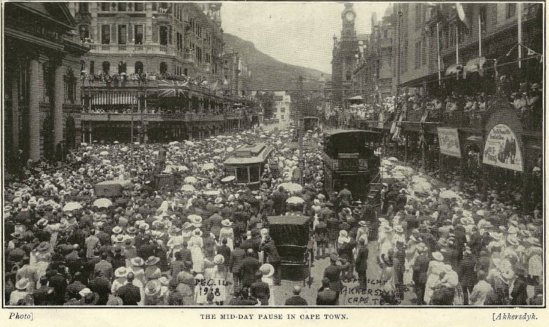
The featured image taken in 1918 is a rare and unique one, it shows South African civilians stopping what they are doing in the middle of Cape Town and standing to attention for two minutes silence, signalled when the noon day gun was fired. Not common today in Cape Town but a daily occurrence during war years. So how did this unique practice become a worldwide standard for remembrance?
Read on and learn a little why South Africans should stand proud of what they have given the world; when on Remembrance Sunday and on Armistice day in November, the western world stands silent in remembrance for two minutes … and take heart that this entire ceremony has South African roots.
The end of Word War 1 – Armistice Day 11/11/11
At 05.30 in the morning of 11 November 1918 the Germans signed the Armistice Agreement in a remote railway siding in the heart of the forest of Compiègne. Soon wires were humming with the message : ‘Hostilities will cease at 11.00 today November 11th. Troops will stand fast on the line reached at that hour…’.Thus, at 11.00 on 11 November 1918 the guns on the Western Front in France and Flanders fell silent after more than four years of continuous warfare, warfare that had witnessed the most horrific casualties.World War One (then known as the Great War) had ended.
South African troops in a support trench on the Western Front, Fresenberg Ridge, 22 September 1917
The time and date attained an important significance in the post war years and the moment that hostilities ceased became universally associated with the remembrance of those that died in that and subsequent wars and conflicts. The Two Minutes silence to remember all who paid the supreme sacrifice was a result of this expression… and it all began in Cape Town, South Africa.
Cape Town’s unique remembrance during WW1
When the first casualty lists recording the horrific loss of life in the Battles of the Somme were announced in Cape Town, Mr JA Eagar, a Cape Town businessman, suggested that the congregation of the church he attended observe a special silent pause to remember those in the South African casualty list. It was the church also attended by Sir Percy Fitzpatrick the famous South African author of “Jock of the Bushveld”.
In May 1918, the Mayor of Cape Town, Councillor H. Hands (later Sir Harry Hands) at the suggestion made by Mr. RR Brydon, a Cape Town City Councillor, in a letter to the Cape Times initiated a period of silence to remember the events unfolding on the battlefields of Europe and the sacrifices being made there. Mr Brydon’s son, Maj Walter Brydon, three times wounded and once gassed, was killed on 12 April 1918.
Cape Town’s noon day gun
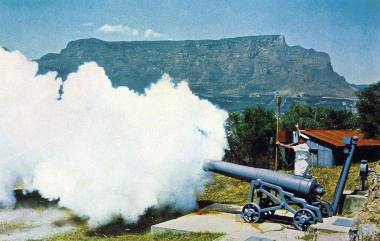
The pause would follow the firing of the Noon Gun (a tradition instituted in 1902 and fired everyday at 12:00 from Signal Hill), simply put the gun was the most audible signal with which to co-ordinate the event across the city of Cape Town.
The boom of the gun signalling the midday pause of three minutes was heard for the first time on 14 May 1918. It became the signal for all activity in the Mother City to come to a halt. Everything came to a dead stop while everyone bowed their heads in silent prayer for those in the trenches in Flanders.
As soon as the city fell silent, a trumpeter on the balcony of the Fletcher and Cartwright’s Building on the corner of Adderley and Darling Streets sounded the Last Post, the melancholy strains of which reverberated through the city. Reveille was played at the end of the midday pause.
Rare photo of the midday pause in Cape Town – 1918
Articles in the newspapers described how trams, taxis and private vehicles stopped, pedestrians came to a halt and most men bared their heads. People stopped what they were doing at their places of work and sat or stood silently. The result of the Mayor’s appeal exceeded all expectations.
One journalist witnessing the midday pause described a young woman dressed in black, who came to a halt on the pavement and furtively dabbed at her eyes with a handkerchief. “One could not but wonder what personal interest she had in the act of remembrance”, he wrote.
A few days later Sir Harry, whose son, Capt Richard Hands, a member of ‘Brydon’s Battery’, had been mortally wounded in the same battle in which Maj Brydon had been killed, decided to shorten the duration of the pause to two minutes, “in order to better retain its hold on the people”.
In terms of the meaning of “two minutes” it was also argued that the first minute is for thanksgiving for those that survived war and the second minute is to remember the fallen.
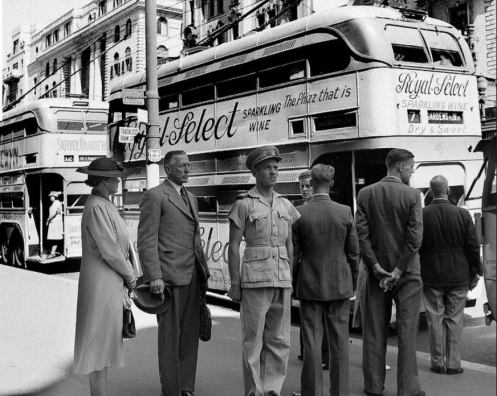
The midday pause continued daily in Cape Town and was last observed on 17 January 1919, but was revived in Cape Town during the Second World War. This is another rare photo of soldiers and civilians paused and standing at attention for two minutes of silence on Cape Town’s streets in 1942.
Rare photo of the midday pause of Remembrance in Cape Town during World War 2 – 1942
Today, the tradition of the midday gun has continued, as any Capetonian can attest – regular as clockwork it goes off at 12:00, and although the pause is no longer part of the ritual in Cape Town, the idea of the ‘pause’ for two minutes remembrance has survived.
That this ritual survived is by no means in a small way either, but in such a way that it now concludes how we as modern human beings in the western world remember the war dead and sacrifice. It started when it became the official two minute ‘pause’ throughout Britain and the British Commonwealth from 11 November 1919, and here is how that came about, and once again – surprise – we have a South African from Cape Town right at the centre of it.
Step in Sir Percy Fitzpatrick
Now, back to Sir Percy Fitzpatrick. He had been impressed by the period of silence kept in his local church after the horrific loss of life at Delville Wood became known and the casualty lists had been read out. He had a personal interest in the daily remembrance as his son, Maj Nugent Fitzpatrick, battery commander of 71st Siege Battery, was killed on 14 December 1917 by a chance shell fired at long range.
Sir Percy was understandably deeply affected by the loss of his favourite son and was also so moved by the dignity and effectiveness of the two minute pause in Cape Town that the date and time of the Armistice inspired him to an annual commemoration on an Imperial basis.
The King Decrees
Sir Percy then wrote to Lord Milner and described the silence that fell on the city during this daily ritual. Taking into consideration that the guns of war finally fell silent at 11:00 on the 11th day of the 11th month (November), Sir Percy felt that the idea of observing the two-minute silence at that time and on that date, would give the Act of Homage great impact, and proposed that this became an official part of the annual service on Armistice Day.
The meaning behind Sir Percy’s proposal was stated as:
It is due to the women, who have lost and suffered and borne so much, with whom the thought is ever present. It is due to the children that they know to whom they owe their dear fought freedom. It is due to the men, and from them, as men. But far and away, above all else, it is due to those who gave their all, sought no recompense, and with whom we can never re-pay – our Glorious and Immortal Dead.
Sir Percy’s letter was received by Lord Milner on November 4, 1919, reviewed and accepted by the War Cabinet on November 5, and was immediately approved by King George V.
George V, then King of the United Kingdom, shortly afterwards on the 7th November 1919, proclaimed by decree.
“Tuesday next, November 11, is the first anniversary of the Armistice, which stayed the worldwide carnage of the four preceding years and the victory of Right and Freedom. I believe that my people in every part of the Empire fervently wish to perpetuate the meaning of the Great Deliverance, and of those who laid down their lives to achieve it.
To afford an opportunity for the universal expression of their feeling, it is my desire and hope that at the hour when the Armistice comes into force, the eleventh hour of the eleventh day of the eleventh month, there may be for a brief space of two minutes, a complete suspension of all our normal activitiy that at the hour when the Armistice came into force, the 11th hour of the 11th day of the 11th month, there may be for the brief space of two minutes a complete suspension of all our normal activities … so that in perfect stillness, the thoughts of everyone may be concentrated on reverent remembrance of the glorious dead.”
Sir Percy when he heard the news that his suggestion had reached the King stated: “I was so stunned by the news that I could not leave the hotel. An hour or two afterwards I received a cable from Lord Long of Wexhall: ‘Thank you. Walter Long.’ Only then did I know that my proposal had reached the King and had been accepted and that the Cabinet knew the source.”
Later, Sir Percy was thanked for his suggestion of the two minute silence by Lord Stamfordham, the King’s Private Secretary who wrote:
Dear Sir Percy, The King, who learns that you are shortly to leave for South Africa, desires me to assure you that he ever gratefully remembers that the idea of the Two Minute Pause on Armistice Day was due to your initiation, a suggestion readily adopted and carried out with heartfelt sympathy throughout the Empire. Signed – Stamfordham
And so the tradition of 2 minutes of silence during remembrance occasions was born, a unique South African gift to world, a simple peaceful gesture that in deep solitude remembers the end of all war – not the beginning.
Story and images researched by Peter Dickens.
Image copyrights include The Imperial War Museum and “The Celebration of Peace” Booklet, issued in 1919 by the Cape Town Peace Celebrations committee for distribution throughout the Schools of the Cape Peninsula.
Honouring real South African heroes and here stands an exceptional one. Corporal William Cloete was a Cape Coloured Corps member and the leader of a stretcher bearer team attached to the Cape Town Highlanders regiment in Italy during the Second World War.
During a fierce fight with German troops when his company was pinned down on three sides by mortar and machine gun fire, under persistent enemy firing, Cloete and his team carried ten of their own wounded soldiers to safety; for this he received the Military Medal for bravery.
Nearly a year later, at the age of 24, Cloete was struck by a bullet from a German sniper and permanently blinded in both eyes. After the war Cloete attended the School for the Blind in Bellville. He became an expert basket-maker for the rest of his working life and passed away in 1993.
On the 11th of November, your fellow veterans salute and remember you Cpl Cloete.
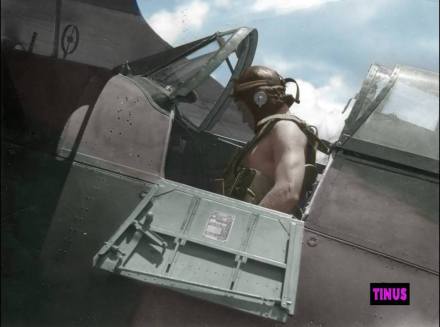
This is a colourised version of a famous original black and white Bureau of Information photograph called “The naked Gladiator pilot” with a caption which reads;
“South African Contingent in East Africa. a SAAF fighter pilot in Kenya preparing to take off to meet enemy raiders. He has removed his shirt because of heat.”
The Gloster Gladiator (or Gloster SS.37) was a British-built biplane fighter. It was used by the Royal Air Force (RAF) , the Royal Navy’s Fleet Air Arm (FAA) (known as the Sea Gladiator variant) and the South African Air Force (SAAF).
It was the RAF’s last biplane fighter aircraft and was rendered obsolete by newer monoplane designs even as it was being introduced. Though often pitted against more formidable foes during the early days of the Second World War, it acquitted itself reasonably well in combat due to high degrees of manoeuvrability.
Photograph obtained from the SAAF museum. The colourised photo copyright belongs to Tinus Le Roux, and my deep thanks to him for sharing it.
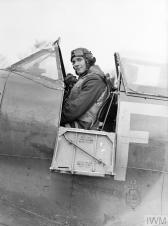
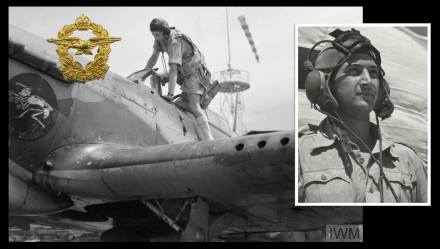
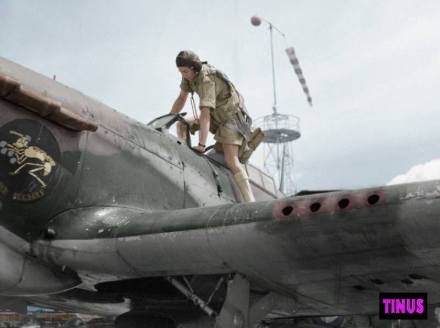
The Legendary South African Ace – Captain J E “Jack” Frost climbs into a Hawker Hurricane of No. 3 Squadron SAAF at Addis Ababa, after rejoining his unit as ‘A’ Flight commander following an attack of appendicitis.
Born in Queenstown, South Africa on 16 July 1918. This son of Richard H. Frost and Ada M. Frost joined the South African Air Force (SAAF) in 1936, little did they know they had given birth to legendary fighter ace. Awarded the Sword of Honour at the conclusion of his training at the Military College in 1938, Jack Frost was to prove this accolade correct the minute he got into combat.
East Africa Campaign
Jack Frost was the most successful fighter pilot in the SAAF. He joined the South African Permanent force in 1936 and after a spell as a flying instructor was posted to No. 1 Squadron SAAF in 1939. In 1940 he was posted to the Newly-formed 3 Squadron SAAF as a flight commander and saw considerable action in Somaliland and Ethiopia.
He was evacuated with acute appendicitis on 22 May 1941 but rejoined his unit in June and was given the command of No. 5 Squadron SAAF the following month. He led the unit through the heavy fighting in Egypt in May and June 1942, but was eventually shot down and killed while escorting bombers over the El Adem area on 16 June. He was the SAAF’s top scorer of the war with 16 confirmed victories and was regarded as an outstanding pilot and leader.
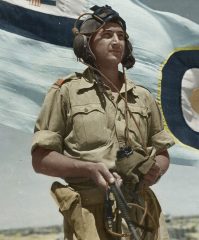
Maj Jack Frost, colourised image by Tinus Le Roux
His wartime record is considerable considering his short life, he entered the East African Campaign to fight against Italian Forces, on 22 February 1941, Frost destroyed four Fiat CR-42 fighters, an action for which he was awarded the Distinguished Flying Cross.
On 15 March 1941, Frost was shot down by anti-aircraft fire while strafing Diredawa airfield. His wingman, Lieutenant Bob Kershaw landed his aircraft in a nearby field, while other 3 Sqn pilots fired on Italian infantry attempting to capture the pair. Kershaw escaped in his aircraft with Frost sitting on his lap, an action for which Kershaw was awarded the Distinguished Service Order.
The campaign ended effectively in November 1941 with the final defeat of Italian Forces in East Africa. The squadron returned to South Africa and was disbanded.
North African Campaign
Frost, promoted to Major was appointed commander of No. 5 Squadron flying P-40 Kittyhawks. From March 1942 the squadron participated in the North African Campaign, with the Desert Air Force. No. 5 Squadron joined No. 2 and No. 4 Squadrons in No. 233 Wing; the main role of the SAAF fighters at the time was highly dangerous bomber-escort missions, supporting No. 3 (Bomber) Wing SAAF.
The squadron was assigned to the Sollum-Mersa Matruh sector. On 11 May, Frost and his wingman Lt. Ken Whyte shared the destruction of a lone Heinkel He 111 bomber attacking a convoy bound for Malta.
Whyte described the action: “I remember our first combat together. While on a shipping patrol we were vectored on to a He 111. Jack made his favourite three-quarter attack which had brought him success in Abyssinia. I attacked from the rear. We each claimed half a share in its destruction.” On 16 May, Frost destroyed a Junkers Ju 88 for his ninth victory, but was hit by cannon fire damaging his port elevator.
Three of South Africa’s most legendary fighter pilots in the North African theatre of operations during WW2, all of which were ultimately killed in action. Major J E “Jack” Frost, Commanding Officer of No. 5 Squadron SAAF sits between two of his most experienced pilots, Lieutenant Robin Pare (left) and Captain Andrew Duncan, at LG 121, Egypt.
On 28 May 1942, he was involved in a shared victory over a Messerschmitt Bf 109, his first. (The pilot, Feldwebel Willi Langer was killed.) At this stage, Frost’s total tally stood at 15 Axis aircraft destroyed.
Frost was appointed commander of No. 233 Wing on 31 May, but his replacement at 5 Squadron, Andrew Duncan, was shot down and killed by Oberleutnant Otto Schulz.
On 16 June, whilst escorting Douglas Bostons, Frost and other P-40 pilots encountered Bf 109s from Jagdgeschwader 27 near Bir Hakeim, Egypt. Rod Hojem, one of the South African pilots involved in this combat commented: “There was one hell of a dogfight, and after it was over I can clearly remember Jack calling up the squadron on the R/T, he said “Form up chaps I am heading North”, and that was the last we heard of him.”
Frost’s aircraft and remains have never been found, and his fate remains unclear. Some sources suggest that Frost fell victim to one of the most prominent German aces, Hans-Joachim Marseille scored six of his 158 victories that same day. To learn more on this remarkable German Ace and his unique South African connection follow this Observation Post Link German WW2 Fighter Ace befriends a Black South African POW and defies the Nazi status quo!
It has also been suggested that another German Experte, Gunter Steinhausen (who claimed four kills that day) may have shot down Frost.
Researched by Peter Dickens. Extracts taken from Wikipedia. Image colourising and copyright Tinus Le Roux with much and grateful thanks. Image of Frost climbing into his cockpit Copyright IWM Collection.











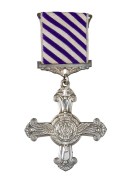 Flight Lieutenant Adolph Gysbert Malan. (37604), Royal Air Force.
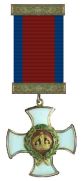 Acting Squadron Leader Adolph Gysbert Malan, DFC (37604), Royal Air Force, No.74 Squadron.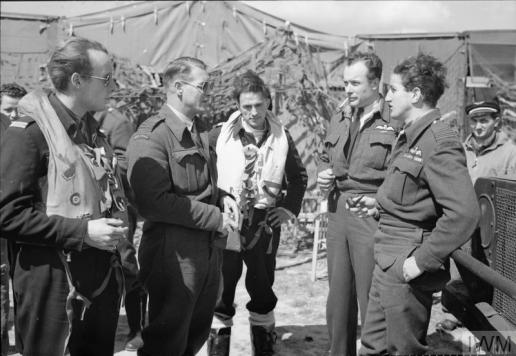






 “I Fear No man”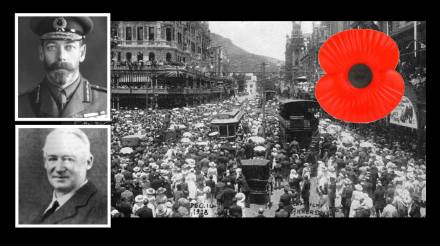
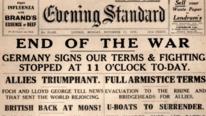 At 05.30 in the morning of 11 November 1918 the Germans signed the Armistice Agreement in a remote railway siding in the heart of the forest of Compiègne. Soon wires were humming with the message : ‘Hostilities will cease at 11.00 today November 11th. Troops will stand fast on the line reached at that hour…’.Thus, at 11.00 on 11 November 1918 the guns on the Western Front in France and Flanders fell silent after more than four years of continuous warfare, warfare that had witnessed the most horrific casualties.World War One (then known as the Great War) had ended.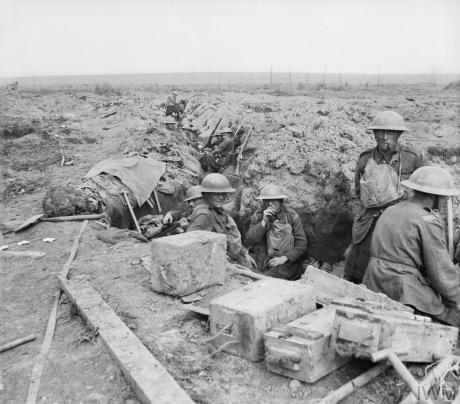


 The Observation Post