It has been an interesting couple of days with some very quick ‘damage control’ public relations statements in response to The Sunday Times’ article on the University of Cambridge’s decision to remove Jan Smuts’ bust and portrait from its public spaces. The good news in all this media spin-doctoring – reason has prevailed and we are assured the portrait and bust of Jan Smuts will remain in public view in their original places.
The Sunday Times Newspaper in London published two articles on Sunday 5 August 2018. One by Sian Griffiths the Education Editor titled “Cambridge students topple bust of Britain’s wartime ally Jan Smuts” and this was followed up by a related article by Tony Allen-Mills titled “Fall of Boer hero Jan Smuts would have made Churchill squawk”. Sian Griffiths referenced her University of Cambridge source stating that “Cambridge confirmed both Smuts pieces had been moved”.
On Monday morning 6 August 2018 The Observation Post published a blog to the above effect titled “To the University of Cambridge’s eternal shame!”. By Monday afternoon the University of Cambridge was in damage control mode and quickly published a statement to the effect that the bust and portrait are to remain in place, spinning ‘fake news’ by the Sunday Times as the rally point in an article published by Rosie Bradbury titled “Fact check: Jan Smuts portrait and bust were not ‘toppled’ by Cambridge students” in ‘Varsity’ the University of Cambridge’s official news portal.
The University of Cambridge’s joint statement from Christ’s JCR President Grace Etheredge and JCR Vice-President Oliver Jones read “general consensus has been for portraits to remain”, but that historical context of controversial figures should be added outlining “the good and bad of what they did so as to not white wash college history”.
The movement of the portrait was explained by a washy statement which read “the portrait had been temporarily taken down a few years ago, but that the College had swapped it back again.”
They went on with their spin-doctor strategy to still paint Smuts in a poor light by stating; “Smuts publicly denigrated the black population of South Africa” – which is a baseless and unsupported comment. From a balance point of view, if Cambridge was accusing the Sunday Times of peddling falsehoods, they managed to peddle a falsehood in their response, which ironically would now discredit both Cambridge and the Sunday Times in our eyes.
Now, The Sunday Times is a very well-regarded newspaper, both Sian Griffiths and Tony-Allan Mills are very reputable journalists and to date The Sunday Times has not published a retraction and have stood by their articles and their journalists, and there is something to be said for that. It is also clear that the University of Cambridge went into counter measure and damage control mode against the backlash the articles created.
To make sure, the Observation Post approached the Smuts family for clarity, and we are assured that the portrait and bust are currently in their rightful place. We trust and hope that the University takes on board the very negative backlash from the broader community that it serves when considering removing portraits again and continues to be leader in history that it is and serves to honour the people who have served it – especially Jan Smuts.
In this we are glad that for the time being the University has avoided succumbing to the new trend to ‘Revolutionist history’ touted by far left radical ‘anti-colonial’ students. Finally – Reason has prevailed in what has been a sea of insanity, caused by a very violent counter-history movement in South Africa, the ripple effect of which is now spilling over to the Old Schools. We ‘doff’ our caps to the University of Cambridge for rectifying and/or maintaining its artworks of Jan Smuts, whichever way it may be.
To the eternal shame of the University of Cambridge, the bust and portrait of Britain’s wartime ally and its first real foreign Chancellor – Jan Smuts – was removed from public view at Christ’s College. It’s an act of political correctness gone all wrong, and a foreboding sign of things to come – The University of Cambridge has fallen foul of its own history and Jonathan Swift’s quote rings true “Some men when weeding out prejudices, eradicate virtue, honesty and religion”.
Field Marshal Jan Smuts
Cowering to the ‘Rhodes Must Fall ‘campaigners – a bunch of zealot, racist and militant far left radicals based in South Africa who very controversially removed the statue of Cecil John Rhodes’ statue from the University of Cape Town, the University of Cambridge has now capitulated and quietly removed the portrait and bust of Field Marshal Jan Smuts from their public spaces and insidiously placed them out of sight.
The act of removing Smuts came from pressure from a bunch of ‘anti-colonial’ students – and since removing Smuts from the public area of the Old Schools building, which houses the main university offices, the Old Schools has carried posters from the first election after Nelson Mandela’s release from prison in 1990 – making an anti-apartheid political statement.
So what’s odd about this act? For starters Jan Smuts and his party were the opposition party to the National Party and their tenets of Apartheid, so they have got the history completely wrong and have incorrectly painted Smuts with an Apartheid brush. The University of Cambridge simply does not even understand the history and has bowed to a skew and incorrect version been banded about buy these ‘anti-colonial’ students.
So what’s wrong with being an anti-colonial student and banishing statues of Colonialism in England? Well, if we agree this precedent we’ll have to remove every single statue of every single great British and Colonial icon involved in Imperialism and Colonialism. It’s a foreboding sign when a leading learning institution like the University of Cambridge does this and sets the precedent.
The same group of zealot anti-colonial students a year or so ago attempted to get Cecil John Rhodes’ statue removed from Oxford University and we rightly told to get lost – but not the University of Cambridge, they have succumbed to this growing modern trend of re-writing history with 21st Century hindsight and removing those bits they think are ‘offensive’ from it.
So whose next? Winston Churchill cut his political teeth in South Africa and was the Colonial Secretary who along with Smuts ushered in the newly formed state of South Africa, with all its 19th Century Imperialist tenets and race laws, stamped by The House of Commons. Do we now remove statues of Winston Churchill? But why stop at Churchill? What about all the other British Colonialists involved in South Africa – Sir Alfred Milner, Sir John Cradock, Sir John Sprigg, John Xavier Merriman, Lord Charles Somerset, Lord Kitchener, Field Marshal Buller, Lord Roberts and even Field Marshal Haig.
Jan Smuts shoulder to shoulder with King George VI, the Queen Mother and the future Queen Elizabeth II
But why even stop at the Colonial ‘masters’ of South Africa and the Field Marshal’s of the South African War (1899-1902)? What about the Royalty who guided colonial policy in South Africa? So lets remove Queen Victoria, King George V, King George VI and even Queen Elizabeth II who was the reigning monarch when South Africa was still a Union and the country fell under her dominion. In 1947 preceding her father’s death, King George VI and Princess Elizabeth visited South Africa to give support to Jan Smuts and his government (and to give support to Smuts for the landmark 1948 General Elections so as to prevent the Apartheid nationalists from taking power and losing South Africa as a Dominion in the Commonwealth of Nations – which unfortunately for all of us the Apartheid Nationalists won).
Smuts’ acceptance speech after he was made a Chancellor at the University of Cambridge
The academic elite at the University of Cambridge are at best very naive, even as to their own academic history of Jan Smuts. Smuts was elected the University of Cambridge’s Chancellor in 1948 and a memorial fund in his name was set up when he died two years later. As Cambridge Chancellor he was the first ‘foreign’ Chancellor of the University not of Royal stock in its very long history of 800 years.
Aside from a Prime Minister and British Field Marshal, Smuts was also an accredited philosopher, his work on Holism brought him high acclaim from his Philosopher peers. Holism can be defined as “the fundamental factor operative towards the creation of wholes in the universe” and was published in 1926. For Smuts it formed the grounding behind his concepts of the League of Nations and United Nations – both institutions he helped form.
Whilst studying law at Christ’s College at the University of Cambridge, he was rated as one of the top three students they have ever had (Christ’s College is nearly 600-year-old). The other two were John Milton and Charles Darwin. Smuts graduated from Christ’s College with a first-class degree in law in 1894 and is regarded as the brightest legal mind ever to read law at the University of Cambridge.
His intellect was unsurpassed, to pass an exam at Cambridge he learnt Greek (fluently) in just 6 days. His wife was no intellectual slouch either, later in life Jan Smuts and his wife ‘Ouma’ Smuts used to tease one another when one would recite a Bible verse and the other would be expected to recite the following one, from memory, in Greek!
The University of Cambridge’s ‘Smuts Memorial Fund’ was established after the death of Jan Smuts to support the advancement of Commonwealth Studies. A range of funding opportunities are available to both staff and students for this purpose including research grants, PhD scholarships and library grants. A number of Fellowships across the University are supported by the Fund including the Smuts Visiting Research Fellowship. It is with extreme irony that some of these ‘anti-colonial’ students are supported in their studies and funded by the very man whose memory they eradicate. Talk about hypocrisy – there it is right there!
The removal of Rhodes’ statue from UCT by the same student movement. The Rhodes foundation is a primary financial supporter of the University and also issues Rhodes Scholarships to Oxford University to disadvantaged students.
Whats next for the academia line up of the University of Cambridge’s Chancellors whose pasts are tainted by a British Imperialist upbringing and held the mainstream views at the time on race – or better still those Royal Chancellors who promoted serfdom and servitude under Royal rule prior to historical reformations? By the time they have finished removing all these Chancellors who reigned over the last 800 odd years of the University of Cambridge – the University will be bare of any history.
But what about Smuts’ unwavering support of the United Kingdom when it was at its own urgent crisis. Smuts took South Africa to war in support of Great Britain in both World War 1 and World War 2, the result is sacrifice from South Africa to retain the United Kingdom’s sovereignty and modern democracy – sacrifice of literally tens of thousands of South Africans in battlefields all over the world, lying along-side their British comrades in arms – the cold headstones of the Commonwealth War Grave’s Commission stand solemnly in testament. All done in honour of Smuts’ commitment to democracy, liberty and humanity.
Without Smuts the United Kingdom would not have the original founder of the Royal Air Force, which celebrates it centenary this year, it would not have the Statesman who stood shoulder to shoulder with Winston Churchill on D-Day and the liberation of Europe, the very man who tempered and guided Churchill and acted as the King’s liaison at the most critical phase of the war. Smuts even came up with the concept of Commonwealth of Nations and guided King George VI and Great Britain out of its edicts of ‘Empire’ when dealing with a ‘new world’ Commonwealth and its Colonies post war.
Smuts was the only foreign Statesman to receive a standing round of applause from both houses of Parliament and the first foreign statesman to address both houses – there is very good reason that his statue stands next to Churchill’s on Parliament Square. Has the United Kingdom completely lost sense of its history and politics, and now bows to a small and vocal bunch of ‘anti-colonial’ students – the tail wagging the dog? It seems so.
What happened to open debate in a University environment? Where all stakeholders are consulted and put their arguments forward before a key decision is made on the removal of a historical figure, a leading University like the University of Cambridge made no such effort to approach the Smuts foundation and family in South Africa. Instead a unilateral decision was taken by a minority of elitist academics imposing their views on others, now that is not the ‘open’ and democratic society which the University is meant to represent.
The University’s official response reads like a piece of political correct pandering. The response from the university’s governing council: “In retrospect, there are often once-lauded ideas and individuals whose standing, reputation and behaviour assume different and usually uncomfortable contemporary significance.”
Again – whose next in the ‘uncomfortable’ figures from the past who lauded ideas not palatable in a modern context, Churchill called Gandhi a “Half Naked Fakir”.
The removal of Smuts at the University of Cambridge is an offence to the thousands of South African men and women who have sacrificed their lives to serve crown in South African forces, and the tens of thousands of South Africans who also served in British Armed Forces. It is the darkest day in the University’s history when it expunged its own heritage in the name of ill-considered political correctness and disgraces an entire generation of South Africans who held Smuts’ ideals of liberty and freedom in their hearts. It is a warning to come – shame on Christ’s College and shame on the University of Cambridge.
Written by Peter Dickens
Reference: The Sunday Times Sian Griffiths, Education Editor The Sunday Times “Cambridge students topple bust of Britain’s wartime ally Jan Smuts”
During World War 1 a non-Jewish German fighter pilot did something very unusual, he painted a ‘Star of David’ – the Magen David, the modern symbol of Jewish identity on the side of his aircraft. The act was in defiance of anti-Semitism and it has a very unusual South African connection.
Leutnant (Lieutenant) Adolf Auer was the German fighter pilot and he did this defiant act because he disliked Hermann Göring’s anti-Semitism and anti-semitic comments. Auer’s wingman was a German Jew and also a highly decorated German WW1 fighter ace, his name was Willi Rosenstein.
The Star of David clearly be seen on Auer’s aircraft
anti-Semitism
Before Hermann Göring became the infamous right hand man to Adolf Hitler during the Second World War he was a very successful fighter pilot during World War 1, he shot down 22 enemy aircraft making him an Ace and was even eventually appointed as the successor to Manfred von Richthofen – the legendary Red Baron – as the commander of Jagdgeschwader 1 (‘The Flying Circus’) on 14th July 1918.
Between the 17th May 1917 and 28 July 1918 Leutnant (Lieutenant) Herman Göring was the Commanding Officer of Royal Prussian Jagdstaffel 27 (Jasta 27) hunting group, Willi Rosenstein was also part of Jasta 27 and at the time flew as Göring’s wing man.
Hermann Göring in the cockpit of his bi-plane fighter
During the First World War the anti-Jewish issue in Germany was a latent one but simmering, many Jewish Germans served with distinction in Germany’s armed forces in WW1 and it was just Hermann Göring personal anti-Semitism at the time that he clearly carried with him into the Second World War.
In late 1917 an incident occurred in which Rosenstein became very upset after Lt. Goering made an anti-Semitic remark in front of several people; Rosenstein requested an apology but when Göring refused, Rosenstein asked for a transfer out of Jasta 27.
Willi Rosenstein then joined Jasta 40, and flew as the wing man to Adolf Auer. In defiance to anti-Semitism and to derogatory comments Hermann Göring had made as to Rosentein whilst he was his wing-man, Auer painted a Star of David on the side of his fighter, this was done to annoy Herman Göring and stand up for his fellow Jewish comrade, he famously said that he would rather be saved by a Jewish pilot than die in a plane crash.
Simply put Göring hated Jews and was an unabashed anti-semitic, after WW1 he joined the Nazi party and rose to become a key leader of Hitler’s Third Reich. His intense hatred of Jews would eventually lead him to become one of the architects of the Holocaust in the Second World War, even ordering a high-ranking Nazi official to organise the solution to the ‘Jewish Question’ – which in reality meant the extermination of the Jews of Europe in gas chambers and in front of firing squads. A keen art enthusiast Göring even went as far as illegally appropriating important art work from Jewish victims of the genocide.
Adolf Auer
Lt. Adolf Auer’s combat record in WW1 is however very short, he scored one victory during the war and was wounded in action when he was brought down on 28th October 1918 and taken Prisoner of War
When World War 2 broke out, Adolf Auer joined the German Luftwaffe, which by this time was headed up by Hermann Göring and although Göring rose to become one of Adolf Hitler’s closest advisers and the second-most-powerful Nazi during World War 2, it appears Göering did not penalize Auer for his antics of painting a Star of David on his aircraft during World War 1 (it was a different time). However if he had pulled the same stunt in World War 2 he would surely have been severely punished (it could have led to his arrest or even execution in the Second World War).
German Jewish Fighter Ace
Willi Rosenstein
A different matter for Willi Rosenstein who went on to become a rare thing in WW1 – a German Jewish fighter Ace. He initially volunteered to fight for Imperial Germany in the army, but transferred to De Fliegertruppen (the budding army version of the German Air Force) on 24 August 1914. As a fighter pilot he won the Iron Cross, Second Class in March 1915 and was also awarded the Silver Military Service Medal. By February 1916 he was commissioned as a Leutnant (Lieutenant), in April 1916 he was wounded in action during the Battle of Verdun, and eventually received the Iron Cross First Class having flown 180 combat sorties to that date. Upon recovery, he reported to the 3rd Army as a Fokker pilot. He became one of the founding members of one of Germany’s brand-new fighter squadrons, Jasta 9 on 23 September 1916.
He moved on to Jasta 27 on 15 February 1917. However, it would not be until 21 September that he scored his first aerial victory, when he shot down an Airco DH4 over Zonnebeke while on a morning patrol. Five days later, his victim was a Sopwith Camel, he scored his third aerial victory on 26 June, when he downed another DH.4
On 2 July 1918, he received his final war posting, to Jasta 40 where he promptly shot down a SE 5a on 14 July. On 28 September, he received the Knight’s Cross 2nd Class with Swords of the Order of the Zahringer Lion. The following day, he began a run of five victories that took him through 27 October 1918.
Willi Rosenstein’s bi-plane fighter with its distinctive white heart
The South African connection
After World War 1, Willy Rosenstein became a glider pilot sportsman. Because of growing anti-Semitism and the rise of the Nazi Party (and the likes of Hermann Göring) in the 1930s, and despite being a war hero with 9 British kills, he feared for his life and that of his family and fled to South Africa.
Hermann Göring as head of the Luftwaffe – WW2
Rosenstein settled in South Africa and took to farming, though he kept his interest in aviation. His son Ernest took to his father’s love of flying and became a fighter pilot for the South African Air Force (SAAF) during the Second World War and attained the rank Lieutenant. Lt. Ernest Willy Rosenstein was tragically killed in action over Italy on 2 April 1945 fighting for the Allies, ironically fighting against his father’s country of birth with its now deeply evil anti-Sematic Nazi manifestations and Herman Göring’s Lufwaffe – he was aged only 22. He is buried at the Milan War Cemetery in eternal memory on the SAAF honour roll.
Willy Rosenstein survived both his son and the war. He was killed on 23 May 1949 in a midair collision with a student pilot over his farm in Rustenburg, South Africa.
In Conclusion
Although many Jews served in the German army during WWI, it still appears incongruous to see a Fokker biplane with a Star of David alongside the German Iron Cross in a fighter squadron – Jagdstaffel 40. Adolf Auer was certainly a man who stood by his convictions and his comrades and that is highly commendable by any military code.
Not so commendable is Hermann Göring, now in the annuals of history as one of the most evil men to walk the planet. After being found guilty after World War 2 of crimes against humanity at the Nuremberg trials, he committed suicide by ingesting cyanide the night before he was to hang for his crimes.
Willy Rosentein enters the annuals of history as a war hero, a fighter ace with an impeccable record. He’s not only a hero for Germany, but also as a representative of his faith remains a stand out icon and role model. In the end, as a converted South African citizen we now also have in our midst of military history another remarkable individual whose sacrifice to South Africa’s contribution to modern freedom came in the form of his son.
Extracts and references taken from Mail On-line, The Times of Israel and German Jewish World War 1 Aces on-line. Adolf Auer’s images from his collection.
Huh! There was also a ‘white’ ‘armed insurgency movement against Apartheid! The ‘whites’ had their own ‘struggle’ insurgents, their own version of ‘umkhonto we sizwe’ (MK), the ‘whites’ had their very own anti-apartheid ‘terrorists’. What!
No way! This would be the universal chant of many South Africans – both black and white. This is not part of the current ANC inspired narrative on Apartheid in South Africa, we haven’t been taught this, the whites are the ‘guilty’ ones – not ‘liberators’ of Apartheid – what’s all this about?
Well, what if we told you that Apartheid did not just separate white and black people – it separated EVERYONE, including the whites. Grand Apartheid when it was conceived by the Nationalists had at its centre ideology the separation of ‘English’ white South Africans and ‘Afrikaans’ white South Africans. Afrikaner whites were to grow up separately, their own primary schools, their own youth movements (the Voortrekkers), their own church groups, their own High Schools, their own Universities and Colleges, their own exclusive youth sports leagues for everything – rugby, cricket, tennis you name it. The intention was that Afrikaner culture was to be guarded from not only ‘Black’ influence, it was to be guarded from the ‘English’ influence too.
This guarding stemmed from the Boer War. The scorched earth and concentration camp policies initiated by Kitchener had devastated the Afrikaner culture, family histories and culture lost forever, now the Nationalists had to rebuild it and the hard-liner Afrikaner Nationalists wanted nothing to do the British and their British descendants in South Africa. To them these were the English white South Africans concentrated mainly in Natal, the Western Cape and Johannesburg, Apartheid was also planned to separate Afrikaners from these most hated English – Black separation was part of the greater scheme, but so too white racial separation along cultural and even economic lines.
So not surprisingly the White community was split down the middle over the Nationalists plans as to Apartheid when they came to power in 1948 surprisingly beating Smuts in a constitutional victory based on ‘seats’ and not a ‘majority’ based on ‘votes’ – that it was a shock win would be an understatement.
To many the plans of Apartheid were absurd and spelt doom for the Union, they heeded Smuts’ warnings, and in fact as a nominal vote count went Smuts ‘won’ the election by a good majority, signalling that the majority of Whites in South Africa did not favour the Apartheid tenets put forward by the National Party at all. Most of this was the English white voting bloc, but statistically it also made up of a significant bloc of White Afrikaners as well, These were Afrikaners who followed Smuts’ ideals and visions of unification, internationalism and democracy. Unfortunately, as seats went – the majority lost, and the Nationalists assumed power on a narrow margin.
The first mass anti-apartheid mobilisation
This leads to the first inconvenient fact – it was this voting White majority of Smuts supporters, which was the first community to mass mobilise protests against Apartheid in any significant way (not the Black community and the African National Congress ANC) – and it was all in response to the gerrymandering which brought the Nationalists into power in 1948 and their policy of Apartheid which was unpalatable to the broader White community.
This mass movement of whites mobilised against Apartheid primarily came from moderate, democratic and liberal white political parties (mainly Smuts’ United Party), as well as predominantly White driven equal rights movements, like The Black Sash feminist movement. But it materialised in real strength in a returning war veteran’s movement called ‘The Torch Commando’ led by an Afrikaner war hero – Adolph ‘Sailor’ Malan – started in 1951, the ‘Torch’ saw nearly a quarter of this anti-nationalist White voting base – 250,000 Whites – actively mark their protest to the national party and their ideology of Apartheid and join their protest movement.
Torch Commando meeting – 1952
Read that again – 250,000 or a quarter of a million whites – signing up to an action group in active protest against Apartheid. This mass mobilisation of mainly whites in’ Torch’ protest rallies occurred nationwide in 1951 and not at the onset of the ANC’s Defiance Campaign on the 6th of April 1952. So as inconvenient truths go the first mass protest against Apartheid was led by the Torch and not by the ANC.
Now you don’t learn about that in South African historical narrative – then or now, and you have to ask yourself why – because there is more – much more?
The ‘white’ Anti-Apartheid Military ‘Threat’ from 1948 – 1959
To put this ‘White’ threat in perspective, the ANC, although representative of a bigger majority of people, had not yet mobilised itself in any significant way when the Nationalists came to power in 1948.
Prior to 1948 in the Union of South Africa, South African Black protest had come from a 1912 Anti-Pass Women’s protest which was very localised to Bloemfontein and a petition of 5000 signatures. It was not a national mass mobilisation of Black women against suffrage and pass laws in South Africa as the ANC like to position it and bend history now.
The next significant protest pre-1948 from the black community came in form of The 1946 miners strike, this was a one week mass strike action which ended in violence with government forces, the underpinning problem was a wage dispute, it was settled with a 10 shilling per day minimum wage (an increase from 2 shillings), and improved working conditions as the basis of the strikers demands. This action needs to be viewed as dispute on wages and conditions of miners with the mine companies primarily. It was also not really a national political protest and mobilisation against an entire system of Smuts’ government – which is again the way it is now very incorrectly presented to South Africans by the ANC.
From the Indian community there was Mahatma Gandhi’s Satyagraha ‘peace’ campaign against Indian pass laws which eventually succeeded in 1914. Ironically Smuts’ and Gandhi actually became friends over the process and admired each other greatly till the day they both died.
The above posed nothing in any significant way as a military threat to the National Party in 1948, whilst weary of the ANC and what the Nationalists called ‘Swart Gevaar’ (Black Danger) they were not yet threatening, had not militarised itself and had not yet mass mobilised in any significant way. The ‘Torch Commando’, now that was threat to the Nationalists in 1950 – a very big and imminent threat.
Torch Commando rally in Caps Town. Protestors carrying thousands of oil soaked ‘torches’ of Liberty in defiance of Apartheid
Why? Because The Torch Commando was made up of second world war veterans, the national party had sat out the war in protest and in support of Nazi Germany and its ideology (which manifested itself in neo-Nazi Afrikaner nationalist movements like the Ossewabrandwag during the war itself). Now they were faced with 200,000 very angry, very well-trained ‘white’ soldiers who had been at war against Nazism for five long years – in effect thousands and thousands of combatants who had seen and survived the biggest war in this history of man, and they cared less for Nazism and fascism – nor could a great many of them really care for their Afrikaner Nationalist cabal.
The Torch Commando had within its ranks White members from various political groups, trade unions, political parties and veterans associations. In the main it was made up of members who had supported Smuts call to arms in WW2 – moderate members from the United Party who feared the disintegration of democracy and broader society under Apartheid – standing alongside broad military veteran associations like The South African Legion and the Memorable Order of Tin Hats.
The Torch Commando also had within it’s a ranks a smaller, but far more militant and vocal grouping. This grouping was made up of members of a veterans association called The Springbok Legion, alongside members of South Africa’s Liberal Party and members of The South African Communist Party (SACP). This part of the Torch Commando had firebrand future leaders in it – like Joe Slovo, Lionel Bernstein, Wolfie Kodesh, Jock Isacowitz, Jack Hodgson and Fred Carneso (all ‘communist’ members of The Springbok Legion), as well as Peter Kaya Selepe, a WW2 veteran and organiser of the African National Congress (ANC) in Orlando and Harry Heinz Schwarz, also a WW2 veteran who became the future Progressive and Democratic Party stalwart.
Torch Commando Rally
The Torch Commando at its zenith had 250,000 members, and in landmark protests across South Africa it brought of tens of thousands of protestors carrying ‘torches’ of light and freedom into physical defiance of the Nationalist government, the Torch Rally in Cape Town attracted 50,000 people and the one in Johannesburg put 75.000 mainly white protestors onto the streets. Now, that is a mass mobilisation movement.
A key objective underpinning the Torch was to remove the National Party from power by calling for an early election, the 1948 ‘win’ by The National Party was not a ‘majority win’, but a constitutional one, and the Torch wanted a groundswell to swing the military service vote (regarded as 200,000 in a voting population of a 1,000,000). A bunch of ex-WW2 military veterans trying to influence nearly a quarter of the voting bloc is a very big deal and a very big threat to the National Party.
The Torch at its core was absolutely against The National Party’s Apartheid ideology and viewed their government as unconstitutional when they started implementing policy – It regarded itself as a ‘pro-democracy’ movement and regarded the National Party’s policies as ‘anti-democratic’. The first action of the National Party to implement the edicts of Apartheid, was the Separate Representation of Voters Bill in 1951, which sought to disenfranchise the ‘coloured’ voters from the general voters roll, and it was in opposition to this legislation that the Torch Commando kicked off its campaign against the government. Its campaigns becoming progressively very vocal, and very large and they even started to clash with police in isolated cases.
The Nationalists, increasingly fearful of The Torch Commando splitting the White vote further and the fact that they had militant leanings acted in a manner that was to become their trade-mark, ‘decisively’ and moved to crush the Torch Commando. They did this by threatening Torch members, many of whom were still in the military or in civil service with their jobs if they continued membership and they moved to ban the Torch Commando through legislation.
Suppression of Communism Act
The legislative tool they used to crush the Torch Commando was the Suppression of Communism Act 44 which the Nationalists passed into law in July 1950. The act was a sweeping act and not really targeted to Communists per se, it was intended for anyone in opposition to Apartheid regardless of political affiliation.
The Act proscribed any party or group subscribing to Communism according to a uniquely broad definition of the term. The Act defined communism as any scheme aimed at achieving change–whether economic, social, political, or industrial–“by the promotion of disturbance or disorder” or any act encouraging “feelings of hostility between the European and the non-European races…calculated to further (disorder)”.
The government could deem any person to be a communist if it found that person’s aims to be aligned with these aims. After a nominal two-week appeal period, the person’s status as a communist became an un-reviewable matter of fact, and subjected the person to being barred from public participation, restricted in movement, or even imprisoned.
Passage of the Act was facilitated by the involvement of communists in any anti-apartheid movement, starting with The Torch Commando and eventually included any movement, individual or political party that advocated black equal rights and was deemed a ‘threat’.
Any ‘liberal’ movement came under the Suppression of Communism Act, not just the ANC and PAC, but also White members in the Liberal Party and the Black Sash, eventually it would even be applied to academics, novelists, journalists, poets, party leaders – anyone from the White community not buying into Apartheid in effect, and the penalty was harsh in the extreme. Imprisoned, deported or banned – labelled as ‘Traitors’ and ‘Communists’ – their voices were silenced.
Joe Slovo (right of picture) in WW2
Faced with a diversifying internal political agenda, anti-liberalism legislation and direct government pressure and sandbagging the Torch Commando split and collapsed, the moderate war veterans chose to continue their opposition through peaceful political opposition using the narrow but available means to them. The firebrand military radicals in the Torch Commando (like Joe Slovo) were a different matter entirely, and they moved to other political organisations, mainly the ANC and the Liberal Party, to give them their military advise and expertise, and embark on a more robust and subversive resistance to Apartheid.
Liberalism in ‘white’ South Africa
A key organisation in opposition to Apartheid in the 1950’s and 1960’s was the South African Liberal Party (SALP). Central to the Liberal Party were three men, Leslie Rubin Peter Brown and Alan Paton.
Leslie Rubin was an outspoken opponent of the apartheid regime in South Africa. He joined the South African army as a private in 1940, and was commissioned as an officer in the intelligence corps in north Africa during the war, and later attached to the Royal Air Force in Italy. After the war, he settled in Cape Town and joined the Torch Commando movement led by Sailor Malan.
With Alan Paton, Rubin created the Liberal party of South Africa (LPSA) within the definition of political parties that could stand for election and appoint ministers to Parliament. It founded on 9 May 1953 out of a belief that Jan Smuts’ United Party was in disarray after his death in 1950 and unable to achieve any real liberal progress in South Africa, the LPSA initially called for a franchise based vote for Black South Africans and later this evolved to a call for ‘one man one vote’.
Sailor Malan greets supporters at a Torch Commando Rally in Cape Town
The Liberal Party also attempted to draft Sailor Malan as a candidate, in addition to his role in the Torch Commando as the National President, however Sailor’s position on voting equality differed from Rubins’, Sailor conceded that a black majority would eventually govern South Africa, and he was very happy in that prediction, however Sailor sought economic empowerment of Black South Africans to address poverty as a priority (in this respect Sailor is years ahead of his time as it is exactly this issue – economic emancipation over political emancipation – only now has this become a burning priority for the EFF and ANC).
The Liberal Party elected to draft its members from The Torch Commando and Rubin became the first Chairman of the party in the Cape, in 1954 he was elected to the senate as what was then called a “natives’ representative”, a position he used to fight every piece of apartheid legislation. Whenever he got up to speak, the Minister of Native Affairs, the ‘architect’ of Apartheid – Dr Hendrik Verwoerd – would leave the chamber in protest. On one occasion, the entire Nationalist party caucus walked out.
The Liberal Party held the objective of bringing together committed Whites, Africans, Indians and Cape Coloured people in opposition to the Apartheid system. Rubin resigned from the senate in 1960, before the native representatives’ seats were abolished.
Like Rubin, Alan Paton volunteered for service during World War 2 but was refused, after the war be wrote Cry the Beloved Country to critical acclaim. He eventually became the President of The South African Liberal Party (SALP). Although he Paton did not have military experience it did not stop him from also initially joining the Torch Commando and publicly supporting Sailor Malan and his cause.
The SALP had close friendships with senior ANC and Indian Congress members. They often acted as a liaison between banned organisations and fully bought into the ideals espoused in the Freedom Charter. One of the party’s main focus areas was the fight against “black spot removals” where the Apartheid government uprooted black communities in order to shift them to new areas to create homogenous race blocks across the country. Peter Brown in particular fought tireless against these removals by helping communities organise, protest and receive access to legal advice.
Persecution by the State of the LPSA
The government responded to the LPSA and its policies by persecuting its members as it viewed the party’s policies as a threat to its apartheid policy. This was because the party had both black and white members in its ranks. Several members of the party were banned, disallowed to hold gatherings and harassed by the security police. In 1962, BJ Vorster accused the party of being nothing more than a “communist tool”.
Between March 1961 and April 1966, forty-one leading members of the LPSA were banned under the Suppression of Communism Act. This was despite the fact that they were not members of the Communist Party or supported communism.
On 13 May 1965, the Rand Daily Mail reported that leaflets were secretly scattered warning African members of the LPSA that they would be banned unless they desisted from participating in political activities of the LPSA.
Alan Paton, President of SALP addresses a crowd in Fordsburg about the harm done to South Africa By the Group Areas Act
The state would harass and intimidate LPSA members. Security branch officers would attend party branch meetings and produce a warrant authorizing them to do so. The police would visit families of party members and ask them to persuade their relatives to leave the party, even Alan Paton was followed by the security branch, his telephone lines were tapped and his house was searched a number of times.
Due to political persecution, some members of the LPSA fled into to exile and became involved in anti-apartheid activities abroad. For example, Randolph Vigne was banned in 1963 and his house in Cape Town was fire bombed in an attempt to intimidate him. He left the country and went into exile in London where he worked closely with the Anti-Apartheid Movement there – so too Leslie Rubin who also went into exile in London.
Sharpeville and a ‘white lunatic’ liberal assassin
One of the defining moments in the struggle against apartheid in South Africa was the Sharpeville Massacre on 21 March 1960 and its aftermath.
On the Liberal Party front resistance by White liberals were about to a nasty turn, when in April 1960 – 19 days after the Sharpesville Massacre, Prime Minister H.F. Verwoerd, the architect of apartheid was giving his ‘good neighbourliness” speech at the Rand Show in Johannesburg.
After Verwoerd gave his opening speech, he returned to his seat in the grandstand where he was shot at point-blank range by David Pratt, who was an outspoken Liberal Party of South Africa (LPSA) member and a wealthy English farmer from the Magaliesberg region outside of Pretoria. He joined the Liberal Party in 1953 and believed that a coalition between liberals and ‘verligte’ (enlightened) Afrikaners was the only solution to defeating the National Party at the polls.
Verwoerd miraculously survived the shooting, Pratt was arrested and claimed that he shot Verwoerd because he represented “the epitome of Apartheid” and it was necessary to shoot “the stinking monster of apartheid that was gripping South Africa and preventing South Africa from taking her rightful place among men”.
Pratt was also an epileptic with a long medical history of heavy epileptic fits. So to dismiss Pratt as a ‘lunatic’ – as to the Nationalists no white person in their right mind would shoot a white Prime Minister – so he was judged as ‘insane’. Pratt was sent to an institution for the mentally ill and by October 1961 he was found – rather too conveniently for the Nationalist government – hanging from a rolled-up bed-sheet.
The ‘white’ Anti-Apartheid Military ‘Threat’ from 1960 to 1963
The heavy-handed response of the state to the Sharpeville massacre with a state of emergency and the attempted assignation of Verwoerd in first half of 1960 saw thousands of activists detained and imprisoned.
Political movements such as the African National Congress (ANC) and Pan Africanist Congress of Azania (PAC) were banned and forced underground, and although the Liberal Party was not banned by the government, its members were not spared the wrath of the state. The crackdown forced the ANC and PAC to re-evaluate their approach to the liberation struggle and consider whether to abandon the principle of non-violence in favour of a campaign of military sabotage.
Sharpeville mass funeral – 1960
Mkhonto we Sizwe (MK) was co-founded by Nelson Mandela the wake of the Sharpville Massacre its founding represented the conviction in the face of the massacre that the ANC could no longer limit itself to nonviolent protest. In forming MK previous ‘white’ Torch Commando members, military veterans all, proved to be the critical and primary source of military expertise for training and command of MK – ex-Torch Commando members like Joe Slovo, Lionel Bernstein, Wolfie Kodesh, Cecil Williams, Fred Carneson, Brian Bunting and Jack Hodgson all became founding MK cadres in 1966.
Many of these ‘Springbok Legion’ and ‘Torch Commando’ members to join the MK were war veterans from South Africa’s Jewish community. They were particularly militant because of the treatment and ‘extermination’ of Jews by the Nazi Party during the second world war and saw the National Party and its political disposition to Jewish people as an equal threat (ironically this origin history of MK and its ‘jewish soldiers’ is conveniently forgotten by the ANC today when it comes to their overt criticism of Israel).
The Liberal Party of South Africa (SALP) was in the same boat as the ANC, also stuffed full of military veterans from the old Torch Commando and they too re-evaluated their approach to the ‘struggle’.
Despite the Liberal Party’s initial non-violent stance, the party was not spared the suppression of political activity after the declaration of the state of emergency in March 1960. The government launched a vicious attack on the Liberal Party, arresting 35 of its leading members and detaining them at the Fort in Johannesburg
The National Committee of Liberation (NCL)
In 1961, the detention and banning of leading Liberal Party members forced them to form their own resistance movement and cells, out of this came The National Committee of Liberation (NCL) and a declaration for armed resistance.
During their detention, Liberals – Monty Berman, Myrtle Berman, John Lang, Ernest Wentzel and others challenged the idea of peaceful protest when the government was evidently intent on using violence to suppress dissent. Monty Berman, Lang and Wentzel played an important role in the formation of the NCL. While in detention, they debated the need for an umbrella organisation for movements ready to carry out sabotage campaigns. The name National Liberation Committee, which the trio felt was all-encompassing, was chosen to refer to the umbrella body. After their release in August 1960, Myrtle Berman and Lang tried to engage with the ANC to form the NCL, but were unsuccessful.
The NCL rose under a liberal ideological framework, those attracted to its ranks possessed common liberal ideological traits and recognised the impossibility of achieving the overthrow of Apartheid through non-violent means. Also, those gravitating to the NCL also tended to harbour a deep suspicion of the South African Communist Party and its relations with the Soviet Union. They were after all “Liberals” and not “Communists” – there s a very big ideological difference between two (a difference which did not matter to the Nationalists and its Anti-Communist Act).
Importantly, a further common theme within the party was the firm belief that acts of sabotage should not bring any harm to human life, which resonated with their liberalist ideological stance. The NCL was non-racial in character, although its membership was predominantly White. The organisation hoped to attract an African following by undertaking acts of sabotage against government installations and institutions.
The NCL attracted three groups of ‘Liberals’ to its ranks: members of the Liberal Party of South Africa (the largest grouping), the African Freedom Movement (AFM) – made up of disillusioned African National Congress (ANC) members not joining MK, and the Socialist League of South Africa (SLA) – made up of disillusioned South Africa Communist Party (SACP) members – liberal thinking ‘Trotskyites’ who also did not want to join MK and its SACP alliance.
Regional Committees of the NCL were to operate autonomously in the process of recruiting members and undertaking sabotage campaigns. Between 1962 and 1963 the NCL focused predominantly on recruiting people from across the country. In mid-1962 Adrian Leftwich of the National Union of South African Students (NUSAS) joined the organisation and became one of its leading figures. NUSAS was the student union present on most ‘English’ university campuses. Other people recruited into the NCL included Randolf Vigne, the vice chairman of the Liberal Party of South Africa (LPSA), who joined the NCL after he was recruited by John Lang.
Other members recruited to the organisation included Neville Rubin, Baruch Hirson, Stephanie Kemp, Lynette van der Riet, Hugh Lewin, Ronald Mutch, Rosemary Wentzel, Dennis Higgs and Alan Brookes – several of them from the LPSA. With the recruitment exercise gathering momentum, the NCL established two regional committees – in Cape Town and Johannesburg, cities that provided bases as well as targets for sabotage campaigns. The NCL also had members in Natal, notably David Evans and John Laredo.
Here’s another inconvenient truth, the formation of the NCL armed resistance to Apartheid pre-dates the formation of Poqo and ‘umkhonto we sizwe’ (MK) the only difference is that the NCL did not officially announce its existence until 22 December, five days after MK announced its existence. However the fact the NCL was the ‘Prima’ (the first) anti-apartheid armed resistance movement is conveniently left out of the modern ANC narrative and they barely if ever get a mention.
The NCL initially involved itself with smuggling people out of South Africa into exile, this included helping the ANC smuggle Robert Resha out to Botswana. The ANC reciprocated by helping Milton Setlhapelo of the NCL move from Tanzania to London.
With the formation of MK, the NCL again approached MK through Rusty Bernstein to organise joint operations. After one failed operation, the relationship did not last and the two organisations ceased to cooperate again.
NCL Military Operations
Destroyed Electricity Pylon – Photo Drum Magazine
Subsequent to his release from prison, John Lang began sourcing financial support for the NCL. He contacted Leslie Rubin – a member of the LPSA and a Ghanaian resident – to source funds from the Ghanaian government – which were given in two financial payments in 1961 (incidentally the NCL was the first armed resistance group to get finance from Ghana, the ANC and PAC came later). With money to buy weaponry and explosives the NCL were ready to go.
In 1961 the NCL sabotage campaign commenced with the targeting of three power pylons and the burning of a Bantu Affairs office.
By 1962, the was also stealing dynamite from mines for further operations. Dennis Higgs and Robert Watson, a former British Army officer, provided explosives training to members of the NCL in Cape Town and Johannesburg. In August and November 1962, the NCL carried out sabotage attacks on pylons in Johannesburg, bringing one down.
In Durban, the members of the NCL failed to bring down a pylon as a result of faulty timers. Later, in August 1963, the NCL made two attempts to sabotage the FM tower in Constantia, Cape Town. On the first attempt, the operation was cancelled after Eddie Daniels lost his revolver, which was found a few days later. In the subsequent operation at the same installation, the bomb failed to explode. Later, in September, explosives planted by the NCL damaged four signal cables at Cape Town railway station, and in November an electricity pylon was brought down.
African Resistance Movement (ARM).
It stands to reason that members of NCL quickly became wanted by the apartheid state, Myrtle and Monty Berman were banned by the government and in 1961 the police searched Lang’s residence where letters requesting financial assistance were seized. On 26 June 1961, Lang fled South Africa and went into exile to London, where he continued with anti-apartheid activities on behalf of the NCL. That same year, Monty Berman violated his banning order and was given a three-year suspended sentence. As a consequence, he was forced to leave the country in January 1962. His departure threw the NCL into disarray, and morale among the remaining members declined.
The NCL’s efforts to revitalise itself through discussion documents also failed to yield positive results. In an attempt to reinvent itself, the organisation changed its name in from the NCL to the African Resistance Movement (ARM). ARM launched its first operation in September 1963.
From September 1963 until July 1964, the ARM bombed power lines, railroad tracks and rolling stock, roads, bridges and other vulnerable infrastructure, without any civilian casualties. ARM aimed to turn the white population against the government by creating a situation that would result in capital flight and collapse of confidence in the country and its economy.
In Johannesburg, a cell of the ARM also carried out more attacks in September and November 1963. NCL members used hacksaws to cut through the legs of a pylon in Edenvale, which led to a blackout in Johannesburg’s eastern suburbs. More attacks on pylons were carried out in January and February 1964. The climax of the ARM campaign came in June 1964 when five pylons were destroyed; three around Cape Town and two in Johannesburg.
On 12 June 1964 ARM issued a flyer by way of a statement announcing its existence and committed itself to fighting apartheid and it read in part:
“The African Resistance movement (ARM) announces its formation in the cause of South African freedom. ARM states its dedication and commitment to achieve the overthrow of whole system of apartheid and exploitation in South Africa. ARM aims to assist in establishing a democratic society in terms of the basic principles of socialism. We salute other Revolutionary Freedom Movements in South Africa. In our activities this week we particularly salute the men of Rivonia and state our deepest respect for their courage and efforts. While ARM may differ from them and other groups in the freedom struggle, we believe in the unification of all forces fighting for the new order in our country. We have enough in common.”
Fighting talk no doubt.
Some inconvenient truths
So, here we have a mainly ‘white’ militant ‘terrorist’ group operating in the 1960’s blowing stuff up in resistance to Apartheid South Africa – now how many South Africans today know about that little inconvenient truth.
Here’s also another inconvenient truth, even the Black armed resistance movements like MK were led and advised by white WW2 military veterans. So much so that it even manifested itself in three of the MK’s most notable attacks – the bombing of Sasol, Wit Command and Koeberg all had ‘White’ cadres involved in them. In fact in the case of Wit Command and Koeberg they were led solely by White insurgents.
So, the basic truth is the ‘white liberals’ created their own armed resistance movements – at the same time as the ANC formed their armed resistance movement (MK), and this White armed insurgency was working in parallel with but separately to MK.
There is more inconvenient truth to come with regard ARM, and his name is John Harris, now not too many have heard of him – and many should.
John Harris
Frederick John Harris (known as John Harris) was born in 1937. He was a teacher, a member of the executive committee of the Liberal Party in the Transvaal, as well as a Chairman of the South African Non-Racial Olympic Committee. He was also one of the members of the nearly all-white African Resistance Movement (ARM) and the first and only white man to be hanged for a politically inspired offence in the years after the 1960 Sharpeville emergency.
John and Ann Harris, 1963. John Harris seen here was on his way back from testifying at the International Olympic Committee on behalf of SANROC.
John Harris was banned in February 1964, a few months before police moved to smash the underground ARM. While maintaining his Liberal Party connection, he had joined ARM, but he was not arrested in the police swoops. He then decided that a dramatic gesture was needed to “bring whites to their senses and make them realise that apartheid could not be sustained”.
On July 24, 1964,John Harris walked into the Johannesburg railway station and placed a small explosive charge and several containers of petrol in a suitcase on the main ‘whites only’ concourse. On the case he left a note: “Back in 10 minutes”
It exploded just 13 minutes later, injuring several people seriously, in particular Glynnis Burleigh, 12, and her grandmother, Ethel Rhys, 77. Mrs Rhys died three weeks later from her injuries. Glynnis, who had 70% and third degree burns, was left with life-changing injuries.
A telephone warning had been planned so the station could be evacuated of civilians, but the warning was too late to prevent the explosion, and the result off this ARM action produced a horrified reaction amongst the white population – ARM had finally killed an innocent civilian. The incident was touted by the National Party as part of a terror plot by “Communists” (not liberals). Harris was arrested, tortured and beaten. His jaw was broken in three places.
Harris was tried for murder of a civilian and by the tenets of South African law for murder received an automatic death sentence. On April 1, 1965 went to the gallows, reportedly singing “we shall overcome”.
So, there you have an anti-apartheid campaigner sent to the gallows, seldom recognised in the modern South African narrative on the ‘Struggle’ as simply put he wasn’t part of the ANC and he’s the wrong colour. It would just throw out the entire whites vs. blacks political baloney banded about with such regularity, especially when the ANC, the government and the national media settle down to praise struggle ‘martyrs’ like Solomon Mahlangu as the ‘Black’ South African hanged in resistance by the nasty ‘White’ South Africans – all in broad and convenient ‘race silo’ paintbrush strokes
The end of ARM
The state crushed the ARM and the Liberal Party, eradicating both from history. The biggest setback for ARM – the one which ultimately led to its demise was not John Harris – it came in July 1964 when the police raided the flat of Adrian Leftwich. The Police subsequently raided the flat of Van der Riet, where they found documents containing instructions on sabotage and the storage of explosives. Under torture and interrogation, the two implicated their comrades.
Police hold back crowds at Johannesburg’s Park Station after a bomb exploded on the whites-only concourse on Friday July 24 1964, killing Ethyl Rhys
Leftwich’s statements were devastating for ARM. He testified against his comrades in at least two of the trials, and as someone who had played a key role in NCL/ARM operations, his evidence was difficult to refute. Subsequently, the police raided and arrested 29 members of ARM, among them Stephanie Kemp, Alan Brooks, Antony Trew, Eddie Daniels and David de Keller – all in Cape Town. Others like Vigne, Rosemary Wentzel, Scheider, Hillary Mutch and Ronnie Mutch escaped. The security police kidnapped Wentzel from Swaziland and brought her back to stand trial in South Africa. She sought relief for her illegal abduction through the courts. Higgs was also kidnapped by apartheid government forces and challenged the legality of his kidnapping through the courts.
In the subsequent trials, Eddie Daniels was sentenced to 15 years in prison, which he served on Robben Island. Baruch Hirson was sentenced to nine years in prison, Lewin to seven years, while Evans and Laredo were sentenced to five years in prison. David De Keller received a sentence of 10 years, Einstein seven years, Alan Brooks four years, Stephanie Kemp five years, and Anthony Trew four years.
The arrest of ARM members and the flight of others into exile led to the disintegration of the organisation. However, some of its members, particularly those in exile, continued fighting against apartheid by working for anti-apartheid organisations. Hugh Lewin was appointed head of the International Defence and Aid Fund’s (IDAF) information department. Rundolf Vigne also worked closely with IDAF in Britain and travelled to the United Nations (UN), campaigning against the apartheid government. Finally, Alan Brookes, a former member of ARM played a key role in organising demonstrations against the 1969 Springbok Tour to the UK.
The End of the Liberal Party
On 3 September 1965, the government issued a notice declaring that Coloured teachers were prohibited from being members of the ‘mainstream’ political parties i.e the United, Progressive and Liberal parties.
In 1966, the government tabled the Prohibition of Improper Interference Bill, which proposed the prevention of interracial political participation. In 1968, the Bill was passed in parliament as the Prevention of Political Interference Act. Two political parties, the Progressive Party (PP) and Liberal Party of South Africa (LPSA) with members across racial line were severely affected.
The PP chose not to disband but become a white’s only party to fight Apartheid via the legal parameters available to it and be a representative voice of the disenfranchised in a now dominated Nationalist Parliament (eventually the PP became the Progressive Federal Party i.e. PFP which has now morphed into the modern-day Democratic Alliance – the DA), while the LPSA chose to disband rather than comply with legislation that went against its defining principle of non racialism. Between April and May 1968, meetings were held in various parts of the country, bringing to end 15 years of anti apartheid struggle by the LPSA.
White ‘Privilege’?
So where does the ‘white privilege’ gained from Apartheid enter into all this resistance to Apartheid by White people? By the beginning of the 1970’s – at least according to the Nationalist government White resistance was no more, the Whites were all on their side now. By this stage any dissonance from the White community had been effectively crushed by the Apartheid State, like it ruthlessly crushed all movements – including the Black led ones. It might be worth pointing out that by the time the Liberal Party and NCL/ARM were crushed, so too were the ANC and MK, as they were also relatively small by 1970 – it was the 1976 Soweto Uprising and thousands of ‘Seventy Sixers’ – new youth – joining MK which were to rejuvenate and boost the MK to a significant degree.
So, leading White figures not in step with the National Party imprisoned, in exile or gagged – future opponents now under the threat of the anti-communism act – sorted, no more criticism of Apartheid from the whites and all the whites can now benefit from the grand Apartheid Scheme.
No so, although the ‘white armed insurgency’ was officially dead, well into the late 70’s and 80’s saw tens of thousands of White students from the ‘white English’ universities on active protest – Natal, Wits, Rhodes, UCT, a more ‘peaceful’ resistance sprang up in all directions in all manner – locally and internationally – from the National Union of South African Students (NUSAS), the United Democratic Front (UDF), the End Conscription Campaign (ECC), the Council of Churches, the Black Sash, The Progressive Federal Party, Jews for Social Justice, The South African Congress of Democrats, Temple Israel and many many more.
We are not even going to start on the Anti-Apartheid activities of whites like Bram Fischer, Helen Suzeman, Harry Shwartz, Helen Zille, Breyten Breytenbach, Andrè Brink, Beyers Naudé, Rick Turner, Michael Harmel, Ruth First, Denis Goldberg, Albie Sachs, Ben Turok, Harold Strachan, Hilda Bernstein, Rusty Bernstein, Arthur Goldreich, Helen Joseph, Colin Eglin and Rica Hodgson – even other martyred ones like Neil Aggett, Ruth Slovo and David Webster. Then there is the entire Alternative Afrikaans rock music movement to consider in its resistance to Apartheid, the Voëlvry Movement – people like James Phillips, Koos Kombuis and Johannes Kerkorrel. The list goes on.
The ‘fatal’ 1992 Referendum
In the strange world of the National Party, where “Communism” equated with ‘Liberalism” – the Nationalists made a fatal error. Feeling confident that their hated nemesis ‘Communism’ no longer really posed a threat to their idea of the ‘Western World’ democracy when the Berlin Wall collapsed in 1989 with the resultant beak up of the Soviet Union. Feeling more confident that with the loss of its ‘communist’ backers the ANC plans as to a socialist communist take-over of South Africa would now not be possible and they would be in a position to ‘talk’. The National Party was on the ascendancy in terms of ‘seats’ in Parliament in 1989 using more gerrymandering and with the SADF enjoying 5% GDP spend (the average spend of a NATO country on the military is 2% GDP) they were now more powerful than ever – they now even felt confident that with a negotiated settlement with the ANC they had a shot at a sustained political future for themselves. They had started Apartheid, but now they would rather magnanimously end it and all would be forgiven.
So when they hit internal political hiccups and resistance from within their party, coupled with resistance from the ‘all white’ Conservative Party and Afrikaner extreme right (AWB) – and with the ANC not really rolling over in the negotiations. They made the fatal error of thinking they needed ‘populist’ support and put forward what was to become the last ‘whites only’ vote on the issue of Apartheid. But instead of a party political vote where they had a constitutional seat advantage which would see them over the line, FW de Klerk instead opted for a ‘one to one’ count, a ‘one man one vote’ all white referendum. For the first time since 1948 it would become clear again who in the white community supported Apartheid and who didn’t, and this time constitutional boundaries were moot.
The Nationalists for the first time sided with the ‘liberal white ‘left, it backed the support to end Apartheid and joined forces with the ‘Democratic Party’ (the newly reformatted PFP which had nearly folded along with the Liberal Party in 1965) – it would spell out just how many liberty loving white South Africans there were to vote ‘Yes’ to end Apartheid – the nearly 3 million strong white voter base brought back an astonishing result. 69% of whites wanted the end of Apartheid – nearly 2,000,000 whites (read that again – 2 million whites willingly and very peacefully voted to end what is now incorrectly touted as their ‘Apartheid privileges’).
In terms of demographics this was not really too dissimilar to the split faced by Jan Smuts in 1948 – the populist white vote was still very much an anti-apartheid vote, even 40 years on. The only difference between 1948 and 1992 was the fact the white electorate base had grown to three times that of 1948 and an armed struggle had kicked off in the interim.
The truth of the matter is that an armed struggle did not really end Apartheid, the ballot did. There was no MK led ‘military victory parade’ over defeated SADF/SAP forces – and that’s because there was no military victory. The victory in the end was a moral one, and it was one in which democracy loving white South African’s played a key role – the first time white people were given proper representation and voice by weight of sheer numbers – and they voted Apartheid and the nationalists out – that is a fact.
The ‘Yes’ vote spelled the end of the National Party, it had fundamentally misinterpreted its support. It’s voting base was fractured further after the 1994 Democratic elections and it continued to diminish until one day it did an unbelievable thing – after flirting with old ‘white’ enemy – the Liberals – in a Democratic alliance they then closed shop, left the Liberals and walk the floor in April 2005 and joined the ranks of none other than the African National Congress (ANC) – their much hated ‘Communists’. So much for Afrikaner Nationalism and the visions of Malan and Verwoerd – because the inconvenient truth is that this is what they are left with as a legacy.
In Conclusion
Nelson Mandela said – “there is no such thing as Black and White” and on this part he’s right. The armed struggle to end Apartheid was not a clear cut Black vs. White campaign. It was also a White vs. White and even a Black vs. Black struggle. The Apartheid Struggle was a struggle of normal decent democratic, human rights loving liberal people – black and white – against the forces of a very small white supremacist movement – a movement which did not even have the support of the majority of White South African people, and which by sheer luck and circumstance managed to get into power and then hung on to power using jackboot styled oppression – of all South Africans – the Black, Indian and Cape Coloured communities and large sectors of the White community too.
However since Mandela’s passing the ANC (and in later days the Economic Freedom Front and ‘Black Lives First’ movements) have worked hard to reinvigorate the struggle and reinvent it as a Black versus White issue – this been done because ANC corruption has so raped the country of its resources now, in not only ‘state capture’ but also in base municipal services – and as the ANC and its cabal collapse on itself they strike out to all White people in South Africa to give up a mythical concept of ‘white’ capital and ‘white owned’ farmland and continue to feed their corruption – Whites are to pay for their collective sins of Apartheid and their collective ‘white privilege’. It is all based on misconstrued history and as a result can be dismissed as utter hogwash, nothing more than party political rhetoric and nothing to do with historic fact at all.
The ANC in recent times is even audacious enough to say that it was only really their struggle to end Apartheid. Movements supported by White South Africans – like the Torch Commando, and the Liberal Party and its African Resistance Movement (ARM) are completely written out of the narrative – lost to history, to the point that not many South Africans today are even aware of them – where the National Party sought to eradicate them from the party political scene during Apartheid, the African National Congress in the Post-Apartheid political scene refuses to acknowledge them as well – literally dismissing thousands and thousands of ‘whites’ who did not support Apartheid and the ANC are very happy to keep this history buried – it contradicts their rhetoric and narrative that much.
Hendrik Verwoerd after he was shot in the head by David Pratt using a .22 revolver
Can you imagine the ANC standing up and thanking people like Sailor Malan for mobilising hundreds of thousands of white South Africans against Apartheid in his Torch Commando, or thanking the Springbok Legion for providing the mainly Jewish trained soldiers who helped start Umkhonto we Sizwe (MK) or thanking and the members of the Liberal Party for their predominantly ‘White’ equivalent of MK, the NCL/ARM and their martyr to the cause, John Harris – it won’t happen. The revolver used by David Pratt to attempt to assassinate Prime Minister H.F. Verwoerd has not made it into the exhibits of the Anti-Apartheid museum as an icon of resistance. Instead the ANC are very happy to keep it in its dusty evidence box in an archive.
Given the Economic Freedom Front (EFF), Black Land First (BLF) and ANC’s current rhetoric, the truth is in the hard work pile – it would be very hard to imagine these organisations thanking the white community. What this ANC/EFF/BLF effort to re-establish race divide and deepen South African race politics has done – is force articles such as this one, which instead of taking about the general collective in a fight between dark and light and moving on with our young democracy, we are now almost forced to highlight the ‘White’ resistance to Apartheid, and historically point out it was not just a couple of ‘white liberals’ here and there – but hundreds of thousands of white South Africans over the course of four decades who resisted Apartheid, by ballot and some even by the gun.
Its bad enough that the ‘White’ conscripted statute military veterans are demonised and vanquished by the ANC ruling party and its aligned political affiliations, but it is with extreme irony that the ‘White’ veterans of the non-statute ‘struggle’ forces are now also completely ignored, not often thanked at all and out in the cold – no real effort to erect statues to them of name roads or airports in their honour – that would mean recognising white resistance to Apartheid.
So, it’s just another indication of Apartheid in reverse, the manipulation of history to suit a party political narrative – let’s face it, the last thing the ANC or EFF wants is for young Black South Africans to make heroes out of Apartheid era ‘White’ South Africans and recognise the white community’s struggle against Apartheid.
It’s suits them to trivialise the ‘white struggle’ as somehow insignificant, and they leaned this from the ‘masters’ – the National Party blazed the way by trivialising Jan Smuts, Sailor Malan, just about every South African military hero from WW2 and the entire ‘white’ Liberal Movement. They especially snubbed any white Afrikaans people resisting Apartheid – positioning these people as somehow ‘insignificant’, deviants of the ‘pure’ Afrikaner cause and traitors to their own nation – certainly not to be worshipped by Afrikaner youth, they buried their collective anti-apartheid legacy using a combination of unrelenting propaganda and quite literally writing them out of ‘national christian curriculum’ school history books. The net result is felt even today- the historical narrative of a broad group of ‘Afrikaners against Apartheid’ does not exist.
In the end, political inspiration and not historical fact will ensure this entire saga of ‘white’ resistance to Apartheid remains an unknown and inconvenient truth. It was as inconvenient to the Afrikaner Nationalists then as it is to the African Nationalists now.
South African History On-Line (SAHO) – articles on Liberal Party, Alan Paton, African Resistance Movement, Torch Commando and Liberal Party of South Africa. Dick, G. 2010. John Harris: Hardly a Martyr (Online). Gunther, M. The National Committee of Liberation (NCL)/ African Resistance Movement, in The Road to Democracy in South Africa: 1960-1970. Cape Town: Zebra Press. Large extract from SA History On-Line – The African Resistance Movement (ARM): An Organisational History. Large extracts and references from “Eighteen times white South Africans fought the system” and Opening Mens Eyes; Peter Brown and the Liberal Struggle for South Africa by Michael Cardo. Video copyright Verwoerd – Associated Press
There is a poignant and very mystical annual occurrence in South Africa that reminds us every year of the blood sacrifice of South Africans during The Battle of Delville Wood. Every year, in July on the anniversary of the battle itself, a cross made from wood recovered from the shattered tress of the battlefield inexplicably ‘weeps blood’
In Pietermaritzburg there is Christian cross that becomes tacky with red resin just a few days before the anniversary of the massacre of thousands of South African soldiers at the Battle of Delville Wood during the Somme offensive of 1916.
The ‘weeping’ cross has wept these resin “tears” almost every single year, and this phenomenon only coincides with the anniversary of the bloody battle that started it in the first place on July 14, 1916.
The Legend
At the end of World War 1, on return to South Africa, the Commanding officer of the South African Infantry Brigade in France, General Lukin brought back some timber cut from surviving Pinus Sylvester Pine tree (Scots pine) which had grown in abundance at the Delville Wood battleground before much of it was shattered and razed. This wood was to be used to make three crosses to serve as war memorials located in Pietermaritzburg, Cape Town and Durban to commemorate the Battle of Delville Wood (other Christian crosses commemorating the battle are also found in Pretoria at the Union Buildings and Johannesburg and St John’s College). The ‘Pietermaritzburg’ cross is the only one on the three crosses that “weeps” and this phenomenon has baffled experts for years.
The sticky red resin makes its usual annual appearance from a crack near the inscription and knots in the wood on both sides of the crossbar, and over 100 years after the battle, scientists still find it difficult to come up with explanations for the leaking resin.
Known as the “Weeping Cross of Delville”, this cross became a sensation in Natal over many years. The weeping of ‘blood’ came to symbolise the tremendous bloodletting of World War 1 and the Battle of Delville Wood. A legend developed, with people believing that the wood ‘weeps for all the lost soldiers.’ For many years folklore and legend also stated that it would weep until the last survivor of Delville Wood answered the ‘Sunset Call’; however when the last survivor died some years back the cross continued to weep ‘blood’.
The legacy
In the opening weeks of the Somme Offensive in July 1916. On the 14th July 1916 the South African Infantry on the Somme were ordered to protect British troops who had just taken the village of Langueval and hold the adjacent wood about a square mile in size (dubbed ‘devils wood’), and hold it against German attack “at all costs”.
Of the 121 officers and 3,032 men of the South African Brigade who launched the initial attack in the wood, only 29 officers and 751 men eventually walked out only six days later on the 20th July 1916. These men held their objective at a massive cost, even reverting to hand to hand combat to hold the wood when the endless barrages of German artillery file abated – artillery fire rained down on the South African positions at 500 shells/minute razing the wood to just shattered tree stumps (in fact only one original tree survives to this day) – the depth of bravery required to do this under this fire power is simply staggering to contemplate. The losses sustained by the South Africans were one of the greatest sacrifices of the war.
Of the dead and missing, only 142 were given a proper burial and only 77 of those were able to be identified. Most the dead still lie unmarked and unidentified in the wood to this day, exactly where they fell, it is this that makes a visit to Delville wood such a solemn and heart-breaking experience.
Major-General Sir H T Lukin, commanding 5th Division, presenting decorations at the South African Brigade’s memorial service at Delville Wood, 17 February 1918.
Pietermaritzburg’s cross originally stood at the intersection of Durban and Alexandra Roads but was seen to be a traffic hazard and was moved to the Natal Carbineers Garden. In July 1956 it was moved to the MOTH Remembrance Garden in Pietermaritzburg, where it has been ever since. The Memorable Order of Tin Hats (MOTH) ‘Allan Wilson’ shell-hole oversees its good keeping in conjunction with The South African Legion’s Pietermaritzburg branch.
In terms of the two other Delville Wood crosses, one is located at the Union Buildings in Pretoria and the other is located at The Castle in Cape Town, as said – neither of them “weep”.
Some explanations
Some explanations have been offered for the mysterious ‘weeping’ of the Pietermaritzburg Delville Wood Cross, Chemists who analysed samples of the substance in the past found traces of lower linseed oil fragments and pine resin. This was expected as the carpenter, William Olive, soaked the cross in linseed oil before he worked on it. However, the phenomenon baffles forestry experts as it is unusual for wood to continue producing resin for such a long time – especially considering it has now been doing this for over 100 years.
What adds significantly to the mystery of the weeping cross is that Pietermaritzburg’s cross is the only one of the three that weeps at this exact time every year.
Also adding to the mystery is the fact that existing Pine trees in France ooze this resin during the heat of summer, while the cross situated in Pietermaritzburg does so only in winter and specifically over the period of the anniversary of the Delville Wood battle.
“Devil’s Trench” in Delville Wood on the Somme battlefield photographed on 3 July 1917, a year after the fighting.
One suggestion offers the opposite to the ‘expansion’ only experienced by the Pine in France in summer-time and puts forward that is the dry, cold weather experienced around Pietermaritzburg in winter-time, which would cause the wood to shrink and hence forces the resin out.
However, all these suggestions aside, experts like Dr Ashley Nicholas from the school of Biology at the University of KwaZulu-Natal, Westville campus have maintained that it still remains an absolute scientific mystery and all theories put forward to date are sheer guess-work. His position has also been backed up by the Forestry Department’s scientific research council who maintain that no one has yet been able to provide concrete insight into it.
In Conclusion
As long as the legend of the weeping cross continues, it will continue to keep us mindful of the sacrifice at Delville Wood, and the forge it stamped on our young nation’s identity as a ‘South African’ one in 1916. When it will stop nobody knows, and here is where the cross’ current caretakers i.e. the war veterans in the Memorable Order of Tin Hats (MOTH) and South African Legion of Military Veterans (SA Legion) are possibly right – perhaps it will only stop ‘weeping’ when true peace is found and all wars end.
Chairperson of the Pietermaritzburg branch of the SA Legion Peter Willson (right) and vice chairperson Dean Arnold view the refurbished Garden of Remembrance that houses the Delville Wood weeping cross.
Currently the 70th anniversary of The Berlin Airlift is in full swing, but did you know that as South Africans we can also hold our collective heads high, having played a key role in saving the civilians of war-torn Berlin from starvation and death after the Communist ‘Iron-Curtain’ descended?
For those unaware of what The Berlin Air Lift was, and why it was so important as the saviour of West Berlin’s civilians from certain starvation and death, and even how South Africa played a role of in averting this humanitarian crisis, here’s a quick overview.
Background to the ‘Berlin Air Lift’
After the Second World War ended in 1945, Germany was divided into control zones by the victorious Allied armies so as to prevent Germany from ever re-starting another world war, however, the very act of dividing Germany did start another world war, this time “The Cold War” – and this ideological and economic war to be fought between ‘Eastern’ Communism and ‘Western’ Capitalist Democracy.
The Cold War is misunderstood to many today, as they see it as an ideological one and not a deadly one, a ‘war’ as such was never declared – and by the time the millennium came around the new generation could not understand why such a big deal was made of it.
However truth be told – The Cold War was very deadly and was to be fought in proxy wars all over the planet, and it resulted in the greatest stand-off of mutually assured nuclear annihilation ever seen – with zero dialogue or even a simple telephone line between the main belligerents – Russia (and it’s bloc Allies) one the one side and the United States of America (and its bloc Allies) on the other. The epicentre of the ‘Cold War’ began with the act of the Berlin blockade in 1948 and subsequent Airlift, and the very first casualties of the Cold War in terms of sacrifice of members of statute forces – also began with the Berlin Airlift.
So what’s with the divide?
Simple put, at the conference on the 5th February 1945 towards the end of World War 2 between the ‘Big Three’ (The US, UK and Russia) at Yalta, Stalin made it clear to America and Britain that Russia was never to exposed to an attack from ‘the west’ again, they had endured the French when Napoleon invaded Russia and then endured the Germans when Hitler invaded Russia, with a massive bloodletting. In fact Russian bloodletting and sacrifice in World War 2 exceeds the British & Commonwealth, the French and American bloodletting all combined. Simply put, Stalin wanted a ‘buffer’ between Russia and Europe and everything East of Germany would become a satellite communist state to provide exactly that – with Moscow calling the shots.
The Big Three’: Winston Churchill, Franklin D Roosevelt and Joseph Stalin sit for photographs during the Yalta Conference in February 1945.
With that the independent Parliaments, Kingdoms and Democracies of ‘liberated’ small states like Czechoslovakia (now Czech Republic), Bulgaria, Hungary, Croatia and Poland all but disappeared into a block of ‘puppet’ Communist satellite states.
In dividing up Germany to manage it post war, the ‘Western’ coalition of British, French and American Zones effectively made up what was to become ‘West Germany’ and the ‘Eastern’ Russian coalition zone (the Soviet Union) made up what was to eventually become ‘East Germany’. The capital of Germany – Berlin, was strategically important to Germany itself and although it was located well inside the ‘Soviet’ bloc it also needed to be divided into ‘West’ and ‘East’ in a similar way.
So Berlin itself had a Western sector which was divided into control zones by the Western allies – The United Kingdom, France and the United States of America, and an Eastern sector which was controlled by the Russian coalition the USSR – The Soviet Union. As Berlin was 100 miles into ‘Communist’ territory it was fed by a secured road and rail corridor which stretched from West Germany well into East Germany.
Berlin’s zones as defined after the end of WW2
Berlin, with its ‘western sectors’ was a ‘blot’ in the middle of Stalin’s ‘buffer’, it undermined his complete communist barrier splitting Europe in half (a barrier Churchill tagged very aptly as ‘The Iron Curtain’). Berlin was an island of Capitalism in the middle of a sea of Communism, a beacon of Western democracy contrasting to the ideals of socialist conformity – it simply had to go.
The ‘Trigger’
In June 1948, Britain, France and America united their zones into a new country, West Germany. On 23 June 1948, they introduced a new currency – the Deutschmark, which they said would help trade and aid West Germany’s war debt repayments by pulling it out of recession and the ‘cigarette economy’ it was in.
The Soviets, however, hoping to continue the German recession, refused to accept the new currency, in favor of the over-circulated Soviet Reichsmark. By doing so, the Soviets believed they could foster a communist uprising in postwar Germany through civil unrest. By March 1948 it was evident that no agreements could be reached on a unified currency or quadripartite control of Germany. Both sides waited for the other to make a move.
The Soviets, trying to push the west out of Berlin, countered this move by requiring that all Western convoys bound for Berlin travelling through Soviet Germany be searched. The “Trizone” government (Britain, France and the USA), recognising the threat, refused the right of the Soviets to search their cargo. The Soviets then cut all surface traffic to West Berlin on June 27. American ambassador to Britain, John Winnant, stated the accepted Western view when he said that he believed “that the right to be in Berlin carried with it the right of access.” The Soviets, however, did not agree. Shipments by rail and the autobahn came to a halt. A desperate Berlin, faced with starvation and in need of vital supplies, looked to the West for help.
The Soviet Union’s unprecedented move to prevent the introduction of the new currency and cut off East Germany from West Germany by way of a blockade – was the ‘trigger’ and less so the ’cause’, the much-anticipated Soviet Communist ‘Iron Curtain’ finally fell dividing the whole Europe.
As Berlin sat in East Germany, the blockade isolated the western half of the city from supply of vital coal and fuel (for heating and transport) and food. The Western Allies saw this blockade as an aggressive and ‘illegal’ Soviet move to absorb West Berlin into the Soviet Union, and the precursor to starting a 3rd World War with the Western Allies (the Cold War had begun in effect).
The Plan
The restrictions prevented the supply of food and materials by road from the British, American and French occupation zones in West Germany to their zones in West Berlin. So the Western Allies overcame the problem by creating an air bridge instead and came up with a very ambitious plan to ferry in supplies using transport aircraft – the air-space over East Germany to Berlin was not contested, and the Allies gambled that the Soviet Union would not make the error of initiating an act of war against the West by shooting one down.
British and American air force officers consult an operations plan giving routes and heights of all aircraft in and out of the Berlin area during the Airlift.
An airlift on this scale had never been attempted before (and has never been achieved again). It required military transport aircraft to fly into Berlin round the clock for weeks on end, until the Soviet resolve was broken. It was also critical, the city of Berlin had been destroyed during the Second World War, many of its citizens living hand to mouth.
Logistics
Nothing short of a logistics miracle to heat and feed West Berlin by air and during the around-the-clock airlift (in the end some 277,000 flights were made), many at 3 minute intervals, flying in an average of 5,000 tons of food and fuel each day.
Air corridor map to Berlin from the Western Allied controlled part of Germany to the Berlin in the Soviet controlled part of Germany.
The American military government, based on a minimum daily ration of 1,990 kilocalories (July 1948), a total of daily supplies needed at 646 tons of flour and wheat, 125 tons of cereal, 64 tons of fat, 109 tons of meat and fish, 180 tons of dehydrated potatoes, 180 tons of sugar, 11 tons of coffee, 19 tons of powdered milk, 5 tons of whole milk for children, 3 tons of fresh yeast for baking, 144 tons of dehydrated vegetables, 38 tons of salt and 10 tons of cheese. In all, 1,534 tons were required each day to sustain the over two million people of Berlin. Additionally, for heat and power, 3,475 tons of coal, diesel and petrol were also required daily.
To complete the task the Western Allied Command turned to the Royal Air Force (RAF), Royal Australian Air Force (RAAF), Royal New Zealand Air Force (RNZAF), Royal Canadian Air Force (RCAF) and South African Air Force (SAAF) for the ‘British’ contribution, the French Air Force (FAR) for the ‘French’ contribution and the United States Air Force (USAF) for the American contribution.
This would be the greatest humanitarian mission ever implemented, and South African pilots, navigators and other air-crew were right at the centre of it.
The Airlift
Operations began on 24 June 1948. The order to begin supplying West Berlin by air was approved by U.S. General Lucius Clay on June 27 with USAF AC-47s lifting off for Berlin hauling 80 tons of cargo, including milk, flour, and medicine. When the blockade first started, the city of Berlin had around 36 days worth of food.
The first British aircraft flew on 28 June 1948. At that time, the airlift was expected to last three weeks. Nothing would be further from the truth, the Airlift was to progress through a very cold winter to come.
Short Sunderland GR Mark 5 of No 201 Squadron, Royal Air Force, moored on Lake Havel in Berlin, Germany. Lake Havel was used by Coastal Command Sunderlands from July until mid-December 1948, when the threat of winter ice suspended further use.
President Truman, wishing to avoid war or a humiliating retreat, continually supported the air campaign. Surviving the normally harsh German winter, the airlift carried over two million tons of supplies in 277,000 flights, and would continue well into the new year, only to finally officially end in September 1949.
To keep the aircraft coming in at the rate of supply needed, fast turnaround was expected on the ground in Berlin. Pilots and crews generally did not leave their aircraft and were provided with snacks and meals. The German civilian population got into ensuring the airlift was a success and to make up for shortages in manpower. Crews unloading and making airfield repairs at the Berlin airports were made up of almost entirely by local civilians, who were given additional rations in return for their assistance.
USAF Dakota transport with a cargo of flour during the Berlin Airlift
As the crews experience increased, the times for unloading continued to fall, with a record set for the unloading of an entire 10-ton shipment of coal from a C-54 in ten minutes, later beaten when a twelve-man crew unloaded the same quantity in five minutes and 45 seconds.
The Candy Bombers
At the very beginning of the air-lift Gail Halvorsen, and American pilot arrived at Tempelhof on 17 July 1948 on one of the C-54s and walked over to a crowd of children who had gathered at the end of the runway to watch the aircraft and handed out his only two sticks of Wrigley’s Doublemint Gum to the children.
The children quickly divided up the pieces as best they could, even passing around the wrapper for others to smell. He was so impressed by their gratitude and that they didn’t fight over them, that he promised the next time he returned he would drop off more. Before he left them, a child asked him how they would know it was him flying over. He replied, “I’ll wiggle my wings.”
The next day on his approach to Berlin, he rocked the aircraft and dropped some chocolate bars attached to a handkerchief parachute to the children waiting below. Every day after that, the number of children increased and he made several more drops. Soon, there was a stack of mail in Base Ops addressed to “Uncle Wiggly Wings”, “The Chocolate Uncle” and “The Chocolate Flier”.
The Allied Command was so impressed by this gesture of goodwill and its ‘public relations’ value that the mission was expanded into “Operation Little Vittles”. Up to this point the children of Berlin only knew that American and British aircraft brought bombs, fire, death and destruction. Now, in a pure expression of humanity the aircraft would bring happiness to children in what was to them a break and traumatized time, the Western Allies would now drop candy instead of bombs.
Children of Berlin wave to a ‘Candy Bomber’ to get the attention of the air crew.
The other air-lift pilots joined in, and when news reached the United States, children all over the country sent in their own candy to help out. Soon, major candy manufacturers joined in. In the end, over twenty-three tons of candy were dropped on Berlin the “operation” became a major propaganda success. German children christened the candy-dropping aircraft “raisin bombers”.
On December 20, 1948 “Operation Santa Claus” was also flown from Fassberg, with gifts for 10,000 children.
Sacrifice
The airlift was not without its hazards, with that many aircraft on that type of complex operation flying in all sorts of conditions – instrument and visual, and weather, so there we bound to be accidents.
There were 101 fatalities recorded during the Airlift. The number includes 40 British and Commonwealth air-crew and 31 American air-crew. The majority died as a result of accidents resulting from hazardous weather conditions or mechanical failures. The remainder is composed of civilians who perished on the ground while providing support for the operation or who lost their lives when aircraft accidents destroyed their homes. As aircraft losses go 17 American and 8 British aircraft crashed during the Berlin Airlift.
In honor of the pilots and aircrews who were lost the Berlin Airlift Monument was created from a fund established by the former Federal Republic of Germany and private donations. It was dedicated in 1951. All together there are three matching monuments: at Rhein-Main Air Base near Frankfurt, at Wietzenbruch near the former British airbase Celle, and at the Luftbruckenplatz (Airbridge Place) Berlin-Tempelhof airfield. The base of the monument at Tempelhof reads, “They gave their lives for the freedom of Berlin in service for the Berlin Airlift 1984/1949.” The location at Tempelhof is presently being considered as a UNESCO World Heritage site.
South African service personnel in the airlift
The full list of South African pilots and aircrew is hard to come by as the commitment of South Africans in the Berlin Airlift is not generally part of the South African national consciousness anymore – whereas in countries like the United States of America, the United Kingdom, Australia, New Zealand and Canada it is.
On the 27th September 1948, Union government of South Africa committed 50 South African Air Force (SAAF) crew to the Berlin Airlift, in all the SAAF would provide two contingents of air-crew to the air-lift, most seconded to RAF Transport Command and even one SAAF registered C-47A Dakota transport aircraft (No. 6841) made its way to Berlin to be put into service.
South Africans known to us at the moment who took part in the Berlin Airlift include Steve Stevens, who participated in WW2 as a SAAF Beaufighter pilot, Albie Gotze who participated in WW2 as a seconded SAAF pilot in RAF Typhoons and Spitfires. Joe Hurst, John Clifford Bolitho, Duncan Ralston, Jenks Jenkins, Pat Clulow, Tom Condon, Johnnie Eloff, Mickey Lamb, “Shadow” Atkinson, Jannie Blaauw, Piet Gotze, Wilhelm Steytler, Vic de Villiers, Mike Pretorius, Nic Nicholas, Jack Davis, Dormie Barlow, Tienie van der Kaay ‘Porky’ Rich, Ian Bergh (flying Sunderlands in the RAF) are all South African and SAAF pilots and air-crew recorded as taking part.
In addition SAAF pilot Joe Joubert also took part and was even commemorated for his actions during the Berlin Airlift. Joe Joubert flew as a navigator in the Berlin Airlift and on the 9th July 1949 he and the radio operator were ordered to jettison 63 sacks of coal as the aircraft could not gain height in a severe thunderstorm. This was achieved in a remarkable six and a half minutes and he received a commendation for this remarkable act. This act was certainly helped by the fact that in his spare time Joe practiced weight lifting.
Joe Joubert (right) – a SAAF pilot in the Berlin Airlift to earn a special commendation
Flt Officer Kenneth Reeves is South Africa’s only casualty during the Berlin Airlift, and he symbolises the greatest sacrifice we as a nation can give. Kenneth was a navigator on board a RAF CD-3 (Dakota) which crashed in the Soviet Zone near Lübeck, killing all the crew.
Light at the end of the tunnel
By the spring of 1949, the airlift was clearly succeeding, and by April it was delivering more cargo than had previously been transported into the city by rail. On 12 May 1949, the Soviet Union finally realised the futility of the road and rail blockade of West Berlin and lifted it, however tensions remained.
Air crew of the Royal Air Force (RAF), Royal Australian Air Force (RAAF), Royal New Zealand Air Force (RNZAF) and South African Air Force (SAAF) enjoy an off-duty drink in the officers’ bar at RAF Lubeck. IWM Copyright.
The airlift however continued until 30th September 1949, at a total cost of $224 million and after delivery of 2,323,738 tons of food, fuel, machinery, and other supplies. The end to the blockade was brought about because of countermeasures imposed by the Allies on the Soviet blockade by way of the airlift and because of a subsequent Western embargo placed on all strategic exports from the Eastern bloc. As a result of the blockade and airlift, Berlin became a symbol of the Allies’ willingness to oppose further Soviet expansion in Europe.
In conclusion
There can be little doubt that the Airlift was a success on many levels. It saved millions of lives and preserved the freedom of the city of Berlin. Veterans’ groups world over still celebrate the victory by gathering around the bases of the monuments and laying wreathes and flowers in memorial for those who paid the ultimate cost. This act of remembrance made even more important on the 70th Anniversary.
However little recognition is given to the Berlin Airlift in South Africa, These are truly “unsung” heroes of South Africa we can be very proud of and not to be forgotten. The South Africans who took part in the Berlin Airlift are icons in Germany, and hardly known in South Africa, such is the strange politics we as South Africans tend to weave.
The Berlin Airlift marks South Africa’s first sacrifice in the ‘Cold War’ – further sacrifice was to come in the other future ‘Cold War’ proxy wars – fought by South African statute forces against Soviet Allies in Korea, Namibia, Angola and Mozambique.
To many of the South African air-crew and SAAF members who took part in this momentous period in world history, the saving of a city from near starvation, the Capital City of a former enemy now vanquished by the war, with this act of sheer human philanthropy and benevolence was to really end South Africa’s “war” on a very humane high.
We leave the Cold War where it started and in one fitting epitaph the last British pilot to leave Berlin had chalked on the side of his aircraft the words, “Positively the last flight…Psalm 21, Verse 11” That psalm reads:
“If they plan evil against you, if they devise mischief, they will not succeed.”
When researching wartime memories of British and Commonwealth servicemen and women during World War 2, a couple of significant memories will stick out for them, the first time in combat, the loss of a friend or comrade, even where they were the day the war ended.
But more often than not only one iconic South African makes it into the distinctive personal memories of tens of thousands of British, South African and other commonwealth soldiers and sailors taking part in the war – and it’s not Jan Smuts, it’s a relatively little known soprano known only as the ‘Lady in White’.
The ‘lady in white’ in her day was a living legend, she had ‘sung’ her way into the hearts of thousands, but there is a very ‘unsung’ part of Perla Siedle Gibson’s legacy, and it includes her legacy as an anti-apartheid campaigner for democracy and political freedom in South Africa alongside Sailor Malan and his ‘Torch Commando’ – now not many people know that.
So who is this South African who is emblazoned on the narrative of World War 2 in a more memorable manner than just about any politician or military leader could ever hope for, who is this prima Anti-Apartheid campaigner and why is she not appropriately recognised as one of South Africa’s most significant women in our modern history?
Perla Gibson
Perla Gibson was a wartime national South African treasure – the famous ‘Lady in White’, Perla Gibson would sing to convoys of troopships, merchant ships and fighting vessels visiting Durban harbour during the Second World War – and her memory would sink into the hearts of servicemen and women the world over.
Perla Siedle Gibson was a South African soprano and artist, she was born in Durban in 1888 at the height of the Victorian era, the daughter of Otto Siedle, a prominent local shipping agent, businessman and musician of German extraction. Her two brothers Karl and Jack were well-known cricketers in South Africa. Karl was killed in the First World War and Jack went on to international fame as one of South Africa’s greatest test cricketers.
As a young woman in the early twentieth century she studied music and art in Europe and the United States and gave recitals in London for Granville Bantock (a British composer) and Henry Wood (a conductor) and gave a rectitude in New York before returning to Durban and raising a family.
By the start of the Second World War, she was 50 years old, with her performance life well behind her and considerable worry ahead of her, for she had reared a military family. Her husband, Air Sergeant Jack Gibson was in the South African Air Force; her two sons, and only daughter, were in the army.
A really ‘Big’ audience and a ‘Big’ heart
During World War 2 Durban was an extremely busy station for convoys of ships en route to the fronts in North Africa and the Far East. Of the tens of thousands of Allied men and women convoyed over vast distances at sea to these battlefronts most would often round the Cape of Good Hope and then work northeast along the coast to Durban as a final refreshing stop-over before finally reaching the ports servicing battle-fronts.
Durban would quickly become the busiest seaport on the South African coast and a way station on the ocean highway to the war. Through Durban came Commonwealth soldiers and airmen en route from New Zealand, Australia and training bases throughout South Africa and Rhodesia bound for Europe and points far to the east; American servicemen bound for the jungles of Papua New Guinea, Buna and Gona; wounded soldiers on hospital ships; British and American naval ships by the hundreds and thousands of battered merchantmen and not to mention tens of thousands of South African military service men and women off to and returning from war.
These were the stories of hundreds of thousands of men and women converging at some point on Durban and many would remember Durban as a place of not just bustling energy, but warmth and welcome. But one person in their Durban experience really shines above all else – a short, stout woman all dressed in white, standing on the edge of the pier holding a megaphone and singing her heart out.
As each convoy of Allied ships passed through the narrow Durban harbour entrance, there she was, standing alone on North Pier, singing a welcome to them in her rich soprano voice. From April 1940 to August 1945, whether in the early dawn, wind, rain or the blazing sun, she never missed one convoy. Not even the one that sailed out on the day when she learned that her eldest son had been killed in action.
So how did this type of conviction and devotion to duty come about?
When Irish Eyes are Smiling
Gibson’s custom arose in April 1940 when she was seeing off a young Irish merchant seaman her family had entertained the day before. As his ship was departing he was said to have called across the water asking her to sing something Irish, and Gibson responded with a rendition of “When Irish Eyes are Smiling” a song made popular around the time Perla was studying in Europe.
After this she decided to sing to every ship connected with the war which entered or left the harbour. In effect she became South Africa’s own ‘Vera Lyn’ – and in a twist she was even to meet and befriend Vera Lynn after the war.
Two famed women for singing to troops on quaysides. Dame Vera Lynn (known to the troops as “The Forces Sweetheart”) on the left and Perla Siedle Gibson (Known to the troops as “The Lady In White”) on the right whilst Vera Lynn was on tour in South Africa in the 1950’s.
Perla realised she could make a meaningful personal contrition to the war effort by boosting troop morale and it was the start of a ritual which she would continue doing as long as there were troopships to sing to.
From her small home on a hillside overlooking the harbour, she could see the daily comings and goings in the harbour—ships rounding the point, working up steam at the dock, or preparing to cast off. She would immediately get into her big Buick sedan and drive down the dockside. While security would not allow her to know in advance of ship movements, she was given a special entertainer pass that allowed her access to the secure docks. She took to wearing a sort of uniform—a plain white dress, a wide brimmed red hat and a red necklace. Whether this was a deliberate choice to allow sailors and servicemen to see her from far away as she sang them off, or was simply a wise choice to stay comfortable in hot African weather, we will never know. Soon however, her singing, her joyous personality and her great white and red presence earned her the admiration of everyone, worldwide fame and the title “The Lady in White.”
Never missing a beat
Perla Gibson would go on to sing to every ship that sailed into or out of Durban from April 1940 to August 1945. She went on to sing to more than 5,000 ships and a total of about a quarter of a million Allied servicemen. Clad in her distinctive white with a red hat and necklace, standng on a spot where ships entering and leaving the harbour pass quite close, and singing patriotic and sentimental songs through a megaphone – which came from a torpedoed ship, and which grateful British soldiers had given her so she could be heard with more ease.
As the crowded ships passed into the harbour, men lining the landward rails saw ‘the lady in white’ singing powerfully through the gifted megaphone such popular songs as “There’ll Always be an England!”,”Land of Hope and Glory”,“It’s a long way to Tippereray”, “Home, Sweet Home”, “When the Lights Go On Again” and “The White Cliffs of Dover”.
Soldiers’ talk led to the fame of the Lady in White spreading around the world. A British army newspaper called Parade, dated 3 March 1945, described Gibson as a highlight of troops’ visits to Durban.
Life Magazine in 1944 recorded a “52-year-old Perla Siedle is South Africa’s No. 1 dockside morale-builder. Yanks call her “Kate Smith” and “Ma”; Poles have named her the “South African Nightingale”; and to Britishers she is the “Soldier’s Sweetheart” and the “Lady in White.” The ship’s Captain “usually stands on the bridge and salute her as the ship glides by. Czechs and Poles aboard ship click their heels and stand at rigid attention”. When welcoming American troops Perla “would sing The Star Spangled Banner”.
Life Magazine goes further to record:
The Yanks never ask for hymns although the British sometimes do. Australians always want Waltzing Matilda. South Africans like their own Afrikaans folksongs like Sarie Marais. Czechs, Poles, Greeks and other Continentals prefer opera, so for them she does arias from Wagner, Verdi, Puccini. For hospital ships, Perla gives extra long performances.
It was not uncommon for troops on board a troop ship to goad Perla to sing more. “Hey Ma, sing us a song… Ma, come on, be a sport. Ma, give us Land of Hope and Glory Ma…” Perla was not perturbed, singing came easily and she would break into song. There would be a silence and then the troops joined in, their voices being heard above the hustle and bustle of wartime Durban.
For South Africans off to war she sang popular South African and Afrikaner songs, – like Bokkie and Sarie Marais. But her all time favourites were singing to the British servicemen the ‘Tommies’ Perla said of them “I adore British Tommies. They make you sing and sing and never let you stop. I once sang six hours at a stretch for them.”
Consider her impact from this memoir by a Merchant Seaman Gordon Sollors:
“The next thing I observed was one of those enduring memories, which we all have. As we sailed (majestically I thought) into the harbour, I had a vague idea that “something was happening” on the quayside. When I finally looked down and took notice of what was going on, I could see a person standing there, holding what appeared to be a megaphone (no such thing as loud hailers then!) The person was a “large” lady, dressed in a long, flowing white dress, and wearing an ENORMOUS wide brimmed red hat. Although she looked quite out of place among all the cranes, railway trucks, and all the other things that generally litter a quayside, she looked absolutely stunning.
She stood on the dock side calling “Hello there” through the megaphone to the soldiers as the ship came nearer to the quay. Once the soldiers heard her, and called back, she started singing the “patriotic” music hall type songs popular in those days such as Tipperary, Roll Out The Barrel, Pack Up Your Troubles and Bless ’em All.
She did all this in a superb voice through her megaphone. Had there been a roof, I’m sure she would have brought it down as the soldiers enthusiastically joined in. Not only was it a diversion from the very boring day to day life of the last four or five weeks on board the ship, it was somebody going out of her way to entertain them. There was also a nostalgic touch of “Old England” in the content of the songs. Such a performance would never have taken place in England, not only because of the secrecy, which necessarily shrouded troop movements there, but also because in general, the public was absolutely barred from dockside areas. It was a very moving occasion indeed”.
Two wonderful photos by an unknown photographer show Perla standing next to a bollard and singing
R.H. Nicklin recounts in his book ‘Civilian to Sailor’ the importance of ‘The Lady in White’:
The thing that makes Durban stand out above all other places, and the thing that will always be remembered by me and every sailor that enters this harbour is “The Lady in White” and why? As Dorsetshire sailed into the harbour for the first time though the entrance I could see people standing on the jetty, but what stood out from all these people is a figure standing on something higher than the rest and dressed all in white. As we closed into our berth on the jetty I could see distinctly that the figure is that of a woman and she could be plainly heard singing through a microphone [sic] loud and clear “Land of Hope and Glory.” I can tell you that there wasn’t many sailors who didn’t have a tear in their eyes or a lump in their throat” … “I know one thing she certainly gave my moral a boost and I only hope that I hear her a lot more times…”
Perla would never miss a beat she would even sing her husband, two sons and daughter off to the war from the harbour. When she got a telegram that her 26-year-old son Second Lieutenant Clement Roy Gibson was killed on 14 March 1944 while serving with the Black Watch, she put away the telegram and drove to the harbour and sang to the departing ships, such was her devotion to duty and emotional strength.
An unsung icon of Liberty
Perla’s strength, her sense of ‘duty’ and ‘conviction’ did not stop after the war either. A little known part of Perla Gibson history is that she even took an active stand against the National Party’s plans to implement their policies of Apartheid after 1948.
In the early 1950’s she backed the returning war veterans’ mass protests against Apartheid. As a high profile and recognisable personality of the war, Perla Gibson was standing shoulder to shoulder with Sailor Malan and participating and singing in Torch Commando rallies in defiance of the National Party and Apartheid.
Torch Commando rally in Caps Town. Protestors carrying thousands of oil soaked ‘torches’ of Liberty in defiance of Apartheid
She was present next to Sailor Malan during the Torch Commando anti-apartheid rally in Cape Town during March 1952 in front of 10,000 South African World War 2 veterans and 50,000 civilians on protest, it was at this rally when Sailor Malan famously accused the national party government of;
“Depriving us of our freedom, with a fascist arrogance that we have not experienced since Hitler and Mussolini met their fate”.
Rare photograph of Perla Gibson accompanying Sailor Malan and speaking out at a Torch Commando rally in March 1952, Cape Town – Image LIFE magazine
Not afraid of the dangers which came with her political convictions, during the Cape Town “Torch” veterans carrying oil lit ‘torches’ of ‘liberty’ moved to hand over a petition at the Parliament buildings in Cape Town. The police barred the way and a scuffle broke out. 160 Protesters where injured along with 15 Policemen. As tensions grew over the protest the National Party MP Johannes Streydom finally warned them that he would use the South African security forces against “those who are playing with fire and speaking of civil war and rebellion”.
DF Malan’s Apartheid government was so alarmed by the activities and broad-based support of The Torch Commando they acted as was their custom – decisively and crushed the movement with both legislation and direct threats to veterans livelihoods, whilst at the same time painting people like Sailor Malan and his supporters like Perla Gibson as ‘traitors’ because of their wartime support for Great Britain and their ‘unpatriotic’ stance to Apartheid.
The Torch Commando, South Africa’s first mass mobilisation protest movement against Apartheid (not the ANC) was eventually very effectively buried in an unrelenting smear campaign. It was written completely out of South Africa’s school history books and national consciousness by a Nationalist government fearful of heroes been made out iconic military veterans in countenance to their grand plans of Apartheid. As a result ‘The Torch’ remains obscure and even inconvenient to the current narrative of the ‘Apartheid Struggle’ as it was primarily a ‘white’ movement and not a ‘black’ one.
Sailor Malan greets supporters at a Torch Commando Rally in Cape Town
A legacy to be remembered
The National Party’s opinion aside, Perla Gibson’s value was sincerely felt by Allied and South African servicemen and women both in South Africa and the world over. Perla Gibson sang at the quayside at Maydon Wharf for the very last time to a departing ship in February 1971. Very fittingly that ship was a British frigate with a South African legacy – the HMS Zulu. Her very last song, ‘wish me luck as you wave me goodbye’. She passed away just a week later on 6 March 1971, shortly before her 83rd birthday.
A year later a bronze plaque donated by men of the Royal Navy was erected to her memory on Durban’s North Pier on the spot where she used to sing. It read:
To the Memory of Perla Gibson “The Lady in White” who sang to countless thousands of British Commonwealth and Allied Servicemen as they passed through Durban over the years 1940 to 1971. This tablet was presented by the Officers and Men of the Royal Navy.
When the North Pier was redeveloped the plaque and plinth was moved. In 1995 a statue to Perla was unveiled by Queen Elizabeth II, it was commissioned in 1995 by Sam Morley who wrote the book “Durban’s Lady in White“. The statue was created by local artist Barbara Siedle, who is the niece of the ‘Perla Siedle Gbson, and it was originally placed in a prominent place next to the Emtateni Centre (which was part of the Ocean Terminal Building on the T-Jetty). In June 2016 it was announced that the statue would be relocated to the Port Natal Maritime Museum as it was no longer accessible due to changes in the Ocean Terminal. The statue was relocated next to the Britannia Room, but still within the harbour area.
The Perla Siedle Gibson Mobile Library was also founded to serve British seamen on all ship and a 5 room unit at the Highway Hospice was created with funds raised in her memory. The boarding establishment at Glenwood High School was named Gibson House after Roy and its colour is white in her honour.
In Conclusion
The memory of Perla Siedle Gibson left an indelible mark on those servicemen who experienced her performance, and her dedication to her task was legendary, However her legacy is largely fading into memory in South Africa as greater socio-political events have gripped the country since the implementation of Apartheid, and the Nobel deeds of South African’s who went to war during World War 2 fall to the wayside and out of the national consciousness.
A real pity, considering Perla Gibson is one of South Africa’s most predominant women from our history, arguably one of the most well-known artists we have ever produced, and she is both a ‘wartime’ icon and even a ‘struggle’ icon. She is at the moment a very ‘unsung’ heroine of liberty.
However, the nature of modern media as to what it is, the truth will eventually ‘out’ – especially when it comes to our WW2 heroes and heroines like Sailor Malan and Perla Gibson, sons and daughters of South Africa who not only stood against tyranny of Nazism but also stood against the injustices of Apartheid.
Information sources – Wikipedia Durban’s Lady in White: Perla Siedle Gibson by Durban Local History Museums, 30 January 2017 By Dave O’Malley. Gibson, P.S., The Lady in White, Purnell & Sons, 1964. Durban’s Lady in White. An autobiography. Perla Siedle Gibson. Aedificamus Press, 1991. Photos Richard Mallory Allnutt Collection and Wikipedia. Dockside Diva by John Barkham — First published in LIFE magazine in 1944. Sailor Malan’s Revolt’ in Cape Town a war hero speaks up for freedom – LIFE magazine 25 June 1951.
Here is a another fantastic colourised photograph of a South African WW2 hero with an extraordinary tale of heroism. Lieutenant Albert Sachs – a member of the South African Air Force (SAAF) who was seconded to No. 92 Squadron of the Royal Air Force. Here he is seen sitting on his Supermarine Spitfire Mark VIII at Canne in Italy.
This very heroic South African, known as ‘Bertie’ to his friends is best explained in his own Sortie Reports and Squadron Reports:
30 November 1943
‘I was flying Yellow 3. At 0935 I saw 10+ 109s and 190s which we had been warned of by Control, bombing along the secondary road parallel with the Sangro River towards the River mouth.
I dived on them and as I approached they turned and began straffing the road towards the mountains. I closed in on a 190 and fired several bursts from quarter astern and astern from 250 – 50 yds. He dived N.W. along the side of the mountain and after seeing strikes on the cockpit I saw the A/C (aircraft) half roll and it crashed in the vicinity of H.1898.
German FW 190
I then broke slightly up as a Warhawk was on the (Me) 190s No 2s tail. The Warhawk fired several shots none of which hit the E/A. He then broke up and I closed in on the 190 and fired a burst at quarter astern from 100 yds. getting strikes on the wing roots, as I was firing the Warhawk flew through my sights so I broke away and then lost sight of the 190. I then rejoined the Patrol.
I claim One F.W 190 destroyed. One F.W 190 damaged.’
Editors Note: the Warhawk referred to here is another Allied aircraft – the Curtiss P-40 – see below, the variants flown by the RAF and Commonwealth forces knew it as a ‘Kittyhawk’ (some variants also became knows as ‘Tomahawks’), the United States Air Force and other US armed forces called it a ‘Warhawk’ – see below.
American Curtiss P40 Warhawk
5 December 1943
On the 5th of December 1943 Lt. Albert Sachs scored the 99th and 100th victories for his Squadron when he shot down two Focke Wulf Fw 190s near Pescara, before colliding with a third Fw 190 and being forced to bale out.
The Officer Record Brief entry for 92 Squadron provides the following, detailed insight into this engagement:
‘Lt. Sachs destroyed two FW 190s and probably destroyed another. His story is an epic. He positioned himself behind the twelve-plus fighter-bombers while two others attacked the fighter cover. After destroying an FW 190 with a one-second burst, Lt. Sachs saw another on the tail of a Spitfire, so he turned into it, firing a 30-degree deflection shot, then fired again from point-blank range astern.
The aircraft blew up, and portions hit Sachs’ windscreen, smashing it, while another large piece struck his starboard wing.
FW 190s were then diving on him from both sides and one shell exploded on his tail plane, blowing off his starboard elevator. He turned toward another FW 190 which as attacking him at point-blank range on his port side, and felt a jar as he collided with it. The enemy aircraft dived away out of control minus its fin and rudder.
The attack continued and finally, after his elevator and aileron control were useless, Lt. Sachs was forced to bail out. He landed safely in his own lines within 60 yards of the wreckage of his Spitfire.’
Royal Air Force Spitfire Mk VIII
He was discovered by ‘friendly’ Italians and was able to return to his Squadron to fight another day. After a period as a flying instructor in the United Kingdom, Sachs, now a Major, returned to Italy to command No. 93 Squadron RAF from September 1944 to February 1945.
In September 1944 No.93 Squadron was moved from operations covering the D-Day (Operation Overlord) forces and moved to Italy, where it operated as a fighter-bomber squadron until the end of the war. At the end of the war the squadron took part in the occupation of Austria, before being disbanded in September 1945. Albert Sachs was awarded the Distinguished Flying Cross (DFC).
Here pilots from No. 93 Squadron RAF Detachment under Albert Sachs command leave their dugout for a scramble at Nettuno, Italy. Leading the way, from left to right, are: Flying Officer E Stewart of Ipswich, Suffolk; Lieutenant J Marais SAAF of Johannesburg, South Africa, and Sergeant D Karck of Cockerham, Lancashire.
Salute to ‘Bertie’ Sachs, another very notable, brave and successful South African Air Force pilot of World War 2.
Researched by Peter Dickens. Photographer: Flying Officer B. Bridge B, Royal Air Force official photographer. Image and caption courtesy of the Imperial War Museum, image and affectional caption work obtained from Colourising World War 2.
To many South Africans ‘VJ’ day – Victory over Japan celebrations – the official end of the 2nd World War is seen as American, Australian and British endeavour and not really a South African one – but they could not be more wrong. Little do they know that South Africa had official representation at the surrender – and for a very good reason.
The 2nd of September is a significant day in the history of the world, it’s the day Japan formally surrendered to finally end World War 2. The ceremony took place on the USS Missouri in Tokyo Bay in 1945, and the South Africans where right there too, represented by Cdr A.P. Cartwright, South African Naval Forces.
Cdr A.P. Cartwright is seen here, overseeing the signature of Admiral Sir Bruce Fraser on behalf of the United Kingdom on the Instrument of Surrender. He’s standing in the row of four naval officers left and right of General Douglas MacArthur (behind the microphone), Cdr A.P. Cartwright is on the far left.
Cdr Cartwright was the senior South African officer on the staff of the American Admiral Chester Nimitz, the Allied commander-in-chief in the Pacific Ocean.
The ceremony aboard the deck of the USS Missouri lasted 23 minutes and was broadcast throughout the world. This old newsreel footage captures the moment and is the only footage on the net taken from the angle which shows Cdr Cartwright standing with the British delegation at their ceremony (please excuse the poor sound quality).
General Douglas MacArthur’s speech summarised the sentiment perfectly, he said; “We are gathered here, representatives of the major warring powers—to conclude a solemn agreement whereby peace may be restored. The issues involving divergent ideals and ideologies, have been determined on the battlefields of the world and hence are not for our discussion or debate. Nor is it for us here to meet, representing as we do a majority of the people of the earth, in a spirit of distrust, malice or hatred. But rather it is for us, both victors and vanquished, to rise to that higher dignity which alone befits the sacred purposes we are about to serve, committing all our people unreservedly to faithful compliance with the obligation they are here formally to assume
It is my earnest hope and indeed the hope and indeed the hope of all mankind that from this solemn occasion a better world shall emerge out of the blood and carnage of the past—a world founded upon faith and understanding—a world dedicated to the dignity of man and the fulfillment of his most cherished wish—for freedom, tolerance and justice.
The terms and conditions upon which the surrender of the Japanese Imperial Forces is here to be given and accepted are contained in the Instrument of Surrender now before you.
As Supreme Commander for the Allied Powers, I announce it my firm purpose, in the tradition of the countries I represent, to proceed in the discharge of my responsibilities with justice and tolerance, while taking all necessary dispositions to insure that the terms of surrender are fully, promptly and faithfully complied with.”
Alfred Eisenstaedt’s iconic “V-J Day in Times Square” now colourised brings life the general sentiment and relief felt world over at the surrender of Japan.
When the assembled representatives of the Allied Powers and of Japan had finished signing the agreements, General MacArthur, MacArthur saved his very best for last, words that put a closure not only to the ceremony, but to the entire war itself. He stated:
Let us pray that peace be now restored to the world and that God will preserve it always. These proceedings are closed.
A total of 297 South African Naval Forces (SANF) personnel were killed in action during World War II, and that excludes many South Africans serving directly on British ships as part of the Royal Navy. Many of these South Africans were lost in actions against the Japanese – especially during Japan’s ‘Easter Raid’ against the British Eastern Fleet stationed at Ceylon (now Sri Lanka) which sank the HMS Dorsetshire and HMS Cornwall on the 5th April 1942 and the HMS Hollyhock and HMS Hermes on the 9th April 1942 – with the staggering loss of 65 South African Naval personnel seconded to the Royal Navy and on board these 4 British fighting ships. It was and remains the South African Navy’s darkest hour, yet little is commemorated or know of it today in South Africa, and this is one of the reasons why a SANF official was represented at the formal surrender of Japan.
The South African Navy acquitted itself very well during World War 2. In all South African Naval Forces (SANF) personnel in World War 2 received 321 awards for gallantry and distinguished service. SANF officers and ratings served in nearly every major naval operation of the war as well as large contingents fulfilling duties in the Asian theatre of operations against Imperial Japan.
The Japanese representatives on board the USS Massouri,for the signing were the following: Foreign Minister Mamoru Shigemitsu, General Yoshijirō Umezu, Chief of the Army General Staff, Major General Yatsuji Nagai, Katsuo Okazaki (Foreign Ministry), Rear Admiral Tadatoshi Tomioka, Toshikazu Kase (Foreign Ministry), Lt. General Suichi Miyakazi, Rear Admiral Ichiro Yokoyama, Saburo Ota (Foreign Ministry), Captain Katsuo Shiba (Navy) and Colonel Kaziyi Sugita
Written and Researched by Peter Dickens. Reference: Military History Journal, Vol 10 No. 3′ South Africa and the War against Japan 1941-1945′, wikipedia. Image reference HMS Wager’s commemorative website http://www.hms-wager.org.uk. Alfred Eisenstaedt “V-J Day in Times Square”
It was D-Day+6 when South African statesman, Field Marshal Jan Smuts, was also to cross over to Normandy, accompanying the British Prime Minister Winston Churchill by his side. To this point Smuts had played a pivot role in not only the planning and strategy behind Operation Overlord and the Normandy campaign, he also played a central role as Winston Churchill’s personal advisor and using his considerable political skill, Jan Smuts was to keep Churchill in line with the wishes and objects of not only Overlord’s military commanders (mainly British and American), but also those of the King of Great Britain – George VI.
Churchill in the lead up to the Normandy campaign was not in favour of the entire operation, he felt that the focus should remain on the Italian campaign and maintained that any available resources should be concentrated to winning it by entering Germany and Austria via what he termed ‘the soft under-belly of Europe’ and not France. The truth of the matter was that the ‘soft-underbelly’ had turned into a slow and costly grind through mountainous terrain, and instead had become a ‘tough old gut’. Allied military planners now looked to open a third front to stretch the Axis the forces across an Eastern, Western and Southern front.
Operation Overlord
Smuts was to bring considerable expertise to win Churchill over to backing Operation Overlord and opening the third front via France, but he had another challenge, once won over Churchill insisted on meddling in just about everything to do with the invasion plans, bringing him into direct conflict with General Montgomery specifically. General Montgomery was assigned to command the 21st Army Group which consisted of all Allied ground forces that would take part in Operation Overlord, under the overall direction of the Supreme Commander, American General Dwight D. Eisenhower.
Smuts was to stick to Churchill like glue, never leaving his side, not for a moment – he was to arbitrate and advise not only Churchill, but the entire supreme command, lending a guiding and experienced hand – before and during the campaign itself. In doing so Smuts was to cement a formidable international reputation as not only a sought after military strategist but also a very skilful politician in forming the vision for a post D-Day invasion Europe and the world at large post war.
Typically Churchill had insisted on personally hitting the beach-heads on D-Day itself (undoubtably Smuts, who was no stranger to danger, would have had no option but to be at his side). Churchill felt it important that as Prime Minister that he should be ashore with the assault forces leading from the front. His peers, the commanders and the King thought him quite mad and it eventually took an intervention from the King George VI to Churchill to insist he was too valuable to be risking his life on what would have amounted to a Public Relations antic. Ignoring this, as D-Day approached it took a further letter from King George to literally order Churchill to stand down at the last-minute.
Not to be outdone, Churchill did the next best thing, and with Jan Smuts at his side the two of them on D-Day itself – 6th June 1944 went to the port with journalists in toe to wish Godspeed to British and Canadian troops embarking for the liberation of Europe. The troops waiting on the quayside gave the two Prime Ministers (Smuts and Churchill) a hearty cheer as they went up the gangway.
This Pathé newsreel called ‘over there’ captures D-Day and the beach-head breakout (if you watch to the end you’ll see Churchill and Smuts).
In addition, prior to the departing troops on June 6th, the newspapers of the time noted the following as to Smuts and his involvement in the planning;
“General Smuts also accompanied King George V, the Prime Minister Winston Churchill, and Air Chief Marshal Sir Trafford Leigh-Mallory on a visit to General Eisenhower at Supreme Headquarters on ‘D-Day’ and went to the operations room to follow the progress of the battle. Throughout the day General Smuts received independent reports from the highest quarters, of the progress of the invasion operations.”
It was at Eisenhower’s headquarters that, a few days earlier, that Smuts had met the French soldier and statesman General De Gaulle at “a quiet, tree-shaded spot” and that “General Eisenhower, Mr. Churchill and Mr. Eden were there as well.” The group had spent “nearly two hours together, largely in the war room tent of the Allied Supreme Commander, where the walls are hung with detailed maps and the planned liberation of France.”
Not able to keep Churchill and Smuts away from the action for too long, it was a short 6 days into the landing operations (D-Day +6) on 12 June 1944, that the two of them bordered a destroyer, the HMS Kelvin crossing over to France and into the teeth of the fighting.
12 June 1944, The boarding party with Field Marshal Jan Smuts (right), Prime Minister Winston Churchill (centre) and Field Marshal Sir Alan Brooke and Rear Admiral W E Parry (bottom right).” Crossing to France D-Day +6
The K-Class destroyer is the HMS Kelvin which reached the French coast at 9.30 a.m. and had steamed through the battle fleet during a bombardment and later joined in the shelling of the German north-east flank. Churchill and Smuts were then conveyed to the beach via a “DUKW” amphibious vehicle where they then met Field Marshal Montgomery, where-after they departed in a jeep for Montgomery’s headquarters for a de-briefing of the progress and offer him advise on the next phases.
Whilst at Montgomery’s head quarters, General Smuts took up the role of photographer (the reason he’s not in the picture) and he was to take this world-famous photograph. From left to right: The Chief of the Imperial General Staff, Field Marshal Sir Alan Brooke; Mr Winston Churchill; and the Commander of the 21st Army Group, General Sir Bernard Montgomery, at Montgomery’s mobile headquarters in Normandy.
Smuts was rather lucky to survive his visit to Normandy, as both he and Churchill could very well have been killed while visiting Monty’s headquarters at Cruelly.
While visiting the headquarters and as senior officers stood outside with the Prime Minister (Churchill), Field Marshal Smuts sniffed the air and said, “There are some Germans near us now…I can always tell!”
And lo and behold, just two days later, two fully armed German paratroopers emerged from a nearby Rhododendron bush, where they had been hiding all along (they had become isolated from their unit, seeing that they were unable to rejoin they chose to surrender). Had they used their guns and grenades on Churchill (and Monty as well as Smuts), everything would have changed.
There you have it, Smuts’ keen sense of smell and intuition is another attribute you can add to the very long list of honours attributed to this great South African.
The below mage shows Winston Churchill and Field Marshal Jan Smuts with General Sir Bernard Montgomery at his headquarters, 12 June 1944 looking at aircraft activity overhead.
It is also really amazing when one considers that Smuts, an erstwhile enemy of the British empire during the South African War (1899-1906), was not only to reconcile himself to his former enemy over the succeeding years, but was also to be greatly respected by two British prime ministers: Lloyd George and Winston Churchill during the First and Second World Wars respectively and served on the appointed war councils in both. During the Second World War he was even appointed to the British King’s Privy Council – finding himself at the epicentre on how the war was to be conducted and fought.
Notwithstanding the fact that South Africa, with Smuts as head of state, played a very key role in the liberation of Europe, Smuts also represented the large contingent of South African Union Defence Force personnel taking part in Operation Overlord seconded to the Royal Air Force, flying all manner of fighters, transports and gliders and the South Africans seconded to the Royal Navy and Royal Marines and serving on the many vessels used in the landings and in the ground invasion forces.
In conclusion
The King was even warm to an idea proposed by Jock Colville (Churchill’s Private Secretary) that should Prime Minister Winston Churchill die during the war (which very nearly happened in Normandy), Smuts would replace him, however this idea was never tested as Smuts would have to be a peer and British Parliamentary process would have prevented it. Smuts had also already refused a peerage and South Africa’s constitution would not have allowed him to do it anyway as he was already the Prime Minister of South Africa – and politics was such with his National Party opposition accusing him of being a ‘traitor’ at every turn, that Smuts in all likelihood would have refused outright lest he alienate his own very split Afrikaner community completely.
Whether possible or not it does give an idea of just how close Smuts was to Churchill and how indispensable he had become to the war effort – strategically, tactically and politically, he was South Africa’s greatest military export – without any doubt – his council sought by Kings, Presidents, Prime Ministers, Field Marshals and Generals. His role in Overlord would rid the world of Nazism and pave the way to the ‘new’ western democratic order and United Nations order that we know today. Simply put Smuts can easily take up the same mantle as Churchill and can stand at the very epicentre of our modern values of liberty and western democratic freedoms.
Photo copyright Imperial War Museum – caption thanks to The Southern African History Musings of Ross Dix-Peek. Nicholas Rankin,“Churchill’s Wizards, British Genius for Deception 1914-1945”. Colourised photo by Redux: https://www.facebook.com/Photos-Redux-2505400816200782/

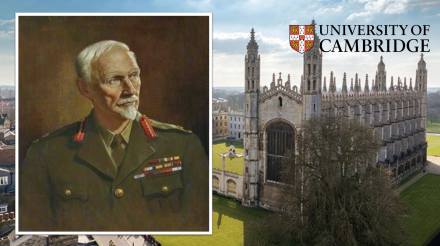
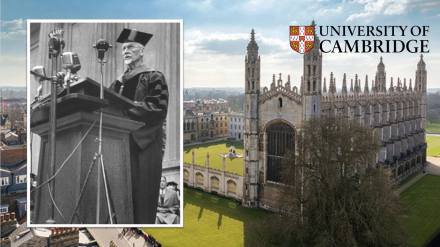
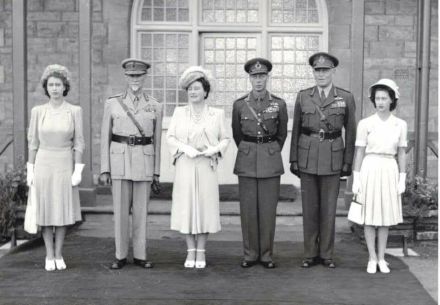
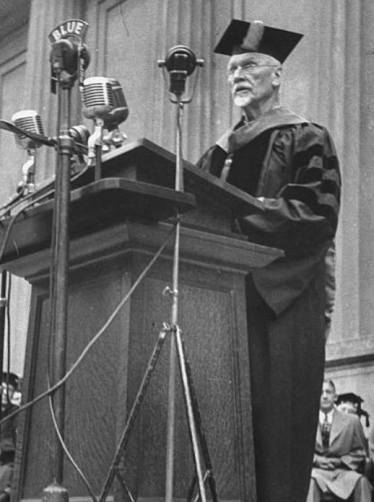
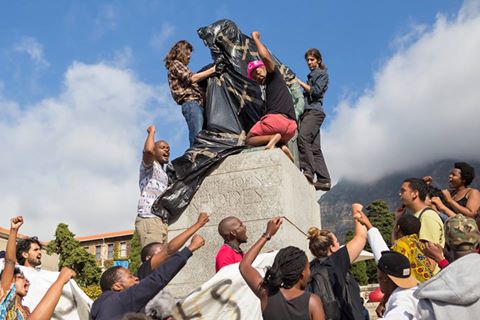
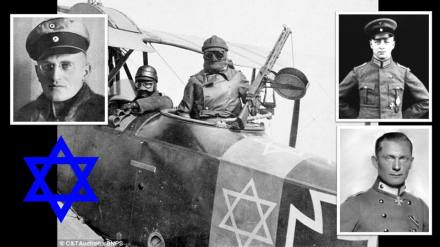
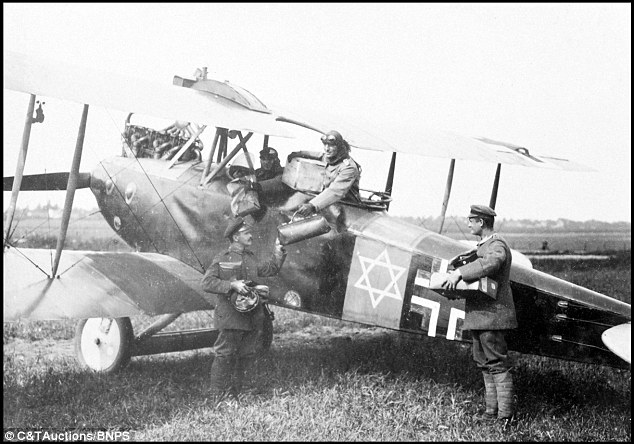
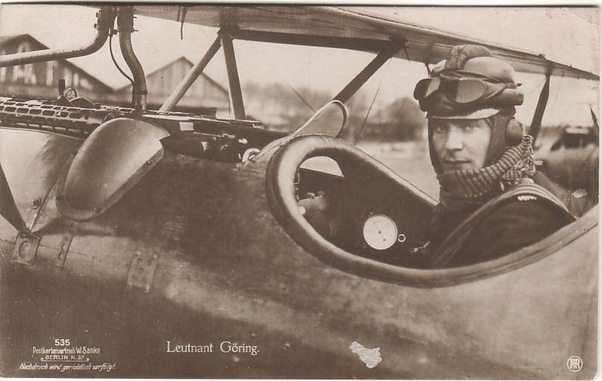
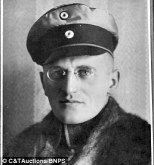
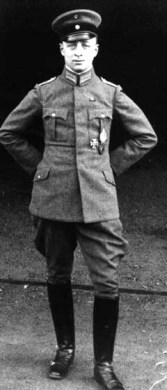
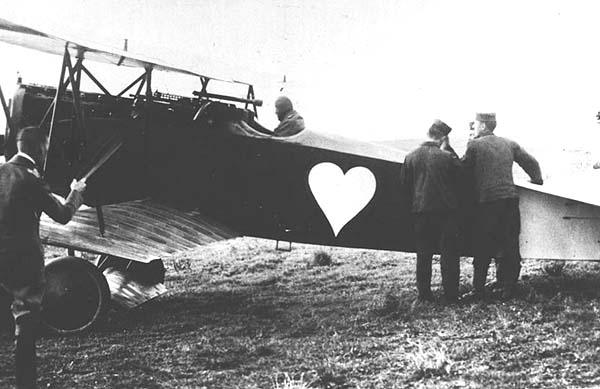
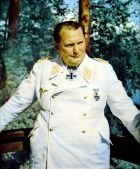
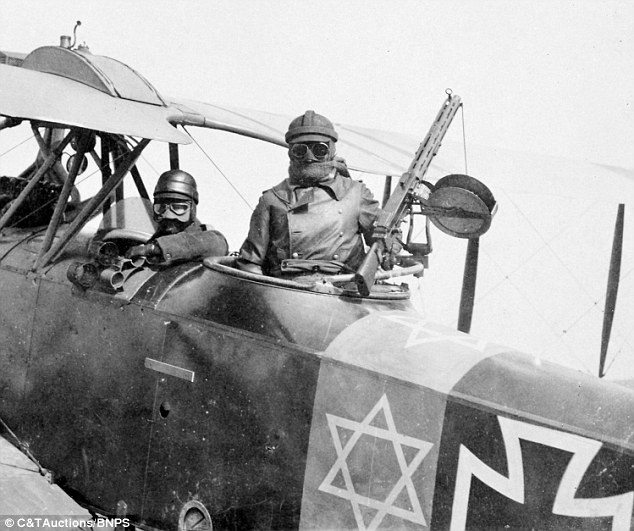
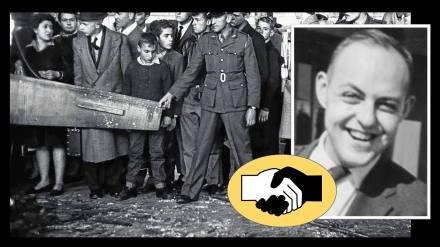
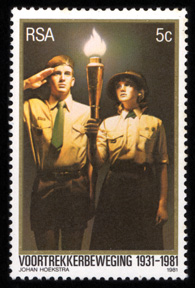 This guarding stemmed from the Boer War. The scorched earth and concentration camp policies initiated by Kitchener had devastated the Afrikaner culture, family histories and culture lost forever, now the Nationalists had to rebuild it and the hard-liner Afrikaner Nationalists wanted nothing to do the British and their British descendants in South Africa. To them these were the English white South Africans concentrated mainly in Natal, the Western Cape and Johannesburg, Apartheid was also planned to separate Afrikaners from these most hated English – Black separation was part of the greater scheme, but so too white racial separation along cultural and even economic lines.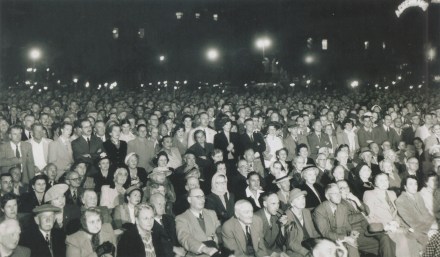
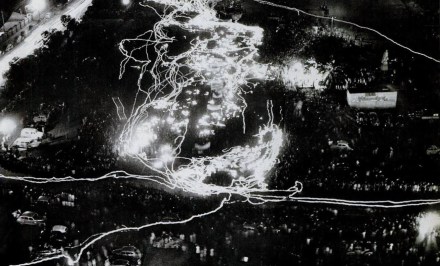
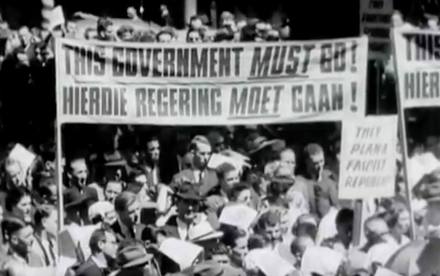


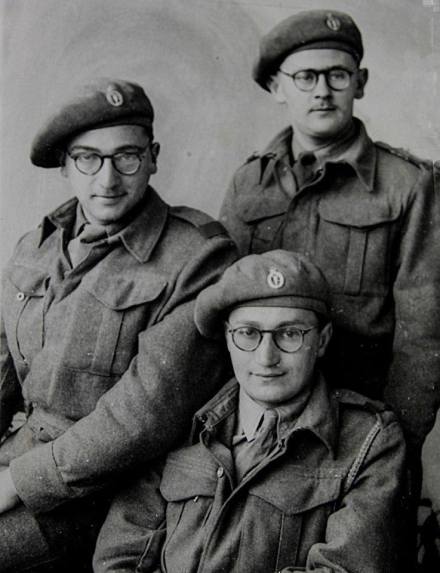
 A key organisation in opposition to Apartheid in the 1950’s and 1960’s was the South African Liberal Party (SALP). Central to the Liberal Party were three men, Leslie Rubin Peter Brown and Alan Paton.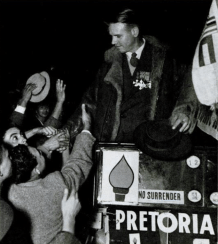
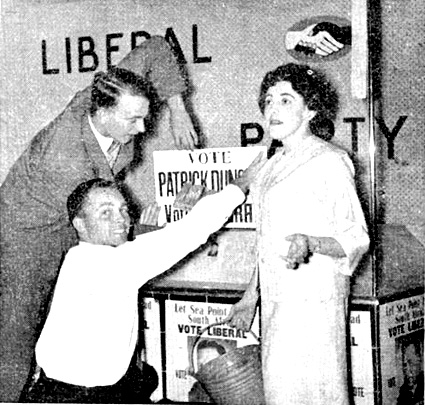
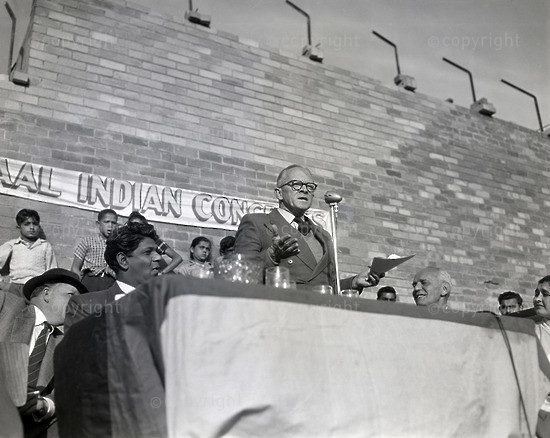
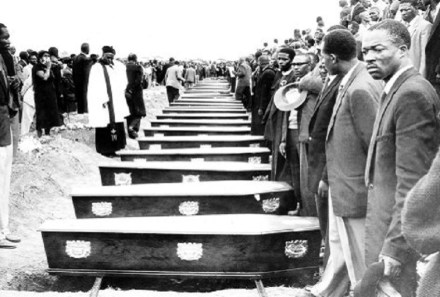
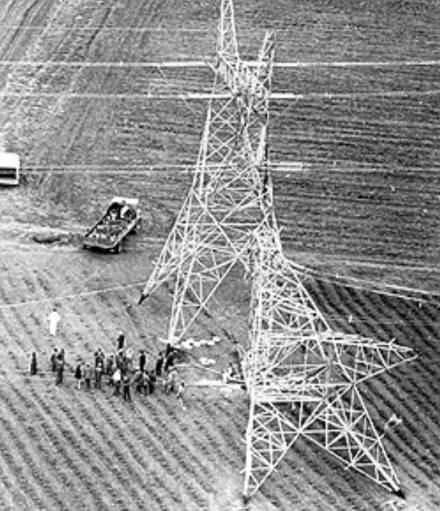
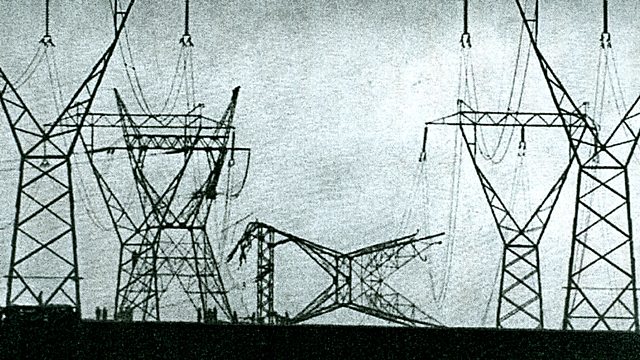
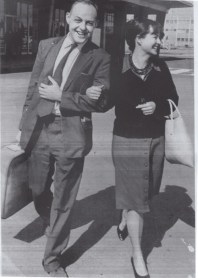
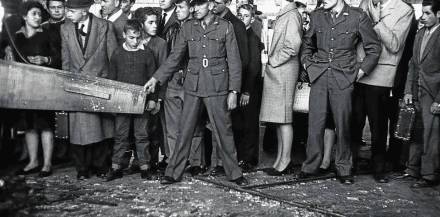
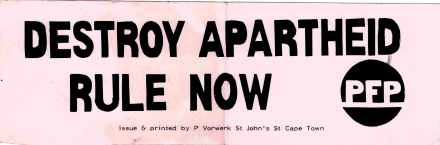
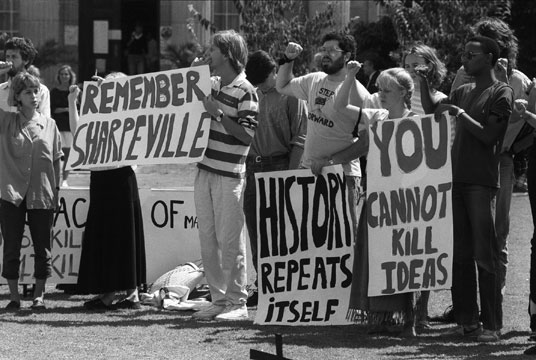
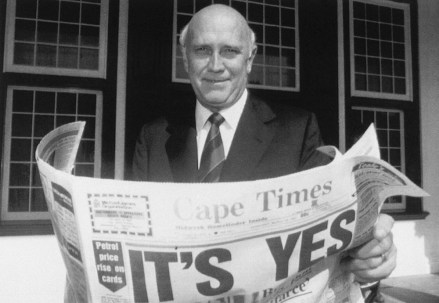


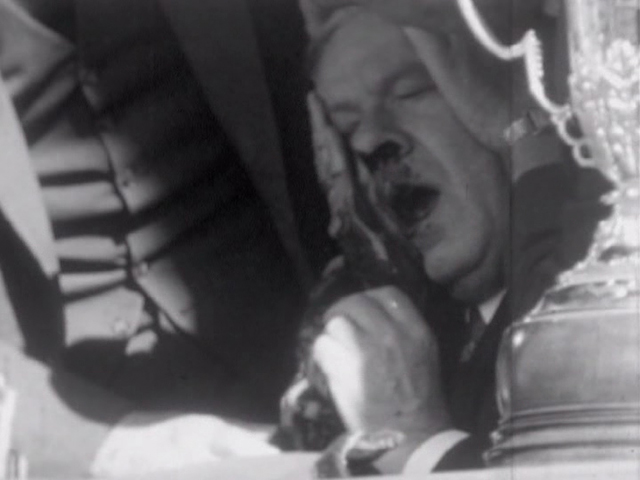
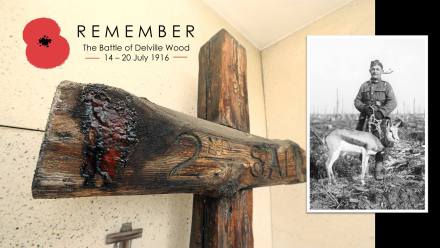
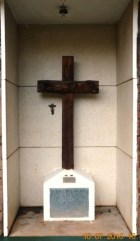 There is a poignant and very mystical annual occurrence in South Africa that reminds us every year of the blood sacrifice of South Africans during The Battle of Delville Wood. Every year, in July on the anniversary of the battle itself, a cross made from wood recovered from the shattered tress of the battlefield inexplicably ‘weeps blood’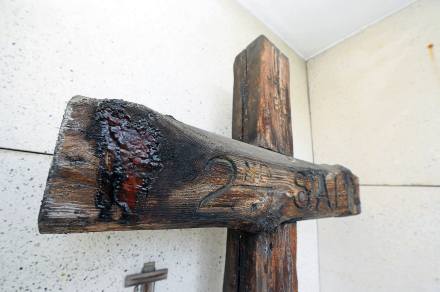
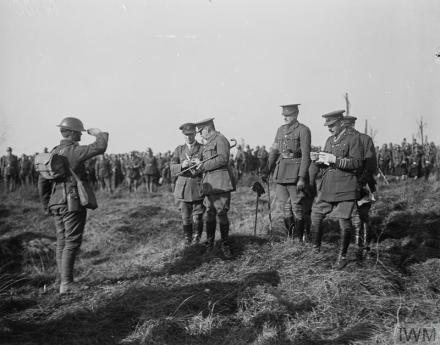


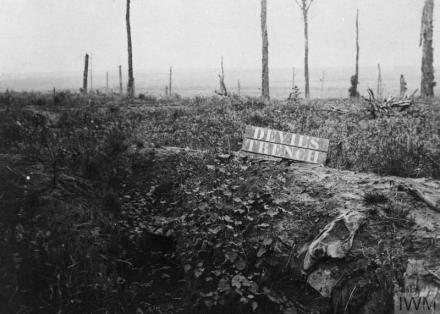
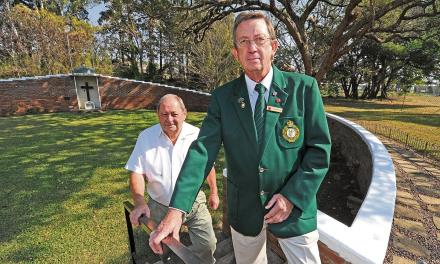
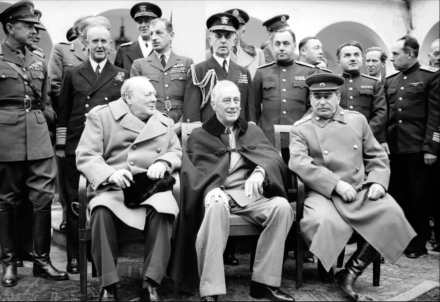
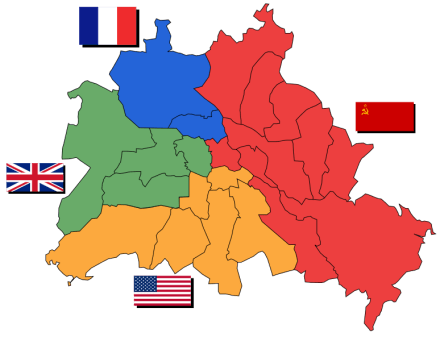
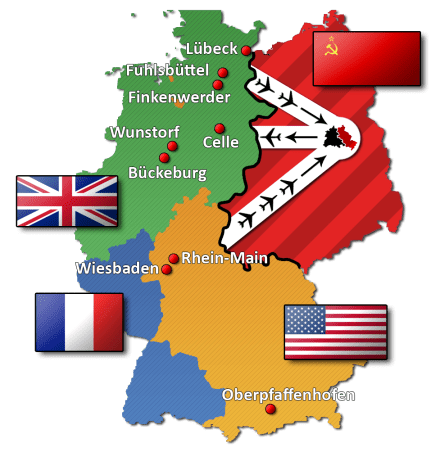
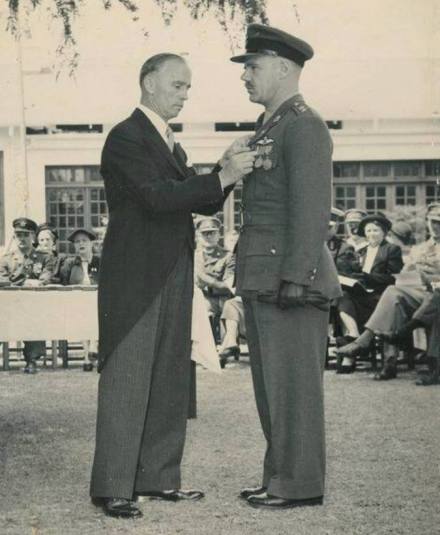
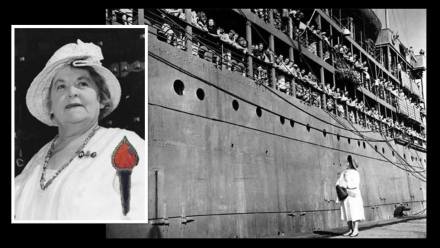
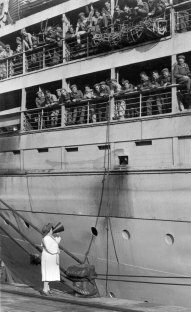 But more often than not only one iconic South African makes it into the distinctive personal memories of tens of thousands of British, South African and other commonwealth soldiers and sailors taking part in the war – and it’s not Jan Smuts, it’s a relatively little known soprano known only as the ‘Lady in White’.
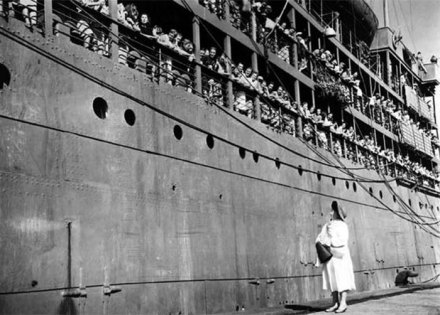
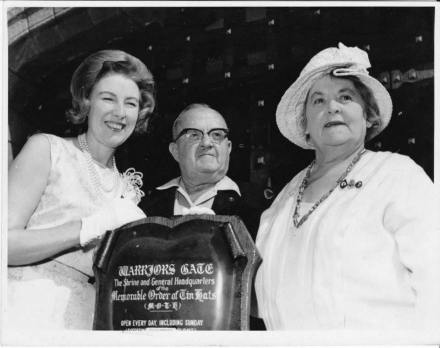
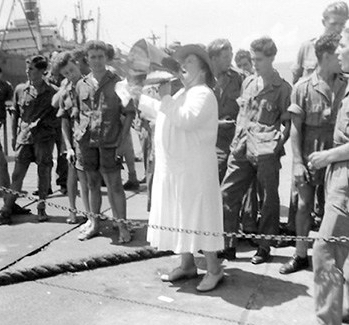
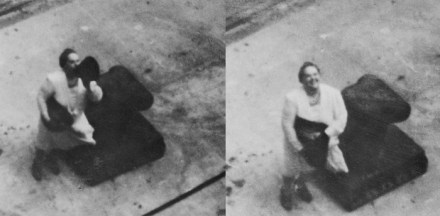
 An unsung icon of Liberty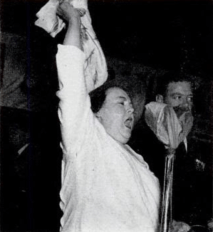


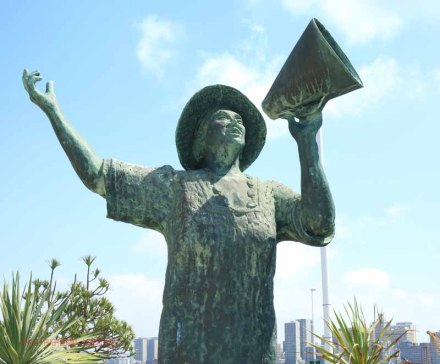
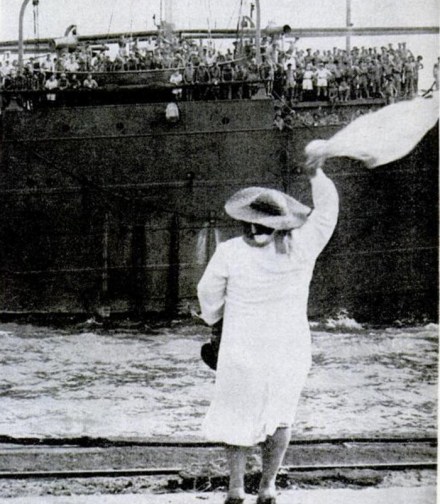
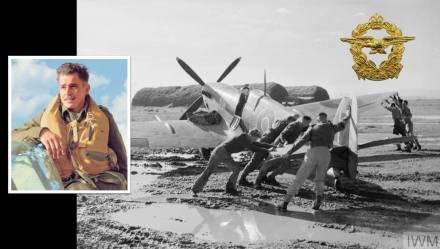
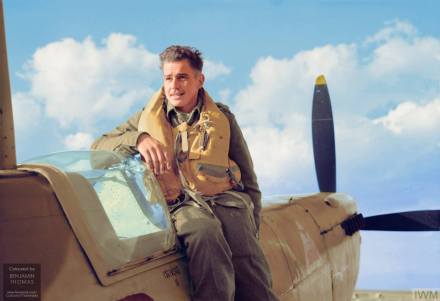
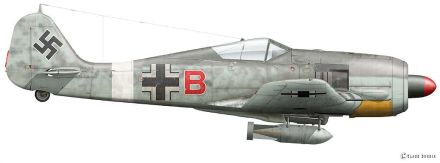


 The 2nd of September is a significant day in the history of the world, it’s the day Japan formally surrendered to finally end World War 2. The ceremony took place on the USS Missouri in Tokyo Bay in 1945, and the South Africans where right there too, represented by Cdr A.P. Cartwright, South African Naval Forces.
 A total of 297 South African Naval Forces (SANF) personnel were killed in action during World War II, and that excludes many South Africans serving directly on British ships as part of the Royal Navy. Many of these South Africans were lost in actions against the Japanese – especially during Japan’s ‘Easter Raid’ against the British Eastern Fleet stationed at Ceylon (now Sri Lanka) which sank the HMS Dorsetshire and HMS Cornwall on the 5th April 1942 and the HMS Hollyhock and HMS Hermes on the 9th April 1942 – with the staggering loss of 65 South African Naval personnel seconded to the Royal Navy and on board these 4 British fighting ships. It was and remains the South African Navy’s darkest hour, yet little is commemorated or know of it today in South Africa, and this is one of the reasons why a SANF official was represented at the formal surrender of Japan.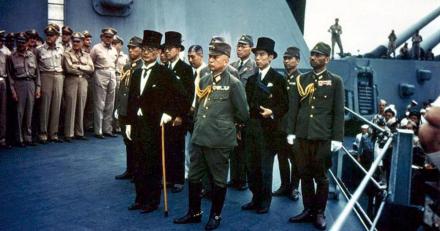
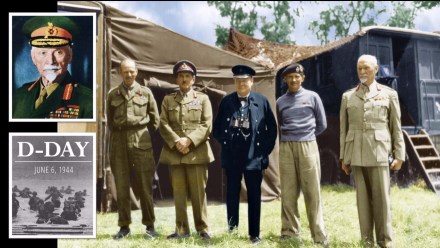
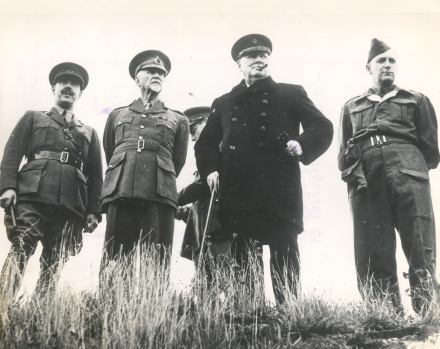
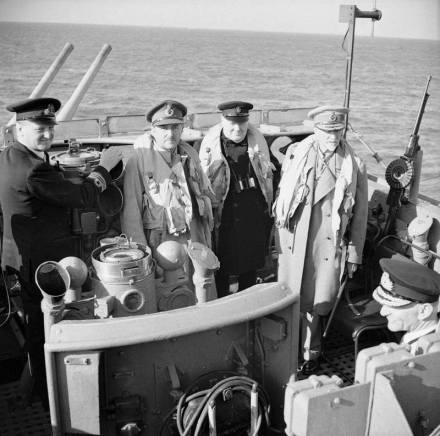
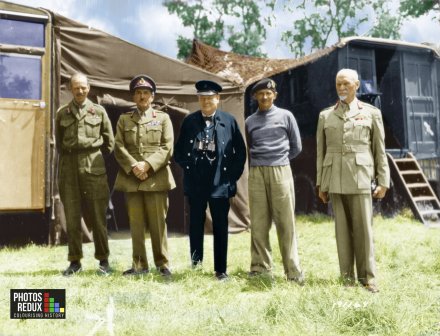
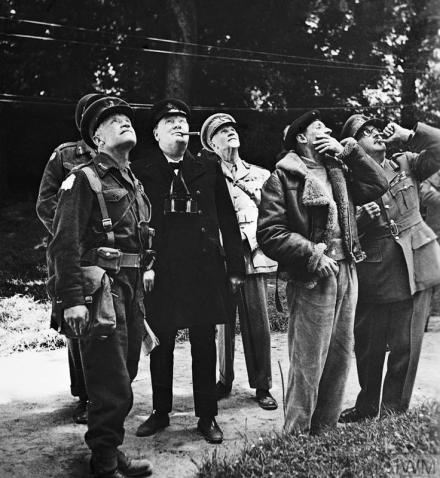
 The Observation Post