“The force of his intellect has enriched the wisdom of the whole human race”- the death of Jan Smuts.

smutsThere are still a handful of conservative ‘Afrikaner nationalist’ white people in South Africa who would still toe the old Nationalist line on Smuts, that he was a ‘verraaier’ – a traitor to his people, his death welcomed.  However, little do they know that many of the old Nationalist architects of Apartheid held Smuts in very high regard.

DF Malan, on the day of Smuts’ death, 11th September 1950, was the Prime Minister of South Africa, his Nationalist party had defeated Smuts’ United party two years earlier in 1948 whilst pushing the Nationalist proposals to further entrench racial segregation with a concept they called Apartheid.  Smuts on the other hand, foresaw the need to extend the ideas of ‘Union’ which had brought Afrikaner and Briton together to include Black South Africans. On voting rights, he had made his views clear to Hertzog as early as 1920 when in a private meeting he proposed a Qualification Franchise (not a Universal one though) for black South Africans (Hertzog was an ardent Nationalist and rejected the idea outright).

Smuts was born into a system of ‘Empire’ and that was the socio-political sphere everyone understood, including Smuts.  Over time Smuts’ views on racial segregation gradually evolved from the generally understood divided evolution edicts of his day (based on where nations stood on the ‘civilisation’ continuum).  On the international stage by the mid 1940’s, when Smuts was outside of the pressures of South Africa’s race politics (even from inside of his own political party) and not toeing his party’s line, here his views started to really shape up.

By the middle of World War 2 he had taken on a deep sense of individual liberty for all mankind, emancipation and freedom from any sort of oppression (including State).  These views, based on what he termed man’s universal “spirit” for freedom forged by two world wars, they were consolidated in his work on the United Nations and exposed on an international stage in a number of speeches.

Back in South Africa after the war, as a precursor to these views on universal liberty, Smuts had already changed from his old positions on segregation and proposed ‘integration’ instead of ‘separation’ and he had also already promised black community leaders greater political representation if they supported his war effort, voting rights under Smuts were already secure for South Africans of Indian origin and the Cape Coloured community.  On the Nationalists proposals of Apartheid he once said:

“The idea that the Natives must all be removed and confined in their own Kraals is in my opinion the greatest nonsense I have ever heard”.

The nationalists touted a fear of ‘black danger’ under this more democratically minded Smuts if he won, and it struck a cautionary chord with many white voters and the Nationalists won the day, surprisingly and against the odds, and not by a majority mind – but on a constitutional seat basis.

On losing the election Smuts made one of his greatest speeches in 1949 at the inauguration of the Voortrekker Monument to a largely Afrikaner crowd, it says everything of where he stood on integration and the future of South Africa, he said:

“Only on the basis of taking from the past what was beautiful could ‘fruitful co-operation and brotherhood’ between the two white communities be built. And only on this basis could a solution be found for the greatest problem which we have inherited from our ancestors, the problem of our native relations”. He went on to say, that this was “the most difficult and the final test of our civilization.’

Simply put, the country’s white community at Smuts’ death was very split down the middle on the issue of ‘Apartheid’ and what it would bring, the majority of South Africans did not favour it and they had heeded Smuts’ warnings of what entrenched race politics would bring to South Africa’s future.

The death of Jan Smuts
240px-DFMalanPortret

DF Malan

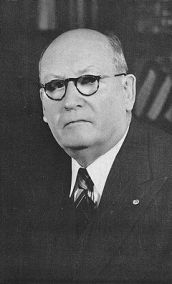
DF Malan was attending a National Party political rally to the party faithful and whipping up support for the edicts of Apartheid when Smuts’ died.   An aide walked up to him and handed him a note with the news of Smuts’ death, what he does next would surprise even the hardest right-wing Afrikaner Nationalist.

Instead of gleeful celebration of the demise of this most hated enemy of the Apartheid cause, the man repeatedly called a ‘traitor’ by the Nationalists, a man who had the ‘blood’ of Jopie Fourie on his hands, the ‘hansopper’ and ‘joiner’ turncoat who favoured the union of the Afrikaner with the hated British to heal South Africa over and above separationist Afrikaner rule, the King’s ‘hanskakie’ puppet, old ‘slim Jannie’ who put global interests and governance ahead of his ‘volk’ (white Afrikaner peoples) – no Dr. Malan’s reaction to the news was somewhat different to what most people now would even think.

DF Malan immediately turned pale, he slowly sat down, slumped over and cupped his hands to his face. He had lost a lifelong and very close friend.  Their political positions aside, Malan had a deep sense of admiration for his old friend.

He had to be helped up to stand at the microphone, where he announced that “a great figure of our time” has just died, he called the Nationalists to silence and then cancelled the rally.  His colleagues reporting that they had never seen Malan so distressed.

DF Malan’s reaction says a lot about Smuts, the importance he had in the formation of South Africa, he was the original ‘reconciler’ of the warring nations in South Africa, his idea of union based his philosophy of holism – all parts of the sphere make the whole, made the state of South Africa as we know it, he was quite literally the ‘father’ of the South African nation, and now he was lost.


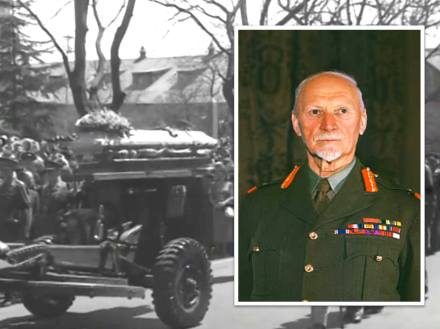
The universal appreciation of Smuts at the time, both by his supporters and his detractors, would see a nationwide and even worldwide outpouring of grief, Smuts’ funeral was something else, a funeral not seen since in South Africa and only seen again when Nelson Mandela died.

To even begin to contemplate Smuts’ importance to not only South Africa, but to the free world consider what Winston Churchill wrote to Isie (Ouma Smuts), his wife, expressing his condolences, and what he wrote sums up the loss perfectly.

“There must be comfort in the proofs of admiration and gratitude that have been evoked all over the world for a warrior-statesman and philosopher who was probably more fitted to guide struggling and blundering humanity through its suffering and perils than anyone who ever lived in any country during his epoch.”

In his lifetime, Smuts had advanced to a level of greatness that is more substantive and more far-reaching to the modern human race than any South African before and even after him (with all respect to Nelson Mandela and his legacy).

Add to this what King George VI wrote Ouma Smuts and you start to see a pattern.  He wrote:

“the force of his intellect has enriched the wisdom of the whole human race”.

To understand his impact to humankind by way of an obituary to his milestone accolades, consider the following:

The birth of South Africa

The establishment of the state of South Africa in 1910. His proposal of ‘Union’ with the British colonies of the Cape and Natal brought South Africa out of the devastation of the Boer War and the resultant decimation of the Boer nation. Despite winning the war, in just four years of Colonising everything, Britain had handed all control of her colonies in South Africa to an independent parliament to Westminster, able to make its own laws to forge its own destiny, headed up by two Boer Generals of which Smuts was one.

The Boers had lost their two small Republics to war and now, thanks to Smuts’ skill and British confidence in his vision and him, the Boer commanders were very quickly back in governance of both their ‘old’ Republics and in addition, both the British Colonies as well – without a shot been fired.  To quote Smuts ‘they gave our country back’.  He reflected that at no time in Britain’s long history had such a ‘miracle of trust and magnanimity’ ever happened.

British ‘meddling’ and ‘warmongering’ in South Africa would never happen on the same scale again, and in fact they were making reparations for the damage they had caused by way of economic support.

The League of Nations and United Nations

He played a key role in the establishment of the League of Nations, the exact design and implementation of which relied upon Smuts, he even drafted the outlines for the The Treaty of Versailles. His outline was not fully followed and he warned the League of a future calamity with Germany – how prophetic he was.

With the demise of the League of Nations (the USA left it), Smuts still held the view that a more robust world peace body was required involving all nations holding each other to account.  He later urged the formation of a new international organisation for peace: The United Nations (UN).

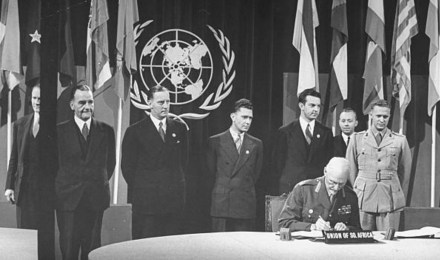
Smuts wrote the first draft of the preamble to the United Nations Charter, and was the only person in history to sign the charters of both the League of Nations and the United Nations (see earlier Observation Post link Jan Smuts drafted the Preamble to the United Nations Charter).
21731730_2020994458129542_6028296406653483655_o

Smuts signing the United Nations Charter

The British Commonwealth of Nations

He sought to redefine the relationship between the United Kingdom and her colonies, he helped establish the concept of a ‘British Commonwealth of Nations’ based on devolved British authority instead of a ‘British Empire’ and by doing so he served to end Britain’s ‘Empire. He in fact came up with the term ‘Commonwealth’ and it was to his recommendations that the King listened.

The birth of Israel

In 1932, the kibbutz Ramat Yohanan in Israel was named after him. Smuts was a vocal proponent of the creation of a Jewish state, and spoke out against the rising anti-Semitism of the 1930s.  His relationship with the Jews and Israel did not stop there, he was one of the driving forces behind the Balfour Declaration which established the state of Israel (see earlier Observation Post A Kibbutz called Jan Smuts.)

World Wars and Military Milestones

He became South Africa’s only Field Marshal, having taken South Africa to both World Wars on the side of democracy and freedom.  The Second World War alone launched the manufacturing might of South Africa largely due to the support of the war effort.  By the end of WW2, South Africa, a muddle of small colonies and republics just 40 years earlier, now stood as a key contributing world player.

He was the only person with in-depth military experience to join The British War Cabinet, at the insistence of the King, during World War 1 (the rest were Politicians) and in so played a key role in guiding the outcome of World War 1.

He gave birth to the idea of an independent Air Force free from Navy or Army control in 1917, that saw the formation of the Royal Air Force (RAF), the oldest independent air arm in the world and in addition carried this over to form The South African Air Force, the second oldest. Modern military construct now still follows The Smuts Report on the use of air power (see earlier Observation Post links Centenary of the ‘Smuts Report’, the instrument which gave birth to the Royal Air Force,).

Smuts had a long string of successful military command, notwithstanding his Command of a Boer Commando during the Anglo-Boer war, evading defeat for the entire duration of the war.  He founded the South African Defence Force after Union, commanded UDF forces alongside Botha in taking German South West Africa during WW1, the first ‘Allied’ victory of the war.  He went on to command all the British and Commonwealth Forces in the East African campaign during WW1, chasing General Paul Von Lettow-Vorbeck’s forces all over East Africa, and in so doing he captured Dar-es-Salaam, the German East Africa capital. However, to really put Smuts in perspective, when he heard that his old enemy, General Paul von Lettow-Vorbeck had fallen into destitution after WW2, it was Smuts who personally extended aid and food to him (to Smuts war was not a personal thing amongst soldiers).

During the Second World War he was appointed to the British King’s Privy Council.   The King was even warm to an idea proposed by Jock Colville (Churchill’s Private Secretary) that should Prime Minister Winston Churchill die during the war, Smuts would replace him, however this idea was never tested as Smuts would have need to have been made a peer and constitutional issues would have prevented it.  Whether possible or not it does give an idea of just how close Smuts was to Churchill and how indispensable he had become (see related Observation Post: Churchill’s idols; Napoleon, Nelson &…Smuts!).

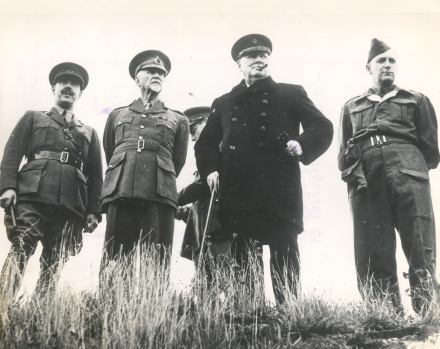
Again, as a member of the British War Council, he played a key role in the outcome of World War 2 and the Allied Victory.  He even accompanied Winston Churchill shoulder to shoulder to oversee Operation Overlord (D Day) and the liberation of France and subsequently Western Europe.
smuts2

Smuts and Churchill in France overseeing Operation Overlord (D Day)


Many historians would now even point to the notion that Churchill regarded Smuts’ advice above anyone else’s advice on his war effort and strategy (see related Observation Posts Jan Smuts, Winston Churchill and D-Day and Smuts’ keen sense of smell detects Germans hiding nearby).

Domestic acclaim
hobhouse

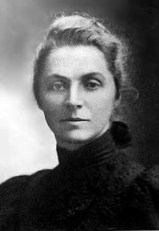
Emily Hobhouse

The deep-seated pain of the Boer War concentration camps and how it affected Afrikaner identity was also something that Smuts actively addressed (Ouma Smuts was herself interned in a concentration camp, and Smuts had also tragically lost family to the system).  He became a friend and confidant of Emily Hobhouse in addressing the issue with the British over many years. The Magnolia seeds she gave him in friendship now stand as a full botanical statement to this outside his house in Irene.

He brought the government to take measures to bring the treatment of Indians in South Africa into line with the provisions of the United Nations, putting them to the same equality and status of the ‘Cape Colourds’ who already enjoyed an equal universal franchise in South Africa at the time.  In doing so he became a life-long admirer of Mahatma Ghandi, who in turn also regarded Smuts as one of the greatest statesmen of his time.

To illustrate this admiration, Before Gandhi returned to India in 1914, he presented General Smuts with a pair of sandals made by Gandhi himself. In 1939, on Gandhi’s 70th birthday, Smuts returned the sandals with the following message:

“I have worn these sandals for many a summer, even though I may feel that I am not worthy to stand in the shoes of so great a man.”

(see earlier Observation Post story “… I am not worthy to stand in the shoes of so great a man”).

In domestic policy, Smuts instituted a number of social security reforms. Old-age pensions and disability grants were extended to ‘Indians’ and ‘Africans’ respectively (although there were still differences in the level of grants paid out). He also instituted the Workmen’s Compensation Act of 1941 and the Unemployment Insurance Act of 1946.

International acclaim
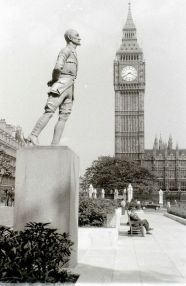
55bfc5b0ef884389cd7a9bddf3645bd8Smuts was honoured by many countries and on many occasions, as a standout Smuts was the first Prime Minister of a Commonwealth country (any country for that matter) to address both sitting Houses of the British Parliament – the Commons and the Lords during World War 2.  To which he received a standing ovation from both houses.

Such was the admiration of Smuts that his statue stands outside Westminster on Parliament Square in London for his contribution to world politics and as a great reformer.

Now he stands alongside the likes of Ghandi, Mandela and Abraham Lincoln as the only other ‘foreign’ statesmen honoured in the square.  Whilst, ironically, in South Africa his legacy has taken an absolute battering and his statues removed.

Take the time to listen to Smuts’ speech to both houses of Parliament, note his views on all mankind’s basic freedoms and what he envisions as the future by way of fundamental reforms.  Also note the short praise by Winston Churchill when Smuts concludes his speech and the reaction of the British Parliament, a reaction that has not been seen in British politics since, it is very unique.


Charity

In 1921 Smuts, along with Field Marshal Haig, established The Royal Commonwealth Ex-Services League (RCEL) in Cape Town.  The RCEL sought to consolidate war veteran’s charities all over the world to care for the returning military service personnel in the Commonwealth.  It saw the establishment or re-purposed institutions which now play a significant role in care for servicemen worldwide, The Royal British Legion, The Royal Canadian Legion, The Returned Services League Australia and The South African Legion to name a few.

He also made South Africa available to Jewish orphans escaping the Pogroms of Eastern Europe (despite resistance from South African nationalists).  For a full story on this remarkable chapter, see an earlier Observation Post 200 Jewish orphans saved, the story of Jan Smuts and Issac Ochberg

He again made South Africa available to Polish orphan children escaping the Nazi German and Soviet invasion of Poland in 1939, establishing a grateful and thriving small Polish community in South Africa (see earlier Observation Post South Africa provides sanctuary for Polish refugee children during WW2 ).

Academia

Smuts was also an accredited philosopher, his work on Holism brought him high acclaim from his Philosopher peers.  Holism can be defined as “the fundamental factor operative towards the creation of wholes in the universe” and was published in 1926.  For Smuts it formed the grounding behind his concepts of the League of Nations and United Nations.

Smuts was also an accredited Botanist, his books and illustrations on South African grasses (veld) are still regarded as the definitive work.
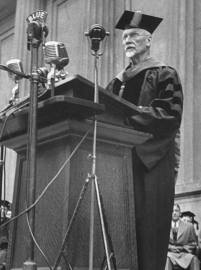
21731360_2020995841462737_816238144166127637_nWhilst studying law at Christ’s College at Cambridge University, he was rated as one of the top three students they have ever had (Christ’s College is nearly 600-year-old).  The other two were John Milton and Charles Darwin.

His intellect was unsurpassed, to pass an exam at Cambridge he learnt Greek (fluently) in just 6 days. His wife was no intellectual slouch either, later in life Jan Smuts and Ouma Smuts used to tease one another when one would recite a Bible verse and the other would be expected to recite the following one, from memory, in Greek!

In 1948, Smuts was elected Chancellor of the University of Cambridge, the first real non-Briton outside of British Royalty to be elected to the position in the 800 year-old history of Cambridge University.

Vision

Smuts’ idea of ‘Union’ and vision for South Africa was that of a ‘United States of South Africa’ including countries like Namibia, Botswana and Zimbabwe in the Union.  It was to be a significant player on the world stage drawing on Africa’s vast resources to see it as a leading political and economic power block (much like the USA is now).  Can you imagine if Botswana and Rhodesia voted to join the Union (they chose not to at the time), what a different history we would have seen in Southern Africa – ‘Apartheid’ may never have happened just for starters.

A humble man

Personally, Smuts was a God-fearing, frugal and humble man. He chose as his house an old rickety, uninsulated, fully corrugated iron, transportable military head office.  He preferred to sleep outside on the ‘stoup’ (veranda) on a small single hard wood bed, his garden was the natural veld. There were no stately mansions or ‘Nkandla’ with ‘fire pools’ for Smuts and he would not have had it anyway.

Legacy

The National Party in a sinister move, gradually and over the long period of Apartheid insidiously smeared Smuts and his legacy, erasing from the general consciousness of just what a great South African Smuts had become. Modern South Africans grew up with almost no regard for Smuts, and if you had to ask a young Black South African today who Smuts was he’ll probably say he was one of the white Apartheid monsters, the white English children will have no idea and the White Afrikaans ones may remember something about him been traitor to Afrikaners.  A student in Canada studying world politics would have a better grip on Smuts than a South African student.

Luckily this is beginning to change, and landmark Biographies are being written now which start to fully explore who and what Jan Smuts was, and it is both fascinating and eye-opening.  It is very hard to sum up all the greatness Smuts was to attain, and certainly for his time his deeds set him well apart from any of the other Statesmen South Africa has produced, certainly if you consider all the subsequent South African Premiers other than Mandela. We have a wonderful story in Smuts, and what we have a character of force – a polyglot, philosopher, botanist, intellectual, lawyer, politician, statesmen, reformer and warrior –  a story and a man who is best summed up by Alan Paton who said:

“Even the great thought he was great.”


Written and Researched by Peter Dickens.  References: Jan Smuts reconsidered Hermann Giliomee 26 January 2016, Richard Steyn’s Smuts: Unafraid of Greatness 2015.  Video footage copyright Associated Press.  My deep thanks to Philip Weyers for the Smuts family insight and access.

This article serves to highlights Smuts’ achievements by way of an Obituary.  There are other issues any national leader faces that highlight decisive but ‘unpopular’ action depending on the affected party’s point of view.  For more related articles in The Observation Post on  Jan Smuts please have a look at this link:

South Africa’s very own Communist Revolution – The Rand Revolt of 1922
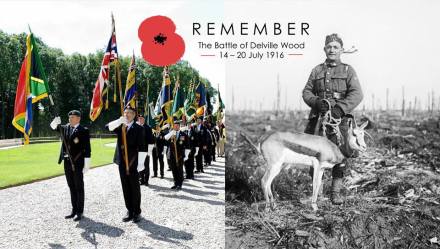
 

‘Springbok Valour’… Somme 100 & the Delville Wood Centenary

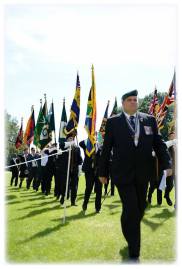
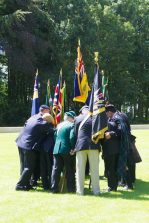
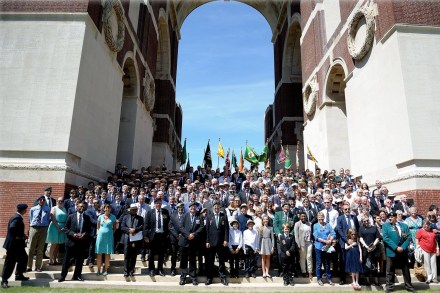
South African Legion of Military Veteran’s parade and speeches on the Centenary of the Battle of Delville Wood which fell part of the Somme 100 Commemorations in 2016, this commemoration was held at the Thiepval Memorial to the Missing on the Somme in France and was hosted by The Royal British Legion.

To watch the entire ceremony on video as broadcasted by The Royal British Legion please click on the video link below, to read the speech only please scroll down:

Thiepval Memorial, France 10th July 2016

Springbok Valour – Speech by Peter Dickens, Chairman of the Royal British Legion South African branch, in commemoration of 100 years of South Africans on the Somme and Battle of Delville Wood. Held at the Thiepval Memorial, France on 10th July 2016.

14495490_644871705682565_2175144210739678305_n“On behalf of The Royal British Legion South African Branch I would also like to welcome all here today, it is our privilege to honour the South African sacrifice during the Somme offensive – especially at Delville Wood just a short distance from this memorial.

We started this memorial service, with short blasts from World War 1 replica whistles, this was the signal blown by individual officers to send their troops “over the top” during the Somme Offensive and aside from the gun and artillery fire this is the last mechanical sound thousands of soldiers heard.

Frightening isn’t it? The sound of these whistles had some men literally freeze in pure terror. What a harrowing and poignant start and to consider that it was a sound that was going to repeat itself again and again all along the Somme salient.

Why is the Thiepval memorial significant to South Africans? It’s a surprise to many in The Royal British Legion and in South African veteran and military circles, but the official designation of this memorial is the “Memorial to the 72, 195 British and South African servicemen, who died in the Battle of the Somme of the First World War between 1915 – 1918, with no known grave”.

This memorial is built right across the front lines as they stood on the 1st July 1916, the very same day the British Army suffered 20 000 men killed and a further 40 000 wounded – it’s literally on this very ground that we are standing on now that much of this massive bloodletting took place. Humbling – no doubt!

This memorial however, speaks not simply of that first day but of the whole Battle of the Somme. On stone panels around the memorial’s arches are recorded the names of the men of the United Kingdom, 71,336 and 858 South Africans.

There is also one Irish born South African Victoria Cross recipient listed – Captain Alexander Young, awarded the Victoria Cross during the Boer War, Young served with the South African Scottish Regiment and was killed in action in October 1916.

To, think – these are only the ‘missing’ from the battle of the Somme – men who have no known grave, or on whose gravestone is inscribed the words “unknown soldier”. As to names on actual headstones, around us are thousands. The Somme Offensive is off the scale – it is the most bloodiest battle in the entire history of mankind, – the sad truth – it advanced only 10 km along the front with the grim total of 1 million men dead or wounded from both sides littered in its wake.

And it all began with a Bang!, a very big one. Soldiers of the British Forces here and soldiers of the South African forces just over the way at Delville Wood witnessed the biggest explosion ever seen until then – The Lochnagar mine explosion was so big that debris from the explosion hit a British spotter plane 4000 ft up in the air, the detonation of this large mine and 8 others under German positions was said to be heard as far as England, and it was the start of carnage on a epic level.

On the South African side of the Somme Offensive things started off remarkably well, the 1st South African Brigade was ordered to advance and to capture Delville Wood on the 14th July and “hold it at all costs”.

At first the attack progressed smoothly and by the end of the day the South Africans had secured the wood, now spread along the perimeter in groups forming machine gun nests.

But, rather than having “secured” the wood, the brigade was now in a trap, with only the south western base in contact with the 26th Brigade in Longueval. All troops were equipped with spades but digging within the wood was made extremely difficult by roots and tree trunks, preparation of proper trenches was impossible, the South made do with shallow burrows. With these unprepared trenches just over 3000 South Africans faced over 7,000 German troops, holding the wood was going to be extremely difficult!

The Germans launched one of the heaviest artillery bombardments of the war in an effort to dislodge the South Africans. At its peak the rate of firing exceeded 400 shells per minute and to think this relentless volley of shelling for days on end, and it was into a wood no bigger than a square kilometer in size.

There is a reason there as so many “missing” South Africans listed on this memorial – this rate of artillery fire literally vaporized these men or blasted them beyond recognition. This is why Delville Wood itself is such a humbling experience – many of these men listed HERE are still THERE, unfound even to this day.

Of the 121 officers and 3,032 men of the South African Brigade who launched the initial attack, only 29 officers and 751 men eventually walked out. These men held the wood at a massive cost, even reverting to hand to hand combat at stages – the depth of bravery required to do this under this sort of fire power is simply too staggering to contemplate. The losses sustained by the South Africans were one of the greatest sacrifices of the war.

The South African Brigade suffered 80% loss, yet they managed to hold the Wood as ordered. This feat has was described then as “… the bloodiest battle hell of 1916.”

But something very important also happened during the Battle of Delville Wood – the South African nation as we know it today was born. It was out of this horrific baptism of fire, of South Africans from across ethnic, language and cultural divides – fighting as one in union and strength, that the newly formed Union of South Africa’s national identity was forged for the years come.

“Nancy” the Springbok, the South African Scottish mascot on the Somme, had been the symbol of home for all the men during the fighting, she proudly led four battalions of the South African Brigade to the first Delville Wood drum head service after the battle in 1918.

Prancing on her thin little legs, it’s almost as if she knew that she was the darling of every soldier on parade – and of those they were coming to honour – because from here on out these South African fighting men had walked into history as a force to be RESPECTED and the legend of the fighting Springbok was born.

The veterans bond

14502685_644871315682604_1764889988260960146_nI would like, if I may, to talk about why is the Battle of the Somme, something that occurred 100 years ago, is so important to us as veterans?
Forgive me if I read an abridge version from these very poignant memoirs. One from a South African who had just survived Deville Wood in France in 1916, one from a survivor of the SS Mendi in 1917 and the other is from a South African who survived an air attack during Ops Modular in Angola in 1987.

Lance Corporal Frederick Charles Lee, the only surviving NCO in his company to come out of Delville wood.

“After five days of absolute awfulness poor Angus Brown, my pal, died of wounds after about three hours awful suffering. He had both feet blown off by a shell. I saw him a little while after he was hit. I gave him a drink of water, and the only complaint he made at that time was “My God, Fred, the pain is awful “. With that I ran down to the dressing station and got the doctor to give me some Morphine. When I got back Angus was just about finished’

The next from Matli, a survivor of the SS Mendi

“George Mathibe said to me when I found him, we are about to die, but one of us will live to tell at home how members of the tribe had died with the ship Mendi, and I hope it will be you” at that point Matli gave Mathibe his warm great overcoat, promised to return to him but was unable to do so.

70 years later, Cpl Dave Mannall, writes the following from Ops Modular after the Ratel 90 Infantry Fighting Vehicle next to his took a direct hit from a Mig fighter jet ‘s parachute retarded bomb:

“Frikkie De Jager died from multiple shrapnel injuries before the helicopters arrived, his death was extremely hard for us boys, watching that death slowly unfold over eight hours took a far greater toll on our morale, especially for all of us who had become brothers in arms with him during our year in 61 Mech”.

Although separated by 70 years, all these brave South Africans – Angus Brown, George Mathibe and Frik De Jager share a bond between themselves and that same bond is shared with us as their brothers in arms.

They all died in excruciating circumstances brought about by War but, most importantly, they all died in the arms of men would have gladly given their lives for them instead … and that is a very special bond indeed.

That bond of brotherhood stretches in countless names from Frikkie all the way to Angus, before and after. It is a bond that we all share, and it’s a bond that is never broken.

It really is not the job of Politicians to carry the flame of remembrance for our brothers, nor can they really understand the bond we have for them. There is no political currency to be made out the war dead, to do this is to absolutely dishonor them.

Because of this unique bond – It is our job – the job of the Veterans to carry this solemn flame of remembrance – this RED Poppy – it is our duty to carry that unique thread that links us here today with the men buried in the ground we are standing on and with those South Africans who where sacrificed nearby at Arques-la-Bataille or on the SS Mendi – even those who lie in graves far off in countries like Angola and Namibia from a forgotten war … and we prepare to stand by those who WILL fall in the years to come.

Today! – our bond remains with those South Africans who fell in Delville Wood and those who where never found during the Battle of the Somme and are immortalized on this very monument – and after 100 years OUR bond is as strong as ever.

Lest we forget”

19944195_10154627458175969_3929406701417396035_o

Related links and work

In Flanders Fields (Afrikaans) ‘In Flanders Fields’ translated into Afrikaans for the Somme 100 commemoration, July 2016

Delville Wood 400 shells/min – upwards to 600/min fell on the Springbok positions, imagine “the bloodiest battle hell of 1916”

William Faulds VC Taking gallantry at Delville Wood to a whole new level; William Faulds VC MC


Speech written by Peter Dickens.  Video copyright – The Royal British Legion.

Why the Comrades Marathon is called the ‘Comrades’

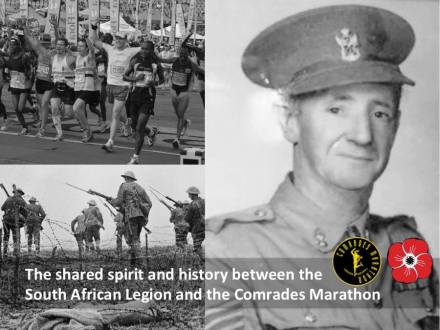
Did you know that “The Comrades Marathon” has a shared spirit and a shared history with The South African Legion of Military Veterans?

As the oldest military veterans organisation in South Africa, the South African Legion was formed at the 1921 Empire Conference (28 February to March 4) in Cape Town as the British Empire Services League (BESL, South Africa) by joining two organisations together – the “Returned Soldiers and Sailors Association” and the “Comrades of the Great War”, which co-incidentally is the organisation after which the term “Comrades” in Comrades Marathon is given.  In the course of history the “BESL South Africa” came to be called “The South African Legion of Military Veterans”.

bokclear3

In the same year – 1921 – Vic Clapham, a World War 1 veteran himself approached the “Comrades of the Great War” with a vision that would result in the worlds greatest ultra marathon nearly one hundred years later.

His idea was that if infantrymen, drafted into the armed forces from sedentary jobs, could endure forced marches over great distances, trained athletes could cover the distance between the two cities of Pietermaritzburg and Durban without great difficulty. Clapham, like the Legion, also wanted to remember those who had fallen in the war, and he felt the best way to honour this was by the ultimate testing of body and mind, and triumphing.

The Natal athletics body was not interested in the idea of a ultra marathon, and thought Clapham was quite mad, so undaunted by the set-back Clapham approached the British Empire Services League of South Africa (now known as the South African Legion), and asked permission to stage the race under their auspices. They ultimately agreed and financially underwrote the first race.

The first 1921 Comrades Marathon was run by Vic Clapham and included a field of 34  runners, of them Sixteen runners completed the 87, 9km (55 mile) downhill race from Pietermaritzburg to Durban. The race was won by Bill Rowan who finished in a time of 8:59:00 and his name is now given to the sub 9 hour medal in today’s race.

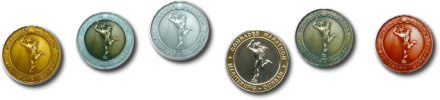
comradesmedals

Left to Right “Modern” Comrades medals

A gold medal for the top 10 finishers
A Wally Hayward for a sub-6 hour time
A Silver for a sub-7:30 time
A Bill Rowan for sub-9
A Bronze for sub-11 and finally
A Vic Clapham for sub-12

SALegion_FinalLogoLayout_GreenPrintTextAlthough The Comrades Marathon is an independent commercial concern now, The South African Legion has continued its association to the Comrades Marathon over the  years and encourages all participants to wear a Remembrance Poppy in recognition of this history and the sacrifice of the fallen.  In this respect the Comrades Marathon is still in fact a “living memorial” to the Great War (World War 1).
Related Work and Links

Living War Memorial: Comrades Marathon A ‘Living’ War Memorial, The Comrades Marathon

Living War Memorial: Red Cross Children’s Hospital A war memorial in Cape Town which saves children’s lives

Comrades Marathon; Bill Payn Comrades legend, Springbok and war veteran – the remarkable Bill Payn


Written and Researched by Peter Dickens

Two fellow members of The South African Legion – Churchill and Smuts

SALegion_FinalLogoLayout_GreenPrintTextThe interesting part of digging up all the “hidden” history of the South African veteran movements after World War 2, is that occasionally you come across some hidden history about the military veterans organisation which you belong to. Did you know that both Jan Smuts AND Winston Churchill are both members of the South African Legion of Military Veterans?
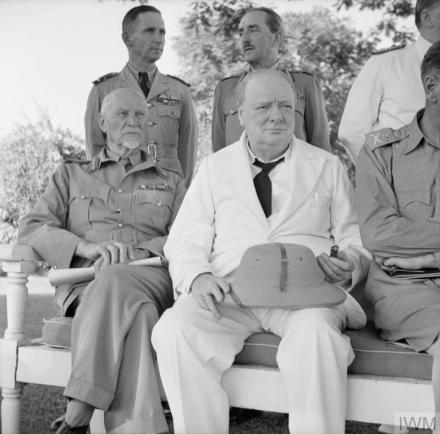
Well – they are. Field Marshal Jan Smuts was awarded the “Gold Life Membership Badge of the South African Legion of the BESL” in November 1945, and Sir Winston Churchill received the same Gold Life Membership Badge to the South African Legion in July 1948.

Smuts02

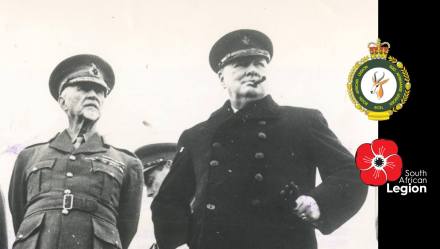
And here they are – two fellow Legionnaires, the two great prime ministers of Great Britain and South Africa, Prime Ministers, Winston Churchill and Field Marshal Jan Smuts, at the British Embassy in Cairo, 5 August 1942.

Did you also know that Jan Smuts played a pivot role in not only formulating the South African Legion, but also in bringing all the primary war veterans organisations from Britain and around the British Commonwealth under one oversight body? It was formed in 1921 in Cape Town and called The British Empire Service League (BESL) under patronage of the King.  This organisation still exists to this day as the Royal Commonwealth Ex-Services League (RCESL) with Queen Elizabeth II as the head Patron, located at The Royal British Legion’s head office at Haig House in London – and South Africa is still a founding member (represented by the South African Legion).

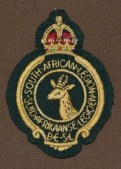
413928_141126095245_DSC_0380This is a standard South African Legion blazer Badge with “Kings crown” from the 2nd World War period.  Note the BESL at the bottom – which stands for the “British Empire Services League” – the South African Legion along with the Royal British Legion, Royal Canadian Legion, Royal Scottish Legion, New Zealand Returned Services Association and the Australian Returned Services League are all founder members of it.
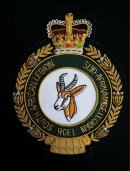
embroidered_nModern South African Legion blazer badge – note the use of modern BESL the RCEL “Royal Commonwealth Ex-Services League” and Queen’s Crown” for Queen Elizabeth II who is the current Patron.
The RCEL mission and objective is to provide aid and support to any members of the British Commonwealth who have served under ‘crown’ in British Armed Forces or Commonwealth Armed Forces whilst under British Patronage.  These include South Africa’s old World War 2 veterans and newer veterans who have served under the Commonwealth agreement in Her Majesty’s Armed Forces in recent conflicts like Iraq and Afghanistan.

Related Work and Links 

Legions and Poppies: Legions and Poppies … and their South African root

Churchills Desk: Churchill’s Desk

Jan Smuts, Churchill and D-Day: Jan Smuts, Winston Churchill and D-Day


Researched and written by Peter Dickens

Image copyright – The Imperial War Museum. Reference “Not For Ourselves” – a history of the South African Legion by Arthur Blake.


Sailor Malan; Fighter Ace & Freedom Fighter!

Malan 3

Sailor Malan

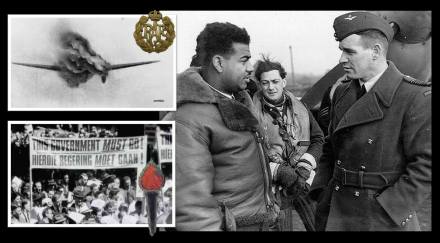
The featured image shows Group Captain Adolph Gysbert “Sailor” Malan DSO & Bar, DFC & Bar (24 March 1910 – 17 September 1963), the South African World War 2 flying ace in conversation here with Flight Sergeant Vincent Bunting at Biggin Hill in 1943 on the left, and it says a lot about Sailor Malan.

Vincent Bunting was one of a small group of ‘black’ British and Commonwealth pilots in full combat roles during the Second World War – he was born in Panama in June 1918 and raised in Kingston, Jamaica. He joined the RAF at No 1 Recruitment Centre, Uxbridge, on 26 July 1940. Selected for flying training he went on to become a fighter pilot mainly with RAF 611 Squadron.

An integrated Air Force

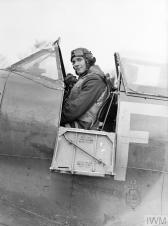
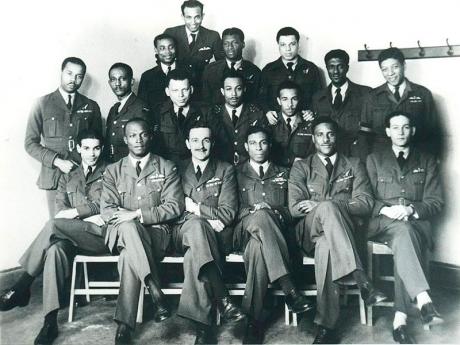
During the Battle of Britain, the British relied on pilots from the Commonwealth to make up a critical pilot shortage, Sailor Malan was one of these pilots and with him came pilots from all over the world, of all colours and of all cultures (there was no such thing as a ‘colour bar’ in the Royal Air Force) – from commonwealth countries like India, Burma, Rhodesia, Jamaica, Australia, New Zealand, South Africa and Canada, as well as pilots from Poland, France, Czechoslovakia and the USA.  They made up almost one-third of the RAF pilots involved in the Battle of Britain (to believe the image so often created of these men as a bunch of tea drinking ‘tally-ho’ young white English gentlemen is to completely misunderstand the Battle of Britain).

vo-1599-p9-group-shot

Jamaican Pilots during  the Battle of Britain

The featured image of early racial recognition is testament to Sailor Malan as not only one of the most highly regarded fighter pilots of the war, but the future signs of Sailor Malan as a political fighter and champion for racial equality.

Fighter Ace

Much has been written on Sailor Malan as a Fighter Ace, his rules for combat and his command of 74 Squadron during the Battle of Britain which played such a pivot role in winning the Battle (see ‘Ten of my rules for air fighting’ – Sailor Malan) .  His combat record, promotions and decorations alone are simply astonishing.

He first took part in evacuation of Dunkirk.  During this battle he first exhibited his fearless and implacable fighting spirit. To demonstrate his nature, in one incident he was able to coolly change the light bulb in his gunsight while in combat and then quickly return to the fray.

1506738_267729770063429_320223023_n

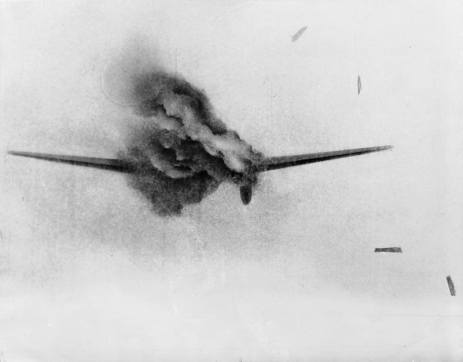
Sailor Malan’s gun camera showing the destruction of German Heinkel He 111 over Dunkirk

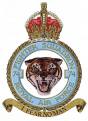
When the Battle of Britain begun, 74 Squadron (known as ‘The Tigers’) was to take the full heat of the battle in what was known as ‘hell’s corner’ over Kent, the squadron was eventually based at the now famous ‘Biggin Hill’ aerodrome in the thick of the battle.

Sailor Malan was given command of 74 Squadron, with the rank of Acting Squadron Leader at the height of the Battle of Britain on 8th August, 1940. Three days later the Squadron was in battle. The day became, for ever, “Sailor’s August the Eleventh”. The order was received at twenty minutes past seven to intercept a hostile raid approaching Dover. Little did the squadron know that they would participate in four seperate air battles that day. When the Squadron, weary, sweaty and oily, finally returned to base after the fourth sortie, they had downed an astounding 38 enemy aircraft.

Sailor Malan said later, in one of his masterly understatements: “Thus ended a very successful morning of combat”. For the first day of action under his command it was successful even by 74 Squadron standards.

Sailor Malan also worked on public relations to keep the British morale high.  Here is a rare radio interview (follow Observation post link Sailor Malan – “in his own words”)

By D Day (i.e. Operation Overlord, the liberation of France and subsequently Western Europe), Sailor Malan was in command of 145 (Free French) Fighter Wing and was himself leading a section of the wing over the beaches during the landings in Normandy.

In all Sailor Malan scored 27 enemy aircraft kills, seven shared destroyed, three probably destroyed and 16 damaged. He was to receive the Distinguished Service Order decoration – not once, but twice and well as the Distinguished Flying Cross decoration, again not once – but twice.  The Citations for the DSO’s and DFC’s say everything about his combat prowess:

The London Gazette of the 11th June, 1940, read:

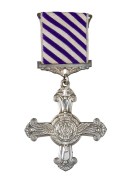
DISTINGUISHED FLYING CROSS

DFCLGFlight Lieutenant Adolph Gysbert Malan. (37604), Royal Air Force.
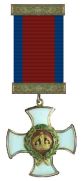
“During May 1940, this officer has led his flight, and on certain occasions his squadron, on ten offensive patrols in Northern France. He has personally shot down two enemy aircraft and, probably, three others. Flight Lieutenant Malan has displayed great skill, courage and relentless determination in his attacks upon the enemy.”

On Christmas Eve, 1940, the London Gazette had recorded:

DISTINGUISHED SERVICE ORDER

Distinguished_Service_Order_correctActing Squadron Leader Adolph Gysbert Malan, DFC (37604), Royal Air Force, No.74 Squadron.
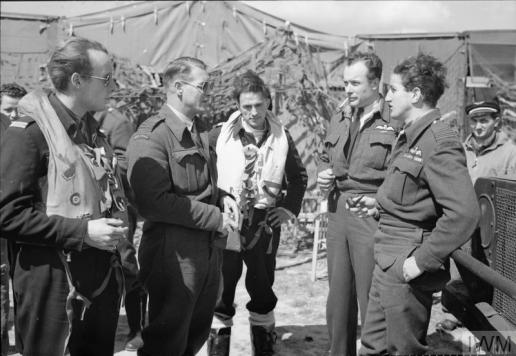
“This officer has commanded his squadron with outstanding success over an intensive period of air operations and, by his brilliant leadership, skill and determination has contributed to the success obtained. Since early in August 1940, the squadron has destroyed at least 84 enemy aircraft and damaged many more. Squadron Leader Malan has himself destroyed at least eighteen hostile aircraft and possibly another six.”

And on 22nd July, 1941:

BAR TO DISTINGUISHED SERVICE ORDER

Acting Wing Commander Adolph Gysbert Malan, DSO, DFC (37604) Royal Air Force.

“This officer has displayed the greatest courage and disdain of the enemy whilst leading his Wing on numerous recent operations over Northern France. His cool judgement, exceptional determination and ability have enabled him to increase his confirmed victories over enemy aircraft from 19 to 28, in addition to a further 20 damaged and probably destroyed. His record and behaviour have earned for him the greatest admiration and devotion of his comrades in the Wing. During the past fortnight the Wing has scored heavily against the enemy with 42 hostile aircraft destroyed, a further 15 probably destroyed and 11 damaged.”

Also awarded a Bar to the Distinguished Flying Cross.

In addition, “Sailor” was awarded the following decorations by Allied Governments:

The Belgian Croix de Guerre with bronze Palm, The Czecho-Slovakian Military Cross, The French Legion of Honour, in the degree of Officer and The French Croix de Guerre.

Bill Skinner DFC, with whom Sailor often flew, summed up Sailor Malan very well as to his leadership:

“He was a born leader and natural pilot of the first order. Complete absence of balderdash. As far as he was concerned, you either did your job properly, or you were on your way. He inspired his air crews by his dynamic and forceful personality, and by the fact that he set such a high standard in his flying.”

malan

Sailor Malan (centre) with pilots of 72 Squadron

He was the outstanding British Fighter Command fighter pilot of the 1939-45 war, and by the end of 1941 was the top scorer – a record which he held for three years. But he was much more than an individual performer. He had assimilated the fierce and fanatical “tiger spirit”, and this spirit he inspired in others so that he carried the Squadron to great deeds with him.

Freedom Fighter 

The Battle of Britain and D Day moulded Sailor Malan as a champion for freedom, he simply held the view that shooting down Nazi aircraft was good for humanity, and this translated into his personal politics.  Not much is known of Sailor’s political career post war, and it’s an equally fascinating to see him in the context of a ‘Freedom Fighter’ in addition to his fighter ace accolade.

Sailor Malan left the Royal Air Force and returned to South Africa in 1946. In the 1950’s he formed a mass protest group of ex-servicemen called the ” Torch Commando” to fight the National Party’s plans to implement Apartheid and call for an early election to remove what they regarded as ‘fascist’ government from power.

In Sailor Malan’s own words, The Torch Commando was: “established to oppose the police state, abuse of state power, censorship, racism, the removal of the coloured vote and other oppressive manifestations of the creeping fascism of the National Party regime”.

To understand why the returning war veterans felt this way about the National Party, consider that during the war the National Party had aligned itself with pro Nazi movements inside South Africa as well as taking a neutral stance on the Smuts’ declaration of war.  To understand the men now in power and the prevailing political mood of war veterans in 1950 follow these links to related Observation Posts:

“Mein Kampf shows the way to greatness for South Africa” – The Ossewabrandwag

South Africa’s Nazi Spy or “Struggle Hero”? – Robey Leibbrand

South African Pro Nazi movements – Oswald Pirow’s New Order

Pro Nazi movements in wartime South Africa – the SANP “Greyshirts”

The Torch Commando can best be described as a ‘pro-democracy’ movement and in its manifesto it called for Liberty, Freedom of Speech, Liberty from Tyranny and Freedom of Religion. Sailor Malan’s personal politics (which he brought into the Torch) revolved around universal franchise and addressing poverty in the black community and economic empowerment as a priority to political reform. Ironically, Sailor Malan was years ahead of his time in this regard, as it is only now that politics in South Africa is focusing on economic emancipation ahead of political emancipation.

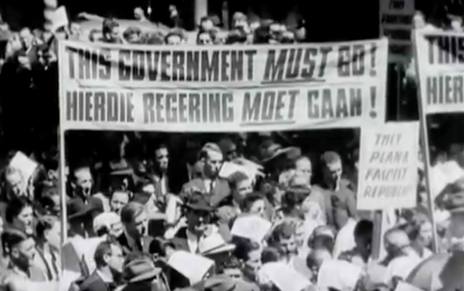
The key objective underpinning the Torch was to remove the National Party from power by calling for an early election, the 1948 ‘win’ by The National Party was not a ‘majority’ win, but a constitutional one, and the Torch wanted a groundswell to swing the ‘service’ vote (200,000 in a voting population of a 1,000,000).  The Torch at its core was absolutely against The National Party’s Apartheid ideology and viewed their government as  ‘unconstitutional’ when they started implementing policy.

21741156_2021324474763207_7394545027130482122_o

Torch Commando protest – note the slogans ‘this government must go’ and ‘they plan a fascist republic’.

Other issues also sat at the core of the Torch, one issue was the Nationalist’s headstrong policy to make South Africa a Republic, whereas the ‘servicemen’ had fought alongside the British commonwealth and the ‘Allies’ (mainly Britain, United States and Russia) in the Second World War – and they wanted South Africa to retain its Dominion status, remain a ‘Union’ and remain part of the Commonwealth of Nations.

As a pro-democracy’ movement it regarded the National Party’s policies as ‘anti-democratic’.  The Cape Coloured franchise removal was the first action of the National Party to implement the edicts of Apartheid, so it stood to reason that this was the first issue to protest against.

The Cape Coloured franchise was protected in the Union Act of 1910 by an entrenched clause stating there could be no change without a two-thirds majority of both houses of Parliament sitting together. The Nationalist government, with unparalleled cynicism, passed the High Court of Parliament Act, effectively removing the autonomy of the judiciary, packing the Senate with NP sympathisers and thus disenfranchising the Cape Coloureds.

Inserted is a picture of a rare manifesto artefact of Torch Commando manifesto (freedom been the central theme) and Sailor Malan at a Torch Commando Rally in Cape Town with 10,000 South African WW2 veterans on protest.

Sailor Malan famously accused the national party government at this rally of:

depriving us of our freedom, with a fascist arrogance that we have not experienced since Hitler and Mussolini met their fate”.

Wartime singing icon Perla Gibson also attended the Torch Commando anti apartheid rally in Cape Town and sang to the protesters in support. Perla was known as the ‘Lady in white” and sang to incoming and outgoing troops in Durban harbour during WW2 to beef up morale.

Insert – Kmdt Dolf de la Rey (left) and Perla Gibson (right) at the Cape Town Torch Rally

Of extreme interest was co-leader of the Torch Commando rally in Cape Town – Kmdt. Dolf de la Rey – he famously captured Winston Churchill during the Boer War fighting for the Boers and became an anti-apartheid activist after WW2, another one of the rich tapestry of Afrikaner war heroes in conflict with National Party politics and philosophy.

Follow the below two links to view film footage of The Torch Commando in action:

The Torch Commando led South Africa’s first mass anti-apartheid protests, NOT the ANC!

‘New’ rare footage of The Torch Commando in action, the first mass protests against Apartheid by WW2 veterans.

During the Cape Town “Torch” 50,000 civilians joined the 10,000 veterans when the protest moved to hand over a petition at the Parliament buildings in Cape Town. The police barred the way and a scuffle broke out. 160 Protesters where injured along with 15 Policemen.

In a speech at a massive Johannesburg Torch rally involving over 75,000 war veterans and civilians (try and envisage that – 75,000 people on an anti-apartheid protest in downtown Johannesburg – a protest that size had never been seen before), standing outside City Hall in Johannesburg,  Sailor Malan made reference to the ideals for which the Second World War was fought:

“The strength of this gathering is evidence that the men and women who fought in the war for freedom still cherish what they fought for. We are determined not to be denied the fruits of that victory.”

The Torch Commando fought the anti-apartheid legislation battle for more than five years. At its height the commando had 250 000 members, making it one of the largest protest movements in South African history.

DF Malan’s nationalist government was so alarmed by the number of judges, public servants and military officers joining the organisation that those within the public service or military were prohibited from enlisting, lest they lose their jobs – in the long-term this pressure led to the gradual erosion of the organisation.

Also the National Party government, being extremely concerned about the influence this movement might have, especially under the leadership of the war hero tried to discredit the Torch Commando and its leaders through means of negative propaganda. For the rest of his life, Sailor would be completely ignored by the government. The National Party press caricatured him as “a flying poodle”, dressed in his leathers and flying goggles, in the service of Jan Smuts and the Jewish mine-bosses, who were referred to as the “Hochenheimers”.

13450028_10154250644792329_4746410985414422490_n

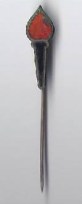
Torch Pin

Despite this, Sailor continued to fight against the violation of human rights in South Africa with the same passion and moral fibre that allowed him to fight so vigorously against fascism and racism during the Battle of Britain. His dream of a better, democratic life for all in South Africa not only urged and carried him forward, but also caused him to be shunned by and isolated from his white National Afrikaner countrymen who were blinded by the short-sighted racial discrimination of their government.

He would become known to them as a traitor and an outsider of “another kind”. DF Malan, during his term as Prime Minister, would refer to him as “an imported British officer” and it was due to his own integrity that he would, towards the end of his life, turn his back on the oppression and immorality of the country he loved so much. His individual brilliance as the Spitfire fighter pilot during the heroic battle in the skies above London and the British Channel were not enough to bring victory in this struggle.

In 1963, Sailor Malan, one of the most famous fighter pilots in the history of the Royal Air Force, lost his fight against Parkinson’s Disease and died at the young age of 52. The funeral service was held at St. Cyprians Cathedral and he was laid to rest in his beloved Kimberley.

An inconvenient truth

It is to the embarrassment now as to his treatment as a South African military hero that all enlisted South African military personnel who attended his funeral were instructed not to wear their uniforms by the newly formatted SADF (the government did not want a Afrikaaner, as Malan was, idealised in death in the fear that he would become a role model to future Afrikaaner youth).

All requests to give him a full military funeral were turned down and even the South African Air Force were instructed not to give him any tribute. Ironically this action now stands as testimony to just how fearful the government had become of him as a political fighter.

In the national obituary issued to all newspapers by the government, no mention was made of his role as President of the Torch Commando and his very strong anti apartheid views.

This systematic removal of Sailor Malan’s legacy by the National Party and the education curriculum is also tragic in that Sailor’s role in the anti-apartheid movement is now lost to the current South African government.

It would be an inconvenient truth to know that the first really large mass action against Apartheid did not come from the ANC and the Black population of South Africa – it came from a ‘white’ Afrikaner and a mainly ‘white’ war veterans movement, which drew it members from the primary veterans organisations in South Africa – The Springbok Legion, the South African Legion and Memorable Order of Tin Hats (for its impact on these veteran organisations to this day see The Torch’s impact on the South African military veteran diaspora!).

The simple truth – the Torch Commando preceded the first ANC “Defiance Campaign” by a couple of years, an inconvenient truth for many now and very conveniently forgotten.

The Spitfire Club sums up Sailor Malan nicely. To those who served with the Royal Air Force’s 74 Squadron anytime between 1936 and 1945 Sailor Malan was the greatest leader of them all. As a small token of their esteem, 28 of those remaining presented a ceremonial sword to the Squadron in July, 1966, at Headquarters Fighter Command, in proud memory of Sailor and in honour of his exceptional service to the Squadron.

It was intended that this Sword should serve as an inspiration to those coming after, so that his high standards of courage, determination and leadership shall live on.

To remember Sailor’s calm and heroic line going into battle “Let’s cut some cake. Let ’em have it!” is to remember a man of remarkable courage.  A man who in all honestly lived by  his beloved squadrons motto, and can say in all truth;

19437652_1982409038654751_1420497074088337846_n“I Fear No man”

A motto that holds true to him as one of the greatest ‘fighter pilots’ of the war, but equally so as a ‘freedom fighter’ standing up against a morally corrupt government for human rights.

Concluding video

To conclude Sailor Malan, visuals often better reflect words, and this is a landmark video on Sailor Malan which balances his fighting and political deeds.  This time Sailor’s legacy has been carried forward by “Inherit South Africa” in this excellent short biography narrated and produced by Michael Charton as one of his Friday Stories – this one titled FRIDAY STORY #7: Sailor Malan: Fighter Pilot. Defender of human rights. Legend.


Story for The Observation Post, written and researched by Peter Dickens

References Wikipedia. South African History On-Line (SAHO), South African History Association, Wikipedia ,Neil Roos: Ordinary Springboks: White Servicemen and Social Justice in South Africa, 1939-1961.  Kimberley Calls and Recalls. Life Magazine, 25 June 1951.  Video footage, Associated Press – source Youtube.  Images – Imperial War Museum copyright and Associated Press copyright.  Friday Story video copyright Inherit South Africa – Michael Charton.

A Beaufighter, a Bible and a Badge

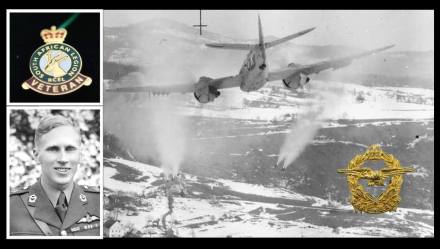
55908_146382762236864_626950629_oHaving known Lt. Steve Stevens DFC, I remain in total awe of his generation.  I met him in Wothing in England and Steve was 96 years young bed-ridden, in pain and weak – but he was no less the man, and this famous featured image of him firing rockets from his South African Air Force (SAAF) Beaufighter during WW2 says everything about him as a fighter pilot, but he was also a devout Christian who pioneered missionary aviation, leading a rich and interesting life.  This is a little of his very remarkable story.
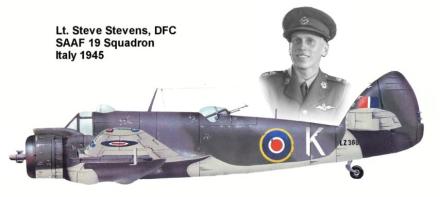
Steve Stevens was born on 27th August 1919 in Amesbury, Dorset. His father George was gassed in Salonica during WW1 and was sent to a special medical facility in Aberdeen for mustard gas victims, and he met and married Dora, one of the VAD’s.

Steve’s father was not expected to live past 40. However, in typical Stevens fashion George Alexander Stevens took no notice of this pronouncement and his health improved enough for him to take up a new assignment in the British Army of Occupation in Germany. The family was billeted in a huge house complete with stables, and young Steve was delighted to be placed in the care of a beautiful young fraulien. Steve adored her, and from her learned to speak German better than he could speak English.

However, George’s health deteriorated and after the family was moved around from Switzerland (where Steve became proficient in skiing, jumping and skating), Italy and Ireland on various Army assignments, on medical advice it was agreed that George Stevens’ lungs would not survive the wet European climate, it was recommended that he was to be invalided out of the army and moved to somewhere nice and warm and dry.

So it was that the family left for a life on a farm in South Africa in November 1929. George’s health improved, but Steve’s mother Dora suddenly fell ill and died of a brain tumour when Steve was only 14.

When World War 2 broke out Steve was at the Bible Institute of South Africa. With the decision to close the college for the duration, some of the students joined the Ministry, and Steve joined the South African Air Force (SAAF). Steve was convinced that the prayers offered three times a day by his father and stepmother would keep him safe during the war. Steve joined the SAAF as a trainee air photographer, but soon re-mustered as aircrew.

Steve Stevens cr.jpg.opt854x383o0,0s854x383

A Beaufighter

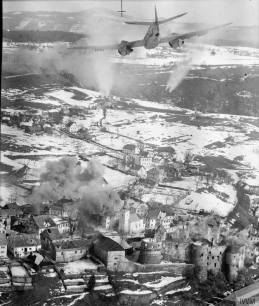
During the War Steve flew air strikes over Yugoslavia with SAAF 19 Squadron, based at Biferno in Italy. These strikes included the daring raid on the occupied walled town of Zuzenberk. The image of Steve firing his rockets is one of the two iconic Beaufighter images of the war. It is astonishing to realise that Steve could accurately hit a target as small as a 44 gallon fuel barrel with his rockets.  In Steve’s words;

“This photograph is widely recognised as one of the most famous Beaufighter air- strike photo of WWII. It shows my plane attacking the Nazi-held medieval walled town of Zuzenberk, Yugoslavia.  The attack by the South African Air Force resulted in the Yugoslav Partisans recapturing their town that very day.”   

10419987_398890630280675_310774668078404600_nAnd this is the photograph, the SAAF Bristol Beaufighter TF Mark X of No. 16 Squadron South African Air Force seen in the image is been flown by Lt Steve Stevens as he releases its rocket projectiles at an enemy target in the town of Zuzemberk.
The photograph was taken by Lt. Schonveld flying just behind Lt. Stevens (SAAF 19 squadron) who’s Beaufighter is in view while attacking a target in Zuzemberk Feb 1945. Schonveld was a keen photographer and positioned his aircraft in a perfect position behind Stevens to capture this epic shot with the nose camera, but he flew a bit too close and ended with dents in his wings from spent 20mm shell cases from Steve’s aircraft.

Take the time to watch this short video interview of Steve Stevens by Tinus Le Roux, as to how this photograph was taken. It is as insightful as it is fascinating.

Copyright Tinus Le Roux

This photograph is historically well-known and has been published in many writings. It shows the aircraft, fired rockets and target simultaneously in a perfect balanced setting, indeed very rare.

Luckily for all of us, we get to preserve unique insight as both SAAF 16 and 19 Squadrons had unofficially mounted F.24 camera’s in the nose of their Beaufighters which took photographs during their attacks so that reconnaissance  aircraft did not have to over fly later to asses the battle damage.

ss7

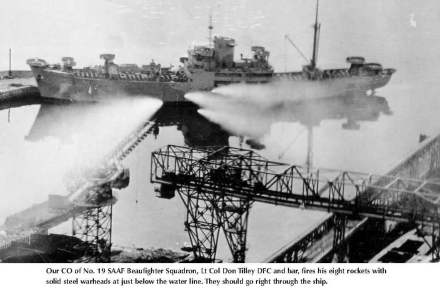
In another raid Steve also photographed Major Tilley attacking the armed German warship SS Kuckuck as Tilley’s number two. It was a desperate sortie which Steve and his fellow pilots fully expected to be a suicide mission. The rockets holed the target under the waterline. The pilots had been briefed by the Partisans that they would face the fire from 140 anti-aircraft guns. Remarkably all four planes returned safely.

Tinus Le Roux interviewed Steve Stevens to capture this attack on the SS Kuckuck, his short video is fascinating, a capture of a man and a time that is truly remarkable, take the time to watch it (many thanks to Tinus for bringing this experience to us)

Copyright: Tinus Le Roux

A Bible

Lt Steve Stevens DFC had a very remarkable life, deeply God-fearing, religion was a very central pillar in all of it.

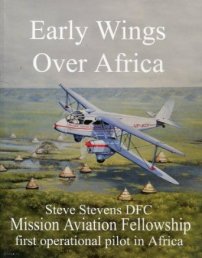
After the war ended, in 1946, as liaison officer between the South African Air Force and the Royal Air Force in Khartoum, Sudan Steve saw how badly the Christian missionaries needed a plane, not only just to spread the word of Christ, but also to get aid (medicines, foodstuffs and equipment) to remote communities.  He joined the MAF, the ‘Mission Aviation Fellowship’ – a group of pilots dedicated to Christian missionary becoming MAF’s first operational pilot to be based in Sudan in 1950.

Early-WingsIn Sudan, Steve flew a de Havilland Rapide – an eight-seater twin-engine wood and fabric covered biplane – not best suited for flying in Africa, but the best MAF could find and afford at that juncture. Over time, more and more airstrips were hacked out of jungle, bush, desert and grasslands, and Steve began to fly to other places where no planes had ever been before.
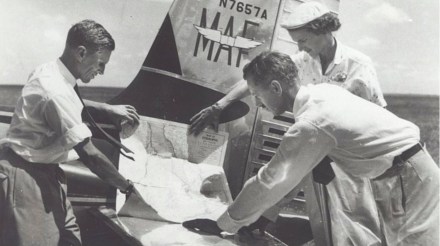
At the end of 1951, Steve experienced some problems with his vision, diagnosed as a detached retina and he lost the sight in one eye.  He was grounded , however Steve still felt that his call was still to aviation missionary work so he and his family moved to the UK. He re-established MAF’s UK HQ and worked tirelessly to raise financial, staff and prayer support for the ministry.

29351857_2114964225399231_7455946665119351885_oIn 1970, after more than twenty years of service to the MAF cause, Steve and his wife Kay moved on to become early members of the National Festival of Light, forerunner of today’s CARE organisation. Steve later became Executive Director of Australian Festival of Light.
A Badge 

Steve Stevens remained a great advocate and supporter of  veterans associations, the MAF and his Christian charities and institutions, throughout his life and was active in his backing all of them until age and frailty forced him to slow down a little, but not entirely, Steve even continued to use the internet and podcasting Christian messaging from his frail care bed.  He also actively ran his own website to sell his work and outreach his messages, he became an avid author of all his adventures,  his book on his time in the war called “Beaufighter over the Balkans” is a welcome addition to anyones library.

12274761_1701525626743095_268284195502034384_nI met Steve Stevens, when the South African Legion of Military Veterans initiated an outreach to him to see if there was anything we could do to help him as a frail care WW2 veteran in his 90’s, I was astounded when he replied that he was at peace with himself and how could he help the Legion instead.  Steve then kindly donated signed copies of his books to the Legion so that we could fundraise for other initiatives.  Cameron Kinnear and I visited him at his home in England and awarded him a lifetime honoury membership of the South African Legion, and we pinned his SA Legion ‘veterans badge’ on his lapel.
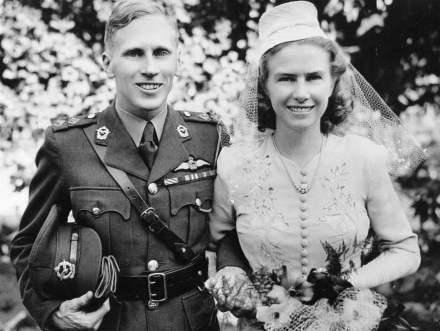
Steve passed away in June 2016 and is survived by his children – Merle, Pam, Coleen and Tim – in addition to his grandchildren.  His veterans badge was given back to the SA Legion by his family and, as means of keeping people like Steve in living memory his badge was loaned to me to wear.

ss4

This was an extraordinary man you can easily attribute words and values which would describe him as ‘noble’, ‘selfless’, ‘adventurous’, ‘brave’, ‘humble’ and most importantly a man with a solid backbone, unwavering in his belief and demonstrating that rare value of spiritual self actualisation ‘completely at peace with himself and the world’.

This man was cut from a very different cloth to the rest of us mortals, and it is with the greatest pride that I wear his veterans badge and an even bigger privilege that I am allowed to carry his memory.

Capt. Peter Dickens (Retired)


Written by Peter Dickens. Image Copyright: Imperial War Museum. Information Tinus Le Roux and Sandy Evan Haynes.  Thanks to Cameron Kinnear for the extraction from his visit with Steve Stevens. Video (SA Legion UK stories: South African Legion UK and EU), “SAAF Beaufighters attack a German Ship – WW2 Pilot Steve Stevens DFC” Produced and Directed by Tinus Le Roux, copyright Tinus Le Roux. “How one of WW2’s greatest rocket air strike photographs was taken: Steve Stevens DFC” Produced and Directed by Tinus Le Roux, copyright Tinus Le Roux.