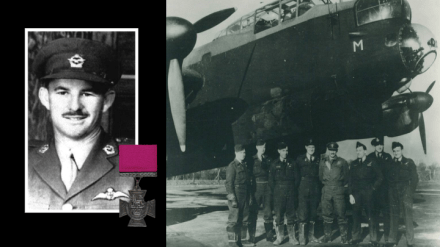
Edwin (Ted) Swales VC DFC is one of South Africa’s greatest sons, yet the South African politicians of today, have removed his name from the well known “Edwin Swales Drive” named in honour of him in Durban and re-named it after a contemporary “struggle” cadre. The legacy of Maj. Swales VC DFC is under threat, and there is very good and noble reason not to forget him, this is his story, kindly contributed to by David Bennett.
A very short biography :Major Edwin Swales, VC, DFC, SAAF (1915 – 1945) by David Bennett
Edwin Essery Swales : Born in Inanda, Natal, 3 July 1915. Attended Durban High School, Jan. 1930 to Dec.1934. Worked for Barclay’s Bank, DC&O, in Durban 1935 to 1939. He joined the Natal Mounted Rifles, 1935 and left 31 May 1939 as a W.O.II. Rejoined N.M.R. on 4 September 1939.
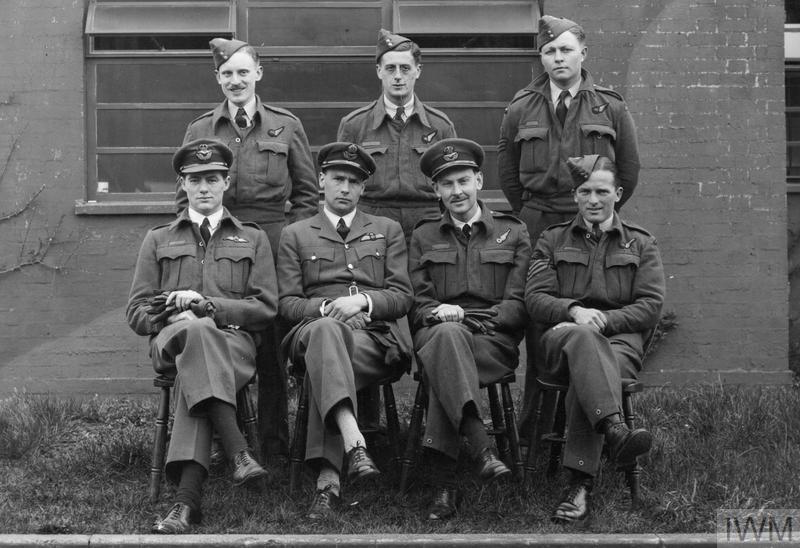
He served in Kenya; Abyssinia; Italian Somalia; British Somalia and Eritrea. Then (1941) in North Africa. In 1942, he left the army to join the S.A. Air Force. Swales received his wings at Kimberley in 1943. Then seconded to the Royal Air Force in 1943, he attended Flying Training School at R.A.F. Little Rissington, 1944. Later sent to the elite R.A.F. Pathfinder Force, 582 Squadron, Royal Air Force, at Little Staughton in July 1944.
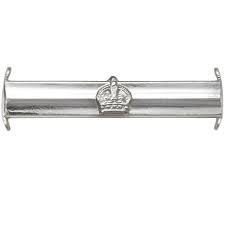
Swales was awarded an immediate D.F.C. on 23 December 1944 following a bombing raid on Cologne. After a raid on Pforzheim on 23 February 1945, Swales was killed in action, crashing near Valenciennes, France and he was awarded a posthumous Victoria Cross.
Swales is now buried in the War Cemetery at Leopoldsburg, near Limburg, Belgium, Plot No.8, Row C, Grave No.5. (Although he had originally been buried at Fosse’s USA Cemetery). The headstone of Swales’ grave shows the Springbok head, common to the graves of all South Africans, as well as the Victoria Cross engraved on it. The legend on the headstone states:
Edwin Swales was awarded the Distinguished Flying Cross, on 23 December, 1944. The citation reads:
The KING has been graciously pleased to approve the following award in recognition of gallantry and devotion to duty in the execution of air operations:-
“This Officer was pilot and Captain of an aircraft detailed to attack Cologne in December, 1944. When approaching the target, intense anti-aircraft fire was encountered. Despite this, a good bombing attack was executed. Soon afterwards the aircraft was attacked by five enemy aircraft. In the ensuing fights, Capt. Swales manoeuvred with great skill. As a result his gunners were able to bring effective fire to bear upon the attackers, one of which is believed to have been shot down. Throughout this spirited action Captain Swales displayed exceptional coolness and captaincy, setting a very fine example. This Officer has completed very many sorties during which he has attacked a variety of enemy targets.” (Official D.F.C. Citation)
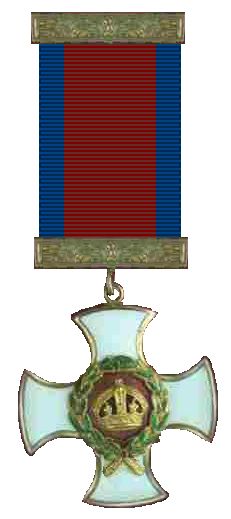
Edwin Swales was killed on 23 February, 1945, and he was posthumously awarded the Victoria Cross – the 3rd and last Pathfinder pilot to be so honoured (all alas, posthumous). It had been Swales’ 43rd operational flight for 582 Squadron, R.A.F. Here is the citation:
The KING has been graciously pleased to confer the VICTORIA CROSS on
the under-mentioned officer in recognition of the most conspicuous bravery:-
“Captain Swales was ‘Master Bomber’ of a force of aircraft which attacked Pforzheim on the night of February 23, 1945. As Master Bomber he had the task of locating the target area with precision and of giving aiming instructions to the main force of bombers in his wake.
Soon after he reached the target area he was engaged by an enemy aircraft and one of his engines was put out of action. His rear guns failed. His crippled aircraft was an easy prey for further attacks. Unperturbed, he carried on with his allotted task; clearly and precisely he issued aiming instructions to the main force. Meanwhile the enemy fighter closed the range and fired again. A second engine of Captain Swales’ aircraft was put out of action. Almost defenceless, he stayed over the target area issuing his aiming instructions until he was satisfied that the attack had achieved its purpose. It is now known that the attack was one of the most concentrated and successful of the war.
Captain Swales did not, however, regard his mission as completed. His aircraft was damaged. Its speed had been so much reduced that it could only with difficulty be kept in the air. The blind-flying instruments were no longer working. Determined at all costs to prevent his aircraft and crew from falling into enemy hands, he set course for home. After an hour he flew into thin-layered cloud. He kept his course by skilful flying between the layers, but later heavy cloud and turbulent air conditions were met. The aircraft, by now over friendly territory, became more and more difficult to control; it was losing height steadily. Realising that the situation was desperate Captain Swales ordered his crew to bale out. Time was very short and it required all his exertions to keep the aircraft steady while each of his crew moved in turn to the escape hatch and parachuted to safety. Hardly had the last crew-member jumped when the aircraft plunged to earth. Captain Swales was found dead at the controls.
Intrepid in the attack, courageous in the face of danger, he did his duty to the last, giving his life that his comrades might live”
(Official V.C. Citation)
Air Chief Marshal Sir Arthur ‘Bomber’ Harris, KCB, OBE, AFC, Chief of Bomber Command, Royal Air Force, following the loss of Edwin Swales, wrote a letter to Swales’ mother, Mrs. Olive Essery Swales, saying, inter-alia:
“…… On every occasion your son proved himself to be a determined fighter and resolute captain of his crew. His devotion to duty and complete disregard for his own safety will remain an example and inspiration to us all …..”
Memorial to Edwin Swales at the secondary school he attended as a student, Durban High School (DHS)
In conclusion
It is our humble opinion, that whilst it is important to segments of South Africa’s population to remember their heroes it should not come at the expense of other national heroes.
Solomon Kalushi Mahlangu, after whom Edwin Swales VC Drive is now named, was a operative of the African National Congress militant wing, Umkhonto we Sizwe, and whilst it is important to the current ANC ruling party to highlight the sacrifice of its heroes, it should not come at the sacrifice of Maj. Swales’ legacy – one of a handful of South African World War 2 Victoria Cross winners, and one whose extremely brave deeds were awarded in a war which was to liberate the entire western world of tyrannical and rather deadly racial political philosophy as well as dictatorial megalomaniacs supporting such ideology.
In fact to rectify the situation, the Durban City Council should actually consider a monument or statue in the centre of Durban to Edwin Swales and allow him to take his rightful place as a true son of South Africa and one of our all time greatest military heroes, as is the case for many Victoria Cross winners the world over. That his actions and deeds are taught to South African youth, pride in our WW2 history established and his sacrifice not forgotten. Lets hope they see their way clear to do this.
Note: The papers from the South African Air Force, promoting Edwin Swales from Captain to Major, only reached the British authorities after his death, and after the award of the Victoria Cross was gazetted, hence the rank of “Captain” being used in the VC citation. However, he is referred to as a Major.
Thank you to David Bennett for both photograph and content contribution.
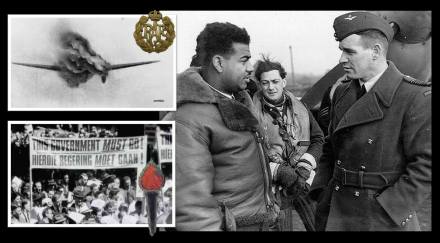
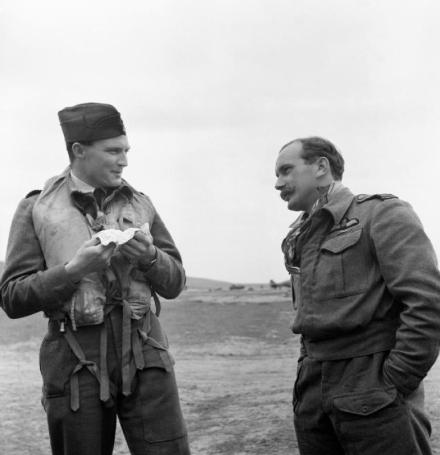
The featured image shows Group Captain Adolph Gysbert “Sailor” Malan DSO & Bar, DFC & Bar (24 March 1910 – 17 September 1963), the South African World War 2 flying ace in conversation here with Flight Sergeant Vincent Bunting at Biggin Hill in 1943 on the left, and it says a lot about Sailor Malan.
Vincent Bunting was one of a small group of ‘black’ British and Commonwealth pilots in full combat roles during the Second World War – he was born in Panama in June 1918 and raised in Kingston, Jamaica. He joined the RAF at No 1 Recruitment Centre, Uxbridge, on 26 July 1940. Selected for flying training he went on to become a fighter pilot mainly with RAF 611 Squadron.
An integrated Air Force
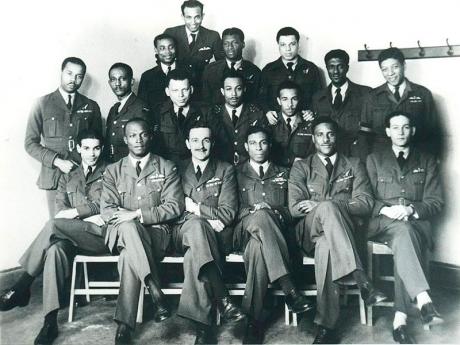
During the Battle of Britain, the British relied on pilots from the Commonwealth to make up a critical pilot shortage, Sailor Malan was one of these pilots and with him came pilots from all over the world, of all colours and of all cultures (there was no such thing as a ‘colour bar’ in the Royal Air Force) – from commonwealth countries like India, Burma, Rhodesia, Jamaica, Australia, New Zealand, South Africa and Canada, as well as pilots from Poland, France, Czechoslovakia and the USA. They made up almost one-third of the RAF pilots involved in the Battle of Britain (to believe the image so often created of these men as a bunch of tea drinking ‘tally-ho’ young white English gentlemen is to completely misunderstand the Battle of Britain).
Jamaican Pilots during the Battle of Britain
The featured image of early racial recognition is testament to Sailor Malan as not only one of the most highly regarded fighter pilots of the war, but the future signs of Sailor Malan as a political fighter and champion for racial equality.
Fighter Ace
Much has been written on Sailor Malan as a Fighter Ace, his rules for combat and his command of 74 Squadron during the Battle of Britain which played such a pivot role in winning the Battle (see ‘Ten of my rules for air fighting’ – Sailor Malan) . His combat record, promotions and decorations alone are simply astonishing.
He first took part in evacuation of Dunkirk. During this battle he first exhibited his fearless and implacable fighting spirit. To demonstrate his nature, in one incident he was able to coolly change the light bulb in his gunsight while in combat and then quickly return to the fray.
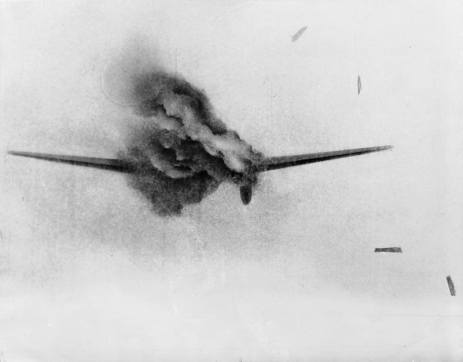
Sailor Malan’s gun camera showing the destruction of German Heinkel He 111 over Dunkirk
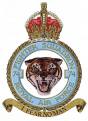
When the Battle of Britain begun, 74 Squadron (known as ‘The Tigers’) was to take the full heat of the battle in what was known as ‘hell’s corner’ over Kent, the squadron was eventually based at the now famous ‘Biggin Hill’ aerodrome in the thick of the battle.
Sailor Malan was given command of 74 Squadron, with the rank of Acting Squadron Leader at the height of the Battle of Britain on 8th August, 1940. Three days later the Squadron was in battle. The day became, for ever, “Sailor’s August the Eleventh”. The order was received at twenty minutes past seven to intercept a hostile raid approaching Dover. Little did the squadron know that they would participate in four seperate air battles that day. When the Squadron, weary, sweaty and oily, finally returned to base after the fourth sortie, they had downed an astounding 38 enemy aircraft.
Sailor Malan said later, in one of his masterly understatements: “Thus ended a very successful morning of combat”. For the first day of action under his command it was successful even by 74 Squadron standards.
Sailor Malan also worked on public relations to keep the British morale high. Here is a rare radio interview (follow Observation post link Sailor Malan – “in his own words”)
By D Day (i.e. Operation Overlord, the liberation of France and subsequently Western Europe), Sailor Malan was in command of 145 (Free French) Fighter Wing and was himself leading a section of the wing over the beaches during the landings in Normandy.
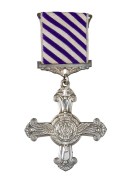
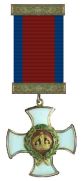
In all Sailor Malan scored 27 enemy aircraft kills, seven shared destroyed, three probably destroyed and 16 damaged. He was to receive the Distinguished Service Order decoration – not once, but twice and well as the Distinguished Flying Cross decoration, again not once – but twice. The Citations for the DSO’s and DFC’s say everything about his combat prowess:
The London Gazette of the 11th June, 1940, read:
DISTINGUISHED FLYING CROSS
Flight Lieutenant Adolph Gysbert Malan. (37604), Royal Air Force.
“During May 1940, this officer has led his flight, and on certain occasions his squadron, on ten offensive patrols in Northern France. He has personally shot down two enemy aircraft and, probably, three others. Flight Lieutenant Malan has displayed great skill, courage and relentless determination in his attacks upon the enemy.”
On Christmas Eve, 1940, the London Gazette had recorded:
DISTINGUISHED SERVICE ORDER
Acting Squadron Leader Adolph Gysbert Malan, DFC (37604), Royal Air Force, No.74 Squadron.
“This officer has commanded his squadron with outstanding success over an intensive period of air operations and, by his brilliant leadership, skill and determination has contributed to the success obtained. Since early in August 1940, the squadron has destroyed at least 84 enemy aircraft and damaged many more. Squadron Leader Malan has himself destroyed at least eighteen hostile aircraft and possibly another six.”
And on 22nd July, 1941:
BAR TO DISTINGUISHED SERVICE ORDER
Acting Wing Commander Adolph Gysbert Malan, DSO, DFC (37604) Royal Air Force.
“This officer has displayed the greatest courage and disdain of the enemy whilst leading his Wing on numerous recent operations over Northern France. His cool judgement, exceptional determination and ability have enabled him to increase his confirmed victories over enemy aircraft from 19 to 28, in addition to a further 20 damaged and probably destroyed. His record and behaviour have earned for him the greatest admiration and devotion of his comrades in the Wing. During the past fortnight the Wing has scored heavily against the enemy with 42 hostile aircraft destroyed, a further 15 probably destroyed and 11 damaged.”
Also awarded a Bar to the Distinguished Flying Cross.
In addition, “Sailor” was awarded the following decorations by Allied Governments:
The Belgian Croix de Guerre with bronze Palm, The Czecho-Slovakian Military Cross, The French Legion of Honour, in the degree of Officer and The French Croix de Guerre.
Bill Skinner DFC, with whom Sailor often flew, summed up Sailor Malan very well as to his leadership:
“He was a born leader and natural pilot of the first order. Complete absence of balderdash. As far as he was concerned, you either did your job properly, or you were on your way. He inspired his air crews by his dynamic and forceful personality, and by the fact that he set such a high standard in his flying.”
Sailor Malan (centre) with pilots of 72 Squadron
He was the outstanding British Fighter Command fighter pilot of the 1939-45 war, and by the end of 1941 was the top scorer – a record which he held for three years. But he was much more than an individual performer. He had assimilated the fierce and fanatical “tiger spirit”, and this spirit he inspired in others so that he carried the Squadron to great deeds with him.
Freedom Fighter
The Battle of Britain and D Day moulded Sailor Malan as a champion for freedom, he simply held the view that shooting down Nazi aircraft was good for humanity, and this translated into his personal politics. Not much is known of Sailor’s political career post war, and it’s an equally fascinating to see him in the context of a ‘Freedom Fighter’ in addition to his fighter ace accolade.
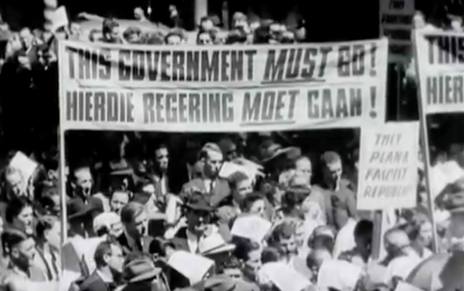
Sailor Malan left the Royal Air Force and returned to South Africa in 1946. In the 1950’s he formed a mass protest group of ex-servicemen called the ” Torch Commando” to fight the National Party’s plans to implement Apartheid and call for an early election to remove what they regarded as ‘fascist’ government from power.
In Sailor Malan’s own words, The Torch Commando was: “established to oppose the police state, abuse of state power, censorship, racism, the removal of the coloured vote and other oppressive manifestations of the creeping fascism of the National Party regime”.
To understand why the returning war veterans felt this way about the National Party, consider that during the war the National Party had aligned itself with pro Nazi movements inside South Africa as well as taking a neutral stance on the Smuts’ declaration of war. To understand the men now in power and the prevailing political mood of war veterans in 1950 follow these links to related Observation Posts:
The Torch Commando can best be described as a ‘pro-democracy’ movement and in its manifesto it called for Liberty, Freedom of Speech, Liberty from Tyranny and Freedom of Religion. Sailor Malan’s personal politics (which he brought into the Torch) revolved around universal franchise and addressing poverty in the black community and economic empowerment as a priority to political reform. Ironically, Sailor Malan was years ahead of his time in this regard, as it is only now that politics in South Africa is focusing on economic emancipation ahead of political emancipation.
The key objective underpinning the Torch was to remove the National Party from power by calling for an early election, the 1948 ‘win’ by The National Party was not a ‘majority’ win, but a constitutional one, and the Torch wanted a groundswell to swing the ‘service’ vote (200,000 in a voting population of a 1,000,000). The Torch at its core was absolutely against The National Party’s Apartheid ideology and viewed their government as ‘unconstitutional’ when they started implementing policy.
Torch Commando protest – note the slogans ‘this government must go’ and ‘they plan a fascist republic’.
Other issues also sat at the core of the Torch, one issue was the Nationalist’s headstrong policy to make South Africa a Republic, whereas the ‘servicemen’ had fought alongside the British commonwealth and the ‘Allies’ (mainly Britain, United States and Russia) in the Second World War – and they wanted South Africa to retain its Dominion status, remain a ‘Union’ and remain part of the Commonwealth of Nations.
As a pro-democracy’ movement it regarded the National Party’s policies as ‘anti-democratic’. The Cape Coloured franchise removal was the first action of the National Party to implement the edicts of Apartheid, so it stood to reason that this was the first issue to protest against.
The Cape Coloured franchise was protected in the Union Act of 1910 by an entrenched clause stating there could be no change without a two-thirds majority of both houses of Parliament sitting together. The Nationalist government, with unparalleled cynicism, passed the High Court of Parliament Act, effectively removing the autonomy of the judiciary, packing the Senate with NP sympathisers and thus disenfranchising the Cape Coloureds.
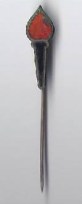
Inserted is a picture of a rare manifesto artefact of Torch Commando manifesto (freedom been the central theme) and Sailor Malan at a Torch Commando Rally in Cape Town with 10,000 South African WW2 veterans on protest.
Sailor Malan famously accused the national party government at this rally of:
“depriving us of our freedom, with a fascist arrogance that we have not experienced since Hitler and Mussolini met their fate”.
Wartime singing icon Perla Gibson also attended the Torch Commando anti apartheid rally in Cape Town and sang to the protesters in support. Perla was known as the ‘Lady in white” and sang to incoming and outgoing troops in Durban harbour during WW2 to beef up morale.
Insert – Kmdt Dolf de la Rey (left) and Perla Gibson (right) at the Cape Town Torch Rally
Of extreme interest was co-leader of the Torch Commando rally in Cape Town – Kmdt. Dolf de la Rey – he famously captured Winston Churchill during the Boer War fighting for the Boers and became an anti-apartheid activist after WW2, another one of the rich tapestry of Afrikaner war heroes in conflict with National Party politics and philosophy.
Follow the below two links to view film footage of The Torch Commando in action:
During the Cape Town “Torch” 50,000 civilians joined the 10,000 veterans when the protest moved to hand over a petition at the Parliament buildings in Cape Town. The police barred the way and a scuffle broke out. 160 Protesters where injured along with 15 Policemen.
In a speech at a massive Johannesburg Torch rally involving over 75,000 war veterans and civilians (try and envisage that – 75,000 people on an anti-apartheid protest in downtown Johannesburg – a protest that size had never been seen before), standing outside City Hall in Johannesburg, Sailor Malan made reference to the ideals for which the Second World War was fought:
“The strength of this gathering is evidence that the men and women who fought in the war for freedom still cherish what they fought for. We are determined not to be denied the fruits of that victory.”
The Torch Commando fought the anti-apartheid legislation battle for more than five years. At its height the commando had 250 000 members, making it one of the largest protest movements in South African history.
DF Malan’s nationalist government was so alarmed by the number of judges, public servants and military officers joining the organisation that those within the public service or military were prohibited from enlisting, lest they lose their jobs – in the long-term this pressure led to the gradual erosion of the organisation.
Also the National Party government, being extremely concerned about the influence this movement might have, especially under the leadership of the war hero tried to discredit the Torch Commando and its leaders through means of negative propaganda. For the rest of his life, Sailor would be completely ignored by the government. The National Party press caricatured him as “a flying poodle”, dressed in his leathers and flying goggles, in the service of Jan Smuts and the Jewish mine-bosses, who were referred to as the “Hochenheimers”.
Torch Pin
Despite this, Sailor continued to fight against the violation of human rights in South Africa with the same passion and moral fibre that allowed him to fight so vigorously against fascism and racism during the Battle of Britain. His dream of a better, democratic life for all in South Africa not only urged and carried him forward, but also caused him to be shunned by and isolated from his white National Afrikaner countrymen who were blinded by the short-sighted racial discrimination of their government.
He would become known to them as a traitor and an outsider of “another kind”. DF Malan, during his term as Prime Minister, would refer to him as “an imported British officer” and it was due to his own integrity that he would, towards the end of his life, turn his back on the oppression and immorality of the country he loved so much. His individual brilliance as the Spitfire fighter pilot during the heroic battle in the skies above London and the British Channel were not enough to bring victory in this struggle.
In 1963, Sailor Malan, one of the most famous fighter pilots in the history of the Royal Air Force, lost his fight against Parkinson’s Disease and died at the young age of 52. The funeral service was held at St. Cyprians Cathedral and he was laid to rest in his beloved Kimberley.
An inconvenient truth
It is to the embarrassment now as to his treatment as a South African military hero that all enlisted South African military personnel who attended his funeral were instructed not to wear their uniforms by the newly formatted SADF (the government did not want a Afrikaaner, as Malan was, idealised in death in the fear that he would become a role model to future Afrikaaner youth).
All requests to give him a full military funeral were turned down and even the South African Air Force were instructed not to give him any tribute. Ironically this action now stands as testimony to just how fearful the government had become of him as a political fighter.
In the national obituary issued to all newspapers by the government, no mention was made of his role as President of the Torch Commando and his very strong anti apartheid views.
This systematic removal of Sailor Malan’s legacy by the National Party and the education curriculum is also tragic in that Sailor’s role in the anti-apartheid movement is now lost to the current South African government.
It would be an inconvenient truth to know that the first really large mass action against Apartheid did not come from the ANC and the Black population of South Africa – it came from a ‘white’ Afrikaner and a mainly ‘white’ war veterans movement, which drew it members from the primary veterans organisations in South Africa – The Springbok Legion, the South African Legion and Memorable Order of Tin Hats (for its impact on these veteran organisations to this day see The Torch’s impact on the South African military veteran diaspora!).
The simple truth – the Torch Commando preceded the first ANC “Defiance Campaign” by a couple of years, an inconvenient truth for many now and very conveniently forgotten.
The Spitfire Club sums up Sailor Malan nicely. To those who served with the Royal Air Force’s 74 Squadron anytime between 1936 and 1945 Sailor Malan was the greatest leader of them all. As a small token of their esteem, 28 of those remaining presented a ceremonial sword to the Squadron in July, 1966, at Headquarters Fighter Command, in proud memory of Sailor and in honour of his exceptional service to the Squadron.
It was intended that this Sword should serve as an inspiration to those coming after, so that his high standards of courage, determination and leadership shall live on.
To remember Sailor’s calm and heroic line going into battle “Let’s cut some cake. Let ’em have it!” is to remember a man of remarkable courage. A man who in all honestly lived by his beloved squadrons motto, and can say in all truth;
“I Fear No man”
A motto that holds true to him as one of the greatest ‘fighter pilots’ of the war, but equally so as a ‘freedom fighter’ standing up against a morally corrupt government for human rights.
Concluding video
To conclude Sailor Malan, visuals often better reflect words, and this is a landmark video on Sailor Malan which balances his fighting and political deeds. This time Sailor’s legacy has been carried forward by “Inherit South Africa” in this excellent short biography narrated and produced by Michael Charton as one of his Friday Stories – this one titled FRIDAY STORY #7: Sailor Malan: Fighter Pilot. Defender of human rights. Legend.
Story for The Observation Post, written and researched by Peter Dickens
References Wikipedia. South African History On-Line (SAHO), South African History Association, Wikipedia ,Neil Roos: Ordinary Springboks: White Servicemen and Social Justice in South Africa, 1939-1961. Kimberley Calls and Recalls. Life Magazine, 25 June 1951. Video footage, Associated Press – source Youtube. Images – Imperial War Museum copyright and Associated Press copyright. Friday Story video copyright Inherit South Africa – Michael Charton.
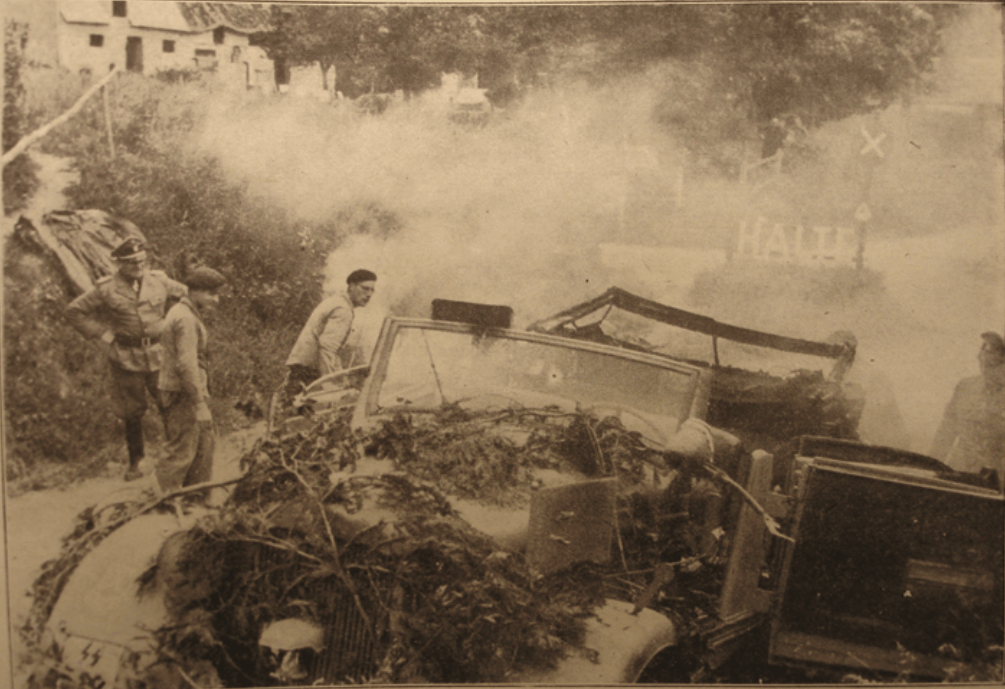
This South African fighter pilot ace shot up the famous General Erwin Rommel’s staff car in France in 1944. Rommel was thrown out of the car, suffered a severe skull fracture and it was effectively game over for Rommel’s participation in World War 2.
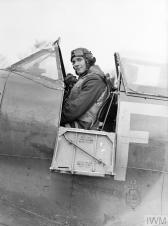
Here is our hero, and there is more to this ace than shooting up Rommel. Squadron Leader J J Le Roux, Commanding Officer of No 602 Squadron Royal Air Force seen in the cockpit of his Supermarine Spitfire Mark IX, “Betty”, at B11/Longues, Normandy.
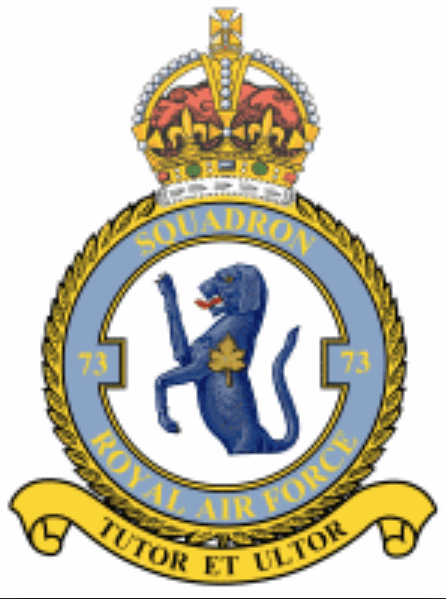
Johannes Jacobus “Chris” Le Roux was born in Heidelberg, in the Transvaal, South Africa, in 1920, and received part of his education at Durban High School. He subsequently joined the Royal Air Force, and served with No 73 Squadron in France as part of the Advanced Air Striking Force (AASF), where he too part in the latter stages of the debacle that was “The Battle of France”, the squadron withdrawing from France on the 17 June 1940.
Le Roux was then took part in the Battle of Britain, both opening his account on arial victories and having to bale out of a blazing Hurricane. Le Roux is said to have been shot down on no-less than 12 occasions during 1940, which is incredibly remarkable, and if so, it’s a wonder he survived as long as he did.
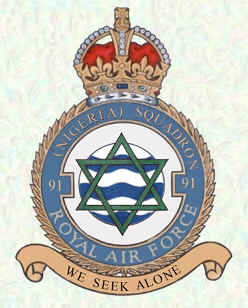
Le Roux enjoyed better luck with No. 91 “Nigeria” Squadron in 1941 and 1942, shooting down eight enemy aircraft before joining No. 111 Squadron RAF in North Africa. He ended his second tour in command of the Squadron.
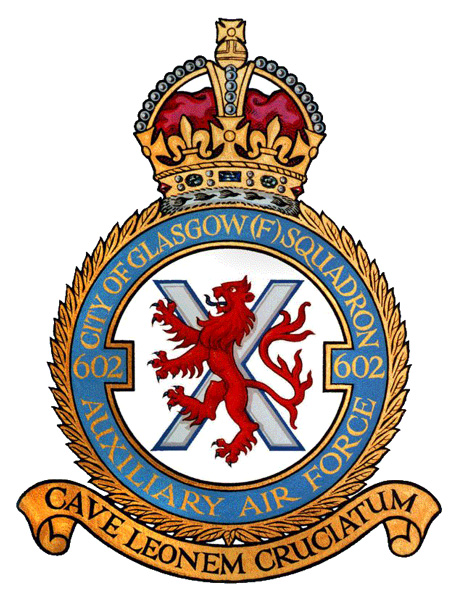
Following a rest from operations he was given command of No. 602 Squadron in July 1944. He carried out an incredible number of sorties – 200 in total. He won the Distinguished Flying Cross – not once but three times, here are the citations:
DFC, London Gazette, 4 October 1941, Issue 35312, page 6034:
“Acting Flight Lieutenant Jacobus Johannes Le Roux (42240), No. 91 Squadron.
This officer has carried out over 200 operational sorties which have included shipping reconnaissances, during which much valuable information has been obtained, and numerous attacks on shipping and enemy aerodromes in the face of heavy enemy fire. Flight Lieutenant Le Roux has destroyed 3 hostile aircraft in combat and at least 1 on the ground.”
First Bar to DFC, London Gazette, 8 December 1942 (Issue 35819, page 5391):
“Flight Lieutenant Jacobus Johannes LE Roux, D.F.C. (42240), No. 91 Squadron.
Since being awarded the Distinguished Flying Cross this officer has destroyed a further five enemy aircraft. In addition to his air victories he has attacked shipping and targets on the ground with considerable success. At all times Flight Lieutenant Le Roux has displayed a fine fighting spirit.”
Awarded 9th July 1943 Citation:
“Sqn. Ldr. Le Roux’s magnificent leadership has played a large part in the many successes attained by his squadron. He has personally destroyed 14 enemy aircraft and damaged many others, and has also inflicted much damage on enemy shipping.”
On one occasion Le Roux’s aircraft was “so badly damaged by flak after he had strafed a convoy of vehicles that it looked impossible for anyone to have flown it, but he made base successfully”. To the airmen of 602 Squadron he was known simply as the “Boss” , “in the air a cool, calculating tactician and disciplinarian, on the ground his personality shone out in the social life of a very happy team”, and his “keen vision frequently enabled him to shoot down aircraft which other members of the squadron flying with him had not even seen” (an attribute he shared with fellow South African RAF air-aces “Sailor” Malan and “Pat” Pattle).
Le Roux is generally credited as the pilot who attacked and badly wounded Generalfeldmarschall Erwin Rommel in his staff car on the road between Livarot and Vimoutiers on 17 July 1944, the day on which he also destroyed two Messerschmitt Bf 109s and damaged two more to bring his victory score to 23.5.
In the early morning of July 17, 1944, a staff car left Rommel’s headquarters at La Roche Guyon. The passengers included Rommel, his aide Captain Helmuth Lang, Major Neuhaus, Sergeant Holke, and their driver, Sergeant Karl Daniel. The journey was one of Rommel’s routine inspections of the front line. By January 1944, Hitler had forbidden Rommel from traveling via aircraft, as several high-ranking officers had been killed in air crashes.
It was unfortunately an air accident that would end the young life of J.J. Le Roux, during a fateful cross-channel flight on 29 August 1944, whilst doing a ‘booze run’ – taking alcohol back to his squadron at Tangmere – that he crashed into the channel in bad weather. According to Paddy Barthropp, ‘Chris’ Le Roux was without a dinghy and was sitting on numerous bottles of champagne, which do not float. It was indeed a tragic end to one of South Africa’s most popular and gallant fighter pilots.
His cheerful and very happy disposition made him one of South Africa’s most popular fighter pilots, and this is seen in No.111 Squadron Operations Record Book which contains the following reference to him, it relating the story of his having made a good landing in very dirty weather and the mud described earlier, and finishes up: “I didn’t realise I was down until I heard the ground crew clapping!” He was a very worthy member of “the gayest (happiest) company who ever fired their guns in anger.”
Le Roux left behind an English wife and two children, at the time resident in Shropshire.
—————————————-
Photo and caption reference copyright: Imperial War Museum, Wikipedia and The Southern African History Musings of Ross Dix-Peek and Field Marshal Erwin Rommel: the head injury that may have prolonged the Second World War – Heather A. Fuhrman, BS,1 Jeffrey P. Mullin, MD, MBA,2 and Chris A. Sloffer, MD, MBA.
Petrus Hendrik Hugo (left in the headline image), known as “Dutch,” was a South African who joined the Royal Air Force and took part in he Battle of France and the Battle of Britain and went on to become a RAF flight commander.
Along with “Sailor” Malan, another famous fellow Afrikaner to fight in the Battle of Britain, “Dutch” is also widely celebrated as one of the “few” (as coined by Churchill) who kept Britain in the war thereby turning the tide for Nazi Germany and ultimately liberating Europe from a tyrannical ideology. This is one very brave hero and this is his story.
Petrus Hendrik Hugo was born 20 December 1917 on the farm Pampoenpoort in the Victoria West district, Cape Province. He attended the Witwatersrand College of Aeronautical Engineering and in 1938 he went to the United Kingdom to attend the Civil Flying School at Sywell.
Hugo was awarded a Short Service Commission in the RAF in April 1939. His Afrikaans origins and pronounced accent soon earned him the nickname “Dutch”, and he was known by this throughout his RAF careerHe served at No.13 Flying Training School for six months and was assessed “exceptional” at the end of his course. He attended the Fighter School at RAF St. Athan in Wales, and in December 1939, joined No. 615 Squadron RAF at Vitry, in France, equipped with the Gloster Gladiator.
In April 1940, the squadron re-equipped with Hawker Hurricanes. During the Battle of France, Hugo shot down a Heinkel He 111 bomber on 20 May 1940. 615 Squadron returned to the UK and were stationed at RAF Croydon and RAF Kenley.
On 20 July 1940 Hugo shot down two Messerschmitt Bf 109 fighters and shot down yet another Bf 109 on 25 July. He then shared a Heinkel He 59 floatplane with another pilot on 27 July. On 12 August Hugo shot down another Bf 109. On 16 August he claimed a He 111 probably destroyed over Newhaven, but was himself hit by cannon shell splinters from a Messerschmitt Bf 110. Slightly wounded in both legs, Hugo returned to action two days later. He was bounced by Bf 109s of JG 3 and wounded in the left leg, left eye and right cheek and jaw. He managed to crash-land, and was taken to Orpington Hospital. In late August, 1940, the award of the Distinguished Flying Cross (DFC) was announced. By late September he rejoined No. 615, based at Prestwick in Scotland.
In mid 1941 the squadron, now flying the cannon-armed Hurricane IIc, returned to RAF Kenley. On 14 October 1941 Hugo shared a Heinkel He 59 flying boat shot down with three other pilots. He assumed command of 41 Squadron RAF on 20 November, which was flying Supermarine Spitfires, and was awarded a Bar to his DFC on 25 November. On 12 February 1942 during the channel dash of the German battleships Scharnhorst and Gneisenau, he shot down one Bf 109 and damaged a second. On 14 March he shot down another Bf 109 over a German convoy near Fecamp, and on 26th he claimed another escorting Bostons raiding Le Havre. Promoted to wing commander on 12 April 1942, he took over as Tangmere Wing Leader, but on 27 April was wounded again, being shot down in the English Channel. In a running fight with Focke-Wulf Fw 190s of II./JG 26 he claimed a probable Fw 190 and damaged a second but was hit in the left shoulder, and had to bale out, being picked up by Air Sea Rescue. He was awarded the Distinguished Service Order while recuperating at 11 Group HQ.
In late November 1942 he took over No. 322 Wing RAF. On 12 November he half-shared a Dornier Do 217 shot down near Djidjelli. He claimed a probable Junkers Ju 88 and another damaged near Bougie Harbour on 13 November, and on the 15th a probable He 111 and a damaged Ju 88 over Bône Harbour. On 16 November he downed a Ju 88 and two Bf 109s. He got another Ju 88 on 18 November and three more Bf 109s on 21, 26 and 28 November 1942.
On 2 December he shot down two Italian Breda Ba 88 bombers of 30 gruppo near La Galite, one being shared, and on 14 a Savoia-Marchetti SM.79. He led 322 Wing for the next four months until posted to HQ, North-West African Coastal Air Force, and also awarded a second Bar to the DFC.
He returned to command No.322 Wing in June 1943 and on 29 June destroyed a Bf 109. On 2 September Hugo shot down a Fw 190 near Mount Etna and on 18 November he got his last confirmed victory of the war, an Arado Ar 196 Floatplane of Seeaufkl. 126, over the Adriatic coast.
His final tally was 17 destroyed, three shared destroyed, three probably destroyed and seven damaged. Of these, 12 and one shared destroyed were scored in the Spitfire V
In the header image – Group Captain P H “Dutch” Hugo (left) is seen in his role of Commanding Officer of No. 322 Wing RAF, and Wing Commander R “Raz” Berry, who took over leadership of the Wing in January 1943, both conversing at Tingley, Algeria.
Image Copyright IWM Collection. Reference and caption Wikipedia and the Imperial War Museum
Not many people know it, but a small number of South Africans participated in Operation Market Garden during World War 2. Today we remember one of them.
Operation Market Garden was an unsuccessful Allied military operation pioneered by Field Marshall Montgomery to end the war by Christmas 1944, it was fought in the Netherlands and involved taking bridges ending with the prize bridge over the Rhein at Arnhem and then on into Germany. This key bridge was to be taken and held by British paratroopers from the 1st Airborne Division and they were due to be relived by XXX Corps an Allied ground force rushing up through the Netherlands taking key strategic points as it went.
But largely due to intelligence failures, delays crossing rivers, logistics issues and communication breakdowns the relief never arrived leaving the British paratroopers in a desperate and un-winnable fight. Operation Market Garden was the largest airborne operation up to that time and it was an unmitigated Allied failure with severe loss of life.
The air re-supply of the British airborne forces in the Arnhem area was particularly hazardous as they became isolated and surrounded.
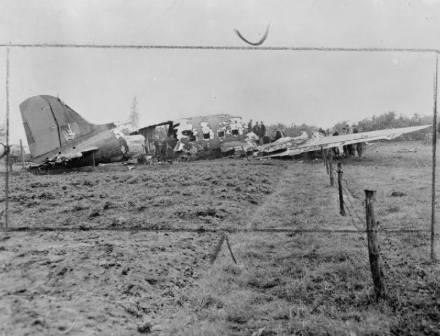
This image taken on 19 September 1944 shows a burned-out Douglas Dakota Mark III, KG401, of No. 48 Squadron RAF based at Down Ampney, Gloucestershire, which crash-landed in a field near Kessel, Holland, after parachuting supplies over Arnhem.
The aircraft had just dropped its supplies from 700 feet when it was met with intense anti-aircraft fire. Sixteen aircraft of 48 Squadron participated in MARKET III, flying through intense flak with no fighter escort.
Many aircraft were hit and two, (KG401 and KG428), failed to return. Over the following four days the Squadron lost another six Dakotas on re-supply missions to Arnhem.
One of these was piloted by Captain C.H Campbell, a South African Air Force (SAAF) officer seconded to 48 Squadron RAF and was lost in his RAF C47 Douglas Dakota on 21st September 1944.
Some additional information courtesy Sandy Evan Hanes
CAMPBELL, C.H, Colin Herbert, 25
Captain 12211V
SAAF, Pilot
48 RAF Sqn C-47 Dakota Mk.III, KG-346
21.09.1944
KIA Runnymede Memorial, Panel 264, United Kingdom
Son of John W. and Hilda M. Campbell, of Claremont, Cape Town, South Africa
May he rest in eternal peace, his sacrifice to the freedom of Europe as we know it today remembered with honour.
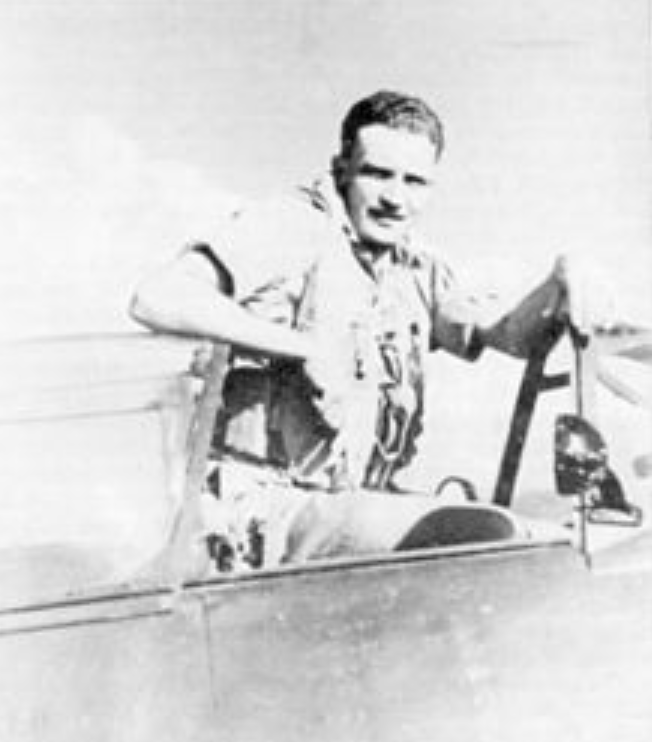
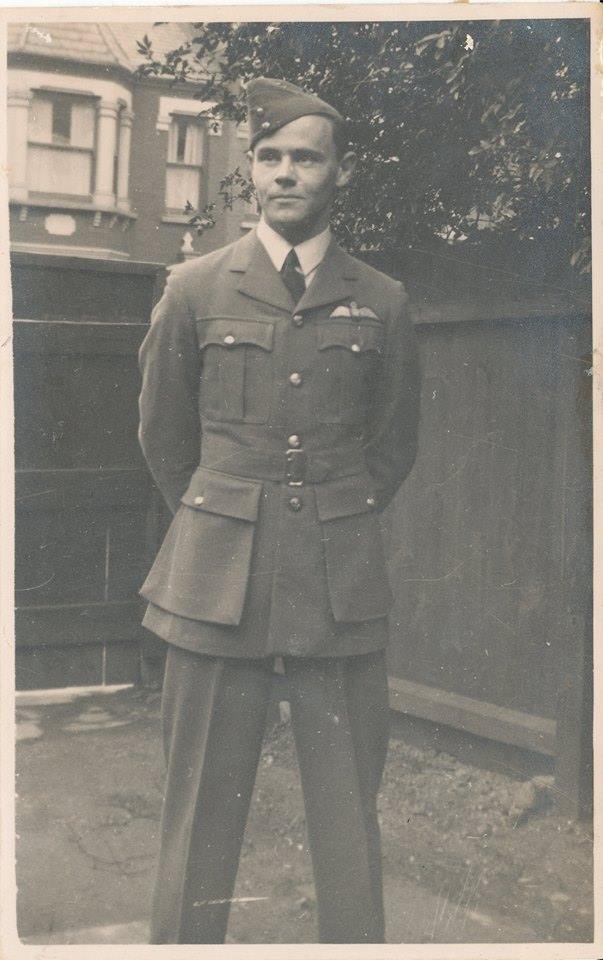
Meet the all time highest scoring British and Commonwealth forces WW2 fighter ACE, a South African named – Marmaduke ‘Pat’ Pattle DFC & Bar.
There are great South Africans, and then there are ones who stand on the shoulders of great men, and this man is one of them. Arguably the best Western Allied Forces fighter ace of WW2, this South African stands heads and shoulders above other British, British Commonwealth and American fighter aces of the war, however he remains a rather unsung hero. Precious little is known of him by many of his countrymen today, no significant war memorials exist in South Africa that even bear his name – but he is indeed one of South Africa’s greatest sons and one of the greatest heroes of WW2.
Squadron Leader Marmaduke Thomas St. John “Pat” Pattle DFC & Bar (3 July 1914—20 April 1941) was a South African-born Second World War fighter pilot and flying ace— believed to be the most successful Western Allied fighter pilot of the war.
Pat Pattle was born in Butterworth, Cape Province, South Africa, on 3 July 1914, the son of South African-born parents of English descent, Sergeant-Major Cecil William John “Jack” Pattle (b. 5 September 1884) and Edith Brailsford (1881–1962). Marmaduke was named after his maternal grandfather, Captain Thomas Marmaduke Pattle, who resigned his commission in the Royal Horse Artillery and emigrated to South Africa from England in 1875.
Pattle was academically intelligent. He considered a degree and career in Mining engineering before developing an interest in aviation. He travelled to the United Kingdom and joined the RAF in 1936 on a Short Service Commission (SSC). Pattle negotiated the training programs with ease and qualified as a pilot in the spring, 1937.
Assigned to No. 80 Squadron RAF, he was sent to Egypt before the war in 1938. He remained there upon the outbreak of war in September 1939. In June 1940 Italy entered the war on the side of the Axis Powers and he began combat operations against the Regia Aeronautica (Italian Air Force) gaining his first successes during the Italian invasion of Egypt. By November 1940 had gained 4 aerial victories but had been shot down once himself.
In November 1940 his Squadron was redeployed to Greece after the Italian invasion. Pattle achieved most of his success in the campaign. In subsequent operations he claimed around 20 Italian aircraft shot down. In April 1941 he faced German opposition after their intervention.
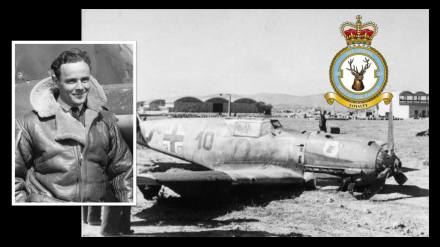
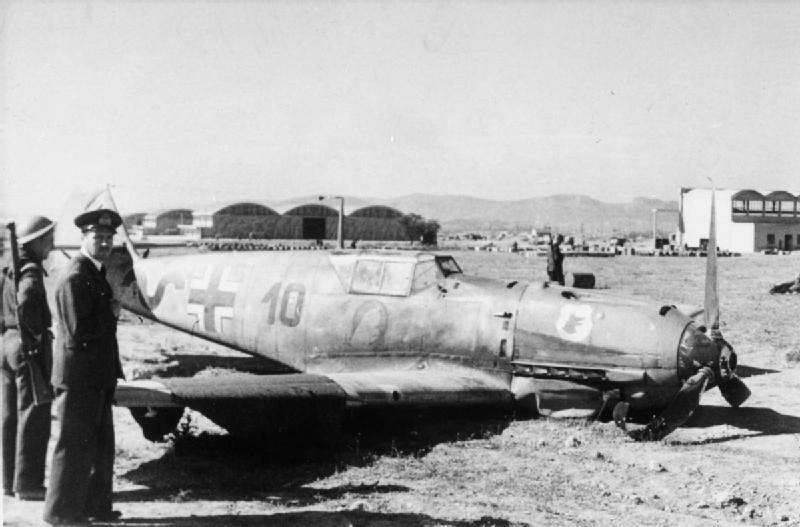
Here is a Messerschmitt Bf 109E of III/JG 77 which crash-landed on the airfield at Larrissa, Greece, possibly one of two claimed shot down by the South African Squadron Leader “Pat” Pattle, the Officer Commanding No. 33 Squadron RAF on 20 April 1941.
During the 14 days of operations against the Luftwaffe (German Air Force) Pattle claimed his 24—50th aerial victories; all but 3 were German. Pattle claimed 5 or more aircraft destroyed in one day on three occasions, which qualified him for “Ace in a day” status. Pattle achieved his greatest success on 19 April 1941, claiming six air victories.
Squadron Leader Marmaduke Thomas St John “Pat” Pattle, Officer Commanding No. 33 Squadron RAF (left) , and the Squadron Adjutant, Flight Lieutenant George Rumsey (right), standing by a Hawker Hurricane at Larissa, Thessaly, Greece.
The very next day, having claimed more aerial victories than any other Western Allied pilot, he took off against orders, and suffering from a high temperature to engage German aircraft near the Greek capital Athens. He was last seen battling Messerschmitt Bf 110 heavy fighters. His fighter crashed into the sea during this dogfight, killing Pattle.
Pattle’s death was equally heroic as he had dived down to rescue a fellow pilot who had a Bf-110 on his tail, Pattle managed to save him but at the loss of his own life, as he was also been attacked by Bf-110’s during the rescue – and he chose to ignore them to save his buddy.
Pattle was a fighter ace with a very high score, and is noted as being the highest-scoring British and Commonwealth pilot of the war. If all claims made for him were in fact correct, his total could be in excess of 51. It can be stated with confidence that his final total was at least 40 and could exceed this value. Log-books and semi-official records suggest this figure while personnel attached to his Squadron suspect the figure to be closer to 60. A total of 26 of Pattle’s victims were Italian; 15 were downed with Gloster Gladiators, the rest with Hawker Hurricanes. He is considered to be the highest-scoring ace on both Gladiator (15 victories) and Hurricane (35 victories) fighters.
Pattle is however regarded as the ‘unofficial’ Highest scoring Western Allied Fighter pilot for WWII. Unfortunately the squadron war dairy and his log books were lost in the retreat from Greece.
Pattle’s medals are on display at the Ditsong National Museum of Military History in Johannesburg. However little other recognition is given to him in South Africa. Pat Pattle, like so many other great South Africans of WW2 serving in the Royal Air Force – Roger Bushell, Sailor Malan, Zulu Lewis, JJ Le Roux, Stapme Stapleton, Geoffrey Haysom, Dutch Hugo, John Nettleton VC and many more, suffered from the incoming race politics of the Nationalists in 1948, their memory ridiculed and branded as ‘traitors’ for siding with the British, their legacy subject to systematic erosion during the years of Apartheid. To the extent that today, in the changed politics of South Africa, we find them almost completely forgotten.
To think that we have in our midst in South Africa, some of the greatest men of the war to liberate the world of Fascism and Nazism, we have so much to be proud about as a nation, we even hold the honour of having the greatest Western Allied fighter pilot of the war … and nobody knows.
Pilots of No. 33 Squadron RAF, at Larissa, Greece, with Hawker Hurricane Mark I, V7419, in background. from left to right, Pat Pattle stands at the centre.
Thank you to Tinus Le Roux for the use of this rather rare feature photo of Pat Pattle, copyright and use to Tinus Le Roux. Content thanks to Wikipedia and Sandy Evan Hanes. Insert photographs – copyright Imperial War Museum
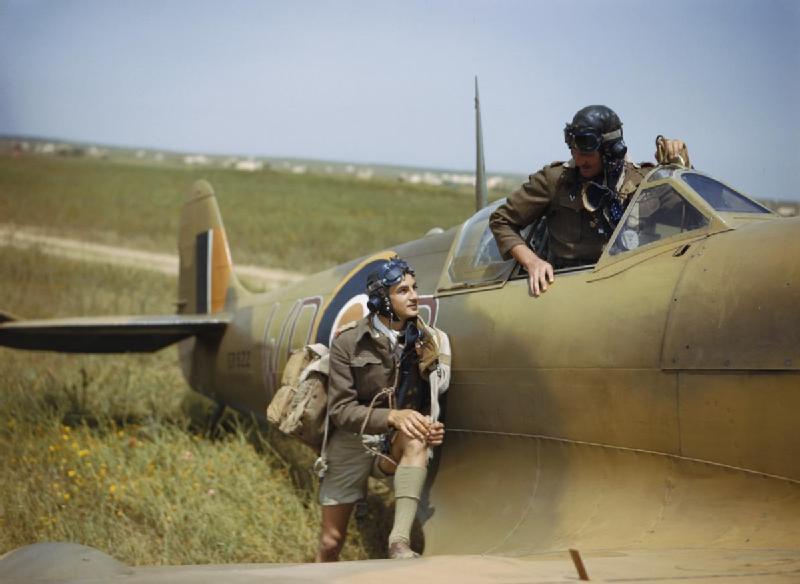
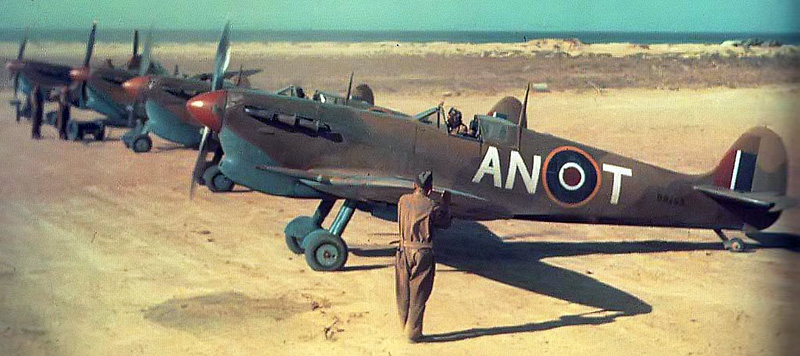
Original colour images of South African Air Force (SAAF) in Gabes in Tunisia April 1943. Here we see a SAAF Supermarine Spitfire pilot of ER622, No 40 Squadron, SAAF as he confers with his ‘No 2’ after landing at Gabes. This original colour image shows off a key identifier that only the South African Air Force squadrons used in the Allied theatre of combat …. ‘Orange’.
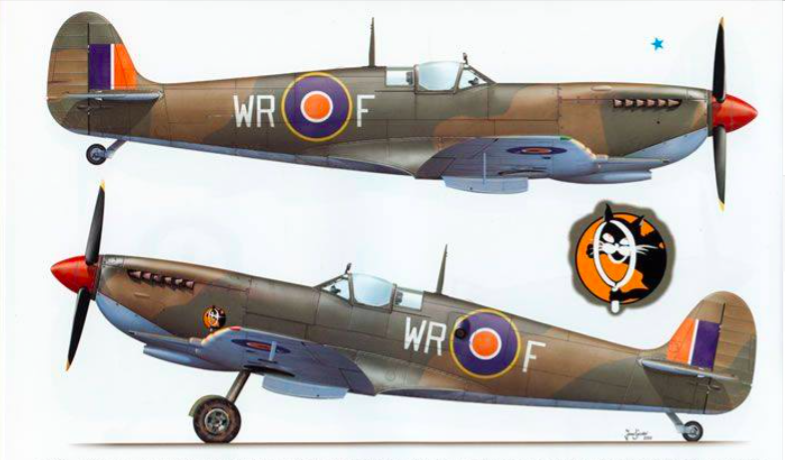
Note the distinctive ‘orange’ dot in the rondel identifier of the South African Spitfires, of all the commonwealth and British aircraft used in the north African campaign, the South Africans where the only ones to have the rondel in the colours of the ‘old’ national flag i.e. Orange, White and Blue on all their aircraft.
All others, British, Australian, New Zealand and Canadian air forces used a red centre in their roundel identifiers to signify the Union Jack (Flag) of Great Britain i.e Red, White and Blue, as seen in this original colour image below.
Allied Spitfires in Royal Air Force colour scheme, note the Red, White and Blue identifiers
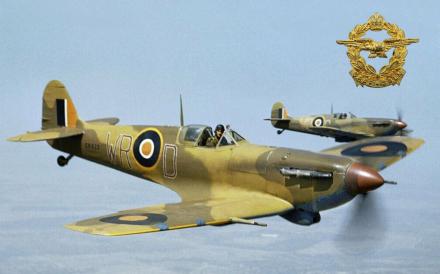
Also note the officers in first photograph are wearing army rank insignia (not air force), another distinctive attribute specific to South Africa at the time. To compare the difference in aircraft identifiers, here is the SAAF scheme, as shown by these SAAF 40 Squadron Spitfires in desert scheme.
This distinctive difference in SAAF identifiers to RAF and other commonwealth county’s identifiers was given the SAAF because of Jan Smuts’ influence in forming both the Royal Air Force as the first independent air force and the South African Air Force as the second oldest independent air force. Also, the SAAF had identified a separate scheme as they were not a ‘Royal’ Air Force – as the RAAF (Royal Australian AF), RNZAF (Royal New Zealand AF) and RCAF (Royal Canadian AF) were.
Squadrons made up of pilots from Allied countries under occupation also flew in the British markings, the difference was a small national identifier usually found on their cowlings, the Dutch 322 Squadron for example used a small Orange triangle and the Poles used a small Red and White square.
A little history of the SAAF Spitfires featured
As the 8th Army advanced through Libya into Tunisia, SAAF No. 40 squadron flew Tactical Reconnaissance (Tac.R) and Photo Reconnaissance sorties in support of ground operations.
SAAF 40 Squadron converted to the Supermarine Spitfire Vb at the end of February 1943. This variant had clipped wingtips to enhance its low-altitude performance, most notably its roll-speed. Sorties now included vertical and oblique photography, battle area Tac.R, target marking for fighter bombers, searches for night bomber targets, and identification of landmarks for day bomber navigation.
In early 1943 the squadron received Artillery Reconnaissance training, however, unreliable radios meant that artillery shoots were not as successful as had been hoped. Nevertheless, the squadron continued to report the activities of enemy artillery.
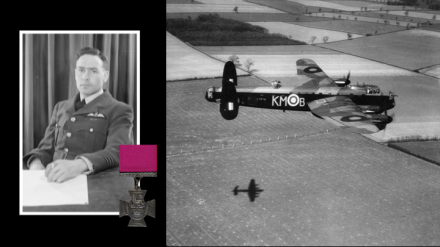
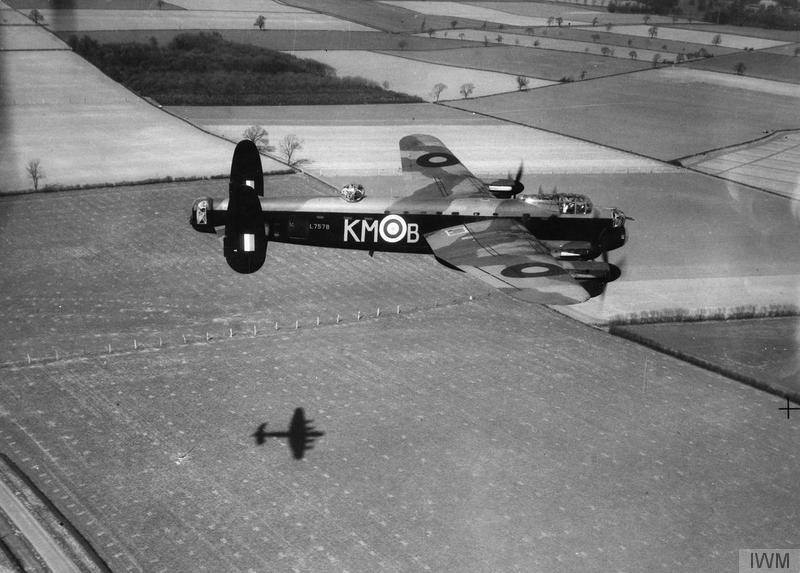
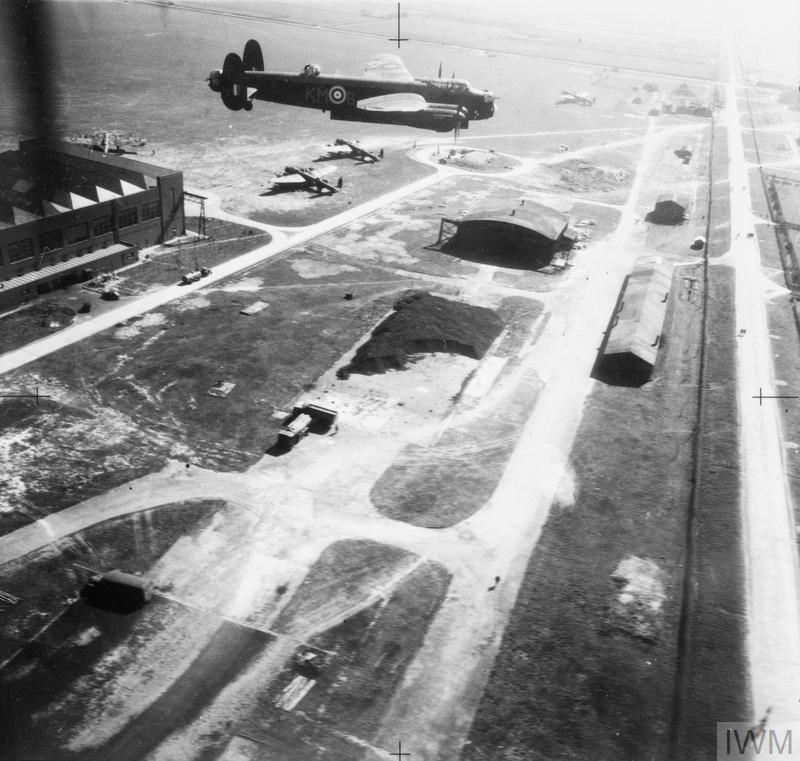
Rare that we see an image of a South African Victoria Cross recipient in action, but this is one such image. Flying this exact Avro Lancaster bomber is a Natal lad – Squadron Leader John Dering Nettleton VC. Now, not many South Africans have heard of him – and why is that?
Lancaster B Mark I, L7578 KM-B, of No.97 Squadron RAF, piloted by Squadron Leader J D Nettleton of No. 44 Squadron RAF, flying at low-level over the Lincolnshire countryside during a Squadron practice for the low-level attack on the M.A.N. diesel engineering works at Augsburg. 97 Squadron lent L7578 temporarily to 44 Squadron, who repainted the aircraft with Nettleton’s unit code-letters. Nettleton actually flew R5508 on the operation.
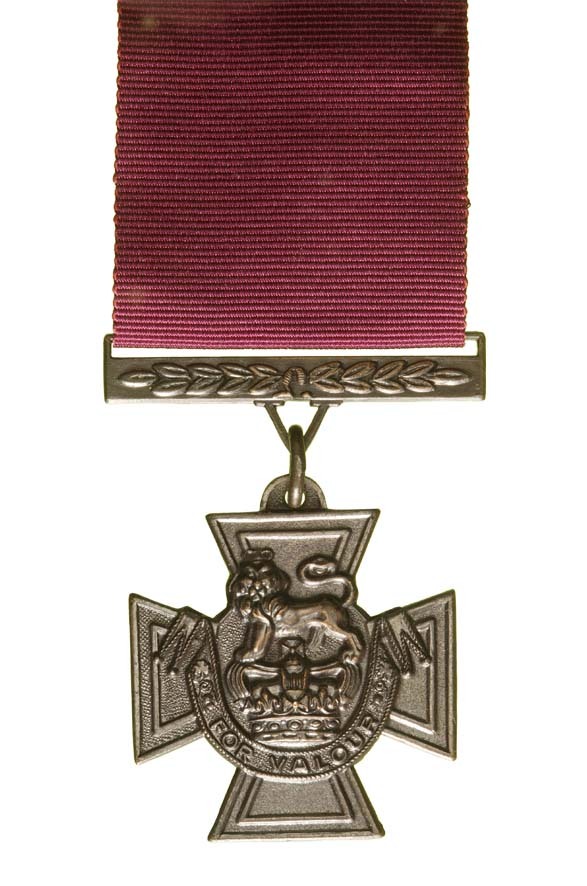
Nettleton is another true South African hero and recipient of the Victoria Cross (VC), the highest and most prestigious award for gallantry in the face of the enemy that can be awarded to British and Commonwealth forces. His VC was one of five awarded to South Africans in World War 2 – however very little is known of their stories in South Africa.
Of South Africa’s VC winners during World War 2 only two are commonly referred to, they are Quentin Smythe VC – see Profiling a true South African Hero – Sgt. Quentin Smythe VC and Edwin Swales VC – see Edwin Swales VC DFC, a South African Hero whose legacy has been eroded! The reason these two are more commonly known is largely because Quentin Smythe VC served in The South African Army and Edwin Swales VC – although a SAAF member attached to the Royal Air Force, had strong ties to his Alma Mater – Durban High School (DHS) who have largely driven his legacy in Durban. But what of the other three; George Gristock VC, Gerard Norton VC and our hero today, John Nettleton VC?
Simply put, after the war, the National Party came to power in 1948 they almost immediately dismissed all South Africans who had served in the war as ‘traitors’ to the country for supporting what they saw as ‘Britain’s war’. During the war the Nationalists had vocally supported Nazi Germany (as Germany had supported the Boer cause during the 2nd Anglo Boer War and Afrikaner nationalism was grounded on punitive British measures taken out on the Boers during this war), many Nationalists had even adopted national socialism and embarked on sedition during the war (see “Mein Kampf shows the way to greatness for South Africa” – The Ossewabrandwag).
For the Nationalists, on the top of the list of ‘traitors’ were the South Africans who distinguished themselves winning Victoria Crosses whilst serving in ‘British’ Regiments or Arms of Service. These were men, who in the eyes of the Nationalists, served the hated British and were not to heralded as heroes, lest their deeds specifically influence young South Africans. For this reason very little in South Africa is named or honoured in the names of Gristock, Norton or Nettleton.
So lets pull away this veil and reveal some true South African heroes whose very noble exploits and deeds in ridding the world of Nazism all of us as can stand very proud of. What better way to start with John Nettleton VC – this is his story.
Avro Lancaster flown by Squadron Leader J D Nettleton, about to cross the western perimeter of RAF Waddington, Lincolnshire with bomb doors open during a practice run.
John Dering Nettleton was born on 28 June 1917 in Nongoma, Natal Province, South Africa, the grandson of Admiral A T D. Nettleton, he was educated at Western Province Preparatory School (WPPS) in Cape Town from 1928-30, Nettleton served as a Naval cadet on the General Botha training ship and then for 18 months in the South African Merchant Marine. He took up civil engineering, working in various parts of South Africa.
Commissioned in the Royal Air Force in December 1938, he then served with Nos. 207, 98 and 185 Squadrons before joining 44 (Rhodesia) Squadron flying the Handley Page Hampden. He took part in a daylight attack on Brest on 24 July 1941 and in a series of other bombing raids and was mentioned in dispatches in September 1940.
John Dering Nettleton VC
Nettleton was promoted Flying Officer in July 1940, Flight Lieutenant in February 1941 and was a Squadron Leader by July 1941. No. 44 Squadron was based at RAF Waddington, Lincolnshire at this time and had taken delivery of Lancasters in late 1941
.In 1942 a daylight bombing mission was planned by RAF Bomber Command against the MAN diesel engine factory at Augsburg in Bavaria, responsible for the production of half of Germany’s U‑boat engines. It was to be the longest low‑level penetration so far made during World War II, and it was the first daylight mission flown by the Command’s new Avro Lancaster.
Nettleton’s citation for his Victoria Cross is quite explanatory of the attack and the rest of the story picks up from here:
Citation:
Squadron Leader Nettleton was the leader of one of two formations of six Lancaster heavy bombers detailed to deliver a low-level attack in daylight on the diesel engine factory at Augsburg in Southern Germany on April 17th, 1942. The enterprise was daring, the target of high military importance. To reach it and get back, some 1,000 miles had to be flown over hostile territory.
Soon after crossing into enemy territory his formation was engaged by 25 to 30 fighters. A running fight ensued. His rear guns went out of action. One by one the aircraft of his formation were shot down until in the end only his and one other remained. The fighters were shaken off but the target was still far distant. There was formidable resistance to be faced.
With great spirit and almost defenceless, he held his two remaining aircraft on their perilous course and after a long and arduous flight, mostly at only 50 feet above the ground, he brought them to Augsburg.
Here anti-aircraft fire of great intensity and accuracy was encountered. The two aircraft came low over the roof tops. Though fired at from point blank range, they stayed the course to drop their bombs true on the target. The second aircraft, hit by flak, burst into flames and crash-landed. The leading aircraft, though riddled with holes, flew safely back to base, the only one of the six to return.
Squadron Leader Nettleton, who has successfully undertaken many other hazardous operations, displayed unflinching determination as well as leadership and valour of the highest order
Citation ends.
Nettleton survived the incident, his damaged Lancaster limping back to the UK, finally landing near Blackpool. His VC was gazetted on 24 April 1942.
Squadron Leader J D Nettleton VC signing his autograph for a factory worker on a visit to open a munitions factory, North Wales.
Nettleton died on 13 July 1943, returning from a raid on Turin in Italy by 295 Lancasters. His Lancaster took off from Dunholme Lodge and was believed to have been shot down by a fighter off the Brest peninsular. FW 190s of 1./SAGr.128 and 8./JG 2 scrambled from bases near Brest in the early hours of 13 July, and at 06:30am intercepted the bomber stream.
A total of eight bombers were claimed, and at least three Lancasters were almost certainly shot down by the German fighters, one of whom was Nettleton. His body and those of his crew were never recovered. All are commemorated on the Runnymede Memorial.
Group photograph of Squadron Leader J D Nettleton (sitting, second from left) and his crew, photographed on their return to Waddington, Lincolnshire, after leading the low-level daylight attack on the M.A.N. diesel engineering works. 17 April 1942.
The truly unfortunate thing about these heroes is that due to political prejudice – starting with the National Party from their election to power in 1948 (post WW2) and now the current political dispensation in South Africa, the African National Congress (ANC) – these VC recipients are almost unclaimed and unknown. The result is that very little is commemorated to their memories in South Africa today.
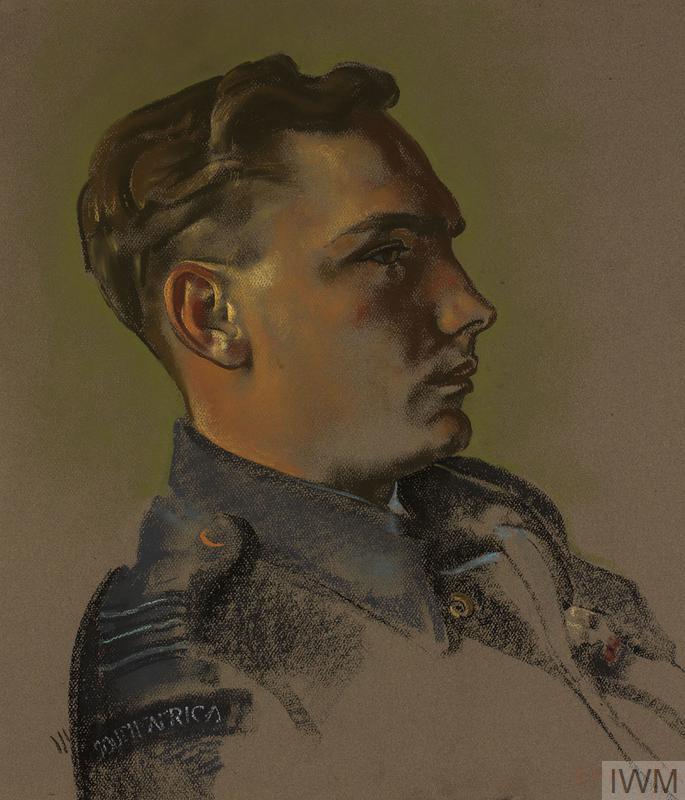
With no known grave there are very few memorials to John Nettleton VC in South Africa, no roads or state institutions are named after him, nothing really significant in his own country acknowledges him (other than the General Botha training ship which have a acknowledgement to this one of the two ‘sailor’ airmen to serve in the RAF). Like his fellow General Botha training ship compatriot ‘Sailor Malan’, this ‘sailor’ – John Nettleton was also proud to wear the ‘South Africa’ shoulder title on his Royal Airforce uniform (as with all the South African pilots who served in the RAF – see The RAF ‘South Africa’ title worn during The Battle of Britain) and by that simple gesture there is no doubt to where his heart and loyalty lay.
His link to South Africa is so lost to memory that it has even been lost to the British, his name was not even included in the South Africans listed on the Victoria Cross Winners dome at the Commonwealth Gates memorial in central London. It’s not just John Nettleton’s name that is missing from this memorial, there is a very long list of other South African VC recipients unaccounted for on this memorial, such has been the complete disregard.
As South Africans (in South Africa and in the United Kingdom) this has to be addressed, we should hang our collective heads in shame in the way we have treated our national heroes, and if this website goes a way to helping increase awareness of these unsung South African heroes then so much the better.
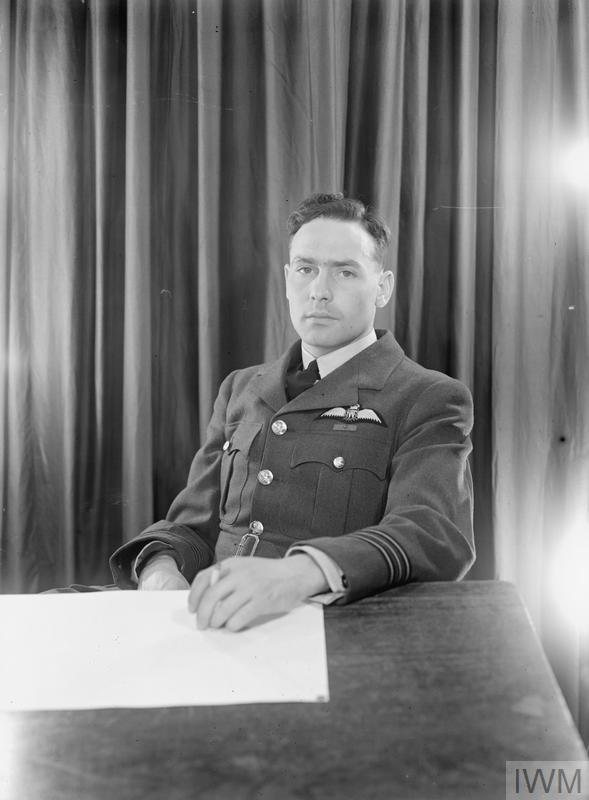
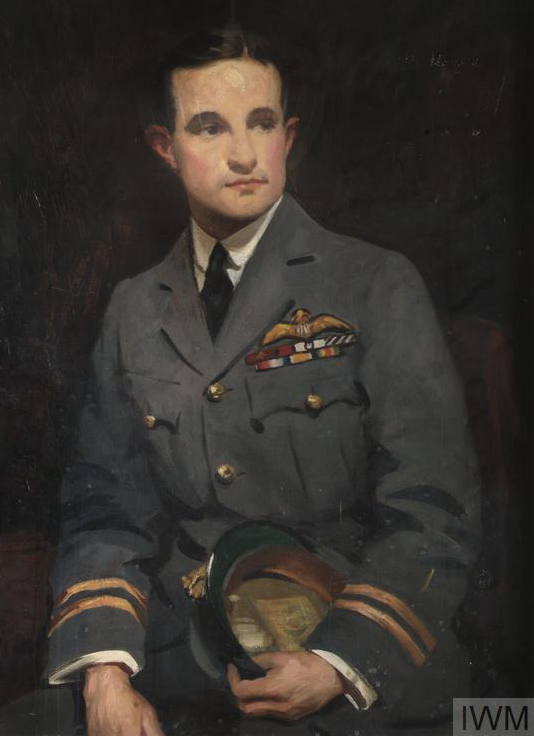
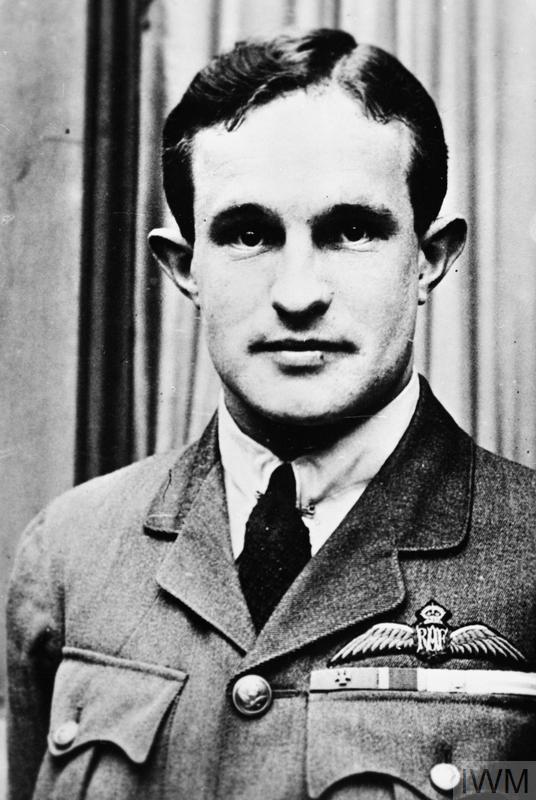
Head and shoulders War Commission portrait of Squadron Leader John Nettleton. He wears his RAF tunic, bearing the medal ribbon of his Victoria Cross, as well as his South Africa shoulder badge. At this time Nettleton commanded 44 Rhodesia Squadron.
Researched and written by Peter Dickens, references and extracts wikipedia and Imperial War Museum.
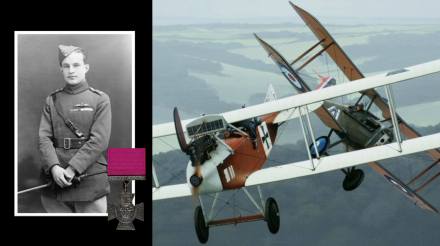
Honouring South African heroes and this is one of South Africa’s greatest – in fact he is the highest decorated South African in our military history. Many people don’t know that South Africa has its own World War 1 flying ace and Victoria Cross winner, and this ‘small’ hero comes with some very ‘big’ credentials, he is regarded as the all time highest decorated South African in terms of sheer seniority of the bravery decorations he won (there is a distinction between ‘most’ decorated i.e. number of decorations and medals – and the ‘highest’ decorated).
Andrew Beauchamp-Proctor, known to his colleagues and friends simply as ‘Proccy’, was South Africa’s leading First World War flying ace, claiming a staggering 54 aerial victories to his name.
He was born on 4 September 1894 in Mossel Bay, South Africa, and was studying engineering at the University of Cape Town when war broke out. He joined the Union of South Africa Army – the Duke of Edinburgh’s Own Rifles and took part in the German South West Africa campaign, before being demobilised in August 1915 with an honorable discharge. He promptly went to work with the South African Field Telegraph and re-enrolled in university. He managed to complete his third year of college before re-enlisting again, this time with the Royal Flying Corps (he was one of “The Thousand” – the first South Africans to go to England for combat service on the Western Front).
Royal Flying Corps
Andrew Beauchamp-Proctor joined the Royal Flying Corps in March 1917, he was commissioned upon his arrival in England and underwent pilot training. Despite being only 5′ 2″ tall, so short that he had to use two leather cushions in order to see out of a standard cockpit, he proved an excellent pilot and on completion of training was posted to 84 Squadron in late July 1917. The squadron, commanded by Major William Sholto Douglas (who would later become OC Fighter Command during the Second World War) was equipping with the then-new S.E.5a.
On 23 September 1917, the 84 Squadron went to France and became one of the most effective scout squadrons in the RFC/RAF (Royal Air Force) during 1918. The squadron would be credited with a victory total of 323 aerial victories, and would produce 25 aces. However, Beauchamp-Proctor would be pre-eminent, with almost triple the number of successes of the second leading ace. He was not particularly esteemed as a flier, but was a deadly shot.
Beauchamp-Proctor’s piloting skills can be judged by the fact he had three landing accidents before he ever shot down an enemy plane. He continued to fly the SE5 with modifications to the aircraft’s seat and controls, something his Philadelphia-born American squadron mate, Joseph “Child Yank” Boudwin, who stood only two inches taller also had to use. The alterations to relatively primitive controls could have contributed to Beauchamp-Proctor’s poor airmanship.
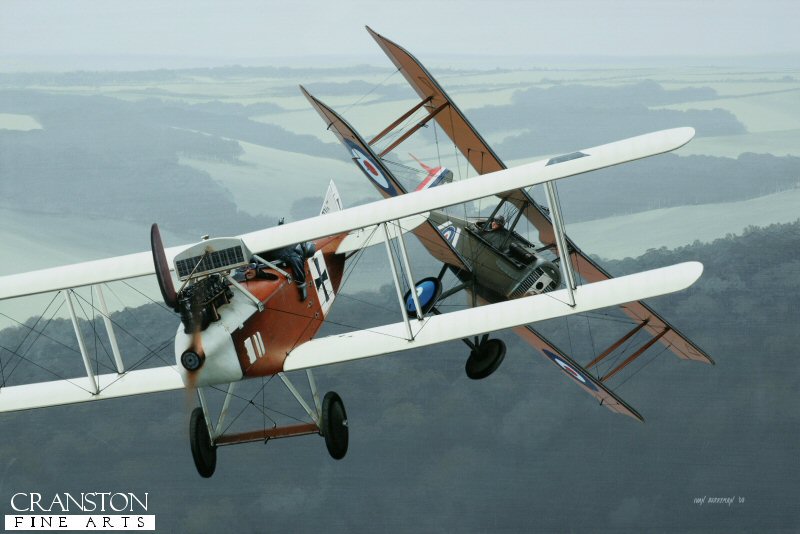
Captain Andrew Beauchamp-Proctor by Ivan Berryman
His initial confirmed victory did not come until the turn of the year. On 3 January 1918, he sent a German two-seater ‘down out of control’. He then claimed four more victories in February, becoming an ace on the final day of the month. Only one of his five victories resulted in the destruction of an enemy; the others were planes sent down as ‘out of control’.
March brought four more victories; three of them were scored within five minutes on 17 March. He tallied one kill in April.
Among his 11 victories for the month of May were 5 on 19 May. On that morning, he knocked an enemy observation plane out of the battle; fifteen minutes later, he destroyed a German Albatros D.V. scout. That evening, at about 6:35 PM, he downed three more Albatros D.Vs. By 31 May, his roll had climbed to 21 victims—16 fighters and five observation aircraft. By this point, he had destroyed six enemy planes single-handed, and shared the destruction of two others. He drove ten down out of control, and shared in another ‘out of control’ victory. Two of his victims were captured. Certainly a creditable record, and like many other aces, with no conquests over balloons.
The next day marked a change of focus for him; he shot down an observation balloon. Balloons, guarded by anti-aircraft artillery and patrolling fighter airplanes, were very dangerous targets. Commonly they were hunted by coordinated packs of fighters. For the remainder of his career, he would choose to try to blind the enemy by concentrating on shooting down kite balloons and observation aircraft. Also notable is the drop in his “out of control” victories; from here on out, the record shows destruction after destruction of the enemy. His June string would only run to 13 June, but in that time, he would destroy four balloons, an observation two-seater and a fighter. Only one fighter went down out of control. On 22 June, he was awarded the Military Cross (MC).
July would pass without incident. On 3 August, he was granted one of the first ever Distinguished Flying Crosses (DFC).
The break in his victory string lasted almost a month, as he went on home leave and helped a recruitment drive for the RAF. On 8 August, he returned and resumed with tally number 29, another balloon.
On 9 August, Beauchamp-Proctor was leading No. 84 Squadron on a patrol over their base at Bertangles, with the diminutive American Joseph “Child Yank” Boudwin and a ‘Giant’ – the six-foot-four tall fellow South African from Germiston – Hugh ‘Dingbat’ Saunders as his wingmen (‘Dingbat’ Saunders would go to become another South African ace, Air Marshal and Knight of the realm – but that is a different story for another day).
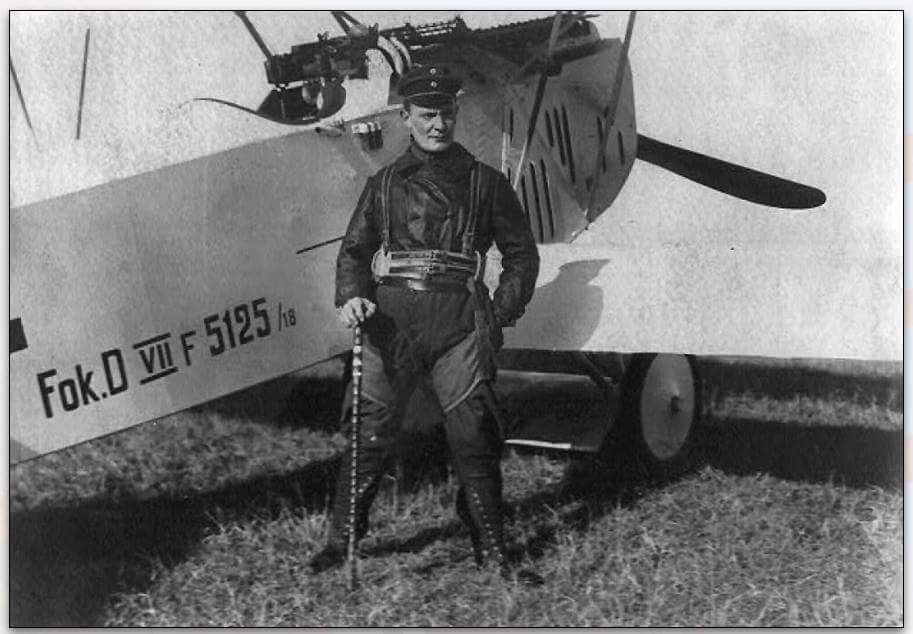
This unusual threesome of two very short chaps ‘Proccy’ and ‘Child Yank’ ‘and one very tall chap ‘Dingbat’ got involved in a heated engagement at 2:00 pm, that involved them in combat against Fokker D.VII fighters of JG I , led that day by the future Nazi Reichsmarschall Hermann Göring.
Hermann Göring in his Fokker D.VII fighter during WW1
After World War 1, Hermann Göring was to become Adolf Hitler’s right hand man and one of the most powerful figures in the Nazi party that ruled Germany from 1933 to 1945 and took Germany to its darkest place in history. But that was well in the future, over the western front battlefields of World War 1 Göring was a veteran fighter pilot, and fighter ace, he was even a recipient of the The Blue Max (the highest German bravery award). He was also eventually the last commander of the famous ‘flying circus’ Jasta 1, the fighter wing once led by ‘The Red Baron’ Manfred von Richthofen.
Unfortunately for both our two South Africans ‘Proccy’ and ‘Dingbat’ and the American ‘Child Yank’ – and the entire world really, none was unsuccessful at bagging Herman Göering and adding him to their kill totals.
‘Proccy’ would eventually claim an additional 14 aircraft, and by the end of the month of August with his claims list extended to 43. One memorable day was 22 August; he attacked a line of six enemy balloon over the British 3rd Corps front. He set the first one afire with his machine guns and forced the other five to the ground, the observers taking to their parachutes. His 15 kills for August would include 5 balloons, all destroyed, and two more two-seater planes. He was now up to 43 victories.
His September claims would be all balloons – four of them.
In the first few days of October, he would destroy three more balloons and three Fokker D.VII fighters, one of which burned. Another D.VII spun down out of control.
On 8 October, he was hit by ground fire and wounded in the arm, ending his front line service. In all ‘Proccy’ Beauchamp-Proctor’s victory total was 54; two (and one shared) captured enemy aircraft, 13 (and three shared) balloons destroyed, 15 (and one shared) aircraft destroyed, and 15 (and one shared) aircraft ‘out of control’ His 16 balloons downed made him the leading British Empire balloon buster.
On 2 November, he was awarded the Distinguished Service Order, followed by the Victoria Cross on 30 November. His Victoria Cross citation explains in detail:
Victoria Cross (VC)
Between 8 August 1918, and 8 October 1918, this officer proved himself victor in 26 decisive combats, destroying 12 enemy kite balloons, 10 enemy aircraft, and driving down 4 other enemy aircraft completely out of control. Between 1 October 1918, and 5 October 1918, he destroyed 2 enemy scouts, burnt 3 enemy kite balloons, and drove down one enemy scout completely out of control.
On 1 October 1918, in a general engagement with about 28 machines, he crashed one Fokker biplane near Fontaine and a second near Ramicourt; on 2 October he burnt a hostile balloon near Selvjgny; on 3 October he drove down, completely out of control, an enemy scout near Mont d’Origny, and burnt a hostile balloon; on 5 October, the third hostile balloon near Bohain. On 8 October 1918, while flying home at a low altitude, after destroying an enemy 2-seater near Maretz, he was painfully wounded in the arm by machine-gun fire, but, continuing, he landed safely at his-aerodrome, and after making his report was admitted to hospital.
In all he has proved himself conqueror over 54 foes, destroying 22 enemy machines, 16 enemy kite balloons, and driving down 16 enemy aircraft completely out of control. Captain Beauchamp-Proctor’s work in attacking enemy troops on the ground and in reconnaissance during the withdrawal following on the Battle of St. Quentin from 21 March 1918, and during the victorious advance of our Armies commencing on 8 August, has been almost unsurpassed in its brilliancy, and as such has made an impression on those serving in his squadron and those around him that will not be easily forgotten.
Capt. Beauchamp-Proctor was awarded Military Cross on 22 June 1918; D.F. Cross on 2 July 1918; Bar to M.C. on 16 September 1918; and Distinguished Service Order on 2 November 1918
The bravest of the brave
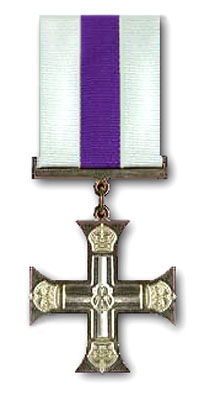
To make him the ‘highest’ decorated South African in history, as there is already a small group of South Africans who won the ‘highest decoration’ i.e. Victoria Cross in World War 1 (14 officially in total) and World War 2 (5 in total), Beauchamp-Proctor would also need to have another ‘next’ most senior decoration, he did this with obtaining a Distinguished Service Order (DSO) and a Military Cross (MC). This puts him on the same level as Percy Hansen, who also won a VC, DSO and MC, the difference, the one which places Beauchamp-Proctor at the top, is that he won the Military Cross twice (with bar) in addition to another decoration – the Distinguished Flying Cross (DFC).
The citations for these decorations are impressive enough on their own, there are as follows:
Military Cross (MC)
For conspicuous gallantry and devotion to duty. While on offensive patrol he observed an enemy two-seater plane attempting to cross our lines. He engaged it and opened fire, with the result that it fell over on its side and crashed to earth. On a later occasion, when on patrol, he observed three enemy scouts attacking one of our bombing machines. He attacked one of these, and after firing 100 rounds in it, it fell over on its back and was seen to descend in that position from 5,000 feet. He then attacked another group of hostile scouts, one of which he shot down completely out of control, and another crumpled up and crashed to earth. In addition to these, he has destroyed another hostile machine, and shot down three completely out of control. He has at all times displayed the utmost dash and initiative, and is a patrol leader of great merit and resource.
MC citation, Supplement to the London Gazette, 22 June 1918
Military Cross (MC) Bar
For the award of a Bar to the Military Cross ( MC ) i.e. winning a second Military Cross in addition to Andrew Beauchamp-Proctor’s first MC.
For conspicuous gallantry and devotion to duty while leading offensive patrols. He has lately destroyed three enemy machines, driven down one other completely out of control, and carried out valuable work in attacking enemy troops and transport on the ground from low altitudes. He has done splendid service.
London Gazette, 18 September 1918
Distinguished Flying Cross (DFC)
Lt. (T./Capt.) Andrew Weatherby Beauchamp-Proctor, M.C. A brilliant and fearless leader of our offensive patrols. His formation has destroyed thirteen enemy machines and brought down thirteen more out of control in a period of a few months. On a recent morning his patrol of five aeroplanes attacked an enemy formation of thirty machines and was successful in destroying two of them. In the evening he again attacked an enemy formation with great dash, destroying one machine and forcing two others to collide, resulting in their destruction.
DFC citation, Supplement to the London Gazette, 3 August 1918
Distinguished Service Order (DSO)
A fighting pilot of great skill, and a splendid leader. He rendered brilliant service on 22 August, when his Flight was detailed to neutralise hostile balloons. Having shot down one balloon in flames, he attacked the occupants of five others in succession with machine-gun fire, compelling the occupants in each case to take to parachutes. He then drove down another balloon to within fifty feet of the ground, when it burst into flames. In all he has accounted for thirty-three enemy machines and seven balloons.
DSO citation, Supplement to the London Gazette, 2 November 1918
That’s a lot of hefty decorations for gallantry and bravery and it makes Beauchamp-Proctor ‘the bravest of the brave’ when it comes the very bravest men South Africa has ever produced.
Post War
He was discharged from hospital in March 1919 and embarked on a four-month-long lecture tour of the USA, before returning to England and qualifying as a seaplane pilot with a permanent commission as a Flight Lieutenant in the RAF.
After his VC investiture at Buckingham Palace in November 1919 he was awarded a year’s leave, and this enabled him finish his BSc degree in Engineering.
Beauchamp-Proctor died during a training accident at RAF Hendon in England, on the 21st June 1921 whilst preparing for an air-show. His aircraft went into a vicious spin after performing a slow loop, and he was killed in the ensuing crash. At least one observer remarked that the loss of control and subsequent crash of the aircraft could have been linked to Proctor’s diminutive size, as noted earlier because of his size, Beauchamp-Proctor had to sit on a cushion to operate his aircraft and the cushion fell out during the loop, rendering him in a difficult position to adequately operate his aircraft and recover the manoeuvre. He was buried in Mafeking (his home town) in South Africa, following a state funeral.
In Conclusion
There still exists a little confusion over Beauchamp-Proctor’s given name. For decades he was listed as “Anthony” but more recent scholarship indicates “Andrew”, which is the name on his tombstone. Whether ‘Proccy’ was an Andrew or Anthony, it matters not a jot, this man epitomised ‘dynamite in a small package’ – ‘Proccy’ was and still remains the bravest of all South Africans to have been awarded gallantry decorations – without any doubt – the ‘Bravest of the Brave’.
Links to other South African World War 1 Victoria Cross recipients
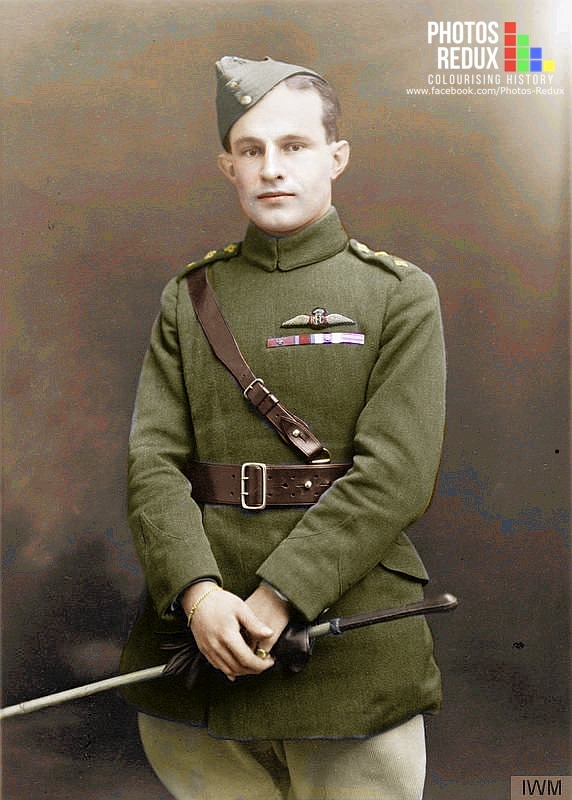
Image copyright Imperial War Museum Collection. Portrait by Cowen Donson, Imperial War Museum collection copyright. Painting Captain Andrew Beauchamp-Proctor by Ivan Berryman – Granston Fine Art. Colourised IWM portrait, thanks to Photos Redux
Sailor Malan – a true South African WW2 flying ace and national hero “in his own words” – and here is a very rare recorded interview with him.
This is a fantastic historical record of a personal interview with the great WW2 South African fighter ace Adolph “Sailor” Malan, DSO & Bar, DFC & Bar.
Note in this recording, clearly taken as a public relations exercise to install confidence in the British public in the Royal Air Force and it’s pilots by the public broadcaster (there were a series of these interviews involving other pilots). Because of this, Sailor Malan comes across as a little over-confident and quite flippant. Its intentional and designed to make killing Germans sterile and combat adventurous.
He also adopts a very plummy British ‘officers’ accent so common to the tone and manner of speaking of this particular officer class during the war, both in Britain and in the Commonwealth. His ‘flat vowel’ South African accent sneaks in here and there, but in all Malan was a very well-educated and travelled man and his command of the English language was exemplary (as was his command of Afrikaans).
Also noteworthy is Sailor Malan’s WW2 era cultural expressions, delivery and sayings which were so typical to Allied Air Force officers at the time – terms like:
“Hun” – meaning Germans – a derogatory term insinuating barbarism dating to the First World War. “Squirt” – meaning a short burst of gun or cannon fire. “Jerry” – meaning Germans – a derogatory term pertinent to the Second World War. “Pumping Lead” – meaning a high rate of machine gun or cannon fire ‘pumped’ into the enemy to kill him “Tally Ho” – a British fox-hunting term meaning to spot a target and call to action. “Cut yourself a slice of cake” – a favourite term used by Sailor Malan (and other pilots) meaning to get into the fight and have a piece of the action.



 Flight Lieutenant Adolph Gysbert Malan. (37604), Royal Air Force.
 Acting Squadron Leader Adolph Gysbert Malan, DFC (37604), Royal Air Force, No.74 Squadron.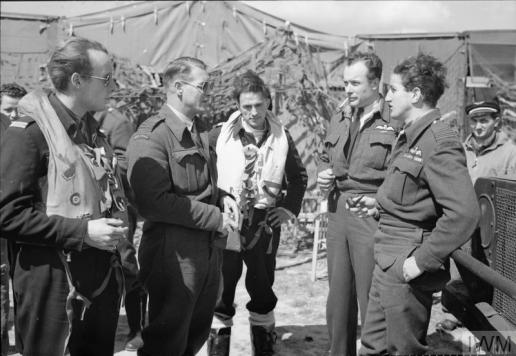






 “I Fear No man”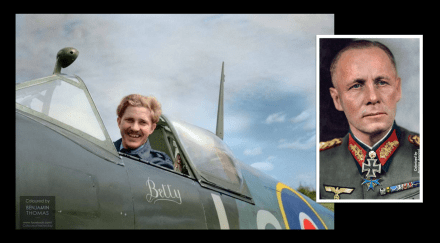

 Meet the all time highest scoring British and Commonwealth forces WW2 fighter ACE, a South African named – Marmaduke ‘Pat’ Pattle DFC & Bar.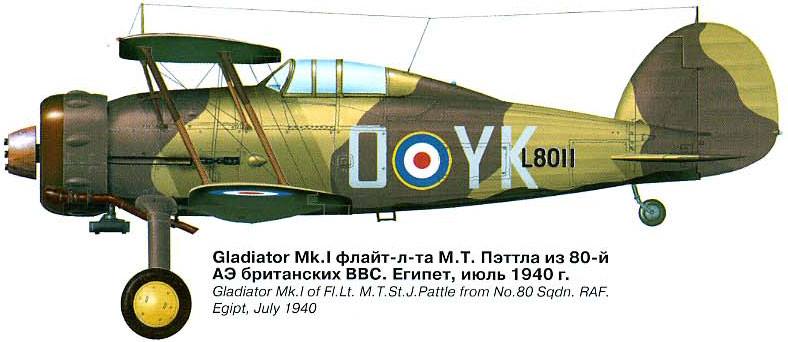


 Squadron Leader Nettleton was the leader of one of two formations of six Lancaster heavy bombers detailed to deliver a low-level attack in daylight on the diesel engine factory at Augsburg in Southern Germany on April 17th, 1942. The enterprise was daring, the target of high military importance. To reach it and get back, some 1,000 miles had to be flown over hostile territory.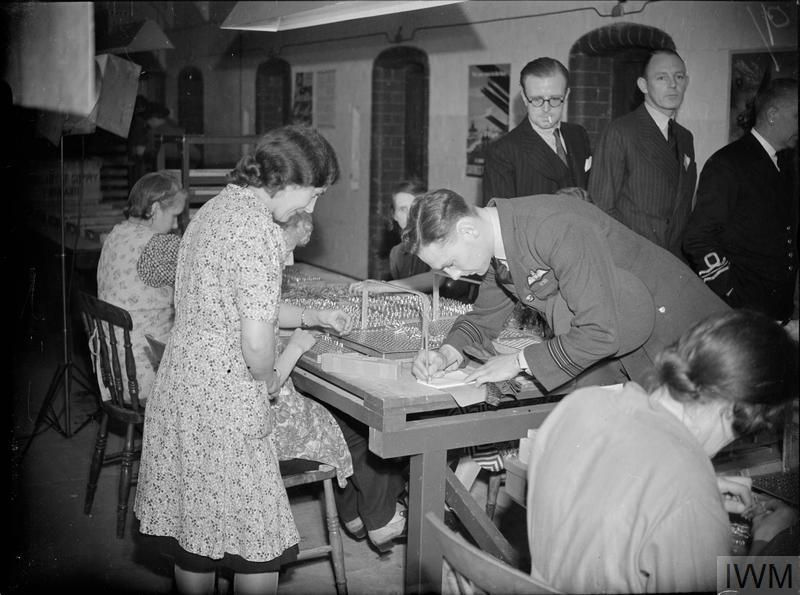



 The Observation Post