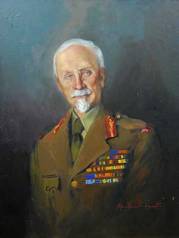
The day the SAAF nearly killed Jan Smuts

Not a lot of people know this, but the South African Air Force (SAAF) nearly killed General Jan Smuts in a ‘Blue on Blue’ incident – military speak for when you fire on your own forces. The incident also says a lot of Jan Smuts’ character – so what happened?

Prior to the war, Oswald Pirow was the Defence Minister under the Hertzog regime, he was also a key player in the establishment of South African Airways (SAA).  As an ardent supporter of Nazi Germany and the Nazi cause himself he had a keen relationship with Nazi Germany.  He toured Germany on military inspections,  also buying German military hardware on a number of occasions.  As a result  both SAA and the SAAF at the beginning of the war found themselves equipped with German-made aircraft.

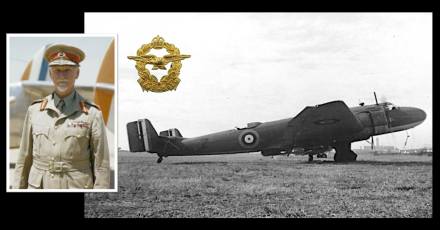
One particular aircraft was a German-made bomber made by Junkers, and it was used by both Axis forces in World War 2 and by South African forces – it was the Ju-86.  The difference between the two were slight adaptations and markings.

East African Campaign

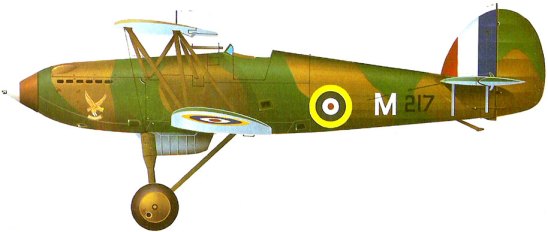
At the onset of Word War 2, the South African Air Force’s 1 Squadron moved north in May 1940 for operations against the Italians in East Africa, 6 Hawker Fury fighter aircraft were part of the unit’s equipment.  Arriving in Mombasa, Kenya in June 1940, 6 ex-RAF Fury Is were added to their equipment that August, with 16 more arriving between October and January 1941.

On October 27, 1940, the Furies first saw combat for the first time when 4 Italian Ca.133s from 8 Gruppo, and 25 Squadriglia, attacked their airfield.

216_1

SAAF 1 Squadron Hawker Fury

During October, 2 Squadron was formed out of 1 Squadron, with 9 Furies. On October 31, Hawker Furies from this unit came very close to shooting down two SAAF Ju-86s carrying some very important VIP’s travelling to the SAAF air-base to consult on South Africa’s conduct in the war to date.  The VIP’s included General Jan Smuts (South Africa’s Prime Minister and Commander-in-Chief), Sir Pierre van Ryneveld, Major General Alan Cunningham, and Major General Galmen-Austen.  So here is what happened.

Blue and Blue

Within twelve hours of arriving at Nairobi, General Smuts, General Cunningham and the Chief of the South African General Staff were on their way by road to Gilgil, here they were given a rousing reception by 2nd S.A. Infantry Brigade Group whose troops were inspected by General Smuts before his party lunched in the Brigade Officers’ Mess. The party then drove on to Nakuru airfield to meet Lieutenant-Colonel S.A. Melville and men of No. 1 Bomber Brigade and 40 Squadron, SAAF.

On 31 October 1940 General Smuts’ party left at sunrise, not in the Lodestar they arrived in but in a Junkers 86 bomber of the South African Air Force piloted by Captain D. B. Raubenheimer and accompanied by a second Junkers 86 carrying war correspondents, the formation also included a Dragon Rapide and an escort of two Hurricanes.

The aircrafts were making straight for Garba Tulla but changed course because General Smuts had been specially asked to fly over Archer’s Post airfield, headquarters of No. 11 Bomber Squadron, SAAF.

Later on 31 October 1940 the  South African Air Force Ju-86 bomber/transports carrying the VIP contingent did not follow specified procedures to identify themselves as ‘friendly’, as they passed over Archer’s Post. The formation did not signal the specified recognition signal, which consisted of lowering the undercarriage and waggling the wings.

p1

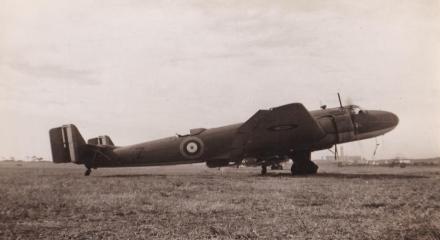
SAAF Ju-86

Under the impression that the formation was Italian, three SAAF Hawker Furies of 2 Squadron’s ‘D’ detachment, led by Captain J. Meaker, were scrambled and intercepted the formation.

Captain Meaker brought his formation into position quickly and closed to open fire on the bombers. As he manoeuvred to engage the right hand aircraft he noticed that it had twin rudders and climbed slightly to look at its markings, which he immediately recognised. He pulled up and away to the right, but Lieutenant Doug Pannell, flying on his leader’s starboard side, took this to indicate that Captain Meaker had finished his attack.

Meaker had no radio so could not warn the other two Fury that they were SAAF aircraft and he watched in horror as Lt. Pannell went in on attack and opened fire, Pannell only realised his mistake as he broke away.

The pilot of the third Fury did not open fire, and fortunately the Junkers was not shot down.

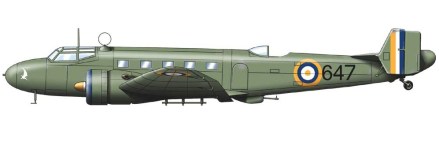
The Ju-86 aircraft were painted green, still in their original Luftwaffe colour. All SAAF Ju-86 had a 600 series number had a solid nose cone.  They however carried the distinctive South African Orange White and Blue markings and the British and Commonwealth roundel scheme.

Picture6.jpg.opt836x456o0,0s836x456

SAAF Ju-86

Close Call

When they landed 8 bullet holes were found in the fuselage and wing root of the SAAF Ju-86 Smuts was flying in, one of the bullets had even passed between Jan Smut’s legs.   In Smuts’ typical stoic, calm and implacable nature he even made light of the entire incident and there were no recriminations to the SAAF pilots involved.

Smuts had been in two previous wars, the 2nd Anglo Boer War and the 1st World War, it was not the first time he had come under fire and he understood the hazardous nature of warfare, his horse had even been shot out from under him Moodernaar’s Poort during the 2nd Anglo Boer War.

Later in the Second World War the SAAF aircraft fleet was modernised somewhat and equipped with more distinctive Allied Hawker Hurricane and Spitfire fighters, Smuts was to regularly use an American made Lockheed Lodestar when visiting South African troops on the ground and air-bases.

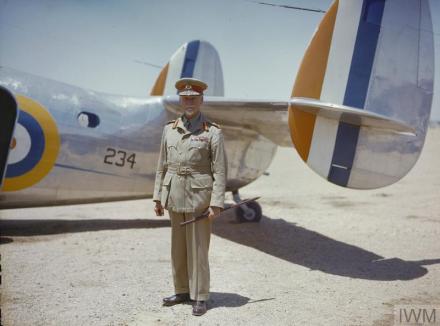
smuts 2

Field Marshal Smuts standing in front of the aircraft in which he made his flying visits. It was an ex-South African Airways Lockheed Lodestar, which retained its natural metal finish when it became No 234 of the South African Air Force. IWM Copyright

In Conclusion

There are still some Afrikaners in the South African conservative right who would wish that the SAAF had indeed killed Jan Smuts, but in truth is he was a very popular World War 2 leader.  His popularity did not only extend the Allied forces, mainly British, American and other Commonwealth countries, it also extended to South African forces involved in World War 2 and domestically, especially amongst white volunteers fighting the war, half of which were of Afrikaner extract.

Smuts’ contribution to the outcome of the Second World War is immeasurable, his membership of the Imperial War Cabinet and his position as Winston Churchill’s personal advisor went a long way to winning the war for the Allies.  An early death of Smuts would have had ramifications on how the war was fought and won.

It also remains a fact that even after the war when Smuts still maintained a high degree of popularity domestically, and when he lost the General Election to the Afrikaner Nationalists in 1948, he still commanded a majority vote from the white electorate and only lost the election on a constitutional seat basis.

Related work

Oswald Pirow; South Africa’s ‘Neuordnung’ and Oswald Pirow

Jan Smuts; “The force of his intellect has enriched the wisdom of the whole human race”- the death of Jan Smuts.

Jan Smuts; A true statesman, Jan Smuts addressing the British Parliament – 1942


Written and Researched by Peter Dickens,  with thanks and contribution from Sandy Evan Hanes and Warren Williamson.  References include ‘Jan Smuts – Unafraid of Greatness’ by Richard Steyn,  Image copyright of Smuts next to Lockheed – Imperial War Museum, Image of SAAF Ju-86 courtesy Tinus Le Roux’s SAAF Legends website.

Rommel’s aide-de-camp was a South African

It’s a little known fact, one of Field Marshal Erwin Rommel’s key officers, a person in his ‘Inner Circle’ and his personal advisor and aide was in fact a South African.  Very few South Africans joined the Nazi military forces during the Second World War, there are a number of South West Africans (now Namibia) who joined Nazi Germany’s armed forces whilst South West Africa was a South African Protectorate, which is understandable given South West Africa used to be a German colony prior to World War 1 and they were all of German heritage. A handful of South African Prisoners of War even joined or were coerced to join the Waffen SS during the war itself.

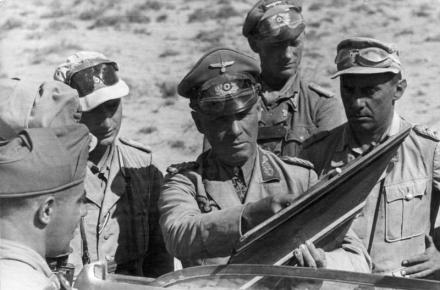
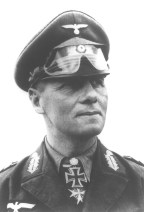
Nordafrika, Erwin Rommel mit Offizieren

General Rommel (centre) briefing fellow officers

However there are two who served on General Rommel’s staff, the first is his driver, Lt. Hellmut von Liepzig who was a naturalised South West African and the second was Lt. Heinz Werner Schmidt, a naturalised South African. Let’s examine Schmidt:

Heinz Werner Schmidt

To be fair to Heinz Schmidt, he was born in South Africa to German parents, and at a very young age he moved around Africa with his family, classified as ‘volkdeutsche’ spending more of his formative years and completing his university education in Germany itself, becoming a dual national with a German citizenship in addition to his South African one.  Leaving South Africa at the age of 4 he regarded himself as German above all and was swept up with the rest of the country in the euphoria of Nazism.  When war broke out, he was in a unique position – he had a choice.  He could choose to fighting for either South Africa and the Allied cause or Germany (as his dual citizenship allowed), he even had the choice of sitting the war out in South Africa (service was voluntary), he chose to his convictions to support the Nazi cause and became a German Army officer.

At one point in the war he found himself in command of Wehrmacht units directly engaging South African Army units and then, more ironically, with Europe and Germany devastated he engaged his South African birthright which gave him sanctuary in South Africa itself after the war.   In fact he built two very successful South African companies and one is a well-known household brand.

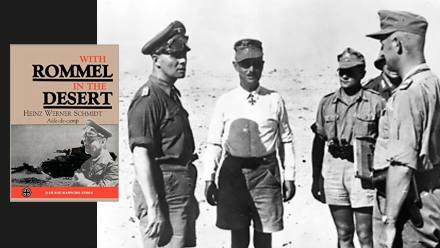
So lets examine who Heinz Schmidt was and what he did. Born in South Africa, Lieutenant Heinz Schmidt served in North Africa as Erwin Rommel’s (“The Desert Fox”) personal aid and advisor – an aide-de-camp in military speak.  As he was “South African-born” he was therefore considered, in line with military logic, an expert on Africa. Already a veteran of the Polish Campaign, Schmidt joined Rommel’s staff in March 1941 from Eritrea and was subsequently present during a number of battles in Egypt and later Tunisia, and was later to write a bestseller depicting his years with Rommel, namely “With Rommel in the Desert”.

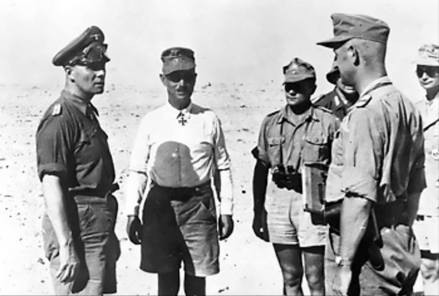
29983573_2123096807919306_5892126050487020083_o

Heinz Schmidt with General Rommel – Schmidt is third from the left.

Werner Schmidt by his own admission was surprised that General Rommel took him on as his advisor as he really did not have a depth knowledge of Africa, however been the only officer in Rommel’s inner circle of officers with a smattering of African heritage he found himself the only man for the job, and he happily took it on.

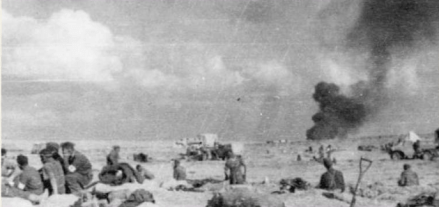
Lieutenant Heinz Werner Schmidt also had a sound combat record, just days before he was appointed as the aide-de-camp to General Erwin Rommel, he was commanding a heavy weapons company.  In fact Schmidt played a key role in overrunning the South African positions on 23rd November 1941 during the Battle of Sidi Rezegh.  He found himself in the thick of things with the German Wehrmacht’s 115 Rifle Regiment which lined up to attack the South African’s flank and over ran them.

Lieutenant Heinz Werner Schmidt described the scene as follows:

“We headed straight for the enemy tanks. I glanced back. Behind me was a fan of our vehicles—a curious assortment of all types—spread out as far as the eye could see. There were armoured troop carriers, cars of various kinds, caterpillars hauling mobile guns, heavy trucks with infantry, and motorized anti-aircraft units. Thus we roared on towards the enemy ‘barricade.’

“I stared at the front fascinated. Right ahead was the erect figure of the Colonel commanding the regiment. On the left close by and slightly to the rear of him was the Major’s car. Tank shells were whizzing through the air. The defenders (editors note: the South African Brigade) were firing from every muzzle of their 25-pounders and their little 2-pounder anti-tank guns. We raced on at a suicidal pace.”

Sidi Rezegh

Battle scene at Sidi Rezegh November 1941

So, here we have a very unique instance in South African military history a ‘South African’ commanding enemy troops in direct combat against his ‘countrymen’.  In an action which devastated South African forces in defeat with the loss of many South African lives.

Lieutenant Heinz Werner Schmidt went on to have a very successful stint as Rommel’s advisor for the balance of the North African campaign, and his book on Rommel is regarded as one the most insightful works on Field Marshal Rommel.

Post War

What happened to Heinz Schmidt and in what actions he took part after the North African campaign is unclear, we know that he lived with Rommel and was even present at his 50th birthday on 15 November 1941. Heinz ended his book with the end of the African campaign – it was about Rommel after all, he did not elaborate on his movements and units in which he served, what his units did or on which front he served (Eastern, Western or Italian) after the Afrika Korps was defeated, and even after Rommel death.

What is clear is that Heinz Schmidt survived the war and like many Wehrmacht officers sought sanctuary outside wore torn Germany.  Fortunately for Heinz the very Nazi sympathetic National Party came to power in South Africa in 1948, three short years after the end of World War 2.  Heinz now chose to embrace his South African citizenship and return to his birthplace, South Africa to re-start his life.

51F3EDR4KVL._SY344_BO1,204,203,200_He moved to a small German community in Natal called ‘New Germany’, located just inland from Durban.  ‘New Germany’ was established well before World War 2 in 1848 by a party of 183 German immigrants.  With the strong cultural ties to Germany, German social clubs and many German compatriots, this island of German heritage in South Africa proved ideal for Heinz Schmidt to start again, and he did so with great success.

He started two companies which are now household brands in South Africa, Pineware and Gedore tools, Pineware makes household appliances under its own brand, anyone who has bought a Pineware toaster, iron or electrical appliance will know it.  Gedore tools makes the Wera line of tools.  Pineware was sold to Lion Match.

By all accounts he was a friendly and charming man, he had many humorous stories of his time with Rommel and was regularly seen at Remembrance Parades in Durban. Heinz Schmidt died in Durban after a short illness, aged 90, in 2007. At the time his holding company business, H. W. Schmidt Industrials, was family owned.

In Conclusion

There you have it, another tale of a person highly sympathetic to the German cause who found success in post 1948 Nationalist South Africa. He unfortunately (rightly or wrongly) joins Robey Leibbrand and others who enjoyed political or business success in full sanctuary under the National Party government and as a result he was never held to account to his actions fighting against his own countrymen.

Treason is generally legally defined as citizen ‘taking up arms’ against the country of his of citizenship.  In the case of dual citizenship (as was the case with Heinz Schmidt), if the person did not renounce his citizenship of the country he went to war against (which he did not) the usual practice during and after the war was to convict the person of treason, in the other Allied nations – especially the UK, USA and Australia many people like Heinz faced the same situation after the war, especially in the cases were their dual nationals and even nationals had joined the Waffen SS and German Wehrmacht, most received very light sentences and fines, in exceptional cases those found guilty of High Treason were executed or handed life sentences.

After the war, a commission called the Barrett Commission was assembled to look into all South Africans and South West African’s who had joined Nazi German forces during the war. The commissions findings and lists were completed in late 1947, and withheld pending outcome of the 1948 elections. When the National Party won the elections in 1948, two Nationalist MP’s – Frans Erasmus and Blackie Swart removed all copies of the Barrett report and intelligence files on German collaboration and embargoed them (some of these files have only recently been re-opened). They then issued a general amnesty for all South Africans tried for treason or awaiting sentence, and in 1948 they all walked free.

The North African campaign was regarded as the ‘gentlemen’s war’ by all forces fighting it, primarily because it was fought according to the conventions. Whether Heinz would have been simply regarded defeated Wehrmacht officer at the end of the war holding a dual nationality, had no recored of war crime and had not violated his South African citizenship rights. And then subsequently allowed to get on with his life in South Africa as a simple veteran is a matter of conjecture – we will never know as it was never challenged.

The issue of treason aside, his book is however a sentinel work on Field Marshal Erwin Rommel – the ‘Desert Fox’ and it gives a unique and valuable historic insight into someone who is arguably regarded as one of the best military commanders of the war. Heinz Schmidt lived with and went to war with Rommel, his story is both very interesting and very unique.

erwin-rommelTo give an idea of the value his book from an insight perspective, the famous Rommel quotable quote as to using captured ‘booty’ (enemy equipment) for personal use is thanks to Schmidt’s work. Rommel, whose signature British issue goggles often worn above his visor on his cap said “Booty is permissible I assume; even for a general“. A quote which now finds itself in use in military outfits the world over when reasoning over the use of ‘booty’.

With that, as South Africans we find ourselves contributing again to a rich military heritage with our own very unique history highlighting of our lessor known past of ‘Nazi’ collaborators and World War 2 Wehrmacht veterans.

Related Work

Sidi RezeghSidi Rezegh – “The South African sacrifice resulted in the turning point of the battle”

Fall of Tobruk; “Defeat is one thing; Disgrace is another!” South Africa’s biggest capitulation of arms – Tobruk

El Alamein; “General Pienaar, tell your South African Division they have done well”; The Battle of El Alamein

Robey Leibbrandt; A South African traitor & ‘Operation Weissdorn’

The South African Nazi Party; South Africa’s Nazi Party; The ‘Gryshemde’

The Ossewabrandwag; “Mein Kampf shows the way to greatness for South Africa” – The Ossewabrandwag

South Africans in the Waffen SS; South African Nazi in the Waffen SS ‘British Free Corps’

Oswald Pirow; South Africa’s ‘Neuordnung’ and Oswald Pirow


Written and researched by Peter Dickens.  Reference ‘With Rommel in the Desert’ by Heinz Werner Schmidt and Werner Schmidt’s published obituary.

Tainted “Military Heroes” vs. Real Military Heroes

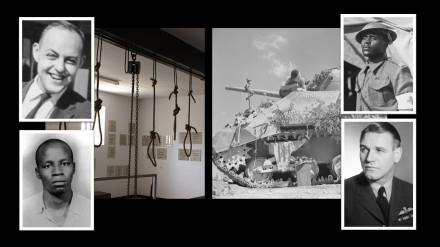
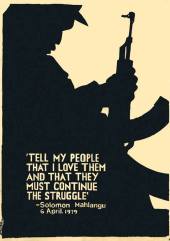
10433934_899486093400850_5230808273101714011_nOnce again the media is alive on the anniversary of Solomon Mahlangu’s hanging, no mention of course as to why he was hanged, other than the ‘Apartheid Regime’ did it and he’s a struggle hero, and so much attention is given his hanging anniversary that it is attended by the Vice President with a message to remind every-one again as to the brutality of Apartheid and white oppression.

So what sets him apart from other ‘struggle heroes’ that his day is specifically remembered with such hype? What else other than a quotable quote which has some good political mileage and makes for great media?

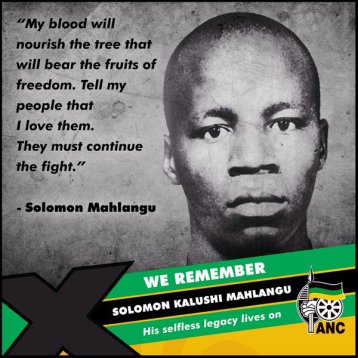
He said; “My blood will nourish the tree that will bear the fruits of freedom. Tell my people that I love them. They must continue the fight”.  Powerful stuff as quotes go, great propaganda value.

Forget what he in fact did, forget the reason behind his hanging, forget even the tenets of law, the man’s a ‘hero’ to his ‘people’. But let’s take a step back and examine what he did, why he was executed instead of getting a life sentence as was the case with many ‘political’ MK cadres also charged with terrorism.  Also, let’s question if he in fact should be the ‘prima’ anti-apartheid activist to be recognised because he was hanged, and finally let’s ask if we are in fact recognising the right role models.

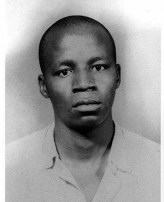
Solomon Mahlangu

1cc26b2e3ccc4c129ed0c8282b98b248In 1976 Mahlangu joined an African National Congress (ANC) MK military training camp called “Engineering” in Angola – one of the thousands of disenchanted youth from the Soweto uprising known in MK as the 76’s which fundamentally swelled MK numbers (up to then MK was a very small group).

Solomon Mahlangu, George ‘Lucky’ Mahlangu and Mondy Motloung were then taken to Swaziland, where they were given large suitcases filled with pamphlets, rifles and hand grenades. On 11 June 1977 they crossed the border into South Africa and started making their way to Johannesburg.

The three, each carrying a large suitcase, were climbing into a taxi in Diagonal Street in the centre of Johannesburg. An ordinary policeman became suspicious and grabbed one of the suitcases. An AK-47 assault rifle and a hand grenade fell out. All three of them fled, Lucky Mahlangu in one direction and the other two in the direction of Fordsburg. There, in Goch Street, the two sought refuge in the storage facilities of the retailer John Orr’s. One of them opened fire on the employees of the company (essentially targeting and  shooting innocent civilians in a retail store), killing two and wounding another two of them. Mahlangu and Motaung were eventually arrested.

Mahlangu’s trial started in the Supreme Court on 7 November 1977.  The three faced two counts of murder, two counts of attempted murder and various counts under the Terrorism Act. In its judgment the court found that Mahlangu and Motaung had acted with a common purpose and that it consequently did not matter which of the two did the shooting and killing.  Mahlangu had attested that he had not physically pulled the trigger himself but Motaung had.  However to understand ‘common purpose’ in a military context – if you have a machine gun team of a gunner and ammunition feeder and spotter, it matters not who actually pulls the tigger – they as a team are acting in common purpose.

Mahlangu was convicted on all counts. In terms of the South African law at the time, the court was obliged to sentence any accused to death for murder, unless the accused proved mitigating circumstances. The court found that Mahlangu had failed to prove a mitigating circumstance and consequently handed down the death sentence.

In South African law at the time murder was murder and the standard sentence was death, politics did not really enter into it if the case proved murder and the state hung loads of people for murder, not just resistance movement cadres.

To test whether Solomon Mahlangu’s court case and sentence by the Apartheid Regime was in any way politically driven his case was re-opened by the Truth and Reconciliation Commission (TRC) after 1994.  Their findings are not what most people would expect. The commission examined the cases of Solomon Mahlangu and Monty Motaung and found that both of them were responsible for the deaths of Mr Rupert Kessner and Mr Kenneth Wolfendale (the John Orr employees). It also found both Mahlangu and Motaung guilty of gross human rights violations. Lastly it found both the African National Congress and the commanding officer of Umkhonto we Sizwe guilty of gross human rights violations.

44fabe71-c81e-472f-a6b5-33fd5f9161c3

So, there’s the reason the media hype and news don’t want to really get into the facts and would rather generate propaganda spin, a very unsuccessful MK insurgency gone very wrong (nothing noble in the action), and one that really is a case of terrorism and murder, the shooting of innocent store employees – a very ‘tainted’ “hero” by any stretch of reason. But why the focus on Solomon Mahlangu other than his quote?

Consider this, usually trailblazers are honoured with martyrdom, but there is a very inconvenient problem here.  One of the first South African’s hanged for killing civilians in an anti-apartheid armed insurgency was not Black, nope – he was White.  He also was not a member of the ANC, he had his own anti-apartheid political movement.  His name was Frederick John Harris.

That should surprise many, a White man (not a Black man) was one of the prima anti-apartheid campaigners sent to the gallows, let that sink in for a second.  It reveals another inconvenient truth, that the first mass anti-apartheid protestors – like the ‘Torch Commando’ and the ‘Black Sash’ were made up of White people in the majority.  It was also no different in the case of John Harris’ own movement, the ‘African Resistance Movement’ (ARM).  

John Harris

3944So let’s examine John Harris and why he went to the gallows and not into political confinement.

Frederick John Harris (known as John Harris) was born in 1937. He was a teacher, a member of the executive committee of the Liberal Party in the Transvaal, as well as a Chairman of the South African Non-Racial Olympic Committee. He was also one of the members of the nearly all-white African Resistance Movement (ARM) and the first and only white man to be hanged for a politically inspired offence in the years after the 1960 Sharpeville emergency.

The African Resistance Movement (ARM) is not known to many in South Africa, in fact it started in parallel to the ANC’s Umkhonto we Sizwe (MK), and it declared an armed struggle against Apartheid in 1961, and here’s the problem to current political narrative in South Africa – it was made up of white people primarily, some with experience from World War 2.

ARM was founded by members of South Africa’s Liberal Party.  The Liberal Party was a mainly white party founded on 9 May 1953 out of a belief that Jan Smuts’ United Party was unable to achieve any real liberal progress in South Africa, they initially called for a franchise based vote for Black South Africans and later this evolved to a call for ‘one man one vote’. The Liberal Party was established during the coloured vote constitutional crisis of the 1950s, and they drew membership from the Torch Commando, run by Sailor Malan.

One of the defining moments in the struggle against apartheid in South Africa was the Sharpeville Massacre and its aftermath. The heavy-handed response of the state saw thousands of activists detained and imprisoned soon after the massacre of protesters on 21 March 1960. Political movements such as the ANC and PAC were banned and forced underground, and although the Liberal Party was not banned by the government, its members were not spared the wrath of the state.  The crackdown forced the ANC and PAC to re-evaluate their approach to the liberation struggle and consider whether to abandon the principle of non-violence in favour of a campaign of sabotage.  The Liberal Party of South Africa was in the same boat, and they too re-evaluated thier approach to the ‘struggle’ and embarked on armed resistance.

Liberal_veldtog

Despite the Liberal Party’s initial non-violent stance, the party was not spared the suppression of political activity after the declaration of the state of emergency in March 1960.  The government launched a vicious attack on the Liberal Party, arresting 35 of its leading members and detaining them at the Fort in Johannesburg.  Furthermore, the government issued banning orders under the Suppression of Communism Act, severely restricting the political activities of 41 leading members of the party between March 1961 and April 1966.

The detention and banning of leading Liberal Party members forced them to form their own resistance movement and cells, out of this came The National Committee of Liberation (NCL) and a declaration for armed resistance, the NCL changed its name later to African Resistance Movement (ARM).

ARM launched its first operation in September 1963. From then, until July 1964, the NLC/ARM bombed power lines, railroad tracks and rolling stock, roads, bridges and other vulnerable infrastructure, without any civilian casualties. It aimed to turn the white population against the government by creating a situation that would result in capital flight and collapse of confidence in the country and its economy. It launched four attacks in 1961, three in 1962, eight in 1963, and ten in 1964.

So, here we have a mainly ‘white’ militant ‘terrorist’ group operating in the 1960’s blowing stuff up in resistance to Apartheid South Africa – now how many South Africans today know about that little inconvenient truth.

John Harris was banned in February 1964, a few months before police moved to smash the underground ARM. While maintaining his Liberal Party connection, he had joined ARM, but he was not arrested in the police swoops.

On July 24, 1964, John Harris walked into the whites-only section of Johannesburg railway station and left a suitcase there that contained a bomb. It exploded just 13 minutes later, injuring several people seriously, in particular Glynnis Burleigh, 12, and her grandmother, Ethel Rhys, 77. Mrs Rhys died three weeks later from her injuries. Glynnis, who had 70% and third degree burns, was left with life-changing injuries.

A telephone warning had been planned so the station could be evacuated of civilians, but the warning was too late to prevent the explosion, and the result off this ARM action produced a horrified reaction amongst the white population – ARM had finally killed an innocent civilian.

The state crushed the ARM and the Liberal Party, eradicating it from history. Harris was caught, tried for murder of a civilian (see the trend) and by the tenets of South African law for murder received an automatic death sentence. On April 1, 1965 went to the gallows, reportedly singing.

An inconvenient truth

So, there you have the reason why we don’t recognise this anti-apartheid campaigner sent to the gallows, he wasn’t part of the ANC and he’s the wrong colour.  It would just throw out the entire whites vs. blacks political baloney banded about with such regularity, especially when the ANC, the government and the national media settle down to praise Solomon Mahlangu as the ‘Black’ South African hanged in resistance by the nasty ‘White’ South Africans.

The inconvenient truth in all of this is that Apartheid did not just divide black and white, it divided EVERYONE, including whites.  In fact the white community was split right down the middle.  Try and explain this ‘truth’ to the average South African today, the first mass action movement and protests against Apartheid were a ‘white’ affair (200,000 Torch Commando members), an anti-apartheid ‘white’ martyr was also hanged and the ‘white’ Liberal Party had its very own ‘MK’ anti-apartheid armed resistance movement.

Wow, that’ll blow their minds, it just does not FIT into the current narrative, skin-colour didn’t matter to the Apartheid State when it came to executing anti-apartheid insurgents and crushing pro-democracy movements – it literally throws out the window the whole rhetoric and twaddle banded about the EFF and ANC as to ‘white privilege’ gained from Apartheid.

However, Black and White issues aside, as it really is distressing that South Africans are always ‘forced’ to think in racial silos whenever this political expedient baloney gets banded about by the ANC and EFF, so here’s the question – should we really be enshrining people like Solomon Mahlangu – and even John Harris as ‘heroes’?

The answer is no we should not, these ‘heroes’ are very tainted, not by the act of rising against injustice and racial oppression, there is honour in that – but because they both killed innocent civilians and in both cases they were found wanting.  That makes them terrorists by the purest definition of the term.

The worshiping of tainted heroes is also a divisive issue, it simply does not bring people together, they murdered people and this is simply never to going to sit well with the community and families affected by them.  These tainted ‘heroes’ are trouble, they deepen the issue of race divide and resentment, they do not lend themselves to community healing and nation building.

Now, why South Africans would choose theses ‘tainted’ heroes, when the country has a very long list of heroes who fought just causes, have broad appeal and can easily be adopted by nearly every community in South Africa is just beyond belief.

Nearly all of South Africa’s surviving World War 2 veterans fall into this category (Black and White).  Aside from this, most World War 2 veterans took part in the Torch Commando’s anti-apartheid protests in their tens of thousands.  These were men of conviction, men who fought the oppression of racist ideologies and fought it properly – real heroes.

It’s really difficult to fault these ‘real’ military heroes, here we choose just two, one Black and one White South African – read a little on them and keep in mind the two ‘tainted heroes’  (Solomon Mahlangu and John Harris) when comparing them.  So here we have two ‘real heroes’ in a raft of many – Sailor Malan and Lucas Majozi.

Sailor Malan

Group_Captain_A_G_Malan_WWII_IWM_CH_12661Much has been written on Sailor Malan as a Fighter Ace, his rules for combat and his command of 74 Squadron during the Battle of Britain which played such a pivot role in winning the Battle.  His combat record, promotions and decorations alone are simply astonishing.

He first took part in evacuation of Dunkirk.  During this battle he first exhibited his fearless and implacable fighting spirit.  When the Battle of Britain begun, 74 Squadron (known as ‘The Tigers’) was to take the full heat of the battle in what was known as ‘hell’s corner’ over Kent, the squadron was eventually based at the now famous ‘Biggin Hill’ aerodrome in the thick of the battle. Sailor Malan was given command of 74 Squadron at the height of the Battle of Britain and on the 11th August 1940 the scored so many kills that they day became for ever known as “Sailor’s August the Eleventh” in Battle of Britain folklore.

By D Day (i.e. Operation Overlord, the liberation of France and subsequently Western Europe), Sailor Malan was in command of 145 (Free French) Fighter Wing and was himself leading a section of the wing over the beaches during the landings in Normandy.

In all Sailor Malan scored 27 enemy aircraft kills, seven shared destroyed, three probably destroyed and 16 damaged. He was to receive the Distinguished Service Order decoration – not once, but twice and well as the Distinguished Flying Cross decoration, again not once – but twice.

When Sailor Malan returned to South Africa after the war, he could not believe a the Nazi sympathising National Party had been brought to power in 1948, implementing the very ideology that took him to war in the first place.  In the 1950’s he formed a mass protest group of ex-servicemen called the ” Torch Commando” to fight the National Party’s plans to implement Apartheid and call for an early election to remove what they regarded as ‘fascist’ government from power.

In Sailor Malan’s own words, The Torch Commando was: “established to oppose the police state, abuse of state power, censorship, racism, the removal of the coloured vote and other oppressive manifestations of the creeping fascism of the National Party regime”.

The Torch Commando fought the anti-apartheid legislation battle for more than five years. At its height the commando had 250,000 members, making it one of the largest protest movements ever seen in South Africa’s history.  The movement, mainly ‘white’ in its demographic can also count itself as the first mass anti-apartheid protest movement with protest rallies reaching up to 75,000 people.  This mass ‘pro-democracy and anti-apartheid’ protest movement occurred before the ANC’s first mass protests against Apartheid, which manifested themselves in the form of the defiance campaign.

DF Malan’s nationalist government was so alarmed by the movement that it acted its usual way – ‘decisively’ – and crushed the organisation by legislation and painting Sailor Malan as ‘Afrikaner of a different kind’, a traitor to his ‘Volk’.

Despite this, Sailor continued to fight against the violation of human rights in South Africa with the same passion and moral fibre that allowed him to fight so vigorously against fascism and racism during the Battle of Britain. His dream of a better, democratic life for all in South Africa not only urged and carried him forward, but also caused him to be shunned by and isolated from his white National Afrikaner countrymen who were blinded by the short-sighted racial discrimination of their government.

In 1963, Sailor Malan, one of the most famous fighter pilots in the history of World War 2, one of the ‘few’ who Winston Churchill hailed as a saviour of European democracy (Churchill was also Sailor Malan’s son’s Godfather), lost his fight against Parkinson’s Disease and died at the young age of 52.

Lucas Majozi.

26731192_771151183084761_2191212210362043742_nNow consider this real military hero, Lucas Majozi.  Here’s a very notable South African military hero. The highest decoration awarded to a Black South African soldier during the Second World War was the DCM (Distinguished Conduct Medal) and it was awarded to Lucas Majozi.

Lucas Majozi volunteered to fight in the 2nd World War, however as he was a black man, race politics in South Africa dictated that he could only join the Native Military Corps (NMC) in a non-combat role, which meant he and all other South African ‘Bantu’ fighting in World War 2 could not carry a firearm – unlike the Cape Coloured Corps, which could carry firearms and take a combat role.  This did not however keep the Native Military Corps away from the perils of fighting and NMC were often placed right in the middle of the fighting.  Also, in instances of high peril reason prevailed and there were issued rifles, as many accounts show during the fall of Tobruk.

So how does an unarmed NMC soldier get to win one of the highest accolades for bravery in World War 2?

The answer lies in Lucas Majozi’s personality and character, he was a proper South African warrior and although he would be unarmed he volunteered to become a medic working as a stretcher bearer in the thick of fighting to bring wounded men back from harm to aid stations, an extremely dangerous job.  Like another Native Military Corps hero – Job Maseko, Lucas Majozi by his actions was also to become one of South Africa’s fighting legends.

So let’s have a look at Lucas Majozi, his account is a truly inspirational one, a very remarkable act of bravery and courage.

24958860_2059510117611309_3694672459531670470_o

During the Battle of El Alamein the South African 1st and 2nd Field Force Brigades (FFB), as soon after the battle began, became pinned down in the German Axis forces minefield by intense German machine gun and artillery fire. The South African infantrymen suffered very severe casualties.

Throughout the night of 23 October, the stretcher-bearers worked under heavy enemy fire, tending to the wounded and evacuating them from the battlefield.  Amongst these Black NMC non-combatant medics rescuing their White combatant counterparts was Lucas Majozi.

As the action wore on, Lucas Majozi was within 100 meters of the enemy under heavy machine gun fire.  Thinking nothing of his personal safety he continued to evacuate the wounded, returning time and again in the ‘veritable hell’ of the machine gun fire to rescue more of his wounded colleagues.

In the process he was himself wounded by fire, but continued to evacuate other wounded, when told to get to an aid station for his wounds, he refused going back into the hail of machine gun fire to rescue more wounded instead.

After his co-stretcher bearer also became a casualty himself, Lucas Majozi went on alone, again going back into the hell fire and carrying out the wounded on his back, never wavering.

He continued to rescue men under continuous fire all night and by the next morning he had lost so much blood from his own wounds he collapsed from both sheer exhaustion and blood loss.

Lucas survived the war and returned to South Africa to work as Policeman, He died in 1961.

A similar story was captured in a recent Hollywood Blockbuster called ‘Hacksaw Ridge’ involving an ‘unarmed’ American medic whose actions were not dissimilar to Lucas Majozi’s, but do you think South Africans have remembered our own hero and idolised him – no, most South Africans don’t even know who Lucas Majozi is.

Victims of Apartheid

Now, these men are ‘real military heroes’ by any definition of the term.  In many other countries the men and women who fought in World War 2 against the Nazi and Fascism scourge are hailed as the nation’s heroes – from Russia to America to France to the UK to Canada and to Australia – world over.  The living ones fawned over and idolised by just about everyone, including their respective Presidents and Prime Ministers.

But not in South Africa … why?

Simply put these Word War 2 heroes are also ‘victims of Apartheid’, their legacy devastated by the National Party whose narrow politics isolated them as ‘traitors’ for what they saw as a British cause (and not a world-wide war against Nazism and Fascism – in fact they had supported the Nazi cause prior to and during the war).

As ‘victims of Apartheid’ in an odd sense they are in the same boat as Solomon Mahlangu and John Harris.  The difference is that in addressing who in this big pool of Apartheid’s  ‘victims’ we choose to hail as National Heroes, the current government has chosen the most tainted and divisive ‘heroes’ they can muster and simply ignored anything that does not suit the ANC’s own history and their own political narrative.

In Conclusion

It’s a disgrace that the governing party still allows this ‘Apartheid’ legacy to continue to keep these ‘real military’ national heroes from the country for political expediency.  One thing is for sure, the likes of Sailor Malan and Lucas Majozi are far better ‘heroes’ and role models and miles ahead of the likes of Solomon Mahlangu and even an obscure person like John Harris, who should rightly take the mantle as one of the prima anti-apartheid ‘heroes’ executed by the state, but is ignored because of the thing he was hanged for in the first place – Apartheid, only this time in reverse – his fault, he was not black and not a member of the ANC, his story simply just doesn’t fit the narrative.

It really is time we start to seriously address our values and priorities and start considering and highlighting the deeds of our real heroes, people whose deeds and stories build on reconciliation and don’t deepen the race divides in South Africa.

Related Observation Post links:

Sailor Malan: Sailor Malan; Fighter Ace & Freedom Fighter!

Sailor Malan: FRIDAY STORY #7: Sailor Malan: Fighter Pilot. Defender of human rights. Legend.

Sailor Malan: ‘Ten of my rules for air fighting’ – Sailor Malan

Lucas Majozi: “With bullets in his body he returned … into a veritable hell of machine gun fire”; Lucas Majozi DCM

Job Maseko: Job Maseko; one very remarkable South African war hero

Fall of Tobruk: “Defeat is one thing; Disgrace is another!” South Africa’s biggest capitulation of arms – Tobruk

Battle of El Alamein: “General Pienaar, tell your South African Division they have done well”; The Battle of El Alamein

Torch Commando: The Torch Commando led South Africa’s first mass anti-apartheid protests, NOT the ANC!

Torch Commando: ‘New’ rare footage of The Torch Commando in action, the first mass protests against Apartheid by WW2 veterans.

Torch Commando: The Torch’s impact on the South African military veteran diaspora!

Native Military Corps: The South African ‘Native Military Corps’; Sacrifice which screams out for recognition!

The ‘white’ armed struggle: The ‘White’ armed struggle against Apartheid


Written and Researched by Peter Dickens.  Reference and extracts from Wikipedia, South African History On-Line SAHO, the Guardian (International edition)


South African sacrifice in the Royal Navy’s Fleet Air Arm

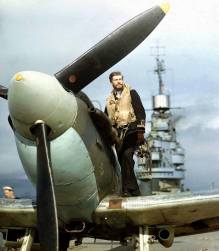
18301541_655088058024408_5990826112865938099_n

FAA pilot standing on the wing of a Seafire (adapted Spitfire with arrest capability). Note the “beard”  and his wings on his sleeve above his rank.

The Fleet Air Arm (FAA) is a lessor known service in the bigger picture of World War 2, but no less important.  In essence the Fleet Air Arm is the Royal Navy’s own Air Force, designed solely to be launched either at sea from aircraft carriers and ships or from shore bases on maritime based operations and in defence of the Royal Navy specifically.

The Royal Air Force was an independent arm of service from the Navy, it worked in conjunction with the Navy and the Army in joint commands, however it also worked in conjunction with the Navy’s own Air Force – the Fleet Air Arm.

The Fleet Air Arm is interesting as it flew a wide variety of very unique fixed wing aircraft in World War 2, and rotary wing aircraft post war (helicopters).  The FAA aircraft in World War 2 were usually a little different to the ‘landed’ cousins as they to be specially adapted for operating at sea, they also had to be a lot more robust and made to ‘fold-up’ to store them on deck.  They were even given different names, for the same equivalent Royal Air Force and US Air Force aircraft, an example is the famous ‘Spitfire’ had its named changed to ‘Seafire’ when serving with the FAA along with its special additions (like assesting or catapult hooks).

Even lessor known is the fact that the Fleet Arm has had a number of South Africans serve in it, and it all ties back to the strong Naval ties Britain – and the Royal Navy specifically – had with South Africa, especially as the Naval Base at Simonstown is near Cape Town, South Africa, and it was British sovereign territory during the war (a status that existed well in the 1960’s).

Like the South African Naval Forces personnel (SANF) finding themselves seconded to the Royal Navy or South Africans joining the Royal Navy directly as Royal Navy volunteer reserve – South African branch (RNVR), so too did many South Africans find themselves in the Royal Navy’s FAA either as SANF personnel or RNVR personnel.

It also unfortunately follows that when tragedy strikes the Royal Navy and its Air Force, there are South African losses.  So, lets look at each of the South African men specifically lost serving the Fleet Air Arm, honour them by telling a little about their story, the squadrons they belonged and the unique FAA aircraft they flew.  By looking at the sacrifice it will also give us a small insight into this very unique history of the FAA.

Fleet-Air-Arm

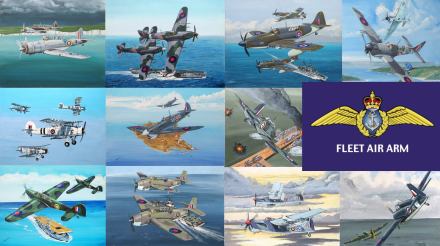
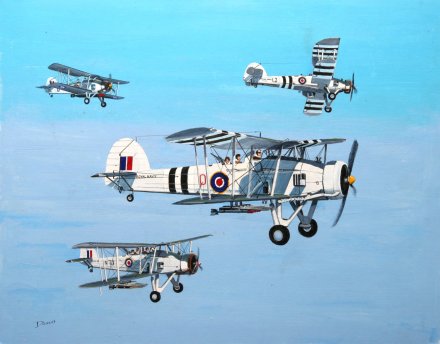
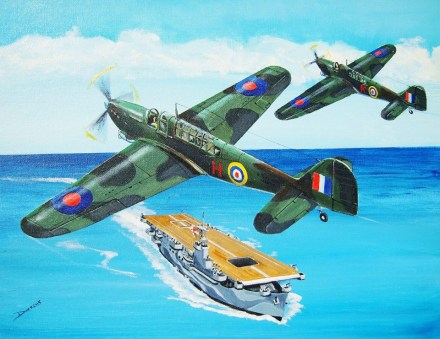
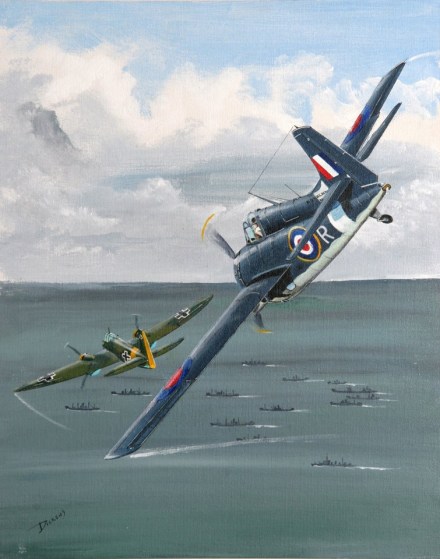
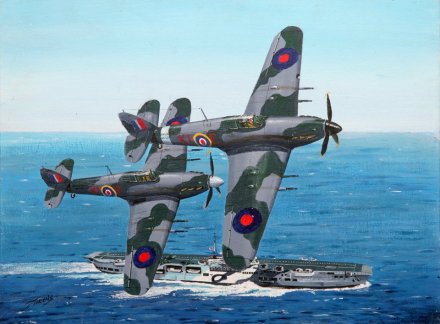
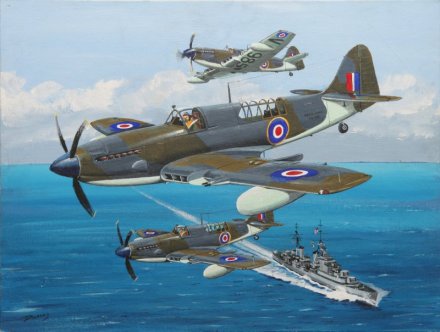
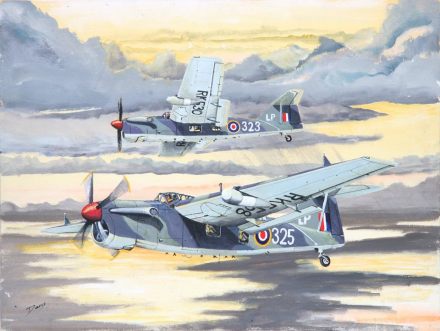
A unique book was written and illustrated by Derrick Dickens called ‘Stringbag to Shah’ on the history of the Fleet Air Arm, illustrated because many of the aircraft used by the FAA were not recorded in colour, or at best obscure with no record of paint schemes etc – and he wanted to bring these unique aircraft to living in vivid colour using his artwork.  We’ll be using this unique catalog with the permission of the copyright owner.

In all there were 9 men according to current records (this can change as more research has been done on the honour roll) who were South African and died serving in the Fleet Air Arm.  So lets start with the first South African man lost.

HMS Ark Royal

BOSTOCK, R S, Lieutenant, Royal Navy Fleet Air Arm 800 Squadron, HMS Ark Royal died 13 June 1940

FAA2

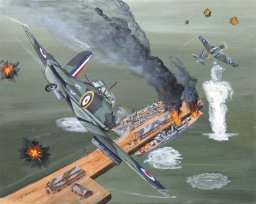
Blackburn Skua during Norway Operations by Derrick Dickens

At the time of Lt. Robert Bostock’s death, the HMS Ark Royal (a massive aircraft carrier), operated a number of FAA squadrons from its flight deck.  In June 1940, FAA 800 Squadron was operating as part of the reaction force to the German invasion of Norway, 800 and 803 had dive-bombed the German Cruiser Königsberg on 10 April 1940 and sank it, flying the ‘Skua’.

800 squadron embarked on Ark Royal later that month, with the carrier providing air cover to the fleet and to Allied troops. 800 Squadron’s Skua’s claimed six Heinkel He 111  bombers shot down.  On 13 June 1940, Ark Royal launched a dive bomber attack against the German Battleship Scharnhorst with 800 Squadron losing four Skuas out of six, along with Lt Bostock (our South African) and the Squadron’s Commanding Officer, Captain R.T. Partridge.

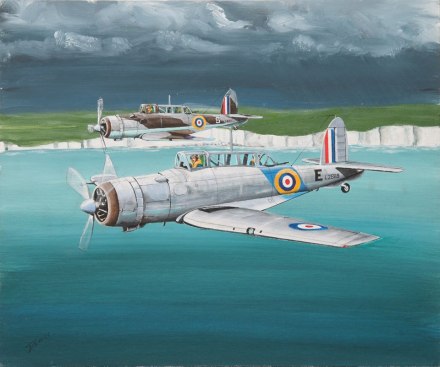
FAA1

FAA Blackburn Skua B-24 by Derrick Dickens

“Too big too slow. too late, this was the Blackburn Skua and the reputation that followed it. Slow and big it certainly was by the standards of the day, It towered above the ground on a spindly under carriage, and was indeed a large piece of ironmongery to expect the under powered Perseus engine to hoist into the air. But considering the radical nature of its design by British standards at the time of its conception the Skua was competent enough, maintaining Blackburn’s name for rugged naval aircraft, and adequately fulfilling the demands of the specifications that had given it birth, but as a combat aircraft it was not very successful” (Stringbag to Shah by Derrick Dickens).

The next South African man lost was not a FAA pilot or navigator, he was a FAA aircraft mechanic;

HMS Hermes 

RILEY, H, Air Mechanic, Fleet Air Arm, HMS Hermes, died 9 April 1942

At the time of Air Mechanics Riley’s death the HMS Hermes (also an aircraft carrier) was searching for the Japanese Imperial Fleet off Ceylon (now Sri Lanka) during the infamous Japanese ‘Easter Sunday Raid’ on Colombo – the Royal Navy’s own ‘Pearl Harbour’ and the South African Navy’s ‘Darkest Hour’ because of all the ships were lost with large South African Naval personnel on board – see this Observation Post link for the full story by clicking this link; The South African Navy’s ‘darkest hour’ is not recognised and not commemorated).

While sailing south off Batticaloa on the East Coast of Ceylon, HMS Hermes and its accompanying flotilla was by Japanese Carrier-Borne dive-bombers from the Imperial Japanese Task Force in the process of attacking the Naval Base at Trincomalee.

Approximately 70 Japanese aircraft were despatched to bomb the HMS Hermes which became an inferno and sank within ten minutes of being hit by numerous aircraft bombs.

At the time of her sinking the HMS Hermes was the home to No. 814 Squadron of the Fleet Air Arm flying the famous ‘Fairey Swordfish’ torpedo bomber, and these were the aircraft that Air Mechanic Harry Riley son of Alfred and Mary Ellen Riley, of Springs, Transvaal, South Africa, would have worked on.

FAA3

FAA Fairey Swordfish ‘Stringbags’ by Derrick Dickens

“Stringbag’ so named because of all the wires and stays. Archaic in appearance even when it first flew, the venerable Swordfish was the Fleet Air Arm’s premier torpedo-bomber at the outbreak of World War II and was destined to become a naval legend.

 Having arrived at a stage of World War II when a biplane, was a very rare sight, despite appearances, this beautifully ugly aircraft was no anachronism, for the Fairey Swordfish, as it was named, had then a still vital role to play in World War II. The Swordfish had the distinction in fighting the Axis from the very first days of the war until victory for the Allies in Europe had been assured.

Swordfish first saw action in the Norwegian campaign, and went on to see service in the Mediterranean, the Western desert, Iraq, the Battle of the Atlantic, and in support of convoys bound for Russia, attacks on the French fleet at Oran in July 1940 following the D-Day evacu­ation, and attacks on the Italian fleet at Taranto, and the German battleship Bismarck. The Swordfish is credited with the destruction of a greater tonnage of enemy shipping than any other allied aircraft during World War II. In so doing, the Swordfish outlived and outfought aircraft which had been designed to replace it in service, and during this period created a record of the machine achievement in association with human courage that makes pages of the Fleet Air Arm’s history a veritable saga.” (Stringbag to Shah by Derrick Dickens).

The next South African man lost with FAA was lost from HMS Formidable.

HMS Formidable

CHRISTELIS, C, Sub/Lieutenant, Royal Navy Reserve FAA 803 Squadron, HMS Formidable, died 1 August 1942

FAA 803 squadron at the time of Sub/Lt. Christelis’ death was equipped with the Fairey Fulmar II and operated from Ceylon (now Sri Lanka) against the Japanese (also participating in the infamous sea battles surrounding Japanese Imperial Navy’s Easter Sunday raid against the Royal Navy), joining the HMS Formidable from April 1942. Sub/Lt. Cornelius Christelis was the son of Christos and Eleni Christelis, of Germiston, Transvaal, South Africa.

FAA4

FAA Fairey Fulmar Mark II

“The first eight-gun fighter to enter service with the Fleet Air Arm, the Fulmar two-seat shipboard general-purpose fighter was designed at a time when the Admiralty held the view that navigational aids were inadequate to ensure the safe return of a single-seat fighter to its carrier in inclement weather, and that a navigator was, therefore, indispensable”.(Stringbag to Shah by Derrick Dickens).

The next South African man lost with FAA was also lost from HMS Formidable from FAA No. 888 Squadron around the same time as Sub/Lt. Christelis.

HMS Formidable

BROKENSHA, G W, Lieutenant, Royal Navy Fleet Air Arm 888 Squadron, HMS Formidable, died 11 August 1942

Lt Brokensha had an extensive career with the Fleet Air Arm, he flew Skua II with FAA 803 Squadron, taking part in Operation “Duck” on 17th April 1940 in defence of HMS Suffolk returning from Norway and from HMS Glorious he took part in numerous operations over Norway were he was even Mentioned in Despatches.  From HMS Ark Royal he took part in numerous operations including attack on Scharnhorst in Trondheim Harbour on the 13 June 1940, for which he earned DSC.  By 1942 he was posted to 888 Squadron flying Martlets as Senior Pilot, joining HMS Formidable on 1st February 1942.  His death is a little mysterious, he is recorded as  missing overboard from HMS Formidable, at night on the 11th August 1942.

FAA 888 squadron’s Marlet Mk II aircraft are an interesting addition to the Fleet Air Arms rich history, as they are essentially American Grumman Wildcats with a Royal Navy spin.

FAA 6

FAA Martlet Mk II by Derrick Dickens

“The Royal Navy’s effect upon the F4F Wildcat was considerable. The Fleet Air Arm introduced it to combat a year before Pearl Harbor, and exerted influence in its armament fit which ran con­trary to opinion in US Navy squadrons. The Wildcat was the first truly modern fighter flown from British carriers, and represented an enormous leap forward in Royal Naval aviation” (Stringbag to Shah by Derrick Dickens).

The next South African man lost with the FAA was a very senior officer, a Lieutenant Commander on the HMS Indomitable.

HMS Indomitable

JUDD, F E C, Lieutenant Cmdr, Royal Navy Fleet Air Arm 880 Squadron, HMS Indomitable, died 12 August 1942

At the time of Lt Cmdr Judd’s death, the HMS Indomitable and its fleet of 880 Sea Hurricanes was involved with Operation Pedestal which revolved around securing supplies to Malta in the central Mediterranean.  In early August the Royal Navy were engaged in heavy combat with German and Italian aircraft bombing their ships securing these vital supplies to the besieged island of Malta.  The date Lt. Cmdr Judd died was a particularly heavy day of combat when 4 waves of German and Italian aircraft attacked the British Fleet, on 12th August the HMS Indomitable’s 880 Squadron FAA Sea Hurricane fighters had been in heavy aerial combat with Axis forces, with crew losses and in the evening the HMS Indomitable’s defensive screen was breached and she was hit by two 500 kg bombs; a 500 kg bomb penetrated the un-armoured portion of the flight deck, killing 50 and wounding 59 men causing damage that required her to withdraw from the fight.

FAA7

Sea Hurricane Mk II by Derrick Dickens

“That the Hawker Hurricane occupied a vital place in Britain’s history cannot be denied. Put simply, the Hurricane saved Great Britain in 1940; it was the right aircraft, at the right time, and flown by the right pilots. No one can deny the excel­lence of the Spitfire, nor that it one of the great fighting aircraft of World War II. Yet, outdated though the Hurricane may have appeared by comparison, its simplicity of concept and opera­tion was such that it could be — and was – dispatched to any of the danger spots that spread like cancer during those first three years of the war when events threatened to engulf the Allied nations with disaster.

Overshadowed by the Spitfire, the Hurricane was slower, less manoeuvrable and half a generation older in terms of technology. What mattered was that it was available in numbers and could be adapted to a variety of roles. One of which was a carrier-based fighter version which the Navy dubbed the ‘Sea Hurricane’ (Stringbag to Shah by Derrick Dickens).

The next South African man lost was from the Fleet Air Arm’s No. 762  Squadron on the HMS Heron

HMS Heron

O’BRYEN, W S, Sub/Lt Royal Navy Fleet Air Arm 762 Squadron, HMS Heron, died 26 November 1942

At the time of S/Lt O’ Bryen’s death the HMS Heron and 762 Squadron were raining units.  The HMS Heron is not a ship or carrier, it’s a shore base and one of the last of the Fleet Air Arm’s bases still in Operation now re-named Royal Naval Air Station Yeovilton in Somerset, England. It was used primarily during World War 2 as the home of No1. Naval Air Fighter School and later the Aircraft Direction Centre. The 700-series squadrons are generally experimental or training squadrons, which produce trained aircrew for the operational 800-series squadrons.

S/Lt William Stanislaus O’Bryen, the son of John and Ivy O’Breyen of Fynnland, Natal, South Africa is buried at the Fleet Air Arm’s Church in Yeovilton which contains a small number of FAA members killed in aviation accidents whilst training at HMS Heron.

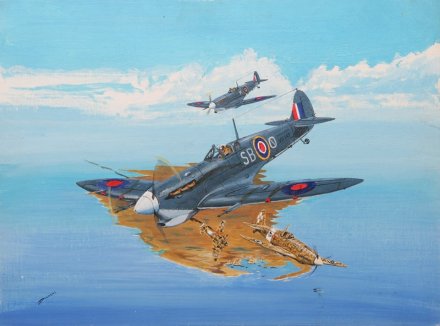
It is unclear from records what aircraft S/Lt O’Bryen was involved with, however one of the more famous aircraft flown at HMS Heron used to train young pilots by the middle of the war was the famous Seafire, a naval adaption of the iconic Spitfire.

FAA8

FAA Seafire MK 1B by Derrick Dickens

“The Seafire which in fact was little more than a “navalised” Spitfire, it was without any doubt the most effective British built naval fighter of World War 2, even though it had the reputation of not being suitable for the rigours of carrier operations. To some degree, this reputation was deserved for the Spitfire was of lightweight design, never intended for naval service, but it filled a gap till the specialist naval types in the shape of the Corsair and Hellcat arrived, in the mean time serving in major campaigns in the Far East, Africa and Europe” (Stringbag to Shah by Derrick Dickens).

The next South African man lost was from the Fleet Air Arm’s No. 851 Squadron on the HMS Shah, and he in fact was a member of the South African Navy, having been seconded to the FAA.

HMS Shah

22308811_10155537271456480_3745202244434378650_nMACWHIRTER, Cecil J, Ty/Sub Lieutenant (A), Fleet Air Arm (Royal Navy) 851 Squadron HMS Shah, air crash, SANF, MPK 14 April 1944

At the time of S/Lt Macwhirter’s death the HMS Shah had just completed an operation to the United States to collect equipment and airframes for twelve Avenger aircraft allocated to 851 Naval Air Squadron (FAA) on the 14th.  The Shah sailed for Melbourne, departing Australia on 8th February 1944 for Cochin.  On the 23rd February she disembarked her ferry load of American fighters; this included the Avenger airframes earmarked for 851 squadron.

851 squadron was to remain ashore until 6th March before rejoining the ship. The next two weeks would be spent working up her air department and flight deck parties; this was the first opportunity for flying operations to be carried out.  HMS Shah arrived in Colombo on February 19th and 851 was flown off to RNAS Colombo Racecourse. Aircraft were embarked as required when further training; it was on such training that 851 suffered its first operational loss when Avenger FN813 stalled and ditched in the sea off the West coast of Ceylon while conducting a night anti submarine exercise on April 14th killing all three crew members, including S/Lt Cecil John Macwhirter, our South African son of Samuel and Elizabeth MacWhirter.

FAA9

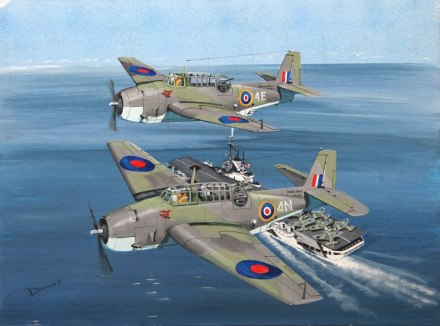
FAA Tarpon (Avenger) Mk 1 by Derrick Dickens

“When the Grumman Avenger first joined the Fleet Air Arm in 1943 it was very aptly named after a big ugly bird, the Tarpon. No 832 was the first Tarpon squadron to be formed and  in December 1942 they  sailed on HMS Victorious to America to commence training on the new torpedo bomber at the US Naval Air Station, Norfolk, Virginia They were equipped with US navy aircraft as the British machines were not ready Their first embarkation was on USS Saratoga and they landed up in the Pacific theater in April 1943. A month later they re-embarked on HMS Victorious for a period of operations in the Solomons. The FAA retained the name Tarpon until January 1944, when the name was changed back to the original American Avenger and  became known as Avenger 1s” (Stringbag to Shah by Derrick Dickens).

The second last South African to be lost fighting in Fleet Air Arm was with 1772 Squadron (FAA) on the HMS Indefatigable, he was also a member of the South African Navy and seconded to the Fleet Air Arm.

HMS Indefatigable 

LA GRANGE, Antony M, Sub Lieutenant (A), SANF, Fleet Air Arm (Royal Navy)1772 Sqn HMS Indefatigable, air operations, MPK 28 July 1945

FAA10

FAA Firefly Mk 1 by Derrick Dickens

In July 1945 1772 Naval Air Squadron, flying Fireflies, boarded HMS Indefatigable and joined the British Task Force 37 which then joined the US Task Force 38 in the northern Pacific for the final assault on the Japanese Mainland. The combined Task force comprised 14 Fleet Carriers, 25 Cruisers , at least five battleships, 75 Destroyers, and many other craft…. and 1300 aircraft. This was the largest naval force ever gathered in one area in history. The American Fleet comprised at least three-quarters of that combined fleet.

Many raids and bombardments took place in these last days of the war and losses were considerable despite the fact that the Japanese forces were very depleted by this time. The previous engagement had been largely American again and of course the European war had ended. This was the final massive battle against the remaining island possession occupied by the Japanese, Okinawa. Noteworthy in this engagement, which cost many American lives, was the Kamikaze and the Indefatigable received one Kamiikaze strike on its deck, killing several personnel.

The HMS Indefatigable went on to join the Americans in Tokyo Bay for the Peace Treaty signing.  S/Lt. Antony Michael La Grange, the son of Mrs. I. B. La Grange, of Albertinia, Cape Province, South Africa is remembered on the Plymouth Memorial.

FAA11

FAA Firefly Mk IV by Derrick Dickens

“The Fairy was conceived in the late “thirties”, blooded on the mid “Forties” withdrawn from production in the mid “Fifties” and finally retired in the mid sixties such was the 25 year lifespan of one of the most versatile aircraft to lift off a carrier deck. Combining performance, handling, maneuverability, and firepower never before displayed by a previous ship board aircraft, it wrote its own history due to its adaptability for roles and weapon loads unforeseen at the time of the creation of this handsome fighter – reconnaissance aircraft. The Firefly saw relatively limited action during World War Two, never the less it earned for itself a place in naval aviation history, for although the longevity of the Firefly was to be superceded, and its remarkable versatility was to remain peerless.  1,702 Fireflies were built over a period of 14 years, the most of them in post world war two guise which differed greatly in role and different in appearance from the original aircraft which made its operational debut on HMS Indefatigable, taking part on the attacks on the German battleship Tirpitz” (Stringbag to Shah by Derrick Dickens).

The final South African to be lost in World War 2 flying for the Fleet Air Arm was also a member of the South African Navy seconded to the FAA on HMS Landrail.

HMS Landrail

22308811_10155537271456480_3745202244434378650_nWAKE, Vivian H, Ty/Lieutenant (A), FAA Fleet Air Arm (Royal Navy) 815 Squadron HMS Landrail, air crash, SANF, MPK 28 March 1945

By the time of Ty/Lt. Wake’s death, 815 Squadron had been reformatted in November 1944 at HMS Landrail, a shore base now called RNAS Machrihanish located 5 km west of Campbeltown on the western side of the Kintyre Peninsula in Scotland.

FAA 815 Squadron by this stage was flying Barracudas on anti-submarine operations, and doing DLT (deck landing training) on HMS Campania in preparation for the final operations in the Far East against Imperial Japan.

FAA12

FAA Barracuda Mk V

“The Barracuda was a large ugly beast of an aeroplane, when its wings were folded it looked like some prehistoric bird straight out of Jurassic Park. Un-pretty, big bulky, solid and generally disliked by the aircrew, they were used to good effect in 1944 during attacks on the Tirpitz, which was lying crippled in Kaafjord, North Norway, after being damaged in an attack by midget submarines. From April 1944 Nos. 810 and 847 began operations in the pacific theatre on board HMS Illustrious. Barracudas were also heavily involved in dive bombing attacks on Japanese land and maritime targets, as well as raids against Japanese targets in Sumatra. They continued to support the Allies advance until the end of the war

Towards the end of the war a major redesign of the Barracuda was undertaken to provide an interim aircraft for use in the war against Japan, until the Fairey Spearfish became available. This development resulted in the Barracuda TR Mk V”. (Stringbag to Shah by Derrick Dickens).

In Conclusion

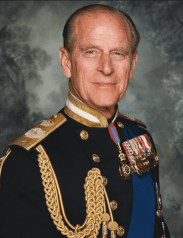
HRH Prince PhilipThe best way to summarise the Fleet Air Arm, its commitment and sacrifice is in fact found in the forward of Derrick Dickens’ Stringbag to Shar’ written by none other than the Admiral of the Fleet, HRH Prince Philip, Duke of Edinburgh K.G., K.T., O.M., G.B.E.

“When you look at the difficulties experienced by the pioneers of aviation Lord Cayley, the Wright brothers, Hiram Maxim and Colonel ‘Buffalo’ Bill; Cody – to get a machine to take off from mother earth and to fly through the air, it is not surprising that many people considered them to be extremely foolhardy, if not actually insane. To the far-sighted, the use of aircraft in war may have seemed obvious, it really needed the conviction of a saint to visualise the practical use of aircraft in a war at sea.

This splendid book traces the chequered history of naval aviation, and the extraordinary vision and determination of the designers, builders and pilots of naval aircraft against every sort of discouragement. It also illustrates the remarkable imagination of those who helped to develop all the ancillary equipment, such as aircraft carriers, catapults, arrestor wires, angled decks, ‘ski-jumps’, and all other gimmicks that enabled naval aviation to make a solid impact on the war at sea.

Looking through the illustrations in this book, it seems almost unbelievable that men could be found, not just to fly them, but to inflict damage on the enemy, and return to tell the tale.

The contribution of naval aviation to the war at sea during WW1 and WW2, may not have made the headlines in quite the same way as land-based aircraft, but, as the final days of the war against Japan demonstrated, the participation of naval aircraft was crucial to the ultimate allied victory”.

Related Work and Links

Related work of South Africans serving in the Royal Navy’s Fleet Air Arm

HMS Hermes “Dante’s Inferno”; Recounting South African sacrifice on the HMS Hermes

Dick Lord Dick Lord – the combat legend who took learnings from the Royal Navy’s Fleet Air Arm to the SAAF

Easter Raid The South African Navy’s ‘darkest hour’ is not recognised and not commemorated


Written and Researched by Peter Dickens, references from Wikipedia, The Commonwealth War Graves Commissioned, SAAF and RAF Honour Roll compiled by Graham du Toit, BBC People’s War, Fly Navy – HMS Shah, Fleet Air Arm Officers Association, CASUALTIES BY DATE and SHIP Compiled by Don Kindell sourced on the Royal Naval History Homepage.

Large extracts and paintings taken from “Stringbag to Shar 1938 to 2006” Compiled by Derrick Dickens. All the images used in this book are photographs of original paintings
by the author. These images may not be used anywhere else without the
specific permission of the copyright owner – Mr Peter Dickens. Images © Derrick Dickens 2008. (All original paintings).

The South African Navy’s ‘darkest hour’ is not recognised and not commemorated

1200px-Emblem_of_the_South_African_NavyHere’s a question for many,  in what action did the South African Navy (SAN) experience its greatest single loss of personnel, the largest sacrifice of South African life in a single  sea battle  – in essence when and what was the South African Navy’s ‘darkest hour’?

I’ve asked this question of senior South African military personnel, including the South African Navy as well as the South African Naval fraternity, the veterans – and the bottom line is … nobody knows.

Some immediately say it was the Mendi, as the remembrance of the Mendi is now the South African Navy’s key responsibility, but the loss of the SS Mendi in World War 1 was not a loss of South African Navy personnel (the South African Navy did not exist in WW1 and the Royal Navy was in charge of this particular troop ship full of South African ‘Army personnel’) and the loss of the Mendi was an accident at sea and not a combat action.

za)nv81Most (actually the majority) of SAN officers and veterans would say it was the loss of the SAS President Kruger (16 souls) but that would also be very wrong, both in terms of scale and action, the SAS President Kruger loss was also an accident at sea and not a combat action.

A tiny handful of SAN officers and vets who have a little knowledge of World War 2 might venture to answer the question by stating the loss of any one of the four South African minesweepers sunk during the war as the ‘darkest hour’ of the war.
22308811_10155537271456480_3745202244434378650_nThese are the HMSAS Southern Floe (24 souls) or the HMSAS Parktown (5 souls), or the HMSAS Bever (17 souls) or the HMSAS Treen (23 souls) – getting warm but that too would be wrong, as these did not happen over a defined period of the war that would warrant a ‘darkest hour’ in Churchill’s definition of the phrase (Churchill coined the term).

Nope, the largest loss of South Africans in a single sea battle, its ‘Darkest Hour’ took place fighting against Imperial Japan from the 5th to the 9th April 1942 … yup, the Japanese – believe it, and by the end of this particular naval engagement at sea a grand total of 65 South African souls were lost.  Now how many people know that!

The reason to ‘forget’!

So why does nobody know about this, why is this incident not ‘recognised,’ why is nobody ‘commemorating’ it and what exactly happened?

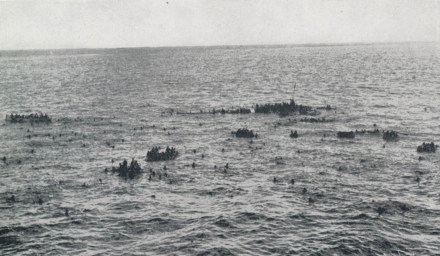
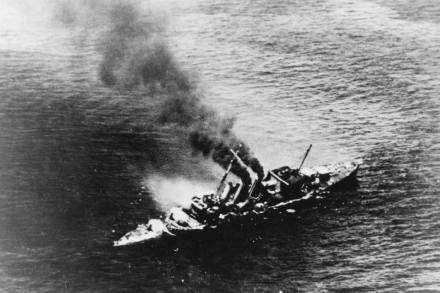
Simply put, it’s because they all died fighting whilst seconded to four British war ships in an action in the Pacific called ‘The Easter Sunday Raid’ – and it involved the sinking of the HMS Cornwall and HMS Dorsetshire in a single day – and later the sinking of HMS Hermes and HMS Hollyhock a few days later by the Japanese Imperial Navy.  But why should that be an issue and a reason to ‘forget’?
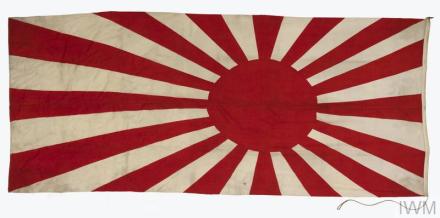
Imperial Japanese ensign

Japanese Imperial Fleet Ensign from World War 2

Again the simple answer is because just three short years after World War 2 the National Party in a stunning and unexpected election win over Jan Smuts’ United Party, came into power with their proposal of ‘Apartheid’ and making South Africa a ‘Republic’ independent of Britain – and they hated the British or anything to do with Britain.  The Nationalists had grounded an entire Afrikaner identity and a country’s ‘nationalism’ on two events – The Great Trek and The 2nd Anglo-Boer war, both of which carried a history of either British betrayal or British atrocity.

During the Second World war these nationalists either openly sided with Nazi Germany and in many cases (by their tens of thousands in fact) even joined Neo-nazi South African parties and/or adopted national socialist movement (Nazism) ideology publicly, some (including a future Nationalist South African President) embarked on sedition and terrorism to undermine the war effort (see “Mein Kampf shows the way to greatness for South Africa” – The Ossewabrandwag).

Bottom line, to the Nationalists thinking anyone who took part in Smuts’ campaign for South Africa to fight in the Second World War was a traitor to their ‘Volk’ (peoples).  In their minds they went to fight ‘Britain’s war’ alongside the hated British – traitors all (even though an unprecedented 1 in 4 white South African males volunteered to fight in WW2 – half of them Afrikaners).

For the Nationalists commemorating the sinking of South African ships fighting alongside British ones in World War 2 was bad enough.  However, commemorating and remembering the South African loss whilst fighting on His Majesty’s British ships themselves would be, for the nationalist government at least, an unforgivable betrayal.
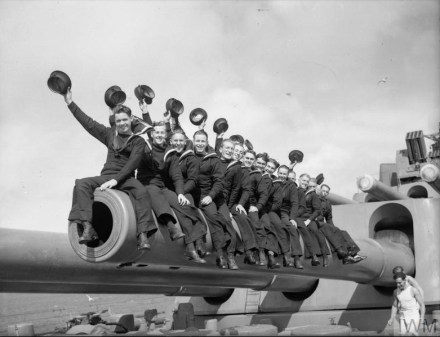
SANF

Members of the South African Royal Naval Volunteer Reserve serving on board HMS Nelson. The group is sat on one of the 16 inch gun barrels.

For this reason, the sinking of South African ships lost in World War 2 was not really extensively commemorated by the ‘old’ South African Defence Force  (SADF).  The SADF came into existence once the Nationalists declared South Africa a ‘Republic’ and replaced Smuts’ old ‘South African Union Defence Force (UDF) with a reformed military entity.  The sinking of HMSAS ships are only ‘remembered’ in small pockets of veteran South African Legion branches and MOTH shell-holes.

It is also for this reason that the SADF and the South African Navy did not ever commemorate the South African losses on British Ships, it is the reason why this particular ‘darkest hour’ in the South African Navy’s history is not recognised or remembered at all, which is utterly unforgivable as this is the very institution who supplied the men to The Royal Navy in the first place.

It is made worse in the modern epoch, by the newly reformatted South African National Defence Force’s Navy after 1994, which has not only lost the link thanks to the Nationalists, but also does not attempt to re-kindle it, party because of lack of knowledge, but also because it suits the African National Congress’ political agenda not to remember this association (commemorating or remembering a time when South Africans went to war for the ‘Colonials’ does not suit their current narrative).

So, let’s start addressing this betrayal of our armed forces personnel and understand what happened to qualify this as the South African Navy’s ‘darkest hour’, who is on this honour roll and what’s been done about in now?

What happened? 
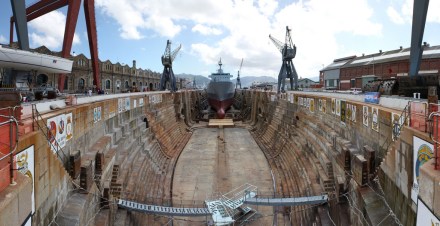
3397451999_8e45bbe5a4_b

Simonstown Dry Docks, when next there look out for the ships emblems of the Dorsetshire, Cornwall, Hermes and Hollyhock

As Simon’s Town was a Royal Navy base during World War 2 (British soil in the middle of South Africa), men volunteering for the “South African Naval Forces” (SANF) to fight in World War 2 where either allocated to Royal Navy ships (titled HMS – His Majesty’s Ship) or on South African Navy ships (tilted HMSAS – His Majesty’s South African Ship), therefore whenever a large Royal Navy ship was lost during the war it is almost guaranteed that a number of South African Naval Personnel (SANF) were lost with it.

When large HMS ships are lost in an action on the same action the number of South African naval personnel lost just rockets – and this is the case with the sinking of the HMS Cornwall, HMS Dorsetshire, HMS Hermes and HMS Hollyhock.

The Japanese Easter Raid of 1942
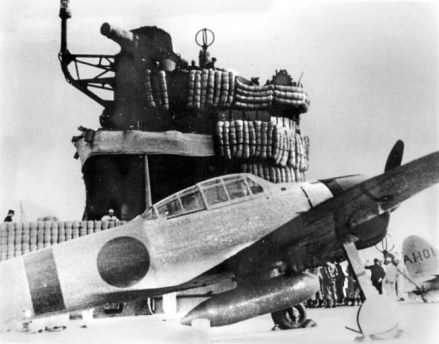
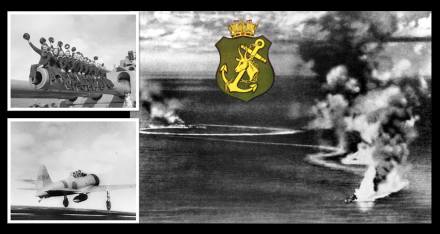
Zero

A Mitsubishi A6M Zero fighter plane takes off from the deck of the Japanese aircraft carrier Akagi, part of the Japanese Naval force in the Indian Ocean

With Japan’s entry into the war, and especially after the fall of Singapore, Ceylon (now Sri Lanka) became a front-line British base. The Royal Navy’s East Indies Station and Eastern Fleet was moved to Colombo and Trincomalee.

Admiral Sir James Somerville was appointed as the commander of the British Eastern Fleet, and he decided to withdraw main component the fleet to Addu Atoll in the Maldives, leaving a small force to defend Ceylon (now Shri Lanka) consisting of an aircraft carrier, the HMS Hermes, two heavy cruisers – the HMS Cornwall and HMS Dorsetshire, one Australian Destroyer the HMSAS Vampire and the flower class HMS Hollyhock.

The Imperial Japanese Navy, in much the same way and with the same objectives that were used at Pearl Harbour planned a decisive attack of the British Eastern Fleet to end their presence in the North Indian and Pacific oceans.  Unaware that the main body of the British fleet had moved to the Maldives, they focused their plan on Colombo.

The planned Japanese attack was to become collectively known as the Easter Sunday Raid and the Japanese fleet comprised five aircraft carriers plus supporting ships under the command of Admiral Chuichi Nagumo.

In an almost exact copy of the raid on the American fleet at Peal Harbour (as if no learnings were made by the Allies), on 4 April 1942, the Japanese fleet was located by a Canadian PBY Calatina aircraft, the Catalina radioed the position of the Japanese Fleet to The British Eastern Fleet which alerted the British to the impending attack before it was shot down by six Japanese Zero fighters from the carrier Hiryu,  However, despite the warning Nagumo’s air strike on Colombo the next day, Easter Sunday – 5th April –  achieved near-complete surprise (Pearl Harbour was also attacked on a weekend). The British Radar installations were not operating, they were shut down for routine maintenance.
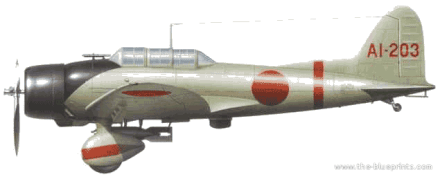
aichi-d3a1-mod-22-val

The Japanese high command had planned the bombing of Colombo very much like the Pearl Harbor operation (many of the same planes and pilots participated in both strikes); but most of the British Eastern Fleet was at Addu Atholl in the Maldives, so when the Japanese attacked at Colombo there were only three ships there.

The sinking of the HMS Cornwall and HMS Dorsetshire.

The day before, 4 April, when the Japanese carrier fleet was spotted, the two heavy cruisers the HMS Cornwall and HMS Dorsetshire set out for Addu Atoll in pursuit of the Japanese. On 5 April 1942, the two cruisers were sighted by a spotter plane from the Japanese cruiser Tone about 200 miles (370 km) southwest of Ceylon.

As part of the engagement known as the Easter Sunday Raid, a wave of dive bombers led by Lieutenant Commander Egusa took off from Japanese carriers to attack Cornwall and Dorsetshire, 320 km (170 nmi; 200 mi) southwest of Ceylon, and sank the two ships.  Both the Dorsetshire and the Cornwall had long associations with South Africa and had large contingent of South African Naval Personnel on board.
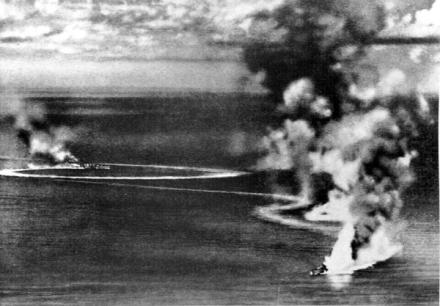
DorsetshireCornwall

Japanese combat photograph showing the Royal Navy heavy cruisers HMS Dorsetshire and HMS Cornwall on fire and sinking

In the attack, the Japanese airman flying Japanese  D3A-1 ‘VAL’ dive bombers, a total of 53 dive bombers in the attack wave, dropped 10 bombs on the HMS Dorsetshire itself (250- and 550-pound bombs) and 8 near misses, all in the span of 8 minutes.  One of the bombs detonated an ammunition magazine and contributed to her rapid sinking.  Of the two British cruisers, the HMS Dorsetshire sank first, with her stern going first at about 13:50, the HMS Cornwall was hit eight times and sank bow first about ten minutes later.

For a full story on the HMS Dorsetshire and her long association with South Africa, see this Observation Post by clicking this link: “They machine gunned us in the water”; Recounting South African Sacrifice on the HMS Dorsetshire
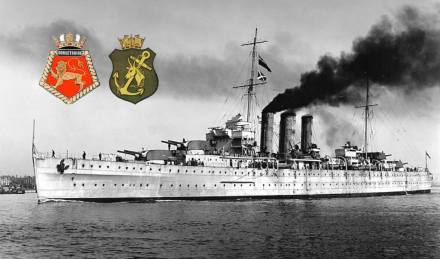
29352408_2115130958715891_1241973539881913227_o

For a full story on the HMS Cornwall and her long association with South Africa, see this Observation Post by clicking this link: “A terrific explosion lifted the ship out of the water”; Recounting South African sacrifice on the HMS Cornwall
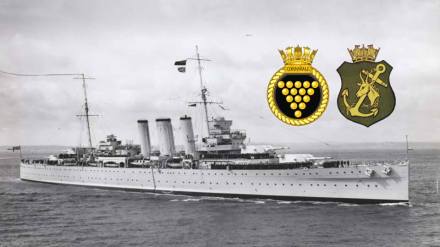
29542625_2113775675518086_7029672198895321022_n

British and Allied losses were 424 men killed; 1,122 survivors spent thirty hours in the water before being rescued by HMS Enterprise and two British destroyers.

The sinking of the HMS Hermes and HMS Hollyhock

If the above losses qualify a dark day for the South African Navy it then becomes the SAN’s ‘darkest hour’, when in the same Japanese Operation, only a couple of short days later, on 9 April 1942, the Japanese focussed their attack on the harbour at Trincomalee and the British ships off Batticaloa. The HMS Hermes left the Royal Naval Base of Trincomalee, Ceylon escorted by the Australian Destroyer HMAS Vampire and HMS Hollyhock looking to engage the Imperial Japanese fleet which had attacked Colombo.

While sailing south off Batticaloa on the East Coast of Ceylon, this British flotilla was also attacked by the Japanese Carrier-Borne dive-bombers from the Imperial Japanese Task Force now in the process of attacking the Naval Base at Trincomalee.

Approximately 70 Japanese aircraft were despatched to bomb the HMS Hermes which sank within ten minutes of being hit by numerous aircraft bombs. HMAS Vampire was also sunk by bombs a short while later.
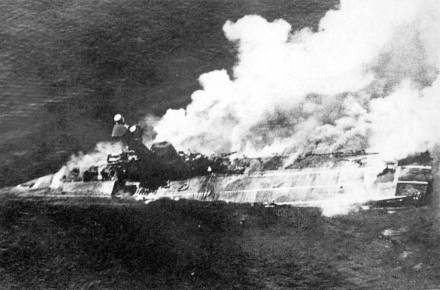
13086706_580301575472912_9134783755502643981_o

HMS Hermes ablaze and sinking

The HMS Hollyhock was about 7 nautical miles from the HMS Hermes escorting a tanker, the RFA Athelstane when the Hermes came under attack.  The Hollyhock came under attack by the same Japanese aircraft and it too was bombed and sunk.

Once again, the HMS Hermes also had a very large South African Naval Forces contingent seconded to it on board, and the same applied to the HMS Hollyhock, and therefore once again there is a large of loss of South African life in this action against the Imperial Japanese fleet.

For a full story on the HMS Hermes and her long association with South Africa, see this Observation Post by clicking this link “Dante’s Inferno”; Recounting South African sacrifice on the HMS Hermes
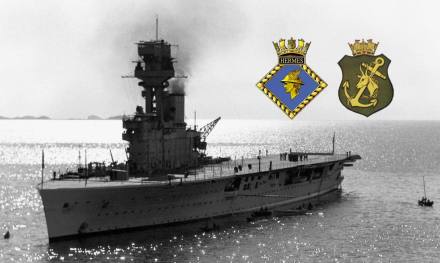
22290016_2032097947019193_784550767658191370_o

For a full story on the HMS Hollyhock and her long association with South Africa, see this Observation Post by clicking this link “She immediately blew up”; Recounting South African sacrifice on the HMS Hollyhock
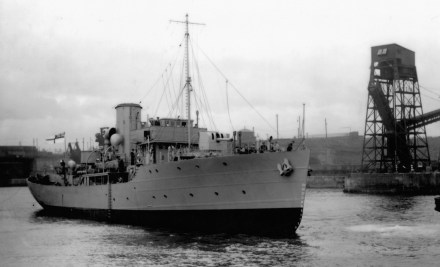
hmshollyhock_sunderland

HMS Hollyhock

The Honour Roll

Total South African Naval Force (SANF) losses on the HMS Cornwall and HMS Dorsetshire in the single day of action were as follows (MPK means “missing presumed killed”):

HMS Cornwall

BESWETHERICK, Hedley C, Ordinary Seaman RNVR, 86671 (SANF), MPK
BOTES, John S, Stoker 2c RNVR, 68924 (SANF), MPK
COMMERFORD, Noel P, Able Seaman RNVR, 66493 (SANF), MPK
CRAWFORD, Cecil E, Act/Engine Room Artificer 4c RNVR, 67922 (SANF), MPK
DU PREEZ, Charles P H, Able Seaman, 68175 (SANF), MPK
DUTTON, Charles C, Stoker 2c RNVR, 68949 (SANF), MPK
HANSLO, Raymond F, Able Seaman RNVR, 68295 (SANF), MPK
KEITH, Kenneth I B, Able Seaman RNVR, 66742 (SANF), MPK
KENYON, Graeme A B, Able Seaman RNVR, 68002 (SANF), MPK
KIRSTEN, Monty G W, Able Seaman RNVR, 68917 (SANF), MPK
LAW, Edward, Act/Engine Room Artificer 4c RNVR, 66760 (SANF), MPK
MCDAVID, William K, Stoker 2c RNVR, 69138 (SANF), MPK
MITCHELL, William A, Stoker 1c RNVR, 68796 (SANF), MPK
PALMER, Walter A, Able Seaman RNVR, 68344 (SANF), (rescued, aboard HMS Enterprise), Died of Wounds
SPENCE, Noel W, Ordinary Seaman RNVR, 68732 (SANF), MPK
SQUIRES, John E, Ordinary Seaman RNVR, 68728 (SANF), MPK
STEPHEN, Eric B, Ordinary Seaman RNVR, 68861 (SANF), MPK
SWANN, Lawrence T, Stoker 1c RNVR, 68710 (SANF), MPK
THORPE, Maurice, Stoker 2c RNVR, 69140 (SANF), MPK
VERSFELD, Peter H S, Able Seaman RNVR, 68859 (SANF), MPK
VINK, Benjamin F, Ordinary Seaman RNVR, 68860 (SANF), MPK
WILLSON, Gerald F, Stoker 2c RNVR, 69006 (SANF), MPK
WRIGHT, Thomas H, Able Seaman RNVR, 68039 (SANF), MPK

HMS Dorsetshire

BELL, Douglas S, Ty/Act/Leading Stoker, 67243 (SANF), MPK
BRUCE, Alexander M, Stoker 2c, 67907 (SANF), MPK
CONCANON, Harold Bernard, Surgeon Lieutenant (Doctor)
EVENPOEL, Albert, Stoker 2c, 67909 (SANF), MPK
GEFFEN, Sender, Stoker 1c, 68035 (SANF), MPK
HOWE, Horace G, Ordinary Seaman RNVR, 68680 (SANF), MPK
KENDRICK, George, Stoker 2c, 67910 (SANF), MPK
MCINTYRE, Norman G, Able Seaman, 67446 (SANF), MPK
MCLELLAN, Robert, Ordinary Telegraphist, 67897 (SANF), MPK
MILNE, Lawrence Victor, Able Seaman
MORROW, Douglas E, Able Seaman, 67989 (SANF), MPK
ORTON, Charles P, Able Seaman, 68009 (SANF), MPK
REDMAN, Roland A, Leading Stoker, 67406 (SANF), MPK
SCOTT, William J, Able Seaman, 68007 (SANF), MPK
SEVEL, Harry, Stoker 1c, 68100 (SANF), MPK
VAN ZYL, David Isak Stephanus, Stoker 1st Class
WILLETT, Amos A S, Stoker 1c, 67240 (SANF), MPK
WILLIAMSON, Walter N, Able Seaman, 67803 (SANF), MPK

But, unfortunately there is more.  As in the same Japanese Operation, just a couple of days later saw the loss of the HMS Hermes and HMS Hollyhock (also lost in a single day), the honour roll of South Africans on board these two fighting ships who were lost is as  follows:

HMS Hermes

BRIGGS, Anthony Herbert Lindsay Sub-Lieutenant (Engineer) Royal Navy (South African national), MPK

BRYSON, Neil W, Ordinary Telegraphist, 69147 (SANF), MPK
BURNIE, Ian A, Able Seaman, 67786 (SANF), MPK
CLAYTON, Frederick H, Act/Engine Room Artificer 4c, 68102 (SANF), MPK
DE CASTRO, Alfred T, Stoker 1c, 67914 (SANF), MPK
KEENEY, Frederick W, Able Seaman, 67748 (SANF), MPK
KEYTEL, Roy, Able Seaman, 67296 (SANF), MPK
KIMBLE, Dennis C, Act/Engine Room Artificer 4c, 67600 (SANF), MPK
KRAUSE, Frederick E, Able Seaman, 68321 (SANF), MPK
RAPHAEL, Philip R, Able Seaman, 67841 (SANF), MPK
RICHARDSON, Ronald P, Able Seaman, 67494 (SANF), MPK
RILEY. Harry Air Mechanic 2nd Class, Fleet Air Arm, Royal Navy (South African national), MPK
TOMS, Ivanhoe S, Able Seaman, 67709 (SANF), MPK
VICKERS, Colin P, Able Seaman, 68296 (SANF), MPK
VORSTER, Jack P, Able Seaman, 67755 (SANF), MPK
WHITE, Edward G, Stoker, 68026 (SANF), MPK
WIBLIN, Eric R, Able Seaman, 67717 (SANF), MPK
YATES, Philip R, Supply Assistant, 67570 (SANF), MPK

Included in this Honour Roll is also a South African serving with the Royal Navy’s Fleet Air Arm on the HMS Hermes.

RILEY, H, Air Mechanic, Fleet Air Arm, HMS Hermes, died 9 April 1942

HMS Hollyhock

ANDERSON, Henry G, Able Seaman, 67501 (SANF), MPK
BASTON, Douglas T, Act/Engine Room Artificer 4c, 68600 (SANF), MPK
BUITENDACH, James M, Stoker 2c, 69223 (SANF), MPK
JUBY, Kenneth J, Ordinary Seaman, 69211 (SANF), MPK
LEACH, Peter A D H, Stoker 2c, 69225 (SANF), MPK

 Lest we forget the tremendous sacrifice of our countrymen in this world war for the liberation of human kind.

Why is it important we get this history right?
Logo_of_the_Royal_NavySo there we have it, the South African Navy’s biggest single loss in a single day – 41 souls, a ‘black day’ and added together with the HMS Hermes and HMS Hollyhock , we see a complete total of 65 South African souls lost in one single engagement at sea – qualifying a very ‘black week’ – The Easter Sunday Raid and this then marks the Easter period as the South African Navy’s ‘Darkest Hour’.

But is this correct – is this the full complement of South Africans lost in the incident?  The answer unfortunately is – probably not.

Whilst the honour rolls distinguish the South African Naval Forces personnel seconded to British ships, they do not distinguish the South Africans who joined the Royal Navy directly in either Simonstown or in the United Kingdom – of which there were thousands and those who lost their lives are now listed under the Royal Navy’s honour roll.

The ‘old’ South African Defence Force (SADF) did not maintain these records, nor was a honour roll tracked by the South African Navy and simply put, when the Nationalists broke the formal ties with the United Kingdom and the Commonwealth, and after the resultant four decades in the ‘wilderness’ during the Apartheid epoch – many of these names are now ‘lost’.to all of us as South Africans.

To find out which of these are South Africans requires research into each and every case on the Royal Navy’s record – a momentous task which some dedicated people looking into this are only now beginning to get their heads around.  Here we must thank the likes of Glenn Knox, David Bennet, Allan du Toit, Cameron Kinnear and Graham Du Toit and a handful of others for sterling work recovering this history.

So, in all likelihood more than just ’64’ South Africans died in this action, and why is this important for us to know who they were? Read this letter I received when I published this honour roll and action in a previous article on the HMS Dorsetshire it says everything as to the importance of this work:

Letter from Chris Crossley

Hi Peter,
Just another story for you! This post you put up on the Legions page has some amazing history which you wouldn’t know about but I am happy to share with you to show my gratitude for these “nuggets” of info you share with us.

My wife, Tracy, was an adopted child who after 35 years found her birth parents. Wonderful people they turned out to be and we are building a relationship with them that is priceless. As things go, curiosity led us to find out about family history and Tracy’s birth Dad told us about an uncle of his that was lost during the war. He was in the SAN and went down with “some” ship somewhere. He was married at the time and his wife, on hearing the news that her husband was lost at sea (MIA) never gave up on the hope of his return to Durban because he was never seen and not confirmed deceased. Because of this, she never remarried and passed away many years later, remaining faithful to her husband. Her husband was Roland Redman who served with the SA Navy volunteers on the HMS Dorsetshire that your story includes. His name is included in the Role of Honour for the Dorsetshire.

None of the wider family have ever known what happened to him and the facts and details of his service were not known by the surviving family members either. This last Saturday evening, I was talking to my wife’s birth Dad when he recounted the scant details he had of his uncle. I went on line and found your article and shared it with him on fb. Well he was overcome by this information as well as other members of his family and now for the first time in seventy odd years the facts of Uncle Roland, his service and his sacrifice are now known and cherished by his family left behind.

As an historian, I am sure this story will be something that you can cherish as your post has made a huge difference to some wonderful people! Thank you.

Chris Crossley

See When “nuggets” of history make a BIG difference

In Conclusion 

Now, with this letter in mind, I cannot think of a better reason to get this history right and establish the correct commemorations and full honour roll.  We owe it to our countrymen whose sacrifice brought us international freedom and liberty – it is our duty to carry this flame of remembrance and rid ourselves of the divisive and petty politics of one-upmanship played out by politicians with agendas (nationalists and the ANC) – this politicisation shrouds our most honourable history and only serves to dishonour the sacrifice of our South African servicemen and women – which is by its very nature is as ‘unforgivable’ as it is ‘dishonourable’.

Related work and Links:

For related work in the Observation Post on the above story, click on the following links:

SS Mendi: Let us die like brothers … the silent voices of the SS Mendi finally heard 

HMSAS Southern Floe:  ‘A sole survivor and a ship’s crest’; the South African Navy’s first loss – HMSAS Southern Floe

HMSAS Parktown: The feisty South African minesweeper that went down fighting – HMSAS Parktown)

HMSAS Bever  “Under a hail of shells”; Recounting the bravery and loss of HMSAS Bever

HMSAS Treern: The last South African Navy ship to be lost in action; HMSAS Treern

SAS President Kruger:  “Out of the Storm came Courage” … the tragedy of the PK

South Africans lost on other Royal Navy ships:

HMS Barham: “She blew sky high”; Recounting South African sacrifice on the HMS Barham!

HMS Edinburgh: “Gold may shine; but it has no true light” South African sacrifice on the HMS Edinburgh

HMS Gloucester: A “grievous error”; Recounting South African Sacrifice on the HMS Gloucester

HMS Helca: “Every man for himself” … South African sacrifice and the sinking of HMS Hecla

HMS Neptune: South African sacrifice on the HMS Neptune


Written and Researched by Peter Dickens.  References Wikipedia. CASUALTIES BY DATE and SHIP Compiled by Don Kindell sourced on the Royal Naval History Homepage.  Image copyright of Royal Navy, SA Naval Reserve, Imperial War Museum.  Japanese Imperial Ensign object, Imperial War Museum copyright.


The Royal Air Force’s 100th Birthday and its founder – Jan Smuts

Jan Smuts

Jan Christian Smuts by Marie Vermeulen Breedt

If you enter the Royal Air Force club located at 128 Piccadilly, London you are greeted in the foyer by a famous South African statesman – Jan Smuts.  A bust of Jan Smuts stands at the entrance, and for very good reason – he founded the Royal Air Force, an Air Force which turned 100 years old on the 1st April 2018.

It was on the ‘Smuts Report’ submitted by in August 1917 that the plans for a separate arm of service, an air service – independent of the services of the Navy and Army were laid down by Prime Minister Llyod George’s war cabinet.  The Smuts Report is the ‘Instrument’ by which the Royal Air Force (RAF) was formed.

Smut’s prophetic words in this report still ring true “the day may not be far off when aerial operations with their devastation of enemy lands and destruction of industrial and populous centres on a vast scale may become the principal operations of war, to which the older forms of military and naval operations may become secondary and subordinate”.

7960001505000118_fill

The Smuts Report

The War Cabinet accepted Smuts’ recommendation to amalgamate the two separate air forces (Royal Flying Corps and the Royal Naval Air Service) under one single and independent Air Force.  Smuts was then asked to lead an Air Organisation Committee to put it into effect. The Air Force Bill received Royal assent from the King on the 29 November 1917, which gave the newly formatted Air Force the prefix of ‘Royal’ (up to that point the idea was to call it the ‘Imperial Air Force’).  To see more on Smuts and the centenary of the Smuts report follow this link (Centenary of the ‘Smuts Report’, the instrument which gave birth to the Royal Air Force )Royal Air Force WW1The RAF came together on the 1st April 1918, a date recognised as the RAF’s officially recognised birthdate. On its creation the RAF, in the final year of World War 1, it was the most powerful air force in the world with over 20,000 aircraft and over 300,000 personnel.
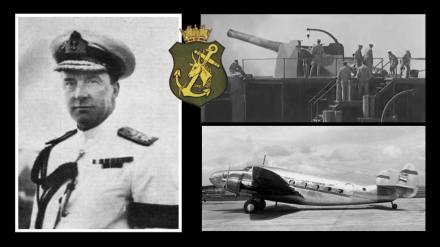
The Second World War proved to be the Royal Air Force’s ‘finest hour’ when the tiny airforce held back the entire German Nazi advance on the United Kingdom during ‘The Battle of Britain’, leaving the United Kingdom and its Allies to eventually liberate Europe.  A time when Winston Churchill aptly christened the men of the RAF as the ‘few’ and famously said;

Never in the field of human conflictwas so much owed by so many to so few”.

Many South Africans have served in the Royal Air Force and continue to serve.  Some famous ones include Andrew Beauchamp-Proctor VC, Andrew Cameron Kiddie, Sailor Malan, Roger Bushell, Zulu Lewis, Dutch Hugo, Pat Pattle, JJ Le Roux, Dingbat Saunders, John Nettleton VC, Edwin Swales VC, John Howe and many more.

Today the Royal Air Force is a little smaller, but no less effective. The RAF maintains an operational fleet of aircraft described by the RAF as being “leading-edge” in terms of technology. This largely consists of fixed-wing aircraft, including Fighter and Strike aircraft, airborne early warning and control aircraft, ISTAR and SIGINT aircraft, aerial refuelling aircraft and strategic and tactical aircraft.  The majority of the RAF’s rotary wing aircraft form part of the tri-service Joint Helicopter Command.

The majority of the Royal Air Force personnel are based in the UK, with many others serving on operations – principally over Iraq and Syria and others are based at long Erving overseas bases on the Ascension Islands, Cyprus, Gibraltar and the Falkland Islands.

Recent large scale operations and interventions, after the ‘Cold War’ by the Royal Air Force include the 1991 Gulf War, the 1999 Kosovo War, the 2001 War in Afghanistan, the 2003 War in Iraq and the 2011 Intervention in Libya.

Here is to salute ‘those magnificent men in their flying machines’ and their South African founder – Field Marshal Jan Smuts on their 100th Birthday.

29749639_1687310501350675_8873665093682912211_o

Related Work and links

For more realted work and links on South Africans in the Royal Air Force, follow these Obervation Post Links:

Sailor Malan : Sailor Malan; Fighter Ace & Freedom Fighter!

Zulu Lewis: The South African pilot who earned ‘Ace in a Day’ – TWICE! Albert ‘Zulu’ Lewis DFC and Bar

JJ Le Roux: The South African fighter ace who ended Rommel’s war

Edwin Swales VC: Maj. Edwin Swales VC – a true South African hero’s legacy now under threat

Roger Bushell: The Great Escape … was led by a South African!

John Nettleton VC: John Nettleton VC – an unknown South African Victoria Cross recipient

Pat Pattle: One of the greatest Allied fighter pilots of WW2 was a little known South African! Meet Pat Pattle.

John Howe: Forget Tigers, The Royal Air Force’s 74 Squadron has a legacy of South African Lions!

Ian Pyott: Connecting Zeppelins, Marlene Dietrich and South Africa’s favourite biscuit – Romany Creams!

Cameron Kiddie: Kimberley’s local baker was also a WW1 Flying Ace

Andrew Beauchamp-Proctor VC: South Africa’s own WW1 Flying Ace

Dutch Hugo: “Dutch” Hugo another Afrikaner hero who is celebrated as one of “The Few”

Albie Gotze LdH: “This bastard is going to kill me”; Albie Götze’s Legion d’Honneur


Written and Researched by Peter Dickens.  Reference Wikipedia.  Oil Painting of Jan Christian Smuts by Marie Vermeulen Breedt.

Guy Hallifax, the most senior African Naval officer lost during WW2

29662349_2114964258732561_5863672511395231607_oThis Easter we also remember Rear Admiral Guy Hallifax, the most senior South African Naval officer  to lose his life during World War 2.  His contribution to the Navy is significant as he literally is one of the founding fathers of the modern South African Navy as we know it.
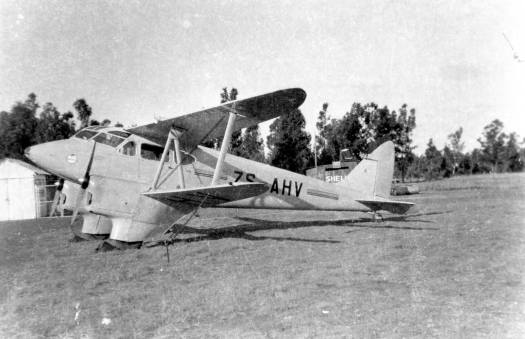
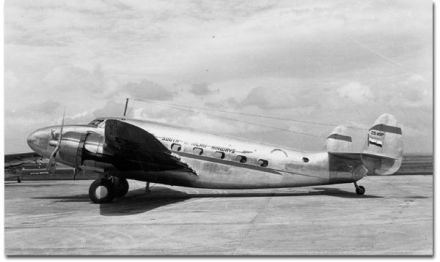
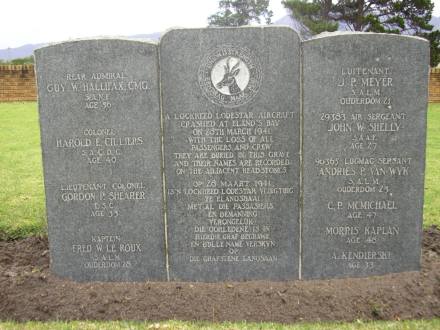
Guy Hallifax served in the Royal Navy from 1899 to 1935, and ended his RN career on the staff of the last British Governor-General of South Africa, the Earl of Clarendon.  Remaining in South Africa, at the outbreak of World War 2 in 1939, he was recruited by the South African government to form a Navy, which was to be named the ‘Seaward Defence Force’.

As the first Director of the Seaward Defence Force, he established a small fleet of minesweepers and anti-submarine vessels for coastal defence, and organised naval detachments in the major ports.  In his work, the South African seaward defence forces became a formidable institution by 1943, please take the time to watch this short Pathé newsreel which captures it.

In March 1941, Guy Hallifax flew in a small de Havilland Dragon Rapide to Walvis Bay, a small South African naval territory in South West Africa (now Namibia), for a staff visit to the base.   Uncomfortable with the old bi-plane Dragon Rapid, he elected to return in a heavier, modern and more powerful Loheed Lodestar.  This is Dragon Rapid he flew to Walvis Bay in – courtesy the SA Naval Museum.

10514263_10154387948540147_7537883925917828340_o

The de Havilland Dragon Rapide used by Guy Hallifax to fly to Walvis bay

On the 28th March 1941, when Rear Admiral Guy Hallifax returned from his staff in a civilian registered South African Airways Lockheed 18-08 Lodestar, Registration ZS-AST en-route to Cape Town, which tragically flew into the high ground near at Baboon Point near Elands Bay (Elandsbaai) in dense fog. All on board were killed which including Rear Admiral Guy Hallifax and three civilians.

189aa4e8838281b5ce39efb5921ae90c

Similar SAA Lockheed 18-08 Lodestar to ZS-AST

They are all buried in a mass grave in the Plumstead cemetery, the grave is cared for by the Commonwealth War Graves Commission.  Here is his final resting place.

10506815_10204393630786316_1096154183815390699_o


Written and Researched by Peter Dickens.  References Wikipedia and the SA Naval Museum, with thanks to Glenn Knox.  Video copyright Pathé news , also referenced is Day by Day SA Naval History: By Chris Bennett.

“They machine gunned us in the water”; Recounting South African Sacrifice on the HMS Dorsetshire

This is an image of the HMS Dorsetshire listing and burning just prior to her sinking, it was attacked by the Imperial Japanese Navy using carrier borne dive bombing aircraft. A large number of South African Navy personnel were involved in the battle and were lost with this ship whilst seconded to the Royal Navy during World War 2.

rotate

As Simonstown in South Africa was a British Naval base thousands of South Africans in WW2 served in the Royal Navy as well as in the South African Naval Forces (SANF). The loss of a heavy Cruiser the size of the HMS Dorsetshire is bound to include a South African honour roll and unfortunately this one does – a very long one at that, especially given this particular Battle Cruiser’s long association with South Africa.

The sinking of both the HMS Cornwall and the HMS Dorsetshire in the Indian Ocean by the Japanese on 5th April 1942 is linked.  Not only that they were sunk within range of one another on the same day, but also in terms of the relationship of these two ships had with South Africa and the number of South Africans on board.  This is further linked to the sinking of the HMS Hermes and HMS Hollyhock later in the same engagement with the Japanese, with similar relations and consequences to the South African Navy.

So, let’s focus on the HMS Dorsetshire today, a hero in the sinking of the German Battleship Bismarck and the extraordinary link between this ship and South Africa.

HMS Dorsetshire Short History

1399036_810766838985484_5239559498358212933_oThe HMS Dorsetshire  was a heavy cruiser and after commissioning in 1930 became the flagship of the 2nd Cruiser Squadron Atlantic Home Fleet.  Before the war, from 1933 until 1936, HMS Dorsetshire served on the Africa Station. Her first recorded docking in the Selborne dry dock at Simonstown, South Africa was on 5 January 1934.
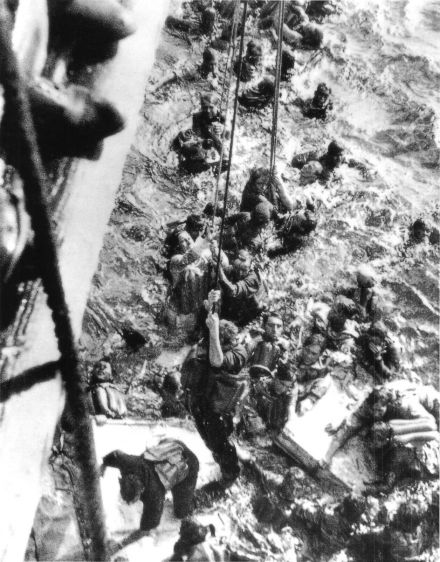
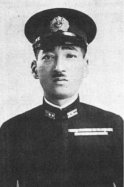
When the Second World War broke out HMS Dorestshire had joined the China station and in October 1939 she was joined into the hunt for the German pocket battleship Admiral Graf Spee along with the HMS Cornwall.  Both were withdrawn from the China station and despatched to Ceylon to form Force I.

In December 1939 the HMS Dorsetshire and HMS Cornwall arrived in South Africa where they embarked many South African volunteers, drawn mainly from Royal Navy Volunteer Reserves (RNVR – South African Division) and South African Naval Reserve Force.

The HMS Dorsetshire was called into pursuit of the German ‘pocket battleship’ Admiral Graf Spee, which having left Wilhemshaven on 21 August 1939  had reached the eastern part of the South Atlantic in early October 1939. In this region she managed to sink three British ships, Newton Beach, Ashlea and Huntsman on 5, 7 and 10 October respectively some 1,000 nautical miles north west of Cape Frio in Namibia, and then the Trevanion 630 miles north west of Walvis Bay on 22 October.

Admiral Graf Spee then continued on south and rounded the Cape passing some 400 miles south of Cape Agulhas. On 15 November she sank the small tanker Africa Shell a mere 10 miles off the coast of Mozambique before moving once again around the Cape keeping at least 300 miles off shore passing Cape Agulhas once more on 3 December 1939.

When the German Battleship ‘Admiral Graf Spee’ was discovered and pursued by the British Royal Navy, the Graf Spee was sent to the River Plate estuary in South America and because of the potential fall-out should it be sunk or captured the Captain was ordered by the German High Command to scuttle his vessel after leaving the Montevideo harbour – without encountering the Royal Navy.

In February 1940 while in the Atlantic, the German supply freighter Wakama was stopped by Dorsetshire in the area off Cabo Frio and her crew scuttled also her . On 2 March 1940 she left the Falklands with wounded from the cruiser HMS Exeter en-route to Cape Town, South Africa. On the 11th , the wounded and the prisoners from the German freighter were all put ashore.

She was then docked again at Simonstown’s Selborne dry dock, prior to sailing back to United Kingdom.  This short movie Pathé news reel captures the HMS Dorsetshire in South Africa and its well worth a quick look:

On May 25th, the cruiser arrived in Plymouth in the UK, and at the end of the month sailed for Freetown to commence operations around Dakar in pursuit of the Vichy French Battleship Richelieu.  She sailed on again to South Africa and was dry docked in Durban on the 4th September, on the 20th September she arrived back in Simonstown, where a day later she sailed for Sierra Leone.

November saw her in the Indian Ocean where she bombarded Zante in Italian Somaliland. In December Dorsetshire docked once again in the Selborne dry dock in South Africa and later that month she was ordered to search for the German pocket Battleship Admiral Scheer.

On 18 January 1941, HMS Dorsetshire captured the Vichy French freighter Mendoza and escorted the ship to Takaradi. In March 1941, Dorsetshire was once again docked in the Selborne dry dock in South Africa.  Late in May 1941, whilst in the North Atlantic on convoy covering duties, HMS Dorsetshire together with the cruiser HMS London were tasked to search for the German Battleship ‘Bismarck’.

The sinking of the Bismarck

bismarck

The Bismarck

At the time she was ordered to search for the Bismarck on 26th May 1941 the HMS Dorsetshire was some 360 nautical miles (670 km) south of  the Bismarck’s actual location. HMS Dorsetshire steamed at top speed, though heavy seas until she encountered the destroyer HMS Cossack, which had been engaging the Bismarck during the night, the German battleship’s gun flashes could be seen six miles away by early morning.

The HMS Dorsetshire then took part in the Bismarck’s final battle,  The battleships HMS Rodney and HMS King George V neutralised Bismarcks main battery early in the engagement,  the HMS Dorsetshire and other warships closed in to join the attack.  The HMS Dorsetshire opened fire at a range of 18,00 meters. In the course of the engagement, she fired 254 shells from her main battery.  In the final moments of the battle, she was ordered to move closer and torpedo the Bismarck and fired three torpedoes, two of which hit the crippled battleship.

Bismarck survivors

Survivors from Bismarck are pulled aboard Dorsetshire on 27 May 1941

The Germans had by this time also detonated scuttling charges, which also with the damage inflicted by the British Royal Navy, caused the Bismarck to rapidly sink just before midday on the 27th May 1941. 

The HMS Dorsetshire and the destroyer HMS Maori were tasked to pick up survivors. A reported U-boat sighting forced the two ships to break off the rescue effort, after picking up only 110 men: 85 aboard Dorsetshire and 25 aboard Maori.

African Duties and Raiders

In late August, HMS Dorsetshire left Freetown and participated in the unsuccessful search for the German heavy cruiser Admiral Hipper, On the 4th November HMS Dorsetshire sent to investigate reports of a German surface raider in the South Atlantic with no result.

After arriving again in Cape Town on 9 December 1941, having sunk a German U Boat supply ship the ‘Python’ whilst she was refuelling a pair of German U-boats.

Beginning 1942, HMS Dorsetshire, under the command of Augustus Agar was assigned to the Eastern Fleet in the Indian Ocean.

The Easter Sunday Raid

With Japan’s entry into the war, and especially after the fall of Singapore, Ceylon (now Sri Lanka) became a front-line British base. The Royal Navy’s East Indies Station and Eastern Fleet was moved to Colombo and Trincomalee.

Admiral Sir James Somerville was appointed as the commander of the British Eastern Fleet, and he decided to withdraw main component the fleet to Addu Atoll in the Maldives, leaving a small force to defend Ceylon (Sri Lanka) consisting of an aircraft carrier, the HMS Hermes, two heavy cruisers – the HMS Cornwall and HMS Dorsetshire, one Australian Destroyer the HMSAS Vampire and the flower class corvette, the HMS Hollyhock.

The Royal Navy’s own ‘Pearl Harbour’

The Imperial Japanese Navy, in much the same way and with the same objectives that were used at Pearl Harbour against the American fleet planned a decisive attack of the British Eastern Fleet to end their presence in the North Indian and Pacific oceans.  Unaware that the main body of the British fleet had moved to the Maldives, they focused their plan on Colombo (the commercial capital of modern-day Sri Lanka).

The planned Japanese attack was to become collectively known as the Easter Sunday Raid and the Japanese fleet comprised five aircraft carriers plus supporting ships under the command of Admiral Chuichi Nagumo.

In an almost exact copy of the raid on the American fleet at Peal Harbour (as if no learnings were made by the Allies), on 4 April 1942, the Japanese fleet was located by a Canadian PBY Calatina aircraft, the Catalina radioed the position of the Japanese Fleet to The British Eastern Fleet which alerted the British to the impending attack before it was shot down by six Japanese Zero fighters from the carrier Hiryu.

A6M2_on_carrier_Akagi_1941

A Mitsubishi A6M Zero fighter plane takes off from the deck of the Japanese aircraft carrier Akagi, part of the Japanese Naval force in the Indian Ocean

However, despite the warning Nagumo’s air strike on Colombo the next day, Easter Sunday 5th April 1942 they did manage to achieved near-complete surprise (Pearl Harbour was also attacked on a weekend). The British Radar installations were not operating, they were shut down for routine maintenance (another parallel with the attack on Peal Harbour).

Easter Raid

Captain Mitsuo Fuchida

The first attack wave of Japanese planes took off in pre-dawn darkness (30 minutes before sunrise) from the aircraft carriers Akagi, Hiryu and Soryu, moving about 200 miles south of Sri Lanka. The first attack wave of 36 fighters, 54 dive bombers, and 90 level bombers was led by Captain Mitsuo Fuchida the same officer who led the air attack on Pearl Harbour.

The Heavy Cruisers, HMS Cornwall and HMS Dorsetshire set out in pursuit of the Japanese. On 5 April 1942, the two cruisers were sighted by a spotter plane from the Japanese cruiser Tone about 200 miles (370 km) southwest of Ceylon. A wave of  Japanese dive bombers led by Lieutenant Commander Egusa took off from Japanese carriers to attack Cornwall and Dorsetshire, 320 km (170 nmi; 200 mi) southwest of Ceylon, to sink the two ships.

In the attack, the Japanese airman flying Japanese  D3A-1 ‘VAL’ dive bombers, a total of 53 dive bombers in the attack wave, dropped 10 bombs on the HMS Dorsetshire itself (250- and 550-pound bombs) and 8 near misses, all in the span of 8 minutes.  One of the bombs detonated an ammunition magazine and contributed to her rapid sinking.  Of the two British cruisers, the HMS Dorsetshire sank first, with her stern going first at about 13:50, the HMS Cornwall was hit eight times and sank bow first about ten minutes later.

aichi-d3a1-mod-22-val

An eye-witness account from a South African Seaman on board the HMS Dorsetshire recounts the ferocity and nature of the Japanese attack:

Seaman WJ Spickett of Cape Town South Africa who was on lookout duty on Dorsetshire saw the whole action from start to finish.

“We were steaming to keep a rendezvous and when about 400 miles off land, a seaplane which we could not identify, started shadowing us. This was about 10 o’clock in the morning. Dorsetshire and Cornwall were steaming fast, keeping about four miles apart. At 20 minutes to two we spotted a large formation of between 40 and 60 aircraft coming towards us. Within a few minutes they were overhead — so high they were mere specks. Then they came straight for us in formations of three, diving at such a steep angle that it was impossible for our guns to get at them.

I saw the first bomb, a silvery flash in the sunlight, come straight for us. It was a direct hit, blasting our aircraft platform to pieces. In that first attack, I think 10 bombs were dropped. We were steaming at high-speed but eight of those 10 were direct hits. The other two were near misses. The ship listed badly and within 10 minutes of the first bomb being dropped we got orders to abandon ship.

We got away two whalers and a skiff and several rafts. There were hundreds of us in the water and then three planes came over and added to the horror of these moments ‘. Many were killed and wounded in this attack but apparently it was just a gesture of victory for it was not repeated.”

This witness account of machine gunning the survivors in the water is verified by a number of survivors including the Engineering Officer Lieutenant E. A. Drew, who said that whilst in the water they were “subjected to machine gun fire from the large number of Japanese planes that hung around until the ship sank”.

DorsetshireCornwall

Japanese combat photograph showing the Royal Navy heavy cruisers HMS Dorsetshire and HMS Cornwall on fire and sinking

Survival and Sacrifice 

In all the survivors of the sinking of both the Cornwall and Dorsetshire spent over 30 hours in the water clinging to debris or huddled in life rafts.  Many seriously injured and burned and during the night ‘space’ was made available on the tiny rafts and flotsam for many clinging onto them as many of their colleagues succumbed to their wounds.  Being the Indian ocean there are also tales of sharks circling the men and even taking them.  Harrowing would be an understatement.

Between the two ships, 1,122 men out of a total of 1,546 were picked up by the cruiser HMS Enterprise and the destroyers HMS Paladin and HMS Panther the next day. In this action, of the 424 members of the ships’ companies of the two cruisers who lost their lives, over 42 were South Africans.

HMS_'Dorsetshire'_survivors_after_sinking_by_Japanese_aircraft_Indian_Ocean

Survivors from the HMS Dorsetshire and HMS Cornwall in the water

Because of his ship’s long association with South Africa, a very high proportion of the losses were from the South African Naval Forces. Here is the South African Naval Forces honour roll (MPK means ‘Missing Presumed Killed’) from the sinking;

HMS Dorsetshire – South African Navy Personnel Lost, Honour Roll

22308811_10155537271456480_3745202244434378650_nBELL, Douglas S, Ty/Act/Leading Stoker, 67243 (SANF), MPK
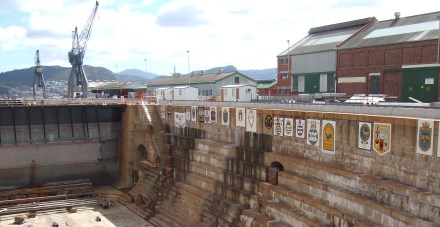
BRUCE, Alexander M, Stoker 2c, 67907 (SANF), MPK
EVENPOEL, Albert, Stoker 2c, 67909 (SANF), MPK
GEFFEN, Sender, Stoker 1c, 68035 (SANF), MPK
HOWE, Horace G, Ordinary Seaman RNVR, 68680 (SANF), MPK
KENDRICK, George, Stoker 2c, 67910 (SANF), MPK
MCINTYRE, Norman G, Able Seaman, 67446 (SANF), MPK
MCLELLAN, Robert, Ordinary Telegraphist, 67897 (SANF), MPK
MORROW, Douglas E, Able Seaman, 67989 (SANF), MPK
ORTON, Charles P, Able Seaman, 68009 (SANF), MPK
REDMAN, Roland A, Leading Stoker, 67406 (SANF), MPK
SCOTT, William J, Able Seaman, 68007 (SANF), MPK
SEVEL, Harry, Stoker 1c, 68100 (SANF), MPK
WILLETT, Amos A S, Stoker 1c, 67240 (SANF), MPK
WILLIAMSON, Walter N, Able Seaman, 67803 (SANF), MPK

HMS Dorsetshire – South African’s lost serving in the Royal Navy, Honour Roll

CONCANON, Harold Bernard, Surgeon Lieutenant (Doctor)
MILNE, Lawrence Victor, Able Seaman
VAN ZYL, David Isak Stephanus, Stoker 1st Class
WILLETT, Amos Alfred Sidney ,Stoker 1st Class

Note: Some more South Africans may not accounted in the above list as they may have been Royal Navy personnel having volunteered to serve in the Royal Navy, there is a long list of South Africans not accounted on the Navy’s honour rolls because of the complication of citizenship, the position of the South African Union in supporting the war and the nature of Simonstown near Cape Town as ‘British territory’ and not South African.

Related work 

The Japanese Easter raid was to bring a terrible toll on not only the Royal Navy, but also on the South African Navy whose personnel were involved.  It remains the South African Navy’s darkest days, as not only were the HMS Cornwall and HMS Dorsetshire full of SANF personnel.  For a full article on the HMS Cornwall, click on this link (“A terrific explosion lifted the ship out of the water”; Recounting South African sacrifice on the HMS Cornwall).

So too were the other two ships sunk later in this engagement on the 9th April 1942 by the same Japanese raiders, with similar South African naval personnel losses  – the HMS Hermes, see related article by clicking this link (“Dante’s Inferno”; Recounting South African sacrifice on the HMS Hermes) and HMS Hollyhock, see related article by clicking this link ( “She immediately blew up”; Recounting South African sacrifice on the HMS Hollyhock).

In Conclusion

This history is lost to most South Africans, however good work is now been done by a handful of individuals to try and correct and up-date these honour rolls and recount the full depth of South Africa’s involvement in warfare at sea during World War 2.

That the history is lost is due to the political expediency of the National Party, who on acent to power after WW2, effectively wiped it clean of the national consciousness – branding our World War 2 veterans as ‘traitors’ instead of ‘heroes’ for serving a British cause in their estimation. It is further lost to the new generations due to the slow up-take in recognition if this history by the African National Congress (ANC) government, again for their own political expediency.

That the darkest days of the South African Navy – The Easter Raid of 1942, is not even officially acknowledged or even remembered by The South African Navy in our modern day is testament to this and the subject of a future Observation Post article.

We, as South Africans, do however have an excellent tradition at the Selborne Graving Dock, the dry docks in Simonstown, allowing visiting crews to paint their ships emblems on the docks walls, it is an excellent record of many of the proud Royal Navy fighting ships who visited our shores in World War 2 and on whom many South Africans served.  Next time you are there look out them, including the HMS Dorsetshire.

Simonstown Dry DocksTheir names have not been forgotten.


Researched by Peter Dickens.  Background on HMS Dorsetshire extracted from U Boat.net.  Wikipedia.  News reel copyright British Pathé. British Broadcast Corporation account on the war (BBC)  WW2 The Peoples War. Casualty Lists of the Royal Navy and Dominion Navies, World War 2 by Don Kindell. Extracts fro ‘Day to Day SA Naval History’ by Chris Bennett.  Thanks also to Graham Du Toit for his excellent research into the Honour Roll including South Africans serving in the Royal Navy.


“A terrific explosion lifted the ship out of the water”

Recounting South African sacrifice on the HMS Cornwall

This is an image of the HMS Cornwall under attack just prior to her sinking, it was taken by the Japanese attack aircraft. A number of South African Navy personnel were lost with this ship whilst seconded to the Royal Navy during World War 2.

11227764_471697846333286_6697642980063770182_n

As Simonstown in South Africa was a British Naval base thousands of South Africans in WW2 served in the Royal Navy as well as in the South African Naval Forces (SANF). The loss of a heavy Cruiser the size of the HMS Cornwall is bound to include a South African honour roll and unfortunately this one does. Read on for their story.

HMS Cornwall Short History

hms_cornwall_F99_emb_n12997HMS Cornwall was a heavy cruiser of the Kent-subclass of the County-class. When World War 2 began in September 1939,  Cornwall was transferred from her pre-war China Seas operations to the Indian Ocean and joined Force I at Ceylon.
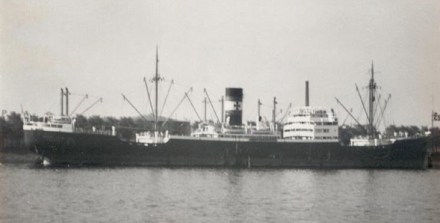
On 5th October 1939, she was involved in the search for the German pocket battleship Admiral Graf Spee. Between the 8th  and 14th February 1940, she was docked at the Selborne dry dock at Simonstown, South Africa.  Its was here that she would have taken onboard a large contingent of South Africans either volunteering for the Royal Navy or seconded to the Royal Navy as members of The South African Naval Forces stationed there.

In September 1940, together with HMS Delhi, she intercepted Vichy-French light cruiser Primauguet and tanker Tarn, forcing them to return to Casablanca, Morocco. By January 1941, HMS Cornwall returned to the Selborne dry dock in South Africa for refitting, at the same time taking on more South African personnel.

Sinking of the German Auxiliary Ship Pinguin

The HMS Cornwall was on patrol in the Indian Ocean of Seychelles when she engaged and sank the German ship ‘Pinguin’ on the 8th May 1941, Pinguin was known to the German Navy as Schiff 33, and designated HSK 5. The most successful commerce raider of the war, she was known to the British Royal Navy as Raider F.

Unfortunately, without the knowledge of Cornwall’s crew, Pinguin sank along with 200 Allied prisoners of war in addition to 232 Germans lost (60 German crew members and 22 Allied prisoners were rescued). She returned to Durban, South Africa to repair her stern, which was damaged during the battle against Pinguin; the repairs lasted until 10th  June 1941.

HK Pinguin

HK Pinguin

On the 25th November 1941, Cornwall intercepted the Vichy-French merchant vessel Surcouf in the Indian Ocean off the east coast of Somalia. Surcouf was originally en route to Djibouti with food, but was forced to sail to Djibouti instead.

Between January and March 1942, Cornwall escorted convoys between Ceylon and the Sunda Strait in the Dutch East Indies. In March 1942, she was sent to Colombo, Ceylon in preparation for a possible Japanese attack into the Indian Ocean.

The Easter Sunday Raid

With Japan’s entry into the war, and especially after the fall of Singapore, Ceylon (now Sri Lanka) became a front-line British base. The Royal Navy’s East Indies Station and Eastern Fleet was moved to Colombo and Trincomalee.

Admiral Sir James Somerville was appointed as the commander of the British Eastern Fleet, and he decided to withdraw main component the fleet to Addu Atoll in the Maldives, leaving a small force to defend Ceylon (Sri Lanka) consisting of an aircraft carrier, the HMS Hermes, two heavy cruisers – the HMS Cornwall and HMS Dorsetshire, one Australian Destroyer the HMSAS Vampire and the flower class corvette, the HMS Hollyhock.

The Royal Navy’s own ‘Pearl Harbour’

The Imperial Japanese Navy, in much the same way and with the same objectives that were used at Pearl Harbour against the American fleet planned a decisive attack of the British Eastern Fleet to end their presence in the North Indian and Pacific oceans.  Unaware that the main body of the British fleet had moved to the Maldives, they focused their plan on Colombo (the commercial capital of modern-day Sri Lanka).

The planned Japanese attack was to become collectively known as the Easter Sunday Raid and the Japanese fleet comprised five aircraft carriers plus supporting ships under the command of Admiral Chuichi Nagumo.

In an almost exact copy of the raid on the American fleet at Peal Harbour (as if no learnings were made by the Allies), on 4 April 1942, the Japanese fleet was located by a Canadian PBY Calatina aircraft, the Catalina radioed the position of the Japanese Fleet to The British Eastern Fleet which alerted the British to the impending attack before it was shot down by six Japanese Zero fighters from the carrier Hiryu,

However, despite the warning Nagumo’s air strike on Colombo the next day, Easter Sunday 5th April 1942 they did manage to achieved near-complete surprise (Pearl Harbour was also attacked on a weekend). The British Radar installations were not operating, they were shut down for routine maintenance (another parallel with the attack on Peal Harbour).

Easter Raid

Captain Mitsuo Fuchida

The first attack wave of Japanese planes took off in pre-dawn darkness (30 minutes before sunrise) from the aircraft carriers Akagi, Hiryu and Soryu, moving about 200 miles south of Sri Lanka. The first attack wave of 36 fighters, 54 dive bombers, and 90 level bombers was led by Captain Mitsuo Fuchida the same officer who led the air attack on Pearl Harbour.

The Heavy Cruisers, HMS Cornwall and HMS Dorsetshire set out in pursuit of the Japanese. On 5 April 1942, the two cruisers were sighted by a spotter plane from the Japanese cruiser Tone about 200 miles (370 km) southwest of Ceylon. A wave of  Japanese dive bombers led by Lieutenant Commander Egusa took off from Japanese carriers to attack Cornwall and Dorsetshire, 320 km (170 nmi; 200 mi) southwest of Ceylon, to sink the two ships.

In the attack, the Japanese airman flying Japanese  D3A-1 ‘VAL’ dive bombers, then dropped 9 bombs on the HMS Cornwall itself ( 250- and 550-pound bombs) and six near misses, the HMS Cornwall becoming dead in the water within minutes, the HMS Cornwall sank in about 12 minutes after the first hit (and Dorsetshire suffered the same fate).

aichi-d3a1-mod-22-val

An eye-witness account from a South African officer on board the Cornwall recounts the ferocity and speed of the attack:

Sub-Lieutenant R. Ellis Brown, son of the mayor of Durban, said he was down below in the control room of the high angle guns when the warning was flashed that aircraft were attacking.

“Almost immediately afterwards there was a terrific explosion and the ship lifted out of the water and listed to port, “ he said. “This was followed almost immediately by another hit. The lights went out and I continued on to the sick bay. I went forward from there to contact the control officer and shortly after I left, a bomb dropped on the sick bay, killing most of the men there. I could not get through on account of the flames, so went to the aft deck. Here we managed to get a whaler and also five or six floats. We got the men off and I looked up and saw a dive-bomber coming down at me. I saw the bomb released at about 700 feet and it appeared to be coming straight at me. Although I knew that if a bomb appeared to be coming straight at you it would actually fall far beyond. I must say I did not like it one bit. The men jumped into the water and finally the two other officers and myself left on this deck followed them.”

Sub-Lieutenant Ellis Brown said that the men were in the water for about 30 hours. The wounded were placed in a motor boat which had floated off when Cornwall sank. The remainder stayed in the water, hanging on to debris and floats. To the discomforts the men suffered in the water was added the horror of knowing they were in shark-infested waters.  He recalls, “We saw several fins cutting the water but as soon as they came near, the men would kick and shout and they would make off.”


DorsetshireCornwall

Japanese combat photograph showing the Royal Navy heavy cruisers HMS Dorsetshire and HMS Cornwall on fire and sinking


HMS Cornwall was sunk in position 01º54’N, 77º45’E. All boiler and engine rooms were out of action within minutes, thereby resulting in a lack of power to the pumps and fire fighting equipment. In all the men spent 30 hours in the water, before a combined rescue of the HMS Dorsetshire men (also in the water) and HMS Cornwall’s men by the HMS Enterprise, HMS Paladin and HMS Panther. In total 192 of Cornwall’s men were lost, of a very high proportion – 23, were South African.  Here is the South African Naval Forces honour roll (MPK means ‘Missing Presumed Killed’) from the sinking;.

HMS Cornwall – South African Navy Personnel Lost, Honour Roll

22308811_10155537271456480_3745202244434378650_nBESWETHERICK, Hedley C, Ordinary Seaman RNVR, 86671 (SANF), MPK
BOTES, John S, Stoker 2c RNVR, 68924 (SANF), MPK
COMMERFORD, Noel P, Able Seaman RNVR, 66493 (SANF), MPK
CRAWFORD, Cecil E, Act/Engine Room Artificer 4c RNVR, 67922 (SANF), MPK
DU PREEZ, Charles P H, Able Seaman, 68175 (SANF), MPK
DUTTON, Charles C, Stoker 2c RNVR, 68949 (SANF), MPK
HANSLO, Raymond F, Able Seaman RNVR, 68295 (SANF), MPK
KEITH, Kenneth I B, Able Seaman RNVR, 66742 (SANF), MPK
KENYON, Graeme A B, Able Seaman RNVR, 68002 (SANF), MPK
KIRSTEN, Monty G W, Able Seaman RNVR, 68917 (SANF), MPK
LAW, Edward, Act/Engine Room Artificer 4c RNVR, 66760 (SANF), MPK
MCDAVID, William K, Stoker 2c RNVR, 69138 (SANF), MPK
MITCHELL, William A, Stoker 1c RNVR, 68796 (SANF), MPK
PALMER, Walter A, Able Seaman RNVR, 68344 (SANF), (rescued, aboard HMS Enterprise), Died of Wounds
SPENCE, Noel W, Ordinary Seaman RNVR, 68732 (SANF), MPK
SQUIRES, John E, Ordinary Seaman RNVR, 68728 (SANF), MPK
STEPHEN, Eric B, Ordinary Seaman RNVR, 68861 (SANF), MPK
SWANN, Lawrence T, Stoker 1c RNVR, 68710 (SANF), MPK
THORPE, Maurice, Stoker 2c RNVR, 69140 (SANF), MPK
VERSFELD, Peter H S, Able Seaman RNVR, 68859 (SANF), MPK
VINK, Benjamin F, Ordinary Seaman RNVR, 68860 (SANF), MPK
WILLSON, Gerald F, Stoker 2c RNVR, 69006 (SANF), MPK
WRIGHT, Thomas H, Able Seaman RNVR, 68039 (SANF), MPK

In earlier incidents on HMS Cornwall two South Africans lost their lives they are also remembered here:

AINSLIE, Roy, Petty Officer, 66382 (SANF), died on 5 September 1940
HAWKINS, Reginald D, Able Seaman, 66700 (SANF), died of illness 4 March 1942

Some South Africans may not accounted in the above list as they may have been Royal Navy personnel having volunteered to serve in the Royal Navy, there is a long list of South Africans not accounted on the Navy’s honour rolls because of the complication of citizenship, the position of the South African Union in supporting the war and the nature of Simonstown as British territory.

Related work 

The Japanese Easter raid was to bring a terrible toll on not only the Royal Navy, but also on the South African Navy whose personnel were involved.  It remains the South African Navy’s darkest days, as not only were the HMS Cornwall and HMS Dorsetshire full of SANF personnel, so too were the other two ships sunk later in this engagement on the 9th April 1942 by the same Japanese raiders – the HMS Hermes, see related article by clicking this link (“Dante’s Inferno”; Recounting South African sacrifice on the HMS Hermes) and HMS Hollyhock, see related article by clicking this link ( “She immediately blew up”; Recounting South African sacrifice on the HMS Hollyhock).

The HMS Dorsetshire is featured in a full Observation Post article, follow by clicking this link (“They machine gunned us in the water”; Recounting South African Sacrifice on the HMS Dorsetshire).

In Conclusion

This history is lost to most South Africans, however good work is now been done to try and correct and up-date these honour rolls and recount the full depth of South Africa’s involvement in warfare at sea during World War 2.  We, as South Africans, do however have an excellent tradition at the Selborne Graving Dock, the dry docks in Simonstown, allowing visiting crews to paint their ships emblems on the docks walls, it is an excellent record of many of the proud Royal Navy fighting ships who visited our shores in World War 2 and on whom many South Africans served.  Next time you are there look out them, including the HMS Cornwall.

Their names have not been forgotten.

3397451999_8e45bbe5a4_b


Written and researched by Peter Dickens, with extracts taken from Wikipedia, Force-z survivors official webpage, the British Broadcast Corporation account on the war (BBC)  WW2 The Peoples War. Casualty Lists of the Royal Navy and Dominion Navies, World War 2 by Don Kindell.

“Superhuman powers of endurance and courage” Reginald Hayward VC

29060739_2111661739062813_6833898184469216994_oThis South African’s Victoria Cross turns 100 on the 21/22 March 2018, so today we honour another true South African hero and Victoria Cross recipient, and this man, Captain Reginald Frederick Johnson Hayward VC MC & Bar is one very extraordinary South African.
“Bravery” is an often over used word, then you read about a South African who won the Military Cross for Bravery, not once but twice and then goes on to win a Victoria Cross. Now this Hilton College old boy is a “brave” man cut from a different cloth, “superhuman” in fact (as is noted in his VC citation) and this is his story.

Reginald Hayward, was the son of a stockbreeder family, Frederick and Gertrude Hayward, he was born on 17 June 1891 at the Beersheba Mission Station near Swartruggens, East Griqualand in South Africa.  He was educated at Hilton College and represented Natal against English Rugby teams in 1911. Serving with the cadets he became Regimental Sergeant Major.

After leaving school Reginald attended  Durban Business College from 1909-1910 and continued to excel as sportsman especially in rugby, football and cricket. In May 1912 he travelled to England and began studying at the Royal College of Veterinary Surgeons and captained their Rugby XV in 1913. He also played for Rosslyn Park Club and for Middlesex.

When the 1st World War broke out be volunteered and in May 1912 Reginald arrived in the United Kingdom and joined the 6th Battalion Wiltshire Regiment and was commissioned as a 2nd Lieutenant on 29 September 1914.

The Somme Offensive 1916

Later the same year he was promoted to temporary Lieutenant and in March 1915 joined the 1st Battalion Wiltshire Regiment in France where during October 1916 he was involved in action at Stuff Redoubt, Thiepval, France during which he was awarded the Military Cross for conspicuous gallantry and initiative, gazetted on 8th October.

Wounded during the action he briefly returned to London to have the piece of shrapnel removed from his eye.

Wiltshire4

Officers and men of the 1st Battalion, Wiltshire Regiment, after their return from the fighting at Thiepval, photographed at Bouzincourt, September 1916

On 19 December 1916 Reginald was promoted to Temporary Captain and on 22 December 1916 was promoted to the substantive rank of Lieutenant. During the battle of Messines Ridge in Belgium on 07 June 1917 he was awarded a bar to his Military Cross which was gazetted on 18 September.

The Spring Offensive 1918

On 21 March 1918 the Germans launched their Spring offensive against the section of Front manned by British Third and Fifth Armies running from Roeux on the River Scarpe east of Arras in the north to the River Oise west of La Fere in the south, as the crow flies a distance of about 50 miles, but over double that on the ground. 6th Corps held the British Line south of Arras. From the previous evening, German troops had begun probing British positions at this point. 13th Battalion Alexandra, Princess of Wales’s Own (Yorkshire Regiment) were in the line from St -Leger, just east of the road south from Arras to Bapaume, along the road south to Mory.

Spring

Captured British tank with German markings crossing a trench. Note a biplane flying over the battlefield during the German’s Spring Offensive of 1918

It was here on the morning of 21 March 1918 that Temporary Second Lieutenant E F Beal gallantly repelled a German incursion, helping to stabilize the situation until he was killed. However, German pressure was relentless and the British were pushed back. As the enemy advances steadily towards Bapaume, 1st Battalion The Wiltshire Regiment was moved to the north of Fremicourt, a village east of Bapaume and just south of the Cambrai road. 4th Corps was trying to hold a line between Vaulx and Morchies to the north of the road. It was for his gallantry in the fighting which followed that Acting Captain R F J Hayward was awarded the VC.

Just to get a measure of the man and this Victoria Cross, on 21/22 March 1918 near Fremicourt, France, while commanding a company, Captain Hayward displayed “almost superhuman powers of endurance”. In spite of the fact that he was buried, three times wounded in the head, rendered deaf and had his arm shattered, he refused to leave his men, instead he motivated them as he continued to move across the open fields of fire from one trench to another with absolute disregard for his own safety – all the time under ceaseless enemy attack.  His actions directly attributed to his Regiment holding their defensive line and stemming the enemy advance.  

Imagine that, an officer with multiple serious wounds running out into open hell-fire time and again keeping his men in place and fighting, his action alone changing the tide of the battle – that’s the stuff of a Victoria Cross.

Here is his citation and it says everything about the action and his courage:

medalCITATION
For most conspicuous bravery in action. This officer, while in command of a company, displayed almost superhuman powers of endurance and consistent courage of the rarest nature. In spite of the fact that he was buried, wounded in the head, and rendered deaf on the first day of operations, and had his arm shattered two days later, he refused to leave his men (even though he received a third serious injury to his head), until he collapsed from sheer physical exhaustion.

Throughout the whole of this period the enemy was attacking his company front without cessation, but Captain Hayward continued to move across the open front from one trench to another with absolute disregard of his own personal safety, concentrating entirely on re-organising his defences and encouraging his men.

It was almost entirely due to the magnificent example of ceaseless energy of this officer that many determined attacks on his portion of the trench system failed entirely.

The surviving Wiltshires, three officers and 54 NCO’s and men, were gathered at Bihucourt, north-west of Bapaume, on 24 March. Hayward had been evacuated with the other wounded the night before.

When the German offensive had opened on the 21st, 8th Battalion The Gloucestershire Regiment mounted an unsuccessful counter-attack at Doignies to try to contain the enemy advance south of the Cambrai-Bapaume road. They were then withdrawn west to Velu Wood. By the 23rd, the German advance had reached this point and the Glosters, together with the 10th Battalion The Royal Warwickshire Regiment was ordered to cover the further withdrawal of British forces. Bapaume itself was abandoned to the Germans.

wiltshire10

Composite battalion made up of surviving troops of the Wiltshire, Warwickshire Regiments, Northumberland Fusiliers and others at the end of the first phases of the German Spring Offensive. Seen here resting by the roadside. Caestre, 17 April 1918.

Post World War 1

The war would grind on for a couple of more months and end in November 1918. Reginald survived his injuries and the war and in 1919 he became the Adjudant of the 1st Battalion Wiltshire Regiment and later that same year, along with Lieutenant S. J. Parker MC DCM carried the 1st Battalion’s Regimental Colours at the Peace Parades in London and Paris.

Over the period 1919 to 1921 he served in Dublin, Egypt and Palestine and on 27 September 1927 he was promoted to the substantive rank of Captain. On 04 April 1935 he was transferred to the Reserves. On 09 July 1938 Reginald marries Linda Angus (nee Bowen in the Christ Church, Burbage, Buxton, Derbyshire.

World War 2

When the Second World War started in 1939, Reginald was called back into full-time service and served as Commander of the Royal Army Service Corps Anti-Aircraft Command (CRASC). Over the period 1945 to 1947 he was Commandant of Prisoner of War Camps where after he retired on 09 July 1947 as an Honorary Lieutenant Colonel.

Later Life

10999432_417568698412868_2379871863135790696_nReginald worked at the British Broadcasting Corporations (BBC) Publications Department from 1947 to 1952 and as games manager of the Hurlingham Club from 1952 to 1967.
His Victoria Cross investiture, along with his Military Cross, was on 24 October 1918 by King George V at Buckingham Palace. His Victoria Cross is held at the Royal Gloucestershire, Berkshire and Wiltshire Regiment Museum in Wiltshire.

Apart from his Victoria Cross and Military Cross with Bar he was awarded the 1914 – 1915 Star, British War Medal 1914 – 1920, Victory Medal 1914 – 1919, Defence Medal 1939 – 1945, Coronation Medal 1937, Coronation Medal 1953 and Territorial Efficiency decoration.

Reginald died on 17 January 1970 in Chelsea, London and was cremated on 23 January 1970 in the Putney Vale Crematorium, London while his ashes are scattered in the Garden of Remembrance. He is commemorated in the St Mary’s Church, Limpley Stoke, Wiltshire. His medals are now held at The Rifles Museum, Salisbury, Wiltshire.

29351890_2111661702396150_7208896205117593485_o


Original content courtesy Charles Ross, additional research and content by Peter Dickens

Extract published with the kind permission of The VC and the GC, The Complete History, published by Methuen and The VC and GC Association in 2013.  Information obtained from VC on-line (The comprehensive guide to Victoria Cross and George Cross).  Images were referenced IWM Imperial Museum Copyright.

Mast image shows The Wiltshire Regiment on the advance over trenches at Thiepval during the Battle of the Somme.  Copyright Imperial War Museum.